 |
by Emma Howard on (#CAC1)
Electric car championship in London will be the first in the world to have cars running on solar batteries with pit lanes connected to mini solar farmsCars powered by solar energy will feature in the UK’s first ever 100% electric motor car race this weekend.Organisers predict that 60,000 people will watch the tenth and final race in the first Formula E championship in London’s Battersea Park. Continue reading...
|
| Link | http://feeds.theguardian.com/ |
| Feed | http://feeds.theguardian.com/theguardian/environment/rss |
| Updated | 2026-06-09 21:00 |
 |
by Aled Jones on (#CA71)
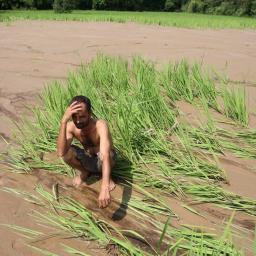
A systematic shock to global food could cause riots, food price hikes and disruption to stock markets. A new report aims to help prepare insurersThe globalisation of food trade over the past few decades has made the world food system better equipped to respond to small localised losses in food production and feed a growing global population. It has arguably also increased our exposure to systemic risks.
|
 |
by Sean Farrell on (#CA5D)
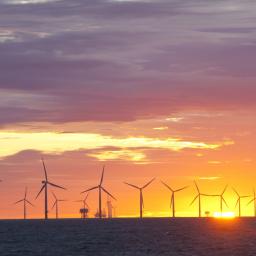
Business secretary Sajid Javid is expected to announce sell-off on ThursdayThe government is set to sell a majority stake in the Green Investment Bank, the project that was a central promise in the Conservatives’ 2010 manifesto, in a move that has drawn immediate criticism from environmental groups.Industry sources said Sajid Javid, the business secretary, would announce the plan at the bank’s annual review meeting on Thursday. The government is likely to keep a stake in the bank but it could sell off as much as 70%. Continue reading...
|
 |
by Associated Press in San Juan on (#CA2F)
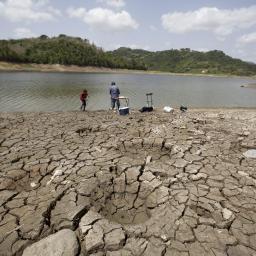
Forecasters expect quieter hurricane season this year which means less rain to help refill dry reservoirs and water withering cropsThe worst drought in five years is creeping across the Caribbean. From Puerto Rico to Cuba to St Lucia, crops are withering, reservoirs are drying up and cattle are dying while forecasters worry that the situation could only grow worse in the coming months.Thanks to El Niño, a warming of the tropical Pacific that affects global weather, forecasters expect the hurricane season that began in June to be quieter than normal, with a shorter period of rains. That means less water to help refill Puerto Rico’s thirsty Carraizo and La Plata reservoirs as well as the La Plata river in the central island community of Naranjito. A tropical disturbance that hit the US territory on Monday did not fill up those reservoirs as officials had anticipated. Continue reading...
|
 |
by Charlie Jones on (#CA20)
Protesters call for new ‘day of action’ after thousands take to the streets to denounce fuel price hikes and police violence Continue reading...
|
 |
by Rob Edwards on (#C9SB)
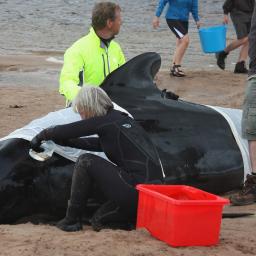
Noise from underwater bombs caused 19 pilot whales to beach and die off the coast of Scotland in 2011, say government scientistsFour large bombs exploded underwater by the Royal Navy were to blame for a mass stranding which killed 19 pilot whales on the north coast of Scotland in 2011, government scientists have concluded.
|
 |
by Emma Howard on (#C9M6)
Global warming ‘ultimate threat multiplier’ posing serious risk to world security, says report urging governments not to see it simply as a climate issueTackling climate change risks must become a top foreign policy priority if the world is to combat the global security threat it poses in the 21 century, according to a new study commissioned by the G7 countries.Multiple conflicts have taken the government systems for dealing with them “to their limitsâ€, according to one of the authors of the report, which was launched at the Foreign and Commonwealth Office (FCO) on Tuesday. Continue reading...
|
 |
by Oliver Balch on (#C9D1)
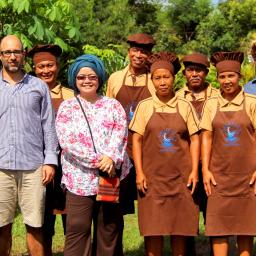
A traditional approach to agriculture has helped Indonesian farming communities grow diverse crops and compete in global marketsRelated: The shipping containers tackling South Africa's chronic childcare shortagesThe first time Helianti Hilman visited the indigenous farmers of the West Java town of Garut, she was asked to remove her shoes before entering their fields. Her surprise grew when the farmers quizzed her on her mood – they didn’t want her upsetting the plants.
|
 |
by Guy Lane on (#C9BG)
Riders, don’t let age put you off the wheels, the World Cycling Tour offers a series of races around the globe with a fitting final in DenmarkI had hoped that my road racing days were behind me, replaced by a less strenuous regime of occasional club runs and time trials, plus the daily commute on my trusty Dahon folding bike. But suddenly, aged 50, I’m in with a shot – admittedly a very, very long shot – of winning a world champion’s rainbow jersey. How did that happen?It’s all because of the World Cycling Tour (UWCT), a series of races around the globe for amateur and age group riders, organised by the sport’s governing body, the UCI. It culminates in September with the UWCT final in Aalborg, Denmark. Continue reading...
|
 |
by Arthur Neslen The Hague on (#C97Y)
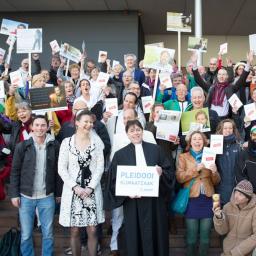
Dutch court orders state to reduce emissions by 25% within five years to protect its citizens from climate change in world’s first climate liability suitA court in the Hague has ordered the Dutch government to cut its emissions by at least 25% within five years, in a landmark ruling expected to cause ripples around the world.
|
 |
by Bruce Douglas in Rio de Janeiro on (#C97B)
Ademir Kaba Munduruku will argue Brazil is violating indigenous rights by failing to consult them about the hydroelectric project on the river TapajósThe Brazilian government has violated its own constitution and international law by developing hydroelectric power plants in the Amazon, according to an indigenous leader due to address the 29th United Nations Human Rights Council in Geneva on Wednesday afternoon.Related: Belo Monte, Brazil: The tribes living in the shadow of a megadam Continue reading...
|
 |
by Guardian Staff on (#C8XF)
Baby beavers, Britain's first in 400 years, are seen taking swimming lessons with their mother along the River Otter, in east Devon. Devon's beaver colony was sighted on the river in February 2014, and was England's first sighting of breeding beavers since the 16th century. The footage, captured by Tom Buckley, is believed to show the kits' first swim Continue reading...
|
by Joshua Robertson on (#C8WC)
Climate Council report says financial risk aversion and the prospect of blowing the world’s ‘carbon budget’ mean Queensland’s Galilee coal may never be dug upFormer climate commissioner Tim Flannery says governments are “backing the wrong horse†in Queensland’s Galilee basin, as new reports cast doubt on the viability of Australia’s largest proposed coal fields.A report by Flannery’s Climate Council argues that a fast-changing world energy market, increasing risk aversion in financiers and the prospect of blowing the global “carbon budget†are increasing the chances that Galilee coal will never be dug up. Continue reading...
 |
by Ami Sedghi on (#C8WD)
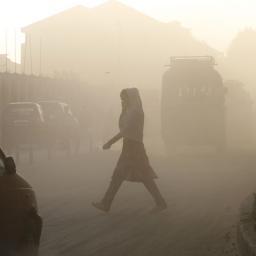
The WHO last week named India’s capital the worst of 1,600 cities for PM2.5 particles. What are the other measures of pollution, and do the experts agree?Last year, a study by the World Health Organisation found that Delhi had the dirtiest atmosphere of 1,600 cities around the world for PM2.5 particles.PM stands for particulate matter – solid particles or liquid droplets in the air. When smaller than 2.5 micrometers (that’s 100 times thinner than a human hair), they are known as PM2.5. These are created by such things as vehicle emissions, forest fires and smelting and processing metals. Continue reading...
|
 |
by Jason Burke in Delhi on (#C8R9)
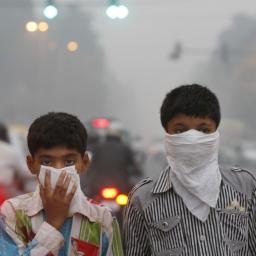
Delhi’s appalling pollution has prompted fears that millions of youngsters will suffer serious health problems later in lifeThe dusty patch of ground in the centre of the narrow lanes and overcrowded tenements of Anand Vihar Colony is empty. No children play cricket, wrestle or run. Even when evening comes and the searing Indian summer temperatures subside, they will remain with their marbles or toys indoors in this poor Delhi neighbourhood.
|
by Helen Davidson in Darwin on (#C8RG)
Environment minister contradicts Indigenous affairs minister Nigel Scullion, who said there was strong demand for such schemes in the Northern TerritoryEnvironment minister Greg Hunt has said the government has “no plans†to approve commercial crocodile hunting safaris, contradicting comments from his Coalition colleague Nigel Scullion that it could be a reality within a year.About 600 permits to kill crocodiles are issued every year in the Northern Territory, but there have long been calls for a trial allowing Aboriginal communities to sell some permits to hunters. Continue reading...
 |
by Steven Morris on (#C8NK)
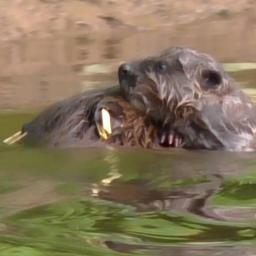
Video footage captures two new-born kits taking one of their first swims in Devon’s river OtterThe first colony of wild beavers to inhabit an English river for around 400 years has expanded.One of the female beavers on the River Otter in Devon has given birth to at least two – and possibly as many as four – kits. Continue reading...
|
by Reuters in Wyoming on (#C8JF)
Wyoming court suspends regulations that were due to take effect on Wednesday governing hydraulic fracturing for gas exploration on public landsA US district judge in Wyoming has granted a request by four states and several energy industry groups to temporarily block new federal rules governing fracking on public lands.The interior department rules due to come into force on Wednesday would require companies to provide data on chemicals used in hydraulic fracturing, and to take steps to prevent leakage from oil and gas wells on federally owned land. Continue reading...
 |
by Paul Evans on (#C8FV)
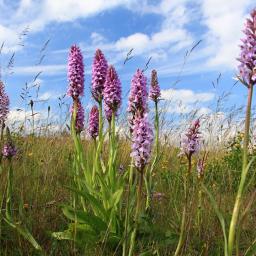
Wenlock Edge, Shropshire: Spotted and pyramidal orchids created a hazy mood, a spirited innocence, a pinkishness of hopeI was drawn across the field to a flash of pink: common spotted orchids. They were common for that moment around the summer solstice and I’d spotted them in the place where I’d seen a large colony last year, the soggy bottom of a field of limestone quarry spoil.The size and shape of the patch had changed. The most dense group of orchid flowers of last June was now almost gone. The stems were withered and twisted, and some flowers looked singed and were tiny; they appeared to have been in contact with herbicide or killed off by toxins. Continue reading...
|
by Melissa Davey on (#C8BK)
Scans of package labelled ‘mixed powder’ arouse suspicion and biosecurity officers find the snakes, which are then euthanisedA package that arrived at Melbourne’s international mail facility labelled “mixed powder†has been found to contain 13 live snakes.Scans of the package aroused suspicion and when biosecurity officers opened it, they found the animals.
 |
by Agence-France Presse on (#C893)
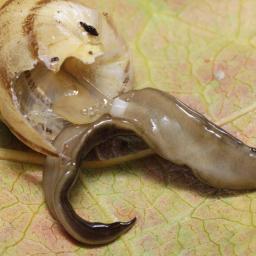
The New Guinea flatworm, which eats snails and earthworms, has already made its way to France, Puerto Rico, Tahiti and other nationsOne of the most notorious invasive species in the world has turned up in the mainland United States, raising new concerns about a flatworm that devours snails and earthworms, researchers said Tuesday.
|
by Shalailah Medhora on (#C814)
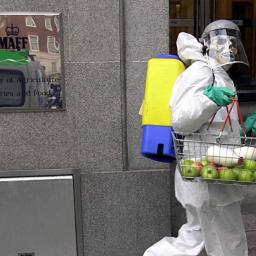
Chamber of commerce says deal surmounts ‘major hurdle’ as Greens and environmentalists attack Coalition pledge to create a windfarm commissionerLegislation to reduce the renewable energy target from 41,000 gigawatt hours to 33,000gWh has passed both houses of parliament. The Senate sat late on Tuesday to pass the bill.Labor and the Coalition struck a deal on the target in May after a months-long standoff that the renewables industry said undermined investment. Continue reading...
 |
by Hannah Devlin Science correspondent on (#C7Z7)
Use of chemical in UK restricted, but consumers may still be exposed through foods imported from other countries
|
by Joshua Robertson on (#C7GW)
Exclusive: Speculation over future of what would be Australia’s largest coal project amid claims four contractors told to halt workIndian coal giant Adani has halted engineering work related to Australia’s largest proposed mine, say industry sources, raising speculation that the company is set to abandon the contentious project.Adani last week advised four major engineering contractors to stop work on projects around the Carmichael mine in Queensland including a joint venture rail line and the expansion of Abbot Point port, Guardian Australia has been told. Continue reading...
 |
by Letters on (#C78E)
James Crossland of Kinross Gold Corporation (Letter, 27 May) correctly recognises me as one of Kinross’s opponents, which gives me some hope that he may watch more carefully what I have to say. It is true, and not “fantastical†as he claims, that around 1 million tonnes of inorganic arsenic released by Kinross from the hard rocks in Paracatu can potentially impact some 7 trillion people, as 1 gram of inorganic arsenic equals a total lethal dose for 7 adult people. This is not the whole truth on my assertion, though, since I take factors such as arsenic bioaccessibility, terminal half-life, bioaccumulation and osteoresorptive arsenic intoxication into account in my health risk estimations, and in diagnosing arsenicosis in my patients. In his capacity as Kinross’s executive vice-president on duty of corporate responsibility, Crossland – an experienced professional of communications and public relations – must know that taking the part for the whole can be imprecise, controversial or even offensive.
|
 |
by Adam Vaughan on (#C6CV)
Regional impact of a weaker solar cycle likely to be larger than global effect, with only minimal impact on worldwide temperature rises caused by climate changeGlobal warming in northern Europe and the eastern US could be partially offset in future winters because of the sun entering a weaker cycle similar to the one which enabled frost fairs to take place on the river Thames in the 17th and 18th century, according to new research.However, the study said any potential weakening in solar activity would have only a small effect on temperature rises at a worldwide level, delaying the warming caused by emissions from cars, factories and power plants by around two years. Continue reading...
|
 |
by Dave Bry on (#C6CX)
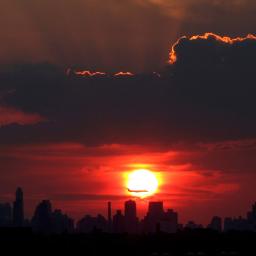
I can’t wait to be able to complain about snow and ice and everyone’s stupid big giant Canada Goose parkas againDespite what it says on the desk calendars at Kinkos copy shop, there are really only two seasons in New York City: summer and winter. They’re both completely unbearable, sadly, with an all-too short reprieve between them. “Spring†and “fall,†we call those fleeting dreams, laughing at ourselves for momentarily believing in them. Then we sigh.As you know from watching Seinfeld, New Yorkers are a famously complainy lot. One detects a type of civic pride in the kvetching you hear here. (“You think you’re schvitzing? I schlepped all the way from Brooklyn, and the AC on the F went kaput!â€). In choosing to live in New York, we choose, for some reason, to live in unpleasant conditions: traffic, crowds, extreme weather conditions and catastrophic amounts of dog poop. Why do we do this to ourselves? A masochistic streak perhaps. Or something about wanting to build character: “If I can make it here,†etc.
|
 |
by Guardian Staff on (#C6CZ)
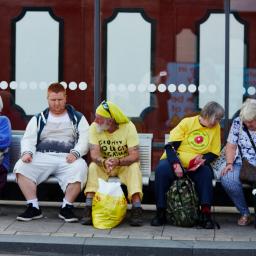
Anti-fracking protestors held a day of resistance in Preston today, as Lancashire county council began hearings to decide whether to approve Cuadrilla’s plans to drill for shale gas at Little Plumpton and Rosacre Wood sites• Read more: Hundreds protest against proposed fracking site in Lancashire Continue reading...
|
 |
by Andre Rhoden-Paul and Emma Howard on (#C6AW)
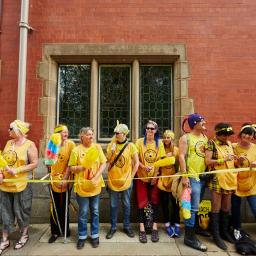
Campaigners protest outside Preston county hall as Lancashire county council meet to decide whether to approve Cuadrilla’s bid to frack at Preston New Road in Little PlumptonHundreds of people protested against a proposed fracking site in Lancashire on Tuesday, as the county council considered whether to approve the project.Related: Anti-fracking protests in Lancashire – in pictures Continue reading...
|
 |
by Eriel Tchekwie Deranger on (#C68G)
After centuries of abuse of Mother Earth, we must draw on First Nations people’s perspective of earth’s sacredness for our collective survivalFor years, concerned members of the Athabasca Chipewyan First Nation (ACFN) in Canada, like myself, have voiced concerns about the impacts caused by oil sand exploitation. The vast majority of our community resides downstream from large scale oil sands surface mining and has seen first hand the complex impacts this industry has.Now, over 100 renowned scientists and academics have echoed our concerns about oil sands in a call for a moratorium on expansion, which is being taken seriously by the public and the media. Continue reading...
|
 |
by Hannah Gould on (#C5ZG)
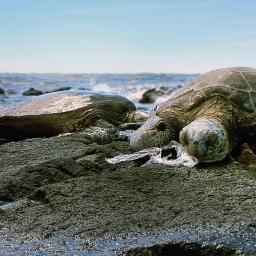
Earlier this year an NGO warned we could end up with ‘as much plastic in our oceans as fish’. Here is what the experts said in an online debate on plastic pollutionRelated: Could a circular economy save oceans from plastic waste? - live chat Continue reading...
|
 |
by Stanley Johnson in Amboseli national park on (#C5PZ)
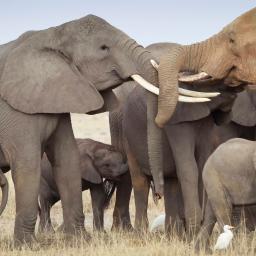
Conservation efforts in Amboseli national park offer hope in the battle to protect Africa’s big beasts from ivory poachers – but tackling demand for ivory is still crucial to long-term successI was lucky to find Cynthia Moss at home. Though she has studied elephants in Kenya’s Amboseli national park for over 40 years in the longest-running elephant research project in Africa, she is now not able to spend us as much time in the field as she would like, given other commitments in Nairobi and elsewhere.“I have that horrible déjà vu feeling,†she told me as we sat together outside her tent at her camp in the park’s heart. She compared elephant deaths from poaching today to the 15 years before the international ivory ban in 1989, when Kenya lost almost 90% of its elephants. Continue reading...
|
by Monica Tan on (#C5P8)
Even without subsidies, it will be cheaper to replace retiring coal-fuelled power stations with renewables, Bloomberg predictsRenewable energy will supply the majority of Australia’s electricity by 2040, even without any additional government policy, according to predictions by energy analysts.It will account for 59% of Australian electricity generation by 2040, as retiring coal and gas plants are replaced by wind and solar, according to New Energy Outlook 2015, which was published by Bloomberg New Energy Finance on Tuesday. Continue reading...
 |
by Jason Hickel on (#C5JM)
Both Pope Francis and the United Nations have issued big statements about where they feel the world should be going. So far, the pontiff is winning by a country mile
|
 |
by AFP on (#C59Y)
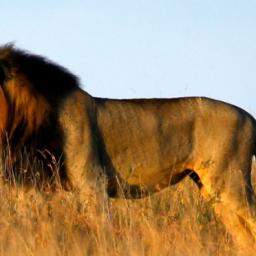
IUCN Red List says that while Iberian lynx and Guadalupe fur seal are recovering, cave crabs and the world’s rarest sea lion are at risk of dying outThe mighty lion, reclusive cave crabs and the world’s rarest sea lion are among nearly 23,000 species at risk of dying out, a top conservation body warned on Tuesday.
|
by Patrick Barkham on (#C56F)
A crowdsourced sound-recording project will supplement the British Library’s archive with the sounds of the UK coastline – from waves and birds to dodgems and lobster pots
 |
by Robert McCrum on (#C529)
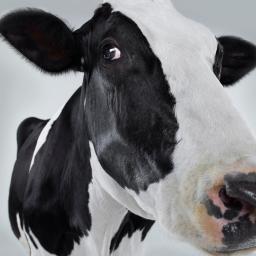
How three family-run farms are responding to supermarket price wars and changing technologyIn any season, but especially in spring and summer, an English country cowshed is a haven of harmless contentment whose inhabitants – happily ruminating, farting, chewing and pissing – contribute to an unmistakable atmosphere of wellbeing.So perhaps it’s no surprise that “Cowshed†should also be a trendy beauty brand. But for how much longer? Lately, the world of the cow has been in crisis, with dairy farming in trouble, and a timeless way of life threatened by relentless supermarket price wars and the march of technology. Continue reading...
|
 |
by Guardian Staff on (#C51S)
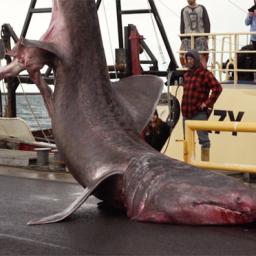
A Victorian trawler has caught a basking shark weighing 3,500kg and measuring 6.5 metres. The animal, which is rare in Australian waters, has been donated to the Victoria Museum for science. It was caught in the Bass Strait, off the coast of Victoria, on Sunday. Video shows the huge animal being lowered to the ground by a crane watched by a gathering crowd Continue reading...
|
 |
by Emma Howard on (#C4Y4)
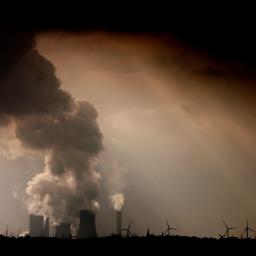
A comprehensive guide to the basics of divestment: what it means, why the urgency and how it impacts climate changeDivestment is the opposite of investment – it is the removal of your investment capital from stocks, bonds or funds. The global movement for fossil fuel divestment (sometimes also called disinvestment) is asking institutions to move their money out of oil, coal and gas companies for both moral and financial reasons. These institutions include universities, religious institutions, pension funds, local authorities and charitable foundations. Continue reading...
|
 |
by John Ashton on (#C57X)
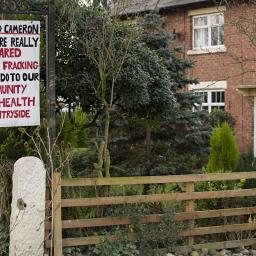
This is not just about climate change: the processes of our democracy are being twisted to impose an outcomeCuadrilla, the shale gas company, will learn this week if it’s been given the go-ahead to conduct the most ambitious fracking operations in Britain yet. The two sites it wishes to drill are both in the Fylde, a gently creased handkerchief of trees, hedgerow and rich farmland that connects the resorts of Blackpool and Lytham St Annes to the Lancashire hinterland. Not far from either location is the village of Wrea Green, regularly judged Lancashire’s best kept village, its giant duck pond fringed this midsummer with tall stands of flag iris the colour of sunshine.Lancashire county council’s development committee is considering both applications. Approval for either would be the biggest step so far towards the prospect, enthusiastically backed by David Cameron and George Osborne, of a fracking free-for-all across Britain. Continue reading...
|
 |
by Sarah Boseley on (#C4SA)
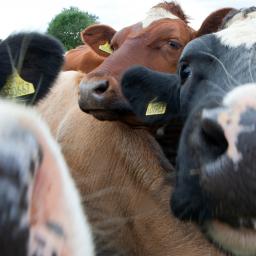
Experts say lifestyle changes can cut emissions and diseases globally as a major study shows climate change is undermining five decades of progress in healthHigh-carbon lifestyles are desperately unhealthy, according to Hugh Montgomery, director of the UCL Institute for human health and performance and co-chair of the Lancet commission.Cutting red meat and dairy consumption would lead to a big saving in methane, which is 23 times as potent a greenhouse gas as carbon dioxide “from essentially belching cows. That saves a lot of strokes, heart disease, bowel cancer and so forth,†he said. Continue reading...
|
 |
by Susie White on (#C4QG)
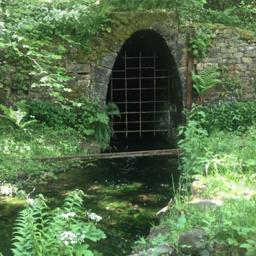
Allendale, Northumberland A path curves alongside the river to Allendale Town, clambering over thick roots and stones. It’s a cool walk on a hot dayThough normally a fast-flowing river, the East Allen has shrunk from its banks. Its voice, through trees, is like a bath filling up behind a closed door. Reaching it through wild garlic, I walk to the centre of the river where the boulders are pale and dry. The water is clear to the stony bottom, not clouded with silt and energy. The river, so low that its still surface reflects the sky, feels different.A path curves alongside the river to Allendale Town, clambering over thick roots and stones. Shaded by alders, beech and sycamore, it’s a cool walk on a hot day, scented by honeysuckle and the currant smell of wild raspberry leaves. A young song thrush hops along in front of me, stopping every now and then to tug at something unseen among the flowering verges of deep pink campion, starry stitchwort, the vintage lace and froth of sweet cicely. Continue reading...
|
 |
by Reuters on (#C4MM)
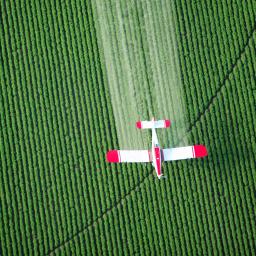
Lack of definitive evidence on widely used chemical sways scientists away from ‘probable’ rating recently given to glyphosate, the main ingredient in RoundupThe widely used farm chemical known as 2,4-D – a key ingredient in a new herbicide developed by the Dow company – “possibly†causes cancer in humans, a World Health Organisation research unit has said.
|
 |
by Australian Associated Press on (#C4M8)
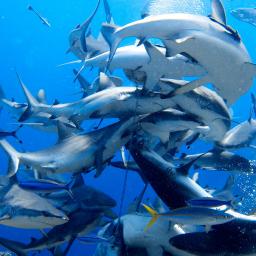
Greens MP says tagging and tracking is sensible in shark hazard mitigation and government ‘has not got a leg to stand on if it wants to kill any more of them’The West Australian government has stopped funding the only part of its shark hazard mitigation strategy that made sense, the state opposition and Greens have said.The Department of Fisheries was allocated $2m for shark tagging and tracking for the 2014 and 2015 financial years. Continue reading...
|
 |
by Associated Press in Santiago on (#C3RE)
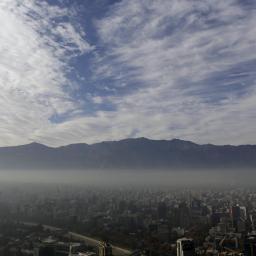
Measures relaxed on Monday night after cars were ordered off streets of Santiago, businesses shut and 7 million residents told to stay indoorsAuthorities in Chile’s capital shut down hundreds of businesses and ordered hundreds of thousands of cars off the streets on Monday as a grey carpet of smog caused an environmental emergency in the city hosting the Copa America soccer tournament.The emergency was declared ended on Monday evening after air quality improved. But the Santiago government said it still would order about 300,000 vehicles off the streets on Tuesday, a little less than half the estimated 680,000 that had to be parked on Monday, especially older cars. Continue reading...
|
 |
by Associated Press in Miami on (#C3N4)
Judges say they are ‘are sensitive to the plight of Lolita and other animals exhibited across the country’ but the killer whale’s rights were being metA federal appeals court has upheld a ruling against animal rights groups that want a captive killer whale removed from an oceanarium in Florida.
|
by John Abraham on (#C2TR)
The paper finds that global warming is putting extreme weather on steroids
by Press Association on (#C2P3)
Coalition of local businesses, academics, farmers and students says rejection of application would send message that county was not open for businessRejecting plans for test fracking in Lancashire would send a message that the county was not open for business and investment, a coalition of local businesses, academics, farmers and students has warned.Members of the North West Energy Task Force said it would be a missed opportunity to create jobs and significantly boost the local economy. Continue reading...
 |
by Michele Hanson on (#C2HN)
What good will my little contribution do if our leaders don’t wise up, though?Depressing news. The earth’s sixth mass extinction is on the way, and it’s our fault. I could have told you that ages ago, which is why my friend Clayden and I have been doing our bit to avert it and are clinging to the last remnants of biodiversity by letting our gardens grow rather wild. It’s easy for me, because it’s my garden. I can have frogs, foxes, nettles, dandelions and more bees if I so wish. But Clayden has the housing association contract gardeners to deal with, who like to shave the grass bald and hack everything else almost to death.Related: The Earth stands on the brink of its sixth mass extinction and the fault is ours Continue reading...
|
 |
by Jana Kasperkevic in New York on (#C2F6)
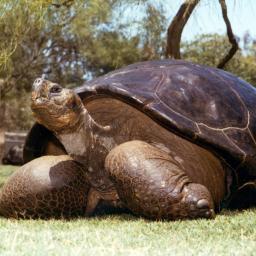
The alpha male arrived in 1933 as part of an effort to help preserve the giant tortoises that live on Cerro Azul Volcano on Isabela IslandAt more than 150 years old, San Diego’s oldest resident – a Galápagos tortoise called Speed – passed away on Friday, according to the San Diego Zoo.Speed arrived at the San Diego Zoo in 1933 as part of an effort to help preserve the giant tortoises that live on Cerro Azul Volcano on Isabela Island. Recently, the zoo has struggled to keep Speed alive through hydrotherapy, acupuncture, medication and even physical therapy. Continue reading...
|