 |
by Mark Frauenfelder on (#10JJW)
Airstream is making only 100 of these Pendelton Limited Edition trailers. They have a U.S. National Park Foundation motif, and Airstream will donate $1,000 to the National Park Foundation for each Pendleton trailer sold. The base price is $114,600. It comes with a stainless steel oven, a 3-burner cooktop, a refrigerator, 2 30-lb. propane tanks, deep-cycle-batteries, 2 Samsung HDTVs, a Blu-Ray player, and a high definition marine-grade Polk audio system. If you want the accessory kit that includes woolen blankets, a dining set, throw pillows, hand towels, you can order it separately.
|
Boing Boing
| Link | https://boingboing.net/ |
| Feed | http://feeds.boingboing.net/boingboing/iBag |
| Updated | 2026-10-21 03:17 |
 |
by Cory Doctorow on (#10JK0)
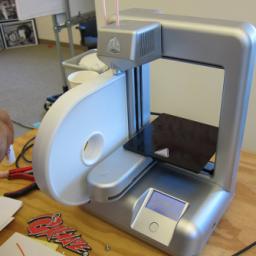
3D printing giant 3D Systems has experienced a terrible year and a change in leadership, and seems to be backing away from consumer products, meaning that it's orphaned its Cube home 3D printers. (more…)
|
 |
by Mark Frauenfelder on (#10JB3)
Mental Floss' list of 10 (More) Haunting Documentaries That Are Stranger Than Fiction (see also 10 Haunting Documentaries That Are Stranger Than Fiction) lives up to its headline. Some of these documentaries sound too disturbing for me to watch, like The Cheshire Murders (about a horrifying home invasion that took place in 2007). But others look fascinating, like The Woman Who Wasn't There (about a woman who fooled the world with her lie about being a 9/11 survivor). Watch the trailer below.https://youtu.be/StjO7udQfUgThe Woman Who Wasn't There profiles a New York City woman and 9/11 survivor named Tania Head, who managed to escape from the 78th floor of the World Trade Center, badly injured, and eventually became one of the founding members of the World Trade Center Survivors' Network. Head's story is a compelling one—even more so once you learn that none of it ever happened. Tania, whose real name is Alicia Esteve Head, fooled hundreds of people over a period of several years, pretending to be a 9/11 survivor and the widow of a man who was killed in one of the towers. Available for streaming on Hulu, The Woman Who Wasn't There profiles Head, her story, and the shocking manner in which it all unraveled.Why it’s so creepy: In archival footage, Head is shown recounting her tale of survival—in sordid detail—to cameras and survivors alike. Viewers will be chilled to the bone to witness how manipulative Head acts, and how convincing a liar she is.
|
 |
by Ruben Bolling on (#10JAH)
Follow @RubenBolling on Twitter and Facebook.Please join Tom the Dancing Bug's subscription club, the INNER HIVE, for early access to comics, and more. And/or buy Ruben Bolling’s new book series for kids, The EMU Club Adventures. Book One here. Book Two here. More Tom the Dancing Bug comics on Boing Boing! (more…)
|
 |
by Cory Doctorow on (#10J25)
The quickness of the hand deceives the eye. (more…)
|
 |
by Rob Beschizza on (#10J02)
Lenovo is on top of a shrinking market; only Apple is shipping significantly more machines this year than last, according to trade group numbers. HP is sinking fastest among the big players, but still in #2. The rest of the market ("Other") seems to be evacuating the bowels of modern life entirely, losing 20% its size last year.Both analysts blamed the drop in PC sales on a combination of factors: an economic slowdown in China; a strong US dollar; and the continuing growth of smartphones and other mobile devices. IDC also noted that free Windows 10 upgrades may have hurt PC vendors as consumers chose to upgrade their OS without forking out for new hardware. However, both analysts expect sales to pick up in 2016 as businesses—by far the largest market for PCs—start to upgrade to Windows 10.
|
 |
by Cory Doctorow on (#10HWK)
Moveon polled its members to see if enough of them supported a candidate to win the organization's support, something that's only happened once before (Obama 2008). 340,665 members cast a ballot, returning an unprecedented 78.6 majority in favor of Sanders. (more…)
|
 |
by Xeni Jardin on (#10G2T)
https://youtu.be/ANv5UfZsvZQSpaceX today published some wonderful new footage of its recent successful Falcon 9 launch and landing. (more…)
|
 |
by Cory Doctorow on (#10FT5)
The World Wide Web Consortium, which makes the standards the Web runs on, continues to pursue work on DRM -- technology that you can't connect to without explicit permission, and whose bugs can't be reported without legal jeopardy lest you weaken it. (more…)
|
 |
by Jason Weisberger on (#10FEX)
Life with a Great Pyrenees is really everything great about having a dog. My buddy, Nemo, is pretty darn amazing. It is no surprise the AKC is honoring them, today.I can not say enough good things about Nemo. He's fairly brilliant, intensely loyal, loves kids, wants to be pet and snuggled, and sticks by my side most of the day. My eight year old daughter, who is quite small, can walk him with ease. He loves his cat and his Cavalier King Charles, although he can be bossy at times.Nemo gets stopped, while we're walking, to be pet by so many folks it is ridiculous. Folks who don't like dogs, however, are mortally afraid of his size. Small dogs may try to eat him, it can be quite comical.If you are interested in a Great Pyrenees, I work with a rescue here in California that'll help you out! We've always got more dogs than I can believe. I think they should be breed of the decade.From the AKC:The Great Pyrenees dog conveys the distinct impression of elegance and unsurpassed beauty combined with great overall size and majesty. He has a white or principally white coat that may contain markings of badger, gray, or varying shades of tan. He possesses a keen intelligence and a kindly, while regal, expression. Exhibiting a unique elegance of bearing and movement, his soundness and coordination show unmistakably the purpose for which he has been bred, the strenuous work of guarding the flocks in all kinds of weather on the steep mountain slopes of the Pyrenees.American Kennel Club's Breed of the Day: The Great Pyrenees
|
 |
by Mark Frauenfelder on (#10F9E)
John Edgar Park introduced me to the gentle art of recreational lock-picking. It's fun and potentially useful to know how to tickle tumblers in the right way to open door locks and padlocks. This $17 set comes with a clear plastic padlock and a set of lock picking tools so you can see the effects of your probing and prodding. Once you get started on lock picking, you might become hooked.
|
 |
by Cory Doctorow on (#10F7F)
John Frost writes, "Great Big Beautiful Tomorrow: The Futurism of Walt Disney new documentary captures a side of Walt Disney that other recent documentaries miss. He was a lover of technology, innovation, and a futurist with an eye toward improving humanity. The whole documentary has been released online to be viewed for free by CM Films." (more…)
|
 |
by David Pescovitz on (#10EXX)
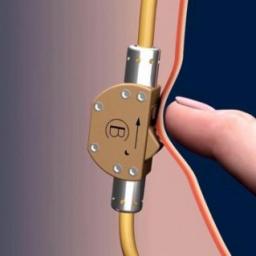
Clemens Bimek invented a shut-off valve for the vas deferens, the tubes that bring sperm from the testicles out of a man's body. The Bimek SLV Spermatic Duct Valve is essentially a vasectomy with a gummy bear-sized on/off switch that you control from outside. So far, Bimek himself is the only person outfitted with the devices. He's currently seeking investment and medical approval for commercialization in his home country of Germany and beyond. From the company site:(In 1998, while) watching a health advice program on TV, Clemens Bimek saw a segment about vasectomies, an operation he had never heard of before. He then asked himself: “Why not just insert a valve instead?†At the time he passed the patent office in Berlin-Kreuzberg everyday on his way to the construction site, where he worked. One day he decided to do some research on the topic and discovered that a few developments had already been attempted in this direction, but to him, these methods seemed overly complicated and therefore impractical. Bimek had, from that point, begun to further develop his ideas and to work on a first prototype...(In 2008, after developing the idea and prototypes) Clemens Bimek attempted to convince different urologists to perform the valve implantation on him. A few were prepared to do this, but were stopped by the ethics committee at each clinic. He finally found a microsurgical specialist, who allowed him to observe 3 vasovasostomies. The specialist stated that he was prepared to implant the valve for Bimek’s self experiment and even obtained approval from the relevant ethics committee.Bimek SLV Spermatic Duct Valve (via Mysterious Universe)
|
 |
by Cory Doctorow on (#10EVC)
Noah Scalin's "Anatomy of War" sculptures are polymer clay cutaway guns filled with colorful, wet-looking human viscera. (more…)
|
 |
by Cory Doctorow on (#10ESG)
New Yorker staff writer Jane Mayer has a new book coming out, Dark Money, which chronicles the influence of a small handful of ultra-rich dynastic American families on US politics. (more…)
|
 |
by Jason Weisberger on (#10ER0)
Appears the new open carry laws in Texas, which have expressly allowed guns onto College campuses and into psychiatric hospitals, are back firing against open and concealed carry enthusiasts. Private business and property owners can ban firearms from their property by either posting signs, or verbally informing armed people they are not welcome to carry their weapons. Firearms enthusiasts are finding a lot of new signs around Texas.The Trace has observed a wonderful exchange on a Texas gun rights forum:Others had a more measured responses. “I would LOVE to OC everywhere I go,†Lynyrd wrote. “The fact is, it makes some people uncomfortable. Time may change that, but it will take years.†He cautioned his fellow gun owners to remember that “most all of the places we go outside our homes is still PRIVATE PROPERTY.†(Business owners can verbally notify open-carrying customers that they are not welcome in their establishments, regardless of whether a sign is posted or not.)Weighing in again, the original poster, LTUME1978, felt that for Texas’s concealed carriers, the damage had been done. “The lid is off this can of worms and it will never go back,†reads a later post in the thread. “I hope the right to walk around looking like Wyatt Earp is worth it to the open carry folks because a lot of us are loosing our right to concealed carry and it may cost some of us our lives for your privilege to play cowboy.â€
|
 |
by Cory Doctorow on (#10E9C)
In Canada, as in the UK and many other countries (including the USA, until the mid-2000s), the big telcos are required to wholesale their lines to small, upstart competitors as payback for access to rights-of-way and municipal infrastructure. This results in more competition, faster connections, and cheaper service for residents. (more…)
|
 |
by Cory Doctorow on (#10E3P)
Because a PIN-pad is so constrained and predictable, the accelerometer in your smartwatch is able to guess with a high degree of confidence (73%) what you enter into it -- it can also serve as a general-purpose keylogger, though with less accuracy (59%), thanks to the complexity of the keyboard. (more…)
|
 |
by Mark Frauenfelder on (#10BXN)
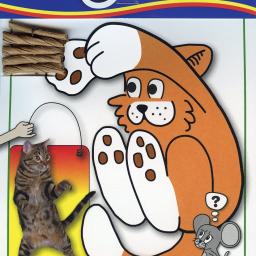
The Cat Dancer is a 30-inch piece of wire with some little cardboard cylinders on the end. My cats go crazy for it. I stuck it on the wall with the adhesive mount, but I ended up taking it off so I could hold it and play directly with my cats. That way they won't get bored as quickly. Now they start meowing when they see me take it out of the drawer. It's $2 on Amazon.
|
 |
by Trevor Timm on (#10BXQ)
In July 2015, Freedom of the Press Foundation sued the Justice Department (DOJ) over the agency’s secret rules governing how the FBI can target members of the media with due process-free National Security Letters, and we have just received documents back in the ongoing lawsuit. (more…)
|
 |
 |
by Cory Doctorow on (#10BTE)
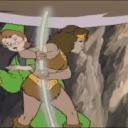
The Retroblasting Youtube show -- which covers the 1980s cartoons that were made as 22-minute ads for toys after Reagan removed regulations aimed at protecting children from televised exploitation -- takes an in-depth look at the Dungeons and Dragons cartoon, a rare example of a show from the era that didn't have a toy tie-in. (more…)
|
 |
by Wink on (#10BRK)
See sample pages from this book at Wink.There are few graphic novelists living today who can command such a dramatic level of respect as Stan Sakai. For over 30 years, Usagi Yojimbo has been winning Eisner awards and rewarding fans with the ongoing tales of the ronin rabbit, Miyamoto Usagi. While it’s certainly not unusual for funny book heroes to stick around from generation to generation, it’s almost unheard of for a character to be written and drawn by the same creator for three decades and counting. Usagi Yojimbo: The Special Edition captures the first seven years and over 1100 pages of the titular lagomorphic swordsbunny, and this two-volume set is a bona fide comic treasure. When I was a kid, I was a big fan of the Teenage Mutant Ninja Turtles, and I had most of the old action figures. My favorite was, by far, Usagi Yojimbo (his figure was objectively the coolest); however, I only had the vaguest of notions that Usagi was not just a Ninja Turtle guest star, but a title character in his own comic series. It took me a few years of comics fandom to figure out that Usagi Yojimbo was serious business. Usagi has even appeared in other characters' books, Sergio Aragonés' Groo being a notable example (Sakai provides the lettering for Groo, and has for many years). Usagi gets around, and it’s no wonder; there’s something absolutely satisfying when anthropomorphized animals are given room to be more than just cartoons.Sakai effortlessly weaves Japanese history and folklore into Usagi Yojimbo, and this immaculate attention to historical detail is one of the series' greatest strengths. Drawing basic inspiration from the real-life exploits of the famous, 16th-century samurai Miyamoto Musashi, Sakai places Usagi Yojimbo into tales that both parallel and evoke stories from all corners of Japanese culture and myth; the films of Kurosawa, the manga of Kazuo Koike (Lone Wolf and Cub), the historical sagas of Tokugawa Japan – everything is fair game for Sakai’s interpretation. This series feels like Japan, distilled and composed with asymmetry, negative space, and an eye towards grand adventure. Recurring allies bring hijinks, humor, and camaraderie, while rivals and villains lurk in the countryside, surprising an unsuspecting Usagi with carefully laid traps and devious schemes. Through it all, Usagi, ever the pragmatic and unwavering student of bushido, relies on his wits and his consummate skill in the double-sword style to overcome all challenges. While the hardcover edition of Usagi Yojimbo: the Special Edition can be hard to come by (and hard on the wallet), the softcover version featured in this review is a perfect alternative. Included in the set is a gallery of full-color cover images, an introduction by Stan Lee, essays by the author, and other bonus material. This two-volume set might just be a must-own for comics fans of all ages. – Garrett GottschalkUsagi Yojimbo: The Special Editionby Stan Sakai, introduction by Stan LeeFantagraphics2015, 1160 pages, 7.2 x 10.6 x 2.8 inches (softcover)$47 Buy a copy on Amazon
|
 |
by Cory Doctorow on (#10BM1)
Today is the third anniversary of Aaron Swartz's death. Lisa Rein writes, "In memory of Aaron, I transcribed Brewster Kahle's amazing talk from the San Francisco Memorial in 2013.He explains the simple qualities and goals of Aaron's 'Open Source Life,' how those goals were so greatly misunderstood by the powers that be, and how we can all work together to make positive changes in these areas in the future, for the benefit of the greater good." (more…)
|
 |
by Cory Doctorow on (#10BM3)
Joel Stein paints an incredibly sympathetic portrait of Sanders, painting him as a genuine true believer whose political tenures have been marked by equitable successes that benefited all his constituents, not just the rich and powerful. (more…)
|
 |
by Cory Doctorow on (#10BHE)
The company makes ignition interlock breathalyzers that are mandated by courts as a condition of driving after DUI convictions. (more…)
|
 |
by Carla Sinclair on (#10BHJ)
https://youtu.be/_EKZ7gjw5m0Here’s some great music from David Bowie that I didn’t know about until today. Even though it was created over 15 years ago it would fit in perfectly alongside his newly released Blackstar.Released around 2000 for PC and the ill-fated Sega Dreamcast, Omikron was a strange hybrid game that let players do a bit of body snatching around the titular science fiction city…Bowie is said to have had some input into the storyline, but his most memorable contributions are to the soundtrack and of course his in-game cameos. 'Hours...', the 1999 album Bowie released just prior to the debut of the game, featured a number of songs that had been written just for the game, but were slightly reworked so that they were not so specific to the sci-fi world. They would appear on the Omikron soundtrack in more tribal, remixed forms alongside original instrumentals Bowie also composed for the game.Read more on Atlas Obscura.
|
 |
by David Pescovitz on (#10BBM)
Hervé Villechaize, who most famously played Tattoo on TV's "Fantasy Island," sings his song "Why?" on TV in 1981. The bizarre video effects are from the original clip. (The uploader dubbed the audio from his 7" vinyl record of the song.)And just for posterity, here's a poorer-quality copy of the video with the original audio track.(Thanks, UPSO!)
|
 |
by Mark Frauenfelder on (#10B76)
Somebody will win the $1.3 Billion Powerball lottery, but it won't be me and it won't be you.
|
 |
by Cory Doctorow on (#10AZ6)
"Let's play" videos are a hugely popular online genre in which gamers narrate their playthroughs of games that excite and challenge them. (more…)
|
 |
by Cory Doctorow on (#10AX3)
Kikkerland's $10 3D glasses contact-lens cases get awesome reviews, and are certainly an eye-catching improvement upon the standard plain-plastic version. (via Canopy)
|
 |
by Cory Doctorow on (#107JN)
In a gorgeous animation, Malin Christersson shows how much simpler it is to plot out celestial mechanics when you assume that all the bodies in our solar system are in orbit around the sun, rather than the other way around. (more…)
|
 |
by Cory Doctorow on (#107GP)
In the month since network security giant Juniper Networks was forced to admit that its products had NSA-linked backdoors, the company's tried a lot of different strategies: minimizing assurances, apologies, firmware updates -- everything, that is, except for removing th Dual_EC random number generator that is widely understood to have been compromised by the NSA. (more…)
|
 |
by Boing Boing's Store on (#1070P)
Never lose track of your pet again thanks to the Tractive® GPS Pet Tracking device. This life-saving device attaches to your dog, cat or any other pet and allows you to view their live location on an interactive map. You can even trigger the “LIVE tracking function†to get real-time updates every other second. It’s the best choice you can make for your pet’s safety, and your peace of mind.Requires service of 6.99 USD per month or 64.99 USD per year (no minimum time, cancel anytime)View your pet’s current location on a map in real-timeDefine a Safe Zone & get notified when your pet leaves the designated areaRetrace your pet’s steps for up to the last 24 hoursGet a reminder when your battery is getting lowReceive an 100% waterproof trackerGet an alert when your pet crosses your virtual fenceSee your pet’s location on any mobile device or web appFind your pet in the dark w/ the built-in lightSave over 20% on the Tractive GPS pet tracking device.
|
 |
by Jason Weisberger on (#105KX)
Today marks the 136th anniversary of the death of our noble leader, Norton I, Emperor of the United States, Protector of Mexico, and proto-Happy Mutant. Celebrate his many great, and lasting contributions to San Francisco bay area culture!(h/t Bjorn Pave!)
|
 |
by Xeni Jardin on (#103F6)
A tumblog of greatness: “dogs that have their tongue sticking out just a little.†(more…)
|
 |
by Xeni Jardin on (#103DB)
[WARNING: FLASHING LIGHT IN THIS VIDEO MAY BE DANGEROUS FOR PEOPLE WITH CERTAIN MEDICAL CONDITIONS]In case you were wondering, this is what a laundry cycle looks like from inside the clothes washing machine. (more…)
|
 |
by Wink on (#102WT)
See sample pages from this book at Wink.Enough Astronaut Blood to Last the Winter is a beautiful travelogue of stasis with three covers to choose from. It’s a seemingly disconnected series of images, photographs, and prose-poems that serve as a diary of artist Derek Van Gieson’s New York City experience. Collected in this manner by Fantagraphics Underground, though, they convey a story thick with the weight of being trapped in the expanse of a moment. Here, there is a visceral sense of confinement, and, through Van Gieson’s art, there is both acceptance of the walls and a longing for change. While not a graphic novel in the traditional sense, Enough Astronaut Blood to Last the Winter is still narrative. The reader understands mood more than movement, but even in this there is still a beginning, middle, and end. So many of Van Gieson’s inky portraits have a surreal sense of disconnect, as much as they convey discontent. His subjects mostly look away, askance, from the viewer, or have their eyes covered completely by hair or by shadow. Many of the photographs are of his subjects caught in the midst of liminal moments, between this and that, indecisive and unsure of how to proceed. And his prose-poems further the sense of unbecoming that suffuses the book as a whole. They are often grounded in the experience of the day-to-day, yet twist out into hypnagogic landscapes and scenarios, as if the “now†only leads to the impossible and the reality of the minute is unfathomable as it stands. In a way, Enough Astronaut Blood to Last the Winter also serves as a prequel for his wonderfully wild graphic novel Eel Mansions (published by Uncivilized Books). Moments and characters and tones stand here in their nascent beauty awaiting the exploration and heft that Van Gieson gives them in his later work. What Enough Astronaut Blood to Last the Winter conveys best, though, is the immeasurable talent of Derek Van Gieson to communicate and reveal the emotional truth of the moment. This book is new-form autobiography in which we understand the creator by understanding his creations. It is a diary comic that takes the static moment of the individual experience and casts it into the undulations of the universal “us†to recognize as our own.– Daniel ElkinEnough Astronaut Blood to Last the Winterby Derek Van GiesonFantagraphics Underground2016, 264 pages, 8 x 10 inches (softcover)$30 Buy a copy at Fantagraphics
|
 |
by Mark Frauenfelder on (#102T6)
View post on imgur.comA couple of days ago I posted a video of a raccoon that dipped a block of cotton candy in water and became confused when it dissolved instantly. What I didn't know is that the video was part of a longer video that shows that the raccoon learned on the third time not to dip cotton candy in water.
|
 |
by David Pescovitz on (#102Q0)
This killer 1977 "Smokey and the Bandit" Pontiac Trans Am, customized by Universal Studios to promote the classic Burt Reynolds/Jackie Gleason film at car shows and other public events, will be sold at auction on January 30! Original Smokey and the Bandit trailer below. From the auction listing at Barrett-Jackson: Burt Reynolds and McLaughlin Museum present the 1977 Universal Studios Promo Bandit Trans Am from the movie "Smokey and the Bandit." It has been frame-off restored and matching-numbers PHS-documented. Own a piece of history related to one of the most recognized movies of all time. We all loved watching Smokey chase the Bandit in that black Trans Am. Includes Universal Studios certificate listing the VIN of this car, a plaque from General Motors showing the car was used to promote the movie and Universal Studios maps showing scene locations. Title states Universal Studios Promo. Promoted and autographed by Burt Reynolds. https://www.youtube.com/watch?v=OH5KNcFRZLQ
|
 |
by David Pescovitz on (#102KQ)
From Sunday night's upcoming episode "Teenage Mutant Milk-Caused Hurdles." Last week, our sister site "Doing Doing" was mentioned on the show, so you just know The Simpsons are still relevant!
|
 |
by Jason Weisberger on (#102H6)
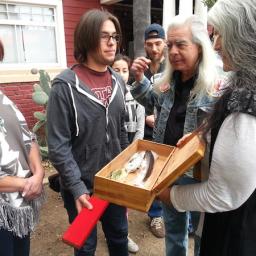
Caroline Ward Holland and her son Kagen toured all 21 California missions, on foot, this summer. They took this walk "in order to protest the Junipero Serra canonization, to honor their ancestors and 'to tell the truth.'" reports Mark Day, at Indian Country Today. The adventure sounds grueling, while at the same time restorative, saddening, and highly informative. What Caroline and Kagen found should come as no surprise. While the history of the missions and missionaries are glorified, the native people they enslaved and killed, through overwork and disease, are forgotten. From Sonoma Caroline and Kagen walked three days to Mission San Rafael. “It was tough, she said, “but I thought about the ancestors’ walks. They had been removed from their land. Their children had been taken from them. They had little food or water, and they didn’t know where they were going.â€She described a plaque at Mission San Rafael with a message from a friar recounting the number of baptisms, but with no mention of burials. And when she inquired about the mission cemetery, a park official said the Indians were buried “under the parking lot.â€This would be a constant theme as they made their way south. At most missions, little care was given to Indian burial sites that are often paved over.I was educated in the California public education system. We were taught the native people welcomed the missionaries and pretty much thanked them for destroying their way of life. Clearly, this is not true.Thanks to Caroline and Kagan for undertaking this epic trip!Via Indian Country Today Media Network
|
 |
by Jason Weisberger on (#102FJ)
I've always loved sharing artist Gus Harper's work. Regardless if it is time-lapse videos of Gus working, photos our readers have told me ARE safe for work, or just news about a forthcoming show. This time I get to share something special! Gus painted the owl above for me, to fix my living room and get me out of a funk.Commissioning a piece of art from Gus was a lot of fun! I was reluctant to give him any direction beyond showing him some photos of the wall in question and my living room, but thankfully Gus knew what he was doing. We talked about prior pieces of his that I particularly enjoy and focused on his paintings of Lions. I'm not the only one who loved that series, and one piece was featured in the recent biopic on N.W.A. Straight Outta Compton, decorating Dr. Dre's office. A lion, however is not the animal for that wall. Gus promptly noted that my shelves, and most every flat surface, were filled with owls that I have collected over the years. Serendipitously, Gus had just painted his first owl, ever, a week or so before, just for fun and was itching to work on a larger piece. Sketches flew back and forth, I changed the color of the wall the painting would sit on, and got a new rug. When Gus' painting showed up, I knew my living room was right... for the time being. Gus has been up to a lot more than just decorating Hollywood movies, and my home. The video below, by Taegen Carter, shows Gus at work and talks a little about what is influencing him. He recently completed a mural in our hometown of Santa Monica, to much local delight, and is showing work all over the place this year. https://vimeo.com/146454996Thanks, Gus!
|
 |
by Carla Sinclair on (#102CZ)
IKEA isn’t just the largest furniture store in the world. It’s also the amusement park of shopping malls – or a claustrophobic shoppers’ hell, depending on both your mood and how mobbed the winding labyrinth of Swedish goods happens to be on any given day.But did you know that there are secret shortcuts for those who just want to get in and out? The public is allowed to use the shortcuts, but there is no map on where they are. In fact, the shortcuts frequently change so that savvy customers don’t get used to them and bypass the megastore’s intended walkway.The walkway, by the way, has a code name: Long Natural Way, aka Long Natural Path. Speaking of codes, if you hear an employee announcing “Code 99!†there’s a lost kid roaming the path. If you hear an urgent “Code 22!†blasting through the speakers there are long lines at the registers and help is needed.If you’re a confused customer there isn’t a code – you’ll have to find an employee and ask for help. Employees are told not to approach customers to see if they need anything (this is the Swedish way).After hours IKEA actually does become an amusement park, with employees moving the walls (yes, the walls move) to play hide-and-seek and compete in pallet jack races. To add to the merriment, at the end of the year employees receive awesome holiday gifts including electronics and even plane tickets.Many more Behind the Scenes Secrets of IKEA Employees can be found here. Makes IKEA almost as intriguing as Disneyland!Thanks Mental Floss!
|
 |
by Heather Johanssen on (#102B3)
Copy cats aren't always annoying, sometimes they're adorable.
|
 |
by Cory Doctorow on (#10279)
Sculptor Sebastian ErraZuriz rescued a damaged stuffed goose from a taxidermy museum's trash and turned it into a "gooseneck" lamp.Rescued from the trashcan of an old taxidermy museum, the taxidermy bird with a broken neck get’s given a new life as and reconstructed to become an iconic classic. The Duck Lamp by New York based artist and designer Sebastian ErraZuriz is an eerie, yet funny and beautiful object that explores the borders between sculptural and functional of both art and design.DUCK LAMP II [Sebastian ErraZuriz](via Neatorama)
|
 |
by Cory Doctorow on (#1021K)
Though Iran won't actually execute people under 18, their courts will readily sentence children as young a nine to physical punishment, including death, and hold them in inhumane, crowded conditions until they are old enough for their sentences to be carried out. (more…)
|
 |
by Cory Doctorow on (#10216)
Piet was named for Piet Mondrian, and its programs look like Mondrian paintings -- which makes Mondrian Turing-complete. (Shown above: a Piet "Hello World" program.) (more…)
|
 |
by Cory Doctorow on (#101W2)
It's been a year since the horrific Charlie Hebdo attack and the subsequent outpouring of defense of free speech from all quarters -- the insistence that free societies demand tolerance of viewpoints, even deeply offensive ones. (more…)
|
 |
by Rob Beschizza on (#101V4)
Oskar Stalberg's online game/toy "Polygonal Planet Project" runs in the browser and lets you design your own wee planet. You can raise and lower land, ice, forests and cities in a way similar to Amiga classic Populous, and watch the 3D globe rotate.It's pretty hard on the old CPU—my little Macbook struggled with any world larger than the smallest option—but lights a strange little fire in the creative part of my mind. He also made one for 3D houses, which is just as much fun!Update: "Or download a faster version for your desktop at: http://oskarstalberg.com/game/planet/planet.rar"
|