 |
by David Pescovitz on (#4AXNV)
In this delightful project, Will Gudgeon turned a frozen chocolate easter egg into a fun and effective pinhole camera. The first step is to eat the contents. "The main challenges were it melting, cracking and light leaks around the seal," Gudgeon writes. "How to Make a Pinhole Camera Out of a Chocolate Easter Egg" (PetaPixel) Read the rest
|
Boing Boing
| Link | https://boingboing.net/ |
| Feed | https://boingboing.net/feed |
| Updated | 2026-09-08 11:20 |
 |
by Mark Frauenfelder on (#4AXNX)
In today's stunning news of a college bribery scandal alleging that ultrawealthy, well-connected, privileged elites conspired with a college preparatory business to falsify their children's test scores and bribe university officials to get them into the country's top schools, is this bit of high-weirdness, reported in CNN:In one case, [Rick Singer, founder of the college prep firm called The Key] even worked with parents to take staged photos of their child engaged in particular sports. In another example, they used stock photos of a person playing a sport and then put the face of a student onto that of an athlete via Photoshop, prosecutors said.The two most famous parents of those indicted are actresses Lori Loughman and Felicity Huffman, but the full list also includes a number of Silicon Valley and LA power players, including investor William "Bill" McGlashan, who co-founded a social impact fund called The Rise Fund with U2's Bono and eBay co-founder Jeff Skoll, and Jane Buckingham, CEO of Trendera, a boutique marketing firm in LA. Read the rest
|
 |
Watch: The Inventor documentary trailer about the rise and fall of Theranos grifter Elizabeth Holmes
by Carla Sinclair on (#4AXNZ)
The Inventor: Out for Blood in Silicon Valley, HBO's documentary about fraudster Elizabeth Holmes, who started her multi-billion-dollar healthcare company Theranos when she was 19-years-old, airs on March 16. That gives me six days to finish the highly-engaging Theranos bio, Bad Blood: Secrets and Lies in a Silicon Valley Startup, by Wall Street Journal reporter, John Carreyrou, if I don't want any book spoilers. Here's the trailer to whet your appetite. Read the rest
|
 |
by Jason Weisberger on (#4AXJ0)
According to a new poll, two old white guys with troubled records on everything from race, misogyny, and guns lead the Democratic party's list of potential Presidential candidates.The Hill:Former Vice President Joe Biden is leading the field of Democratic presidential candidates and likely candidates in Michigan, according to a new poll.The Emerson College poll shows Biden leading the field with the backing of 40 percent of registered voters surveyed. Sen. Bernie Sanders (I-Vt.) is a distant second, with 23 percent.Biden has not yet announced a bid for the White House but is reportedly likely to enter the race.Behind Biden and Sanders, Sen. Kamala Harris (D-Calif.) received 12 percent of the vote and Sen. Elizabeth Warren (D-Mass.) received 11 percent. No other candidates received more than 5 percent, the poll found.If Biden does not jump into the race, respondents shift a large number of votes to Sanders, according to the poll. The poll shows that 42 percent of registered voters would back Sanders if Biden does not become an option, followed by Harris, at 23 percent, and Warren, at 18 percent. Read the rest
|
 |
by David Pescovitz on (#4AXH2)
This unidentified fellow barely missed being crushed by bricks and rubble falling off a building on London's Stoke Newington High Street. According to the BBC, the collapse was likely caused by high winds in the region. Read the rest
|
 |
by Mark Frauenfelder on (#4AXH4)
"My dad is sad cause no one is coming to his new donut shop ðŸ˜," tweeted the son of the proprietor of Billy's Donuts in Missouri City, Texas. The brilliant marketing move resulted in a sell-out of donuts and kolaches. From Houstonia:By Sunday afternoon his tweet was retweeted more than 150,000 times. By Monday morning? More than 260,000 times. To put that in perspective, the 30th most retweeted tweet in Twitter history (by South Korean boy band BTS) has about 630,000 retweets....On Monday morning, Billy was being interviewed by other local news stations and working on a potential CNN spot, while representatives from Twitter were on hand greeting customers. Yes, Twitter. They bought out the store for the morning, meaning everyone’s order was on them. (Representatives wouldn’t comment on the record about their presence at the shop.) And while Billy played gracious host, Satharith kept busy in the back, and an aunt worked the cash register. It all seemed surreal that within 48 hours, this family-owned Cambodian donut shop in Missouri City had become something of an epicenter of social media Just wanted to update yall! We completely sold out of donuts and kolaches! You are all amazing. I can't thank everyone enough for coming out and supporting local businesses. This means so much to my family pic.twitter.com/o3GQcKvVnG— billy's donuts (@BillysDonutsHTX) March 10, 2019Image: Twitter Read the rest
|
 |
by Jason Weisberger on (#4AXH6)
I've been holding steady at my target weight for over 5 months, despite numerous back injuries and setbacks. At the heart of my fitness routine is a homebrew Peloton cycle.More often than not I forget that my Sunny Bike actually relieves back pain. When I'm sore or struggling with my lower back, the go-to impulse is to stop riding. A single ride can help release tension or trick some mildly spasming muscles into stopping. It also burns lots of calories, makes my body look a lot better and rapidly becomes addicting to the point I have to manage how many times a week I ride.As part of local tradition, I was body shamed during a visit to Los Angeles last July. A friend pointed out that I had gained more weight than they had seen on me. I had gained about 15 lbs above where I had been comfortably sitting, pedaling away on my Sunny Bike and watching Dr. Lupo stream on Twitch 2-3 times a week. Affectionally I referred to those 15 lbs the Fortnite 15.I decided I'd had enough and immediately went on a diet that I know works for me. I started hitting the bike! I gave up on Twitch and started riding along with 45-minute classes led by Dennis via the Peloton app. I also started a pretty serious regimen of abdominal workouts as prescribed during prior physical therapy. I felt great, lost tons of fat and built a lot of muscle! I got addicted to riding the bike and had to force myself to take days off. Read the rest
|
 |
by David Pescovitz on (#4AXH7)
Next year, New York City public schools will initiate "Meatless Mondays" as part of their lunch program. Students will be served all vegetarian food for breakfast and lunch. (Note: photo above for illustrative purposes only. Not representative of actual school cafeteria menu.) From CNN:"Cutting back on meat a little will improve New Yorkers' health and reduce greenhouse gas emissions," de Blasio said at a news conference. "We're expanding Meatless Mondays to all public schools to keep our lunch and planet green for generations to come..."School leaders in New York said doing this just makes good sense."For those who scoff at this notion, I have some simple advice: Look at the science," Staten Island Borough President James Oddo said. "Look at the data. Look at the childhood obesity. Look at pre-diabetes diagnoses. Look at the fact that 65% of American kids age 12 to14 shows signs of early cholesterol disease. Then, perhaps you will embrace the fact that we can't keep doing things the same way, including welcoming the idea of Meatless Mondays." Read the rest
|
 |
by Rob Beschizza on (#4AXBZ)
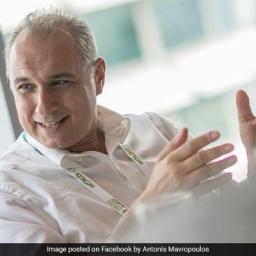
Antonis Mavropoulos ran through the airport to catch his flight, missing it by two minutes. He demanded to be let on, for them to open the gate. He watched the passengers in the bellows board the plane.Three hours later, as he was boarding the next flight to Nairobi, two security guards escorted him to the airport’s police station, over his loud protests — he did not want to miss his meetings in Nairobi.But an official explained that he should “stop protesting and thank God,†instead. They could not let him leave before they had established who he was and why he had not boarded the flight, which had crashed. Read the rest
|
 |
by Cory Doctorow on (#4AXC1)
Every 90 minutes, the office phones of all five FCC Commissioners rings and John Oliver's voice comes out of it, demanding that they take action on robocalls, reversing FCC Chairman (and former Verizon exec) Ajit Pai's policy of relying on carriers to self-police their anti-robocall measures, and heading off his plan to gut the existing, weak protections.When it came to robocalling the FCC, Oliver didn't need viewers' help. "This time, unlike our past encounters [with the FCC], I don't need to ask hordes of real people to bombard [the FCC] with messages, because with the miracle of robocalling, I can now do it all by myself," Oliver said."It turns out robocalling is so easy, it only took our tech guy literally 15 minutes to work out how to do it," Oliver also said. He noted that "phone calls are now so cheap and the technology so widely available that just about everyone has the ability to place a massive number of calls." (We discussed that problem, with a focus on spoofed Caller ID, in this 2017 feature.)Under US law, political robocalls to landline telephones are allowed without prior consent from the recipient. Such calls to cell phones require the called party's prior express consent, but Oliver presumably directed his robocalls to the commissioners' office phones.John Oliver fights robocalls… by robocalling Ajit Pai and the FCC [Jon Brodkin/Ars Technica] Read the rest
|
 |
by Albert Fox Cahn on (#4AXC3)
Imagine being falsely accused of a crime, and even though you know you did nothing wrong, you’re forced to wear a tracking device that monitors every time you leave the house: where you go, when, and for how long. Even though you’re completely innocent, suddenly every errand and day trip is recorded, indefinitely, to be scrutinized, analyzed, and maybe even used against you. Go to the doctor? They know. Go to AA? They know. Go anyplace where you prize your anonymity, and the government will still know.Under Los Angeles’s new Mobility Data Specification, this could become the reality of millions of Angelenos in the coming months. No, I’m not actually talking about accused criminals — these Californians are charged with any no crime — rather, Los Angeles will deploy a massive surveillance dragnet targeting the less than menacing threat posed by…bikes and scooters. That’s right, a city-wide, real-time tracking network, a veritable Orwellian surveillance state, targeting the same sort of scooters popular with middle schoolers.Bikeshares and e-scooters have proliferated throughout the country, the bicycle or scooter equivalent of rideshares like Uber or Lyft. Users use an app to find the bikes and scooters throughout the city, renting them for short periods, and then dropping them off wherever it is most convenient. Whatever you think of these bikes and scooters, most of us don’t think they’re the sort of national security threat that requires us to tear-up the Fourth Amendment and destroy the right to privacy. Sadly, Los Angeles Disagrees. Read the rest
|
 |
by Cory Doctorow on (#4AX7T)
Back in 2016, The Intercept ran a blockbuster series revealing how foreign businesspeople were illegally laundering massive campaign contributions to Jeb Bush and other GOP presidential hopefuls.Yesterday, The Intercept's hard work paid off, with the FEC levying record fines against the people named in The Intercept's investigation: $550K to APIC (US affiliate of SingHaiyi Group, a Chinese-owned, Singapore-based real estate firm) and $390K to Right to Rise USA, overseen by the GOP superlawyer Charlie Spies.What tripped up APIC and Right to Rise USA was a failure to follow the remaining weak restrictions on foreign participation in U.S. elections. According to the FEC, only American citizens may participate in the decision-making process regarding donations from a foreign-owned corporation such as APIC — leaving out foreign individuals such as Gordon Tang and Huaidan Chen.However, The Intercept’s investigation revealed that the donations to Right to Rise USA were made under the direction of Gordon Tang. In an interview with The Intercept two years ago, Tang told us that his brother-in-law, Wilson Chen, had asked him to “donate, so I did, I don’t really mind.†Wilson, for his part, told us that the donation had been approved by APIC’s board, which included Tang and Chen.In the course of its investigation, the FEC confirmed that Tang had engaged in “communications regarding the potential APIC contributions to Right to Rise.†The agency also obtained emails from early 2015 that show that Neil had contacted his fellow board members at APIC about providing financial support for his brother’s presidential campaign. Read the rest
|
 |
by Cory Doctorow on (#4AX71)
A few years ago, a friend of mine, Nico Sell (who runs the Defcon kids' programming track r00tz) asked me to join the advisory board for her startup, Wickr, which does "ephemeral messaging," a subject that is greatly in the news with Facebook's recent announcement of a new kind of "ephemeral messaging" option.I was very skeptical when Nico asked me to join Wickr's advisory because I thought that it wouldn't work: if I don't trust you and I send you a message, even a disappearing message, you might screenshot it or just take a picture of it with a camera before it disappears. But Nico set me straight: Wickr is for people who trust each other's good intention, but not each other's ability to perfectly remember to delete stuff after they're done with it. This is a real problem for lots of us: I always assume that when I cross a border that anything on my phone might be liable to search and seizure, and since I have people who send me stuff in confidence (journalistic sources and even just friends discussing personal matters) I always go through all the different messaging systems I use and delete that stuff in advance. Ephemeral messaging systems relieve people of that burden. I sometimes realize -- after crossing a border -- that I forgot to delete my Twitter DMs or some other obscure kind of message on my phone. I would love it if all the services I used let me set a default delete-by date of, say, one week. Read the rest
|
 |
by Rob Beschizza on (#4AX73)
You know that what you're playing is a little more than an attention trap devised by ironists or perhaps even psychologists, barely fun in any meaningful sense, a dopamine reward mechanism veiled only minimally in story, character, art or music. And yet you play, on an on, hour after hour.William Hughes on the genre from hell:There’s something extra humiliating about being addicted to a genre of games that literally started as a joke about the depths to which players might sink; the earliest examples of the genre were stuff like Progress Quest and Cow Clicker, which were meant to satirize “progress†in video games by breaking it down to its simplest mechanism: Number goes up, brain feels good. But Cow Clicker inevitably begat Cookie Clicker, which—while still a comedy game, what with its Lovecraftian horde of baking-obsessed grandmas—steered further into the compulsive cycle. And from there, a million repetitive, sleep-destroying ships were launched. Read the rest
|
 |
by Cory Doctorow on (#4AX75)
If you wear glasses, you might have noticed that they've been getting steadily more expensive in recent years, no matter which brand you buy and no matter where you shop.That's because a giant-but-obscure company called Luxottica bought out Sunglass Hut and Lenscrafters, then used their dominance over the retail side of glasses to force virtually every eyewear brand to sell to them (Luxxotica owns or licenses Armani, Brooks Brothers, Burberry, Chanel, Coach, DKNY, Dolce & Gabbana, Michael Kors, Oakley, Oliver Peoples, Persol, Polo Ralph Lauren, Ray-Ban, Tiffany, Valentino, Vogue and Versace); and used that to buy out all the other eyewear retailers of any note (Luxottica owns Pearle Vision, Sears Optical, Sunglass Hut and Target Optical) and then also bought out insurers like Eyemed Vision Care and Essilor, the leading prescription lens/contact lens manufacturer.Controlling the labs, insurers, frame makers, and all the major retail outlets has allowed Luxottica to squeeze suppliers -- frames are cheaper than ever to make, thanks to monopsony buying power with Prada-grade designer frames costing $15 to manufacture -- while raising prices as much as 1000% relative to pre-acquisition pricing.It's even worse for lenses: a pair of prescription lenses that cost $1.50 to make sell for $800 in the USA.LA Times columnist David Lazarus wrote a column about skyrocketing eyewear prices and was approached by Charles Dahan, who once owned one of the largest frames companies in America, Custom Optical, which supplied 20% of the frames sold at Lenscrafters prior to the Luxottica acquisition. Read the rest
|
 |
by Rob Beschizza on (#4AX21)
No-one was killed in the bus, which was empty of passengers, but the driver suffered serious burns. The explosion was caused by a "traffic accident," say authorities; the vehicle runs on natural gas, the tank is on the roof, and it tried to enter a low tunnel. Read the rest
|
 |
by Rob Beschizza on (#4AWWN)
The BBC reports that Australia and Singapore have disallowed Boing's 737 MAX series from flying in or our of their airports, joining other countries in grounding the jets.The decision comes after an Ethiopian Airlines Boeing Max 8 crashed on Sunday, killing 157 people on board. It was the second fatal accident involving that model in less than five months. Singapore's Changi Airport is the world's sixth busiest and a major hub connecting Asia to Europe and the US.China and Indonesia have also suspended the new 737 models, but U.S., European and Canadian carriers haven't followed suit. The US Federal Aviation Administration insists that it's safe to fly. You can ask your airline or at the gate, but savvy travelers say the most reliable way to find out if you're booked for a flight on the Boeing Deathliner is to look up the flight number on a flight-tracking app. If previous flights were on one, yours very likely is too.Boing 737 MAX 8s are straight up haunted. pic.twitter.com/701EtrS6Zr— Rob Beschizza (@Beschizza) March 11, 2019Photo: Shutterstock. Illustration: Beschizza. Read the rest
|
 |
by Jason Weisberger on (#4AW3H)
Star Wars Knights of the Old Republic is one of the most beloved video games of all time. Ride along as I miserably stumble my way through an award-winning game 16 years after its release.There is some great Star Wars backstory left forgotten by all but the most knowing fans! We can uncover it, or just read the faq.I have never played all the way through this game, and only recently realized it had both been "Enhanced" with updated graphics for the Xbox One X in 2018. The Darth Revan story is famous tho. Star Wars fans can bring it up as a trump card in any discussion. Now I will be able to say "Yeah, I played through on the Xbox enhanced!" This should quiet all but the folks who have played the numerous mods.I will be able to join their ranks. I'm usually auto-leveling my characters, and I keep forgetting to be "dark" but I really do mean ill.Tonight I am about to close out the first major level, and leave the planet Taris... once I steal a ship and escape the Sith. Then it isoff to Dantooine where I train as a padawan.I'm sure I'll make a great padawan. The best.The RPG from 2003 is surprisingly fun to play. I did not enjoy the most modern hit RPG Red Dead Redemption 2, but I am very happy to play through this game and looking forward to the enhanced version of KOTOR 2. Read the rest
|
 |
by Xeni Jardin on (#4AVW8)
Because it's nice to cuddle up with a friend sometimes.“Poppy the dachsie tucking himself in.â€Prepare to say awww....[Source] Read the rest
|
 |
by Xeni Jardin on (#4AVWC)
“He is very gentle when he takes his treats.â€â€œJust a note.... I would not recommend feeding a random moose, they are incredibly powerful animals.â€Treats for Bruce[via] Read the rest
|
 |
by Xeni Jardin on (#4AVWE)
“This ad was taken down because it goes against Facebook's advertising policies,†the ban notice read.
|
 |
by Xeni Jardin on (#4AVSD)
Alphabet and Google co-founder Larry Page did not ask his company's board of directors for approval before personally approving a $150 million dollar stock grant to disgraced Android executive Andy Rubin, despite the sexual harassment allegations that led to Rubin's ouster. These are the claims in an investor lawsuit, which says the company covered up the sexual misconduct of Rubin and others.From Joel Rosenblatt and Gerrit De Vynck at Bloomberg:Alphabet Inc. Chief Executive Officer Larry Page didn’t get board approval when he awarded a $150 million stock grant to Andy Rubin, the creator of the Android mobile software who was under investigation by the company for sexual harassment at the time, according to a lawsuit.Page later got “rubber stamp†approval for the equity compensation package from a board leadership committee eight days after he granted it, according to a revised investor complaint made public on Monday in California state court in San Jose. Rubin eventually left the company with a $90 million severance agreement.The new allegations shed light on Page’s power to compensate top executives and could add fuel to criticism that the company’s board isn’t strong enough to keep management accountable to shareholders. It could also pull Page deeper into the controversy around how Google has handled sexual harassment complaints, though it’s not clear if he knew about the investigation when he gave Rubin the equity. The Alphabet co-founder has generally stayed behind the scenes, while Google CEO Sundar Pichai has been left to deal with criticism of the company’s culture. Read the rest
|
 |
by Xeni Jardin on (#4AVSF)
All aboard the bedtime train, puppers.Three dogs, one fluffy mammalian cuddle pile. Weimaraner, German Shorthair Pointer, and a big old Chocolate Lab.All aboard the bedtime train..[via] Read the rest
|
 |
by Xeni Jardin on (#4AVSH)
A group of metalheads playing kazoos drowned out the hate-spreading 'Westboro Baptist Church' cult at the Virginia state capitol. I am proud of my home town.Photos and article by Ned Oliver at the Virginia Mercury:The Kansas-based hate group said it came to Virginia in part to demonstrate against Del. Danica Roem, D-Manassas, who is the state’s first and only openly transgender lawmaker.Roem also happens to be a metal singer, which prompted Richmond-based singer Randy Blythe, who fronts the well-known band Lamb of God and considers Roem a friend, to organize what he called a “counter-party.â€He called on his fans to dress in the most absurd costumes they could muster and promised to hand out free kazoos, which were in abundance.“These people are coming out and speaking a bunch of ignorance about my friend,†Blythe said. “I don’t like that. So we came out and just drowned them out. That’s the easiest way. There’s no point in engaging these people.â€Read more: Metalheads with kazoos drown out Westboro Baptist Church at CapitolMetalheads with kazoos drown out Westboro Baptist Church at Capitol https://t.co/XiVSzCWmvB— The Virginia Mercury (@MercuryVirginia) March 11, 2019 Read the rest
|
 |
by Xeni Jardin on (#4AVQB)
Scientists Lior Appelbaum and David Zada in Israel publish new proof that sleep serves to help our brains repair damage. Their study, published in the journal Nature, used genetically engineering transparent zebrafish with colorful chemical tags attached to chromosomes in their neurons, and found that chromosomes constantly change shape to repair DNA damage, but move twice as much during sleep as when awake.“I think this is one of the key reasons we need to sleep,†said Lior Appelbaum from Bar-Ilan University in Israel. “An offline period gives us time to clean up everything for the next day, to give us a fresh start before we are busy with wakefulness again.â€From The Guardian:Appelbaum said that chromosomes are constantly changing shape to allow the cells’ natural repair mechanisms to mend DNA damage at different points. When awake, the repair work cannot keep up with the rate at which damage builds up, but in the calm hours of sleep, the repair mechanisms have a chance to get on top of the job.“It’s surprising, because the brain goes into a rest state, but the chromosomes move about twice as much during sleep,†Appelbaum said. “There is repair going on in the day, but sleep allows you to catch up.â€The process is akin to local councils patching up potholes at night when the traffic has eased.“I propose that, when we are very tired, neurons accumulate so much damage that they signal the whole brain that we have to go to sleep to fix the damage and avoid going into an unsafe zone,†he added. Read the rest
|
 |
by Mark Frauenfelder on (#4AVDP)
The Zeroll Ice Cream Scoop feels good in your hand. The scoop is designed to bite into hard ice cream and roll the ice cream onto the scoop. It has some kind of heat conductive liquid inside the handle that's supposed to make it easier to scoop out the ice cream, but I never bother to heat up the handle before using it, as it works fine straight out of the kitchen drawer. Right now Amazon has the 40z scoop at a lower price than the 2oz scoop. Read the rest
|
 |
by Carla Sinclair on (#4AV92)
There is something so satisfying about watching this toddler struggle – and then finally succeed – in stacking her colorful nesting cups. After trial and error – and deep concentration – two-year-old Clarissa, who her mother says "was a little behind on certain things," celebrates her victory with excited squeals and dance moves. A nice reminder that it takes lots of "fails" to become a success.i am so proud of her ðŸ˜ðŸ˜ðŸ˜‚😂 shes been struggling so much BUT SHE FINALLY GOT IT DOWN ! pic.twitter.com/DcVKF9BJ4K— natalia (@_mommanat) March 5, 2019Via Mashable Read the rest
|
 |
by Mark Frauenfelder on (#4AV94)
Six-year-old Avett Ray knows how to play the piano and can really belt out a song. Here he is practicing "Bohemian Rhapsody." Read the rest
|
 |
by David Pescovitz on (#4AV96)
In 1984, Alexey Pajitnov, then working for the Russian Academy of Sciences, completed his masterpiece, Tetris. It was perfection and, sadly, could only go downhill from there, as the inimitable videogamedunkey explains in this delightful video above. Read the rest
|
 |
by Carla Sinclair on (#4AV98)
An Australian paraglider who makes a smooth landing gets a hostile reception from an angry kangaroo. When paraglider John Bishop lands, a kangaroo comes charging towards him, with its friend following as backup. Bishop tries to greet him with a friendly, "Hey, what's up Skip?" But the kangaroo is not making nice. It immediately pushes and throws punches at Bishop for no apparent reason. "Hey, fuck off! Go away!" Bishop yells.Once the marsupial bully lets off some steam, it hops away, its friend following suit. The attack was caught on Bishop's camera, and tweeted by @SBSNews:Watch the moment a paraglider makes a safe landing only to then be attacked by a kangaroo. Straya! pic.twitter.com/nqStQnV9gk— SBS News (@SBSNews) March 8, 2019Via Geek Read the rest
|
 |
by David Pescovitz on (#4AV66)
In Bermuda, the enchanting Crystal Caves attract tourists with their huge stalactites and stalagmites above the clear water pools. As a child, Michael K. Frith frequently visited the caves and never forgot their weird, otherworldly beauty. Those caves would eventually inspire Frith, working with puppeteer Jim Henson, to co-create Fraggle Rock, a beloved muppet TV series that premiered in 1983. From Jennifer Nalewicki's lovely piece about Frith and the Crystal Caves in Smithsonian:...It wasn’t simply the caves themselves that inspired Frith; it was also the way they were discovered. During the last Ice Age, roughly 1.6 million years ago, the Crystal Caves formed as a result of rainwater eroding the surrounding limestone, but they remained unknown to Bermudians up until 1907, when Carl Gibbons and Edgar Hollis, two local boys, accidentally discovered them. As the story goes, during a game of cricket their ball rolled next to a small crevice that was emitting warm gusts of air. Curious, the duo began digging with their hands, dropping a rock through the narrow opening to see how far down the hole went. Hearing a "plink," Gibbons ran the short distance home and grabbed a crowbar and a kerosene lamp, and they continued digging only to find a subterranean world beneath them....“The thing that got me about the story [of their discovery] is the idea that these kids were suddenly in a place where no human being had ever been before,†says Frith, who is now retired. “I always felt that must have been an astonishing thing to be standing there with a flashlight and tracing its beam and hitting the stalactites, stalagmites and the glitter of the water running down them. Read the rest
|
 |
by Jason Weisberger on (#4AV43)
Just when you think it can't get any better, it does ðŸ˜pic.twitter.com/FKgYZlDHKW— Nooruddean (@BeardedGenius) March 10, 2019Nothing like a giant breed dog who won't stop growing. Read the rest
|
 |
by Mark Frauenfelder on (#4AV47)
"When you take a bite of that cod it's almost like you've got a breaded condom in your mouth." -- Gordon Ramsay critiques fish and chips served at a seafood restaurant specializing imitation crab and frozen fish. Read the rest
|
 |
by Carla Sinclair on (#4AV4B)
A woman flying from Saudi Arabia to Malaysia over the weekend insisted the plane turn back mid-flight when she realized she had forgotten something important at the airport: her baby. Following protocol, the pilot had to first get permission from an air traffic controller before making an about-face. According to IBT, in an audio recording you can hear the pilot say, “May God be with us. Can we come back or what?â€Then you can hear someone on the air-traffic control side saying to a co-worker, “This flight is requesting to come back...a passenger forgot her baby in the waiting area, the poor thing.†Air traffic control then asks the pilot to confirm what he saying.“We told you, a passenger left her baby in the terminal and refuses to continue the flight.â€And so the plane returned to King Abdul Aziz International Airport where the mother was able to retrieve her child.Sure, leaving things behind at airports is common. News.com.au claims that Brisbane Airport finds up to 1,000 items a month, including passports, glasses, belts, phones, laptops, hearing aids, and even, strangely enough, "body parts" such as dentures and prosthetic legs. But babies? This has got to be a first. Here's an audio recording between the pilot and air traffic controller. A bit of English is tossed in at around :35.Image: Shadman Samee/Flickr Read the rest
|
 |
by David Pescovitz on (#4AV4D)
Several years ago, I wrote a feature for Bloomberg Businessweek about soft robotics, "in which steel skeletons and power-hungry motors make way for textiles." The idea is that soft robots, often powered by compressed air in pneumatic "muscles," are more flexible, lighter-weight, and much safer for their human workmates. Above is video of automation robotics firm Festo's BionicSoftArm. From their description:Whether free and flexible movements or defined sequences, thanks to its modular design, the pneumatic lightweight robot can be used for numerous applications. In combination with various adaptive grippers, it can pick up and handle a wide variety of objects and shapes. At the same time, it is completely compliant and poses no danger to the user even in the event of a collision. Read the rest
|
 |
by Mark Frauenfelder on (#4AV4F)
One of my fears is opening my car door just as a cyclist is coming by, causing a dangerous collision. I always look before I open, but I'm going to start opening the door with a "Dutch Reach" as an added precaution. It's simple to do: open the door with your right hand, which forces you to look over your shoulder and look for oncoming bikes.[via Kevin Kelly] Read the rest
|
 |
by Mark Frauenfelder on (#4ATZK)
An agreement was made long ago to maintain an open border between Northern Ireland (part of the UK) and the independent country of Ireland (part of the EU). The problem is, when the UK leaves the EU, what happens to the open border between Northern Ireland and Ireland? How could Northern Ireland be part of the EU and the UK at the same time? Will it have to become part of Ireland to maintain the open border? CGP Grey examines this predicament, concluding that there are no answers that will make everyone happy. Read the rest
|
 |
by Mark Frauenfelder on (#4ATZN)
Fascination used to be a popular arcade game at carnival boardwalks around the country. It's like a cross between Bingo and Skee-Ball. Players compete against each other to roll balls down a table with holes in them. The first player to drop 5 balls in a straight line is the winner. The games disappeared from arcades and today only one play-for-cash arcade remains, in Massachusetts. Tom Scott paid it a visit and squared off against the owner in a friendly game. Read the rest
|
 |
by Cory Doctorow on (#4ATTZ)
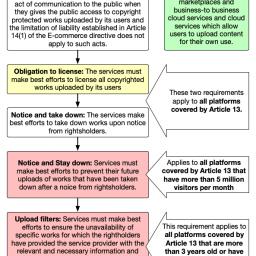
When the German MEP Axel Voss took over the new EU Copyright Directive and reinstated the controversial Article 13, he was explicit that the idea of the rule was to make all online services use filters, similar to Youtube's Content ID, to screen everything their users posted and block anything that seemed to match any unlicensed copyrighted work, anywhere.But filters are so expensive that only US Big Tech companies could afford them, and they are incapable of distinguishing fair dealing (including things like the music playing in the background of the video of your child's first steps) from infringement, and they are incredibly error prone, to say nothing of the problems of allowing anyone in the world to identify creative works as their copyright with no means to weed out false and fraudulent claims.So eventually the word "filters" was purged from the Directive, and with weeks to go before the final vote around March 25, backers of Article 13 are insisting that the Copyright Directive has nothing to do with filters.But as Communia's detailed legislative analysis of Article 13 shows, there is no way to comply with its rules without filters. Article 13(4) lists a total of 4 different measures that platforms have to implement, two of which do not apply smaller platforms that are younger than three years: 1. All platforms have to make “best efforts†to license all copyrighted works uploaded by their users (the yellow box in the middle). We have already established that it is impossible to actually license all works, so a lot depends on how “best efforts†will be interpreted in practice. Read the rest
|
 |
by Cory Doctorow on (#4ATT2)
Security researcher Victor Gevers has discovered an insecure Chinese database of 1.8 million women, aged 15-39, along with phone numbers, GPS coordinates, photo URLs, ID card numbers, marital status, political affiliations, educational attainment, and whether the women are "BreedReady." 89% of the records are for women in Beijing. Another field, "HasVideo," may indicate whether they are under video surveillance, or whether a video of them is accessible. After Gevers tweeted redacted screenshots from the database, it was taken offline. (via Bleeping Computer) Read the rest
|
 |
by Rob Beschizza on (#4ATT4)
I finally pulled the trigger on the new iPad Pro because of today's deals at Amazon; affiliate links follow below. Every year I throw all my computers in a dumpster and make another desperate, clawing, doomed effort to use an iPad Pro as my "only machine" and it is once again Time.Here's what's up: 11" models 2018 11" iPad Pro (WiFi, 64GB) – $749.99 [$50 off]2018 11" iPad Pro (WiFi, 256GB) – $879.00 [$70 off]2018 11" iPad Pro (WiFi, 512GB) – $1,064.81 [$84 off]2018 11" iPad Pro (WiFi+LTE, 64GB) – $899 [$50 off]2018 11" iPad Pro (WiFi+LTE, 512GB) – $1,199 [$100 off]2018 11" iPad Pro (WiFi+LTE, 1TB) – $1,589 [$109 off]12.9" models2018 12.9" iPad Pro (WiFi, 64B) – $1067 [$81 off]2018 12.9" iPad Pro (WiFi, 256B) – $1,067 [$81 off]2018 12.9" iPad Pro (WiFi, 512GB) – $1,249 [$99 off]Other iPads are on special too, but don't bother, they're all old and soon to be replaced. Read the rest
|
 |
by Cory Doctorow on (#4ATMZ)
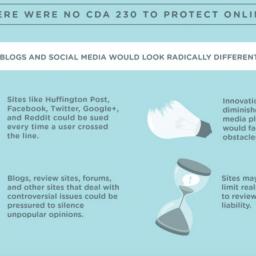
Last week, House Democrats introduced the Save the Internet Act, to enact the Net Neutrality protections favored by 83% of Americans; in response, Rep Greg Walden (R-OR, @repgregwalden, +1 (541) 776-4646) has proposed legislation rescinding Section 230 of the Communications Decency Act, "the most important law protecting internet speech", which says that online services are not required to pro-actively censor user postings that might contain illegal speech -- a vital protection that made it possible for sites like this one to have comment sections, and also enabled sites like Youtube and Snapchat to accept photos and videos from the public.Section 230 was dealt a terrible blow last year with the passage of SESTA/FOSTA, which imposes a duty on service providers to ensure that users are not engaged in the sex trade; this has made life much more dangerous for sex workers, endangered positive depictions of human sexuality, and subjected Tumblr users to algorithmic censorship at mass scale, with predictable results.But as bad as SESTA/FOSTA was, Walden's proposal would be much, much worse. Eliminating Section 230 protection for wider classes of bad speech would make every public utterance subject to extremely broad, error-prone algorithmic censorship, while cementing the dominance of today's digital monopolists, because only the largest tech companies would be able to afford to run these buggy algorithms.This is a Made-in-America version of Europe's Article 13, a measure so unpopular that the petition against it is now the most popular petition in human history. Read the rest
|
 |
by Cory Doctorow on (#4ATN1)
Hugh writes, "This plaque commemorates its own commemoration." (Photo by Dr Vicky Forster): "This plaque was commemorated on October 10, 2018,commemorate its own commemoration. Plaques like this one are an integral part of the campaign to support more plaques like this one. By reading this plaque, you have made a valuable addition to the number of people who have read this plaque. To this day and up to the end of this sentence,this plaque continues to be read by people like yourself. -Heritage Toronto 2018" (Thanks, Hugh!) Read the rest
|
 |
by Cory Doctorow on (#4ATH3)
Months of student strikes have roiled the UK as pupils across the country have refused to go to class while demanding action on climate change, inspired by Swedish student Greta Thunberg's one-person strike at the Swedish Parliament.This Friday, UK students are planning a coordinated mass walkout, with 100,000 students expected to participate. It's a prelude to a week of even bigger protests planned for London in April by Extinction Rebellion (XR), who have called for official UK governmental recognition of the climate crisis and zero emissions nationwide by 2025, overseen by a citizens' assembly in charge of a transition to a sustainable economy.In a video message former Archbishop of Canterbury Rowan Williams (previously) has backed the students, saying "The nature of changes in climate and environment that we are living with threaten not only the wellbeing but also the being of our species on this planet in the long term – and in the middle term they threaten some of the most vulnerable populations on Earth."The group closed London bridges in November, and this time it intends to bring widespread disruption to London until its demands are met.There is growing evidence of the scale of the climate emergency. Last year a UN report said there were only 12 years left to avoid the worst impacts of climate breakdown from floods and heatwaves to food shortages and huge numbers of climate refugees.Williams added: “I believe a wide and deep support from the public is needed to bring this matter fully to the attention of our political leaders. Read the rest
|
 |
by Rob Beschizza on (#4ATDK)
Despite a conservative boycott and their relentless online whining about the woman-led blockbuster, Captain Marvel stormed to an epic box office over the weekend, earning $455m. So, for reference, the online review-bombing from trolls, bots, so-called "toxic fans" and other disgruntled folks didn't mean a damn thing this weekend. Here's what else didn't matter: folks allegedly upset about Brie Larson's request for the press junket to be more diverse than normal, alleged controversies over Brie Larson's performance (judging entirely from the trailers) and whether she should be smiling more (spoiler: she smiles a bunch in the movie and is hopefully laughing this morning), attempts to use Alita: Battle Angel as a battering ram against the latest female-led action fantasy (#YouCanAndShouldSeeThemBoth) or concerns over the comparatively obtuse marketing campaign (okay, that's a mea culpa from me on that score). Read the rest
|
 |
by Rob Beschizza on (#4ATC5)
It's been a while since I returned to the blocky, charming world of Minecraft, but this video from 2010 is going viral and satisfies the urge. The fireplace tutorial begins about a minute in. Read the rest
|
 |
by Rob Beschizza on (#4ATC7)
Today in "I don't know what I expected": former Blackberry engineer and YouTuber Matthais Wandel's ingenious but doom-laden wasp vacuum.Tell you what, Happy Mutants, if you like this and fancy a light, uplifting read, be sure to grab Iain Banks' debut novel The Wasp Factory. Read the rest
|
 |
by Rob Beschizza on (#4AT8C)
In calls to a radio show, Fox News host Tucker Carlson defended a child rapist, justified child rape, and said that women were "extremely primitive." Between 2006 and 2011, Tucker Carlson spent approximately an hour a week calling in to Bubba the Love Sponge, a popular shock jock radio program where he spoke with the hosts about a variety of cultural and political topics in sometimes-vulgar terms. During those conversations, Carlson diminished the actions of Warren Jeffs, then on the FBI’s “Ten Most Wanted Fugitives†list for his involvement in arranging illegal marriages between adults and underage girls, talked about sex and young girls, and defended statutory rape.Carlson, who was hired by Fox News in 2009, also used sexist language to talk about women, including then-co-workers at NBC and public figures. He referred to Martha Stewart’s daughter Alexis Stewart as “cunty,†called journalist Arianna Huffington a “pig,†and labeled Britney Spears and Paris Hilton “the biggest white whores in America.†He also said that women enjoy being told to “be quiet and kind of do what you’re told†and that they are “extremely primitive.†...Carlson said underage marriage is not “the same thing exactly as pulling a child from a bus stop and sexually assaulting that child. ... The rapist in this case has made a lifelong commitment to live and take care of the person so it is a little different.â€Excellent reporting from Madeline Peltz and Media Matters from America. Carlson is unrepentant; in a statement, he said his comments on child rape were "naughty" and said anyone who cares should watch his TV show. Read the rest
|
 |
by Boing Boing's Shop on (#4AT8E)
Big companies want automation on a big scale. Doing that means diving into the tricky world of machine learning and data science. And no matter what platform you'll be implementing it on, you can learn how with the Machine Learning & Data Science Certification Training Bundle.In 48 hours and through eight courses, this bundle teaches the structure and specifics behind large-scale data manipulation. You'll get plenty of background on how to build data visualizations and analysis tools in Python, then use programs like Tensorflow and Keras to put them to work for deep learning. There are also courses dedicated to R and its ability to wrangle data into neural networks through tools like h2o and MXNET. The bundle will get you up to speed on packages like Numpy, Pandas, and Madplotlib in no time, and by the end of the 48 hours of lectures and exercise, you'll be certified in a range of resume-building techniques.Right now, you can pick up the Machine Learning & Data Science Certification Training Bundle for $35. Read the rest
|
 |
by Cory Doctorow on (#4ARRV)
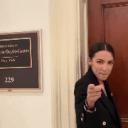
During a talk at SXSW yesterday, Alexandria Ocasio-Cortez got an audience question about automation and jobs and answered by saying, "We should not be haunted by the specter of being automated out of work. We should be excited by that. But the reason we’re not excited by it is because we live in a society where if you don’t have a job, you are left to die. And that is, at its core, our problem."This is the underlying premise of what's semi-seriously called "fully automated luxury communism" -- the idea that automation could usher in an era of universal comfort and plenty, but only if its dividends are shared among workers and owners of capital. There's no justice or glory in the fact that all of us use toilets and only some of us have to clean them, after all -- but if we figured out how to automate toilet cleaning, there would be even less justice and glory in discarding the people who've been cleaning toilets all along.“We should be excited about automation, because what it could potentially mean is more time educating ourselves, more time creating art, more time investing in and investigating the sciences, more time focused on invention, more time going to space, more time enjoying the world that we live in,†she said. “Because not all creativity needs to be bonded by wage.â€Alexandria Ocasio-Cortez says ‘we should be excited about automation’ [Adi Robertson/The Verge](Image: @AOC) Read the rest
|