 |
by Rob Beschizza on (#47TJK)
Regional languages of the British Isles for the win. In Morpheshire we called it Glitchtongue.Previously: Read the rest
|
Boing Boing
| Link | https://boingboing.net/ |
| Feed | https://boingboing.net/feed |
| Updated | 2026-09-26 17:45 |
 |
by Boing Boing's Shop on (#47TGH)
The wheel. The light bulb. Throughout history, the best technology has always been simple and elegant. That's especially true for a good pair of earbuds, which should sound like they're packing an orchestra and feel like they're not even there. Hitting that sweet spot especially hard are the Cresuer Touchwave True Wireless Bluetooth Earbuds, which deliver maximum sound in a minimal package.Under the scratch-and-sweat resistant casing, you'll find a lot of bells and whistles: Bluetooth 4.1 capability, CVC Noise Cancellation technology, and carbon nanotube diaphragms that make for a crisp, clear sound. Outwardly, there's a refreshing lack of buttons to fiddle with. Answer calls or switch between songs with a simple, light tap. And thanks to the 3-hour battery life (up to 12 hours with the accompanying charge box), you'd better queue up a lot of songs.The set comes with 3 different sizes of earbuds to fit any ear, and it's currently on sale for 60% off. Grab your Cresuer Touchwave True Wireless Bluetooth Earbuds for $39.99. Read the rest
|
 |
by Cory Doctorow on (#47TEH)
Tim Wu (previously) is best known for coining the term "Net Neutrality" but the way he got there was through antitrust and competition scholarship: in his latest book, The Curse of Bigness: Antitrust in the New Gilded Age, Wu takes a sprightly-yet-maddening tour through the history of competition policy in the USA, which has its origins in curbing the near-limitless power of the robber barons in the name of creating a pluralistic, open society where anyone could participate, only to have this vision perverted by extremists from the Chicago School, who sold (with the help of wealthy backers) a wholly fictional version of what Congress intended with its antitrust rules. According to Chicago's version of things, the only thing antitrust should concern itself with is the highly technical and speculative question of "consumer harm" (in the form of higher prices) and not competition itself.Wu comprehensively demolishes this revisionist history, tracing the American ideal back to the era of smallholder farmers, each working a small plot, mildly suspicious of authority, believing in a nearly limitless land that could never be dominated by a single player (there are eerie similarities to the early days of the internet here!), and then through the era of the trusts and the robber barons, and their self-serving ideology of "efficiencies of scale" that were proved to be a lie, and whose grotesque failures and abuses gave rise to the trustbusters and the breakup of the monopolies.In Wu's account, trustbusting became a temptation to mischief, with grandstanders and petty martinets using it to frustrate all sorts of legitimate ends, which created fertile soil for the Chicago School's storytellers to grow their wholly fictional account of the legislative intent of the antitrust laws. Read the rest
|
 |
by Jason Weisberger on (#47T50)
Chunk was HANDS DOWN the coolest Goonie of them all! Read the rest
|
 |
by David Pescovitz on (#47T3F)
Watch the video below. As a wise man once said, "God bless America!"Fixed it: Wilbur Ross dubbed over Mr. Burns pic.twitter.com/UQn8Hq6WrR— ElElegante101 (@skolanach) January 24, 2019(Thanks, Bob Pescovitz!) Read the rest
|
 |
by Xeni Jardin on (#47SYQ)
“Deliberate, coordinated effort by top Trump campaign officials to subvert the will of the American peopleâ€
|
 |
 |
by Carla Sinclair on (#47S91)
Whether legit or not, plenty of people have reported finding at least a piece of a human finger in their food (from thumb skin in an Arby's sandwich to a finger in Kohl's Frozen Custard, according to NPR). But I don't recall a human body part ever found in newly purchased clothes, until now. Allegedly, someone bought a pair of socks at a Primark store in Colchester, England, and found the added bonus of a human bone tucked inside one of them.From The Guardian:“Detectives are continuing to investigate following the discovery of what is believed to be part of a human bone in a pair of Primark socks,†said a police spokesman.“The bone does not appear to be a result of recent trauma and had no skin or other particles surrounding it. We are liaising with the store who, in turn, are speaking to their suppliers for more information on this incident. Inquiries are ongoing.â€In the cases of food, it's usually part of a severed finger after an unfortunate accident in the kitchen. In this case, however, although the bone is real, police suspect it is was placed in the sock as a hoax. “No evidence of any kind exists to suggest that any incident has occurred in the factory, so it is highly probable that this object was placed in the socks by an individual for unknown reasons...Primark sincerely apologises to the customer who found the item for any distress caused," says a Primark spokesperson. Read the rest
|
 |
by Cory Doctorow on (#47S93)
Lawrence Lessig (previously) has spent years articulating the case against corruption of the political sphere (and has written a superb book on the subject); now he's helping to design the political framework for Seed, a multiplayer game "in which players must collaborate (or compete) to rebuild society on a new, untamed planet."In this interview with the project's creators, Lessig articulates the strange and amazing challenge:Lessig is also interested in possibly implementing an in-game process in which democracy doesn’t depend on voting: “I’m eager to experiment or enable the experimentation of systems that don’t need to be tied so much to election.†He’s thinking of a system described in the book Against Elections: The Case for Democracy, which argues that government officials might be randomly chosen, similar to the jury selection process, through a mix of volunteering and lottery. “I would like to see in games, at least, a wider opportunity to experiment with that system of election. I’d love to see people playing with that.â€And a system like this might be a good way to address the larger problem of democratic parties making choices based on vastly different news sources: “There’s a real question about how to make sure people are living with a common set of facts so they’re not living in epistemologically isolating universes,†as Lessig puts it. “You got people who are living in radically different worlds, and they don’t even understand the same facts, so they can’t even come to the same understanding.â€This last point would be intriguing to model. Read the rest
|
 |
by Mark Frauenfelder on (#47S97)
I've had nothing but good experiences with Tacklife tools, so I didn't hesitate to order this Cordless Rotary Tool, chargeable via USB. I will review it once I get it, but the reason I'm posting it now is that you can use a promo code today and get it at a great discount: B2SRZE34.It comes with a number of different bits. Read the rest
|
 |
by Mark Frauenfelder on (#47S4F)
Man buns, mullets, duckfaces, and spray tans. Enjoy 70 years of douchebag style. Read the rest
|
 |
by Cory Doctorow on (#47S4H)
There's plenty of research that provides evidence to support the idea that multitasking is a fool's bargain: instead of getting two things done at once, you go slower on both, and do worse. But there's more than one kind of multitasking: texting while driving is a terrible idea, but what about juggling multiple projects at once?Tim Harford ( Read the rest
|
 |
by Carla Sinclair on (#47S4K)
Despite Trump's order to to call 26,000 unpaid IRS workers back to work (still without pay, of course), at least 14,000 of them did not show up at the office as of Tuesday, according to The Washington Post. Two House aides, speaking anonymously, say that 9,000 IRS employees "could not be reached" and 5,000 more "claimed a hardship exemption."This, in the same week that La Guardia airport shuttered its flights and other airports are experiencing major delays is just the beginning of the destruction Trump's shutdown is taking on Americans and the United States.But back to the IRS. Via The Washington Post:The shutdown appears to be affecting the IRS. In the call centers, which answer taxpayer questions over the phone, about 35 percent of calls are being answered, IRS officials told congressional staff, according to one of the aides. The initial plan for filing season was for 80 percent of calls to be answered. The average call time, of 7 to 10 minutes last filing season, has jumped to 25 to 40 minutes.The IRS is also losing 25 IT staffers every week since the shutdown began, with many finding other jobs, one House aide said, citing the IRS officials' briefing. IRS employees have said they cannot afford to get to work or pay for child care as they struggle to go more than 30 days without pay. Shannon Ellis, President of the National Treasury Employees Union in Kansas City sums it up when she tells The Washington Post: “People are panicking. Read the rest
|
 |
by Mark Frauenfelder on (#47S4N)
The practice of clothing small adults in velcro and tossing them at velcro targets will be banned in bars and strip clubs, if Senate Bill 5486 passes the Washington State legislature."No holder of a retail license to sell liquor may allow or permit any contest or promotion or other form of recreational activity involving exploitation that endangers the health, safety and welfare of any person with dwarfism," states the bill. "Any code city may suspend or revoke the business license and impose a fine of up to one thousand dollars per contest or event, for any business that violates this section."From a press release issued by the office of Sen. Mike Padden and reposted on Washington State Wire:Dwarf-tossing originated in Australia as a pub promotion and spread to America in the late 1980s. People with dwarfism, wearing special padded clothing or Velcro costumes, are thrown onto mattresses or at Velcro-covered targets. Contestants compete to throw the dwarf the farthest. In 1989, Florida enacted a ban on dwarf-tossing at establishments where liquor is served, and New York followed with a similar ban in 1990.Advocates for “little people†note that persons with dwarfism are particularly susceptible to spine and neck injuries. While generally opposed to disparate treatment for their community, they say the concern is outweighed by the possibility of injury, the demeaning nature of the activity, and the chance that it might inspire attacks on others. In 2012, a man celebrating his birthday at a pub in England was severely injured when a pubgoer picked him up and threw him – an incident likely inspired by news coverage of dwarf-tossing contests. Read the rest
|
 |
by Cory Doctorow on (#47S1B)
The marvellous Jonathan Coulton (previously) is crowdfunding for his next album, Some Guys, "An album of 70s soft rock covers that sound exactly like the originals" (America, Stephen Bishop, Gilbert O'Sullivan, 10cc, Bread, Eagles and more) -- he's raised more than $100K already with 12 days to go (I just backed him). $10 gets you a digital download, $15 adds a CD, $25 gets you a signed CD, $30 gets you vinyl, $40 gets you signed vinyl, and it goes up from there. (via Judge John Hodgman) Read the rest
|
 |
by David Pescovitz on (#47S1D)
Rolling Stone published a lengthy, wide-ranging interview with Twitter CEO Jack Dorsey. There aren't any bombshells on the big stuff like Nazis on the platform, harassment, and disinformation, but there are a few fun bits like the following:What was your most memorable encounter with Zuckerberg?Well, there was a year when he was only eating what he was killing. He made goat for me for dinner. He killed the goat.In front of you?No. He killed it before. I guess he kills it. He kills it with a laser gun and then the knife. Then they send it to the butcher.A . . . laser gun?I don’t know. A stun gun. They stun it, and then he knifed it. Then they send it to a butcher. Evidently in Palo Alto there’s a rule or regulation that you can have six livestock on any lot of land, so he had six goats at the time. I go, “We’re eating the goat you killed?†He said, “Yeah.†I said, “Have you eaten goat before?†He’s like, “Yeah, I love it.†I’m like, “What else are we having?†“Salad.†I said, “Where is the goat?†“It’s in the oven.†Then we waited for about 30 minutes. He’s like, “I think it’s done now.†We go in the dining room. He puts the goat down. It was cold. That was memorable. I don’t know if it went back in the oven. I just ate my salad.And:Speaking of messiness, the right-wing provocateur Laura Loomer chained herself to your New York headquarters to protest her ban from Twitter for alleged hate speech. Read the rest
|
 |
by Cory Doctorow on (#47S04)
Last year, Google was rocked by a string of employee uprisings: first over selling AI tools to the Pentagon for use in drone development; then over the clandestine development of a censored Chinese search-product, the over the revelation that Android founder Andy Rubin was given a $90 million payoff to get rid of him after repeated sexual harassment and sexual assault allegations.Google's strategy for the world's tightest labor market has been to evince ethical principles as a means of enticing workers who want to do good in addition to doing well. Any technical employee at Google can walk out of their job and into an equivalent one at a Google competitor, so keeping its workforce happy has been key to its survival.That's why it's shocking to learn that even as Google's senior management were praising their workers for their engagement and organizing and promising to hear their grievances, the company was secretly asking Trump's National Labor Relations Board to reverse the Obama-era rule that allows workers to use their work email to organize to push back against their employers, and to restore the Bush-era rule that allows employers to discipline or fire workers who do so.Google claims that this was not lobbying, but rather, "a legal defense that we included as one of many possible defenses" in a case before the NLRB.If the Labor Board did what Google wanted, “it would have a huge chilling effect,†said Google employee activist Colin McMillen, one of tens of thousands around the world who participated in a November walkout following revelations about the company’s handling of alleged sexual misconduct. Read the rest
|
 |
by Rob Beschizza on (#47S06)
Roger Stone, the former Trump advisor arrested this morning and charged with obstructing justice and witness tampering, was released on a $250,000 bond after his preliminary hearing. Here's a shot of him leaving the federal court in Fort Lauderdale, Nixon fingers akimbo. [via] Read the rest
|
 |
by David Pescovitz on (#47S08)
A fellow was recently busted at Toronto Pearson International Airport for allegedly attempting to "import" 5,000 live leeches in his luggage. Apparently an airport security beagles sniffed out the parasites. From National Geographic:The man claimed that the leeches in his possession were for personal use and that their waste water would enrich his orchids, (says André Lupert, manager of intelligence for the Wildlife Enforcement Directorate at Environment and Climate Change Canada, Ontario Region.)To Lupert, that seems shaky. “This sort of leech quantity would suggest it was for commercialization,†he says, adding that the man could have been trying to find buyers for leech uses such as treating frostbite and helping with recovery from face lifts. Some people want leeches for naturopathic home use, believing that they relieve pain or can cleanse the body of “bad†blood. Without prescribed antibiotics, however, any such use carries risk of infections...When Canadian officials seized 5,000 leeches, they were immediately confronted with a problem: what to do with them? They didn’t want to kill the threatened animals—especially while the case remained under investigation. “Ultimately it’s up to the judge if he wants to view the leeches in person because they’re viewed as evidence,†Lupert says. Nor did the authorities want to be saddled with them long-term. These species aren’t endemic to Canada, so they shouldn’t be released into the wild, Lupert says...The Royal Ontario Museum agreed to accept 50 of the leeches, a researcher at the American Museum of Natural History took 1,000, and authorities are still looking for homes for the rest. Read the rest
|
 |
by Mark Frauenfelder on (#47S0A)
A couple of days ago Teen Vogue published an article about "resistance, rebellion, and revolution" (see Cory's post about it). Today, Teen Vogue has another excellent article along the same lines. It's written by Kim Kelly and is called General Strikes, Explained. With the Trump Shutdown threatening to disrupt functioning society, it's a good time to read this.A general strike is a labor action in which a significant amount of workers from a number of different industries who comprise a majority of the total labor force within a particular city, region, or country come together to take collective action. Organized strikes are generally called by labor union leadership, but they impact more than just those in the union. For example, imagine the scenario if thousands in your town or city — no matter what their job was or whether or not they were in a union — got together and decided to go on strike to protest police brutality, as happened in Oakland, California, in 2011, after Iraq veteran Scott Olsen was critically wounded by local police when they stormed the Occupy Oakland encampment. The community declared a daylong general strike that ultimately saw thousands of people shut down the Port of Oakland (which was more of a symbolic protest, but still it got the job done).Image: MicroOne/Shutterstock Read the rest
|
 |
by Cory Doctorow on (#47S0C)
The Tattered Cover is one of the nation's great independent bookstores, ranking with New York's Strand, Portland's Powell's, and Salt Lake City's Weller Books; now in an open letter, the store has "broken up" with Amazon division Audible, the largest player in the audiobook market, citing the company's mandatory DRM, proprietary formats, algorithmic opacity, and diversion of local book sales into the pockets of distant investors in a massive, uncaring corporation.The Tattered Cover cites the amazing Libro.fm as the DRM-free alternative that works with bookstores, rather than against them. I'm a very happy Libro.fm user!Don’t get me wrong, you’re impressive. I can buy almost anything from you guys. At first you were really into books, but then you took on the world, and it seems like that has worked out well for you. But over the years I’ve found myself wanting something more personal, like a local bookstore, instead of, say, a global mall. I mean, you have algorithms, Audible. Algorithms. I realize that is all fancy and technical, but you give me book recommendations based on a mathematics equation. Libro.fm provides recommendations from real, independent booksellers. Human beings.And I couldn’t shake the fact that by buying from you, I’d be lining the pockets of a handful of wealthy people and stockholders who have, at the bottom line, no interest in supporting the community I live in. Where are they? Do they even read audiobooks? With Libro.fm, I’m able to buy audiobooks through my local bookstore. I’m supporting the business owned by people I actually know and care about. Read the rest
|
 |
by David Pescovitz on (#47S0E)
Here's another fine development in sleep science today! A new study shows that young adults, like babies, sleep better when rocked. University of Geneva neuroscientist Laurence Bayer and colleagues built a gently rocking bed and used EEG to monitor adults' brain activity as they slept. From Science News:Study participants fell asleep faster while being rocked, the researchers found. In a stationary bed, people took an average of 16.7 minutes to reach a light stage of non-REM sleep called N2. But when rocked, the young adults hit this sleep stage after an average of 10 minutes. Rocked people also spent more time in a deep non-REM stage of sleep called N3, and had fewer wake-ups. And rocking boosted the number of sleep spindles — fast bursts of brain activity that mark good sleep.Before people fell asleep, they learned pairs of words, and then were given a memory test the next morning. After a night of rocking, people were better at remembering the words, an improvement that suggested higher quality sleep."Whole-Night Continuous Rocking Entrains Spontaneous Neural Oscillations with Benefits for Sleep and Memory" (Current Biology) Read the rest
|
 |
by Mark Frauenfelder on (#47RVN)
Two dung beetles engage in a fierce battle over a treasured ball of dung, which is their source of food. Off-camera, an amused human narrator provides colorful commentary. Read the rest
|
 |
by Cory Doctorow on (#47RVQ)
Katarina Barley, the German Minister of Justice, is set to receive this petition, now signed by more than 4.5 million Europeans, opposing the include of mandatory copyright filters (AKA Article 13) in the new EU Copyright Directive. The petition is the second largest in internet history (after this one) and looks set to surpass it. The Copyright Directive negotiations collapsed last week due to hard-liners in the French delegation, and there are persistent rumours that the German and French negotiators are still trying (and failing) to find common ground. So it's really important that Europeans sign this petition, to show the German ministers that they have the backing of the European people! Tell your friends! Read the rest
|
 |
by Jason Weisberger on (#47RVS)
Failure to vaccinate can cause death. Maybe not killing your own child, tho it is not unlikely, the awful decision to not vaccinate puts at risk all the people who for good reasons can not get the shot.Snohomish County rocks.MyNorthWest:“It’s like taking a pail of gasoline and throwing a lighted match into it. I have some concerns that this is going to get worse before it gets better,†said Clark County Public Health Director Alan Melnick.Melnick said there are now 25 confirmed measles cases and 12 suspected cases in Clark County. The majority are kids younger than 10.At least 21 people with the disease never got the MMR vaccine. The other four cases are unverified.“What people don’t realize about measles is how contagious it is,†said Lawrence Neville, PeaceHealth Southwest Chief Medical Officer. “It’s spread by airborne droplets and that’s why the very air can be infectious for up to two hours later after someone infected with measles is in that vicinity.â€Miranda Smith said she’s frustrated by the outbreak. She has three young kids.“It’s their lives on the line, honestly. If they’re not vaccinated and something like this happens, then what am I going to do to save them?†she said.Washington State Department of Health statistics show Clark County has the sixth lowest immunization rate in the state.“I’d hardly be surprised if we see more cases that are outside of Clark County,†Melnicksaid.The CDC’s immunization recommendation is 90 percent. Read the rest
|
 |
by Cory Doctorow on (#47RR8)
LaGuardia is closed and PHL and Newark are facing major delays because there aren't enough TSA workers willing to work without pay to keep them open. I'm supposed to be flying from Burbank to Oakland today for the Grand Reopening of the Public Domain at the Internet Archive and I'm getting really nervous. Read the rest
|
 |
by Boing Boing's Shop on (#47R84)
The keyboard is one of the most universally loved instruments, and it's relatively easy to learn. So why do so many kids hate their piano lessons? It's likely they weren't being taught Pianoforall, an innovative yet simple method that lets students discover what's great about music right away.Taught by pianist and therapist Robin Hall, this ten-hour online course doesn't waste time getting your hands on the keys. In the first lesson, you'll dive into the simple chords that form the backbone of the rhythm-style piano. That means you'll be able to play hits by Billy Joel, Norah Jones and more almost from the get-go - and although it won't feel like drilling, that's exactly what it is. With those fundamentals in place, you'll move on to blues, ragtime and eventually improvisational jazz, learning more complex chords and inversions along the way. Stick to it, and you'll be playing by ear and reading music with plenty of practice - but seemingly no effort.Right now, you can get Pianoforall: The New Way To Learn Piano & Keyboard for a reduced price of $10.99. Read the rest
|
 |
by Cory Doctorow on (#47R85)
Jeff Lemire can do weird-spooky (see, e.g., his Twilight Zonish graphic novel Underwater Welder) and he can do gripping (see his amazing, post-apocalyptic Sweet Tooth), but in his newest graphic novel from Image Comics, Gideon Falls, he shows that he can do spooky-verging-on-terrifying, with a tale of supernatural mystery that combines avant-garde graphic treatments with outstanding writing to create a genuine tale of terror.Gideon Falls braids together multiple points of view -- a priest newly arrived in a smalltown parish, whose predecessor is presumed dead; a vision-haunted mental patient who is on the verge of being reinstitutionalized because he can't stop picking up trash and piecing it together, looking for elusive patterns; a psychiatrist, a sherriff, others -- to piece together a fragmentary, nightmarish tale of an ancient evil, the Black Barn, which appears in visions and also sometimes in real life, possessing those who see it, driving them to murder, making them vanish.Lemire builds up the mythology of the Black Barn with the virtuosity of David Lynch fleshing out the mysteries of Twin Peaks, but because this is comics, and because Lemire is working with the amazing artists Andrea Sorrentino and Dave Stewart, the visions of the supernatural in Gideon Falls are spectacular and transporting, creating a sense of frightening, off-kilter dimensions that's straight out of a fever dream.As you might expect, the first volume ends on a cliffhanger, because fuck us, that's why, and I can't wait for the next collection.Gideon Falls Volume 1: The Black Barn [Jeff Lemire, Andrea Sorrentino and Dave Stewart/Image] Read the rest
|
 |
by Rob Beschizza on (#47R87)
This funny video lampoons the guy in your circle who always, for some reason, has a knife and a pretext to display it. Read the rest
|
 |
by Rob Beschizza on (#47R5D)
Roger Stone Jr., the Republican political trickster and former advisor to Donald Trump, was arrested early this morning in Fort Lauderdale on seven charges related to the Mueller probe.Stone, 66, was charged with one count of obstruction, five counts of giving false statements, and one count of witness tampering. The indictment, unsealed after his arrest, details contacts between Stone and Wikileaks ("Organization 1") during Trump's run for office.In response to the later investigation into alleged collusion, the indictment claims,STONE took steps to obstruct these investigations. Among other steps to obstruct the investigations, STONE: a. Made multiple false statements to HPSCI about his interactions regarding Organization 1, and falsely denied possessing records that contained evidence of these interactions ; and b. Attempted to persuade a witness to provide false testimony to and withhold pertinent information from the investigations. Special Counsel Robert Mueller is investigating collusion between Trump's campaign and the Russian government. Wikileaks published Democratic emails during the 2016 presidential campaign. Stone, who has denied working with Wikileaks, is due to make an appearance 11 a.m. Friday in federal court. Read the rest
|
 |
by Xeni Jardin on (#47QJF)
Has Trump shopped for groceries ever in his life?
|
 |
by Cory Doctorow on (#47QEA)
Sculptor Jud Turner (previously) sez, "My childhood friend recently commissioned me to a pair of traditional Chinese Fu Dogs, which symbolize protection. He's of Chinese descent, recently bought a house in the suburbs, and said 'I want my kids to know more about their heritage, and I want to scare my neighbors!' Done and done." Read the rest
|
 |
by Jason Weisberger on (#47Q61)
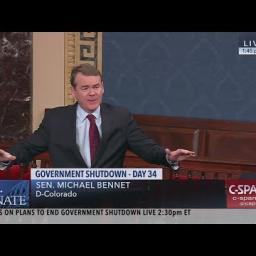
US Senator from the state of Colorado Michael Bennet explains why the government shutdown, President Trump and Ted Cruz are all full of shit. Read the rest
|
 |
by Cory Doctorow on (#47PYF)
Following recommendations set out in Thomas Piketty's landmark Capital in the 21st Century, would-be Democratic 2020 presidential candidate Elizabeth Warren has proposed a 2% annual tax on household wealth over $50,000,000, with an additional 1% annual tax on household wealth over $1,000,000,000, which would bring in $1.9-$2.75 trillion over the first decade (about 1% of US GDP).The tax would pay for an upgrade to the IRS that would allow it to audit the 75,000 households who are subject to it, and it's backstopped by a 40% exit tax on the wealth over $50 million of any US citizen who abandons their citizenship to escape it. The tax also includes a revamp of the tax code to close loopholes and expands international reporting regimes to isolate and frustrate tax-havens. The plan -- which is similar to tax regimes in Spain and Norway -- has been endorsed by Thomas Piketty. By itself, a wealth tax would begin to curb concentration of assets in U.S. society. The redistributive possibilities are also numerous. Cory Booker’s baby bonds proposal, to give every newborn a $1,000 low-risk savings account, with periodic additional payments, that they can tap as adults, would cost an estimated $82 billion per year, less than one-third of the Warren plan. Sherrod Brown’s child allowance bill, a universal cash payout that would cut the child poverty rate in half, would cost about $108 billion a year, not even half of Warren’s proposal. Kamala Harris’ LIFT Act, a massive series of tax cuts for middle-class families, has a $2 trillion price tag over a decade, again less than the Warren wealth tax. Read the rest
|
 |
by David Pescovitz on (#47PYH)
Designers Assia Quetin and Catherine Denoyelle created this ingenious sticky note desk accessory inspired by the beloved abstract artist Piet Mondrian. "Monde Riant" is €13.75 from PA Design.Of course it reminds me of pastry chef Caitlin Freeman's wonderful Mondrian Cake below. (Recipe in Freeman's book Modern Art Desserts.) Read the rest
|
 |
by Xeni Jardin on (#47PVN)
“Take that, Petsmart, with your overly expensive cat toys!â€Watch this very funny cat/DIY video from IMGURian YouWillAllReferToMeByTheNameBetty, a masterpiece.Putting the left over ikea boxes to good use Read the rest
|
 |
by Mark Frauenfelder on (#47PTS)
With three cats, I was refilling their water bowl a lot, and often forgetting. Years ago I bought a gravity waterer and it is a huge relief, for me and the cats. I have the 1-gallon version (Amazon also has 0.5-gallon and 4-gallon models) and when it's about 2/3 empty I refill it. If you have a dog or cat, you will probably like one of these. Read the rest
|
 |
by Carla Sinclair on (#47PSK)
I don't know what this veterinary hospital at Colorado State University does to incite such glee, but this dog, Endo, is jumping really high with excitement. Like above-the-counter high, causing the receptionist to break out in laughter. And the dog doesn't quit, with 45 good jumps in a row. Via AP/YouTube Read the rest
|
 |
by Mark Frauenfelder on (#47PSN)
As part of its social credit system, China deployed an app that lets you see if a "deadbeat debtor" is within a 500-meter radius of you. From The Standard:The app name translates to “map of deadbeat debtorsâ€, and can be accessed via WeChat, China’s most popular instant-messaging platform. The idea is that it will allow people to “whistle-blow on debtors capable of paying their debts.â€The Hebei-based app is one part of this tracking system, but this social credit scoring is already having an impact in China. According to China Daily, more than 6,000 people who failed to pay their taxes on time or misbehaved on public transport were barred from taking planes or trains in and out of China between June 2018 and January 2019. Image: China Daily Read the rest
|
 |
by David Pescovitz on (#47PSQ)
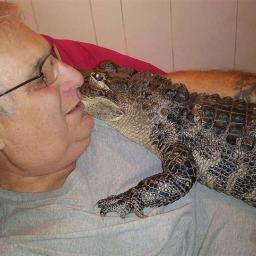
Joei Henney, 65, of Strinestown, Pennsylvania has an alligator as his registered emotional support animal. According to Henney, the 5-foot alligator, named Wally, helps Henney manage his depression. Apparently, the reptile is very generous with his hugs. From the Philadelphia Inquirer:A man who answered an e-mail from a reporter about Wally from the web site Service Dog Registration of America said, "Our therapist would never approve a client to have an alligator as an emotional support animal. "Henney’s doctor did.“My doctor wanted to put me on depression medicine, and I hate taking medicine. I had Wally, and when I came home and was around him, it was all OK," he said. “My doctor knew about Wally and figured it works, so why not?â€Wally, Henney cautioned, is still a wild animal, one that could tear his arm off now, and do worse later...“He has never tried to bite no one,†Henney said. “I don’t push him on to people. I tell people to respect him, not fear him. He will not hurt you.â€images: Joie Henney/Facebook Read the rest
|
 |
by Mark Frauenfelder on (#47PSV)
U.S. Commerce Secretary Wilbur Ross is puzzled as to why 800,000 furloughed federal workers need to visit food banks to keep their families from starving, when they can simply get a loan.From Reuters:Asked about their struggles, Ross told CNBC: “I know they are, and I don’t really quite understand why.â€â€œThe banks and the credit unions should be making credit available to them,†he said, noting that the government would give federal employees back pay. “There really is not a good excuse why there really should be a liquidity crisis.â€Wilbur Ross is has a net worth of around $700 million, according to Forbes. Before becoming Trump's Commerce Secretary, Ross was co-chair of the Bank of Cyprus, which is a laundromat for dirty Russian money. From The Dallas News:The country of Cyprus has a long history as a laundromat for dirty money, particularly from Russia. Cyprus is referenced 530,937 times in the Panama Papers, and the Bank of Cyprus, the country's largest bank, is referenced 4,657 times. And the cast of characters linked to the bank and President Donald Trump is troubling. Read the rest
|
 |
by David Pescovitz on (#47PSX)
Pringles are my favorite chip. In this Bon Appétit video, chef Claire Saffitz attempts to make them herself. Even if she nailed the form and the flavor, I don't think her technique would scale in my household. Admittedly, once I pop, I can't stop. Read the rest
|
 |
by Jason Weisberger on (#47PMC)
Despite showing its age, John Wyndham's Day of the Triffids continues to be a consuming post-apocalyptic tale.A hit since its 1951 publication, I first read John Wyndham's landmark story of a post-apocalyptic England sometime in the mid 1980s. This was the very first book I found at Santa Monica's A Change of Hobbit, one of my earliest science fiction reads. I had not thought of it in years and couldn't recall having re-read it.I would say I had a hard time putting the book down, but other things have kept me exhausted. I did eagerly look forward to opening it every chance I got and could be found taking every spare moment away from life's daily catastrophes to read til I was done. I love it when books do that for me.Wyndham's tale is one of England after a cosmic event blinds 99% of humanity. With humanity sightless, a semi-sentient plant challenges man for the role of apex predator! Naturally, humanity is more its own enemy than the plants.I was impressed with how believable the world building and set-up was for what, in 1951, was such an outlandish tale. I know various folks accused Wyndham of borrowing heavily from others, but this story inspired a LOT of subsequent fiction. The triffids are wonderfully thought out.The early 1950s gender and race relations come thru pretty strong in the book. Reading this now, living in a time where it seems 27% or so of the United States seems to want to go back to this, was kind of disturbing. Read the rest
|
 |
by Cory Doctorow on (#47PME)
Jack Berberette's Dots RPG project creates free, CC-licensed shapefiles for RPG dice with Braille faces (you can order readymades from Shapeways); they're part of a larger project to produce accessible RPG materials of all kinds for people with visual disabilities. (via the-a-r-t-i-s-t) Read the rest
|
 |
by Cory Doctorow on (#47PMG)
At the World Economic Forum in Davos, Switzerland, Michael Dell was asked about Alexandra Ocasio-Cortez's wildly popular proposal to tax income over $10,000,000 at 70%, but before he could answer ("I’m not supportive...And I do not think it will help the growth of the US economy") the audience erupted into laughter, according to CNN. MIT's Erik Brynjolfsson (previously), a co-panelist, was more bullish: "There’s actually a lot of economics that it's not necessarily going to hurt growth and I think we have to examine it more closely." (Image: AOC) Read the rest
|
 |
by Carla Sinclair on (#47PMJ)
Move over Wikileaks. A new leak site, Distributed Denial of Secrets (Tor), co-founded by "transparency activist" Emma Best, says they will leak hundreds of thousands of emails tomorrow, according to The Daily Beast. And many of them will be from Russia.“Stuff from politicians, journalists, bankers, folks in oligarch and religious circles, nationalists, separatists, terrorists operating in Ukraine,†said Best, a national-security journalist and transparency activist. “Hundreds of thousands of emails, Skype and Facebook messages, along with lots of docs.â€Distributed Denial of Secrets, or DDoS, is a volunteer effort that launched last month. Its objective is to provide researchers and journalists with a central repository where they can find the terabytes of hacked and leaked documents that are appearing on the internet with growing regularity. The site is a kind of academic library or a museum for leak scholars, housing such diverse artifacts as the files North Korea stole from Sony in 2014, and a leak from the Special State Protection Service of Azerbaijan.The site’s Russia section already includes a leak from Russia’s Ministry of the Interior, portions of which detailed the deployment of Russian troops to Ukraine at a time when the Kremlin was denying a military presence there. Though some material from that leak was published in 2014, about half of it wasn’t, and WikiLeaks reportedly rejected a request to host the files two years later, at a time when Julian Assange was focused on exposing Democratic Party documents passed to WikiLeaks by Kremlin hackers.You can find more details on their Twitter account @DDoSecrets. Read the rest
|
 |
by David Pescovitz on (#47PMM)
Aria Code is WNYC Radio's captivating podcast that deconstructs famous arias. Believe me, even if you don't know anything about opera, or think you "don't like it," Aria Code is a fascinating way in. This week, they delve into Mozart's Queen of the Night, "the rage-fest" from The Magic Flute. This is a special episode for me because this aria was included on the Voyager Golden Record, the iconic message for extraterrestrials attached to the Voyager I and II space probes launched in 1977. The Golden Record tells a story of our planet expressed in sounds, images, and science: Earth’s greatest music from myriad peoples and eras, from Bach to Blind Willie Johnson to Chuck Berry, Benin percussion to Solomon Island panpipes to, yes, Mozart's The Magic Flute. Two years ago, my friends Timothy Daly, Lawrence Azerrad, and I released the Voyager Golden Record on vinyl for the first time as a lavish box set. Our project's resonance with the public, and the Grammy that we were honored to receive for it, are really a testament to the majesty of the original record. It's a stunning compilation that stands the test of time (and space).Science and philosophy writer Timothy Ferris was the producer of the original Voyager Record. I was delighted to hear him on this episode of Aria Code explaining why the "Queen of the Night" made the cut and is now hurling through interstellar space."Mozart is an interesting composer from a mathematical standpoint," Tim says. "That is, you can find mathematical relationships rather easily in his music. Read the rest
|
 |
by Cory Doctorow on (#47PMP)
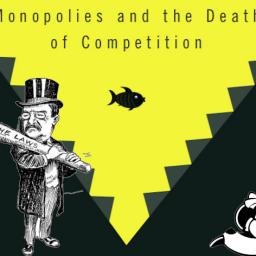
Naked Capitalism's Yves Smith reviews Joanthan Tepper and Denise Hearn's The Myth of Capitalism: Monopolies and the Death of Competition, in which Tepper (who does research that is sold to asset managers) condemns capitalism's current state while rejecting Thomas Piketty (who says that capitalism inevitably elevates the already-rich, not the people who create wealth by doing useful things) and Karl Marx.Like Piketty, though, Tepper seeks to rescue capitalism, rather than jettison it. Piketty prescribes a global wealth tax to erode inequality and make it possible for governments to create evidence-based, pluralistic policies that benefit the many, not the few, while Tepper jumps straight to those policies: specifically, Tepper wants to reinvigorate antitrust and break up monopolies and oligopolies, and ban anti-competitive behavior.This is an increasingly mainstream position, but, based on Smith's review, it's safe to say that Tepper makes it very well: from his vantage-point as a researcher serving the highest fliers of the finance industry, he is well-positioned to document the sleazy deals that monopolists make to carve up markets rather than compete in them, and the way that we all suffer as a result.Tepper catalogs the 29 worst rigged markets (while noting that there are many others), from ISPs to online services to milk to funeral homes to dialysis to eyeglasses to airlines to tax-prep to health insurance to agriculture to the media. And, contra Peter Thiel and the Chicago School, Tepper explains in fine detail how monopolies create disefficiencies of scale, performing worse than smaller companies, and retaining their position not by doing best in the market, but by rigging the market to crush new entrants. Read the rest
|
by Mark Frauenfelder on (#47PFV)
Acreage Cannabis produced a one-minute commercial, intending to air it during the Superbowl. The ad consists of testimonials of people who've been helped by medical marijuana. CBS rejected the ad without explaining why. From CNN:[George Allen, president of Acreage Holdings] said Acreage was willing to spend upward of $5 million for the spot, which is the going rate for a Super Bowl ad in 2019. But Allen said CBS told Acreage that the commercial was not consistent with the network's advertising policies.CBS (CBS) did not comment when asked why it declined to run the commercial. But a source close to the network said that it does not currently accept any cannabis-related advertising. Image: Javier Hasse/YouTube Read the rest
 |
by Rob Beschizza on (#47PET)
See if you can guess how you would die if you walked up this completely innocuous staircase. Read the rest
|