by Rich Brueckner on (#3WKV)
A new supercomputer, provided by the French company Bull, will be predicting accurately whether or not the rain in Spain falls mainly on the plain.

| Link | http://insidehpc.com/ |
| Feed | http://insidehpc.com/feed/ |
| Updated | 2026-10-19 18:00 |
 |
by Rich Brueckner on (#3WH7)
The E4 Computer Engineering team has garnered a solid reputation in Europe with high performance computing solutions for customers like CERN. To learn more, we caught up with Simone Tinti, who heads up the E4 HPC Team.
|
 |
by Rich Brueckner on (#3WE8)
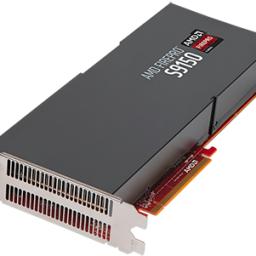
"Featuring the first AMD Graphics Core Next (GCN) architecture specifically with compute workloads in mind, the AMD FirePro S9150 server GPU supports enhanced double precision floating point computation and breaks the 2.0 TFLOPS double precision barrier. With 16GB of GDDR5 memory and maximum power consumption of 235 watts, AMD FirePro S9150 server GPUs provide massive compute performance while helping maximize available power budgets."
|
 |
by Rich Brueckner on (#3VY3)
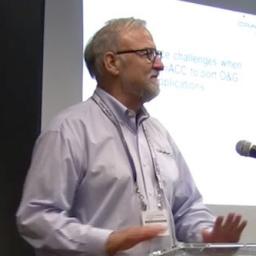
"John Levesque is the Director of the Cray’s Supercomputer Center of Excellence based at Oakridge National Laboratory. He is responsible for the group performing application porting and optimization for break-through science projects. Levesque has been in High Performance computing for 40 years. Recently Levesque was promoted to Cray’s Chief Technology Office, heading the companies efforts in application performance."
|
 |
by staff on (#3TAM)
Today DDN announced that the Virginia Bioinformatics Institute is using the company's GRIScaler storage solutions to perform rapid, accurate Ebola outbreak modeling for the U.S. Department of Defense’s Defense Threat Reduction Agency.
|
 |
by Rich Brueckner on (#3T75)
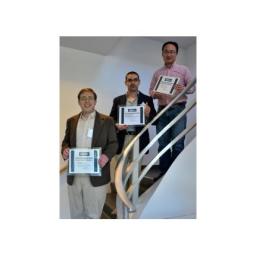
This week NERSC announced the winners of its third annual HPC Achievement Awards. The awards recognize NERSC users who have demonstrated an innovative use of HPC resources to solve a scientific problem or whose work has had an exceptional impact on scientific understanding or society.
|
 |
by Rich Brueckner on (#3SNV)
In this video from the University of Houston CACDS HPC Workshop, Fernanda Foertter from ORNL presents: Leveraging Leadership Computing Facilities: Assisting User's Transition to Titan's Accelerated Architecture.
|
 |
by Rich Brueckner on (#3RHC)
NCSA, ORNL, and CSCS will host a series of GPU Hackathons in 2015.
|
 |
by Rich Brueckner on (#3QP3)
Today CoolIT Systems announced 2014 financials and growing demand for the company's Direct Contact Liquid Cooling technologies.
|
 |
by Kevin Normandeau on (#3QHZ)
The Seagate ClusterStor Secure Data Appliance (SDA) is the HPC industry’s first scale-out secure storage system officially ICD-503 certified to consolidate multiple previously isolated systems, maintain data security, enforce security access controls, segregate data at different security levels, and provide audit trails, all in a single scale-out file system with proven linear performance and storage scalability.
|
 |
by Rich Brueckner on (#3QSY)
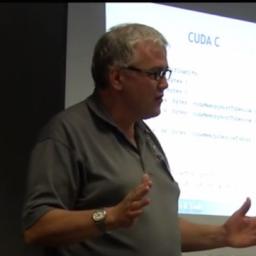
In this video, Questacon visits NCI to take a look at Raijin, the southern hemisphere's first petaflop super computer. "Raijin, named after the Shinto God of thunder, lightning and storms, is a Fujitsu Primergy high-performance, distributed-memory cluster, procured with funding from the Australian Government."
|
 |
by Rich Brueckner on (#3NRZ)
"Developed by PGI, Cray, and NVIDIA, the OpenACC directives are a shared vision of how directives can simplify the programming model for accelerators, where each vendor is committed to support a common programming standard."
|
 |
by Rich Brueckner on (#3NQX)
Today Terascala announced that the University of Maryland, Baltimore County (UMBC) HPC Facility is using the company's software to manage Lustre-based parallel storage.
|
 |
by staff on (#3NG1)
RENCI is sponsoring this year's Pearl Hacks, a two-day event designed to encourage college and high-school age women to develop their interest in technology.
|
 |
by Rich Brueckner on (#3N0B)
While Lenovo now scrambles into Damage Control mode in the wake of the Superfish scandal, the question for our readers is: how will this affect Lenovo's ability to sell to the U.S. Federal supercomputing market?
|
 |
by Rich Brueckner on (#3HWG)
PRACE is seeking students interested in spending the summer working abroad at a European High Performance Computing (HPC) Centre.
|
 |
by staff on (#3HVS)
Researchers at LBNL have have developed a new algorithm that opens the door for real-time simulations in atomic-level materials research. "By eliminating higher energy terms, you significantly reduce the dimension of your problem, and you can also use a bigger time step,†explained Wang, describing the key to the algorithm’s success: Solving the equations in bigger time steps reduces the computational cost and increases the speed of the simulations.
|
 |
by Rich Brueckner on (#3FZC)
In this video, Ken Kraft from Intel describes his experiences as a participant in SC Conference Mentor-Protege program. "The SC15 conference is broadening its mission to build a strong and diverse HPC student community at both the undergraduate and graduate levels, through professional development programs, opportunities to learn from mentors, and engagement with SC’s technical sessions."
|
 |
by Rich Brueckner on (#3FFN)
In this special guest perspective from Scientific Computing World, Tom Wilkie considers some initiatives to counter the widespread impression that scientific computing is solely the preserve of nerdy men.
|
 |
by Rich Brueckner on (#3DV8)
Bridges is a uniquely capable supercomputer designed to help researchers facing challenges in Big Data to work more intuitively. Called Bridges, the new system will consist of tiered, large-shared-memory resources with nodes having 12TB, 3TB, and 128GB each, dedicated nodes for database, web, and data transfer, high-performance shared and distributed data storage, Hadoop acceleration, powerful new CPUs and GPUs, and a new, uniquely powerful interconnection network.
|
 |
by staff on (#3DSH)
Today the TGAC Genome Analysis Centre and Optalysys announced a collaboration to develop and implement an energy-efficient optical processing device for large-scale DNA sequence searches.
|
 |
by staff on (#3DPV)
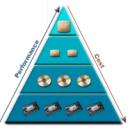
There is always different levels of importance assigned to various data files in a computer system, specifically a very large system that is storing petabytes of data. In order to maximize the use of the highest speed storage, Hierarchical Storage Management (HSM) was developed to move and store data within easy use of users, yet at the appropriate speed and price.
|
 |
by Rich Brueckner on (#3DBC)
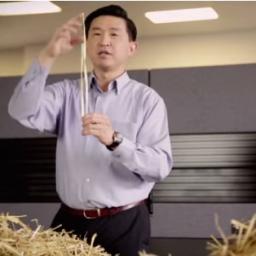
According to IDC, SGI has shipped approximately 8 percent of of all the Hadoop servers in production today. In fact, did you know that SGI introduced the word "Big Data" to supercomputing in 1996? Jorge Titinger, SGI President and CEO, shares SGI's history in helping to design, develop, and deploy Hadoop clusters. (NOTE: Straw was substituted for actual hay to avoid any potential allergic reactions.)
|
 |
by Rich Brueckner on (#3BHH)
"As long as setting up an energy inefficient datacentre is an economically viable option for IT equipment owners, it is unlikely that substantial progress will be made towards reversing a dangerous trend. While the issue is a planetary one, now is a good time for Europe to take it in its own hands and show the planet the way towards a more responsible and energy conscious future for the IT industry and High Performance Computing."
|
|
by Kevin Normandeau on (#3BAH)
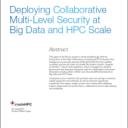
This is the third article in a series designed to address the needs of government and business or collaborative and secure information sharing within a Multilevel Security (MLS) framework. Learn the key elements of a workable Multilevel Security framework.
|
 |
by staff on (#3BR0)
CHPC Communications Manager Noxolo Moyake describes how the South African Center for High Performance Computing is fostering the use of supercomputing in the region. "CHPC will be a critical resource for tackling the big scientific challenges of the continent, such as the Square Kilometer Array (SKA), climate research, and data-intensive applications in the big data regime."
|
 |
by Rich Brueckner on (#3B2S)
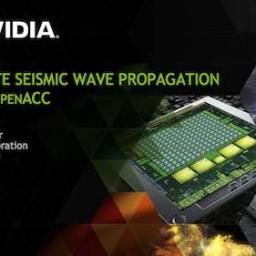
"Geoscientists need tools to allow them to rapidly develop algorithms that run fast on accelerators, while at the same time deliver portability and improve productivity. They demand a single source code, with no need to maintain multiple code paths, using a high-level approach that presents a low learning curve. OpenACC provides directives-based approaches to rapidly accelerating applications for GPUs and other parallel architectures. This talk will serve as an introduction to programming with OpenACC 2.0."
|
 |
by Rich Brueckner on (#396E)
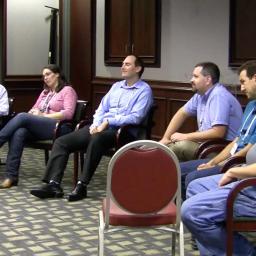
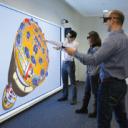
In this video from the University of Houston CACDS HPC Workshop, Duncan Poole from the OpenACC Standards Group moderates a panel discussion on OpenACC.
|
 |
by staff on (#39RT)
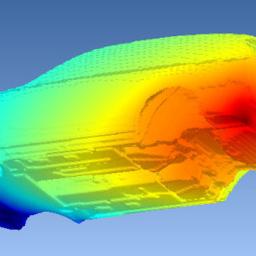
Because the requirements in terms of energy, emissions, and fuel efficiency have not been globally standardized, vehicle manufacturers are making use of increasingly sophisticated simulation to get new vehicles developed as quickly and cheaply as possible while making sure their newest models meet these standards.
|
 |
by Rich Brueckner on (#37HB)
In this podcast, Computer scientist Doug Jennewein discusses how the Extreme Science and Engineering Discovery Environment (XSEDE) has enhanced his work as USD's research computing manager.
|
|
by Rich Brueckner on (#37B9)
"Does your archive strategy match up with today's storage economics? Henry contends that this is really worth a look as the notion that "write once to tape and forget" is a recipe for disaster. In an era where this WGBH archive could easily fit on 38 hard drives, does migration to tape still make sense?"
|
 |
by staff on (#3742)
Volvo is pushing the boundaries of NVH (noise, vibration and harshness) simulation in order to improve the quality of new automobiles.
|
 |
by Rich Brueckner on (#372F)
"In 2015, the HPCC will begin plans to acquire a new machine that will singularly increase our available compute power at MSU. With MSU's continuing commitment to iCER, the HPCC, the creation of a new department focused on the computational sciences, and a new Datacenter on the horizon, the future of HPC at MSU is bright."
|
 |
by staff on (#36JV)
The SC15 theme is ‘HPC Transforms’ and we’re looking to do as much as we can so that our student attendees’ ideas about school and careers are also transformed,†said Jeanine Cook, Student Program Chair. “In my 10 years as a professor, I saw many times how just the right opportunity or word of encouragement could have a powerful effect on a student’s career choice and development. At SC15, we want to provide that kind of inspiration to as many students as possible.â€
|
 |
by staff on (#358J)
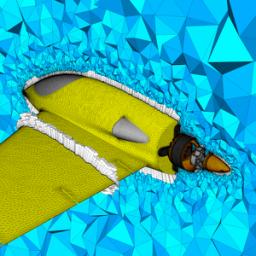
Today Pointwise announced the latest release of its computational fluid dynamics (CFD) meshing software featuring direct integration with overset grid assembly (OGA) software.
|
 |
by Rich Brueckner on (#34V5)
"The UberCloud Community brings together over 3,000 participants to pave the way for the Technical Computing Cloud. UberCloud Experiment teams explore the end-to-end process of accessing remote computing resources in HPC centers and in the Cloud to study and overcome the potential roadblocks for industry applications such as CAE, Bio and Life Sciences."
|