Dig in for the long haul, folks. Research on Brexit voting habits shows an intrinsic conservatism against liberalismThe Cambridge Analytica scandals have made it obvious that some people’s votes can be predicted and manipulated by knowing their emotional triggers. But new research suggests that the way people think, in apparently unemotional ways, is also a reliable predictor of political attitudes, and in particular, of nationalism and enthusiasm for Brexit.Related: Brexiters tend to dislike uncertainty and love routine, study says Continue reading...
Less invasive procedure, often for osteoarthritis, used in only 9% of cases, researchers findMany more people facing surgery for knee problems would be better off with a partial rather than total knee replacement, which should allow them to recover faster, say experts.
Early risers can see a fine grouping in the southern sky, and southern observers should also see shooting starsThroughout the early hours of 5 May, a nice grouping of solar system objects will be visible in the southern sky. Continue reading...
Anthony Tucker’s obituary for Patricia Lindop mentioned that she helped found the Society for Education in the Applications of Science. Thanks to Lord (Brian) Flowers and Patricia, I was a grateful beneficiary of a grant from the society in 1976, to study for a PhD on the Technologies of Political Control at Lancaster University. It wasn’t a smooth journey.In April 1977, Special Branch raided the university and took my research, as I had inadvertently stumbled across aerials at the back of the university feeding into the US’s Echelon monitoring programme via Menwith Hill in north Yorkshire. Lawyers were needed to get it back. Continue reading...
Creaking knees, stiff back, dodgy shoulders… Age is no friend to the human body. So how are veteran athletes like Roger Federer and Jo Pavey still at the top of their game? And what can you do to keep up?Slow down, that used to be the mantra for middle age. The dread half-century reached, fiftysomethings were expected to take up less challenging physical activities – if they were physical at all. A gentle stroll around the golf course, perhaps, rewarded with a gin and tonic at the 19th hole; or membership of the local bowling club, blazered crown green rather than 10-pin.Physical decline as the body aged was inevitable, something to be grumbled about, accepted and dealt with. That fundamental law has not changed, but the way we manage ageing has. Getting older need not mean getting weaker, at least not until the end is truly nigh. Continue reading...
Animals that sacrifice their lives, for their homes or offspring – or just because they’re in the wrong place at the wrong timeEarlier this month, a group of scientists described a newly discovered ant species, Colobopsis explodens, in the journal ZooKeys. As the name suggests, the worker ants of the species, which is found in south-east Asia, are known to explode when attacked, releasing sticky, toxic fluid from their abdomens. The explosion kills the ant, which sacrifices itself to protect its nest mates. Continue reading...
The discovery of genes that are linked to the crippling condition throws up exciting new possibilities for its successful treatmentDepression runs in families, we know. But it is only very recently, and after considerable controversy and frustration, that we are beginning to know how and why. The major scientific discoveries reported last week by the Psychiatric Genomics Consortium in Nature Genetics are a hard-won breakthrough in our understanding of this very common and potentially disabling disorder.If your parents have been depressed, the chances that you have been or will be depressed are significantly increased. The background risk of depression in the general population is about one in four – each of us has a 25% chance of becoming depressed at some point in our lives. And if your parents have been depressed, your risk jumps by a factor of three. Continue reading...
Mission to find source of methane detected in atmosphere may have an answer in months, researchers believeScientists have begun an experiment aimed at solving one of astronomy’s most intriguing puzzles: the great Martian methane mystery.In the next few months they hope to determine whether tantalising whiffs of the gas that have been detected on the red planet in recent years are geological in origin – or are produced by living organisms. Continue reading...
The neuroscientist and author of The Idiot Brain on the difficulty of trying to explain happiness and what he learned from Charlotte ChurchDean Burnett, 35, is a Cardiff-based neuroscientist, blogger and occasional standup comedian who writes the Guardian’s science blog Brain Flapping. His bestselling book The Idiot Brain, published in 2016, portrayed the human brain as an extraordinary organ that is also messy, fallible and disorganised. In his follow-up, The Happy Brain, Burnett delves into our grey matter once more to explore the slippery notion of happiness, asking: what causes it, and why? What makes our brain like certain things so much, but not others? Can eternal happiness actually exist – and would it be desirable anyway?How did the book come about?
Researchers believe the 140 children were sacrificed 550 years ago by the Chimú civilisation as floods ravaged the coastlineArchaeologists in northern Peru say they have found evidence of what could be the world’s largest single case of child sacrifice.The burial site, known as Las Llamas, contains the skeletons of 140 children who were aged between five and 14 when they were ritually sacrificed during a ceremony about 550 years ago, archaeologists said on Friday. Continue reading...
Environment secretary’s vision for UK agriculture post-Brexit sees farmers playing a vital role in improving public healthMeat is a crucial part of a balanced diet, the environment secretary has said, as he told farmers about his “health and harmony†vision for food.Michael Gove’s new vision for British agriculture post-Brexit envisages farmers playing a critical role in improving public health. Continue reading...
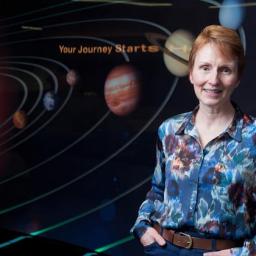
‘You need a vision of going somewhere, doing something that is hard, going further than humans have ever been before’Plans to send humans back to the moon lack “visionâ€, according to the first Briton in space, who says that the true challenge is now to send our species to Mars.Former astronaut Helen Sharman, who undertook an eight-day mission to the Mir space station in 1991, was speaking to the Guardian ahead of her appearance at the Leeds international festival 2018.
by Presented by Nicola Davis and produced by Sandra F on (#3NV13)
This week: Nicola Davis investigates the death by fowl play of one of the world’s most famous dodo specimens. So what do we know about the dodo as a species? And what questions does this murder case raise?Subscribe and review on Acast, Apple Podcasts, Soundcloud, Audioboom and Mixcloud. Join the discussion on Facebook and Twitter
Natural History Museum takes down picture, but Marcio Cabral is adamant he did not fake itThe dramatic photograph of an anteater approaching a glowing termite mound in the dead of night was originally considered a worthy winner of a Wildlife Photographer of the Year award. The prize has now been withdrawn after judges noticed a problem: the anteater pictured is almost certainly a stuffed animal kept outside a visitor centre.
The brains, which are not conscious, are kept alive through the circulation of an oxygen-rich fluid through the organsResearchers in the US say they have managed to keep the brains of decapitated pigs alive outside of the body for up to 36 hours by circulating an oxygen-rich fluid through the organs.While the scientists, led by Yale University neuroscientist Nenad Sestan, say the brains are not conscious, they add the feat might help researchers to probe how the brain works, and aid studies into experimental treatments for diseases ranging from cancer to dementia.
Exclusive: Campaigners’ legal challenge could restrict development at heritage sitesArchaeologists fear English Heritage’s plans to build a visitor centre in the mound of the 13th-century Clifford’s Tower in York will cause “substantial harm†to one of England’s most significant monuments.Legal action is being pursued in a test case that could have a major impact on the power of developers to build on heritage sites. Continue reading...
Australian Academy of Science launches 10-year plan to document hundreds of thousands of unknown speciesWith an estimated 70% of Australian organisms still undocumented and funding for species discovery declining, the national science academy will head to parliament on Friday to argue that a rapid reversal is needed to avoid extinctions and reveal unimagined health and biosecurity solutions.The Australian Academy of Science and its New Zealand counterpart, the Royal Society Te ApÄrangi, are launching a 10-year plan to study and name unknown species, warning that a sound understanding of biodiversity is critical in the face of a global extinction crisis. Continue reading...
Prominent pharmacologist whose pioneering work on how the body stops bleeding improved the detection of thrombosisIn 1945, Gustav Born, a young and recently qualified doctor serving with the Royal Army Medical Corps, was among the first allied staff to witness the medical aftermath of the atomic bomb blast in Hiroshima. Among the horrific injuries he encountered, one struck him particularly forcibly: the tendency of the survivors to suffer from severe bleeding disorders. This, he surmised, was attributable to a lack of blood platelets caused by radiation damage. It was evidently a decisive experience, for it set the course of his future research and, indeed, his entire career.After the war, Gus, who has died aged 96, began postgraduate research at Oxford University with Howard Florey (who developed penicillin for pharmaceutical use), gaining his DPhil in 1951. He subsequently researched various other topics, including histamine and acid secretion in the stomach, neonatal physiology, smooth muscle and catecholamine pharmacology. But he was soon lured back by the fascination of platelet biology. Continue reading...
Health service chief calls for affordable access to CAR-T, which modifies immune system to destroy cancer cellsThe NHS is preparing to fast-track a “game-changing†cancer treatment into hospitals, its chief executive has said, calling for the manufacturers to help by setting an affordable price.
A 200-strong team of researchers from across the globe have mapped the genetic variants that increase the risk of depressionScientists have raised hopes for more effective treatments for depression, a condition that affects over 300 million people globally, after mapping out the genetic foundations of the mental disorder in unprecedented detail.
Cancer Australia data prompts calls for governments to help develop early detection testsMost Australians with lung and bowel cancers are being diagnosed too late, data released by Cancer Australia shows, prompting renewed calls for governments to make developing early detection tests a priority.Just 18% of lung cancer cases recorded in 2011 were caught early, at either stage 1 or stage 2, the research shows. For two out of five patients (42%), the disease had already spread to other organs in the body. And less than half (46%) of colorectal cancer cases were diagnosed at an early stage. Continue reading...
Buruli ulcer funding will be matched by Victorian government and two local councilsMore than $1m will be spent tackling a mysterious flesh-eating bug and reducing its spread in Australia.The federal government on Thursday announced it is investing $1.5m into researching the Buruli ulcer, which has spread throughout Victoria and far north Queensland. Continue reading...
Scientists say doctors should consider weaning patients with depression, Parkinsons or bladder problems off anticholinergic drugsSome antidepressants and bladder medicines could be linked to dementia, according to a team of scientists who are calling for doctors to think about “de-prescribing†them where possible.Tricyclic antidepressants such as amitriptyline, which are also prescribed for pain and to help with sleeping, and one of the SSRI class, paroxetine (also known as Seroxat), are implicated by the largest ever study to look at this possible risk. Continue reading...
My mentor, research supervisor and friend, the physicist WGP (Percy) Lamb, who has died aged 97, was a member of the celebrated King’s College London team that contributed to the unravelling of the structure of DNA in the early 1950s. His PhD work at King’s was supervised by John Randall and as a result Percy joined the team led by Randall and Maurice Wilkins, which also included Rosalind Franklin, who was responsible for the famous “photo 51†that revealed the structure of a double helix.Percy specialised in the use of light and electron microscopes to study the nature of cell nuclei. He worked closely with others including Rene Bovey, Marlene Friedlander and Angela Martin during the formative period of the research. Continue reading...
Experts argue that experiments have edged so much closer to the possibility of consciousness that guidelines are needed“I have never seen so many brains out of their heads before!†declares Dr Michael Hfuhruhurr, the world-renowned neurosurgeon played by Steve Martin who has a love affair with a brain in a jar in the 1983 movie, The Man with Two Brains.Thirty five years on, the prospect of falling for a disembodied brain is still looking slim, but researchers have made such progress in growing and maintaining human brain tissue in the lab that a group of scientists, lawyers, ethicists and philosophers have called for an ethical debate about the work. Continue reading...
by Hannah Devlin Science correspondent on (#3NNBM)
A spectacular pileup of 14 galaxies soon after the Big Bang has been seen and recorded for the first timeThe colossal merger of 14 galaxies more than 12 billion years ago has been captured by astronomers who used the world’s most powerful telescopes to peer 90% of the way across the observable universe.The cosmic pileup occurred 12.4 bn years ago and the resultant gigantic galaxy will have continued to snowball in size ever since. Calculations suggest that by the present day, hundreds more galaxies would have been swallowed up by the cluster, propelling it to a mass equivalent to 1,000 trillion suns, which would make it the largest known object in the universe. Continue reading...
Instead of medicalising loneliness and calling it an epidemic, we need to find better ways of engaging with ourselvesLoneliness – the sense of isolation, accompanied by the feeling of alienation – has always been a feature of the human condition. References to the unhappy state of loneliness are scattered throughout the Bible. As the 17th century poet John Milton reminded us: “Loneliness is the first thing which God’s eye named not good.†However, it was only in the early modern era that people started talking about loneliness as a standalone problem. Until the 19th century, loneliness tended to be associated with the physical state of being apart from society or company. During the 19th century, loneliness became associated with people’s inner state, and philosophers such as Kierkegaard were preoccupied with the fear of loneliness.Related: Loneliness linked to major life setbacks for millennials, study says Continue reading...
Move to boost AI research amid concerns Europe is losing ground to US and ChinaBrussels has called for a €20bn (£14bn) cash injection for artificial intelligence research, while pouring cold water over controversial plans to give robots human rights.The European commission wants governments and private companies to boost research and innovation spending on AI, amid rising concern that Europe is losing ground to the US and China, where most leading AI firms are based. Continue reading...
Everybody loves penguins – but how much do you know about them?It is World Penguin Day, so what better way to celebrate than to test your knowledge of penguins, and their appearances in history and popular culture, while also looking at pictures of penguins? You might even learn something along the way. Continue reading...
Male conference organisers disproportionately choose men over women when assigning speaking slotsWomen get fewer chances than men to speak about their work at scientific conferences, largely because those in the upper echelons of academia are male, research has revealed.While speaking at conferences is a key part of academic life, not only raising the profile of researchers but helping them to share ideas and find job and funding opportunities, the latest study confirms what many scientists have long suspected to be true: men give more talks than women. Continue reading...
Malcolm Robinson, scientist and founder of charity Harvey’s Gang, named overall winner at Advancing Healthcare awardsA biomedical scientist has scooped top honours in the annual awards for therapists and health scientists for his idea of giving child patients VIP tours of the laboratories where their blood samples are analysed.
Technology has revolutionised science but it can’t beat good eyes for finding fossilsScience and technology go hand in hand, spurring each other on with new insights and techniques. Palaeontology has benefitted too with everything from scanning electron microscopes and XROMM videos to 3D printing and photogrammetric models playing a role in uncovering the secrets of the past. But the most fundamental aspect of palaeontology – finding fossils, remains remarkably, laughably, low tech.Even the most well-funded expeditions run by experienced researchers basically rely on having boots on the ground and people looking for fossils. That’s pretty much it, you walk around and look. Continue reading...
A writer dives into at-home dog DNA testing to learn all she can about her pooch – and so that know-it-alls will stop pestering her at the dog parkEveryone thinks my dog is a puppy. His large, wide-set eyes; small, soft body; and playful demeanor belie his maturity and emotional depth – attributes that become obvious once you get to know him. The truth is he’s about four, though the exact date of his birth, like that of many rescue dogs, is lost. He looks, to my eye, like some sort of a labrador-terrier mix, with a soulful amber gaze, spunky little foldy ears, and an itty-bitty little nosey. He is my friend and I love him.Until recently, though, his age and breed were up for debate. This was evidenced by an apparent dog expert at the local dog park on a recent morning. “No,†he said, shaking his head, after asking for the details of my dog. “My dog looked like that when she was a puppy, and now she looks like this.†He gestured to his large pit-bull-looking sweetie who, though beautiful, looked nothing like my little labrador-looking sweetie whom I love so much and for whom I would die. “Well … he’s about four,†I told him, hiding my annoyance well as I am extremely calm. “No. I don’t think so,†he said. Continue reading...
by Presented by Richard Lea, Claire Armitstead and Si on (#3NH2P)
In her furious new book, Also Human, psychologist Caroline Elton exposes the crisis among doctors in the UK, who spend their lives caring for others without receiving any support themselves. She explains why she felt she had to go public about her counselling work with overstressed pillars of the medical profession.Plus, Claire, Richard and Sian examine the literature of consulting room and operating theatre, discuss the vogue for medical memoirs and place bets on the winner of this year’s Wellcome prize for fiction and nonfiction on a medical theme. Continue reading...
Is time real or simply a useful measurement of change? The author of Seven Brief Lessons on Physics takes us to the limits of our understanding with clarity and styleIn Hitler’s Germany, a handful of physicists bristled at the mere mention of quantum theory. The troubling uncertainties of Einsteinian relativity and other physical exotica were viewed as “Jewish science†inimical to German nationhood and the Newtonian mechanics of Deutsche Physik. “German physics†(sometimes called “Aryan physicsâ€) failed to make inroads in 1930s Germany because its champions were so plainly deluded. To forward-looking German physicists such as Max Planck and Werner Heisenberg, the idea that relativity was a “Jewish fraud†was manifest nonsense. Albert Einstein was indeed Jewish, but had he masterminded a “world crisis†in physics, as the anti-relativity lobby insisted? Hardly.Nobody said that relativity theory was easy. Einstein’s notion that time and space are essentially one (the concept of curved “spacetimeâ€) is the stuff of abstract poetry. Fortunately, the Italian physicist Carlo Rovelli writes of “warped time†and other tentative physics with incisive clarity. Known for his work on loop quantum gravity theory and the pre-Socratic Greek philosopher Anaximander, Rovelli is one of our great scientific explicators. His poetic essay collection Seven Brief Lessons on Physics sold more than a million copies in English translation in 2017 and remains one of the fastest-selling science books ever. Continue reading...
Between 5% and 10% of those with the virus will develop a rapidly fatal form of leukaemiaHuman T-lymphotropic virus type 1 is spread through contaminated blood, unprotected sex and breastmilk. Like HIV, there is no cure. Like HIV, the virus causes potentially fatal complications but unlike HIV it takes much longer for symptoms to appear. Some people may carry the virus for 30 years before chronic complications appear. Continue reading...
Potentially deadly bacteria thriving in huge clots of waste in sewers, Channel 4 study showsFatbergs, the congealed mass of fat and discarded items that are increasingly blocking Britain’s sewers, are the consequence of the plastic crisis in Britain and contain potentially deadly antibiotic-resistant bacteria, tests show.A study by Channel 4 in conjunction with Thames Water has analysed the contents of one supersize fatberg discovered underneath the streets of South Bank in central London. Continue reading...
Oversharing may be better than the dreadful silence that once surrounded ‘the big C’, but many patients might prefer more practical adviceIt is astonishing that “cancer diaries†(Why I live in dread of another cancer confessional, 18 April) have proliferated to the extent that some of your correspondents (As a cancer patient, I needed distraction, Letters, Anne Hay, 23 April) can describe them as cliches or tediously omnipresent.Perhaps there has been a trend towards “oversharingâ€, but on the whole this is surely a corrective to the dreadful mandatory silence that surrounded cancer not so long ago. Continue reading...
Exclusive: In an open letter, the scientists say the proposed Ellis institute is essential to avoid brain drain to big tech firmsLeading scientists have drawn up plans for a vast multinational European institute devoted to world-class artificial intelligence (AI) research in a desperate bid to nurture and retain top talent in Europe.The new institute would be set up for similar reasons as Cern, the particle physics lab near Geneva, which was created after the second world war to rebuild European physics and reverse the brain drain of the brightest and best scientists to the US. Continue reading...
The solutions to today’s puzzlesOn my puzzle blog earlier today, I set you the following puzzles:1) What is numerically interesting about April 25, 1849 - the date of birth of the German mathematician Felix Klein - and why is this year’s anniversary particularly noteworthy? Continue reading...
Shouldn’t policy be based on evidence – not the other way around?The future seems rosy for Jeremy Hunt. In his newest letter to social media firms, he envisions a future where every child gets a state-imposed and universal social media limit, similar to the alcohol units recommended by government. After a child surpasses a set cutoff point, their social media access is stopped for the day. Hunt makes it seem easy, practical, and better for children and parents alike.There is just one glaring problem. This drastic policy still needs the scientific evidence to back it up. Hunt announced yesterday that his chief medical officer will be taking charge of this. Well, as a scientist working in this area, I can tell Dame Sally Davies now: the evidence this policy needs doesn’t exist. If she is not willing to ignore large parts of the scientific literature or exaggerate a minority of low-quality studies, her job to find the amount of “science†to back up such significant state intervention will be impossible. And, to insert an important side-question, shouldn’t policy be based on evidence – not the other way around? Continue reading...
A one-sided storyUPDATE: The solutions are now up hereHi guzzlers,Today’s puzzles are in honour of the German mathematician Felix Klein, who was born this week 169 years ago, on April 25, 1849. Continue reading...
Fertile breeding conditions caused by hottest summer since records began leads to surge of rats and miceA record-breaking long, hot summer has led to a tenfold explosion in New Zealand’s rodent population, with the country’s urban areas worst hit.The 2017-2018 summer in New Zealand was the hottest since records began, and fertile breeding conditions have led to a surge in rat and mice numbers. Continue reading...