
 |
by Mike Masnick on (#5SJF1)
Over the last few years we've heard a lot of nonsense claiming that Section 230 somehow magically turns social media into state actors. This idea, pushed heavily by disgraced law professor Jed Rubenfeld has not fared well in court. As law professor Eric Goldman highlights, multiple courts have been easily rejecting these claims. Notably, they're mostly citing the failed lawsuit from PragerU that insisted that a very light touch moderation (filtering out a very small percentage of their videos from the even smaller percentage of users who turn on "restricted mode") was a form of censorship. The 9th Circuit pointed out that the 1st Amendment says otherwise (which is amusing since Prager himself pretends to be a big supporter of the 1st Amendment).Either way, three recent cases claiming that social media were state actors all clearly and easily rejected those claims. The first two of these were pro se lawsuits that were mad about social media sites in semi-coherent complaints that the courts construed as liberally as possible to try to find any sort of legitimate claim, and the courts (rightly) found that those claims were barred because the social media sites (YouTube and LinkedIn) were clearly not state actors.First up, a district court in the Eastern District of Pennsylvania, which made short work of a lawsuit against YouTube filed by a pro-se plaintiff with a variety of different claims about harassment and hacking (that were somehow YouTube's fault?) leading to the suggestion (the complaint is not particularly clear) of a civil rights violation. The court points out that YouTube is not a state actor and thus there's no possible claim here:
|
| Link | https://www.techdirt.com/ |
| Feed | https://www.techdirt.com/techdirt_rss.xml |
| Updated | 2026-09-23 11:04 |
|
by Cathy Gellis on (#5SJCB)
Senator Tillis penned a letter to President Biden this week that is breathtaking in its obtuseness. In it, he demanded that the President withdraw the nomination of Gigi Sohn to the FCC for having championed the longstanding ability of the public to receive over-the-air signals on public airwaves. Or, in other words, for having done exactly what we should want an FCC commissioner, tasked with the stewardship of the nation's spectrum, to do.
|
|
by Daily Deal on (#5SJCC)
The 2021 CompTIA Security Infrastructure Expert Bundle has 4 courses to help you learn how to mitigate attacks and vulnerabilities. The courses will help prepare you to sit for exams on CompTIA CASP, PenTest, CySA, and Security. It's on sale for $30. Use the code CMSAVE70 at checkout to get an additional 70% off this and other elearning offers in the store.Note: The Techdirt Deals Store is powered and curated by StackCommerce. A portion of all sales from Techdirt Deals helps support Techdirt. The products featured do not reflect endorsements by our editorial team.
|
|
by Karl Bode on (#5SJ9W)
A few months back we noted how FCC Commissioner Brendan Carr had taken to Newsweek to dust off a fifteen year old AT&T talking point. Namely that "big tech" companies get a "free ride" on telecom networks, and, as a result, should throw billions of dollars at "big telecom" for no real reason. You'll recall it was this exact argument that launched the net neutrality debate, when former AT&T CEO Ed Whitacre proclaimed that Google wouldn't be allowed to "ride his pipes for free." Basically, telecom giants have long wanted somebody else to fund network builds they routinely leave half finished despite billions in subsidies.While this dumb argument originated with AT&T, it has been adopted by countless international telecoms over the years. Like this week, when a coalition of 13 large European telecom companies signed a joint letter demanding that U.S. tech giants pay them more money for no coherent reason:
|
|
by Tim Cushing on (#5SHXV)
American companies still give China what it wants. Y THO?The only thing that can be gained from maintaining whatever the fuck a "good relationship" with the world's most powerful autocracy is… more subjugation! Who would want that?I wish this was rhetorical but it seems plenty of entities want to be bossed around by the Big Red Bully, ranging from the NBA to a variety of tech companies which consider a potential market of billions more valuable than their credibility.So, who's caving to the always unreasonable demands of China and its head of state, Winnie the Pooh? Why, it's none other than Disney, the current host for every Simpsons episode ever. And what's getting pulled? It's a Simpsons episode that chose to portray China the way China would not choose to portray China, according to this report from Narayan Liu for CBR.com.
|
|
by Timothy Geigner on (#5SHE2)
The iconic film Pulp Fiction appears to be a hot topic of conversation lately. We recently discussed Miramax's laughable lawsuit against Quentin Tarantino over his plan to offer NFTs for certain unreleased and unused portions of the film's drafted scripts, alongside the director's audio commentary revealing his thought processes and "secrets" surrounding the screenplay. While that whole thing is currently making Miramax look very confused as to intellectual property laws, there was recently a lawsuit ruled in Miramax's favor over the film's most iconic poster.You know the image. It's the one with Uma Thurman laying stomach-down on a bed, smoking a cigarette, surrounded by guns and paperback books. The photo for that poster was taken by Firooz Zahedi at his studio in 1994 and has since become one of the most iconic movie posters ever. In May of 2020, Zahedi sued Miramax for copyright infringement over the extensive use of the photo on merchandise, claiming he never authorized its use for those instances. Miramax claimed the work had been done as a work for hire, which makes all the sense in the world, except, well...
|
|
by Tim Cushing on (#5SH82)
Plenty of people try to minimize police misconduct by claiming what we witness day after day after day is just the work of a few "bad apples." That's only half of the adage, though. The rest of it notes that bad apples spoil the whole bunch. Keep bad apples around long enough and you're going to have to throw out the bunch eventually.Apply this phrase to cop shops and you'll see why cop proponents only half-quote it. Apply this phrase to cop shops and you'll see where it completely fails: not only do bad apples make the good apples worse, but the bad apples have the power to rid the bunch of as many good apples as possible.An investigation by USA Today shows why it's easy to keep good cops down and enable bad cops to do their worst. Law enforcement culture has dictated a thin blue line -- one that shields bad cops from accountability and allows even the best of cops to assume the public's unwillingness to turn a blind eye to misconduct makes them the enemy.But the most dangerous enemies are those behind the blue line. And they must be removed by any means necessary. (Non-paywalled link here.)
|
|
by Leigh Beadon on (#5SH5P)
In last week's episode, we had a conversation with the creators and curators of the Knight Foundation's virtual symposium on Lessons From The First Internet Ages. This week, we've got the audio from the panel discussion at the symposium that Mike participated in along with Stanford's Daphne Keller and Harvard Law's Evelyn Douek, all about the ways that the governance of online communities has evolved and changed as the internet has matured.Follow the Techdirt Podcast on Soundcloud, subscribe via Apple Podcasts, or grab the RSS feed. You can also keep up with all the latest episodes right here on Techdirt.
|
|
by Mike Masnick on (#5SH2F)
In December of 1983, I had just turned 9 years old, and all of my friends wanted Cabbage Patch Kids dolls. They were everywhere, and are remembered as one of the most well known holiday crazes in which scarcity of the toy, and overwhelming demand, resulted in parents absolutely losing their minds trying to find the dolls. My parents, instead, told me that the dolls were impossible to find, or super expensive if they could be found, and told me to expect something else instead. I never got a Cabbage Patch Kid, and I survived the experience (and learned a bit about supply and demand... and mass hysteria).Anyway, I'm thinking of that experience from nearly 40 years ago today upon reading about the new "Stop Cyber Grinches from Stealing Christmas" bill, which has been announced via a press release with no actual bill text attached (which really shouldn't ever happen). However, as described, the bill would effectively outlaw "bots" that buy up all of the popular toys in order to resell them at jacked up prices:
|
|
by Tim Cushing on (#5SGZD)
Earlier this year, the Tenth Circuit Court of Appeals decided there was no right to record police officers. In a case involving a man who had his tablet seized and searched by Denver, Colorado police officers when they discovered he was recording them, the Appeals Court sided with the cops, awarding them qualified immunity. The judges did this despite the officers being specifically instructed that there was a presumed right to record police officers via training that had been in place for years prior to this incident.The plaintiff attempted to have this case reheard by the Supreme Court, which might have resulted in the firm establishment of a right to record nationwide. Unfortunately, the nation's top court decided this wasn't worth its attention and took a pass on this case, apparently feeling the patchwork establishment of this right in a handful of judicial circuits is more than enough protection for the general public.The Tenth Circuit is hearing another case involving the recording of police officers. It again involves officers in Colorado. In this case, an officer blocked Colorado resident Abade Irizarry from filming cops performing a roadside sobriety test. The Tenth previously dodged establishing precedent in the case it handled in April. This time it might feel a bit more pressure to actually weigh in on this issue. The DOJ (yes, that one!) has filed a brief in Irizarry's case asking the court to establish this right.
|
|
by Daily Deal on (#5SGZE)
The 2021 All-in-One Computer Science Bundle has 11 courses to teach you the essentials of computer science. You'll learn about Java, C++, Ruby on Rails, Python, and more. It's on sale for $35. Use the code CMSAVE70 to get an additional 70% off this and other elearning offers through out the store.Note: The Techdirt Deals Store is powered and curated by StackCommerce. A portion of all sales from Techdirt Deals helps support Techdirt. The products featured do not reflect endorsements by our editorial team.
|
|
by Karl Bode on (#5SGWZ)
So to be very clear: the Biden infrastructure bill has a lot of good things for broadband in it. More specifically, billions in grant money that can be used by states to shore up both "middle mile" and "last mile" broadband access across huge swaths of the country. It's the biggest lump sum ever doled out by the government for broadband, and it will have a huge positive impact on the nation's broadband gaps. Especially in perpetually marginalized areas. That can't be understated.That said, this isn't the first time we've tried to throw a big chunk of cash at the U.S. broadband problem, and there are numerous ways this could still go south.The plan relies on many states to build entirely new systems to distribute and spend that money. Given rampant state corruption in broadband policymaking, there's an unlimited number of ways that entrenched regional monopolies (Comcast, Charter, AT&T, Verizon, CenturyLink (Lumen), Frontier) could inject themselves into the process to ensure more money goes to them for dubious deployment promises, and less goes to smaller competitors or faster, better services.ISP lobbyists already stripped a lot of language they didn't like out of the original proposal, including clear support for community broadband and tougher speed standards. Now their lobbying folks are busy lobbying the NTIA, which has been tasked with crafting additional standards and funding guidelines in six short months:
|
|
by Tim Cushing on (#5SGMS)
The government of Indonesia is taking greater direct control of the internet. Over the past several months, it has implemented a new law that places a ton of burdens on platforms and service providers that deal extensively with content created by third parties.The new law -- referred to as MR5 -- is pretty much the inverse of Section 230 immunity that sites in the United States enjoy. Intermediary liability is the name of the game in Indonesia. Providers are ordered to take down content that could cause "community anxiety" and instructed to keep a look out for any ways people might be sharing such forbidden content.This means providers are not only expected to police their services and platforms for content they can see but also head off circumvention efforts, like the use of VPNs. On top of that, providers are expected to engage in continuous monitoring of content and create filters that will block content the government finds upsetting, including gambling, blasphemy (but only against state-approved deities), and the always meaningless catchall, "fake news."The law has been made even worse as the EFF reports. Providers and platforms are already expected to police content. A recent ruling by an Indonesian court says it's perfectly legal for the government to pull the plug on the internet at its discretion.
|
|
NordicTrack Patches Out 'God Mode' In Treadmills That Allowed Users To Watch Anything On Its Display
by Timothy Geigner on (#5SG2H)
If you are a console gamer of a certain age, you will remember the bullshit Sony pulled when it patched its PS3 systems to remove useful features it had used as selling points for the console to begin with. Essentially, the PS3 had a feature that allowed you to install another operating system on it. This was used by hobbyists, companies, and the US Military alike to creatively use PS3s for purposes other than that for which they were built, such as research supercomputers and creating homebrew PS3 games. Sony later decided that those features could also be used for piracy or other nefarious actions and so patched it out. Sell the console with a feature, remove it later after the purchase... and then get sued in a class action, as it turned out.The story of NordicTrack's treadmill isn't exactly like that, but it's pretty damned close. The company's treadmill has a large display mounted on it. That display was designed to be used with a subscription to iFit, which is the parent company of NordicTrack. There are all sorts of useful features when you view subscribed content on the display while exercising, such as difficulty and incline changes that follow along with the subscribed workout content. But the console also has a way to bypass the user-facing portion of the console and get into the underlying OS, which means users like JD Howard could then setup their own internet browser, through which they could put any web content on the display while they worked out.
|
|
by Tim Cushing on (#5SFZ7)
Fighting crimes is easier when it's not being done by criminals. A bunch of cases are being tossed in New York City because misbehaving NYPD officers left their dirty handprints all over them.
|
|
by Mike Masnick on (#5SFVN)
Having the government show up at your door to ask some questions about your reporting can be extremely unnerving. Zack Whittaker, the top notch cybersecurity reporter for TechCrunch got to experience the fun of that when the FBI showed up at his door over a year after he had published a story about a hacker dumping thousands of Mexican embassy documents from Guatemala after the Mexican embassy left the data exposed online.As with many situations involving reporting on hacks and leaks, rather than focus on those actually responsible (often those who left the information exposed), law enforcement and the powers that be... often target the journalists. We saw that recently in Missouri where the governor called reporters hackers (and "fake news") for ethically disclosing that the state's elementary school agency had left teacher and administrator social security numbers exposed -- something the Department of Elementary and Secondary Educationapologized for weeks later (though it didn't apologize to the journalists).For Whittaker, the experience was reasonably concerning:
|
|
by Tim Cushing on (#5SFS0)
NSO Group's year from hell continues. Apple is now suing the Israeli exploit hawker for hacking its customers' iPhones -- customers who include not only the supposed terrorists and dangerous criminals NSO claims its customers target with malware, but also journalists, activists, lawyers, ex-wives, religious leaders, US citizens, and government officials NSO claims its customers don't target.Apple isn't the first major tech company to sue NSO over its malware. Facebook and WhatsApp sued NSO in 2019, alleging that the use of WhatsApp to deploy powerful exploits violated WhatsApp's terms of use. While this is almost certainly true (deploying malware via WhatsApp is definitely not allowed), WhatsApp appears to want a ruling that would expand the definition of "unauthorized access" under the CFAA (Computer Fraud and Abuse Act) that's already been stretched several times by DOJ prosecutors.On one hand, it would be undeniably enjoyable see NSO get slapped with an order denying it access to WhatsApp and its users, on the other, it wouldn't be helpful at all to turn research (security and otherwise) that violates sites' terms of use into a federal crime.Unfortunately, Apple's lawsuit [PDF] appears to be asking for something along the same lines. It also stretches the definition of legal standing, alleging it has the right to sue on the behalf of its users because reacting to the deployment of NSO malware has caused it to spend a bit of its billions closing security holes.That being said, Apple's legal reps sure know how to open a lawsuit. Here's the first paragraph of the suit's introduction:
|
|
by Tim Cushing on (#5SFMK)
Law enforcement agencies routinely engage in surveillance of social media accounts. Some of this is accomplished with third-party tools that use keywords and geofences to give cops info that may be relevant to investigations. These tools also give cops a lot of garbage data that law enforcement is free to sift through for officers' own entertainment or to bypass constitutional protections surrounding speech and warrantless searches.Does it actually help combat crime? The jury (if a court would ever allow one to consider these issues…) is still out on that. But social media surveillance continues under the theory that anything someone published publicly should be accessible by cops since it's accessible by everyone else.But the constitutional metric changes (or at least should) when cops set up fake accounts to engage in surveillance of suspected criminals. In these cases, cops may be welcomed into more private circles where information can't be accessed unless a person has been given access.This isn't a new problem. It dates back to 2009, when Facebook was gaining critical mass and Twitter was just starting to generate enough interest to become (very eventually) sustainable. Twitter's account verification process allows users to engage without turning over much personal info. The same can't be said for Facebook, which would prefer to have its user base verified with as much personal info as possible -- something that was supposed to limit abusive behavior but just ended up giving the platform plenty of actionable (and sellable) demographic info. Facebook insisted on real people and real names and altered its policy to inform users that setting up bogus accounts was something that could result in account termination.Cops didn't care. They had online lurking to do in hopes of finding something prosecutable without ever leaving the office. Facebook warned law enforcement that setting up fake accounts wasn't permissible in 2018 after news surfaced showing cops were bypassing these rules to do a little online fishing for potential criminals.Facebook is now Meta. It is also still Facebook, albeit under a new umbrella corporation. The rules about "real names" still apply to Facebook account creation. And law enforcement officers are still continuing to ignore this rule. Three years after its last letter addressed to cops about terms of service violation Meta is sending out another one [PDF]. It reiterates what officers already know but are apparently of the belief Facebook/Meta won't actually do much to enforce.The letter references Los Angeles Police Department activities exposed by the Brennan Center. The LAPD apparently encourages officers to set up fake accounts to locate and surveil criminal suspects. The practice is common enough that the LAPD actually has policies governing the use of social media surveillance via dummy accounts. But the policies ignore Facebook's rules, which take precedence over the LAPD's rules. After all, it's Facebook's platform, not the LAPD's playground.
|
|
by Daily Deal on (#5SFMM)
It's Cyber Monday and we have some special coupon codes you can use on the following deals and throughout the store. Coupon code CMSAVE20 gets you 20% off anything that is NOT a digital product, CMSAVE40 gets you 40% off apps and software, and CMSAVE70 gets you 70% off e-learning deals.The AirBlast Pro Earbuds are the newest version of the best-selling earbuds that comes at an unbeatable price point. Featuring top-notch sound quality, wireless charging, and advanced Bluetooth 5.1 technology, the AirBlast Pro is what you need. With an hour of charging time, you get to enjoy up to 3 hours of playtime for up to 49 ft operating distance. Use the earbuds with their charging case, and you get to experience up to 8 hours of non-stop music/talk time. They're waterproof and can withstand water, sweat, or rain. A single pair is on sale for $40, 2 pairs for $55, or 3 pairs for $75.The Dragon Alpha Z PRO Dual Camera Drone is equipped with a powerful wide angle 4K camera on the front and a 720p on the bottom. The front camera, with 90 degrees ESC adjustment, can help you to film and capture all the beautiful scenes you encounter. It has a companion app so you can view real-time images and not miss out at any moment. With an altitude hold mode function that stabilizes its flight, you do not have to constantly worry about the drone's stability and can concentrate on capturing your image better. The headless mode eliminates the need to adjust the position of aircraft before flying. The drone will return to its original point with one click, no matter where it was flying. It's on sale for $100.The HumBird Speaker is the world’s smallest and most versatile bone conduction speaker that allows you to have a different but always spectacular listening experience anywhere. Using cutting-edge bone conduction technology, it delivers a high sound volume, being 4 to 5 times louder than the average cell phone speakers' volume, reaching up to 115dB, and it allows you to personalize the tone quality. HumBird turns sound into a mechanic vibration of different frequencies, leveraging the effects of the different materials on top of which it is placed and used. Put HumBird anywhere and experience a DIY customizable experience of sound. It's on sale for $26.95.This Smart Keychain replaces the typical charging cable and uses the microcomputer electronic system to wirelessly charge the touch-sensitive Apple Watch by simply placing the watch on a black magnetic charger. It's easy to use. This charger with a built-in 950mAh lithium-ion battery can charge all iWatch series. Portable, pocket-size when you're outdoors, the pocket size of the portable charger will be carried around and it's easy to put in your pocket and bag while you're exercising. A single charger is on sale for $20, 2 for $39, or 4 for $77.There are over a dozen different features now on the C-MAX Chrono-Max Smartwatch 1.69” full-color touchscreen display. Never miss a call, chat, or text when you get the alert right to your watch. See what the weather is like with one quick swipe. Control your music or audiobook playback, and track your sleep, fitness, and health vitals all on your wrist. The soft, flexible silicone band makes C-MAX comfortable to wear all day, every day. It's available in 4 colors and on sale for $60.Don't forget to use those coupons!Note: The Techdirt Deals Store is powered and curated by StackCommerce. A portion of all sales from Techdirt Deals helps support Techdirt. The products featured do not reflect endorsements by our editorial team.
|
|
by Mike Masnick on (#5SFMN)
A few years ago the Washington Post (and a bunch of other newspapers) fought and won a fairly important 1st Amendment lawsuit to strike down as unconstitutional a Maryland law that required news organizations to publicly post information about the political ads they chose to carry. The district court and then the appeals court found that the law was pretty clearly unconstitutional:
|
|
by Karl Bode on (#5SFMP)
Most broadband providers saw a major uptick in both subscribers and revenue during the COVID crisis, as working and schooling at home exploded. But at the regional monopolies that dominate the U.S. telecom sector, revenue most assuredly didn't go to employees at most of these major companies. In fact, Gizmodo has a new report highlighting how cable giant Charter (whose broadband and TV services are sold under the Spectrum brand) doubled its revenues last year thanks to COVID, yet found a way to dramatically reduce pay for its field technicians:
|
|
by Leigh Beadon on (#5SEK7)
This week, our first place winner on the insightful side is Upstream with a comment building on the assertion that some Minneapolis cops should have been fired:
|
|
by Leigh Beadon on (#5SDQ6)
Five Years AgoThis week in 2016, we learned more about the disturbing scope of the NSA's leaks of hacking tools, the IRS decided to demand information on Coinbase customers, and one federal judge was taking a closer look at "reputation management" libel lawsuits. Trump picked two net neutrality opponents to head the FCC transition, while cable's broadband monopoly was becoming stronger than ever and AT&T was singing the supposed benefits of zero rating. As expected, China was using America's concern about fake news to push for more control of the internet, and we we looked at the slippery slope caused by that and Facebook's efforts to comply with China's demands. Also, we saw an especially ridiculous hot news and copyright battle over chess moves.Ten Years AgoThis week in 2011, we took a look at how the rest of the world viewed SOPA, and how the bill wasn't actually about copyright but rather about regulating the internet. Even the copyright-happy BSA backed down from supporting the bill, apparently in large part because of Microsoft's cold feet (and they weren't the only strong copyright defenders who had issues with the bill). We applauded the senators who were willing to stand against PROTECT IP/PIPA (the Senate version of the bill) while Ron Wyden promised to read the names of public opponents as part of a filibuster if need be. We rounded out the week with a long, definitive post on how bad SOPA was.Fifteen Years AgoThis week in 2006, Universal Music decided to threaten Bank of America over a parody song, while EMI did the same thing over a parody lyric booklet created by some sports fans. Perhaps it's unsurprising that trying to play nice with labels like these was hamstringing Microsoft's Zune device too. Despite the hype around mobile video, the iPod was still primarily a music device for most people — though that didn't stop Steven Spielberg from worrying about people watching movies on iPod screens. An important ruling in California upheld Section 230's protections, though it did not (as some believed) make it impossible to sue bloggers. And the latest round of DMCA anti-circumvention exceptions was announced, with nothing much that benefited consumers.
|
 |
by Techdirt on (#5SCJF)
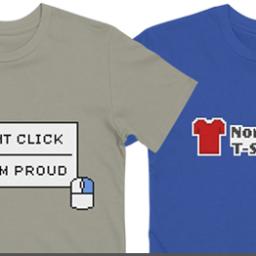
Get your Non-Fungible T-Shirt and Right Click gear on Threadless »Just in time for the holiday season, we've got a pair of new designs in the Techdirt Gear store on Threadless — both inspired by the ongoing conversation around (and our own experiments with) NFTs:For those who want to celebrate and defend the ability to Right Click -> Save As, there's the I Right Click And I'm Proud design, which is available on t-shirts as well as hoodies, sweatshirts, face masks, stickers, mugs, and more. For those who want something that doesn't need the blockchain to be scarce and rivalrous, there's the Non-Fungible T-Shirt (which is available only as, well, a t-shirt).Visit the Techdirt Gear store on Threadless to get yours today! And if you're doing some holiday shopping, also check out these academic galaxy map posters from Open Syllabus Project.
|
|
by Daily Deal on (#5SCJG)
It's Black Friday and we have specials coupons you can use on the following deals and throughout the store. Coupon code BFSAVE20 gets you 20% off anything that is NOT a digital product, BFSAVE40 gets you 40% off apps and software, and BFSAVE70 gets you 70% off e-learning deals.The Unity Game Developer and Player Bundle featuring PlayStation Plus will help you learn how to create your own amazing games. Courses include how to use AI to create games, how to create a 2D RPG, how to use Photon to build a 3D multiplayer game, and much more. The bundle also includes a one year subscription to PlayStation Plus. Connect with an enormous online community via PlayStation Plus to compete in PS classics like Star Wars: Battlefront, Uncharted, and many more. If that's not reason enough to pull the trigger, the subscription also delivers an epic monthly collection of free games, in a library that is constantly expanding. The bundle is on sale for $70.The 2021 CompTIA Security Infrastructure Expert Bundle has 4 courses to help you learn how to mitigate attacks and vulnerabilities. The courses will help prepare you to sit for exams on CompTIA CASP, PenTest, CySA, and Security. It's on sale for $30.Learn Unreal, C++, and game development. Want to level up your game development skill? The 2022 Ultimate Learn Unreal Game Development Bundle, created in collaboration with Epic Games, can help. Anyone who wants to learn to create games: Unreal Engine is a fantastic platform that enables you to make AAA-quality games. You'll get full lifetime access for a single one-off fee. The creators are qualified and experienced coders and avid gamers, so are able to explain complex concepts clearly, as well as entertain along the way. You will have access to a course forum where you can discuss topics on a course-wide basis, or down to the individual video. It's on sale for $35.PDF Expert is the best PDF writer for Mac. You can easily edit text, images, and links. It will automatically detect the font, size, and opacity of the original text, so you can make edits easily. It’s fast, intuitive, and powerful to let you effortlessly complete literally any PDF task. Need to rework a complete section of a document? No problem. PDF Expert provides a series of essential functions that will transform the way you work with documents on your Mac. It's on sale for $30.Don't forget to use those coupons!Note: The Techdirt Deals Store is powered and curated by StackCommerce. A portion of all sales from Techdirt Deals helps support Techdirt. The products featured do not reflect endorsements by our editorial team.
|
 |
by Mike Masnick on (#5SBDX)
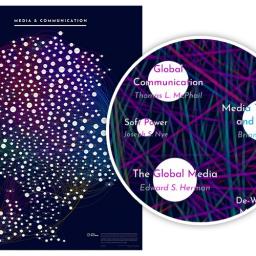
Get your poster from the Open Syllabus Print Shop »Open Syllabus is a very cool non-profit research organization, spun out of the American Assembly at Columbia University, that collects and analyzes millions of syllabi to better understand what materials are being used to educate people in classes around the world. It currently has a corpus of nine million English-language syllabi from 140 countries and has done a bunch of research based on this data. Most of these syllabi are collected by scouring the open web (though some are submitted directly), and the end result is a very handy Open Syllabus explorer that allows you to take deep dives into what's being taught in various subjects, at various schools and more. Want to know what are the top titles taught for computer science? Or Economics? Or Political Science? They've got the details and more.And, recently, Open Syllabus used a bunch of that data to make amazing, beautiful posters, taking the top 600 or so assigned titles in certain fields, and creating "galaxy maps" highlighting the clusters of works and how often certain works are assigned together with one another. They're educational and stunning to look at.We're now teaming up with Open Syllabus to sell these posters. Buying the posters helps supports both Techdirt and Open Syllabus -- and gets you an amazing looking poster for topics of your choosing from Political Science to Media and Communication to Sociology to Philosophy. There are a bunch more, so check them out, and order one for yourself... and maybe get another as a gift for someone in those academic fields.
|
|
by Daily Deal on (#5SBDY)
The Stellar Utility Software Bundle has what you need to recover data, reinforce security, erase sensitive documents, and organize photos. It features Stellar Data Recovery Standard Windows, Ashampoo Backup Pro 15, Ashampoo WinOptimizer 19, InPixio Photo Editor v9, Nero AI Photo Tagger Manager, and BitRaser File Eraser. It is on sale for $39.95. If you use the coupon code BFSAVE40 you'll get an additional 40% off on apps and software storewide.Note: The Techdirt Deals Store is powered and curated by StackCommerce. A portion of all sales from Techdirt Deals helps support Techdirt. The products featured do not reflect endorsements by our editorial team.
|
|
by Timothy Geigner on (#5SAN6)
Almost exactly a year ago, Microsoft acquired Zenimax Media, a parent company for several video game publishers, including Bethesda. When that occurred, some sizable percentage of the gaming community asked the immediate and obvious question: does this mean games from Bethesda and others would be Microsoft exclusives? Xbox chief Phil Spencer was the first to weigh in on the question by giving a total non-answer.
|
|
by Copia Institute on (#5SAGF)
Summary: Facebook’s challenges of dealing with content moderation around “nudity” have been covered many times, but part of the reason the discussion comes up so often is that there are so many scenarios to consider that it is difficult to create policies that cover them all.In March of 2016, activist Celeste Liddle gave the keynote address at the Queen Victoria Women’s Centre’s annual International Women’s Day address. The speech covered many aspects of the challenges facing aboriginal women in Australia, and mentions in passing at one point that Liddle’s Facebook account had been repeatedly suspended for posting images of topless aboriginal women that were shown in a trailer for a TV show.
|
|
by Tim Cushing on (#5SACZ)
Getting probable cause is easy, especially when you have accomplices. Law enforcement loves drug dogs, which give them the permission they need to engage in warrantless searches. All a dog has to do is "alert"... or almost "alert"... or be presented in sworn testimony as feeling ways about an odor. Permission obtained. Searches permitted.Another favorite method for securing permission for seizures, arrests, and searches without a warrant is the field drug test. The tests are cheap, which makes them a popular law enforcement tool. They're also notoriously inaccurate. That also makes them popular with law enforcement. Cops aren't interested in successful prosecutions. They're interested in arrests and warrantless searches. And these cheap tests -- which are often wrong about the presence of drugs -- are nearly as popular as drug dogs.Here's just a short (and very incomplete) list of the conclusions reached by cheap, unreliable field drug tests deployed by cops:
|
|
by Karl Bode on (#5SAA8)
If you hadn't noticed, the United States isn't really prepared for climate change. In part because corporations and disinformation mills have convinced countless Americans a destabilizing climate isn't actually happening. But also because we were already perpetually underinvesting in our core infrastructure before the symptoms of an unstable climate began to manifest. It's a massive problem that, as John Oliver highlighted six years ago, doesn't get the same attention as other pressing issues of the day. You know, like the latest influencer drama or the mortal threat posed by TikTok.Infrastructure policy is treated as annoying and boring... until a crisis hits and suddenly everybody cares. As millions of Texans found out earlier this year when the state's energy infrastructure crumbled like a rotten old house under the weight of heating energy demands, leaving millions without power during a major cold snap. While the state engaged in a lot of performative nonsense in the wake of the breakdown, nothing much changed. Most of the state laws passed to "fix" the problem just punted any meaningful action down the road, while carving out big exemptions for natural gas companies that helped write the laws.Fast forward nine months and the natural gas companies that refused to upgrade and weather proof their infrastructure, still largely haven't done so. What have they done? Well, recently they decided to hit Texas natural gas customers with a major and obnoxious new $3.4 billion surcharge with the blessing of state regulators:
|
|
by Tim Cushing on (#5SA7Z)
Paying for parking should be simple. A driver exchanges money for space and time. End of discussion.But it's never going to be that simple again. Not if tech companies like Metropolis Technologies can help it. Instead of paying for parking, drivers will be expected to allow the company to trail it all over the internet, across devices, and package up all this information and sell it to third parties.You shouldn't need an app to park a car. Metropolis believes you do. And that's causing some friction in Southern California, where cars are everywhere and parking is limited. A dust up between Trader Joe's customers and a nearby lot began with a shopper being accosted by a lot attendant and ended with the retailer making it very clear it had no desire to make its customers download an app just to park their cars.
|
|
by Daily Deal on (#5SA80)
Creating engaging animated videos is child’s play with VidToon 2.0 Animated Video Maker. You can make animated videos within minutes. Use pre-animated avatars, 100 HD backgrounds, text-to-speech capability, and other valuable and easy-to-use features to start creating your own animation. It's on sale for $49.Note: The Techdirt Deals Store is powered and curated by StackCommerce. A portion of all sales from Techdirt Deals helps support Techdirt. The products featured do not reflect endorsements by our editorial team.
|
|
by Mike Masnick on (#5SA5D)
The House Oversight Committee recently launched an investigation into the giant consulting firm McKinsey, and its role in inflating drug prices as well as pushing opioids at every opportunity.
|
|
by Karl Bode on (#5S9VB)
For literally 30 years telecom regulators have, with the occasional rare exception, rubber stamped a steady parade of mergers, resulting in a consolidated, less competitive overall market. The end result of these decisions are everywhere, from terrible customer service and high prices, to routine apathy to consumer privacy and spotty overall telecom coverage. And while regulators occasionally affix merger conditions designed to limit these harms, these conditions are usually either pathetic (often because they're volunteered by the companies themselves) or they're just not enforced in any meaningful capacity (outside of the rare and laughable fine).While there's a bit more awareness and opposition to mindless mergermania coming from the left, when it comes to regulators and politicians, this obsession with embracing mergers and consolidation is bipartisan. This week, the Biden FCC announced it would be greenlighting Verizon's $6 billion merger with Tracfone. Tracfone, currently owned by América Móvil, largely caters to low-income Americans. Consumer groups initially balked at the deal, arguing that Verizon's long history of nickel-and-diming made it likely the company would inevitably nickel-and-dime those financially precarious users as well.But Verizon, a company with a long history of not living up to merger promises, made some promises... and now the Biden FCC says it's approving the deal. Verizon has promised to try and keep prices the same for a while, make 5G devices available to these users, continue participation in the FCC's low-income Lifeline program for a while, and generally not be a predatory ass. All overseen by what the FCC calls "strong, independent, enforcement mechanisms":
|
|
by Tim Cushing on (#5S9MB)
Thanks to a trove of public records, the ACLU can provide some insight on how the California Highway Patrol engaged in surveillance of anti-police brutality protests. While one would expect police helicopters to fly over protests to keep an eye out for any illegal activity, it appears the officers manning the surveillance cameras were more interested in trying to identify protesters who weren't breaking any laws.Some lowlights of the aerial footage can be seen in this video produced by the ACLU:Here's how the ACLU describes what it observed in the recordings liberated from from the CHP:
|
|
by Glyn Moody on (#5S97T)
A little while back, the Guardian covered the rising literary power of BookTok – short videos on TikTok devoted to the pleasures and pains of reading. As well as plenty of background information about the BookTok phenomenon, it has the following perceptive comment from Kat McKenna, a marketing and brand consultant specializing in children's and young adult books:
|
|
by Tim Cushing on (#5S92Y)
NSO Group can't get a break. Too bad. It really doesn't deserve one. The inability of the Israeli exploit purveyor to escape this endlessly negative news cycle is entirely its own fault. And each passing day seems to uncover something new and nasty about the tech company, which has built its business by seemingly selling to whoever wants to buy, no matter how morally repugnant.The company's malware has been deployed by a variety of repeat human rights offenders to target journalists, critics, dissidents, religious leaders, opposition parties, and the occasional heads of state of their allies. To its own critics, NSO has issued contradictions: it is not responsible for how its customers use its products and that it does everything it can to prevent misuse of its products. The contradiction is baked in: NSO says it pulls access for misuse while claiming it has no "visibility" into its customers' activities.It also says it does not sell its powerful malware to private entities. But the fine line between public and private entities is never finer than in the United Arab Emirates, where the allied rulers of the area are also private citizens -- kings and princes with access to a whole lot of wealth and a whole lot of power.A prince can claim to be a government official and still behave like a private citizen. Take Sheikh Mohammed bin Rashid al-Maktoum of Dubai. He's the king of Dubai. He's also in the middle of an extremely messy, somewhat public divorce from Princess Haya bint al-Hussein. His access to NSO's most popular phone exploit (Pegasus) allowed him to hack phones belonging to his ex, along with phones belonging to her legal reps.But he's not the only UAE figurehead with NSO contracts. Israeli news agency Haaretz reports NSO has sold to other kings and princes who control parts of UAE: men who have plenty of private business that could benefit from a bit of phone hackery using tools obtained under the auspices of Official Government Business.
|
|
by Leigh Beadon on (#5S8ZJ)
Earlier this month Mike participated in a content series and virtual symposium on Lessons From The First Internet Ages, hosted by the Knight Foundation, alongside several important figures from the history of the internet. On this week's episode, the creators and curators of the event — John Sands, Mary Anne Franks, and Eric Goldman — to reflect on the writings and conversations from the event and the lessons to be learned.Follow the Techdirt Podcast on Soundcloud, subscribe via Apple Podcasts, or grab the RSS feed. You can also keep up with all the latest episodes right here on Techdirt.
|
|
by Mike Masnick on (#5S8X8)
Over the last month or so, you've probably heard a lot about the Facebook Files or the Facebook Papers, which are the documents shared by former Facebook employee and whistleblower Frances Haugen with the media, starting with the Wall Street Journal, and then a rather reluctant "consortium" of seventeen big name US-based news organizations. The reluctance was apparent in the name of the Slack group created for all of the reporters working on the project: "Apparently We're A Consortium Now."While I've been skeptical of some of the framing of the reporting on the papers, I still do generally believe it was a good thing to get this research out to the world -- even if I have little confidence that the media could ever do a good job conveying the story.As news of the consortium broke, many people called out the fact that all of these big journalism organizations weren't actually releasing the documents they were going through themselves, often only describing them or quoting parts of them. Given that in a few cases where we've been able to see the full documents, it has appeared that some of the reporting was misleading or confused, this was a concern. And, of course, there were other concerns about the makeup of the consortium, and the fact that it was entirely based in the US.That doesn't mean that it made sense to freely release all the documents to the public. There are plenty of reasonable concerns about privacy when you have a giant cache of internal documents. That's why it's a good thing to find out that Gizmodo has now taken on the task of making the Facebook Papers public, and doing so in partnership with a bunch of independent experts who will help Gizmodo's reporters sift through the documents and make sure that they're okay to be released:
|
|
by Tim Cushing on (#5S8QW)
Facial recognition systems are becoming an expected feature in airports. Often installed under the assumption that collecting the biometric data of millions of non-terrorist travelers will prevent more terrorism, the systems are just becoming another bullet point on the list of travel inconveniences.Rolled out by government agencies with minimal or no public input and deployed well ahead of privacy impact assessments, airports around the world are letting people know they can fly anywhere as long as they give up a bit of their freedom.What's not expected is that the millions of images gathered by hundreds of cameras will just be handed over to private tech companies by the government that collected them. That's what happened in South Korea, where facial images (mostly of foreign nationals) were bundled up and given to private parties without ever informing travelers this had happened (or, indeed, would be happening).
|
|
by Daily Deal on (#5S8QX)
Speakly is the fastest way to learn a language. The app combines science and computational algorithms to teach you the 4,000 most statistically relevant words of your target language in order of their importance. Learn different languages such as Estonian, English, Russian, Spanish, and more. Speakly allows you to practice real-life situations right from your smartphone or computer, building your confidence when speaking a foreign language in their everyday life. It's on sale for $70.Note: The Techdirt Deals Store is powered and curated by StackCommerce. A portion of all sales from Techdirt Deals helps support Techdirt. The products featured do not reflect endorsements by our editorial team.
|
|
by Mike Masnick on (#5S8N5)
I will admit that, until this morning, I had never heard of Ridley Scott's movie The Last Duel. It was released this fall in theaters only, which is a bold move while we're still dealing with a raging pandemic in which most people still don't want to go sit in a movie theater. And so, the box office results for the movie were somewhat weak. Indeed, it's now Scott's worst performing movie at the box office.The issue, as many pointed out, was that The Last Duel was targeted at older movie-goers. A historical period piece film about a duel in France? Not exactly a hit among the youth market, and older folks are still the most concerned about COVID (which makes sense, considering it's a lot more deadly the older you get).A few weeks ago, Scott admitted he was disappointed in the movie's performance at the box office, but compared it to Blade Runner, which also didn't immediately set the world on fire when it was released, and is now a classic.But, now, having thought about it some more, Scott has decided that it must be Facebook and the kids these days who are at fault for not wanting to see his two and a half hour period piece epic. Going on Marc Maron's WTF podcast, Scott insisted that he had no problems with the way the film was marketed, but ripped into "millennials" (who, um, aren't as young as he seems to think they are) and... Facebook. Because if we've learned anything these days, it's that no matter what goes wrong with your life and plans, you can always blame Facebook for those failures:
|
|
by Karl Bode on (#5S8BY)
A few weeks back, both Verizon and AT&T announced they'd be pausing some aspects of their 5G deployments over FAA concerns that those deployments would create significant safety hazards. The problem: there's absolutely no evidence that those safety concerns are legitimate.The FAA and airline industry claim that use of the 3.7 to 3.98 GHz "C-Band" spectrum to deploy 5G wireless creates interference for avionics equipment (specifically radio altimeters). But the FCC has closely examined the claims and found no evidence of actual harm anywhere in the world, where more than 40 countries have deployed C-band spectrum for 5G use. Just to be sure, the FCC set aside a 220 MHz guard band that will remain unused as a sort of buffer to prevent this theoretical interference (double the amount Boeing requested).None of this was enough for the FAA. That's of major annoyance to AT&T and Verizon, which paid $45.45 billion and $23.41 billion respectively earlier this year for C-band spectrum, and have been widely and justifiably critcized for underwhelming 5G network performance and availability so far. Consumer advocates and policy experts like Harold Feld are also confused as to why the FAA continues to block deployment in these bands despite no evidence of actual harm:
|
|
by Tim Cushing on (#5S84M)
It's not enough that law enforcement can seize property if it pretends it must be linked to some criminal endeavor, even if the cops can't be bothered to actually find any direct evidence of said criminal endeavor… or even bring charges against forfeiture victims. It's not enough that almost anything can be seized when accompanied by criminal charges, which can lead to officers stripmining someone's residence while serving warrants.When alleged criminals are difficult to find, sometimes the cops just take stuff from crime victims. Multiple people are suing the Baltimore Police Department for grabbing all sorts of property from shooting victims while they were hospitalized and recovering from their injuries.It would seem these seizures would be illegal, but the Baltimore PD pretends it's all about rounding up evidence -- even when said "evidence" has nothing to do with the crime being investigated.
|
|
by Tim Cushing on (#5S7TC)
The NYPD's war on its oversight continues. The secretive law enforcement agency has spent years fighting accountability and transparency, making up its own rules and engaging in openly hostile actions against public records requesters, city officials, internal oversight, and the somewhat-independent CCRB (Civilian Complaint Review Board). Journalists say the NYPD is worse than the CIA and FBI when it comes to records requests. The FBI and CIA say it's worse than a rogue state when it comes to respecting rights.The NYPD probably doesn't wonder why it houses bad cops. In fact, it probably doesn't not even consider the worst of its ranks to actually be "bad" cops. Making things worse on the accountability side, the NYPD answers to two very powerful law enforcement unions, which makes it all but impossible for the department to punish bad cops, even if it wanted to. And while it's subject to public oversight via the CCRB, it has the power to override the board's decisions to ensure cops engaged in misconduct aren't punished too harshly for violating rights and destroying the public's trust.The NYPD began wearing body cameras in 2017 as part of comprehensive reforms put in place by consent decrees issued by federal courts presiding over civil rights lawsuits over the NYPD's surveillance of Muslims and its minority-targeting "stop and frisk" program.But body cameras continue to be mostly useful to prosecutors and of negligible value to the general public that was supposed to benefit from this new accountability tool. As ProPublica reports, even the civilian oversight board can't get the NYPD to hand over footage crucial to investigations of misconduct.
|
|
by Timothy Geigner on (#5S7N1)
id Software is not a complete stranger to silly IP enforcement actions. Between trying to own concepts that are un-ownable and occasionally trying to throw its legal muscle around to bully others into not using common words in their own video game titles, the company has proven that it is perfectly capable of playing the IP bully. But at least in those specific instances, if you squint at them, they kinda sorta seem like industry-related, almost understandable IP disputes.When it comes to how id Software enforces its venerated Doom trademarks, however, that is not the case. The company has a history of opposing and/or sending C&Ds to all kinds of barely related or unrelated commercial entities for trying to register anything that has to do with the word "doom": podcasts, festivals, and entertainment properties. And now, it appears, thrash metal bands too.Dustin Mitchell, like many of us in recent years, came across the term "doomscrolling" and decided that "Doomscroll" would be a cool name for his next metal band. After having the idea, he decided to apply for a trademark on the name for musical acts. And then came the opposition from id Software.
|
|
by Tim Cushing on (#5S7HA)
Earlier this year, a man, wrongfully arrested and imprisoned for murder, was finally able to prove his innocence by producing rental car receipts showing he could not have possibly committed the crime. When the murder occurred, Herbert Alford was twenty minutes away from the scene of the crime, renting a car from Hertz.He requested this exculpatory evidence from Hertz, but it took the company three years to locate the receipts that proved his innocence. All told, Alford spent five years in jail on the bogus charge. Hertz apologized for spending more than 1,000 days "searching" for the rental records, but that apology doesn't put years back on Alford's life, a half-decade of which he lost to the penal system for a crime he didn't commit.This isn't Hertz's only problem. The company is apparently pretty lax when it comes to record-keeping, which has resulted in people being accosted -- often at gunpoint -- by police officers who've been (wrongly) informed the rental car they've pulled over is stolen. The proliferation of automatic license plate readers means these stops will only become more frequent as time goes on, as hotlists hit cameras capable of collecting millions of plate/location records a year. And that proliferation comes with a cost: the potential killing of innocent people because law enforcement has been misinformed about the status of a rented car.Hertz is apparently still trying to get people killed. As it emerges from bankruptcy, it is facing lawsuits over its potentially deadly mistakes. The company is still sending out hotlists to law enforcement, misinforming armed officers that legally-rented vehicles are actually stolen. This appears to be a long-running problem for the rental agency.
|
|
by Glyn Moody on (#5S7DX)
Hikvision describes itself as "an IoT solution provider with video as its core competency". It hasn't cropped up much here on Techdirt: it was mentioned earlier this year as one of two surveillance camera manufacturers that had been blacklisted by the US government because they were accused of being "implicated in human rights violations and abuses" in Xinjiang. Although little-known in the West, Hikvision is big: it has "more than 42,000 employees, over 20,000 of which are R&D engineers." Given the many engineers Hikvision employs, the following comment by Fred Streefland, Director of Cybersecurity and Privacy at Hikvision EMEA (Europe, the Middle East and Africa), reported by IPVM, is rather remarkable:
|
|
by Tim Cushing on (#5S7BJ)
Another day, another revelation about the abuse of NSO malware by its customers. The latest report shows NSO Group's powerful Pegasus malware was used to target Palestinian human rights activists. Citizen Lab is again on the case, providing the forensic examination of the detected malware and coming to this conclusion:
|