|
by Ash Parrish on (#6TE8M)
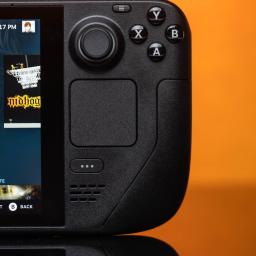
Photo: Wes Fish" Chan / Games Done Quick Awesome Games Done Quick, the annual charity speedrunning marathon is in full swing, already amassing over $500,000 for the Prevent Cancer Foundation. With three more days to go, there's a great many runs of popular games coming up. But relying on the schedule or your own preferences to determine when to tune in is a surefire way to miss the best AGDQ has to offer.Take today, for example. I've never played Batman Forever: The Arcade Game, but after watching the speedrun, I might have to. It's a Batman-flavored beat-'em-up that bears precious little resemblance to the movie it's based on. The runner, LRock617, chose to play as Robin and within moments of starting the game, I was hooked. The graphics were reminiscent of the early Mortal Kombat games, appropriate since it was published by Acclaim Entertainment. But there was a surreality to them that - when combined with Robin's overpowered abilities (like one that has him essentially go Super Saiyan), the runner's charisma in explaining what's happening, and the audience getting in on the fun with funny donation messages - gave the run an absurd goofiness that was a sorely needed shot in the arm at 9AM on a Wednesday morning.... Read the full story at The Verge.
|
The Verge
| Link | https://www.theverge.com/ |
| Feed | http://www.theverge.com/rss/index.xml |
| Updated | 2026-03-23 23:18 |
by Antonio G. Di Benedetto on (#6TE8N)
Nintendo isn't officially at CES, but it might have stolen the show anyway: accessories-maker Genki brought a 3D-printed mockup of what it says is Nintendo's Switch successor, and we got to hold it and take some high-resolution pictures.Based on the mockup of what we'll call the Switch 2, Nintendo's next console appears to be wider than the original, with slightly larger Joy-Con controllers that seem like they'll be more comfortable to hold. Compared to a Steam Deck OLED, the Switch 2 mockup still feels noticeably smaller, in part because the Joy-Cons are not as pronounced and ergonomic as the Deck's grips. But the mockup still feels closer in size to Valve's handheld than the original Switch.As previous rumors have indicated, the Switch 2's Joy-Cons will attach to the console via magnets instead of a sliding rail, Genki cofounder and CEO Eddie Tsai tells The Verge. To detach a Joy-Con from the Switch 2, you press a big button at the top of the backside of each controller, Tsai says, and that button apparently pushes out a pin that nudges against the chassis of the console, disconnecting the magnets.You can remove the Joy-Cons with brute force if you really wanted to, according to Tsai, but he says, overall, they feel secure for regular use and that the big release button detaches the Joy-Cons with ease. Tsai declined to share where he'd learned details of the new console.Tsai also tells The Verge that housed within the mounting channel of the Joy-Cons is an optical sensor, and by using another attachment the new Joy-Cons may offer mouse-like functionality. It sounds a bit like what Lenovo does with its Legion Go handheld.Nintendo has promised that it will announce the Switch's successor before April 2025, and as that deadline creeps closer, there have been waves of leaks and rumors about the new hardware. In December, YouTube channel SwitchUp posted a video showing a 3D-printed, non-functional Switch 2 mockup provided by a Chinese case manufacturer. That mockup basically looked like the current Switch but bigger, and it revealed a few other potential changes like a new USB-C port on the top of the device and a mysterious new square button under the Home button on the right Joy-Con.Days later, accessories-maker Dbrand announced its Killswitch 2" case, and CEO Adam Ijaz told The Verge that it was designed based on actual dimensions" based on a 3D scan of the real hardware." Ijaz also said that it was his understanding" that the console's Joy-Cons are magnetically attached. And Dbrand's imagery showed that the new square button had a C" printed on it, though Ijaz didn't know what it was. Days after that, our colleague Sean Hollister spoke with a Redditor who shared apparent photos of the Switch 2's dock and the inside of what appears to be a Switch 2 Joy-Con.With that April 2025 deadline inching closer every day, it seems like it won't be long until Nintendo officially, finally reveals the Switch 2. But until that happens, at least we have these pictures to look at.Photography by Antonio G. Di Benedetto / The Verge
by Sheena Vasani on (#6TE65)
The OnePlus 13 is an excellent alternative to phones from Samsung and Google. | Photo: Allison Johnson / The Verge Samsung's Galaxy S25 might be just around the corner, but if you're looking for a solid Android alternative, OnePlus is already offering the new OnePlus 13 with a free storage upgrade, dropping the price of the 512GB model with 16GB of RAM to $899 ($100 off). It's also throwing in a OnePlus Watch 2R (a $229.99 value) or a free pair of the OnePlus Buds Pro 3 (normally $179.99) with each purchase. Amazon and Best Buy, meanwhile, are bundling it with a $100 gift card, though only the latter is doing so with the free storage upgrade.The OnePlus 13 is a stunner of a phone, one that impressed us in a number of ways. It boasts a 6.82-inch 120Hz display and runs on Qualcomm's new Snapdragon 8 Elite, making it even faster than its predecessor. Its massive 6,000mAh battery also stands out amongst a sea of 5,000mAh Android phones, allowing you to use it for multiple days on a single charge. The triple-array camera - which consists of a 50-megapixel main shooter, an ultrawide, and a telephoto - is also on par with the best, letting you produce sharp photos in dim lighting.Even more notable, though, is that the OnePlus 13 finally offers all the flagship features you'd expect from a phone at this price. That includes support from all three major US wireless carriers and an IP68 rating for dust and water resistance. OnePlus also promises four years of OS updates and six years of security support, rendering it a better investment than the company's previous smartphones. Sure, the OnePlus ecosystem still isn't as rich as that of Samsung or Google, but if that doesn't bother you, it's otherwise an excellent phone.Read our OnePlus 13 review.More deals and discounts of note
|
by Barbara Krasnoff on (#65B4M)
Image: Alex Parkin / The Verge As I write this, there are a lot of social network users who are wondering if they should look for a new home. Over at X, Elon Musk has essentially become part of the incoming Trump administration, while various changes have made the formerly popular social network a dark and forbidding forest for many of its former inhabitants.Meanwhile, Meta's announcement that it was abandoning third-party fact-checkers and moving its trust and safety teams from California to Texas is making some Facebook and Instagram members nervous. So nervous, in fact, that while we previously included Meta's Threads social network in this article as a possible alternative to X, we've pulled it - at least for now.So, if you're no longer feeling safe at your current social network, where do you go?We've been looking into the various possibilities and have put together what is admittedly an incomplete list of some of the current alternatives to X, Facebook, and Instagram that you may want to check out if you're thinking about leaving your current hangout.Probably nothing will become the combined news / gossip / conversation / spam source that Twitter once was, and it may be difficult to leave the kind... Read the full story at The Verge.
|
|
by Richard Lawler on (#6TE66)
Illustration: The Verge It's been nearly a year since Instagram and Threads defaulted to blocking recommendations of political" content from accounts you don't already follow, but now Instagram boss Adam Mosseri says, ...we're going to be adding political content to recommendations" on both platforms.That's a sharp turn from his statements in 2023 laying out the goal of a less angry place for conversations" that wouldn't do anything to encourage politics or hard news. However, under Meta's new approach to moderation - and new rules about what users can say on its platforms - that goal is going out the window just as the Trump administration prepares to take over.Until now, users have had to opt-in to seeing recommendations of content deemed political, but the change rolling out this week in the US and to the rest of the world next week will turn on the recommendations and a content control setting available with options for less, standard (the default setting), and more.
|
|
by Thomas Ricker on (#6TE67)
Two Apex 300 units with several expansion batteries. | Image: Bluetti Bluetti just took the wraps off its EnergyPro 6K and Apex 300 energy storage systems. The EnergyPro 6K is a fixed whole-home backup solution, while the modular Apex 300 is designed to provide portable power when at home, at an off-grid cabin, at a job site, or during an RV trip. Both systems can scale in capacity and power to support your individual needs.The launch is all part of Bluetti's rebranding around three series of power solutions: EnergyPro products that require professional installation, Apex systems for advanced energy demands, and the smaller Elite lineup of portable power stations and solar generators for more casual use.The Apex 300 features 3840W of max AC output and 3072Wh of LFP battery storage. It can be combined with the company's B300K, B300, and B300S batteries, including future expansion batteries yet to be announced. The Apex 300 has an idle power draw of 20W, according to Bluetti, which is pretty efficient for such a large inverter that can simultaneously support both 120V and 240V loads. Image: Bluetti The Bluetti Apex 300. Multiple Apex 300 units can be linked in parallel to increase the maximum output to 11.52kW - enough to power just about any home device or EV. Storage capacity can be expanded to 58kWh with three units and 18 battery packs to keep an entire home running for a few days in the event of a blackout, or much longer if you're only powering critical devices like the fridge, HVAC systems, and water pumps. It supports up to 30,720W of solar input and is expected to be available in April in the US. Image: Bluetti Two worry-free owners of a pair of EnergyPro 6K units connected to an AT1 Smart Distribution Box. Bluetti bills the EnergyPro 6K as a reliable, affordable and cost-effective home energy solution ideal for small to medium-sized homes." It can be configured with 5.8kW to 29kW of power output and between 7.68kWh and 38.4kWh of LFP battery storage. It's designed to integrate seamlessly into existing rooftop solar systems. It can be paired with a Bluetti AT1 Smart Distribution Box to provide whole-home backup to critical circuits and automatic cutover to a standby generator when needed. Bluetti is also teasing an EnergyPro 13K system, offering 13.2kW to 39.6kW of output and between 9.6kWh and 57.6kWh of storage capacity. The company says that the EnergyPro 6K is expected to be released in Q2 of 2025.No prices were given as part of today's announcement, but you can expect both systems to start in the low thousands, or even tens of thousands if you're looking at a fully specced installation.
|
|
by Andrew Liszewski on (#6TCH3)
Photo by Vjeran Pavic / The Verge Day two of the biggest tech event of the year is well underway and CES 2025 continues to deliver a long list of new gadgets, tech, concepts, and AI-powered devices tempting you to upgrade.It's a lot to keep up with, so we'll help you catch up. Below are some of the standout gadgets of the show so far. Of course, there's still a lot more out there and a lot more to go. You can catch up on all of The Verge's coverage of the show here.Nvidia Project Digits personal AI supercomputer Image: Nvidia Powered by Nvidia's new GB10 Grace Blackwell Superchip paired with 128GB of memory and up to 4TB of storage, Project Digits looks as small as desktop computers like Apple's Mac Mini. But it has enough processing power to run complex AI models with up to 200 billion parameters and perform 1 quadrillion AI calculations per second while drawing all the power it needs from a standard household outlet. It's expected to start at $3,000 when it launches in May 2025.LG StanbyME 2 Photo by Chris Welch / The Verge The sequel to LG's original StanbyME portable TV that was designed to be easily moved around a home is no longer permanently attached to a rolling stand. LG hasn't announced when the LG StanbyME 2 will be available or how much it will cost, but in addition to a better 27-inch 1440p touchscreen and an improved four-hour battery, it's now compatible with a shoulder strap that can be used to hang it from a wall hook and a folio cover that doubles as a tabletop stand.Audio-Technica ATH-CKS50TW2 wireless earbuds Image: Audio-Technica There are two features that make Audio-Technica's new ATH-CKS50TW2 wireless earbuds stand out. When paired with their charging case, the company says the earbuds can deliver up to 65 hours of playback. That's over 2.5 days between charges. Battery life drops to about 40 hours with ANC enabled, which is still impressive and a welcome feature for travelers unsure of when they'll next find a power outlet. The earbuds also magnetically attach to each other, reducing the risk of one of them going missing if slipped into a pocket, and automatically power off when joined.Honda 0 SUV and Honda 0 Saloon EVs Image: Honda The Afeela wasn't the only EV Honda debuted at CES 2025. The automaker also showed off two new battery-electric prototypes. The Honda 0 SUV is based on the Space-Hub concept it revealed last year, while the Honda 0 Saloon is based on its sedan concept. Honda says both EVs will go into production sometime in 2026, with the SUV being built at its factory in Ohio. Both vehicles will feature Honda's in-house-developed Asimo operating system - named after the humanoid robot it retired in 2018 - and will include features like Level 3 automated driving.LG AeroCatTower Photo by Vjeran Pavic / The Verge CES is often the most entertaining when it's being weird. There were lots of questionable devices announced this year (do you really need a tiny drink-cooling robot?) but LG's AeroCatTower could appeal to cat parents. It's first and foremost an air purifier that will automatically reduce its airflow to avoid disturbing a cat that's sitting on it and then increase it when the cat departs to clear the air. It also doubles as a scale, weighing and tracking your cat through the LG ThinQ mobile app so you can keep tabs on its health.PocketBook InkPoster Image: PocketBook Instead of turning the living room TV into a digital art frame when not in use, PocketBook's InkPoster is a separate display - dedicated to art and photography - that uses a more advanced version of E Ink's color e-paper technology than what's found in devices like the Kindle Colorsoft. Instead of a limited palette of 4,096 colors, the InkPoster's Spectra 6 E Ink panel can display around 60,000 shades, and even with Wi-Fi and Bluetooth connectivity, its rechargeable battery only needs to be topped off about once a year.LG UltraFine 6K monitor Image: LG Important details like pricing, availability, and even its refresh rate are still elusive, but LG's new UltraFine display will be the first 6K monitor to support Thunderbolt 5. Featuring a slim stand with a small footprint, the UltraFine 6K monitor will support transfer speeds up to 80Gbps (and potentially even faster) and uses a Nano IPS Black" panel covering 99.5 percent of the Adobe RGB and 98 percent of the DCI-P3 color gamuts.Baseus PrimeTrip VR2 Max car charger Image: Baseus Assuming the built-in charging cables don't break after a week's use, Baseus' new PrimeTrip VR2 Max car charger could be the ideal accessory for a future road trip. It plugs into a vehicle's auxiliary power outlet and delivers up to 240W of total power to a pair of retractable 31-inch-long USB-C cables, plus an additional USB-C and USB-A port. Its maximum power output through a single USB port is also 105W, so you can even keep a power-hungry laptop charged while you're on the road.Lenovo ThinkBook Plus Gen 6 Photo by Antonio G. Di Benedetto / The Verge Launching sometime in Q1 2025 and starting at a steep $3,499, Lenovo's ThinkBook Plus Gen 6 is one of the most unique laptops at CES 2025 thanks to a screen that grows. It starts out as an unassuming notebook with a 14-inch OLED screen at a resolution of 2000 x 1600, but pressing a button or raising your hand brings a motor to life that vertically expands the display to 16.7 inches with an extended resolution of 2000 x 2350. That's enough extra screen real estate for two stacked 16 x 9 windows - perfect for watching two movies simultaneously.Nvidia RTX 5090 and RTX 5080 GPUs Image: Nvidia Nvidia finally announced its RTX 50-series GPUs at CES 2025. The new $999 RTX 5080 and $1,999 RTX 5090 will be available starting on January 30th, while the $549 RTX 5070 and $749 RTX 5070 Ti will arrive sometime in February. Nvidia says the GPUs will be two times faster than the RTX 4090, taking advantage of DLSS 4 and the Blackwell architecture, and all four models are PCIe Gen 5 and feature DisplayPort 2.1b connectors supporting 8K displays with up to 165Hz refresh rates. They'll also be more power-hungry. The RTX 5090 has a power draw of 575 watts - 125 more watts than the RTX 4090 - with Nvidia recommending a 1,000W PSU.Eufy 3-in-1 E20 robot vacuum Image: Eufy Even the most capable and expensive robovacs are still only able to clean your easily accessible floors. They can't handle furniture and are only just starting to master stairs. What sets the $549.99 Eufy 3-in-1 E20 apart from other robovacs is that it's not just a robovac. Once it's done cleaning your floors and emptying itself through its included dock, the E20 transforms into a stick or handheld vacuum by removing a unit containing its battery, motor, and dust bin and attaching other accessories. It's a single device that can tackle dust and dirt all over your home.Swippitt phone toaster Photo by Allison Johnson / The Verge The Swippitt might look like a toaster with a slot too small for bread, but it's actually a novel charging solution for smartphones. Insert your phone and the machine will automatically swap out a dead external battery integrated into a custom case with a fresh one. Each swappable battery has a 3,500mAh capacity that provides an extra 50 to 90 percent charge depending on the size of the smartphone. It could mean you never have to plug your phone in again, but you'll be paying a premium for the convenience - $450 for the hub with five extra batteries and $120 for the phone case with a battery included.Anker Solix Solar Beach Umbrella Image: Anker Solar panels are an effective way to charge your tech while away from an outlet, but portable solutions are sometimes awkward to transport and set up. Anker's solution was to redesign the beach umbrella and fit it with more efficient perovskite solar cells that outperform the silicon-based cells more commonly used today. The seven-foot-tall Solix Solar Beach Umbrella can generate up to 100W of power output that can be used to charge phones, tablets, or even electric coolers through USB-C and XT-60 connections. It will be available later this year, but pricing hasn't been announced.Sony and Honda Afeela preorders Photo by Chris Welch / The Verge After making appearances at CES for the past five years, Sony and Honda's Afeela was starting to feel like a perpetual concept. But this year, the EV, which is a joint venture between the two companies, is finally available for preorder with a $200 refundable deposit - if you live in California. The Afeela will come in an $89,900 Afeela 1 Origin trim package or a $102,900 Afeela 1 Signature option and includes a three-year subscription to features like Level 2-plus driver assist and an AI-powered in-car assistant.Anker Charger (140W) Image: Anker A beefy wall charger that can power up to four devices simultaneously is useless if it doesn't stay plugged in. Anker's latest attempt at defying gravity is a new 140W wall charger that positions three USB-C ports and a single USB-A port on the underside, improving its center gravity and the chance of it staying connected to an outlet with four cables plugged in. The redesign also made room for Anker to add a small display to show how much power each port is drawing and the remaining power available.Roborock Saros Z70 Photo by Owen Grove / The Verge The ability of most robovacs to thoroughly clean a floor can be stymied by random objects left lying on the ground. Roborock's new Saros Z70's solution to that problem is an articulated five-axis robot arm called the OmniGrip that can pick up after its owners and move obstacles out of its way. It's limited to smaller items like socks, tissues, or anything weighing less than 300 grams, but the company plans to eventually expand what it can grasp. Pricing isn't known, but Roborock says the Saros Z70 will be available by June 2025.Samsung The Frame Pro TV Photo by Chris Welch / The Verge Samsung's The Frame TV appealed to many consumers with an aesthetically pleasing design and the ability to camouflage itself as a piece of art in a home's decor. The Frame Pro further expands the TV's appeal to more discerning TV viewers with a variation on Mini LED display technology, the matte finish introduced in 2022, and a wireless connection to its breakout box so all you need to hide is a power cord.Halliday smart glasses Image: Halliday With the success of the Meta Ray-Bans, it's no surprise that several companies are debuting smart glasses at CES 2025. Halliday's new enhanced specs, which are expected to ship by the end of Q1 2025" and cost between $399 and $499, are differentiated with the addition of a small screen on the frame. The DigiWindow" appears as a 3.5-inch private display in the upper-right corner of your vision and is controlled using voice commands, an interface on the frame, or a smart ring with an integrated trackpad.Dell 32 Plus 4K QD-OLED monitor Photo by Antonio G. Di Benedetto / The Verge Dell's new 32-inch 4K OLED display uses an infrared sensor and five speakers located below the screen to track your head and beam sound directly to your ears. The feature eliminates the need to keep your head positioned in a sweet spot for optimal sound, and it could be ideal for gamers who are constantly moving around in the heat of battle. The monitor also features a 120Hz refresh rate, a 0.03ms response time, and will launch in the US on May 22nd, 2025, for $799.99.Wonder plant and insect camera Bird Buddy is moving on to smaller flying creatures of the outdoors. The company behind the stylish smart bird feeders is introducing a playfully designed camera for tracking your plants and the insect visitors that stop by them. You'll be able to view a livestream from your phone, while an optional solar panel can keep the 4K camera running. It's supposed to launch on Kickstarter this spring.Mirumi Image: Yukai Engineering Mirumi is a robot that you might actually want to own. It's a furry, bashful companion bot that clings to a bag and looks adorable. It doesn't have AI tricks and doesn't even make noise. Like my colleague Owen Grove said in a video: It's just a cute fuzzy thing. What more do you want?" It will be available through a crowdfunding campaign that's set to launch in mid-2025.Acer Nitro Blaze 11 Image: Acer How big is too big for a handheld gaming machine? The answer might be Acer's new Nitro Blaze 11 featuring a beefy 10.95-inch 144 Hz WQXGA touch display that makes it look like you're holding a small monitor instead of a portable console. It's powered by an AMD Ryzen 8040HS processor, 16GB of RAM, and has detachable controllers with Hall effect joysticks. It's also got a built-in kickstand so you don't have to strain your arms by always playing it handheld. It will be available starting in Q2 2025 and start at $1,099.99.Belkin Stage PowerGrip Image: Belkin Your smartphone may take great pictures, but it lacks the refined ergonomics of a traditional camera. Belkin's new Stage PowerGrip addresses that issue and battery anxiety. It's a MagSafe power bank with a 10,000mAh battery, a retractable USB-C cable, and a design that adds a camera-like grip to the iPhone. It's even got a physical shutter button that works with the iOS camera app over Bluetooth and a small LCD screen on the front showing the battery's remaining charge. Pricing and availability haven't been announced, but the PowerGrip will come in several color options.Update, January 8th: Added new announcements from the show.Update, January 7th: Added new announcements from the show.
|
|
by Jay Peters on (#6TE3J)
Photo by Sean Hollister / The Verge One of the biggest announcements in Nvidia CEO Jensen Huang's CES keynote was the small Project Digits" AI supercomputer, and if you want to get an idea of just how tiny the $3,000 machine is in real life, we snapped a couple photos of the device under glass today at the show.Take a look: we've captured the front of a Digits computer in the photo at the top of this post, and below this paragraph is a photo of the back featuring the computer's ports. I really like the textured design. Photo by Sean Hollister / The Verge The Digits computers will come with Nvidia's GB10 Grace Blackwell Superchip, which offers a petaflop of AI computing performance for prototyping, fine-tuning and running large AI models," according to Nvidia's press release. It also includes a GPU built with Nvidia's Blackwell architecture, 128GB of unified memory, and up to 4TB of NVMe SSD storage.This isn't a computer for most people; Nvidia says that Project Digits is intended to provide AI researchers, data scientists and students worldwide with access to the power of the NVIDIA Grace Blackwell platform." It definitely isn't something I will ever buy.But it is impressively tiny given its capabilities - small computers have been on a tear lately!
|
by Richard Lawler on (#6TE3K)
Image: Cath Virginia / The Verge, Getty Images Meta is ending its third-party fact checks and making sweeping changes to its content moderation policies. Meta is making sweeping changes to its content moderation policies, including abandoning third-party fact checks in favor of crowd-sourced Community Notes" and loosening restrictions on topics like immigration and gender identity. Under the updated Hateful Conduct policy, for example, calling gay and trans people mentally ill" is now allowed, while an explicit ban on referring to women as household objects" has been removed.New policy lead Joel Kaplan said that in pursuit of More Speech and Fewer Mistakes," Meta will focus more on preventing over-enforcement of its content policies and less on mediating potentially harmful but technically legal discussions on its platform.It comes just two weeks before President-elect Donald Trump is set to return to the White House, and CEO Mark Zuckerberg's announcement appealed to many of the incoming administration's talking points. Zuckerberg has promised to move US content review from California to Texas, where he says there's less concern about the bias of our teams," and said Meta would work with Trump to push back on governments around the world that are going after American companies and pushing to censor more."
|
by Tom Warren on (#6TE05)
Photo by PATRICK T. FALLON / AFP via Getty Images Nvidia CEO Jensen Huang made a bold claim onstage at CES earlier this week when he was introducing the next-generation RTX 50-series GPUs. The RTX 5070, 4090 performance at $549," said Huang. It's a claim that's been echoed on YouTube, TikTok, and social media networks and has generated a debate over the RTX 50 series and DLSS 4's Multi Frame Generation.So, can a $549 RTX 5070 really deliver the same level of performance as a $1,599 RTX 4090? The answer is yes and no, and it all comes down to a fake frames" argument about DLSS Frame Generation that might not even be a big problem for a lot of PC gamers.Nvidia's big RTX 5070 claim is all based on its latest generation of DLSS. Impossible without artificial intelligence," admits Huang after promising that the RTX 5070 can deliver RTX 4090 levels of performance. DLSS 4 has a new Multi Frame Generation technique that can generate up to three additional frames per every traditionally rendered frame.Some PC gamers have long argued that this technique, which Nvidia introduced originally with DLSS 3, is simply fake frames" and not reflective of the true performance of GPUs that have been using rasterization for decades.Using... Read the full story at The Verge.
|
|
by David Pierce on (#6TE06)
Seriously: would you wear something like this on your face if it could really read your mind? | Image: Omi Nik Shevchenko closes his eyes and starts to focus intently. He's spent the last half hour or so telling me about his new product, an $89 wearable called Omi that can listen to, summarize, and get information out of your conversations. Now he wants to show me the future. So his eyes are closed, and he's focusing all his attention on the round white puck stuck to his left temple with medical tape. (Did I mention he's had this thing on his face the whole time? It's very distracting.)Hey, what do you think about The Verge, like as a news media website?" Shevchenko asks, to no one in particular. Then he waits. Fifteen or so seconds later, a notification pops up on his phone, with some AI-generated information about how reputable and terrific a news source The Verge is. Shevchenko is thrilled, and maybe a little relieved. The device read his brain waves to understand he was talking to it, and not to me, and answered his question without any prompting or switching.So far, that's all the brain-computer-interface stuff Omi can do. And it seems pretty fragile. It just understands one channel," he says, it's one electrode." What he's trying to build is a device that understands when you're talking to it and when you're not. And then eventually understands and saves your thoughts, which Shevchenko both waves off as total science fiction and says will probably be possible in two years. Whenever it happens, he thinks it might change the way you use your AI devices. Image: Omi This is the (more normal) way most people will wear devices like Omi. For now, the Omi's actual purpose is much simpler: it's an always-listening device (the battery apparently lasts three days on a charge) that you wear on a lanyard around your neck that can help you make sense of your day-to-day life. There's no wake word, but you can still talk to it directly because it's always on. Think of it as 80 percent companion and 20 percent Alexa assistant.Omi can summarize a meeting or conversation and give you action items. It can give you information - Shevchenko offhandedly wondered about the price of Bitcoin during our conversation and got a notification from the Omi companion app a few seconds later with the answer. There's also an Omi app store, which developers are already using to plug the audio input into things like Zapier and Google Drive.For Shevchenko himself, though, Omi is a personal mentor above all else. I was born in the middle of nowhere on an island near Japan," he tells me, and always wanted access to the tech visionaries he grew up admiring. For years, he says he cold-emailed people like Mark Zuckerberg and Elon Musk asking for advice and mentorship on how to make it in tech but never got much response. With no real-life options, Shevchenko decided to build his own.Omi already has a product called Personas," which allows you to plug in anyone's X handle and create a bot that assumes their social network persona. When Shevchenko shares his screen with me, it shows he's been chatting with an AI Elon Musk for a long time. It helps me to understand what I should be working on tomorrow," Shevchenko says. Or when I'm talking to someone and I don't know an answer to the question, it will give me a small nudge - it sometimes tells me I'm wrong!" His wearable heard him say he was sick a few days ago and has been reminding him ever since to get more rest. He asks it every month to give him feedback and tell him how to do better.He gets a lot of notifications from the Omi app, including during our call, and not all of them make much sense - one was just a transcription of a sentence he'd said a minute earlier. Shevchenko acknowledges it's early, but he doesn't seem bothered by the system's misses. The communication works for him. Image: Omi Omi's tech is actually pretty simple - it's mostly just a microphone. The AI is the trick. Most people won't use Omi this way, though. The product will ship widely in the second quarter of this year, but Shevchenko says the 5,000 people with an early version of the device are using it to help remember things, look up information, and perform other tasks common to AI assistants.In that sense, Omi has a lot in common with devices like the Limitless Pendant and bears a striking resemblance to another wearable called Friend. When Friend launched last year, Shevchenko claimed Friend CEO Avi Schiffmann was stealing his work, and the subsequent beef included everything from sniping on X to a freestyle rap diss track. Omi was actually called Friend for a while, and Shevchenko says he changed the name both to avoid confusion and because Schiffmann dropped $1.8 million on Friend.com and subsequently dominated search results.Shevchenko is confident that Omi can improve on those other devices. All of Omi's code is open source, and there are already 250 apps in the store. Omi's plan is to be a big, broad platform, rather than a specific device or app - the device itself is only one piece of the puzzle. The company is using models from OpenAI and Meta to power Omi, so it can iterate more quickly on the product itself.For all their issues and underlying concerns, it's clear that AI models are already good enough to feel like a true companion to millions of people. You can feel about that however you'd like, but from Omi and Friend to Character.AI and Replika, bot friends are quickly becoming real friends. What they need, then, is both more information about you and more ways to help you. Omi thinks the first answer is an always-on microphone, and the second is an app store. Then, I guess, comes the brain.
|
by Quentyn Kennemer on (#6TE07)
Samsung announced its first Galaxy Unpacked event of 2025, which it's historically used to introduce the latest flagship Galaxy smartphones. That would be the Galaxy S25 family if our count is right, including the base model, the expected Galaxy S25 Ultra, and whatever else falls between. We'll know for sure before too long with an unveiling scheduled for January 22nd.But before the company even confirms what we're getting, you can already place a reservation to preorder the device. If you sign up at Samsung's website or the Shop Samsung app by January 22nd at 1 PM ET (which only entails submitting your name and email address) and later place your pre-order, you'll get a $50 credit that's good toward any additional devices or accessories you're purchasing alongside it. That sadly means you can't use the $50 toward the device itself. The fine print also mentions that you can get a $100 credit toward your pre-order of a qualifying 2025 TV (perhaps some of the models it announced at CES) or audio device using the same email address, hinting that we may see more than just smartphones at the event.As for what to expect from the Galaxy S25 family, they could be some of the first Qi2 Ready" devices, which would mean they'll support the wireless charging standard, but require cases to use them with magnetic Qi2 chargers. A recent video leak suggests the Galaxy S25 Ultra may get a slight redesign with a curvier chassis. We may even get a Galaxy S25 Slim" to turn the de facto trio of flagships into a quartet.And we didn't need to see the letters AI" in Samsung's teaser to know that would be a central selling point for its latest devices. We've already seen Galaxy AI deployed in several of its devices over the last couple of years, which includes features like Circle to Search, computational photography and video tricks with generative photo manipulation, summarized notes and transcriptions, and live translations. Samsung will presumably continue building that experience out as part of One UI 7.
|
by Charles Pulliam-Moore on (#6TDXE)
Mythic Quest's third season ended on a hopeful note as the Playpen team hunkered down to start developing an all-new expansion, but all that hard work looks like it's just going to lead to more headaches judging from the show's latest season 4 trailer.While Mythic Quest's new season will find Dana (Imani Hakim), Jo (Jessie Ennis), and Brad (Dani Pudi) basking in the success of their Cozy Galaxy project, things are going to be a bit tougher for Ian (Rob McElhenney) and Poppy (Charlotte Nicdao) as they try to figure out how keep players coming back to Playpen. In the trailer, David (David Hornsby) says that he wants the pair to take their time to come up with some genuinely good ideas. But it's clear that he really wants those solutions quickly, which feels like part of why one of Ian's first moves is to incorporate an AI duplicate of himself into his workflow.Poppy's idea to let Playpen players create their own in-game content seems a bit more on the level and like something that might actually get people logging on regularly. But of course, the first thing players want to do with the features is find ways to make their characters pantomime sex, which is exactly the sort of thing that gets Congress wondering who the game is actually for. No one actually says Roblox" in the trailer, but it's obvious that Mythic Quest's writers room has been reading the news and getting the sense that something smells a bit off about games with these kinds of business models. Which is probably why the show won't pull any punches when it returns on January 29th (and its spin-off debuts on March 26th).
|
by Emma Roth on (#6TDXF)
Illustration: Nick Barclay / The Verge Meta is testing eBay listings on Facebook Marketplace in the US, Germany, and France. The company said in a post on Wednesday that it's making the change to comply with last year's antitrust order by the European Union, though it continues to appeal the decision.With the test, Facebook Marketplace users can browse eBay listings on Facebook Marketplace and then check out on eBay. Meta said it could benefit" both platforms, as it exposes eBay sellers to Facebook's audience, while giving Marketplace users access to a broader array of listings from the eBay community." The news was reported earlier by Bloomberg. Image: Meta It's a small test for now, so not all people will see it, but we hope to expand soon," Meta spokesperson Jocelyn Jones said in an emailed statement to The Verge. Facebook Marketplace users will see both local eBay listings and items that can be shipped, according to eBay's FAQ.Last year, the EU fined Meta $840 million over claims it forcibly exposed Facebook users to Marketplace by linking its selling and social platforms. It also accused Meta of imposing unfair trading conditions" on rival classified ads services to benefit Marketplace, and ordered Meta to stop engaging in this allegedly illegal behavior. At the time, Meta said it would work on a solution while appealing the fine, saying that the EU's decision relies on a hypothetical potential to harm competition."Update, January 8th: Added a statement and more information from Meta.
|
by Wes Davis on (#6TDXG)
Illustration: The Verge AT&T has announced a new AT&T Guarantee" program promising better communication around outages and compensation that includes bill credits for a day's service when the outage meets certain thresholds, reports Reuters. The new automatic-credit program covers both AT&T fiber and wireless services.AT&T promises to email or text customers when there's an outage and credit them for a full day's worth of service if the outage meets its criteria. Those include fiber outages lasting at least 20 minutes and wireless downtime lasting 60 minutes or more caused by a single incident impacting 10 or more towers."AT&T also says it will issue reward cards worth at least $5 for certain tech support issues like long wait times or failed callbacks.The company excludes any of these events if they resulted from bad weather, natural disasters, and other events out of its control, according to small print.Last year, AT&T had multiple outages, including a massive 12-hour one in February last year that the FCC found had cut off 5G and voice for 125 million devices in all 50 states.
|
|
by Emma Roth on (#6TDXH)
Image: Yukai Engineering CES is home to some of the coolest, cutting-edge, and most innovative technology around. But within this sea of tech are always some pretty strange gadgets. This year's conference was no different, packed with a whole bunch of wacky devices, some of which might have a chance of taking off, and others... maybe not so much.Here's a roundup of all the weird tech we spotted on the CES show floor and beyond.1. Mirumi, the shy sloth-like robot Image: Yukai Engineering Mirumi is a furry little robot that latches onto your purse or backpack strap. It turns its head to look curiously around the room using built-in sensors. But much like an infant, Mirumi is designed to be a bit shy, so it might bury its face if it's touched or approached by strangers. The company behind Mirumi, Yukai Engineering, plans to launch the bot through a crowdfunding campaign this year with an expected price of $70.2. A phone battery charger that resembles a toaster Photo by Allison Johnson / The Verge No, my colleague Allison Johnson isn't sticking her phone in a toaster - that white box is actually a charging hub made by Swippitt. It's designed to power up a series of external batteries that go into Swippitt's Link phone case, giving your device a little extra charge. When your battery is on the verge of dying, insert your phone into the hub, and it will automatically swap out the external battery for one that's fully charged, no cords or wireless charging stations needed.3. This retractable keyboard
|
|
by Jess Weatherbed on (#6TDXJ)
Image: The Verge The European Union is reportedly close to deciding whether X's attempts to combat illegal or harmful content are compliant with the bloc's digital service rulebook. A probe into X's risk management and content moderation will be concluded as early as legally possible," according to a letter to EU lawmakers seen by Bloomberg. It comes a day after Meta announced sweeping moderation changes on its own platforms inspired by X.In the letter, the EU's justice chief Michael McGrath and tech policy leader Henna Virkkunen vowed to energetically" push the investigation forward. Bloomberg reports that the letter was prompted by a complaint from center-right German lawmakers over concerns regarding Elon Musk's promotion of Germany's far-right party leader on X.The probe was launched under the bloc's Digital Services Act (DSA) in December 2023, with a focus on the dissemination of illegal content in the context of Hamas' terrorist attacks against Israel," and how effective X's Community Notes system is at tackling information manipulation. Additionally, the same investigation yielded preliminary findings that found X to be in breach of DSA regarding advertising transparency, dark patterns, and its blue check" user verification system. Platforms deemed to have breached the DSA risk fines of up to six percent of their global yearly revenue.Since purchasing X (previously known as Twitter) in 2022, Elon Musk has transformed its verification system into a subscription service and cut back its trust and safety team to focus on community-driven moderation. The EU criticized X over rising levels of disinformation on the platform, something that Musk himself actively engaged in promoting, following these changes. More recently, Musk has landed himself a position on President-elect Donald Trump's incoming administration, which has issued threats over perceived biases in moderation.US tech giants are already heeding to Republicans' complaints regarding online speech rules. Yesterday, Meta announced it was inspired by X to scrap its third-party fact-checkers in favor of implementing its own Community Notes program, alongside removing restrictions around topics like immigration and gender identity. While these changes will initially be rolled out in the US, both Meta and X operate on a global stage - and the eyes of EU regulators are ever watchful.
|
|
by Jennifer Pattison Tuohy on (#6TDXK)
Google Home hubs get a big upgrade. | Photo by Dan Seifert / The Verge One of the key changes Matter is bringing to the smart home is a standardized way to enable local control of smart devices. This means your light bulb doesn't have to talk to the cloud when you ask your voice assistant to turn it off. While some smart home ecosystems already offer local control, Matter should make implementing it easier for every smart home platform.This week, Google announced it has added full local control of Matter devices to its Google Home hubs by integrating Home Runtime. Now, Google Nest hubs and speakers, Chromecasts, Google TV devices on Android 14, and some LG TVs can connect to and control Matter devices locally.This means when a user who has a hub for Google Home device (at home) is viewing or controlling their Matter devices (at home), they can do so with higher reliability, privacy, and lower latency," Jeannie Zhang, product manager for Google Home, told The Verge.If the internet is down, Google Assistant should still be able to turn on the lightsThis is a significant change for the platform, which has historically relied on cloud connectivity for device control. Now, if the internet is down and you ask Google Assistant to turn on the lights, it should actually be able to follow through.Google also shared details on its recent efforts to help developers make more products that work with Matter. These include working with the Connectivity Standards Alliance to make certifying Matter devices easier and partnering with MediaTek to build a new chip that includes Wi-Fi, Bluetooth LE, and Thread. This should make it easier and more affordable for device OEMs to build Thread into all their new products," Google Home senior engineering director Matt Van Der Staay writes.Finally, Google is opening its Home APIs to all developers. This allows developers to integrate Google Home devices and automations into their own apps, allowing them to focus their resources on building devices rather than integrations.Google announced the Home APIs at I/O, but they weren't available to all developers. The program had been in an early access phase with companies such as Eve, Nanoleaf, LG, ADT, Cync, Yale, and Aqara. Now, any company can access the Android version of the Home APIs in public developer beta, with the iOS version coming soon. Google says the Home APIs consist of:
|
|
by Dominic Preston on (#6TDV2)
Samsung's Galaxy S24 and S24 Plus. | Photo by Allison Johnson / The Verge It looks like Samsung is finally ready to roll out a paid subscription for its AI-powered smartphones, but it might not look like what we were expecting.According to ETNews, Samsung Electronics vice chair Han Jong-hee has confirmed that the company's AI Subscription Club, which launched last December for some of Samsung's home appliances in South Korea, will soon roll out to both Galaxy phones and the upcoming Ballie AI robot.We will apply the subscription service to Galaxy smartphones starting next month," he says. Ballie will be introduced first in Korea and the US, and we plan to supply it as a subscription in Korea." Photo by Chris Welch / The Verge Five years after it was first revealed, Samsung says Ballie is ready to release in 2025. The AI Subscription Club isn't a requirement to access the Galaxy AI features on Samsung's phones and other devices, which the company has previously said will remain free to users at least until the end of 2025, with plans beyond that point unconfirmed.The model currently gives Korean consumers the ability to sign up for a monthly subscription of their AI-powered TVs, refrigerators, washing machines, and more, including optional repair and maintenance services, for the sake of a lower upfront cost.It's not clear if the subscription model will expand beyond South Korea, but there's a chance we'll find out more soon. Samsung has a Galaxy Unpacked event in San Jose, California, scheduled for January 22nd, when it is expected to unveil the Galaxy S25 series.
|
|
by Jennifer Pattison Tuohy on (#6TDRZ)
I tracked down the Bosch 100 Series fridge at CES. It's the company's first to support the Matter standard, enabling local connectivity to any smart home ecosystem. | Photo by Eelco Lammertink for The Verge Home appliance manufacturer Bosch is showing off its first Matter-enabled appliance on the show floor at CES this week. The 100 Series French Door Bottom Mount Refrigerator launched in November and should be available to buy in the US this spring.The fridge retails for $2,500 and has a chip on board that supports Matter. A firmware update to the smart home standard will come this summer, says Eelco Lammertink of BSH, which owns Bosch, Siemens, Thermador, and Gaggenau.The 100 Series is the sister product to the Matter-enabled Siemens XXL fridge I spotted at IFA in Berlin last November. That built-in model will come to the European market on a similar timeline. Lammertink tells me BSH plans to bring Matter to all of its appliances across its Bosch, Siemens, and Thermador lines, starting with refrigerators this year, one more appliance category next year, and three in 2026. Photo by Jennifer Pattison Tuohy / The Verge This Bosch fridge will work with Samsung SmartThings and Amazon Alexa this year. Bosch was demoing the integrations at CES via a SmartThings map view on the screen behind it and an Echo Show on the table. The 100 Series will support Matter 1.3, allowing you to control the temperature remotely and receive notifications from the fridge on your smart home platform of choice. That way, a smart speaker can announce when the door has been left open.While many smart fridges already have these features, with Matter, the connection between the appliance and the ecosystem becomes local - making it faster and more secure. Currently, only Samsung SmartThings and Home Assistant support appliances in Matter, but Lammertink tells me that Amazon will support them this year. There is no word on Google Home or Apple Home yet.Lammertink says the plan is to bring energy reporting and energy management capabilities to the fridge. This would enable it to be part of a Matter-enabled whole home energy management system. Sadly, he said they won't be updating existing appliances to Matter (bad news for my Thermador range and dishwasher). The challenges are too big," he said. We just can't risk bricking your fridge."
|
|
by Jess Weatherbed on (#6TDS0)
Illustration: Alex Castro / The Verge Washington state is suing T-Mobile for allegedly failing to address cybersecurity vulnerabilities that enabled a hacker to expose the personal data of 79 million people nationwide. The consumer protection lawsuit filed by Washington Attorney General Bob Ferguson on Monday stems from a cyberattack that began in March 2021 and went unnoticed until T-Mobile disclosed the breach in August.The filing asserts that T-Mobile failed to address certain security vulnerabilities that the company was aware of for years," and did not properly notify more than two million Washington residents who were impacted by the breach. The lawsuit accuses T-Mobile of downplaying the severity of the breach, which exposed the personal information of current, former, and prospective customers - including their names, phone numbers, physical addresses, dates of birth, Social Security numbers, and driver's license / ID numbers.The notifications that T-Mobile issued about the data breach violated the Consumer Protections Act by omitting key information that made it difficult for people to assess if they were at risk of identity theft or fraud, according to the filing. The lawsuit also says that T-Mobile did not meet industry standards for cybersecurity" for years prior to the hack, and used obvious passwords" to protect accounts that could access consumer information.This significant data breach was entirely avoidable," Ferguson said in a statement. T-Mobile had years to fix key vulnerabilities in its cybersecurity systems - and it failed."This isn't the first time that Washington state has taken action against T-Mobile, with Ferguson having successfully persuaded the company to make clear the limitations of its no-contract" wireless service plan back in 2013.Ferguson's latest lawsuit is seeking compensation for customers impacted by the 2021 breach and a court order that would force T-Mobile to bring its cybersecurity practices in line with industry standards, alongside improving transparency and communication around future data breaches. This follows T-Mobile paying $350 million in 2022 to settle a class-action lawsuit stemming from the 2021 hack, and a further $15.75 million fine last year over an FCC investigation into its repeated cybersecurity incidents.
|
|
by Dominic Preston on (#6TDPW)
Nvidia CEO Jensen Huang holding the Project Digits computer onstage at CES 2025. | Photo by Artur Widak / Anadolu via Getty Images It's long been rumored that Nvidia is planning to break into the consumer CPU market in 2025, and we may have already had our first look at its new processor.On Monday at CES, the company unveiled Project Digits, a $3,000 personal AI supercomputer powered by a new GB10 Grace Blackwell Superchip. Reuters reports that yesterday Nvidia CEO Jensen Huang hinted to investors and analysts that there are bigger plans for the Arm-based CPU within that chip, codeveloped with MediaTek.You know, obviously we have plans," Huang said during an investor presentation, referring to the new 20-core desktop CPU but said that he would wait to tell you" what they are.Codeveloper MediaTek has its own ambitions, though, and Huang suggested that it may also bring the CPU to market, independent of Nvidia. Now they could provide that to us, and they could keep that for themselves and serve the market. And so it was a great win-win," Huang said. Image: Nvidia Nvidia's Project Digits AI computer, featuring a new 20-core Arm CPU. Project Digits itself isn't a mass-market product, costing $3,000 and running on a custom Linux system designed specifically for AI developers. But Nvidia's consumer CPU ambitions have been rumored since October 2023, when Reuters reported that the company, alongside rival AMD, was working on Arm-based chips to launch in 2025.Qualcomm has currently cornered the market on Arm-based CPUs for Windows PCs, boosted by last year's launch of the Snapdragon X Elite processors. Those chips provided the sort of performance and power efficiency previously only available with Apple's MacBooks - and put real pressure on Intel and AMD's x86 systems.2024 was the year that Windows on Arm finally achieved its potential, and with increased competition from Nvidia and others, 2025 could mark a turning point in the battle between x86 and Arm.
|
|
by Richard Lawler on (#6TDMS)
Image: LMVPD Nearly a week after a New Year's Day explosion in front of the Trump Hotel in Las Vegas, local law enforcement released more information about their investigation, including what they know so far about the role of generative AI in the incident.They confirmed that the suspect, an active duty soldier in the US Army named Matthew Livelsberger, had a possible manifesto" saved on his phone, in addition to an email to a podcaster and other letters. They also showed video evidence of him preparing for the explosion by pouring fuel onto the truck while stopped before driving to the hotel. He'd also kept a log of supposed surveillance, although the officials said he did not have a criminal record and was not being surveilled or investigated.The Las Vegas Metro Police also released several slides showing questions he'd posed to ChatGPT several days before the explosion, asking about explosives, how to detonate them, and how to detonate them with a gunshot, as well as information about where to buy guns, explosive material, and fireworks legally along his route.Asked about the queries, OpenAI spokesperson Liz Bourgeois said:
|
|
by Tom Warren on (#6TDMT)
Image: The Verge Xbox chief Phil Spencer has been dropping hints about an Xbox handheld for months, but what about Windows handheld gaming PCs? Jason Ronald, Microsoft's VP of Next Generation," tells The Verge that we should expect to see the Windows handheld gaming experience change within this calendar year.Ronald was a roundtable panelist this evening at an AMD and Lenovo event titled The Future of Gaming Handhelds," which was mostly a coming-out party for Lenovo's new Legion Go S. But he did hint onstage that Microsoft plans to bring the Xbox experience to Windows PCs, rather than the other way around - and expanded on that considerably after we caught up with him later.We've been really innovating for a long time in the console space, and as we partner across the industry it's really about how do we bring those innovations that we've incubated and developed in the console space and bring them to PC and bring them to the handheld gaming space," Ronald said.When we caught up with him after the event, he confirmed that Microsoft is looking at combining Xbox and Windows experiences together - and that we should see changes this very year, rather than needing to wait for an Xbox handheld that might still be years away. Photo by Sean Hollister / The Verge Microsoft's Jason Ronald speaks at the Lenovo / AMD event, flanked by Valve SteamOS designer Pierre-Loup Griffais (left) and AMD chief gaming architect Frank Azor (middle right). I would say it's bringing the best of Xbox and Windows together, because we have spent the last 20 years building a world-class operating system, but it's really locked to the console," says Ronald. What we're doing is we're really focused on how do we bring those experiences for both players and developers to the broader Windows ecosystem."Right now, Windows sucks on handhelds, to put it rather bluntly, to the point that a community-created fork of Valve's SteamOS experience can be a far better way to pick up and play games. Ronald is clearly aware of the issues. We're focused on really simplifying that and making it much more like a console experience. Our goal is to put the player and their library at the center of the experience and not all the [Windows] work that you have to do today."Microsoft has done compact modes for Xbox apps on Windows that are focused on improving the handheld experience, but it's a lot like putting lipstick on a pig instead of addressing the core experience. I think we'll have a lot more to share later this year," teases Ronald. I think it's going to be a journey and I think you'll see a lot of investments over time that you're starting to see already, but we'll have a lot more to share later this year." Photo by Tom Warren / The Verge Microsoft has made several Xbox apps more handheld-friendly over the past year. How Microsoft goes about this merging of Xbox and Windows will be key, but it doesn't sound like the company is suddenly going to port a custom Xbox operating system to Windows. It sounds more like Microsoft wants to make Windows better at gaming all up with an Xbox experience on top so the pesky desktop, notifications, and legacy of Windows is hidden away.I think, at the end of the day, our goal is to make Windows great for gaming on any device," says Ronald. The reality is the Xbox operating system is built on top of Windows. So there's a lot of infrastructure that we built in the console space that we can bring to the PC space and really deliver that premium gaming experience on any device."Specifically, Microsoft has to tackle a lot of the very basics of making Windows more friendly to controllers and getting that Xbox experience to really drive things instead of the taskbar, Start menu, and other elements. There's just certain things in Windows that were not designed for if you don't have a keyboard and mouse, like thumbstick support or joypads and stuff like that," Ronald admits.There's fundamental interaction models that we're working on to make sure that regardless of the operating system details it feels very natively like a gaming-centric device and a gaming-centric experience."Ronald says the goal is to put an Xbox experience at the center - not the Windows desktop that you have today."
|
by Jacob Kastrenakes on (#6TDMV)
Image: Cath Virginia / The Verge; Getty Images Ann Altman has filed a lawsuit against her brother, OpenAI CEO Sam Altman, alleging that he sexually abused her throughout childhood over a period of nearly a decade.The rest of the Altman family immediately pushed back on the lawsuit, saying the allegations are utterly untrue" and stem from mental health challenges" that Ann has faced for years.Annie has made deeply hurtful and entirely untrue claims about our family, and especially Sam," writes Sam, his mother, and his two brothers, in a statement that Sam released on X.Ann's lawsuit alleges that Sam abused her from 1997 through 2006, beginning when Ann was three and Sam was 12 and continuing until Sam was a legal adult. The lawsuit, filed in a federal court in Missouri, says that Ann suffered severe emotional distress" and has been unable to live a normal life" as a result of Sam's alleged abuse.An attorney for Ann described the Altman family's statement as an attempt to divert attention away from the harm that they caused." The attorney, Ryan J. Mahoney, said that sexual abuse can cause mental health outcomes such as, persistent PTSD, depression, and anxiety." He also said of Ann specifically that there is no evidence that her own mental health has contributed to her allegations."The Altman family's statement alleges that Ann has made conspiratorial claims over the years about various family members while demanding money from them. The family members say they have offered financial support and asked her to receive medical help but that she refuses conventional treatment."This situation causes immense pain to our entire family," the family statement says. The family says they have chosen not to respond publicly" when Ann has made similar claims in the past, but that they feel we have no choice but to address this" now that she has filed a lawsuit.
|
by Andrew J. Hawkins on (#6TDH4)
Image: Delta Delta Air Lines announced plans to install new 4K HDR QLED screens in its commercial airplanes, so passengers can experience ultra high-definition entertainment at ultra-high altitudes.The news came as part of Delta's CES keynote at the Sphere in Las Vegas, where it also planned to celebrate its centennial with a musical performance by Lenny Kravitz. The airline announced a raft of new features for air travelers, including new partnerships with YouTube and Uber as well as a new AI-powered chatbot for customer service.But the decision to add 4K screens to its airplanes is one that's sure to tickle the fancy of any air traveler who's ever balked at the middling quality of the current crop of seat-back displays.The news came as part of Delta's CES keynote at the Sphere in Las VegasDelta says it's working with Thales Avionics, an in-flight technology company that is also helping to install high-definition screens in Emirates' Airbus A350-900s. But don't go looking for the new screens just yet: Delta says it won't start delivering the upgrades in aircraft until 2026.Who actually gets access to the screens, though, will answer the question of whether Delta sees this as technology for all passengers or just the ones in first class. A spokesperson for Delta did not immediately respond to questions about access.Delta has also been testing out Bluetooth connectivity for its in-flight entertainment for several years and has even started quietly rolling it out to some planes, as discovered by a TikTok user. Now, the airline says it plans to offer Bluetooth in all cabins so travelers can pair their personal wireless devices" - though it didn't offer any specifics beyond that. Delta's in-flight entertainment will also feature an advanced recommendation engine" tailored to each passenger's unique taste. Again, we're lacking details about what's powering this engine and how it will know your particular taste. But in late 2025, we're getting improved connectivity" through a partnership with Wi-Fi provider Hughes, which replaced Intelsat in 2023. Delta says this will allow for multi-network connectivity" for more reliable" and stable" in-flight internet.That surely will help when streaming YouTube, which SkyMiles members will be able to do ad-free, thanks to the platform's new partnership with Delta. And a new Do Not Disturb" mode for their seat-back screen will ensure passengers can sleep without disturbance.Delta is revamping its app to include an AI-powered Concierge" chatbot as well as a multi-modal" feature that will include Uber and, eventually, air taxis from Joby.The Concierge feature will use the traveler's location and arrival and departure information to suggest more efficient routes and will notify users about upcoming passport expirations or visa requirements. And in the years to come," Delta says the feature will be able to make more specific recommendations around packing and weather planning.Delta is also offering SkyMiles customers the ability to link their Uber account to earn miles and other perks. These include:
|
|
by Wes Davis on (#6TDH5)
A fresh Google Pixel 4A from our 2020 review. | Photo by Vjeran Pavic / The Verge Google has announced that it is shipping an unexpected update to Pixel 4A phones this week. According to Ars Technica, the company emailed Pixel 4A owners to tell them the update will address battery performance stability but that their batteries may not last as long after it's applied.Google repeats that in a new help page titled Pixel 4a Battery Performance Program," where it writes that it had noticed issues with some" Pixel 4A phones.
|
|
by Richard Lawler on (#6TDF1)
Image: Cath Virginia / The Verge Meta overhauled its approach to US moderation on Tuesday, ditching fact-checking, announcing a plan to move its trust and safety teams, and perhaps most impactfully, updating its Hateful Conduct policy. As reported by Wired, a lot of text has been updated, added, or removed, but here are some of the changes that jumped out at us.These two sections outlining speech (written or visual) are new additions:
|
|
by Justine Calma on (#6TDF2)
Image: Cath Virginia / The Verge; Getty Image Experts warn that Meta's decision to end its third-party fact-checking program could allow disinformation and hate to fester online and permeate the real world.The company announced today that it's phasing out a program launched in 2016 where it partners with independent fact-checkers around the world to identify and review misinformation across its social media platforms. Meta is replacing the program with a crowdsourced approach to content moderation similar to X's Community Notes.Meta is essentially shifting responsibility to users to weed out lies on Facebook, Instagram, Threads, and WhatsApp, raising fears that it'll be easier to spread misleading information about climate change, clean energy, public health risks, and communities often targeted with violence.It's going to hurt Meta's users first"It's going to hurt Meta's users first because the program worked well at reducing the virality of hoax content and conspiracy theories," says Angie Drobnic Holan, director of the International Fact-Checking Network (IFCN) at Poynter.A lot of people think Community Notes-style moderation doesn't work at all and it's merely window dressing so that platforms can say they're... Read the full story at The Verge.
|
|
by Quentyn Kennemer on (#6TDF3)
Photo by Chris Welch / The Verge The original StanByMe portable TV and the Inspector Gadget-like briefcase follow-up were surprisingly popular, so of course, we're getting a new one to kick off 2025. I like to imagine LG literally toting the StanbyME 2 to CES by the carrying straps you can affix to it, as the rep did in this video below.The 27-inch 1440p touchscreen on the StanbyME 2 should offer a sharper picture than the original's 1080p. It also lasts longer with a four-hour battery life, up from three and a half, but LG has not revealed pricing or availability details.You can still mount the TV to a floor stand that holds and charges it, but LG is unashamedly emphasizing its portability with the carrying strap, which you can also use to hang from a wall like a picture frame on a sturdy enough hook. It's also compatible with a folio cover that protects the display during transport and doubles as a tabletop stand, and you can magnetically attach the remote to the top of the TV. It has two USB-C ports that you can use for charging and peripherals like webcams, plus a traditional HDMI input.These upgrades feel relatively minor, but if you aspire to be a modern-day Radio Raheem with a TV on your shoulder - and, presumably, the matching pill-shaped StanbyME XT7 Bluetooth speaker under your arm - the StanbyME 2 might be the television for you.
|
|
by Andrew Liszewski on (#6TDF6)
Baseus' new 20,000mAh power bank also provides a mobile Wi-Fi hotspot for up to 10 devices. | Image: Baseus Baseus announced a new power bank at CES 2025 that does double duty as a portable charger and a mobile hotspot. The EnerGeek MiFi Power Bank is expected to be available sometime in April 2025 for $89.99 and will be compatible with 4G networks in over 100 countries including the US, Canada, and Japan.Up to 10 devices can be wirelessly connected to the power bank over Wi-Fi or Bluetooth. Download speeds are expected to be up to 50Mbps, but that will vary depending on the network it's connected to and signal strength. Pricing for the mobile data hasn't been announced, but the company says it will offer flexible network plans with no monthly fees or usage restrictions" that can be customized through a mobile app.The EnerGeek MiFi Power Bank also includes two USB-C ports, a single USB-A port on top, and a short integrated USB-C charging cable that doubles as a carrying strap. It has a 20,000mAh battery inside but its power output maxes out at 67W, so larger devices, like some laptops, will need to fly solo to get enough power to charge. A display subtly integrated into the side of the power bank provides details on its remaining charge, power output, and wireless connectivity. Image: Baseus Baseus also announced another 20,000mAh power bank with two integrated USB-C cables but no hotspot capabilities. Baseus also debuted a more traditional 20,000mAh power bank today featuring two integrated USB-C charging cables, one of which fully retracts.It also offers USB-C and USB-A ports for connecting your own cables, up to 100W of power delivery for a single device, and a small screen displaying current power output and the power bank's remaining charge level. It's expected to be available sometime in April 2025 priced at $99.99.
|
|
by Andrew Liszewski on (#6TDF5)
Baseus' new wall charger includes two retractable USB-C cables and an additional USB-C port. | Image: Baseus Baseus is following Anker's lead and debuting new charging accessories at CES 2025 that could help ensure you're never hunting for missing charging cables. The company is expanding its Enercore line with a new $69.99 wall charger, expected as soon as April 2025, featuring a pair of built-in USB-C cables that fully retract and stay out of the way when not in use.The retractable cables on the Baseus Enercore CJ11 are each a little over 32 inches long and work alongside an additional USB-C port so you can also use cables with different connectors. The charger can deliver up to 67W of power with one device connected, allowing you to charge a power-hungry device like a laptop. With two or three of its ports in use, the total power output drops to 65W. Image: Baseus Baseus' new car charger has two retractable USB-C cables attached to a pivoting head. Baseus also announced a new car charger with more functionality than the one Anker released last November. The Baseus PrimeTrip VR2 Max also features two built-in retractable USB-C cables that are just over 31 inches in length, plus an additional USB-C and USB-A port on its base. Image: Baseus The charger's retractable USB-C cables work alongside a pair of USB-C ports on its base. It connects to a vehicle's auxiliary power outlet and delivers a total of 240W of power across all four ports and up to a maximum of 105W to a single port. It's expected to be available in April 2025 priced at $44.99.
|
|
by Andrew Liszewski on (#6TDF4)
Baseus' new outdoor security camera boosts video quality to 4K. | Image: Baseus Baseus has announced a new version of its solar-powered security camera at CES 2025 that improves video quality from 2K to 4K and extends battery life from 180 to 210 days. But like the previous version, the new Baseus Security S2 camera can potentially run indefinitely using a battery-charging solar panel on top that tilts left and right throughout the day to maximize its exposure to the sun.The company hasn't announced when the Baseus Security S2 will be available or what it will cost, but the older S1 model currently sells for $129.99 through retailers like Amazon.Without the need for connecting it to power, Baseus says the S2 camera can be installed in about five minutes and in places where running a power line could be difficult or expensive. The only installation limitations are finding a place with enough sun exposure if you're hoping to completely avoid charging the camera yourself and a spot that's in range of your Wi-Fi network.The S2 camera doesn't come with any subscription fees as everything captured by its 4K camera (with a 145-degree field of view and night vision capabilities) is stored locally on the device. Its capacity can be expanded with a microSD card up to 256GB in size, but as with many battery-powered security cameras, the S2 doesn't support 24/7 continuous recording.Baseus' camera only records events detected by its passive infrared and radar-based motion sensors. Nothing is uploaded or stored in the cloud, but recordings are remotely accessible through a mobile app. The S2 also features AI-powered object detection with the ability to differentiate people, pets, and vehicles and provide notifications based on what it spotted. Through the app, you can also define activity zones for specific areas you want the camera to focus on, and it includes both Amazon Alexa and Google home compatibility.
|
by Andrew J. Hawkins on (#6TDDC)
Oshkosh's all-electric firefighting vehicle for airports. | Image: Oshkosh Oshkosh, the 108-year-old American company that makes military vehicles and other specialty equipment, has big plans for your neighborhood.The company appeared at CES in Las Vegas for the first time to announce a raft of new commercial electric vehicles, including plug-in fire engines and garbage trucks as well as AI-powered technology that it says will make these vehicles safer and more convenient.You may know Oshkosh, which has a lot of credibility as a defense contractor, from its contract with the United States Postal Service to build the first all-electric postal truck. Last year, The Washington Post reported that the project was mired in delays, with only 93 trucks delivered to the USPS as of November.But despite these delays, Oshkosh thinks it's well positioned to help build these next-generation specialty vehicles and says it plans to eventually deliver 165,000 vehicles to USPS, up to 70 percent of which will be electric. The company also announced plans to build a variety of electric and autonomous vehicles for airports, including a robot cargo handler and EVs for construction sites.But the neighborhood" EVs, as Oshkosh calls them, stand the chance to be the most visible and impactful - if the company can get them built.The first vehicle to be announced today is the McNeilus Volterra ZFL, an all-electric front-loader garbage truck with an AI-powered detection system for refuse bins. The sensors detect the location of the garbage cans and communicate with the truck to ensure it's positioned accurately. Then a robotic arm is deployed to snag the bin and lift it for trash disposal. Oshkosh is also rolling out a new AI-powered, vision-based contamination system to identify and remove items that don't belong in the waste or recycling streams.Speaking of robots, Oshkosh has introduced HARR-E, an autonomous electric refuse collection robot that purports to offer on-demand trash and recycling pickup via a smartphone app or virtual home assistant like Amazon Alexa.The robot makes trash removal as easy as ordering an Uber or a Lyft right from your home," said Jay Iyengar, Oshkosh's chief technology officer. HARR-E deploys from a central refuse collection area within the neighborhood and navigates to the resident's home autonomously for collection before returning to the base to unload and recharge.Trash removal as easy as ordering an Uber or a Lyft right from your home"For firefighters, Oshkosh is introducing a new Collision Avoidance Mitigation System, or CAMS, that aims to tell emergency workers when it's safe to get out of their vehicles. According to Iyengar, CAMS uses an advanced camera and radar sensor suite with AI to accurately detect the trajectory, the speed and proximity of ongoing vehicles relative to a parked emergency vehicle. CAMS can provide up to two to three seconds of advanced notice of an impending collision, giving an extra layer of safety during roadside operations."It's an ambitious suite of technologies. Oshkosh says it's up to the task. But political headwinds, including President-elect Donald Trump's promises to eliminate billions of dollars in EV incentives, could make success more difficult.Despite this, Oshkosh executives tried to project a sunny outlook. The reviews on the first vehicle are fantastic," Oshkosh CEO John Pfeifer said of the new USPS delivery truck. It's been written up in a lot of publications about the postal carrier's responses to the first vehicles. But it's going exceptionally well."
|
by Quentyn Kennemer on (#6TDDD)
Image: Firefly Aerospace A lander hasn't successfully reached the surface of the Moon's cratered Mare Crisium region since the Soviet Luna 24 probe landed there to collect samples in August 1976. But SpaceX is prepping a launch that'll send not one, but two landers there on Wednesday January 15th, Firefly Aerospace has announced.SpaceX's Falcon 9 is scheduled to launch at approximately 1:11 AM EST, and will not only have Firefly Aerospace's Blue Ghost 1 lander on board, but also the Resilience lander from the Japanese robotic spacecraft firm iSpace. It will take 45 days for the craft to journey to the Moon before it spends another 14 days carrying out surface operations. There's no word on whether we'll be able to watch it take off.The Firefly lander will carry 10 NASA payloads to the surface. They're designed to measure various particulate compositions, thermal properties, and electromagnetic activity of both the Moon and the Earth. It'll collect data for various applications, from improving landing and takeoff procedures to learning about the Moon's resources and its history.The so-called LEXI payload is particularly interesting - it's an x-ray machine that can read the Earth's magnetic field. NASA will use the data to see how our magnetosphere interacts with solar winds, which could ultimately help accurately detect and track solar weather patterns that cause power outages on Earth and interfere with satellite and GPS systems.This would be NASA's second attempt to deploy such technology. It first launched the device, then known as STORM, into space in 2012. That one didn't land on the moon, however, and wasn't able to get the full picture that LEXI's wide-angle sensors will be able to capture.
|
|
by Emma Roth on (#6TDA2)
Image: LG LG has revealed a new UltraFine monitor at CES, and it features a thin display mounted on an equally slim base. It's also the first 6K monitor to support Thunderbolt 5, as spotted earlier by MacRumors.That means it should have a data throughput of up to 80Gbps (or up to 120Gbps if it supports Intel's Bandwidth Boost mode). It also has a Nano IPS Black" panel that LG says delivers exceptional color accuracy and a high contrast," with 99.5 percent Adobe RGB and 98 percent DCI-P3 color gamut coverage.Many details about the display are still missing, as there's no word on its refresh rate or availability. The 32-inch 6K Dell UltraSharp monitor, which also uses an IPS Black display from LG, might give us an idea about price, as it costs $2,479.99. The Verge reached out to LG with a request for more information but didn't immediately hear back.More devices have added support for Thunderbolt 5 in recent months, with the first Thunderbolt 5 cables and docks arriving last year. Apple's newest MacBook Pro models and the Mac Mini support Thunderbolt 5 as well.
|
|
by Andrew Liszewski on (#6TDA3)
RCA has announced a new lineup of IP55-rated outdoor TVs with bezels finished with camo patterns. | Image: RCA RCA has announced a new line of bright QLED TVs designed to be installed and blend into outdoor settings with bezels finished in a spirit of wilderness" and Mossy Oak camouflage design. They're dust- and water-resistant and will work in temperatures ranging from -22 to 122 degrees Fahrenheit.The company hasn't announced when its new outdoor TV lineup will be available. When they are, the TVs will be offered in four sizes: a $3,999 43-inch model; a $4,999 55-inch model; a $5,999 65-inch model; and the largest, a 75-inch model for $7,999.Why does RCA's 43-inch quantum-dot TV cost almost four grand when similarly sized alternatives can be found for less than $300? The TV in your living room almost certainly doesn't come with an IP55 rating. The RCA TVs are built with a scratch-resistant aluminum case that can withstand dust and moisture ingress. You won't want to leave them out in a downpour, but they can survive being sprayed with a hose or pummeled with wind-blown rain.Other features include up to 2,000 nits of brightness, which helps keep the TVs viewable in bright sunlight, Dolby Atmos support, and Google TV to provide access to various streaming apps.
|
|
by Wes Davis on (#6TDA4)
Savant Smart Budget lets you add more capacity than your breaker box can technically support. | Image: Savant At CES this week, Savant Systems announced Savant Smart Budget, a feature of its Smart Power system of modular relays and equipment that integrates with your existing circuit breaker box.If you're already at the limits of your breaker box's capacity, Smart Budget lets you get around that with automated control of individual circuits. That way, you can add more high-draw connections, like appliances or EV chargers, than your electrical box can supply at once. For instance, you could set it so that power only goes to your EV overnight after you're done using your oven. That sort of control can also be useful if you're using a house battery or running on solar power. Image: Savant Savant's Smart Budget software. Savant says its system, which starts at $1,500 and requires installation by a licensed electrician, is more affordable than the alternative of working with your electric utility provider to upgrade to higher amperage service, which could cost in the tens of thousands of dollars."Those parts fit into most major electrical panels" that standardize on 1" breaker spacing," company CMO J.C. Murphy tells The Verge, including panels from Schneider, Eaton, GE, ABB, Siemens, and others.The Smart Budget kit will include two 30-amp single-pole circuit breakers, which Savant calls Power Modules," along with a double-pole 60-amp one and a current tracker for circuits you only want to monitor, according to Murphy. It also includes a Savant Director" hub and sensors. The company sells additional Power Modules that cost $120 for dual 20-amp or single-pole 30-amp versions and $240 for a 60-amp double-pole module.
|
|
by Sean Hollister on (#6TDA5)
Photo by Sean Hollister / The Verge SteamOS was always supposed to be bigger than Valve's own Steam Deck, and 2025 is the year it finally expands. Not only will Lenovo ship the first third-party SteamOS handheld this May, Valve has now revealed it will let you install a working copy of SteamOS on other handhelds even sooner than that.Pierre-Loup Griffais, one of the lead designers on the Steam Deck and SteamOS, tells me a beta for other handhelds is slated to ship after March sometime," and that you might discover the OS just starts working properly after that happens!Griffais and his co-designer Lawrence Yang would not confirm which handhelds might just start working, though there are some obvious candidates: the company confirmed to us in August that it had been adding support for the Asus ROG Ally's controls.Also, quite a few PC gamers have also discovered that Bazzite, a fork of Valve's Steam Deck experience that I loved testing on an Ally X and vastly preferred to Windows, also works wonderfully on the Lenovo Legion Go. There still aren't that many handhelds out there at the end of the day, and I would think Valve would take advantage of work the Linux gaming community has already done on both.Speaking of Bazzite, Valve seems to be flattered! We have nothing against it," says Yang. It's a great community project that delivers a lot of value to people that want a similar experience on devices right now," says Griffais, adding later In a lot of ways Bazzite is a good way to kind of get the latest and greatest of what we've been working on, and test it."But he says Bazzite isn't yet in a state where a hardware manufacturer could preload it on a handheld, nor would Valve allow that. While users can freely download and install the SteamOS image onto their own devices, companies aren't allowed to sell it or modify it, and must partner with Valve first.There are some non-selfish reasons for that. Among other things, Griffais explains that the Lenovo Legion Go S will run the same SteamOS image as the Steam Deck itself, taking advantage of the same software updates and the same precached shaders that let games load and run more smoothly, just with added hardware compatibility tweaks. Valve wants to make sure SteamOS is a single platform, not a fragmented one.In general, we just want to make sure we have a good pathway to work together on things like firmware updates and you can get to things like the boot manager and the BIOS and things like that in a semi-standardized fashion, right?" says Griffais, regarding what Valve needs to see in a partnership that would officially ship SteamOS on other devices.Valve isn't currently partnered with any other companies beyond Lenovo to do that collaboration - Yang tells me the company is not working with GPD on official SteamOS support, despite that manufacturer's claim.Valve's also not promising that whichever Windows handheld you have will necessarily run SteamOS perfectly - in a new blog post, Valve only confirms that a beta will ship before Lenovo's Legion Go S, that it should improve the experience on other devices," and that users can download and test this themselves."As far as other form factors, like possible SteamOS living room boxes, Valve says you might have a good experience trying that. And partnerships are a possibility there too: if someone wants to bring that to the market and preload SteamOS on it, we'd be happy to talk to them."Valve wouldn't tell me anything about the rumors that it's developing its own Steam Controller 2, VR headset with wands, and possibly its own living room box, but did tell me that we might expect more Steam Input compatible controllers in the future."
|
by Thomas Ricker on (#6TDA6)
From left to right: a pair of Reolink's new Altas cameras, the Home Hub, and Reolink's solar panels. | Image: Reolink Reolink's new Altas series of consumer-oriented surveillance cameras can continuously record video to a local SD card 24 hours a day for up to seven days off of battery - or almost two years when recording based on motion.The company's cameras can also be connected to Reolink's new Home Hub to store video footage in a central location on your home network - not in the cloud - so no subscription fees are required. Reolink cameras connected to the Home Hub will also continue to record footage, even when the internet goes down.The endurance of Reolink's Altas cameras can be attributed to their very large (for a camera) 20,000mAh battery paired with a new ultra-low power chipset. It's also believable based on my own experience with Reolink's Argus 4 Pro camera (review coming). Runtime for Reolink's Altas cameras can even be extended indefinitely when connected to Reolink's 6W or 12W compact solar chargers. Image: Reolink The new Altas series includes an updated version of the Altas PT Ultra that goes by the same name but includes a more power-efficient chipset that supports 24/7 recording. The Altas series consists of three cameras capable of 24/7 continuous recording: the Altas Go PT with a 360-degree blindspot-free view and 4G connectivity, the bullet-style 2K Altas with Wi-Fi connectivity, and - confusingly - a new version of the 4K Altas PT Ultra that already launched in September, only now with a more power-friendly chipset.Each camera is fitted with a mic and speaker for two-way audio and a 1/1.8-inch image sensor that can record color footage even at night thanks to a large F1.0 aperture. The cams also capture a 10-second prerecording of events to make sure you don't miss anything when operating in longer-lasting motion-triggered modes. Video can be recorded locally to an SD card up to 512GB or sent to one of Reolink's hub solutions. Image: Reolink A Reolink Altas paired with a Reolink solar charger. The new Reolink Home Hub is billed as a beginner-friendly solution (compared to the Home Hub Pro) for homeowners to manage video footage, create security routines, and receive detailed security reports. It supports up to eight of Reolink's Wi-Fi cameras with up to 1TB (two 512GB SD cards) of locally encrypted storage for recordings - it ships with a single 64GB SD card. The Home Hub also supports RTSP and NAS storage and is compatible with Home Assistant, Google Assistant, and Amazon Alexa. The hub connects to your Wi-Fi router and communicates with Reolink's cameras over 868MHz in Europe and 915MHz in the US.The Altas cameras with 24/7 continuous recording are set to launch in Q3 for unknown prices, while the Home Hub is available now for $99.
by Abigail Bassett on (#6TDA7)
The Honda 0 Saloon and Honda 0 SUV. | Image: Honda The vehicles will be underpinned by a new in-house-developed operating system named after Honda's iconic Asimo robot. At CES in Las Vegas today, Honda showed off its promised new battery-electric Honda Zero prototypes. The first is an SUV based on its Space-Hub concept, called the Honda 0 SUV. The second is a sedan based on its Saloon concept, called the Honda 0 Saloon.Honda says the two new EVs will go into production sometime in 2026. And as if that weren't enough, the new vehicles will be the first to feature the automaker's new in-house-developed Asimo operating system.Zero looks Concepts and prototypes are hard to judge because they are typically more design-focused than what consumers will eventually see at their local dealers.That being said, the Honda 0 SUV looks a bit like an '80s-era dustbuster got together with a Volvo EX30, while the Honda 0 Saloon looks somewhat akin to an anteater. But in person, both look much better than I expected.The SUV, in particular, appears much closer to a final production version and offers a unique rear cargo opening that includes two fold-down tables on either side. The Honda 0 Saloon is much swoopier, while still appearing similar to the Saloon concept that Honda showed off in 2024. Still, Honda toned it down, replacing the gull wing-style doors on the concept with more normal ones. A set of retro-style headlights blink open and look similar to Lamborghini Countach designs of the '80s. There's something noticeably nostalgic about the design. When the doors of the Saloon are open, the yoke-style steering wheel rotates so that the driver can slide into the low-slung seat without getting snagged. And when the doors are closed, the yoke rotates back down. That's possible because the Zero platform is drive-by-wire. (In the SUV, the yoke remains stationary.)Both interiors still look highly prototyped, with a dash-sized screen stretching from pillar to pillar. It's reminiscent of the forthcoming Afeela EV from Honda's joint venture with Sony. (The Afeela also got a proper rollout this week.)The Honda 0 SUV looks a bit like an '80s-era dustbuster got together with a Volvo EX30The exterior designs also have an element of the luxury automaker Lagonda, a brand owned by Aston Martin that has dipped in and out of existence over the years. One of the more polarizing designs that Aston brought to the market, the Aston Martin Lagonda Shooting Brake, looks very similar to the designs that Honda showed off at the show.The Honda 0 SUV will be the first to go into production for the North American market in 2026 that Honda said it will build at its factory in Ohio. And it will likely drive similarly to the Honda Zero prototype CR-V that I drove in Japan in October.The new operating system Honda says Honda Zero embodies three principles: thin, light, and wise." At CES, Honda executives said they were focused on showing off the wise" principle.That includes a new, in-house-developed operating system called Asimo OS, named after the company's Asimo humanoid robot from the early 2000s that was designed for people's daily lives."Honda retired Asimo in 2018 to focus on more practical" applications. But the company retained a lot of information from the more than 33.26 million steps the robot took over its lifetime about some of the stumbling blocks and safety issues a fully autonomous robot would have to overcome. When Honda unveiled Asimo in 2000, it was widely heralded as both a beloved friend (which once played soccer with President Barack Obama and could autonomously recognize a human wave as well as moving objects) and a symbol of Japanese technological advancement. As an icon of robotics, Honda decided to name its new operating system after Asimo. The new OS will allow for things like ultra-personal optimization" of the digital experience as well as automated driving. Honda also said it plans to integrate the management of its electronic control units (ECUs) for the vehicle for better control of functions like suspension, braking, and handling.Honda's Zero vehicles will be equipped with Level 3 automated driving, which allows the driver to take their hands, feet, and attention off the road ahead, depending on the conditions. Currently, Honda only offers this feature on its Honda Legend sedan equipped with the company's Sensing Elite tech, which is only available to lease in Japan.Honda says Honda Zero embodies three principles: thin, light, and wise"Honda says that it will leverage its relationship with Helm.AI (a company that Honda invested more than $30 million in in 2022) as well as its own AI development to learn from smaller amounts of data" so that its automated driving system can rapidly expand the range of conditions in which it can be used. Honda said it wants to offer Level 3 autonomy in heavy traffic situations and expand the offerings from there via over-the-air updates. All Zero vehicles will have the option for this technology at an affordable" price.Honda did not give further details about pricing but did say that the system will allow occupants to watch videos or remotely join a meeting in the car when the Level 3 system is engaged.All Honda Zero vehicles will come with this new OS and be updatable over the air. The system will also learn" from and adapt to each user." Because, in the era of software-defined vehicles, there are no longer drivers and passengers, but users to enhance the joy of driving."A new partner for Honda's system-on-a-chip Honda also announced a new partnership with Japanese semiconductor manufacturer Renesas to create a system-on-a-chip to cut down on the number of ECUs and handle more processing demand.Most vehicles today have multiple ECUs handling different systems. Each one has to communicate to the other in milliseconds, which requires a lot of compute power. The more ECUs in a vehicle, the more wiring, the more code, and the more lag, so Honda is partnering with Renesas to create a single ECU for future Zero vehicles.Honda says that its ECU will handle everything from ADAS to powertrain and comfort features as well as AI - and that this will require a chip that can handle all of that processing demand at once.Honda's move to bring this development more in-house is part of a wider trend of automakers moving away from off-the-shelf, plug-and-play-style options for their software needs. Instead, they're developing bespoke ECUs, chips, and other components to handle the increasing demands of the software-defined vehicle, especially in light of AI adoption and autonomous driving systems.
by Jay Peters on (#6TD75)
Image: Cath Virginia / The Verge; Getty Images As part of Meta's sweeping changes to content moderation announced today, CEO Mark Zuckerberg says that the company will also be moving its content moderation teams from California to Texas to help remove the concern that biased employees are overly censoring content," he wrote on Threads.We're going to move our trust and safety and content moderation teams out of California, and our US-based content review is going to be based in Texas," Zuckerberg says in a video about the changes. As we work to promote free expression, I think that it will help us build trust to do this work in places where there's less concern about the bias of our teams."
|
by Umar Shakir on (#6TD76)
Image: Getty The National Highway and Traffic Safety Administration (NHTSA) is investigating Tesla's Actual Smart Summon" remote parking feature after several crash incidents were reported.NHTSA says it has received reports of 16 incidents involving Tesla's smart summon feature in 2016-2025 Model S and X vehicles as well as 2017-2025 Model 3s and 2020-2025 Model Ys. The administration's Office of Defects Investigation (ODI) is probing an estimated 2.6 million vehicles with the parking feature.Tesla re-launched its remote parking Smart Summon as Actually Smart Summon (or ASS, get it?) last fall, after upgrading it to account for the company's decision to remove radar and ultrasonic sensors in favor of a camera-only approach. Tesla owners control the vehicle by pushing a button in the Tesla smartphone app. The vehicle then uses cameras to navigate across a parking lot without anyone behind the wheel. Releasing the button on the app stops the vehicle's movements.Investigation an estimated 2.6 million vehicles with the parking featureBut since the feature was reintroduced under the new moniker, a number of videos of alleged crash incidents have been uploaded on YouTube and other social media platforms. Tesla vehicles are seen scraping up against other vehicles, colliding with parking signs, or running into walls. In fairness, there are also a number of videos showing the remote summon feature working flawlessly, even in crowded parking lots.But NHTSA is concerned with the incidents that didn't turn out well. There have not been any injuries reported, but the agency is looking into multiple crash allegations, involving both Smart Summon and Actually Smart Summon, where the user had too little reaction time to avoid a crash, either with the available line of sight or releasing the phone app button, which stops the vehicle's movement."No ASS-related crashes have been reported through NHTSA's standing general order that requires companies to report incidents involving automated or autonomous features.Of course, the crash-reporting rule, and all of NHTSA's safety investigations into Tesla, are headed into an uncertain future with Donald Trump set to retake the White House. Trump's top donor and advisor is Elon Musk, who stands to benefit if the incoming administration decides to ignore or shut down all its various investigations into his companies.
|
|
by Ash Parrish on (#6TD77)
Annapurna Interactive is known for its quality of indie titles including the cat adventure game Stray. | Image: Annapurna Interactive The games published under Private Division, Take-Two Interactive's former indie label, are under new management. Bloomberg reports that the former employees of Annapurna Interactive have formed a new, as-yet-unnamed company that will take over Private Division's games portfolio.Last year, Take-Two sold off the indie label to a then unnamed buyer that Bloomberg reports is Haveli Investments, a private equity firm based in Texas. Also last year, the staff at Annapurna Interactive, the games arm of the Annapurna Pictures media company, resigned en masse sparking questions about the fate of its own portfolio of games. The resignations came after negotiations to spin off Annapurna Interactive into its own independent company apparently broke down. Annapurna's former employees have come together with Haveli Investments to form a new company and Bloomberg reports that Private Division's existing employees will face layoffs but the details are currently unclear.The new company will oversee Private Division's existing and in-development titles including the Lord of the Rings-meets-Animal Crossing game Tales of the Shire, due out in March, and Pokemon developer Game Freak's forthcoming game codenamed Project Bloom.
|
|
by Jennifer Pattison Tuohy on (#6TD78)
LG's AeroCatTower is designed to keep your kitty cozy and your air clean. | Photo by Vjeran Pavic / The Verge What if your cat tower could weigh your furry friend, monitor its health, and help keep their pesky dander spores out of your air? That's the idea behind LG's new AeroCatTower, an air purifier with a cat-friendly dome-shaped seat on top for your feline to curl up in.The company showcased the gadget at its CES 2025 booth this week, complete with some rather creepy-looking fake cats.
|
|
by Sheena Vasani on (#6TD79)
Apple's handy location trackers are a no-brainer if you're an iPhone user. | Photo by Vjeran Pavic / The Verge If you're the type of person who always forgets where they parked or put their car keys, it's probably a good idea to invest in a location tracker like Apple's AirTag. They can help you quickly locate just about anything, and they're currently matching their lowest price to date. Right now, you can buy a four-pack at Amazon and Best Buy for just $69.99 ($29 off), which amounts to $17.50 apiece.If you're an iPhone owner looking for a Bluetooth tracker, Apple's AirTags remain our top pick. That's largely because the ultra wideband (UWB) trackers can tap into Apple's extensive Find My network, which allows for ultra-precise tracking. Apple also offers several software perks that make it easier to recover lost items, including the ability to share the trackers with up to five people. Thanks to iOS 18.2, you'll also soon be able to temporarily share the location of lost AirTags with more than 15 airlines - including United, which just recently rolled out support for the feature.In terms of hardware, Apple's AirTags offer user-replaceable batteries that last about a year, so you don't need to keep buying a new tracker every time one dies. They're also relatively durable, with an IP67 rating for water and dust resistance, allowing them to withstand a wide range of conditions.Read our Apple AirTag review.Three more deals worth a look
|
|
by Dominic Preston on (#6TD7A)
Image: iFixit iFixit has announced the Pro Tech Go Toolkit, a compact take on the popular Pro Tech kit. The Pro Tech Go is about half the size and weight but squeezes in iFixit's most important tools for repairing everything from phones and laptops to game consoles.The heart of the kit is a 32-bit screwdriver set, ranging from run-of-the-mill Phillips and flathead bits to specialized parts like the Pentalobe P2 and P5 security bits needed for accessing the innards of Apple hardware. They're joined by a range of opening tools, including six picks, two pairs of tweezers, and a couple of spudgers.Like the Pro Tech kit, the Pro Tech Go comes wrapped in a toughened fabric roll, only smaller at 160 x 100 x 52mm for added portability. Despite this, it still fits in a couple of spare tool slots, so you can add two of your own staples in case they're not already included. Image: iFixit Just a casual day out with an old Canon and iFixit's Pro Tech Go Toolkit in case of trouble. We designed this for people who fix in the real world," says iFixit's lead product engineer Brett Hartt. It's light, it's compact, and it's got what you need when repairs come calling - even if you're not at your workbench."It may be about half the size, but the Pro Tech Go isn't quite half the price: $49.95 compared to the original kit's $74.95. It's available now from iFixit's online store, Amazon, and Best Buy.
|
by Victoria Song on (#6TD7B)
The Evie Ring first debuted at last year's CES. Since then, it's launched a second ring and is now introducing an AI chatbot. | Photo by Amelia Holowaty Krales / The Verge AI is the big buzzword in health tech at CES 2025. Everywhere you look, there are AI algorithms, AI health recommendations, and AI chatbots. The thing is, AI's got a reputation for making things up - and when it comes to health, the stakes for accuracy and privacy are high.That's why smart ring maker Movano wants to make one thing abundantly clear about its new chatbot, EvieAI: this one has been post-trained exclusively on peer-reviewed medical journals.EvieAI was designed to be a more accurate alternative to something like ChatGPT. The difference is, unlike ChatGPT and other similar generative AI assistants, EvieAI theoretically won't be pulling from vast repositories of public data where health and wellness misinformation runs rife. According to Movano CEO John Mastrototaro, it's been trained on and will be constrained to over 100,000 medical journals written by medical professionals.All the data the LLM has access to comes from accredited sources that have been referred to by a medical advisory board, Mastrototaro says. That includes FDA-approved journals, practices, and procedures. EvieAI is a bounded LLM, which means it will only speak to data from the post-training" phase after it's been initially created. In this case, that means medical data. The data is then cross-referenced with organizations like the Mayo Clinic, Harvard, and UCLA. The LLM does this by referencing this outside data before answering and making sure there isn't a conflict.The result, according to Movano, is 99 percent accuracy, though we weren't able to test EvieAI for ourselves before CES. The company says this is possible because anytime you query EvieAI, the LLM is tracking to see if the information given in the conversation is consistent and accurate compared to the data it's been trained on.Achieving that level of accuracy is a tall order and a bold claim. Most chatbots don't make reliably accurate statements, and some specifically steer clear of health and medicine precisely because the stakes are so high. When I ask about AI's tendency to hallucinate, however, I'm firmly told that Movano isn't afraid for EvieAI to tell users it doesn't have an answer.If you ask it What do you think about the election?', it's not going to respond," says Mastrototaro. It's not going to tell you because it doesn't have any information about that."I think that it's okay to say no if you don't know the answer to something," he adds. And I think sometimes, with the other tools out there, they're gonna answer one way or another, whether it's right or wrong. We're just only gonna give an answer if it's right."EvieAI is meant to be a conversational resource that gives clear and concise answers to health and wellness questions, with an emphasis on women's health (much like the company's Evie Ring).Even so, health, wellness, and medicine are an ever-shifting landscape. Even peer-reviewed studies can present contradictory findings. Doctors don't always agree on emerging science. By and large, health tech has also steered clear of anything that could be considered diagnostic or medical advice - something that would require FDA oversight. Image: Movano Here's what a conversation with EvieAI is meant to look like. To that end, Mastrototaro says the LLM is updated monthly with new approved documents such as medical journals and articles detailing breakthroughs. He also emphasizes that EvieAI is steering clear of anything diagnostic. The AI will not get into treatment but act more as a guide that asks clarifying questions to steer you in the right direction. For example, if you suspect that you might have diabetes, it may ask clarifying questions about whether you have experienced low vision or weight gain as well as inquire about your diet. But if you tell it you've chopped your finger off, or express that you're experiencing suicidal ideation, it'll direct you to the ER or to the number to call an appropriate hotline. The hope is that EvieAI can help people better research and prepare for a doctor's visit in a way that's more natural and supportive than, say, falling down a WebMD rabbit hole.As for privacy, Movano says EvieAI will follow industry-standard encryption standards in storage and transmission and that any chats can't be traced back to individuals. Mastrototaro also says conversation data will be periodically deleted and won't be used for targeted ads, either.It can be easy to roll one's eyes at promises of privacy and accuracy in health tech. Movano has thus far shown a dogged dedication to adhering to medical industry best practices and standards. It recently gained FDA clearance for its EvieMED ring, an enterprise version of its ring aimed at remote patient monitoring and clinical trials. Movano also recently relaunched the consumer version of its Evie Ring to better address initial feedback from customers, like improved sleep and heart rate accuracy.In the future, Movano hopes to eventually further incorporate individual health data collected by its smart rings. But for now, a beta version will roll out starting on January 8th to existing Evie Ring users within the Evie app at no extra cost.
by Victoria Song on (#6TD3V)
The mask costs $150, and features multiple colors for addressing different skincare concerns. | Image: Nanoleaf Nanoleaf is best known for its colorful smart home lighting. But at CES 2025, it's expanding into new territory: beauty tech. Specifically, a $149.99 LED face mask.The Nanoleaf LED Light Therapy Face Mask is made of medical-grade materials and has received FDA Class II device certification. (This doesn't mean the FDA has given Nanoleaf's mask a stamp of approval; it just means this is a moderate-risk device that meets FDA safety standards.) It has seven different modes for specific concerns, based on color. Those include white, red, blue, purple, yellow, cyan, and green. Image: Nanoleaf The mask is an FDA Class II device. This isn't anything we haven't seen before. These types of at-home masks are massively popular among skincare enthusiasts to address a range of issues like acne, fine lines, and uneven skin tone, as well as boost collagen production. LED light therapy is also a treatment offered by dermatologists and estheticians.That said, you should keep in mind there's a definite difference between the light therapy you get at the dermatologist and at-home gadgets like this. The ones used by medical professionals are usually stronger. Plus, while red, blue, and near-infrared light therapy has been cleared by the FDA, other colors haven't. In this case, the Nanoleaf mask's Class II certification is more of a sign that the company has put in the effort to ensure a degree of safety.In any case, when you think about it, it makes sense that Nanoleaf might be interested in this market. After all, what's an LED Light therapy mask but a smart bulb by another name?The LED Light Therapy Face Mask is available now for preorders.
|
by Andrew Liszewski on (#6TD3T)
PocketBook, E Ink, and Sharp collaborated to create the low-power InkPoster digital display. | Image: PocketBook E Ink has collaborated with PocketBook and Sharp to create a new low-power digital poster that displays images and artwork on a vivid color electronic paper screen. The InkPoster pairs E Ink's Spectra 6 screen technology with Wi-Fi and Bluetooth, allowing artwork to be regularly changed and uploaded. And thanks to a large battery, it only needs to be charged about once a year.The InkPoster will be available in three sizes. The smallest model has a 13.3-inch screen with a resolution of 1200 x 1600 and a 14,000mAh battery, while the largest option measures 31.5 inches with a 2560 x 1440 resolution, giving it a slightly lower PPI in exchange for a bigger 20,000mAh battery. There's also an in-between 28.5-inch, 2160 x 3060 version with a 20,000mAh battery that incorporates Sharp's IGZO technology for faster screen refreshes. Pricing is expected to be around $599 for the 13.3-inch InkPoster, $1,700 for the 31.5-inch, and $2,400 for the 28.5-inch. Image: PocketBook E Ink's Spectra 6 e-paper uses six different ink colors to produce vivid images. The InkPoster will have access to thousands of curated artworks" from iconic masterpieces to contemporary works" when connected to an accompanying app, according to PocketBook. But the company hasn't shared specific details about where art is being sourced or what themes or artists will be available.You're also able to turn the InkPoster into a digital photo frame by uploading your own images. Unlike similar products from Canvia, the now-defunct Electric Objects, or even Samsung's The Frame TV, the InkPoster doesn't have any screen lighting that could potentially keep you up at night if hung in a bedroom and only uses power when the displayed image is being changed.The InkPoster is one of the first consumer products to use E Ink's Spectra 6 display technology. E-readers like the Amazon Kindle Colorsoft and the Kobo Libra Colour use E Ink's Kaleido 3 technology, which offers fast screen refreshes but a limited palette of 4,096 colors. The Remarkable Paper Pro tablet uses a slower E Ink Gallery 3 screen, which can display over 50,000 colors using red, blue, yellow, and white ink particles.E Ink hasn't revealed exactly how many different colors Spectra 6 can reproduce, but it relies on a six-color ink system adding green and black that pushes the gamut volume closer to 60,000. Because it can take several seconds to refresh the entire screen, Spectra 6 is better suited to devices like static digital displays like the InkPoster, instead of e-readers.
|