 |
by Ash Parrish on (#6TSDC)
Image: Cath Virginia / The Verge Though Nintendo can technically claim it had the first big gaming news event of the year, at least Xbox's Developer Direct actually showed off some games and let us know when we can play them. The showcase was anchored by deep dives into the biggest games coming down the green pipe like Doom: The Dark Ages and Compulsion Games' South of Midnight, with a couple of surprises to fill out the nearly one-hour-long runtime. Here are the highlights from the show.Ninja Gaiden 4Xbox kicked off the Direct with the surprise reveal of Ninja Gaiden 4. The game is being codeveloped by Koei Tecmo's Team Ninja and Bayonetta studio PlatinumGames. Ninja Gaiden 4 revives the series' bloody, fast-paced combat and high-stakes (but often frustrating) platforming with a new face, the ninja Yakumo. Yakumo will use his unique fighting styles to defeat the Divine Dragon Order that's turned Tokyo into a dystopian, crumbling mess. Gaiden's former protagonist, Ryu Hayabusa, will also make an appearance as a playable character and Yakumo's rival.Ninja Gaiden 4 will launch in the fall of this year, but if you don't want to wait for your bloody ninja action, you don't have to. Xbox stealth dropped Ninja Gaiden 2 Black, a remake of Ninja Gaiden II, and it's available right now on Xbox and Game Pass.South of MidnightThe developers at Compulsion Games went into detail about South of Midnight's gameplay and story. You play as Hazel who must use her powers as a Weaver, fighting monsters and traversing the haunted landscape, to rescue her mother who gets swept away in a hurricane. With this, everything I've seen about South of Midnight makes it seem like it'll be one of my games of the year. It's got a Black protagonist, features characters and tropes that harken to Southern gothic folklore, and its stop-motion art style makes it immediately stand out. I cannot wait to get my hands on this game when it releases on April 8th.Clair Obscur: Expedition 33Sandfall Interactive was founded in Montpellier, France, in 2020 with a team led by former Ubisoft developers. Clair Obscur: Expedition 33 is the studio's first game - a turn-based RPG with a compelling narrative hook. The world has been ravaged by a being known as the Paintress. Every year, she writes down a number, and everyone older than that number disappears. Expeditions are sent out to stop the Paintress, and the game will follow Expedition 33 in their attempt to save humanity. In addition to an interesting Persona 5-style take on turn-based combat, Expedition 33 features some serious voice acting talent, starring Charlie Cox, Jennifer English, Ben Starr, and Andy Serkis. Can't wait to hear them perform when Clair Obscur: Expedition 33 launches on April 24th.Doom: The Dark AgesTo close out the Direct, Xbox gave us another look at Doom: The Dark Ages, the prequel to id Software's 2016 Doom reboot and Doom Eternal. It will, of course, feature all the ripping and tearing a Doom enjoyer could want, along with an interesting focus on narrative - something the series isn't really known for. But I suspect folks are far more interested in piloting a 30-story Doomguy-shaped mech suit when the game releases on May 15th.
|
The Verge
| Link | https://www.theverge.com/ |
| Feed | http://www.theverge.com/rss/index.xml |
| Updated | 2026-09-20 18:49 |
 |
by Gaby Del Valle on (#6TSDD)
Photo by Vjeran Pavic / The Verge Fitbit is paying a $12.25 million fine over its Ionic smartwatches, which the company recalled in 2022 after reports that the watches' lithium-ion batteries overheated and, in some cases, burned customers.The Consumer Product Safety Commission has provisionally accepted the settlement. The commission worked with Fitbit to recall 1.7 million Ionic watches in 2022 after receiving 115 reports of overheating batteries. Of those reports, 78 mentioned burn injuries, including two instances in which consumers received third-degree burns from their watches and four instances of second-degree burns. Despite complaints throughout 2018, 2019, and 2020 - that continued after a firmware update to address the issue in 2020 - the government agency says Fitbit did not immediately report to the Commission as required."The recall only affected Fitbit's Ionic watches, but some consumers say other Fitbit devices have similar issues. In 2023, consumers sued Google - which owns Fitbit - claiming that all its devices had battery issues that led to overheating, creating fire hazards and even burning customers. The complaint claims that Fitbit tried to blame the watches' issues on consumer hygiene" and included multiple accounts of Fitbit customer support ghosting customers who asked about issues with their watches.Per the settlement, Fitbit will now be required to maintain internal controls to ensure all its devices are compliant with the Consumer Product Safety Act.
|
 |
by Jay Peters on (#6TSDE)
Illustration by Alex Castro / The Verge Google is officially launching a new Android security feature for Pixel devices with Android 15 to prevent phone thieves from accessing your digital accounts. The feature, called Identity Check, requires biometric authentication to access some account and device settings when you're not at a trusted location (such as your home or your workplace).A stolen device in the wrong hands can expose sensitive data, leaving you vulnerable to identity theft, financial fraud and privacy breaches," Google says in its blog post about the launch. Apple introduced a similar feature to Identity Check, called Stolen Device Protection, following reports of thieves watching people input their iPhone passcodes, stealing the phones, and using the passcodes to access private information and lock users out of their Apple accounts.Settings protected by Android's Identity Check include changing your device's PIN, disabling theft protection, turning off Find My Device, factory reseting your device, and changing biometrics, according to a support document. Image: Google Identity Check initially launched in beta late last year as part of the December Pixel Drop. The feature is also coming to Samsung Galaxy devices that can get One UI 7 in the coming weeks" and to devices from other manufacturers later this year," Google says.
|
 |
by Dominic Preston on (#6TSDF)
Illustration: Alex Castro / The Verge Android 16's first public beta will start rolling out later today, bringing with it dynamic lockscreen notifications for ride-sharing and food delivery, following yesterday's reveal of a similar feature in Samsung's Galaxy S25 phones. The new beta also forces apps to be resizable, a move to make sure they run full-screen on tablets and foldables. This is expected to be the first of four public beta releases before Android 16's full release in Q2.Live Updates are dynamic notifications that help users monitor and quickly access important ongoing activities" and are updated in real time. They're Android's take on the Live Activities that Apple added to its iPhones in 2022.Samsung also added a similar feature in One UI 7, shown off in its Galaxy S25 phones at yesterday's Unpacked event, which it calls the Now Bar. However, while Apple and Samsung's versions support a range of app and notification types, including live sports scores, the Android 16 implementation is so far limited to progress trackers, and Google suggests it should only be used for ride-sharing, food delivery, and navigation apps.While Samsung's Now Bar appears as a floating notification at the bottom of the lockscreen, and Apple's are designed around its Dynamic Island camera cutout, Android 16's Live Updates seem to instead be pinned to the top of the regular notification stack. Image: Google Android 16 will encourage apps to open in full-screen on foldables and tablets. The other major change in the public beta release is a restriction on developers' ability to lock the size and orientation of their app windows. The change is intended to make sure that apps work seamlessly" on devices regardless of display size and form factor." In short: this is to make sure apps open full-screen on larger devices like tablets and foldables, and can be resized freely for multi-tasking. Games are exempt, and app developers are able to opt out for this release, but won't have that option by the time Android 17 rolls around in 2026.Other additions to the public beta include support for the Advanced Professional Video (APV) codec, scene detection to enable night mode in camera apps, and better support for vertical text rendering. These join features already revealed in Android 16's two developer betas including improvements to Android's photo picker menu, richer haptic controls, and a Health Connect app for sharing medical information.Google has also confirmed that it's working on adding more Gemini Extensions, after yesterday launching the ability for its AI assistant to act across multiple apps in a single prompt. So far Gemini only works with Google's own apps, a few of Samsung's, and a handful of third-party options including Spotify and WhatsApp, but Google promises support for more apps with more OEMs on more devices across more form factors."The Android 16 beta is rolling out today to any Google Pixel phone since the Pixel 6, plus the Pixel Tablet. This is the wider public's first chance to try out the new Android version, but you won't have long to wait if you'd rather not risk beta software. Google is changing its update cadence this year, with Android 16 expected to be released fully sometime in Q2, following a final beta release in April, much earlier than its usual Q3 release window.
|
by Andrew Webster on (#6TSDG)
Image: id Software After revealing its next Doom game last summer, id Software is almost ready to release it: the studio announced that Doom: The Dark Ages is launching on May 15th.The news came as part of Xbox's most recent Developer Direct livestream, which provided the best look yet at the prequel. As the name implies, The Dark Ages is set in a medieval fantasy realm and takes place long before the events of Doom Eternal and the franchise's 2016 reboot. The developers say that the new game features a much bigger world with a larger emphasis on story - including plenty of cutscenes - but the most important changes appear to be with how The Dark Ages will play.A big focus this time around is on melee combat. Since this is a Doom set in medieval times, that means players will get access to brutal new melee weapons like a spiked mace and iron flail. The scale of battles also seems to have ramped up. We already knew that players would get a mount in the form of a cybernetic dragon, but today's reveal also showed off a skyscraper-sized mech suit so that the Doomslayer can fight enemies the size of kaiju.Another big change is a greater emphasis on accessibility through a series of gameplay sliders. These let you adjust things like the game speed or parry timing, either ramping them up or down. Essentially, these options should give players the ability to really customize the experience, either making it more approachable or a whole lot harder. There are standard difficulty options as well.Doom: The Dark Ages is coming to the PS5, Xbox, and PC when it launches in May.
 |
by Andrew Webster on (#6TS9W)
Image: Microsoft Microsoft promised a new game announcement at its Xbox Developer Direct event, and that game turned out to be Ninja Gaiden 4. The new entry in the long-running franchise is being co-developed by Team Ninja along with Platinum Games, the team behind action games like Bayonetta and Nier: Automata. The game is launching in Fall 2025, and will be coming to Xbox, PC, and PS5 (it will also be available via Game Pass).While the Ninja Gaiden franchise has been around since the late 80s, it entered into a new era on the Xbox with the bloody, and tough-as-nails Ninja Gaiden on Xbox in 2004. That version, developed by Team Ninja, was ported to a handful of other consoles and also received a number of sequels. Based on the debut trailer, the new game looks to continue the dark action started with the 2004 release, but with even faster gameplay.In addition to the brand-new release, a remake of Ninja Gaiden II was also announced called Ninja Gaiden II Black. In a nice surprise: the game is available now on console, PC, and Game Pass.These aren't the only returns to Ninja Gaiden in the works, however. Retro experts Dotemu are also developing a new throwback release called Ninja Gaiden: Ragebound.
|
by Richard Lawler on (#6TS9X)
The Surface Laptop Go 3 could get a replacement very soon. | Amelia Holowaty Krales / The Verge It's been less than a year since Microsoft launched its first Qualcomm Snapdragon X-powered Surface devices, and now a new rumor says followups could debut as soon as this spring. A report from Windows Central updates rumors that have circled since 2023, citing sources who say that new versions of the Surface Laptop and Surface Pro 2-in-1 are in the works, with 11- to 12-inch size screens, Windows on Arm, and lighter but still premium" designs.Microsoft has already scheduled a major" Surface for Business event next week. There, we're anticipating variants of the current Surface Laptop 7 and Surface Pro 11 CoPilot Plus PCs that have Intel's Lunar Lake chips inside and are aimed at business customers.According to Windows Central, it's unclear where these smaller devices might launch, but they will have cheaper chipsets, like the Snapdragon X Plus or possibly the Snapdragon X that launched earlier this month at CES, to keep prices in the $800 - $900 range. When Microsoft last updated its Surface Laptop Go lineup with a third-generation in 2023, we thought it no longer made sense at the asking price, but the battery life and performance supported by Qualcomm's hardware might change things for a new replacement.The smaller Surface Pro is described as a competitor for Apple's 11-inch iPad Pro. However, Windows Central reports it's unclear if it is positioned to replace the old Surface Go series, which was last updated with the business-focused Surface Go 4.
 |
by Jay Peters on (#6TS9Z)
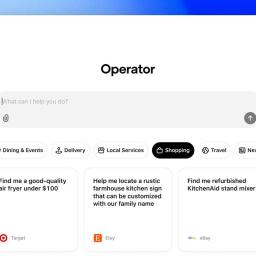
Image: OpenAI OpenAI is releasing a research preview" of an AI agent called Operator that can go to the web to perform tasks for you," according to a blog post. Using its own browser, it can look at a webpage and interact with it by typing, clicking, and scrolling," OpenAI says. It's launching first in the US for subscribers of OpenAI's $200 per month ChatGPT Pro tier.Operator relies a Computer-Using Agent" model that combines GPT-4o's vision capabilities with advanced reasoning through reinforcement learning" to be able to interact with GUIs, OpenAI says. Operator can see' (through screenshots) and interact' (using all the actions a mouse and keyboard allow) with a browser, enabling it to take action on the web without requiring custom API integrations," according to OpenAI.Operator can use reasoning to self-correct," and if it gets stuck, it will give the user control. It will also ask the user to take over when a website asks for sensitive information like login credentials and should" ask for a user to approve actions like sending an email. OpenAI also says that Operator has been designed to refuse harmful requests and block disallowed content."OpenAI says that it's collaborating with companies such as DoorDash, Instacart, OpenTable, Priceline, StubHub, Thumbtack, Uber so that Operator addresses real-world needs while respecting established norms." But the company cautions that not everything might work as you expect just yet; the tool currently has problems with complex interfaces like creating slideshows or managing calendars."Down the line, OpenAI says it plans to bring Operator to Plus, Team, and Enterprise users and integrate these capabilities into ChatGPT."
|
 |
by Lauren Feiner on (#6TS9Y)
Illustration by Alex Castro / The Verge Epic Games is adding nearly 20 third-party games onto its mobile app store worldwide on Android and in the European Union on iOS and launching its free games program on mobile beginning with Bloons TD 6 and Dungeon of the Endless: Apogee. It's also promising to pay some iOS fees for developers that are part of the program to overcome what Epic calls a major hurdle to moving outside the App Store.Our aim here isn't just to launch a bunch of different stores in different places, but to build a single, cross-platform store in which, within the era of multi-platform games, if you buy a game or digital items in one place, you have the ability to own them everywhere," Epic CEO Tim Sweeney told reporters during a press briefing. Under the program, Epic will offer new free games in the store each month before eventually switching to a weekly schedule.To sweeten the deal for developers that participate in the free games program on iOS, Epic will help defray the cost of using third-party marketplaces. For one year, it will pay these developers' Core Technology Fee (CTF): a 50 euro cent fee levied on every install of an iOS app that uses third-party stores after it exceeds 1 million annual downloads. (Apple gives developers with less than 10 million in global revenue a three-year on-ramp.)Epic has been an outspoken critic of the CTF. In a blog post, it laments that even if a developer decides to list just one game on the Epic Games Store, they have to pay the fee every time any of their games are downloaded on iPhones or iPads, whether it's from the Apple App Store or an alternative store." The fee is ruinous for any hopes of a competing store getting a foothold," Sweeney says. And while Epic will lose money by paying the CTF for these developers, he says, we feel like we have to be the ones breaking the logjam there."The company hopes the EU will take action on what it alleges is a violation of the Digital Markets Act (DMA), which governs digital competition. Epic writes in its blog post that covering the fee is not financially viable for every third party app store or for Epic long term, but we'll do it while the European Commission investigates Apple's non-compliance with the law."It's the latest maneuver in a long-running fight between Epic and the mobile operating system developers Apple and Google. The game maker has challenged both companies over their practices in the US with mixed success, and it's hoping that the European Union will take up its cause. The iOS Epic Games Store is EU-only because Apple has been forced to open up its ecosystem there under the DMA; it continues to say its restrictions elsewhere are meant to protect the security of its system.Epic argues many mobile game developers aren't on its store because Apple and Google discourage them with restrictions and fees. The company quotes anonymous game developers - their identities withheld to avoid retaliation from Apple, it says - citing the CTF as a deterrent.We won't really have app store freedom, even in Europe ... unless the DMA is robustly enforced"Epic had far fewer installs of its mobile store since its launch than it anticipated: just 29 million at the end of 2024, it says in its blog post, compared to its goal of 100 million. It attributes this partly to friction like mobile scare screens," which it says drive away users from installing the Epic Games Store more than 50 percent of the time.With a doubled install base plus any network effects where users got their friends to join, I think it would have been easy for us to get to 100 million users," Sweeney claims. Ultimately, he adds, We won't really have app store freedom, even in Europe, and actual user choice and competition, unless the DMA is robustly enforced."Epic has been fighting this battle for a long time, with its flashy 2020 lawsuit against Apple marking a key turning point. But Sweeney is prepared for the fight to continue for the better part of this decade. Even with a new US president who looks fairly cozy with big tech, Sweeney says he's still optimistic Donald Trump's appointees are prepared to take on the industry.The ridiculous irony is that Epic Games is able to fully compete with the App Store on equal terms only in Europe," Sweeney says. In America, we are blocked from it. And in America, a US citizen cannot obtain Fortnite [on iOS] - it is blocked from you by Apple. I think that's ridiculous, and that needs to change, and it will change."
|
 |
by Ash Parrish on (#6TSA0)
Image: Palworld Pocketpair is getting into the games publishing business. The company has announced that it's taking the gobs of money it made after launching Palworld, the Steam-record busting, 15-million-copies-sold-in-its-first-month, monster-catching adventure game, to establish Pocketpair Publishing.Pocketpair Publishing provides comprehensive support for game development through funding, development assistance, and publishing for indie game developers and small studios," Pocketpair wrote in its press release.We don't even have to wait long for the company's first game. Pocketpair Publishing has teamed up with Tales of Kenzera: Zau developer Surgent Studios to produce its next title, a horror game slated for release later this year. Surgent Studios was founded by video game voice performer and on-screen actor Abubakar Salim. After launching Tales of Kenzera, an afro-futuristic metroidvania, the company was forced to furlough its games division due to lack of funding - a common occurrence that's become endemic over the last two years.The indie game space has not been insulated from the effects of the layoff crisis that's plagued the game industry. The big publishers, from which smaller indie outfits typically receive funding, are tightening their belts, choosing to either keep their cash or only dole it out to projects they believe are sure to make money. And even the publishers known for supporting quality indie games, like Annapurna Games, are having a hard time staying in operation.However, Pocketpair Publishing joins a group of new companies that have entered the indie games space via non-traditional means. In 2022, YouTube video game critic and content creator videogamedunkey, created his own publishing company Bigmode which published its first game, Animal Well, to critical acclaim last year. Also last year, Innersloth, developers of the wildly-popular murder mystery multiplayer game Among Us, established Outersloth, which is an indie game fund rather than a traditional publisher. Like Outersloth and Bigmode, Pocketpair Publishing is seeking to parlay its commercial success into an avenue for more indie games like Palworld to get made.Game development comes with many challenges," said Pocketpair Publishing head John Buckley. But we want to ease that process as much as possible and provide an environment where creators can pursue their dreams."
|
 |
by Sheena Vasani on (#6TSA1)
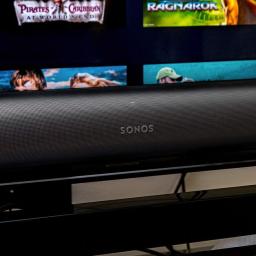
It's no Arc Ultra, but Sonos' last-gen soundbar still offers terrific sound if you can afford it. | Image: Chris Welch / The Verge If you're looking for a way to beef up your sound system ahead of the Super Bowl, it's worth investing in a good soundbar. And right now, the Sonos Arc is matching its all-time low of around $649 ($250 off) at Amazon, Best Buy, and B&H Photo.Before Sonos released the Sonos Arc Ultra last year, the Sonos Arc was the company's highest-end soundbar. Along with eight woofers and three tweeters, the Arc boasts two upward-firing Dolby Atmos speakers. Combined with eARC support, the soundbar delivers impressive and immersive sound, especially when paired with a large 4K TV that supports Atmos over HDMI ARC. Even more conveniently, the Arc features built-in mics and support for Apple's AirPlay 2, Amazon Alexa, and Google Assistant for hands-free voice control.Of course, there are some trade-offs you'll have to make if you opt for the Arc over the more powerful $999 Arc Ultra. Only the Ultra supports Bluetooth audio and Trueplay EQ tuning, for example. The Arc also lacks support for Sonos' new Sound Motion" tech, which, combined with some additional drivers, allows the Ultra to provide more immersive sound. But if you're okay going without those features, the Arc is a terrific option at this price.Read our Sonos Arc review.A few more ways to save
|
by Umar Shakir on (#6TSA2)
Image: Google Google is changing the way visible URLs show up on mobile search results worldwide. Search results since 2009 have shown breadcrumbs" or the hierarchy of a webpage's URL using >" after the domain name, but starting today, it will only show the domain on your smartphone or tablet.Web developers have had some control over how results show up according to Google's structured data guidelines that also control how info shows up in its snippets and other areas, and the breadcrumbs will still show up in searches from your desktop. Image: Google Example of the new URL result structure on mobile (top) and desktop (bottom). Google says it's making this change because the breadcrumb element isn't as useful to people who are searching on mobile devices, as it gets cut off on smaller screens."It's certainly true on much smaller screens, like on the discontinued iPhone 13 Mini, which can only show part of the first section of the URL. Screenshot: The Verge On desktop: Structured websites show the URL hierarchy where the page exists after the domain name. Screenshot: The Verge On mobile: The trail after the URL will start getting suppressed, although some breadcrumbs are still showing up for now. (This is an iPhone 13 Mini screen). But the changes Google is making also affect much larger mobile device screens that would otherwise have no issue displaying the breadcrumbs, which are useful for seeing at a glance what section of a site you're browsing.
 |
by Jess Weatherbed on (#6TSA3)
The ability to remotely remove installed extensions is coming later this year." | Image: The Verge Google has announced some new business features that can help IT admins better manage Chrome browser extensions, a popular attack vector for cybercriminals. A curated Chrome Web Store experience is launching today for any organization using Chrome Enterprise (including the free Chrome Enterprise Core package) that allows pre-approved extensions to be displayed on the landing page, making them easier for employees to find and install.Companies can also promote other trusted add-ons that they have vetted, create groups for specific extensions, and customize the Chrome Web Store UI with company logos, imagery, and announcements. Image: Google Sample Enterprise Web Store The aim is to prevent employees from installing potentially harmful browser extensions that pose a security risk - as seen in the phishing campaign reported in December that inserted malicious code into multiple Chrome extensions, including the Cyberhaven data security add-on.More controls will be added for IT admins later this year, including a new setting that will enable extensions to be removed from users' systems remotely and automatically block future downloads. Another feature, coming early this year," will let admins place custom messages on extension detail pages to provide more information about their compliance with workspace usage policies.Update, January 23rd: Clarified tools are available to admins on both free Chrome Enterprise Core and Chrome Enterprise Premium.
|
 |
by Andrew Liszewski on (#6TS6W)
The Dasung Paperlike 103 connects to computers and mobile devices over USB-C. | Image: Dasung Dasung has announced a new compact E Ink monitor that's the company's first to offer a 60Hz refresh rate. The Paperlike 103 features a 10.3-inch e-paper panel making it similar in size to E Ink-based electronic notepads like the Boox Go 10.3 or the Amazon Kindle Scribe. Those devices typically have limited refresh rates, but by boosting the Paperlike 103's refresh to 60Hz, the portable monitor will offer the advantages of E Ink (less eye strain and low power usage) while making tasks like scrolling documents and websites, and even watching videos, appear smoother and closer to how they do on LCD and OLED screens.The Paperlike 103 is priced at 1,999 yuan, or around $274, according to Good e-Reader, and is available to order through the Chinese retailer, Jing Dong. It's not available globally yet, but Dasung typically releases all of its products outside China, eventually. The company currently sells a similar version of the Paperlike 103 that starts at $699 with a larger 13.3-inch E Ink panel. Its refresh rate is limited to 40Hz, but watching a side-by-side comparison of its performance versus an LCD gives a good idea of how well the Paperlike 103 will perform, with potentially even less ghosting. Image: Dasung With a low power E Ink panel, the Paperlike 103 draws all the power it needs through a USB-C port. With a resolution of 1,872 x 1,404 pixels in a 4:3 aspect ratio, the Paperlike 103's 227ppi is slightly behind the 300ppi E Ink screens on the Kindle Paperwhite, Scribe, and other e-readers released over the past few years. But it offers similar lighting options with LEDs along the edge of the screen that aren't blasting directly into your eyes, and color temperature adjustments from cool to warm to further reduce eye strain if you'll be staring at it for a while.The monitor's body is made from aluminum alloy that's just five millimeters thick so it's both lightweight and strong enough to survive getting accidentally squished in your bag. There's also no battery to add bulk and weight. The Paperlike 103 relies on USB-C for both power and to connect to source devices like computers and mobile devices. There's also a set of six physical buttons on the left bezel used to turn the monitor on and off, adjust the brightness and color temperature of its lighting, and to switch between different display modes optimized for text, video, or imagery.
|
 |
by Emma Roth on (#6TS6X)
Image: The Verge CNN is developing a new streaming service - and it sounds a lot like the one it shut down nearly three years ago. In an internal memo shared with The Verge, CNN CEO Mark Thompson says the service will give viewers the ability to stream news programming from us on any device they choose" as part of a broader restructuring plan.CNN jumped on the streaming bandwagon in 2022 with the launch of CNN Plus, a short-lived service that shut down after just one month. Thompson doesn't say whether the new service will mirror the content on its linear channel, or if it will stick to original programming, similar to CNN Plus.It's early days but we've already established that there's immense demand for it not just in America but across much of the world," Thompson wrote. We'll have more to say about this new digital product in the coming months, including content plans and how we will work with our existing and future distribution partners to bring this to market."Along with the new streaming service, Thompson's memo also said Alex MacCallum, CNN's executive vice president for digital products and services, will announce the company's first lifestyle-oriented digital product" and a major pivot to digital video."As part of these changes, CNN will lay off six percent of jobs, making up around 200 employees. Thompson says the company doesn't expect total headcount to fall much this year" because of a $70 million investment from CNN parent company Warner Bros. Discovery, The Hollywood Reporter says.The news of a revived CNN streaming service comes as linear TV networks grapple with a growing shift toward streaming. CNN, which airs a 24/7 news broadcast on Max, recently announced that it's locking some of its articles behind a paywall. Along with CNN, CNBC also launched a $14.99 / month CNBC Plus subscription.
|
by Jennifer Pattison Tuohy on (#6TS6Y)
Image: Cath Virginia / The Verge The CSA, Thread Group, and Wi-Fi Alliance say they're working together to fix the problems that have plagued thesmart homestandard in its first two years. In this exclusive interview, I ask them how and when. Read the full story at The Verge.
 |
by Quentyn Kennemer on (#6TS6Z)
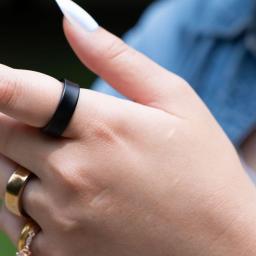
Its comfortably basic style hides nice utility. | Photos by Victoria Song / The Verge If the Galaxy Ring cost $250, I'd say Samsung was a diabolical genius company. But at $400, it's asking a lot for what amounts to a secondary device for your smartwatch," is how Victoria ultimately felt about the Samsung Galaxy Ring in her review. Well, it's not exactly $250, but a deal on the health-tracking wearable that brings it down to $279.99 ($120 off) at Amazon is close enough.You'll find that price across all three of its colors (black, gold, and silver) in several sizes, some of which you'll have to sign in and add to your cart in order to see. Available ring sizes range from 5 to 15, and while a blind purchase might be safe if you already know your ring size, we recommend using the $10 sizing kit to help you dial it in.Sadly, that kit is temporarily out of stock at Amazon as of this writing, otherwise you'd be able to recoup the full cost as a credit usable toward the ring. The kit is in stock at Best Buy, however, which bundles a $10 gift card to offset the cost and also currently offers $120 off the Galaxy Ring with a My Best Buy Plus ($49.99 a year) and My Best Buy Total ($179.99 a year) membership.The Galaxy Ring's normal $400 price is $50 more expensive than the base Oura Ring 4, but unlike the latter, it doesn't require a subscription, which makes this deal a bit sweeter. You'll need a Galaxy smartphone for the best experience, though, as the IP68 water-resistant wearable offers rather basic but standard activity and sleep tracking features without it. It can measure your blood oxygen level, skin temperature, heart rate, and tracks your steps and workouts. But a phone with Galaxy AI can use the metrics to generate insights about your quality of sleep, workout results, and even an Energy Score that attempts to quantify your fatigue levels.We found these features sufficiently accurate and in line with the competition, but the tips aren't always the most helpful, and you can get better accuracy from a Galaxy Watch. Using the ring and watch in tandem would result in 30 percent longer battery life for the Galaxy Ring's six to seven-hour runtime, we've found, as the ecosystem prefers the Watch's readings where possible.Other features require a Galaxy smartphone, too, such as pinch gestures for smartphone actions and the ability to trigger the ring's lights with Samsung Find. That means you should probably go with another ring if you don't use a Samsung phone.
|
 |
by Nilay Patel on (#6TS70)
Illustration by The Verge Law professor Kate Klonick explains what Big Tech's Trump appeasement is really about. Read the full story at The Verge.
|
 |
by Emma Roth on (#6TS36)
Photo by Al Bello/Getty Images Comcast is launching a $70 per month Sports & News TV" streaming bundle featuring live games from the NFL, NBA, NHL, MLB, and NCAA. The package, which marks the latest attempt to build out the sports streaming industry, is available to Xfinity Internet subscribers and lets you tune into over 50 news and sports channels, including ABC, CBS, NBC, Fox, ESPN, and CNN.It also comes with a subscription to Peacock, 300 hours of cloud DVR storage, and more than 100 free streaming channels. Though you don't need Xfinity's X1 TV box to access the bundle, Comcast says using one will give you access to features like multiview, enhanced" 4K, and Odds Zone, which displays odds from DraftKings and FanDuel. You can also find the Sports & News TV package from the Xfinity Stream app on mobile and smart TV platforms like Apple TV and Roku.Additionally, Comcast notes that you can combine the sports streaming subscription with some of the company's other packages, like the $9.95 per month More Sports & Entertainment package, which comes with channels like NFL RedZone, MLB Network, NBA TV, and NHL Network.DirecTV similarly launched a $69.99 per month MySports streaming package last week, which - unlike Comcast's bundle - doesn't have local CBS content yet and is only available in select cities for now.These new sports-focused packages could help fill the gap left by Venu, the scrapped live sports streaming service led by ESPN, Fox, and Warner Bros. Discovery. Fubo is also set to combine with Hulu + Live TV after reaching a settlement with Disney over the launch of Venu. In the absence of a dedicated sports streaming subscription, viewers without cable are left piecing together live games across various services, including Paramount Plus, Peacock, Apple TV Plus, and Max.Disclosure: Comcast is an investor in Vox Media, The Verge's parent company.
|
|
by Andrew Webster on (#6TS37)
Image: Cath Virginia / The Verge A busy January of gaming news continues. Last week it was the reveal of the Nintendo Switch 2, and now it's a showcase of upcoming Xbox games. Microsoft's latest Developer Direct takes place today, and it's meant to provide a deep dive" look at some of the biggest upcoming games for Xbox. That includes Doom: The Dark Ages (which might release in May, according to leaks) as well South of Midnight and Clair Obscur: Expedition 33.Most exciting, though, is the promise of a mystery game. We don't know what it is - hence the mystery - but the tease suggests it's something big. For context, the highlight of last year's Developer Direct was a gameplay deep dive for Indiana Jones and the Great Circle. We'll be covering the news as it happens, but if you want to tune in live, here are all the details. (You can also just watch via the embed at the top of this article.)How and when to watch the Xbox Developer Direct 2025The event itself takes place on January 23rd at 10AM PT / 1PM ET. And it's streaming on pretty much all of the Xbox and Bethesda channels:
|
by Charles Pulliam-Moore on (#6TS38)
The Pokemon Company The latest batch of new Pokemon TCG Pocket cards finally has a concrete release date, but it seems like you won't be able to trade them right off the bat.The Pokemon Company announced today that Space-Time Smackdown, Pokemon TCG Pocket's latest expansion, is set to debut at the end of the month right after the game's trading feature launches on January 29th. While cards from the last set could all be obtained from a single type of pack, Space-Time Smackdown - which includes a number of monsters from Pokemon Diamond / Pearl / Platinum - will come from packs featuring the legendary Pokemon Dialga and Palkia.Along with Space-Time Smackdown's announcement, TCPi also revealed a bit more about how the trading mechanic will involve two new types of in-game currencies - trade houseglasses and trade tokens. It seems as if there will be cooldown periods as well as a cost if you want to swap cards from Pocket's Genetic Apex and Mythical Island sets with other players. But there will definitely be some waiting involved for people hoping to trade Space-Time Smackdown, which will not be tradeable until a later date after it drops on January 30th.
by Sean Hollister on (#6TS39)
The Nvidia RTX 5090 Founder's Edition in an Ncase M1. The Nvidia RTX 5090 FE barely fit my 12.7-liter small form factor case, but using it was a dream. In 2022, I wrote that GPUs were headed in the wrong direction - their price, size, and power consumption were off the charts. And while I still believe that's true, I can now confirm Nvidia has at least made one phenomenal exception in the size category: the two-slot Founder's Edition" of its RTX 5090 graphics card, on sale January 30th.The last time Nvidia made a two-slot flagship graphics card, it was the 2021 RTX 3080 Ti FE - the 3090, 4080 and 4090 were gigantic by comparison.So, while my colleague Tom Warren was busy writing his full review of the new 5090 using the best gaming CPU, I wedged one of the $2,000 cards into my own aging mini desktop. I wanted to see whether the surprisingly small flagship GPU was truly ready for small form factor (SFF) cases - or, whether my beloved 12.7-liter Ncase M1 chassis is well and truly obsolete.To my surprise, it worked: all I needed was a new power supply to turn my backpack-sized daily driver into one of the most powerful gaming PCs in the world. At 4K resolution, I'm typically seeing more than double the framerate I get with an RTX 3080 Founder's Edition, one of the last cards that could comfortably fit in the Ncase M1, to give you some idea.But I'm not going to suggest you do the same! For starters, we're talking about a two thousand dollar graphics card and a one thousand watt power supply - which I actually saw consuming up to one whole kilowatt (as measured by my trusty Kill A Watt at the wall) in my Cyberpunk 2077 tests. With an RTX 3080, my system consumed over 200 fewer watts. Not that I minded having a space heater on these cold January days!But I literally had to wedge the 5090 into my Ncase M1 to make it fit, and even remove and reattach the video card's bracket inside my case. And even then I couldn't fully seal my desktop because the GPU's new 12V-2x6 power connector occupies a chunk of space where my case's side panel is supposed to go. You'll want an SFF-ready case with more clearance than I have. It took a bit of elbow grease to get it in there. If not for that power cable... Still, leaving my desktop's guts exposed was a small price to pay to toy with this much power! It's enough to play games at 4K at their maximum settings, save for full ray tracing (aka path tracing). It's even got enough horsepower to turn on path tracing, too, if you combine it with dynamic upscaling and/or fake frame generating tech.I normally play Helldivers 2 on an old 3060 Ti graphics card I bought for just $400, where I'm forced to rely on those tricks just to get smooth 4K-ish gameplay. It was quite nice, if expected, to finally max out that game on the 5090 instead.What I didn't expect: my aging, space-constrained AMD 5800X desktop delivered the same performance as Tom's open-air testing rig in quite a few of our 4K gaming benchmarks. I knew it was possible, but it goes to show that Nvidia's fancy two-slot double flow through" cooler really is suitable for SFF PCs.It depends on whether your games are CPU limited, of course, as my older PC does have a slower CPU - and most of today's games tend to be at least somewhat CPU limited at 1440p resolution, where Tom's system often pulled far ahead by 20 to 60 percent.Facing down the alien swarms and flying particles in Returnal, for example, Tom pulled 201 frames per second at 1440p while my diminutive desktop managed just 169fps; in Horizon Zero Dawn Remastered, the most CPU-limited game we're testing, my bottlenecked system averaged just 123fps to Tom's 200fps.But that's still over 120fps on max settings, more than enough for butter-smooth sessions of these single-player games! And if I were to pair my tiny tower with a 4K TV in my living room instead of a 1440p monitor, as many SFF PC builders might like to do, I'd have a blast - my 4K results always averaged over 60fps, and were often within just a few FPS of Tom's open bench.And again, I'm typically seeing the RTX 5090 delivering more than twice the horsepower of an RTX 3080, making it quite the upgrade for SFF fans with deep pockets. That's not necessarily something to celebrate, though: the $2,000 RTX 5090 admittedly costs more than twice as much as a $700 RTX 3080 did at its 2020 launch, and will be out of reach for most gamers even if shortages and scalpers don't rear their ugly heads.When it comes down to it, I think the Nvidia GeForce RTX 5090 is a damn cool piece of kit. It makes me want to quote Ferris Bueller's Day Off because it is so choice. It's a noteworthy exception to the very annoying trend of GPUs expanding in every direction. But at $2,000, 575 watts of power by its lonesome, and with no other Nvidia board partner offering anything nearly as compact, it's the exception that proves the rule.Photography by Sean Hollister / The Verge
by Tom Warren on (#6TS3A)
The next-gen GPU battle begins with Nvidia alone at the top. Read the full story at The Verge.
 |
by Andrew J. Hawkins on (#6TS07)
Image: Cadillac After months of teases, Cadillac officially announced the Lyriq-V as a 615-horsepower, high-performance electric SUV that will go on record as the quickest" vehicle ever produced by the luxury automaker.With that much horsepower, and 650 pound-feet of torque, Cadillac says the Lyriq-V is able to leap from zero to 60mph in just 3.3 seconds - besting the Cadillac CT5-V Blackwing's acceleration by a tenth of a second. That may not sound like much, but when you consider that the CT5-V Blackwing is lauded as one of the most expertly engineered American cars ever made, and when you realize that the CT5-V Blackwing is likely the last of its kind, you start to see the significance of the Lyriq-V's performance specs.Of course, there's some fine print to consider. That acceleration time is measured on a closed course, using the Lyriq-V's Velocity Max that's also available on Cadillac's forthcoming EV lineup that includes the Vistiq, Optiq, and Escalade IQ. And it includes a metric called Initial Vehicle Movement," which is when the vehicle starts moving rather than when the green light goes off.And yes, there are plenty of EVs that can accelerate to 60mph in under three seconds. But I don't think Cadillac was out to shatter any records with the Lyriq-V. It wanted to make a car that fits perfectly" into people's lives, as Cadillac boss John Roth says.To that end, the Lyriq-V looks like it takes a lot of what worked with the original Lyriq and made it more powerful. Its 102kWh battery will help propel this V-Series for an estimated 285 miles of range. It gains around 75 miles of range in about 10 minutes when plugged into a DC fast charger or about 19 miles per hour when sipping from a 240-volt Level 2 charger. And it will ship with a CCS port for charging, rather than the Tesla-backed NACS standard.The Lyriq-V perches on 22-inch wheels with Brembo brake calipers. The handling is comfortable, yet spirited," with 5-link independent suspension and continuous damping control for stiffer shock absorbers.And now we come to the part where I inform you that, yes, the Lyriq-V features a unique sound experience" that simulates an engine growl. Cadillac is the latest automaker to resort to faux exhaust noises piped through external speakers to comfort car buyers who may be feeling a bit hesitant about leaving the warm bosom of the internal combustion engine.Another unique feature is a button on the steering wheel for V-Mode, which is a suite of traction management features specifically engineered to increase vehicle agility." And like the original Lyriq - but unlike GM's other electric vehicles - the Lyriq-V will support phone mirroring through Apple CarPlay and Android Auto.The electric V-Series has been in the works for a while now. Cadillac first introduced the concept of an electrified V with the introduction of three V-Series.R hybrid race cars at the IMSA WeatherTech SportsCar Championship and FIA World Endurance Championship races in 2023.It then first teased a fully electric Lyriq-V in March 2024 to celebrate the 20th anniversary of the inaugural launch of the V-Series at the Sebring International Raceway in March 2004. That year saw the introduction of the 2004 Cadillac CTS-V, signaling the automaker's intention to compete with other performance luxury subbrands like BMW M and Mercedes AMG.Thanks to their quick, seamless acceleration and aerodynamic shapes, electric vehicles are a great fit in the performance segment. Indeed, BMW, Mercedes, and Audi all have performance-geared EVs for sale - or at least have outlined plans to sell them. Cadillac would be the latest to add its own spin on plug-in power.Starting at $79,990 (including destination charges), the 2026 Lyriq-V is expected to start production at GM's Spring Hill, Tennessee, factory in early 2025.
|
by Charles Pulliam-Moore on (#6TS06)
Image: Paramount Plus Paramount Plus' new Star Trek film is the sound of scene chewing in space, which is to say, it's pretty damn fun. Read the full story at The Verge.
by Jay Peters on (#6TRSG)
Image: Royal Shakespeare Company Macbeth, William Shakespeare's iconic play, is being reimagined as an interactive video game with a neo-noir vibe - and it's being developed in part by the Royal Shakespeare Company. The game, titled Lili, is a screen life thriller video game" where you'll have access to a modern-day Lady Macbeth's personal devices, according to a press release.Players will be immersed in a stylized, neo-noir vision of modern Iran, where surveillance and authoritarianism are part of daily life," the release says. The gameplay will feature a blend of live-action cinema within an interactive game format, giving players the chance to immerse themselves in the world of Lady Macbeth and make choices that influence her destiny." It sounds kind of like a version of Macbeth inspired by Sam Barlow's interactive thrillers.The Royal Shakespeare Company is making the game in collaboration with iNK Stories, a New York-based indie studio and publisher that also made 1979 Revolution: Black Friday. It stars Zar Amir as Lady Macbeth (Lili)," per the press release.Lili is set to release later in 2025."
 |
by Wes Davis on (#6TRNR)
Illustration: The Verge Tumbler has finally launched Tumblr TV as a new tab at the top of its app, the company said today in a brief set of update notes spotted by TechCrunch. Tumblr TV first debuted as a GIF-finding feature in 2015, but now it includes video content as well. Screenshot: Tumblr TV According to Tumblr, New users will have this tab enabled by default in the third position, while existing users will have it available in the Dashboard Tabs configuration, if not already enabled."When you tap the Tumblr TV tab, you'll see a grid of videos and GIFs. Once you tap one, you can like, comment, repost, or share it, and when you're ready to see something else, you can swipe up to move on.In my very brief testing, it's still very GIF-heavy despite the inclusion of video and a swipe interface similar to other short-form video apps.It could be tempting to compare Tumblr TV to TikTok, especially in light of its recent shutdown, but right now, it's more like scrolling a group text full of GIFs.
|
by Jay Peters on (#6TRKY)
Image: Extremely OK Games Earthblade, the next game from the developers of Celeste, has been canceled. The fantasy-inspired game got its first trailer in late 2022, and the game would have let you explore a free-roaming, dynamically-loading map," Extremely OK Games' Maddy Thorson said at the time. But the team decided to cancel the game in December after a team conflict and because of the pressure of trying to follow up on Celeste, Thorson says in a post detailing what happened.The disagreement" was between Thorson and Noel Berry (Thorson refers to the two of them as us") and Pedro Medeiros over the IP rights of Celeste," Thorson says. We eventually reached a resolution, but both parties also agreed in the end that we should go our separate ways," and Medeiros is currently working on a game called Neverway. Losing Pedro wasn't the only factor in cancelling the game, but it did prompt us to take a serious look at whether fighting through to finish Earthblade was the right path forward," Thorson says.The huge success of Celeste also applied pressure on us to deliver something bigger and better with Earthblade, and that pressure is a large part of why working on it has become so exhausting," Thorson says. Pedro isn't to blame for this - in fact the split with him has given us the clarity to see that we have lost our way, and the opportunity to admit defeat."Thorson and Berry want to refocus on smaller-scale projects" and are prototyping again" to try and rediscover game development in a manner closer to how we approached it at Celeste's or TowerFall's inception."
 |
by Umar Shakir on (#6TRKZ)
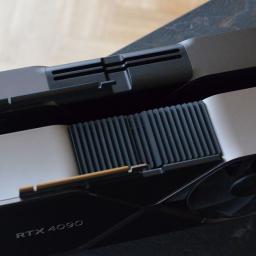
The RTX 4090 is a lot thicker than the RTX 5090. | Photo by Tom Warren / The Verge Nvidia has posted a new video showcasing a history of Founders Edition graphics card designs that explores the design of its new RTX 5090 and confirms a previously leaked prototype that used an unconventionally large four-slot design.As noted by VideoCardz, the prototype Titan ADA" card first revealed by leaker Kopite7kimi included a triple-fan cooling system, and earlier this month, Gamers Nexus tested and tore down a working version of the prototype.In the video published today, Nvidia's EVP of system products, Andrew Bell, explains that Nvidia cards were trending larger and larger, and they wanted to change that. We didn't like the idea of it taking up four slots; it was big, it was unwieldy, it worked in a limited number of chassis," Bell said.Bell says that the prototype triple-fan cooling system influenced Nvidia's Blackwell architecture. However, the latest RTX 5090 Founders Edition card that we are currently testing achieves its goals through a modular four-part design with a separate I/O board that allows air to flow through for a more efficient and compact cooler. According to Nvidia, these changes are why the new 5090 fits in two slots on the motherboard compared to the previous three-slot 4090.
|
 |
by Andrew Liszewski on (#6TRM0)
Image: Canon The megapixel race isn't over if you ask Canon. Today, the company announced a new 35mm full-frame CMOS sensor with a resolution of 410 megapixels. That's 24,592 x 16,704 pixels and a resolution that's equivalent to 24K - or 12 times the resolution of 8K and 198 times the resolution of HD.It's the "largest number of pixels ever achieved in a 35mm full-frame sensor," according to Canon, but don't expect the company to introduce it on its consumer-ready digital cameras. It's designed for surveillance, medicine, and other industrial applications that demand extreme resolution," and don't mind paying a small fortune for it.Thanks to a redesigned circuitry pattern" and a newly developed back-illuminated stacked formation in which the pixel segment and signal processing segment are interlayered," Canon says the sensor has a readout speed of 3,280 megapixels per second," allowing full-resolution images to be captured at eight frames per second.Canon will also offer a monochrome version of the sensor with a four-pixel binning" function that improves low-light sensitivity by treating four nearby pixels as one. Although that reduces its overall resolution, it allows the monochromatic version of the sensor to capture 100-megapixel videos at 24 frames per second.If you want to maximize your megapixels, you typically need to turn to medium-format or larger sensors and bigger cameras. The Phase One XF IQ4 150MP, for example, can capture images at 150-megapixels. But by putting this much resolution into a 35mm sensor that will be compatible with a wide range of lenses already available for full-frame cameras, Canon says it will help contribute to the miniaturization of shooting equipment."
|
 |
by David Pierce on (#6TRM1)
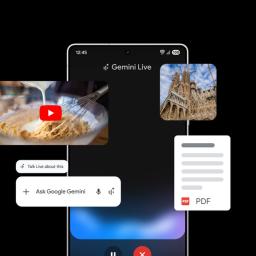
Illustration: The Verge One of the most important changes in Samsung's new phones is a simple one: when you long-press the side button on your phone, instead of activating Samsung's own Bixby assistant by default, you'll get Google Gemini.This is probably a good thing. Bixby was never a very good virtual assistant - Samsung originally built it primarily as a way to more simply navigate device settings, not to get information from the internet. It has gotten better since and can now do standard assistant things like performing visual searches and setting timers, but it never managed to catch up to the likes of Alexa, Google Assistant, and now, even Siri. So, if you're a Samsung user, this is good news! Your assistant is probably better now. (And if, for some unknown reason, you really do truly love Bixby, don't worry: there's still an app.)The switch to Gemini is an even bigger deal for Google. Google was caught off guard a couple of years ago when ChatGPT launched but has caught up in a big way. According to recent reporting from The Wall Street Journal, CEO Sundar Pichai now believes Gemini has surpassed ChatGPT, and he wants Google to have 500 million users by the end of this year. It might just... Read the full story at The Verge.
|
 |
by Quentyn Kennemer on (#6TRM2)
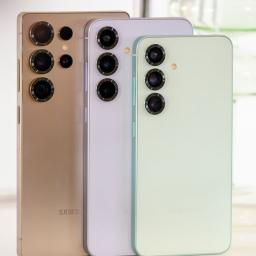
Samsung's latest phones all look and feel very similar, but there are some key differences. | Photo by Chris Welch / The Verge During its latest Unpacked event, Samsung dished all the details on the Galaxy S25 lineup. The Galaxy S25 and S25 Plus start at $799.99 and $999.99, respectively, while the S25 Ultra runs a cool $1299.99 in its entry-level configuration. You can preorder the phones ahead of their launch on February 7th, but before you do, you're probably wondering what's new.The phones don't look or feel much different, save for the slightly curvier Galaxy S25 Ultra. The Snapdragon Elite 8 is perhaps the S25 family's most notable hardware upgrade, which is up to 40 percent faster than the Snapdragon 8 Gen 3 chipset and comes with a new neural processing unit to support Samsung's expanded Galaxy AI experience. The company introduced multimodal and generative AI improvements, after all, and the Galaxy S25 line will be among the first to usher in new Google Gemini features.Our reviews are still forthcoming, and it's much too early for us to determine whether any of these phones are actually worth upgrading for. But that doesn't mean we can't distill their differences to help you determine which device you'd rather buy. Keep reading for a full breakdown of all of the hardware and software... Read the full story at The Verge.
|
 |
by Wes Davis on (#6TRF8)
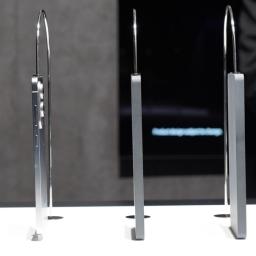
Photo by Vjeran Pavic / The Verge Samsung just teased the Galaxy S25 Edge - the new ultra-slim entry into the Galaxy S25 lineup. The phone isn't out yet, and Samsung hasn't provided any details, but now we know it's real. And we have pictures.Like pretty much every phone, it's a thin silver slab. It's got two cameras on the back, rather than the three cameras you'd get with other S25 phones. The Edge is rumored to measure just 6.4mm thick, but my colleagues Allison Johnson and Vjeran Pavic, who are on the ground at Galaxy Unpacked and took the below photos, weren't able to actually hold or measure the device to confirm.We're trying to get closer so we can show perspective, but the place is mobbed with people. There's a lot of excitement about this phone. By comparison, though, the regular Galaxy S25 is 7.2mm thick. So, it's... even thinner.Here are some of the pictures we took: Photo by Vjeran Pavic / The Verge Photo by Vjeran Pavic / The Verge Photo by Vjeran Pavic / The Verge Photo by Vjeran Pavic / The Verge Photo by Vjeran Pavic / The Verge Photo by Vjeran Pavic / The Verge Photo by Vjeran Pavic / The Verge Photo by Allison Johnson / The Verge Photo by Allison Johnson / The Verge Photo by Allison Johnson / The Verge Photo by Allison Johnson / The Verge Photo by Allison Johnson / The Verge Update, January 22nd: Added more photos.
|
 |
by Umar Shakir on (#6TRF9)
Image: Cath Virginia / The Verge Xbox has a new beta software update rolling out today for Insiders in the Alpha Skip-Ahead ring that enables Series X and S systems to support much larger external hard disks. Previously, the Xbox could only support up to 16TB of space on a single USB-connected drive.With the new update, Xbox systems can now partition hard disks larger than 16TB into segments to use the full physical storage space. A single 24TB hard disk can now be formatted into multiple partitions (the largest still being 16TB) so you can archive more games, apps, and media than ever - if that's something you've wanted to do.However, if you have already been using a hard disk greater than 16TB with Xbox, the company says you'll need to erase it first to take full advantage:
|
 |
by Ash Parrish on (#6TRFA)
One in 10 game developers lost their job in 2024. That's according to the results of the annual Game Developers Conference state of the video game survey. The survey sampled over 3,000 developers and covered a number of topics including industry layoffs and what kind of games developers are working on.Prolific layoffs have ravaged the industry over the last two years making the question of their impact on developers one of the most important in the survey. In addition to 10 percent of developers losing their jobs, 41 percent of respondents said they had been impacted by layoffs in some way, either by being laid off directly or seeing coworkers or colleagues in other departments let go. The survey also noted that the number of people impacted is potentially much higher because of the students and graduates who reported having a difficult time simply getting a job in the industry at all.When asked what reason companies gave for layoffs, 22 percent said restructuring while 18 said declining revenue. 19 percent gave no reason at all. Developers, though, have their own ideas about why layoffs keep happening. In an analysis of responses to what developers think the reason behind layoffs is, the majority were general statements about the industry's over-expansion during the pandemic. Companies acquired workers and studios in hopes of meeting a level of demand for games that dried up as covid restrictions loosened. However, some developers believe the reason for layoffs is much simpler. Companies like Microsoft and Sony still reported growing revenues despite multiple rounds of layoffs and studio closures. It's no surprise then that 13 percent of respondents attributed layoffs to corporate greed.In addition to layoffs, the last few years have also seen the failure of a number of high-profile, big-budget, live-service games. While there has been some success in that area with new games like Marvel Rivals, it's generally tough to launch a live-service game that can compete with the overbearing likes of Fortnite, Roblox, and Call of Duty. 2024 was also the year that Balatro, Animal Well, and Astro Bot dominated headlines and award lists suggesting a greater appetite for those kinds of smaller-scoped, single-player experiences. It's interesting, and perhaps concerning then, that according to the survey, over 30 percent of AAA developers are working on a live-service game.When it asked developers their thoughts on live-service games the survey answered, One of the biggest issues mentioned was market oversaturation, with many developers noting how tough it is to break through and build a sustainable player base."
|
 |
by Mia Sato on (#6TRFB)
Image: The Verge Dozens of popular subreddits are banning links to X after Elon Musk made a gesture that historians and human rights groups have described as a Nazi salute. Communities that have instituted a ban on links to X include r/formula1, r/military, r/nursing, r/TwoXChromosomes, and r/nintendo.The shift is spreading across Reddit after neo-Nazis celebrated Musk's speech at a rally on Monday for Donald Trump's inauguration. During the speech, Musk twice raised his arm in a salute that historians, elected officials, and organizations that support Holocaust survivors have observed as a Nazi salute. During his speech, Musk places his hand on his chest and throws his arm forward at an angle, holding it mid-air for a few moments. My heart goes out to you," he says to supporters. Some supporters of Musk have defended him, saying the gesture went along with his words.Musk has not disavowed the neo-Nazis reading his gesture as a Sieg Heil, and in fact has minimized criticism, writing on X that The everyone is Hitler' attack is sooo tired." Musk has previously amplified racist, antisemitic conspiracy theories like the Great Replacement Theory and is constantly posting anti-immigrant claims not based in reality. After pouring millions of dollars into US politics to elect Trump, Musk has expanded to German politics as well, endorsing the far right Alternative for Germany (AfD) party.The subreddits that announced the new rule cover millions of users across geography and interestsRegardless of Musk's true intentions, extremists are thrilled: as Rolling Stone reported, white supremacists are calling it a Donald Trump White Power moment" and thanking Musk for hearing" them.The subreddits that announced the new rule cover millions of users across geography and interests. Some subreddits have announced they will allow screenshots of content from X but not hyperlinks, and many other large communities like r/nba and r/nfl are discussing following suit. Even setting Musk's right wing politics aside, viewing X links on Reddit isn't a great experience: links often don't unfurl and users need an X account to view the conversation on the platform.Reddit has a longstanding commitment to freedom of speech and freedom of association," said a Reddit spokesperson who asked to remain anonymous citing the sensitivity of the subject. While individual subreddits are able to institute community rules, Reddit Inc. has no ban on X links - there are still plenty of X links on Reddit," the spokesperson wrote in an email.X did not immediately respond to a request for comment.
|
by Jay Peters on (#6TRFC)
Samsung has its Project Moohan headset on display at Galaxy Unpacked, and we've just taken a bunch of pictures of it.This technically isn't the first time we've seen Project Moohan, but it is the first time we've been allowed to photograph it. To me, it looks somewhat similar to Apple's high-end Vision Pro headset with a hint of Meta's discontinued Quest Pro.The headset, which Samsung is developing in partnership with Google, runs Android XR, an OS designed specifically for headsets and smart glasses. My colleague Victoria Song got to try Project Moohan late last year, so if you want to know what it's like to actually wear and use, go check out her impressions.Samsung plans to launch Project Moohan for developers first, but it won't be available right away for consumers.Here are our photos from the event floor at Unpacked: Photo by Vjeran Pavic / The Verge Photo by Vjeran Pavic / The Verge Photo by Vjeran Pavic / The Verge Photo by Vjeran Pavic / The Verge Photo by Vjeran Pavic / The Verge
 |
by Sheena Vasani on (#6TRFD)
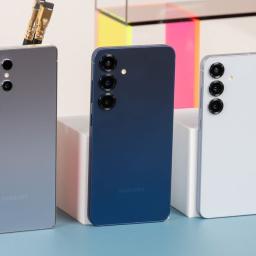
The Galaxy S25 lineup looks very similar to the S24 family. Go figure. | Photo by Chris Welch / The Verge Samsung finally took the wraps off its new Galaxy S25 lineup during its Unpacked event on Wednesday, providing us with our first formal look at the forthcoming Galaxy S25, S25 Plus, and S25 Ultra. Available starting on February 7th, you can already preorder the S25 starting at $799.99, the S25 Plus starting at $999.99, and the S25 Ultra starting at $1,299.99.On the hardware front, Samsung's latest phones represent a relatively minor refresh over last year's S24 series. The new Galaxy S25 phones are all Qi2 Ready," meaning they charge at up to 15W on a Qi2 charger using Samsung's magnetic Qi2 Ready cases. Each phone also features 12GB of RAM by default, along with more processing power thanks to Qualcomm's Snapdragon 8 Elite for Galaxy chip.The new Qualcomm chipset supposedly allows for smarter and occasionally faster AI tools, which, as we noted in our brief hands-on time with the S25 and S25 Plus, are the real changes here. The onboard AI assistant is now based on Google Gemini by default and can control your phone with natural language requests. Other AI features include a video editing tool that can erase distractions like music and wind, as well as daily AI-generated summaries that help you make better sense of your calendar and commute.We're still in the process of testing Samsung's latest phones, but if you want to reserve one ahead of launch, here's what you need to know.Where to preorder the Galaxy S25Starting at $799.99, the Galaxy S25 comes with 12GB of RAM and your choice of either 128GB or 256GB of storage, the latter of which costs $60 more. It's available for preorder from Samsung, Amazon, and Best Buy in navy, light blue, mint, or silver. It's also available in a few exclusive colors directly from Samsung, including black, red, and rose gold.At 6.2 inches, the entry-level Galaxy S25 is the smallest phone in the S25 lineup. It's lighter and thinner than last year's S24, and, as mentioned before, it now comes with 12GB of RAM. Otherwise, it's very similar to its predecessor, with a 120Hz refresh rate and the same 50-megapixel main shooter, a 12-megapixel ultrawide, and a 10-megapixel telephoto lens. It also features a 12-megapixel selfie camera on the front.In terms of deals, Amazon is offering $100 in credit when you preorder the 128GB model for $799.99 or the 256GB model for $859.99. Samsung is also offering a $100 credit when you preorder the 128GB model for $799.99, along with a $50 discount when you buy the 256GB model for $809.99. Best Buy's promo is similar to Samsung's, with the retailer throwing in a $50 gift card when you buy the 128GB model for $799.99 or the 256GB model for $859.99.Where to preorder the Galaxy S25 PlusThe 256GB S25 Plus runs $999.99 and comes with 12GB of RAM, though you can also buy it with 512GB of storage for $1,119.99. Like the S25, it's available for preorder from Samsung, Amazon, and Best Buy in navy, light blue, mint, and silver. If you purchase directly from Samsung, you can also grab it in black, red, or rose gold.The main difference between the S25 and S25 Plus is that the larger model comes with more storage options and sports a 6.7-inch 120Hz display. It also packs a bigger battery than the S25 (4,900mAh versus 4,000mAh), though it remains to be seen if that translates to longer battery life given the larger display on the S25 Plus. Otherwise, it's similar to the Galaxy S25 in that it features an identical camera system, IP68 dust and water resistance, and plenty of AI-powered features.If you're looking for a deal, Amazon is offering a $100 gift card when you preorder the 256GB model for $999.99 or the 512GB model for $1,119.99. Samsung is also offering $150 in credit when you preorder the 256GB model for $999.99 or $50 in credit when you buy the 512GB model for $1,019.99. Lastly, Best Buy is throwing in a $100 gift card when you preorder the 256GB model or the 512GB model at full price.Where to preorder the Galaxy S25 UltraThe S25 Ultra comes with 12GB of RAM and retails for $1,299.99 in the 256GB configuration, $1,419.99 in the 512GB configuration, and $1,659.99 in the 1TB variant. The Ultra is available for preorder from Amazon, Best Buy, and Samsung in blue, silver, gray, or black. (The latter retailer is also selling it in a few exclusive colors, such as rose gold and green.)At 6.9 inches, the redesigned Galaxy S25 Ultra sports a larger display than both the S25 and S25 Plus. It also comes with an S Pen stylus as well as an upgraded camera array that features two telephoto cameras and an improved 50-megapixel ultrawide sensor. You also get more storage options and a more durable titanium build, the latter of which features rounded edges for greater comfort.In terms of promotions, Amazon is offering a $200 gift card when you preorder the 256GB model for $1,299.99 or the 512GB model for $1,419.99. Samsung is also throwing in a $150 credit when you preorder the 256GB model for $1,299.99, a $130 credit when you preorder the 512GB model for $1,299.99 ($120 off), or a $110 credit when you buy the 1TB model for $1,419.99 ($240 off). In addition, Best Buy is throwing in a $200 gift card when you preorder the 256GB model for $1,299.99, the 512GB model for $1,419.99, or the 1TB model for $1,659.99.Carrier offers and promotions
|
by Sean Hollister on (#6TRFE)
Photo: Allison Johnson / The Verge Will cracked screens actually become a thing of the past this decade? We're definitely on an impressive trajectory! Just two years after Samsung's Galaxy S23 adopted a new Corning Gorilla Glass that can survive waist-high drops of one meter directly onto concrete, the new Samsung S25 Ultra has a ceramic version that can apparently survive head-high drops of 2.2 meters (7.2 feet).It's called Corning Gorilla Armor 2, and you should know that neither Samsung nor Corning is promising that your actual phone will survive such a drop - if it's anything like the 2023 claim, the 2.2-meter drop is simply what a phone-sized, weighted puck" was able to survive when dropped face down in the lab. All Samsung said onstage today is that the material is better able to resist damage.But that's still over twice the height Corning and Samsung touted two generations ago, and the company impressively claims it was able to achieve that without compromising the scratch resistance of the glass - something that Corning has occasionally had to compromise in the past, as developing new forms of glass can come with tradeoffs between different kinds of protection. The new Armor 2 apparently has the same scratch protection as before, with over four times more scratch resistance than competitive lithium-aluminosilicate cover glasses with an anti-reflective coating," according to the companies.And Corning and Samsung say the glass will still dramatically" cut down on reflections like last year's Gorilla Armor, a claim we found held up in our Samsung phone testing.But, like last year, Samsung's only promising to offer the best glass on its high-end Ultra model, which starts at $1,299, and it's important to remember that any number of factors can cause a glass screen to crack sooner than you might like. If it lands on a slightly pointier protrusion than tested in the lab, or if the glass has already been slightly scratched, it could break when dropped from a lower height.Corning has also provided a form of ceramic glass to Apple for its iPhones since 2020 - it calls that product Ceramic Shield."Related:
by Wes Davis on (#6TRFF)
The Galaxy S25 Edge, deconstructed. | Screenshot: Samsung Samsung just teased the Galaxy S25 Edge at the end of its Unpacked event, where it announced its Galaxy S25 lineup. It didn't offer any details beyond the quick naming of the phone.Below are some screenshots from Samsung's presentation. It was brief, but it's a phone, alright.The Galaxy S25 Edge will come to the US, according to Android Authority, which cited a Samsung South Africa representative.The outlet quotes the representative:
 |
by Jennifer Pattison Tuohy on (#6TRC3)
Samsung announced a new AI-powered ambient sensing technology for SmartThings designed to make your smart home be more helpful. | Image: SmartThings Samsung announced today that its connected appliances and smart home devices will soon be able to act as motion and sound sensors for its smart home platform SmartThings. This includes its televisions, Music Frame speaker, Family Hub fridge, and more. The company said the updates are slated for release in 2025 and 2026 but didn't provide specific timelines.The move is part of its vision of AI for All," using AI to simplify technology in the home. By leveraging sensors in its appliances, Samsung's new Home AI - an artificial intelligence layer that the company is applying to its connected devices - can gather insights from everyday life to create personalized experiences to fit your needs, transforming your home into a smarter, more efficient space," according to a Samsung blog post.This ambient sensing will use motion and sound sensors in Samsung appliances to suggest automations and experiences based on wellness, security, energy savings, and entertainment. It will enable SmartThings to recognize you and understand your daily activities like cooking, exercising, sleeping, etc., so your home can create the perfect environment for you," according to Samsung. Image: Samsung Samsung's new ambient sensing technology is designed around wellness, entertainment, energy savings, and security use cases. While that sounds slightly creepy, there are certainly benefits to having sensors built into devices to make your home react the way you want it to - the simplest being automating your lighting. The alternative to achieving any real home automation is to stick little white plastic sensors everywhere. Samsung says the data from its sensors will be fed to Home AI to create more sophisticated automations that can detect and respond to specific activities.For example, Samsung says motion sensors in a Samsung TV can detect what kind of exercise you're doing, guide you on your form, and provide the optimal exercise time for maximum results." If you sit down in a chair, SmartThings can automatically turn on the nearby reading lamp and adjust the room to your preferred temperature. Samsung says it can also identify your miniature pinscher jumping onto the couch, activating the air purifier to remove allergens from the air." And if you're drying your hair, a device with a speaker, like the Samsung Music Frame, can hear the hair dryer and tell the Samsung robot vacuum to come vacuum up the hair you've shed.Presumably, these experiences" will be ones you can choose to set up in the SmartThings app, and the robot vacuum isn't just going to come at you as soon as you start drying your hair. Samsung says that all data from the sensors used by Home AI is stored locally on your SmartThings hub and does not go to the cloud.Samsung didn't state exactly what type of technology it's using in its sensors, but from the specific motion detections mentioned, it's likely to be mmWave radar sensing, which is becoming popular in the smart home in devices from Aqara and Meross. That's the only sensing technology outside of cameras that's precise enough to react to specific movements rather than just motion in general.The Verge has reached out to Samsung to find out which of its TVs and appliances are currently equipped with these ambient sensors. We also asked if third-party sensors connected to SmartThings can work with the new technology or if it's limited to Samsung devices at launch. We'll update this post as we get any new information. Image: Samsung New features are coming to Samsung SmartThings' Map View. Samsung also announced updates to its Map View feature, a layout view of your home that gives you a visual interface to interact with connected devices from your phone, computer, and TV. Map View will get a generative AI upgrade that Samsung says will give it a deeper understanding of your home's unique layout and environment, adding more personalization to your Map View."You'll be able to personalize your map by adding photos of your furniture and other objects, and Samsung says this will help the system respond to your presence more accurately. For example, the system might adjust your lighting or temperature settings based on your proximity to certain areas or objects."All of these updates address a major pain point of the smart home - context. If we want our homes to respond to us without the need for voice commands or pulling out an app, they need data about our activities, movements, and preferences. Beyond having a user input everything manually, sensors are the most effective way to get this data. By turning its appliances into sensors, Samsung is adding a big piece of the smart home puzzle to its ecosystem.
|
 |
by Dominic Preston on (#6TRC2)
Google has announced a variety of new AI features at Samsung's Galaxy Unpacked event. | Image: Google Google's AI assistant Gemini is now able to carry out tasks across multiple apps in a single interaction, in an update announced today alongside the launch of Samsung's new Galaxy S25 series. Those phones are also Samsung's first to feature Gemini as the default on-device assistant, relegating Bixby to the app drawer. Those changes are part of a raft of other updates from Google including improvements to the AI-powered Circle to Search.With today's update, Gemini is able to carry out more complex multimodal tasks. You might ask it to find a dog-friendly Italian restaurant and send it to your friend, or pull up your NFL team's upcoming games and add them to your calendar, all in a single prompt. Source: Google Gemini gives you the chance to confirm multi-app actions before it goes ahead. The multi-app support is built on top of Gemini's existing app extensions, which cover a spread of Google apps and limited third-party options including WhatsApp and Spotify. Today's update adds Samsung's own apps to that list for S25 users - including Samsung Calendar, Notes, Reminder, and Clock - but other multi-extension prompts are available now to all Gemini users across the web, Android, and iOS. Source: Google Gemini Live can give you photography feedback. Gemini Live, the assistant's voice-based conversational mode, is also getting an upgrade, though this one is currently limited to the Galaxy S25 and S24 phones and Google's own Pixel 9 series. Owners of those devices will be able to share images, files, and YouTube videos to the chat interface, asking Gemini for feedback and information. Google also says that Project Astra features like screen sharing and live video streaming will come to Gemini on Android in the coming months.With all those upgrades in tow, Samsung has made Gemini the default virtual assistant on the new S25 phones, finally replacing its own Bixby assistant. You can still access Bixby on the phones - the app is preinstalled - but by default, long-pressing the power button will now open up Gemini instead.Circle to Search is getting improvements, too. It will be able to automatically recognize phone numbers, email addresses, and URLs so you can interact with them more easily. The AI Overviews in search results have also been expanded to work with more kinds of visual search results, increasing the probability that using Circle to Search on an image of a place, artwork, or object will generate an AI Overview in the results.Finally, Google also announced changes that should make it easier to pair braille screen readers and hearing aids to Android devices.Google announced the new features alongside Samsung's launch of the Galaxy S25, S25 Plus, and S25 Ultra at Galaxy Unpacked today. Two hours earlier, the companies revealed a new Galaxy Watch for Kids mode on Samsung's Galaxy Watch 7 LTE. It adds kid-friendly apps and watchfaces plus improved parental controls.
|
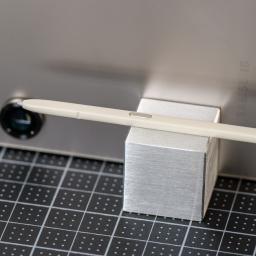 |
by Chris Welch on (#6TRC1)
The Ultra" model in Samsung's Galaxy S lineup is typically the phone crammed full of every feature the company could think of. But this year, the Galaxy S25 Ultra is actually taking a step backward with the S Pen. The motion gestures and useful remote camera shutter function have been removed, and the stylus is back to being just a stylus. You can still wave it around like a magic wand, but the phone won't do anything.During a media briefing on the new S25 series last week, Samsung explained that customers rarely ever used the Air action" gestures. So the company decided to try and cut costs by ditching them entirely. And no, the starting price of the S25 Ultra hasn't come down as a result. Samsung believes other hardware upgrades are more than enough to maintain the same $1,299.99 price. More comfortable phone. Less capable S Pen. I never bothered with the gimmicky gestures more than once or twice. But having a convenient (and subtle) way of taking a photo when the phone was positioned somewhere out of reach was very convenient.Samsung apparently thinks that the palm gesture - where the phone recognizes someone holding up their hand and automatically triggers the shutter - is a decent substitute. You can also control the S25 Ultra's camera with a paired Galaxy Watch. But I'd argue neither of those is as simple as pressing a button on the stylus. They're certainly not as inconspicuous if you're trying to capture a candid shot. (The S Pen's button still exists, but it's mostly there to bring up the Air command shortcuts menu.) Unlike past models, the S Pen can't trigger the S25 Ultra's camera. This less capable S Pen marks a surprising regression for Samsung's do-everything smartphone. However, the company seems hopeful that its Galaxy AI software capabilities will receive greater customer adoption. At least the handy screen-off memo feature isn't going anywhere.Photography by Chris Welch / The Verge
|
by Allison Johnson on (#6TRC0)
Stylus still included. The Galaxy S25 Ultra, announced today, sheds more of its Note roots this year with rounded corners and flat edges that align it more with the rest of the S series. It comes with Qualcomm's latest chipset, an upgraded ultrawide camera, and not much else, hardware-wise. With no price increase over last year's model - starting at $1,299 - it's a light refresh of Samsung's biggest phone, with a major emphasis on One UI 7.0's AI upgrades.Something about the shift from curved edges to flat sides makes the S25 Ultra look hefty in photos, like if the Cybertruck were a phone. But it's actually slightly smaller and lighter than last year's device, even with a bigger 6.9-inch screen thanks to slimmer bezels. It's equipped with a Snapdragon 8 Elite processor tuned for Galaxy devices - that's true for all S25-series phones sold in all regions, which hasn't been the case recently. And it still comes with one more strong spec: seven years of OS updates and security patches. Photo: Allison Johnson / The Verge Samsung rounded out the pointy, uncomfortable corners on the S24 Ultra and flattened the edges. There are some interesting things not on the Ultra this year, though. Bixby is no longer the default virtual assistant. It's still present and you can summon it through its own app. But Google Gemini will answer when you long-press the wake button on the side of the phone.The included S Pen, another holdover from the Note era, gets a bit of a downgrade. It no longer supports Bluetooth, so the air gesture controls that previous versions offered are gone. The S25 Ultra's included S Pen is just a basic stylus, no magic wand tricks up its sleeve. Bummer.Camera hardware is largely unchanged from the previous model, except for a new 50-megapixel ultrawide, replacing a 12-megapixel module. Samsung claims that an upgrade to the S25's algorithmic image processing has improved detail in zoomed images. On the video side, Samsung now offers a Galaxy Log profile along with a custom LUT. Photo: Allison Johnson / The Verge Gemini is the new default assistant. The most interesting changes are software-side in One UI 7.0. My colleague Dominic Preston has a good rundown of the new stuff as it also appears on the S25 and S25 Plus models. Unsurprisingly, it all has to do with AI, and much of it we were already familiar with thanks to the One UI 7.0 beta. But a couple of things made me sit up and pay attention.The first is the ability to use AI across apps to take action, like taking a picture of a flyer and having Gemini add the dates to your calendar and send your spouse an email about it. Maybe this doesn't sound like much, but some of us have to remember which day is crazy hair day" at preschool, when conferences are, and the deadline for signing up for this season's soccer class. A little help would be nice. This will first work across Google Workspace and Samsung native apps, with the addition of WhatsApp and Spotify.The other thing I'm interested to see in action is suggested routines. In theory, the S25 phones will be able to notice if there are certain settings you tend to use at the same time every day or under certain conditions - like turning Bluetooth on every time you get in the car and turning it off when you get out. When it sees a pattern, it should be able to suggest a routine to take care of those actions for you automatically. You'll be able to customize the routine parameters to your liking, but you won't have to go through the tedious work of setting it up from scratch. That could be cool!The thing is, this stuff isn't exclusive to the S25 Ultra or even the S25 series. Samsung smartphone product manager Blake Gaiser told me Samsung will bring its new AI features to older devices where possible. The company certainly seems committed to delivering those updates to older phones - but don't forget that they probably won't always be free.We'll find out soon enough whether this is the AI update that will finally deliver on the promise of AI on our smartphones; the Galaxy S25 Ultra and its S25 siblings ship on February 7th.
by Dominic Preston on (#6TRBZ)
The Galaxy S25 (left) and the S25 Plus (right). If the Galaxy S24 series heralded the triumphant arrival of Galaxy AI, then the S25 and S25 Plus may be a bit of a comedown: they promise more AI that's smarter and sometimes slightly faster. You'd better like it because that's pretty much all you're gonna get.Samsung changed as little as it could on the Galaxy S25 and S25 Plus, announced today alongside the larger and redesigned Galaxy S25 Ultra. There's the obligatory jump to a new chipset - in this case, Qualcomm's custom-tuned Snapdragon 8 Elite for Galaxy, included in phones worldwide this time around - and a welcome decision to offer 12GB of RAM as standard on every S25 phone, pulling the base model in line with the others. Samsung hasn't changed the look of the Galaxy S25 and S25 Plus. The displays are the same as last year: 6.2 inches on the S25 and 6.7 inches on the S25 Plus, peaking at 2,600 nits of brightness and 120Hz refresh rate. The cameras are identical, too. There's a 50-megapixel main camera, an ultrawide, and a 3x telephoto, with a familiar 12-megapixel selfie shooter on the front.If you were to upgrade from last year's Galaxy S24 Plus to this year's model, the only spec that would change is the chipset. Well, that and the fact that the new phones are Qi2 Ready" - they don't have the magnets that Qi2 certification requires, but they'll charge at up to 15W on a Qi2 charger when paired with Samsung's official Qi2 Ready magnet cases. Samsung hasn't changed the camera hardware at all from the S24 and S24 Plus, though the thick black bezel is new. Both S25 phones are thinner than their predecessors. Perhaps I'm being a little unfair. Samsung hasn't increased its prices at least - the S25 starts at $799.99 and the Plus model at $999.99, with preorders open now ahead of a full launch on February 7th. It's also maintaining its promise of seven generations of Android updates and seven years of security support.Both phones are lighter than their predecessors and almost half a millimeter thinner. That should ease the disappointment of anyone who's been hoping for the launch of the rumored S25 Slim, which is now tipped not to launch in the US at all. But it's still hard to avoid the inevitable conclusion: this year is a software update, not a hardware one.The new Galaxy phones are awash with AI-branded features - which Samsung says remain free to use this year, though its plans are unclear beyond that. Plenty of them have been here since last year, like Google's Circle to Search or generative photo editing tools that let you draw elements into photographs or remove distracting people and objects. Those now generate better results in less time, helped by improvements in AI models and the move to the Snapdragon 8 Elite, which handles more AI processing on-device, including previously cloud-based tasks like Generative Edit.Audio Eraser is a built-in tool for video editing that lets you remove or reduce video noise across specific categories - think voices, music, wind, crowds - to focus on whichever sounds you care about. It works well, but it's only new to Samsung: Google Pixel phones have been able to do the same thing through Audio Magic Eraser since the Pixel 8. AI Select replaces Smart Select in the Edge Panel menu. Other AI abilities are just as familiar, but we didn't always call them AI. Take AI Select, accessed from Samsung's Edge Panel, which gives suggested actions" like cropping and sharing screenshots, creating GIFs from videos, or adding events to your calendar. It replaces Smart Select, which did most of that, too, but with a different design.The S25 phones also offer a daily summary called Now Brief that lets you know what's on your calendar for the day or how your commute looks, bringing us back full circle to 2012's Google Now. Meanwhile, the Now Bar is Samsung's answer to Apple's Dynamic Island: a lockscreen element that can show sports scores and Google Maps navigation instructions or tell you what song is playing. It sounds useful, but is it AI? Apple didn't think so. Gemini is now the default AI assistant on the phones. RIP Bixby. Some of the new features represent more meaningful progress. The phone's AI assistant - which is now based on Google Gemini by default, with Samsung's own Bixby relegated to access through its app - can control your phone with natural language requests. Ask it to make text bigger or find photos from your last holiday, and it should oblige. Gemini can now also work across multiple apps in a single interaction, though this upgrade isn't exclusive to Samsung. It might look up a good restaurant and share it with your friend or pull up sports fixtures and add them to your calendar.The problem for me is that most of these features are hard to test in-depth when you're at a launch event using a phone that isn't yours, has few apps installed and no accounts signed in, and might have only been set up for the first time that morning. We'll have a better sense of how effective Samsung's new AI features are when we can actually use the S25 and S25 Plus for an extended run in our review.The problem for Samsung is that, until then, it's not clear what here should tempt anyone into upgrading. Many of these AI and software features are baked into One UI 7 itself and should roll out soon to owners of the S24 and older models. If the hardware's hardly changing, and the software's coming to your phone anyway, what's the incentive to upgrade?Yesterday, my colleague Allison Johnson wrote that Samsung needs to give us a reason to care about new phones every year. On the strength of the S25 and S25 Plus, I think it's fair to say that it hasn't.Photography by Dominic Preston / The Verge
 |
by Allison Johnson on (#6TRC4)
We're expecting the Galaxy S25, S25 Plus and S25 Ultra, and new AI features. Samsung is announcing its new Galaxy S25 phones. We'll have all of the updates as they come in, but, as you can see below, we had a lot of this embargoed and got an early look.But there may be some surprises! You can tune in to watch the event in the video below once everything gets started at 1PM ET / 10AM PT.Expect Samsung to talk about AI. It's the thing tech companies love to talk about as much as possible. Probably because they're all spending a lot of money on it. Google, Apple, Microsoft, and others have used similar events to chat about how they're implementing AI into their software, for example.Whatever comes up, we'll have it all here.
|
 |
by Wes Davis on (#6TRC5)
Image: Cath Virginia / The Verge The NFL told the New England Patriots to shut down the team's Bluesky account. Patriots VP of content Fred Kirsch said the team was told that Bluesky is not an approved social media platform for the NFL yet," addressing a fan question on a January 16th episode of the Patriots Unfiltered podcast, as spotted by Awful Announcing.Kirsch said the team briefly" had a Bluesky account before the league asked it to take the account down. The NFL told Front Office Sports in November it was aware of Bluesky but had no presence there, Awful Announcing notes. The league did not immediately respond to our request for comment.Football teams are allowed to post on other platforms, including X, which the NFL has a content partnership with that includes the NFL Portal" that X CEO Linda Yaccarino revealed in October. The league also has a content deal with Reddit and a heavy presence on Threads and other Meta-owned platforms.Bluesky has been growing steadily, with some occasional recent spikes in signups. The platform is closing in on 29 million users as of this writing, nearly doubling where it was two months ago. Whether that's enough for the NFL is an open question, but Front Office also reported Bluesky was working to get leagues on board with the platform. The Patriots are ready to go" whenever it does, Kirsch said on Patriots Unfiltered.
|
 |
by Chris Welch on (#6TR89)
Illustration: Cath Virginia / The Verge; Photo: Getty Images Elon Musk doesn't miss an opportunity to take a dig at OpenAI - even when the news item in question is supposed to be favorable to President Trump. Just a few hours after yesterday's White House presser on The Stargate Project wrapped up, Musk posted on X that they don't actually have the money."Softbank, OpenAI, Oracle, and MGX have committed to deploy" $100 billion now and $500 billion toward the AI data center company over the next four years.But Musk, who now has wide-ranging clearances and reportedly even his own office inside the Trump White House, seems doubtful. SoftBank has well under $10B secured. I have that on good authority," he added. The Japanese CEO and billionaire investor is the former owner of WeWork and Sprint and the current owner of Arm, and there have been reports for the last year that, along with Altman, he's been chasing funding to invest in an AI chip venture.
|
 |
by Quentyn Kennemer on (#6TR8A)
The LG C3 can easily last several years as your home theater's centerpiece. | Image: LG If you're spending more time indoors to escape the icy winds or need something impressive to enjoy the Super Bowl, a new TV might be in order. Although it's a couple of years old now, the LG C3 is still one of the best 4K OLED TVs you can buy, and it's a bit cheaper today at Amazon and Walmart. They're selling the 65-inch model for $1,196.99 ($302 off), which is matching its all-time low price.The LG C3 offers a great picture quality with vivid color, no light blooming or bleeding, and deep, inky black levels for a practically infinite contrast ratio. If you somehow haven't seen how good an OLED panel can look yet, then a trip to Best Buy is in order. It appeases most home theater and gaming needs with a 120Hz variable refresh rate and auto low-latency mode across all four of its HDMI ports, Dolby Vision and HDR 10 Plus, Dolby Atmos audio, and an incredible upscaling engine that can make older content look fantastically sharp.You're not missing out on much by skipping the LG C4, either, and the incoming C5 may not have enough to justify waiting and paying significantly more. LG advertises a substantial brightness boost in the newer models, but in reality, the C4's panel doesn't blow the C3 out of the water. The C4 is also capable of a higher 144Hz refresh rate, though that's a largely discernible jump that's only relevant for PC gamers. Both run webOS, which offers a deep selection of apps for gaming, music, and video with voice-activated content discovery.More ways to save
|
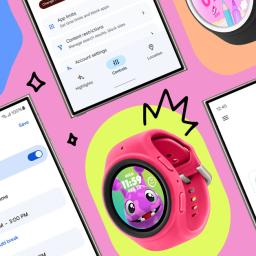 |
by Victoria Song on (#6TR8C)
The new Galaxy Watch for Kids mode is enabled in Wear OS via Google Family Link. | Image: Samsung, Google Samsung dropped some wearable news ahead of its Unpacked event later today: parents can now use the cellular Samsung Galaxy Watch 7 as a smartwatch for their kids.With a new Galaxy Watch for Kids mode, children can use the smartwatch to call and text trusted contacts, while parents can also track their kids' locations via GPS. The option starts rolling out today and will work on Verizon, T-Mobile, and AT&T networks.The good news is parents won't need a separate smartphone for this to work. Instead, it's similar to Apple Family Setup, where parents use their phone to pair and set up the smartwatch before programming guardrails through the Google Family Link app. Parents can control which apps can be downloaded to the device, locate misplaced watches, and specify their children's contacts for texting and calling. In an emergency, kids can also access emergency SOS features by pressing the side button five times. As with other children's smartwatches, there's a School Time mode that limits features during school hours.In a keyword blog, Google also notes that kids can download 20 teacher approved" apps and watchfaces from the kids section of the Google Play store. They include Barbie, Marvel, and Rubik's Cube-themed watchfaces and educational games from PBS Kids and Crayola. Other third-party apps are available for download but require parental approval.Samsung isn't reinventing the wheel here - it's playing catch-up. Apple first introduced Family Setup for its smartwatches in 2020, and last year, Google launched the Fitbit Ace LTE, a revamped kids GPS tracker with Pixel Watch hardware and a focus on educational gaming.Meanwhile, this has been a feature that parents have been asking for in subreddits and Samsung customer forums. Previously, it was possible to set up Galaxy Watches as standalone devices with cellular service for kids, but it required parents to be a bit more tech-savvy in figuring out location tracking, phone setup, and parental controls. This new mode streamlines everything into a more accessible format, though it is only limited to the Watch 7.We've asked Samsung if it plans to introduce the feature to LTE version of the budget Galaxy Watch FE but did not immediately receive a response.
|