 |
by Jay Peters on (#6TFSE)
Image: Epic Games Fortnite Festival, the game's Rock Band-like music mode where you play along with real songs, is getting local multiplayer for up to four people on PlayStation and Xbox on January 14th.Currently, you can only play Fortnite Festival multiplayer online, but with this change, you'll be able to get your former Rock Band back together and jam out on the same TV screen - well, with a major asterisk. Fortnite Festival currently only supports certain Rock Band guitar controllers, so if you're on vocals or drums, you'll be relegated to playing on a controller.Epic Games didn't immediately reply to a request for comment about when drum kit or microphone support might be added to Fortnite Festival.The new local multiplayer mode is being added as part of season 7 of Fortnite Festival. The featured artist for the season is rumored to be virtual pop star Hatsune Miku - and Epic Games is has already dropped a hint that she might be joining Fortnite soon.
|
The Verge
| Link | https://www.theverge.com/ |
| Feed | http://www.theverge.com/rss/index.xml |
| Updated | 2026-10-27 16:34 |
 |
by Umar Shakir on (#6TFSF)
Image: Cath Virginia / The Verge, Getty Images Tesla issued a recall for over 200,000 electric vehicles due to an issue with its latest computer hardware that can short circuit and disable some safety features including the rearview camera.Tesla submitted the recall on January 6th, which acknowledges faulty computers are in some of the most recent builds of Model 3, Model Y, Model S, and Model X vehicles. It includes ones with manufacturing dates ranging as early as January 25th, 2023 for some Model Xs, and as late as December 16th, 2024 for some Model Ys (with other models overlapping in between).The latest recall is due to non-compliance with the National Highway and Traffic Safety Administration (NHTSA), which has stringent rules on rearview camera reliability. Tesla issued a separate recall for problematic rearview cameras in January 2024 and one for Cybertrucks with laggy rearview cameras in October. Both were fixed with over-the-air (OTA) software updates.Tesla is again leveraging its OTA abilities to remedy this new recall, which started rolling out on December 18th and was added to newly manufactured vehicles on December 16th, according to the safety recall report.But as Electrek reports, the update can't fix the broader computer issue, which has been identified in 887 warranty claims and 68 field reports as of December 30th. The issues are reportedly affecting Tesla's latest HW4 (also known as AI4) computers, which are supposed to support the company's transition to full autonomy.Tesla says it will replace computers in cars that don't get fixed with the OTA update. But the company will undoubtedly need to replace them soon, especially if CEO Elon Musk wants to build out the robotaxi service he has promised for years.
|
 |
by Andrew Liszewski on (#6TFSG)
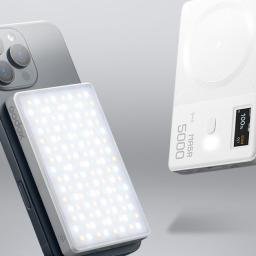
The Godox MA5R will be available for just $49.99. | Image: Godox Godox, a company known for its professional photography gear like flashes and reflective umbrellas, has announced a new lighting product for smartphones. Its MA5R is a magnetic power bank with an array of diffused color-changing LEDs on the back that can improve phone photography while keeping battery anxiety in check. It's priced at $49, and while you can preorder it through online specialty stores, official availability isn't known.The MA5R attaches to MagSafe-compatible iPhones, smartphones supporting the Qi2 wireless standard, or mobile devices upgraded with a magnetic ring on the back. It can also be used handheld, but Godox didn't include a standard tripod mount for attaching it to stands - an odd omission given the company's lineup of pro gear. Image: Godox The MA5R uses color-changing LEDs to reproduce a wide range of colors and color temperatures. The accessory can be controlled through the Godox mobile app over Bluetooth, which allows its color temperature to be adjusted across a wide range - from 1800K (warmer) to 10000K (cooler) - so you can match the lighting in almost any environment. You can also opt for a wide range of colors if you're looking for a more dramatic lighting effect or choose one of 14 pre-programmed special effects," which could be useful when shooting video. Image: Godox The MA5R includes an additional smaller LED on the other side that can be used to improve the lighting of selfies. On the other side of the MA5R, next to its magnetic mount, is a small display showing battery life and lighting brightness. There's also a smaller front-facing LED light that can be used to improve selfies by rotating the accessory while it's attached to a phone. It offers a smaller range of color temperature adjustments between 2800K and 6500K.The added lights mean the MA5R is 13 millimeters thick, so it's not exactly going to disappear when attached to your phone. And it's only got a 5,000mAh battery inside. That's enough to keep its LEDs running for up to three hours, 40 minutes at full brightness or up to seven hours, 20 minutes at half brightness, but not quite enough to fully recharge many smartphones more than once.Wireless charging also stops while the LEDs are turned on, so maybe think of the MA5R's charging capabilities as a bonus feature for what looks like a solid portable lighting solution.
|
by Justine Calma on (#6TFSH)
National climate adviser Ali Zaidi | Image: Cath Virginia / The Verge, Getty Images Sure, President-elect Donald Trump is probably going to try to blow up efforts to tackle climate change as soon as he steps into office. There still isn't enough renewable energy available to reach US climate goals or even meet skyrocketing electricity demand from AI. And time is running out to spend down climate funds from the Inflation Reduction Act before the Trump administration can attempt to claw it back. Despite it all, Joe Biden's top adviser on climate change, Ali Zaidi, isn't sweating it.He's managed to keep the perhaps cloyingly upbeat optimism that's become a trademark of the Biden and Harris camp even when that enthusiasm doesn't necessarily reflect sentiment on the ground. The Verge spoke with White House national climate adviser Zaidi this week about what he sees ahead for clean energy technologies and where there might still be room for progress.This interview has been edited for length and clarity.You have a background in law. How did climate change become your thing?I came to the United States at the age of six, and for me, for my family, the story of America is the story of economic mobility. I really came to Washington wanting to work on putting more... Read the full story at The Verge.
 |
by Emma Roth on (#6TFP7)
Image: Cath Virginia / The Verge, Getty Images As wildfires continue to devastate parts of Los Angeles County, hundreds of thousands of residents are without power as utility crews work to restore connectivity. Mobile carriers are also taking action to keep their services online and provide relief to affected residents.Here's how major carriers are responding.VerizonIn an update on Thursday, Verizon said it will waive call, text, and data usage incurred by prepaid and postpaid customers in Los Angeles, Orange, Riverside, San Bernardino, San Diego, and Ventura counties from January 9th to the 18th. Verizon will automatically credit customers if they were billed for overages during this time.
|
 |
by Quentyn Kennemer on (#6TFP8)
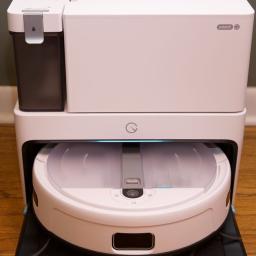
You'll only need to empty the Yeedi Cube's base every once in a while. It handles the rest. | Photo by Jennifer Pattison Tuohy / The Verge The Yeedi Cube doesn't have the modularity and extremities of some of the cool new robot vacuums we've seen at CES 2025, but the self-emptying, self-cleaning mopping robovac is also much more reasonably priced. It's even cheaper today at Amazon, where you can buy it for $299.99 ($260 off) when you clip an on-page coupon. That's the lowest price we've seen yet on the budget robovac.The Yeedi Cube can capably map and remember several rooms, including designated no-clean zones that you can set within the mobile app. While it doesn't have AI-powered obstacle avoidance like some of the pricier robots we test, we found its laser-based navigation system works well enough to traverse floors that don't have laundry, clothes, or pet waste strewn about. And if it does get stuck, you can easily pick it up and reposition it thanks to an integrated carrying handle and a dedicated spot clean button.While we wish it had better brushes (it can get easily tangled with pet hairs), its 5,100Pa suction is good enough to lift loose dirt, cereal, and the like. It also has a one-liter fluid tank and vibrating microfiber pads that can mop hard flooring with great effectiveness. The do-it-all robovac can also empty its own dust bin and water tank, and clean and dry itself at the charging base.More Friday deals to shop
|
 |
by Umar Shakir on (#6TFP9)
Image: Cath Virginia / The Verge, Getty Images Schools across the US and Canada are warning parents that a data breach may have leaked information for students and employees. The K-12 operations platform PowerSchool, which supports over 60 million students and has over 18,000 customers worldwide, suffered a breach that could've exposed names and addresses of students and educators and, in some cases, more sensitive information like Social Security numbers, medical information, and grades.As initially reported by Bleeping Computer, threat actors got into PowerSchool's support platform using compromised credentials. PowerSchool told Bleeping Computer that only a subset" of schools are affected but has not provided a count of affected school districts or people. Additionally, the outlet says that in a note provided to its customers, PowerSchool claimed it paid a ransom request and ...has received reasonable assurances from the threat actor that the data has been deleted and that no additional copies exist."PowerSchool's website and social media channels have no mention of the data breach or directions for people who may have been affected.In an email to The Verge, PowerSchool spokesperson Beth Keebler wrote that the company became aware of a potential cybersecurity incident" on December 28th and has taken all appropriate steps to prevent the data involved from further unauthorized access or misuse." Keebler also wrote:
|
 |
by Andrew Liszewski on (#6TFPA)
Valerion's VisionMaster Max projector at the company's CES 2025 booth. | Image: Valerion Valerion announced a new feature for its VisionMaster Max projector at CES 2025 that will improve setup flexibility. The company will offer alternate lenses for the projector - a feature typically only offered on professional-grade home theater hardware - that can be swapped by users to change the size of the image it produces or how far it can project. That will accommodate a wider range of installations, from smaller living rooms to spacious dedicated home theaters, without sacrificing image resolution.The VisionMaster Max was originally announced at IFA 2024 by Valerion, which is a sister brand to AWOL Vision that focuses on ultrashort throw (UST) projectors. The brand's VisionMaster line debuted through a Kickstarter crowdfunding campaign last October, including the Max model, which offered an optical zoom feature that allows it to project images from 40 to 300 inches in size. Image: Valerion The VisionMaster Max may not look compact, but it's relatively small given it incorporates a pair of 12-watt speakers. The swappable lenses are a new feature for the projector, which is now available for purchase for $3,999. Valerion hasn't announced which additional lens options will be available for the VisionMaster Max or how much they'll add to the price. The stock lens has a throw ratio of 0.9-1.5:1, while Valerion was showing off an alternative with a 1.3-2.1:1 throw ratio - better for use in larger rooms - at CES, according to New Atlas.The upgraded version of the VisionMaster Max offers the same features and functionality as the one announced at IFA. It's a 4K triple laser projector capable of producing 3,000 ISO lumens of brightness, according to Valerion, and has the ability to upscale lower-res content using AI. It supports the IMAX Enhanced, Dolby Vision, and HDR10 Plus standards and includes a low input lag mode for gamers with refresh rates up to 240Hz when stepping down to a 1080p resolution.The VisionMaster Max is an all-in-one projector, so it includes a pair of 12-watt speakers with support for DTS:X and Dolby Audio. It's got three HDMI ports, including one with eARC support. In addition to Wi-Fi and Bluetooth, it can be connected to the internet using an ethernet cable if the wireless internet signal in your home theater is problematic. And the projector runs Google TV, so you can install apps for various streaming services, including Netflix, Disney Plus, and Amazon Prime Video.
|
 |
by Andrew Webster on (#6TFJQ)
Image: Snowman For me, skateboarding has always been about getting into a flow state. Much like playing Tetris, I'm at my best when I'm skating almost subconsciously, not thinking and acting in the moment. It's not an easy zone to get into, and music has always been my shortcut. So the greatest compliment I can give to Skate City: New York is that I've spent the past week fine-tuning the perfect playlist, all so that I can also perfect my runs in the game.New York is a sequel to the original Skate City; both are available through Apple Arcade, though the first game was eventually ported to consoles as well. It comes from Snowman, the studio behind the Alto series, and the shift to New York is a lot like the move from Alto's Adventure to Alto's Odyssey. It's not an entirely new experience but, rather, one that changes the setting and adds some seemingly small - but very impactful - tweaks.What makes the series so well suited to mobile is the way it balances approachability and depth. Skate City is extremely easy to pick up. It's a side-scrolling game, so you're always moving left to right, and all of the various tricks and moves are performed either by a swipe, tap, or hold. It all feels... Read the full story at The Verge.
|
by Lauren Feiner on (#6TFJR)
Illustration by Cath Virginia / The Verge | Photo from Getty Images One last chance before the divest-or-ban law takes effect on January 19th. TikTok has just over a week before it's forced to either separate from its Chinese parent company ByteDance or functionally cease operations in the US. An appeals court upheld a divest-or-ban law, but the Supreme Court offers one final chance for the company and its users to make their case. The court is expected to issue a decision quickly after its January 10th oral arguments on whether to at least temporarily block the law.President Joe Biden signed the Protecting Americans from Foreign Adversary Controlled Applications Act - which passed with bipartisan support - last year, but it will take effect just one day before he hands power to President-elect Donald Trump, who has made frequent but nebulous promises to avoid a ban. Trump filed a surprise brief urging the Supreme Court to delay enforcement until he could broker a deal - though it's unclear if the Chinese government would approve one.
 |
by David Pierce on (#6TFJS)
Image: Alex Parkin / The Verge CES is a TV show. And a car show. And a wearables show. And this year, oddly, kind of a pool-vacuum show? It is the biggest, most elaborate, most bizarre tech show of the year, during which practically the whole industry flies to Las Vegas to show off new stuff and make big deals.On this episode of The Vergecast, a special live edition of the show from the Brooklyn Bowl in Las Vegas, we talk through as much of it as we can. (Thanks to everyone who came out, by the way! So much fun to get to see and hang out with all of you.) We actually begin the show with a story that didn't start at CES but took over the week anyway: Meta's about-face on fact-checking and content moderation. After that, we get into Samsung's new Frame Pro TV, the end of Dell's XPS brand, Sony's bizarrely expensive Afeela car, and more.After that, The Verge's Allison Johnson, Jennifer Pattison Tuohy, and Victoria Song join us onstage to talk about what they saw at the show. We talk about phone toasters, robot vacuums, smart locks, smart glasses, Max Ink Mode, and lots more. Will anything we saw this week ever ship, and will any of it be any good? Who knows! But that's the fun of CES. It's a fever dream, a... Read the full story at The Verge.
|
 |
by Jess Weatherbed on (#6TFJT)
A Super Scooper drops ocean water on the Palisades fire. | Brian van der Brug / Los Angeles Times via Getty Images An aircraft helping to fight wildfires that are raging across Los Angeles was struck by a civilian drone on Thursday. The collision damaged the wing of the aircraft - a CL-415 Super Scooper" capable of scooping up 1,600 gallons of ocean water to drop onto nearby blazes - according to a statement by the LA County Fire Department posted on X, putting it out of service until it can be repaired.Cal Fire spokesman Chris Thomas told The New York Times that grounding the aircraft will likely set back local firefighting efforts. Super Scoopers can typically refill in about five minutes. But even if it takes ten, that's six water drops that are lost each hour according to Thomas. So whose house is not going to get that water to protect it?" The Federal Aviation Administration (FAA) says the Super Scooper landed safely after the drone impact, and that the incident is now under investigation.Temporary flight restrictions have been implemented in the Los Angeles area that prohibit drones and other aircraft from flying without FAA authorization in an effort to protect firefighting efforts.According to LA County Fire Chief Anthony Marrone, the drone was not assigned to help tackle the Palisades fires, and was destroyed in the collision. Marrone told the LA Times that the FBI is now planning to implement so-called aerial armor" in the area to prevent further interference from drones.Several people online have violated the FAA-enforced flight restrictions, posting viral drone photos and video footage across social media showing the devastation from what appears to be prohibited airspace. Fire response agencies are often forced to ground their own aircraft to avoid collisions when dummies fly drones near wildfires for online clout.It's a federal crime, punishable by up to 12 months in prison, to interfere with firefighting efforts on public lands," the FAA said in a statement. Additionally, the FAA can impose a civil penalty of up to $75,000 against any drone pilot who interferes with wildfire suppression, law enforcement or emergency response operations. The FAA treats these violations seriously and immediately considers swift enforcement action for these offenses."
|
by Emma Roth on (#6TFJV)
Image: Cath Virginia / The Verge Venu, the live sports streaming service from ESPN, Fox, and Warner Bros. Discovery, isn't happening. In a joint statement on Friday, the three companies announced the decision not to move forward with the contemplated joint venture:"
by Antonio G. Di Benedetto on (#6TFJW)
Lenovo's rollable laptop stole the show, but there are a bunch of upcoming models I'm excited to test when the time comes. | Photo by Antonio G. Di Benedetto / The Verge The new CPUs, GPUs, and laptops announced at CES this week set the tone for Windows computers in the year to come - and so far, 2025 is looking pretty promising. There are a bunch of new notebooks I'm excited to test out when they come around, many of which are gaming-focused since the launch of Nvidia's RTX 50-series cards is ushering in an onslaught of graphics-heavy refreshes and upgrades.There are many new laptops coming from Dell, Alienware, Asus, Acer, Lenovo, MSI, and Razer. Many may just boil down to chip bumps and slight refreshes, but there are some that are betting big on new ideas, thinness, raw power, and over-the-top accouterments. Here are the ones I'm most excited for.Lenovo ThinkBook Plus Gen 6 Photo by Antonio G. Di Benedetto / The Verge I've already written and said a lot about Lenovo's concept-turned-buyable-product that is the ThinkBook Plus Gen 6. It's the coolest laptop we saw. It's our outright best in show for CES 2025. And it's also possible when it comes time to review one later in the year that the challenges of Lenovo trying to graft software functionality for its rollable display onto Windows may be a bridge too far.But the... Read the full story at The Verge.
 |
by Dominic Preston on (#6TFJX)
Illustration: The Verge Meta's popular messaging app WhatsApp is testing a new design that gives prominent space to a suite of AI chatbots. The design, currently only accessible through the app's Android beta, adds a dedicated tab for AIs on the app's homescreen.WABetaInfo spotted the change, which devotes one of WhatsApp's four tabs solely to its AI features. It includes a selection of Popular AI characters" to talk to, along with others organized by subject matter. Other AI-powered features within WhatsApp include AI-generated images and stickers and a search tool using Meta AI.These AI tools and chatbots aren't new to WhatsApp, though they're only available in the US and certain other countries, and a limited selection of languages. They're currently accessed through the app's primary Chats tab, but this update looks to give them more prominence. Image: WABetaInfo The exciting AIs that WhatsApp wants you to chat with. The app is also experimenting with expanding the range of AI bots by adding the option to create personalized AI characters, which WABetaInfo found in a separate beta update today. Meta already offers the ability to create custom AI bots, but only through an AI Studio on the Instagram website. Adding the option directly into an app is a significant simplification of the process.The new AI tab replaces the existing Communities tab, though that functionality isn't going anywhere. A previous beta version earlier this week introduced a streamlined" version of Community creation within the Chats tab.The WhatsApp beta is available through Google Play, though tester numbers are limited and the option to join is currently unavailable. We don't know if or when the AI tab will be added to the app's live build, but the change is likely to be limited only to those countries where the AI features are already available.
|
by Verge Staff on (#6TFG2)
Image: Samar Haddad for The Verge Fluffy robots, portable TVs, and vacuums with arms and legs. This is what we come to CES for. Read the full story at The Verge.
by Victoria Song on (#6TFG3)
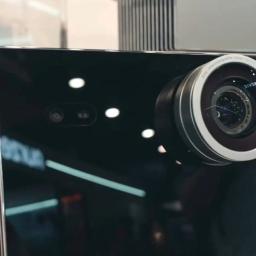
Smart glasses were everywhere on the show floor this year. | Photo by Antonio G. Di Benedetto / The Verge At CES, the next generation of eyewear was everywhere. It's just no one seems to agree on why we want it or what's the best approach. It's the second day of CES, and I'm waiting in a line to see my tenth pair of smart glasses. I honestly don't know what to expect: I've seen glorified sunglasses with dubious ChatGPT clones. I've sidled up to several booths where the glasses were almost carbon copy clones of the pairs a booth over. I've seen all manner of displays" tacked onto the lenses, some washed out, others so tedious to calibrate as to make me walk away.So when I slipped on the Rokid Glasses, I felt my brows raise. I could see what looked like a mini desktop. I swiped the arm, and horizontal list of apps appeared. Green writing appeared in front of me a bit like a monitor in The Matrix. A Rokid staffer began speaking to me in Chinese, and despite the surrounding din, I could see a text translation of what she was saying float in front of me. After a brief conversation - she asked whether I ate lunch, she hadn't - she prompted me to try taking a picture. The display shifted to what looked like a camera's viewfinder. I hit the multifunction button. An animation flashed. On her phone, I saw the picture I took.Holy crap,' I thought. So this is what the Ray-Ban Meta smart glasses would be like with a display.' And then - If this is possible, why doesn't it have one yet?'The three types of smart glassesIt seems that everyone is still trying to figure out what makes the perfect pair of smart glasses. I must have tried out 20 pairs over the course of the last week, but they all seemed to fall into one of three different buckets in how they balanced wearability and functionality.The first bucket is the simple and stylish glasses. The more stylish and comfortable smart glasses are, the fewer features they tend to have. But for this group, that's often a good thing.Take the unassuming Nuance Audio. These smart glasses - made by EssilorLuxxotica, Meta's partner in making the Ray-Ban Meta eyewear - discreetly function as over-the-counter hearing aids. When you wear them, you can dampen some of the noise around you, as well as amplify the voice of the person you're speaking to. This would sound like science-fiction if I hadn't tried it myself.But at a glance, you'd never know the Nuance Audio glasses can alter how you hear the world - and that's precisely the point. They look like any pair of stylish glasses and come in two colors and three shapes. By hiding" their smarts in a normal-looking pair of glasses, they're essentially helping to reduce the discomfort some people feel when wearing visible hearing aids. It's not flashy, but it's a precise and clear use case.The Chamelo glasses take a similar tack. The smart" part of these electrochromic sunglasses can, depending on the model, change the color or tint with a swipe of a finger. Some models also have Bluetooth audio. Chamelo's glasses aren't new, and at CES, they weren't suddenly adding in AI assistants, displays, or anything wild. This year's update? Adding support for prescriptions so more people can use the device.Neither of these glasses is trying to reinvent the wheel. They saw a simple problem worth fixing, and decided to fix it. Nothing more, nothing less.
 |
by Chris Welch on (#6TFG4)
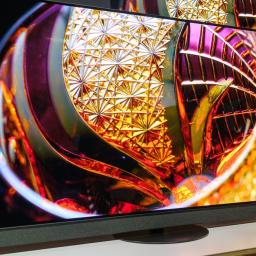
The company hasn't been back in the US TV market for long, but the Z95B OLED proves that Panasonic can hang with Sony, LG, and Samsung at the very high end. Panasonic returned to the US TV market last year, and only a matter of months later, I've convinced myself that its latest flagship OLED is the best TV of CES 2025. It's an impressive resurgence for a brand that many home theater enthusiasts remember for producing superb plasma sets back when those represented the creme de la creme of display technology for the living room. After a long hiatus, Panasonic is back in the game and squaring off with Sony, LG, and Samsung in the very premium (and very pricey) TV category.The company's new OLED, the Z95B, will come in three sizes: 55 inches, 65 inches, and 77 inches. It uses the latest and greatest OLED panel from LG Display, which is a new four-layer tandem structure that beats out the brightness of last year's LG G4 even without the micro-lens array technology that squeezed as much brightness as possible out of that TV. Last year's Z95A from Panasonic also used MLA, but the new approach gets better results and is cheaper to produce.So the panel is top tier and should be a formidable alternative to the QD-OLED display used in Samsung's respective 2025 flagship, the S95F. OLED TVs just keep getting brighter, more vivid, and dazzling - and consumers really can't go wrong with any of them. The Panasonic stopped me in my tracks on the show floor and looked phenomenal. I couldn't help but stare at it for several minutes. The Z95B also offers support for gaming at up to 144Hz, so it's a strong contender there as well, though both LG and Samsung stepped it up to 165Hz this year. Technics (another Panasonic brand) handled the audio tuning of the Z95B. Another thing that sets the Panasonic apart is its built-in Dolby Atmos speaker array. The drivers and sound performance have been tuned by Technics, with a badge that advertises as much. I really dig the fabric sides of this TV; it's a classy way of concealing the side-firing and upward-firing speakers.Yes, that audio hardware results in this being a thick set by 2025 standards - especially for an OLED. Panasonic didn't hold back in making the Z95B a hulking beast of a TV. But the good news is that many people won't need to bother with a separate soundbar since this system will (likely) sound so good. As noted by the excellent Caleb Denison at Digital Trends, the company has also reworked the TV's cooling system with a new heat dissipation technique that should help keep that four-layer OLED panel in tip-top shape over the long term. The TV has a built-in woofer and revamped heat dissipation system. This is not a thin TV. But in exchange, you might be able to skip a soundbar. But there is one glaring dilemma with Panasonic TVs: they run Amazon's Fire TV OS. That's rather unfortunate. It's my least favorite TV platform among the pack, and I'd argue Amazon has crossed the line when it comes to pushing ads on customers - even if the most egregious examples can be disabled in settings. Fire TV has some good ideas here and there; the ambient mode widgets are something Google has taken note of. But I really hope that Panos Panay and the Fire TV team take a sledgehammer to this software and come back with something much sleeker, more intuitive, and worthy of a TV that's certain to be very expensive if the Z95A is anything to go by.Even so, I know plenty of people who mostly ignore their TV's default software and use an Apple TV, Nvidia Shield, or some other streaming player as their preferred entertainment interface. With Samsung and LG both being very aggressive with the AI gimmicks this year, I anticipate seeing even more of that. The LG G5 will feature an LLM-powered chatbot, has an AI button on its remote, and even ships with Microsoft Copilot built in. It's getting to be a little much, no? Panasonic's using the very latest, very brightest LG Display with a four-layer tandem structure. To me, the best TV" of CES comes down to what kind of home theater experience it will provide. And Panasonic is already doing an impressive job keeping pace with Sony when it comes to delivering a living room centerpiece that nails both picture and sound. I wish the Z95B (and the company's 2025 Mini LED TVs) ran, well, any other TV operating system. But I don't think Fire TV OS is bad enough to sink this high-end set. If you disagree, at least it's relatively easy to just use something else most of the time. It's great to see Panasonic giving Sony, LG, and Samsung some premium TV competition. I can't wait to spend more time with the Z95B when it starts shipping later this year. More competition benefits everyone who's on the lookout for a new TV. Companies like TCL and Hisense have done a great job setting new expectations of what you can get for under $1,500. And now Panasonic's return is showing us what's possible for those with the means to splurge on their next big upgrade.Photography by Chris Welch / The Verge
|
 |
by Jess Weatherbed on (#6TFG5)
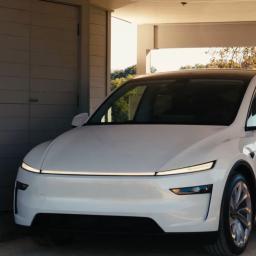
Image: Tesla Tesla has officially revealed the latest version of its Model Y crossover following images leaking online that teased the EV's redesign. Codenamed Juniper," the Model Y 2025 refresh is now live on Tesla's website in China and other Asia-Pacific markets with deliveries expected to begin in March.It's the most significant update to the Model Y design since it first launched in 2020, which became the first EV to top global car sales last year. Notably, the new variant launching in Australia clearly shows a physical turn signal stalk, which had otherwise been replaced by capacitive buttons on recent Teslas.The refresh comes after Tesla experienced its first year-over-year drop in sales since the company started mass-producing cars in 2012 - with CEO Elon Musk's antagonistic behavior suspected to have contributed to the decline. Image: Tesla Blessed be, is that a turn stalk I see inside the updated cabin? Good news for capacitive-button haters. There are two specifications of the Model Y available at launch according to the Chinese website listing. The 263,500 Chinese yuan (about $35,935) rear-wheel drive edition features an estimated range of up to 593 kilometers (about 368 miles), while the 303,500 Chinese yuan (about $41,390) long-range version can supposedly reach 719 kilometers (about 446 miles). These are estimated" ranges based on China's CLTC driving cycle standard, however, which Electrek notes isn't as strict as the US EPA system.
|
by Dominic Preston on (#6TFEB)
The Redmi Note 14 Pro Plus 5G launches in lavender purple, frost blue, and midnight black. | Image: Redmi Today Xiaomi's subsidiary Redmi brings its affordable Note 14 series to Europe, along with the Western debut of the Snapdragon 7s Gen 3. After launching in August 2024, the Qualcomm chip had to sit and watch while the flagship Snapdragon 8 Elite came along two months later, drew more attention, and even launched in a Western phone first in the form of this week's OnePlus 13. But the more affordable Snapdragon chip is now getting its dues.There are five phones in the Note 14 line, ranging from the 4G-only Note 14 up to the Note 14 Pro Plus 5G, the only phone in the series powered by the Snapdragon silicon. The entry-level chip in Qualcomm's Snapdragon 7 series, the 7s Gen 3 is a 4nm chipset that's most notable for making the jump to Arm's v9 CPU architecture, with a 2.5GHz Cortex-A720 core at the heart of the processor. The other four phones use a variety of MediaTek chipsets. Image: Redmi The Snapdragon 7s Gen 3 powers the Note 14 Pro Plus 5G. Starting at 399/499.90 (about $500), the Pro Plus is positioned as a natural competitor to Google's $499 Pixel 8A, but outpaces it comfortably in most hardware specs, with improved IP68 water-resistance; up to 12GB RAM and 512GB storage; and a larger, brighter OLED display protected by Corning's flagship-grade Gorilla Glass Victus 2. The big trade-off is on the software side, especially given that Google has guaranteed Android updates for the Pixel 8A until 2031.The other Note 14 phones offer a gradual drop-off in specs and connectivity. The Note 14 Pro 5G shares the Pro Plus model's display, 200-megapixel camera, and IP68 rating, but drops to a cheaper MediaTek 7300-Ultra chipset and slower charging. The regular Redmi Note 14 Pro is similar, but ditches 5G for 4G connectivity and is only IP64-rated. The Note 14 and Note 14 5G have reduced specs across the board - though the 4G model's IP54 water-resistance still impresses for a phone that costs less than half of a Pixel 8A. Image: Redmi The Redmi Note 14 4G is the cheapest model in the new series. All four phones launched in China and then India late last year, but today go on sale in ten European countries, including the UK and Germany. Somewhat confusingly, the European models have altered specs from their Asian counterparts - the Pro Plus 5G has completely different cameras and battery, for example - which isn't uncommon for Redmi.The Redmi Note 14 series already has stiff competition from within the Xiaomi family, after the similarly priced Poco X7 and X7 Pro launched globally yesterday. Those phones lean on IP68 ratings and big batteries - 6,000mAh in the Pro - in the effort to draw budget buyers away from Google and Samsung.
 |
by Jay Peters on (#6TF62)
This is the alert that inadvertently went out to everyone in LA County. | Image: The Verge After two days of dealing with wildfires that have burned thousands of acres, residents across Los Angeles County received a wildfire evacuation alert on Thursday afternoon that was a mistake. Shortly after, officials sent a follow-up alert saying that the notice was intended only for people near the Kenneth Fire in Woodland Hills.Los Angeles County shared a message on X explaining what happened: An evacuation order for residents near the Kenneth Fire currently burning in West Hills was mistakenly issued Countywide. This alert was only intended for residents of Calabasas and Agoura Hills."CBS News quotes a local official who said that the alert, which included a broken URL, was sent due to a technical error." Image: The Verge This is the alert to disregard the other evacuation warning. Many wildfires are burning in the LA area, and officials have confirmed at least six deaths, CNN reports. LA County has a population of nearly 10 million people, which is the largest population of any county in the nation," according to the county's website.
|
 |
by Umar Shakir on (#6TF63)
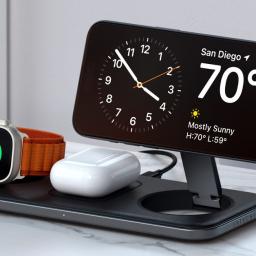
Image: Satechi Apple acknowledged issues with the reliability of the iPhone's built-in alarm feature last April after a report by NBC's Today morning show and said it was working on a fix, but some people are still having trouble. Android Authority points out this Reddit post by bryanlolwut in the r/iPhone subreddit from Wednesday with a picture of an iPhone with an Alarm set for 10:30, but the alarm goes off at 12:42 instead - the time displayed on an Apple Watch.Late into Thursday, many Reddit users are still commenting on the thread, saying they're having similar issues.My morning alarm was displaying as going off while making no sound and no haptics for 40 minutes," said Slawek_Zupa. Another post says their alarm went off at 5PM when it was supposed to go off at 7AM.The reports in the thread today include people still using iOS 17 and others who have updated to iOS 18 with Apple Intelligence.Some say they've tried turning off Apple's Attention Awareness Features, which can reduce the alarm volume when it goes off if the iPhone detects your face. However, it hasn't solved the problem for many, and you lose out on features like seeing full notifications on your lock screen.We've asked Apple if they're still looking into this problem, but we have not received a response yet. Personally, I've also noticed my iPhone sometimes doesn't make sounds or vibrate in the morning, but it does drop down a lifeless notification as if it did. Luckily, I've got a Google Pixel 8 Pro as a backup that usually gets me going, and I'm trying the Nintendo Alarmo, too, but my wife has had enough of Zelda yelling at Link to wake up.
|
by Thomas Ricker on (#6TF4J)
Hot dog and eagle, sold separately. | Image: Micro Micro - maker of those electric bubble cars found in some European cities - has a new Microlino especially for Americans. The all-electric Microlino Spider is dubbed the anti-pickup truck" and is meant to be a golf cart replacement. No, not for use on fairways, but at expansive resorts and so-called golf cart communities where well-heeled urbanites can retire in the relative safety of walkable villages with low-speed roads.Americans don't just drive large cars. In fact, the US is the world's biggest market for golf carts, where they're often used for personal transport within neighborhoods," says Wim Ouboter, founder and chair of Switzerland-based Micro. That's exactly why we created the Microlino Spider."Consider it the antithesis to massive electric pickup trucks - not built for the 5 percent of trips where you need to haul a lot," says Ouboter, but for the 95 percent of trips where you are alone."The Microlino Spider features an open-door and roof design to make it easy to jump in and out from the sides. That's a marked departure from the highway-legal Microlino Dolce I reviewed last year, or the slower Lite version that only requires a moped license - both of which you enter through the vehicle's hinged face to the delight of onlookers.
 |
by Emma Roth on (#6TF4K)
Illustration: The Verge Google is partnering with The Linux Foundation to launch an initiative meant to fund open development and enhance projects" in the Chromium ecosystem, according to an announcement on Thursday. The fund, called Supporters of Chromium-Based Browsers, is billed as a neutral" space to support Chromium projects.Google launched Chromium alongside its Chrome web browser in 2008. It's the open-source infrastructure that powers Chrome and many other browsers built on it, including Microsoft Edge, Opera, and Brave.In addition to Google, there are already several notable companies on board with the initiative, including Meta, Microsoft, and Opera. Microsoft said joining will help provide clear and open governance that directs funds towards community-driven needs." Image: Google Google's contributions to Chromium. Google also highlighted the more than 100,000 commits it made to Chromium last year, as well as its efforts to invest heavily" into the open-source project:
|
 |
by Andrew J. Hawkins on (#6TF4M)
Image: Vjeran Pavic / The Verge I'm not saying I want to buy one. I'm just very curious to see where this is going. Honda released one of the more interesting concepts at last year's CES with two Honda Zero prototypes: the Saloon and the Space-Hub. It promised to come back in a year with something a little closer to production. But rather than temper those space-age design elements, Honda leaned into them. Way in.The Honda 0 Saloon and Honda 0 SUV retain a lot of what made the concepts so weird and different - and not necessarily in an off-putting way. But it's definitely not the electric CR-V that customers have been begging the company to make for years. In fact, Honda seems to be saying to all those people who want normie-looking EVs, We see you. We hear you. We don't care." Much has already been said about the similarities between these Honda Zero prototypes and certain iconic vehicles from the '70s and '80s, like the Lamborghini Countach, AMC Gremlin, Aston Martin Lagonda Shooting Brake, and (h/t Jason Torchinsky) the Brubaker Box.My theory is that Honda is reaching for these design inspirations as a way to offset the future shock of an ultra-minimalist interior and all the marketing speak about software-defined vehicles." After all, Honda's real announcement this year was the operating system it developed in-house, named after its iconic Asimo robot.The Zero EVs mostly feel like a lot of window dressing for the actual product, which is software. What better way to draw people into listening to a TED talk about high-performance system-on-a-chip" than to stand in front of a car that looks like it should be floating in low orbit?Honda 0 SaloonOne of the things I noticed about the Saloon was the lack of a rear window - that rounded rectangle in the back isn't transparent. The depth effect is very impressive, but it's not obscuring an incognito window. It's just the taillight.Something else that caught my attention was the lack of sideview mirrors. Honda is using cameras instead. Drivers who want to check their blind spots will need to use two screens embedded at either end of the long piece of glass that spans the length of the dashboard. Of course, US safety regulations require regular old sideview mirrors, so this seems mostly aspirational.Honda 0 SUVThe SUV is less out there" than the Saloon, and that probably means we're likely to see some version of it on US roads before the sedan. There's definitely a rear window, and the airiness of the greenhouse seems to allude to Honda Zero's design principles of thin, light, and wise."We don't have any specs for either vehicle, though Honda has said that its Zero EVs will draw from the automaker's Formula 1 racing experience. The automaker is also aiming for optimum battery efficiency through its e-Axle system consisting of a motor, inverter, and gearbox that convert electric power into energy for driving. Each EV is expected to have around 300 miles of range, which translates to an 80-90kWh battery.Other important details include an effort to consolidate electronic control units, similar to Rivian's recently relaunched R1 vehicles. By reducing the number of components and wiring, Honda is clearly trying to limit its costs in an environment where the price of production seems to be on the rise.InteriorThe absence of anything remotely resembling a physical knob or dial inside either vehicle is a pretty good sign that automakers continue to ignore the pleas of customers to stop porting every last bit of functionality through its digital interfaces. Yes, I'm an old man yelling at clouds, but for the love of god, give me something to twist or push. Trying to adjust the heat by tapping blindly at a smooth pane of glass while careening down a highway at 75mph isn't exactly my idea of a good time.The yoke is... a yoke. Automakers love their steering yokes! But when it comes time to actually put something into production, they mostly retreat back to wheel shapes. The moonroof is another one of those features that suggest thin" principles. And obviously, Honda's promise that its Zero vehicles will come with Level 3 autonomy, also known as hands-off, eyes-off" driving, needs a lot more explanation. What's the handoff between autonomous system and driver look like? And how will it account for our very human tendency to zone out when we're not actively engaged in driving?There are a lot of questions swirling around these vehicles! Will they ever go into production? There's a nonzero chance.
|
 |
by Emma Roth on (#6TF2A)
Image: The Verge xAI has released an iOS app in the US for its Grok chatbot, as spotted earlier by TechCrunch. The standalone app version of the chatbot, which xAI calls a beta, can perform the same functions as the one built into X, as it can field real-time information, answer questions, and generate images.xAI started testing Grok's standalone iOS app in December in a handful of countries. There's no word on when it may come to Android.Though Grok was initially only available to X Premium subscribers, the platform started letting all users access the chatbot last month, bringing it in line with other free-to-use chatbots like OpenAI's ChatGPT, Anthropic's Claude, Google Gemini, and Microsoft Copilot.As pointed out by TechCrunch, it seems xAI is also working on a dedicated Grok.com website that currently has a coming soon" message on it. After raising $6 billion in June, xAI reported another $6 billion funding round, including from strategic investors" like Nvidia and AMD.
|
 |
by Andrew Liszewski on (#6TF2B)
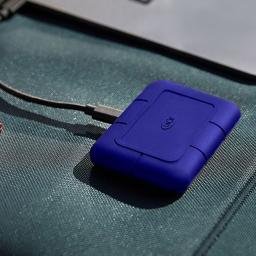
LaCie's new Rugged SSD Pro5 will be available in 2TB and 4TB capacities. | Image: Seagate Following the arrival of the first Thunderbolt 5 cables last July and the first Thunderbolt 5 dock last September, it might finally be time to start upgrading your external storage to take advantage of the increased performance. It's been a slow rollout for Thunderbolt 5 hardware following its official reveal in September 2023, but companies like Seagate, OWC, and Sabrent finally have SSDs en route supporting the new standard.Seagate announced its new Thunderbolt 5 LaCie Rugged SSD Pro5 external drive at CES this week. The company says it will be available sometime this month in a 2TB version for $399.99 and a 4TB version for $599.99. They'll offer read and write speeds of 6,700MB/s and 5,300MB/s, respectively. Image: Seagate Like previous LaCie rugged drives, the new SSD comes in a rubber enclosure in blue, black, and orange color options, helping it survive drops from heights of up to three meters. It's also waterproof with an IP68 rating, so it can survive a complete dunking to depths of one meter. Image: Sabrent There are a few other choices that have been announced, too, though with varying levels of availability. Sabrent, for example, was actually one of the first companies to announce a Thunderbolt 5 SSD last August, but the SSD isn't out yet. The Rocket XTRM 5 comes in a silicone sleeve for extra protection from falls, and the company says it can reach read and write speeds of 6,000MB/s and 5,000MB/s, respectively. It's expected to be available in 1TB, 2TB, and 4TB capacities but is still listed as only being available for preorder through Sabrent's website. Image: OWC OWC announced its Envoy Ultra Thunderbolt 5 SSD last September. The company says the external drive is water-resistant, dust-resistant, and crushproof, and offers read speeds of over 6,000MB/s. When it was announced, OWC said the Envoy Ultra would be available in a 2TB version for $399.99 and a 4TB version for $599.99, with shipping starting in late October. The first shipments of the drives sold out, but it's still available for preorder through OWC's website with an expected ship date of mid-January 2025.If you'd rather take a DIY approach, several Thunderbolt 5-compatible SSD enclosures have also been announced over the past few months.However, despite the promised performance improvements, and the yearlong wait for hardware to finally materialize, upgrading your setup to Thunderbolt 5 might still have a few speed bumps. That's what Mark Hachman, the senior editor of PCWorld, discovered when trying to get a Maingear ML-17 laptop, Kensington's Thunderbolt 5 dock, OWC's Envoy Ultra SSD, and Acer's Nitro XV5 displays to play nice. The setup was plagued by laggy performance and slow transfer speeds.It all still felt not quite ready for primetime, Hachman found. When you buy (or test) bleeding-edge hardware, sometimes you're the one that ends up with the cuts," Hachman said.
|
by Antonio G. Di Benedetto on (#6TF2C)
I can juuuust stretch my fingers far enough to grasp this wide boy. The PC handheld space continues to grow, and the biggest of all is Acer's new Nitro Blaze 11. As soon as I saw it announced at CES, I knew I had to try and get it in my hands, at least for the sheer curiosity of Will this thing even fit in my hands?" The answer is yes - though kind of just barely.I brought a Steam Deck OLED with me for a quick size and feel comparison. One of the first things I noticed is that it's much more precarious to pick up the Blaze 11 the way I'm used to grabbing the Steam Deck: by gripping it on the top and bottom edges. My fingers just barely stretch far enough for this position. Once in hand, the 2.3-pound Blaze 11 actually feels lighter than you'd expect, making it not too unwieldy if you do most of your portable" gaming at home on the couch like I do. (Playing it in bed may be a hazard to your face.)While the Blaze 11 isn't as heavy as I feared, the Steam Deck OLED's 1.41 pounds feel like a featherweight in comparison. The Deck also feels a little more solidly built. Acer's handheld isn't flimsy, but it did seem cheaper.But credit where credit's due: playing games on such a big screen in your hands is a treat, and the kickstand felt solid for propping it up in tablet mode with detached controllers, which the Steam Deck can't do. Acer also gets points for using Hall effect sticks and triggers.We'll have to wait and see how this jumbo $1,099 handheld fares when it launches in Q2 2025, as the competition heats up with the impending arrival of the Lenovo Legion Go S and the constantly leaking Nintendo Switch 2. In the meantime, here are a bunch of pictures of the Blaze 11 and the Steam Deck OLED. Maybe if we one day get 13- or 14-inch handhelds, a Steam Deck will be able to fit within the screen itself. The Steam Deck OLED's screen is 7.4 inches, compared to the 10.95 inches of the Blaze 11. I only held the Blaze 11 for a short time, but I can say I did find the Steam Deck more ergonomic. Acer's launcher looks and feels a bit spartan. It sits atop Windows, while Valve's SteamOS is Linux-based. I didn't know what these pins on the bottom of the Blaze 11 were for, and I still don't. Acer's Ruth Rosene, PR Consultant for Acer America, tells The Verge in an email, The pins on the bottom and the sliding switch on the top are for potential future upgrades or accessories. But we have no more details on those to share at this time." The top of the Blaze 11 has dual USB 4 ports, a USB-A 3.2 port, a microSD card slot, and a 3.5mm headset jack. On the left is a sliding switch that, as the above quote from Acer indicates, does not yet have a function. Don't talk to me or my son ever again. The rear feels like a wall of black plastic. The Blaze 11 has detachable controllers and a kickstand, which the Steam Deck does not. The Blaze 11's tablet mode. With a screen this big, it actually seems fairly usable in this configuration. A handheld this big isn't likely to be something you take on the road very much. Update, January 9th: Added information from Acer about the bottom pins and top-mounted sliding switch of the Blaze 11 to their respective image captions.Photography by Antonio G. Di Benedetto / The Verge
by Quentyn Kennemer on (#6TEZF)
You can pay the same price for the pictured 8Bitdo Ultimate Wired or the PlayStation-like 8Bitdo Pro 2. | Photo: 8Bitdo Xbox gamers have a growing list of options among the best Xbox controllers, but even expensive ones like the Xbox Elite Series 2 can develop stick drift and other issues.If you're tired of shelling out for unreliable controllers, 8Bitdo's latest wired Xbox models with Hall effect analog sticks and triggers can offer affordable relief, as you can get them for 33 percent off right now. That includes the 8BitDo Ultimate controller, which has dropped to a record low $29.99 ($15 off) at Amazon, Best Buy, and 8BitDo. The DualShock-like 8BitDo Pro 2 is also on sale at Amazon and 8BitDo starting at $29.99 (about $15 off), which is only $2 more than the lowest price to date.8BitDo's wired Xbox controllers have been on the market for a few years now, so even if you already have one, you may have missed the refreshed Hall effect models. The older ones have ALPS-based sticks, which are commonly used in the standard controllers that ship with major consoles. They use mechanically moving parts and sensors to read the sticks' positioning, which can eventually degrade and cause misreads to the point that your in-game characters can move even when you're not touching the controller.Hall effect sticks, instead, use magnetism and the sensors don't have moving parts, and while they aren't completely immune to eventually getting stick drift, they should last much longer. That doesn't mean you can't still break a controller from excessive sweaty rounds of Marvel Rivals. The triggers on both controllers benefit from similar technology and also include dedicated vibration motors.The 8BitDo Ultimate and 8BitDo Pro 2 offer other perks that are nice to have at this price point, too, like dual rear buttons, software-based remapping (the 8BitDo Ultimate supports on-the-fly switching between three profiles using a dedicated button), and configurable sensitivity and vibration settings. In addition to Xbox One, Series X, and Series S, you can also use the controllers on Windows PCs, Android, and iOS devices by plugging them in using the detachable USB-C cable.
 |
by Charles Pulliam-Moore on (#6TEZG)
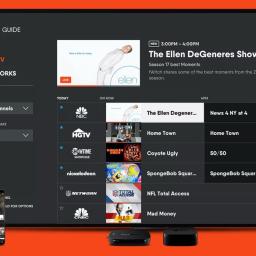
Fubo Following FuboTV's recent move to settle its antitrust lawsuit with Disney, Fox, and Warner Bros. Discovery over the impending launch of their Venu Sports streaming service, DirectTV and EchoStar are urging the courts to consider how other TV distributors could still be shut out of the sports streaming space.On Monday, Fubo announced that, as part of its plan to merge with Hulu + Live TV, it would also drop its lawsuit against Disney, Fox, and WBD alleging that their collaboration on Venu Sports violated US antitrust laws. The settlement outlines how Hulu + Live TV and Fubo can create a new multichannel video programming distributor that Disney would own 70 percent of. But the lawsuit's dismissal also lifted the injunction to halt Venu's launch which US District Judge Margaret M. Garnett passed down last August.Because Venu Sports now has a much more realistic chance of coming to market, DirectTV and EchoStar are voicing concerns about how Fubo's proposed Hulu deal may exacerbate, rather than properly address, the core issue of sports streaming anticompetitiveness. In a letter to Garnett, DirectTV argued that while Venu's venture partners have paid Fubo to ensure cooperation from an aggrieved competitor," they have also restored an anticompetitive runway for the JV Defendants to control the future of the live pay TV market."DirectTV is just one of several non-parties that expressed grave concerns" about the impact Venu would have on competition for sports programming, given that Venu would offer content in a manner that [the Defendants] do not allow DirectTV or other distributors to offer to consumers," DirectTV's lawyers said.In its own letter to Garnett, EchoStar's legal team insisted that the original injunction blocked Disney, Fox, and WBD's scheme to monopolize the pay-TV market and, once accomplished, charge inflated prices to millions of Americans."The parties' settlement appears designed to eliminate court jurisdiction over this multifarious harm by effectuating the preliminary injunction's expiration, rather than addressing the underlying competition issues," EchoStar said. Now, with the injunction undone by voluntary dismissal, DISH, Sling, and other distributors will suffer antitrust injury."
|
 |
by Gaby Del Valle on (#6TEZH)
Photo by Apu Gomes / Getty Images As fires rage across Los Angeles and tens of thousands flee their homes, the usual suspects have decided to blame the blazes on their political enemies. In a series of posts on Truth Social, President-elect Donald Trump claimed firefighters' inability to get the fires under control was due to California Governor Gavin Newsom's water policies, including an effort to protect an essentially worthless fish called a smelt, by giving it less water (it didn't work!)." Meanwhile, on X, Elon Musk suggested that the fires were spreading due to the city fire chief's commitment to diversity, equity, and inclusion policies. DEI means people DIE," Musk wrote in a Wednesday night post.Five people have indeed died in the Eaton fire thus far, and upward of 130,000 Los Angeles County residents are under evacuation orders, according to the Los Angeles Times. But the rampant spread of the fires isn't due to the delta smelt, DEI, or even - as Trump, Musk, and scores of mainstream publications have falsely claimed - cuts to the Los Angeles Fire Department's budget. These claims aren't without consequence. Last year, FEMA workers received threats on TikTok and other social media platforms as rampant disinformation spread in the wake of the devastation caused by hurricanes Milton and Helene.The first wave of disinformation focused on fire hydrants in the Pacific Palisades, which abruptly ran out of water on Tuesday night as firefighters attempted to put out the initial blaze. The hydrants, Trump said, were running dry because of Newsom's water policies. I will demand that this incompetent governor allow beautiful, clean, fresh water to FLOW INTO CALIFORNIA!" Trump posted on Truth Social on Wednesday. He is the blame for this. On top of it all, no water for fire hydrants, not firefighting planes. A true disaster!" In a separate post, Trump claimed Newsom had refused to sign the water restoration declaration put before him that would have allowed millions of gallons of water, from excess rain and snow melt from the North, to flow daily into many parts of California, including the areas that are currently burning in a virtually apocalyptic way."Newsom's office responded on Wednesday, clarifying that the declaration Trump referred to in his post didn't exist. There is no such document as the water restoration declaration - that is pure fiction," Newsom communications director Izzy Gardon told CalMatters. The Governor is focused on protecting people, not playing politics, and making sure firefighters have all the resources they need."Mark Gold, a board member of the Metropolitan Water District of Southern California, told the outlet that statewide water management policies, including efforts to protect the delta smelt, had nothing to do with the lack of water in the hydrants. Tying Bay-Delta management into devastating wildfires that have cost people's lives and homes is nothing short of irresponsible, and it's happening at a time when the Metropolitan Water District has the most water stored in its system in the history of the agency," Gold said. It's not a matter of having enough water coming from Northern California to put out a fire. It's about the continued devastating impacts of a changing climate."The lack of water in the Pacific Palisades hydrants was instead due to a reduction in water pressure caused by increased demand, the LA Times reported. Janisse Quinones, the chief executive and chief engineer of the Los Angeles Department of Water and Power, told the paper that so much water was being used that the utility wasn't able to fill the tanks quickly enough. The demand for water at lower elevations was also preventing the utility from refilling tanks at higher elevations, according to the LA Times.Wednesday night, as powerful Santa Ana winds spread the fires to Altadena, Pasadena, and the Hollywood Hills, right-wing influencers accused city officials of slashing the fire department's budget and prioritizing diversity programs over sound fire prevention policy - which Musk reposted on X.
|
 |
by Barbara Krasnoff on (#5CWBP)
Illustration by Samar Haddad / The Verge You may be wondering how to delete your Facebook account now that fact-checking is no longer considered important, and Meta's changing its definition of what constitutes Hateful Conduct. It's easy to do, and we'll show you how. But you should download all your stuff first.The following instructions are for the web version of Facebook, but you can follow pretty much the same sequence on the mobile app.Download your archivesYour Facebook archives contain just about all of the pertinent information related to your account, including your photos, active sessions, chat history, IP addresses, facial recognition data, and which ads you clicked. That's personal information you should save.
|
by Gaby Del Valle on (#6TEZJ)
Image: Cath Virginia / The Verge; Getty Images Google and Microsoft are the latest tech companies to donate to President-elect Donald Trump's inauguration. Each company contributed $1 million to the fund - the same amount pledged by Meta, Amazon, Sam Altman, and Tim Cook.In a statement to CNBC, Karan Bhatia, Google's global head of government affairs and public policy, said the company is supporting the inauguration with a livestream on YouTube and a direct link on our homepage," as well as with a financial contribution. The donation may be part of Google's larger strategy to win over Trump, who has threatened to break up the tech giant or shut it down altogether.Microsoft, which is also giving $1 million, previously contributed $500,000 to Trump's first inauguration and donated the same amount to President Joe Biden's inauguration fund, a company spokesperson told CNBC. Per CNBC, Microsoft CEO Satya Nadella has met with Trump multiple times, and was involved in negotiations over acquiring TikTok in 2020, when Trump tried to ban the app in the US.
 |
by Emma Roth on (#6TEZK)
Image: Naughty Dog The Last of Us Part 2 remaster is joining the PlayStation Network club. That means you'll need to link a PSN account if you want to play the game after buying it on Steam, Epic Games, and other PC platforms when it launches in April, as spotted earlier by Video Games Chronicle.The requirement has proven very unpopular with other Sony titles released on PC, including Ghost of Tsushima, God of War Ragnarok, and the Horizon Zero Dawn remaster. Last year, Helldiver players review-bombed the game after it suddenly introduced PSN account linking, leading Sony to walk back on the requirement completely. Screenshot: Steam It's still not clear why Sony requires a PSN account to play The Last of Us Part 2, as it doesn't have any multiplayer features, and the requirement may also prevent people across dozens of countries where PSN isn't supported from playing the game.The Last of Us Part 2 remaster launches on PC on April 3rd for $49.99.
|
 |
by Umar Shakir on (#6TEZM)
Oh hey, another full-frontal light bar design. | Image: Cochespias1 Pictures posted on social media give us a look at a facelifted Tesla Model Y Juniper" refresh that lets go of the original Model 3 headlight style in favor of a new front lightbar setup that reminds me of the Chevy Equinox EV. As reported by InsideEVs, Instagram car spy account Cochespias1 and X user DominicBRNKMN posted spy shots of the updated Model Y as it drove around on snowy grounds.Although the images are a bit blurry, they also show a new rear end with a Cybertruck-ish lightbar similar to the one seen in a July leak.
|
 |
by Jay Peters on (#6TEWV)
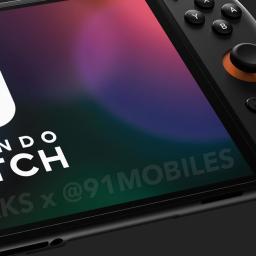
Image: OnLeaks on X New day, new Nintendo Switch 2 leaks. Nintendo is getting ever-closer to its April 2025 deadline to reveal its Switch successor, but thanks new renders from OnLeaks and 91Mobiles, we may now have an even better idea of what the new console might look like.If you've been following our coverage of other Switch 2 leaks, these renders shouldn't look too surprising. According to the new renders, the console will resemble the original Switch, but it will be bigger, with an 8.4-inch screen. Interestingly, OnLeaks and 91Mobiles report that the screen will most likely" be an OLED panel" - previous reports have said the console would have an LCD screen.The renders show that the top of the Switch 2 will feature a power button, a volume rocker, a 3.5mm headphone jack, a game card slot, and, new for the Switch 2, a USB-C port. OnLeaks and 91Mobiles also say that there also seems to be a sensor of sorts" and they speculate that this might be an ambient light sensor or something else." These renders also have a U-shaped kickstand that has appeared in other leaks.As for the Joy-Cons, OnLeaks and 91Mobiles' renders show the mysterious second new button on the right Joy-Con. However, they say the new button is above the Home button; other leaks have included the new button below it. The Joy-Cons in the renders have the large buttons in the back that are apparently used to detach the controllers from the console, which are apparently attached magnetically.The renders also show an interesting color scheme for the Joy-Cons: they are mostly black but have color accents - light blue on the left one and orange on the right - under the joystick pads and on the bumped-out part of the controllers with the SL and SR buttons. A similar design popped up earlier this month for an alleged Switch 2 left Joy-Con with light blue accents. I love it, personally.Hopefully, given the tidal wave of recent leaks, we don't have to wait too much longer for Nintendo to officially announce the new console. But whenever the console actually launches, it's going to have some stiff competition.
|
 |
by Emma Roth on (#6TEWW)
Illustration by Alex Castro / The Verge Amazon's massive advertising business, which is only surpassed in the US by Google and Meta, is about to get bigger. In addition to selling ads on its sprawling marketplace, it will now let other retailers use the technology powering its $50 billion business on their own websites, as reported earlier by Adweek.The company's new Retail Ad Service beta will let other online stores Deliver contextually relevant ads by leveraging Amazon's two decades of ad tech expertise, driven by machine learning models trained on trillions of shopping signals" across their product, search, and browsing pages.It also plugs the retailers into Amazon's existing advertising customers, as brands already using Amazon's ad system can choose to place their ads on third-party sites. The setup also allows Amazon to pull more profit from retail media" (ads you see in stores or while shopping online) even when the shopping isn't happening on its site, and could give it access to more data - which is something the FTC may have questions about.The path of this business is similar to the launch of Amazon Web Services, which the company built to keep its online marketplace running and loading quickly 24/7 before selling access to the servers as a backbone for other companies' operations, as noted by CNBC.
|
 |
by Andrew Liszewski on (#6TEWX)
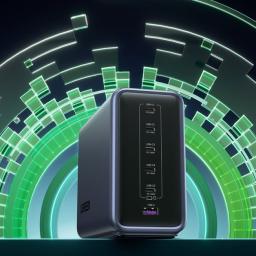
Image: Ugreen If there were some common themes among the chargers and portable power solutions announced at CES this year, it would be more power and more convenience through built-in cables. It's not a new idea, but with most devices now being USB-C-compatible, it's easier for companies to integrate charging cables without having to accommodate competing charging standards.Here are some of the standout charging solutions making their debut at CES this year.Ugreen Nexode Desktop Charger 500W Image: Ugreen If you've got a desk overflowing with laptops and a power strip overpacked with adapters, Ugreen has upgraded its Nexode desk charger with 500W of power output. That's shared across five USB-C ports and a single USB-A port. The topmost USB-C port delivers up to 240W of power, while the other five share 260W. That's enough power to charge five laptops simultaneously, assuming four of them don't need more than 60W. It's expected to be available as soon as March 2025.Anker Charger (140W) with display Image: Anker As the size and power output of Anker's wall chargers increased, they had a tendency to succumb to gravity and not stay plugged in. Anker's latest solution to that problem is a redesigned wall charger that positions three USB-C plus a single USB-A port on the underside, improving its center of gravity. Two of the USB-C ports can output up to 140W, but only one at a time, as that's the charger's maximum power output. It's available now for $89.99 and includes a small screen showing how much power each port is drawing.Sharge Shargeek 300 Photo by Antonio G. Di Benedetto / The Verge Sharge debuted another eye-catching power bank with a transparent design and an aluminum case at CES. The Shargeek 300 can deliver up to 300W of power to four devices simultaneously from its 24,000mAh battery and up to 140W to two devices simultaneously, so you can fast-charge a pair of laptops. It's got a color screen showing the power draw on each port and how much battery life it's got left. When it's dead, it can recharge at up to 140W speeds, replenishing its battery from zero to 50 percent in just 20 minutes. Sharge will be launching it through Kickstarter in April for under $300.Baseus PrimeTrip VR2 Max Image: Baseus Your car might feature a couple of USB ports on the dashboard for charging devices, but did you remember to grab a charging cable on your way out the door? With the Baseus PrimeTrip VR2 Max car charger, you don't have to. It features a pair of retractable USB-C cables over 31 inches in length plus an additional USB-A and USB-C port. It provides a total of up to 240W of power across all four ports and up to 105W through a single port, letting you charge a power-hungry laptop on the road. It's expected sometime in April 2025 for $44.99.Anker Power Bank (165W) Image: Anker Anker's new soda can-sized 25,000mAh power bank includes a few welcome conveniences. It can deliver up to 165W of power shared across a USB-C port, a USB-A port, a short 8.6-inch USB-C cable that can be used as a carrying strap, and a 27.2-inch USB-C cable that fully retracts. Maximum output to a single USB-C port is 100W, so you can fast-charge a laptop, and you can monitor how much power each port is drawing on a small screen. It's available now for $99.99.Baseus Enercore CJ11 Image: Baseus Charging cables excel at mysteriously going missing, which is the most compelling reason to consider the Enercore CJ11 wall charger. Available as early as April 2025 for $69.99, it features two retractable USB-C cables, each over 32 inches long, that can't be swiped. The charger has an additional USB-C port for connecting cables with other connectors and can deliver up to 67W of power with a single device connected or share a maximum of 65W with two or three ports in use.Baseus EnerGeek MiFi Power Bank Image: Baseus In need of a power bank that delivers more than just power? Baseus' EnerGeek MiFi incorporates a 20,000mAh battery that can deliver up to 67W of power to two USB-C ports, a single USB-A port, and through an integrated USB-C cable that serves as a carrying strap. The power bank also doubles as a mobile hotspot, allowing up to 10 devices to wirelessly connect to the internet over Bluetooth or Wi-Fi at 4G speeds. Baseus hasn't announced how much mobile data plans will cost, but the power bank is expected to release in April 2025 for $89.99.
|
by Andrew Webster on (#6TEWY)
Image: Nintendo / Lego While we're all waiting for official news about the Switch 2, Nintendo has gone ahead and announced a very different kind of console. The company is teasing a collaboration with Lego that will see the original grey brick known as a Game Boy rendered in Lego blocks. There are no details yet, aside from the fact that it'll be out in October, but it's likely an official reveal is coming soon.This isn't the first collab between the two companies, as there have been a handful of Lego sets based on Nintendo properties, along with a blocky rendition of the NES.
by Jay Peters on (#6TEWZ)
Image: Ubisoft Ubisoft announced a strategic update" today, and the changes include a delay for Assassin's Creed Shadows, the upcoming entry in the franchise that takes place in feudal Japan, from February 14th to March 20th.As part of the renewed focus on gameplay quality and engaging Day-1 experiences, it has been decided to provide an additional month of development to Assassin's Creed Shadows," Ubisoft writes in a press release. This additional time will allow the team to better incorporate the player feedback gathered over the past three months and help create the best conditions for launch by continuing to engage closely with the increasingly positive Assassin's Creed community."
by Lauren Feiner on (#6TEX0)
Illustration by Cath Virginia / The Verge | Photo from Getty Images The Supreme Court will hear oral arguments in the case against the TikTok divest-or-ban bill on Friday, which will determine the future of the app in the US. Read the full story at The Verge.
 |
by Tom Warren on (#6TEX2)
Illustration: The Verge Lenovo's mysterious future of gaming handhelds" event at CES delivered confirmation this week that Microsoft is combining the best of Xbox and Windows together" for handhelds. Microsoft's VP of Next Generation, Jason Ronald, spoke to my colleague Sean Hollister after the event to reveal that not only are big changes coming to the Windows handheld experience but also you're going to see a lot of stuff as early as this year."I've been writing for more than a year about how Microsoft needs to overhaul Windows on handhelds and use an Xbox OS UI on top, keeping the complexity of the Windows desktop hidden away. That sounds exactly like what Microsoft is about to do. I would say it's bringing the best of Xbox and Windows together, because we have spent the last 20 years building a world-class operating system, but it's really locked to the console," says Ronald. What we're doing is we're really focused on how do we bring those experiences for both players and developers to the broader Windows ecosystem."Ronald says Microsoft's goal is to deliver an Xbox experience that puts your content front and center, and not the Windows desktop that you have today." For this to happen in... Read the full story at The Verge.
|
 |
by Andrew Liszewski on (#6TEX1)
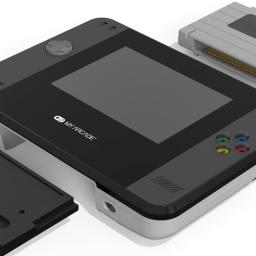
The Super Retro Champ plays classic 16-bit titles from the Super Nintendo and Sega Genesis. | Image: My Arcade First announced at CES four years ago, My Arcade's Super Retro Champ was a chunky handheld that could play classic 16-bit titles using original Sega Genesis and Super Nintendo cartridges. The console didn't end up launching, but at CES 2025, My Arcade is reviving it with an expected release later this year.The design and functionality of the Super Retro Champ appears nearly identical to what My Arcade revealed in 2020, but as with many things now, it's expected to be slightly more expensive. Instead of $110, the handheld is now priced at $149.99. Image: My Arcade Super Nintendo cartridges end up slightly sticking out of the top of the handheld, while Sega Genesis carts sit flush in its bottom slot. Unlike the Analogue Pocket, which can play retro titles using cartridges or ROM files, the Super Retro Champ is similar to the ModRetro Chromatic and sticks to carts. It's got a slot on the top for SNES games (that end up slightly sticking out) and a second on the bottom for Genesis carts. It's also compatible with cartridges released for the international versions of those classic consoles, including Super Famicom and Mega Drive games. Image: My Arcade It's unlikely you're ever going to find a pocket large enough to carry the Super Retro Champ. With a six-inch screen surrounded by generous bezels plus a directional pad and action buttons on either side, the Super Retro Champ doesn't prioritize portability. You can use it as a handheld with hours of uninterrupted gameplay" from its rechargeable battery, My Arcade says, but it's better suited for playing while propped up on a table using its folding stand, a pair of connected controllers, and a power adapter.If six inches feels too cramped for you and another player, there's also an HDMI port on the back of the Super Retro Champ for connecting it to a TV. Just don't expect to enjoy your favorite 16-bit titles in HD or expect them to look as good as they did on the old CRT TV you grew up with.
|
by Charles Pulliam-Moore on (#6TET1)
Netflix / TMS Entertainment Though Yuto Suzuki's manga Sakamoto Days hasn't been publishing for all that long, an animated adaptation of the series is already making its way to Netflix in just a few days.Set in a world where it's not uncommon for people to have superhuman abilities, Sakamoto Days tells the story of Taro Sakamoto (Tomokazu Sugita / Matthew Mercer), a legendary hitman who becomes a humble convenience store owner after falling in love with his wife. While Sakamoto's wife Aoi (Nao Tyama / Rosie Okumura) doesn't hold his past against him, their marriage hinges on her rule that he must never kill again.For the most part, it's easy enough for Sakamoto to stick to Aoi's rule. But things start to get tricky when a bounty is placed on his head that makes him the target of other assassins like telepath Shin Asakura (Dallas Liu) and sharp-shooter Heisuke Mashimo (Ryta Suzuki / Xolo Mariduena). Netflix's new trailer for the series teases a bit of how some of Sakamoto's enemies quickly become allies in his fight to keep his small family safe, and while it doesn't show all that much of the show's action, we'll be able to check it out for ourselves when the show debuts on January 11th.
by Umar Shakir on (#6TET2)
Image: Cath Virginia / The Verge, Getty Images Smart lock companies have spent 2024 crafting nifty ways for you to gain entry into your home, including iPhone-tapping Home Key options from Aqara, a palm scanner from Philips, keypad and fingerprint smart locks from August, and even a Face ID-style one from Lockly. These all sound pretty futuristic already... but do they feel like magic?I'm talking magic like how my car's driver door unlocks without me needing to do or touch anything other than pulling on the handle. I'm talking about smart home locks that see me approaching and take action - so I don't have to pause and interact with anything when I really just need to run inside to use the bathroom. Image: Ultraloq You don't even need to take out your phone to unlock UWB-capable smart locks. Luckily, at CES 2025, many smart lock makers are poised to launch models that offer touchless passive entry support. That means you won't need to take extra steps like pulling out an RFID fob from your pocket or smacking your Apple Watch against a pad to unlock your door. (That's so last year!)One of the most promising locks from the show is Schlage's new Sense Pro Smart Deadbolt, which comes equipped with an ultra wideband (UWB) chip that will sense your paired smartphone's trajectory and motion to know when to trigger an unlock for you.Schlage isn't the first to announce UWB in a smart lock; that credit goes to U-tec's Ultraloq Bolt Mission, which was revealed last year. The Ultraloq was announced with a lack of support for the new Aliro smart access standard backed by Google, Apple, Samsung, and others (meaning no Apple Home hands-free unlocking support).Now, the Bolt Mission is here at CES with a Q1 2025" launch timeframe, a $399 price tag, and a promise that Aliro and Apple Home hands-free are coming. There's also the Lockly Secure Pro, which promises Apple's touchless feature, costs $379.99, and will arrive in Q4. While it'll still be a while before a lot of these devices are on the market, the UWB-powered smart lock options are clearly arriving soon. Image: Schlage Schlage's Sense Pro debuted at CES 2025 and supports hands-free unlocking. Of course, plenty of companies are still sticking to other unlock technologies instead of UWB. That includes palm scanner locks such as TP-Link's Tapo PalmKey and TCL's Smart Lock D1 Pro, both of which claim they use AI to scan for vein patterns in your hand. Meanwhile, others, like the Lockly Styla, are just here to look nice. Heck, if you'd rather have everything but UWB, you can look at SwitchBot's new Lock Ultra, which literally has 16 different hands-on-something unlocking methods.Smart lock makers are trying pretty much anything right now, including adding digital peepholes to deadbolts in the new Lockly Vision Prestige and TCL Smart Lock Ultra. But what's really missing from smart homes today is that new car feeling: where you finally drive off the lot no longer needing to think about age-old ideas like lock, unlock, and push to start. We still have to see these locks in action to see whether they can reliably and securely pull off their hands-free feat. But the opportunity is coming. I hope the smart lock companies have that transformative feeling in mind as they launch products with UWB this year.
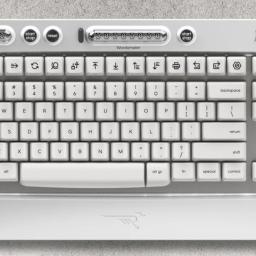 |
by Andrew Liszewski on (#6TEPV)
The Astrohaus Wordrunner keyboard will be available through a Kickstarter crowdfunding campaign in February. | Image: Astrohaus Astrohaus has announced a new addition to its distraction-reducing Freewrite line of writing tools at CES. Unlike its previous all-in-one devices that pair a keyboard with basic monochromatic screens, its new Freewrite Wordrunner is a standalone mechanical keyboard customized with keys and tools designed to help writers stay focused and work more efficiently.The company hasn't announced pricing for the new Freewrite Wordrunner yet, but it's expected to be available for preorder sometime in February 2025 through a Kickstarter crowdfunding campaign. The company's all-in-one writing devices range in price from $349 to $999, but without a screen, storage, and other electronics, its keyboard will potentially be much cheaper. Discounts will be available to early backers, but Astrohaus is also currently selling $1 refundable reservations that promise priority access" and exclusive early-bird pricing." Image: Astrohaus The Wordrunner's Wordometer is an eight-digit electromechanical counter to keep tabs on your writing progress. The Freewrite Wordrunner features a compact tenkeyless design, a body made from durable die-cast aluminum, backlit high-quality tactile switches," and several layers of sound deadening so it can be used in shared spaces without becoming a distraction to others.What sets the Wordrunner apart from other mechanical keyboards is the addition of two electromechanical counters with rotating numbers on its top edge. One, called the Wordometer, will continually track word count until you press a reset button, while the other, upgraded with subtle LED indicators," serves as a timer for quick writing sprints or tracking your productivity. Image: Astrohaus A rotating red joystick in the upper-left corner of the keyboard controls media playback and volume. The keyboard's other big differentiator is a redesigned function row with keys customized for quickly navigating and editing a document. These include dedicated keys for undo and redo, jumping between paragraphs, and quickly skipping to the top or bottom of a page. There are also three dedicated macro keys - labeled zap, pow, and bam - that writers can customize to their specific needs.This means the Wordrunner loses keys dedicated to controlling media playback, but that's all handled through a rotating red joystick in the upper-left corner of the keyboard that can be pressed or moved in four directions for skipping tracks or making volume adjustments.Other features include an extended wrist rest and the ability to connect to and switch between up to four devices through dedicated hotkeys. The Freewrite Wordrunner can connect to three devices over Bluetooth, including computers and mobile devices, and a fourth with a USB-C cable.
|
 |
by Dominic Preston on (#6TEPW)
Image: VideoLAN The popular open-source VLC video player was demonstrated on the floor of CES 2025 with automatic AI subtitling and translation, generated locally and offline in real time. Parent organization VideoLAN shared a video on Tuesday in which president Jean-Baptiste Kempf shows off the new feature, which uses open-source AI models to generate subtitles for videos in several languages.At the same time we have automatic translation working to translate the subtitles to your own language," Kempf says, with more than 100 languages planned for support. What's important is that this is running on your machine locally, offline, without any cloud services. It runs directly inside the executable."
|
by Tom Warren on (#6TEPX)
Image: Microsoft Microsoft is holding another Xbox Developer Direct event on January 23rd. It's the third Developer Direct in a row, making it an annual look at what's ahead for Xbox for the year. Like last year's event, Microsoft will provide some updates on Xbox games that are planned for release in 2025, including feature South of Midnight, Clair Obscur: Expedition 33, and DOOM: The Dark Ages.Microsoft's teaser image for the event also includes a teaser for an unannounced brand new game" Xbox game. Last year's Developer Direct featured a first look at Bethesda's Indiana Jones and the Great Circle.The Xbox Developer Direct will likely follow a similar format to the last two events, with no hosts and around 45 minutes of gameplay and announcements. The Xbox Developer Direct will take place at 1PM ET / 10PM PT / 6PM UK on January 23rd and will be streamed live on on Twitch and YouTube.
by Andrew J. Hawkins on (#6TEPZ)
Image: Mercedes-Benz Mercedes-Benz said that its electric vehicles will be able to access Tesla's Supercharger network starting in February.By now you should be familiar with how this goes: a manufacturer announces Supercharger access, first through the use of NACS-to-CCS adapters and then later with native NACS integration. The adapters are available to purchase through dealerships. And EV owners will get to giddily watch as the number of accessible public EV chargers suddenly grows by the thousands. (By last count, Tesla had 20,000 stalls in the US and Canada.)Of course, this is all unique to North American residents, as Europeans who own any flavor of EV have long been able to access Tesla Superchargers thanks to a more enlightened stance on technology standards.By now you should be familiar with how this goesMercedes will be the seventh automaker to gain access to Tesla's lauded EV charging network, following Ford, General Motors, Rivian, Volvo, Polestar, and Nissan. Mercedes originally hoped to have everything sorted out with Tesla by 2024, but we'll cut it some slack. Elon Musk was pretty busy last year. (Volkswagen is also planning on opening access this summer, PC Magazine reported.)The adapter, which is produced by EV charging supplier Lectron, will sell for $185 through authorized dealerships. According to Mercedes spokesperson Andrew Brudnicki, the Lectron adapter is the only adapter to date that has been tested for safety and compatibility with Mercedes-Benz EVs" and includes other advantages for customers, such as a more robust interlock connection between the cable and adapter compared to similar adapters."(Lectron had a few issues with a faulty latch pin last year, resulting in a recall of around 1,600 units; the company says those issues were addressed in April 2024, and since then, there haven't been any other problems.)Tesla Supercharger locations will also be added to Mercedes' charger map in its app. And the system will be integrated with the company's use of Plug & Charge, in which charging initiates as soon as the customer plugs in, with no additional steps or authorizations required.Later this year, Mercedes plans to roll out its first vehicles with factory-installed NACS ports. We don't know which models will come first, but the company has a variety of EVs available, from the luxurious EQS, to the more affordable EQE and EQB, to the status-conferring electric G-Wagen.Mercedes is involved in a range of EV charging expansion projects, including the installation of thousands of fast chargers with solar company MN8 Energy and the Ionna venture, along with several other major OEMs.
 |
by Emma Roth on (#6TEPY)
Image: The Verge The AI search engine Perplexity is launching an integration with Tripadvisor that will add more information about hotels. Now, when you search for places to stay, Perplexity will present you with a neatly organized list of hotels, alongside summaries of why it chose them using information sourced from Tripadvisor.In an example shared by Perplexity, a search for hotels in Madrid for a business trip" yields a result for Hotel Regina, which the search engine says you should choose if you want a centrally located hotel in Madrid with exceptional service and a rich breakfast offering." It also displays its ratings and images from Tripadvisor as well as a list of perks, like location," service," and cleanliness."Previously, Perplexity only displayed a numbered list of hotels with their address, user rating, and features, while showing images gathered from each hotel's website in its sidebar.From the Tripadvisor side, they provide an up-to-date trustworthy source of information that we sync regularly," Perplexity cofounder Johnny Ho said during an interview with The Verge. On the fly, we'll index and retrieve the right results depending on the user intent of the query."Perplexity, which bills itself as an answer engine" rather than a search engine, plans to expand the Tripadvisor integration to include information about restaurants and experiences in the future. The AI search engine also added data from Yelp last year as part of its goal to include accurate information you can use.The change comes just weeks after ChatGPT widely rolled out its AI search engine, which now displays results from the web for certain queries. Perplexity's Tripadvisor integration is rolling out now to Perplexity on the web, but it will be available on its mobile app soon."
|