Black Rain in Iran: WHO Warns of Health Risks After Airstrikes on Oil Facilities
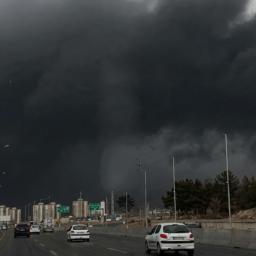
The head of the World Health Organization has warned that damage to petroleum facilities in Iran could contaminate air, food and water, after residents in Tehran reported what they described as black rain following strikes on fuel sites around the capital.
The strikes, carried out overnight into Sunday, March 8, hit multiple oil storage facilities and a petroleum transfer centre in Tehran and nearby Alborz. Fars news agency reported that four tanker drivers were killed in the attack on the transfer centre. Israel said the facilities were used for military infrastructure.
By Sunday morning, thick smoke had spread across Tehran. A video posted on X appeared to show the capital at sunrise under a dense smoke plume, visually matching other reports that the sky had darkened over the city. CNN correspondent Frederik Pleitgen, posting from Tehran, described oil rain falling across the city after the strikes.
It is raining oil in Tehran this morning after major airstrikes on oil facilities in the South and West of the Iranian capital. @CNN @cnni pic.twitter.com/2FBD9EnO9p
- Frederik Pleitgen (@fpleitgenCNN) March 8, 2026
Residents quoted by Time described dark, oily rain on streets, cars and rooftops, and said the air was difficult to breathe. One resident said the rain had turned surfaces black even miles from the storage sites.
Iran's Red Crescent Society warned that chemicals released by the explosions included hydrocarbon compounds, sulfur and nitrogen oxides, and said any resulting rainfall could be extremely dangerous and highly acidic." Iranian environmental authorities and relief officials urged residents to remain indoors.
On Tuesday, March 10, The Guardian reported that WHO Director-General Tedros Adhanom Ghebreyesus said damage to petroleum facilities in Iran risked contaminating food, water and air," with particular danger for children, older people and people with pre-existing medical conditions. WHO had already warned in a March 5 briefing that the wider conflict was putting health systems and lives at risk across the region.
WHO's March 5 briefing said almost 1,000 deaths had been reported in Iran at that point and that the agency had verified 13 attacks on health care in Iran and one in Lebanon. A WHO Eastern Mediterranean regional statement, cited in secondary reporting, said Iranian national authorities were reporting more than 925 deaths, more than 6,100 injuries and 14 attacks on health care in Iran since February 28.
What is confirmed and what is notWhat remains less clear is the precise nature of the rainfall itself. Public reporting supports that dark, soot-filled or oil-streaked rain fell over parts of Tehran, but no public laboratory analysis has confirmed its composition. That makes terms such as acid rain" and toxic rain" safest when attributed to Iranian relief officials or residents, not stated as established fact.
Experts quoted by The Guardian said the phenomenon was consistent with soot, smoke, oil particles, sulfur compounds and other material released by burning petroleum infrastructure mixing with an incoming weather system. Dr Akshay Deoras of the University of Reading said those conditions could produce dark rainfall, while Prof Andrea Sella of University College London said the immediate risks would include inhalation and skin exposure to harmful particles and chemicals.
Residents interviewed by Time spoke of headaches, sore skin, throat irritation and breathing problems after short periods outdoors. Those accounts are significant, but they remain anecdotal. No official count of exposure-related hospital visits has been published, nor has a clinical assessment of the rainfall's effects.
The reporting available draws heavily on resident accounts, Iranian official warnings and secondary media reports, rather than laboratory data or direct WHO technical findings on the rainfall itself. That is a meaningful limitation given the scale of the health claims being made.
Iran's deputy health minister, Ali Jafarian told Al Jazeera that soil and water supplies around Tehran were beginning to be contaminated by fallout from the explosions. That claim has not been independently verified.