SCOTUS Tells NFL It Won’t Review Brian Flores Race Case
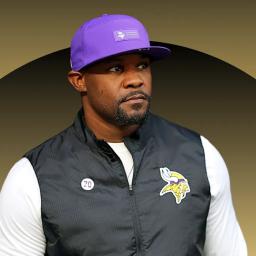
The U.S. Supreme Court on Mondaydenied a petitionby the NFL, New York Giants, Denver Broncos and Houston Texans to review Minnesota Vikings defensive coordinator Brian Flores' race-based employment discrimination lawsuit. The league is trying to force the matter into arbitration.
Flores v. NFLhas ramifications beyond the NFL since several pro leagues entrust their commissioner with authority to oversee disputes involving teams and their employees and to arbitrate related employment and contractual claims. Stated differently, if NFL commissioner Roger Goodell can't serve as arbitrator for an employment dispute involving a coach and several teams, it becomes less certain whether, for example, NBA commissioner Adam Silver can serve as the arbitrator in disputes involving ownersorreferees.
More from Sportico.com- Fernando Tatis Jr. Owes $3.74M to Big League Advance Investors
- Sporticast: What's Up With the French Open Fashion Friction?
- Stafford's $55M Extension Makes Him NFL's First $500M Player
The Supreme Court will only grant a review when at least four justices vote in favor. The Court stated that Justice Brett Kavanaugh, who in the NFL Sunday Ticket antitrust litigation has voiced support for the NFL being able to operate with latitude given its joint venture structure, would grant the petition for review inFlores v. NFL.
Neither the Court's denial nor Justice Kavanaugh's dissenting position were accompanied by any explanation.
AlthoughFlores v. NFLhas been in litigation since 2022-the year the Miami Dolphins fired Flores as head coach after a 9-8 season-it remains in an early phase due to lengthy appeals and accompanying proceedings. The case is currently before U.S. District Judge Valerie Caproni, who in February ruled that Flores' claims will proceed in court and not be dispatched to an arbitration process overseen by Goodell.
The role of Goodell, or a designee of his choosing, serving as the arbitrator has become the central controversy in the case. Flores accuses Goodell of wrongful acts and maintains the commissioner can't credibly serve as the arbitrator with such a conflict of interest. Yet the NFL insists Flores contractually accepted such an arrangement through his employment contract.
Last year the Second Circuit reasoned that even if Flores contractually accepted Goodell as the arbitrator, it could not endorse a process that is arbitration in name only" and lacks" basic protections.
A league commissioner serving as arbitrator for employment disputes involving teams is not unique to the NFL. Other league commissioners, including the NBA's Silver, are entrusted with that role. The logic is that commissioners are subject matter experts who will not favor any team. Arbitration is also conducted in private and with strict confidentiality provisions. In contrast, litigation occurs in a public-facing court system that media and fans can access and observe evidence and testimony.
In terms of legal claims,Flores v. NFLis not about whether Goodell can serve as the arbitrator. It's about whether Flores, and fellow coaches Steve Wilks and Ray Horton, were treated wrongly under Section 1981 of the Civil Rights Act of 1866 and several state laws when teams allegedly gave them and other Black coaching candidates sham job interviews.
The teams are accused of scheduling what amounted to courtesy interviews to superficially comply with the Rooney Rule. The rule requires that teams interview external candidates who are persons of color or women for coaching and front office jobs. It is currently subject to a subpoena issued by Florida attorney general James Uthmeier for employment policies that Uthmeier believesmight put non-diverse"coaching and GM candidates at a disadvantage.
Flores hopes for the case to eventually be certified on behalf of a class of Black coaches and general managers, and Black candidates for those roles. The case depicts sham interviews as a form of intentional discrimination on account of race.
In a brief filed by the NFL with the Supreme Court in January, the league argued that the Second Circuit's decision is contrary to precedent and irreconcilable" with the language of the federal Arbitration Act. The league maintains the law is clear: If parties to a contract knowingly and voluntarily choose to use arbitration to resolve disputes, courts must honor that choice. The Second Circuit, the NFL maintains, has undermined the very predictability and uniformity that the Arbitration Act was designed to protect."
The NFL also insists that while pro sports leagues, with independently owned teams that must both compete and collaborate, are uniquely situated joint ventures in American business, the Flores case has broader ramifications for American businesses that rely on arbitration.
To the point, the Second Circuit has allegedly created a novel federal unconscionability doctrine that gives judges free-floating discretion to deem arbitration agreements unenforceable based solely on their subjective determinations that certain arbitral procedures are unfair."
In March, attorneys for Flores urged the Supreme Court to deny review of the case. Flores argues that the NFL's predictions of dire consequences" rely on purely speculative extensions" that are untethered" to the legal issues presented in his case. He maintains that no court of appeals has held an employer, whether it's a pro sports league, restaurant or retail store, can force employees to arbitrate statutory employment discrimination claims before the employer's own chief executive."
Flores also insists that while the NFL cites sports cases where courts enforced commissioner-based arbitration agreements, those cases are not sufficiently analogous. The NFL notes that commissioner-based arbitration was enforced against then-New England Patriots quarterback Tom Brady in his Deflategate litigation and then-Vikings running back Adrian Peterson's conduct detrimental litigation, but unlike Flores, Brady and Peterson were members of a players' union that, through collective bargaining, accepted Goodell as the arbitrator. The NFL also cites then-Oakland A's owner Charlie Finley losing in his challenge of MLB commissioner Bowie Kuhn rejecting the A's trying to sell players' contracts to other teams, but Flores argues that case doesn't involve statutory employment discrimination claims" and is thus inapposite.
Justice Kavanaugh's interest in granting the NFL's petition is intriguing since it's not the first time he has done so in an NFL case where his fellow justices weren't as interested.
In 2020, the Supreme Court denied the NFL's petition for certiorari to review the ongoing NFL Sunday Ticket antitrust litigation. At the time, Justice Kavanaughissued a statementstating that pro leagues are joint ventures of independently owned teams and teams must be able to cooperate. Antitrust law likely does not require that the NFL and its member teams compete against each other with respect to television rights," Kavanaugh wrote.
Whether Justice Kavanaugh would agree with the NFL that Goodell should be able to serve as the arbitrator is unknown, but the fact that he wished to review the Second Circuit's ruling suggests he might lean that way.
Justice Kavanaugh is no stranger to sports law, as he issued an often-cited concurring opinion inNCAA v. Alstonwhere herebukedthe NCAA's economic treatment of college athletes.
He might get another chance to convince his colleagues to reviewFlores v. NFL, since, barring a settlement, the case could remain on the docket for years and reappear before the Second Circuit. Only time will tell.
Best of Sportico.comSign up for Sportico's Newsletter. For the latest news, follow us on Facebook, Twitter, and Instagram.