Intel preps 28-core Nova Lake-S CPUs for Dunlow workstation platform — Entry-level Xeon chip features LGA1954 socket
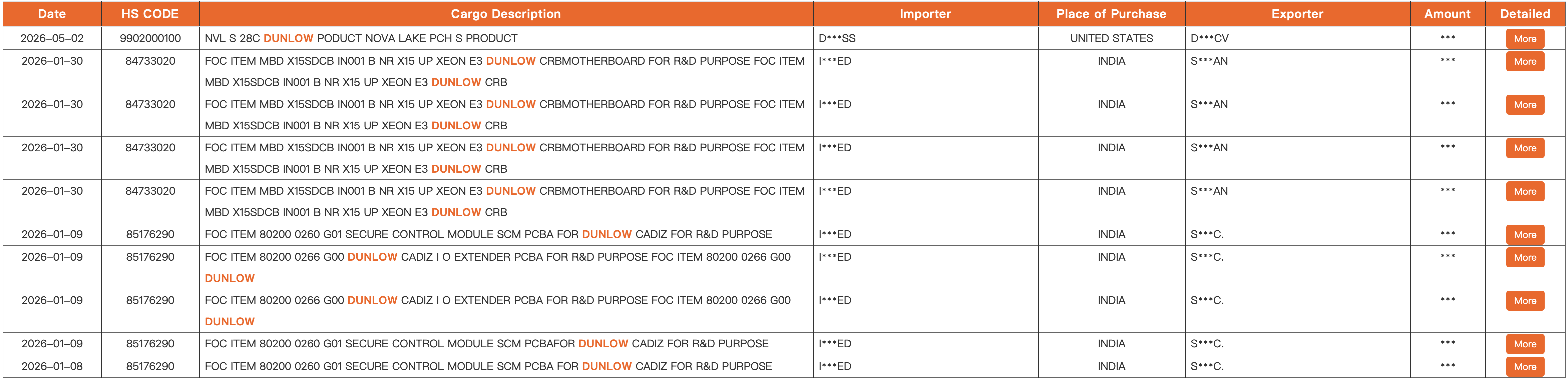
Intel is working on a version of its Nova Lake-S processor platform codenamed Dunlow that will offer up to 28 cores and will target entry-level server and workstation applications, according to shipment manifests located in the NBD database by @x86deadandback.
Formally, Intel's codenamed Dunlow platform will succeed the company's Catlow platform with Xeon 6300P-series CPUs and will support Xeon E-class Nova Lake-S processors (presumably) with up to 28 cores that feature a dual-channel memory subsystem, come in an LGA1954 form-factor, and have a processor base power of 95W, according to shipments manifests at NBD data.
Intel's next-generation Core Ultra 400-series platforms for desktop computers, codenamed Nova Lake-S, allegedly feature up to 52 cores, which include up to 16 high-performance Coyote Cove cores and up to 32 energy-efficient Arctic Wolf cores in the compute tile, as well as four low-power Arctic Wolf cores presumably in the SoC tile. These Nova Lake-S CPUs are aimed at enthusiasts and reportedly pull up to 474W with a single purpose: to offer unbeatable performance and feature set to put Intel back on the map of enthusiast-grade platforms currently dominated by AMD.
By contrast, the Dunlow platform seems to be a completely different kind of animal. The CPU deliberately features 28 cores and up to 95W PBP (TDP). All Xeon processors except Xeon 6700E, Xeon 6+, and some Atom-based solutions for specialty applications released to date have only featured high-performance cores. Even Intel's Xeon 6300P-series 'Raptor Lake-E' based products feature up to 12 P-cores to offer higher sustained all-core frequencies. Therefore, unless Intel plans to offer energy-efficient cores in its next Xeon CPU aimed at entry-level servers and workstations, we may be dealing with a very special processor that features 28 P-cores that is designed to beat all desktop-grade platforms in demanding applications.
While, for now, 28 P-cores inside Nova Lake-S processors for the Dunlow platform is speculation, it should also be noted that 28 cores do not naturally derive from a 16P+32E desktop design and are impossible to derive from a notebook-grade 8P+16E design. Also, Intel typically does not create server/workstation products by fusing off nearly half a desktop die (it does not even matter whether it disables some P-cores and some E-cores, disabling 20 cores in a 48-core tile hardly makes a lot of sense).
A Nova Lake-S CPU for Dunlow featuring a compute tile with 28 P-cores would resemble the abandoned Raptor Lake-32C, which featured an all-P-core design aimed at workstations and entry servers before being canceled. It is also possible that this could be a derivative of a small Xeon die adapted to an LGA1954 packaging and dual-channel memory to reduce platform costs. At the end of the day, many server applications like storage or web hosting do not need extremely high memory bandwidth, so two DDR5 channels could be enough.
Another reason for Intel to release a Nova Lake-S CPU with up to 28 P-cores is to fill the gap between high-end enthusiast-grade desktops that feature up to 16 P-cores and expensive Xeon 6 server and workstation CPUs that may start at 16 cores, but feature an octa-channel memory subsystem that is costly and is an overkill for many applications. Also note that since Xeon 'Diamond Rapids' processors with an octa-channel memory subsystem have been canceled, the gap between desktop and high-end server CPUs just gets way too wide in 2028, making Nova Lake 28 P-core silicon a potentially viable option.