Z.ai powers up a 1-gigawatt AI data center built entirely on Chinese chips, report claims — GLM developer now runs multiple 10,000-chip clusters with zero Nvidia silicon
Chinese AI developer Z.ai (formerly Zhipu) has finished building a 1GW data center stocked exclusively with domestically made chips and has switched part of it on, Bloomberg reported Monday, citing a person familiar with the matter. The facility will train the company's GLM model family, and the source told Bloomberg that Z.ai has now built or operates several computing clusters holding more than 10,000 chips apiece. A gigawatt is enough electricity to run roughly 750,000 homes, which puts the site among the largest ever stood up by a Chinese AI lab.
Go deeper with TH Premium: AI and data centers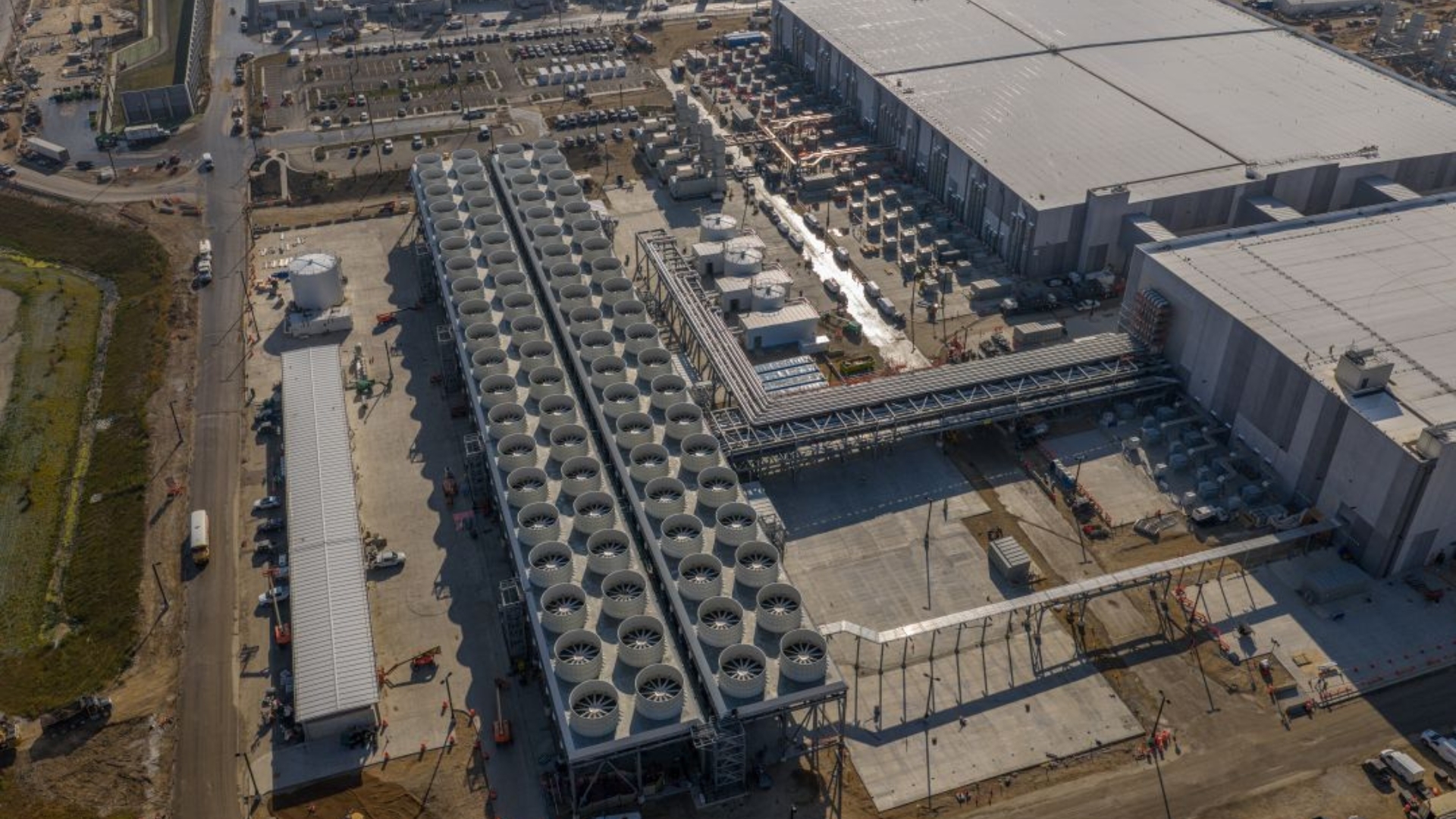
- Photonics and high-speed data movement is the next big AI bottleneck
- The data center cooling state of play
- Massive AI data center buildouts are squeezing energy supplies
- Ultra Ethernet: The data center interconnection of tomorrow
The source didn't name the chip supplier, but Z.ai's recent training history points to Huawei. The company released GLM-5.2 in June, an open-weight model purportedly trained entirely on Huawei Ascend accelerators with no Nvidia hardware involved, and it topped the open-weight leaderboards within a week. Z.ai, formerly known as Zhipu, has also been on the U.S. Commerce Department's entity list since January 2025, which cuts off legal access to Nvidia silicon and leaves domestic parts as its only supply line.
Raw power draw flatters the comparison with U.S. sites of similar size, however. Chinese accelerators such as Huawei's Ascend line trail Nvidia's current Blackwell parts on performance per watt, so a gigawatt of domestic silicon delivers less usable training compute than a gigawatt consumed by Nvidia systems.
Beijing is drafting a plan to spend roughly 2 trillion yuan ($295 billion) over five years on a nationwide grid of AI data centers, with at least 80% of the underlying technology sourced from Chinese suppliers. Filling those facilities is a big problem, though, as SMIC's most advanced stable node - the roughly 7nm-class N+2 process - is running above 93% utilization.
In addition, scarce domestic HBM constrains how many Ascend-class accelerators Huawei can assemble, and Huawei shipped around 812,000 AI chips last year. Ultimately, China can put up a 1GW shell much faster than the chips needed to draw 1GW can be produced.
Z.ai's rival Moonshot suspended new subscriptions on Sunday, saying in a social media post that it wanted to prioritize compute for existing members after the launch of its Kimi K3 model. Z.ai itself is on track for $1 billion in annual recurring revenue after hitting its 2026 sales target in July, people familiar with the matter told Bloomberg earlier, and the company recently raised billions of dollars through a Hong Kong IPO and a follow-on share sale.
The source didn't disclose the data center's location, its cost, or its construction timeline.