Prolific Team Fortress 2 collector is selling his in-game case arsenal for an estimated $100,000 — 1.7 million items collected over 10 years are enough to fund a house purchase
Team Fortress 2 cases are worth pocket change. There are a few select cases that scale up to a few dollars, and even fewer with a market price in the double digits, but the vast majority of cases are worth a few pennies, no more than a Steam Trading Card. But one player, Vincent Stech, started collecting cases nearly a decade ago, racking up over 1.7 million cases across several Steam accounts. And now, he's selling the whole collection, with an estimated value of $100,000.
Stech started collecting cases around Team Fortress 2's last major update, in late 2017, outside of annual Halloween events that persisted through 2022. In order to accumulate so many cases, Stech largely automated the process, noting that he was careful not to upset the string-pullers at Valve as he amassed a stash of seemingly innocuous digital assets.
That's always been one of my biggest fears over the past decade, is one day they wake up like hey, we don't like what this guy's doing,'" Stech told Tom's Hardware. Because I know people with accounts with like 50,000 items that won't load, and Valve won't delete the items off their account, so they just can't access Team Fortress 2 inventory ever again on their main account."
Before understanding Stech's process, however, we have to start with how Team Fortress 2's in-game economy works. Like other Valve titles, you're able to list items you earn in-game on the Steam Community Marketplace, selling them for real dollars or spending real dollars of your own to buy other items. That's the normal way of doing things, but this in-game economy has grown beyond the bounds of Steam. A lot of transactions happen off the platform.
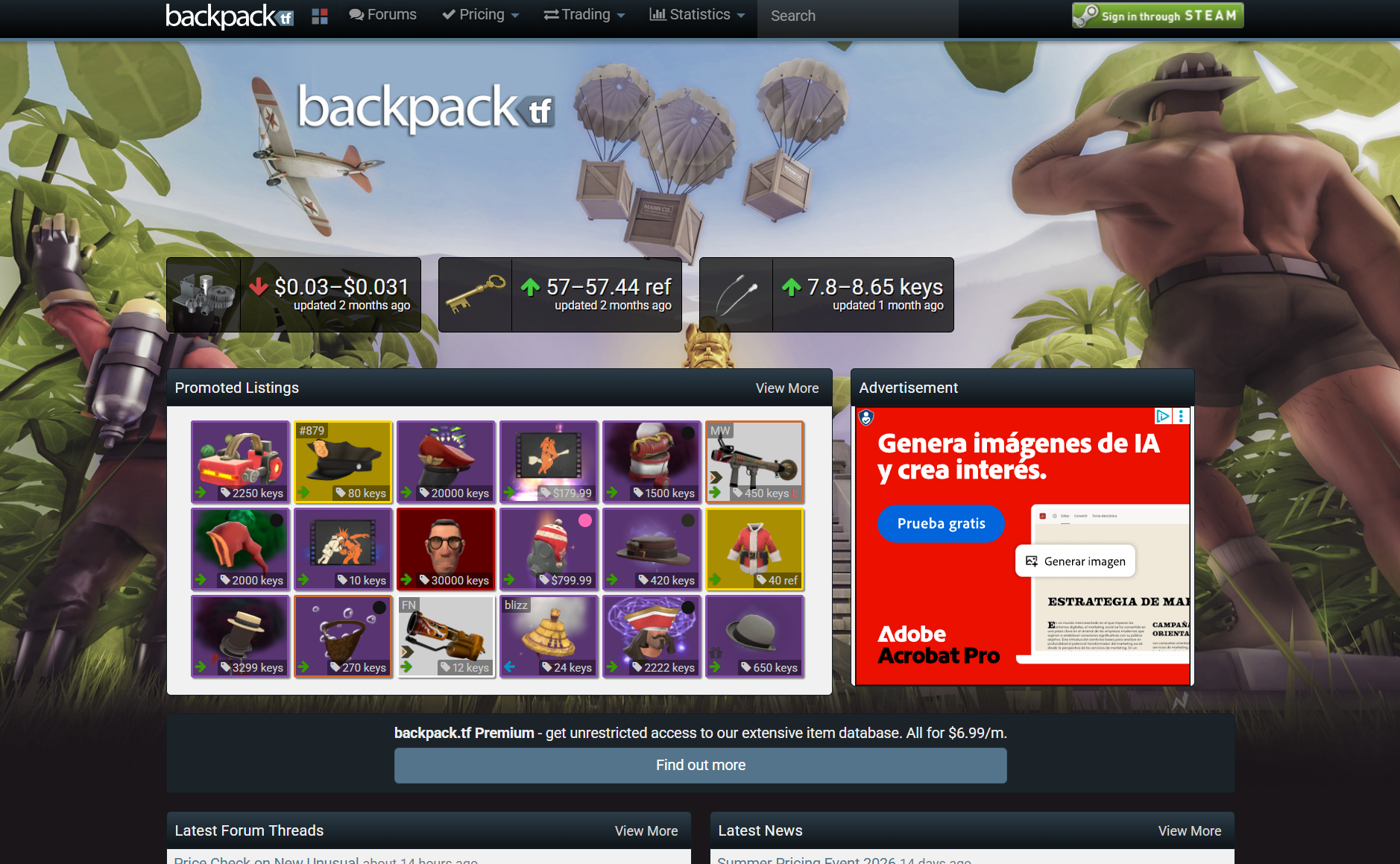
Websites like backpack.tf and stntrading.eu take trading off of Steam, allowing you to use in-game crafting materials (along with keys) to buy and sell items. There are several reasons for these third-party marketplaces to exist, not the least of which is bot automation, which is against Steam's Terms of Service. This exchange of in-game currency for items happens through trades on Steam, creating a separate marketplace where real money doesn't change hands.
That's not where Stech started. Team Fortress 2 cases, they weren't worth anything. They were... people were just giving them away because they take inventory spots," Stech said. People were deleting things, and so I decided to scoop them up."
The problem Stech quickly ran into was inventory space. You can only have a few thousand items in your inventory (Stech told me 4,000 for Team Fortress 2, others say it's around 2,000). Regardless of the number, it's far too low a limit to amass nearly 2 million items, even with dozens of alternative accounts. Stech bypassed this issue by using the community marketplace. He listed the cases at very high prices where they were unlikely to sell. That's because you can have tens of thousands of items on the market before Steam gets really angry at you." It effectively multiplies inventory space.
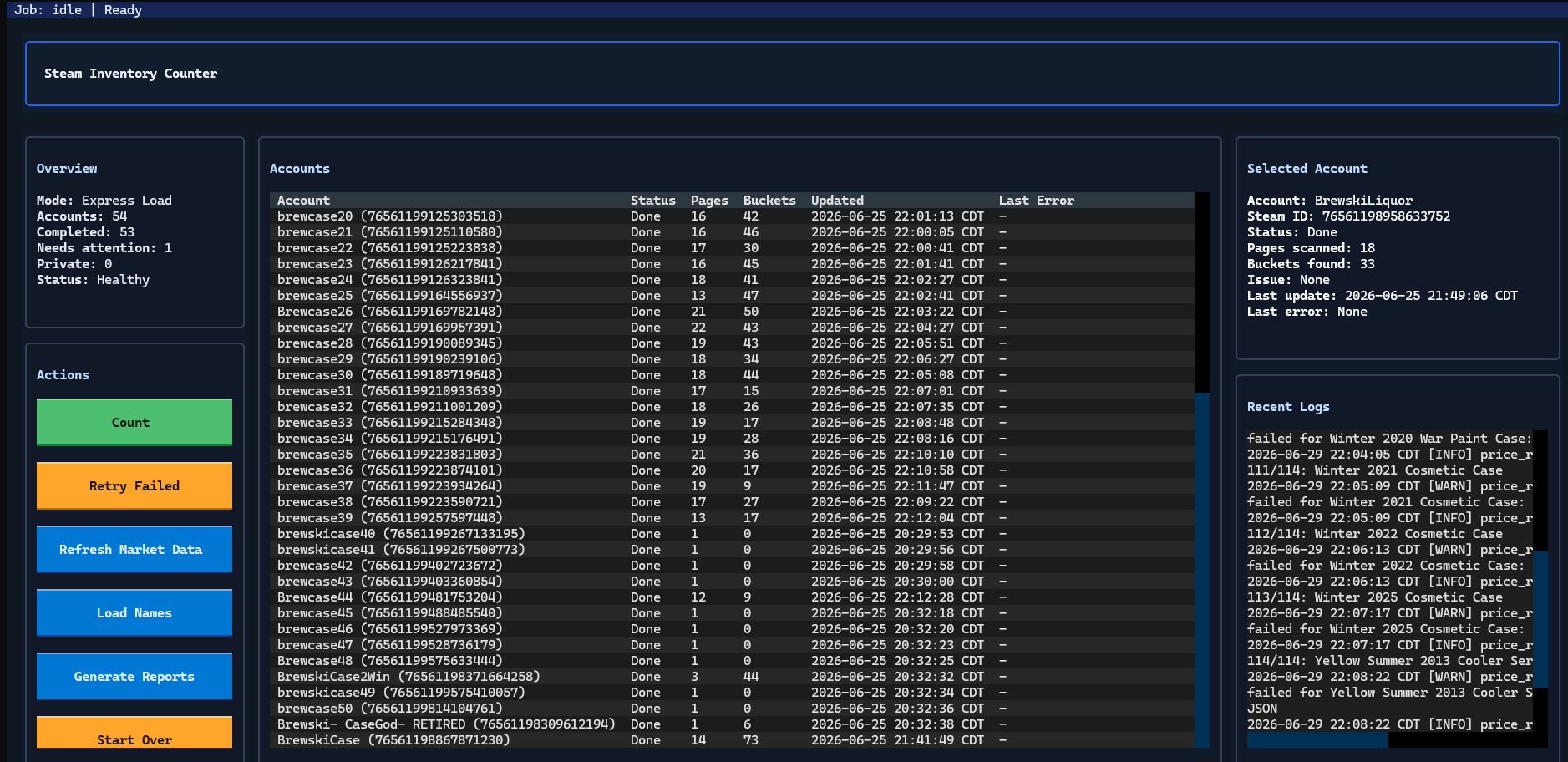
As his inventory began to grow, Stech started automating the process of taking inventory and accepting trades, the latter of which was handled through a simple batch file. At first, Stech was just buying cases in bulk at relatively low prices, but the inventory escalated once he started digging into Steam's local pricing in different regions.
In Venezuela and, like, Russian [Rubles]... they are very weak currencies compared to the U.S. dollar," Stech said. What I found out is the lowest you can sell an item on Steam for us is three cents. For them, it's a 10th of a penny. So I found this one guy in Venezuela... he would buy almost every case off the Steam Community Market for their extremely low price, and then he would sell it to me, and I would just give him, like, keys. And he was actually a doctor in Venezuela, and they don't make much at all by comparison to, like, what $50 would be in USD. So a large majority of his income was case money."
For context, $50 is equivalent to just over 37,000 bolivares (the official currency of Venezuela).
Stech's first cash-out from Steam was $50 when he was around 16 years old. A few years later, he cashed out $2,500 to buy his first car. Stech stopped collecting cases about three years ago, and now, he's looking to sell off the entire collection, which he estimates is worth around $100,000.
Selling this collection is no easy feat, however. For starters, Steam can break when trades get too large, necessitating hundreds of trades across dozens of different accounts. Further, Stech controls quite a large portion of known cases. At one point, I calculated I had, like, 17% of all TF2 cases that are publicly known... I would have an extremely hard time selling it off because I am a large [portion] of the market. It's like, you know, Elon Musk couldn't dump a lot of his stock."
Stech has, apparently, found a buyer that wants the whole collection, however, and the selling process is already underway. The transaction has kind of started... he has admin privileges on the trade offers he sends to my accounts, so my accounts just automatically accept any trade from him," Stech said. An option was for him to just buy the accounts, but we know that is very bannable, so we haven't done that."
Stech says he expects to have the process complete around October. Just as he used case money to buy his first car, he says he plans to use the money from the sale as a down payment on a house.