Nashville attempts to block controversial data center near zoo with eminent domain — city could force developer to sell the land for public use, rather than $700 million installation
The Nashville Metro Council just gave the go-signal to Mayor Freddie O'Connell's plan to use eminent domain to block a planned 23-acre data center campus sitting right beside the Nashville Zoo at Grassmere. According to real estate news platform CoStar, the city council approved the measure by a 27-5 vote last Wednesday, meaning the city government can now take the next steps to proceed with the legal process that will force the purchase of the property.
Go deeper with TH Premium: AI and data centers
- Photonics and high-speed data movement is the next big AI bottleneck
- The data center cooling state of play
- Massive AI data center buildouts are squeezing energy supplies
- Ultra Ethernet: The data center interconnection of tomorrow
I'm glad Metro Council passed our legislation that gives us the option to acquire property next to the zoo for a number of public needs," Mayor O'Connell said in a statement. We're working closely with our Finance and General Services departments to plan for the site."
The developer of the property, DC Blox, wanted to put up a 69,220-square-foot single-story data center on the site that was expected to cost more than $700 million to build. It would sit right beside the 188-acre Nashville Zoo at Grassmere, which opened in 1990 as the Grassmere Wildlife Park. This zoo is one of the biggest attractions in Tennessee, expecting to receive two million visitors annually by 2027. Aside from that, it also participates in more than 50 conservation programs with institutions across the world.
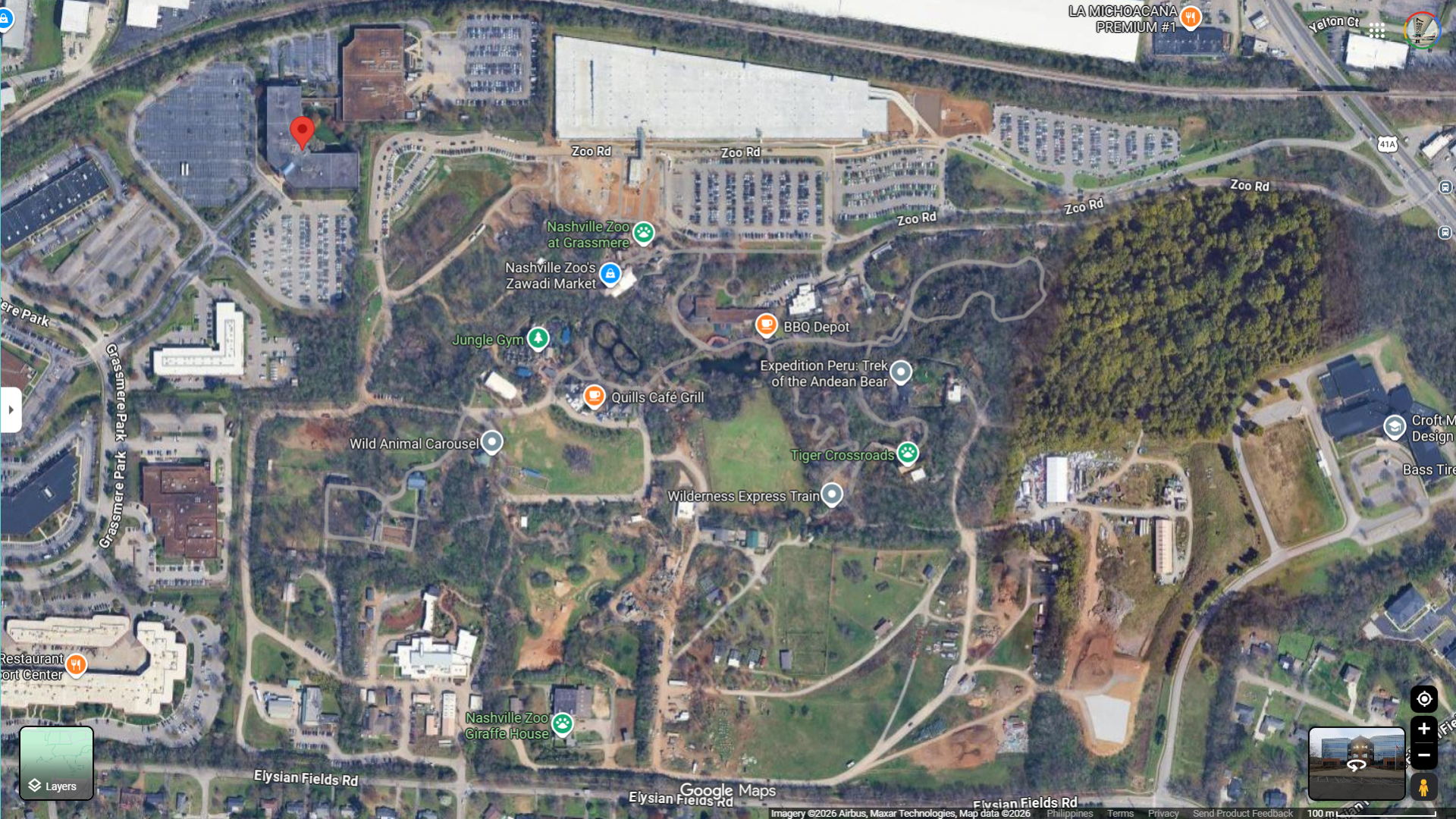
Zoo officials objected to the development, raising concerns about disruptions like noise and light pollution, among others. They even started an online petition that garnered more than 500,000 signatures by the end of July, even getting support from celebrities like Brad Paisley, Sheryl Crow, and Jack White.
DC Blox argues that 648 Grassmere Park used to provide data center functions, so putting up a newer one on the site would not necessarily disrupt the community, including its neighboring zoo. However, there have already been several widely reported incidents from across the U.S. that highlighted the noise and light pollution that zoo officials have been concerned about.
Residents in a town in Michigan have been complaining for about two years now after their neighboring data centers started emitting noise 24/7, comparing it to the sound that a vacuum makes in your living room. Aside from that, some people complain about infrasound, high- and low-frequency vibrations that do not register on decibel meters but could sometimes be felt coming from data centers and potentially cause adverse health effects. A Microsoft data center in Wisconsin is also facing a lawsuit due to noise and extreme light pollution.
While this does not mean that the proposed Nashville data center will cause a similar issue, it seems that city officials do not want to take this risk. Light and noise pollution could have adverse effects on the animals housed by the zoo, potentially disrupting their habitats and behavior.
The city council vote would allow the local government to negotiate with DC Blox for the acquisition of the property. However, this does not automatically mean that Nashville would automatically have the right to own the property. It will first have to negotiate with the owner to determine that property's fair market value, and if the two parties cannot agree, then a judge or jury will have to determine the final amount. The company could also challenge the eminent domain claim.
There have been fears that the government will use eminent domain to advance data center projects, which was further spurred by Georgia Power's use of the power to acquire 30 residential properties to expand the power grid. Although the utility company said that it wasn't in the data center business, the move was made to connect a substation to a power plant, with 70% to 80% of the electricity traveling through it expected to serve data centers. But, as Nashville showed, this authority can also be used to block data center projects.