This week on Tom's Hardware Premium: August 7, 2026 — Inside China's lithography efforts, co-packaged optics get a spotlight, and Samsung debuts next-gen memory tech
In case you've not subscribed to Tom's Hardware Premium yet, here's what you've been missing out on in this week's selection of articles.
First of all, we've fully redesigned Bench, our browsable database of hardware benchmarks. Using the same data that informs our massive hierarchy pages, Bench 2.0 allows you to granularly search and compare benchmarks between products. While you get an aggregated set of data in our reviews and hierarchy lists, Bench allows you much finer detail in seeing every single benchmark we run, whenever we review a new product.
Bench is exclusively available for Tom's Hardware Premium subscribers.
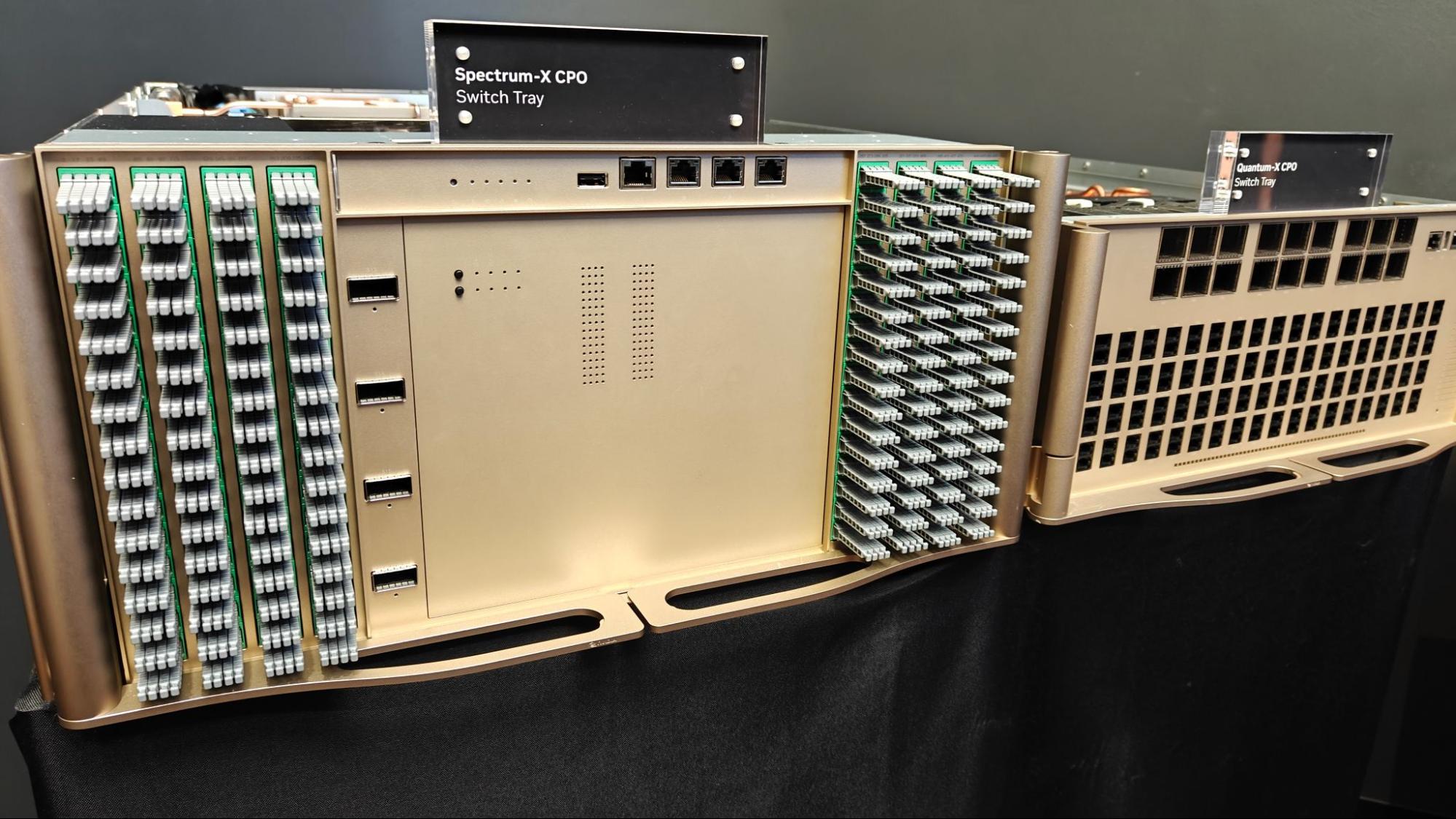
Earlier this week, we published a roadmap, focusing on the foundries that are making co-packaged optics (CPO) a reality. As the demands of data centers increase, so too do the demands on scale-up and scale-out connectivity. With AI accelerators now demanding extremely fast signalling speeds, CPO puts optical engines next to the processor or ASIC in order to shorten electrical paths, increasing data rates, shortening the electrical path, and consuming less power.
We dive deep into TSMC's COUPE roadmaps, which extend to 2030, and to a blistering lane speed of 400 Gb/s, Intel's CPUs with OCI chiplets, Samsung Foundry's path to building a CPO turnkey, and GlobalFoundries' vendor-agnostic OCI-MSA CPO platform.
That's not all we had on the roadmaps front this week, as we've taken a deeper look at China's chipmaking tool roadmaps, hot on the heels of the country announcing it will build DUV immersion lithography machines capable of producing 7nm chips by 2030. The more difficult equation is building a domestic EUV machine, which demands a robust supply chain of the right tooling and equipment, with over 3,000 workers reported to be working on what's now dubbed China's "Manhattan Project."
The country still relies on ASML's DUV lithography machines for chipmaking, as modern systems are subject to export controls, which is why Huawei, the creator of the Ascend series of AI accelerators, is keenly interested in getting the project off the ground.
But China has more on its mind than merely producing the machines; it also wants to spin up its DRAM output via CXMT, which is planning to expand to a brand-new fab to boost memory output. This comes following consumer brands and computer makers like Dell, Lenovo, and more. But it's no simple task, as we explore how the MATCH Act could impact CXMT's ability to produce DRAM modules on more advanced nodes.
There are also concerns around expanding wafer capacities and procuring the tools required for such an expansion, which targets 30% of market share by 2030.
On the memory front, Samsung has also debuted three brand-new memory technologies, zHBM, zNAND-O, and BV-NAND, which each target different markets and are all built upon advanced wafer bonding techniques. zHBM is expected to enable 8x the performance of HBM5, while zNAND-O,. which would allow the company to put four or eight stacks of NAND devices on top of logic dies. Meanwhile, BV-NAND represents Samsung's 10th-generation V-NAND and is the closest of the three announcements to commercialization.
You can read this lengthy technical breakdown of Samsung's announcements for free, even if you're not a Tom's Hardware Premium subscriber.

Is the AI tokenmaxxing party back on? With the release of the modestly priced Kimi K3 and DeepSeek V4 Flash-0731 over recent weeks, the emergence of competitive, cheap Chinese AI models has now forced companies like OpenAI, which launched GPT 5.6 Luna back in June, to cut prices by a staggering 80% in the wake of the competitive open-weight Chinese models. And OpenAI isn't the only company trying to offer more value to users. Anthropic replaced Opus 4.8 with 5.0, and Google also came out with the affordable Gemini 3.6 Flash and Gemini 3.5 Flash-Lite models, too.
So, where does that leave the AI industry? Western frontier labs must keep pace with the competition on offer overseas, and the intensifying competition is slimming down margins for what we assume to be already subsidized token costs.
Within the world of artificial intelligence, other stresses are looming for ChatGPT-maker OpenAI. The company is heading to court with tech titan Apple over claims that OpenAI stole trade secrets from Apple. The claim comes amidst OpenAI's development of dedicated AI hardware. OpenAI says it didn't want Apple's trade secrets, and that the Cupertino company was simply getting things wrong. Apple, however, alleges that 13 of its former employees passed along the aforementioned trade secrets, including documents sharing details of unannounced products and screenshots of sensitive materials.
We explore how the lawsuit is developing in this rather unusual offshoot, which centers around products that have yet to see the light of day.
That wraps up most of the major pieces of content that we published this week on Tom's Hardware Premium, with the bonus of being able to access our deep dive into Samsung's new announcements without a subscription.
For all of the other articles in this list, and to use our Bench tool, you can sign up to Tom's Hardware Premium today to read more. We'll be back next week with another roundup to keep you up to date.

Don't miss out on this Tom's Hardware Premium. Get a full year of access for just $29, or from $7 per-month. Get daily news analysis, deep dives into specialist topics in the semiconductor industry, as well as access to Bench, the largest benchmarking database around.View Deal