Scythe Magoroku Review: excellent RAM thermals, but needs improvement elsewhere
Unlike some of its cooler competitors, Chiba Japan-based Scythe is a fabless company that partners with factories in China and Taiwan for manufacturing of its air coolers, fans, and other PC hardware. The company has been delivering cooling products aimed largely at quiet performance for more than 20 years. We've enjoyed testing its previous products, like the fan-favorite FUMA 3 air cooler. Today we're looking at Scythe's latest offering, the Magoroku - a dual tower heatsink paired with two of Scythe's Wonder Tornado 120 fans.
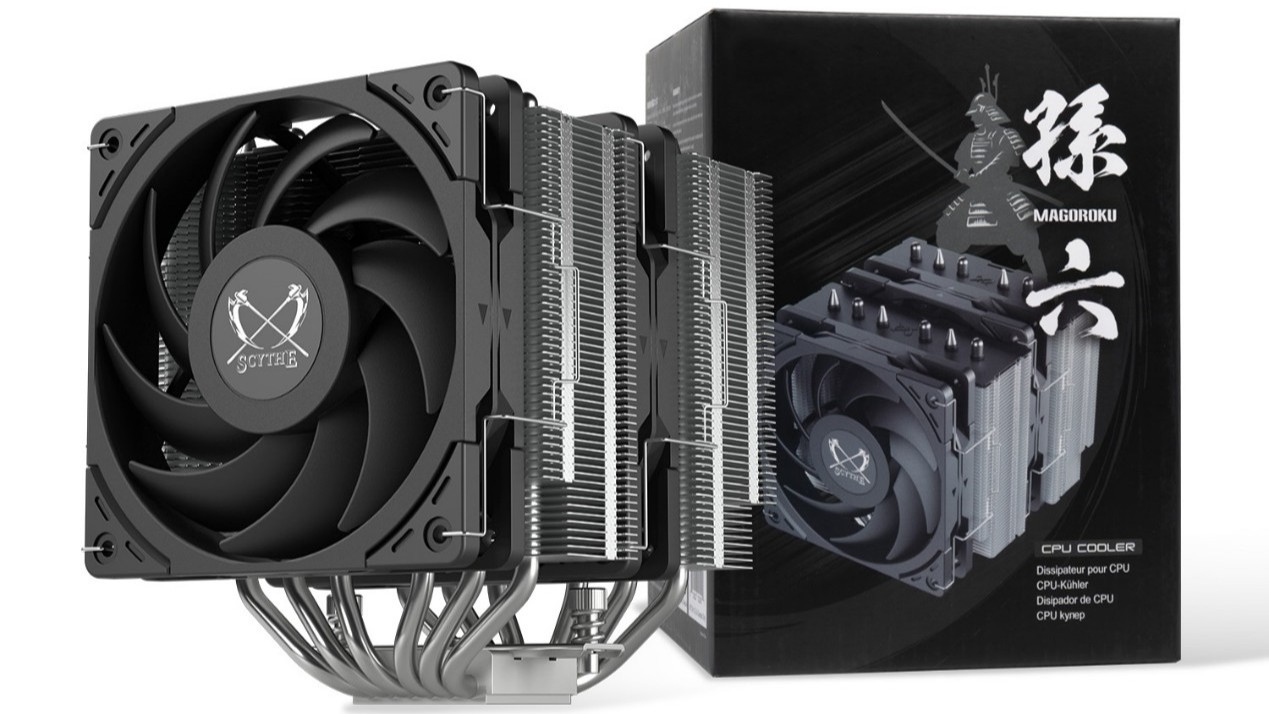
Let's take a look at the specifications and features of this CPU cooler. Then we'll go over thermal and noise benchmarks to see if the Magoroku deserves to make our list of the best CPU coolers.
Cooler specificationsCooler | Scythe Magoroku |
Colors | Black |
MSRP | $42.99 |
Lighting | None |
Warranty | One year |
Socket Compatibility | AMD AM5/AM4 |
Intel 1700/1851/1200/115x | |
Dimensions w/ fan | 134 (W) x 142.5 (D) x 155mm (H) |
Maximum TDP with AMD's Ryzen 9 9950X3D (Our Testing) | Full speed fans: >236W |
Noise-normalized: >228W average |
Dual tower heatsinks, six copper heatpipes
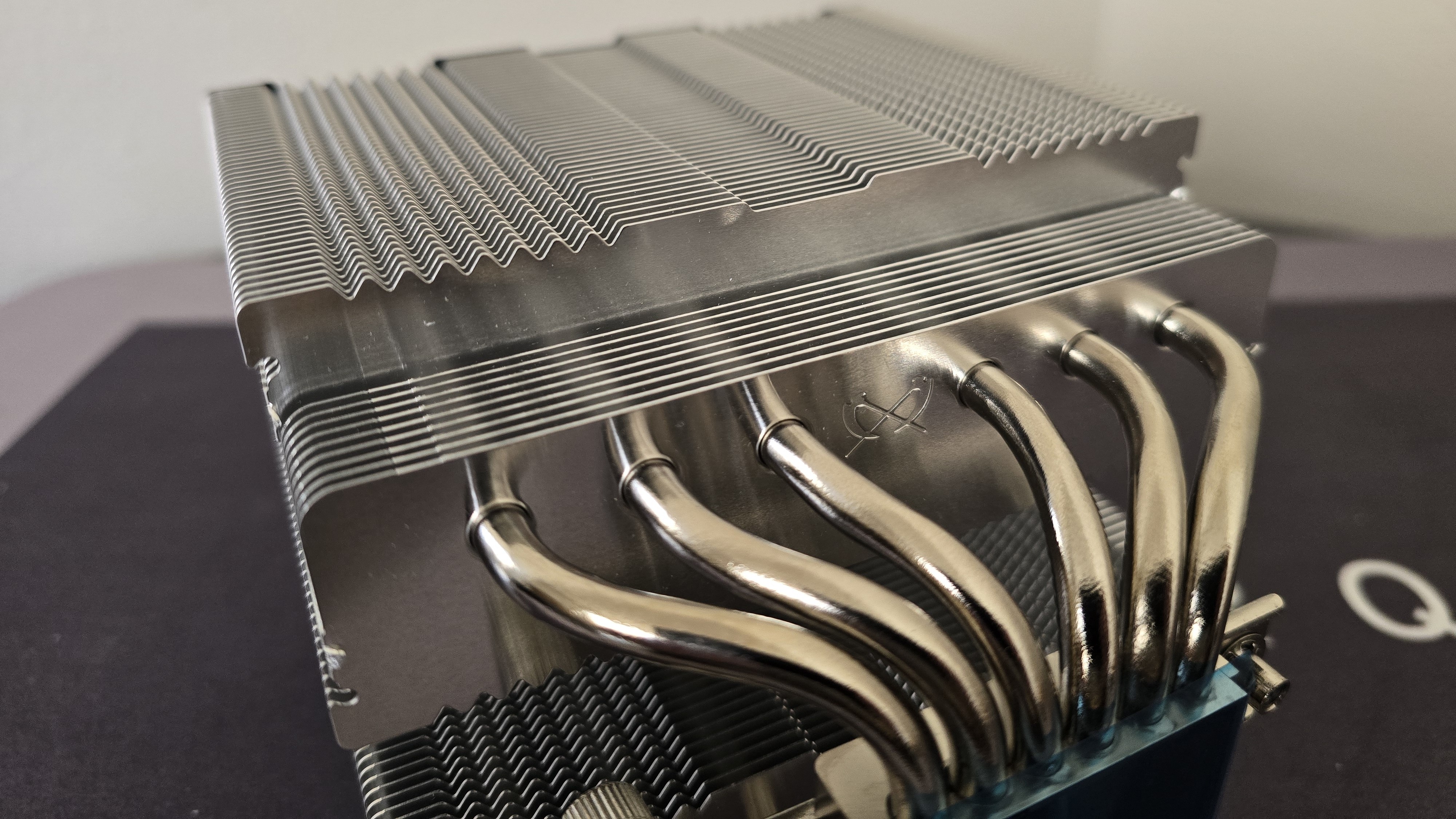
This air cooler features a dual-tower design, with six copper heatpipes to move heat from the CPU block into the metal fins above.
RAM Clearance
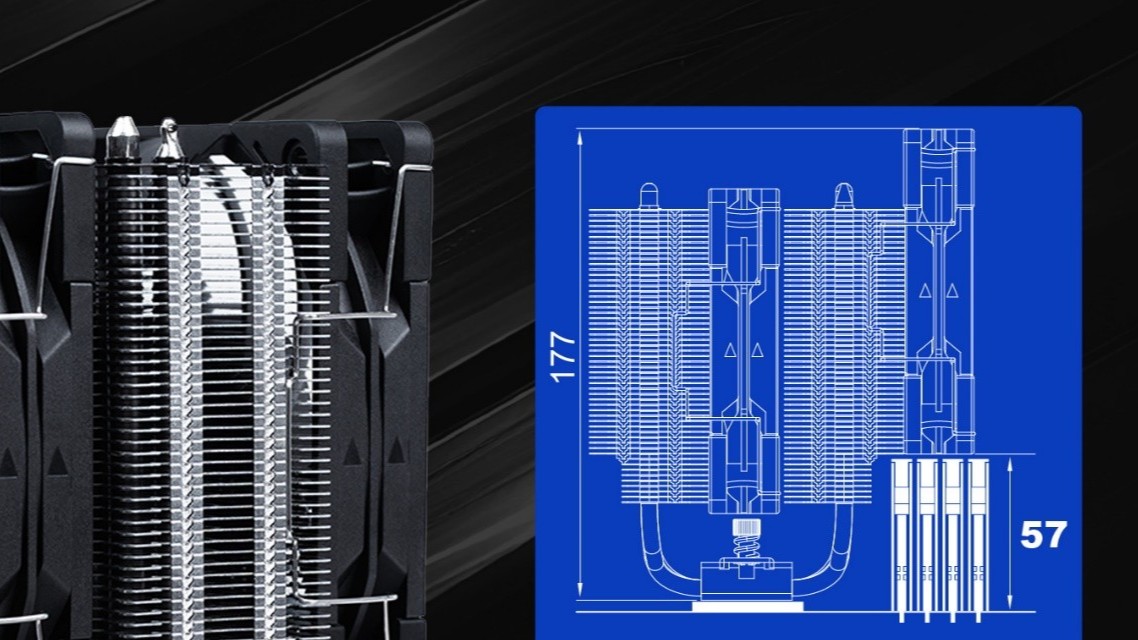
RAM compatibility with this cooler depends on how you look at it. Officially, Scythe mentions support for RAM up to 57mm tall. However, using the fan with tall RAM in this configuration does result in some performance loss.
We instead recommend moving the front fan to the back of the unit, above your motherboard's VRM heatsinks, for best thermal performance. This configuration also has the side effect of complete RAM compatibility, as nothing interferes with or overhangs the DIMM slots.
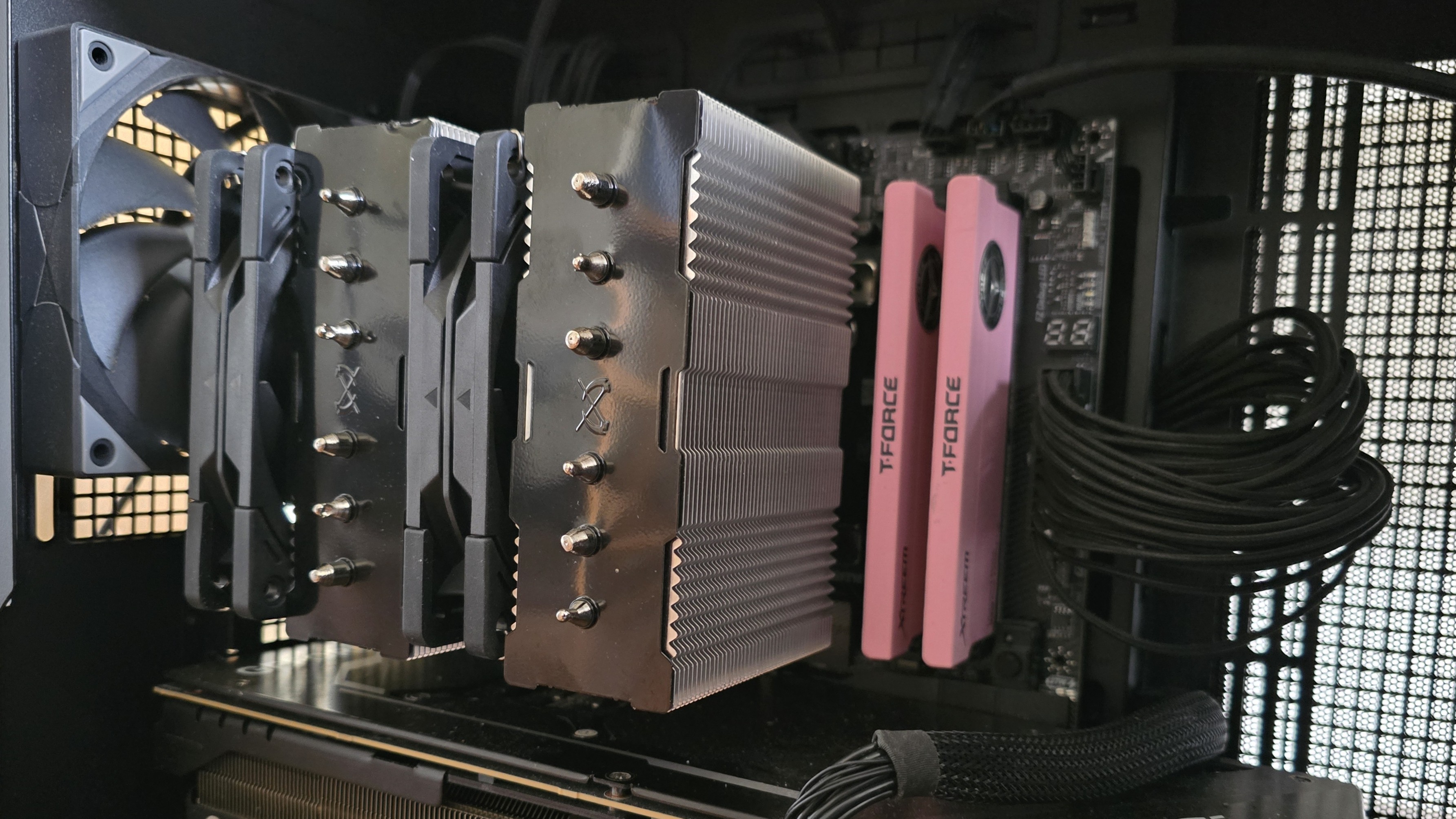
120mm Wonder Tornado fans
There's more to a cooler than just the heatsink. The included fans have a direct impact on aesthetics, noise levels, and overall thermal performance. Scythe includes two of its Wonder Tornado 120 fans with the Magoroku air cooler.
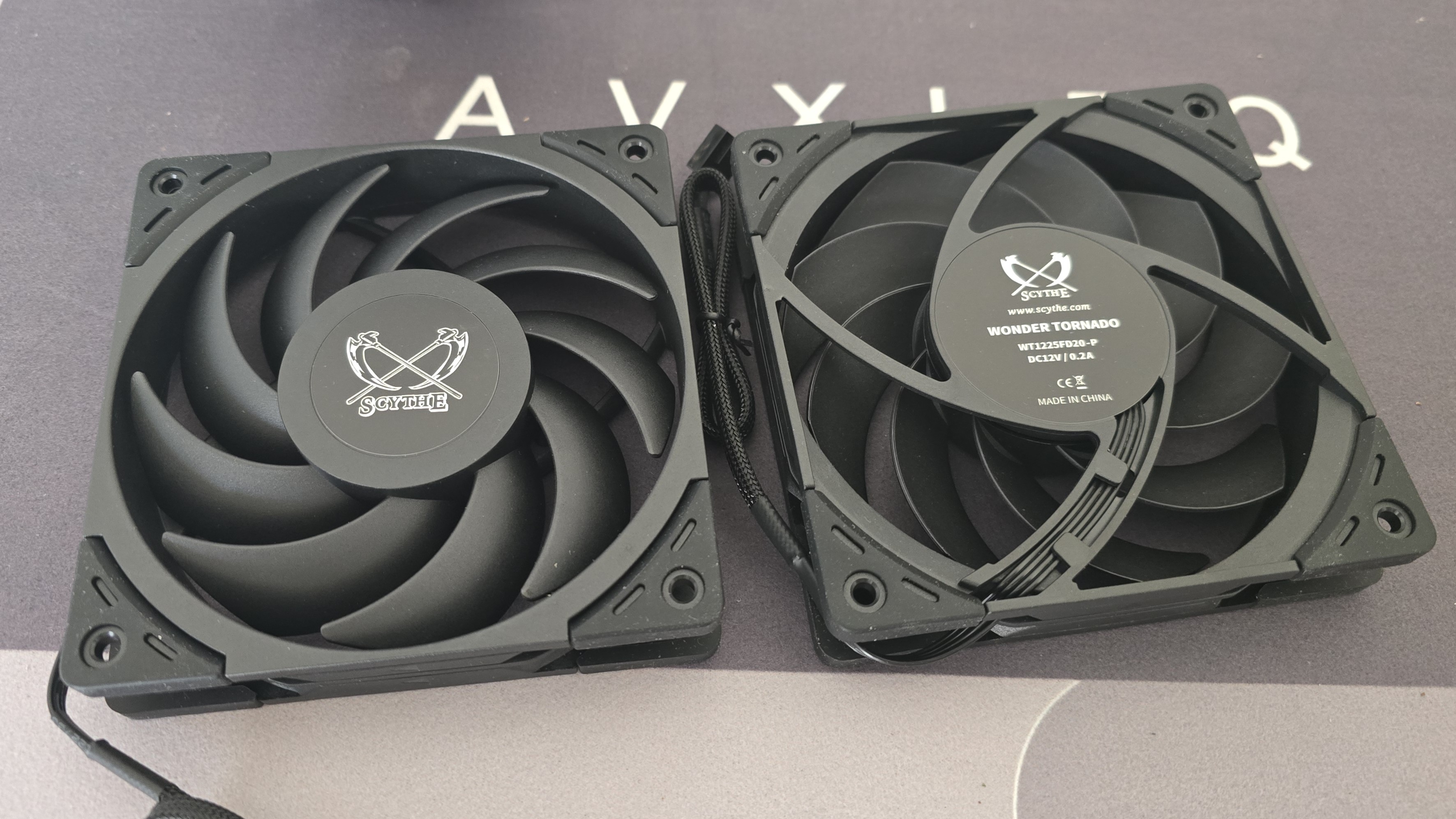
Fan Speed | 300-2000 RPM |
Dimensions | 120 x 120 x 26 mm |
Airflow | 60.29 CFM |
Air Pressure | 2.45 MMH20 |
Packaging
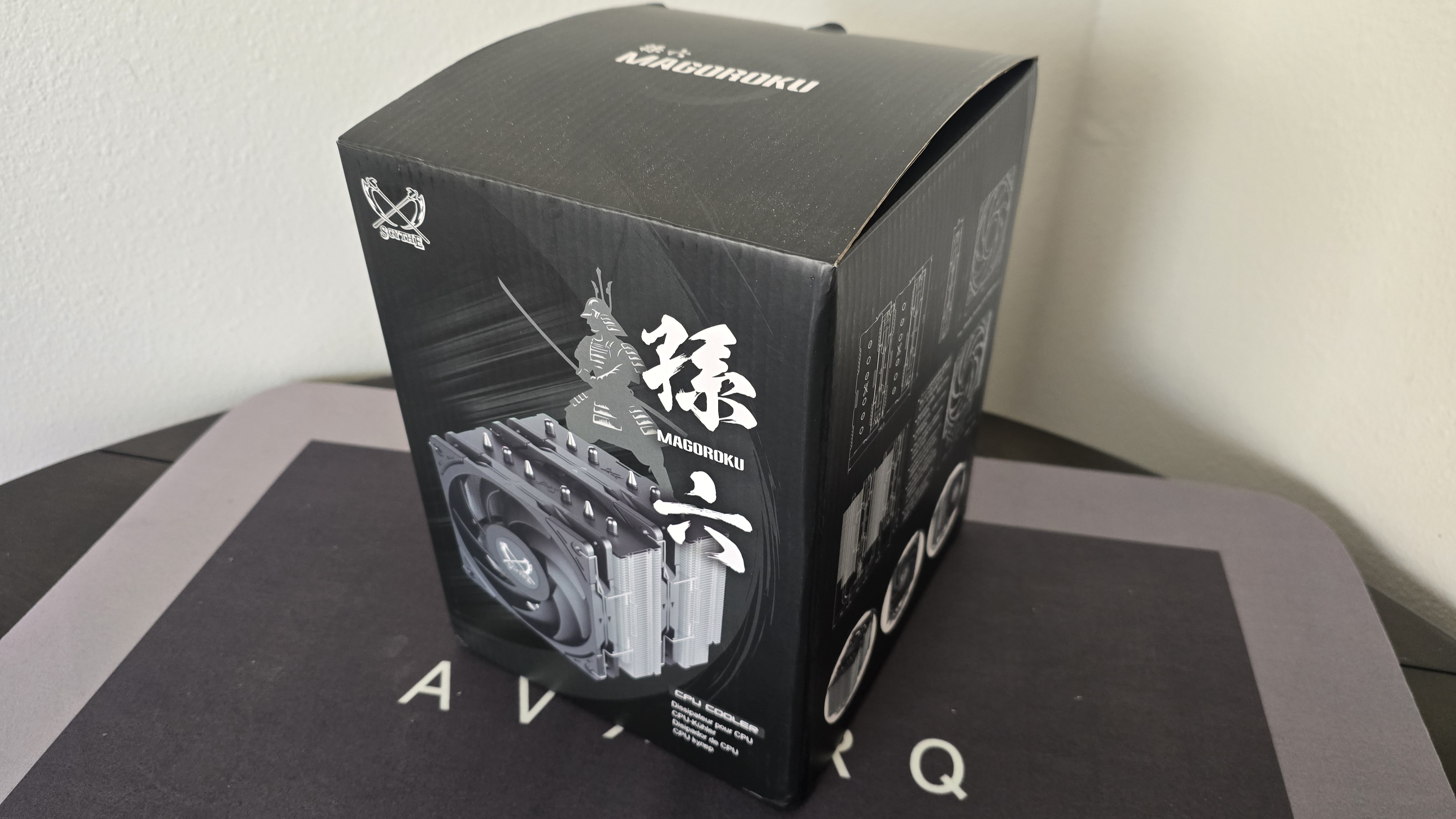
The outer packaging highlights the design of the product in a flashy but subtle way, incorporating a black background with grey and white highlights.
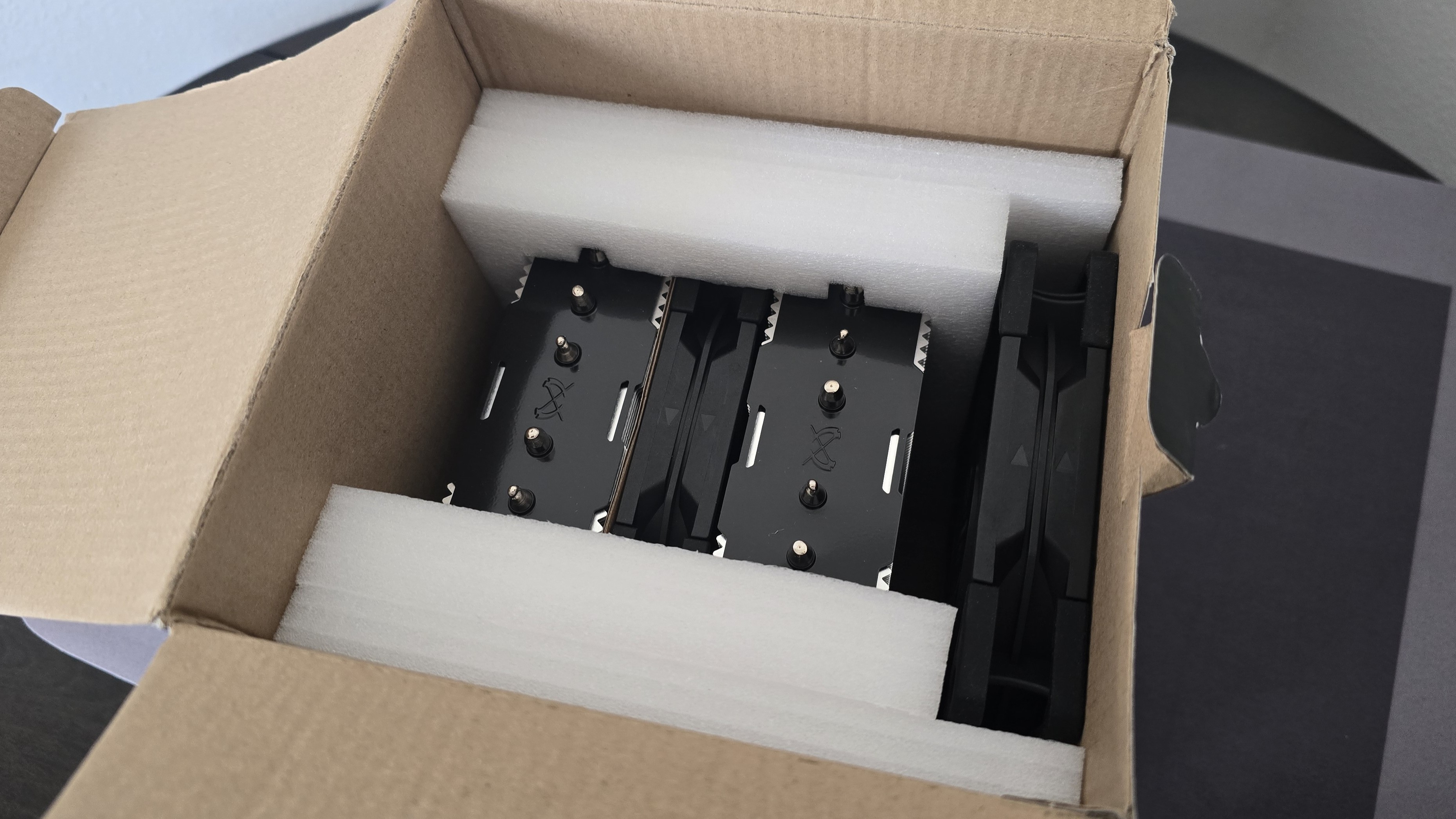
The CPU cooler and fans are protected by molded foam and cardboard inserts.
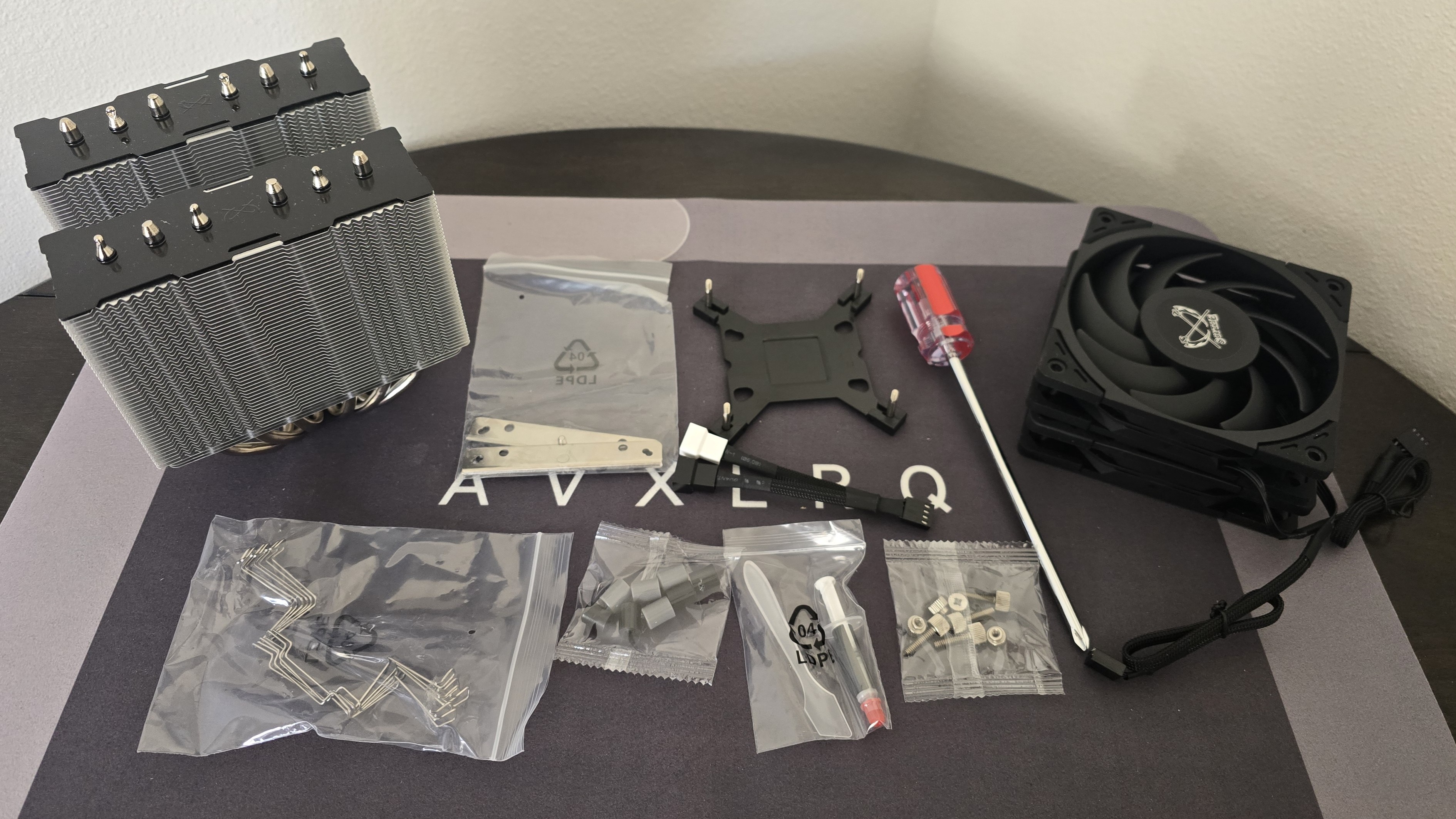
Included with the package are:
Mounting hardware for AMD and Intel platforms
Three sets of fan clips
A small tube of thermal paste
Two 120mm Wonder Tornado fans
Screwdriver
To begin putting things together, you'll need to first remove the default AM4/5 retention mechanism. Next, place the studs over the exposed holes.
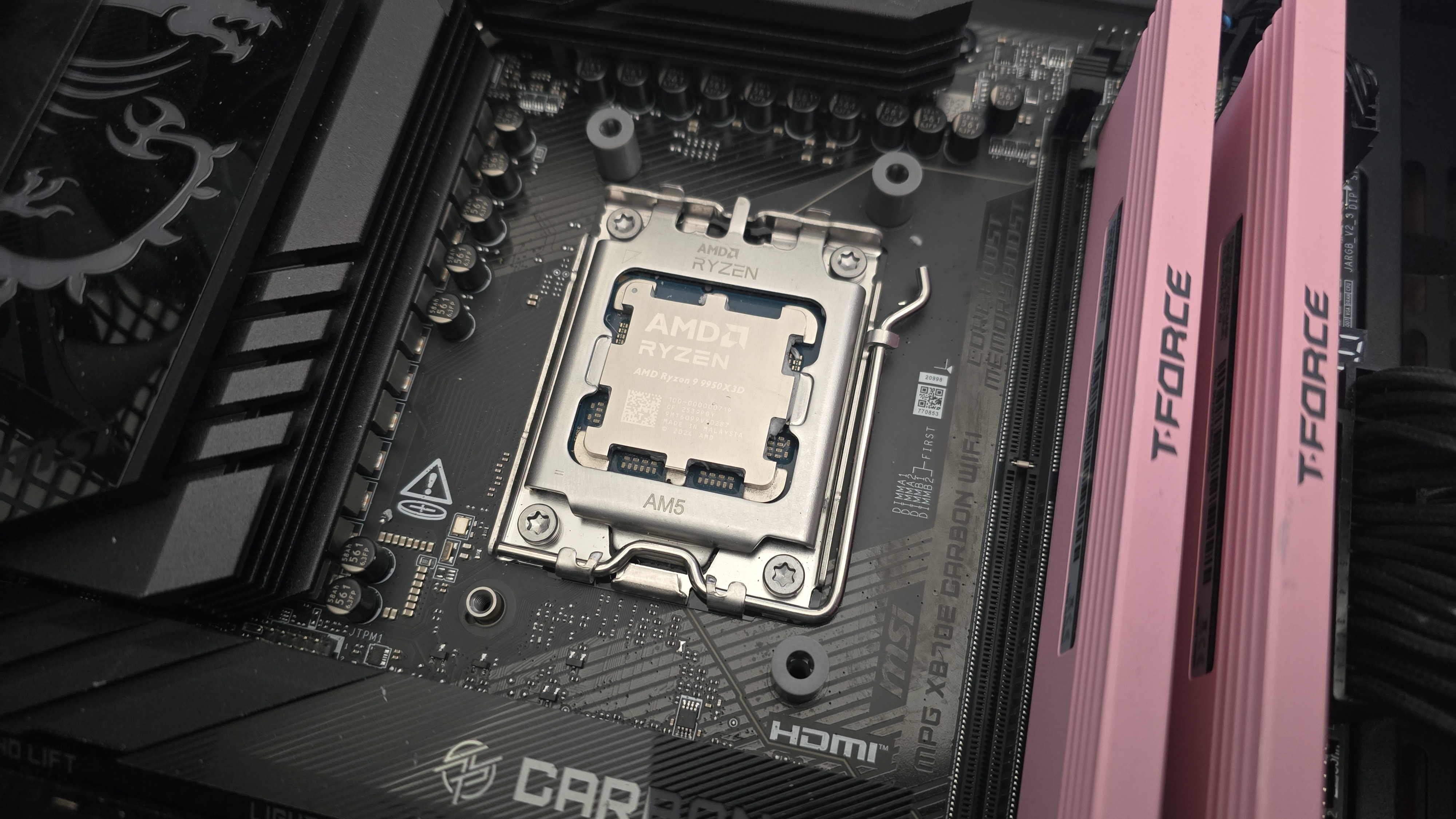
Afterwards, take the mounting bars and secure them with the included screws and screwdriver.
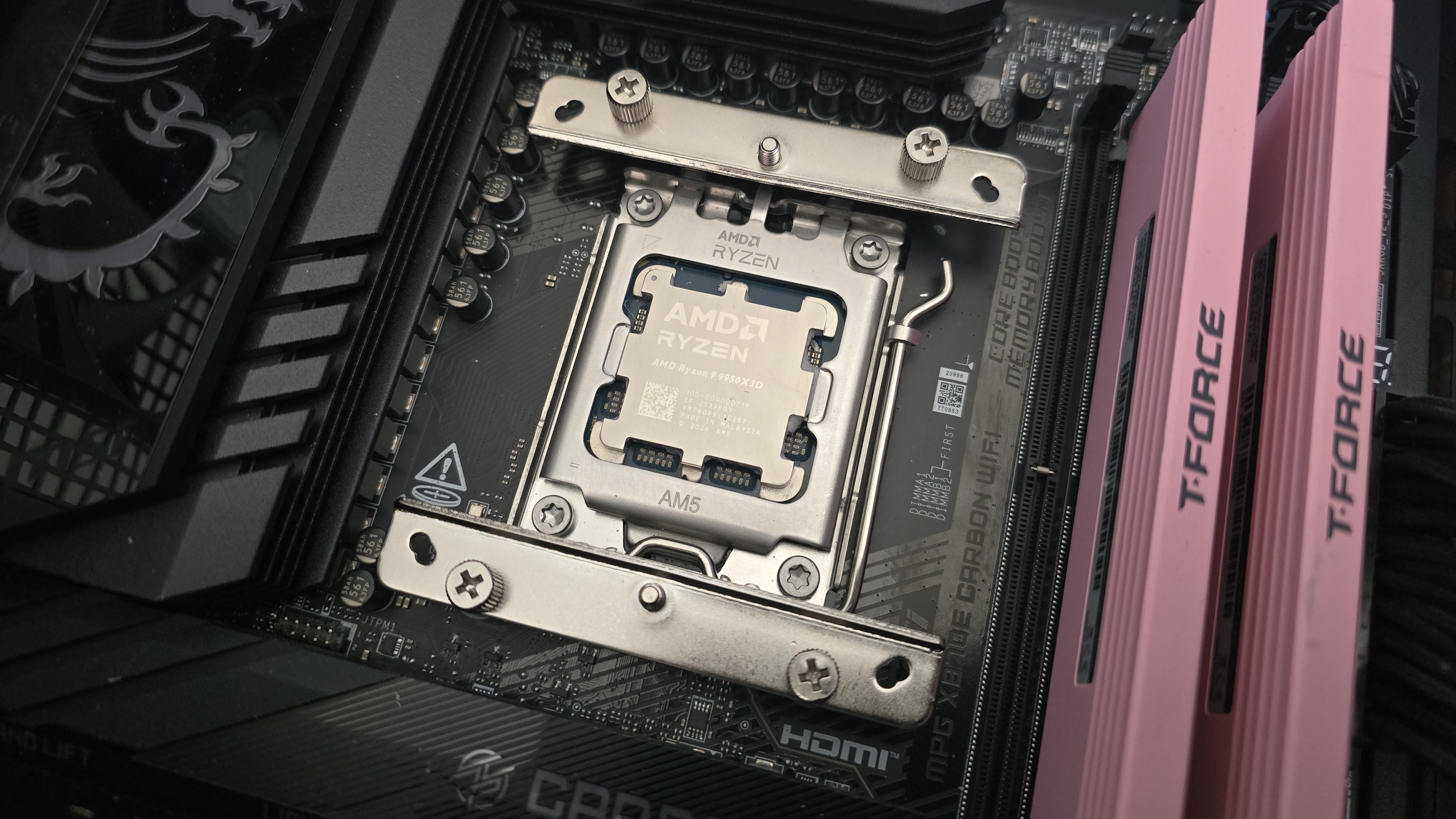
It's time to apply the thermal compound. If you're not sure how to do that, we have a handy thermal paste application guide that covers the best methods you can use.
After thermal paste is applied, take the CPU block and press it against the mounting bars, using the built-in screws and screwdriver to secure it in place.
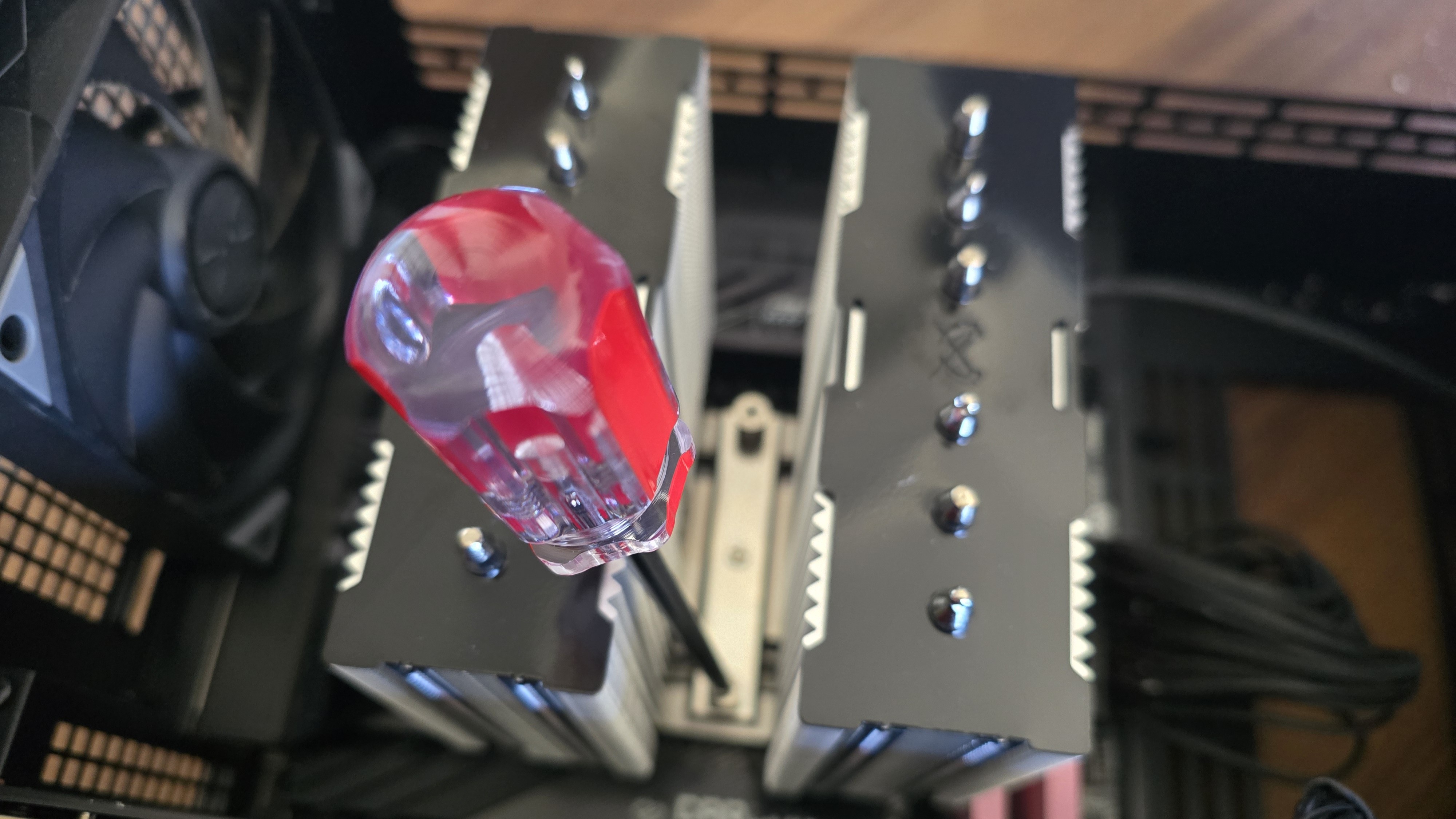
Finally, you'll want to attach both fans using the clips included with the cooler and connect them to the motherboard's PWM header. If you have tall system RAM, I advise moving the front fan and placing it in the rear for best thermal performance.
We've tested coolers with both the Ryzen 9950X3D and its non-V-Cache sibling, the 9950X. There are some differences in how the 9950X and 9950X3D CPUs are impacted by thermal events. While the heat output of the CCDs of AMD's 9950X3D is relatively balanced, the 9950X I used has one CCD that runs much hotter than the other, with a difference of over 10 degrees Celsius in some scenarios, shown below.
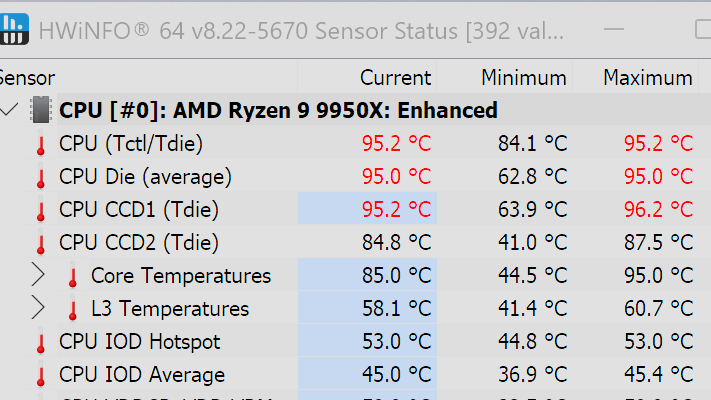
We've since returned to using a 9950X3D for cooler testing, as it has a more balanced heat profile, and is almost certainly a more widely adopted CPU. The benchmark results shared in these reviews may differ from others because I emphasize results that are comparable to real-world use. This means I generally test CPU coolers inside of a closed desktop case, which increases cooling difficulty compared to other testing methods.
Many reviewers test coolers on open test benches, which have a combination of lesser airflow needs and lowered ambient temperatures. This results in making weak coolers appear stronger than they really are. Some publications have also used generic thermal plates to test cooling solutions. I reject both of these methods because they don't accurately reflect real-world cooler conditions.
CPU | AMD Ryzen 9 9950X3D |
GPU | MSI Ventus 3X RTX 4070Ti Super |
RAM | TeamGroup Diamond Rose T-Force Xtreem DDR5-7200 |
Motherboard | MSI X870E Carbon Wifi |
Case | Tryx FLOVA F50 |
Our latest testing setup uses the FLOVA F50 computer case from Tryx.
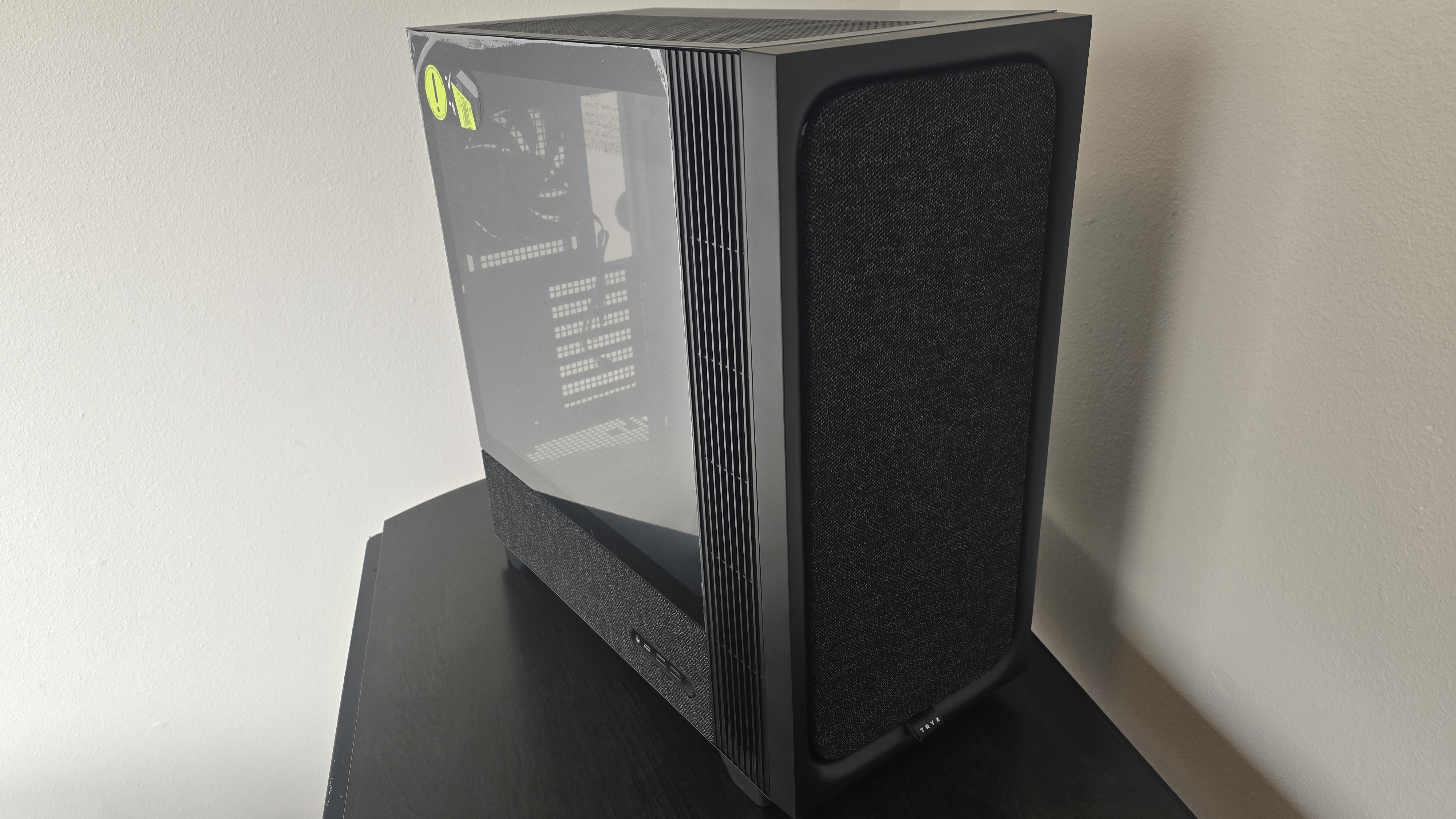
This case features a unique crossflow" fan that pulls air from the side, which the company claims is more effective than traditional intake fans. For air cooling tests, we've added a single Noctua NF-A12 G2 intake fan.
We're going to start this review's benchmark section by focusing on a traditional maximum performance test, with the CPU cooler's fans allowed to reach their fastest speeds, for the best cooling possible.
Turning on PBO allows AMD's Ryzen 9 9950X3D to stretch its legs to an extent and consume over 260W. Enabling PBO enables high power consumption and heat output, when using MSI's X870E Carbon Wifi motherboard the CPU will reach its TJ Max (peak temperature) of 95 degrees C (203 F) and thermally throttle to some extent with most coolers. When this throttling occurs, I've measured the average power consumption to determine performance.
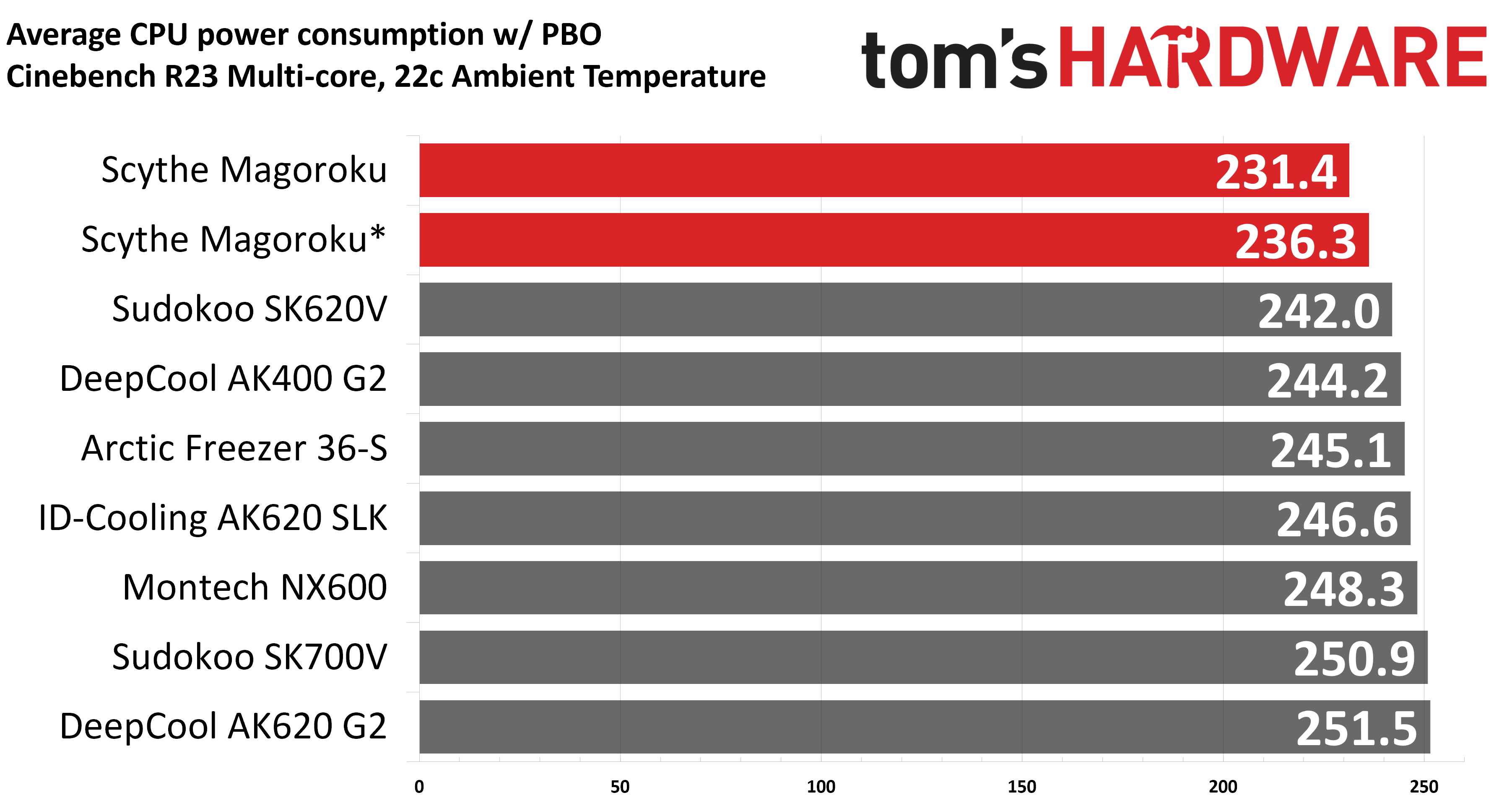
You'll notice there are two results for Scythe's Magoroku here. The first result is with an intake fan above our test rig's TeamGroup DDR5 (as Scythe suggests); the second result is with that fan placed on the back above the motherboard's VRM modules. As you can see, it's better to move the front fan to the back if your system incorporates tall RAM modules. That said, neither result is particularly impressive. These are the worst results we've seen on our latest test bench.
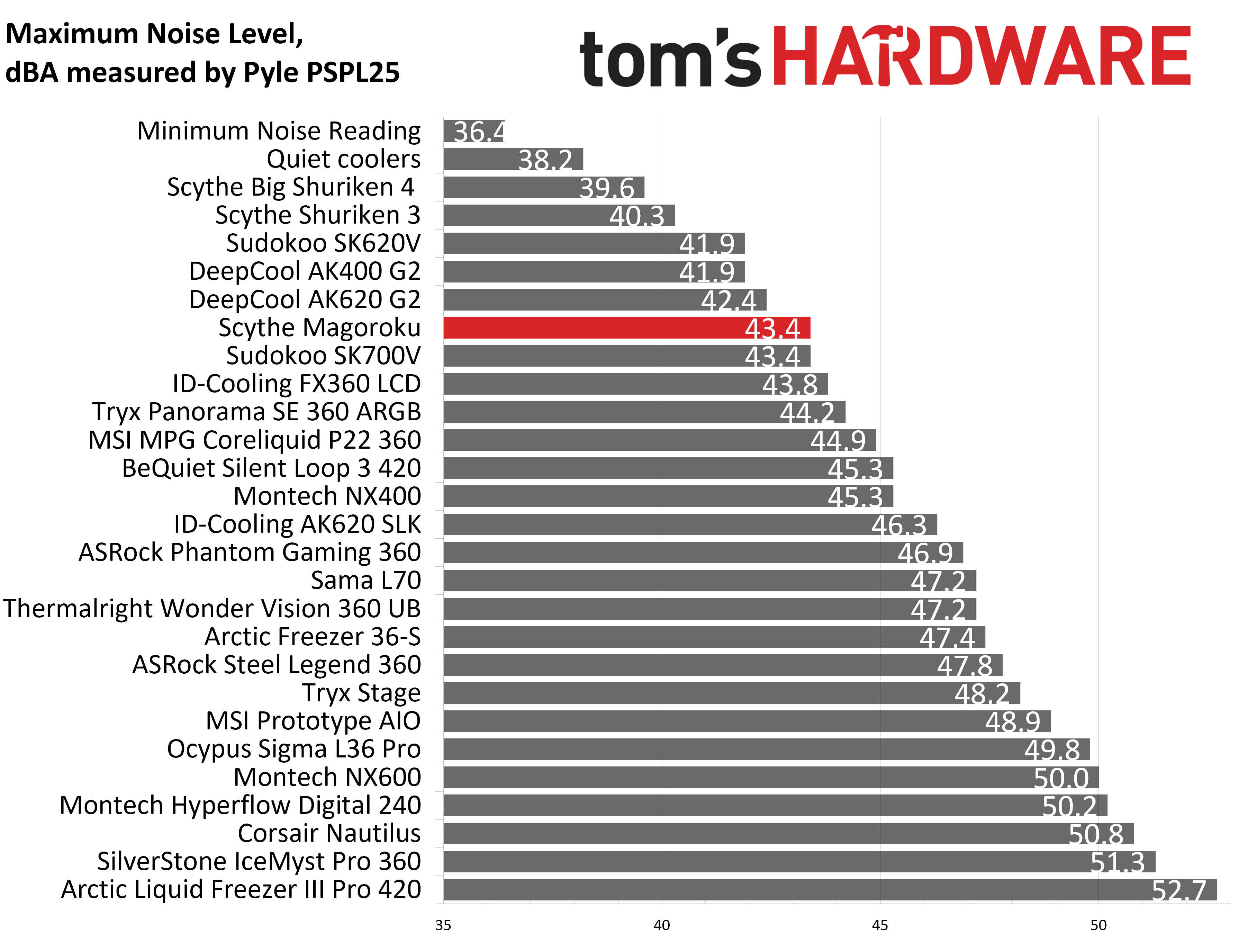
Some coolers perform well in maximum strength tests, but run loudly at full speeds. Noisy fans in this scenario aren't necessarily a bad thing; some prefer to hear them as a way to be aware when the CPU is getting hot. Scythe's Magoroku has a maximum volume level of 43.4 dBA, which is on the quieter end of the fan noise spectrum.
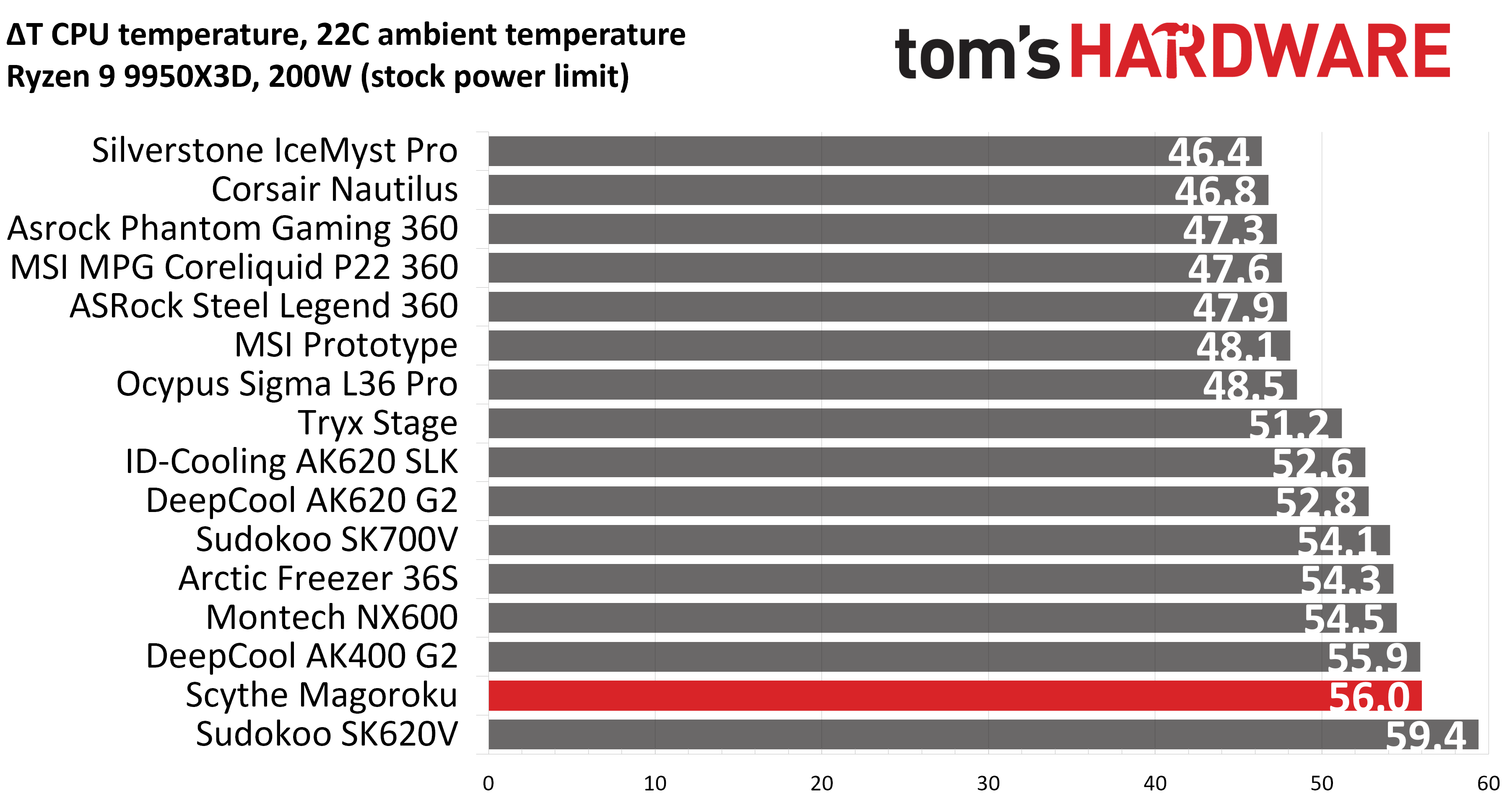
For the next thermal test, I leave the motherboard settings at their defaults, which results in a power limit of 200W when running Cinebench R23. The results here are slightly better than the last test, but not by much. The Scythe was the second-warmest cooler we've seen on this test bench.
Our next test runs Cinebench on the CPU with a 150W power limit, while also running Furmark on MSI's RTX 4070 Ti Super Ventus 3x OC. This causes the GPU to consume ~295W of power. This test is designed to emulate the thermals of games, which primarily stress the CPU and GPU.
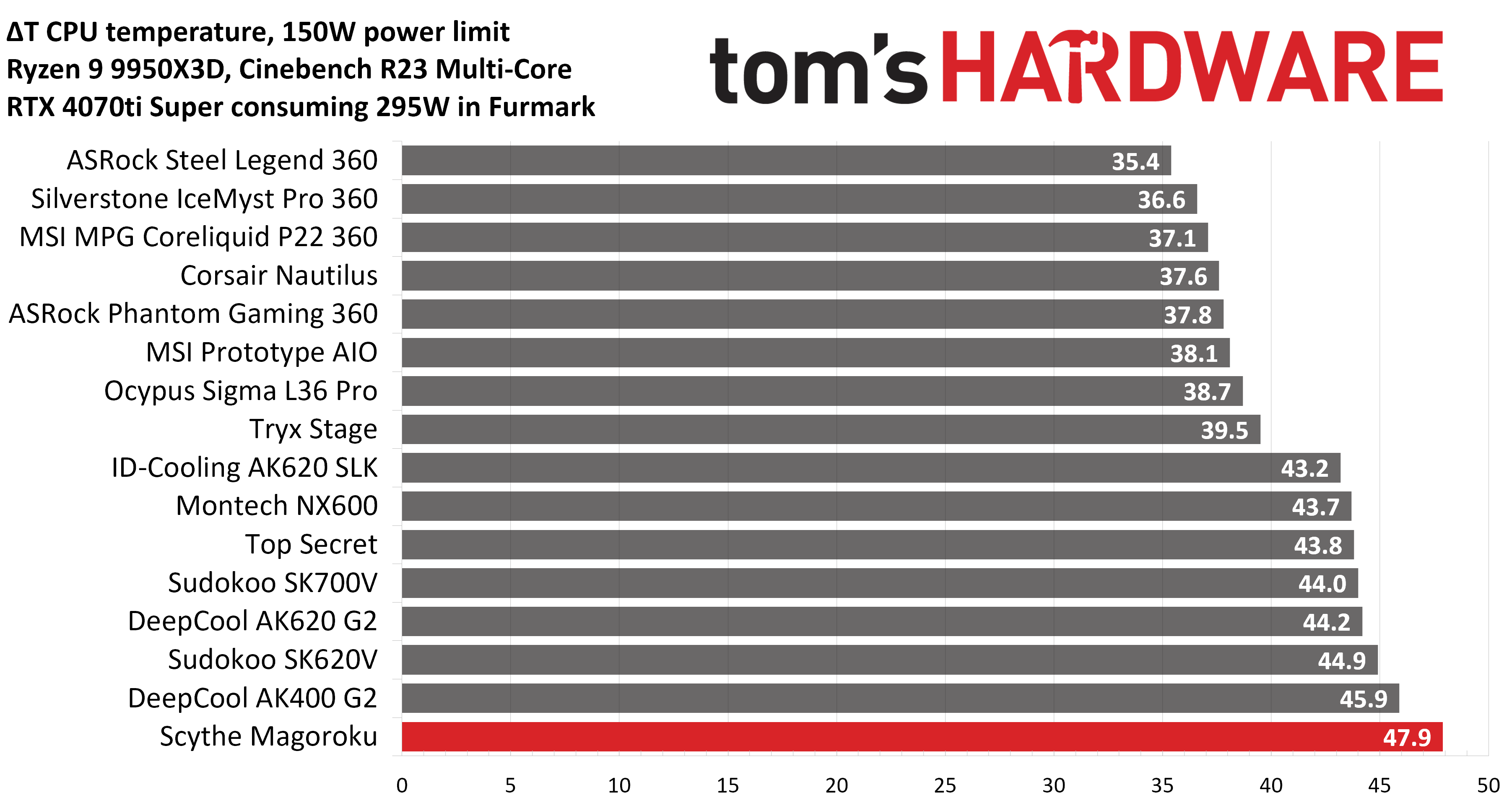
We've got another fairly disappointing result here, with a CPU temperature of 69.9C (47.9C over ambient) - the thermal performance is again in last place. Noise levels in our 150W CPU thermal test were acceptable, though, reaching 39.6 dBA.
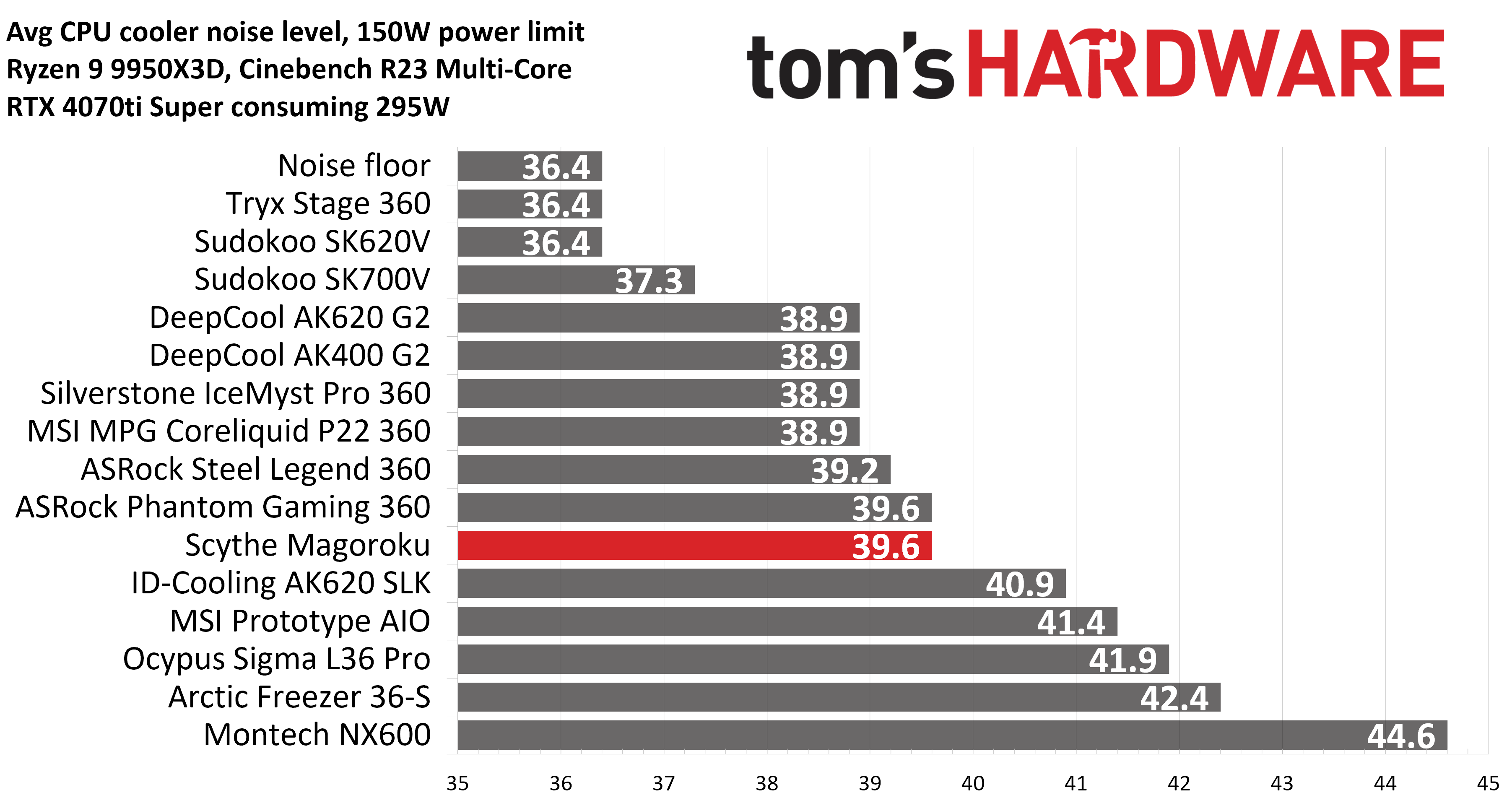
It's worth pointing out that some games are more intensive than this test above. While playing Assassin's Creed: Odyssey, I regularly noticed temperatures reaching near TJ Max. This is a bit concerning.
Noise-normalized testingMost testing is performed with the cooler tied to the default fan curve of our MSI X870E Carbon motherboard, but some of y'all prefer to see tests when the noise levels of coolers are equalized. This is especially important to those of you who prefer silent computers. This next test has the CPU cooler noise-normalized to 38.9 dBA, with PBO enabled for the Ryzen 9 9950X3D CPU.
This test is especially difficult because, in addition to the reduced noise from the CPU cooler, our current test bench's system fans are configured to run extremely silently, below the floor of the noise meter I use to measure dBA.
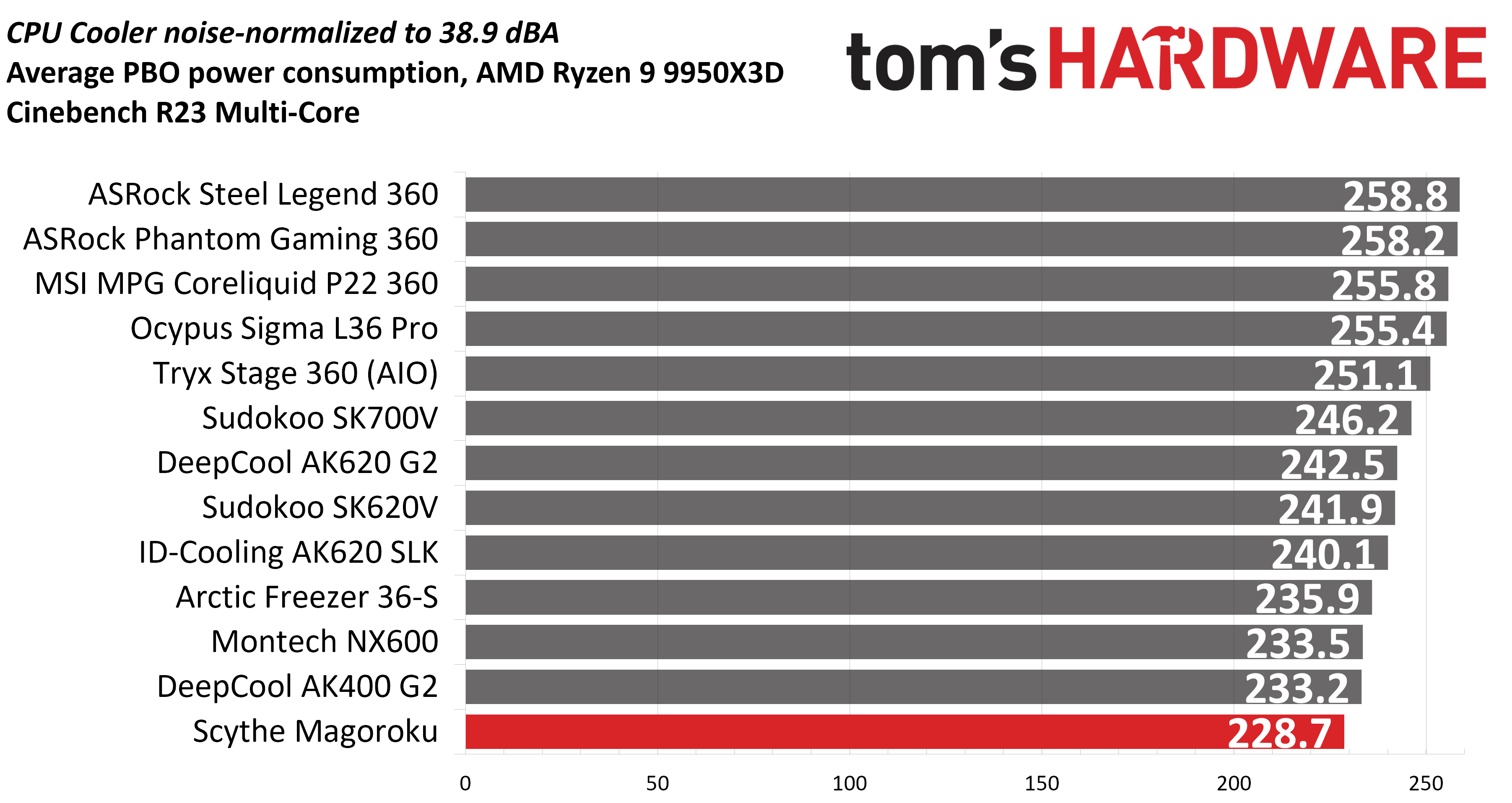
Most coolers, particularly air coolers, can't keep the CPU from reaching its peak temperature (TJ Max) in this stress test. We'll look at this in terms of power consumption, which averaged 228.7 watts. I wish I could say more positive things about this cooler's thermal performance, but it just doesn't seem to perform very well with an AMD Ryzen 9950X3D CPU.
Karhu DDR5 RAM thermals testingYour CPU cooler does not operate in isolation. It has an impact on not just your CPU's temperatures, but also the other components in your build, like your RAM and GPU. To that end, I've run the Karhu RAM stress test. This places a load of ~153W on the CPU and ensures system RAM (DDR5 in my case) is fully stable. In this type of scenario, most AIOs tend to produce worse results than air coolers.
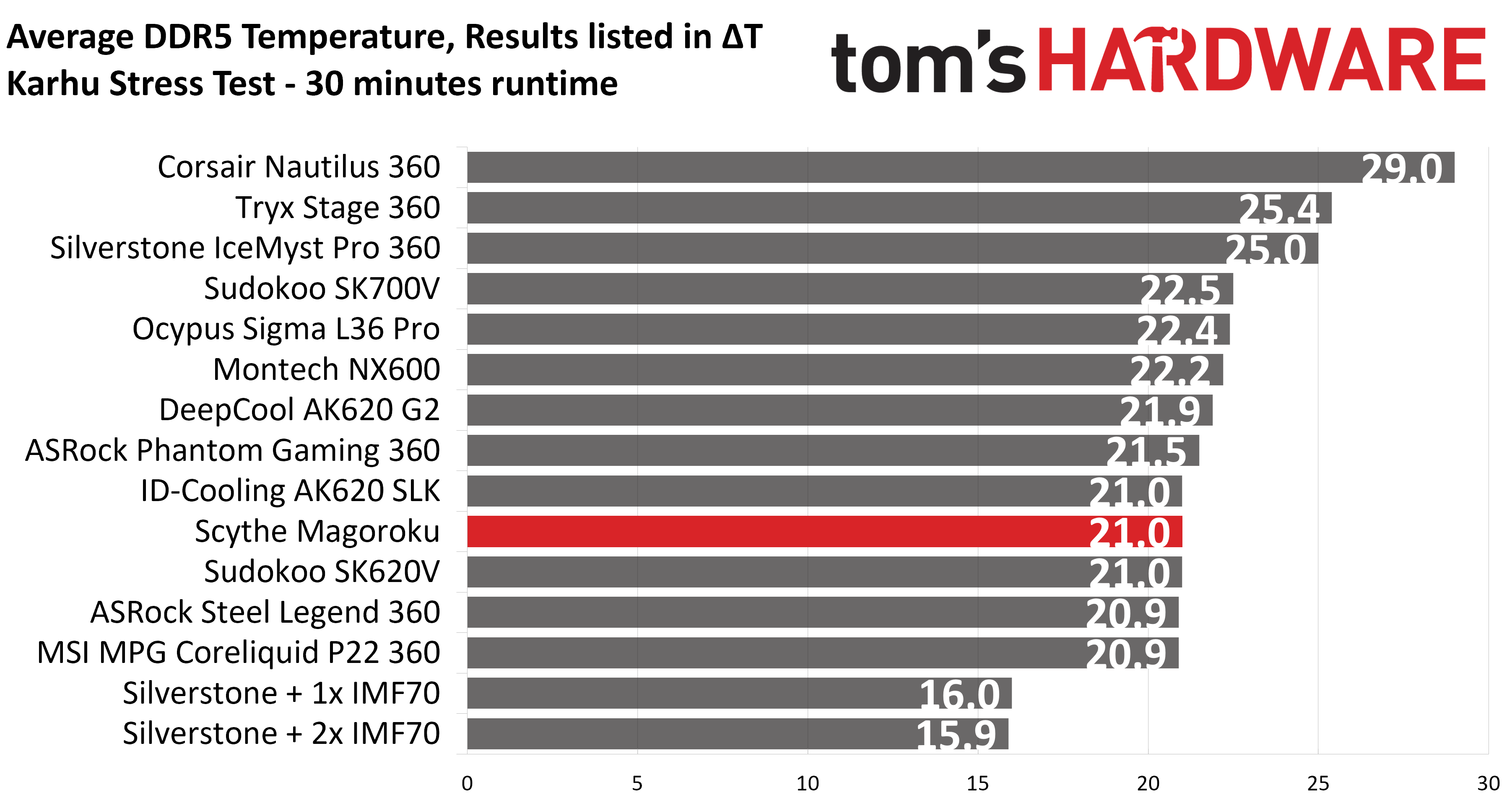
While the rest of our test results weren't very impressive, Scythe's Magoroku performed well when it came to keeping system DDR5 temperatures under control, measuring at an average of 43C (21C over ambient), tied for our second-place result in this benchmark if you don't count Silverstone's AIO with extra VRM fans.
ConclusionScythe's Magoroku is a nice-looking cooler with moderately low noise levels. But most of our thermal results were underwhelming with our AMD Ryzen 9 9950X3D test bench. The exception to this was DDR5 RAM temperatures, which were impressive. If you're looking for a low-noise air cooler that effectively cools your system memory, you might be happy with this product.
Perhaps this cooler performs better on Intel systems, but for AMD users, I'd instead recommend Thermalright's Royal Pretor 130 at this price point.