CPU-Z gets biggest update since 2001 with V3 — 100+ health checks, built-in stress testing, and XOC effective clock tracking
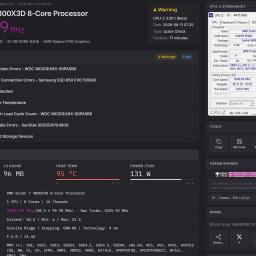
CPU-Z has rolled into its version 3 release, representing one of, if not the largest, updates the app has seen since its release in 2001. V3 introduces a host of updates, focusing primarily on an overhauled validation system with a new advanced mode.
CPU-Z's validation system now consists of three modes: standard, advanced, and XOC. The standard validation system can now display the current health of a PC in less than 10 seconds, and will check over 100 detection points including drivers, CPU temperature, bloatware, and more.
The team behind CPU-Z also worked with major support services to add "meaningful" labels detailing how healthy parts of the system are. These labels include "Critical," "Warning," and "Informational".
Standard Validation is available now. In less than 10 sec., get a snapshot of your PC's health with 100+ detection points covering drivers, temperatures, bloatware, hardware issues, misconfiguratoins and more, ordered with clear Critical, Warning and Info messages. pic.twitter.com/YzCnLPn8ekAugust 20, 2026
The advanced validation portion is entirely new for CPU-Z and features a far more in-depth validation process, including checking for potential hardware issues under heavy load. Using the advanced validation tool can take anywhere between several minutes and several hours to complete due to the stress testing and error detection functionality targeted at the CPU, RAM, and GPU. Additionally, the advanced validator also features a "significantly extended benchmarking" tool that measures CPU, GPU, RAM, and storage performance. Advanced sensors based on HWMonitor have also been incorporated to monitor temperatures, frequencies, fan speeds, and more.
The XOC validator, aimed at extreme overlockers as its name suggests, has been updated to better measure the CPU frequency of modern processors as well as properly handle memory overclocking to prevent accidental validation rejections. V3's XOC validator better handles the complex, always-changing clock speeds of modern CPUs by calculating the effective CPU clock and the "input" frequency. "If the effective frequency is lower than the input frequency, the dump will still be validated, but the real, effective frequency will be used as the final validated frequency."
By contrast, the XOC validator in CPU-Z V2 validated CPU frequencies with a five-second load, with a "one-shot measurement." Additionally, V2 also removed all load and most internal checks, which increased the risk of a validation not validating properly.
The new V3 update is designed to improve CPU-Z's usefulness for mainstream users, enthusiasts, and overclockers with its new health checks and diagnostics. CPU-Z V3 is available to download now from cpuid.com; however, many of the app's features will be disabled until enough validations arrive on the V3 database to process statistics efficiently. The V2 database will still accept validations until October 20th, when the database will be switched to read-only mode.