Asus ROG Strix B850-F Gaming Wifi Neo motherboard review: Pricey proposition for B850, but packed with features
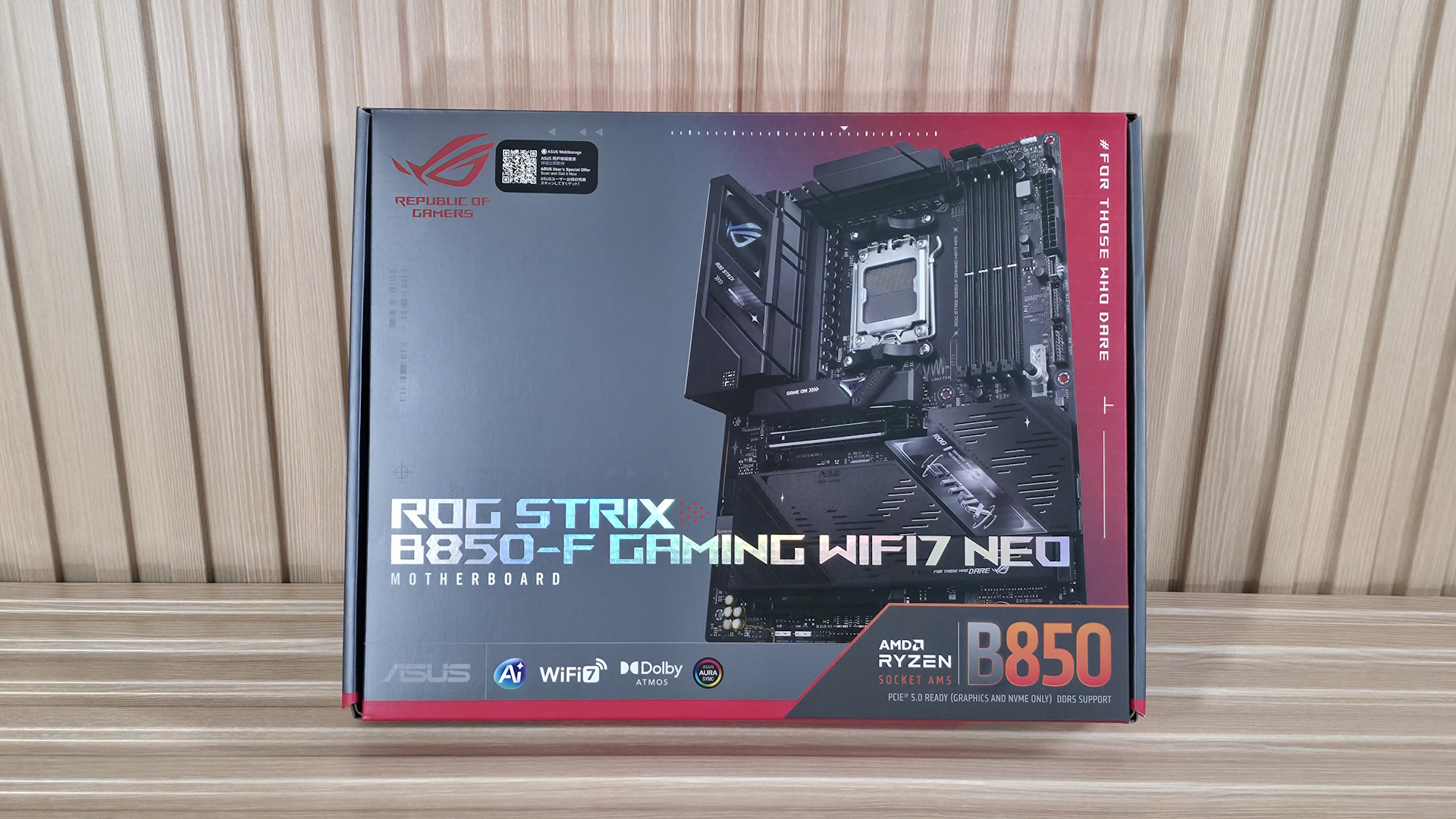
Asus B850-F Gaming Wifi Neo is one of the best B850 refresh motherboards, but at a high price. At $319.99, it's one of the more expensive non-Mini ITX B850-based boards, eclipsed only by Gigabyte's B850 AI Top for $350 and the B850-E Gaming Wifi (~$350 MSRP). For the money, it's a top-of-the-line board for the mainstream platform, offering users a premium aesthetic, high-quality hardware, and a long feature list including AI Intelligence, a clock generator for overclocking, loads of USB ports, and a slew of EZ PC DIY functions to help make building easier. If we didn't tell you, one might believe it was an X870 board by specifications alone (and maybe price), blurring the lines between enthusiast and mainstream platforms.
Hardware-wise, it has just about everything you want from an AM5 motherboard. You get four M.2 sockets (2 PCIe 5.0) and two SATA ports for storage, plenty of USB ports on the rear IO (and front panel, 23 total according to Asus), robust power delivery and a BCLK generator for overclocking, a quality audio solution with integrated amplifier, and a good-looking appearance, It uses multiple AI' features including AI Cache/Cooling II/Networking II, and several EZ PC DIY items like M.2 Q-Release, Q-Slide and M.2 Q-Latch, 5 GbE and Wi-Fi 7 networking, and finally, sports a unified all-black look that's sure to look good with any black/dark themed build. That said, it's not without some drawbacks. I would like to see at least one USB 4 port on a high-end B850 board, and the two SATA ports could be limiting for users who haven't moved over to M.2 storage. But overall, those are minor dings.
On the performance front, the board did well and was average to above average for most tests. There were a couple of outliers that fell below average, but nothing to worry about. It performed well across a wide variety of tests from office productivity to rendering and gaming; the B850-F Gaming Wifi Neo showed its mettle through our testing suite.
Below, we'll examine the B850-F Gaming Wifi Neo's performance and other features and find out if it has a chance to make our list of the best motherboards. But before we share test results and discuss details, here are the specifications from the ASRock website:
Socket | AM5 (LGA 1718) |
Chipset | B850 |
Form Factor | ATX |
Voltage Regulator | 20 Phase (16x 80A DrMOS MOSFETs for Vcore) |
Video Ports | (1) HDMI (v2.1) |
USB Ports | (2) USB 3.2 Gen 2 (10 Gbps) Type-C |
Network Jacks | (1) 5 GbE |
Audio Jacks | (2) Analog plus SPDIF |
Legacy Ports/Jacks | |
Other Ports/Jack | |
PCIe x16 | (1) v5.0 (x16) |
PCIe x8 | |
PCIe x4 | |
PCIe x1 | |
CrossFire/SLI | |
DIMM Slots | (4) DDR5-8400+(OC) DDR5-9200 with APU, 256GB Capacity |
M.2 Sockets | (2) PCIe 5.0 x4 (128 Gbps) / PCIe (up to 80mm) |
SATA Ports | (2) SATA3 6 Gbps |
USB Headers | (1) USB v3.2 Gen 2x2 (20 Gbps) Type-C |
Fan/Pump Headers | (8) 4-Pin (Accepts PWM and DC) |
RGB Headers | (3) 3-pin ARGB Gen2 headers |
Diagnostics Panel | Q-LEDs (CPU/DRAM/VGA/Boot) |
Internal Button/Switch | Start button |
SATA Controllers | |
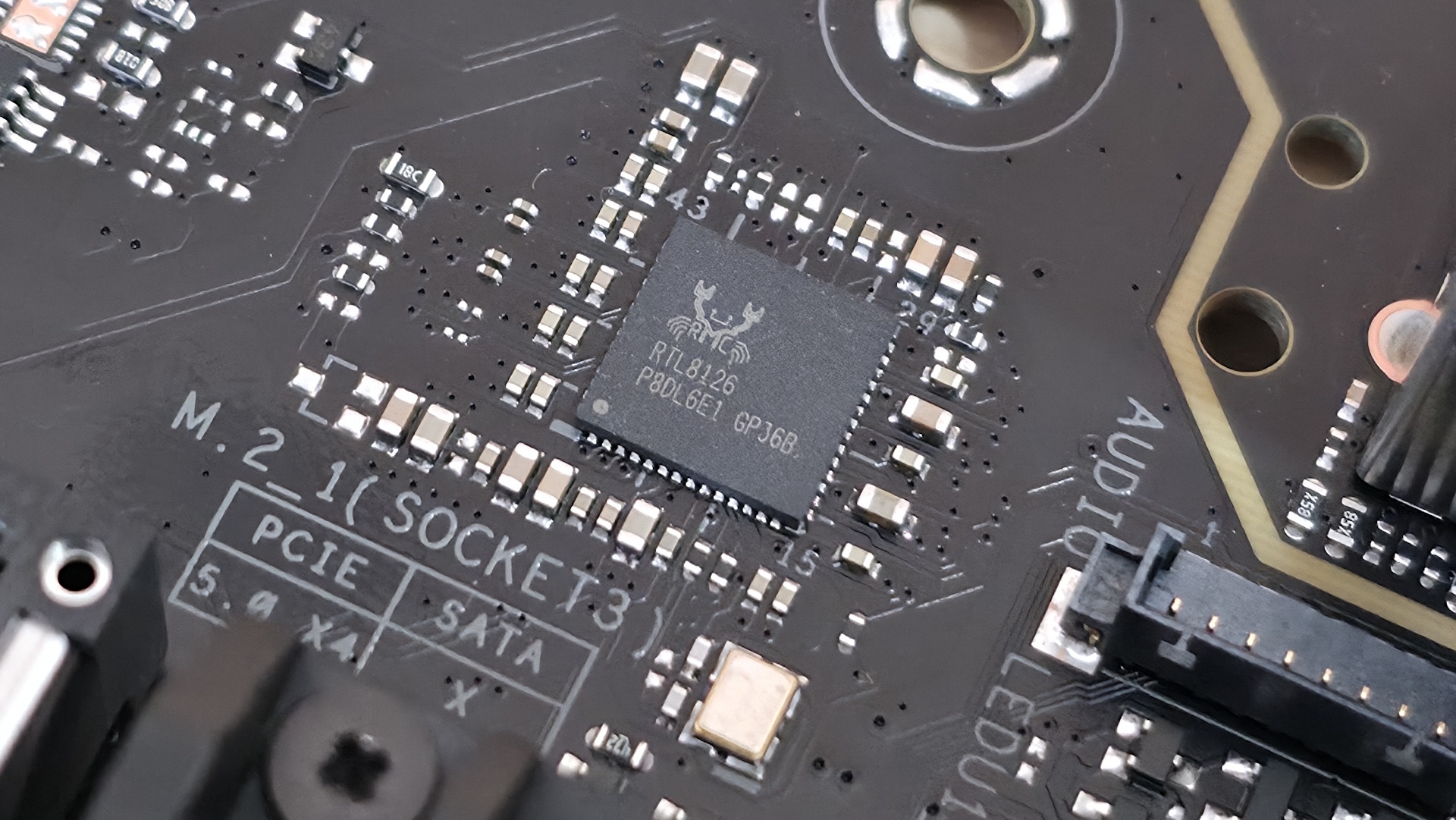
Ethernet Controller(s) | (1) Realtek RTL8126 5 GbE |
Wi-Fi / Bluetooth | MediaTek MT7925 Wi-Fi 7 - 160 MHz, 6 GHz, BT 5.4 |
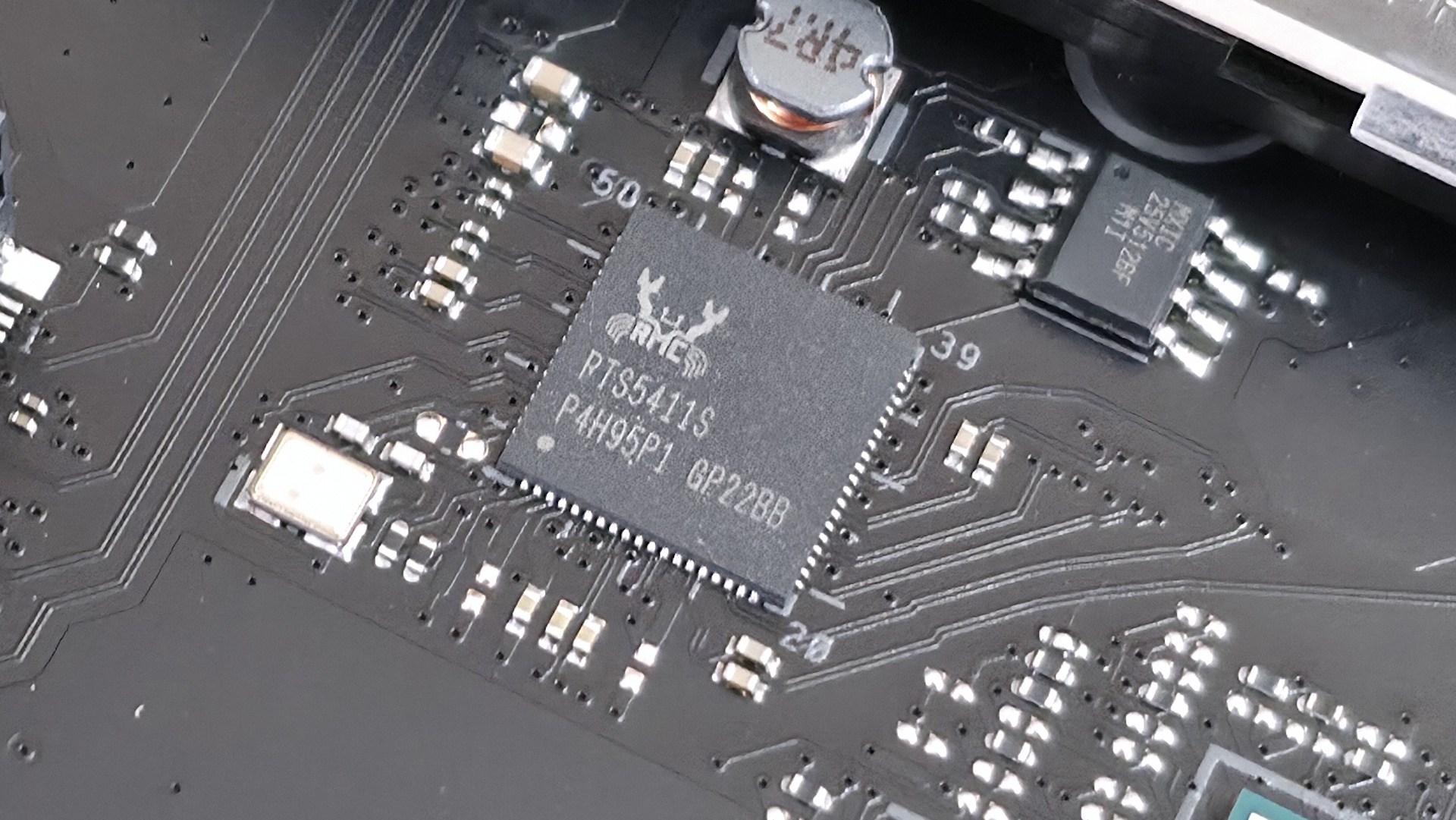
USB Controllers | ASMedia ASM1074/1543, Realtek RTS5411 |
HD Audio Codec | Realtek ALC4080, Savitech SV3H712 Amp |
DDL/DTS | / |
Warranty | 3 Years |
Inside the box along with the motherboard are a few accessories to get you started. You get the usual fare from a budget board, including SATA cables, a Wi-Fi antenna, guides, and more. Nothing stands out in this accessory stack, but it should help get you started.
- (2) SATA cables
- ASUS WiFi Q-Antenna
- Cable ties package
- M.2 Q-Latch package
- M.2 Q-Slide package
- ROG key chain
- ROG Strix stickers
- (3) M.2 rubbers
- M.2 backplate rubber package(s)
- Quick start guide
 Future
 Future
 Future
 Future
 Future
 Future
 Future
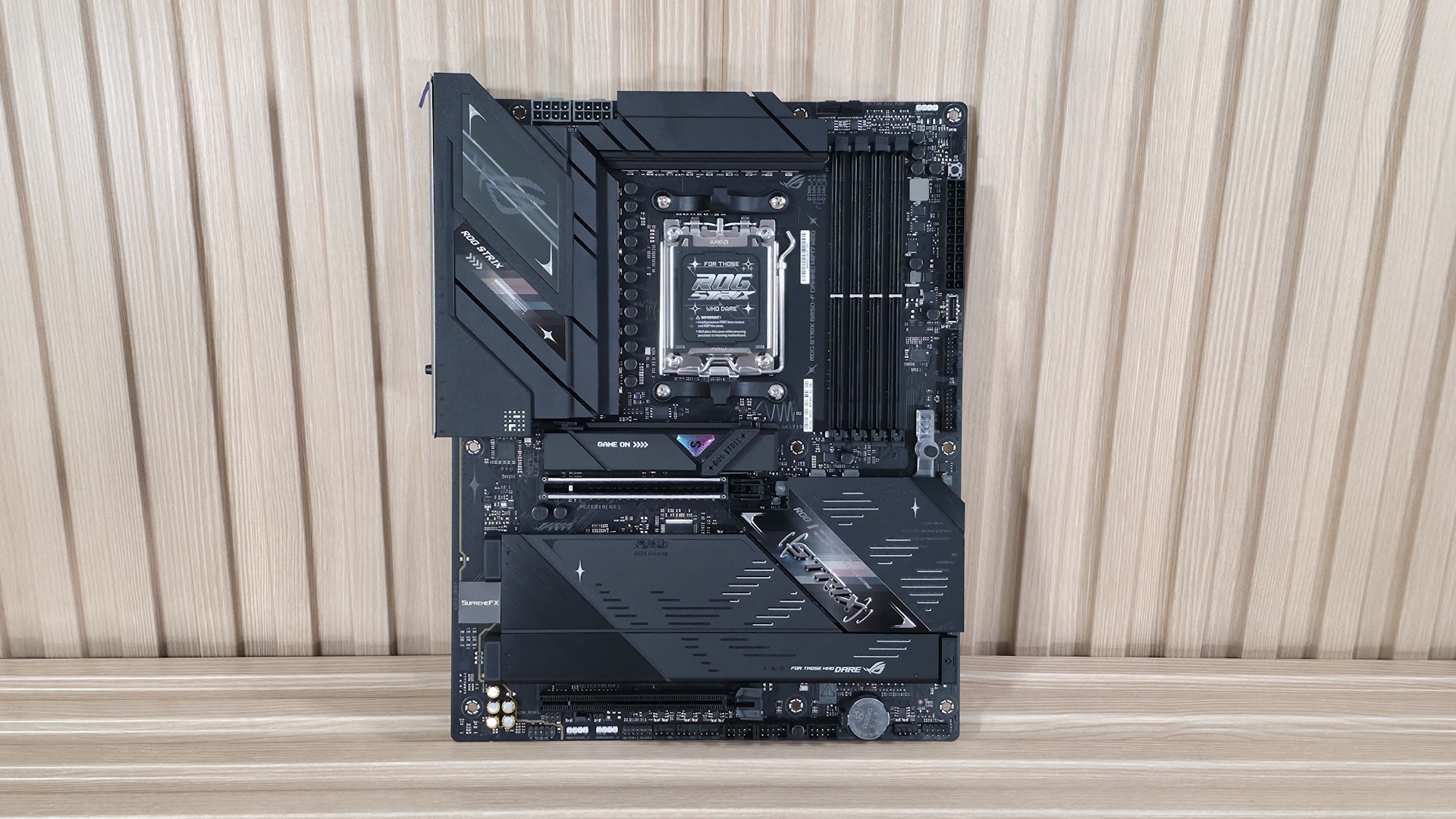
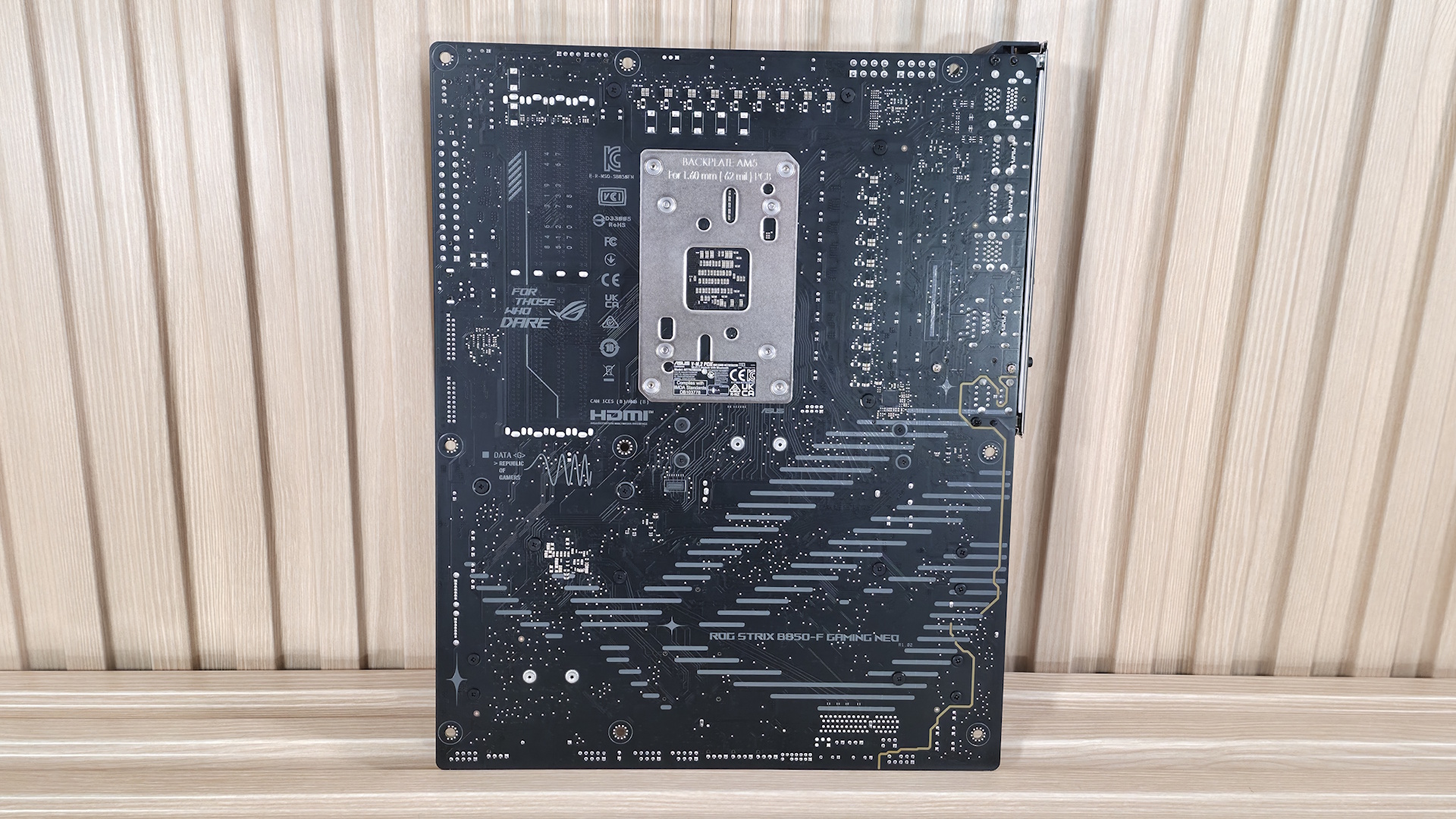
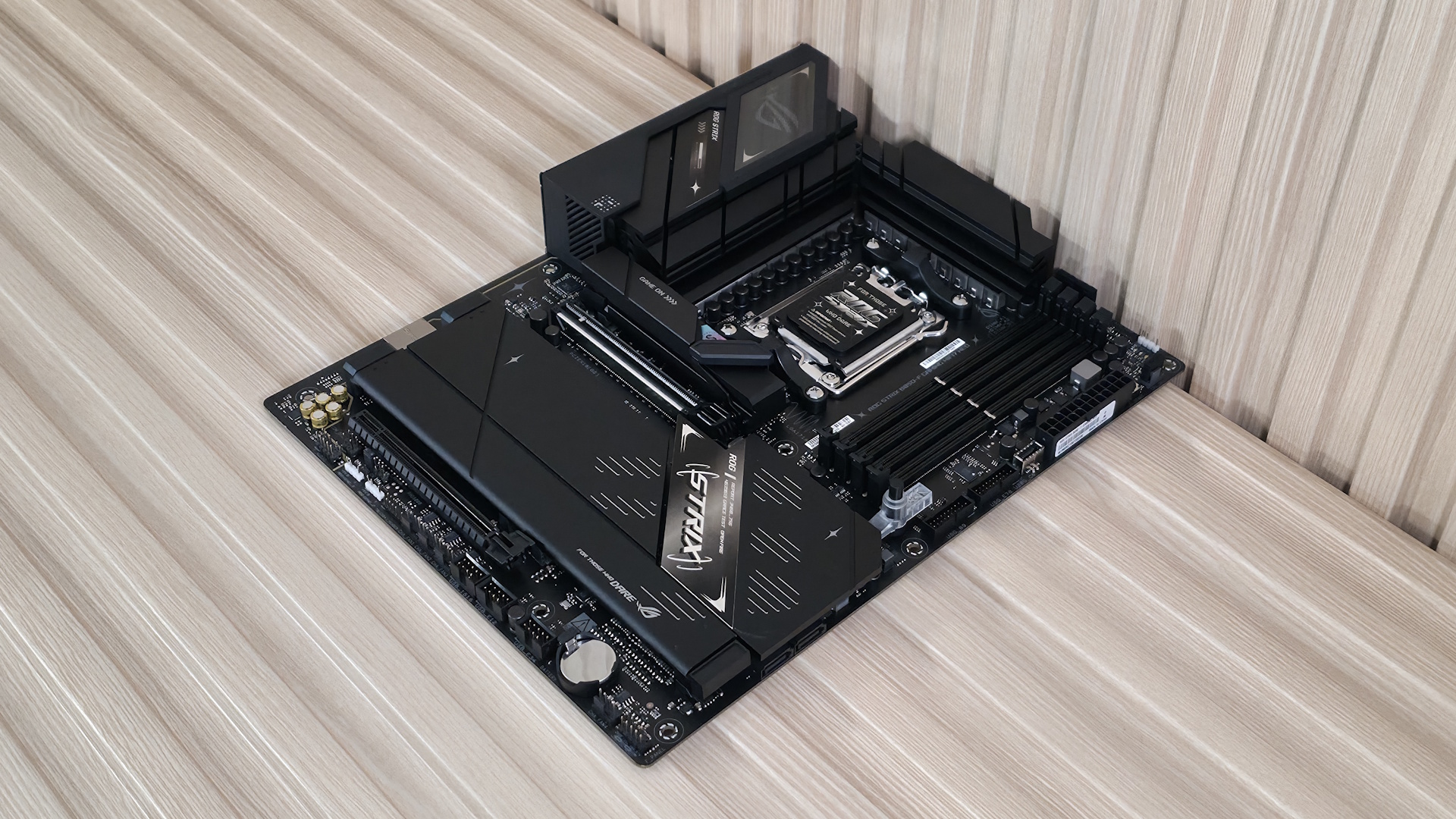
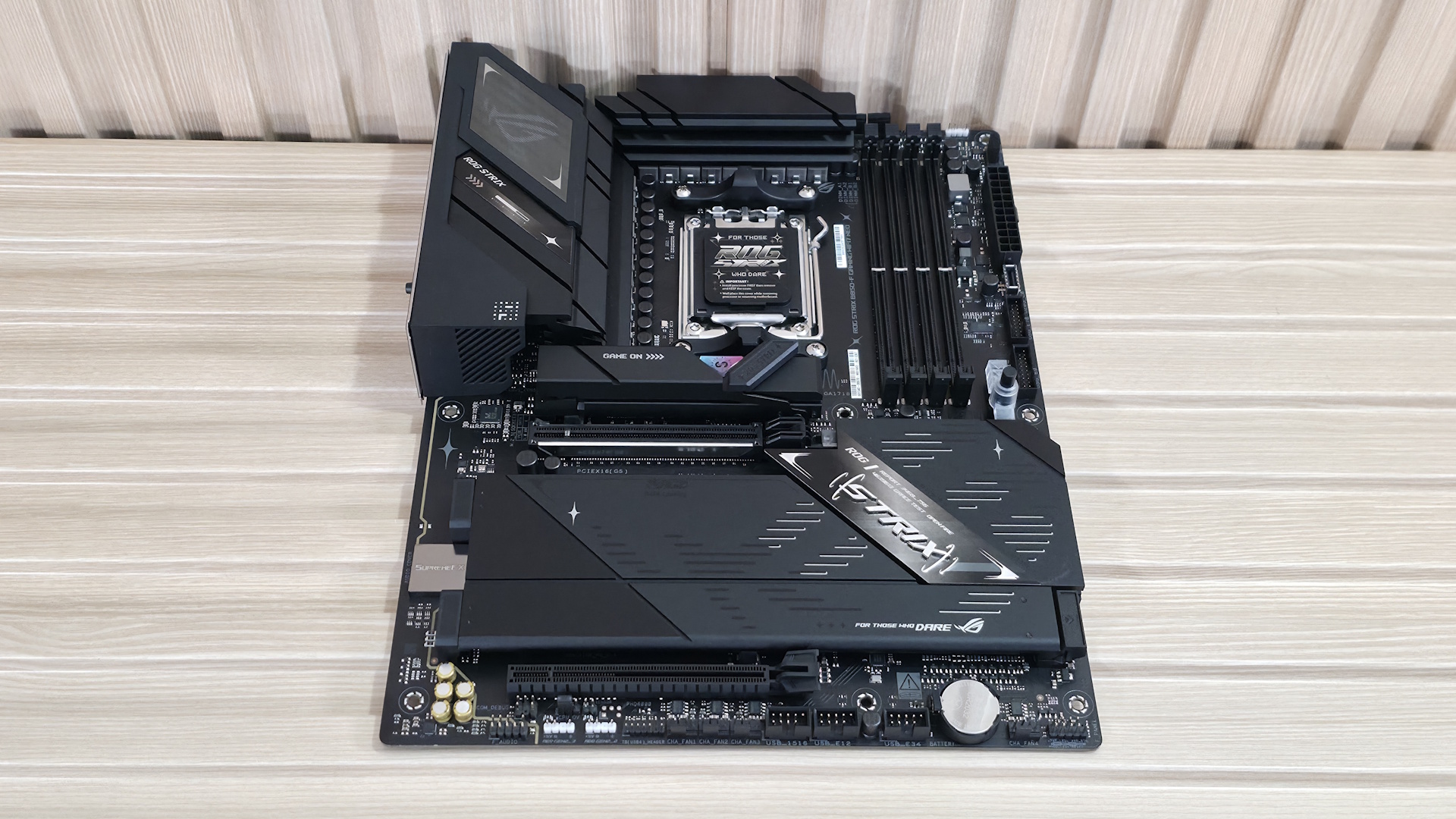
Compared to the existing B850-F Gaming Wifi, the biggest differences aesthetically on the updated Neo are the plate-style heatsinks on the bottom half of the board. The new one goes monochrome (black and grey) with a brushed aluminum feature on the left and a matte finish on the rest, still retaining its 8-layer PCB (1 Oz copper) design. A ROG symbol made by horizontal lines yields a more premium appearance than the previous B850-F non-Neo version. The left VRM heatsink cleans up the RGB feature (ROG symbol) a bit and is the only integrated lighting, giving off a subtle glow. The primary M.2 heatsink also receives a minor facelift, adding a small triangle sticker with an S" on it and replacing the ROG Strix" branding with Game on".
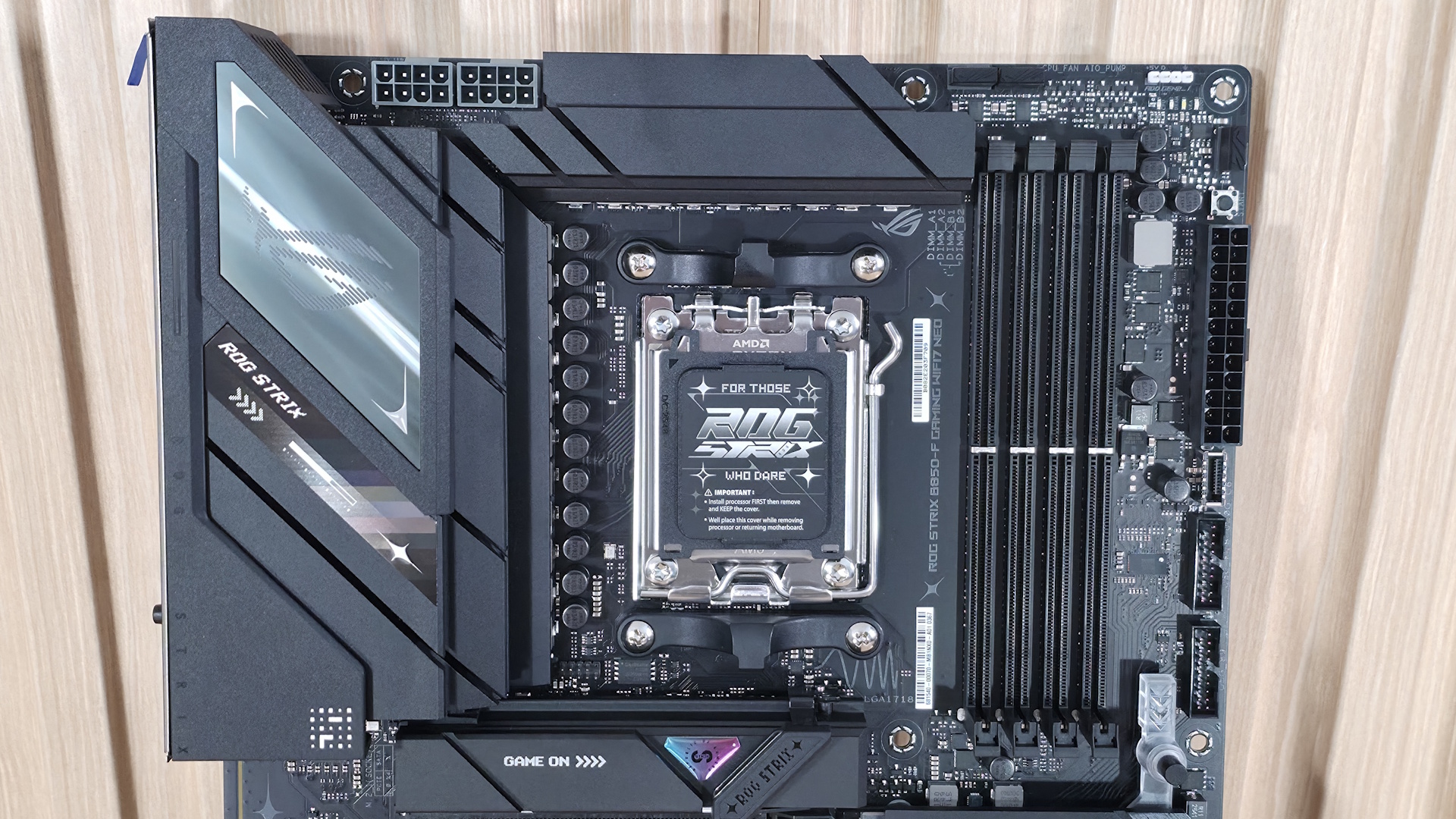
Starting at the top-left corner, you can see the dual ProCool 8-pin EPS connectors to power the CPU, surrounded by two large heatsinks. The heatsink on the left has plenty of mass and surface area to be effective, and the other individual heatsink on top had no problems keeping the VRMs running in spec. This area also houses the only RGB feature on the board; in this case, a pixelated ROG symbol is your bling.
To the right of the socket area are the four DRAM slots with locking mechanisms on the top. Asus lists support for desktop processors up to DDR5-8400 and APUs up to DDR5-9000. We didn't have any issues with our two slower kits, but our Klevv DDR5-8000 kit wasn't stable for 30 minutes (it lasted 18). That said, our Klevv kit wasn't on the support list, so the result makes sense. As always, for your best chance at compatibility, stick to the memory QVL.
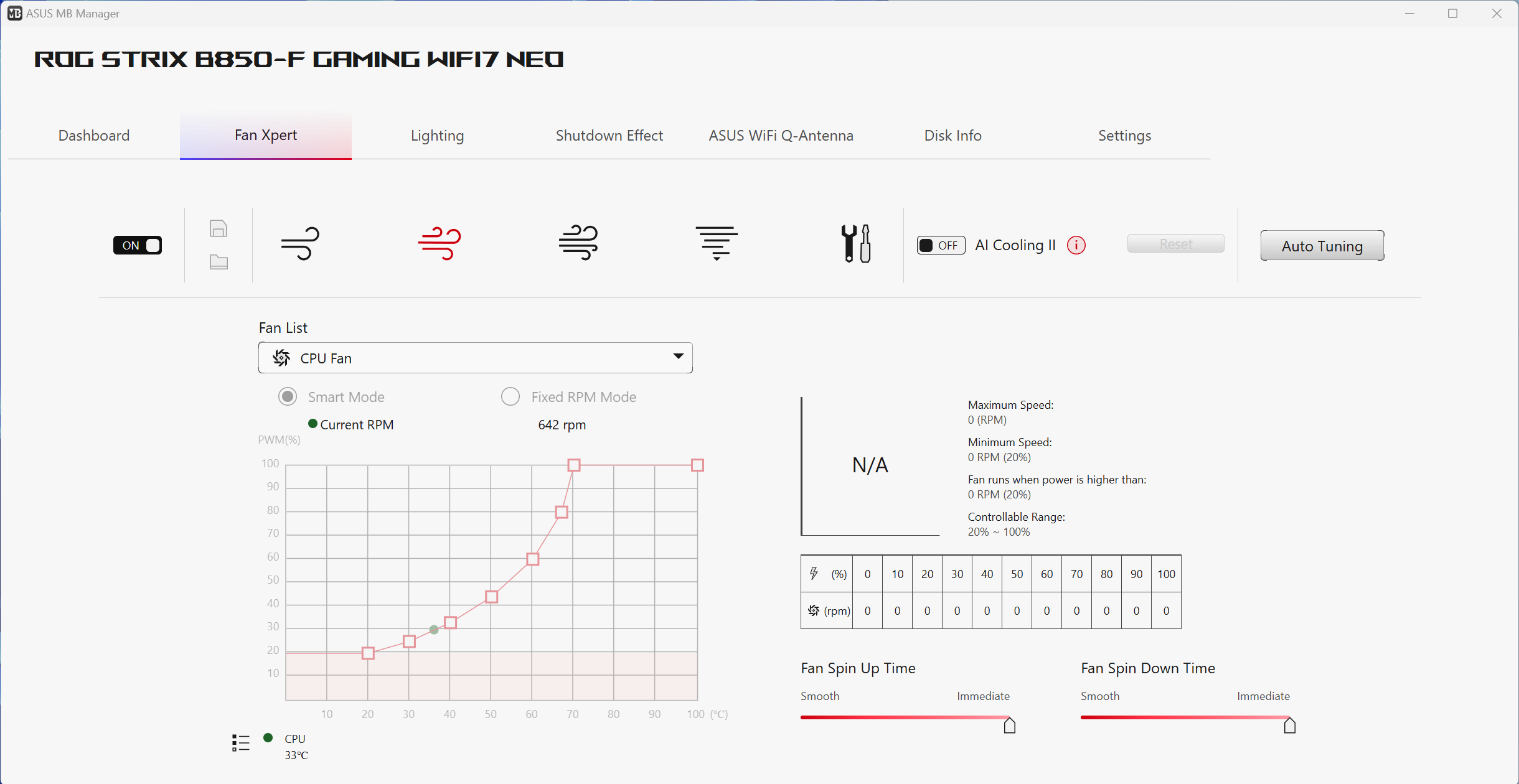
Above the DRAM slots are the first two (of eight) 4-pin fan/pump headers (CPU_FAN and AIO_PUMP). Each header supports up to 1A/12W. And while that's not a lot considering some motherboards support up to 3A/36W, it should still be plenty for most configurations. Just be sure not to overload the headers. The BIOS or Asus Motherboard Manager (Fan Xpert) controls these devices, offering custom control, including hysteresis functionality that not all have.
Just to the right of that is the first (of three) 3-pin ARGB headers, also controlled through Asus Motherboard Manager. Below that is the Q-LED feature that lights up during the POST process. If there's a problem during this critical startup time, the offending LED (red CPU, yellow DRAM, white VGA, green Boot) remains lit. This isn't as detailed as the 2-character POST code display, but is still helpful.
Making our way down the right edge, we run into another 4-pin fan header (CPU_OPT) and below that a simple start button to turn the PC on without connecting to, or needing to jump, the front panel header. Continuing down the edge, we find the 24-pin EPS connector, your front panel USB 3.2 Gen 2x2 (20 Gbps) Type-C connector (the fastest on the board), and two 19-pin USB 3.2 Gen 1 (5 Gbps) headers - one more than the original B850-F Gaming Wifi.
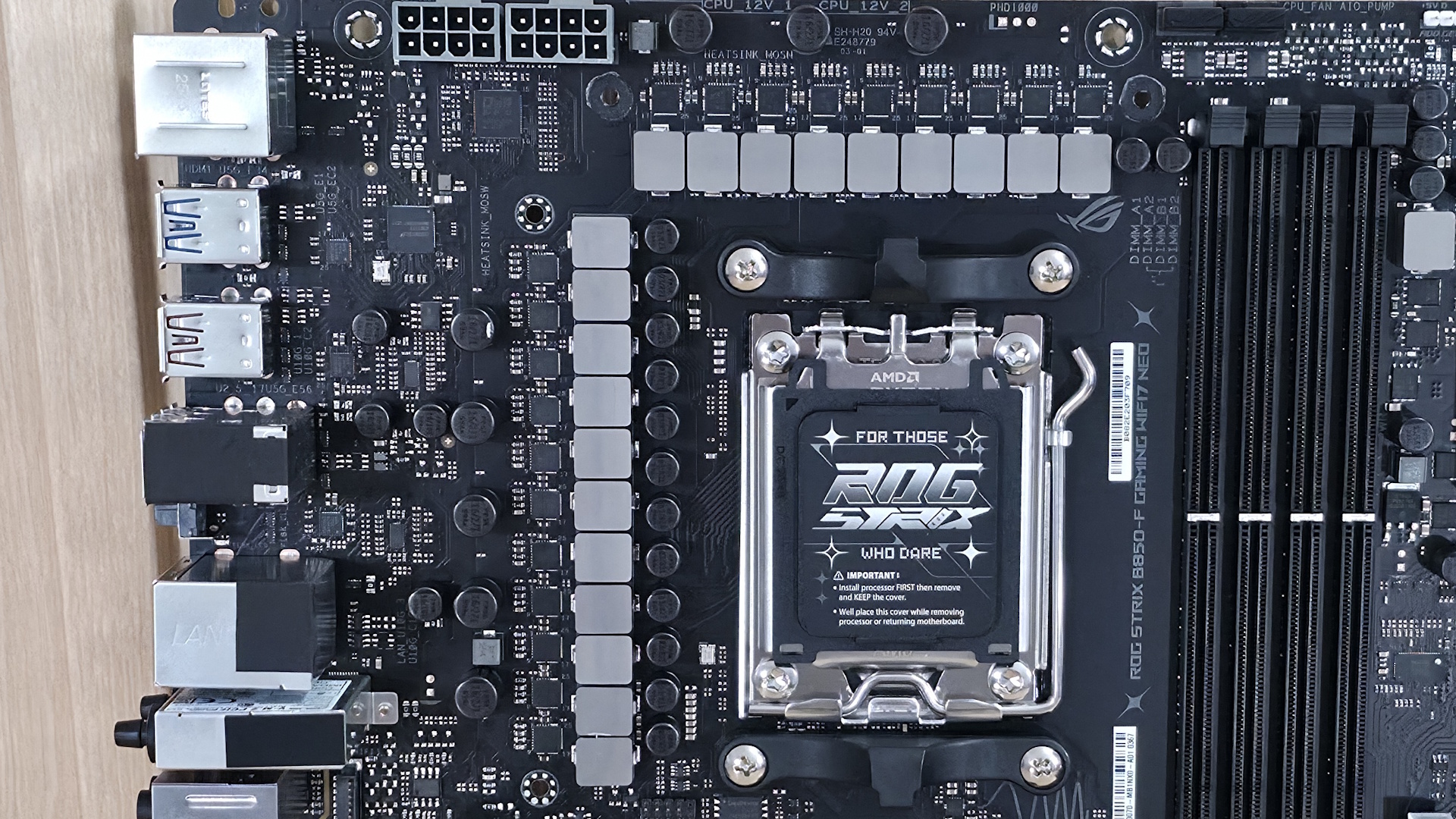
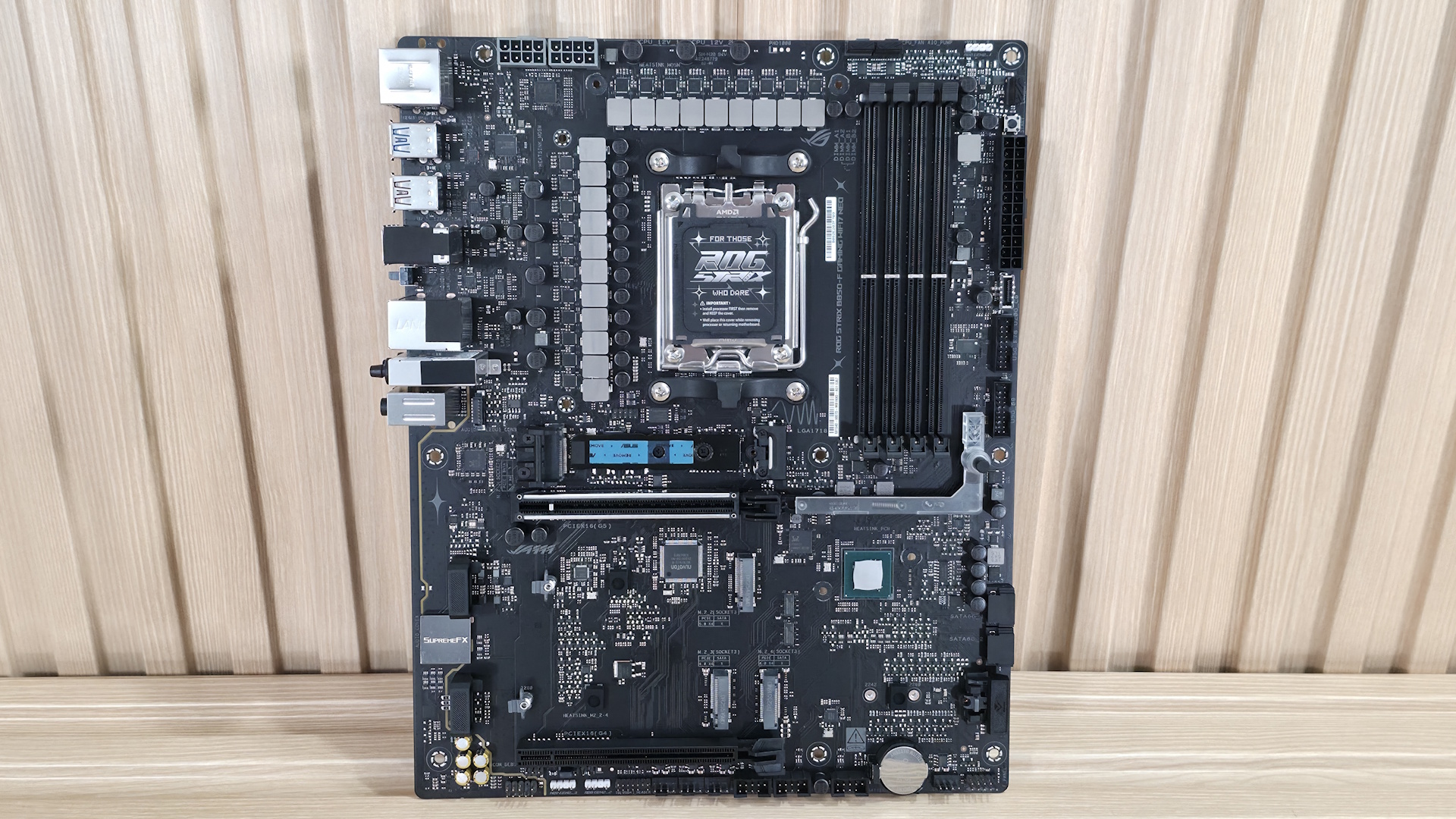
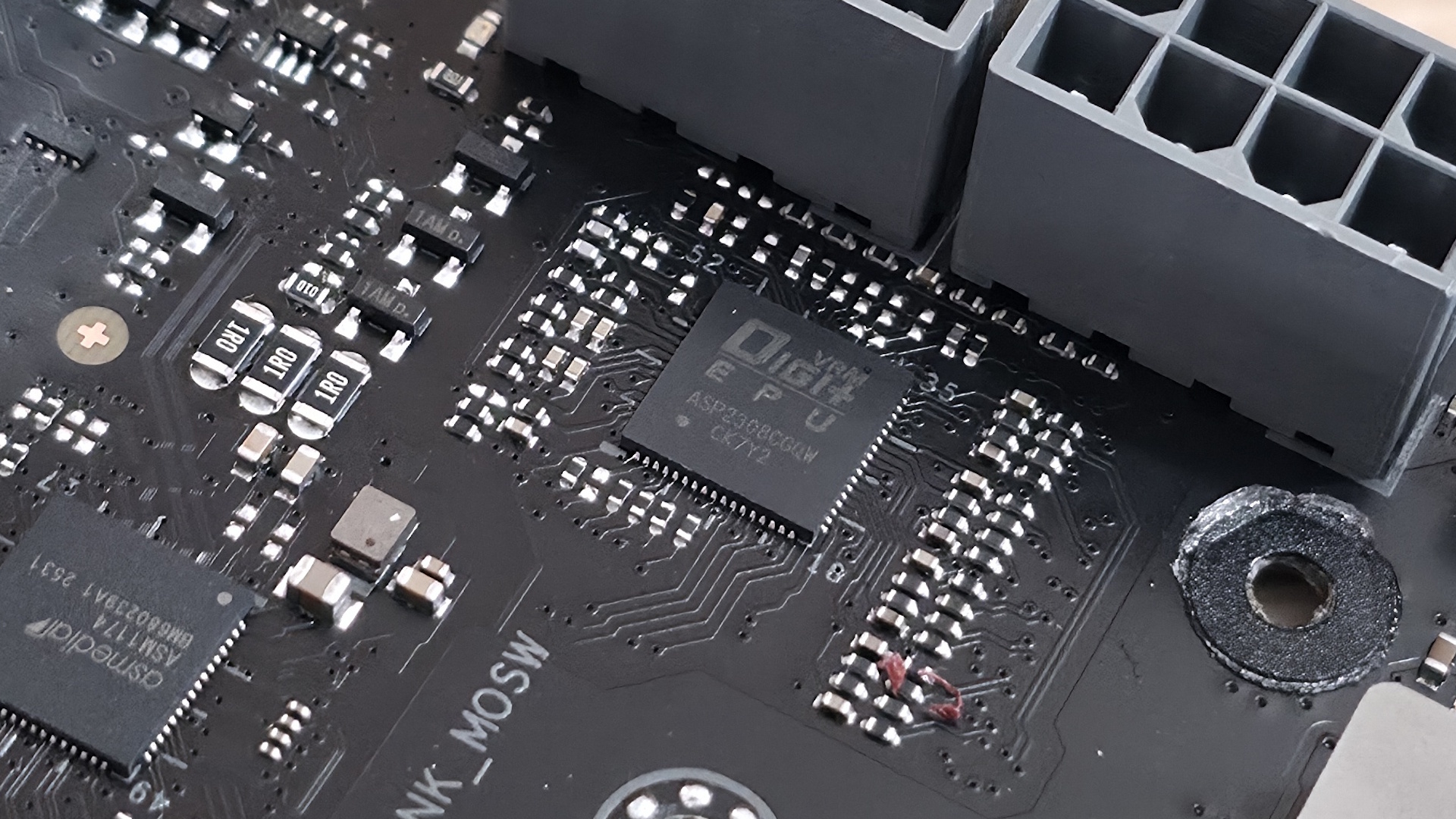
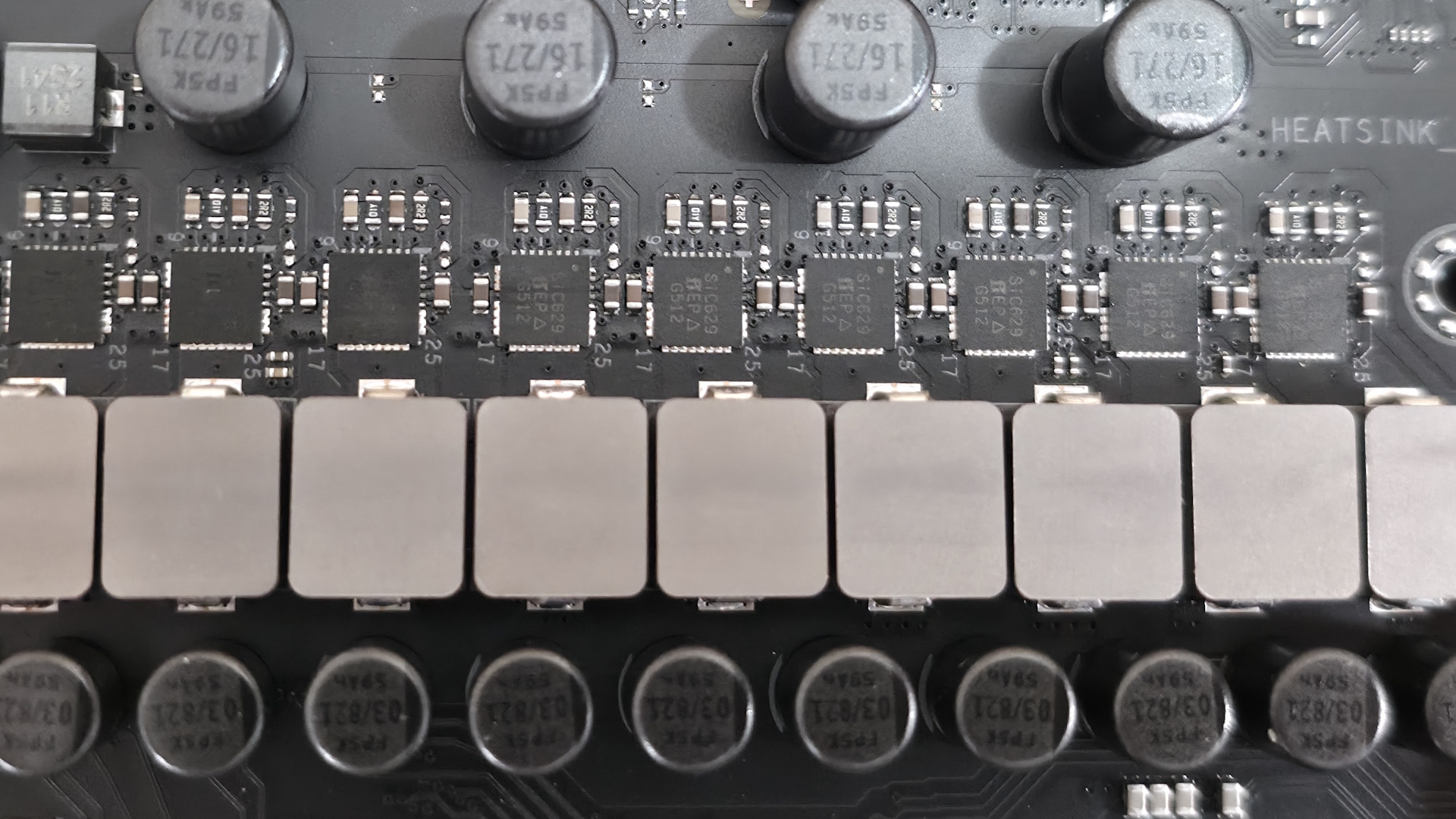
Power delivery on the B850-F Gaming is the same robust configuration we saw on the original. There are a total of 20 phases, with 16 dedicated to Vcore. Power heads from the 8-pin EPS connectors and on to the Digi+ (read: ASP2308CGQW PWM controller). From there, power moves to the Vishay Sic829 80A DrMOS MOSFETs. The 1,280A available is enough for any processor, whether it's stock or overclocked. In short, the VRMs and heatsinks won't have any issues, even with a Ryzen 9 9950X or the Ryzen 9 9950X3D2 crunching away.
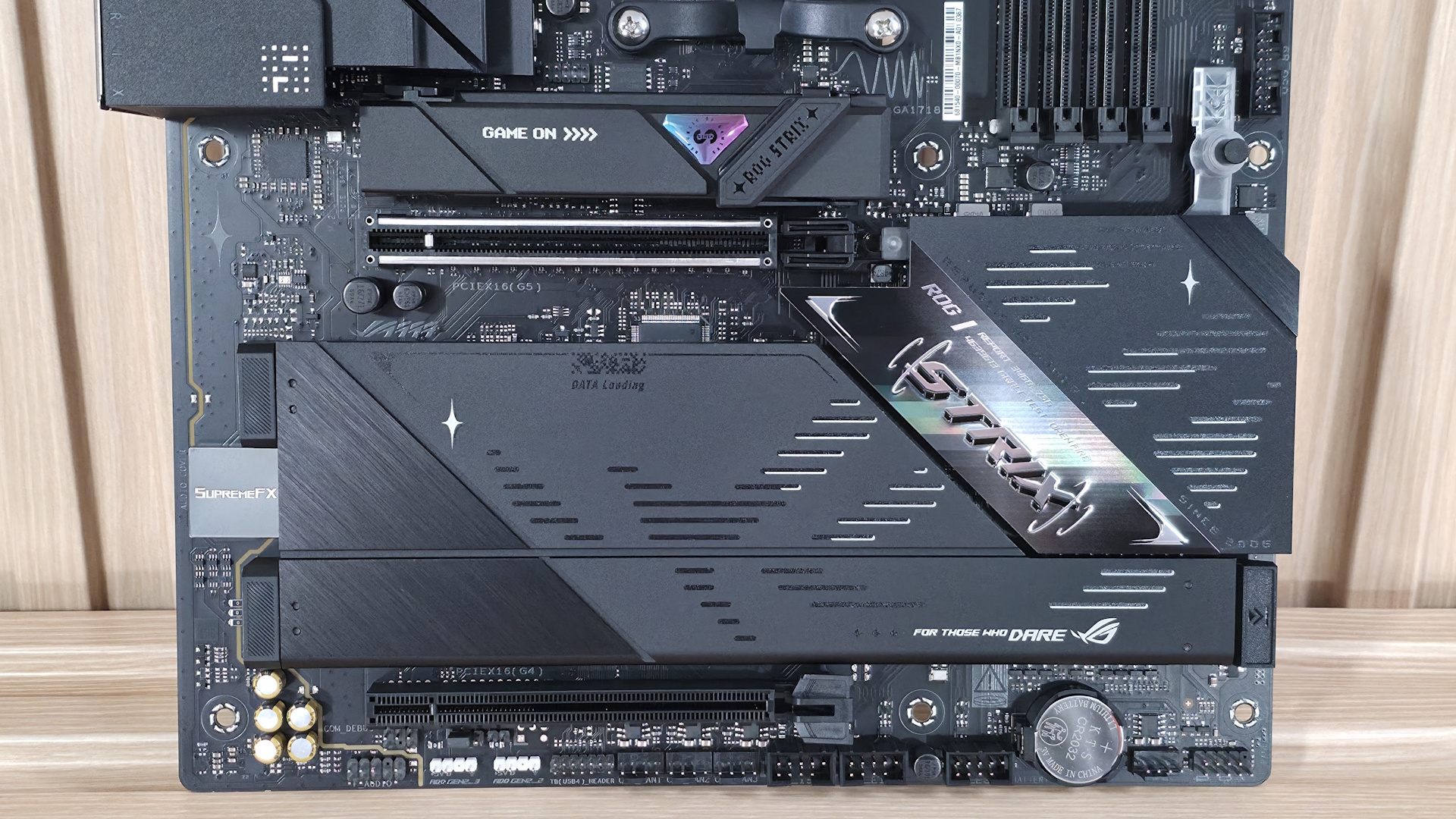
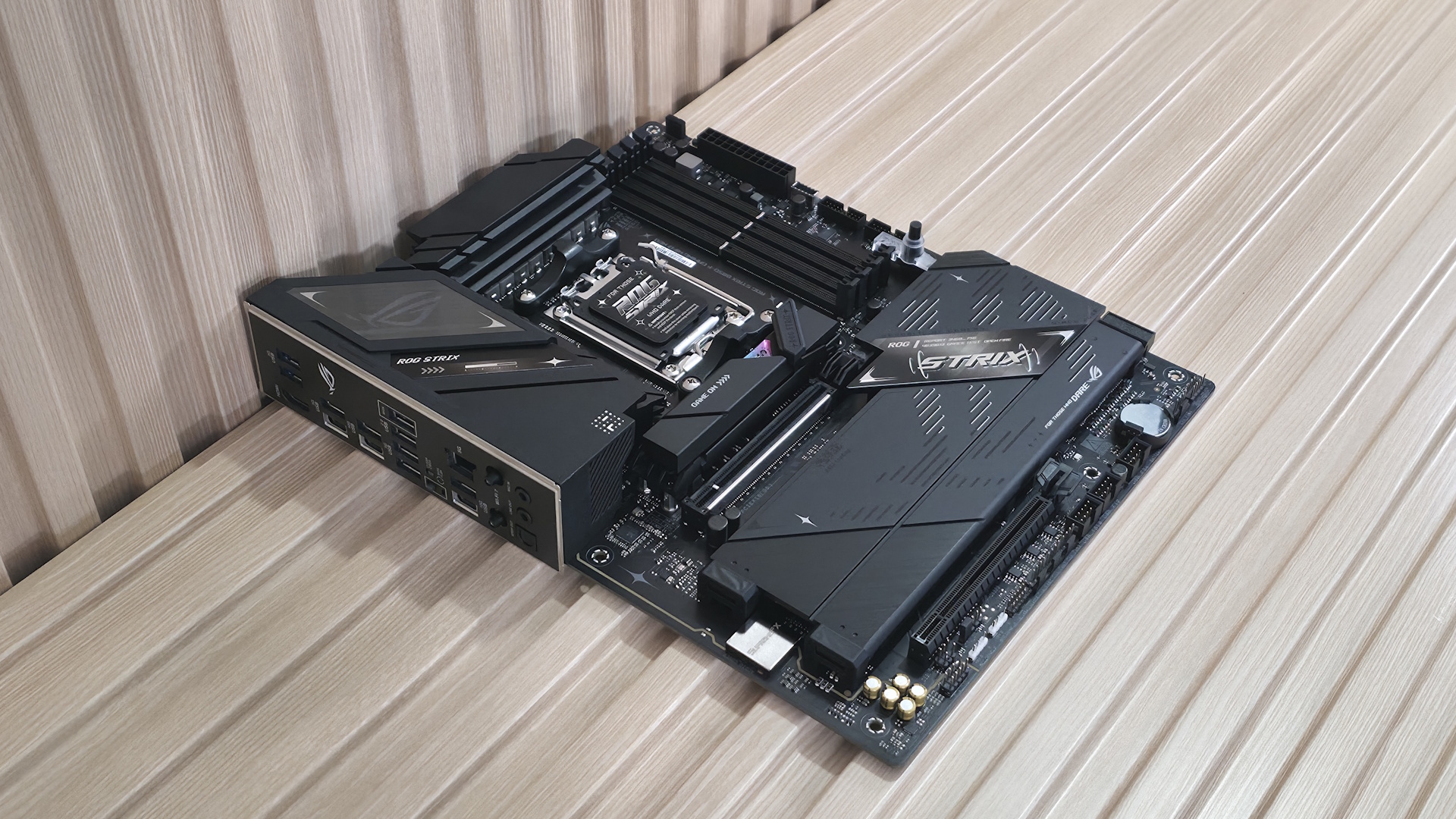
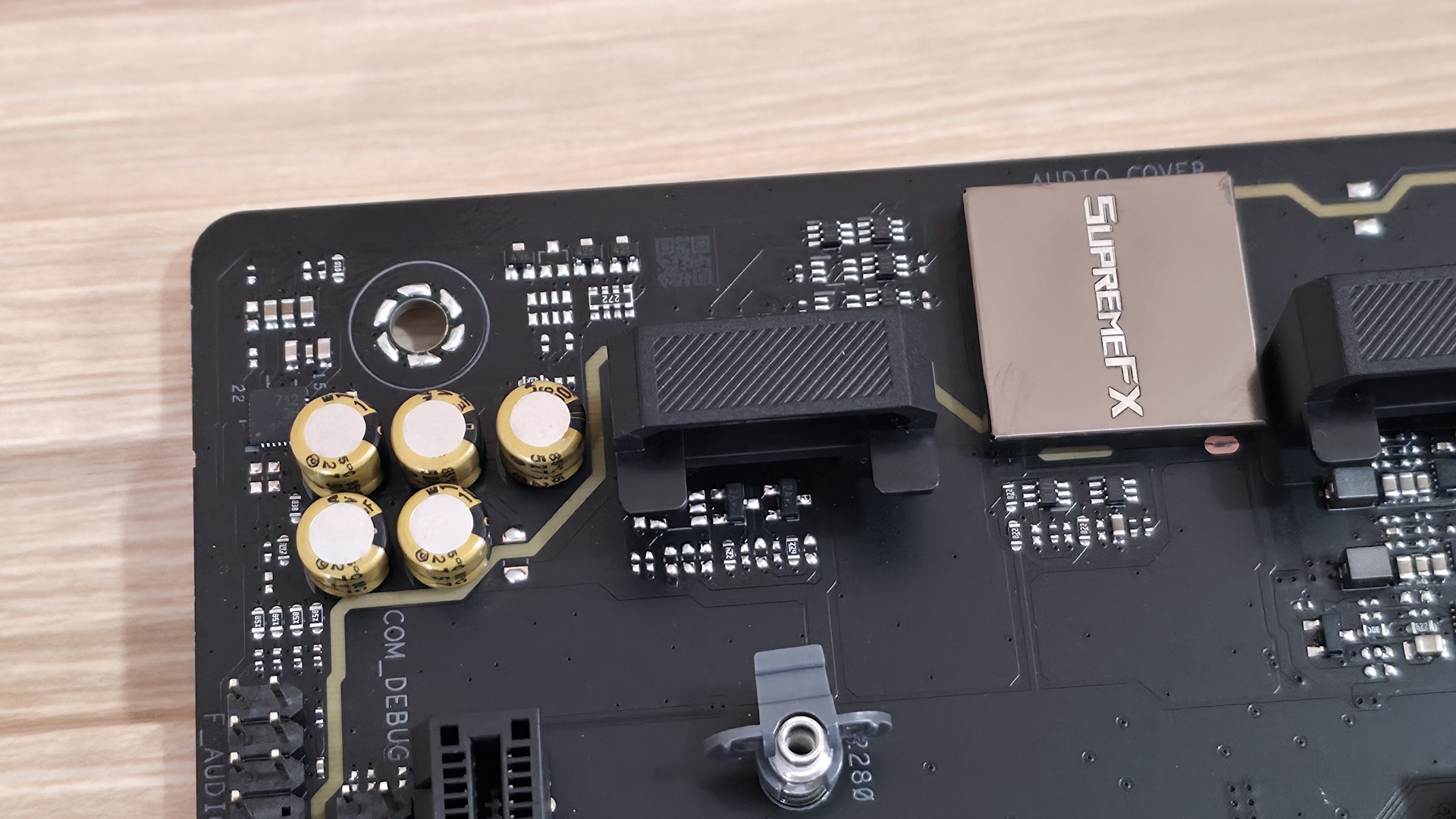
On the bottom of the board, we'll start on the left with the audio section. Hidden under the shiny SupremeFX shroud is the Realtek ALC4080 audio codec along with dedicated capacitors and a Savitech SV3H712 amplifier. While not the flagship codec (the ALC4082 is), it's a solid audio solution, especially for a B850-class board.
In the middle are two full-length PCIe slots. The top slot, the primary slot for graphics, connects through the CPU and runs up to PCIe 5.0 x16 (no bifurcation). This slot uses Asus' PCIe Slot Q-Release, where you press a button to release the locking mechanism. The second full-length slot connects through the chipset and runs up to PCIe 4.0 x4, offering plenty of bandwidth for expansion.
Mixed in among the PCI slots are four M.2 sockets. The top-most, above the primary PCIe slot and using the large, tool-free M.2 Q-Latch and Q-Release heatsink, supports up to PCIe 5.0 x4 speeds, while M.2_2 under the larger quick-release plate heatsink is the second 5.0-capable socket. Also hiding below their own quick-release plate heatsink (note: the Q-Release heatsinks on the Neo are an upgrade from the original B850-F Gaming Wifi) are two more M.2s, and these are PCIe 4.0 x4-capable. The primary M.2 heatsink made light contact with the controller on top and no contact on the bottom. If you plan to beat on these hot-running, fast PCIe 5.0 drives with sustained transfers, it's best to use your own heatsink or get slightly thicker thermal pads to ensure it doesn't throttle.
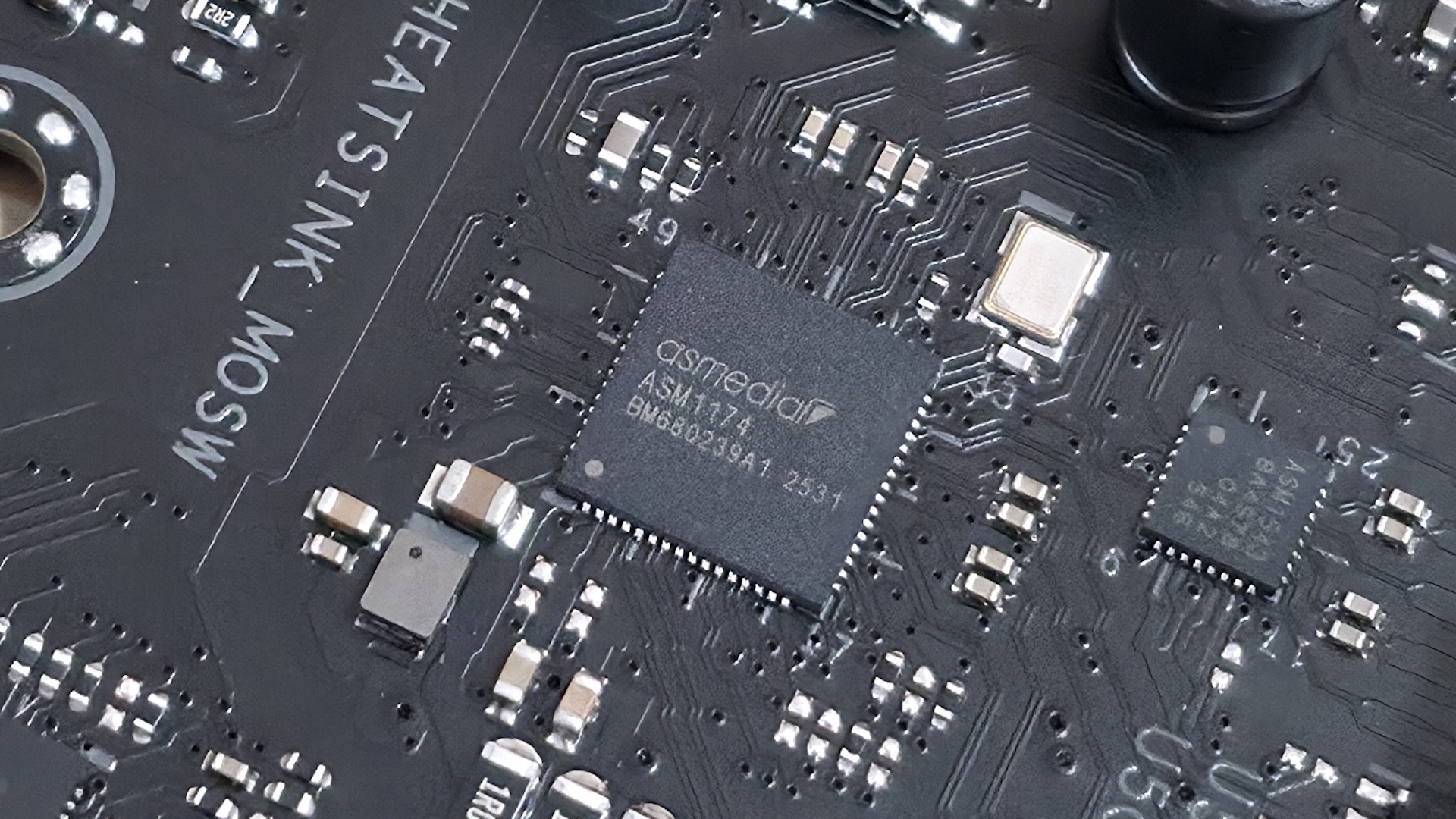
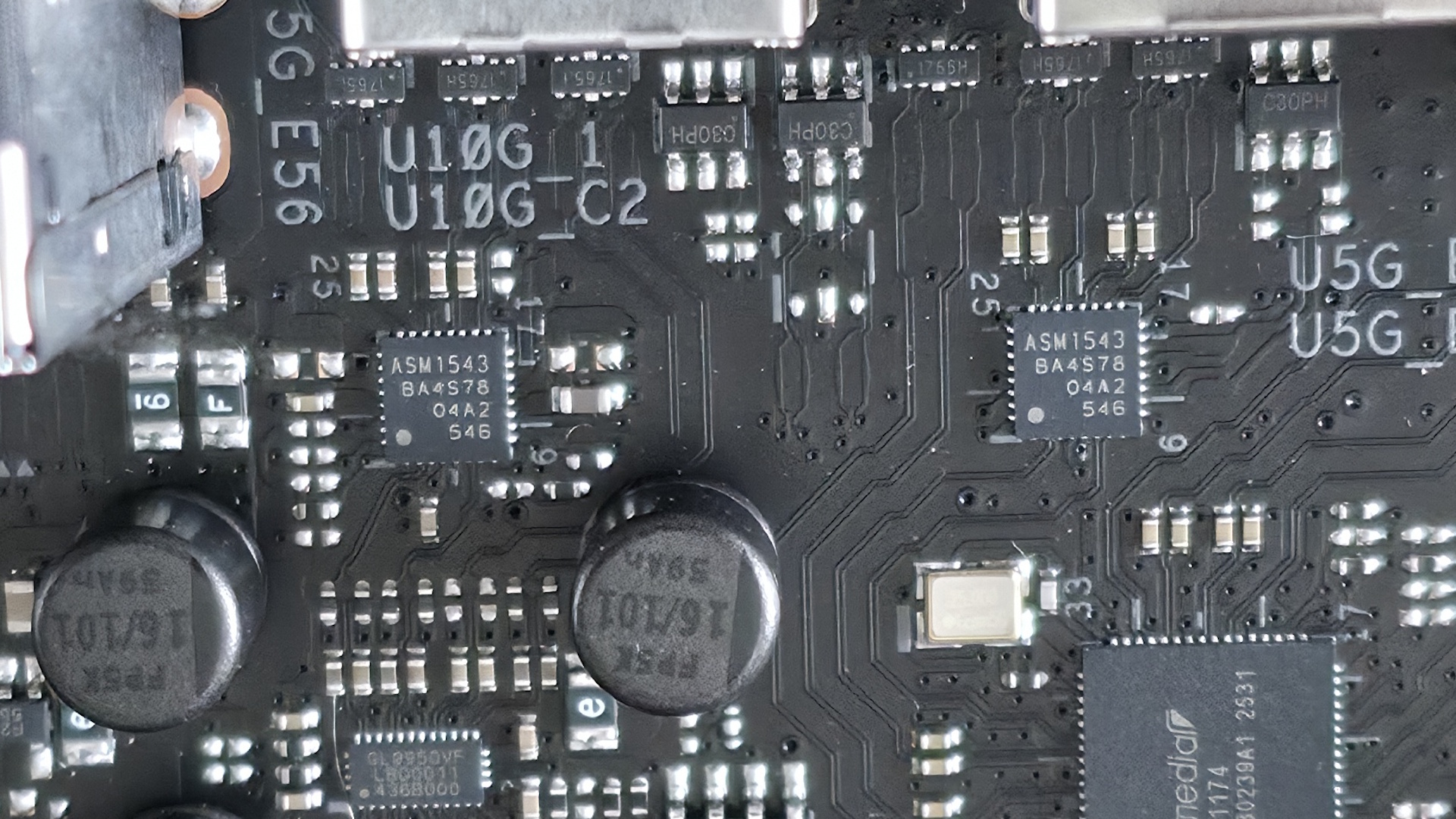
Moving right and past the chipset to the edge are your two SATA ports. Last, we've also included a few images of the active ICs for the board. Asus uses a combination of Realtek (audio, networking), ASMedia (USB), and Vishay (MOSFETs) bits for various functions.
 Future
 Future
 Future
 Future
 Future
 Future
 Future
At the bottom are several headers, including front-panel audio and USB ports. A complete list of connectivity is listed below (from L to R):
- Front panel audio
- (3) 2-pin thermistor headers
- (2) 4-pin RGB headers
- Thunderbolt/USB4 header
- (3) 4-pin fan headers
- (3) USB 2.0 headers
- 4-pin fan header
- Front panel
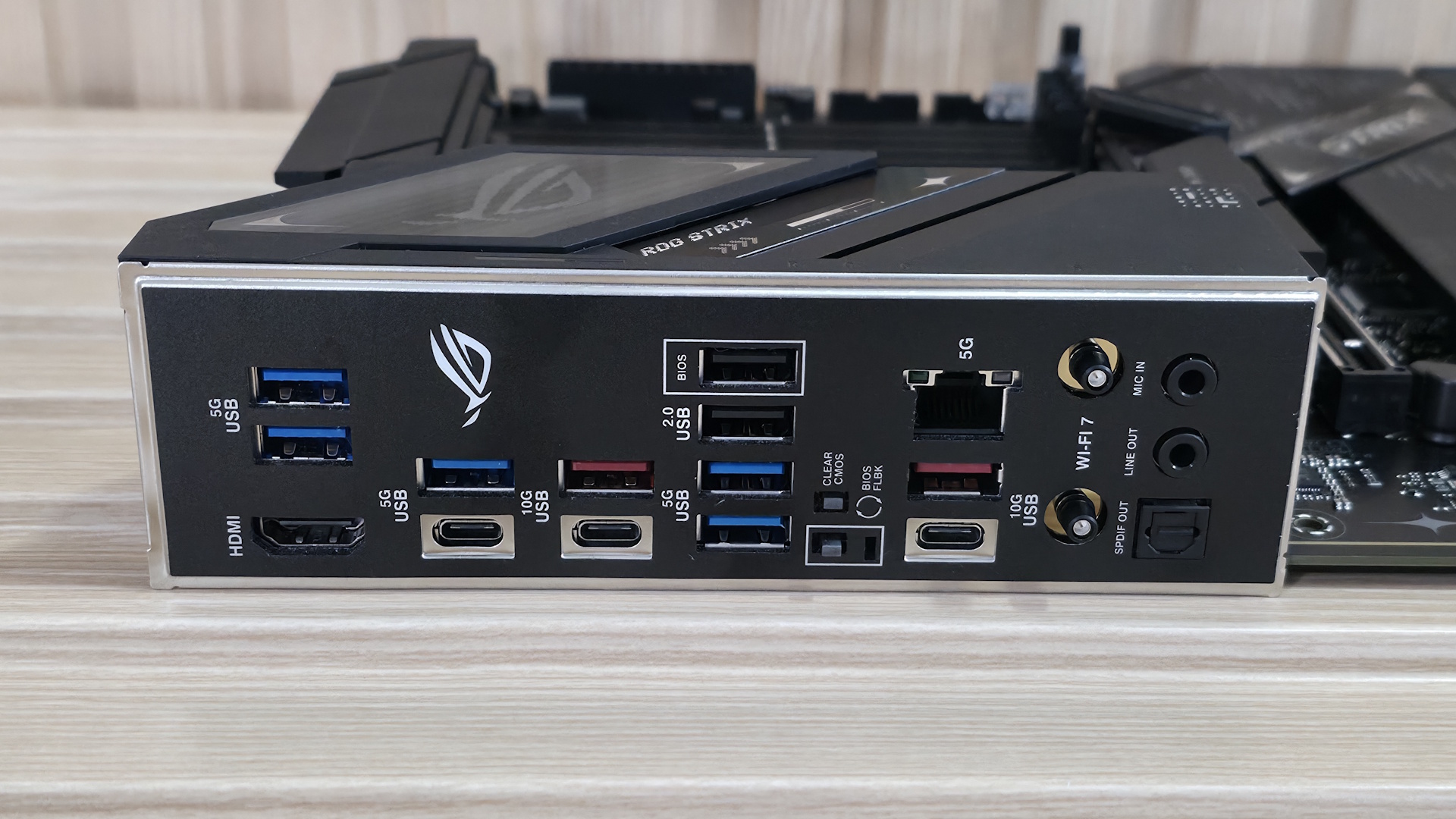
Looking at the rear IO, we can plainly see it's packed with ports. There's a total of 12 USB ports: 2x USB 3.2 Gen 2 (red), 5x USB 3.2 Gen 2 (blue, and two more than the previous B850-F Gaming), 2x USB 2.0 (black), and three Type-C ports (2x USB 3.2 Gen 2, 1x USB 3.2 Gen 1). An HDMI port on the left handles integrated video, while in the middle, among all the USB ports, are tiny Clear CMOS and BIOS Flashback buttons. The Realtek 5 GbE, up from 2.5 GbE, is on the right along with the 160 MHz (slower) Wi-Fi 7 Q-Antenna. Last, on the right is the audio stack consisting of two 3.5mm jacks and SPDIF output.
Nothing special here, and about the only thing missing is a 40 Gbps port or two (that are rare on this platform anyway).
MORE: Best Motherboards
MORE: How To Choose A Motherboard
MORE: Best Motherboard Deals
MORE: Best Motherboard Combo Deals
MORE: All Motherboard Content
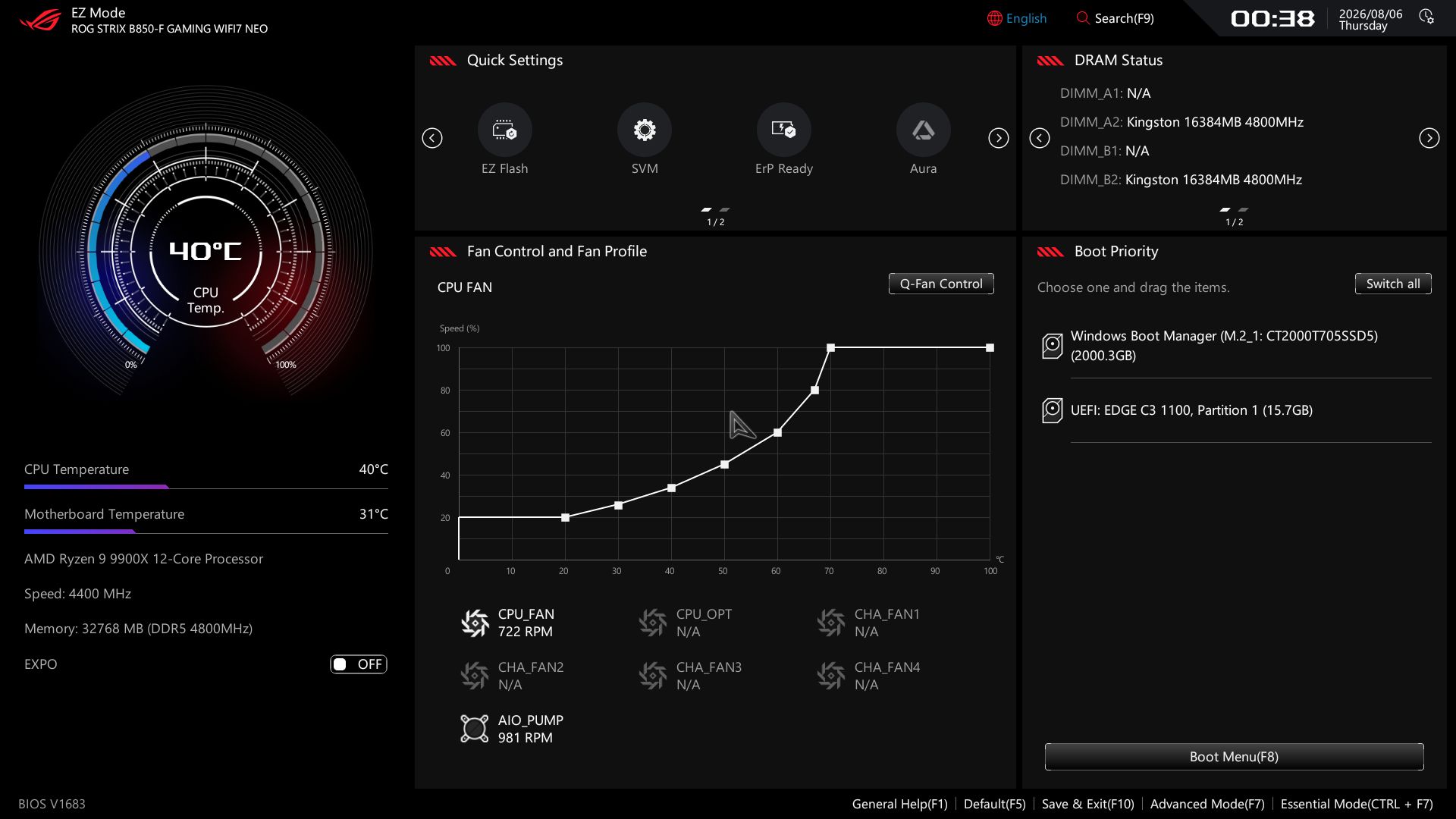
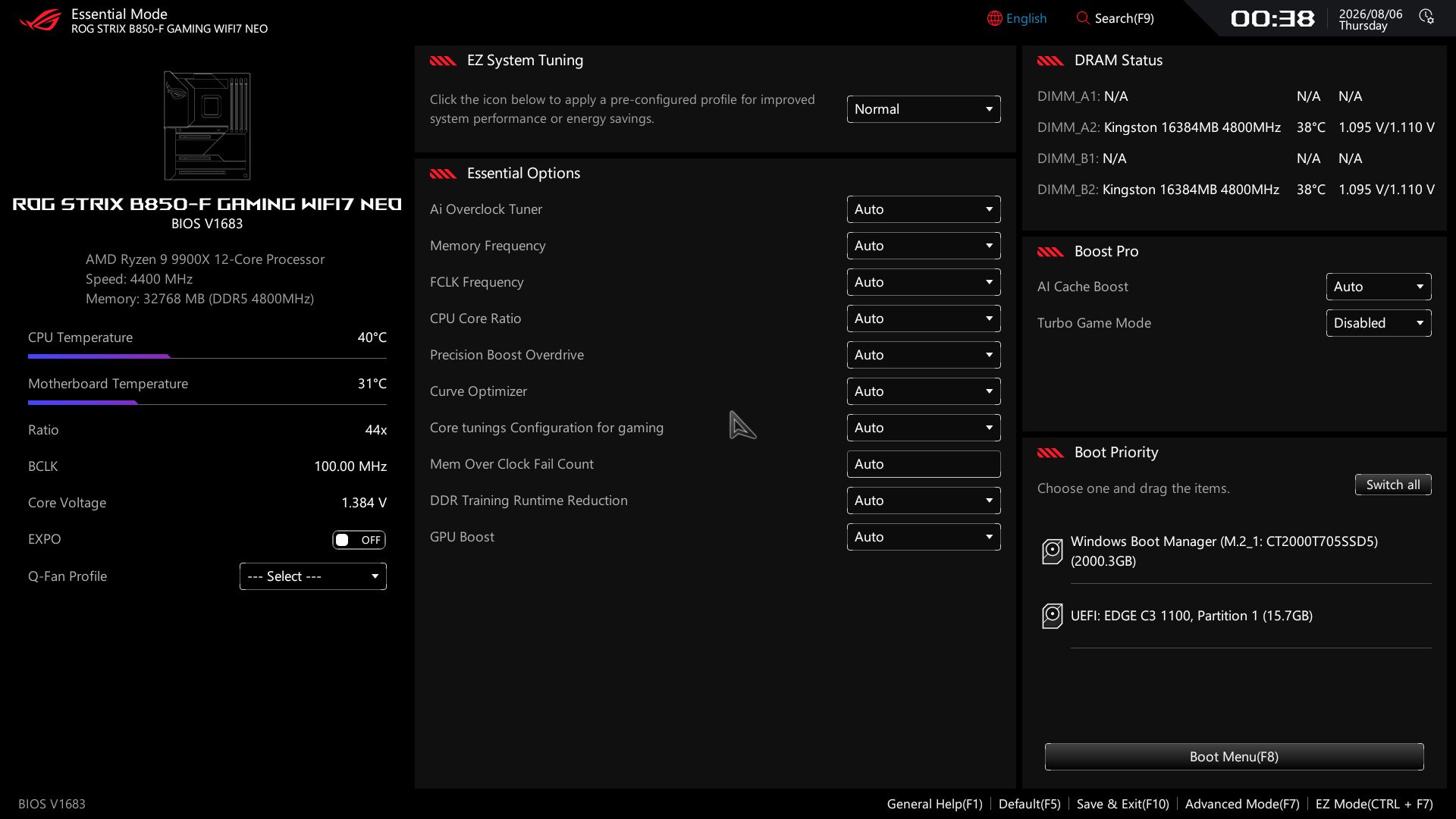
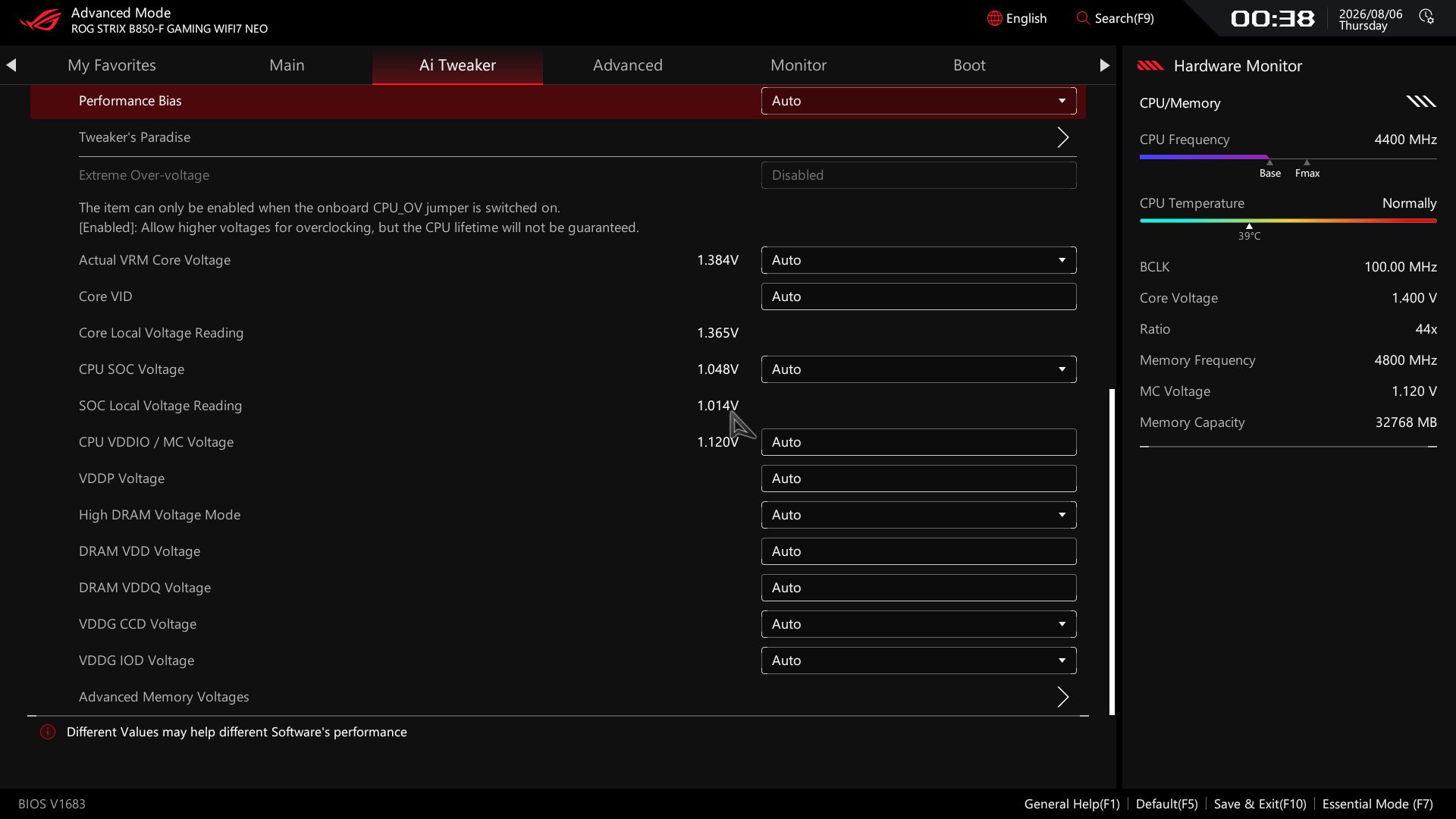
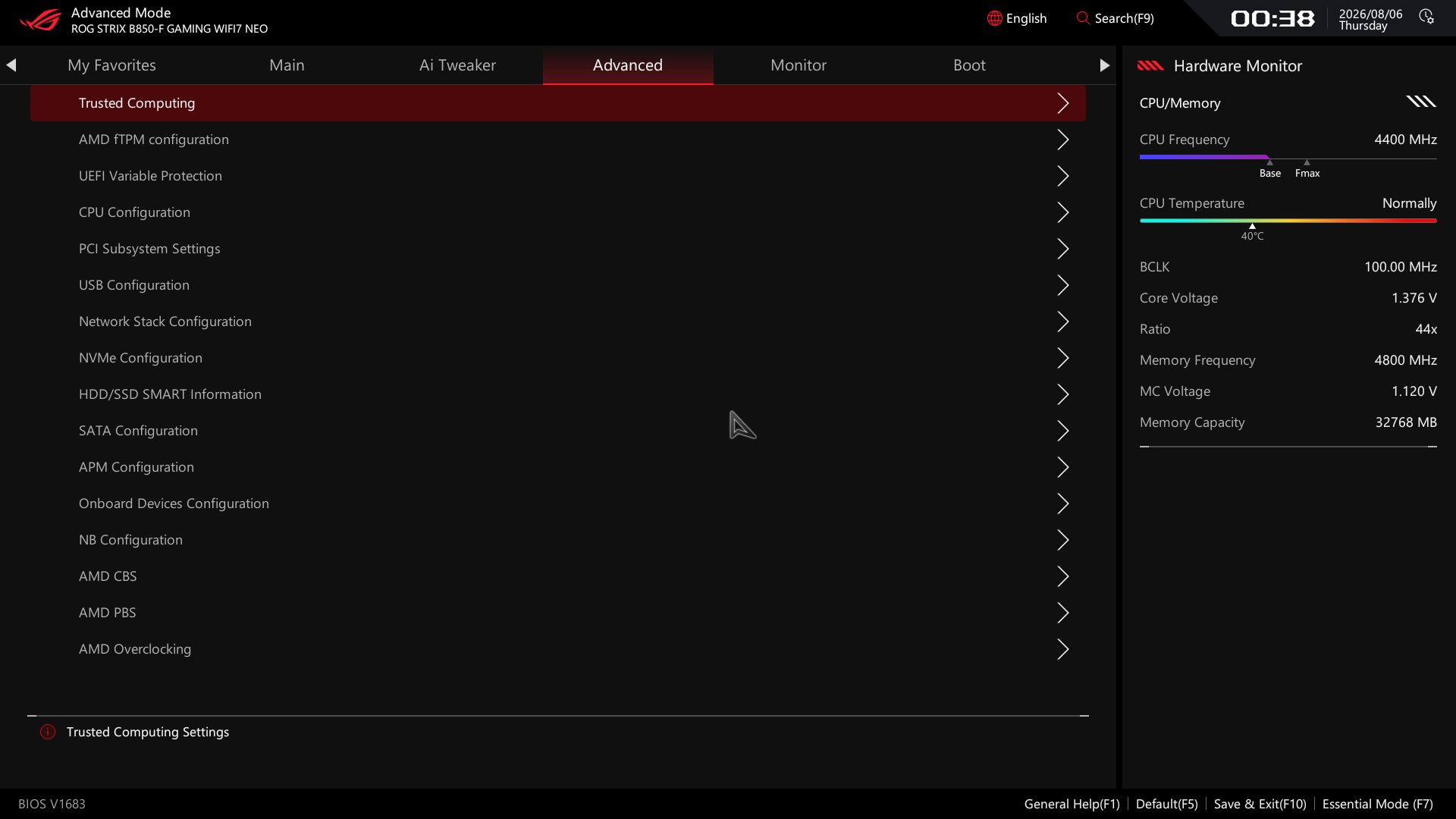
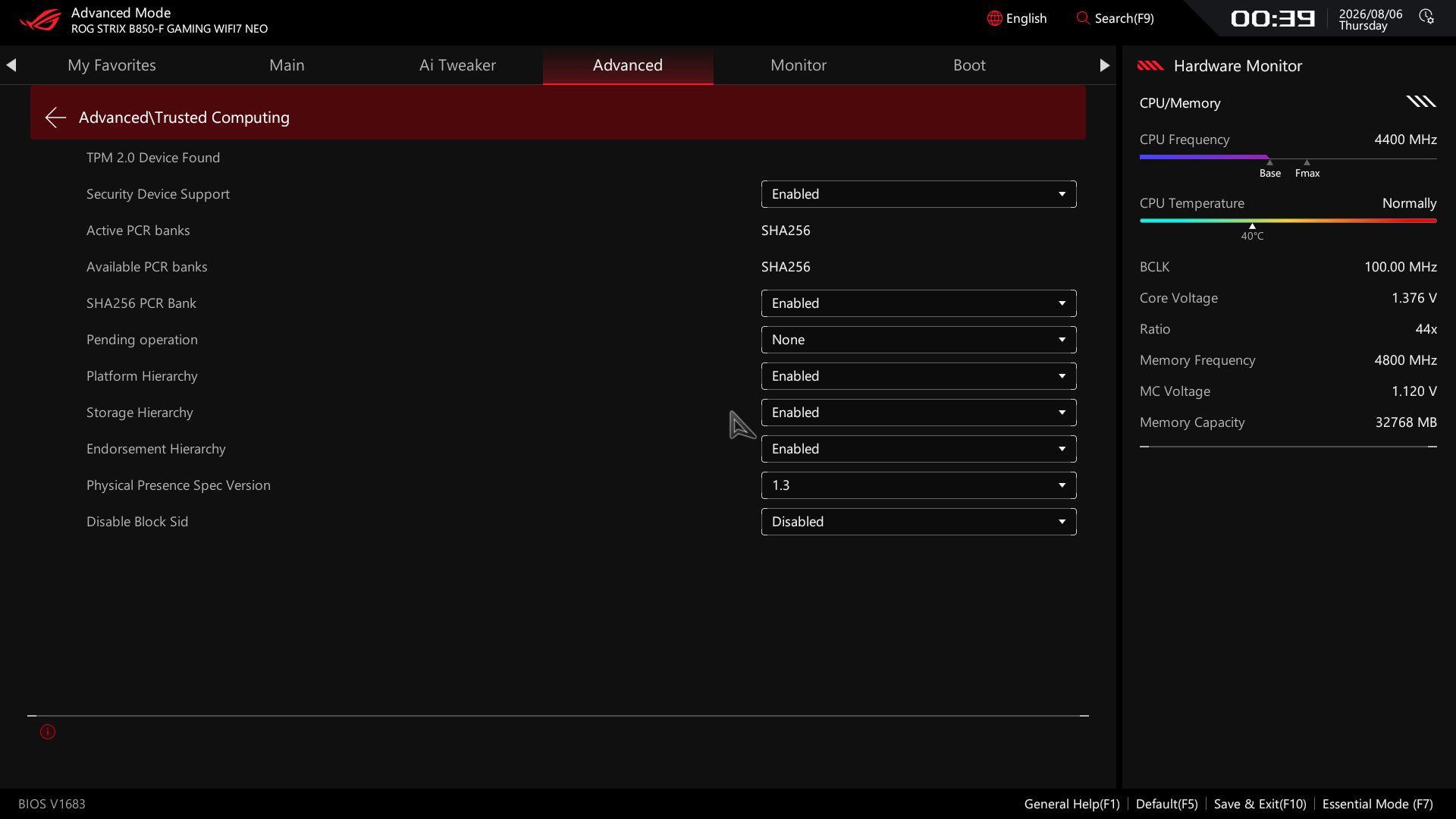
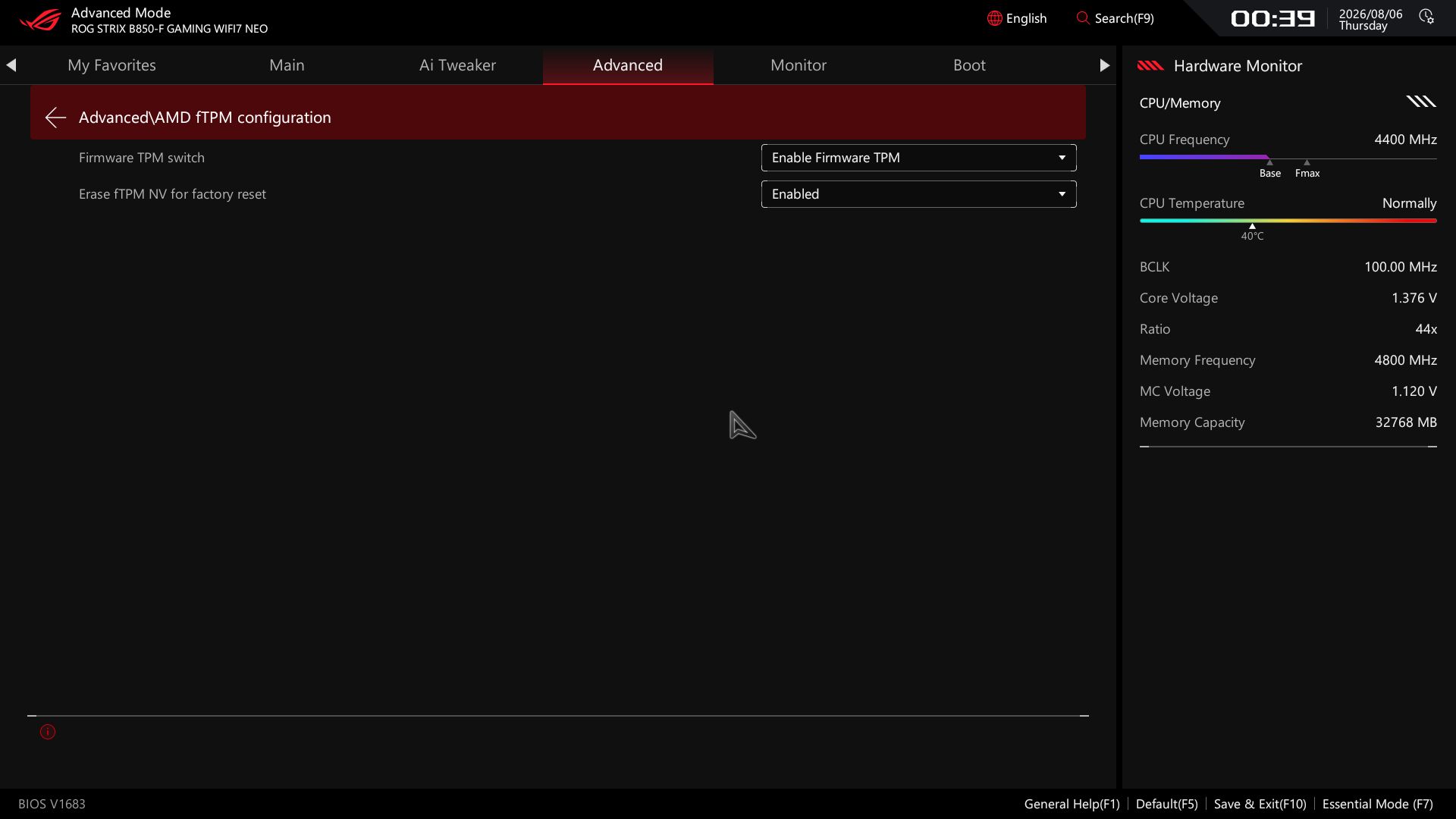
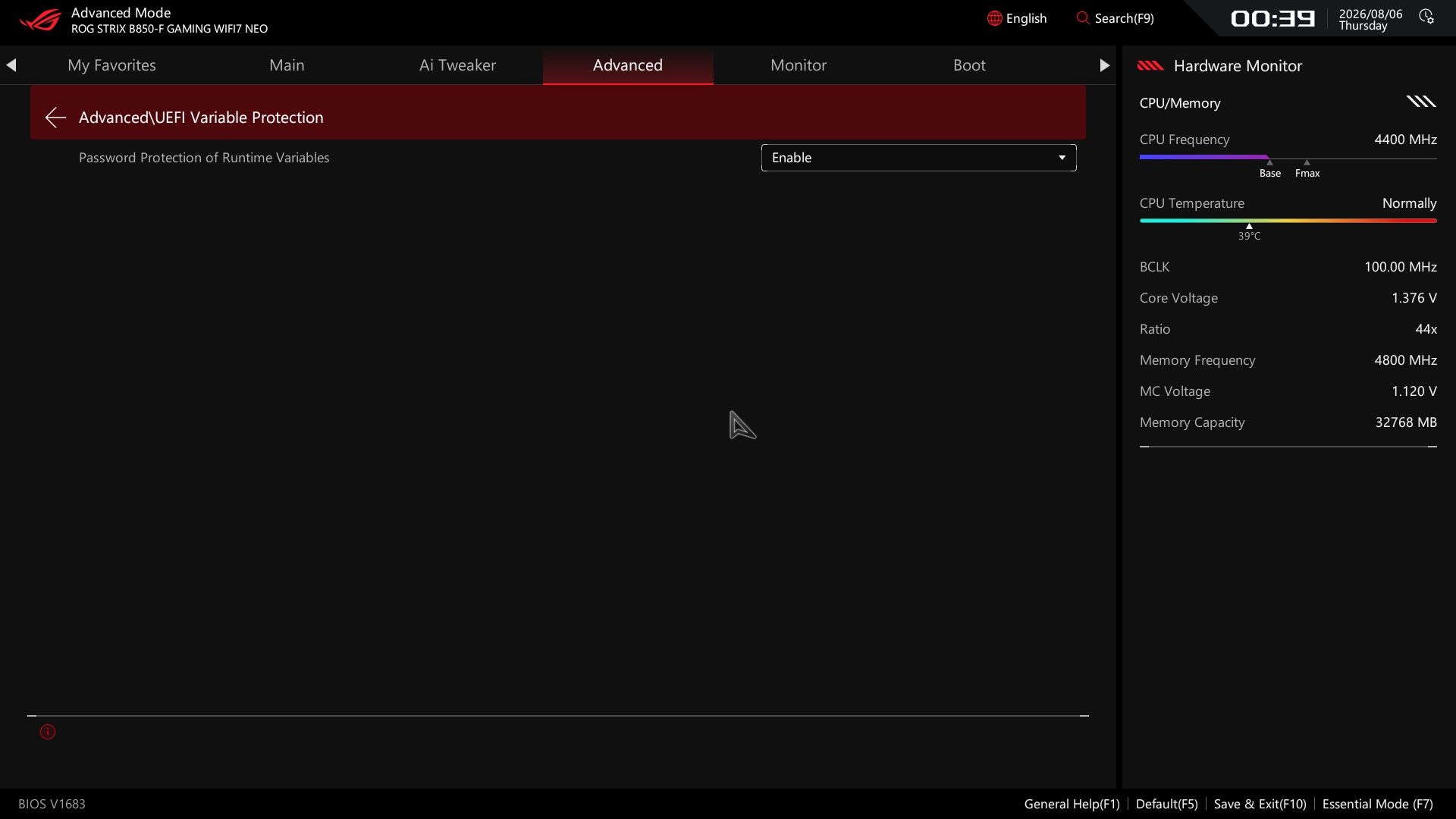
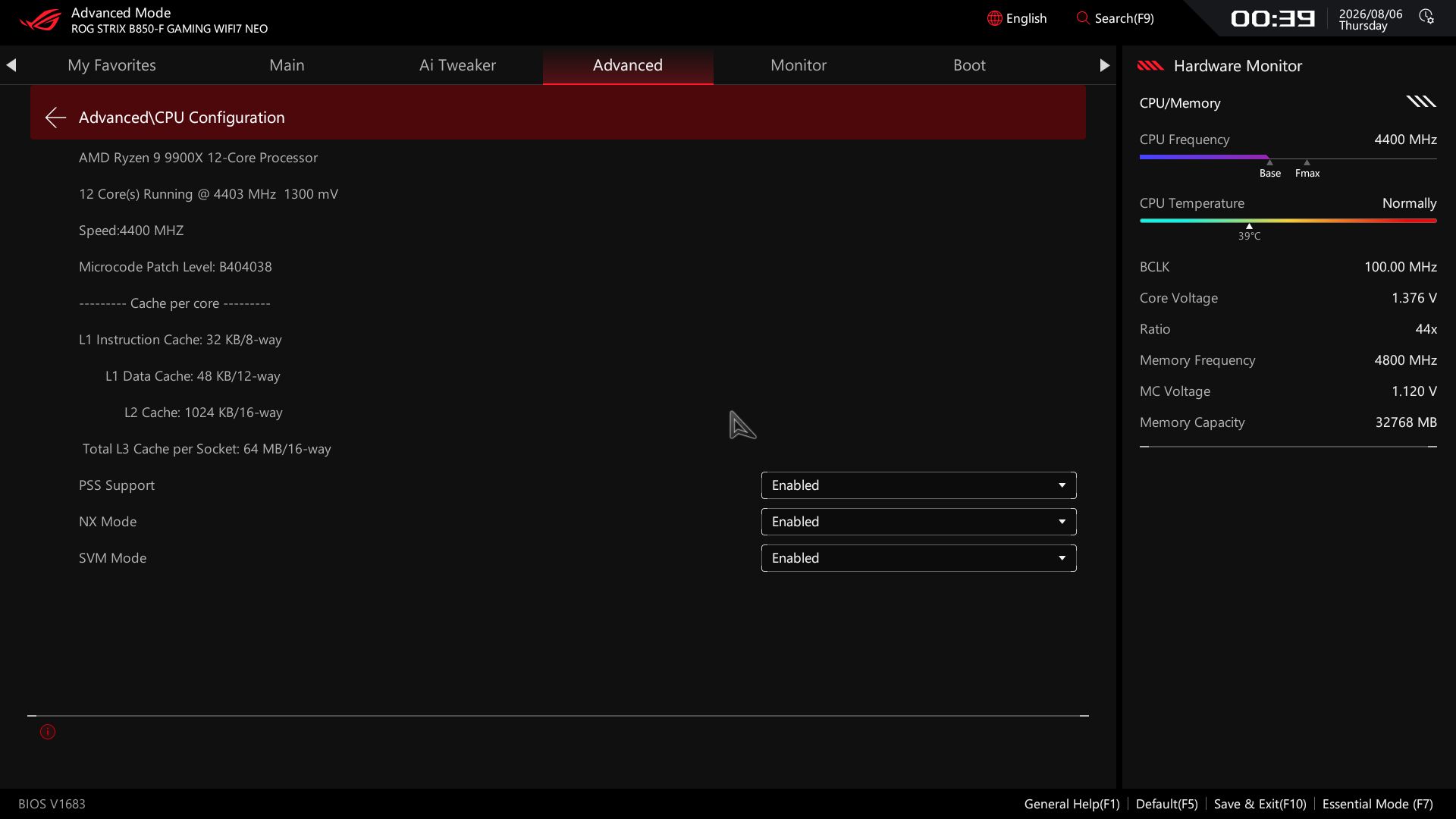
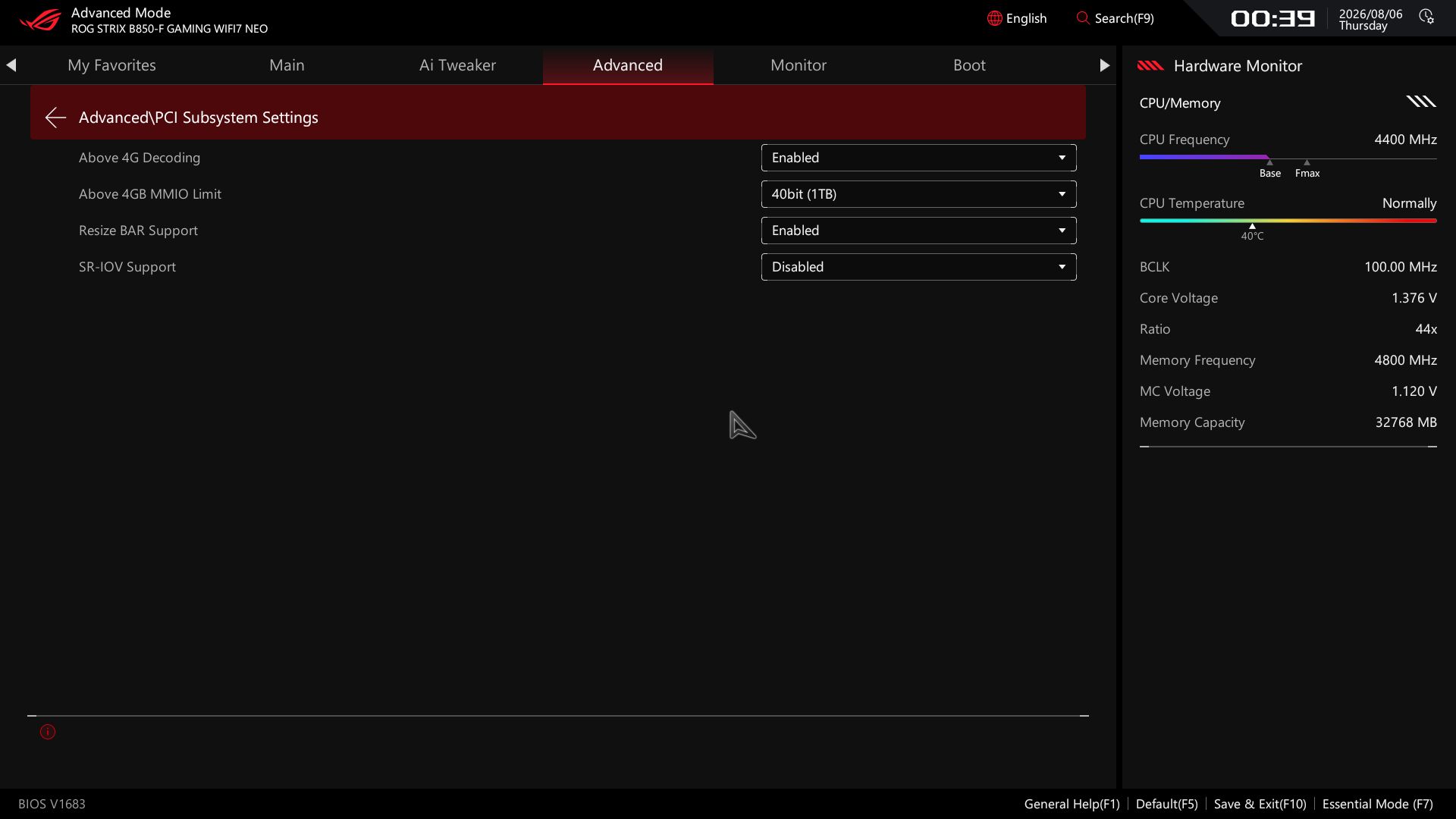
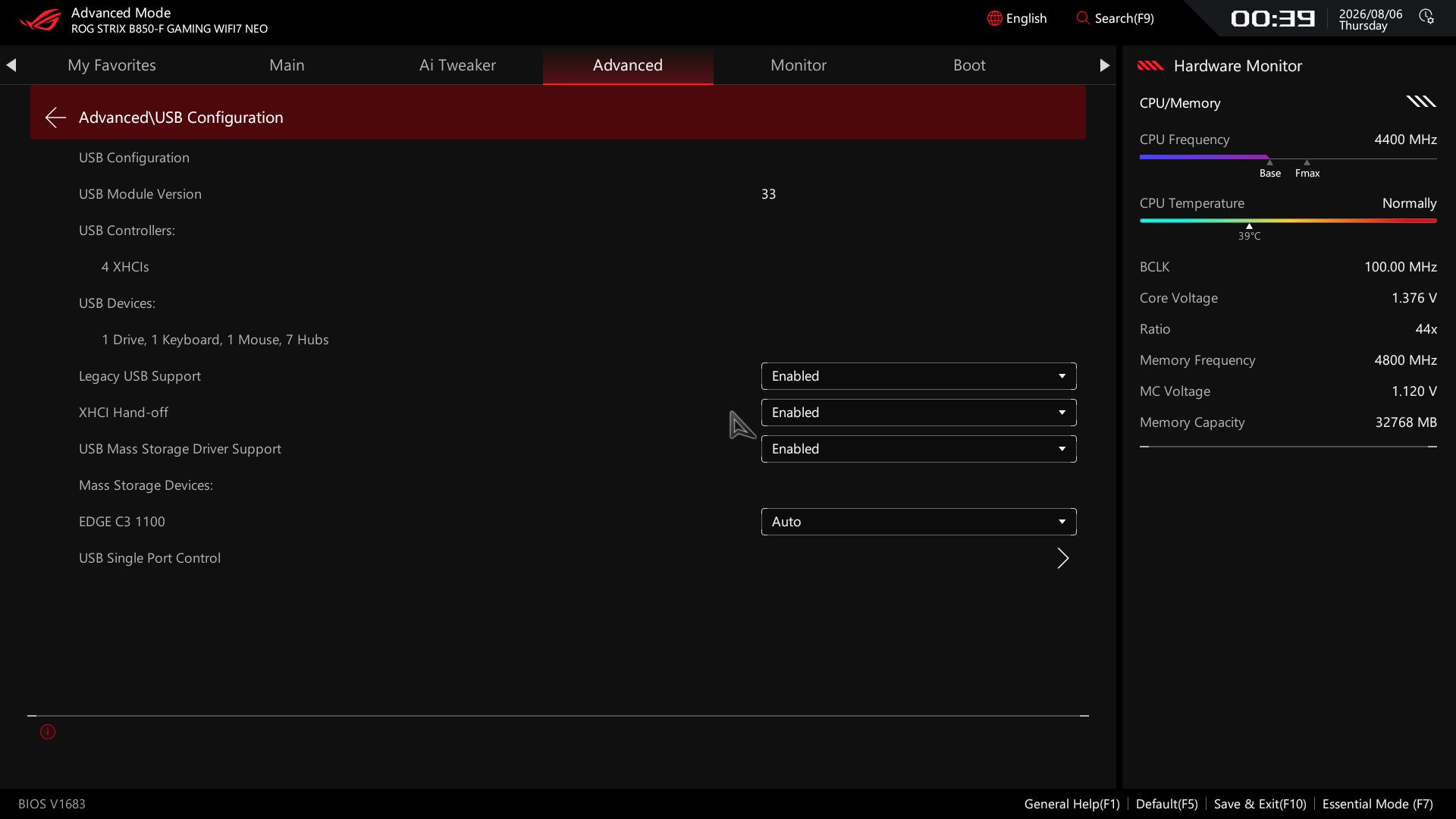
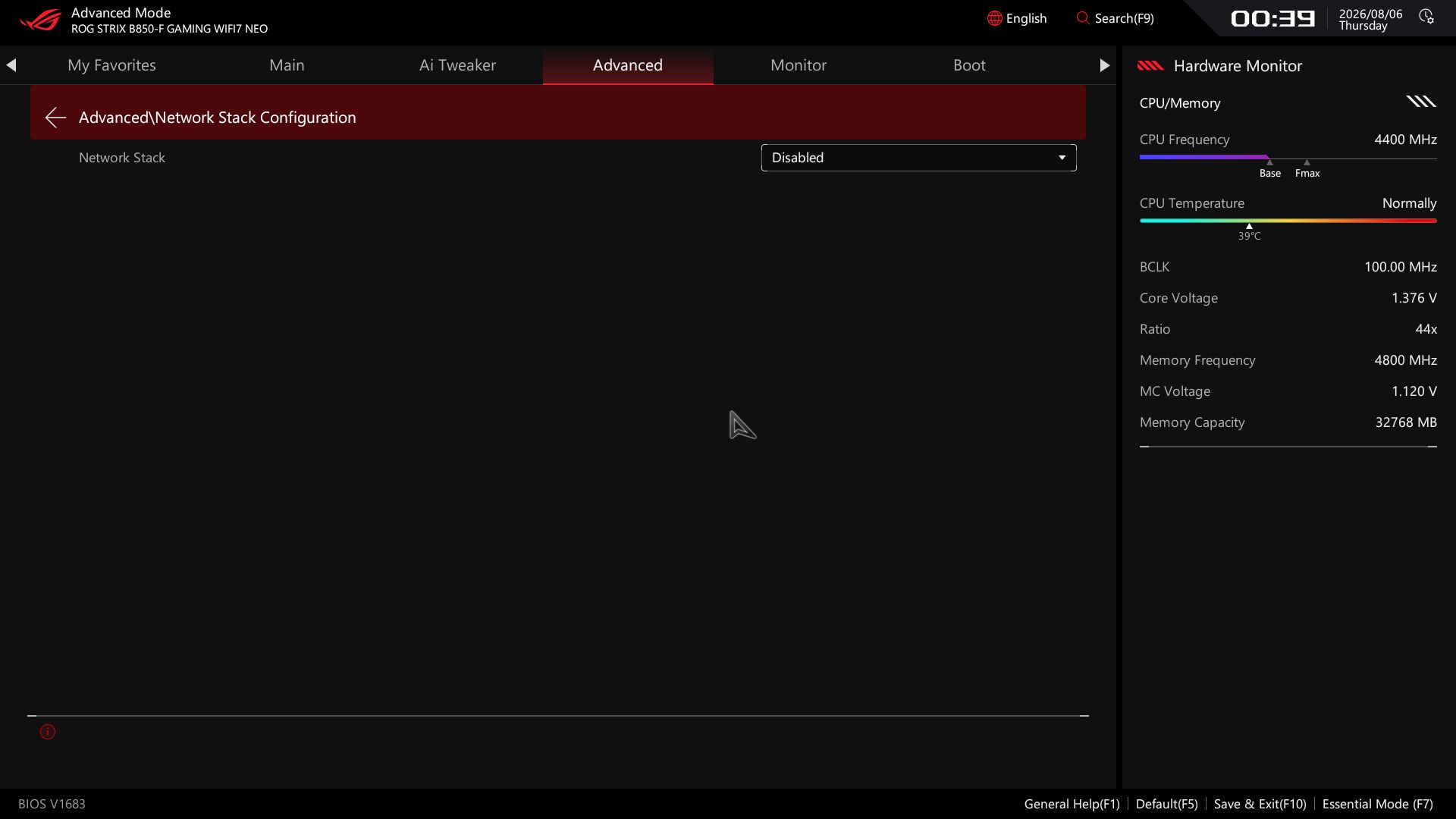
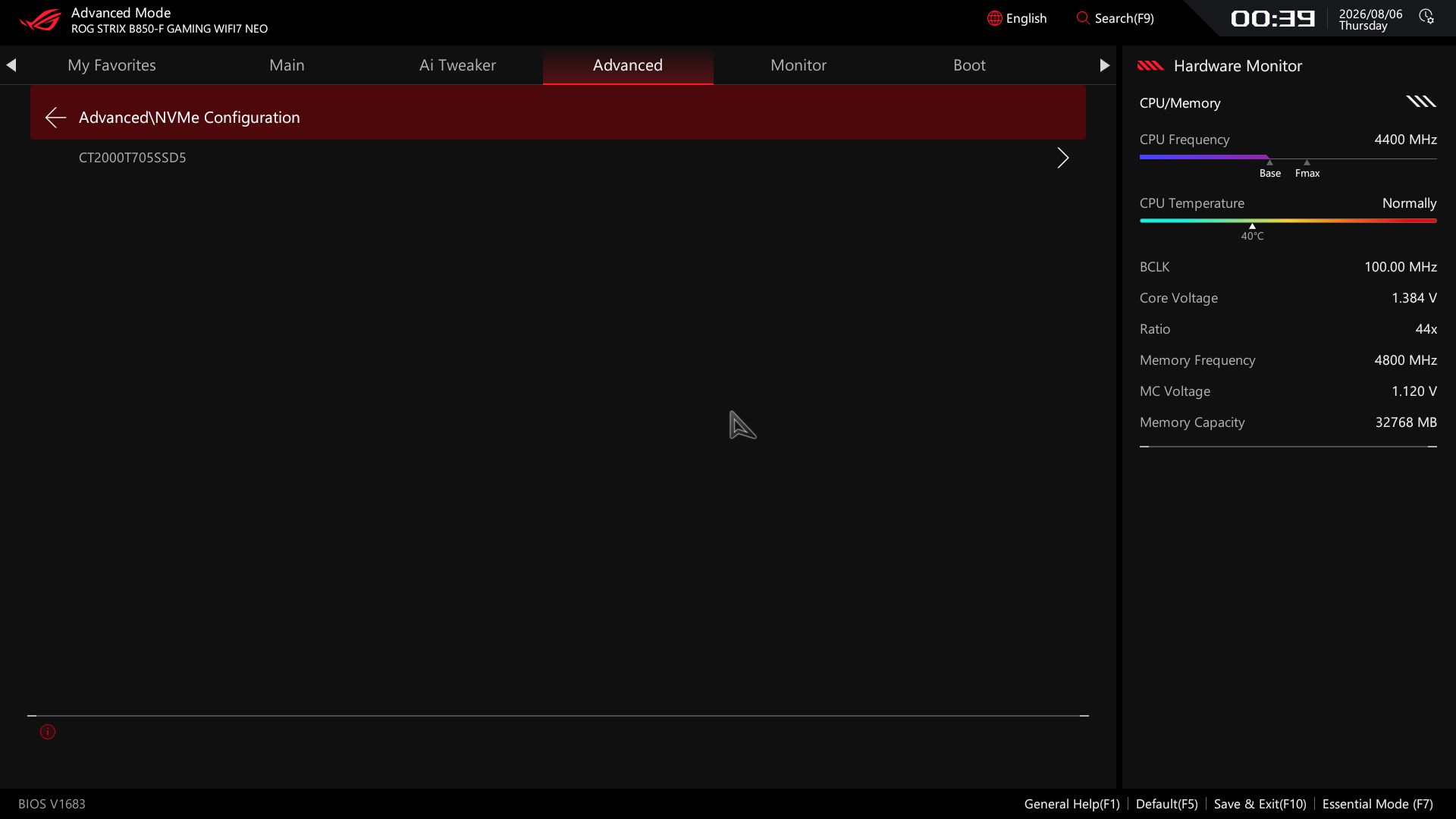
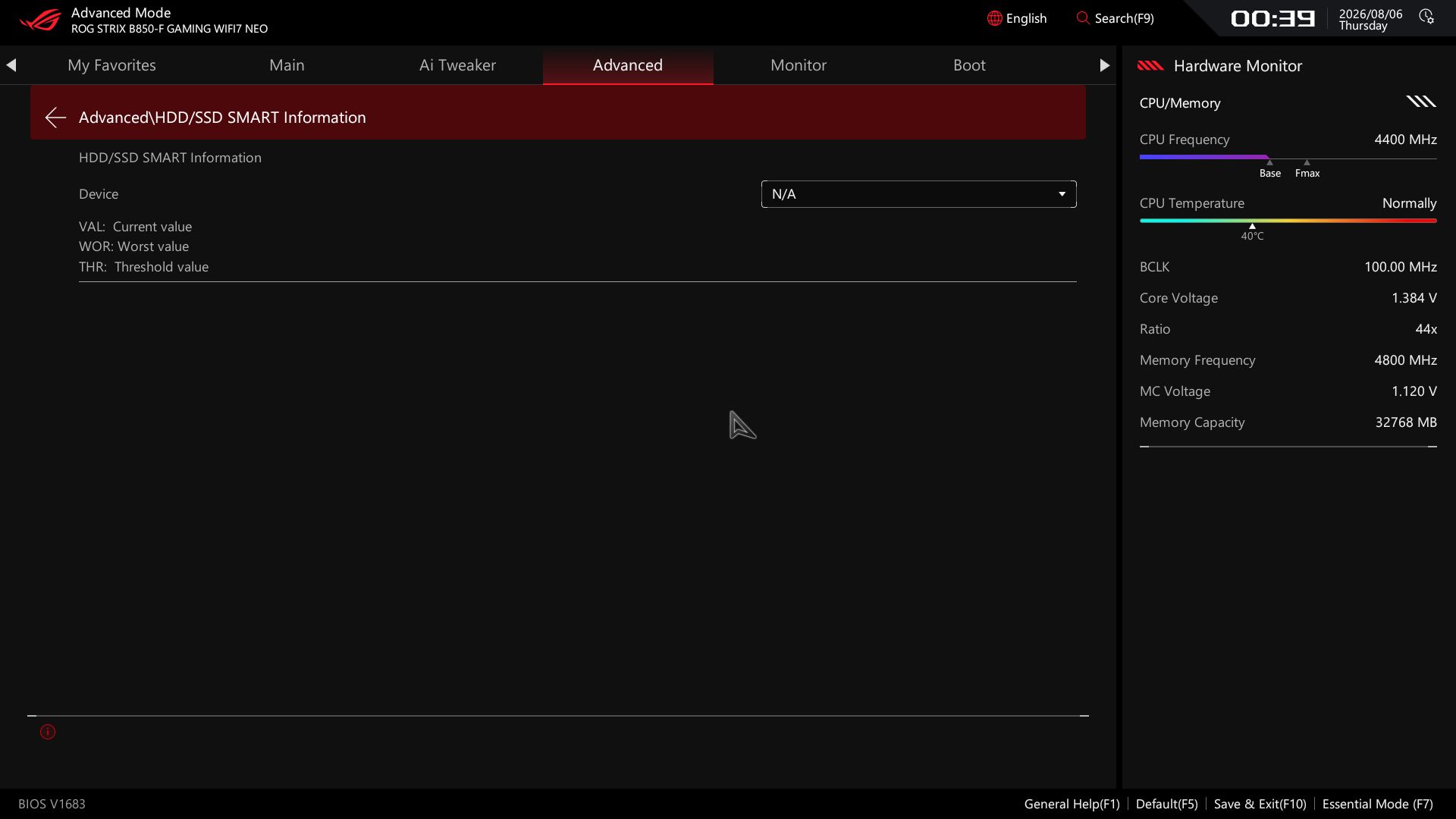
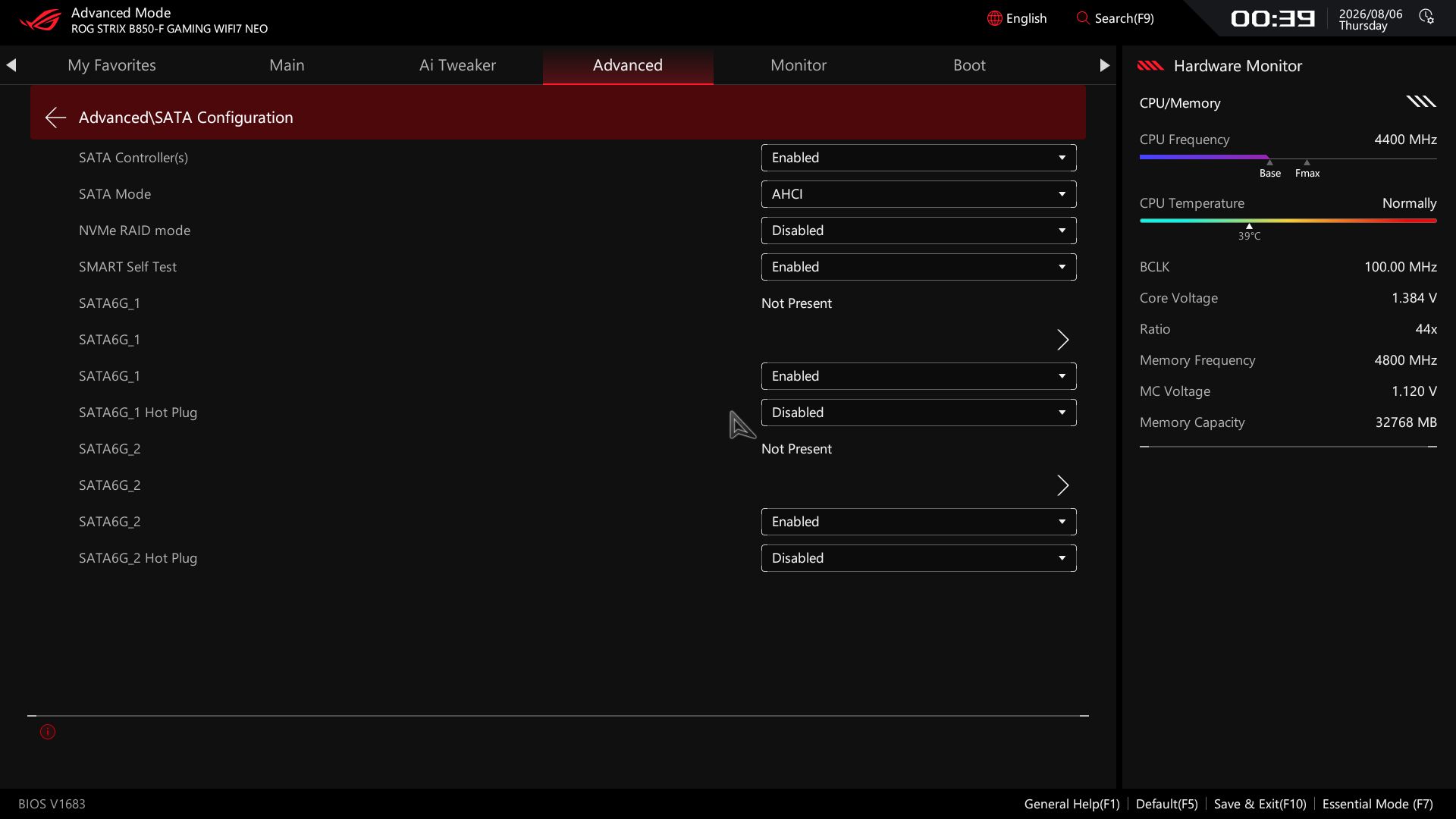
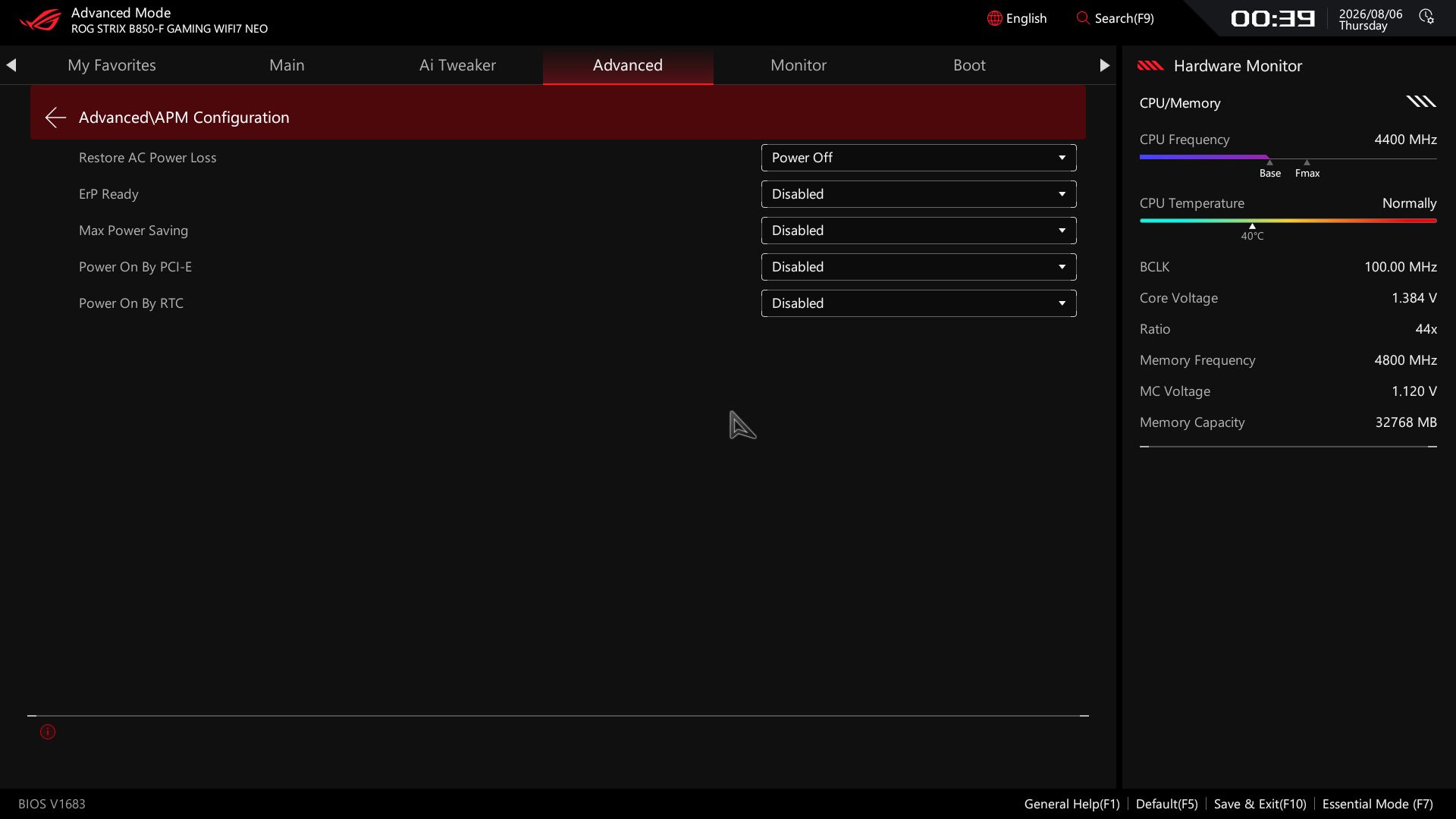
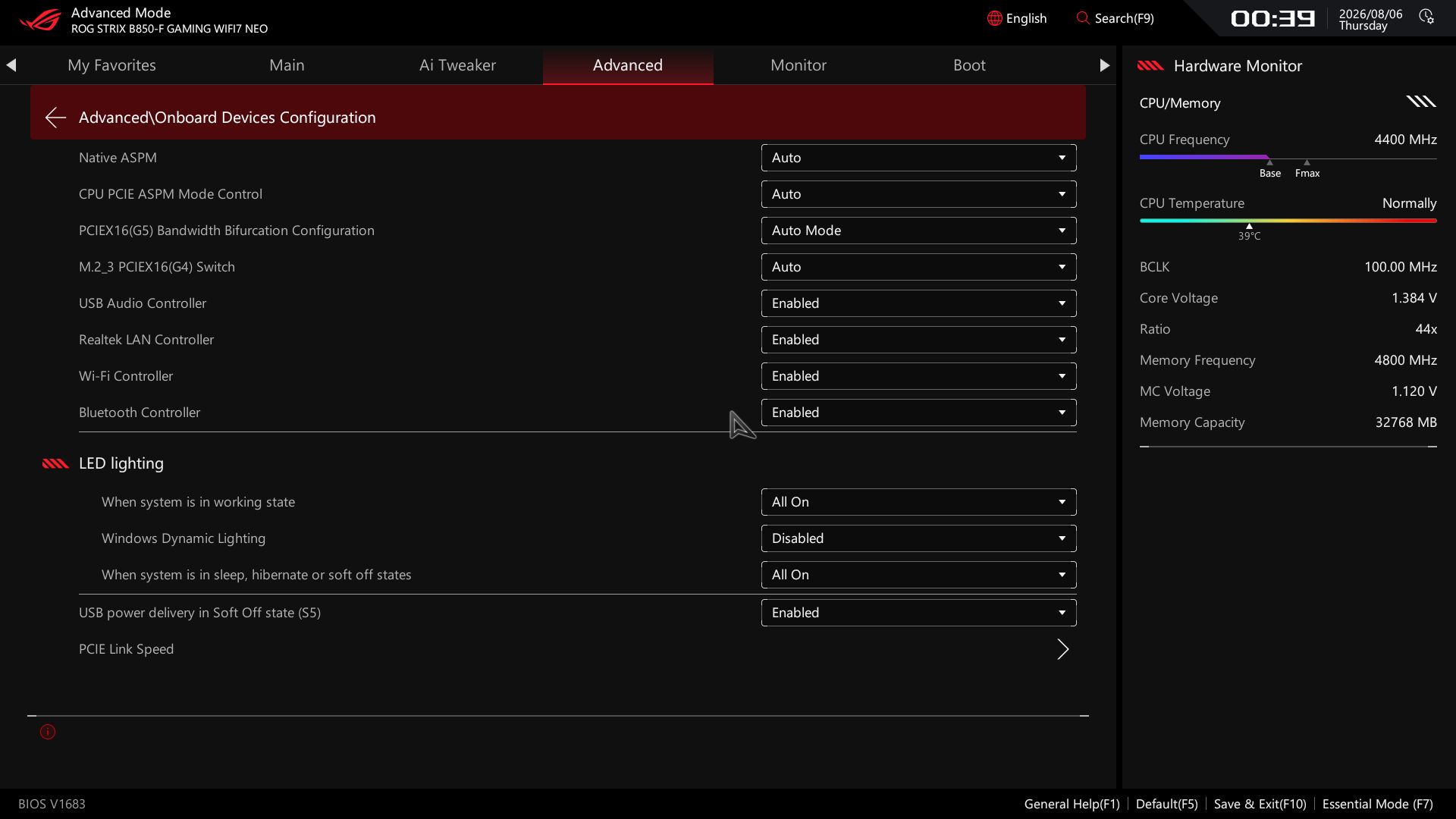
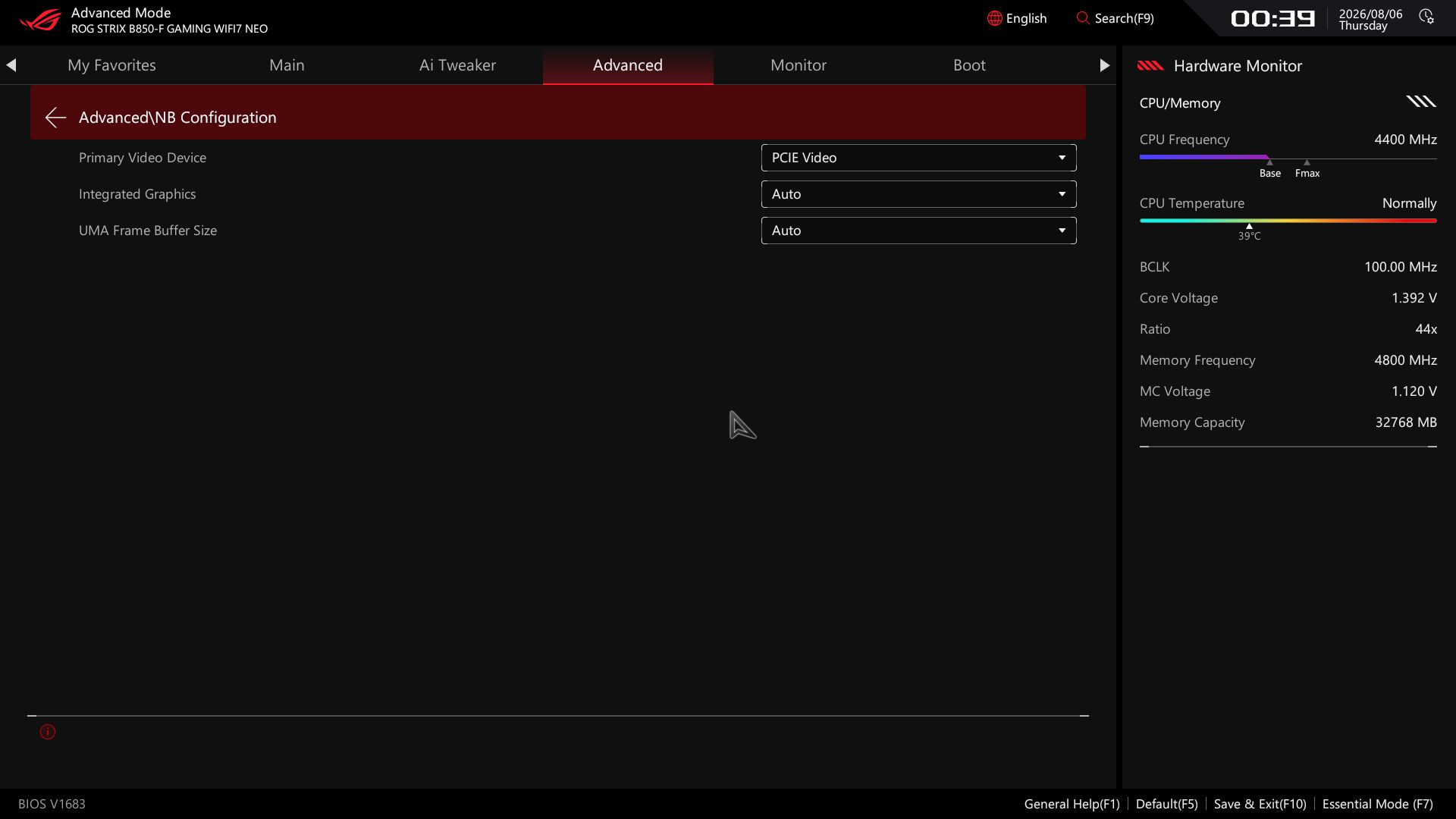
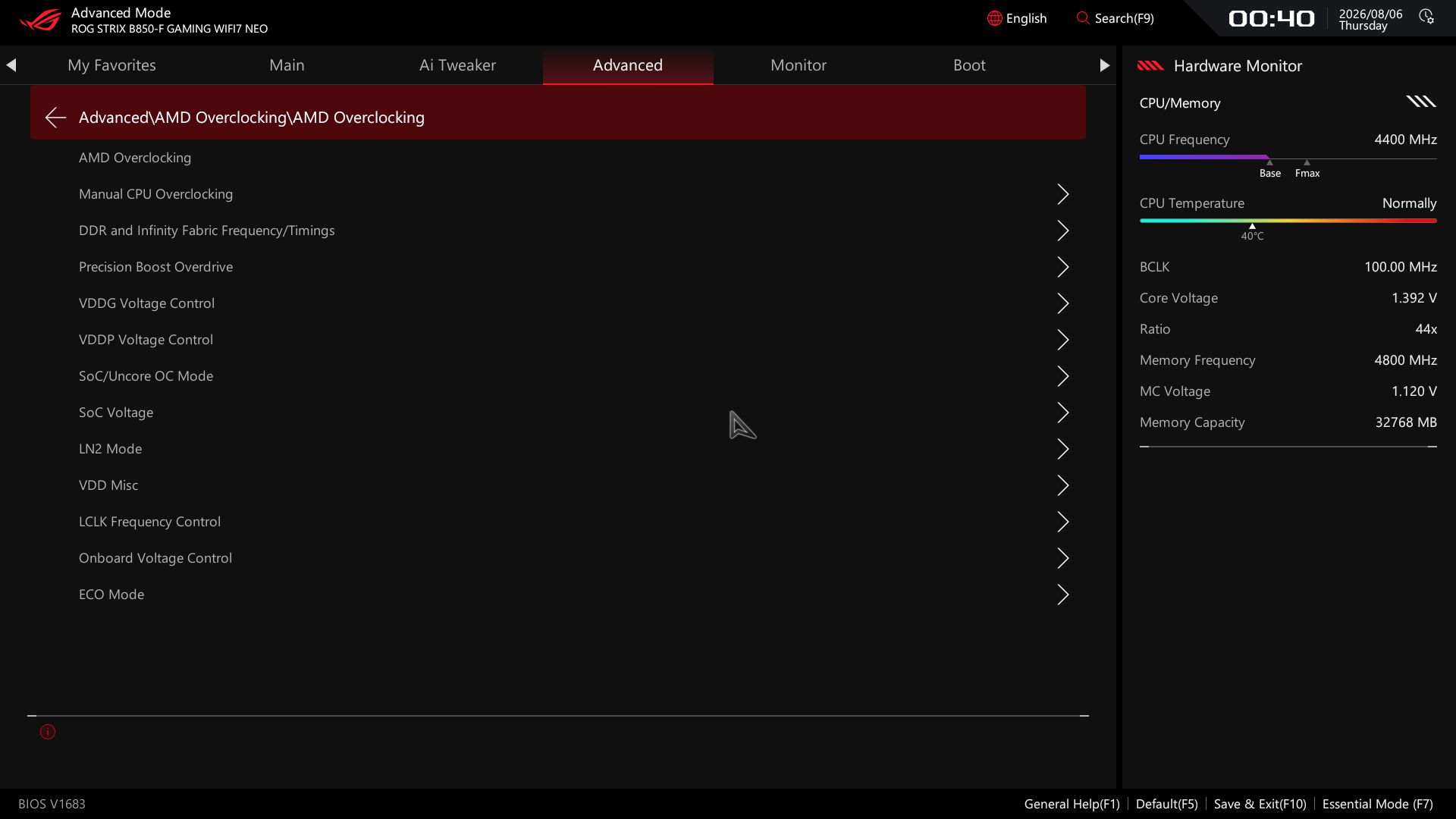
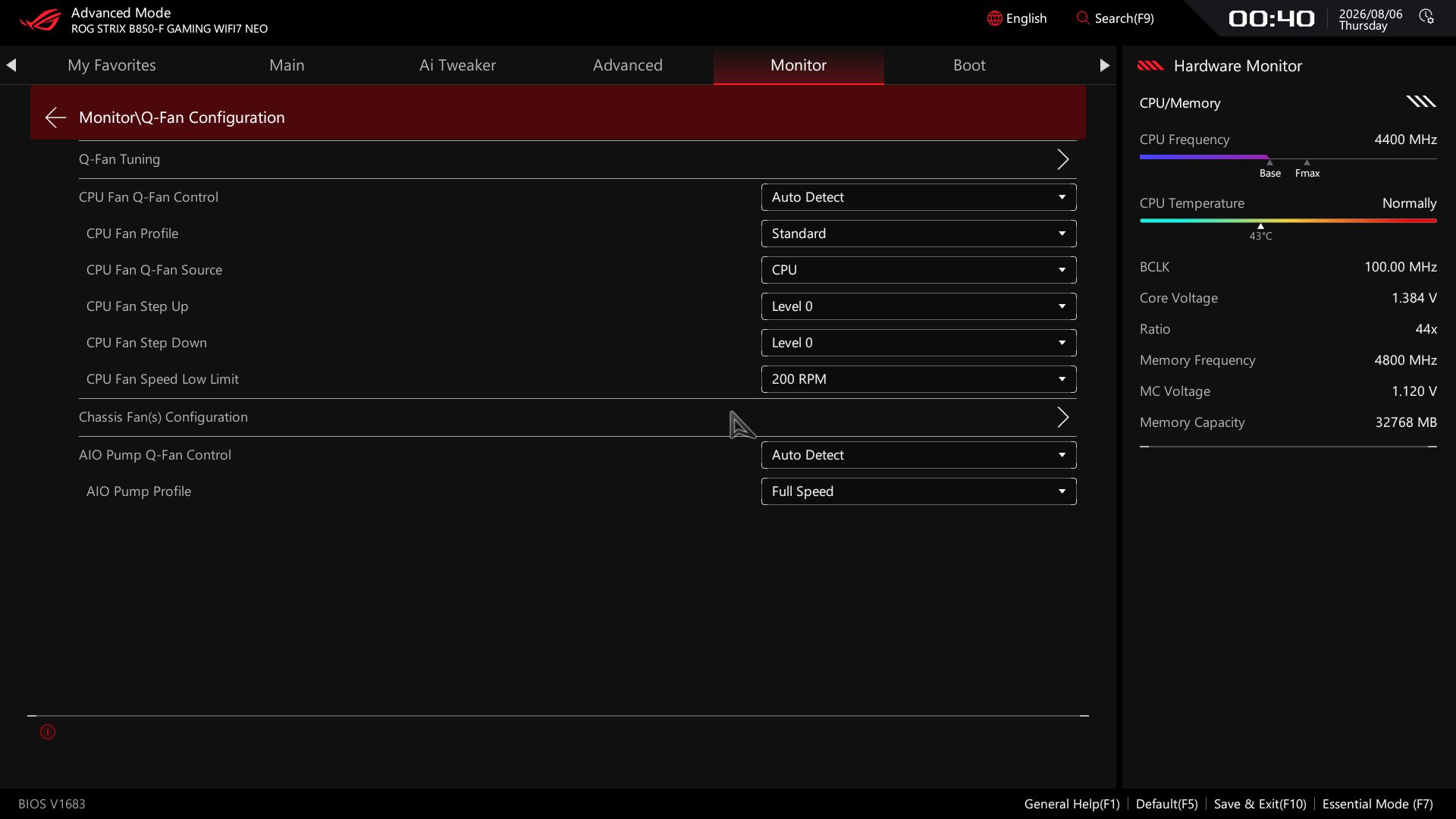
Asus updated the BIOS layout on this board, using the familiar ROG black/red/white theme. EZ Mode is mostly informative, with system information and temperatures on the left, and Quick Settings at the top/middle for EZ Flash, Aura RGB, the Driver Hub for easy driver installation, and more. Fan control and access to full Q-Fan functionality are below. The right block displays DRAM and storage status, and Boot Priority is self-explanatory.
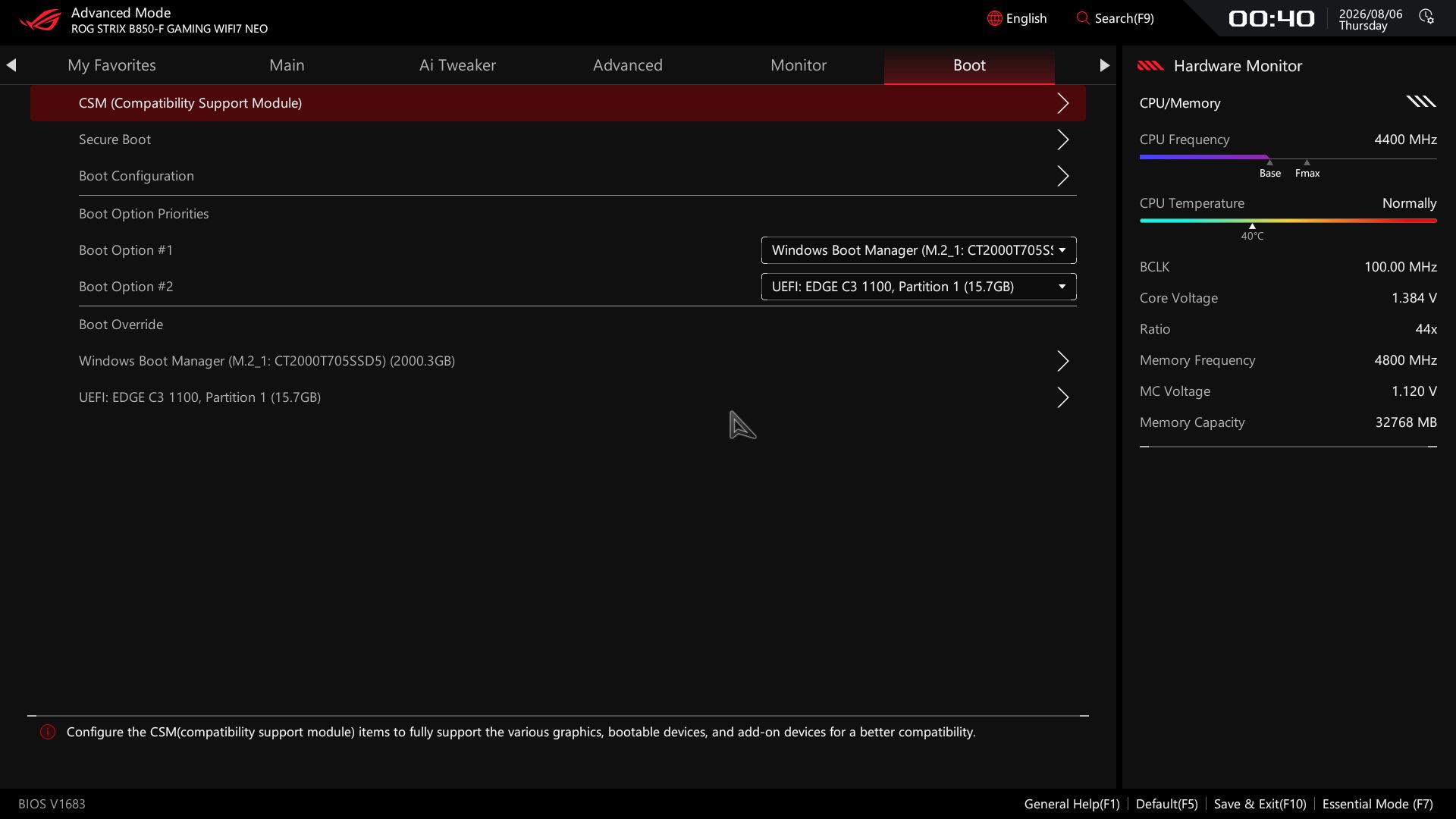
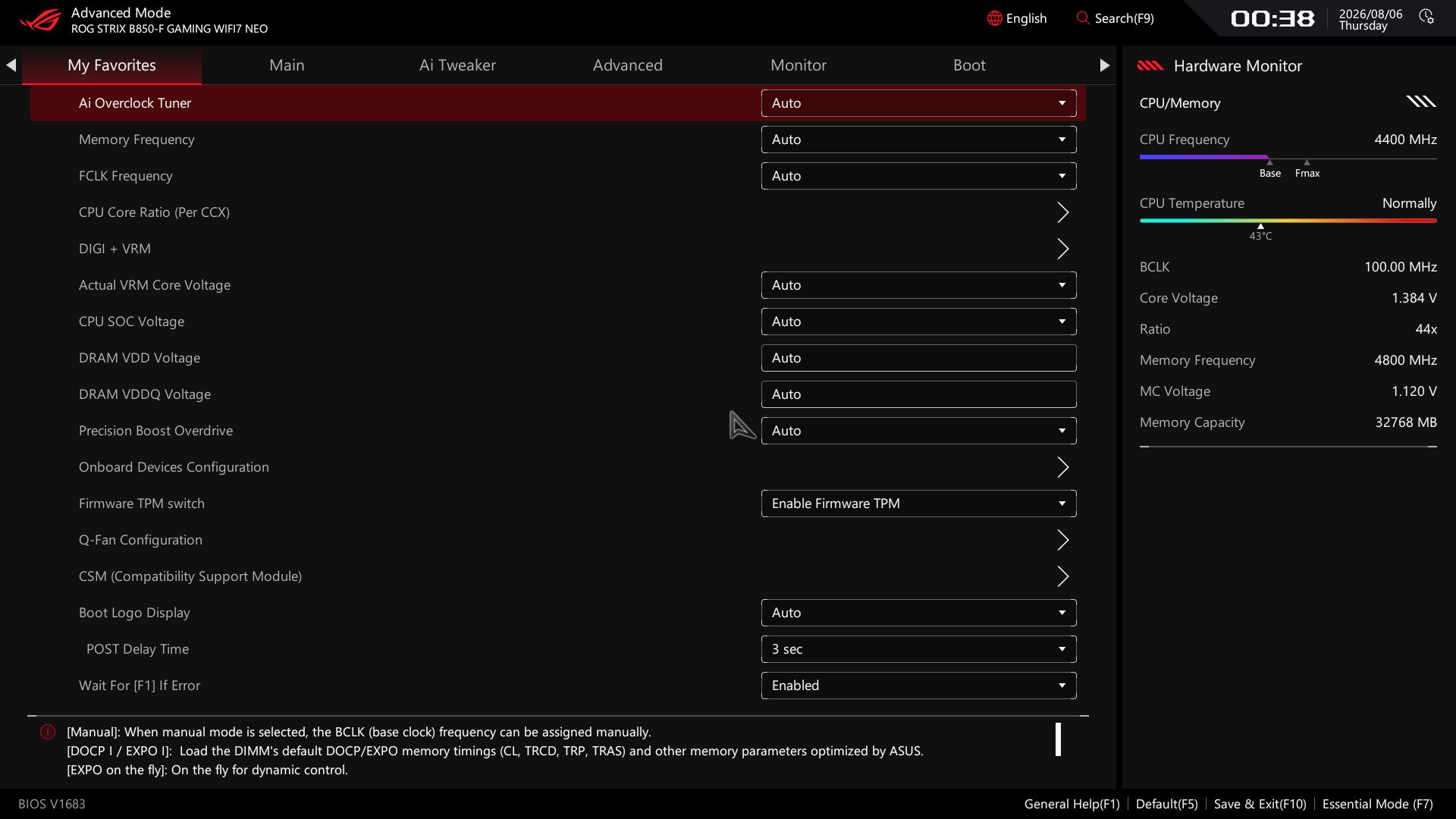
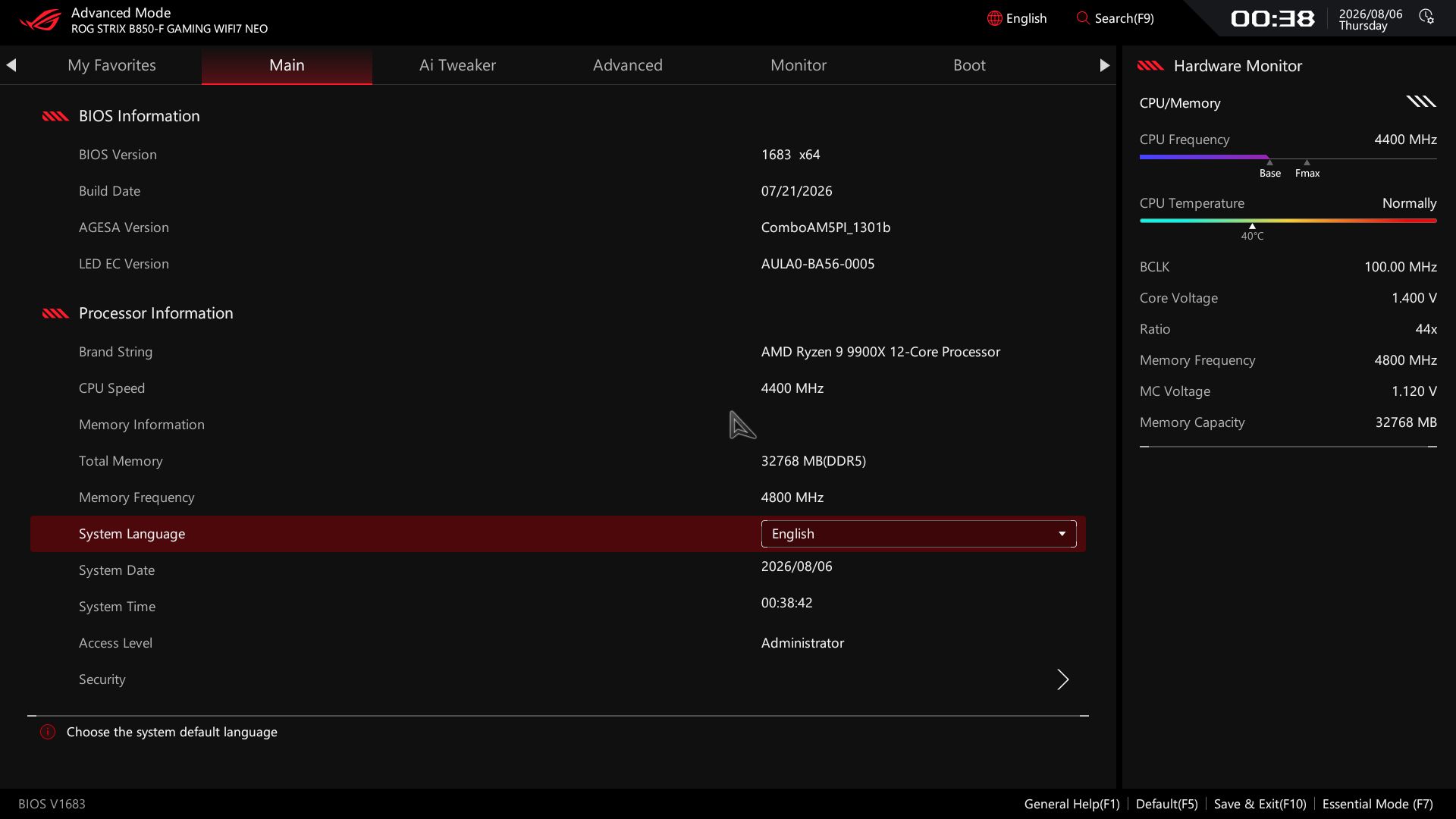
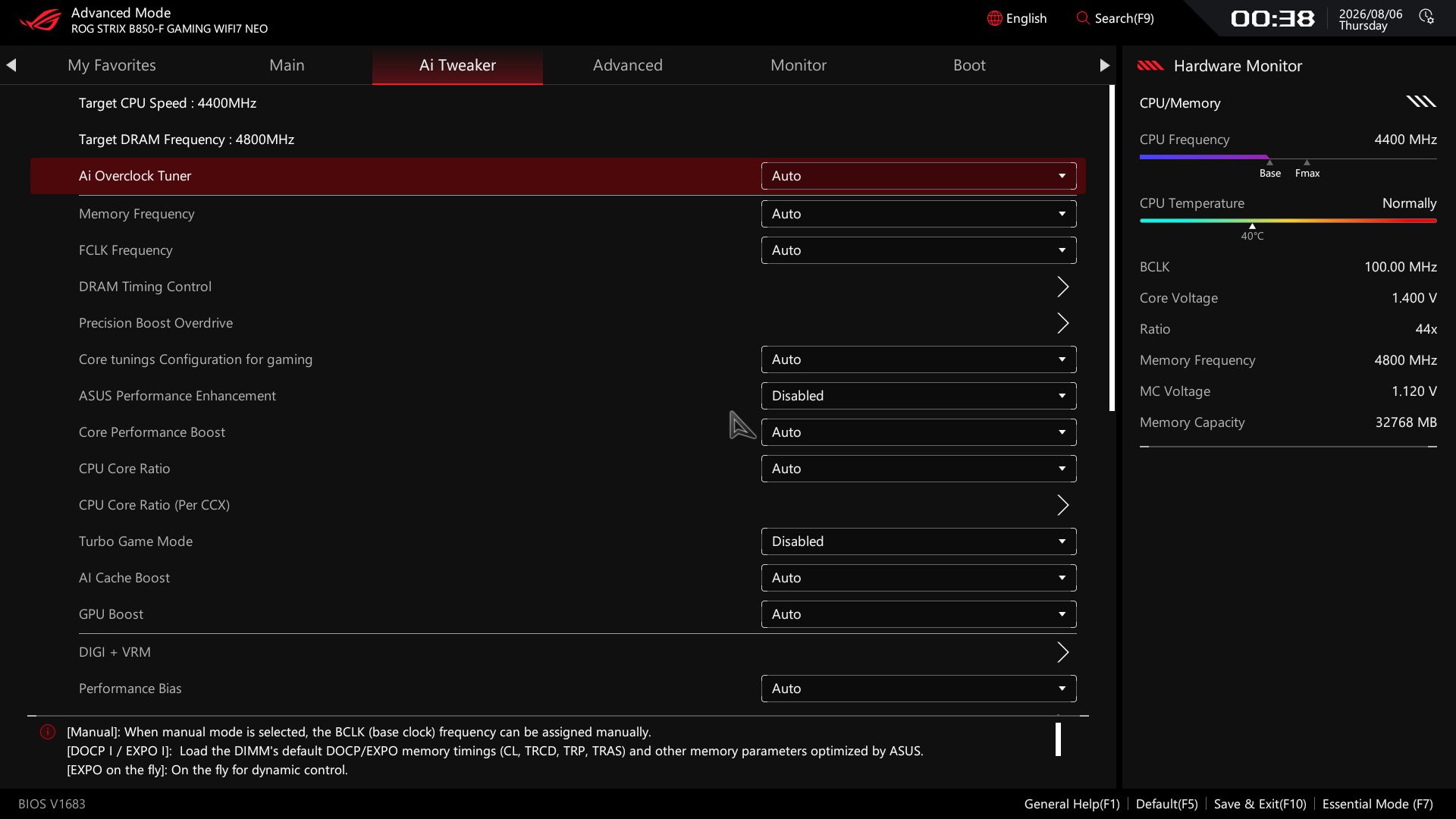
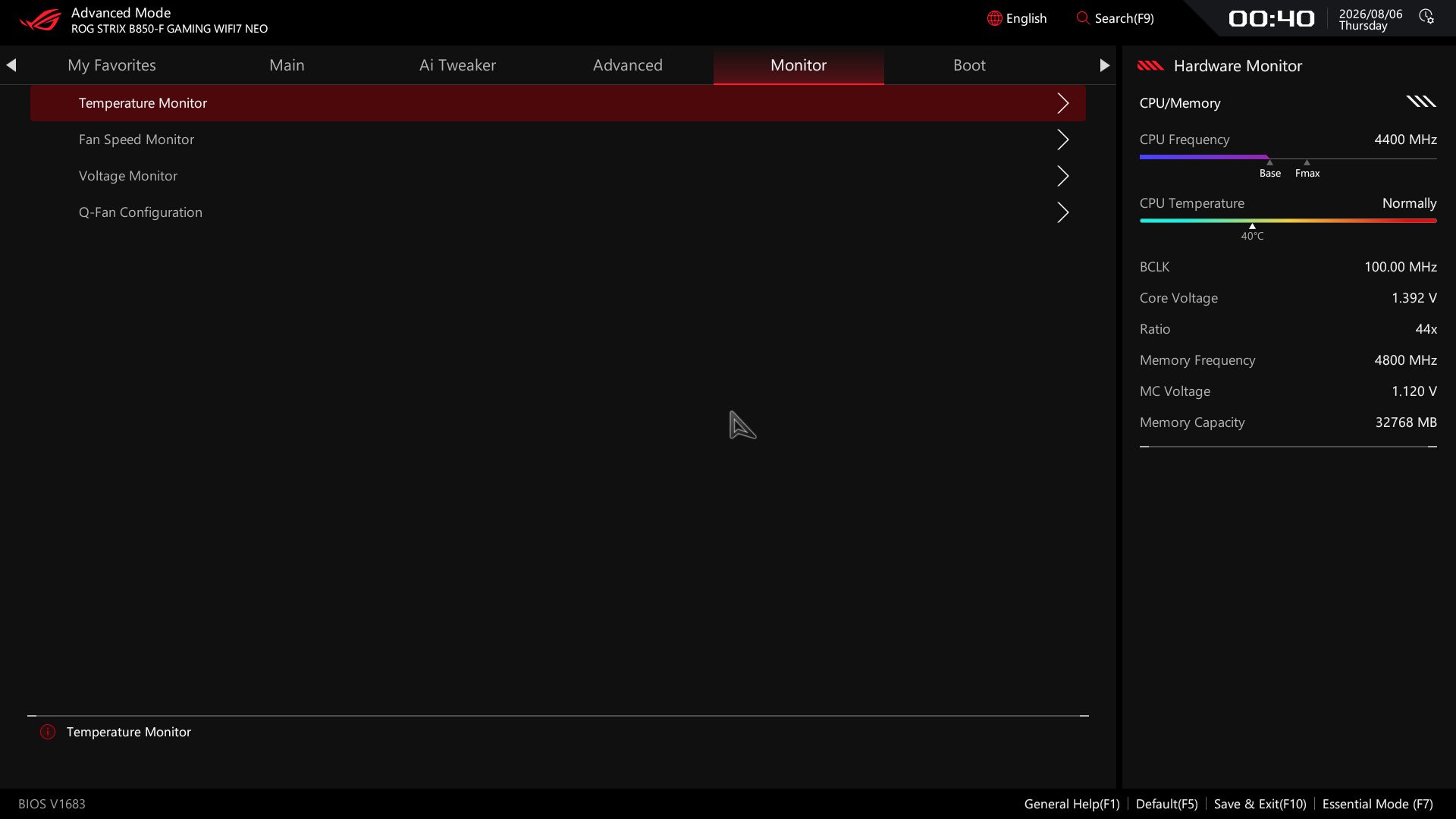
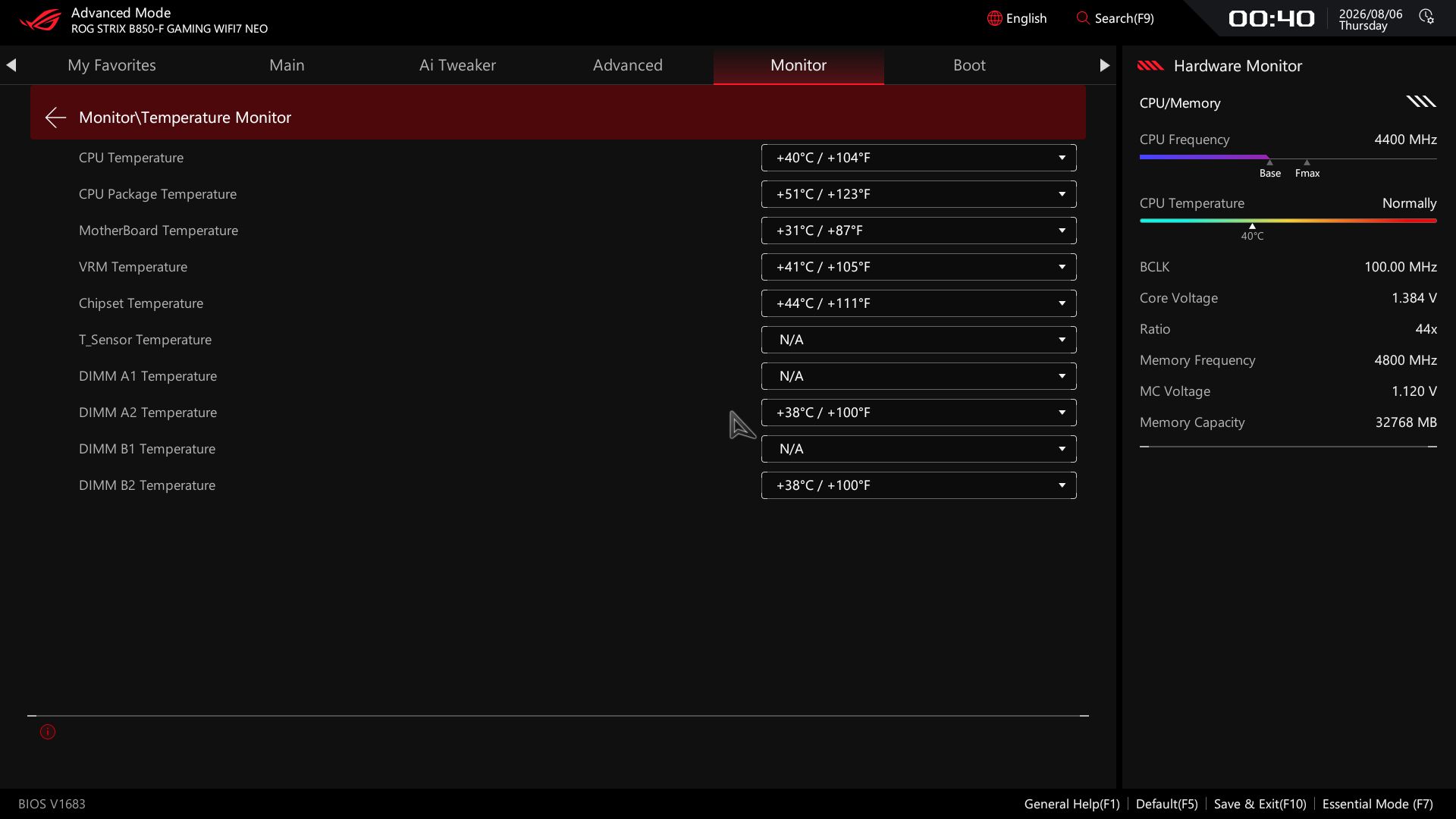
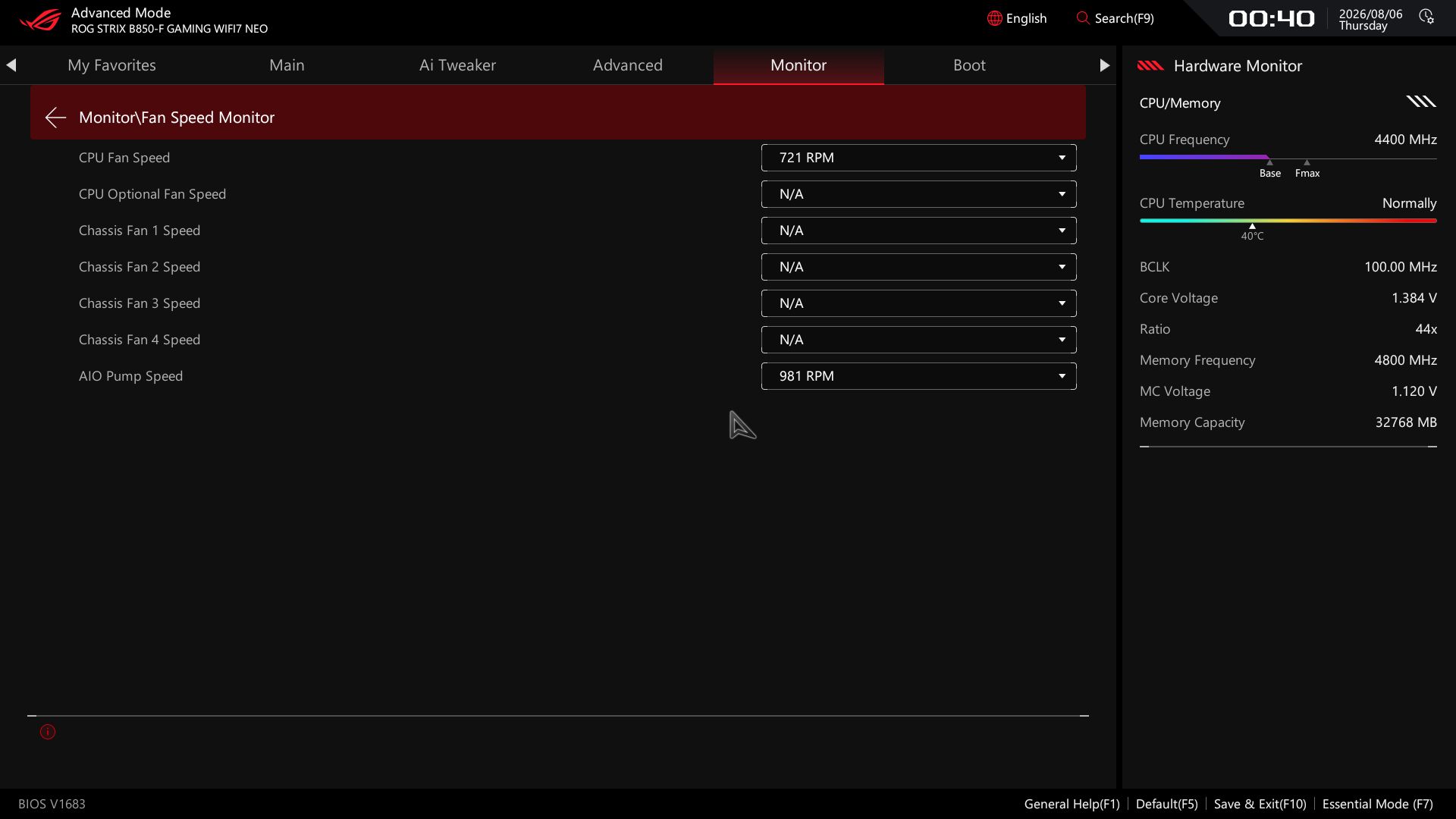
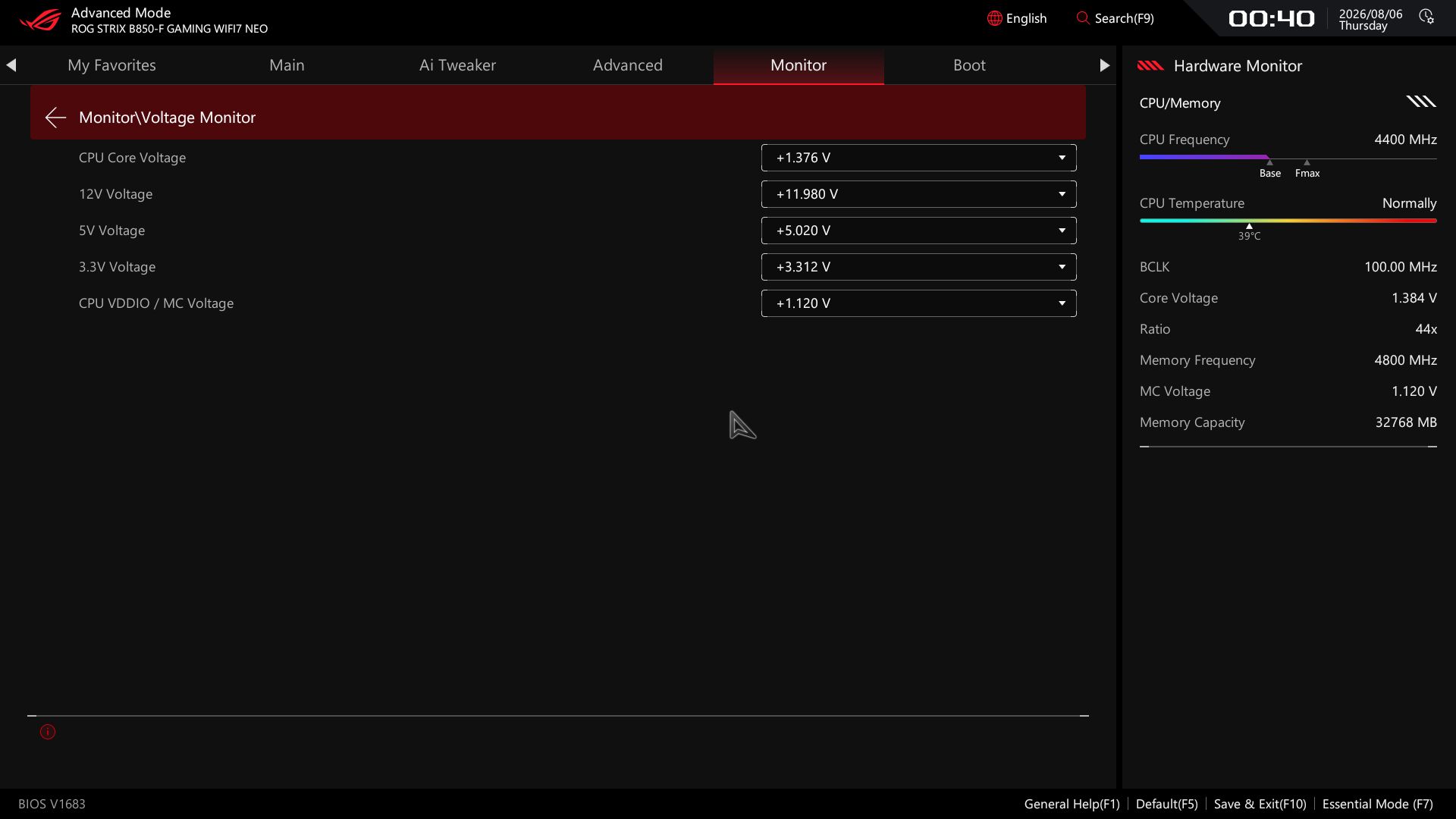
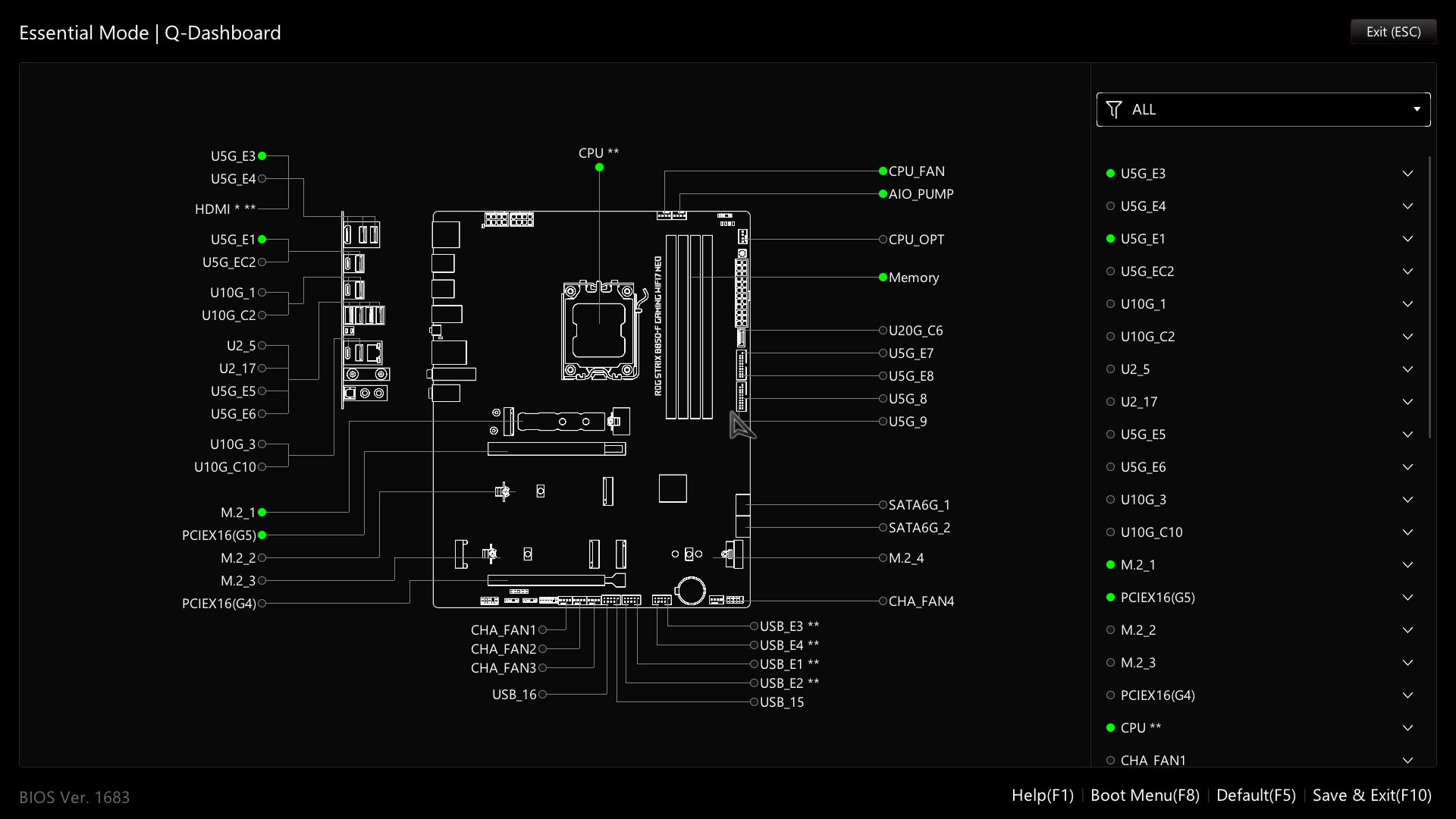
Advanced mode still has the headers across the top, but the shortcuts to Q-Fan and AI OC have been moved to quick settings and other locations. The right panel holds system information, including CPU frequency and temperature, in a colorful display. The main body has all the editable functionality. And we can't forget the unique Q-Dashboard that shows what is currently connected to the board.
I like the aesthetic update for the BIOS. It's easy to read, and, as usual with Asus' BIOS, frequently used items are easy to find and not buried too deep in their menus. Anything that's a pain to access can be added to the customizable favorites screen.
 Future
 Future
 Future
 Future
 Future
 Future
 Future
 Future
 Future
 Future
 Future
 Future
 Future
 Future
 Future
 Future
 Future
 Future
 Future
 Future
 Future
 Future
 Future
 Future
 Future
 Future
 Future
 FutureSoftware
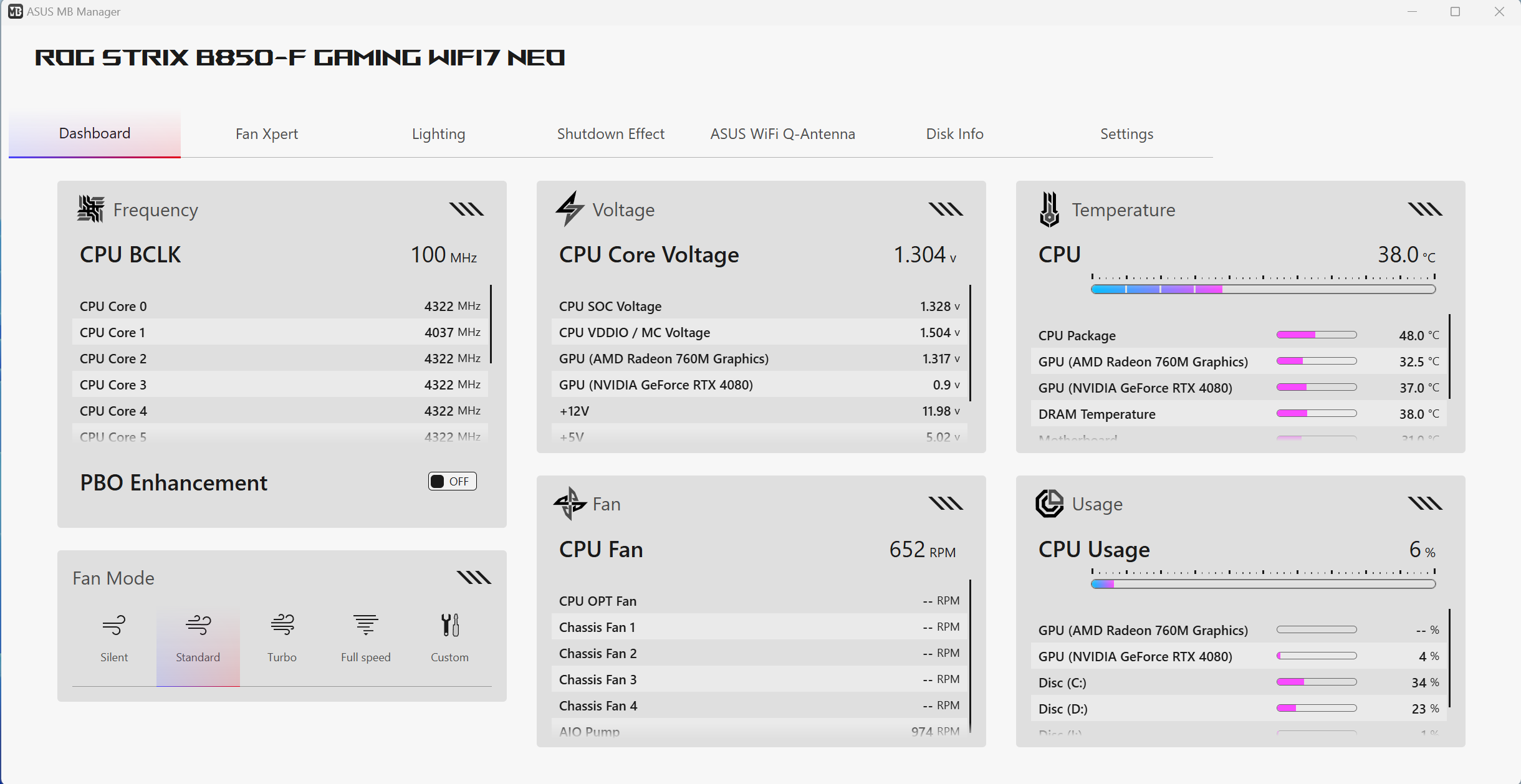
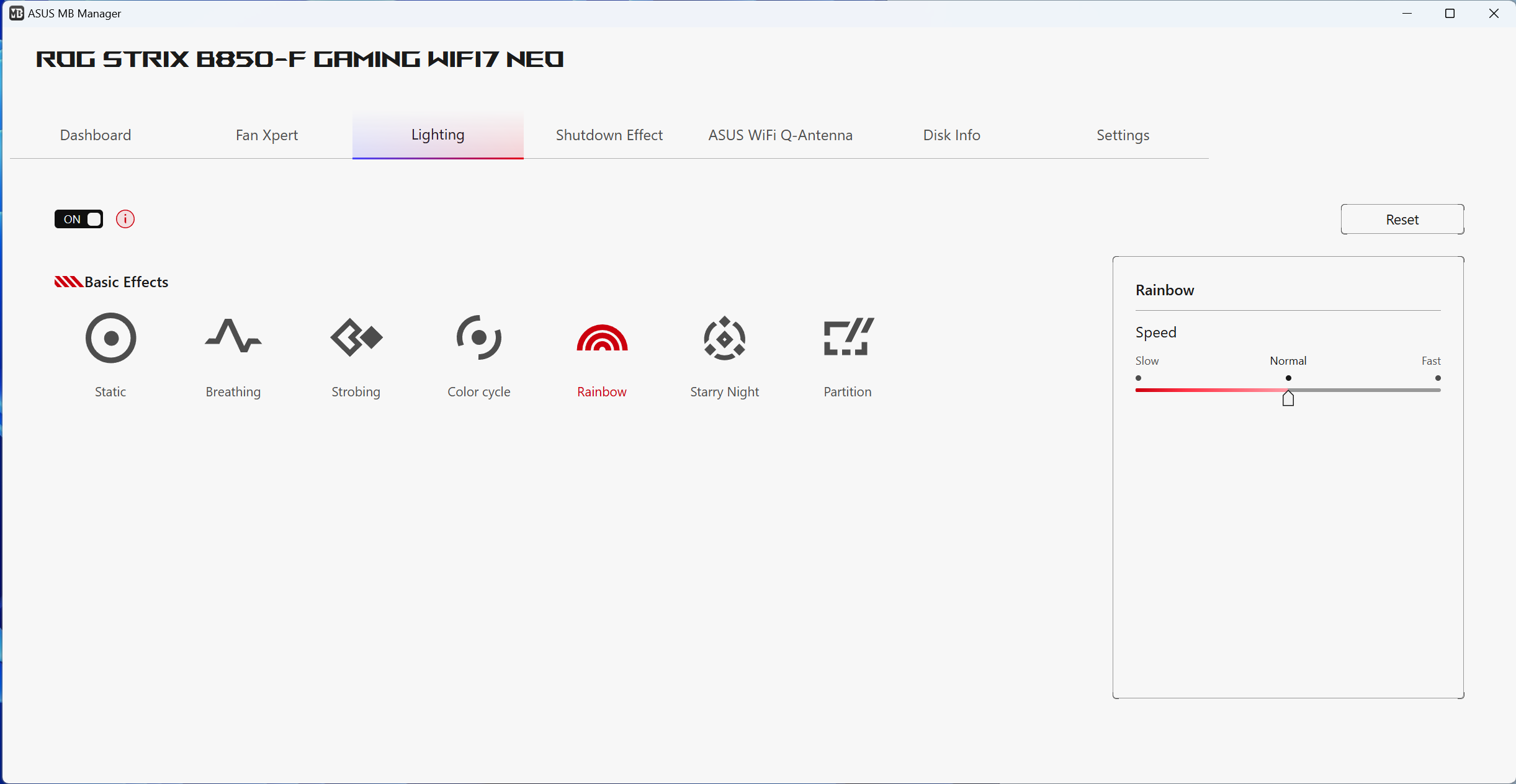
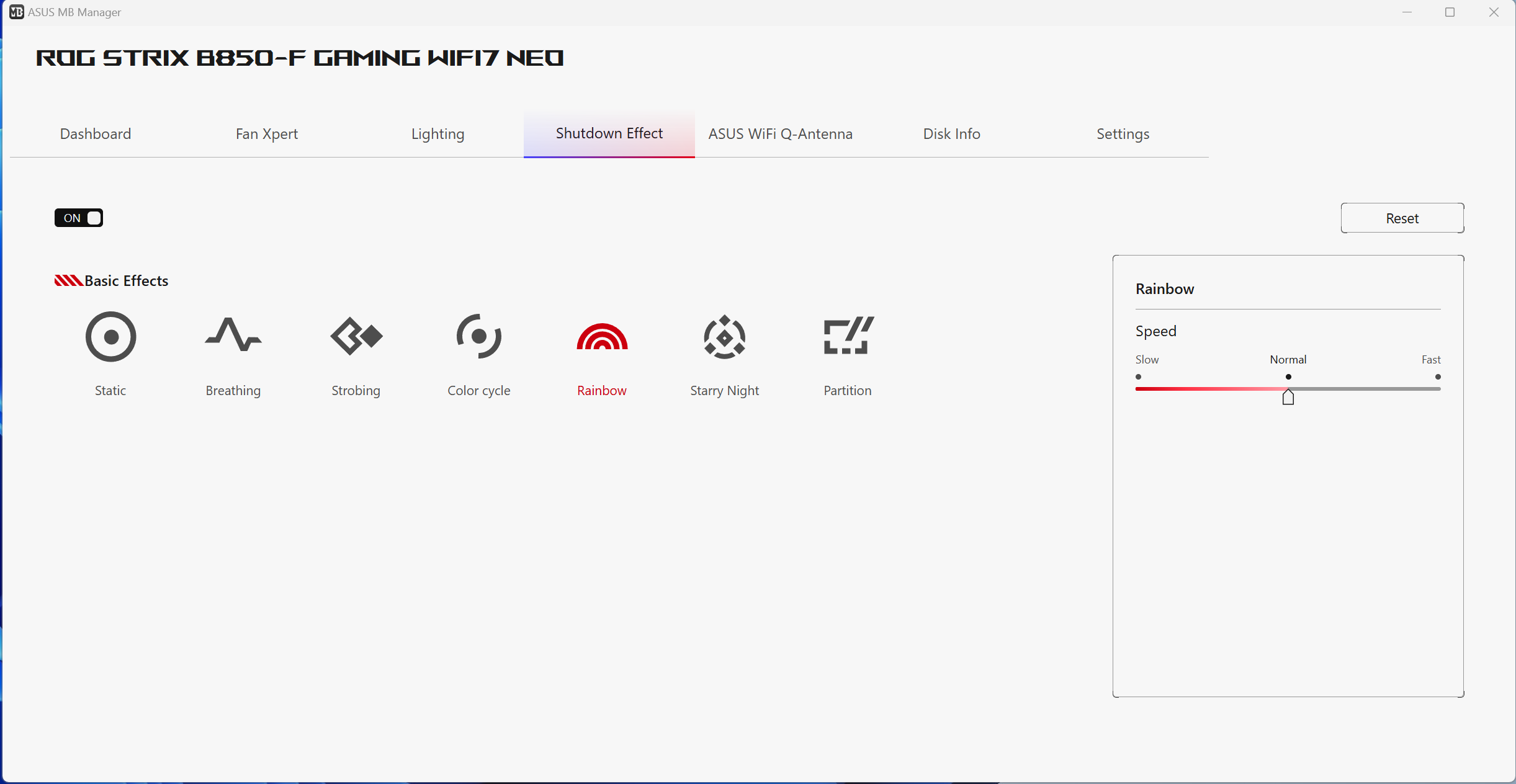
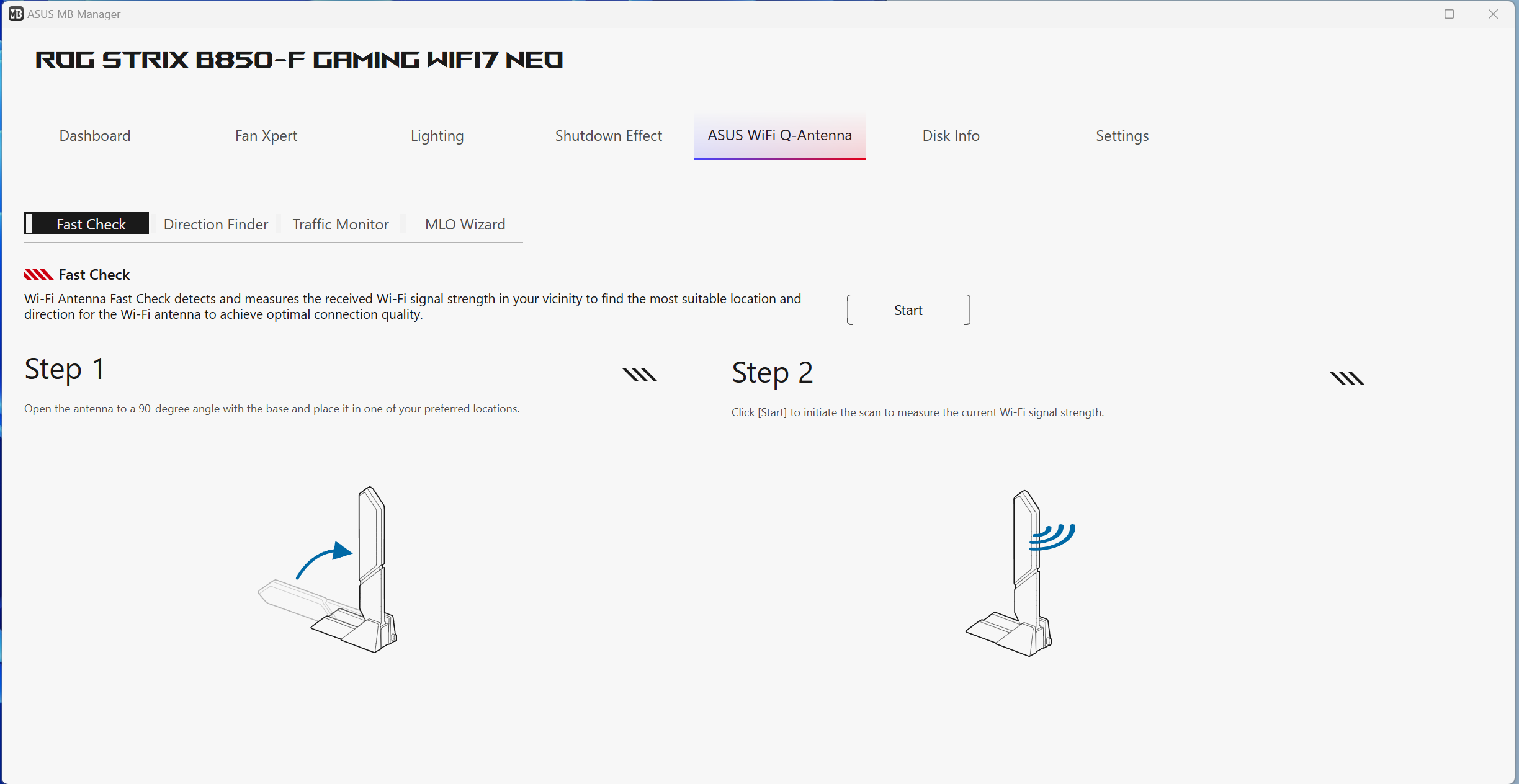
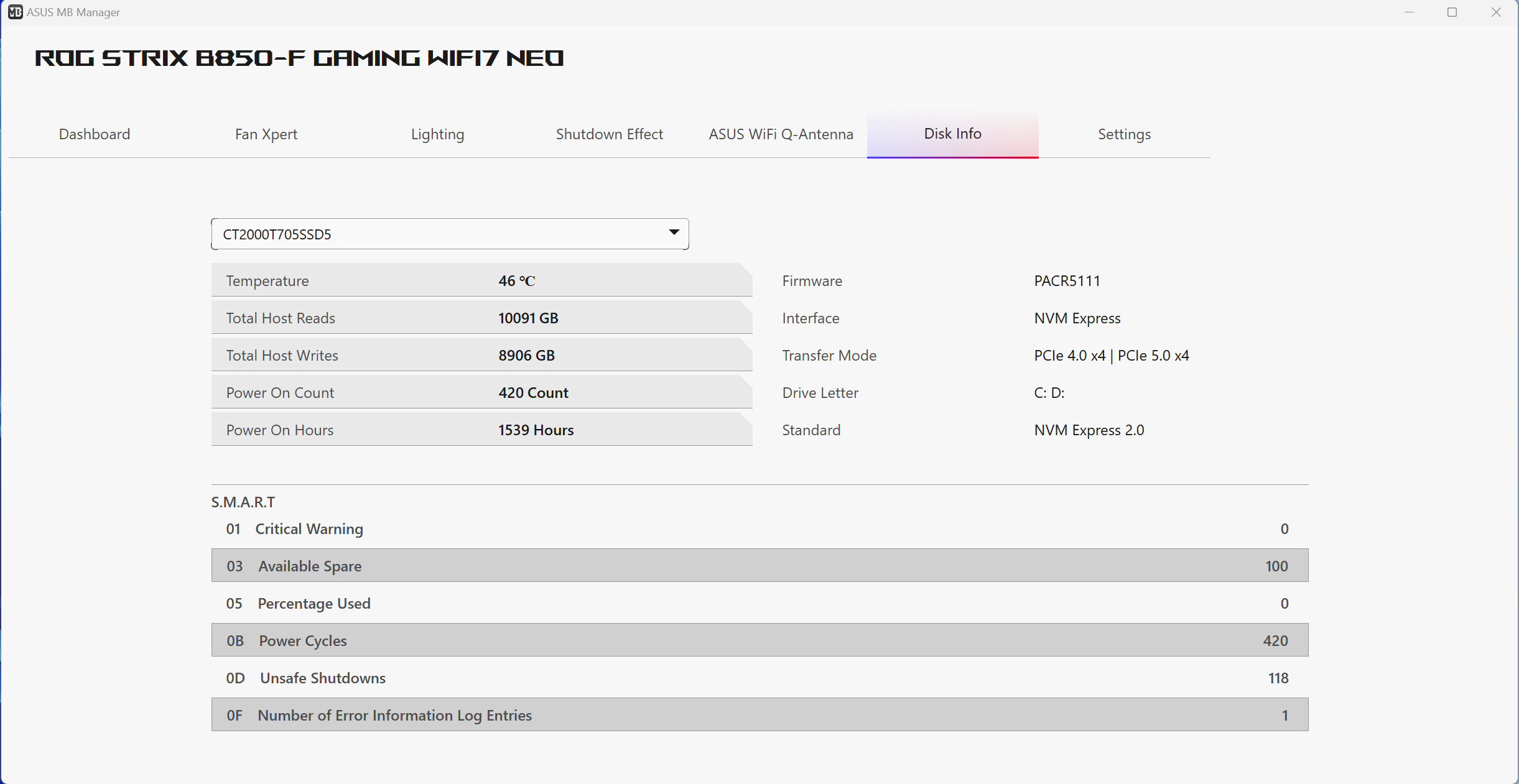
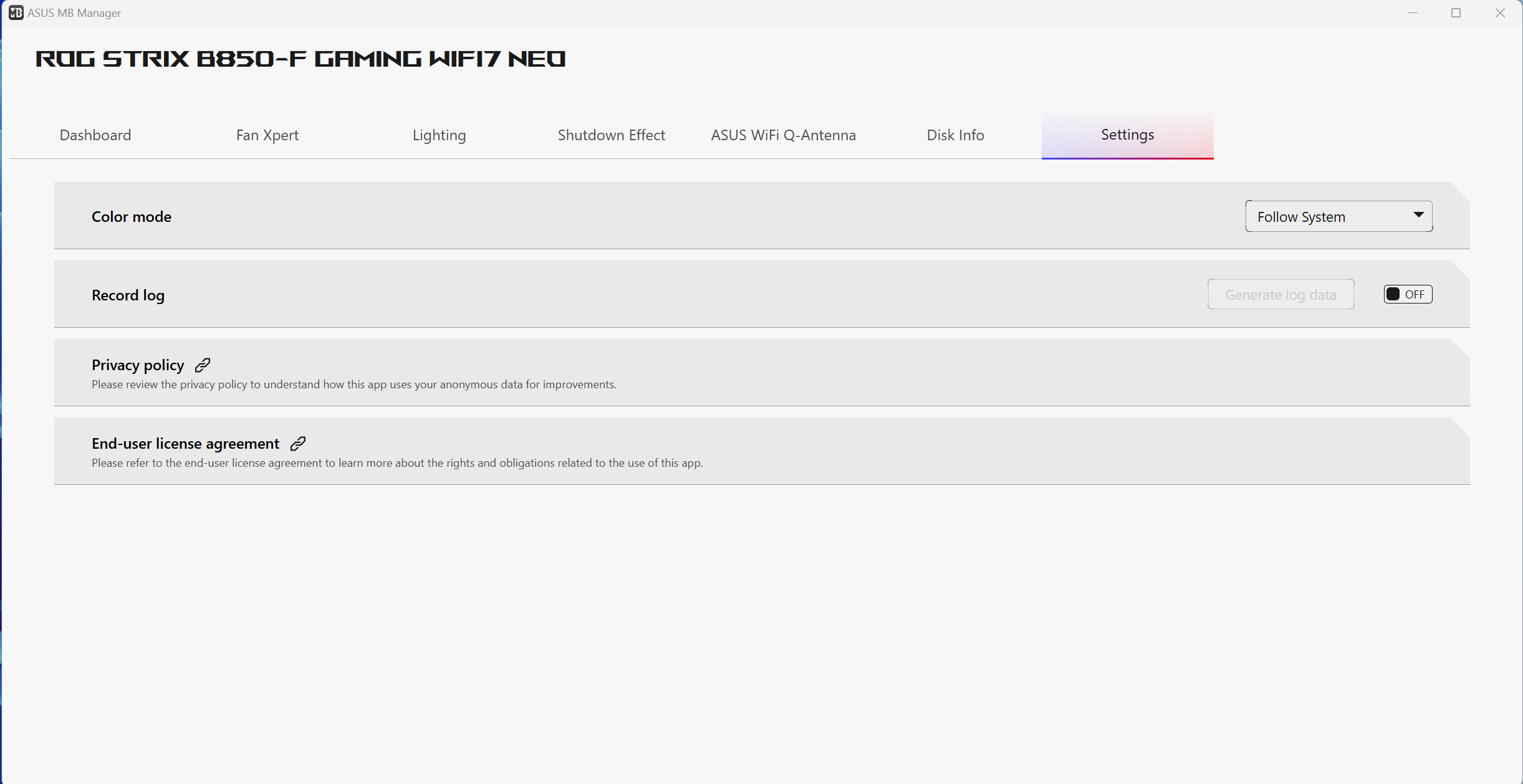
Asus' software was updated earlier in 2026. And while Armoury Crate still exists for some older offerings, it was replaced with Asus Motherboard Manager. AMM, as I'll call it, offers much of the same functionality but does so in what feels like a lighter package compared to Armoury Crate. It offers an informational dashboard displaying system information and access to canned fan control. It also has functionality for fan control (Fan Xpert), RGB lighting (Lighting), Wi-Fi control (Asus WiFi Q-Antenna), disk information, and even has options for a shutdown RGB effect.
I have to say, I like this software over the comprehensive, but often criticized, Armoury Crate. It feels lighter and has the necessary functionality I look for in a Windows app.
 Future
 Future
 Future
 Future
 Future
 Future
 FutureTest System / Comparison Products
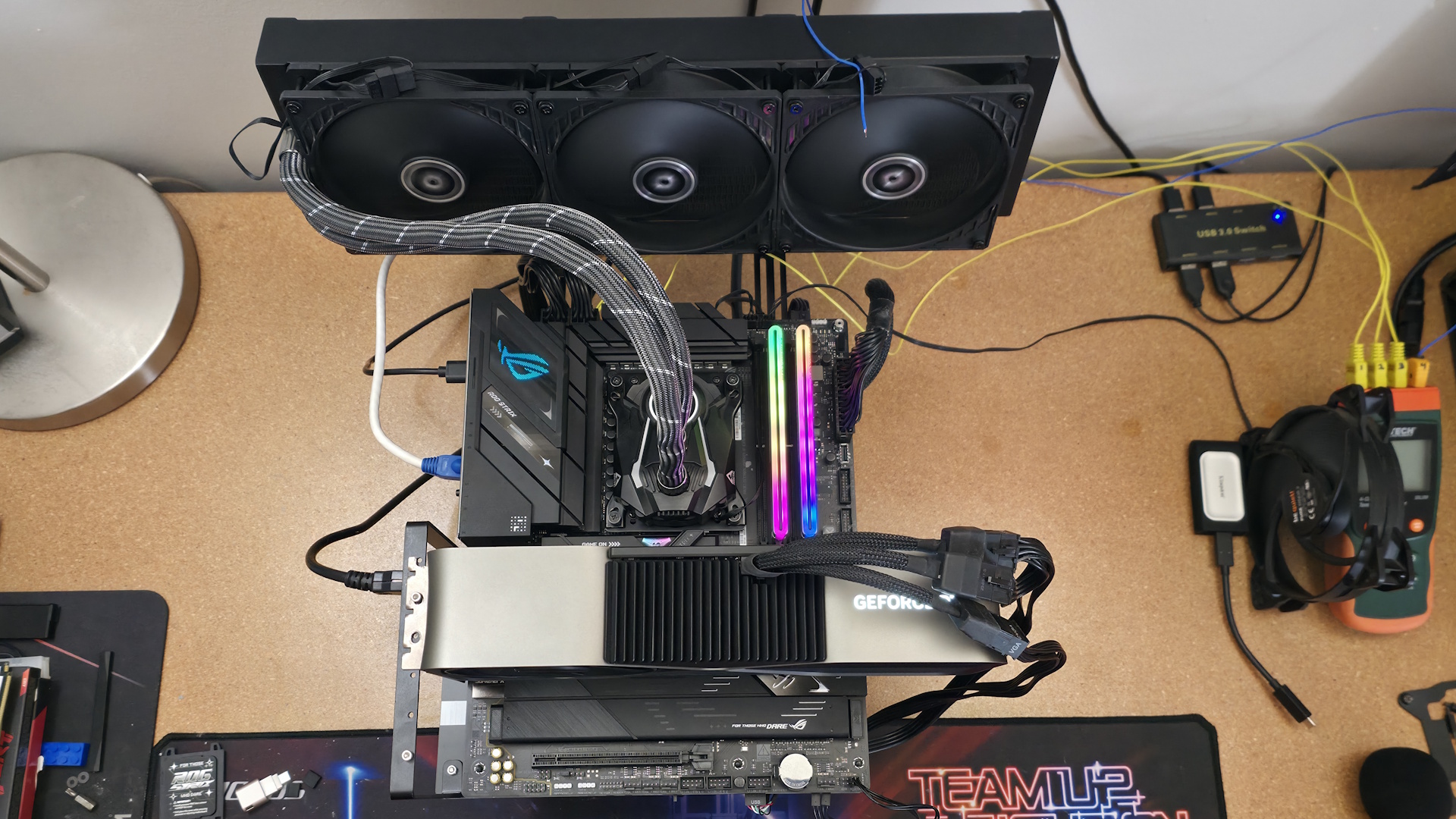
We've updated our test system to Windows 11 (23H2) 64-bit OS with all updates applied as of late September 2024 (this includes the Branch Prediction Optimizations for AMD). Hardware-wise, we've updated the RAM kits (matching our Intel test system), cooling, storage, and video card. Unless otherwise noted, we use the latest publicly available non-beta motherboard BIOS. The hardware we used is as follows:
TEST SYSTEM COMPONENTS:
- CPU - AMD Ryzen 9 9900X
- Cooling - Arctic Liquid Freezer II 420
- Storage - Crucial 2TB T705 M.2 PCIe 5.0 NVMe SSD
- RAM - Kingston Fury Beast DDR5-6000 CL36 (KF560C36BBEAK2-32)
Teamgroup T-Force Delta DDR5-7200 CL34 (FF3D518G7200HC34ABK)
Klevv Cras XR5 RGB DDR5-8000 (KD5AGUA80-80R380S) - GPU - Asus TUF RTX 4080 16G
- PSU - EVGA Supernova 850W P6
- Windows 11 64-bit (23H2 - 22631.4169)NVIDIA Driver 561.09
Sound | Integrated HD audio |
Network | Integrated Networking (GbE to 10 GbE) |
Graphics Driver | GeForce 561.09 |
Synthetic Benchmarks and Settings | |
Procyon | Version 2.8.1352 64 Office 365, Video Editing (Premiere Pro 24.6.1), Photo Editing (Photoshop 25.1.2, Lightroom Classic 13.5.1) |
3DMark | Version 2.29.8294.0 64 Speed Way and Steel Nomad (Default) |
Cinebench R24 | Version 2024.1.0 |
Blender | Version 4.2.0 |
Application Tests and Settings | |
LAME MP3 | Version SSE2_2019 Mixed 271MB WAV to mp3: Command: -b 160 --nores (160Kb/s) |
HandBrake CLI | Version: 1.8.2 Sintel Open Movie Project: 4.19GB 4K mkv to x264 (light AVX) and x265 (heavy AVX) |
Corona 1.4 | Version 1.4 Custom benchmark |
7-Zip | Version 24.08 Integrated benchmark (Command Line) |
Game Tests and Settings | |
Cyberpunk 2077 | Ultra RT: - 1920 x 1080, DLSS - Balanced. |
F1 2024 | Ultra High Preset - 1920 x 1080, 16xAF/TAA, Great Britain (Clear/Dry), FPS Counter ON |
MORE: Best Motherboards
MORE: How To Choose A Motherboard
MORE: Best Motherboard Deals
MORE: Best Motherboard Combo Deals
MORE: All Motherboard Content
Our standard benchmarks and power tests are performed using the CPU's stock frequencies (including any default boost/turbo) with all power-saving features enabled. We set optimized defaults in the BIOS and the memory by enabling the XMP profile. The Windows power scheme is set to Balanced (default) for this baseline testing, so the PC idles appropriately.
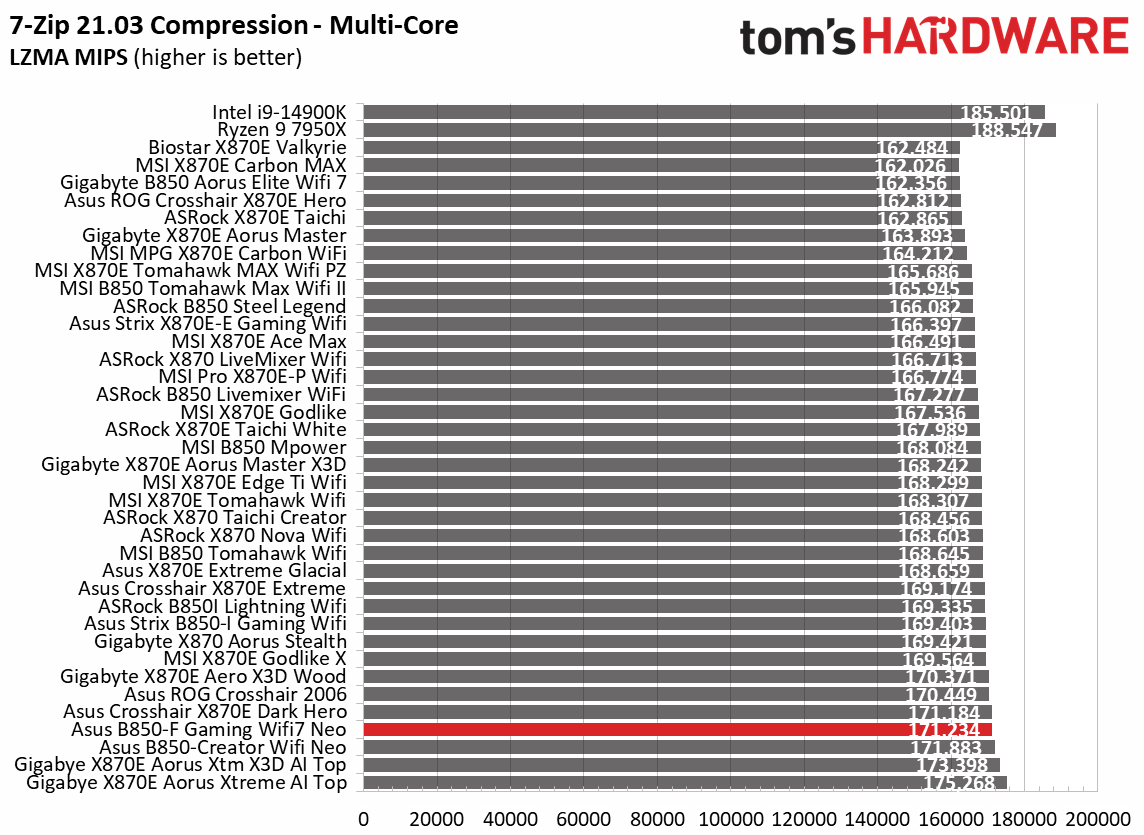
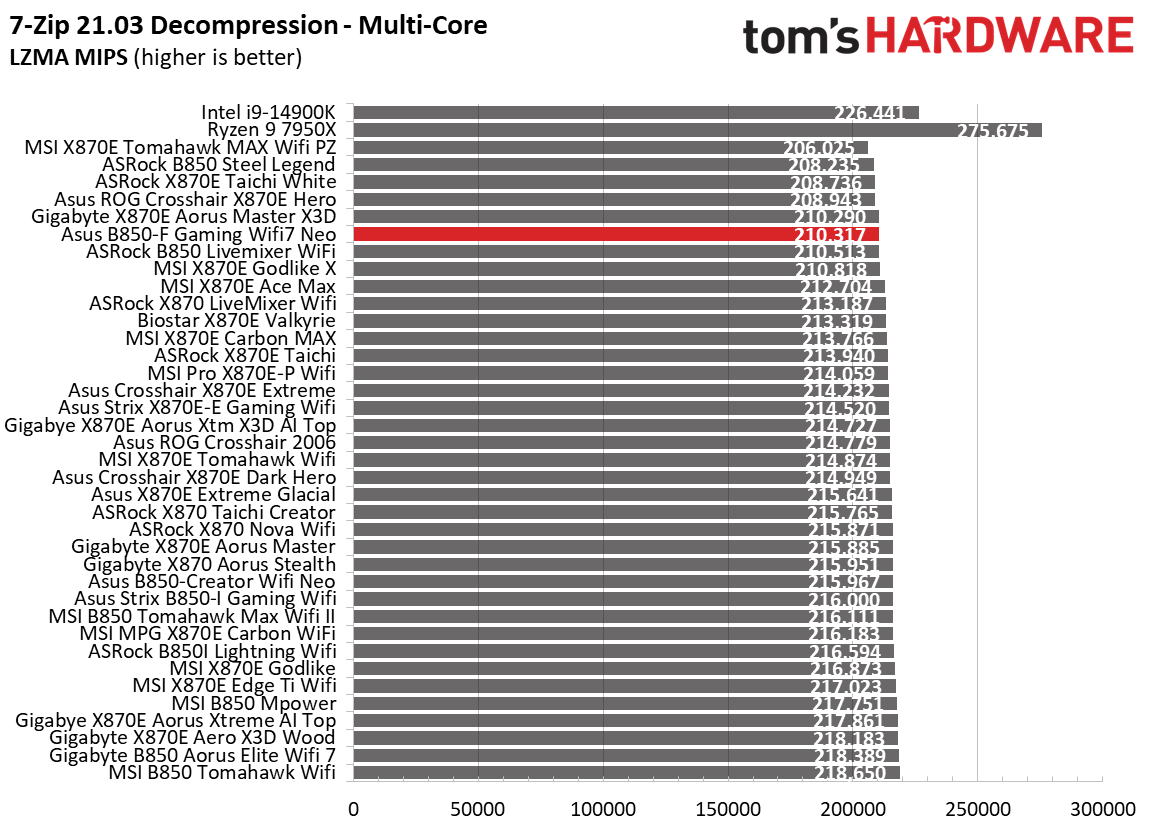
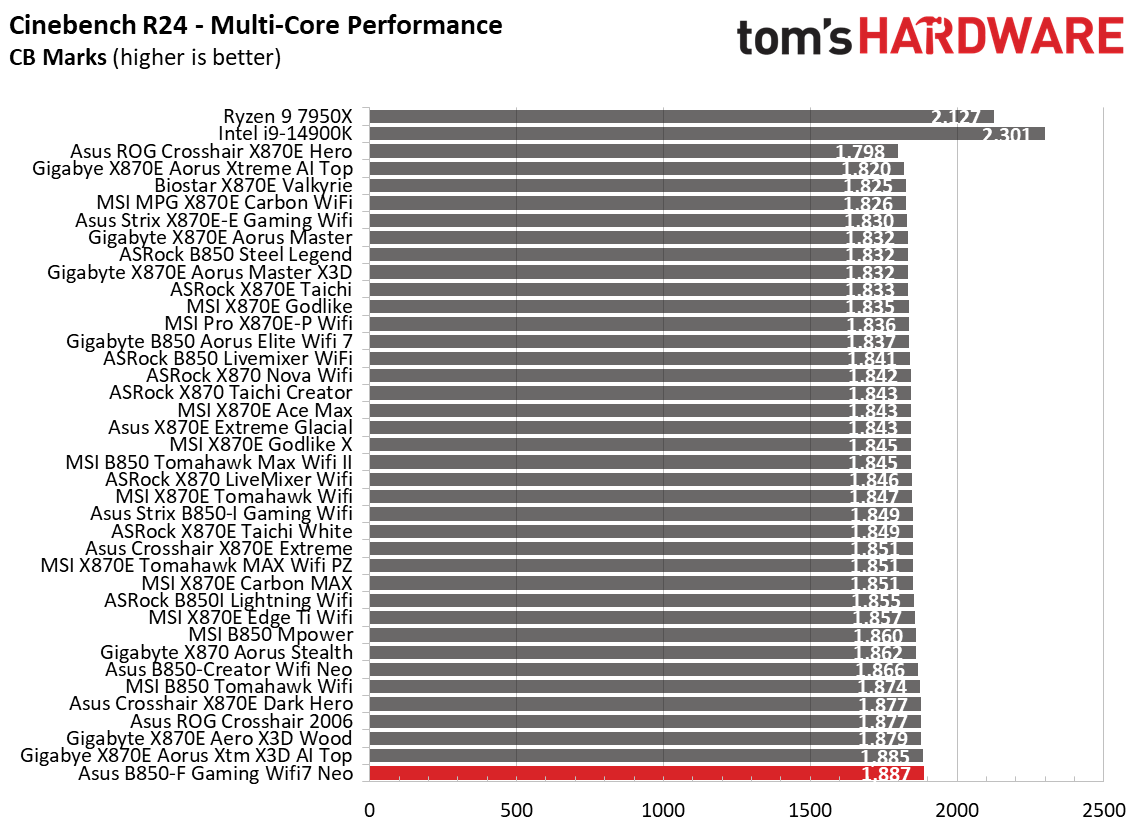
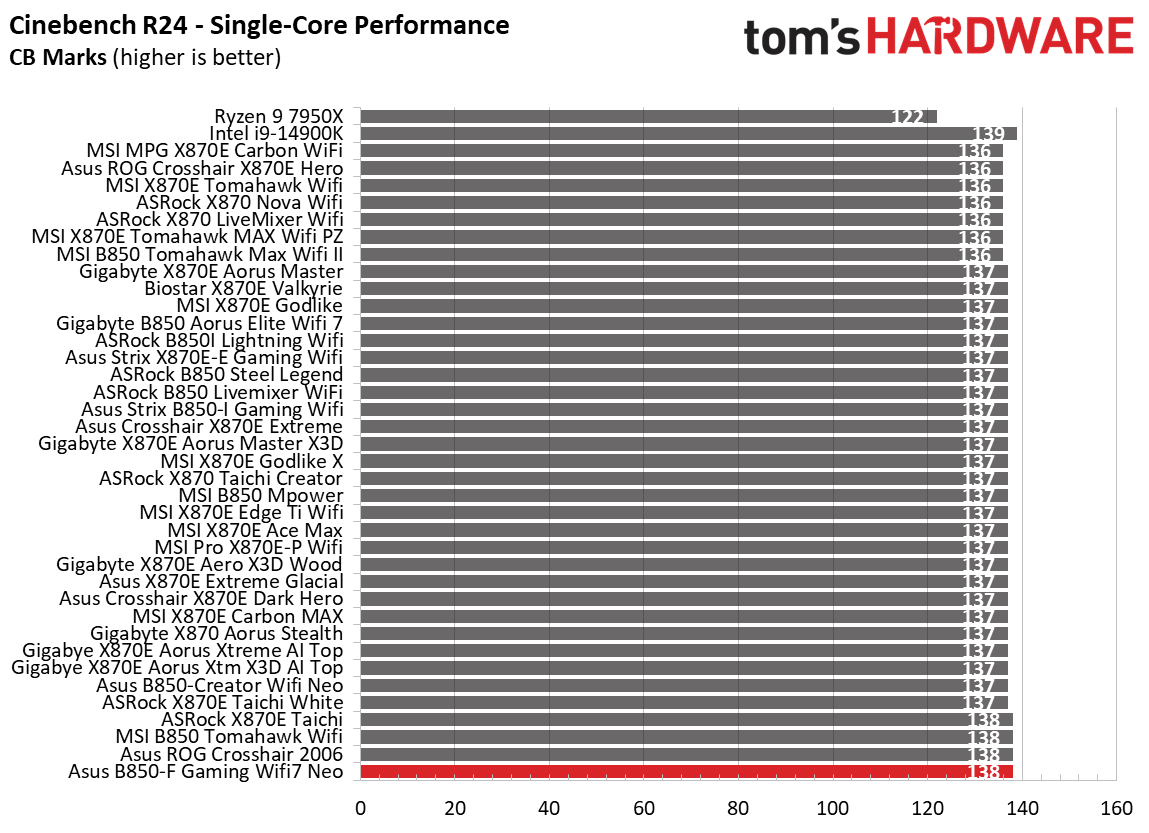
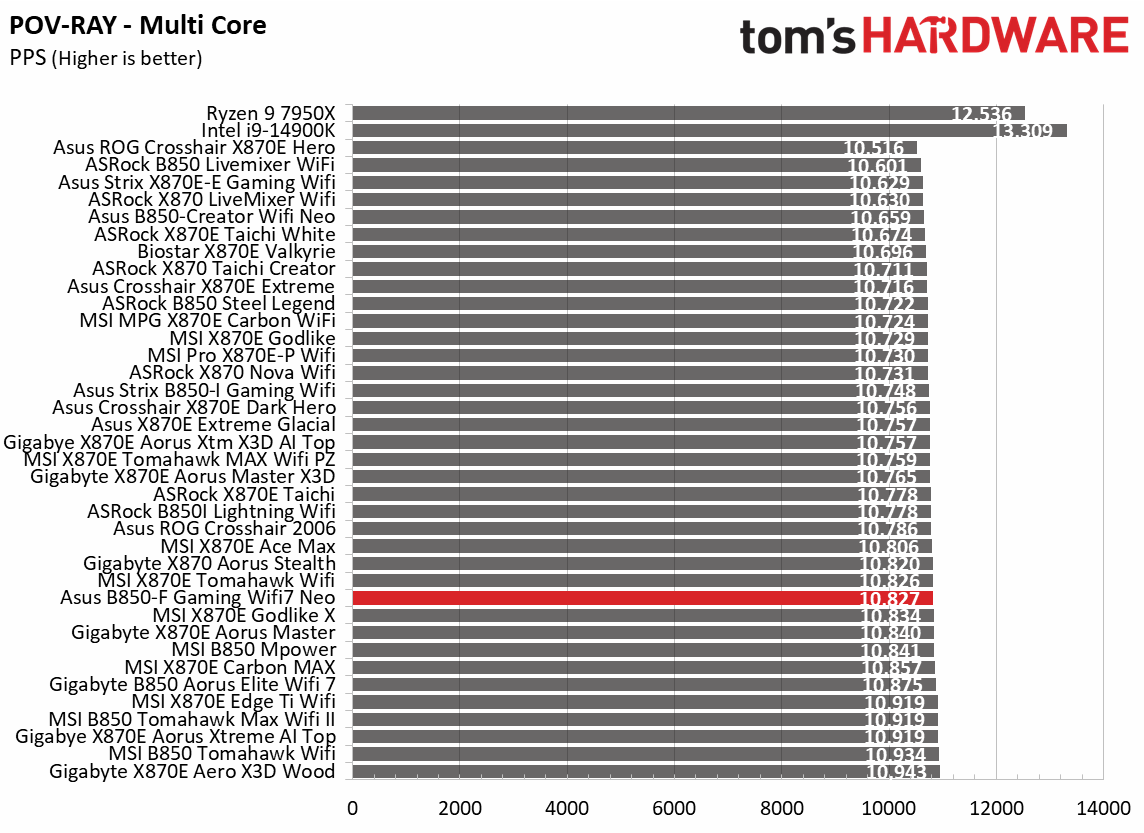
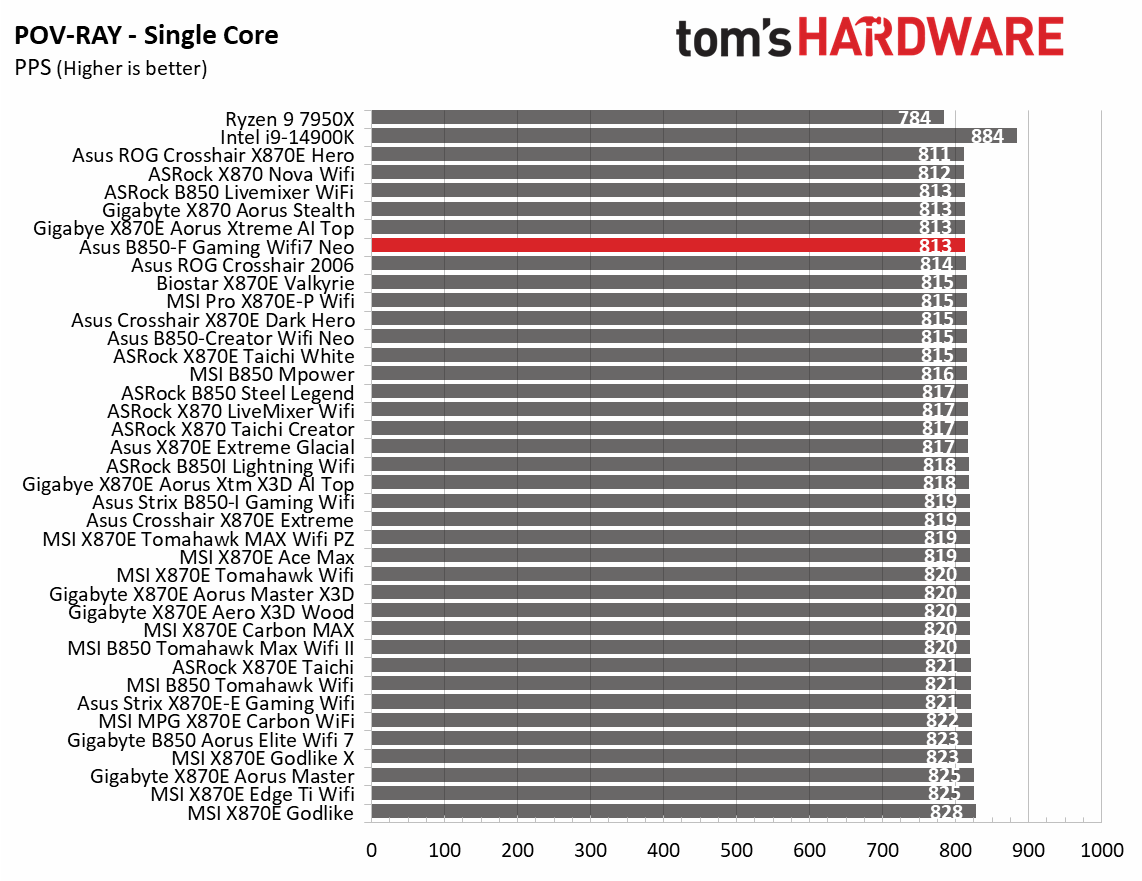
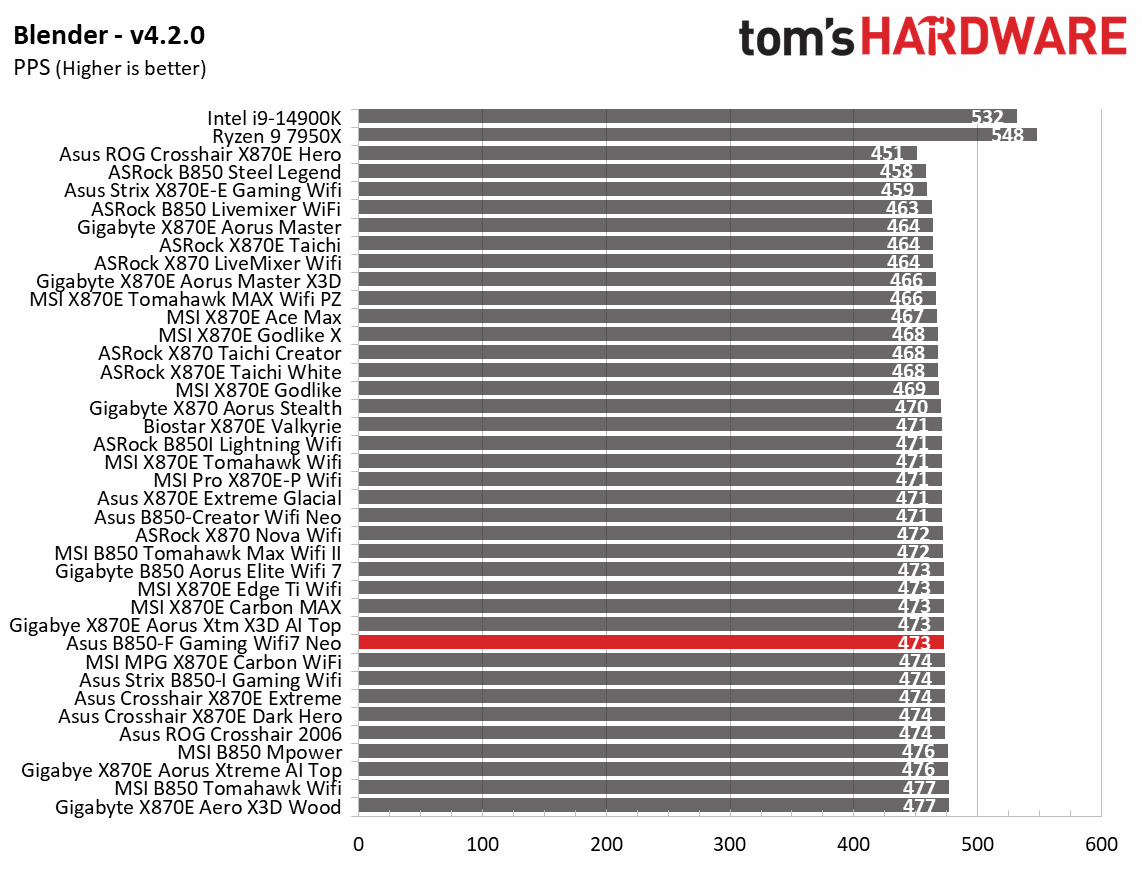
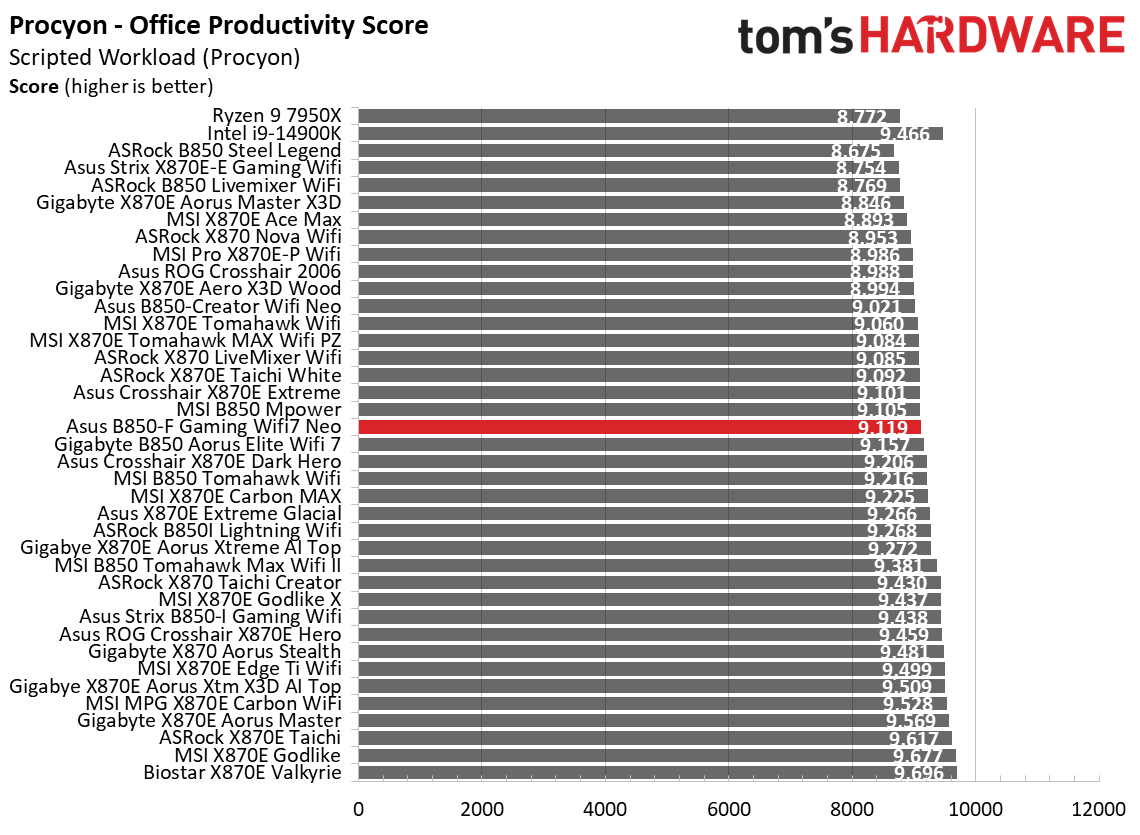
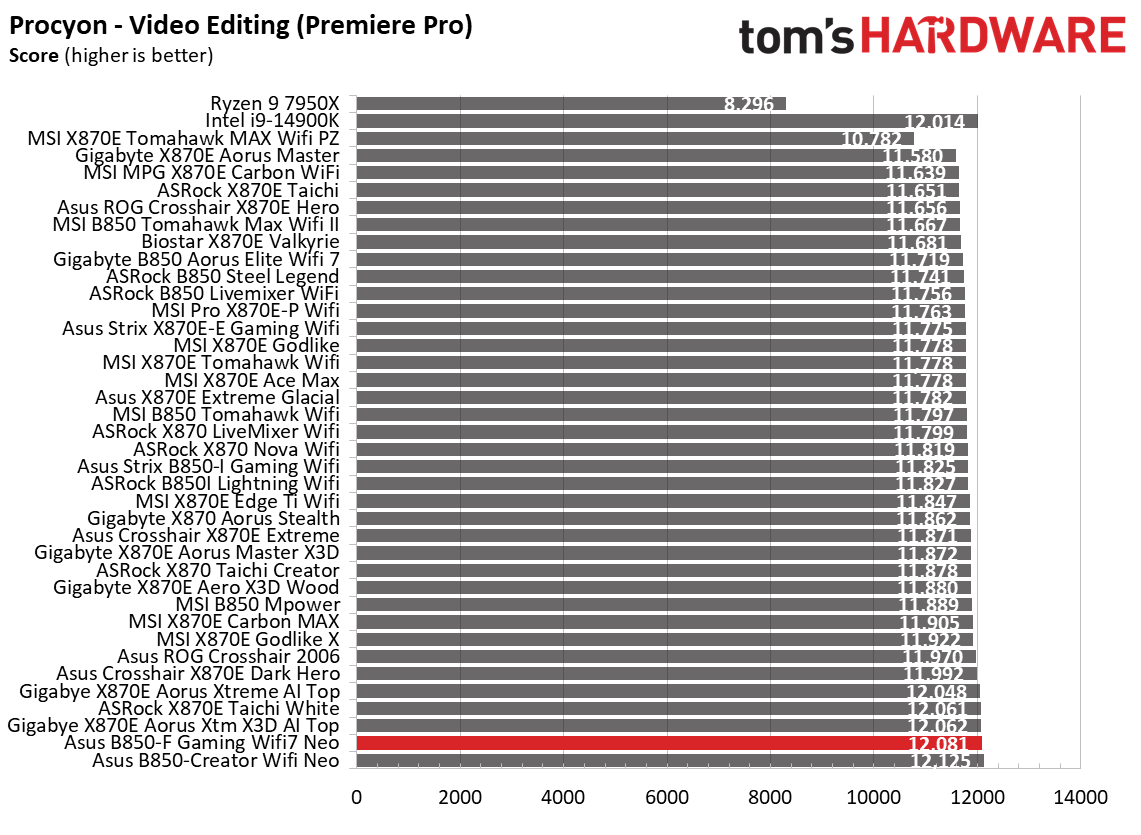
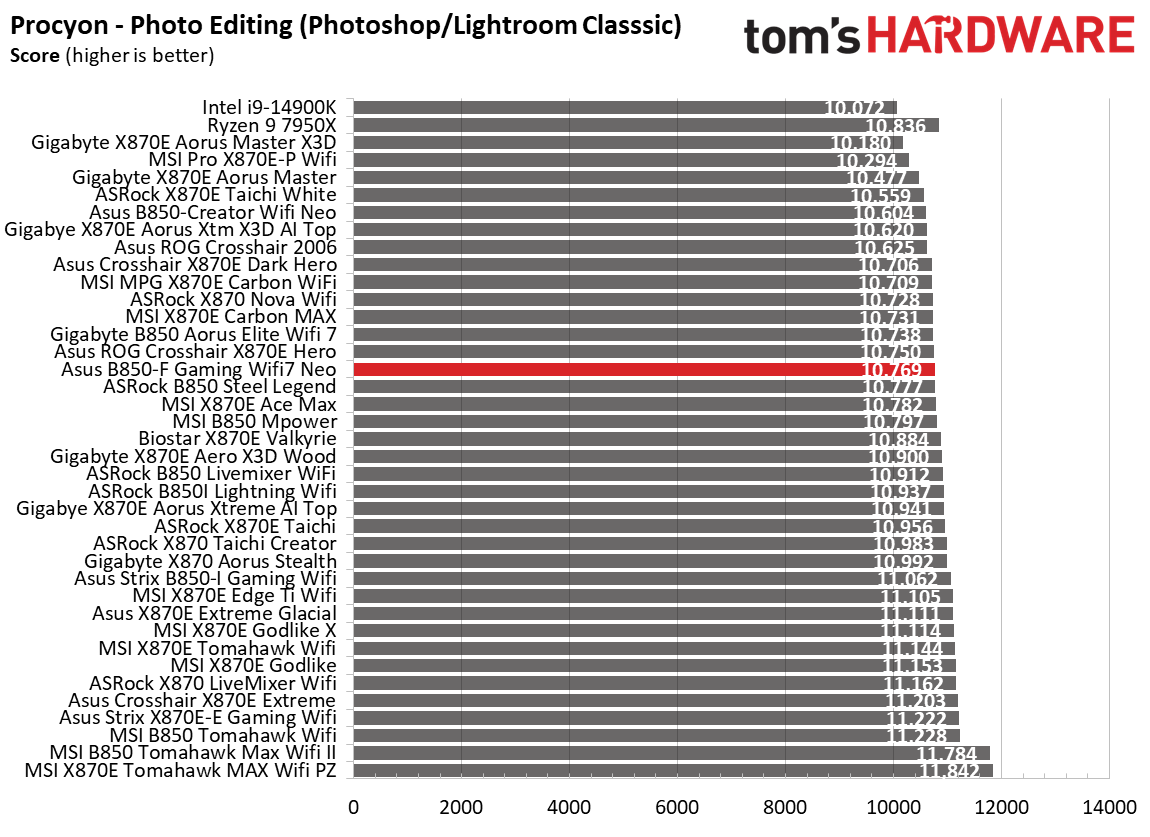
Synthetic BenchmarksSynthetics offer a valuable method for evaluating a board's performance, as identical settings are expected to yield similar results. Turbo boost wattage and advanced memory timings are areas where motherboard manufacturers can still optimize for stability or performance, though, and these settings can impact specific testing scenarios.
 Future
 Future
 Future
 Future
 Future
 Future
 Future
 Future
 Future
 Future
 Future
 Future
 Future
 Future
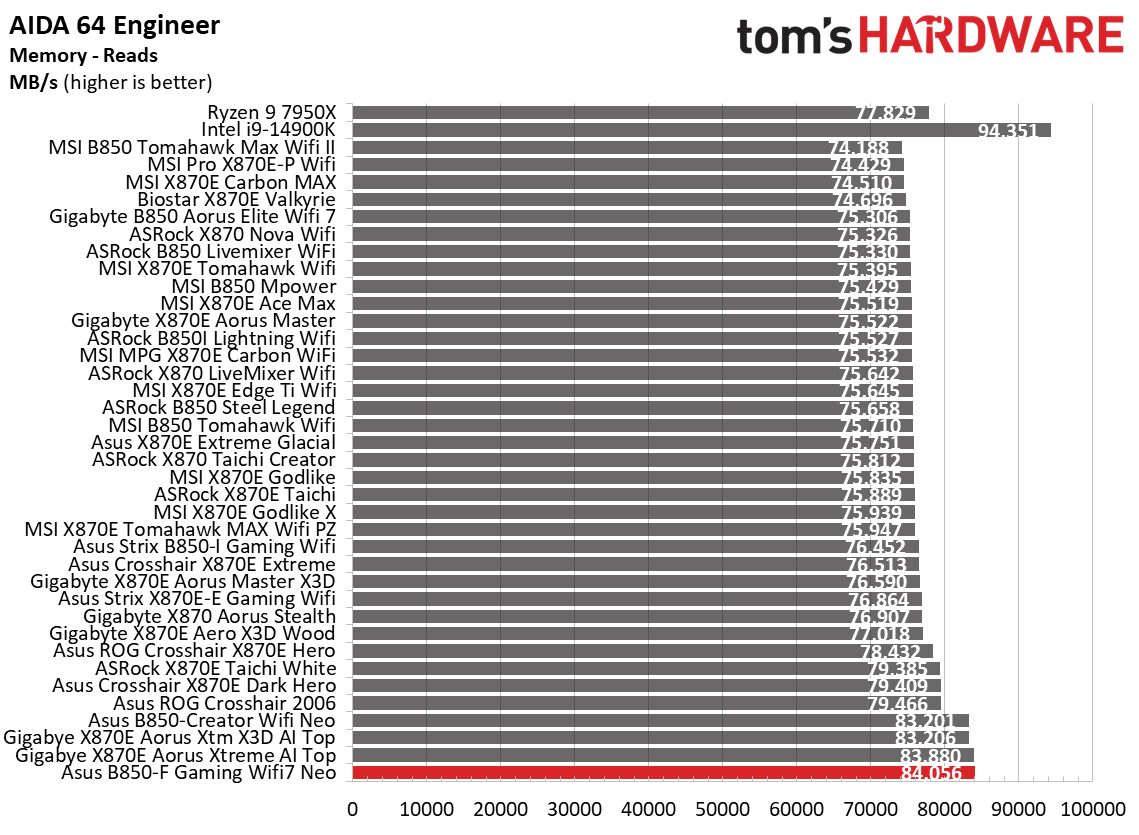
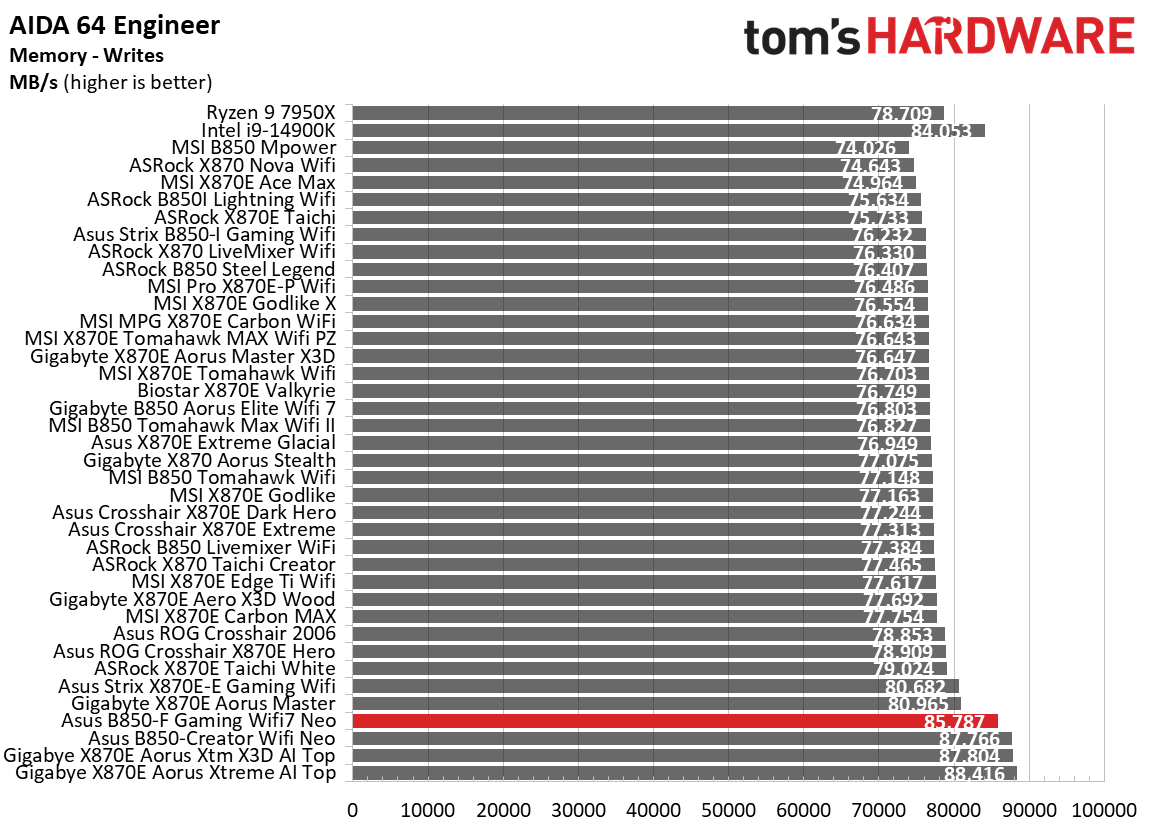
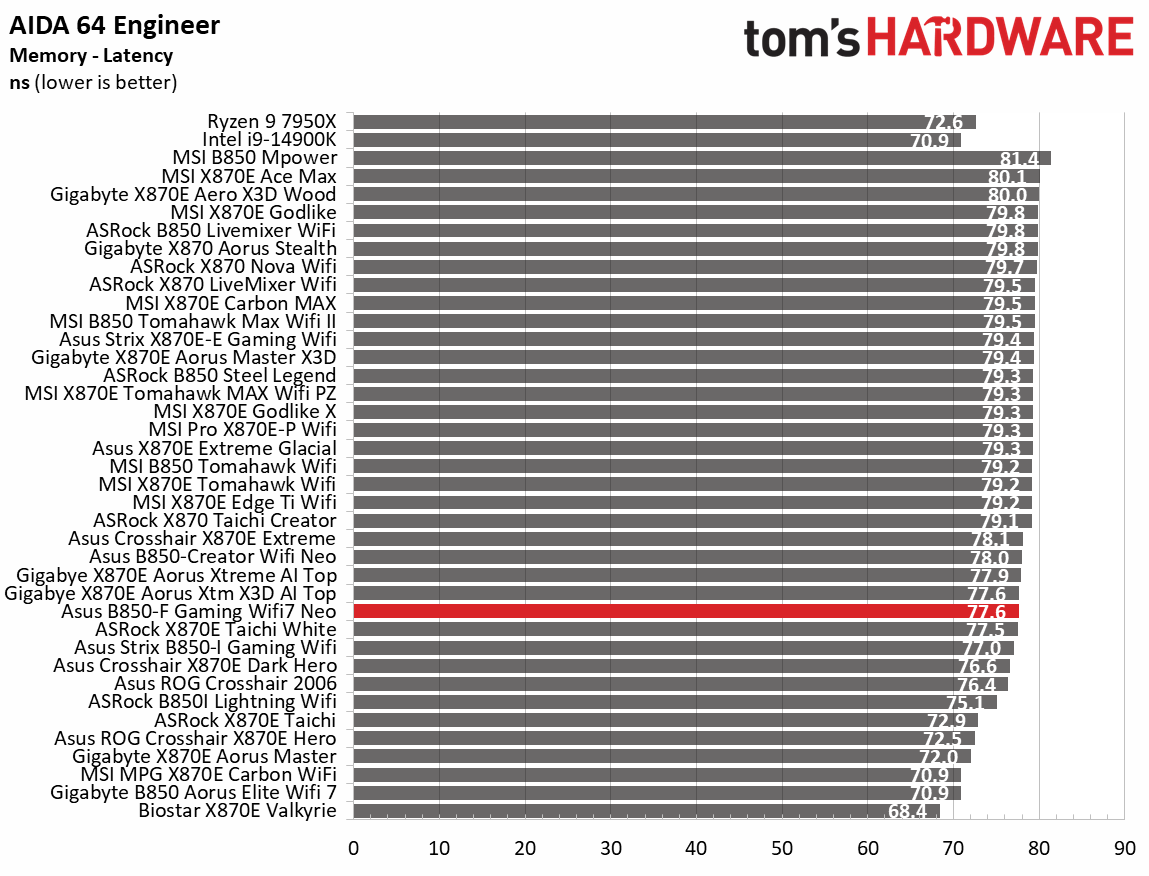
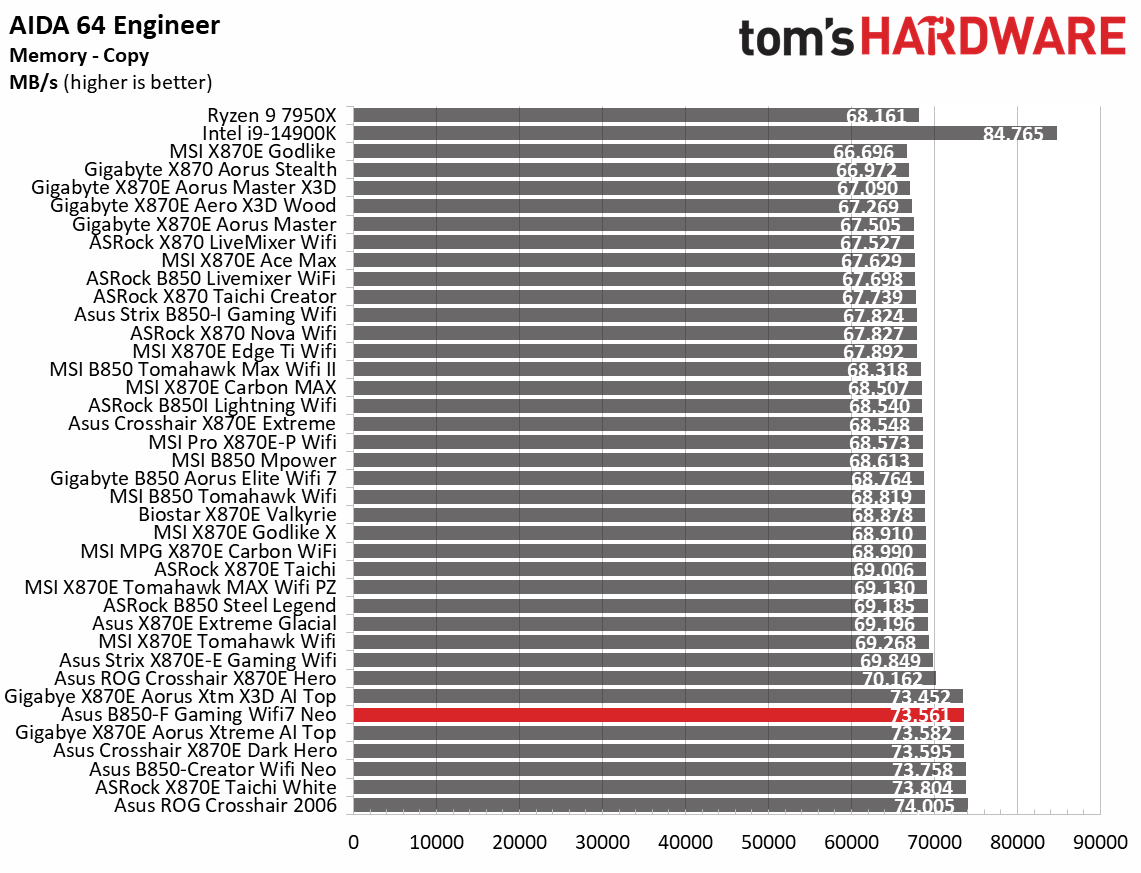
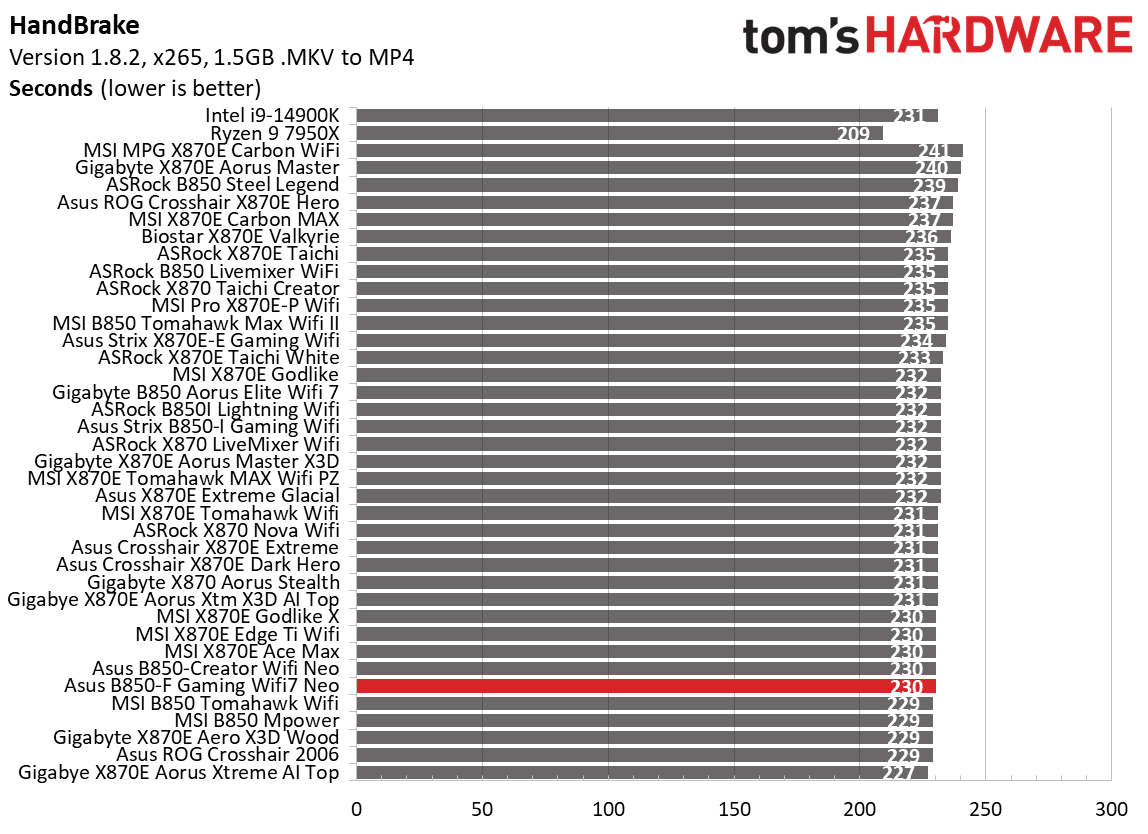
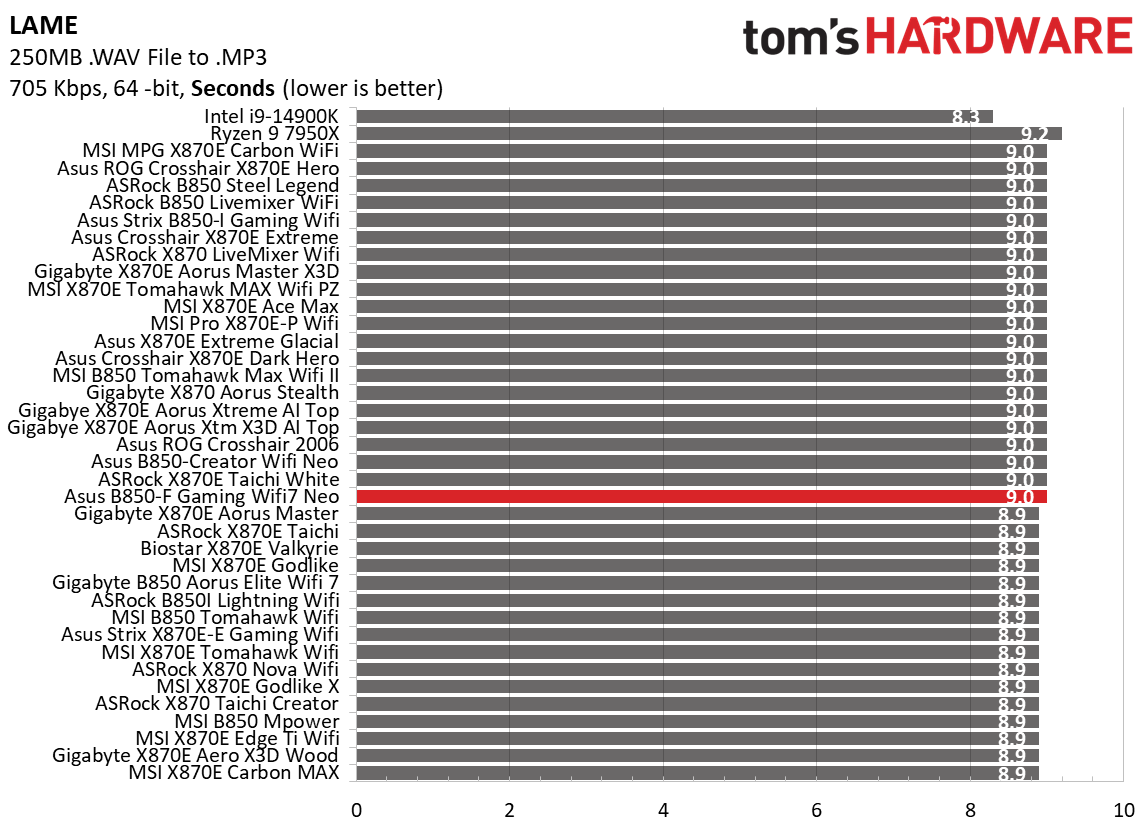
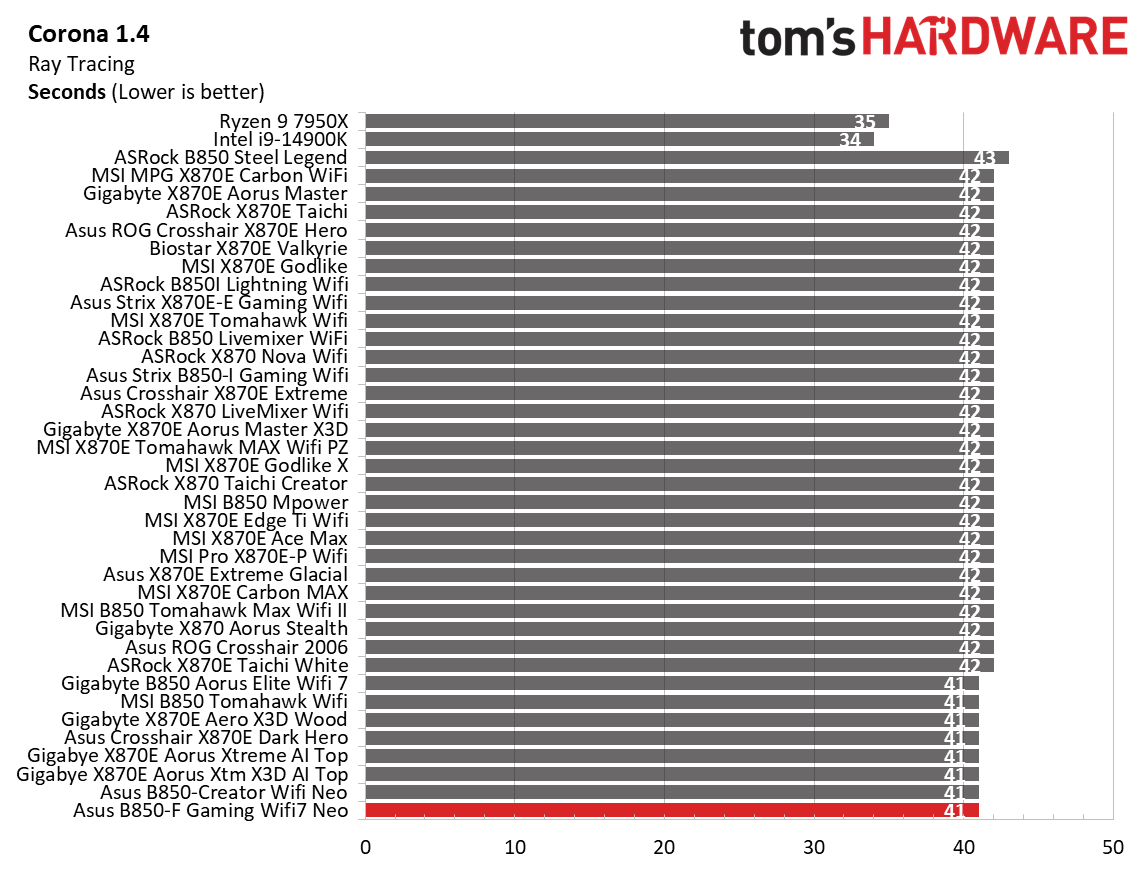
Starting with our synthetic benchmarks, the B850-F Gaming Wifi Neo was average to above average in most tests. Whether it was rendering, encoding, or any other workload, it performed as expected.
Timed Applications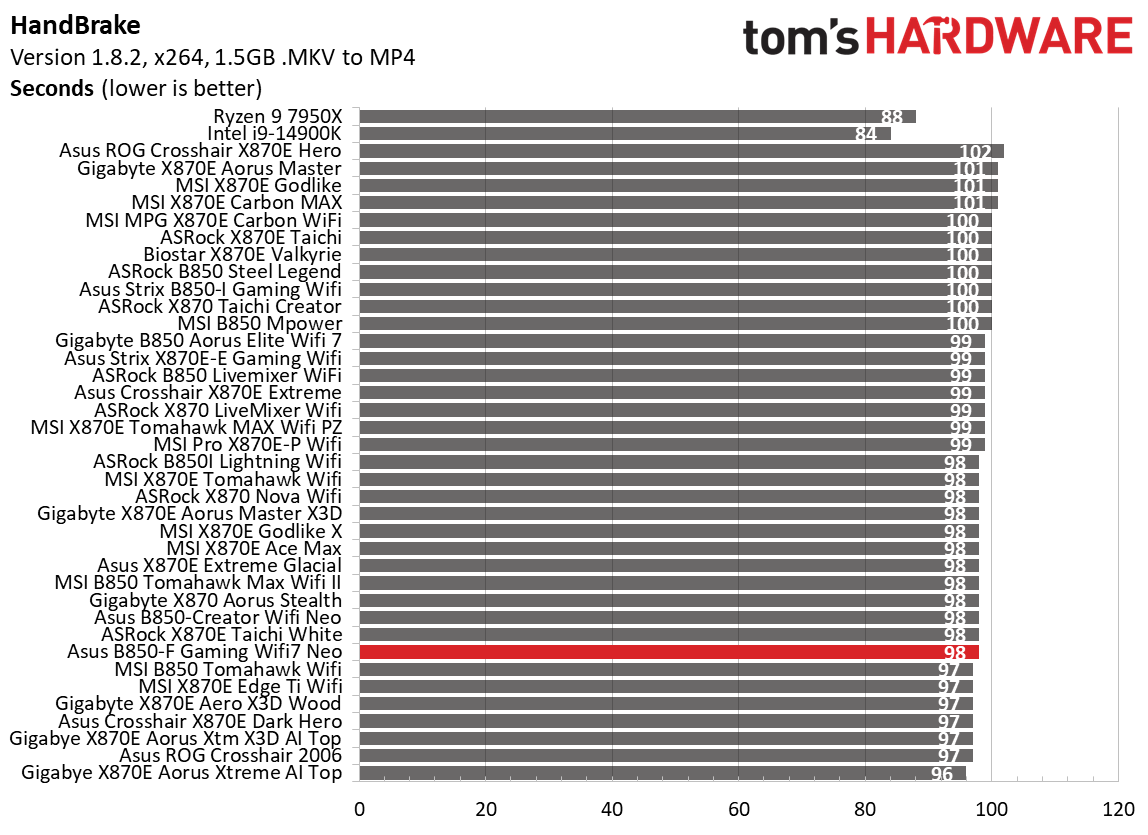 Future
 Future
 Future
 Future
Results from the timed applications were similar and average to above average - nothing out of the ordinary here either.
3D Games and 3DMark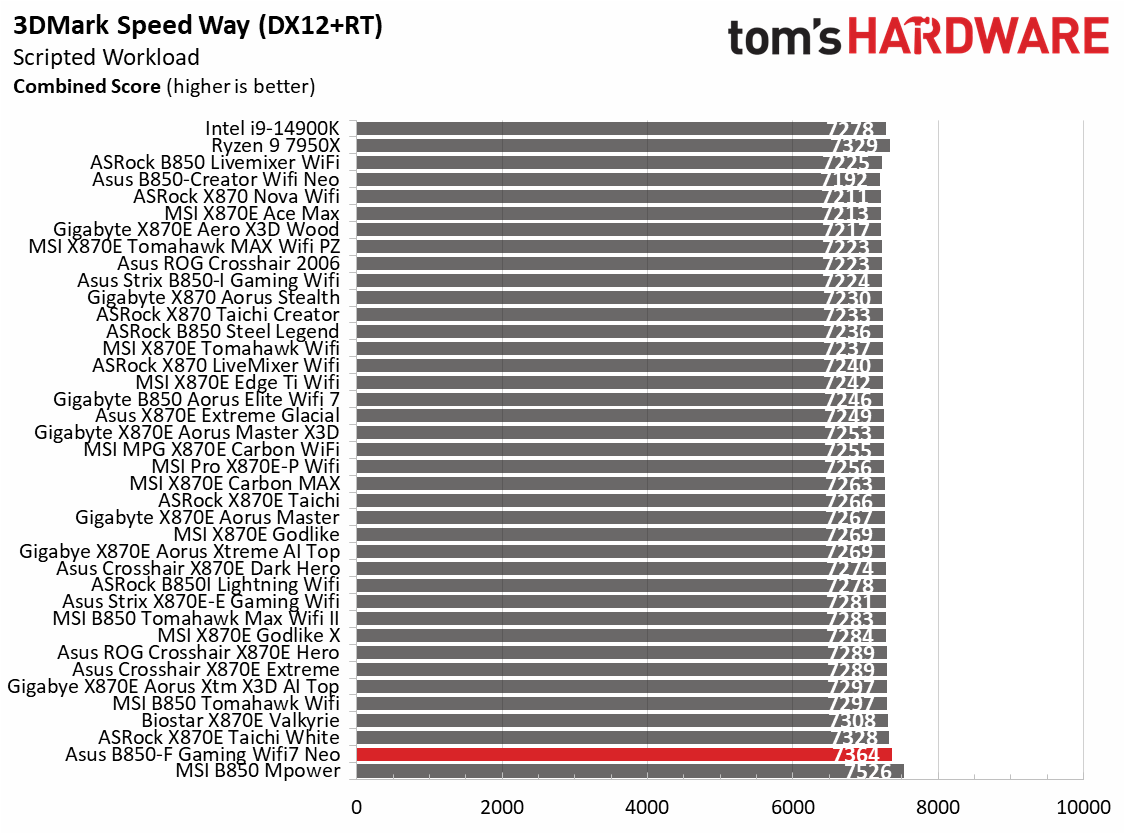 Future
 Future
 Future
 Future
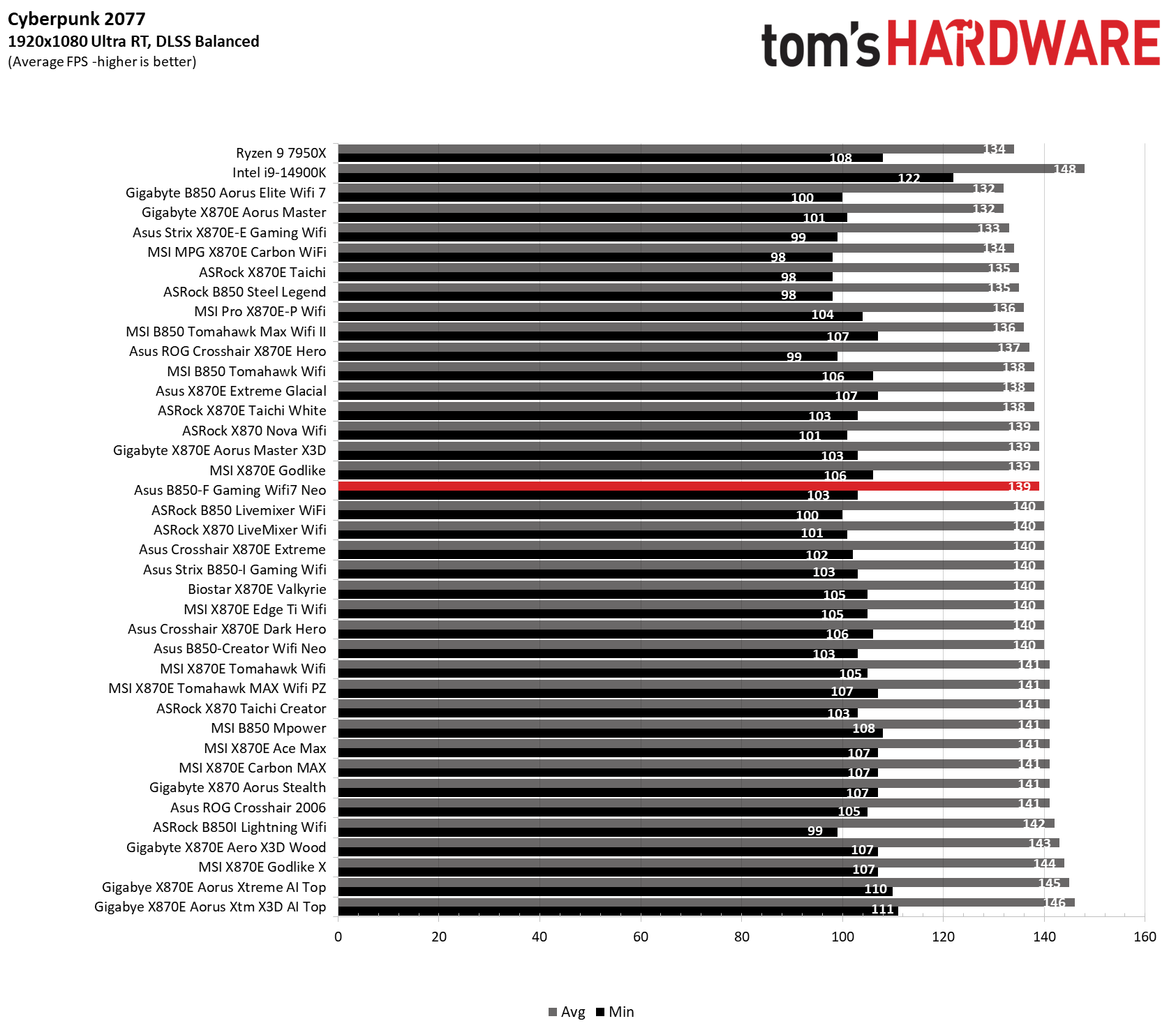
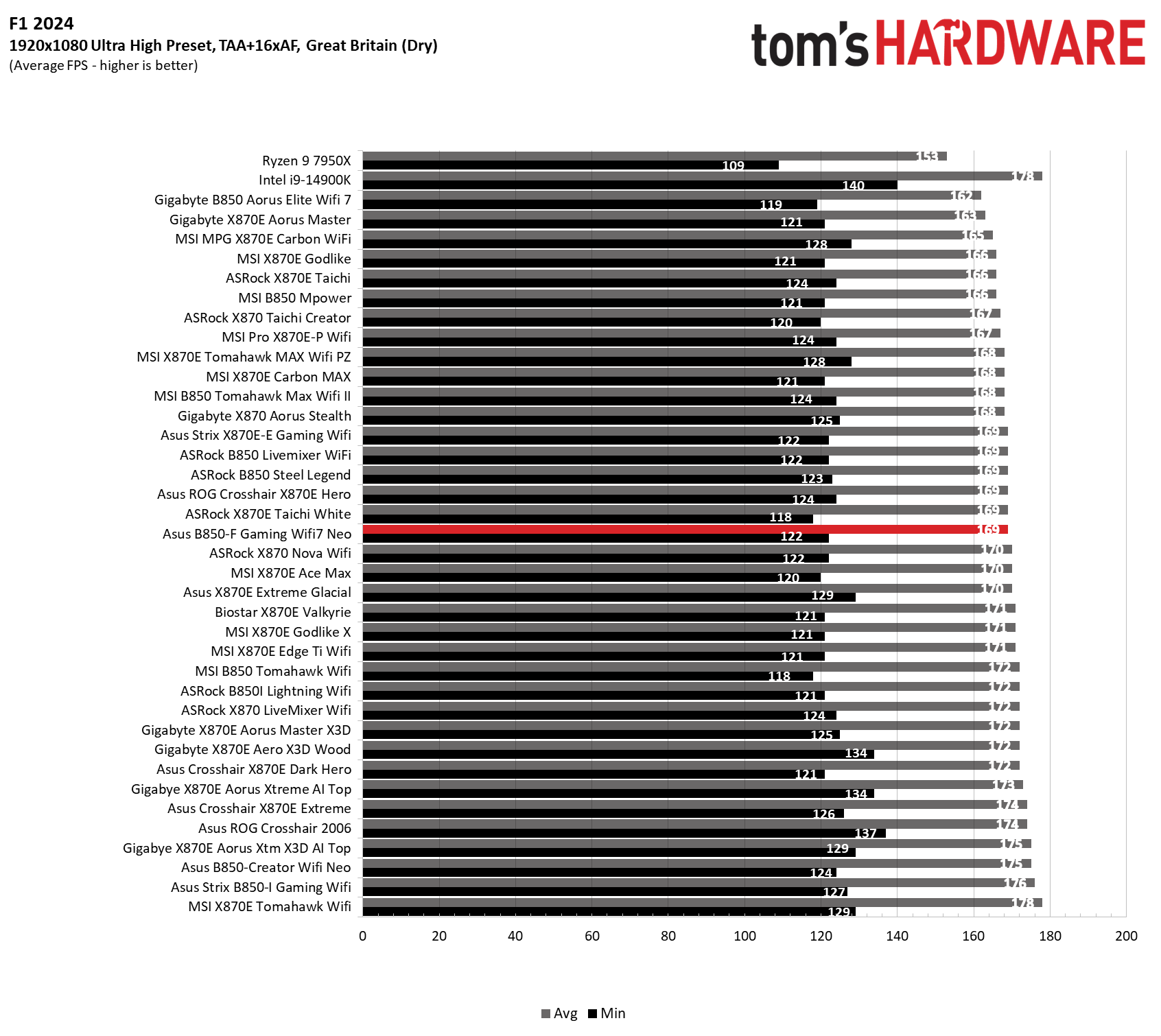
Starting with the launch of Zen 5, we've updated our game tests. We're keeping the F1 racing game but have upgraded to F1 24. We also dropped Far Cry 6 in favor of an even more popular and good-looking game in Cyberpunk 2077. We run both games at 1920 x 1080 resolution using the Ultra preset (details listed above). Cyberpunk 2077 uses DLSS, while we left F1 24 to native resolution scaling.
The goal with these settings is to determine if there are differences in performance at the most commonly used (and CPU/system-bound) resolution with settings most people use or strive for (Ultra). We expect the difference between boards in these tests to be minor, with most falling within the margin of error. We've also added a minimum FPS setting, which can affect your gameplay and immersion.
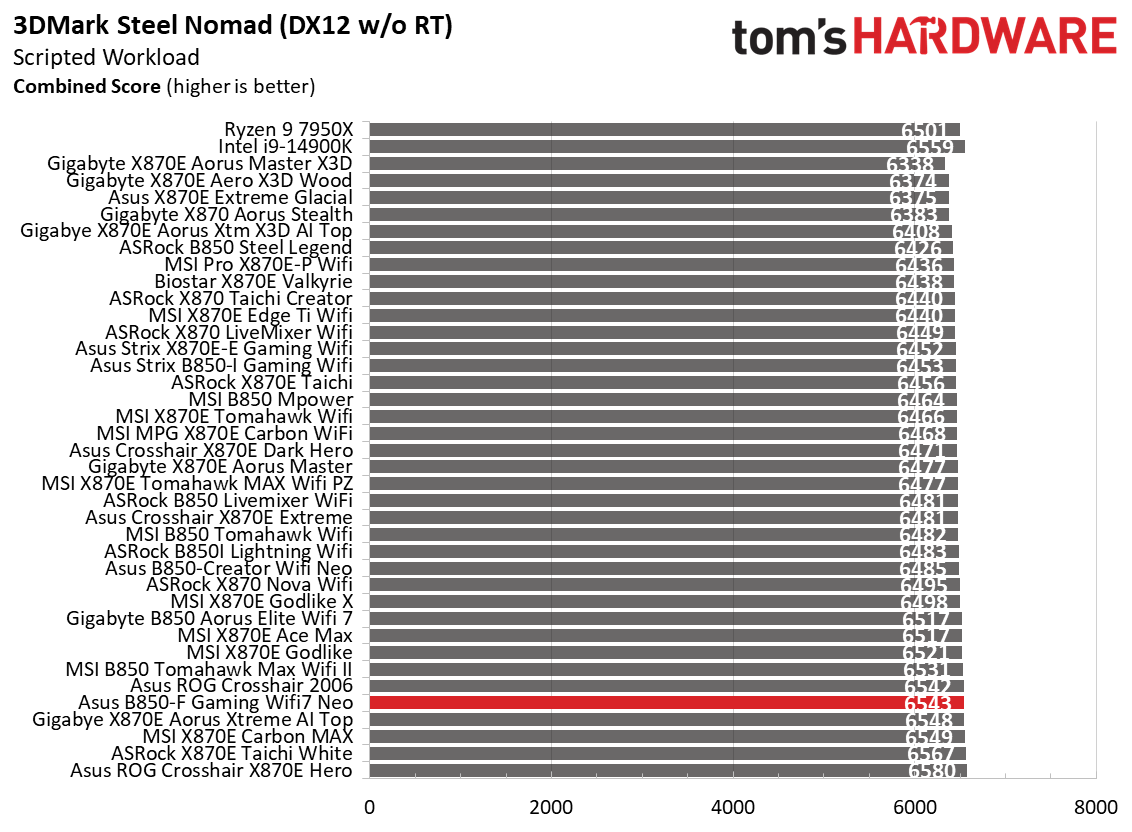
Performance in our gaming tests was just as good as we saw in the Timed and Synthetic benchmarks. The B850-F Gaming Wifi Neo was above average in the 3DMark tests and was dead on average in the actual gaming tests.
Overall, this board performed well across a wide variety of functions. From office work, rendering and encoding, to gaming, there's nothing to be concerned about.
OverclockingOver the past few CPU generations, overclocking headroom has been shrinking on both sides of the fence, while the out-of-the-box potential has increased. For overclockers, this means there's less fun to have. For the average consumer, you're getting the most out of the processor without manual tweaking. Today's motherboards are more robust than ever, and they easily support power-hungry flagship-class processors, so we know the hardware can handle them. There are multiple ways to extract even more performance from these processors: enabling a canned PBO setting, manually tweaking the PBO settings, or just going for an all-core overclock. Results will vary and depend on the cooling as well. In other words, your mileage may vary. Considering all the above, we will not be overclocking the CPU. However, we will try out our different memory kits to ensure they meet the specifications.
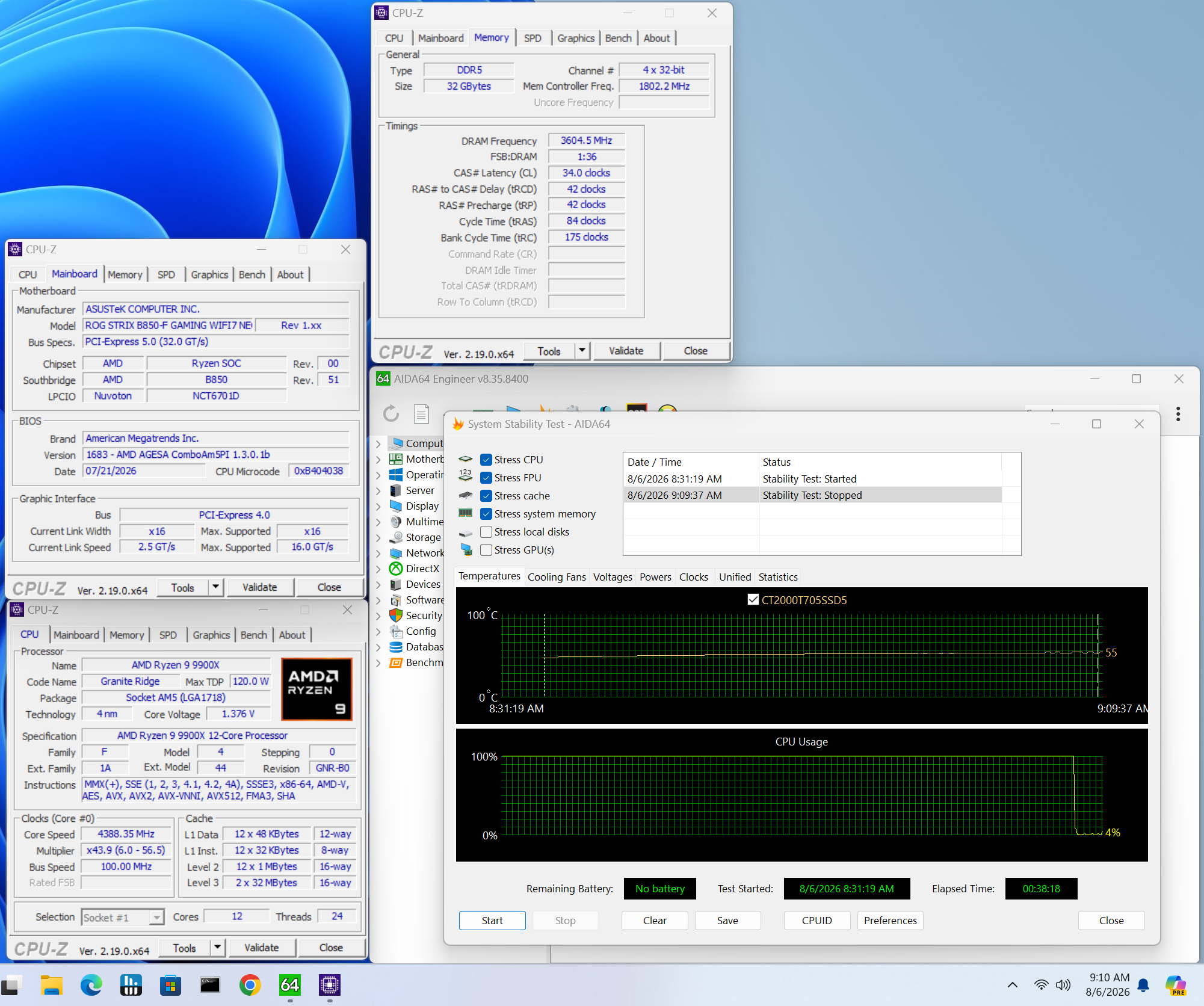
For memory testing, this time we'll start with our fastest non-clock driver kit: Klevv 32GB (2x16) DDR5-8000. As it tends to do on this platform, it booted to Windows but wouldn't pass a stress test with our 9900X, and it also didn't pass with the APU, where it typically would. Again, it wasn't on the memory QVL, so we're not really worried. The Team Group DDR5-7200 kit worked without issue. Those speeds are well past AMD's sweet spot' for the platform, so we don't have any concerns.
Power Consumption / VRM Temperatures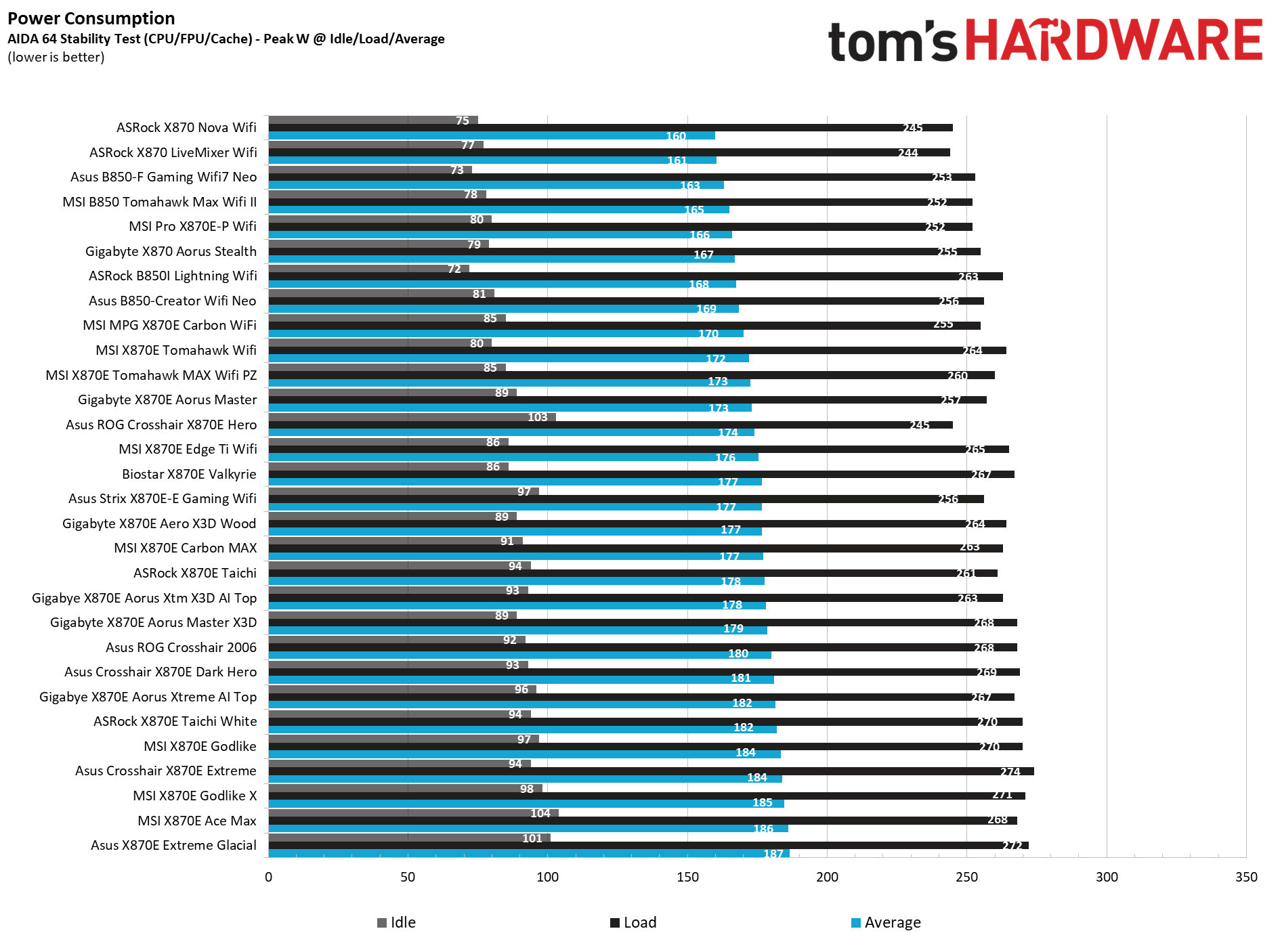
We used AIDA64's System Stability Test with Stress CPU, FPU, cache, and Memory enabled for power testing, using the processor's peak power consumption value. The wattage reading is obtained from the wall using a Kill-A-Watt meter, which captures the entire PC (excluding the monitor). The only variable that changes is the motherboard; all other parts remain the same. Please note that we have moved to using only the stock power-use/VRM temperature charts, as this section aims to ensure that the power delivery can handle flagship-class processors.
Stress testing this board with our DDR5-7200 kit showed it was one of the most efficient boards we've tested so far. At idle, it sipped the power at 73W, the lowest we recorded for B850/X870, and peak load reached 253W, also on the more efficient side. Combined, that's 163W and again, one of the most efficient results so far.
 Future
 Future
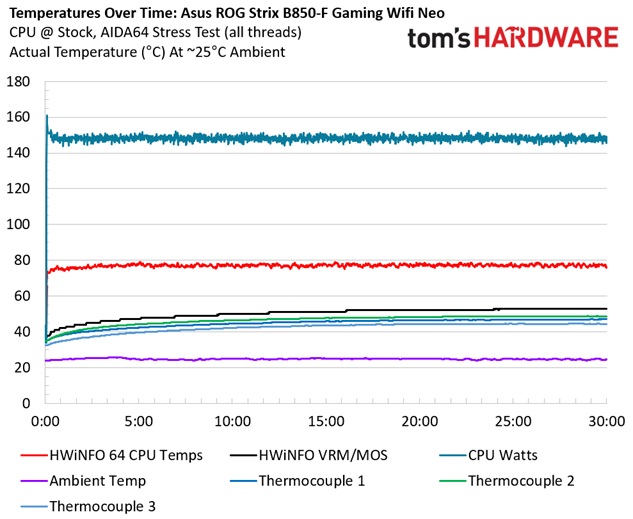
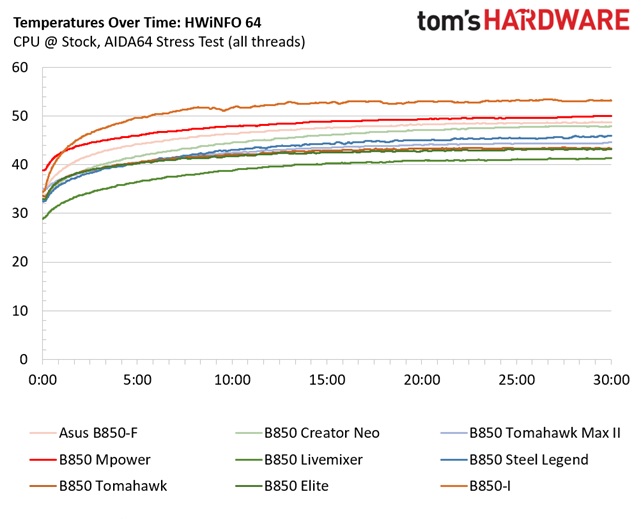
VRM temperatures were also good during our testing, peaking at just over 53 degrees Celsius on the internal sensor we read from HWInfo 64 and almost 49 degrees on our hottest sensor from our external Exetech thermometer, whose sensors are on the back of the board directly behind the MOSFETs. There's still plenty of headroom left for more powerful processors and overclocking: no worries here.
Bottom LineThe Asus ROG Strix B850-F Gaming Wifi Neo is a premium B850 motherboard in just about every sense. Priced at $319.99, it pushes closer to X870 pricing, blurring the lines between the two platforms. The board itself gives you robust power delivery, a clock generator, dual PCIe 5.0 (four total) M.2 sockets, quality integrated audio with an amplifier, faster 5 GbE, and plenty of quality-of-life' (EZ PC DIY) features. Performance was consistently average to above average, and power consumption was among the best we've seen on the platform. In all, it crams a lot of features into the mainstream chipset, but you'll pay a premium over less-equipped alternatives. X870 boards like the Gigabyte X870E Aorus Elite X3D ($309.99) are also part of the conversation around that $300 price point, and many include the faster USB4 port(s). Still, you also don't see a lot of the AI features or a free month of Adobe Creative Cloud if that tickles your fancy, or a BCLK generator, so there are things you should consider for both platforms.
That said, there are a few compromises. I would like to see at least one USB4 port at this price point; the 160 MHz Wi-Fi 7 is the slower option, and two SATA ports can be limiting if you lean on legacy storage. The primary M.2 heatsink didn't make great contact either. Still, these complaints aren't enough to overshadow one of the more complete B850 motherboards we've tested.
You can also save a few dollars and go with the original, non-Neo version ($282.99) if you can work with 2.5 GbE and don't mind the lack of M.2 Q-Release ability on the plate heatsinks. If you want high-end features without stepping up to X870, the ROG Strix B850-F Gaming Wifi Neo should be on your shortlist for a high-end B850 board, though it won't find its way to our best motherboard list.
MORE: Best Motherboards
MORE: How To Choose A Motherboard
MORE: Best Motherboard Deals
MORE: Best Motherboard Combo Deals
MORE: All Motherboard Content