Apple launches new M6 and M5 Ultra Apple silicon chips — debuting in new Mac Mini and Mac Studio
Apple has today unveiled its next-generation M6 Apple silicon chip, as well as a powerful M5 Ultra. The new chips will debut in new versions of its Mac Mini and Mac Studio, respectively, available to pre-order from today.
The M6 is Apple's first chip on a 2-nanometer process, utilizing a 12-core CPU with two super cores, four performance cores, and six efficiency cores. The chip also features a 12-core GPU and a 12-core GPU featuring neural accelerators, alongside a "Dual 16-core Neural Engine." The top version of the chip has 170GB/s of memory bandwidth.
That dual 16-core neural engine means that there are indeed two neural engines. There's a connection between the engines, allowing them to run one model quickly across both, or two separate models independently.
The M5 Ultra is Apple's first chip using its UltraFusion technology to form a quad-die architecture (The M5 Max chips it is connecting both used two dies). The chip goes up to 36 cores on the CPU and up to 80 cores on the GPU, with 1.2TB/S of unified memory bandwidth, which Apple says is 50% higher than the M3 Ultra. Apple also claims the 36-core CPU with 12 super cores and 25 performance cores will offer "up to 1.25x higher single-threaded performance and up to 1.3x higher multithreaded performance than M3 Ultra."
The M5 Ultra has a 32-core neural engine, but this is different from the dual 16-core neural engine on the M6. Because the M5 Ultra uses a pair of M5 Max chips over UltraFusion, the 32 cores across the dies to run two models in parallel for increased performance.
Both M6 and M5 Ultra feature GPUs with neural accelerators and their fastest cores, marking a leap forward for Apple's graphics processors when it comes to AI.
Apple users who have been maxxing out previous versions of the Mac Mini will be capped at 32GB of memory on the Mac Mini with M6, like a choice the company made due to the component shortage that has been affecting the entire industry. If you want 64GB like the M4 Pro, you'll need the M5 Pro model. But the M5 Ultra in the Mac Studio won't have that problem, with Apple offering up to 512GB of unified memory on that chip.
M6 also features updates to hardware-accelerated ray tracing, dynamic caching, and the shader core, which the company claims will allow for faster rendering and higher frame rates in games.
Mac Mini and Mac StudioThe new Mac Mini and Mac Studio aren't seeing any design changes, though there are substantial internal changes. Both systems are available for pre-order today, but won't arrive to customers and in retail stores until September 22.
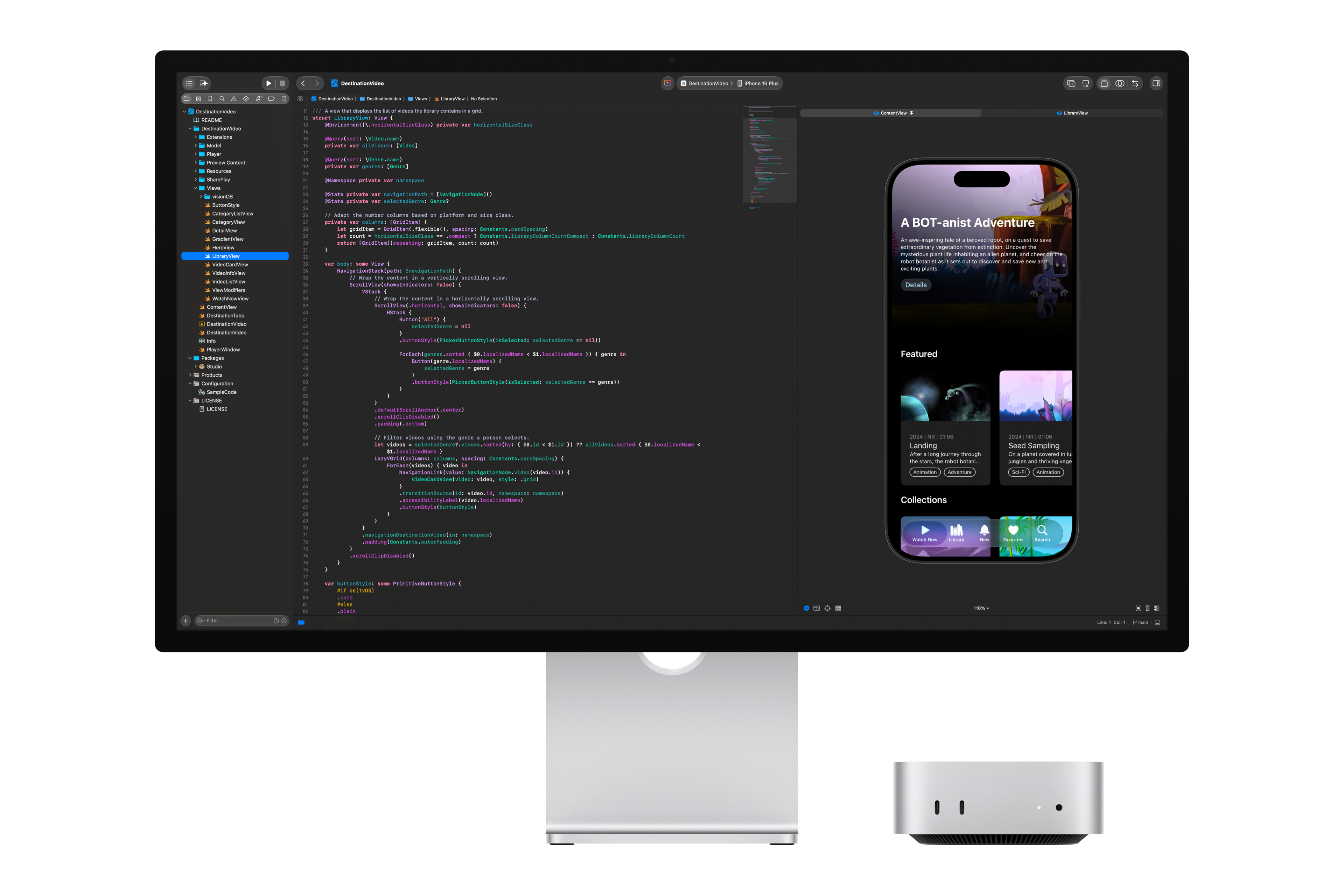
Besides the M6 version of the Mac Mini, there will also be versions with M5 Pro. Both models will be bumped to Wi-FI 7 and Bluetooth 6, as well as 2.5Gb Ethernet (up from 1Gb), with a 10Gb option available as an upgrade. The Mac Mini also supports genlock via USB-C, synchronizing displays and cameras to prevent video drift during broadcasts.
For those working with AI, Thunderbolt 5 on the M5 Pro Mac Mini will allow customers to run clusters for on-device models.
The Mac Mini with M6 will start at $899, while the M5 Pro option will begin at $1,699 (each drops $100 for education pricing). Given that the Mac Mini with M4 started at $599, it's seeing substantial price hikes here.
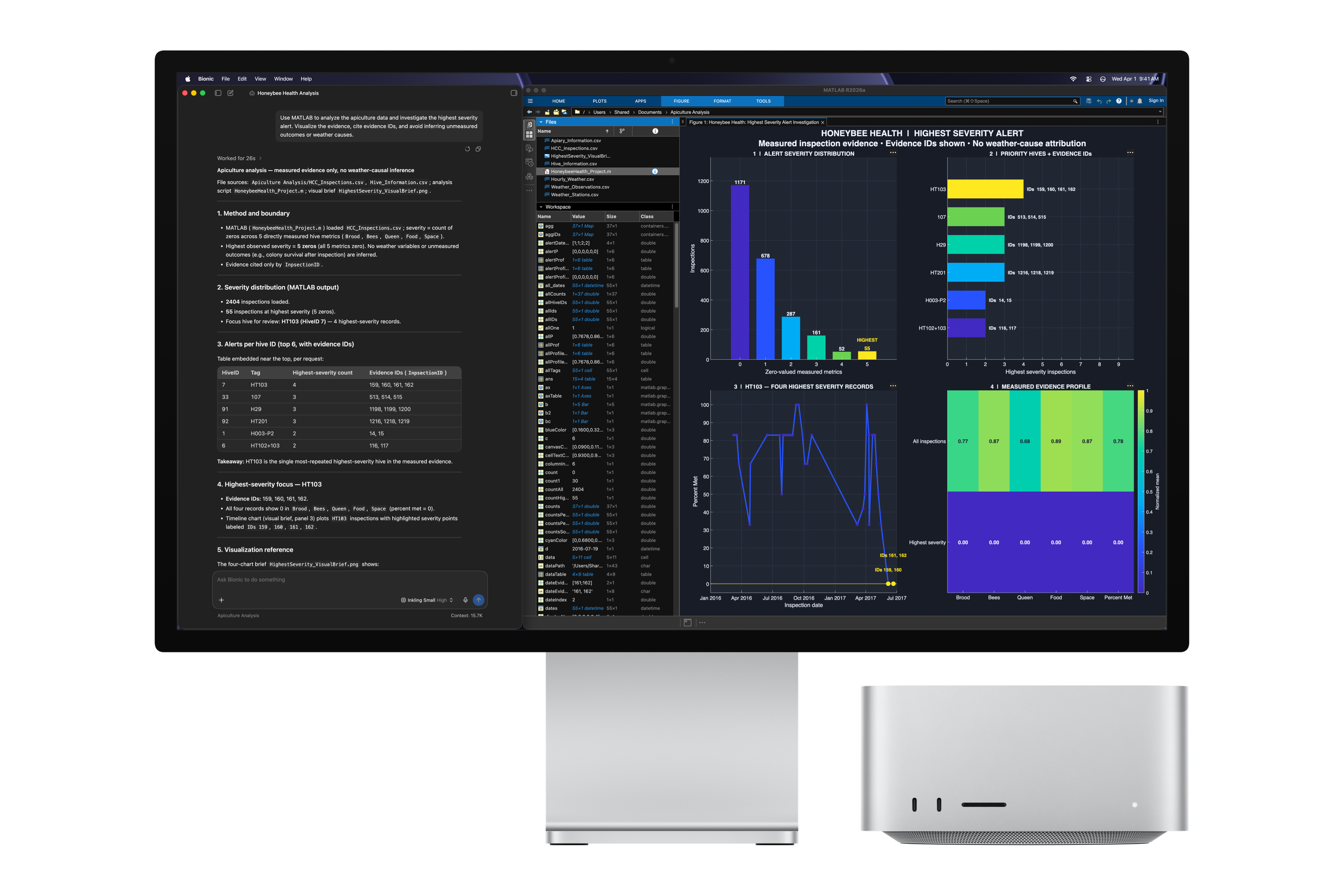
The Mac Studio will come with M5 Max or the new M5 Ultra chip, and Apple is positioning it for on-device AI. It will now offer up to six Thunderbolt 5 ports with support for as many as eight displays. Like the Mac Mini, it's also getting Wi-Fi 7 and Bluetooth 6 with Apple's N1 chip, which debuted in the iPhone 17 lineup. Like the Mac Mini, the Mac Studio also supports genlock for perfectly synced video.
The Mac Studio with M5 Max will start at $2,499 ($2,299 with an education discount), and the M4 Ultra model will start at an eye-watering $5,499 ($5,099 with an education discount).
Both systems will be compatible with macOS 27 Golden Gate, including Siri AI and refinements to the Liquid Glass design introduced in macOS 26 Tahoe.