Lumus, Quanta reach licensing agreement for next-gen waveguides for AR glasses that may turn the tide
- Lumus is expanding its partnership with Quanta this week, which brings a licensing agreement between the two companies for next-gen waveguides.
- Lumus states Quanta will manufacture its next-gen waveguides: the Z-30 2.0, A-Lens 30 (30-degree FOV), and A-Lens 50 (50-degree FOV).
- The company was at CES 2026 where it stated it's future for waveguides for AR glasses will be "thinner, lighter, and easier to produce."
This morning (Sept 1), Lumus, a developer of waveguides for several big-name brands, announced a major partnership expansion.
In a press release, Lumus announced that it has expanded its partnership with Quanta Computing. This expansion sees the two companies reaching a licensing agreement "to manufacture three new geometric waveguides for AR glasses." The post states Lumus is developing three new waveguides: the Z-30 2.0, A-Lens 30 (30-degree FOV), and A-Lens 50 (50-degree FOV).
Thanks to the new licensing agreement, Quanta will handle manufacturing. What we can expect from the Z-30 2.0 is a 30-degree FOV "in a thinner, lighter optical engine." Lumus adds that its latest technology increases the display's brightness, alongside direct prescription lens bonding. The two new A-Lens waveguides (30 and 50) are Lumus' "lower-cost" production solutions.
The next-gen A-Lens waveguides are reportedly cutting down the weight and thickness by 50%. However, Lumus states it maintained its image quality and efficiency with this upgrade. This is an ongoing trend that Lumus is trying to introduce into this advancing world of AR glasses. Trimming down waveguide weight and thickness is key, but so is image quality, brightness, and cost.
Earlier today, Lumus' CEO, Ari Grobman, said, "Our relationship with Quanta has always been built around solving the practical challenges of bringing advanced AR optics into mass production. This agreement allows us to bring our next generation of lower-cost waveguides into manufacturing with a partner that understands both the technology and the production requirements behind it."
Here comes the future, and Lumus is leading it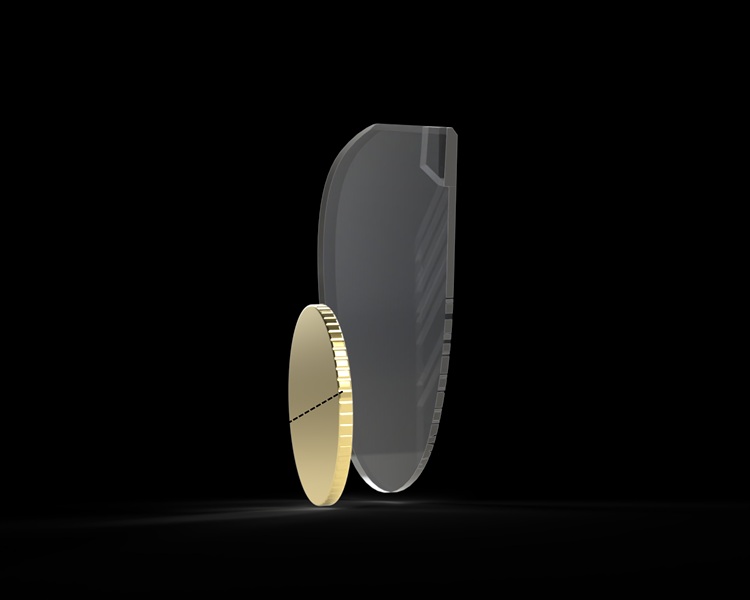
As mentioned before, Lumus creates waveguides for several brands, even for Meta and its Ray-Ban Display Glasses. Earlier this year, Meta announced that it was doubling the production of its Ray-Ban glasses to meet demand. This was something Lumus echoed in its press release this morning. The demand for smart glasses continues to rise, but there's room for improvement. Its work to reduce the weight and thickness of its waveguides for AR glasses is one such upgrade.
Additionally, the lower-production-cost A-Lenses are designed to help bring more products to consumers. We'll have to see how things pan out going forward.
On a related note, Lumus was at CES 2026. This major tech event is where the company first stated what its plans were for the future of AR glasses. Lumus said, "That's the future for us-making these waveguides thinner, lighter, and easier to produce." Its announcement today further echoes that sentiment.