5 things Android should steal from the iPhone Duo and iPhone 18 Pro
Many years and even more rumors later, Apple's first foldable phone is finally official. The iPhone Duo is the company's first stab at a folding phone, and it's not the only new phone Apple launched at its annual September event. We got our first look at the iPhone 18 Pro and iPhone 18 Pro Max, too. In a major change of pace, Apple didn't announce the base-model iPhone 18, but there are plenty of new features and improvements to speak of.
Apple stole its fair share of features from Android, but the pendulum swings both ways. There are a handful of features I'd love my favorite Android phones to steal from the iPhone Duo, iPhone 18 Pro, and iPhone 18 Pro Max. There are even more features Apple included on its new iPhones that are available as niche offerings on Android, but aren't ubiquitous. Here's to hoping these five iPhone features are onboard your next Android phone.
The iPhone Duo's foldable nano-texture display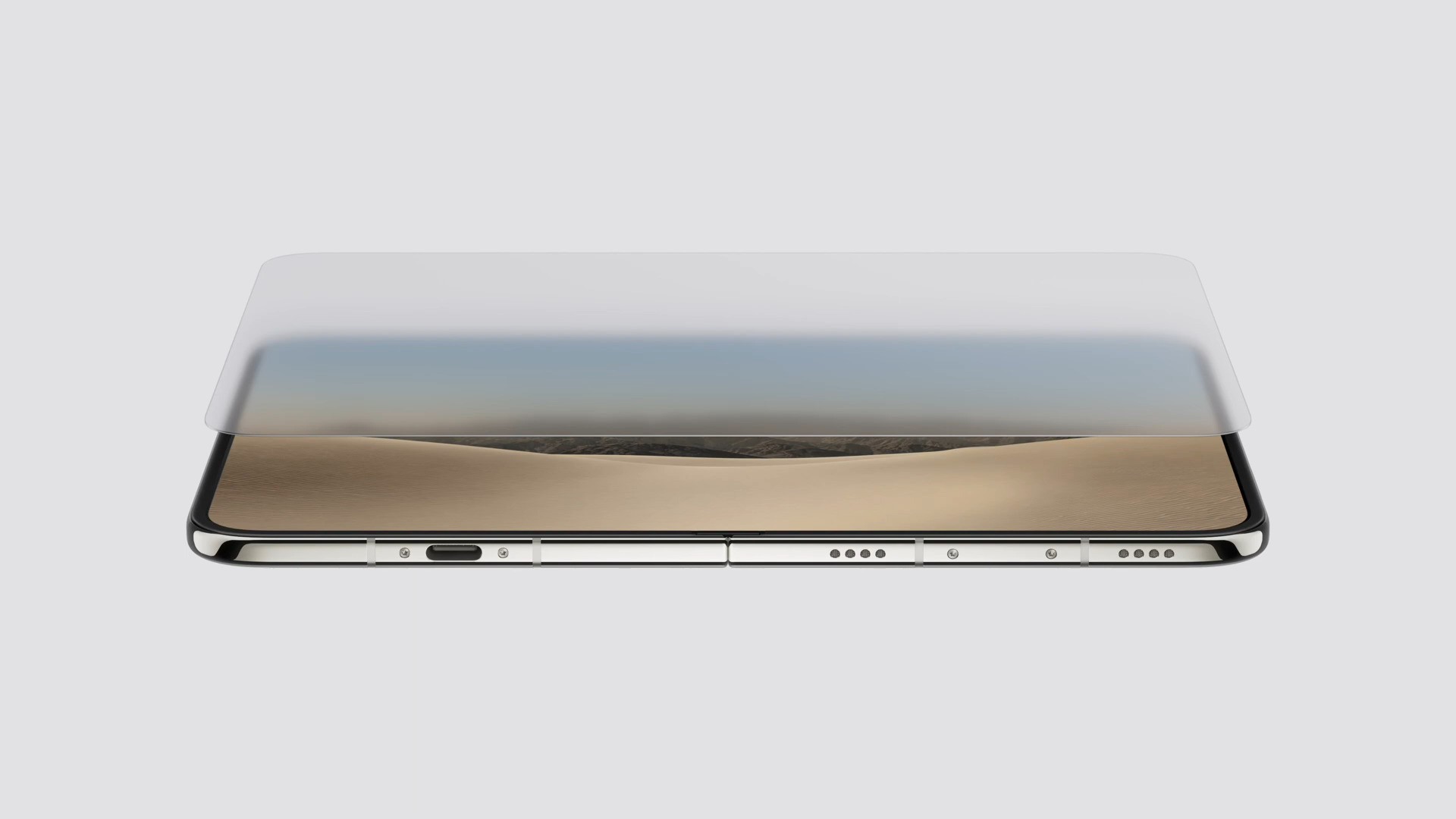
Apple didn't launch its first foldable, the iPhone Duo, without a crease. It still has one down the middle of the folding display, just like all the Android foldables that came before it. However, it used a clever trick to minimize the crease's visibility during normal use. The folding display is covered by a matte, nano-texture surface. This reduces glare, reflections, fingerprints, and yes, it makes the crease more difficult to spot.
While some foldables have anti-reflective inner display coatings, such as the Galaxy Z Fold 8 and Galaxy Z Fold 8 Ultra, none of them have a matte finish. This is new for the iPhone Duo, and it solves a few major pain points of using glossy plastic foldable display coverings. For one, it'll be easier to see in broad daylight and won't pick up those nasty fingerprints. It's also strong enough to support the Apple Pencil. Most importantly, it hides the crease in normal viewing conditions, since light reflections are really what makes the crease appear pronounced.
I've used Apple's nano-texture finish on other products before, like the iPad Pro, and I'm excited to see it on the iPhone Duo. I'd love to see a matte display covering on future Android foldables, too.
Under-display camera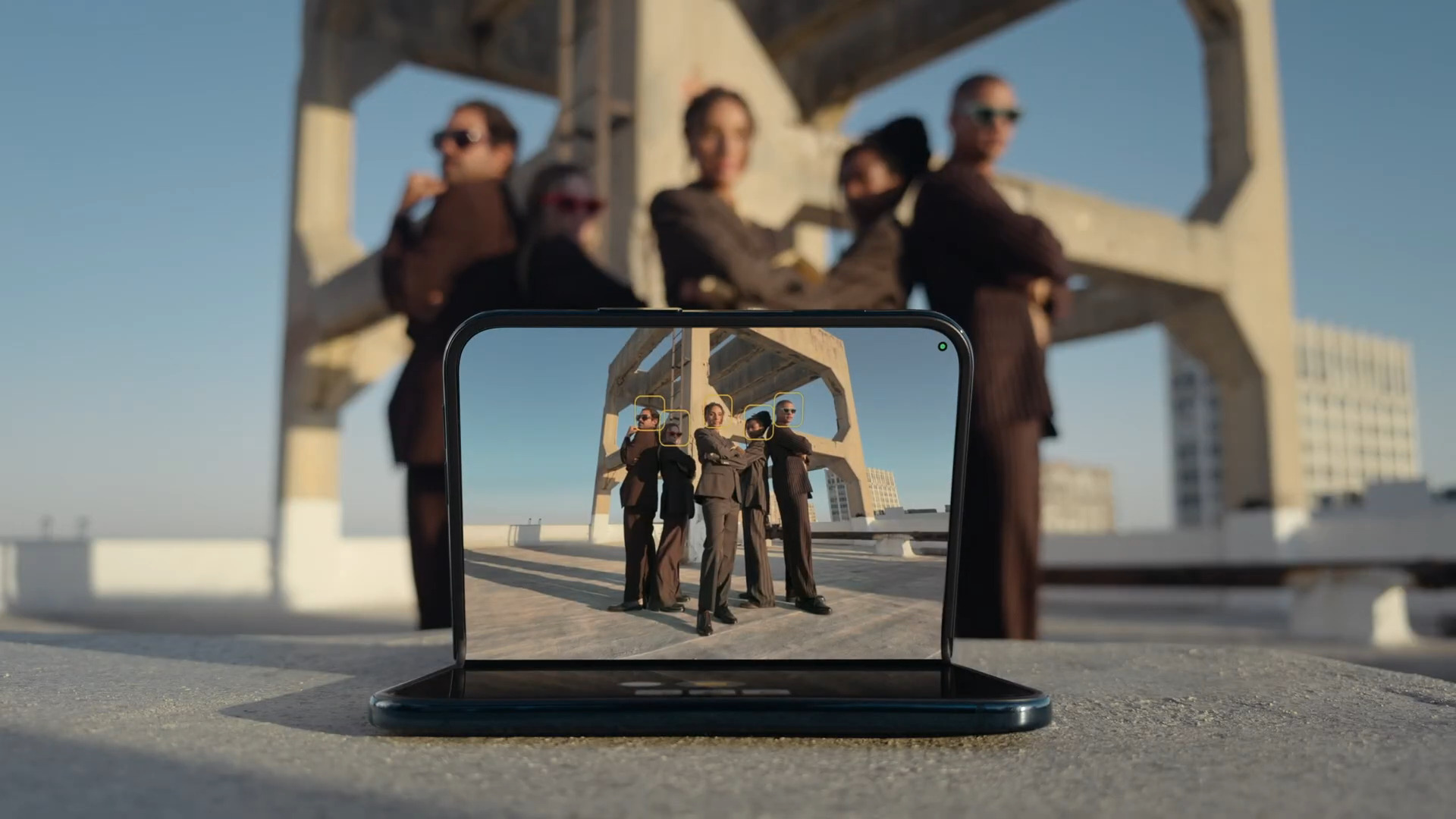
Android phones pioneered the under-display camera (UDC), but then they abandoned it. Samsung had a UDC on the Galaxy Z Fold 3 through Galaxy Z Fold 6, and it helped make the main screen feel more immersive. Now, the Galaxy Z Fold 8 and Galaxy Z Fold 8 Ultra have a hole-punch camera smack dab in the top middle of the right half of the phone. It gets in the way of your content, especially if you decide to rotate the device.
Motorola and Google do a better job with their hole-punch cameras, sticking them in the top-right corner, where they're less intrusive. However, I wish Samsung never removed the UDC from the Galaxy Z Fold lineup, and hope that the iPhone Duo's UDC will spark a revival of the trend. Apple's new UDC can handle 1080p video recording at 30FPS or 60FPS, making it good enough for video calls, which is what the front-facing camera on the folding display will primarily be used for.
At the same time, the UDC is hidden just enough to make the iPhone Duo's folding display feel complete no matter the orientation. That's important for a wide foldable like the iPhone Duo or Galaxy Z Fold 8, because they work just as well in portrait as landscape when unfolded.
Variable aperture
There's another iPhone feature that could revival an old Android one, and this time, it's on the iPhone 18 Pro. The two "Pro" phones have a variable aperture primary shooter that can move from f/1.8 to f/4.0, depending on the situation. Apple did this by adding six laser-cut blades to the 48MP main camera that move to transition between different apertures.
It's controllable by the user thanks to the new Pro controls in the Camera app. The iPhone 18 Pro's main camera supports manual adjustments to lens aperture, shutter speed, and white balance. There's also a histogram that shows exposure levels to help you refine the shot. The hardware is the interesting part, though, as variable aperture allows one camera to do the work of multiple specialized lenses.
Once people get their hands on the iPhone 18 Pro's variable aperture, it might spark an Android revival. However, we wanted Android to steal the iPhone 17's square CenterStage camera last year, and that hasn't happened yet.
iPhone Handoff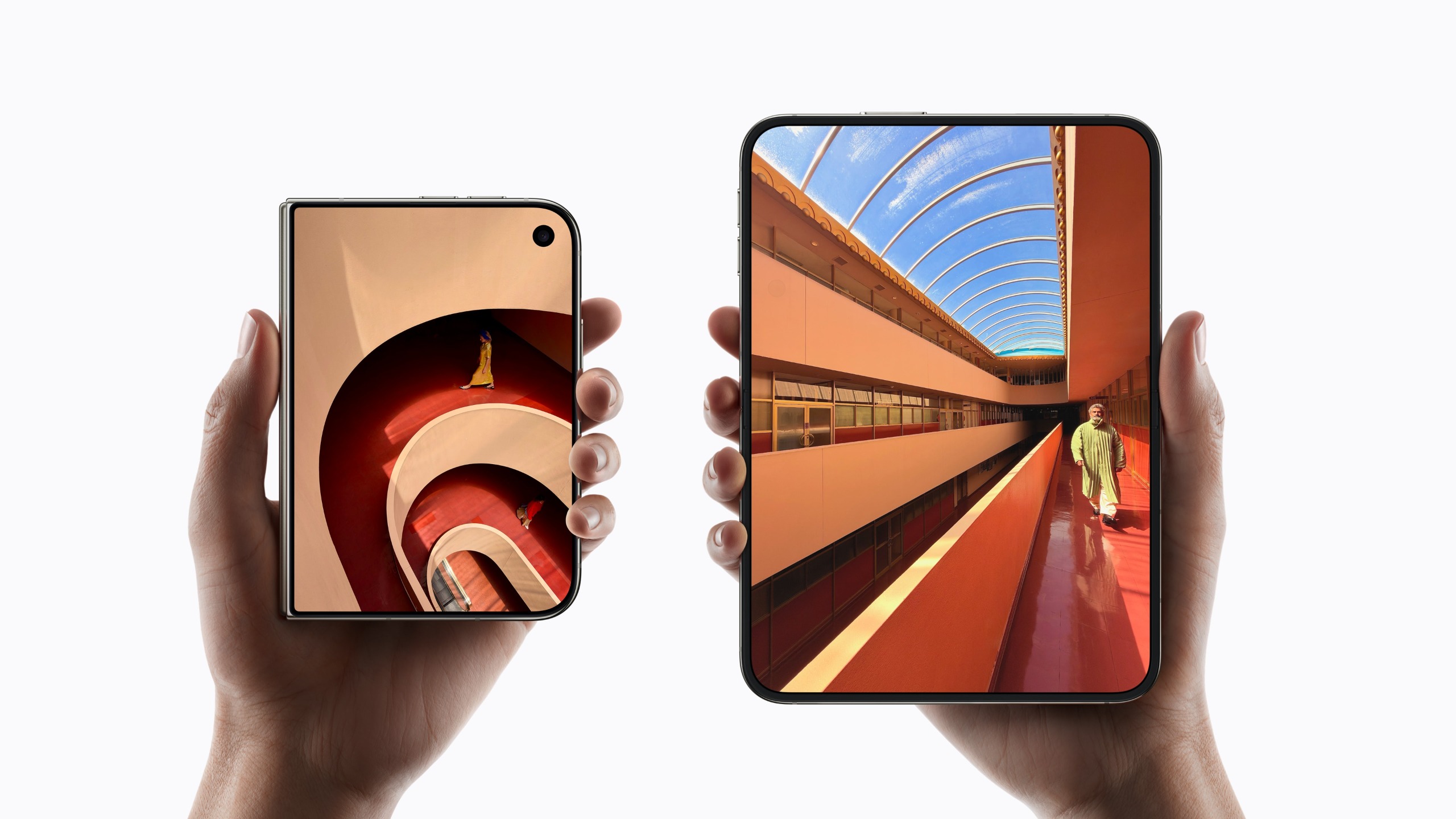
Apple is working with carriers to add an iPhone Handoff feature, and while it's not strictly exclusive to the iPhone Duo or iPhone 18 Pro, it's certainly worth mentioning. The feature lets you use a single phone line with two iPhones at once. A primary eSIM profile is loaded onto one device, and a secondary eSIM profile is loaded onto a companion device. The phone you're using will automatically connect to your carrier's network automatically.
It's a great way to use two iPhones at once. The timing isn't a coincidence - iPhone Handoff lets you use your phone like with an iPhone Duo and a "regular" iPhone simultaneously. I'd love to have something similar on Android. I could keep a primary eSIM on a Galaxy S26 and a secondary eSIM on a Galaxy Z Fold 8, all using the same phone line.
For now, it's limited to T-Mobile in the U.S., and it won't come free with your plan. There'll be an extra fee, similar to adding an LTE smartwatch to your line.
iOS 27 foldable animations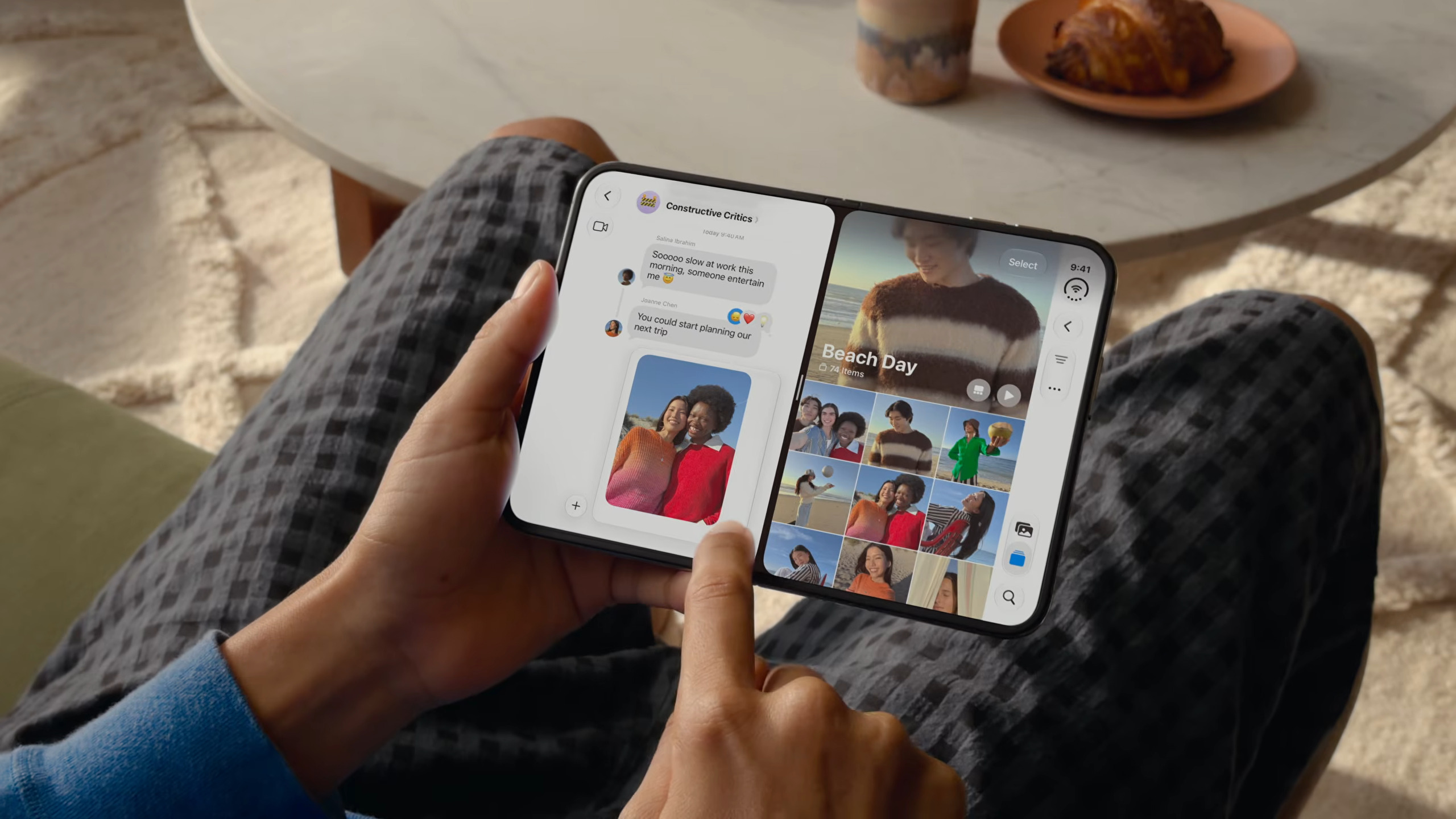
Finally, there's the software. I admit, after seeing Apple's iOS and iPadOS missteps over the past few years, I had my doubts about the iPhone Duo's software. Apple proved me wrong. There are a ton of software tweaks that make me, and others on the Android Central team, more excited to try it than any other foldable. For me, it starts with the dock. Using the extra vertical space on the right side of the iPhone Duo for launching apps and key controls is genius.
The animations are even better. When you open up an iPhone Duo, the cover screen blurs and dissolves into the main screen. It's an intuitive experience that makes the folding transition feel like a transformation rather than a friction point.
This iPhone duo animation https://t.co/y7NftWpyXSSeptember 9, 2026
Apple did steal some Android foldable favorites for the Duo, like Flex mode, Split view, and Made You Look (called Kid Cue on the iPhone Duo). However, it definitely jazzed the software up, and Android could stand to borrow some of the animations and design features.
Honorable mentions: IP68, Qi2, pen support, and vapor chamber
There are a collection of iPhone Duo features that are available scattered across different Android foldables, but are not found on one device.
Motorola's Razr Fold has an active stylus that works on both the cover screen and foldable display, like the iPhone Duo. Google's Pixel 11 Pro Fold has the same Qi2 and IP68 support as the iPhone Duo, and also has a vapor chamber for its chip, but lacks pen input. Honor's Magic V6 has a higher IP69 rating, but lacks Qi2 and a vapor chamber.
You get the idea. If I picked and chose my favorite features from the best Android foldables, I could build an iPhone Duo competitor. But that Android device - one with IP68, Qi2, stylus support, a vapor chamber, a UDC, and a nano-texture display - does not exist yet. That's why the iPhone Duo feels like a complete foldable package for fans, and it's exactly what Android phone makers should copy.