Enthusiast digs into CPU substrate for surgery to replace ripped-off data pin — resurrected chip boots and hits 33% overclock
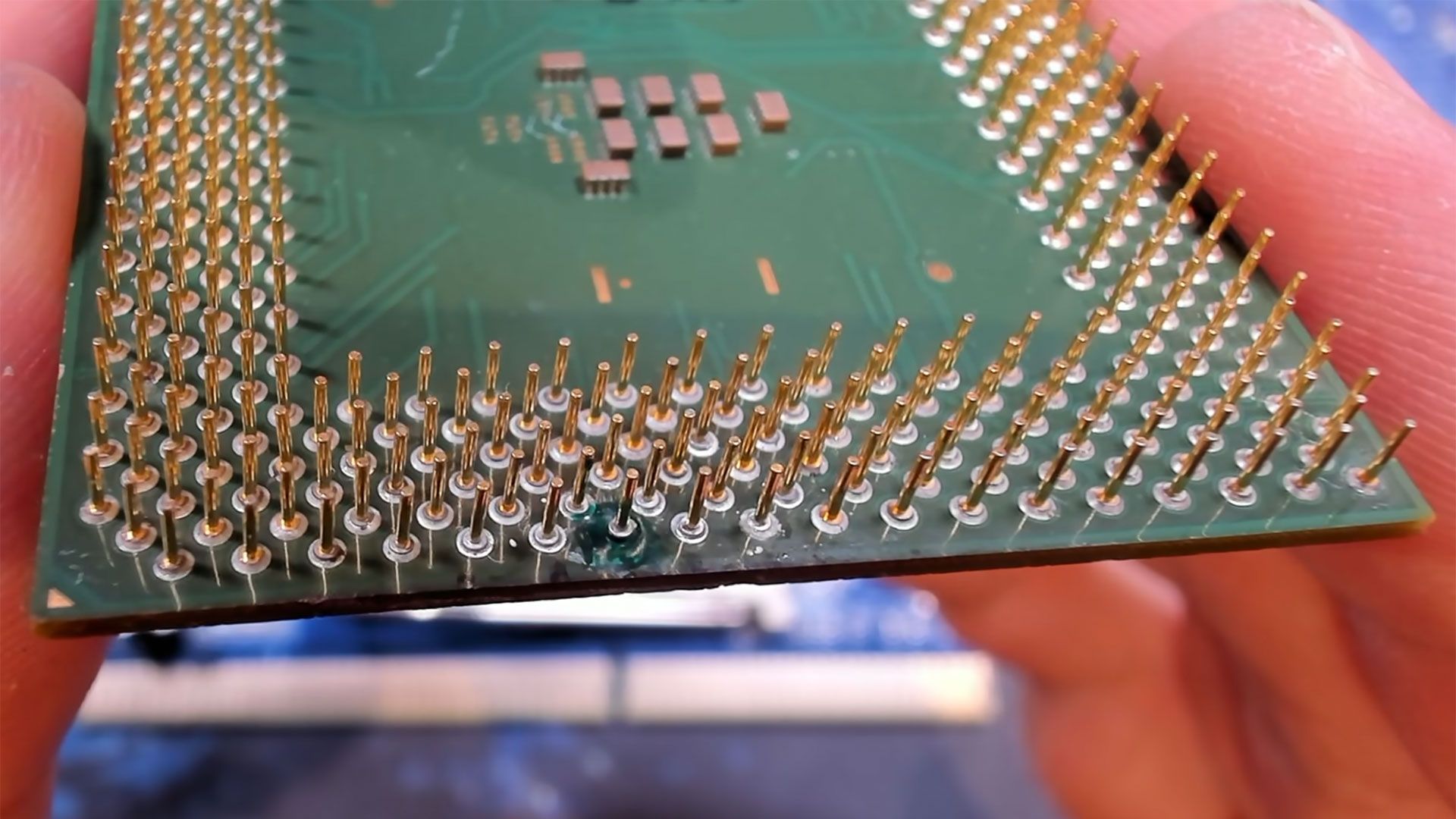
An Intel Celeron 1200 (Tualatin) was revived from the dead following an intricate bit of repair work by Bits und Bolts. The quarter-century-old chip looked like it had a fatal injury, with one of the pins missing and the underlying pad ripped off. As things stood, a system with this close relative of the Pentium III installed simply wouldn't boot. However, thanks to careful digging deep into the substrate" and some delicate preparation work, the enthusiast managed to solder on a donor pin and get this CPU running again - and then overclocked it by 33%.
As the Celeron 1200's missing pin was a data pin (D47), this was a definite fix-or-be-damned situation. Sometimes CPUs can have a pin or two missing, and they will work anyway. I've seen CPUs shrug off such missing connections when several remaining pins duplicate a function - power or ground pins, for example.
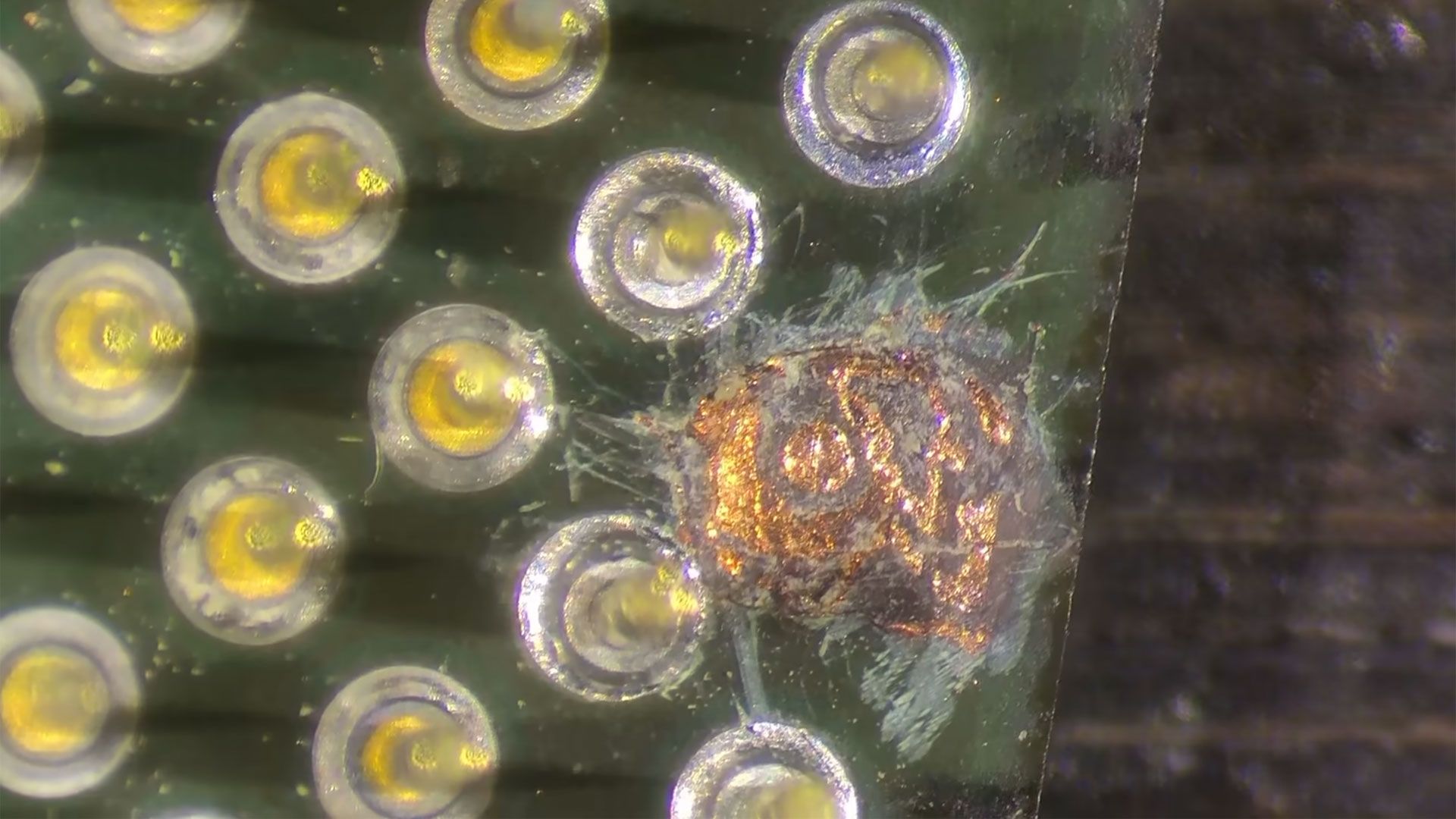
Bits und Bolts started the repair process with a close-up of the serious-looking damage. Then we see the missing pin area after they have apparently dug a hole" so that the work/issue can be seen more clearly. Zoomed-in images show that there were several layers of copper exposed from under the green surface. The new pin must be connected solely to the central circular area you can see, and not accidentally connect with any of the copper planes surrounding it. Thus, the TechTuber started by applying solder mask to this area. Remember, these pins are very small, and it would have been an intricate job to mask the surrounding area solidly yet cleanly.
While the solder mask surrounding the Intel Celeron 1200's vacant pin cured, Bits und Bolts harvested a few pins from another Tualatin chip that was definitely broken." Returning to the CPU under repair, it was time to add flux, then try to tin' the central circular copper area to which the donor pin would be soldered.
Soldering the donor pin went smoothly, leaving it perfectly in position and upright. You can definitely see which pin has been added by Bits und Bolts, but after nervously adding the repaired Celeron 1200 to a socket, the TechTuber was relieved that everything mated cleanly.
 Bits und Bolts
 Bits und Bolts
 Bits und Bolts
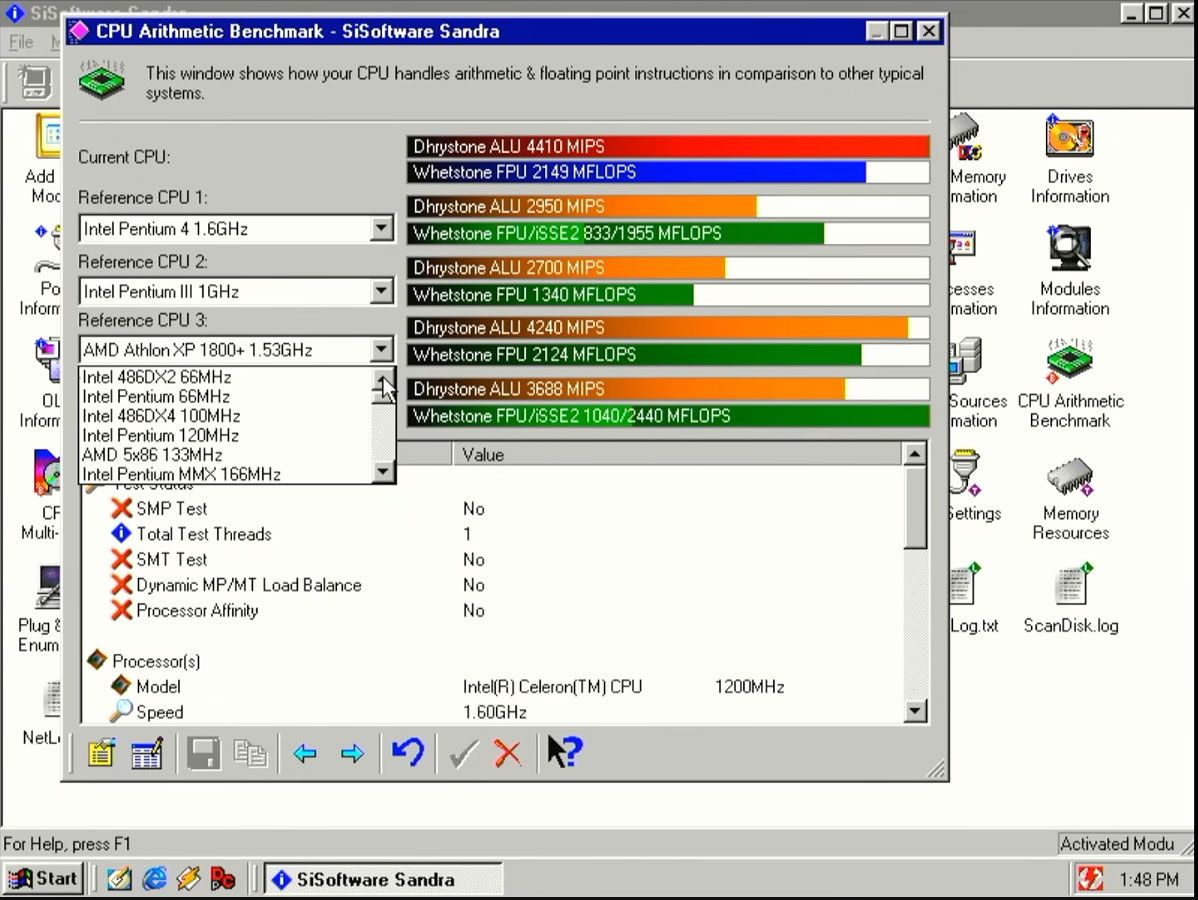
Instead of firing up the computer with the repaired processor installed straight away, the tech tinkerer took a few readings with their multimeter. There were no obvious issues. At last, the moment of truth came, and the patched-up processor-packing PC system booted without issues. Bits und Bolts commented that this was the first time they'd repaired a processor pin issue that looked so grave. The end of the video sees the CPU tested in various benchmarks, including SiSoft Sandra. Moreover, it was even overclocked by 33%, stable at 1,600 MHz.