MediaTek’s next-gen Dimensity CX C10 Max will power new Googlebook initiative alongside Intel and Qualcomm – 3nm SoC has similar specs to Kompanio Ultra in Chromebook Plus devices, despite
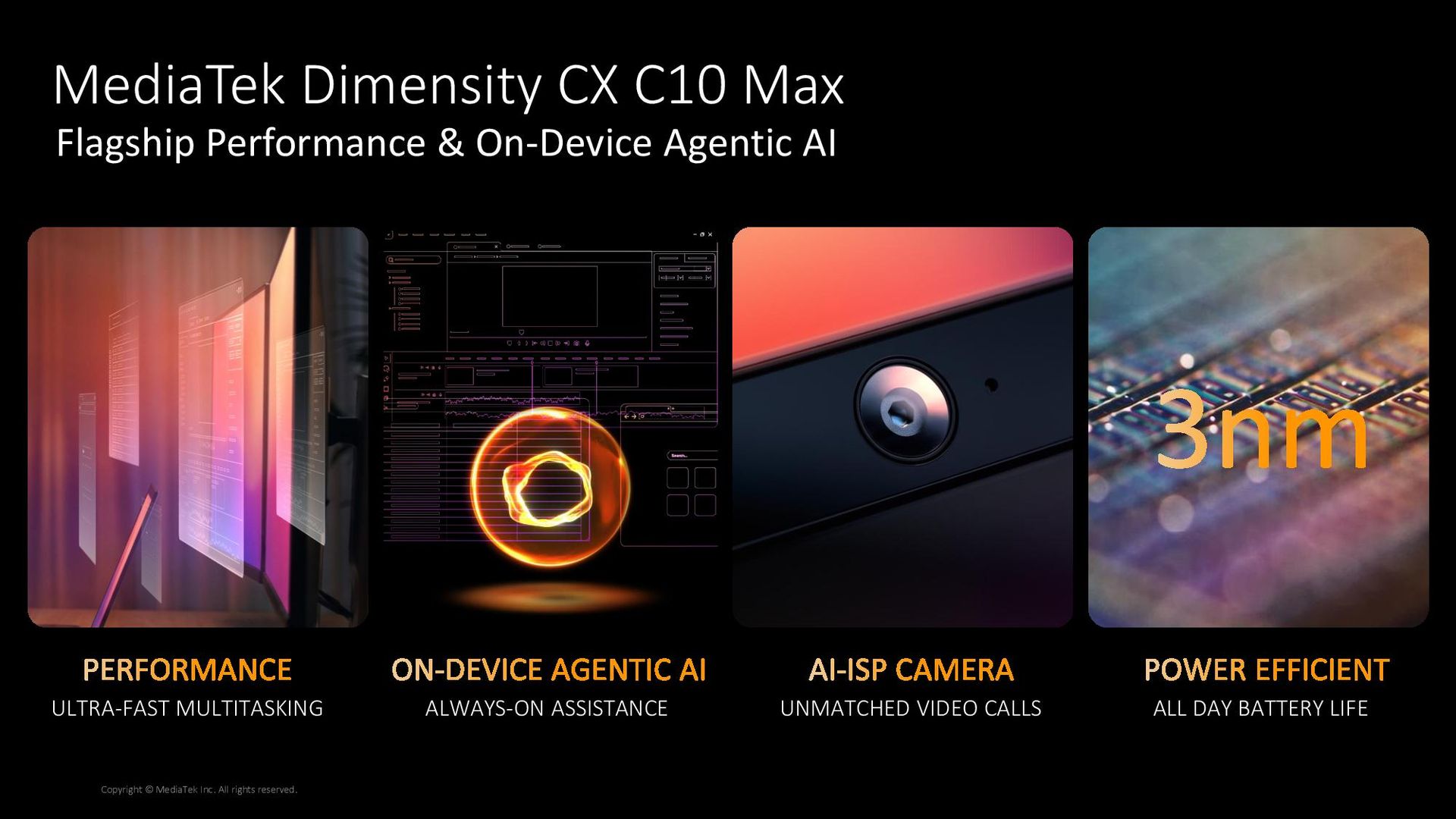
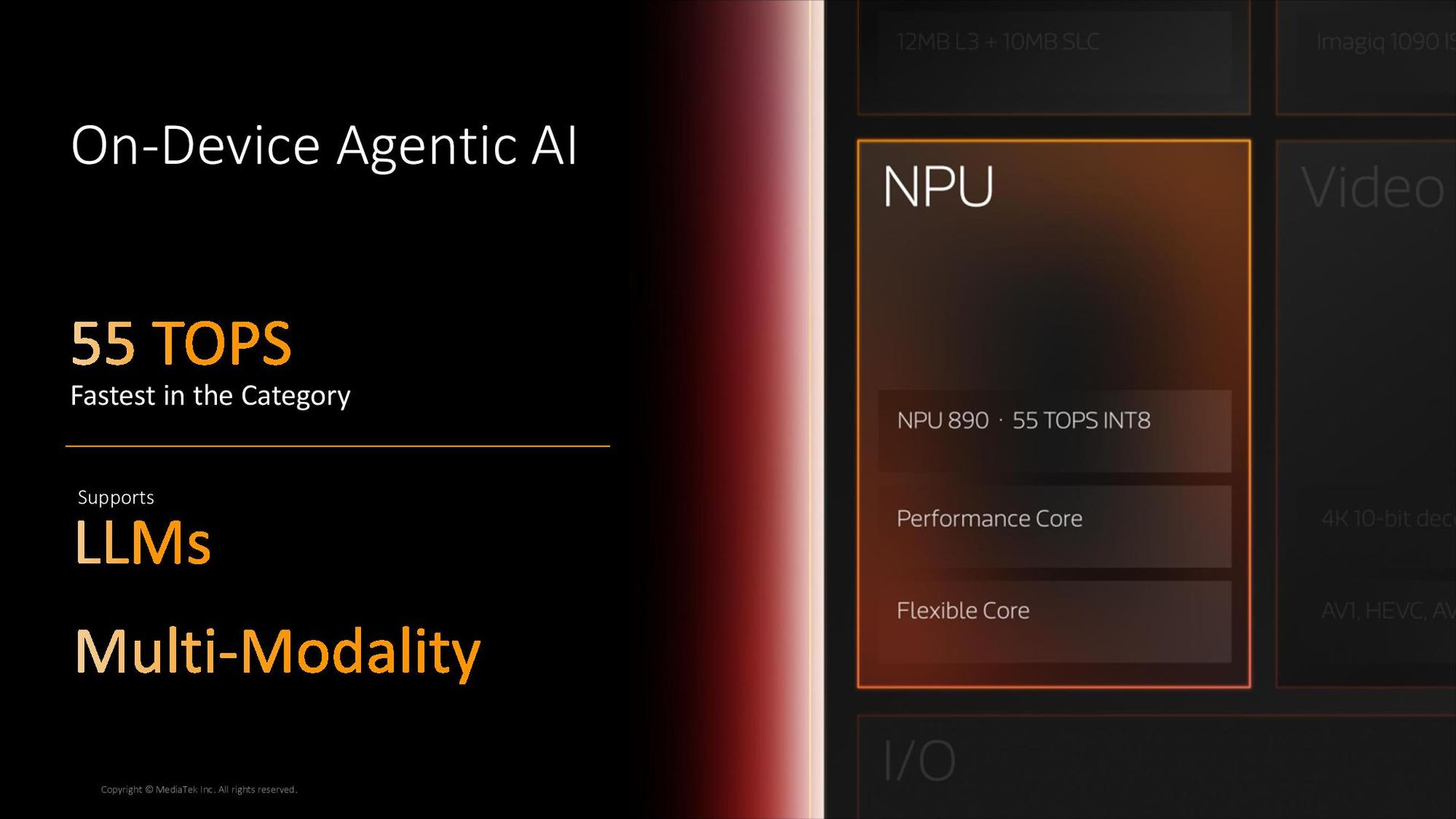
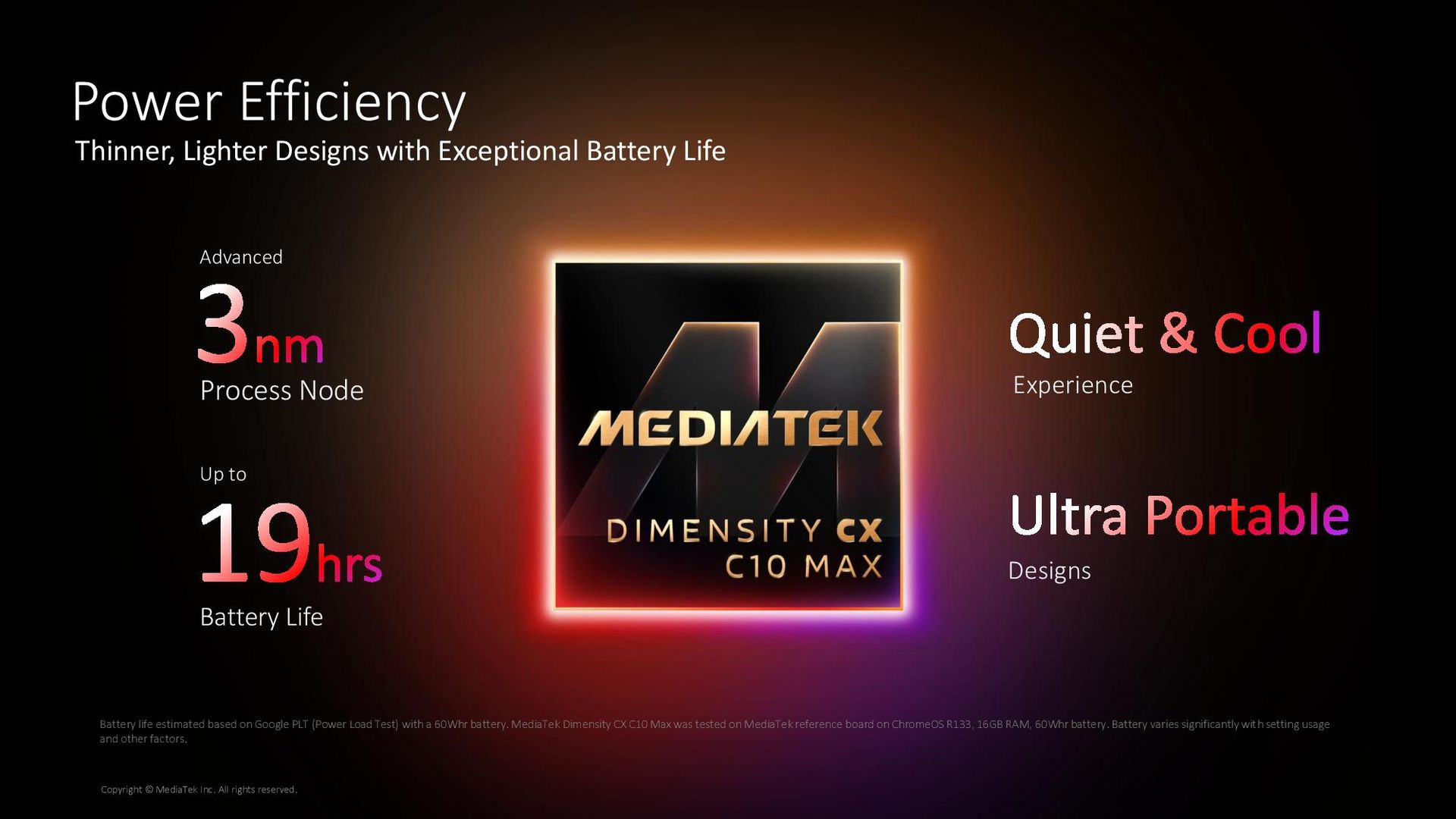
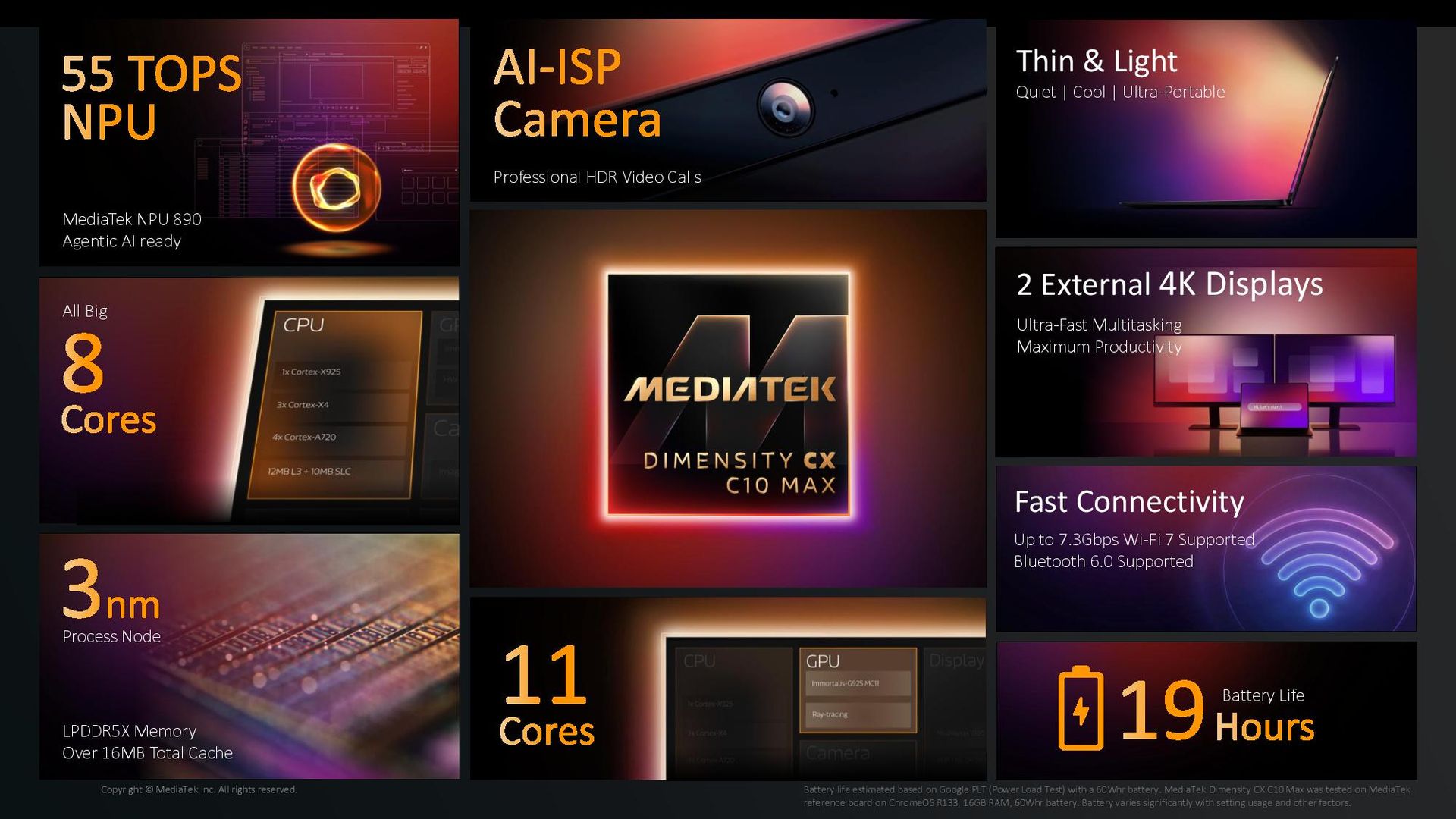
Google's brand-new category of flagship laptops," called Googlebooks, will contain MediaTek's next-gen Dimensity CX C10 Max processor, the first SoC to launch in the Dimensity CX lineup. It's built on a 3nm node (TSMC N3) and uses an all-performance-core design, packing eight cores on the CPU and 11 cores on the GPU, along with MediaTek's NPU 890, delivering up to 55 TOPS of AI performance, according to MediaTek. The new CX lineup will sit between MediaTek's other offerings, between the RTX Spark in higher-end laptops and Chromebook with Kompanio chips.
MediaTek calls the C10 Max the flagship of the lineup," though we don't have full specs on the chip, and not so much as a name for the other chips in the lineup. MediaTek is launching the CPU on the same day Googlebooks go on sale (September 21), and the company says it will power an upcoming Googlebook device. MediaTek hasn't explicitly said that the chip is exclusive to Googlebook devices, though that seems likely given the company's previous work with Google on Chromebooks.
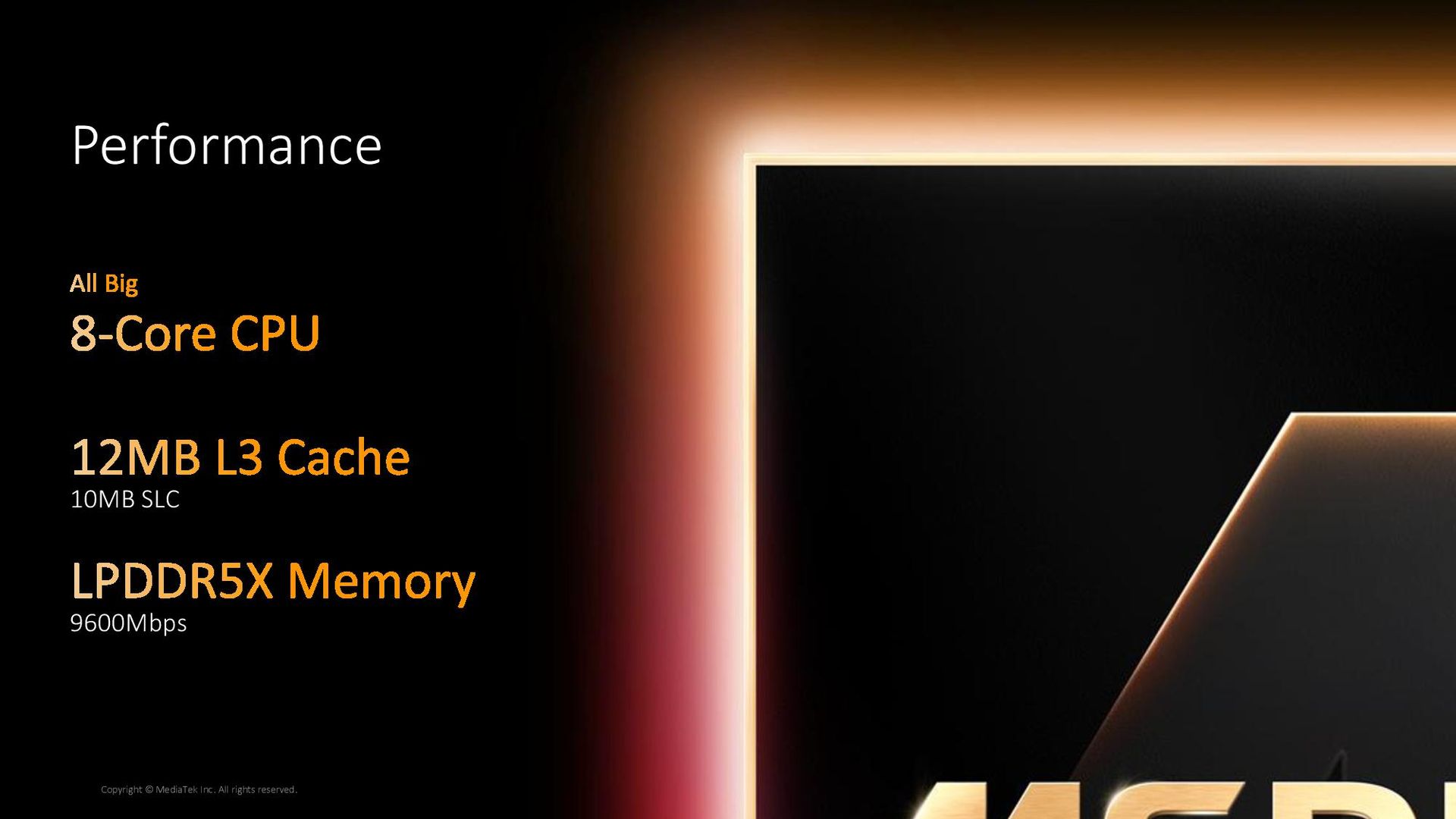
The C10 Max is an all big core" CPU, according to MediaTek, but not all eight cores are equal. MediaTek is using three different core types: one Cortex-X925 core, three Cortex-X4 cores, and four Cortex-A720 cores. The Cortex-X925 is the successor to the Cortex-X4, with higher clock speeds, a larger 10-wide decode, and larger L2 cache. The Cortex-A720 fits in a different range, though it was succeeded in 2024 by the Cortex-A725. This core split is identical to what MediaTek has used in its Dimensity 9400, 9400+, and 9500s mobile chips (though, presumably, the C10 Max will be afforded a larger power budget and higher boost clocks).
Perhaps more pressing, it's identical to the core split in the Kompanio Ultra 910, MediaTek's previous flagship in this category. The C10 Max features the same GPU and NPU, as well: the Arm Immortalis-G925 MC11 for the GPU and MediaTek NPU 890. The C10 Max also comes with the same 12MB of L3 and 10MB of system-level cache. The biggest difference, at least based on the specs MediaTek has shared, is memory speed. Both use LPDDR5X, but the C10 Max climbs up to 9,600MT/s from 8,533MT/s on the Kompanio Ultra 910.
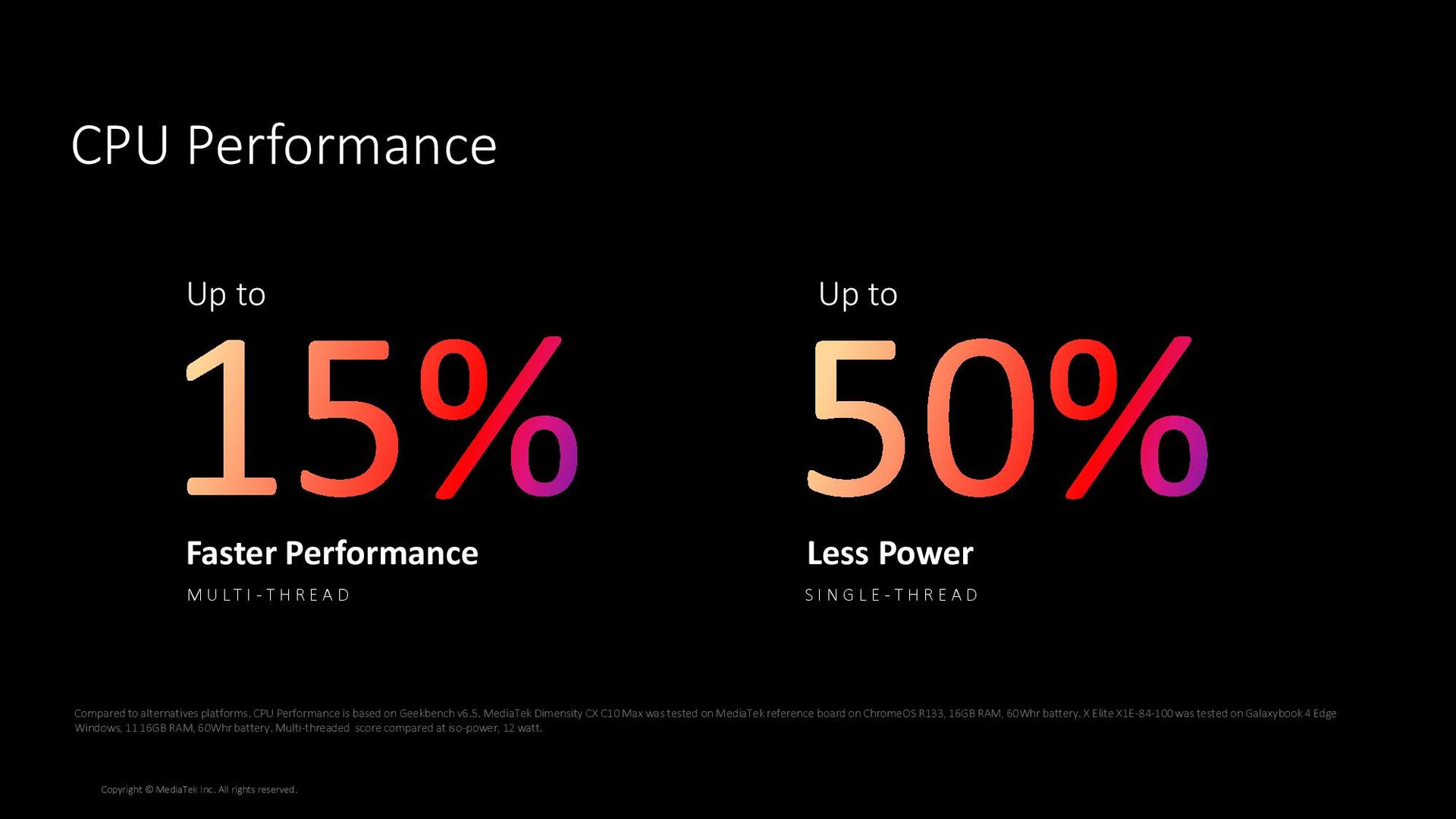
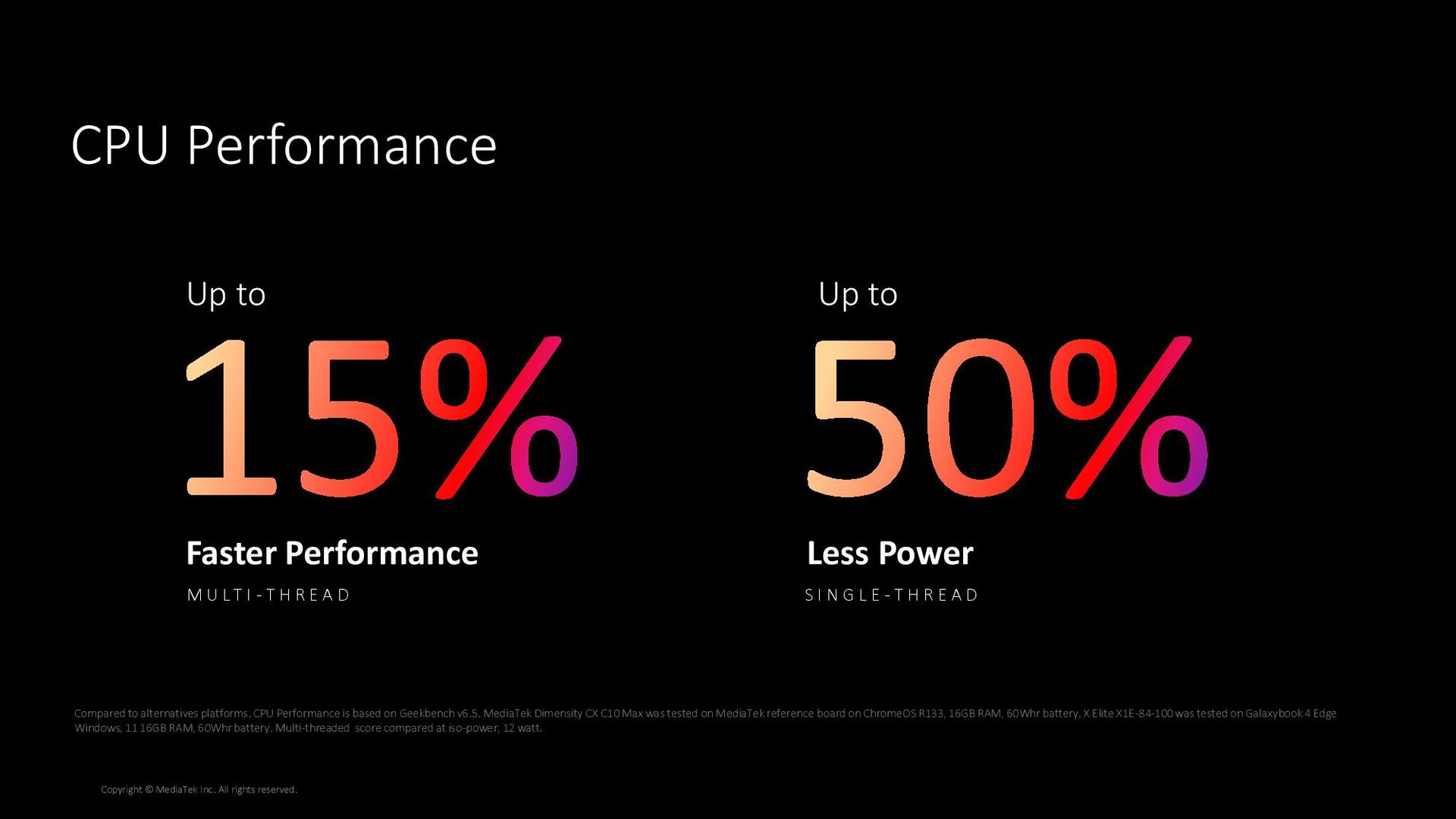
On performance, MediaTek has two rather vague claims, which you can see in the slide below. It claims the C10 Max has up to 15% faster multi-threaded performance and 50% lower power in single-threaded workloads, though without any mention of performance, compared to the Snapdragon X Elite X1E-84-100. That chip is the second from the top of Qualcomm's last-gen X Elite stack, sporting 12 cores (8+4) and a 4.2 GHz boost clock. MediaTek says it used Geekbench 6.5 and ran the multi-threaded tests at iso-power, that being 12W (the X1E has a base TDP of 35W, and MediaTek didn't clarify what power usage it was referencing).
Unfortunately, the performance numbers here aren't worth much, at least not how they're presented. Perhaps most notably, the test platforms were completely different, with MediaTek using a reference board running ChromeOS R133 for its chip and using a Galaxybook 4 Edge with Windows 11 from Samsung for Qualcomm's chip. They're only comparable on memory capacity (16GB) and battery (60Whr). MediaTek also didn't share any actual numbers, leaving the claim about 50% lower single-threaded power usage dead in the water.
During a press Q&A, MediaTek VP of computing platforms PD Rajput said the C10 Max is competing with the X1 Elite, not Qualcomm's newer X2 series. In the category of devices we're looking at, and the segment we're on, it's the X1E we're competing with." MediaTek didn't share any performance numbers comparing the C10 Max to x86 CPUs from AMD or Intel.
Rajput also said that the Dimensity CX C10 Max won't flow down to Chromebook or Chromebook Plus devices, saying MediaTek is elevating our compute portfolio" with the C10 Max. We asked if the chip will come to Windows laptops as well, and the company said it's only confirmed for Googlebooks at this time.
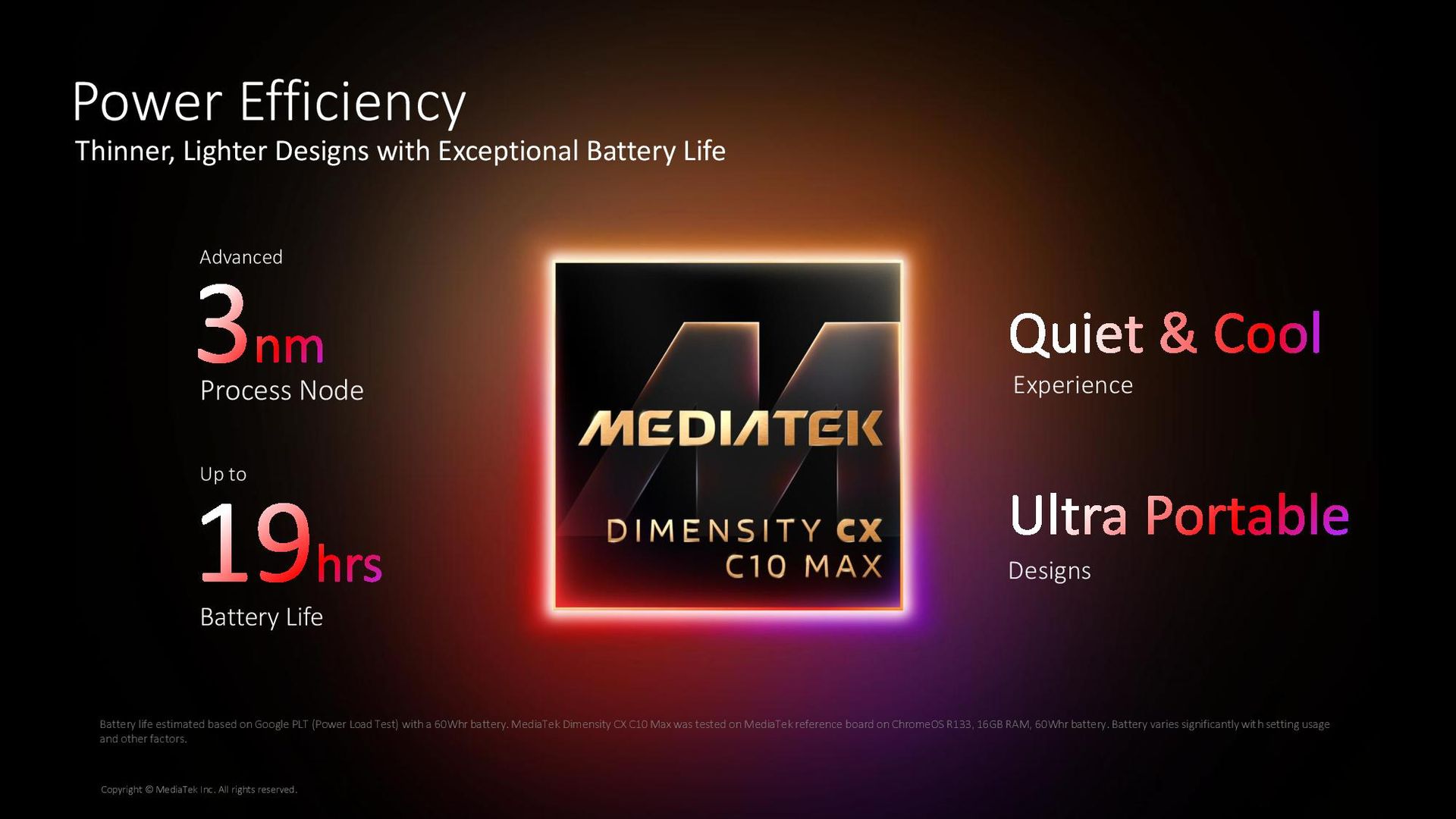
MediaTek says the C10 Max is capable of delivering up to 19 hours of battery life, which is certainly possible, though battery life is more of a system-level concern than a chip-level one. MediaTek arrived at that number testing a reference board with a 60Whr battery, so it's possibly the battery life could climb higher if the chip is paired with a larger battery.
Full MediaTek Dimensity CX C10 Max presentation MediaTek
 MediaTek
 MediaTek
 MediaTek
 MediaTek
 MediaTek
 MediaTek
 MediaTek
 MediaTek
 MediaTek
 MediaTek
 MediaTek
 MediaTek
 MediaTek
 MediaTek
 MediaTek