Early Nvidia advisor says he's owed $1 billion in stock due to a 1993 vesting error, but Nvidia rejected settlement
Former Nvidia advisor Eric Gullichsen says that he is owed a billion dollars in NVDA stock," according to his blog post titled the same. The post says that Gullichsen, an early Nvidia Technical Advisory Board member, was granted 25,000 options in September 1993.
Go deeper with TH Premium: GPUs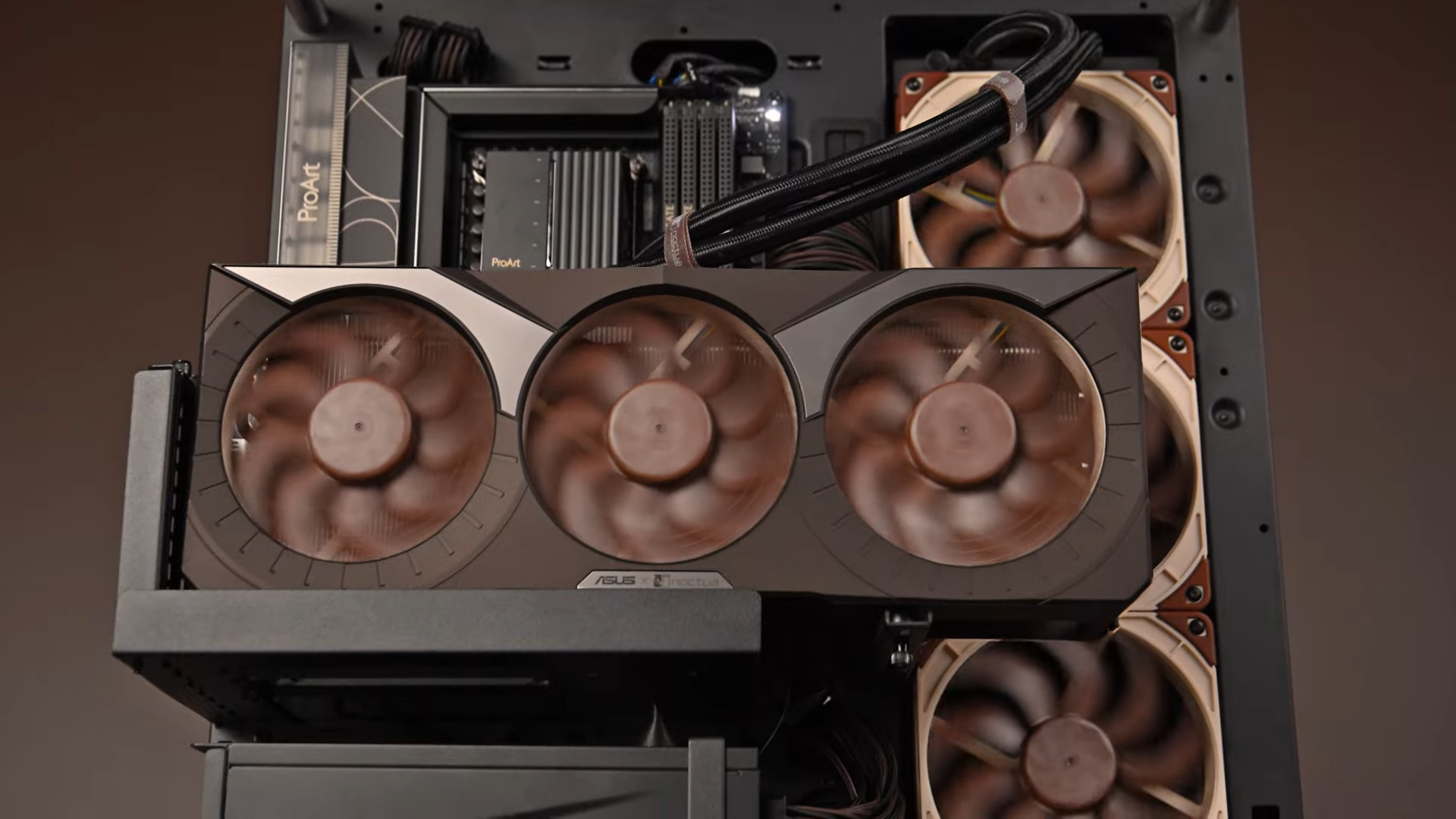
- Desktop GPU Roadmap
- Nvidia's Enterprise GPU Roadmap
- Testing DirectStorage with GPU decompression
- The GeForce RTX 30-series upgrade matrix - does your Ampere GPU need an upgrade in 2026?
- Rubin in-depth
- The Stout Owl: The ultimate Noctua G2 PC
Re-reading the grant in 2024, he says, showed that it was meant to vest in four quarters, or a year, instead of over four years. An April 1996 CFO letter counted 15,625 vested, so 9,375 more shares should have vested too, he added. After a combined 480x in splits, this would be 4.5 million shares, or about $1.01 billion at Nvidia's Sept. 25 close of $225.07, in line with his about a billion dollars." He says that he and his counsel agreed that the statute of limitations was against him, and it seemed unlikely we'd make it past a motion to dismiss."
The option grant document provided by Gullichsen on the blog post is dated Sept. 9, 1993, with a No. 7 grant of 25,000 shares, signed for Nvidia by Huang. All shares shall vest upon the expiration of one year from Grant Date," which means fully vested by Sept. 9, 1994. It states 25% at three months, then quarterly, which would be four times in the year.
Gullichsen also provided the exercise letter from CFO Marcel Gani dated April 16, 1996, which ends his contractual relationship with NVIDIA and Its Technical Board of Advisors" and states that he had 15,625 shares of NVIDIA stock options vested." This was at $0.05 a share with 90 days to exercise, or $781.25 for a full exercise.
Gullichsen also included an undated invitation letter signed by Huang asserting a stock option of 25,000 which vests over 4 years." Doing the math, 15,625 is 62.5% of 25,000 shares, or 10 of 16 quarters, which matches the Sept. 9, 1993 to April 16, 1996 timeline. The CFO's count fits the four-year quarterly schedule. So the CEO's letter says four years, while the signed cover sheet says one. The cover sheet also says any discrepancy with its attached legal provisions shall be governed by the attached legal provisions," and those attachments are not in Gullichsen's post. It also says it supersedes prior written agreements, which would override the invitation letter.
Upon discovery of the possible discrepancy, Gullichsen hired lawyers who worked on contingency," according to one of his replies on a related discussion thread. After about a year of letters between his team and Nvidia's in-house and outside counsel, the two sides met. We proposed to settle for a far smaller number," he wrote, but Nvidia still made the call to say nope." He and his lawyers concluded that after thirty-odd years" the case may be too far past its prime. The CFO letter's exercise window had closed around July 15, 1996. Nvidia has not publicly responded.
Gullichsen worked on multiple VR projects starting in the late 1980s with his own company, Sense8, which he co-founded around 1990. That VR rendering work led to a fast implementation of biquadratic texture mapping, which he says caught the attention of Nvidia co-founder Curtis Priem in 1993, the same year of the option grant. Priem then brought Jensen Huang and fellow co-founder Chris Malachowsky to Gullichsen's houseboat in Sausalito for a demo, he says.
He is a named inventor on a patent filed in 1994, Wide-angle image dewarping method and apparatus" or US5796426A, which names the NV-1 chip sold by N-Vidia Corporation" as a hardware example. The NV1 was not commercially successful but used quadratic surfaces as its basic primitive.
Some commenters inquired about what happened to his existing shares. Gullichsen had not answered as of Monday morning. His settlement reasoning, however, included the likelihood I would have sold." Our earlier reporting shows another investor, Stanley Druckenmiller, sold before the 10-to-1 split. Nvidia has since reached the position of the most valuable company in the world, at least temporarily. The stock's rapid rise in value has created many new millionaires among its employees.
As for Gullichsen's advice: Read the contracts. Carefully."