Madlad applies DLSS 5 to the original Duke Nukem and Pong
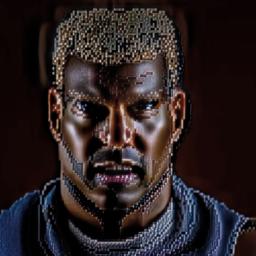
Nvidia's highly advanced DLSS 5 photographic realism injector has been discussed to death and back. The internet has largely made peace with what the technology is and what it isn't, but that's not stopping anyone from adding DLSS 5 in places where it definitely wasn't meant to go: old DOS games like the original 1991 Duke Nukem, and even the 1972 Pong.
Valery Kryzhanovsky is the man who embarked on a mission to use the tech with old games, and the results are visible on his YouTube channel. His testing comprises most every type of game ranging from 2D platformers and RPGs, up to contemporary titles like The Witcher 3 and Marvel's Spider-.Man. If you want to try your hand at the same activity, he provides a blog post with instructions and some downloadables.
As you can see in the video below, Duke Nukem's gameplay actually looks interesting in parts, despite the amusing intro sections with race-changed characters. In the actual platforming, rectangular visual elements get embossed, adding a sense of depth, and the filter does a decent job of detecting objects like the player, enemies, and bullets, and not messing too much with inner portions of said sprites. Predictably, if the filter is applied too strongly, the results quickly start looking like an acid trip.
To inject the filter into 2D titles, Kryzhanovsky ran them in DOSBox, then used the popular ReShade filter to add DLSS 5 on top. The UI for configuring the parameters comes by way of RenoDX.
In a second blog post detailing what's happening and how, Kryzhanovsky explains that since DLSS 5 was never meant to be used on 2D static images or dumped into unsuspecting 3D titles - thus without motion vectors, object selection, and associated sundries that would inform it - it's important to choose at which rendering level it's injected: the render stage, after upscaling, or final output.
The injection point is as important as choosing the strength of the filter, which of the three color presets to use, or the number of passes. The techie notes that, for example, injecting DLSS 5 at the render stage in a 3D game changes actual face geometry, as he came to find when trying out RBDOOM-3-BFG.
Kryzhanovsky concludes that force-injected DLSS 5 works best with still images, a fact illustrated by the surprisingly consistent results he got with Heroes of Might and Magic. He believes the technology is promising but quite undercooked, and the lack of a temporal element (it only analyzes the one current frame) is currently one of its key drawbacks.