AI sector wipeout risks global financial contagion, IMF report warns
Watchers and reporters in the AI space have long pointed out how its circular economy could implode, potentially taking associated investments with it. The IMF has examined those fears in its latest Global Financial Stability Report, and its conclusions are stark. In the IMF's view, the global economy is becoming increasingly dependent on capital flows to the AI world, and a crash could result in harm to global GDP, investment, and consumption by 2028.
The report makes a distinction between "core" AI firms and others in the space. Presumably, core firms include companies like TSMC, Nvidia, and AMD, memory makers like SK hynix and Micron, and storage vendors like Western Digital. Those firms are seeing historical windfalls, and most of their production is currently spoken for years in advance. In other words, in this gold rush, these are the companies making bank selling the shovels.
In theory, if non-core players fail, only their investors would suffer harm, but according to the report, there's still risk to worry about. Hedge funds have increased leveraged positions and margin borrowing, further exposing themselves to the blast radius of a potential bubble pop. Adding to that, the IMF states that the share of single stocks in leveraged ETFs increased to 28%, likely fueled by demand for AI and tech stocks. By our reckoning, a sharp drop in those equities could trigger a massive sell-off by the ETF issuers and lenders, triggering a feedback loop.
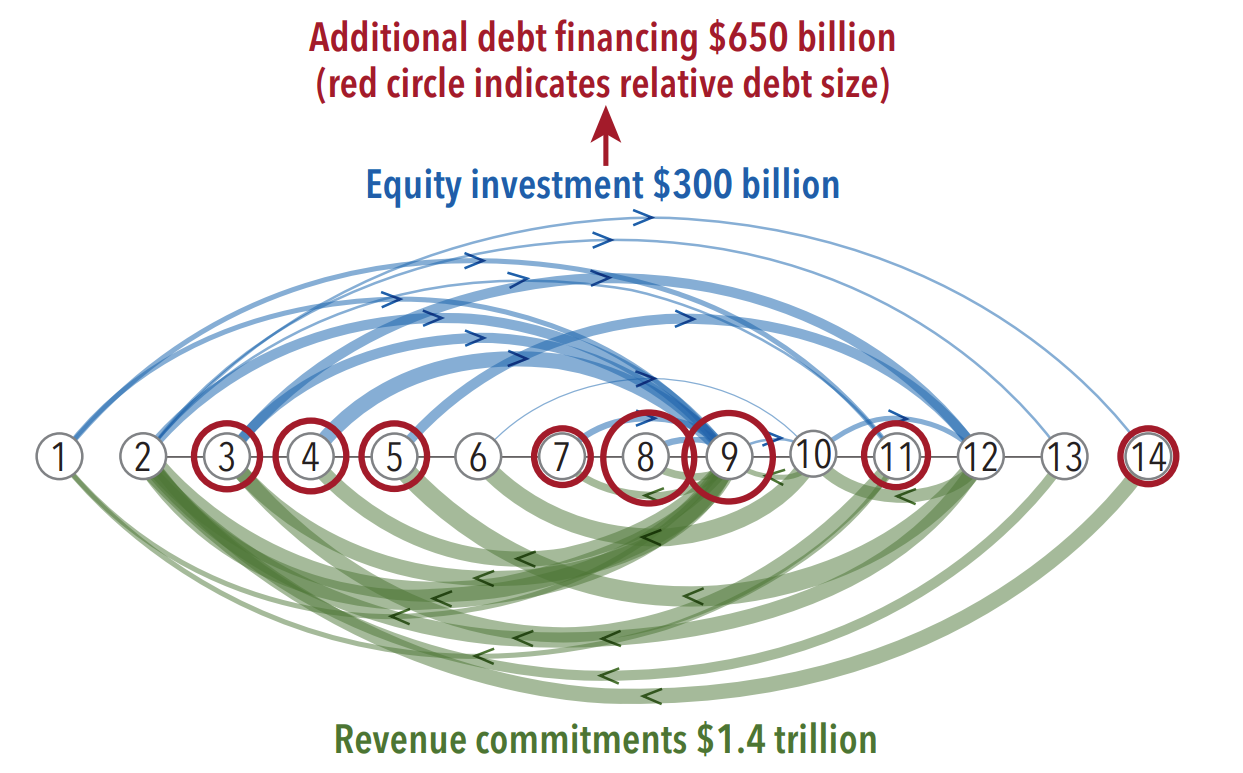
The section of the report that focuses on circular investments within the industry further emphasizes the problem. The IMF tracked fourteen public transactions since 2023 and found that $300 billion invested in "financially weaker" AI companies (mostly by hyperscalers), along with $650 billion in debt, accounted for $1.4 trillion in revenue from services and chip orders. Most of those virtual dollars are concentrated in only a handful of companies, too, increasing the risks that if one catches a cold, the herd might get the flu.
The IMF points out that "AI has become an important source of support for the global economy and financial markets." The silver lining is that according to the Fund, this investment has helped prop up global economies at a time when the current war in Iran is affecting energy prices and creating policy uncertainty. Furthermore, a recent global stress test on banks indicated that they'd "remain broadly resilient" even with a combination of an energy pricing shock, higher inflation, and an AI-driven market correction.
As for said correction, the IMF believes it may happen thanks to "weaker or less durable AI investments and profitability," stating that the necessary AI computing may not need such a high investment level, and likewise may be less profitable than expected or hoped. Under that hypothetical scenario, the IMF predicted that global GDP could drop 0.4%, investment by 1.3%, and consumption by 0.6% by 2028. However, the Fund notes that the excessive debt and leveraging flowing through the industry might make for a harsher shock to the system.
Hyperscalers now represent 10% of investment-grade bond issuance, up from under 1% in 2024. Since demand for AI compute remains intense, these companies are also making a mint. Yet they're increasingly strapped for cash due to their outsized investments in AI gear, necessitating substantial loans to keep the business rolling. Only time will tell whether investors will continue to have an appetite for the debt these companies are issuing in order to continue the gold rush.