ASML reports record $13 billion quarter, vows to expand capacity as demand for lithography equipment soars
ASML this week reported record quarterly revenue of $13.06 billion (11.66 billion) and profitability of nearly $5.79 billion (5 billion) as demand for advanced semiconductor manufacturing equipment continues to accelerate and investments in AI infrastructure continue to increase. The company now expects demand for its lithography systems to exceed its production capacity in 2027 and 2028, despite plans to increase output substantially. Some clients are already interested in placing orders for equipment as far ahead as 2030, which makes ASML consider further capacity expansions beyond its previously announced intentions.
Record financial resultsASML reported third-quarter 2026 revenue of $13.06 billion USD (11.66 billion), up 55% year-over-year and 25% sequentially. The company's gross margin reached a record 57.5%, up from 51.6% a year earlier, while operating income rose to $5.79 billion (5.17 billion). Net income reached $5.56 billion USD (4.96 billion) , although this figure includes approximately $570 million (510 million) from the re-evaluation of the company's investment in Mistral AI.
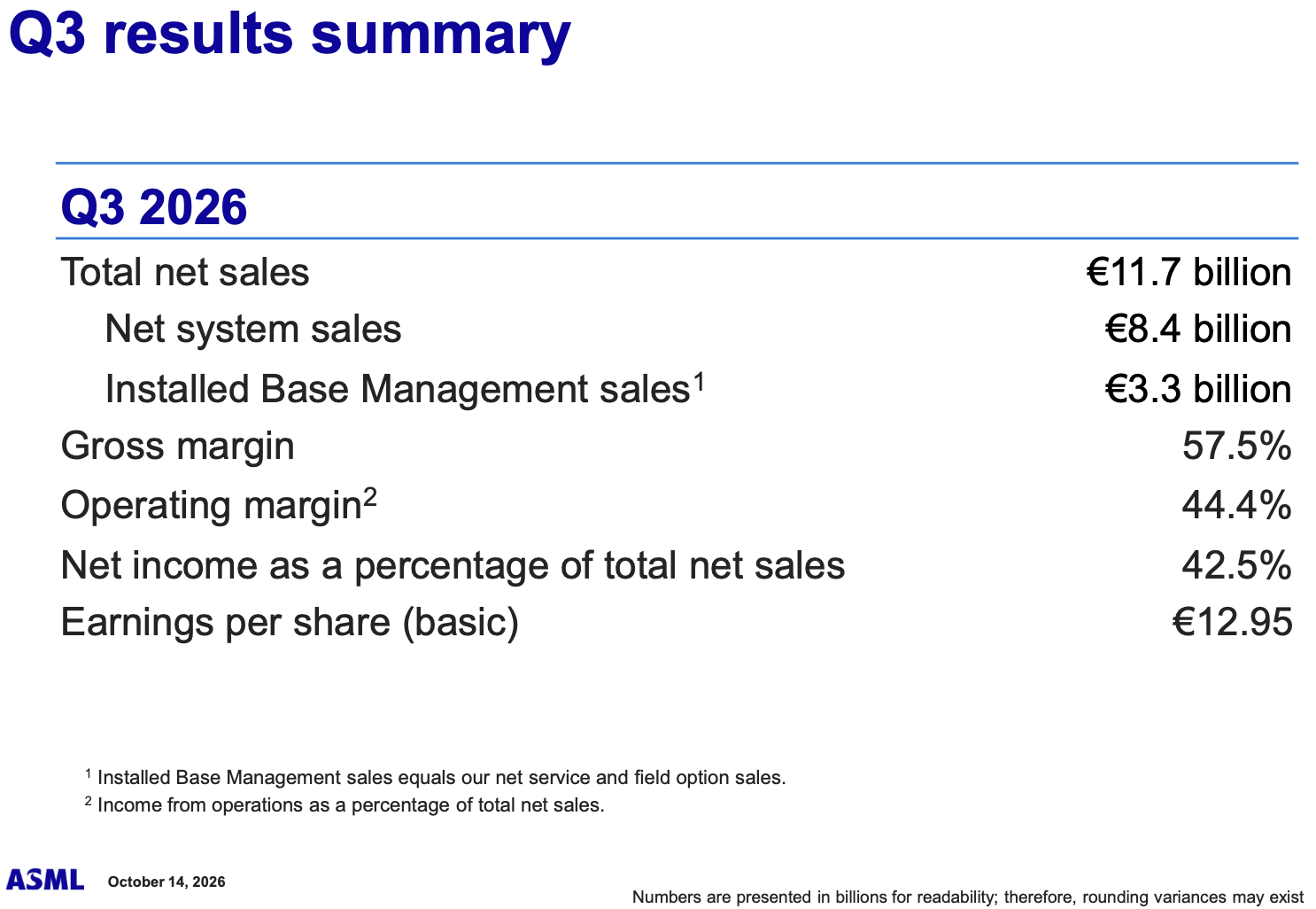
During the quarter, ASML sold 121 lithography systems, including 113 new and eight refurbished machines, up from 91 systems in Q2 2026. The company generated $4.59 billion USD (4.1 billion) from 17 EUV lithography systems and $4.82 billion USD (4.3 billion) from 85 DUV (including 45 ArFi scanners) and 19 i-line litho tools. In addition, ASML recognized revenue from one High-NA EUV system in Q2. Of total equipment revenue, 54% came from logic chipmakers and 46% from memory manufacturers.
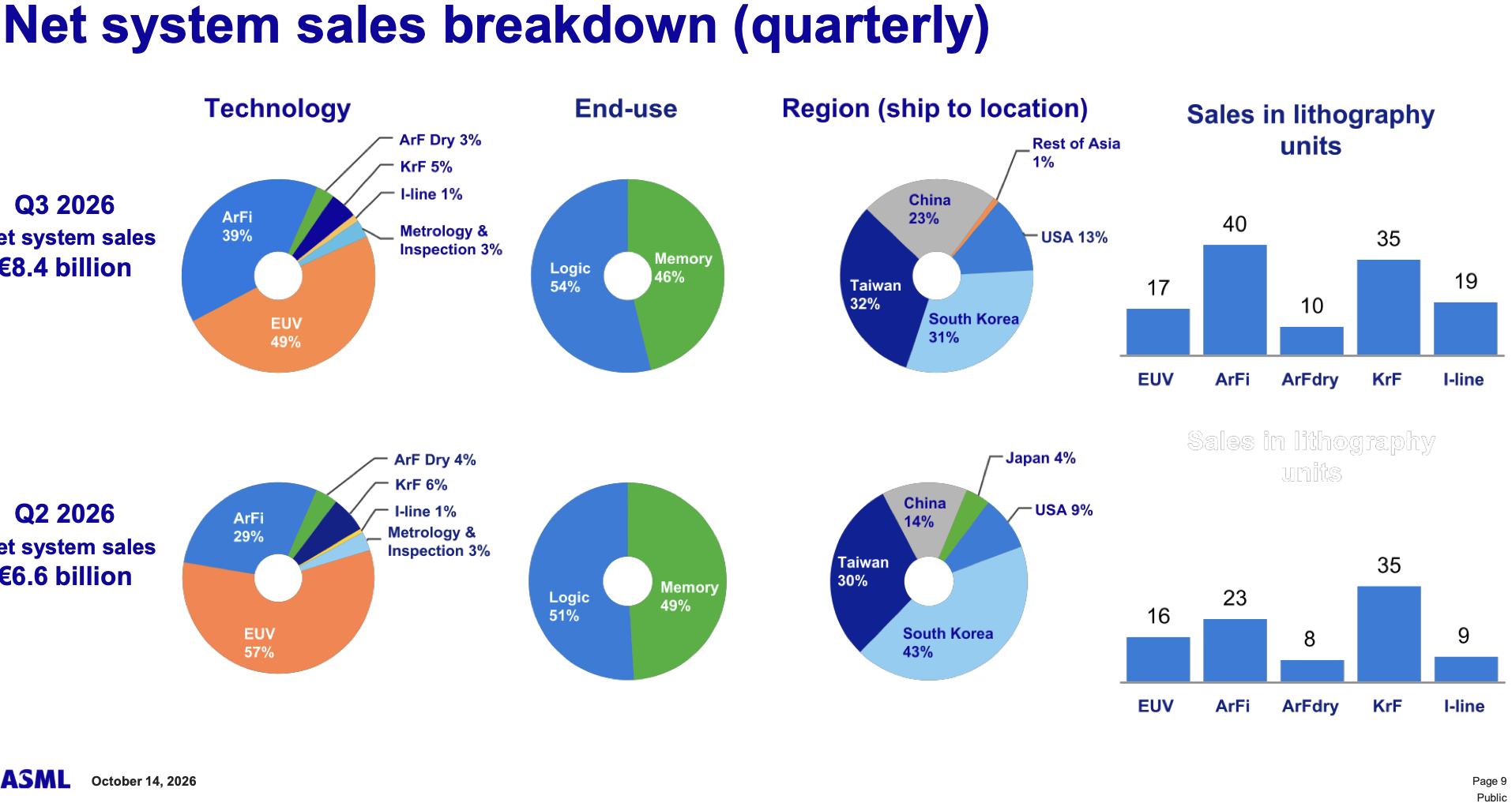
Taiwan accounted for 32% of ASML's equipment sales in Q3 2026, followed closely by South Korea at 31%. China represented another 23%, while the United States accounted for 13% and the rest of Asia contributed just 1%. Combined, Taiwan and South Korea generated 63% of ASML's equipment revenue, which reflects substantial investments in advanced logic and memory manufacturing capacity that by far exceed those in the U.S. and Japan.
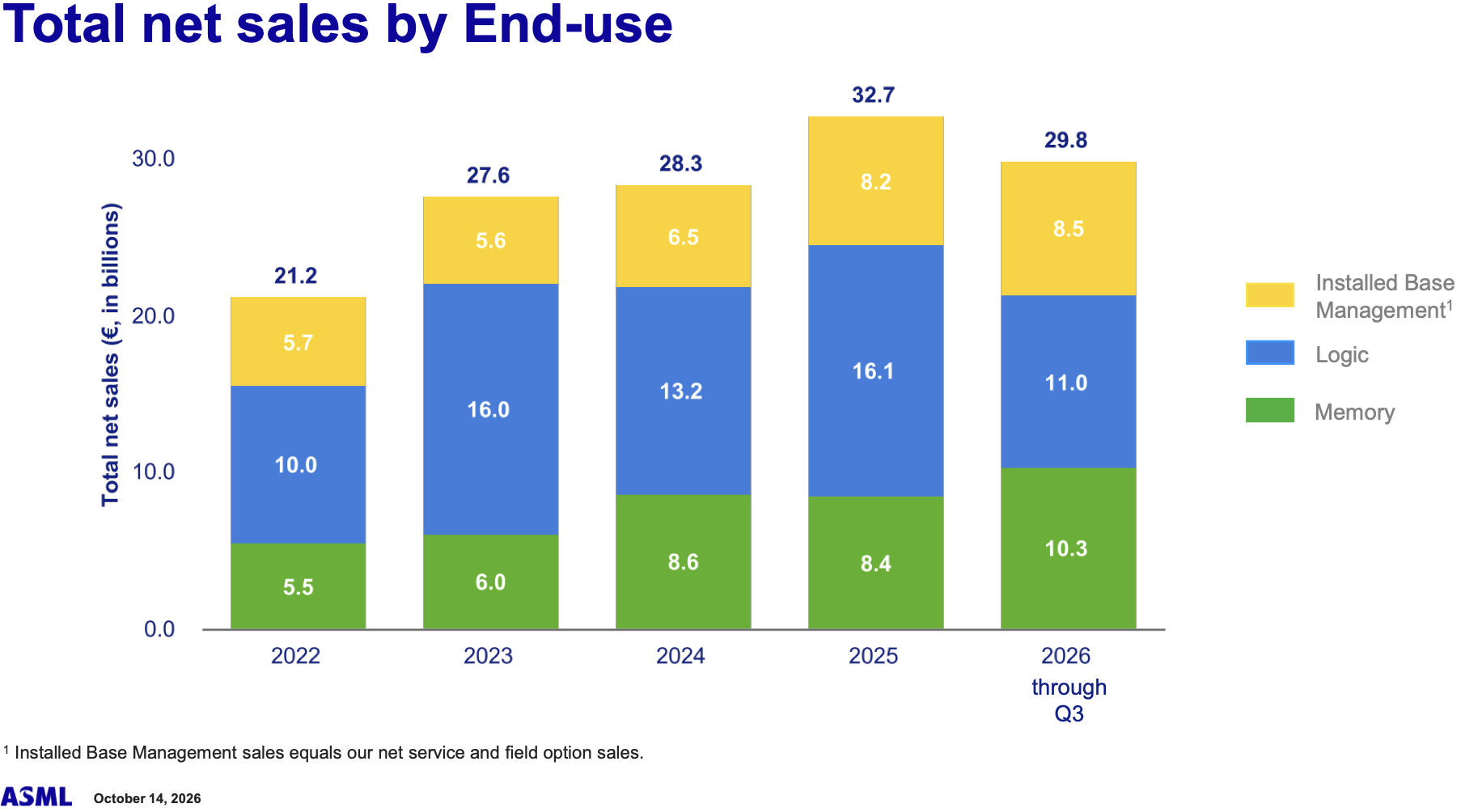
ASML's Installed Base Management business generated $3.68 billion (3.29 billion), approximately $450 million (400 million) above guidance, largely due to strong demand for productivity upgrades (more on this later), which contributed to the company's record profitability.
For the fourth quarter, ASML expects revenue of $15.9 billion to $17.0 billion (14.2 billion to 15.2 billion) and gross margin of approximately 57%. Full-year revenue should reach $49.3 billion to $50.4 billion (44 billion to 45 billion), up approximately 36% YoY. The company projects EUV revenue should increase by more than 45% year-over-year, while memory-related equipment sales are expected to rise by approximately 75%, which indicates growing demand from DRAM producers.
Demand for litho tools spans to 2030One of the biggest learnings from these results and accompanying statements is that semiconductor manufacturers are increasingly interested in securing lithography equipment years before they actually need it. According to ASML CEO Christophe Fouquet, customers expect demand for its products to exceed available supply through at least 2028, which encourages them to accelerate construction of new fabs as well as expand their existing capacity.
"Our leading-edge high-volume customers are sharing very good visibility as a result of the increasing number of long-term commitments they are securing with their customers," Fouquet said during the company's conference call with analysts and investors. "This extended visibility has led them to conclude that demand for their products will outpace supply through at least 2028. As a result, customers are accelerating capacity build-out plans and preparing for further expansion beyond 2028 in order to better meet the anticipated level of demand."
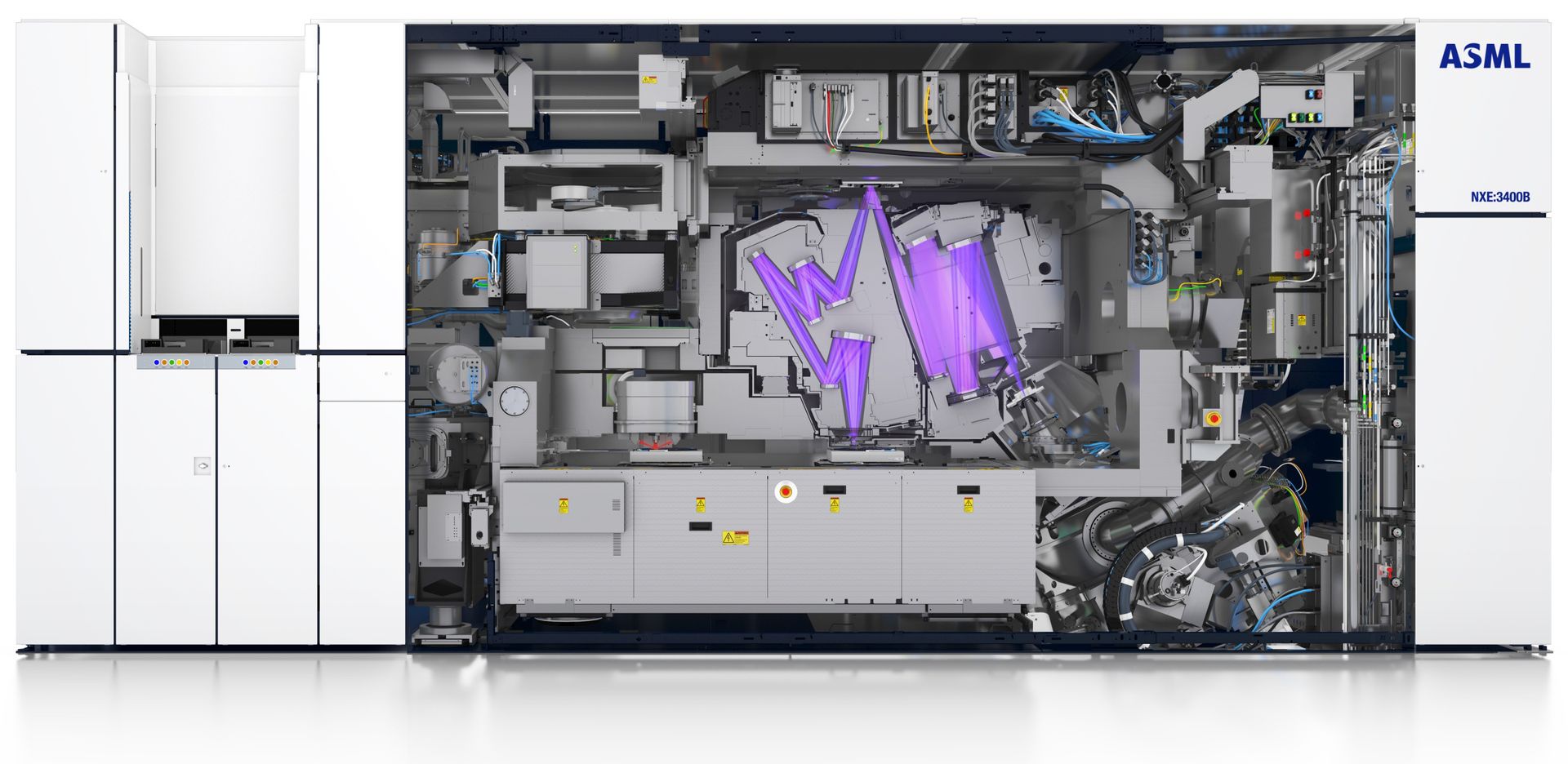
ASML is already receiving orders that are to be delivered in 2028, while some customers have expressed interest in equipment for 2029 and even 2030.
"As customers shift focus to their needs beyond 2027, our order momentum continues to build," Fouquet added. "We are increasingly receiving orders for 2028, and customers are also expressing interest in placing orders for 2029 and even 2030."
To address this demand, ASML plans to manufacture approximately 65 Low-NA EUV systems in 2026, up from 44 scanners shipped in 2025. Production of immersion DUV systems should remain approximately at last year's level, even though proveiously the company expected shipments of DUV tools to decline.
The company previously announced plans to increase production capacity for both Low-NA EUV and immersion DUV systems by 30% in 2027, followed by another potential 30% increase in 2028. Based on its 2026 EUV production target, this implies capacity for approximately 85 Low-NA EUV systems in 2027 and roughly 110 in 2028, assuming both increases materialize.
However, ASML now believes even this level of output will be insufficient and is investigating ways to expand its 2028 capacity beyond the previously planned 30% increase. However, the company has not disclosed revised production targets.
"Looking further ahead, we shared our intent last quarter to increase our capacity in 2027 by 30% for both Low NA EUV and DUV immersion systems, as well as to investigate adding a further 30% in 2028," explained Roger Dassen, Chief Financial Officer at ASML. "However, given the dynamics of this quarter, we now anticipate that our current planned levels of output in 2027 and 2028 will not fully meet the demand of our customers."
High-NA EUV adoptionMeanwhile, High-NA EUV adoption is progressing. Intel has already exposed more than one million wafers using High-NA systems and plans to start using High-NA EUV with its 14A process technology in 2028. Samsung plans to introduce High-NA EUV into high-volume manufacturing (HVM) in 2028 for DRAM and for logic later, while TSMC plans to use High-NA EUV scanners by 2030 - 2031. ASML says availability across its installed High-NA fleet is approaching 90%, which suggests that the tools are becoming mature enough for HVM deployment.
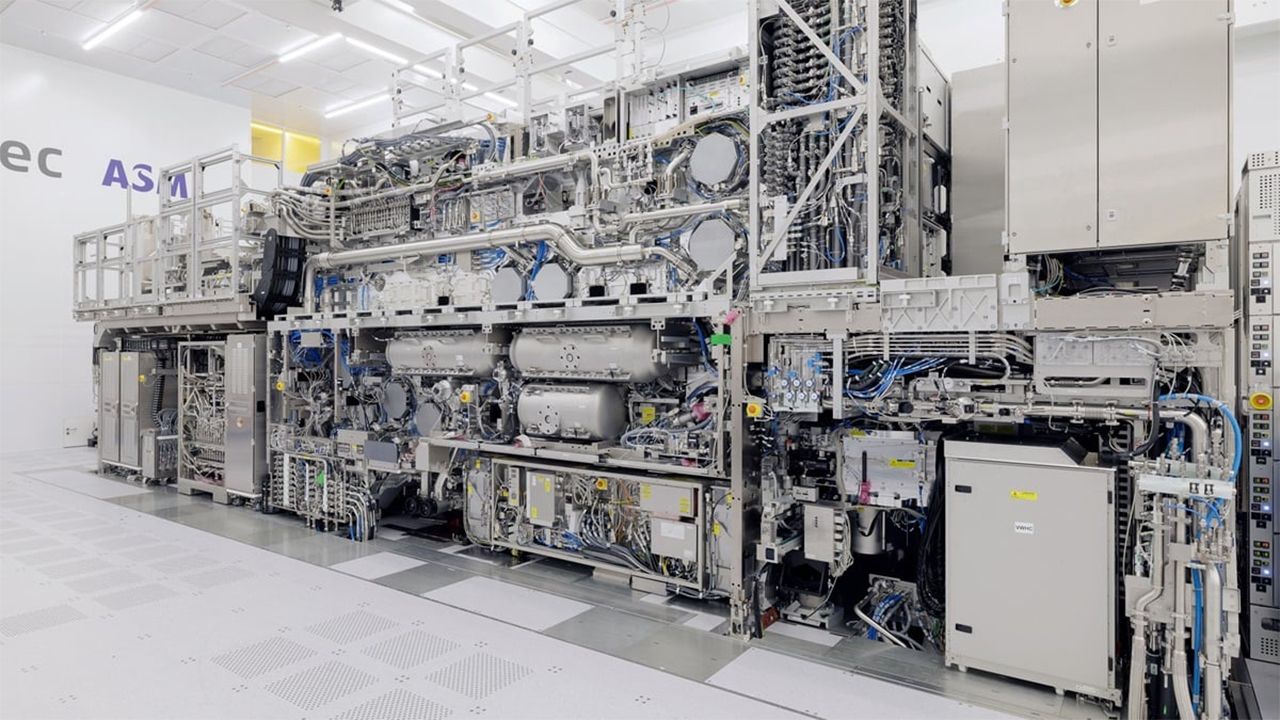
Interestingly, Samsung's planned 2028 introduction may create additional demand for High-NA equipment from memory manufacturers, as they will need to compete against their larger rival. However, ASML has not disclosed specific shipment targets for these tools.
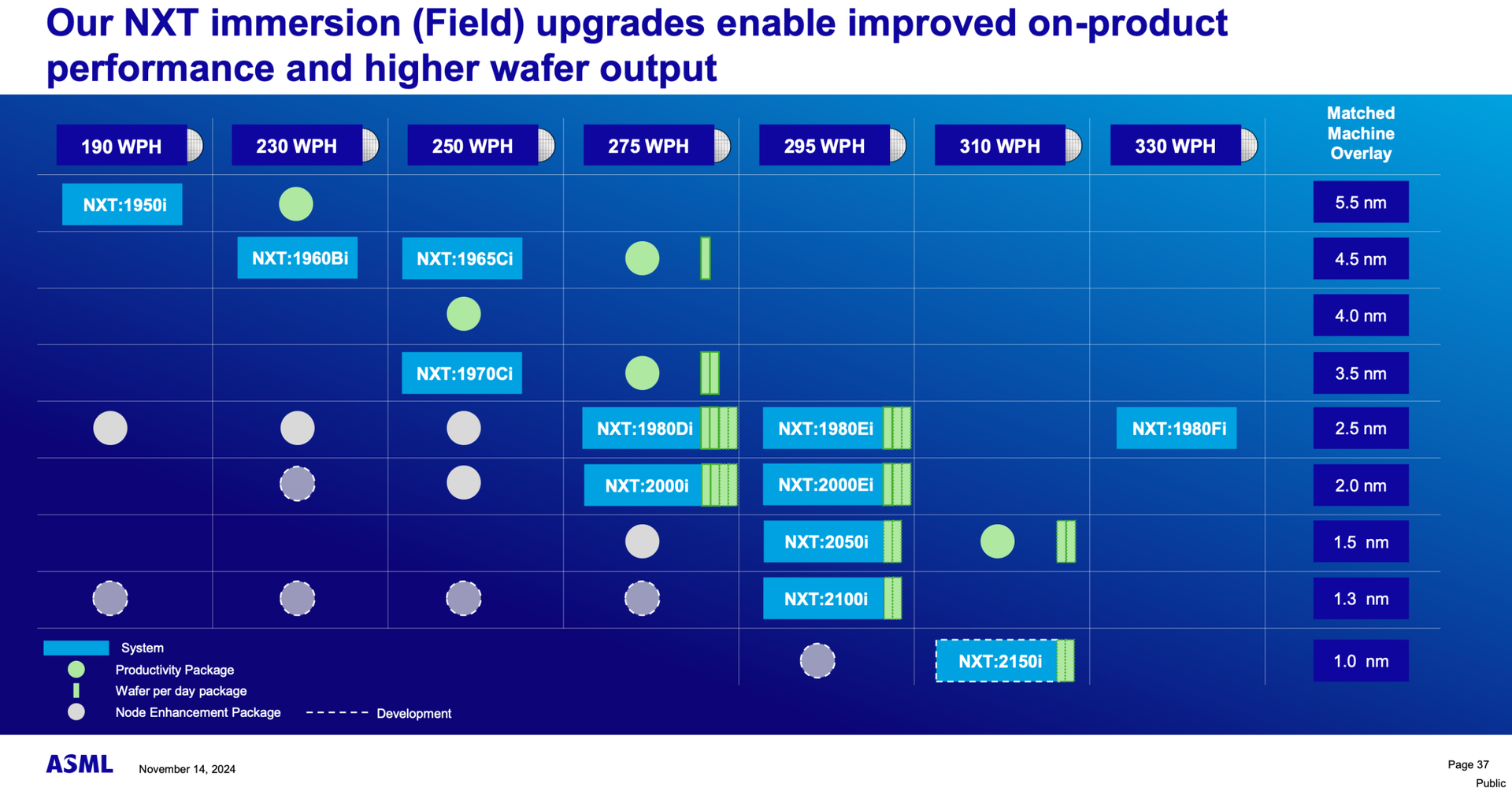
New tools, more capacityASML also intends to increase semiconductor production capacity by introducing more productive lithography systems. Its upcoming Twinscan NXE:3800F, scheduled for introduction in early 2027, will process up to 260 wafers per hour, compared with 230 wafers per hour for the existing NXE:3800E. While this represents 'only' approximately 13% higher throughput, this translates to 21,600 extra EUV exposures per month without corresponding increases in cleanroom space. Three such tools per fab enable 90 additional EUV exposures per hour, 2,160 per day, or 64,800 per month. The company also plans to introduce a new critical-layer immersion DUV system capable of processing 330 wafers per hour.
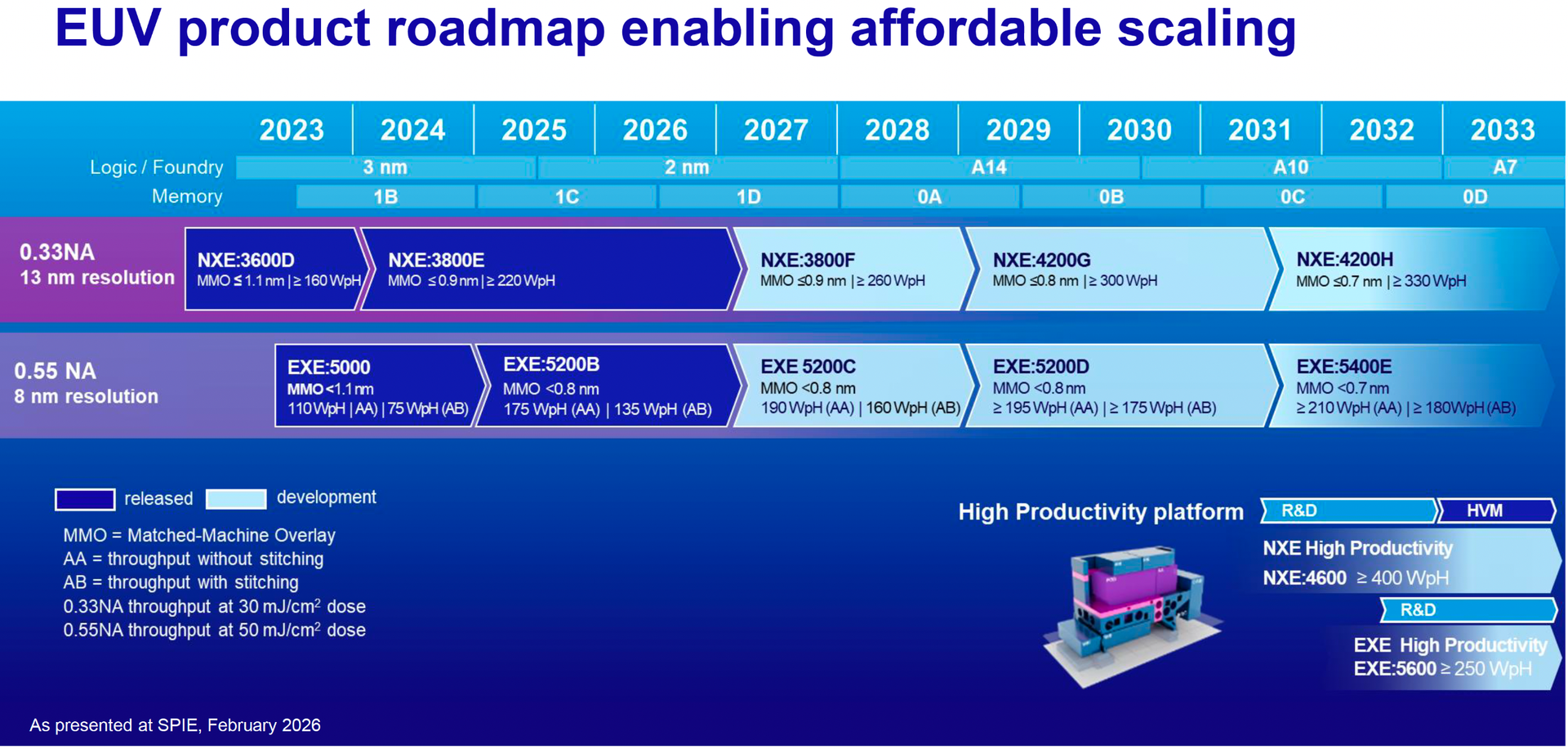
Keep in mind that the actual fab capacity improvements depend on the number of lithography exposures required per wafer on a particular node, as well as the capabilities of other manufacturing equipment.
 ASML
ASML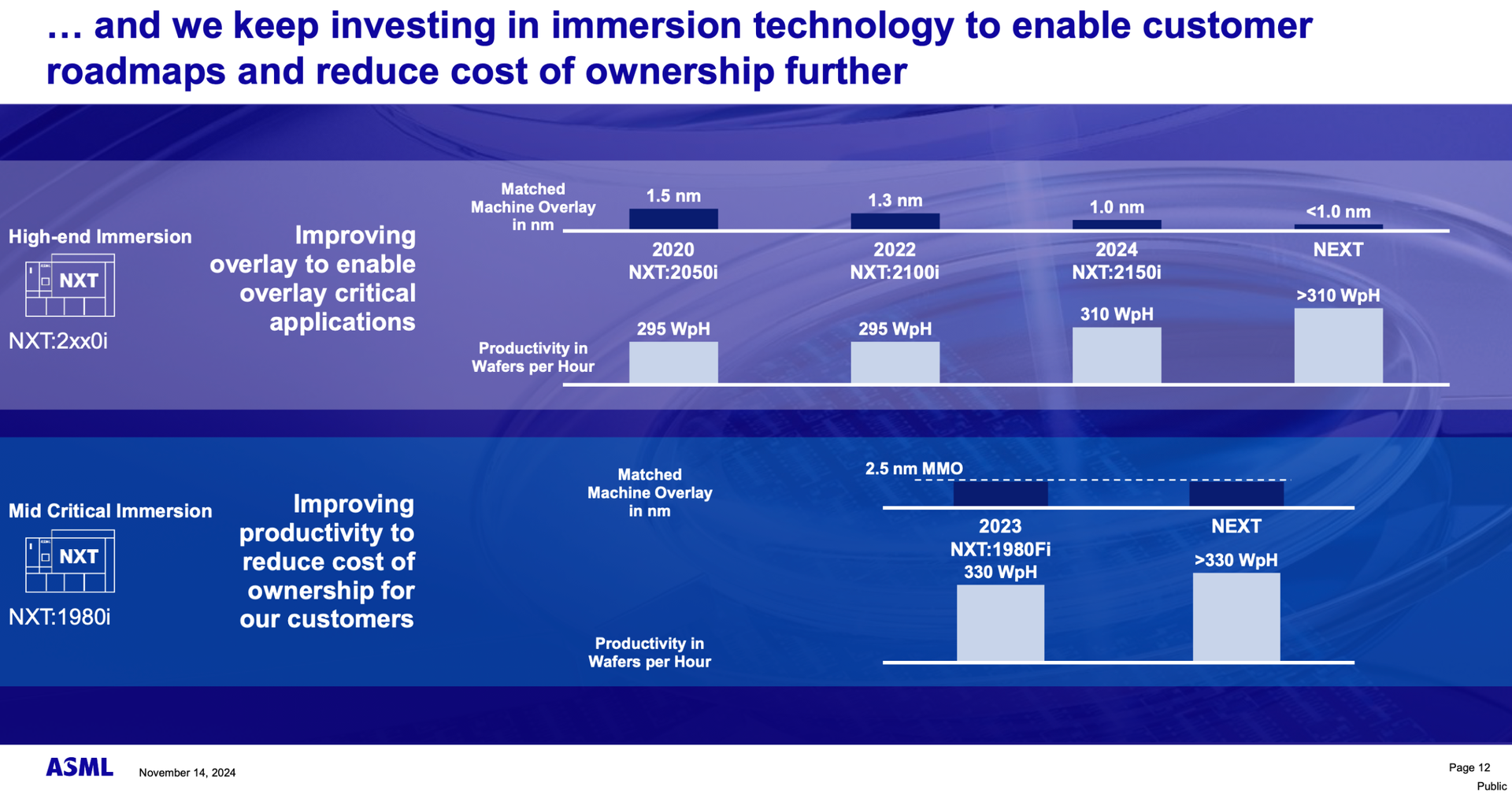 ASML
ASMLAnother important element of ASML's strategy is its growing portfolio of productivity upgrade packages for existing EUV and DUV systems. Such upgrades enable chipmakers to increase wafer throughput without purchasing additional scanners, which can provide additional capacity considerably faster than procuring new tools or constructing new fabs.
Value-based pricing is a goOne of the controversial things that ASML discussed back in early Q2 was its value-based pricing, which many thought was a blanket price hike. This is not and CFO Roger Dassen this week confirmed that negotiations with major customers have been completed, although the financial benefits for ASML will not become visible immediately.
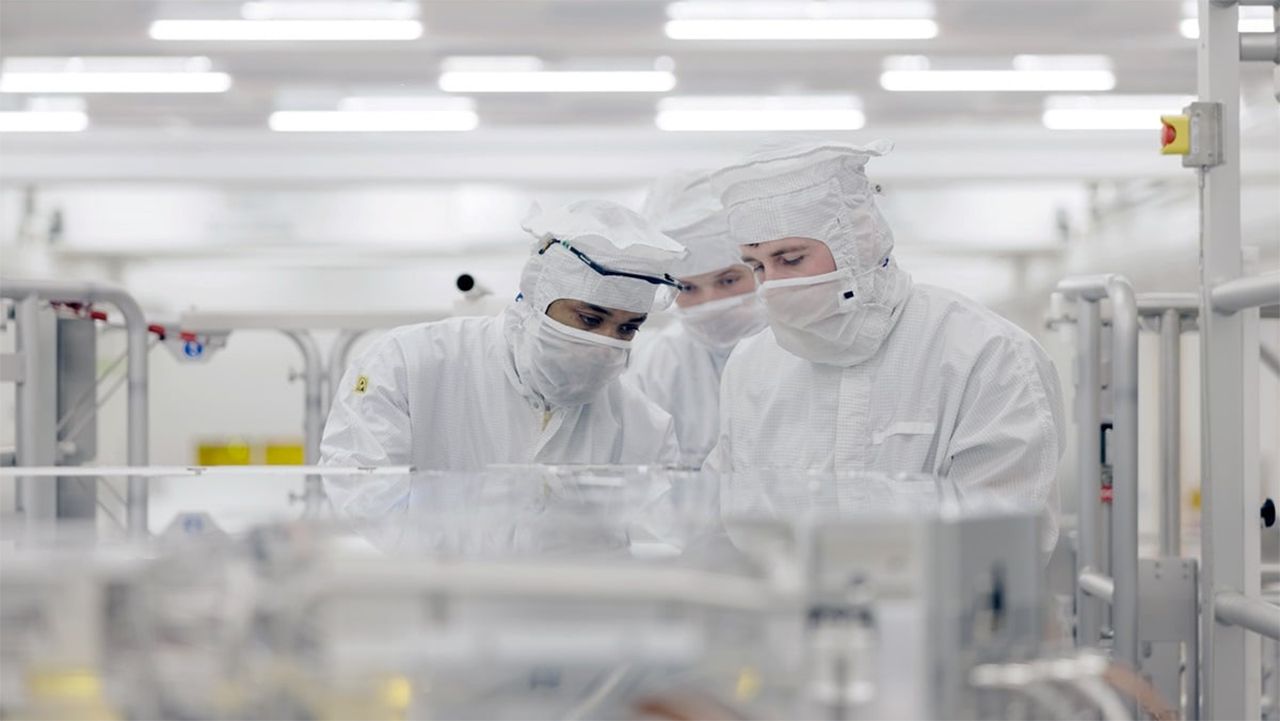
The company expects the first effects of higher pricing to appear during 2027, with the full impact becoming apparent in 2028 and beyond, which essentially means that the company is not setting new prices on its backlog, but generally setting new prices on new tools.
"We completed those conversations," said Dassen. "So that has been done with the key customers. The effect of that is not really visible in 2026. It will start to become visible partly in the course of 2027. The full impact of that you will start to see in 2028 and beyond."
This strategy could further improve ASML's already substantial gross margins, particularly as customers have no alternatives for advanced lithography equipment.
China remains importantDespite export restrictions that prevent Chinese chipmakers from acquiring EUV scanners and advanced DUV systems, China remains a substantial market for ASML. The company expects China to account for approximately 20% of its total revenue in 2026, which implies annual sales of roughly 8.8 billion to 9 billion based on current guidance.
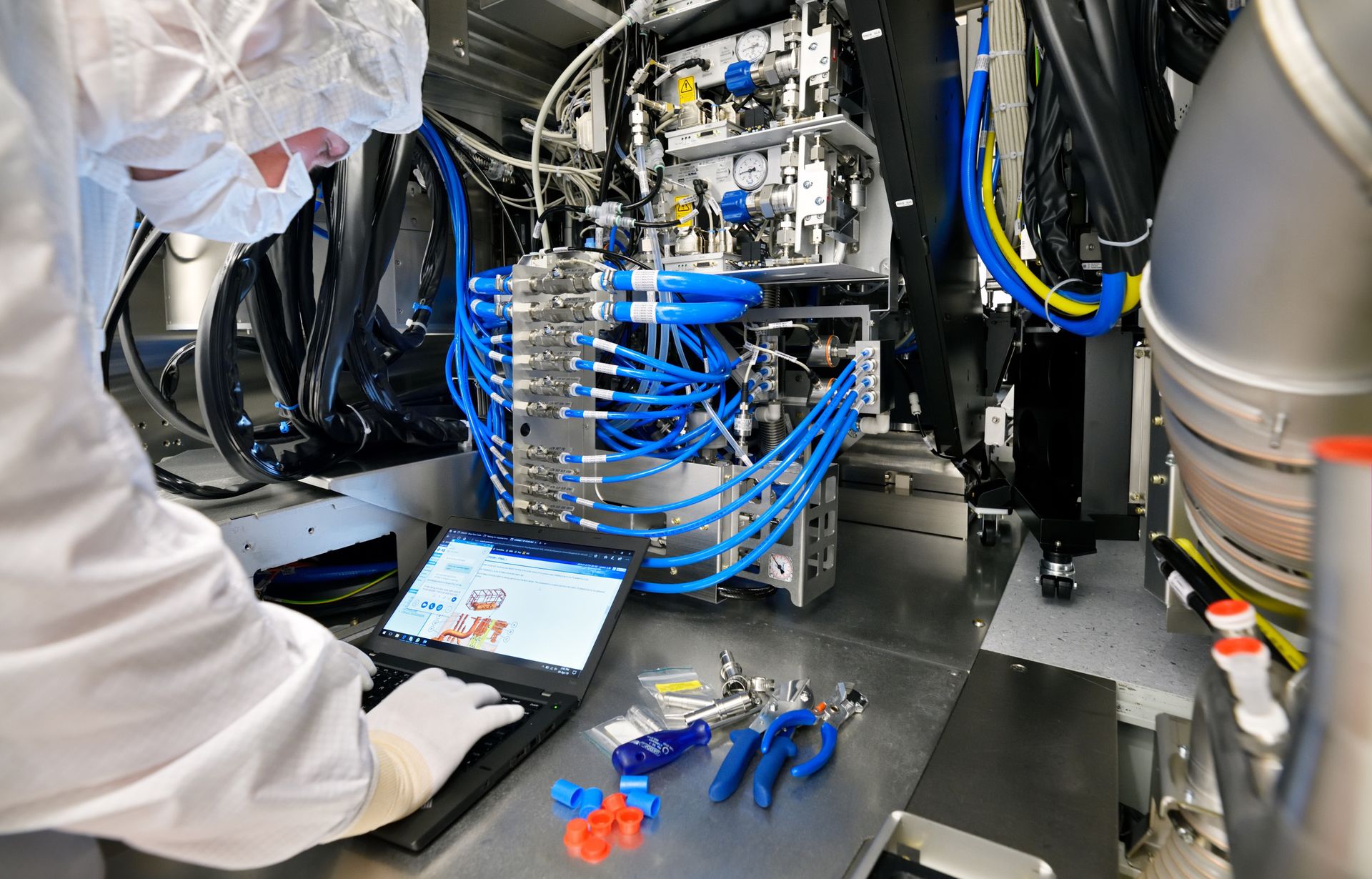
Although China's share of ASML's business has declined from its levels in 2023 - 2025, the country's semiconductor manufacturers continue to invest in mature node capacity and equipment that remains available under existing export regulations. Meanwhile, it is impossible to predict what is going to happen if the U.S. lawmakers approve the MATCH Act.
Yet, ASML management emphasizes that its key growth opportunities lie with advanced logic and memory manufacturers, which are accelerating their investment in advanced lithography tools, including sophisticated DUV systems, Low-NA EUV machines, and High-NA EUV scanners.
The future of ASMLThanks to gaining momentum in AI infrastructure investments, ASML reported record quarterly revenue of $13.06 billion (11.7 billion) as demand for advanced lithography equipment continued to accelerate. The company expects demand to persist for years as its customers are interested in placing orders for tools to be delivered as far ahead as 2030. To meet growing demand, the company plans to expand production capacity beyond its previous targets for 2028. ASML also intends to introduce new EUV and DUV systems with higher productivity, offer productivity upgrades, and raise equipment prices to capitalize on unprecedented demand.