Elegoo M1 Ultra review: A good first entry into the scanner market
The M1 Ultra is Elegoo's first entry into the 3D scanner market. It is a feature-rich scanner with five scanning modes, four blue light laser modes, and a NIR binocular structured light mode. Most importantly, the scanner has a 3-in color touch screen and long battery life. It even includes a spare rechargeable battery, so you're always prepared.
The scanner can't run without a fairly high end PC or Mac for processing power. It will need to be tethered to the laptop with a UBS-C cable or connected via Wi-Fi. I was able to get about five feet away from my subject in a harsh RF environment. I didn't test it further than that, so it may go farther. The cable connection provides the fastest connectivity, making tethered scanning worth the hassle.
The scanner's output rivals any of the scanners I've tested, but it did require a little extra work to get there. At a current price of $1,599 at Elegoo, the M1 Ultra has features not found in other scanners at this price point.
Specifications: Elegoo M1 UltraScanning Mode | Blue Laser | NIR Infrared Binocular Structured Light |
Light Type | Single, 7, and 34-Line Laser | NIR (Near-Infrared) |
Accuracy | Up to 0.02 mm | Up to .05mm/m |
3D Resolution | 0.05-2mm | 0.1-2mm |
Working Distance | 200mm-600mm | Between 170 and 1200 mm |
Min Scan Volume | 5 x 5 x 5 mm | 170mm-1200mm |
Scan Speed (Standalone) | 100fps | 30fps |
Alignment | 170mm-1200mm | Geometry/Texture |
Connectivity | Wired USB, Optional Wi-Fi | |
Color Texture | Supported | |
Output Format | OBJ/STL/PLY/ASC | |
Operating System | Windows or Mac | |
Release Date | October 29, 2026 | |
Pricing |
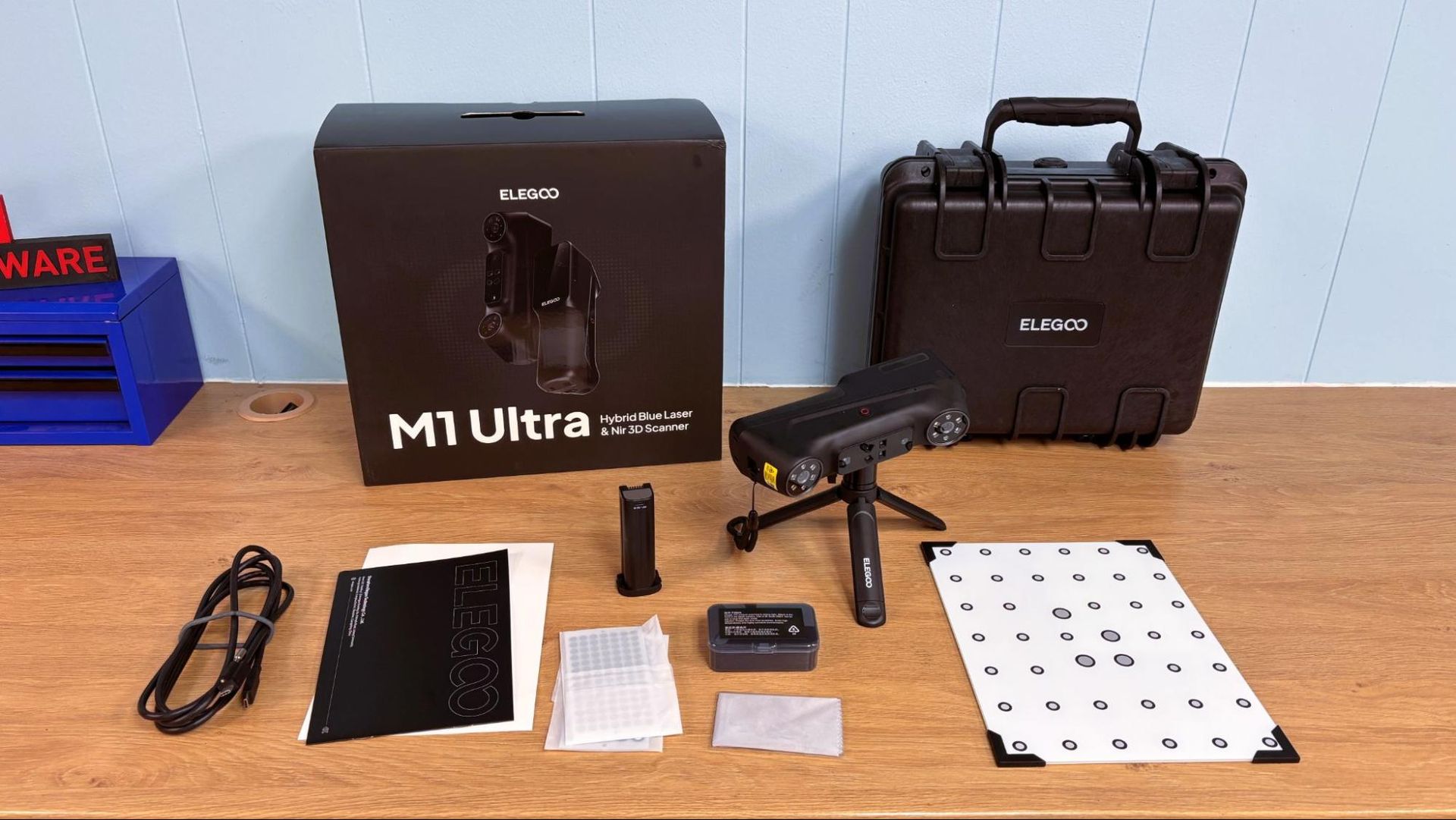
The Elegoo M1 Ultra comes with a nice hard case for travel, with a padded interior to protect the scanner, glass calibration board, spare battery, NIR filters, and a USB-C cable. Also included are a lens cleaning cloth and a packet of marker dots. Noticeably absent is a turntable for scanning smaller objects. (We borrowed a turntable from another scanner during this test.)
Design of the Elegoo M1 Ultra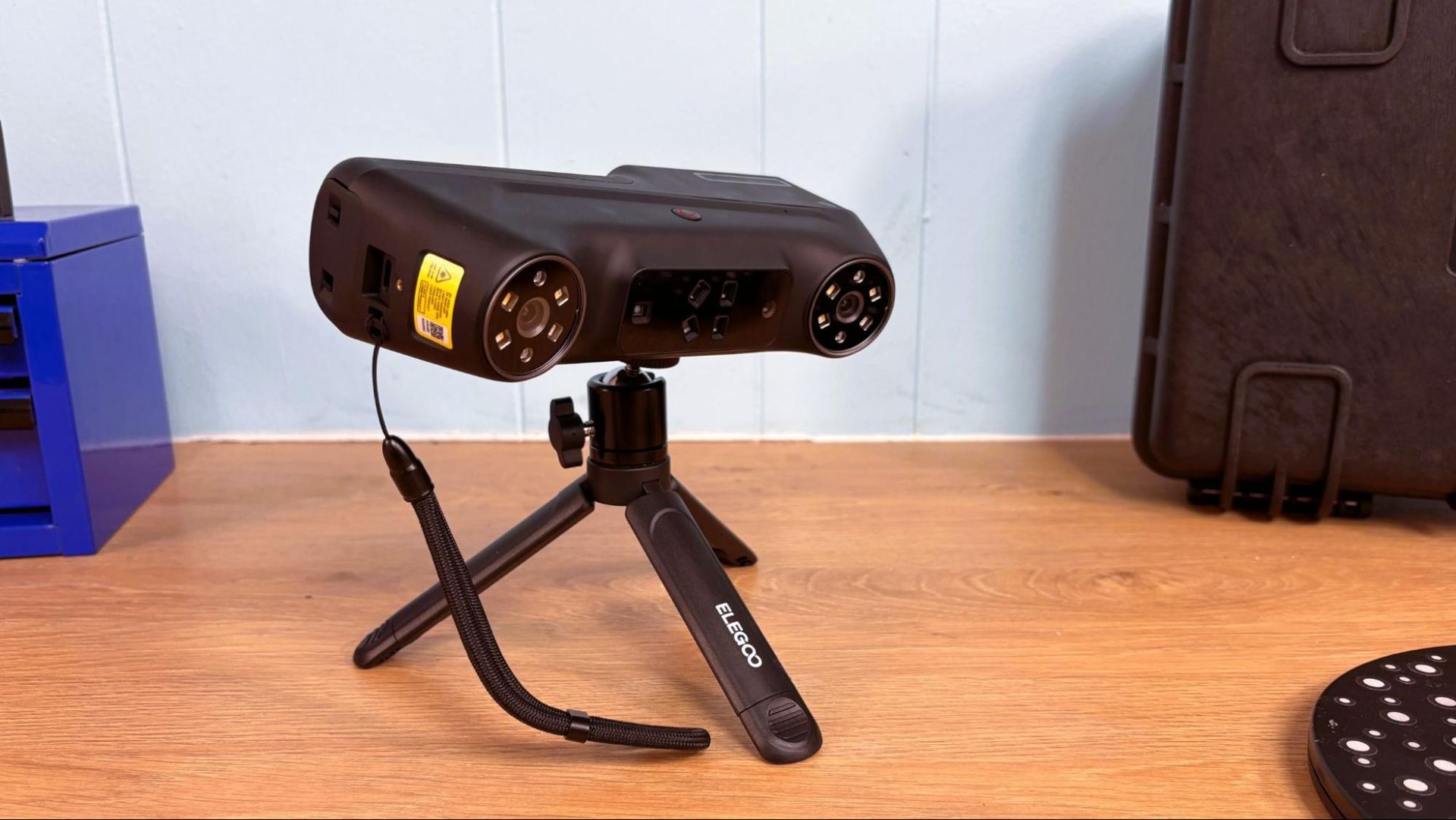
The Elegoo M1 Ultra weighs 511g (1.12lbs) with its battery installed. It has a rubber grip below the screen and is nicely balanced. Users with large hands may find their thumbs blocking the screen.
The onboard screen can be used to set the scanning parameters, start and stop scans, and monitor the scans as they progress. The 3-inch screen is small, but the UI is laid out perfectly. When setting parameters for a scan, the touch screen takes precedence over the tethered computer if you're starting the scan from the scanner itself.
The business end of the scanner has a series of blue, white, and infrared LEDs, blue lasers, and cameras. The included NIR filters are needed when scanning outdoors or in harsh light conditions. The battery and the spare can be charged using a USB-C cable when unmounted, and can be charged from the computer when operating the scanner in USB mode. The battery life is excellent. Almost all of our testing was done with one charge of the battery and its spare.
Getting Started and Calibrating the Elegoo M1 Ultra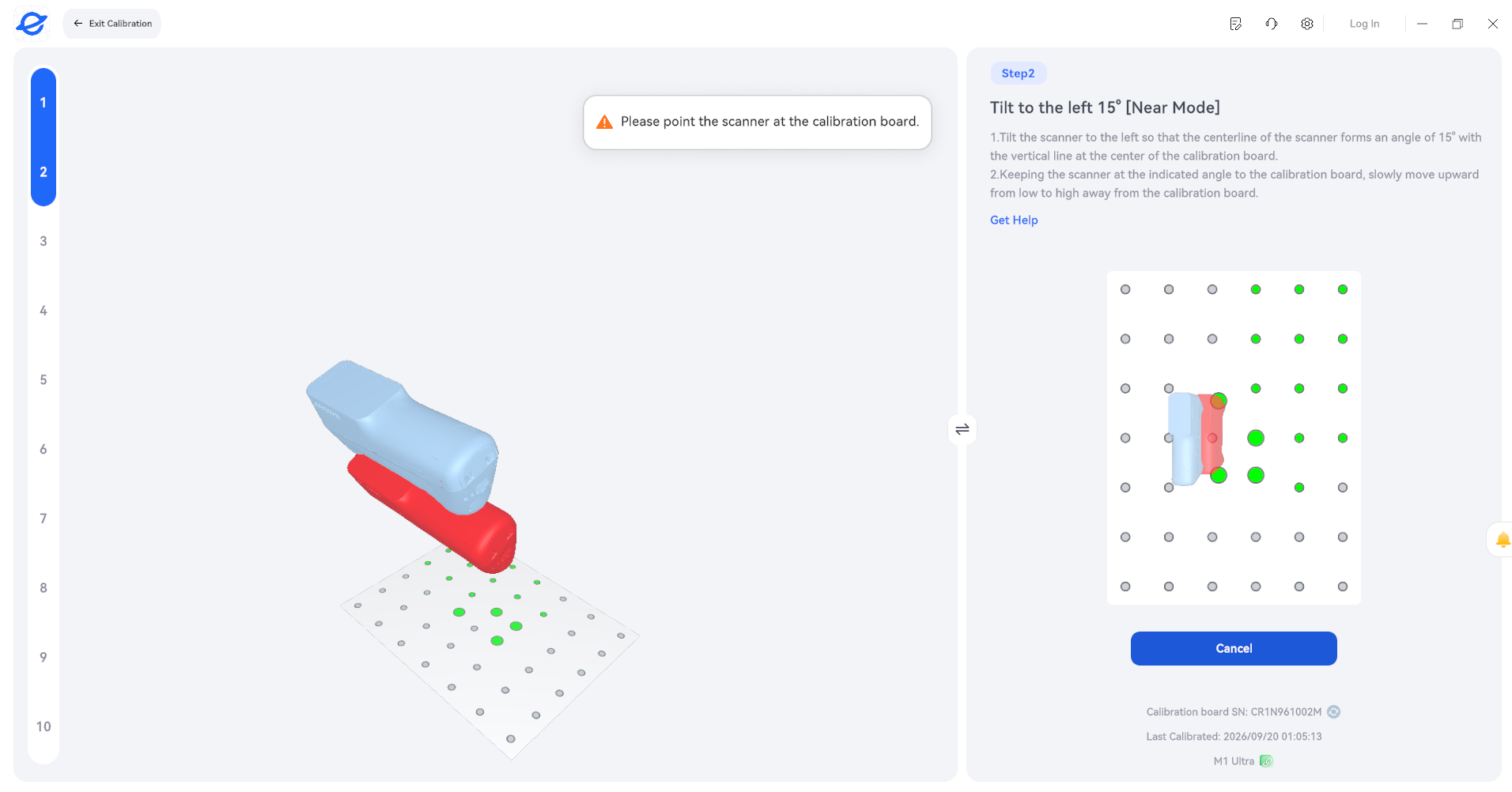
Calibrating the Elegoo M1 Ultra is fairly easy given its light weight and the easy-to-follow software. Using the glass calibration board, the scanner is aimed at various angles and heights, following the directions on screen. The software shows an image of where the scanner should be and an image of the scanner as you move it. You have to match the two before moving on to the next spot. Scanner calibration can be a chore, but calibrating the M1 Ultra was simple.
Installing the Software for Elegoo M1 Ultra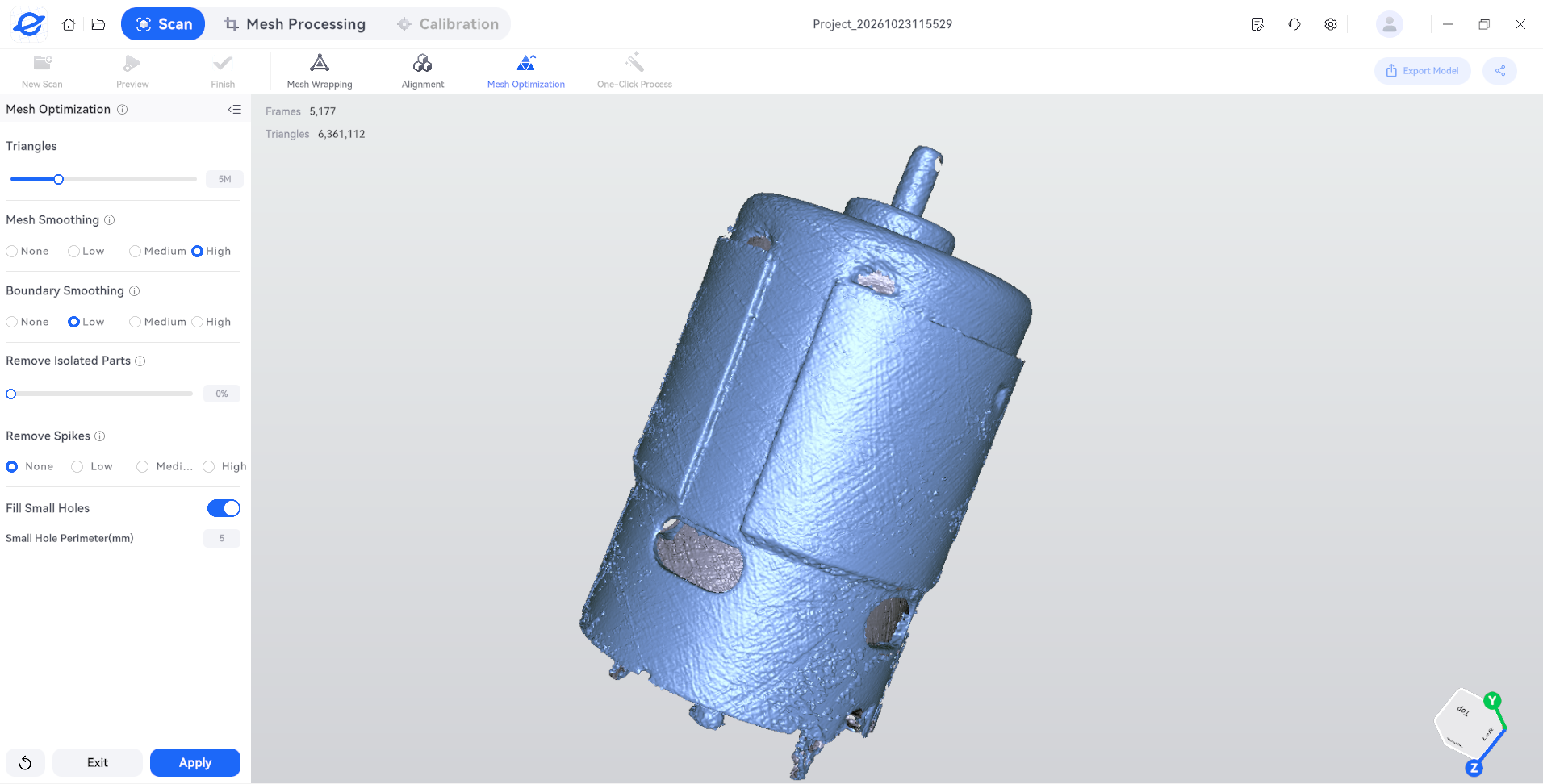
Elegoo Scan can be downloaded from Elegoo's website for Windows and Mac. The software works and looks like CrealityScan, which is a good thing since both make cleaning up individual scans and stitching multiple scans together fairly easy. The software does require a bunch of memory, with the more, the merrier. I tried running the software on an older PC laptop which met the minimum requirements, except it had only 8 GB of RAM, and it was not enough.
Elegoo recommends a PC with Windows 10/11 (64-bit), an Intel Core i7 (13th Gen) or higher, an NVIDIA GeForce RTX 4060 or higher (8 GB VRAM), and 32 GB or more of RAM. For Mac, they recommend macOS 14 or later, with an Apple M4 or later, and 32 GB or more of RAM. Minimum specs for both are 16gb of RAM, with Windows 10/11 (64-bit), Intel Core i7 (7th Gen), and an Nvidia GPU (6 GB VRAM) for PC, and macOS 14 or later, with an Apple M2 CPU.
Blue Laser Line 3D Scanning with the Elegoo M1 Ultra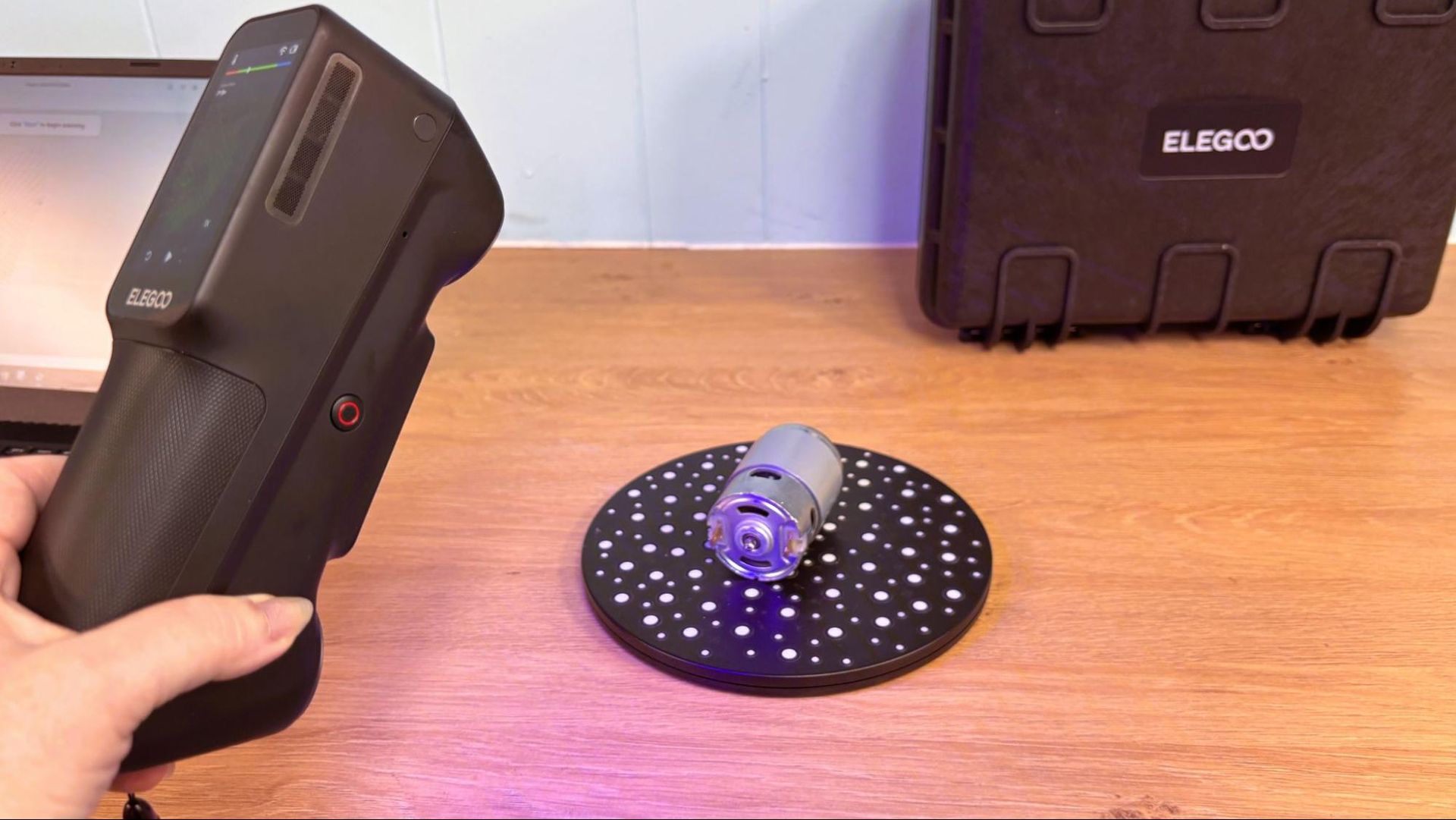
The Elegoo M1 Ultra has 4 blue laser scanning modes: 34 crossed laser lines for quick scanning, 7 parallel lines for finer details, 1 line for scanning deeper, more difficult-to-capture holes, and markerless. The fewer the lines, the more time the scans take. I should point out that the turntable in the photo was borrowed from the Creality Pika Scanner, which we reviewed previously.
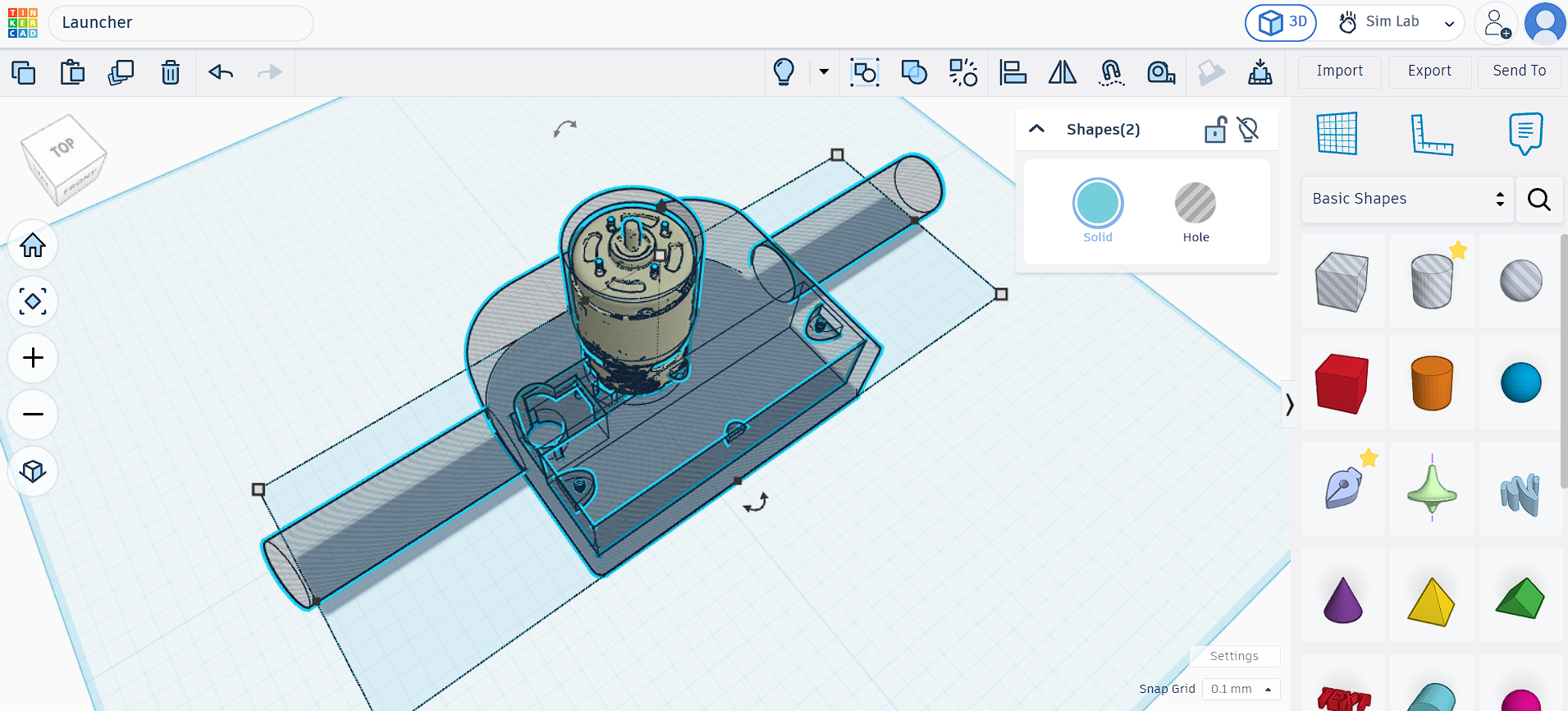
One of my favorite use cases is scanning an item for import into a 3D printing project I am working on. I scanned a cheap 895 brushed motor commonly found in drills. The motor required several scans, and the M1 Ultra seemed to have trouble capturing the shinier parts of the object. Ultimately, I captured two scans that had enough data to be useful. The software has an automatic alignment tool which does a good job in most cases. In this case, it was baffled by the geometry. The manual alignment worked perfectly.
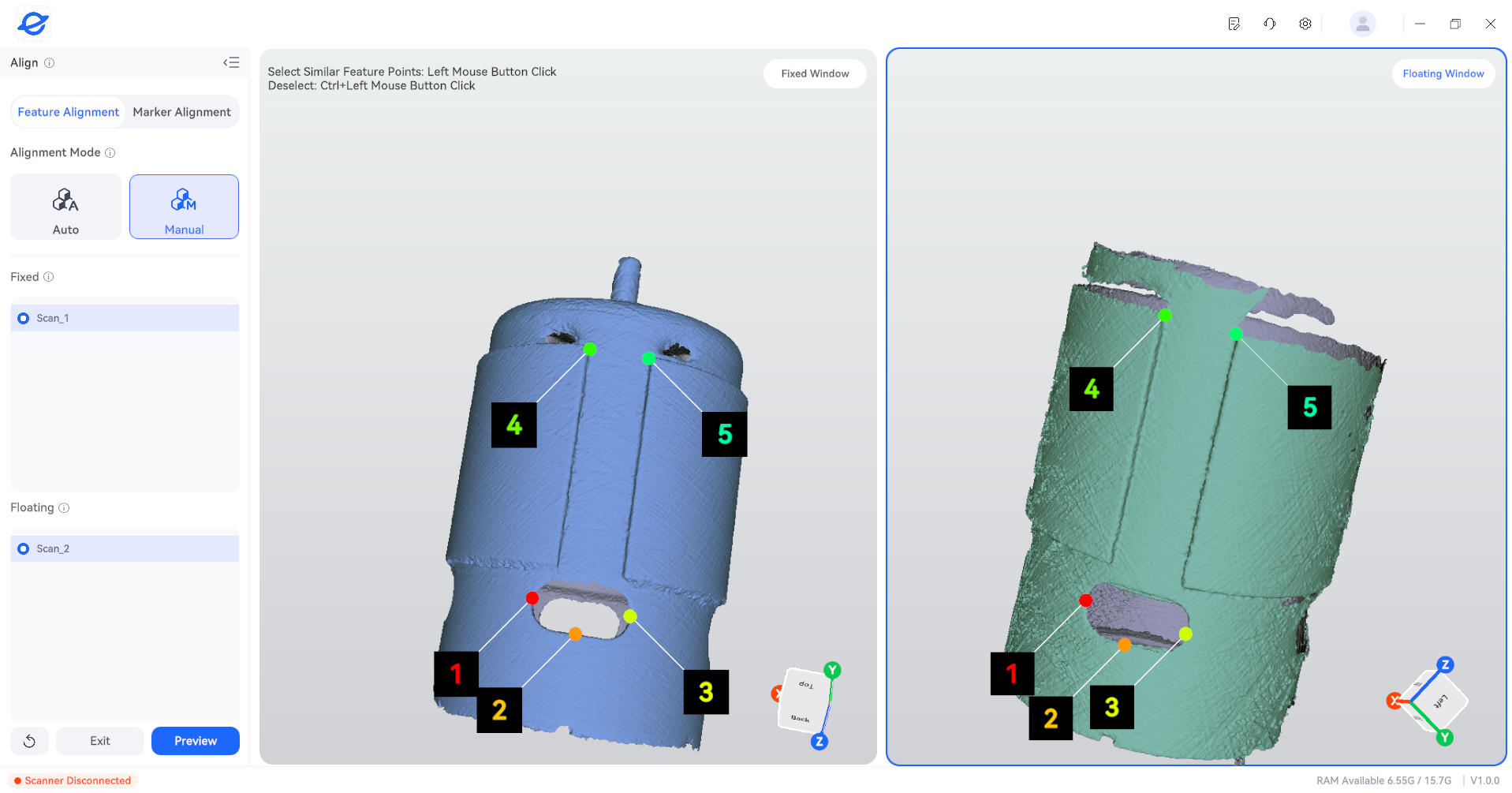
Manual alignment requires adding markers matching points on both images. You do not have to be super exact with the placement. The software will smooth out any overlaps.
Part of the mesh processing is hole filling. This also has an automatic and manual mode. Since the automatic mode was going to fill in the screw holes and cooling holes, I had to fill in the holes manually by clicking on them. This is a little tedious, but it worked well.
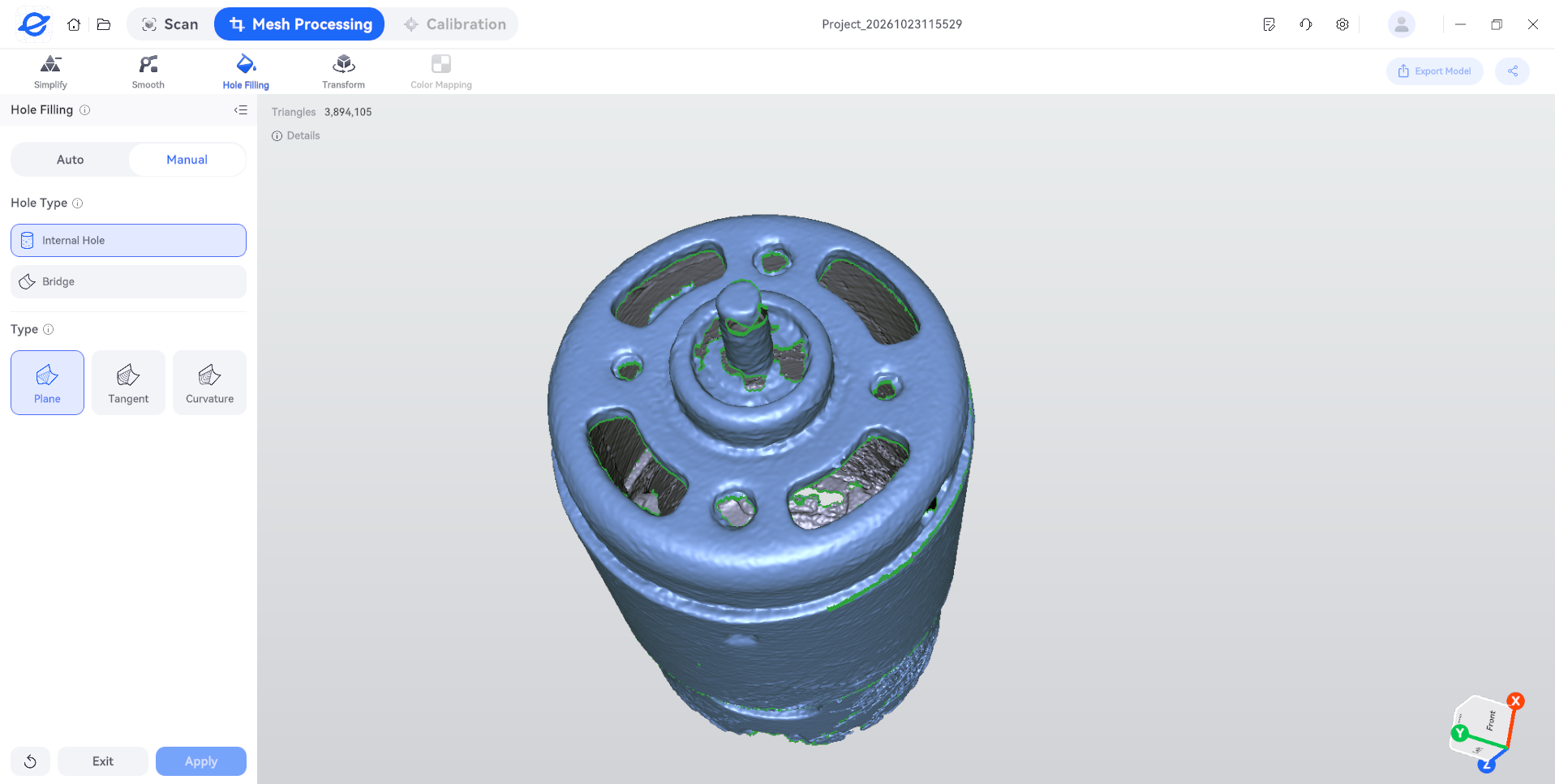
After hole filling, smoothing, and simplifying, I was able to export the file as an STL and open it in Tinkercad.
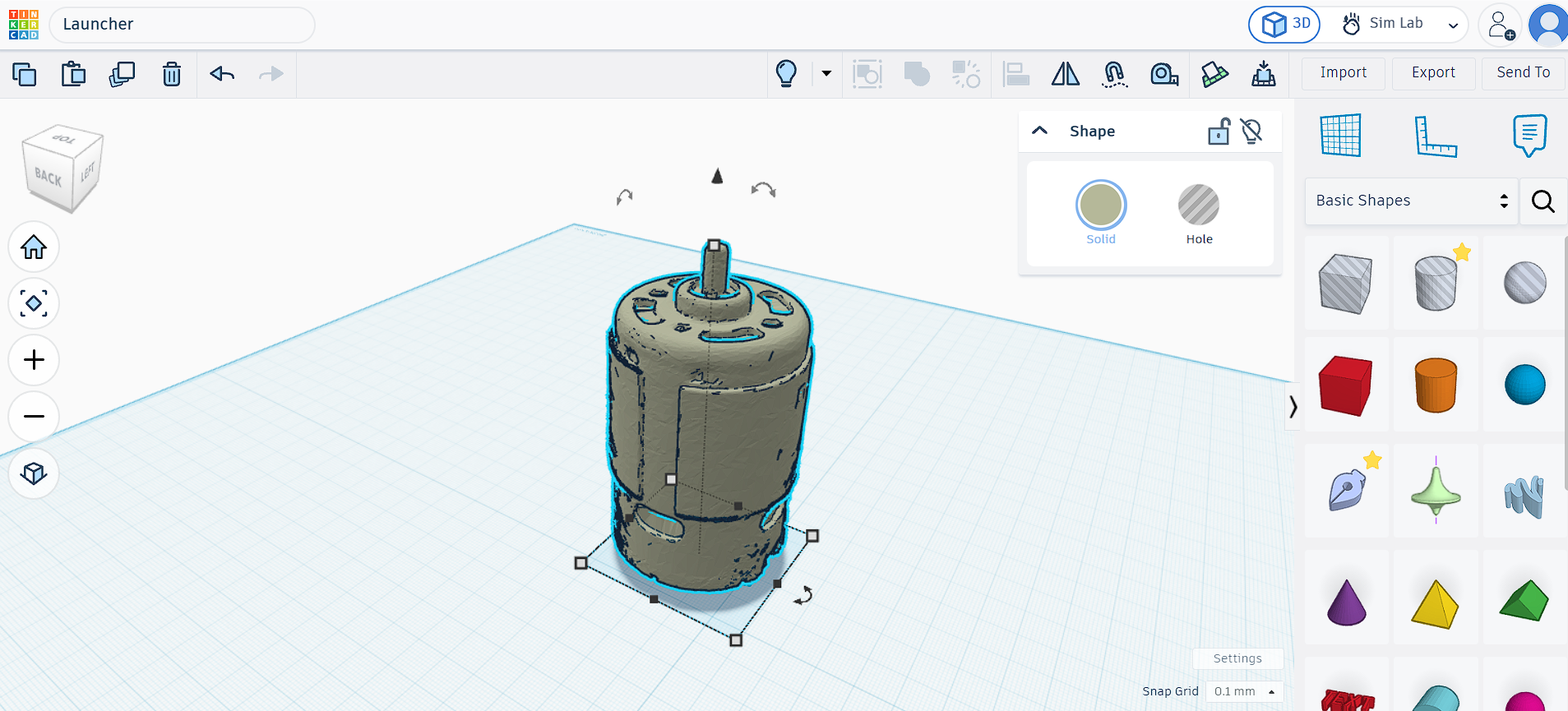
The size, and hole alignment were perfect for integrating the motor into a project.
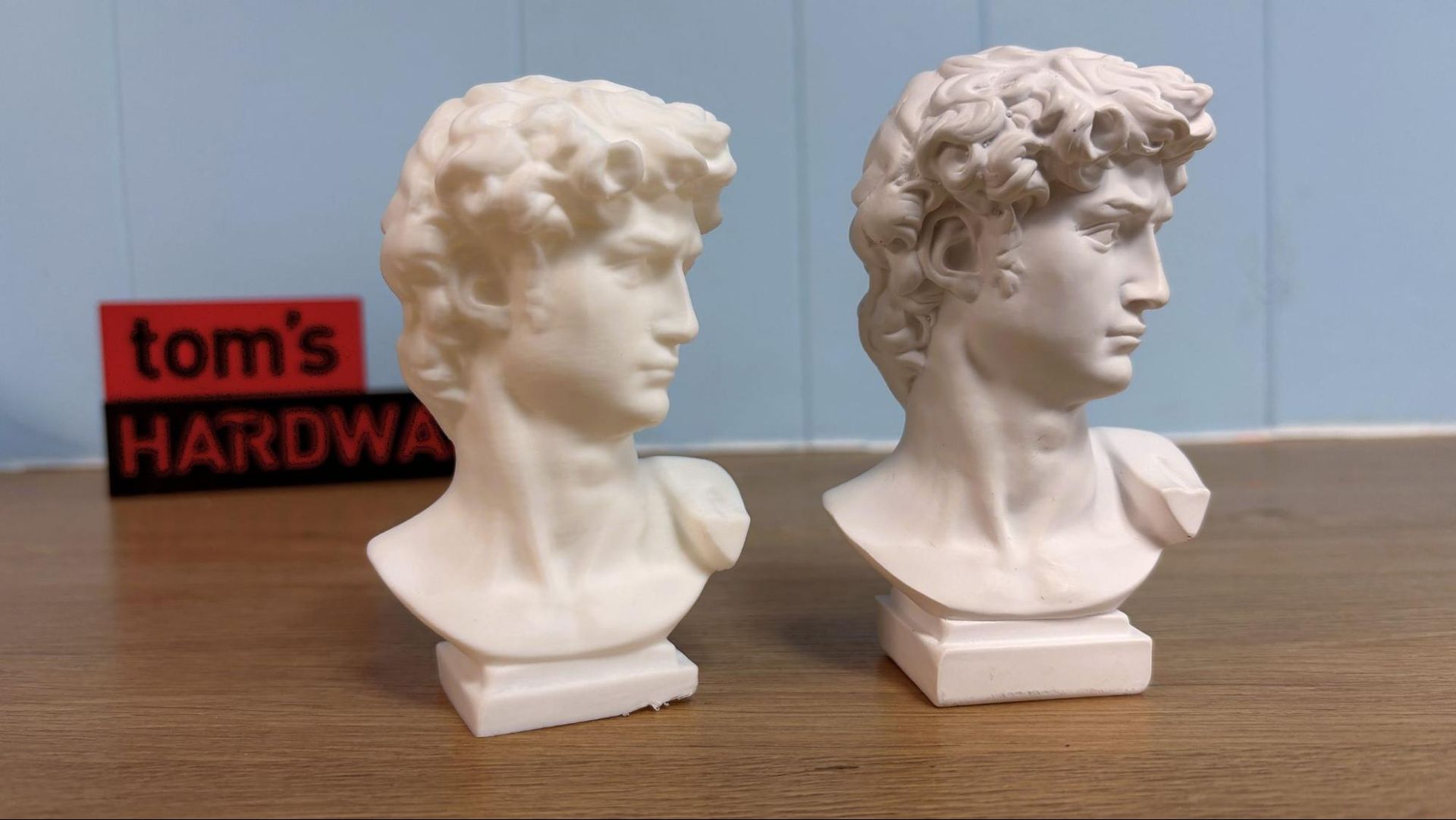
This bust of Michelangelo's David came with an early Creality scanner and has become my main test file. It took three scans for me to get a good model, which was a recurring theme with the Elegoo M1 Ultra.
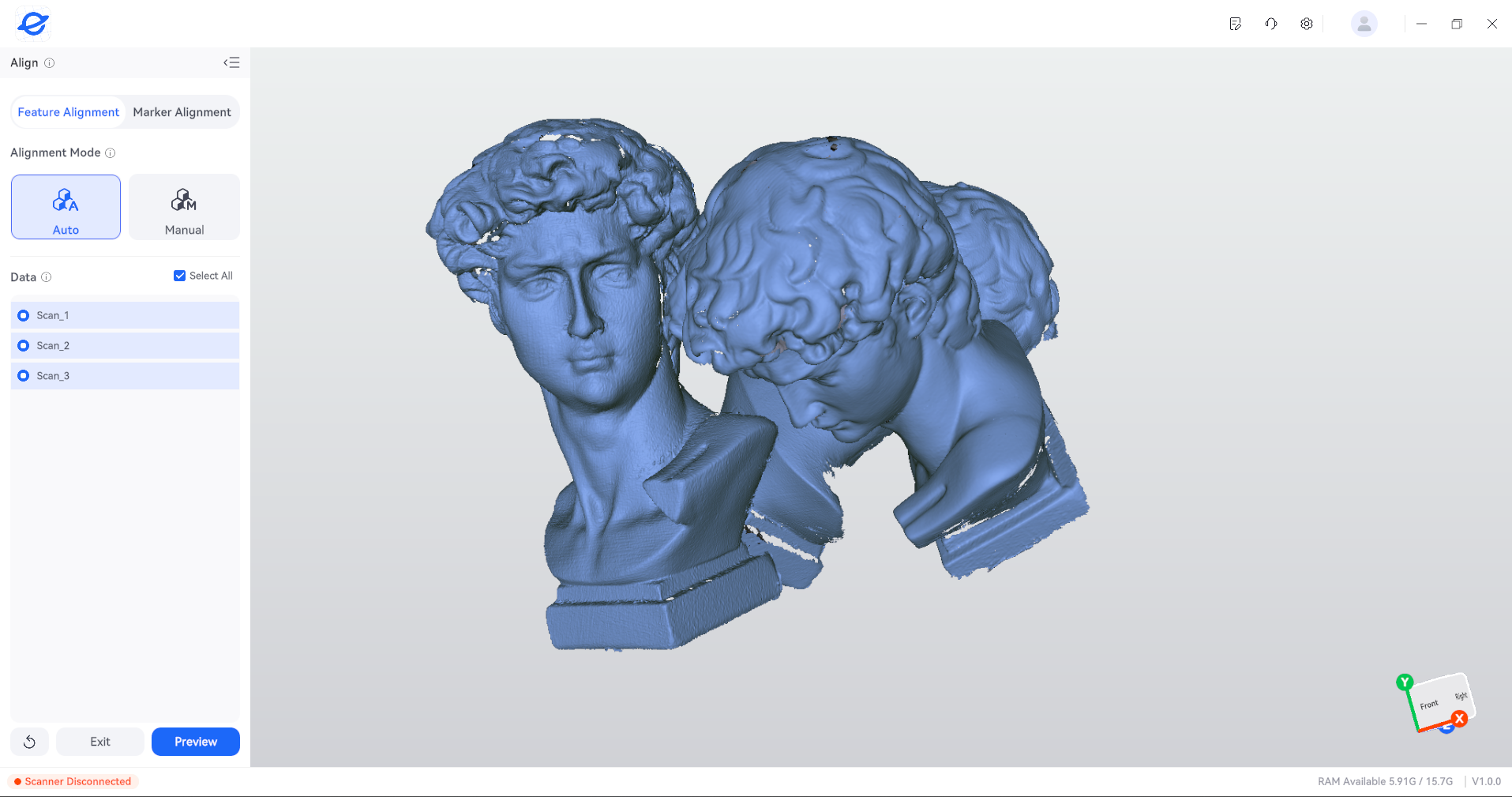
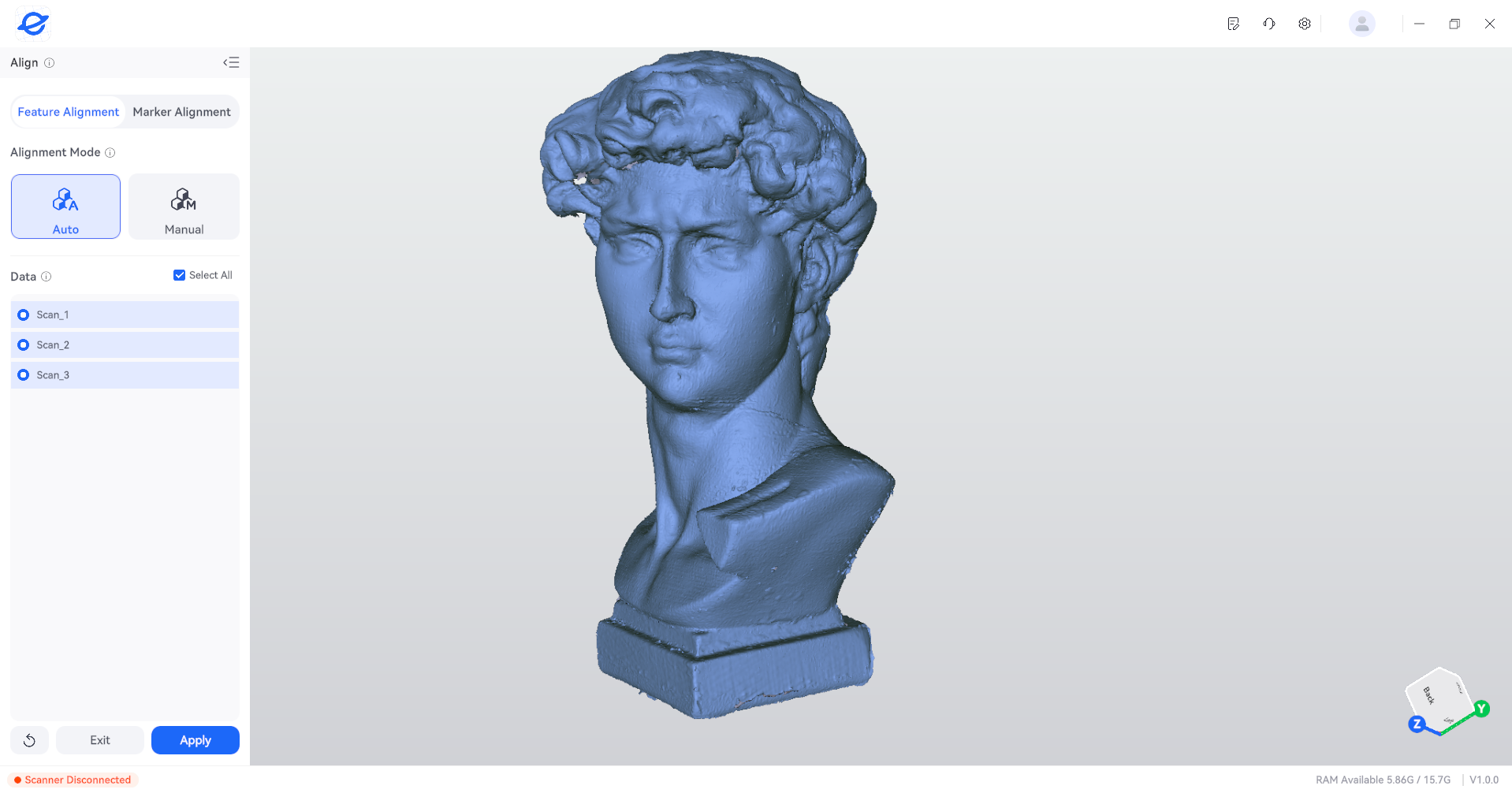
Fortunately in this case, the auto alignment function worked perfectly.
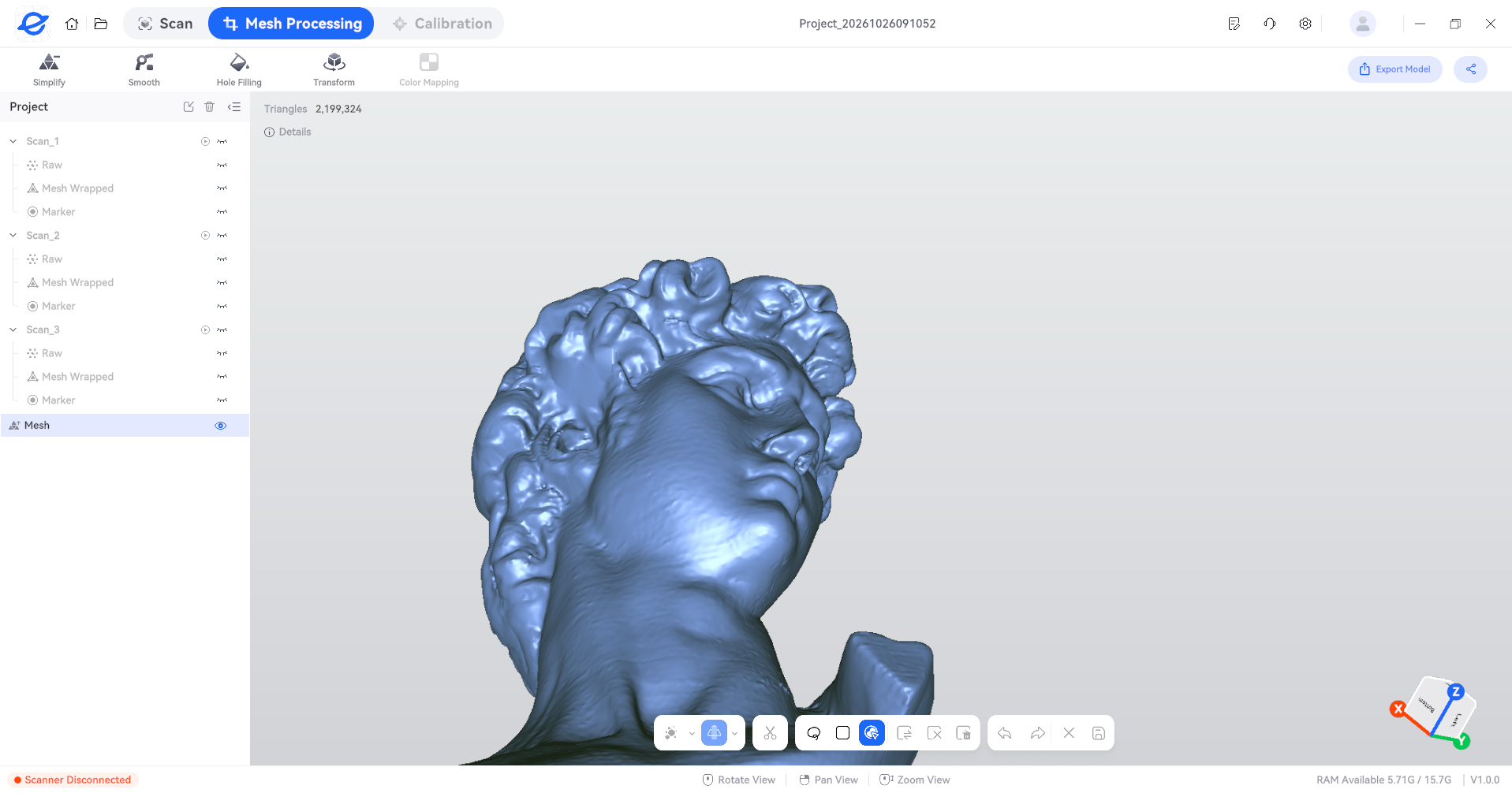
Even with multiple scans, there were still a few holes to fill. One of these can be seen in the finished model in the smooth, flat area above David's left ear.
Overall, the model generated is one of the best I've seen, and it printed extremely well once exported. The flaw at the bottom of the print was a bed adhesion issue rather than a problem with the model.

Since I could not find a willing human victim...I mean, subject...to scan, I tried using the NIR mode to scan Clyde, our family's favorite stuffed Clydesdale. This is a cautionary tale because 3D scanners in general have a tough time scanning black objects, as they absorb light rather than reflecting it.
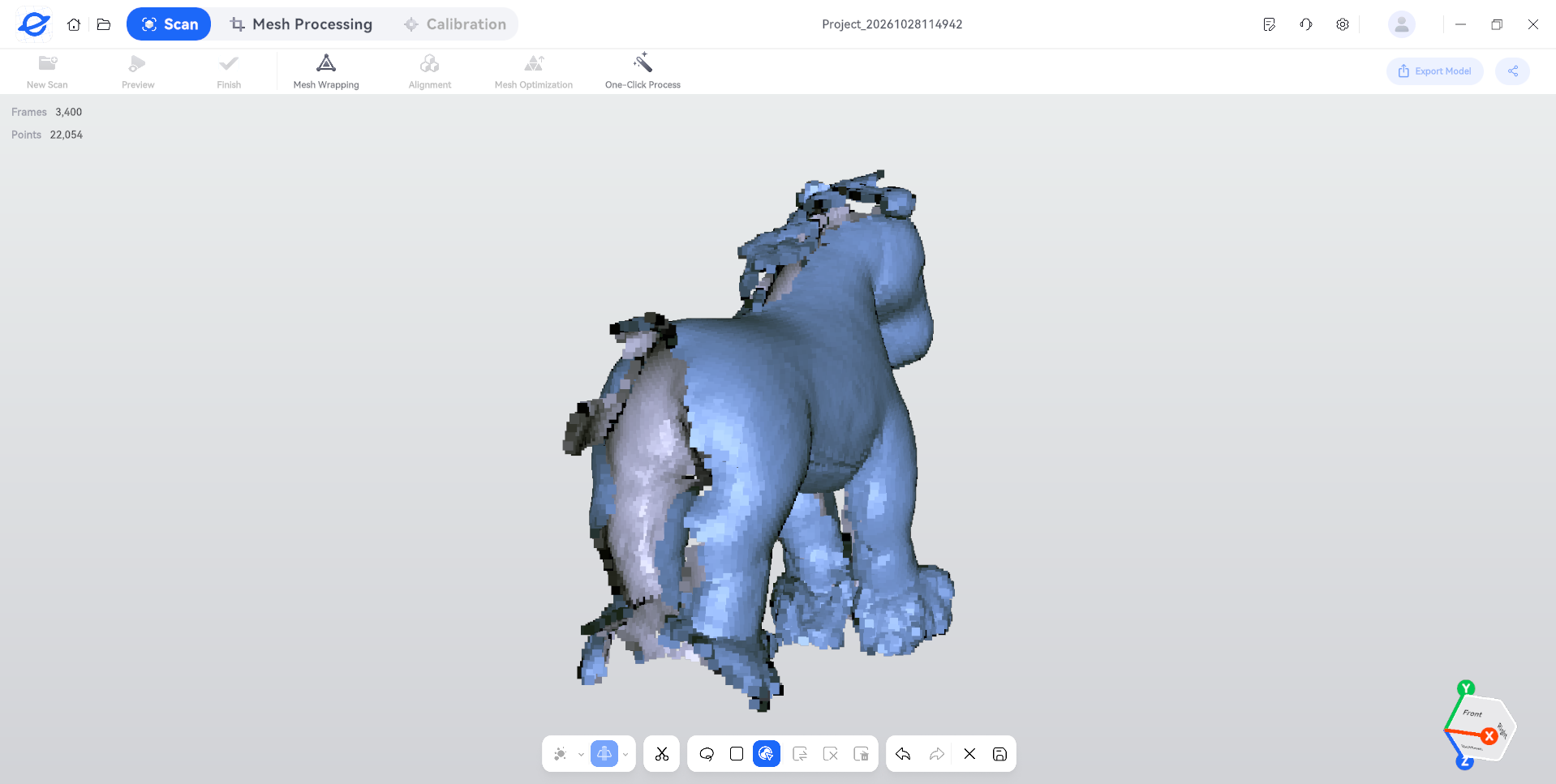
The scans weren't bad, but they did leave big holes where the mane and tail were too dark to read.
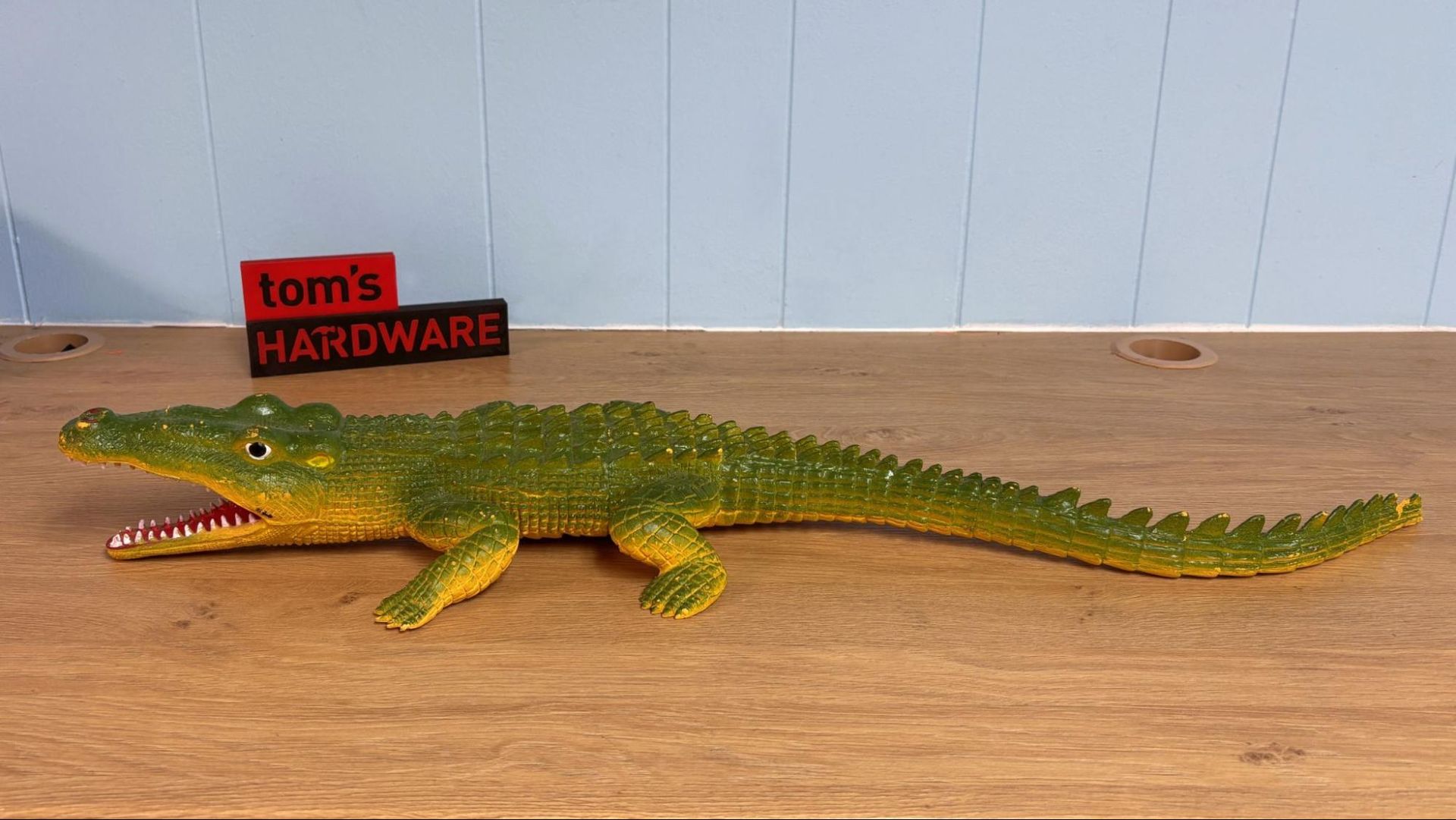
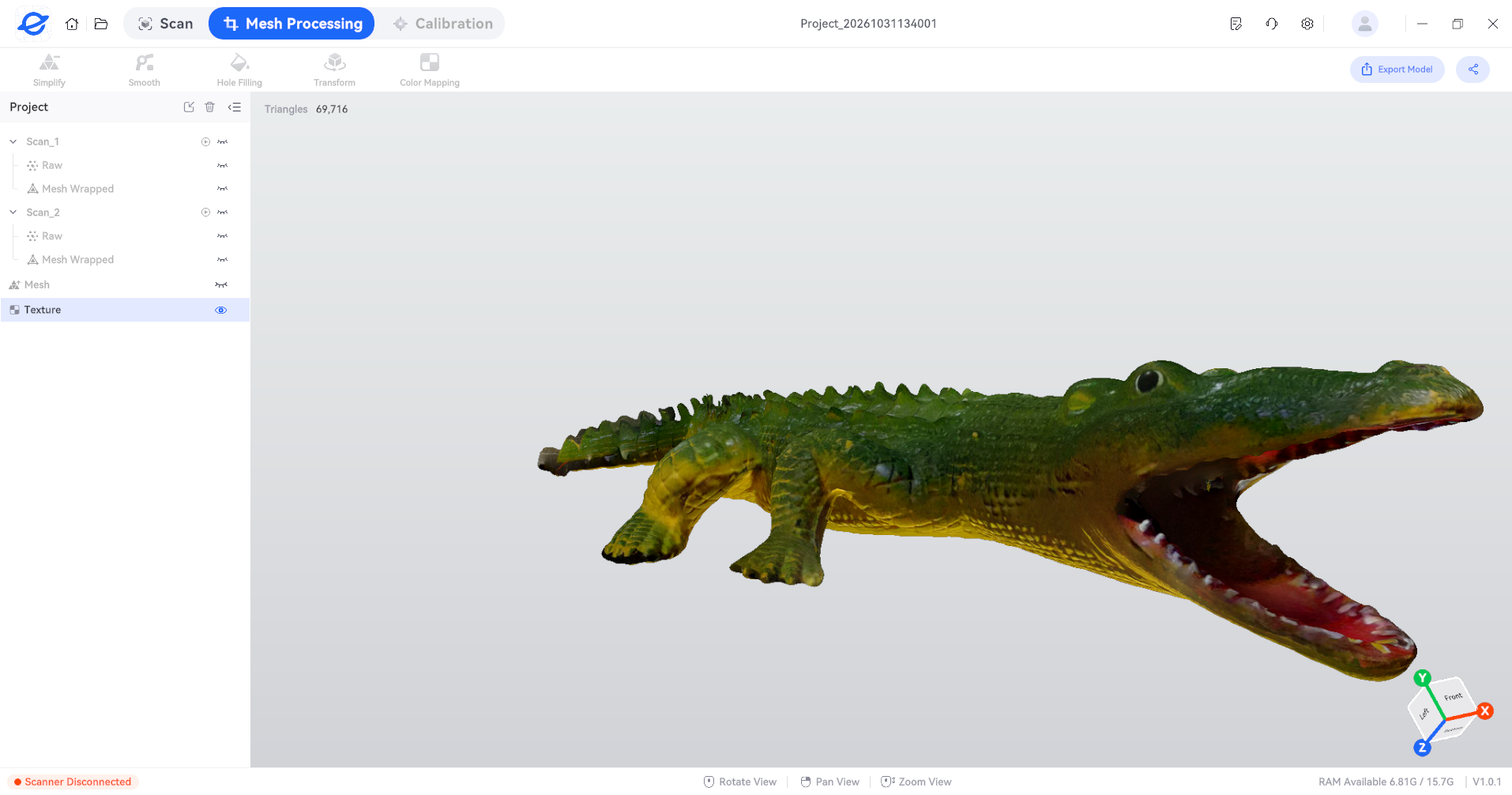
I was able to do a much better scan of Ali the Alligator. In NIR mode, the scanner is capable of 30fps. Even with the slower frame rate, the scanner was able to quickly capture Ali in two scans, without a ton of multiple passes. Each time you go over the same spot on an object, it's possible to generate garbage data that has to be removed in the meshing process. The two scans align together automatically, and the finished model is pretty darn good.
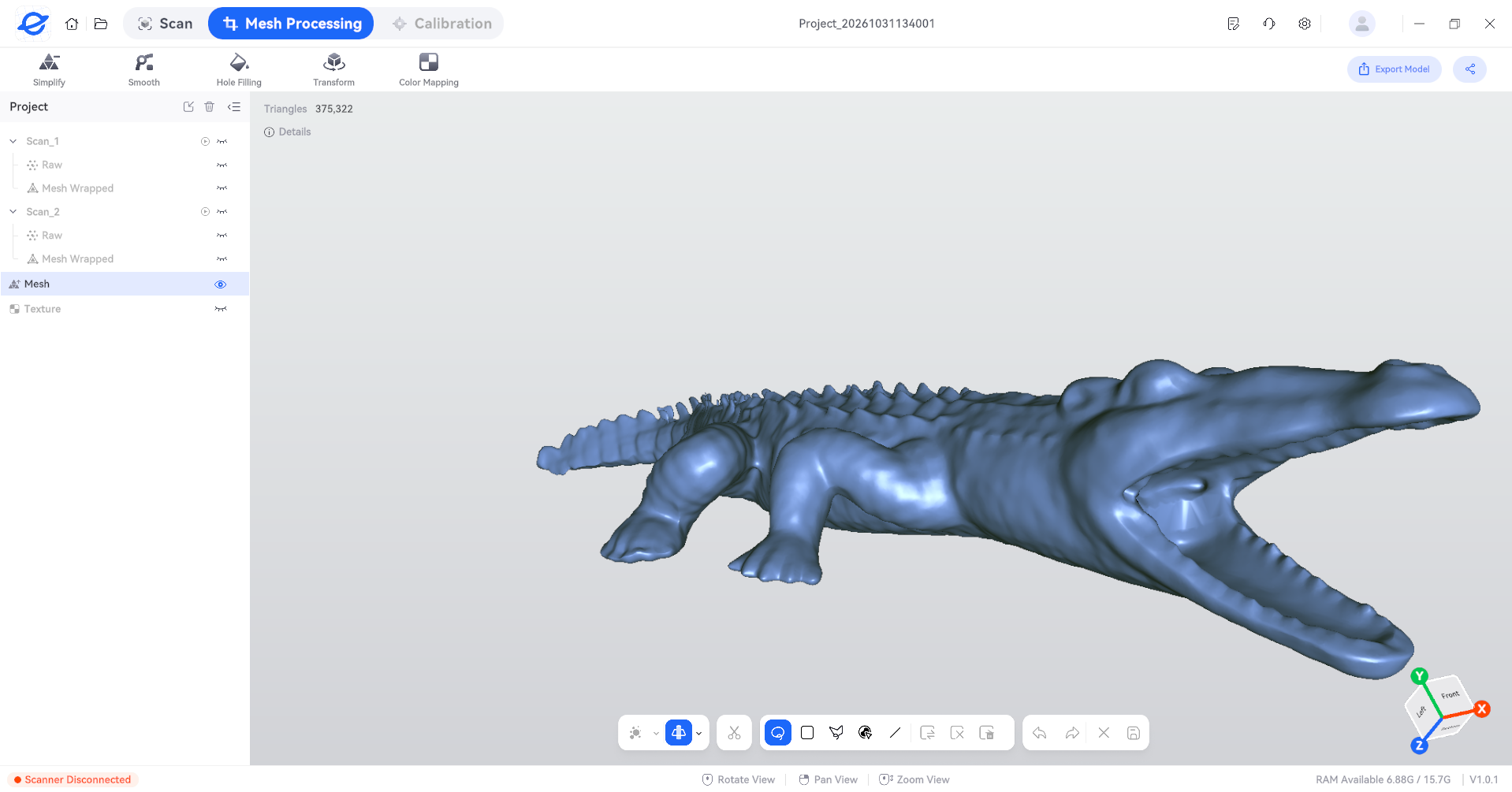
The scanner does feature color texture mapping. Other than the mouth, where a large hole needed to be filled, the color mapping was spot on.
The Elegoo M1 Ultra is a good scanner that has a good feature set for the price. The light weight, onboard screen, long battery life, and stable Wi-Fi connection make it a joy to use.
The ElegooScan software is fairly intuitive. It makes calibrating the scanner and turning the raw scans into usable models fairly easy. The Elegoo M1 Ultra did require multiple scans to get good coverage of objects, while other scanners I've tested could do it in one pass. The added complexity takes up a good deal of time and requires a fair amount of computer power, especially when cleaning up and aligning multiple scans. ElegooScan has the tools to make it work. Even with a pretty good model, you'll likely also need a CAD program or other design tools to make the best use of the scans.
If you'd like to save a few bucks and get a still excellent scanner, check out the Creality Pika,which is currently $699. If you want a scanner with a little more horsepower, check out theCreality Sermoon S1, which retails for $2,069. Creality also makes theSermoon P1, which can run completely untethered and retails for $3,299.