U.S. Treasury Secretary questions whether Nvidia knowingly sold AI GPUs to shell companies, says company itself is responsible
Scott Bessent, U.S. Treasury Secretary, admitted that the U.S. export controls cannot prevent all the restricted hardware from reaching China or other adversaries, which is why the country allegedly obtained millions of restricted AI GPUs from Nvidia. At the same time, he questioned the efficiency of Nvidia's internal controls. called for accountability at Nvidia, criticized the company's general counsel, but stressed that it was unclear whether Nvidia chief executive Jensen Huang knew about the potentially illicit practices.
Go deeper with TH Premium: GPUs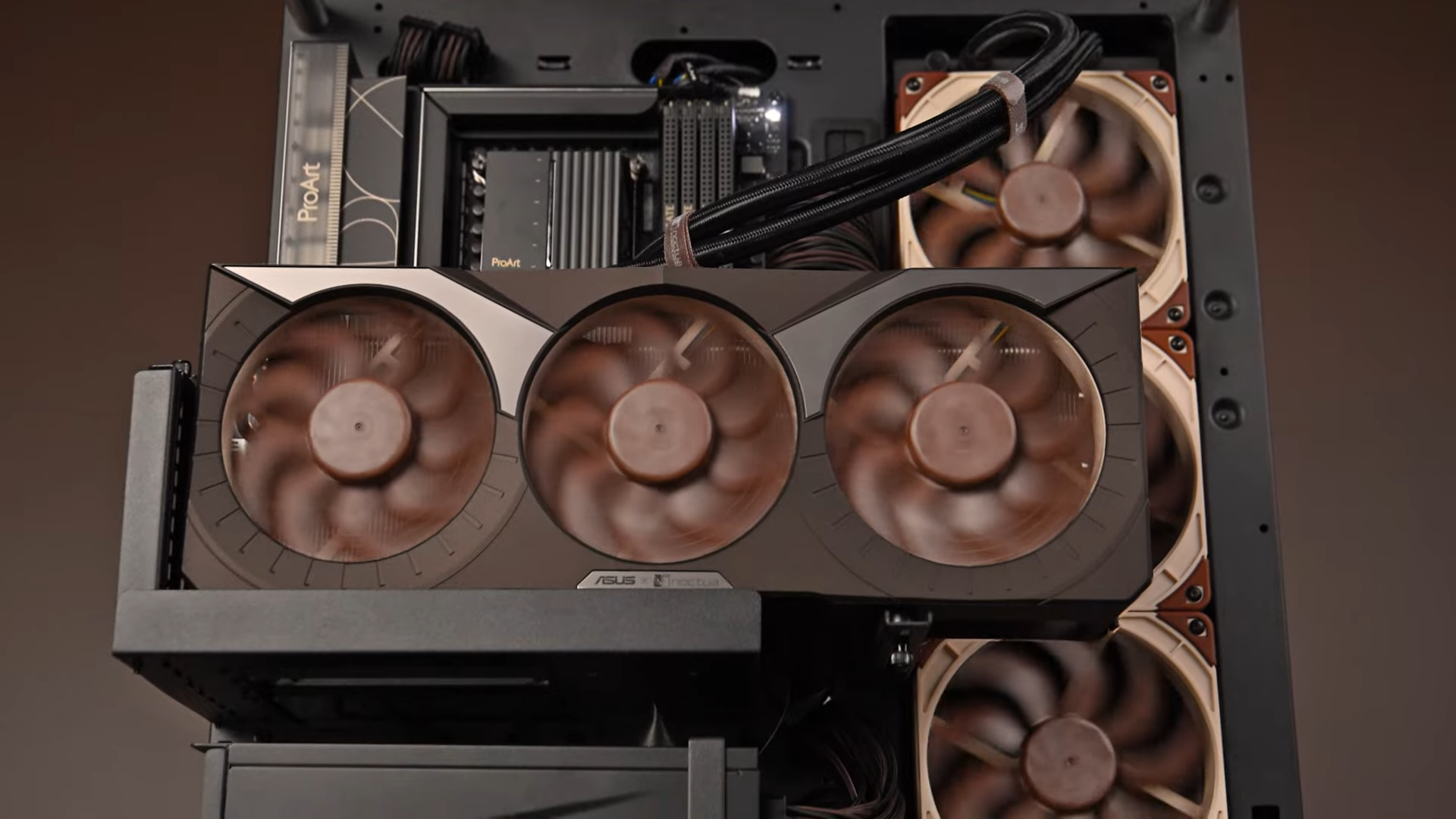
- Desktop GPU Roadmap
- Nvidia's Enterprise GPU Roadmap
- Testing DirectStorage with GPU decompression
- The GeForce RTX 30-series upgrade matrix - does your Ampere GPU need an upgrade in 2026?
- Rubin in-depth
- The Stout Owl: The ultimate Noctua G2 PC
"I think that there is a lot of leakage in the system, and we are constantly working to close that down," in an interview with CNBC (via @siliconmemes). "One thing here is that the story has been thus far on Jensen Huang's personal foibles. The real story here should be, did Nvidia know their client? And was there a robust effort at Nvidia to make sure that there was no leakage and that they were selling to what were obviously pass-through shell companies? And I think it is important that anyone at the company there be held accountable for that."
Bessent admitted that despite strict U.S. export controls that prohibit sales of advanced AI GPUs to China, considerable quantities of restricted hardware may still make their way to the country. However, the Treasury Secretary does not believe that the U.S. needs to introduce more stringent export restrictions or grant government agencies additional powers to prevent GPU smuggling. Instead, the authorities should properly enforce existing regulations, according to Bessent.
Bessent also criticized Nvidia's general counsel Timothy Teter, who reportedly contacted the U.S. Department of Commerce to inquire whether U.S. authorities were behind the detention of Megaspeed's Alice Wong in Singapore. However, the Treasury Secretary declined to speculate about potential consequences for Nvidia if it turned out that some of its executives knew that their customers acted as intermediaries for Chinese entities. Meanwhile, Bessent expressed confidence that Nvidia's board of directors would conduct a thorough investigation into the matter.
"But let us just say, if this was happening, then there were not robust controls at the company," Bessent said. "We do not know for a fact that Jensen Huang knew this. The [general council] seems to have been very involved here, probably should have done more oversight rather than the haranguing [government officials at the U.S. DoC]."
Bessent also revealed that the Departments of the Treasury, War, and State, as well as the Office of the U.S. Trade Representative (USTR), had supported the addition of Megaspeed to the Entity List for months. However, the authority to impose such export restrictions belongs to the Department of Commerce's Bureau of Industry and Security (BIS), which reportedly stalled efforts to blacklist Megaspeed for months as Commerce Secretary Howard Lutnick feared that the move could worsen trade tensions with China.