I tested iPhone Duo, Galaxy Z Fold 8, and Xiaomi 18 Fold cameras in Dubai – and the zoom gap is unreal
For the first time, Apple, Samsung, and Xiaomi are all fighting on the exact same turf: wider, passport-style book foldables built to feel natural both closed and open. In theory, that levels the ergonomic playing field. Once you open the camera apps, though, three wildly different hardware philosophies emerge.
Dive deeper- iPhone Duo review: it's not perfect, but it is for me
- Galaxy Z Fold 8 review: the foldable most people should buy
- The Xiaomi 18 Fold might be the best mid-size foldable
Both the iPhone Duo and the standard Samsung Galaxy Z Fold 8 rely on dual-camera systems - a primary wide sensor paired with an ultrawide - leaving every zoom step past 1x to sensor crops and computational upscaling. Meanwhile, the Xiaomi 18 Fold squeezes a full Leica-engineered triple-camera array into its sleek frame, anchored by a 200MP main camera and a dedicated 50MP 3.3x optical periscope telephoto.
Before the iPhone Duo launched, much of the criticism focused on Apple dropping the telephoto lens compared to its flagship Pro range. Samsung was rightly lambasted for the same compromise just a few months earlier, but can a passport-size foldable actually offer it all?
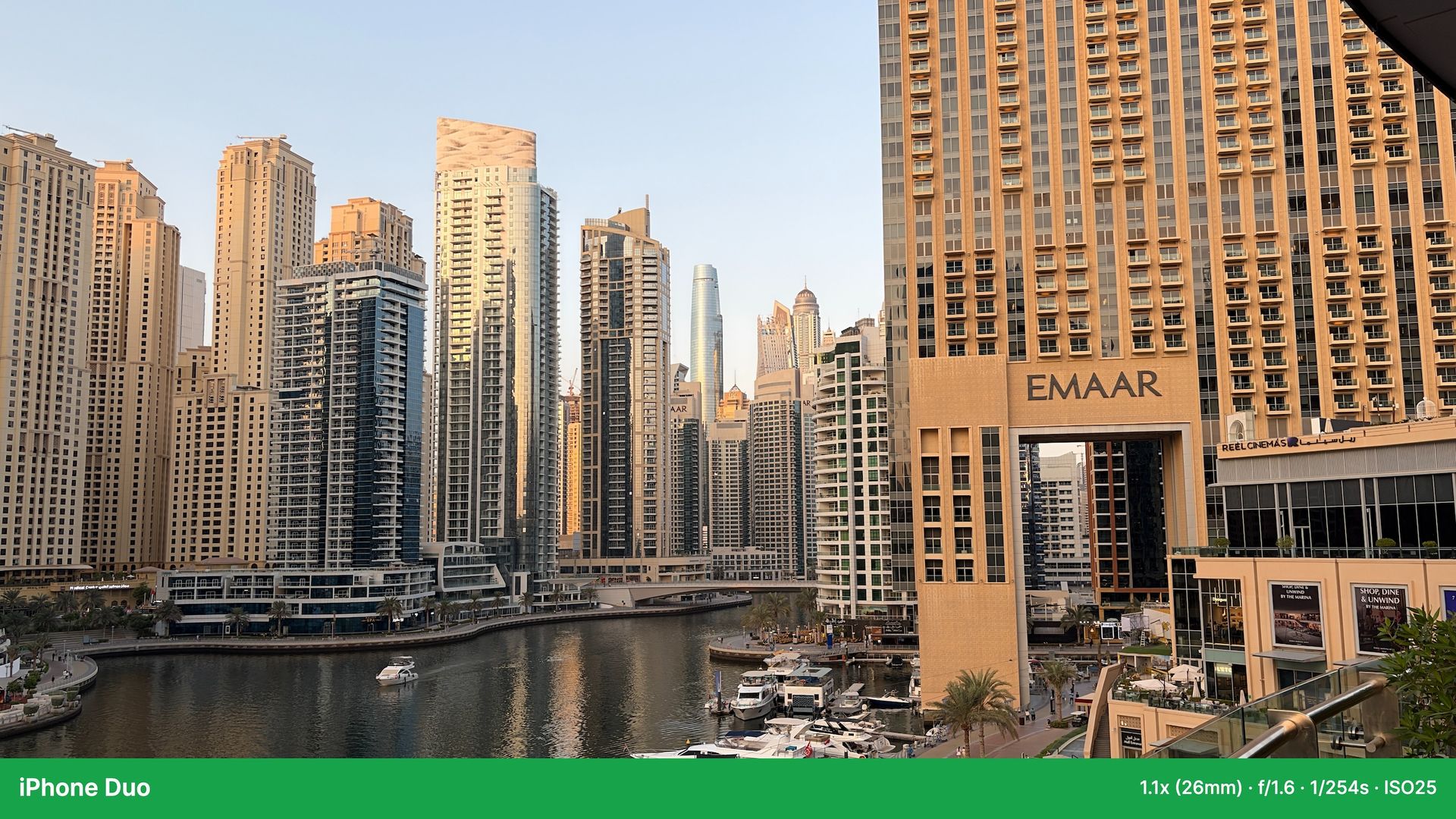
To judge this and see how those hardware choices hold up in the real world, I took all three foldables around Dubai Marina from harsh midday sun through sunset, blue hour, and neon-lit nights.
Here is how they actually compare, starting with the specs on paper.
Galaxy Z Fold 8 | iPhone Duo | Xiaomi 18 Fold | |
Main Camera | 50MP, 23mm equiv | 48MP, 26mm equiv | 200MP, 23mm equiv |
Ultrawide Camera | 50MP, 13mm equiv | 48MP, 14mm equiv | 50MP, 17mm equiv |
Telephoto | - | - | 50MP, 80mm equiv |
Cover Selfie | 10MP, 23mm equiv | 12MP, 28mm equiv | 16MP, 21mm equiv |
It's hard for a modern smartphone camera to take bad photos in good lighting, and all three foldables capture crisp, share-worthy photos. Yet each phone immediately reveals a distinct personality, starting with framing.
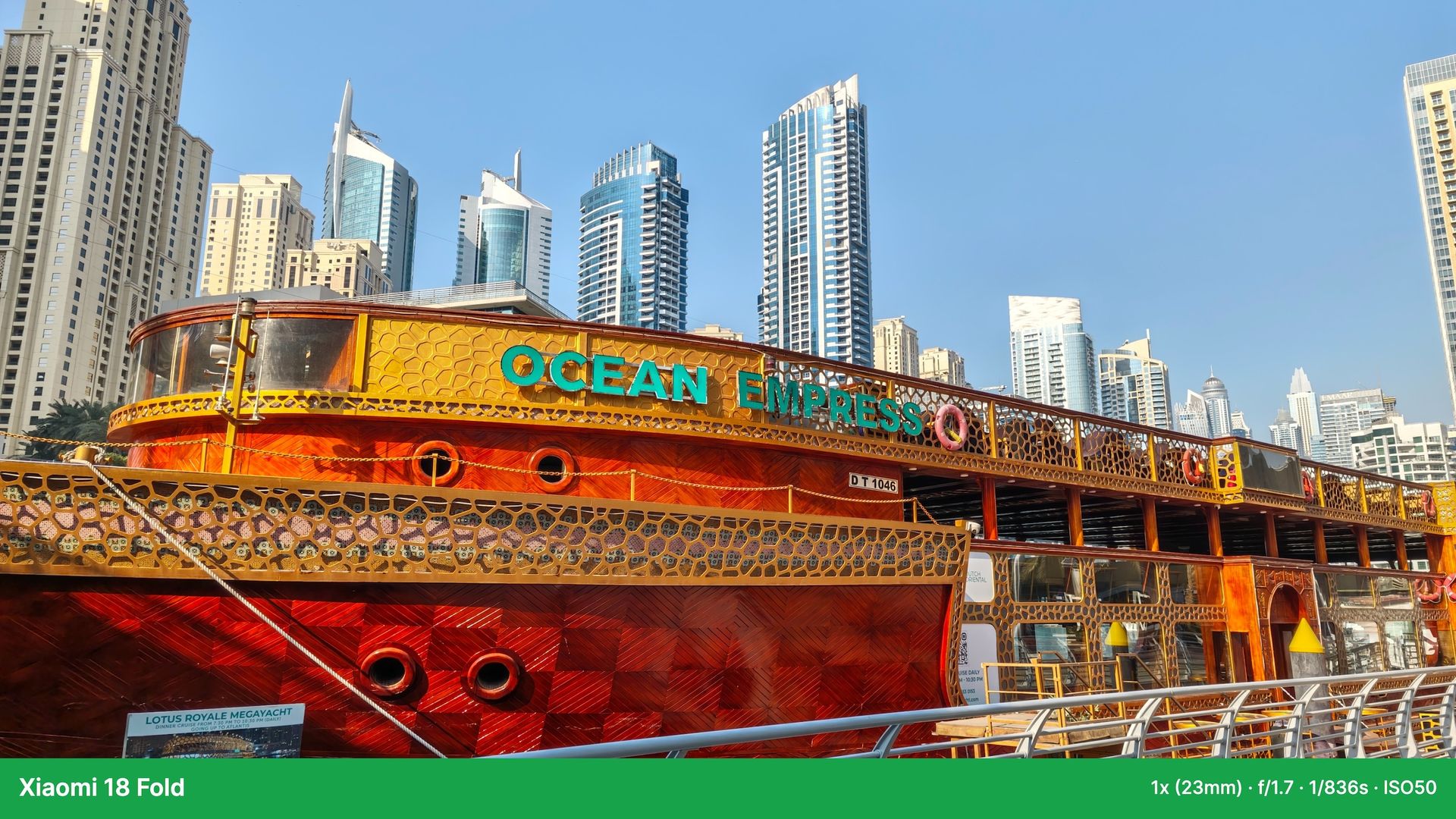
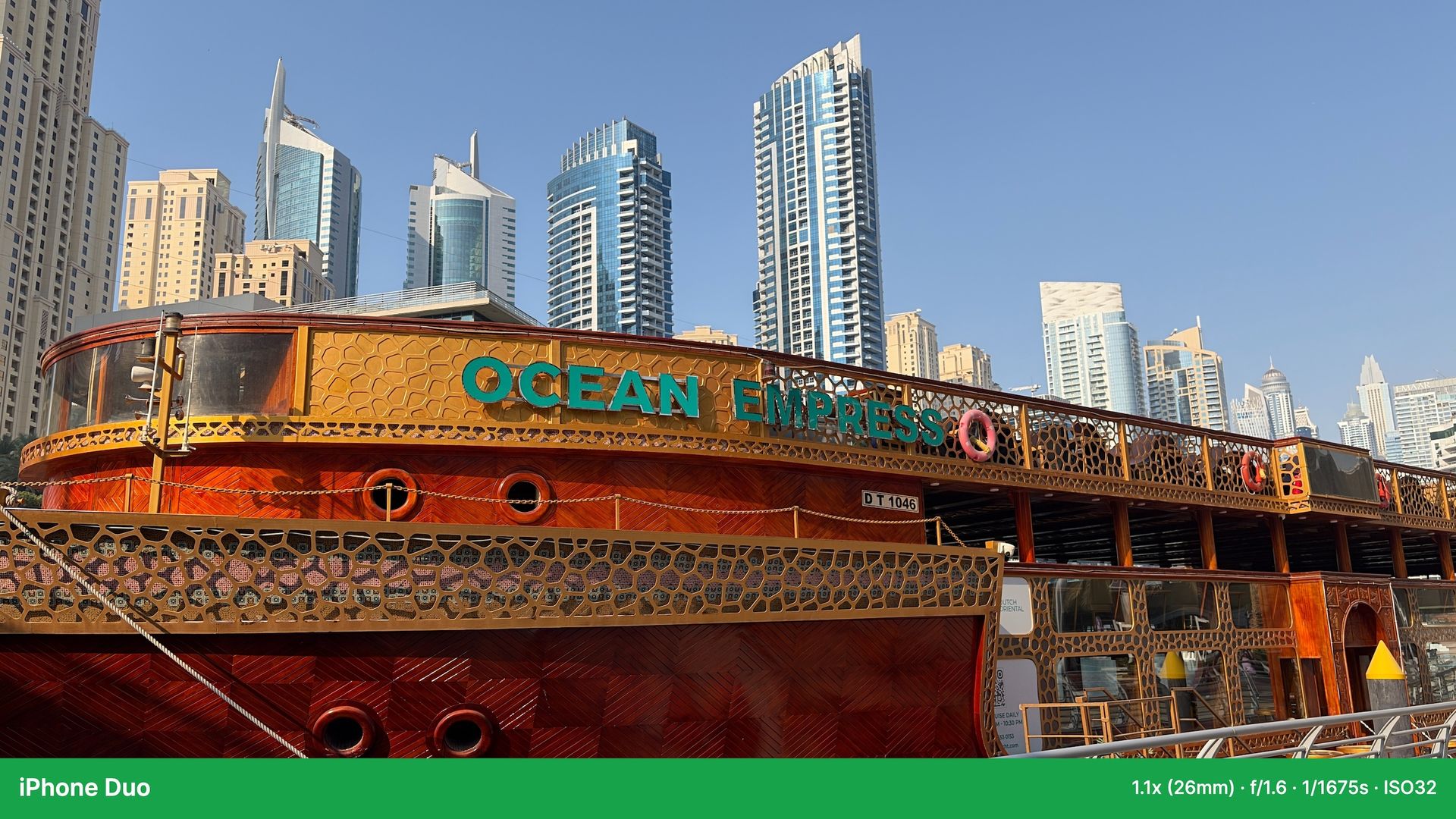
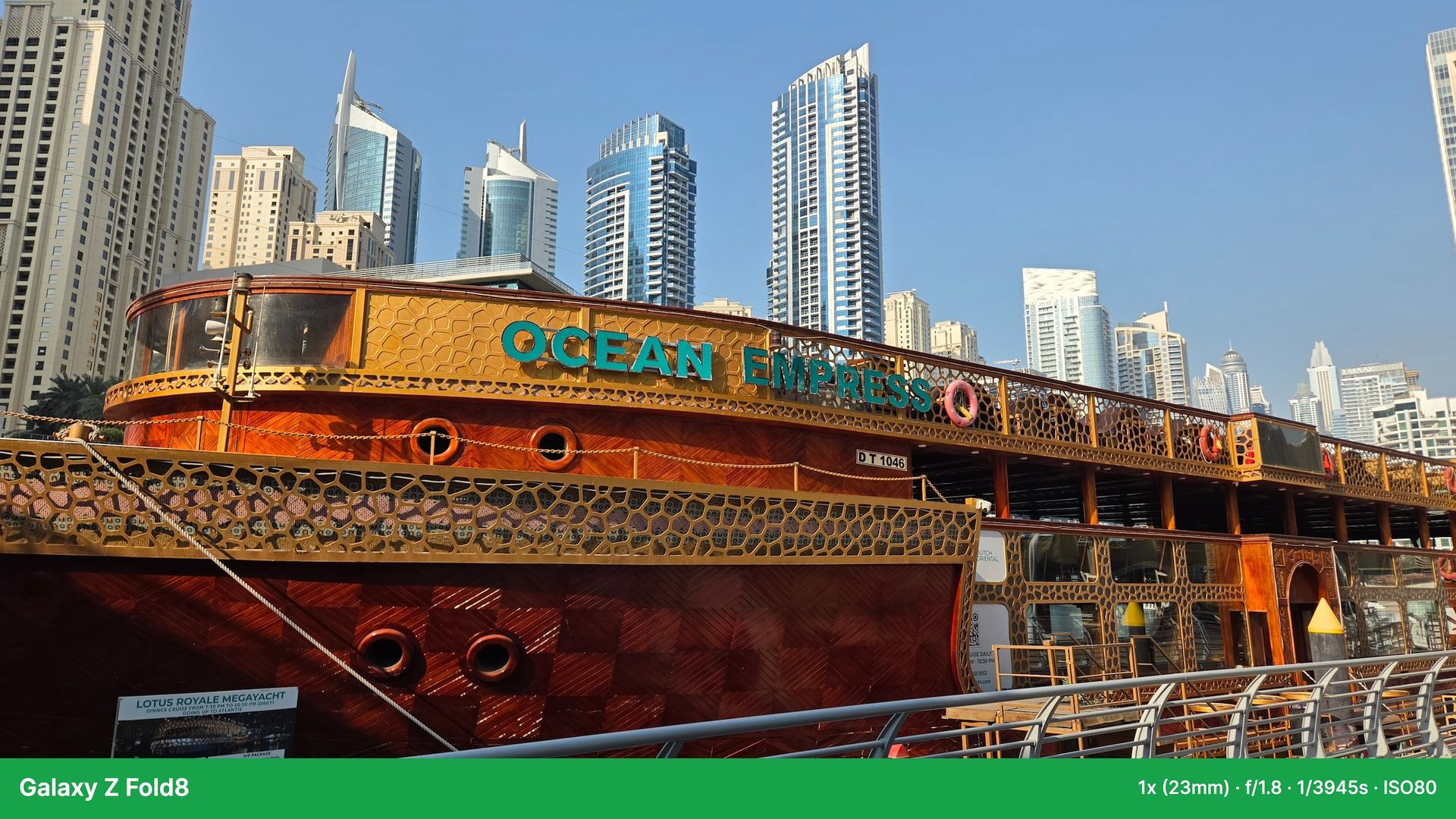
Both the Galaxy Z Fold 8 and Xiaomi 18 Fold shoot at a wider 23mm focal length, while the iPhone Duo's 26mm main lens crops noticeably tighter into every scene.
 Nirave Gondhia
 Nirave Gondhia
 Nirave Gondhia
The Ocean Empress yacht along the marina is a textbook showcase of how these three pipelines diverge.
Xiaomi's Leica Vibrant profile produces the most inviting, rich-looking photo straight out of the camera, giving the red-mahogany hull and gold latticework warm depth without blowing out the silver skyscrapers behind it.
Samsung favors cooler tones and aggressive contrast, leaving the lower-left hull signage significantly darker, while Apple prioritizes balanced exposure across the entire frame.
 Nirave Gondhia
 Nirave Gondhia
 Nirave Gondhia
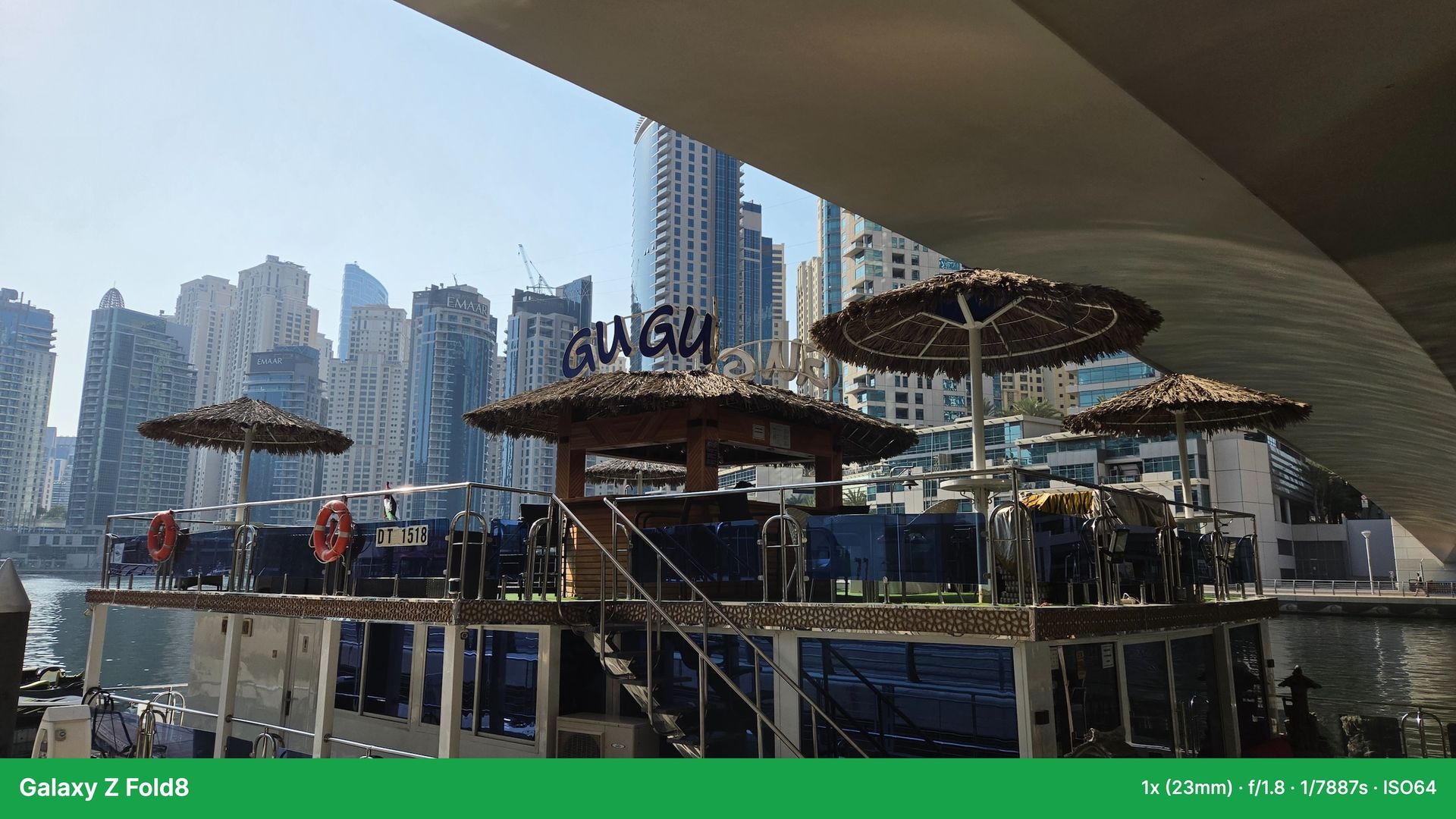
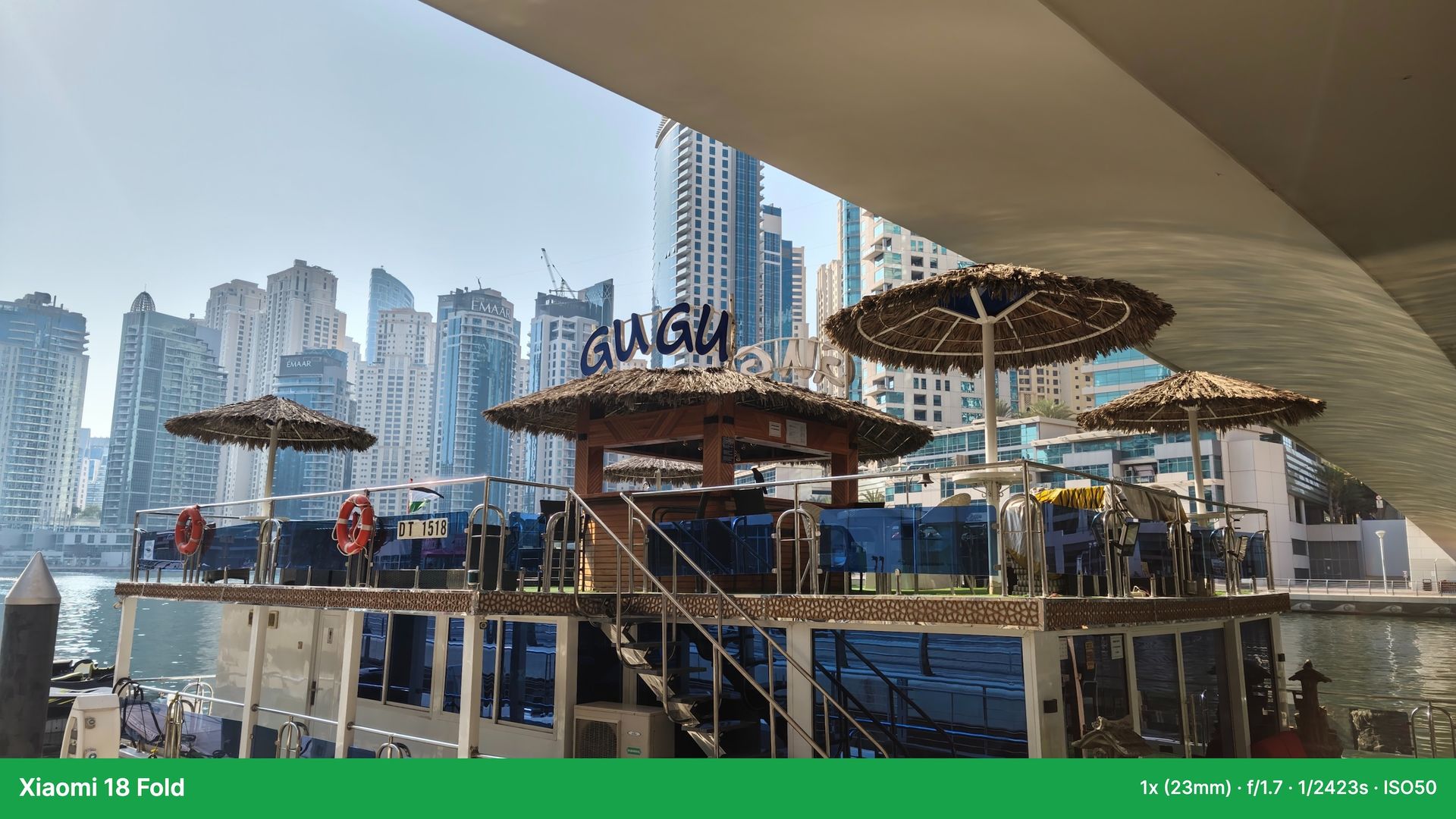
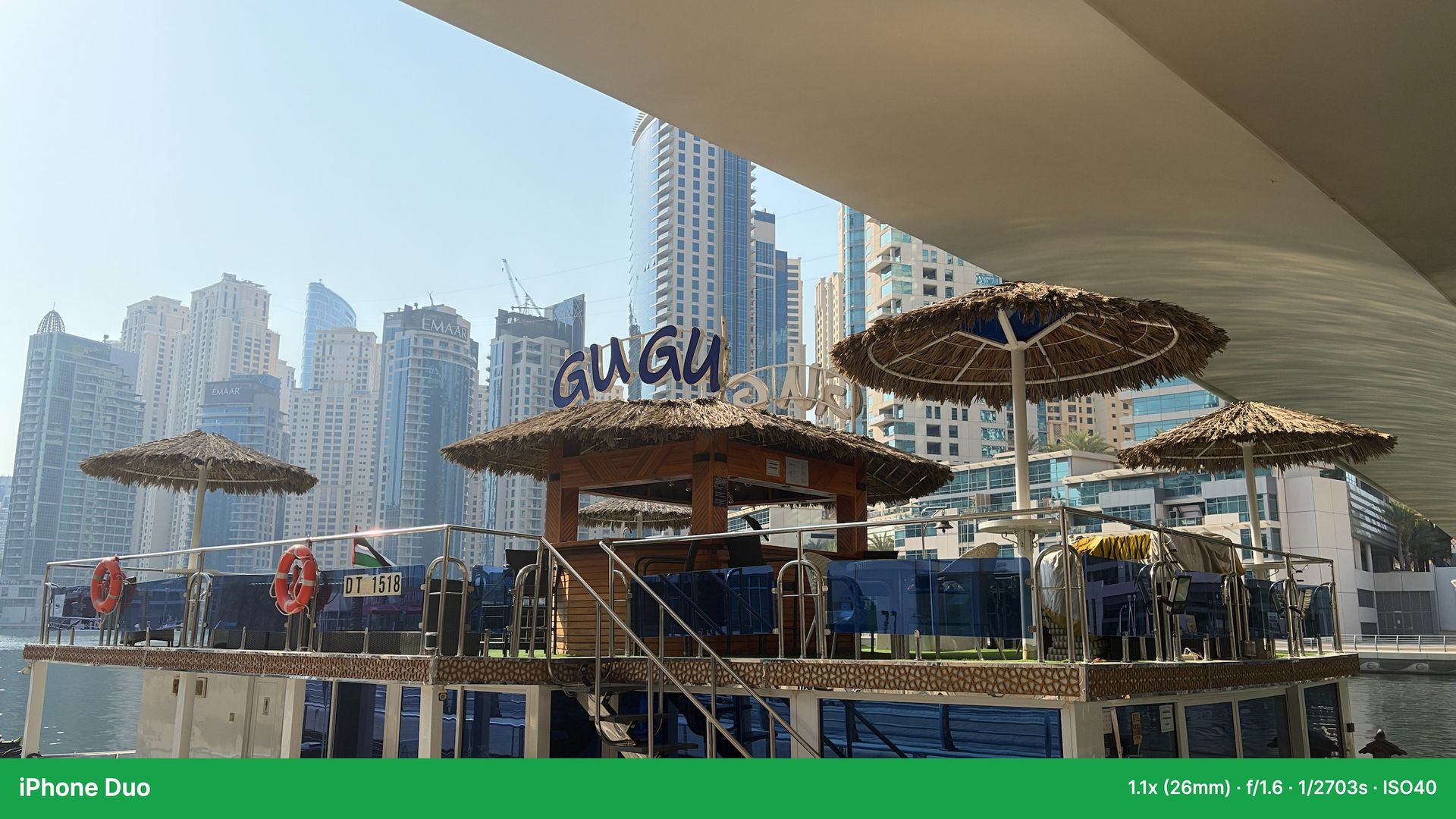
Push dynamic range to the limit-like shooting from underneath a massive concrete bridge out into harsh midday sun-and the iPhone Duo's computational HDR takes the lead.
Apple renders the shaded underside of the concrete arch smoothly and keeps the lower boat deck legible, trading away a bit of blue saturation in the bright sky. Samsung keeps the sky bluest, but crushes the bridge overhang into a flat, greenish-grey shadow. Xiaomi sits comfortably in the middle, holding better sky color than Apple while avoiding Samsung's crushed shadows.
2. Ultrawide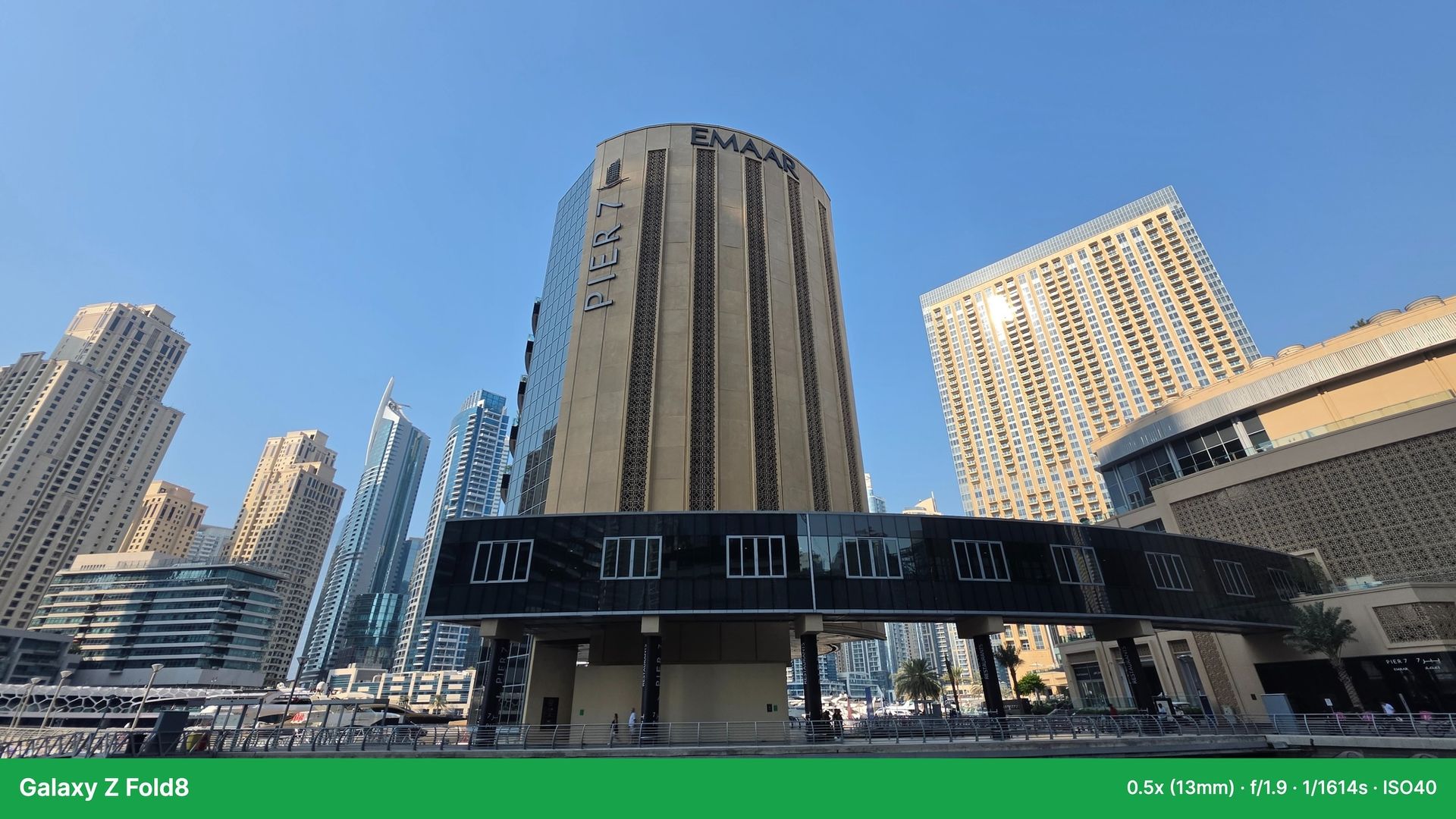 Nirave Gondhia
 Nirave Gondhia
 Nirave Gondhia
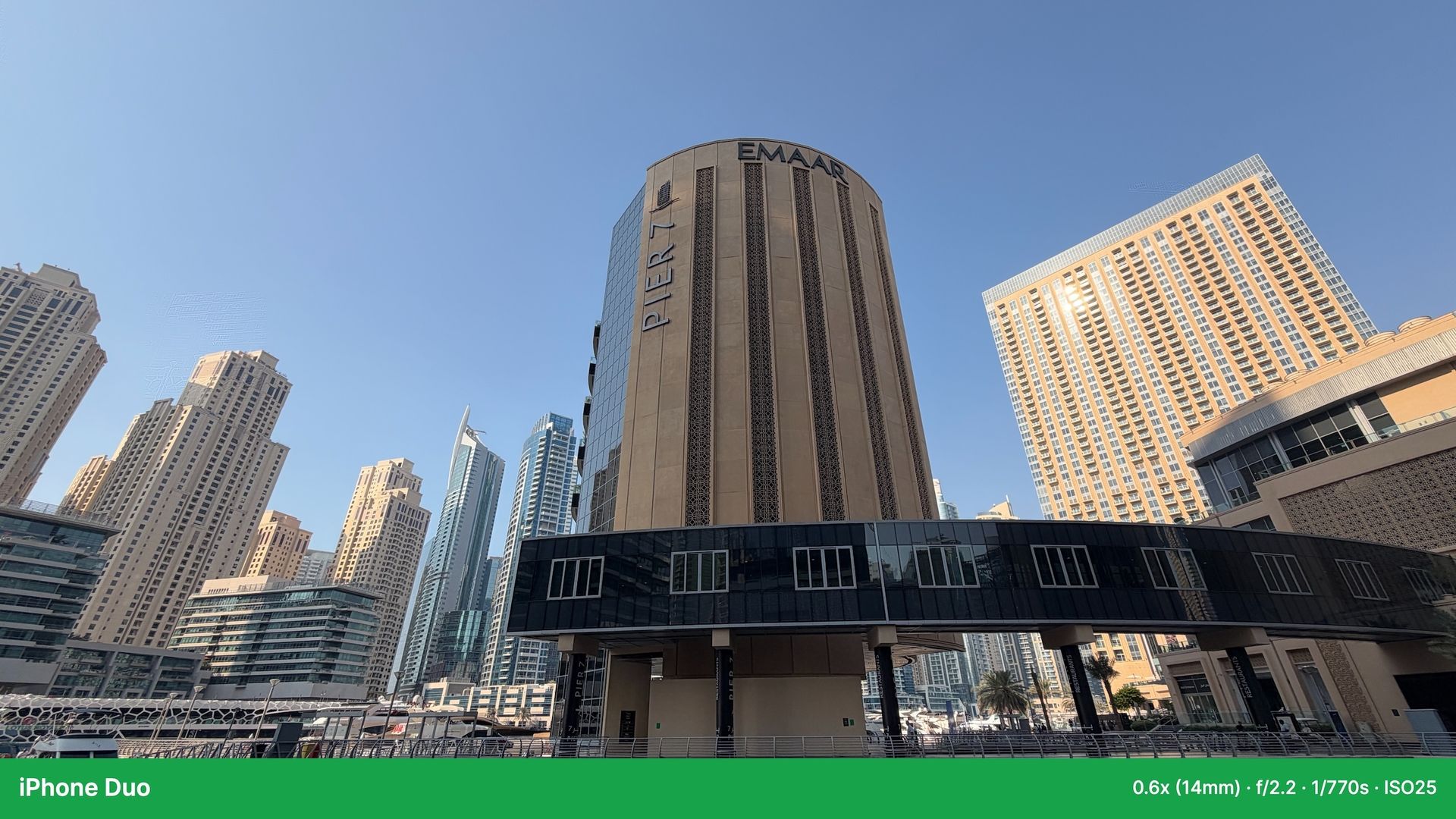
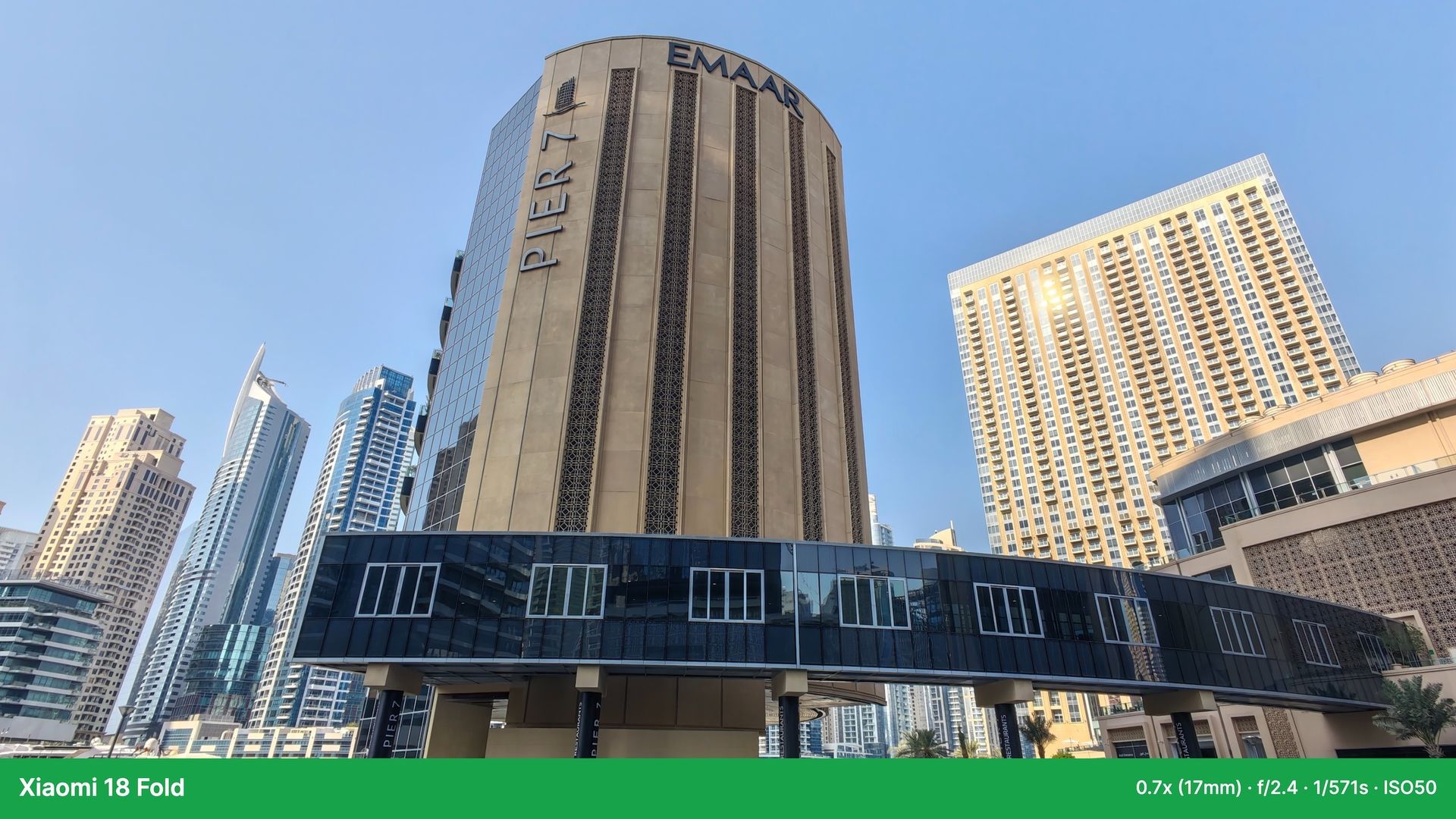
Switch to the ultrawide lenses, and we see further subtle differences, largely due to hardware choices. While Samsung (13mm, 0.5x) and Apple (14mm, 0.6x) deliver true sweeping ultrawide perspectives, the Xiaomi 18 Fold's 17mm (0.7x) ultrawide is noticeably narrower - and slower at f/2.4, which impacts the amount of light it can capture.
Standing in front of Pier 7, that 4mm focal-length gap between Samsung and Xiaomi is dramatic: the Galaxy Z Fold 8 captures the entire skyscraper on the far left edge, whereas the Xiaomi 18 Fold slices it clean out of the frame.
Between the two wider shooters, Samsung gives you slightly more real estate and bolder blue skies, while the iPhone Duo handles harsh architectural reflections on the sunlit right-hand tower and deep shadows under the skybridge with noticeably better dynamic range
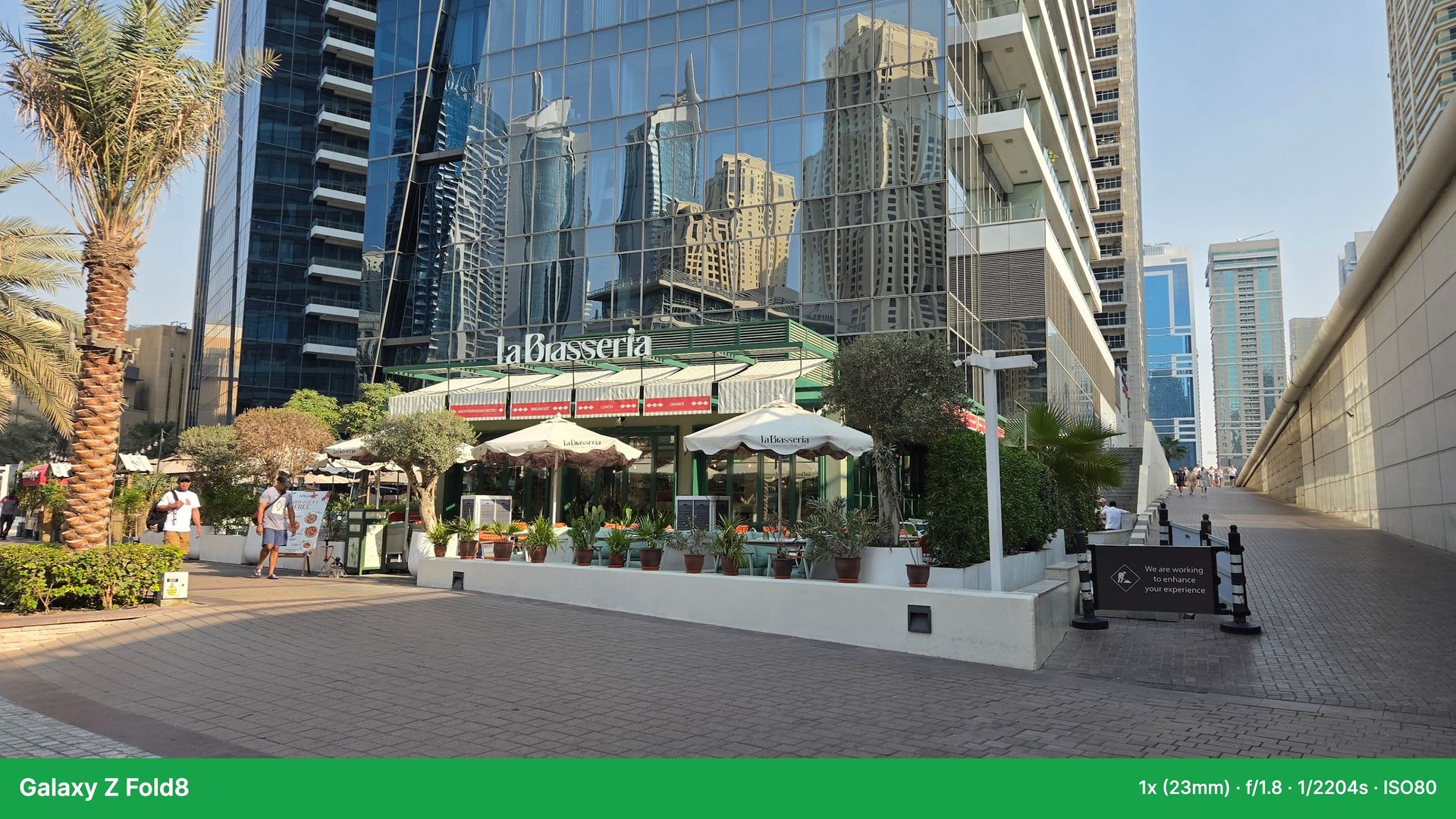
3. Daytime zoomIf you care about zoom on a foldable, or you're actively considering these three devices, this is the entire ballgame.
Neither the iPhone Duo nor the standard Galaxy Z Fold 8 includes an optical telephoto lens, leaving both reliant on main-sensor digital crops. Do you actually need a dedicated telephoto lens, though?
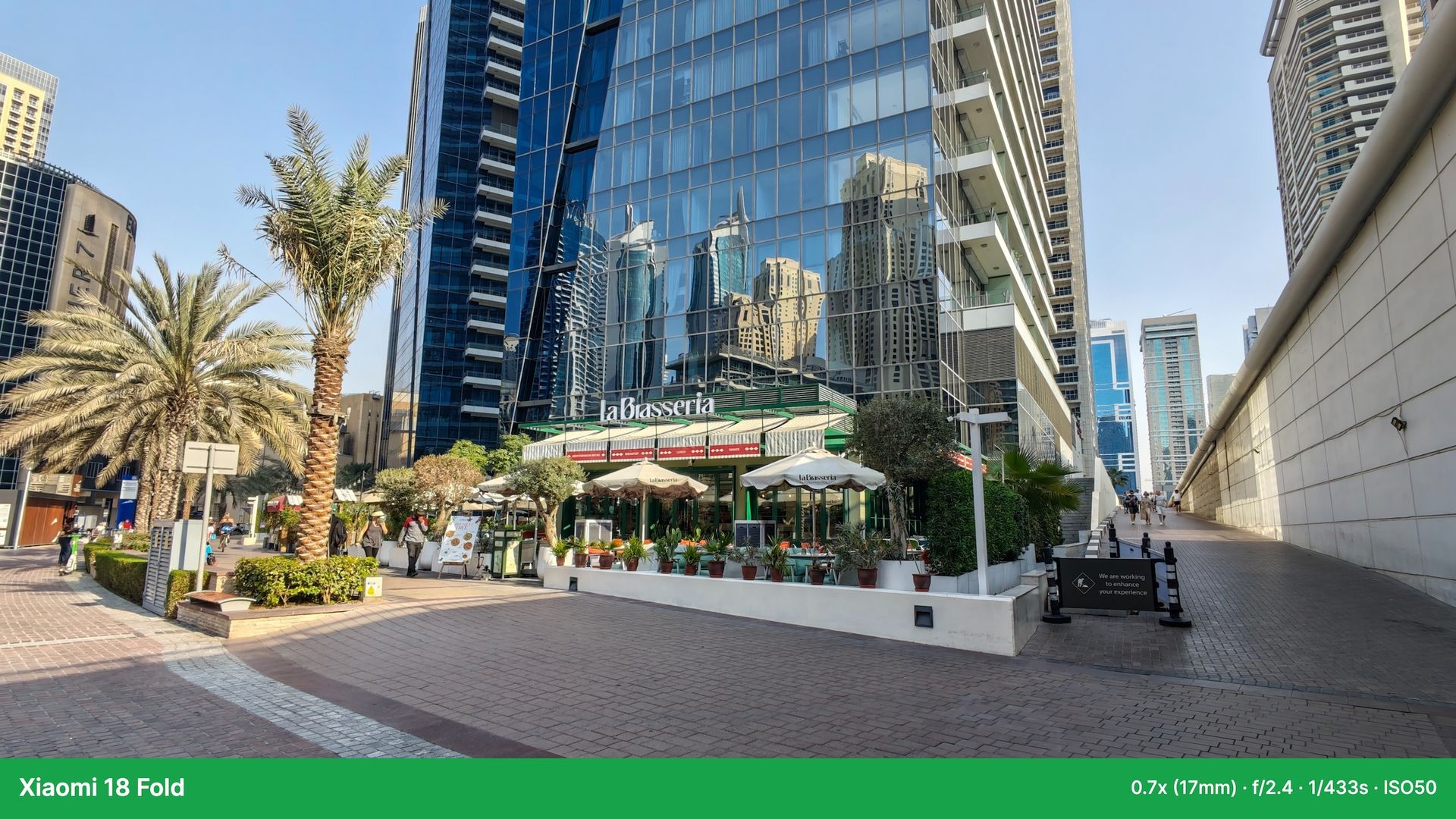
The Xiaomi 18 Fold packs a native 80mm (3.3x) periscope telephoto - and it embarrasses the competition from 3x all the way out to 96x. Look no further: this is the passport-style foldable made for an actual pro camera experience.
 Nirave Gondhia
 Nirave Gondhia
 Nirave Gondhia
 Nirave Gondhia
 Nirave Gondhia
 Nirave Gondhia
 Nirave Gondhia
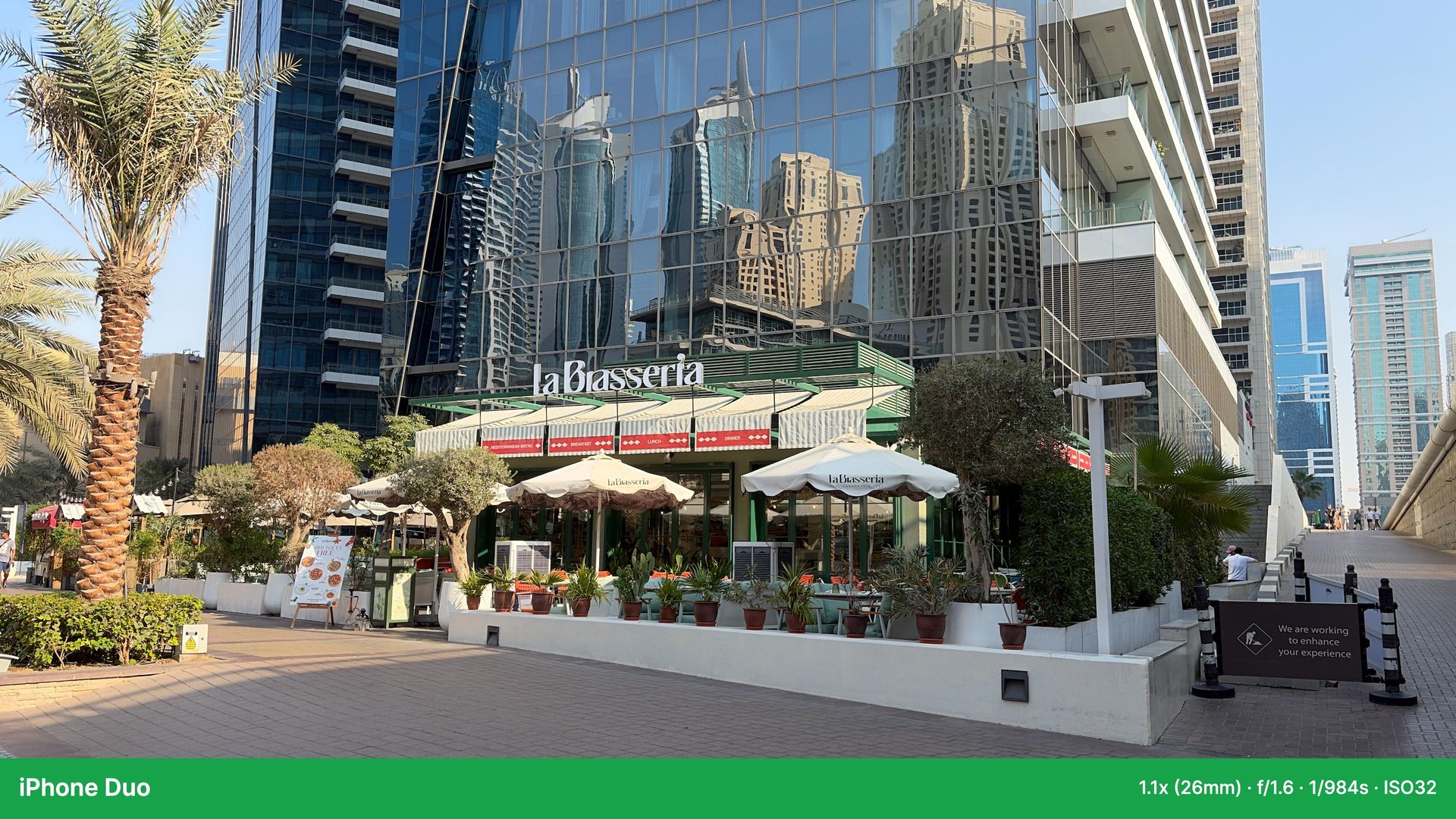 Nirave Gondhia
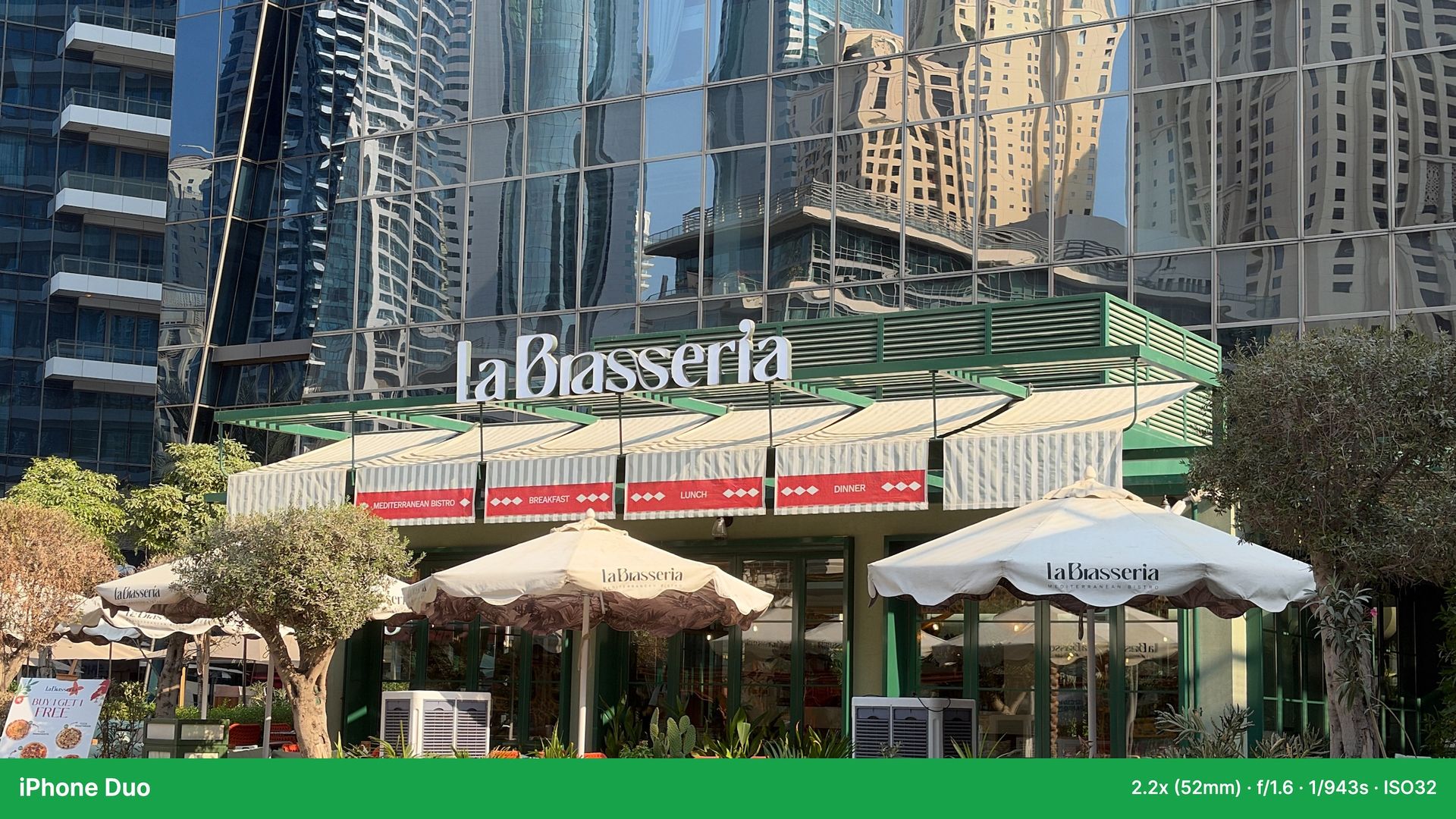 Nirave Gondhia
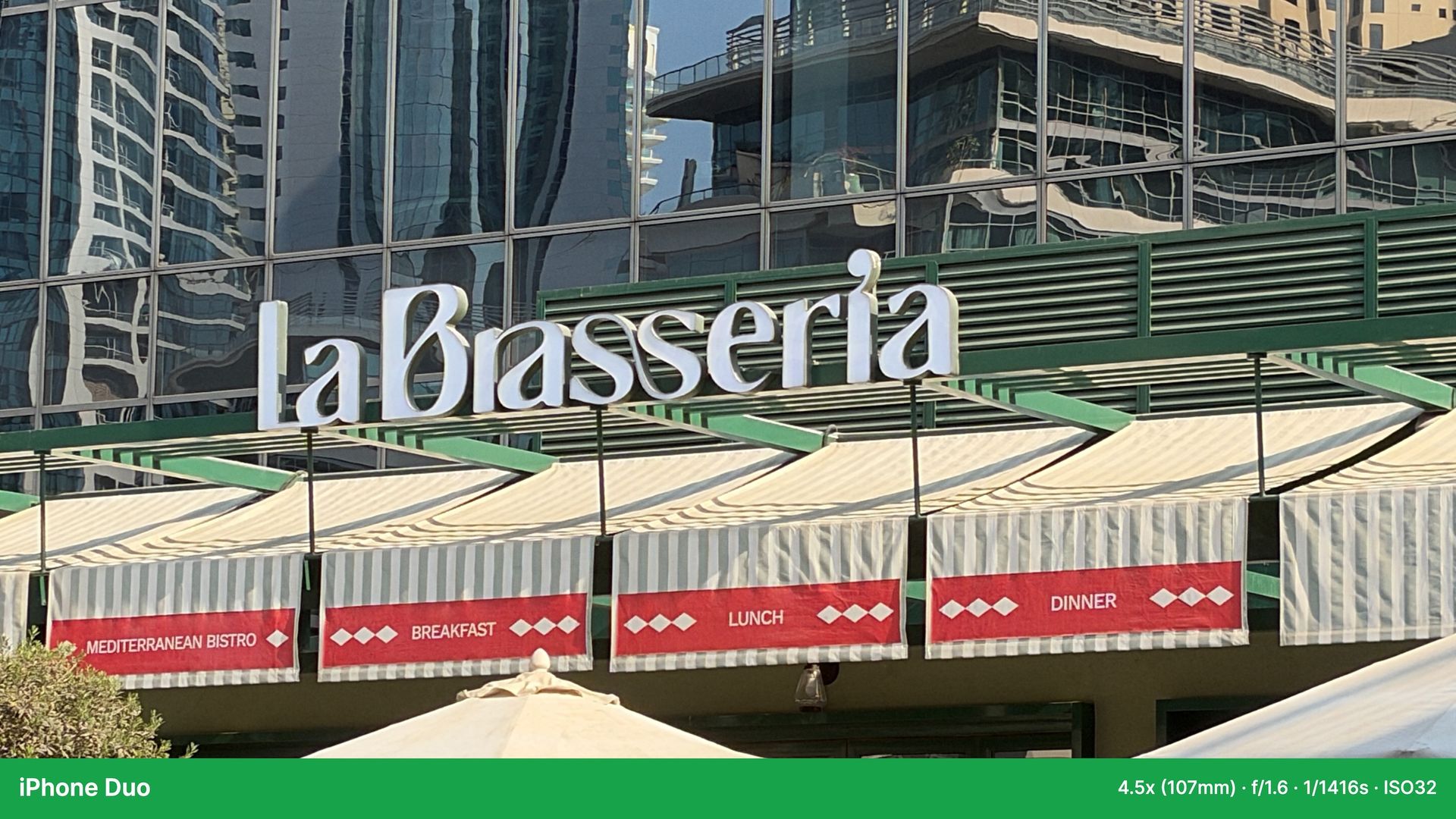 Nirave Gondhia
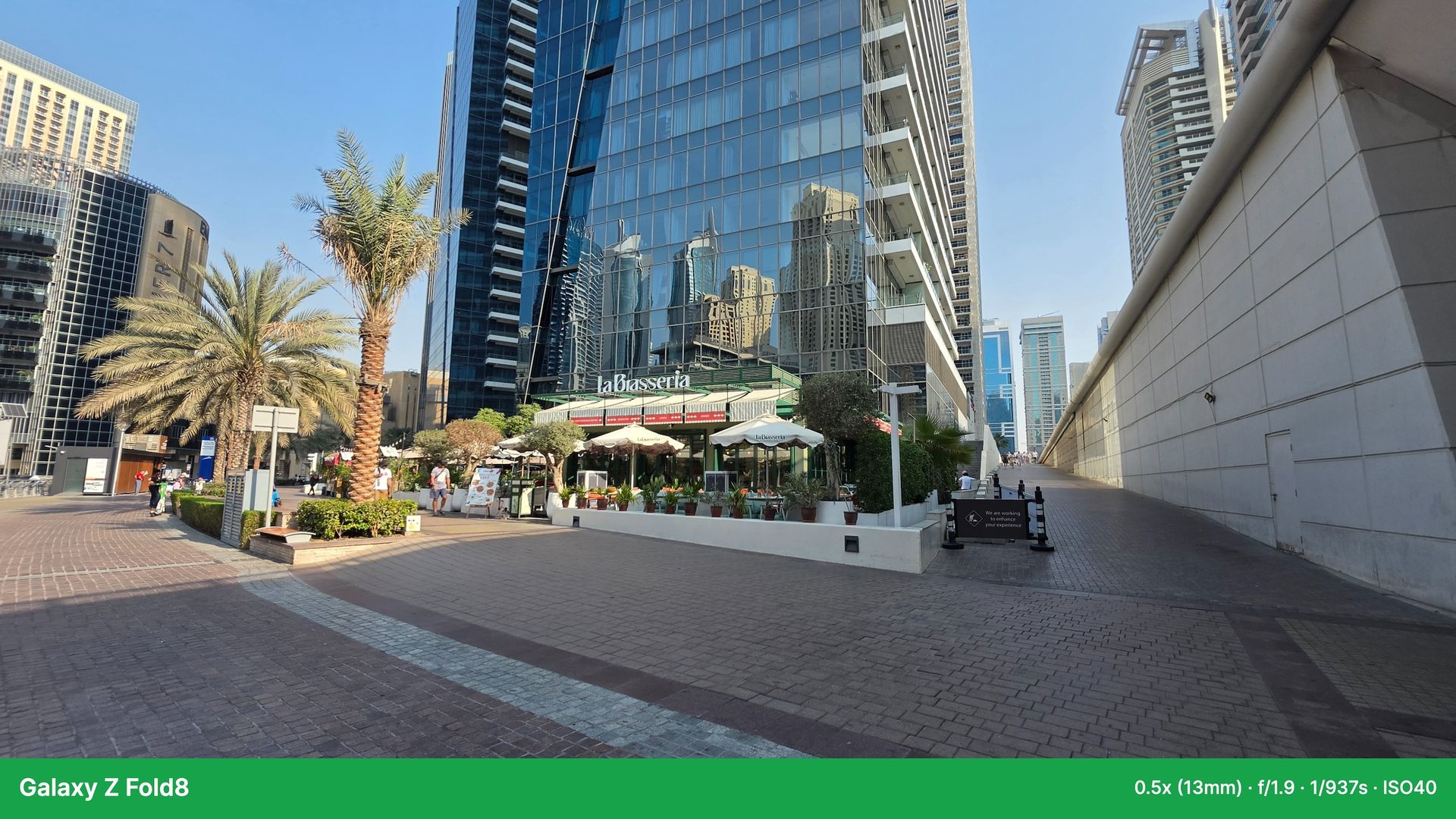 Nirave Gondhia
 Nirave Gondhia
 Nirave Gondhia
 Nirave Gondhia
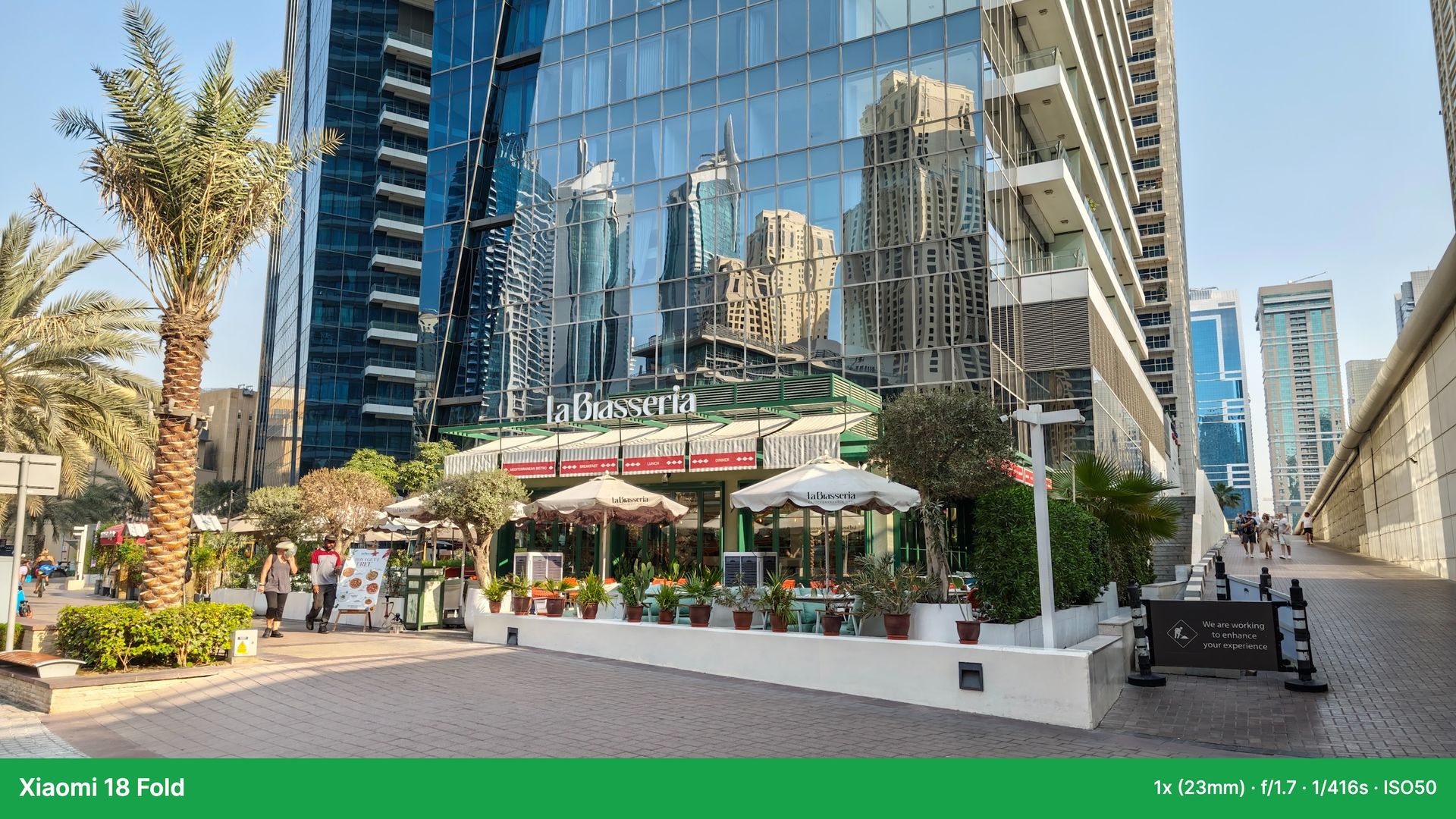
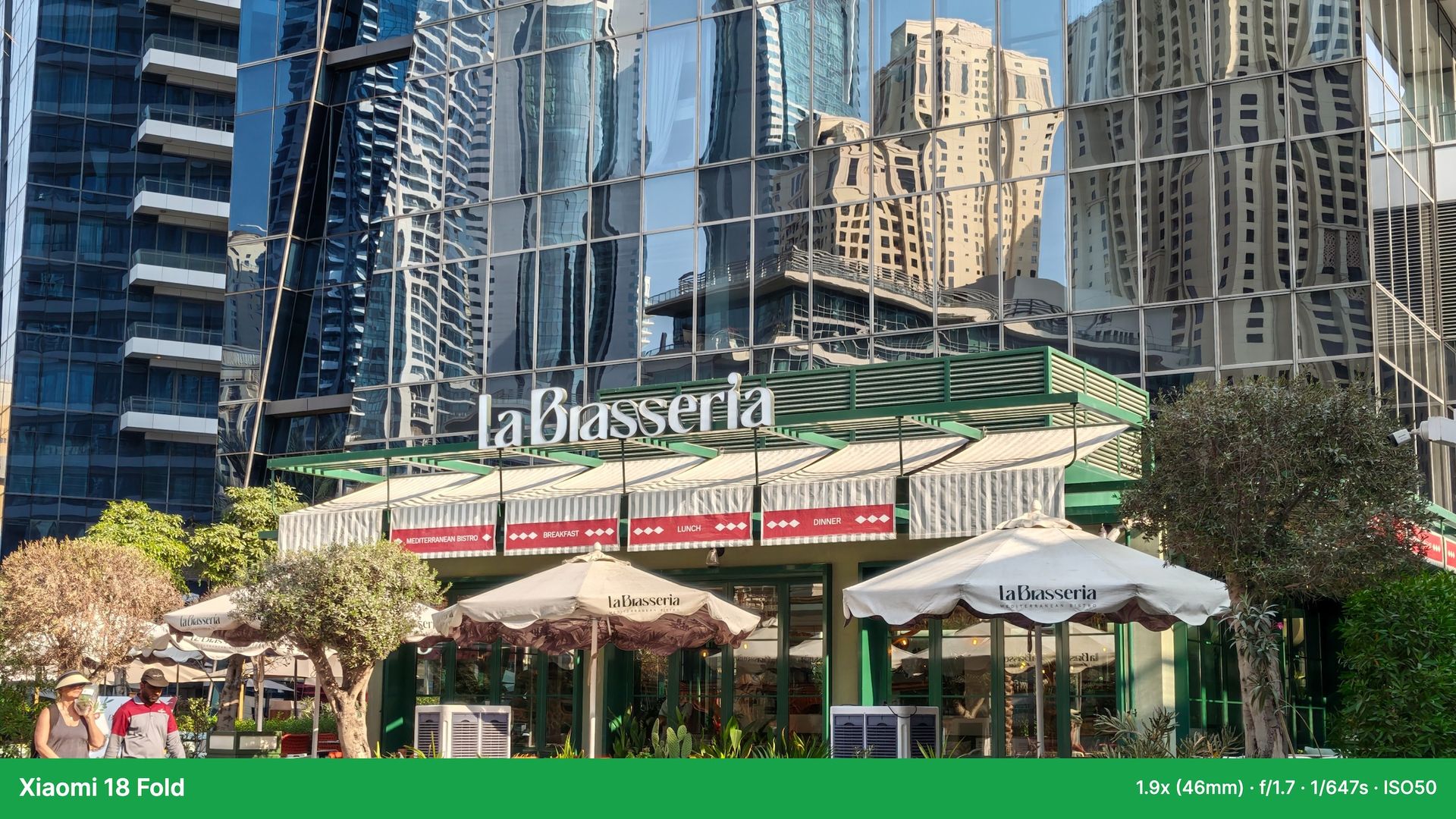
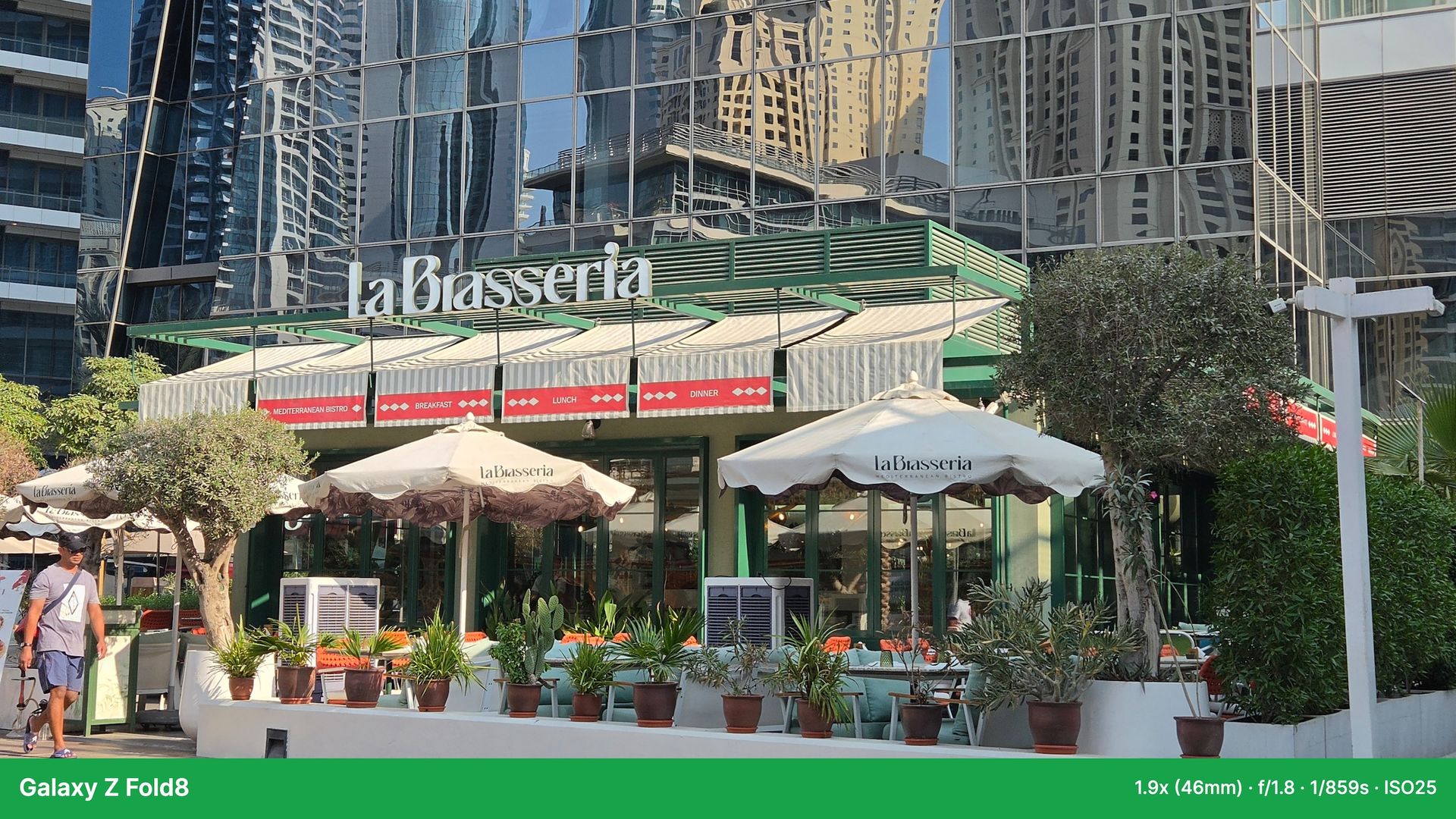
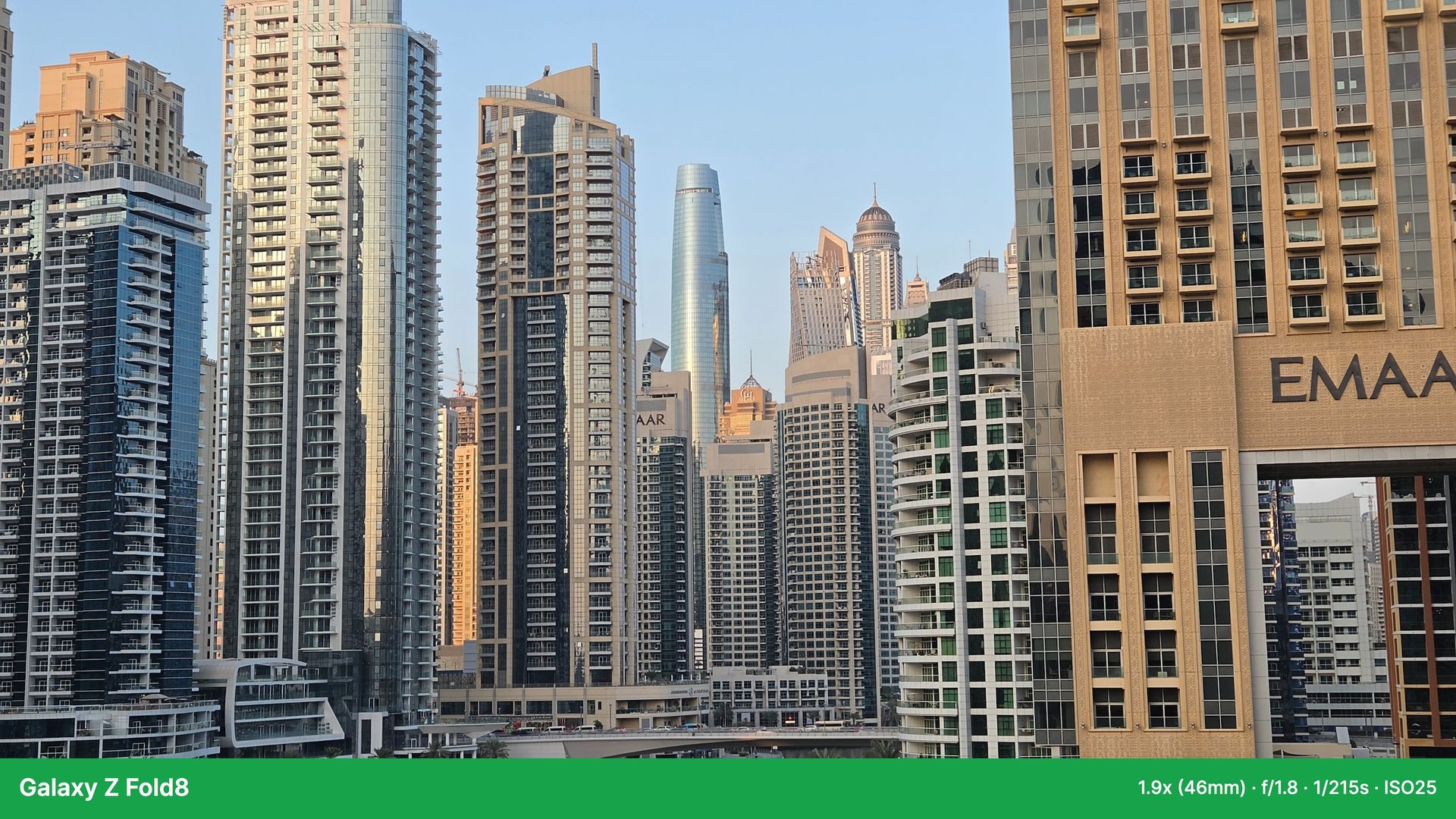
At 2x (46mm-52mm), all three phones lean on high-resolution main-sensor crops and look sharp enough for social media. Push past 3x, however, and the gap opens immediately.
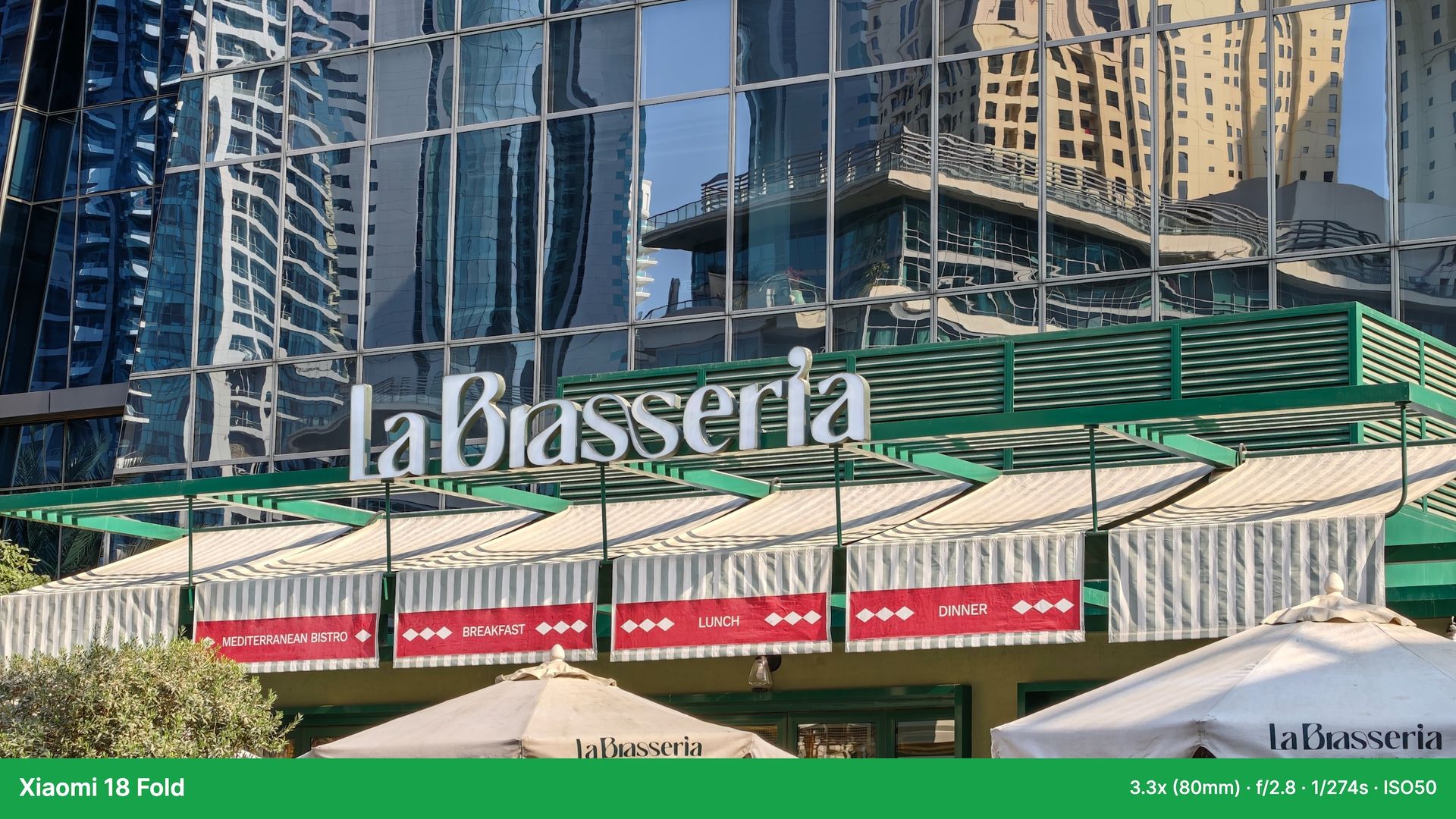
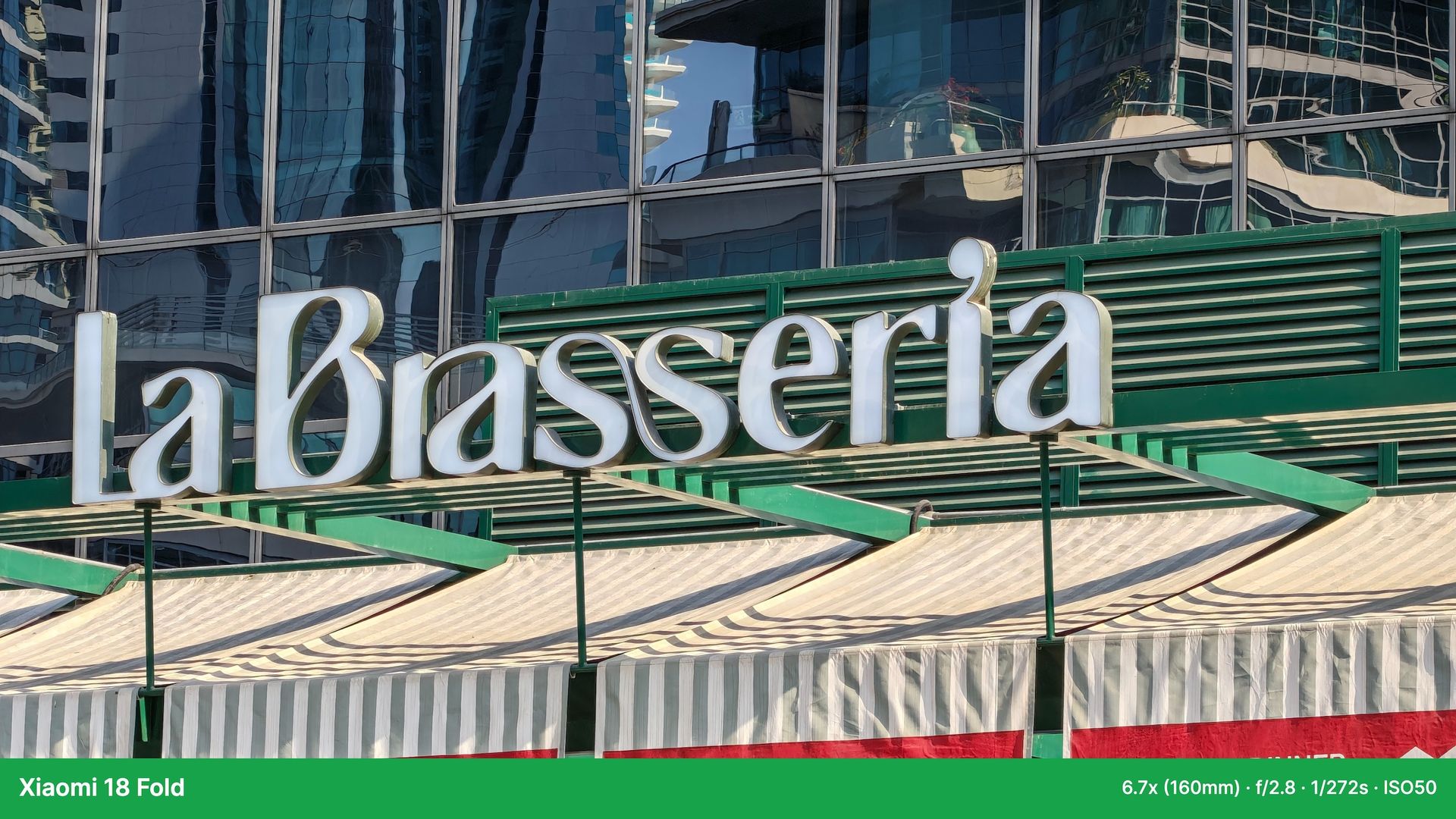
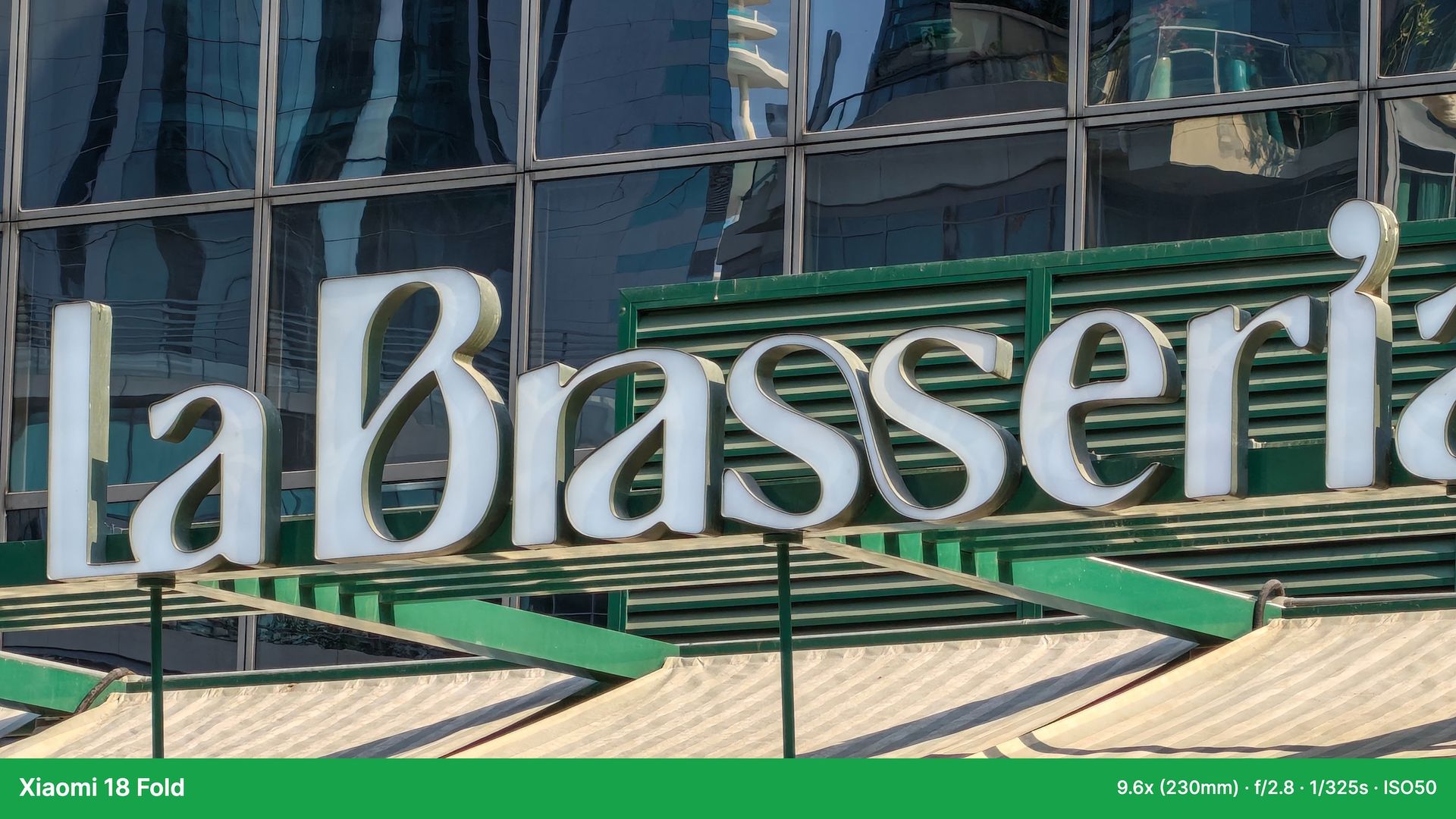
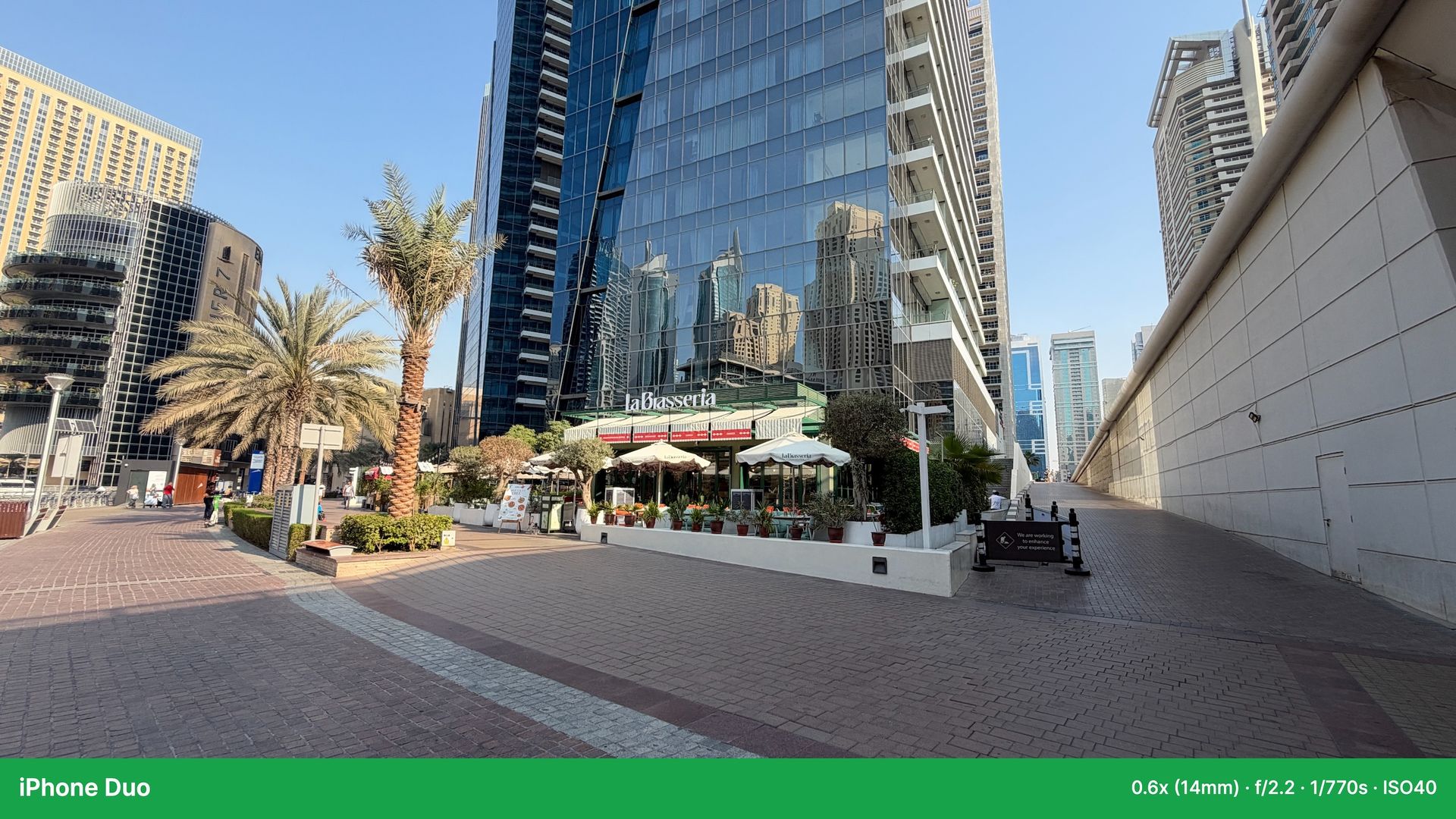
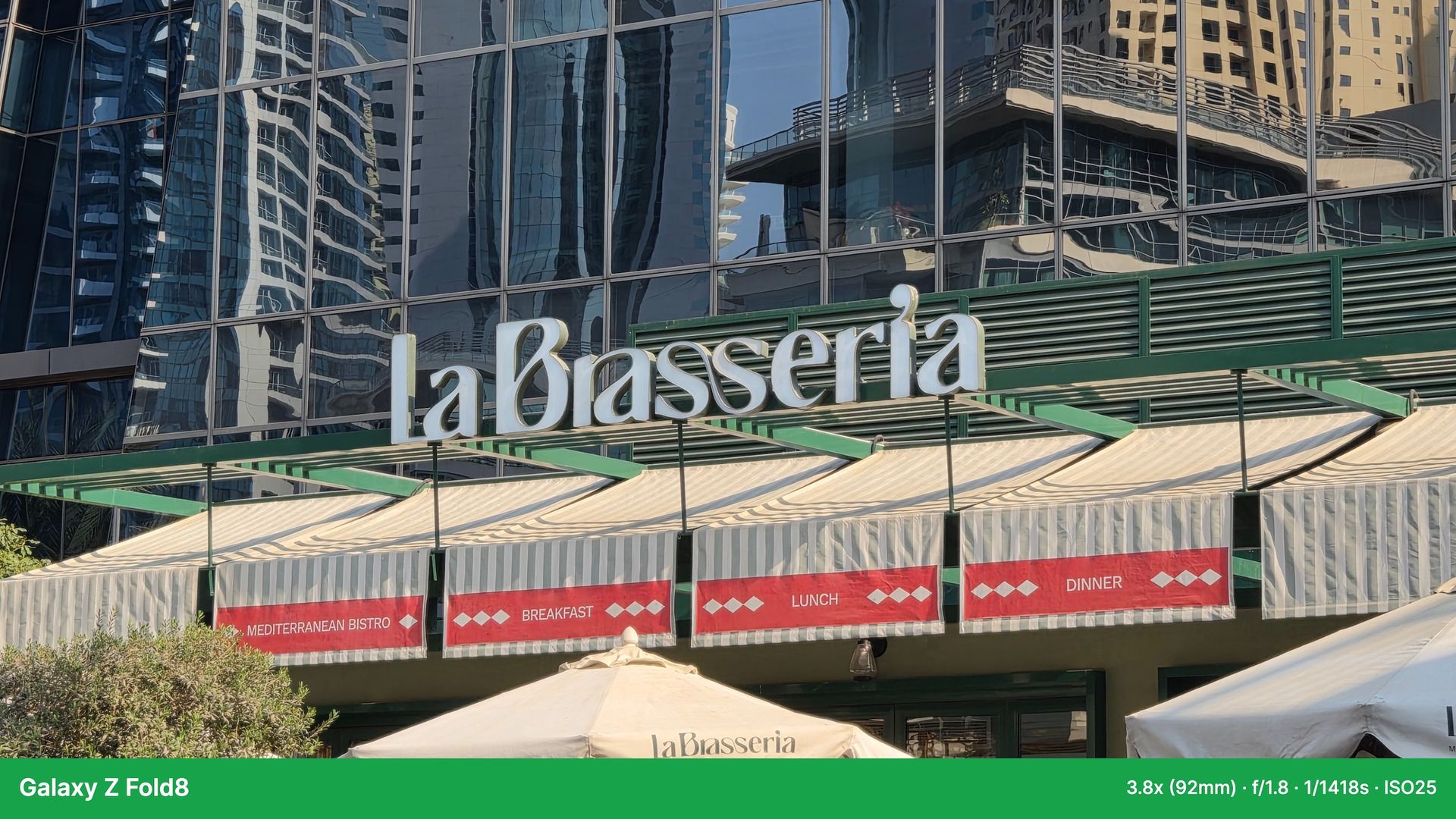
In front of La Brasseria, the iPhone Duo actually outshoots the Galaxy Z Fold 8 at ~4x: even though Apple crops tighter to 4.5x (107mm) compared to Samsung's 3.8x (92mm), the iPhone's 48MP sensor crop resolves cleaner lettering on the red menu banners and crisper horizontal slats behind the sign, whereas Samsung's denoising smears the striped awning into watercolor mush.
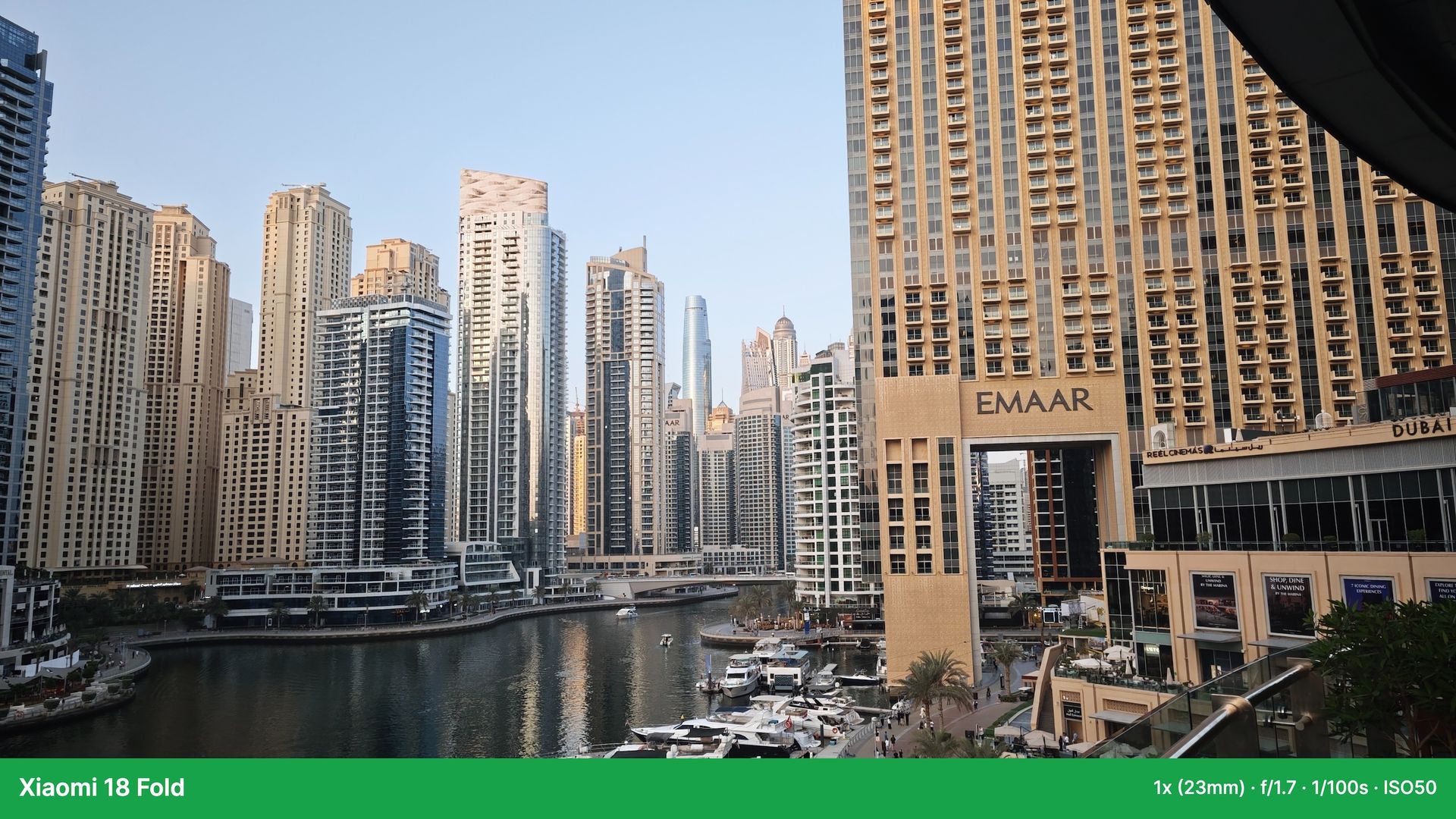
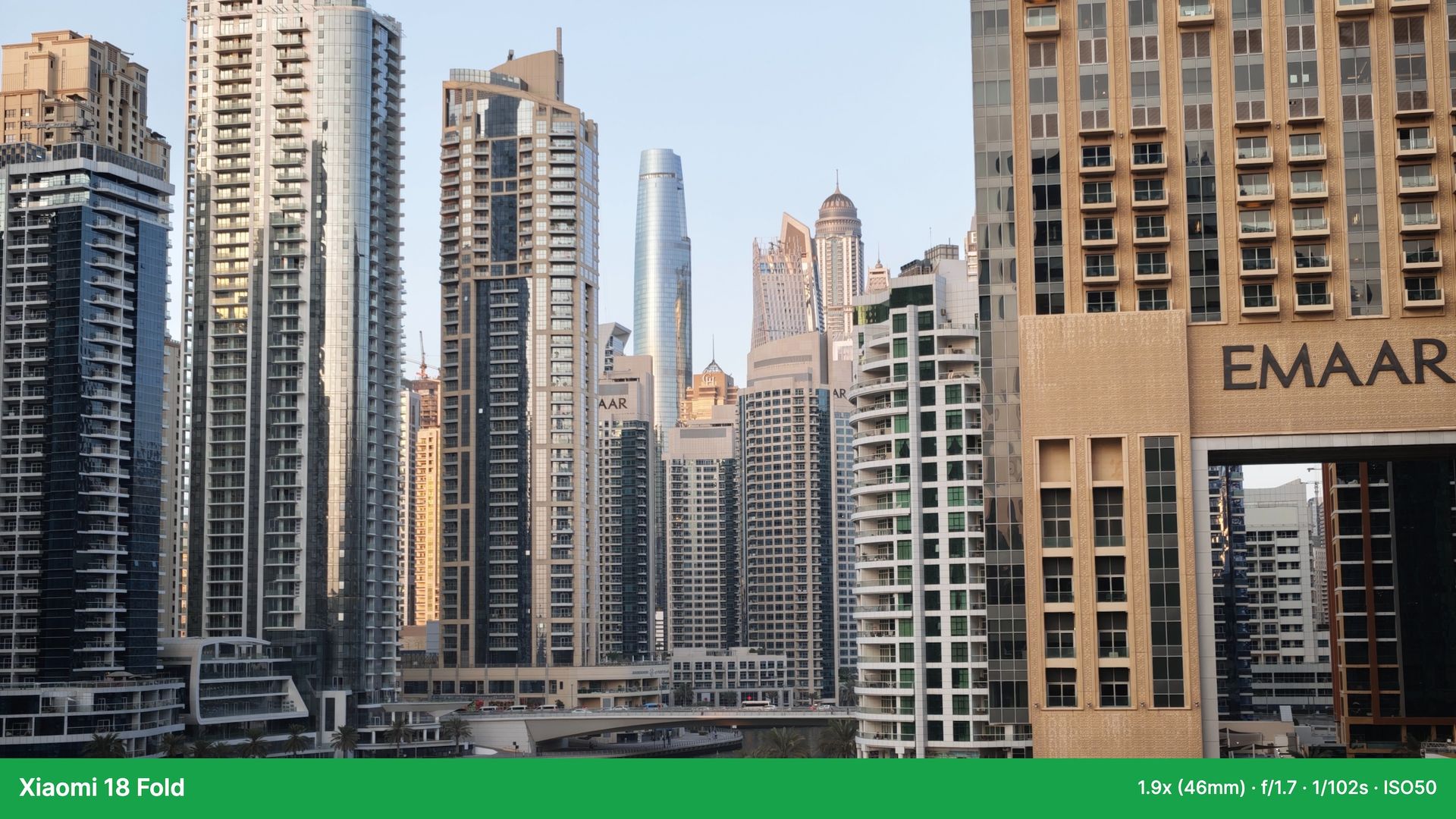
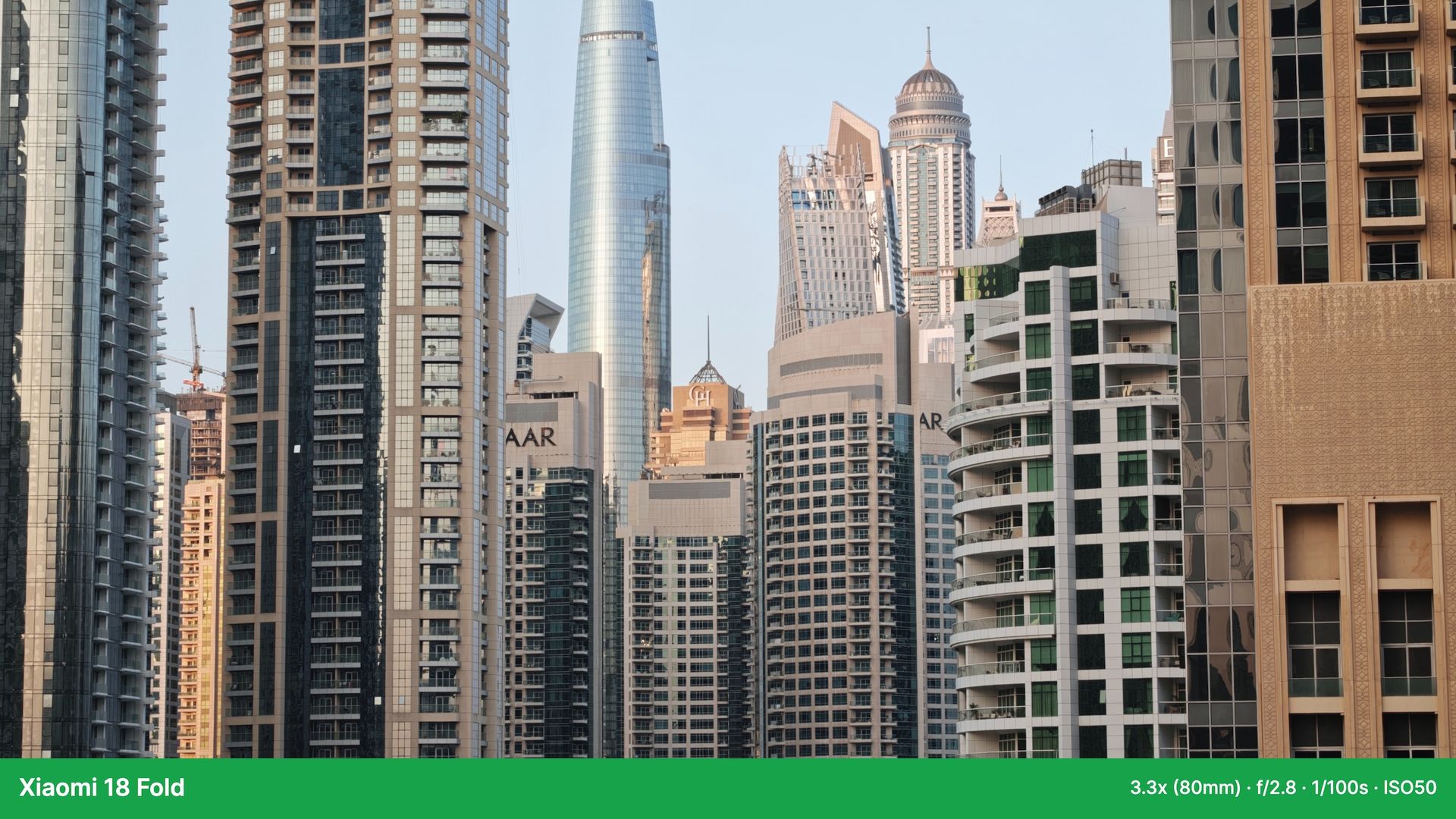
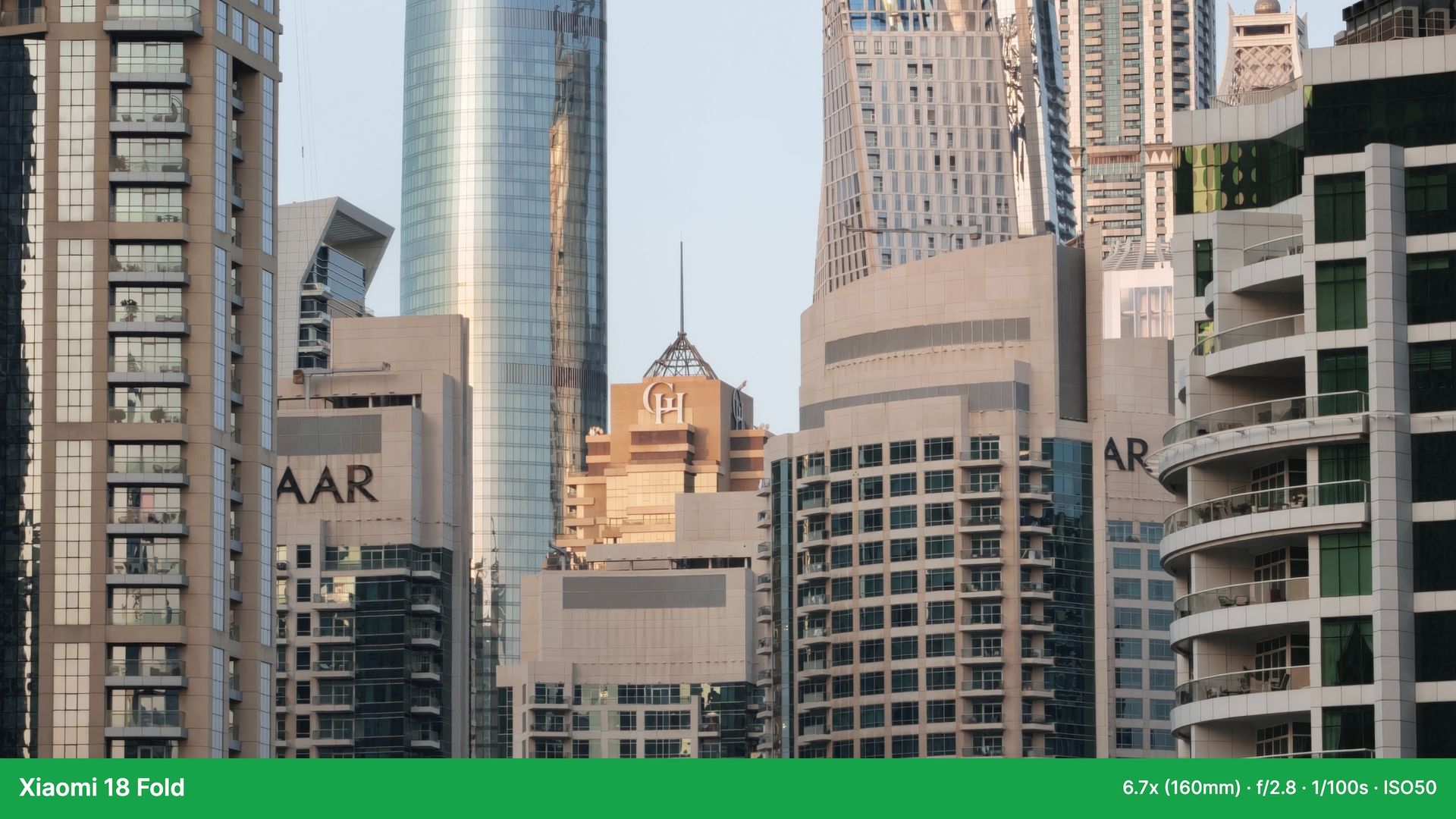
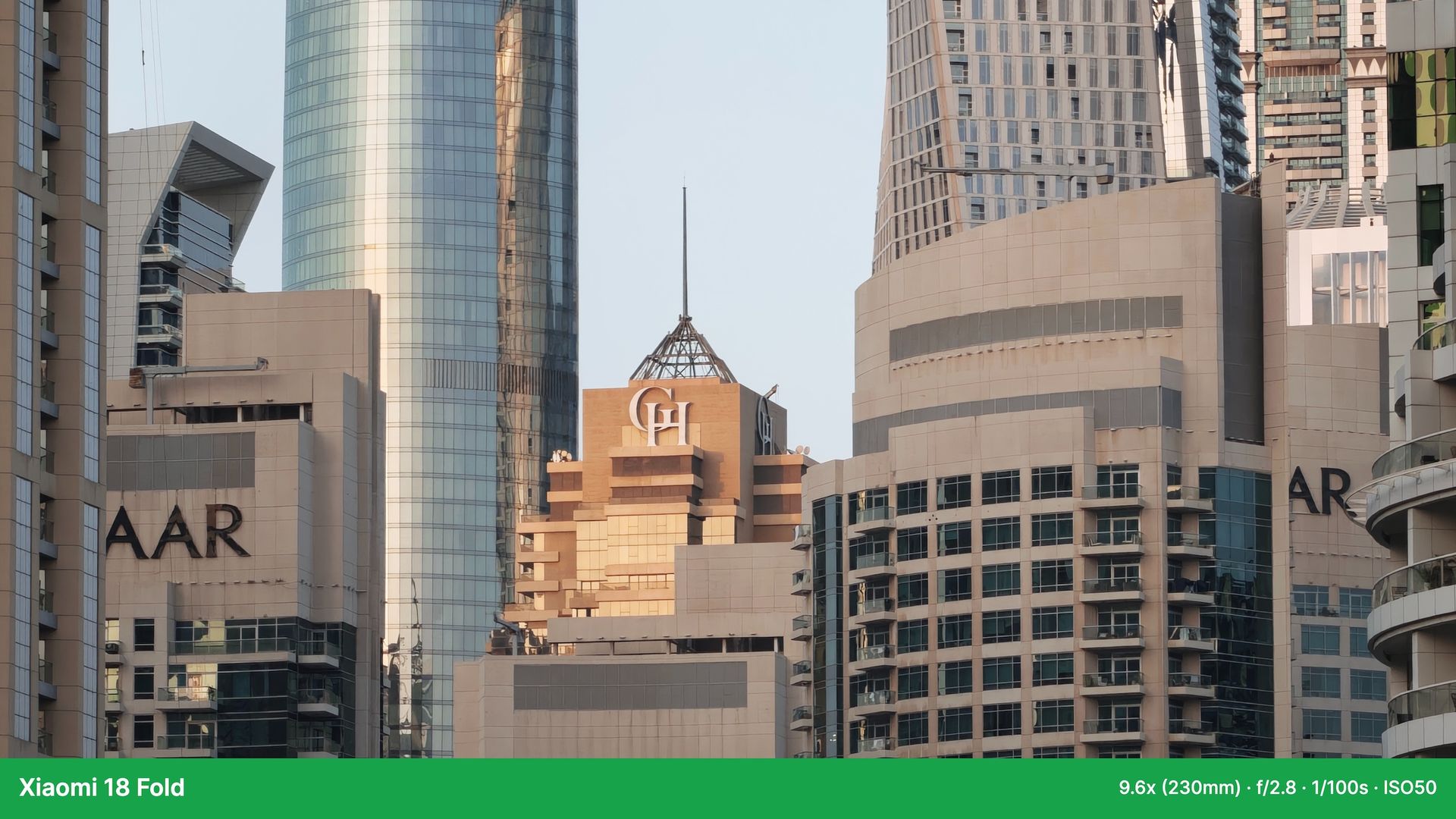
Then you switch to the Xiaomi 18 Fold's 3.3x (80mm) periscope - and neither digital crop comes close. Real glass resolves individual threads in the awning fabric, crisp white diamond motifs, and clean metallic edges on the sign, staying remarkably sharp even pushed to 6.7x (160mm) and 9.6x (230mm).
 Nirave Gondhia
 Nirave Gondhia
 Nirave Gondhia
 Nirave Gondhia
 Nirave Gondhia
 Nirave Gondhia
 Nirave Gondhia
 Nirave Gondhia
 Nirave Gondhia
 Nirave Gondhia
 Nirave Gondhia
 Nirave Gondhia
 Nirave Gondhia
 Nirave Gondhia
 Nirave Gondhia
 Nirave Gondhia
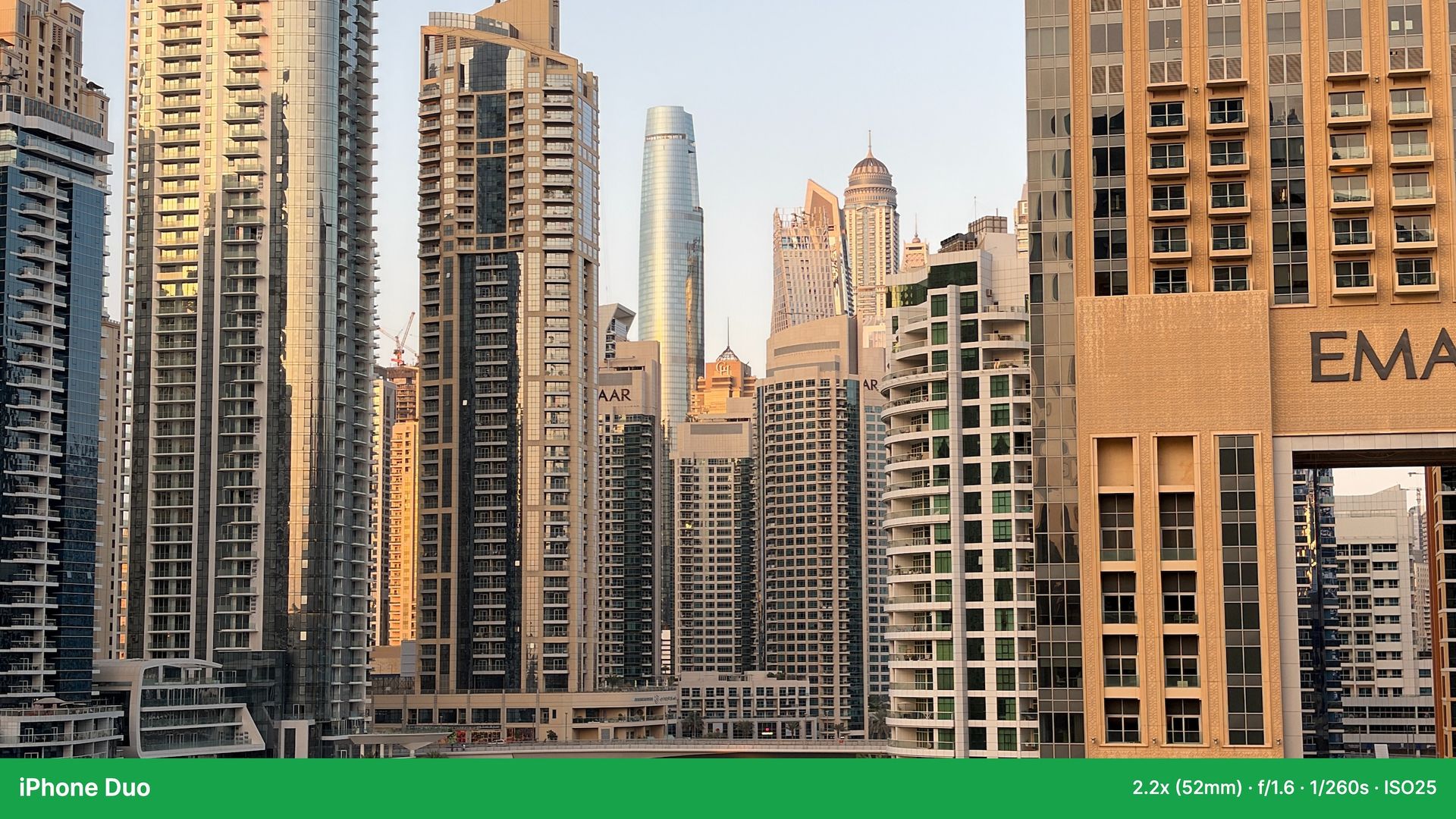
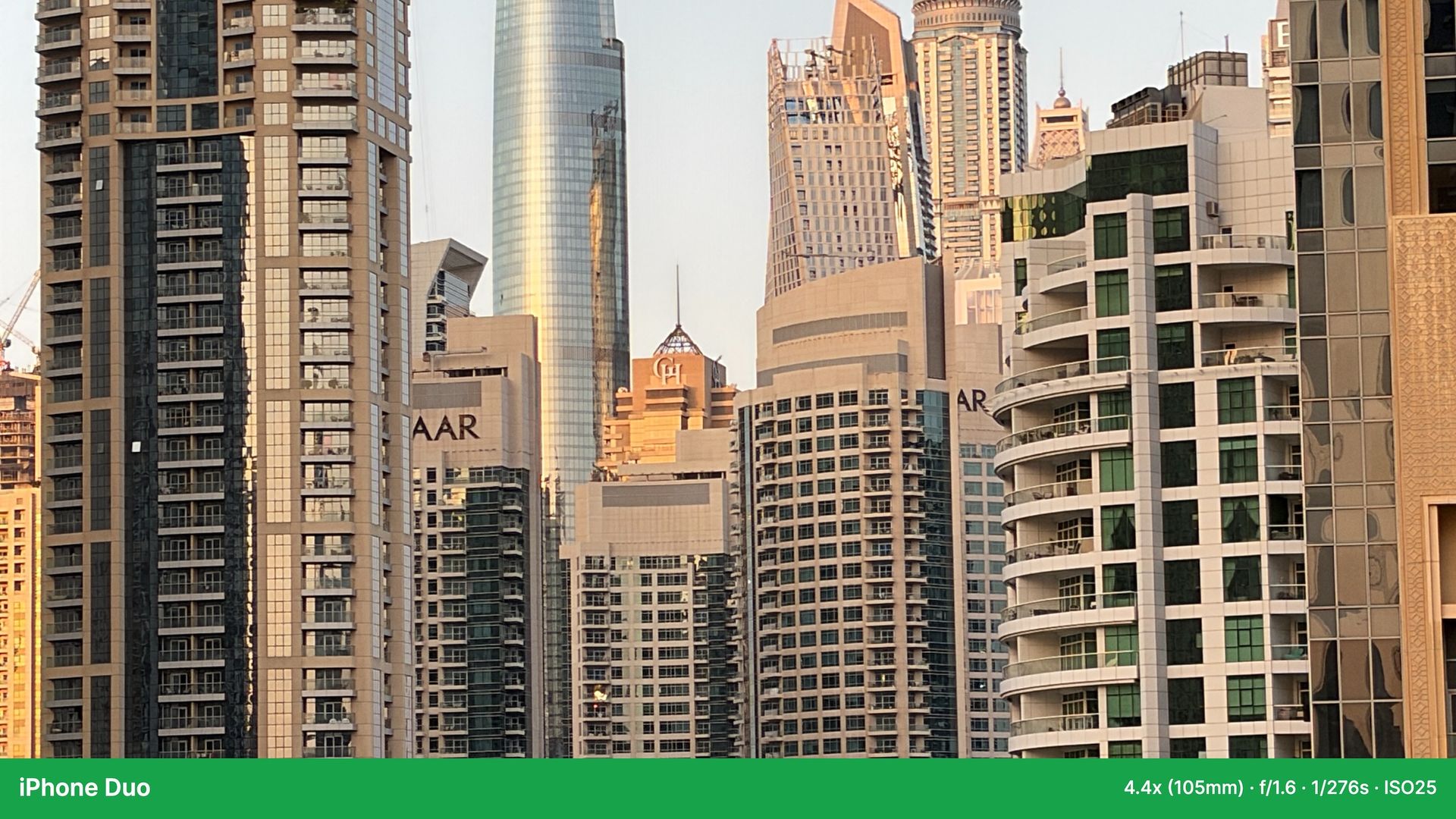
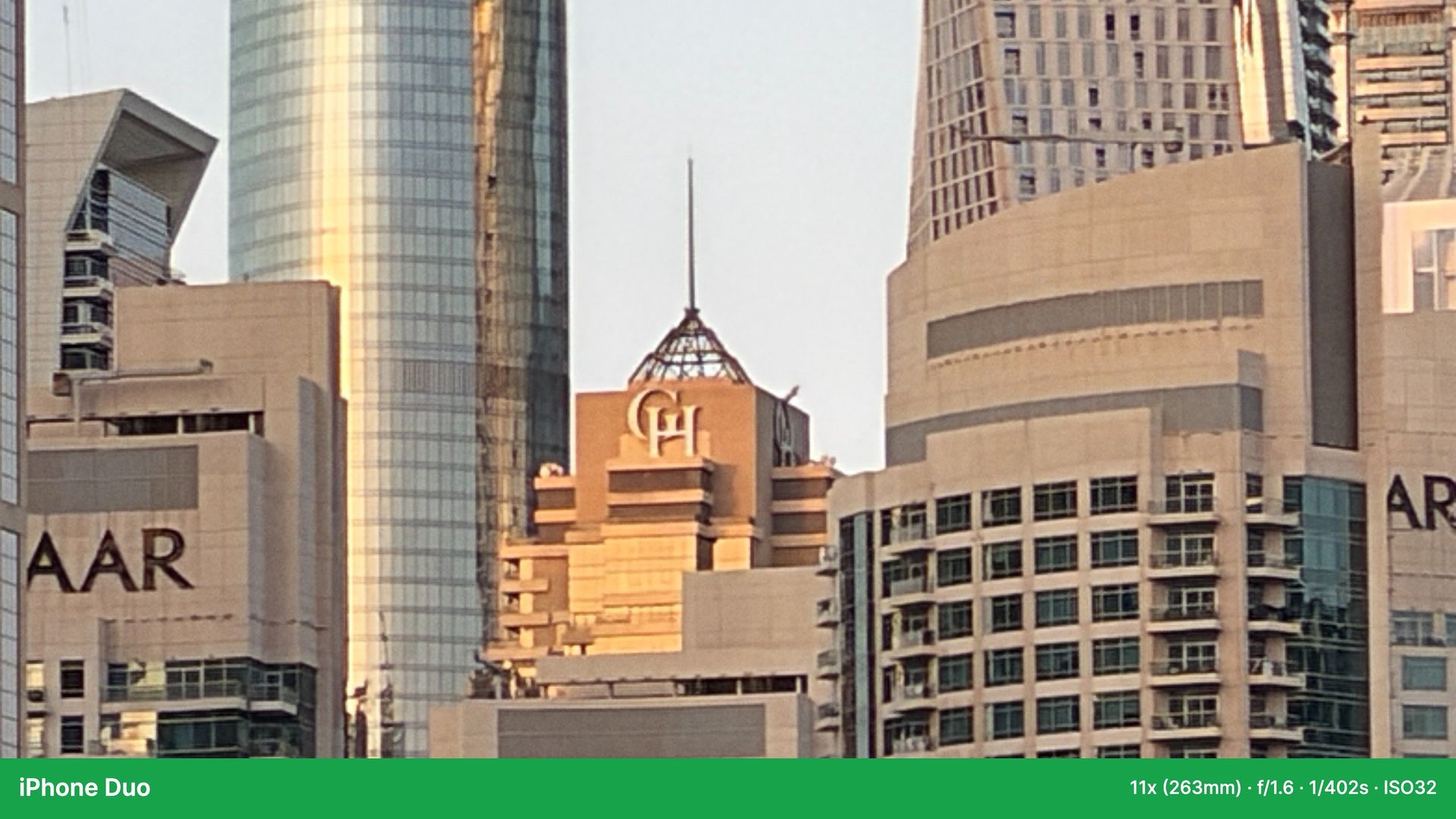
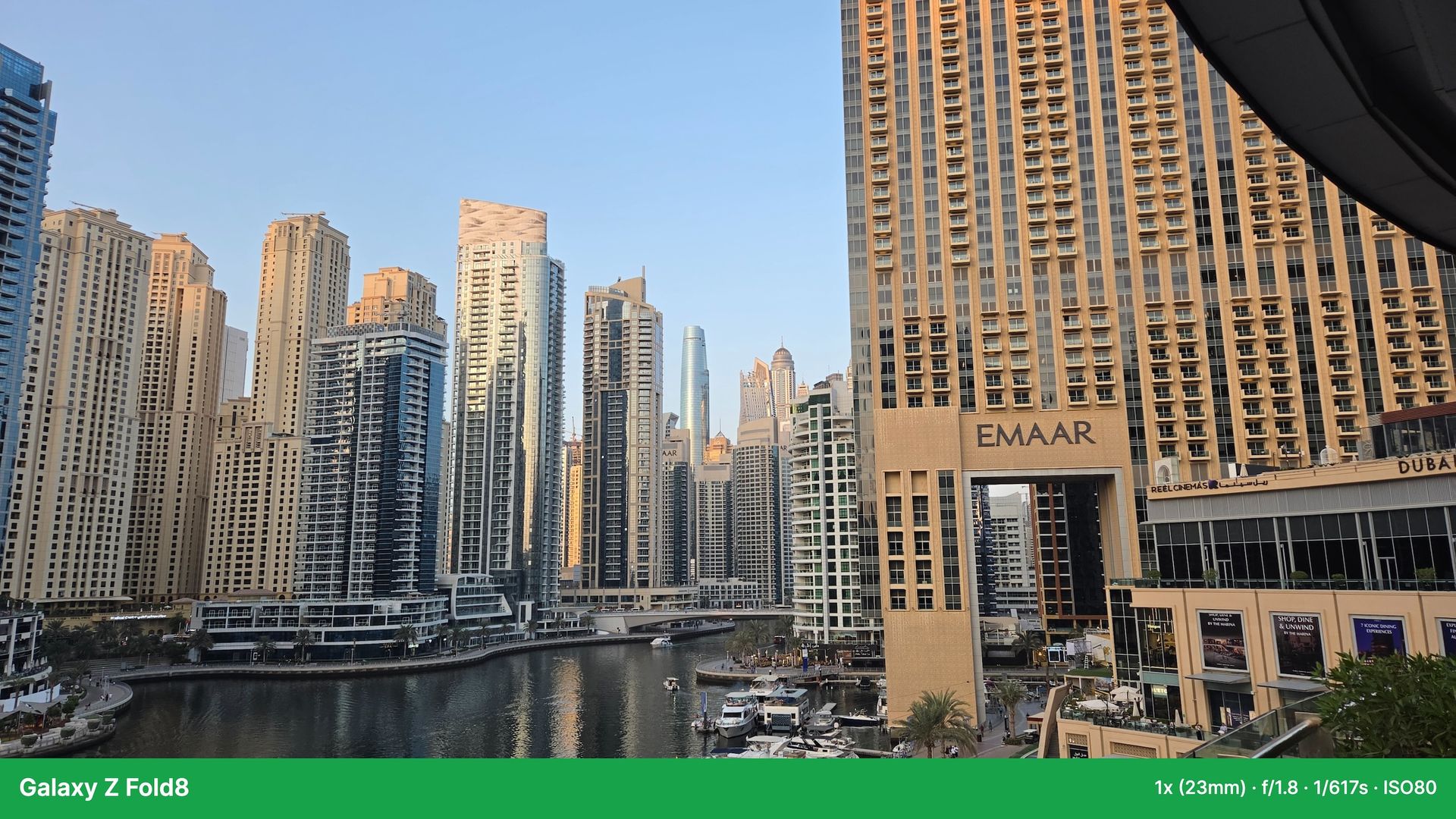
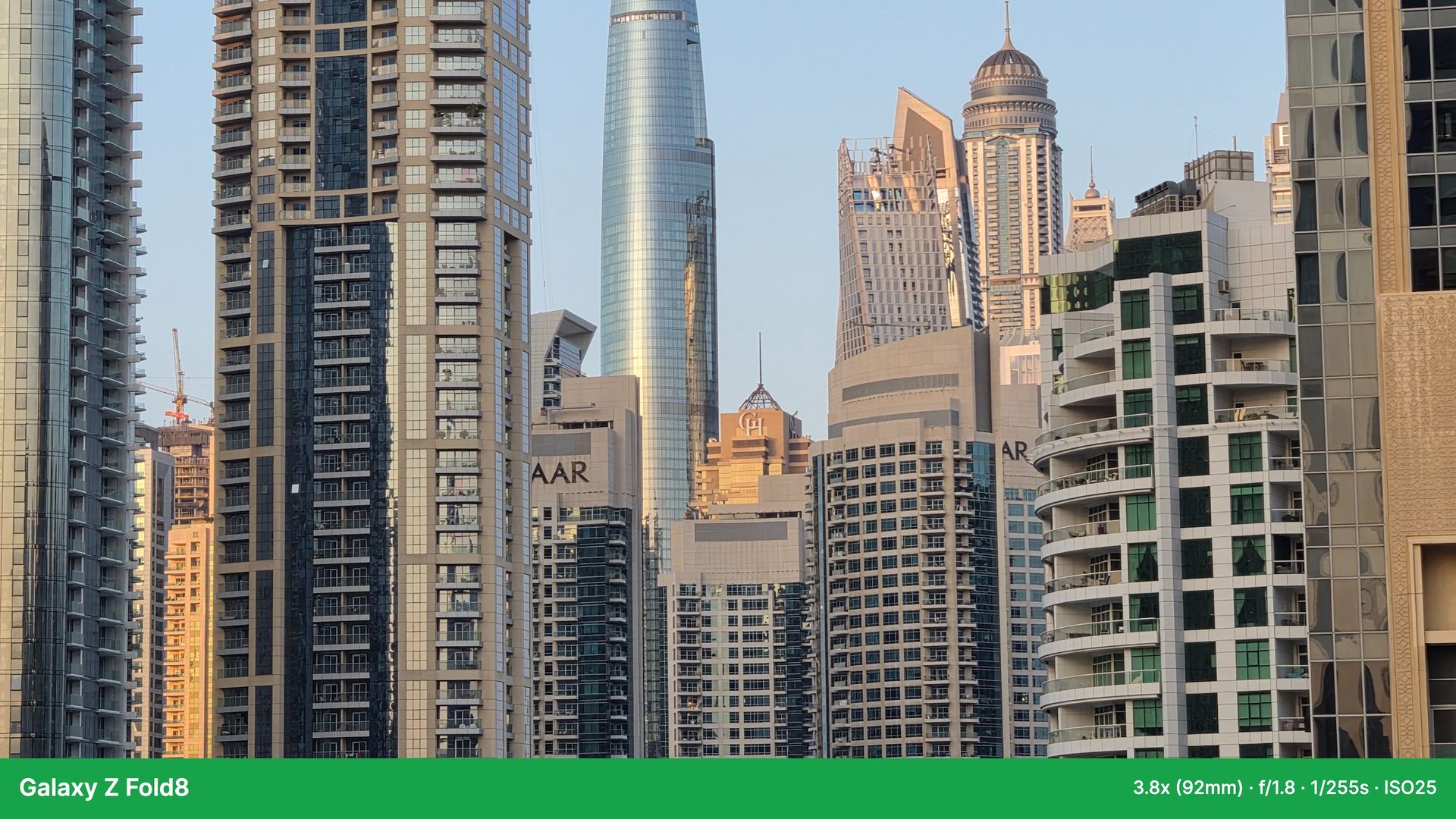
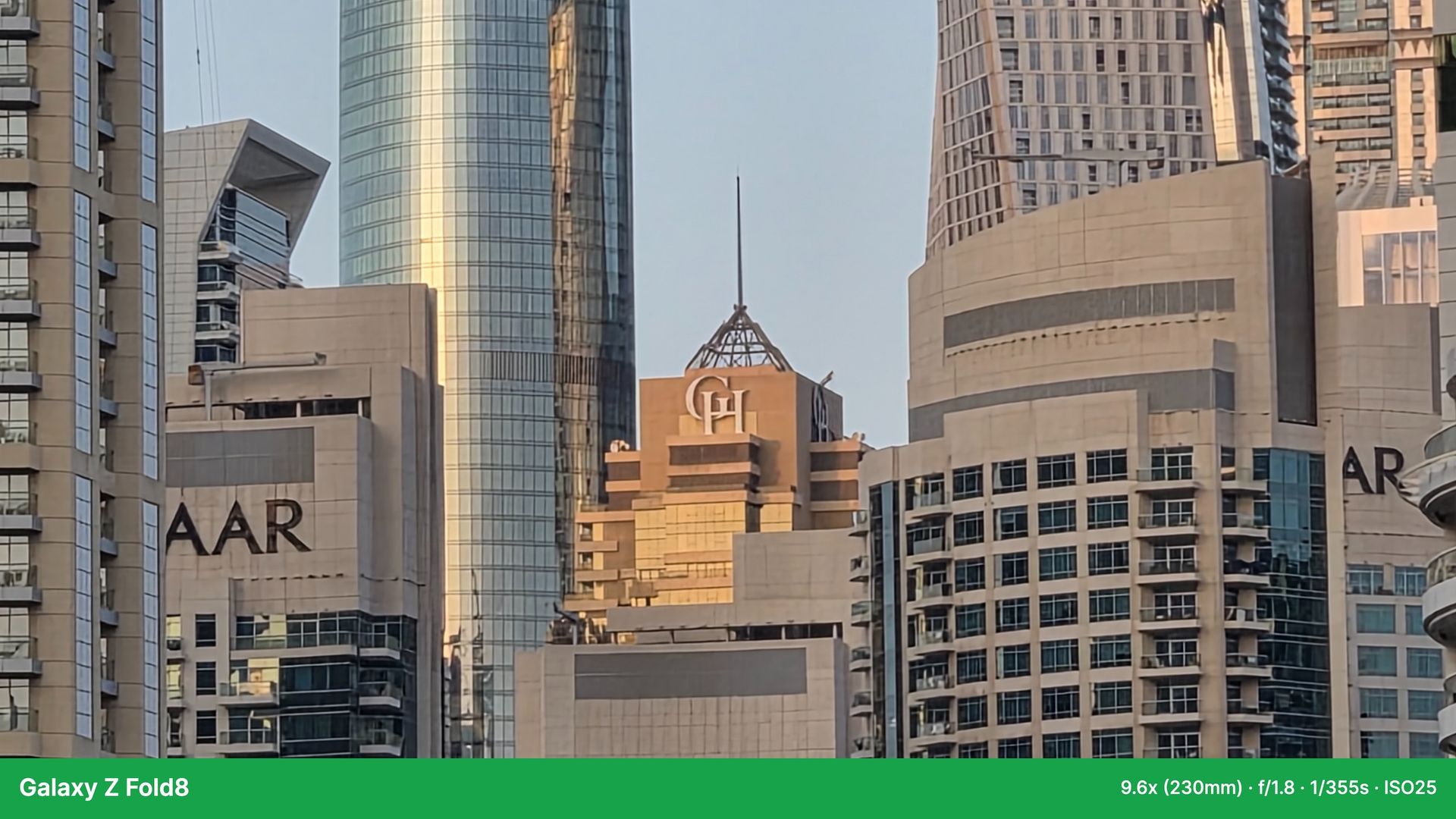
Pushing to maximum range across the Marina skyline reveals an interesting reversal between Apple and Samsung at ~10x.
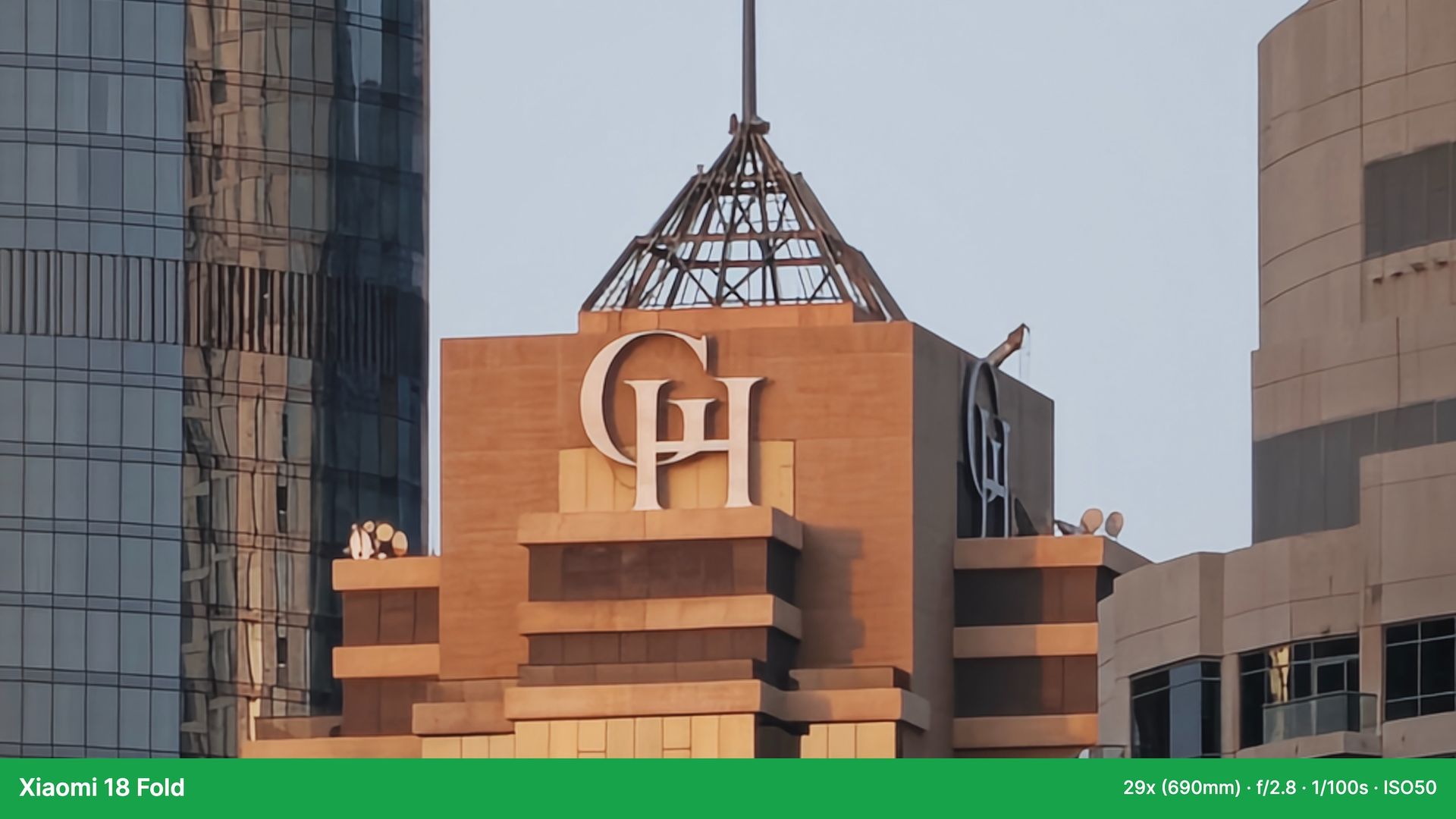
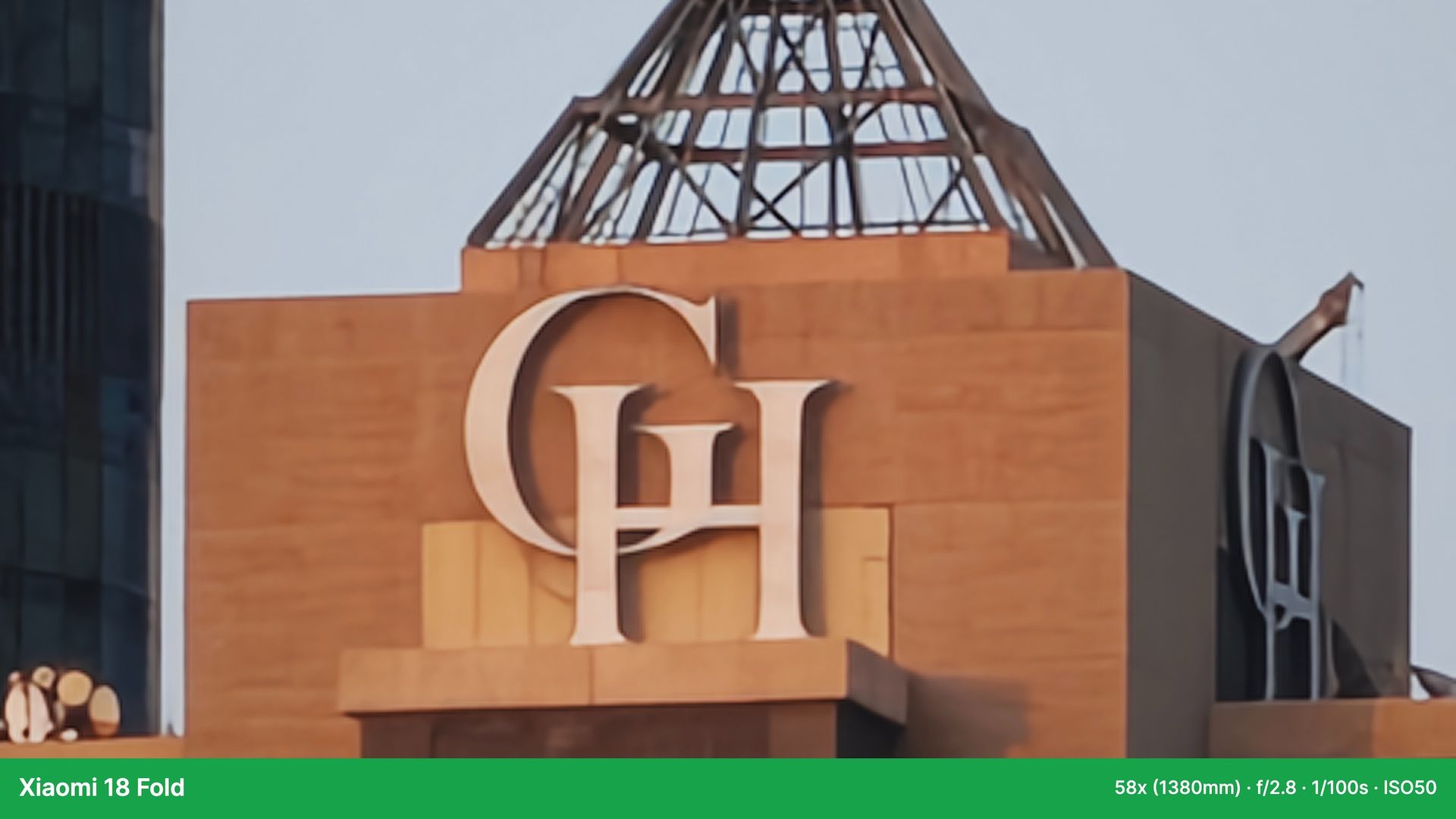
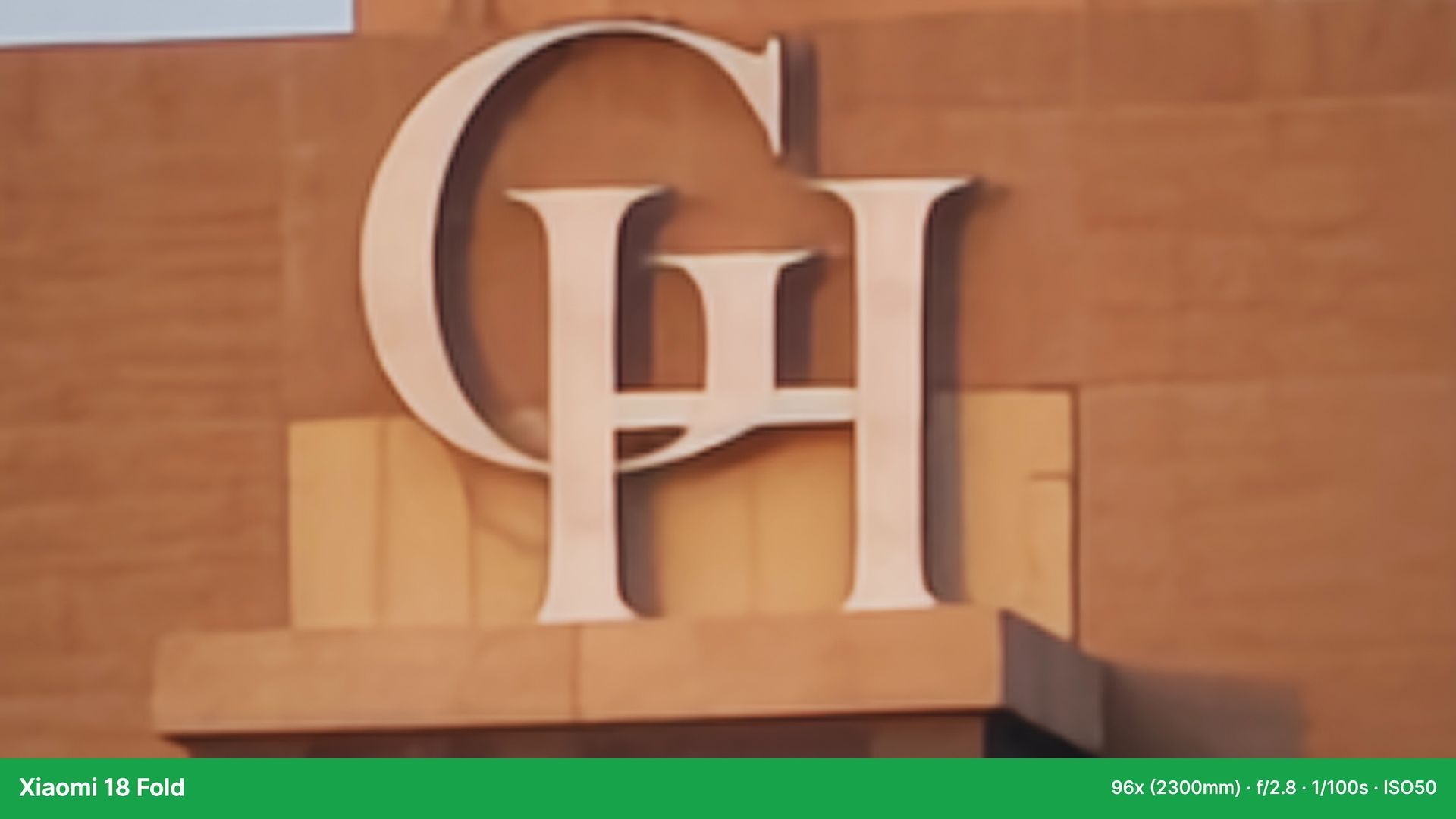
While Apple won at ~4x, its 11x (263mm) ceiling turns soft and muddy on the distant Grosvenor House spire, while Samsung's 9.6x (230mm) AI reconstruction sharpens straight architectural lines, keeping the GH monogram and pyramidal latticework distinct.
Still, Xiaomi's 9.6x (230mm) periscope shot easily beats both with natural, optical-grade clarity - and then keeps going to 29x (690mm), 58x (1380mm), and an outrageous 96x (2300mm), pulling usable detail out of a rooftop emblem that is barely a speck at 1x.
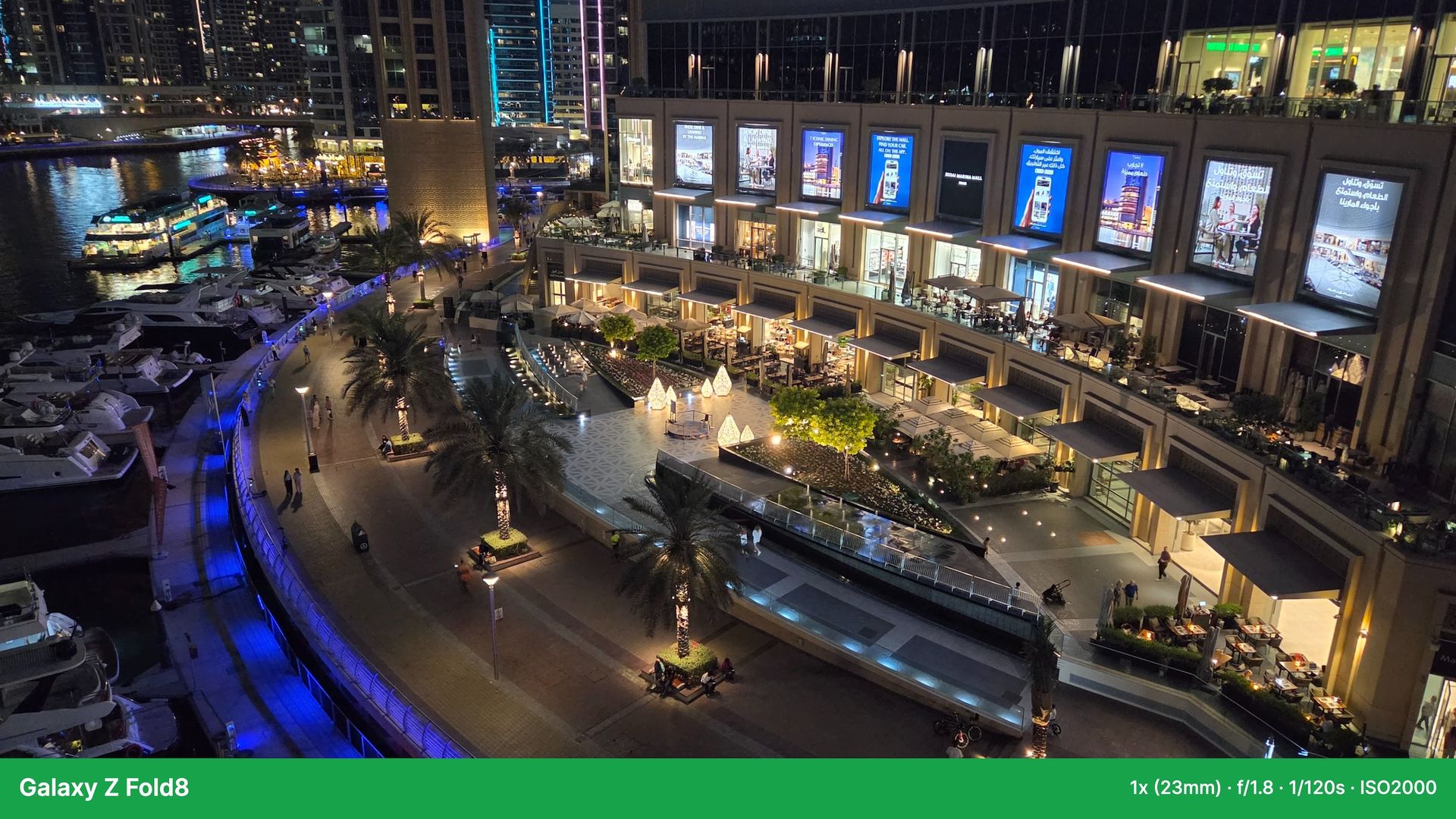
4. Night & Low-Light ZoomOnce the sun drops over Dubai Marina, metering strategy becomes just as important as sensor size - and Samsung's auto-exposure makes some puzzling choices.
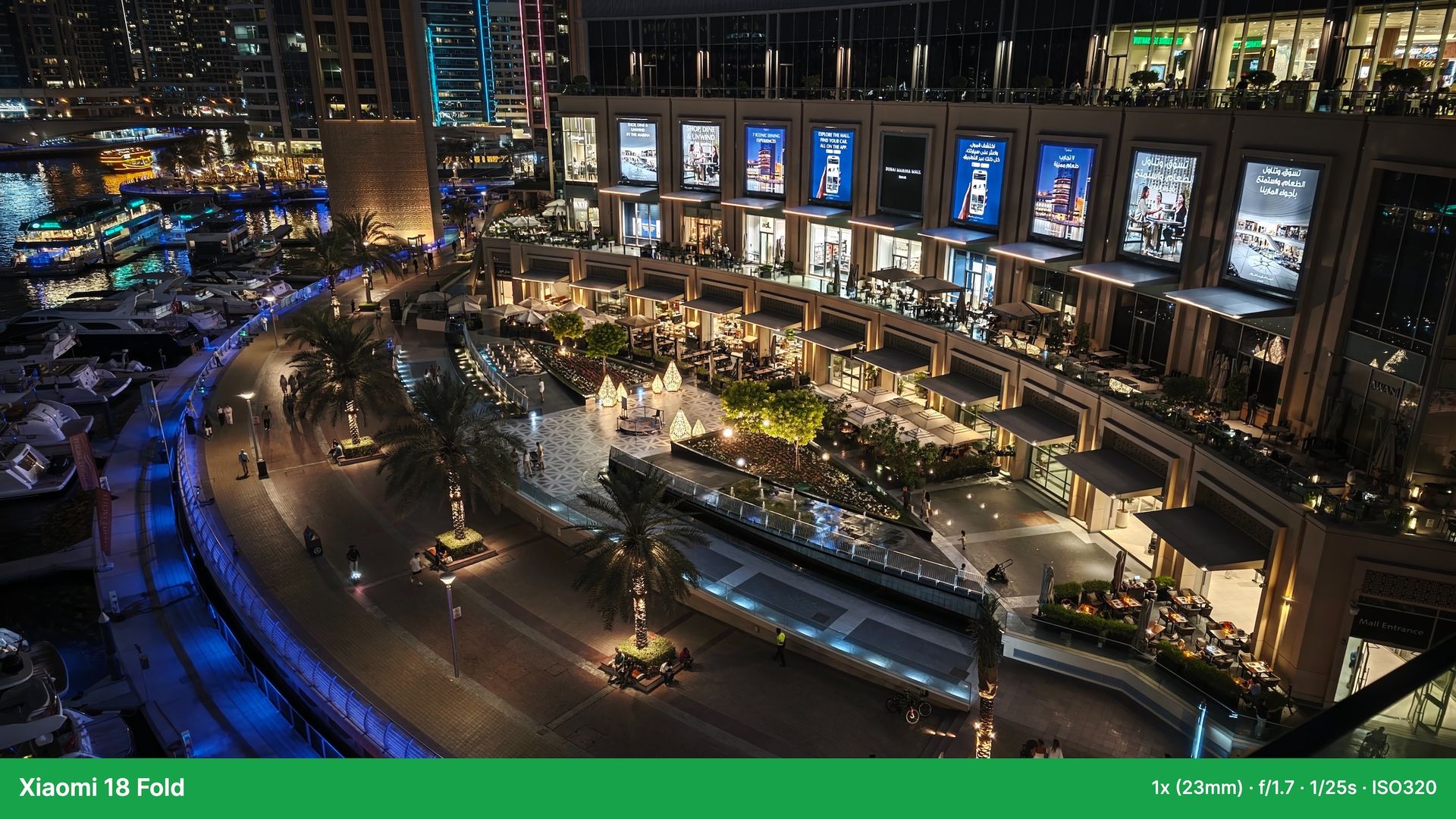
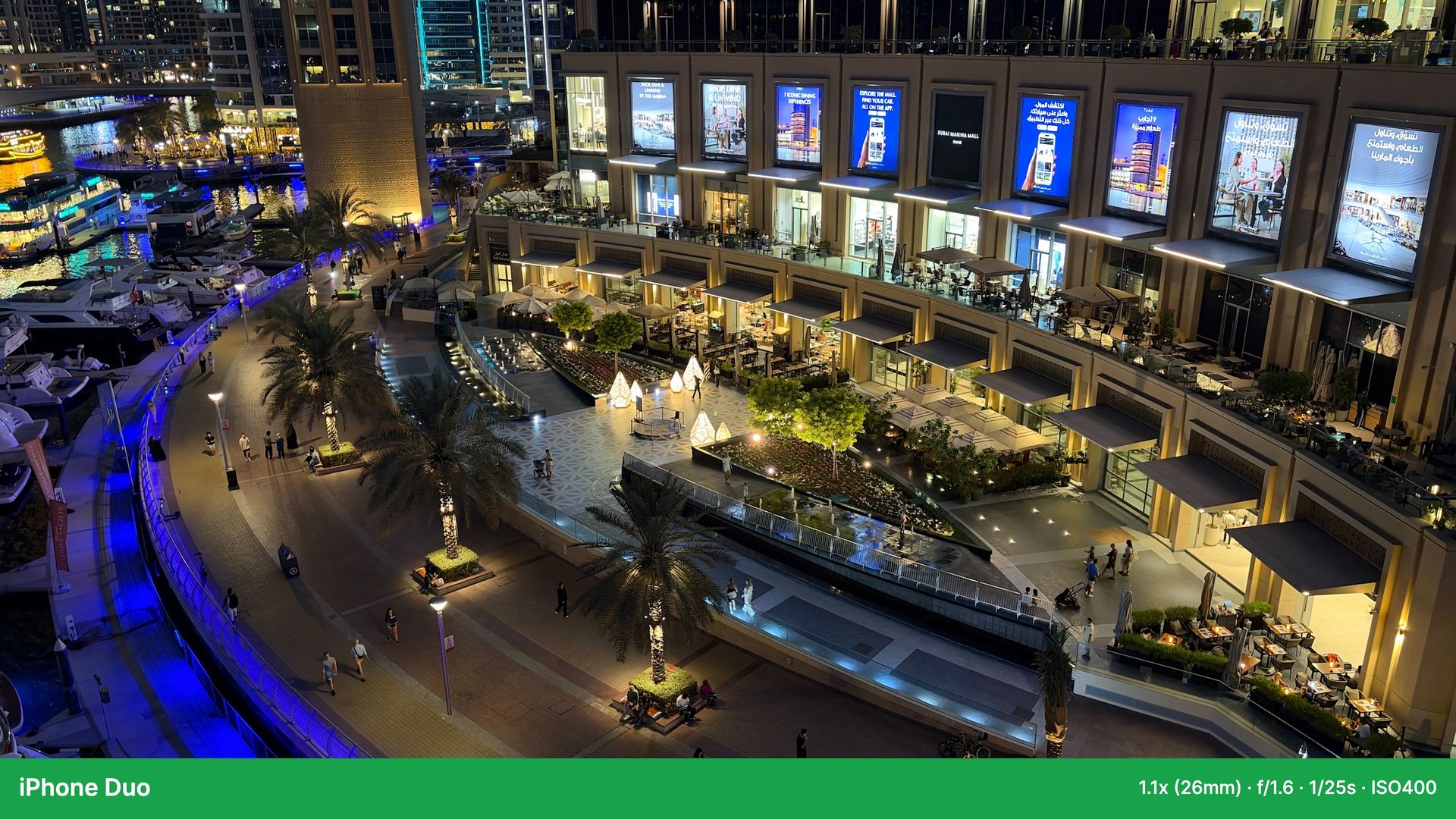
At night, Xiaomi and Apple trade blows on the primary lenses, depending on your taste. Dropping to 1/20s lets the Xiaomi 18 Fold hold sensitivity down at ISO 400, capturing a wide 23mm frame with rich contrast, deep water reflections, and well-tamed storefront screens.
The iPhone Duo (1/25s, ISO 500) lifts shadows more aggressively across the sandstone towers and walkway with virtually zero noise, though its tighter 26mm lens clips the right edge. Meanwhile, the Galaxy Z Fold 8 inexplicably fires at 1/98s and pushes sensitivity to ISO 2500, resulting in darker shadows and visible grain on close inspection.
This is a fairly common occurrence in Samsung smartphones, and I hope we'll see it addressed in upcoming launches.
 Nirave Gondhia
 Nirave Gondhia
 Nirave Gondhia
 Nirave Gondhia
 Nirave Gondhia
 Nirave Gondhia
 Nirave Gondhia
 Nirave Gondhia
 Nirave Gondhia
 Nirave Gondhia
 Nirave Gondhia
 Nirave Gondhia
 Nirave Gondhia
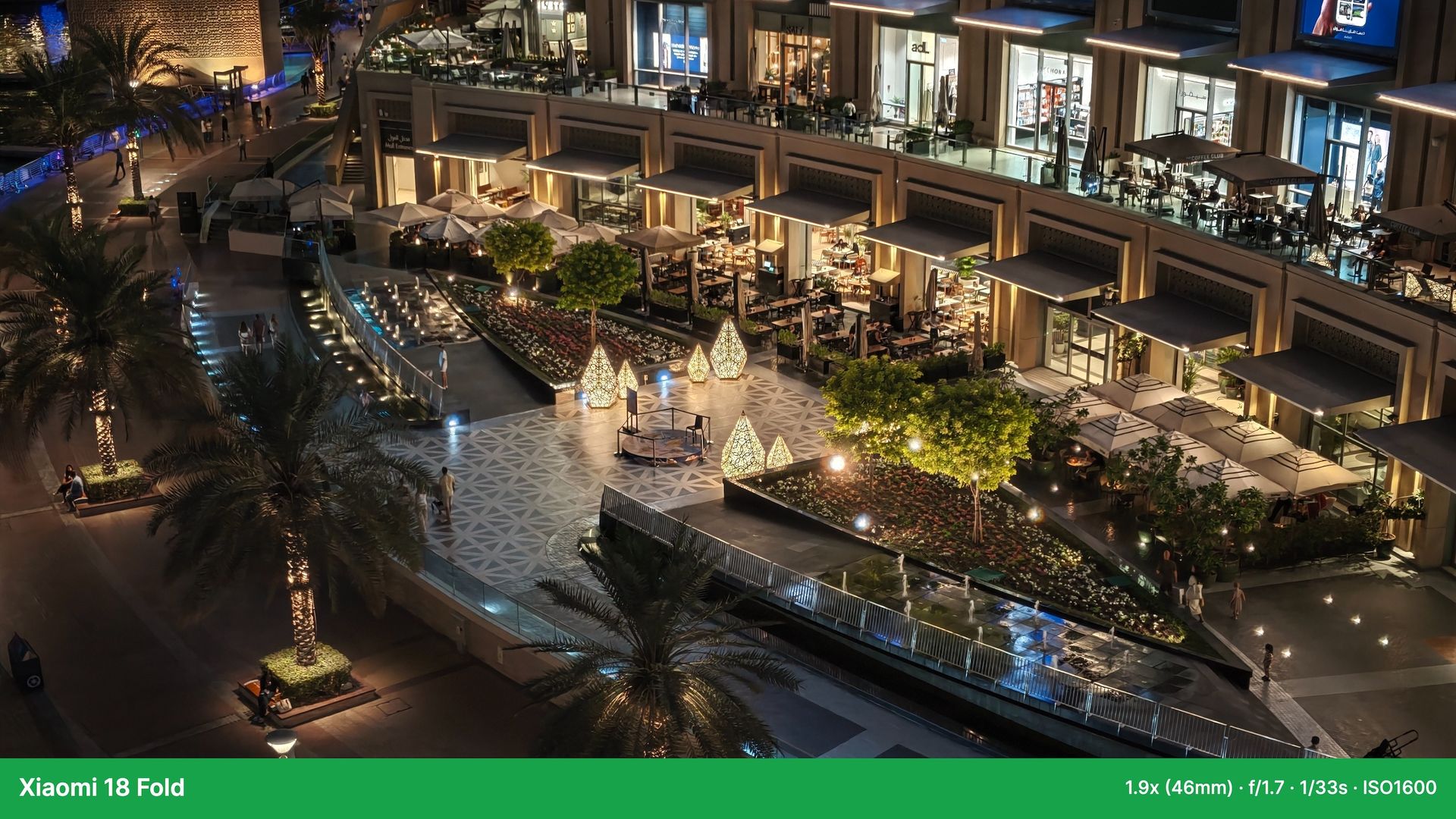
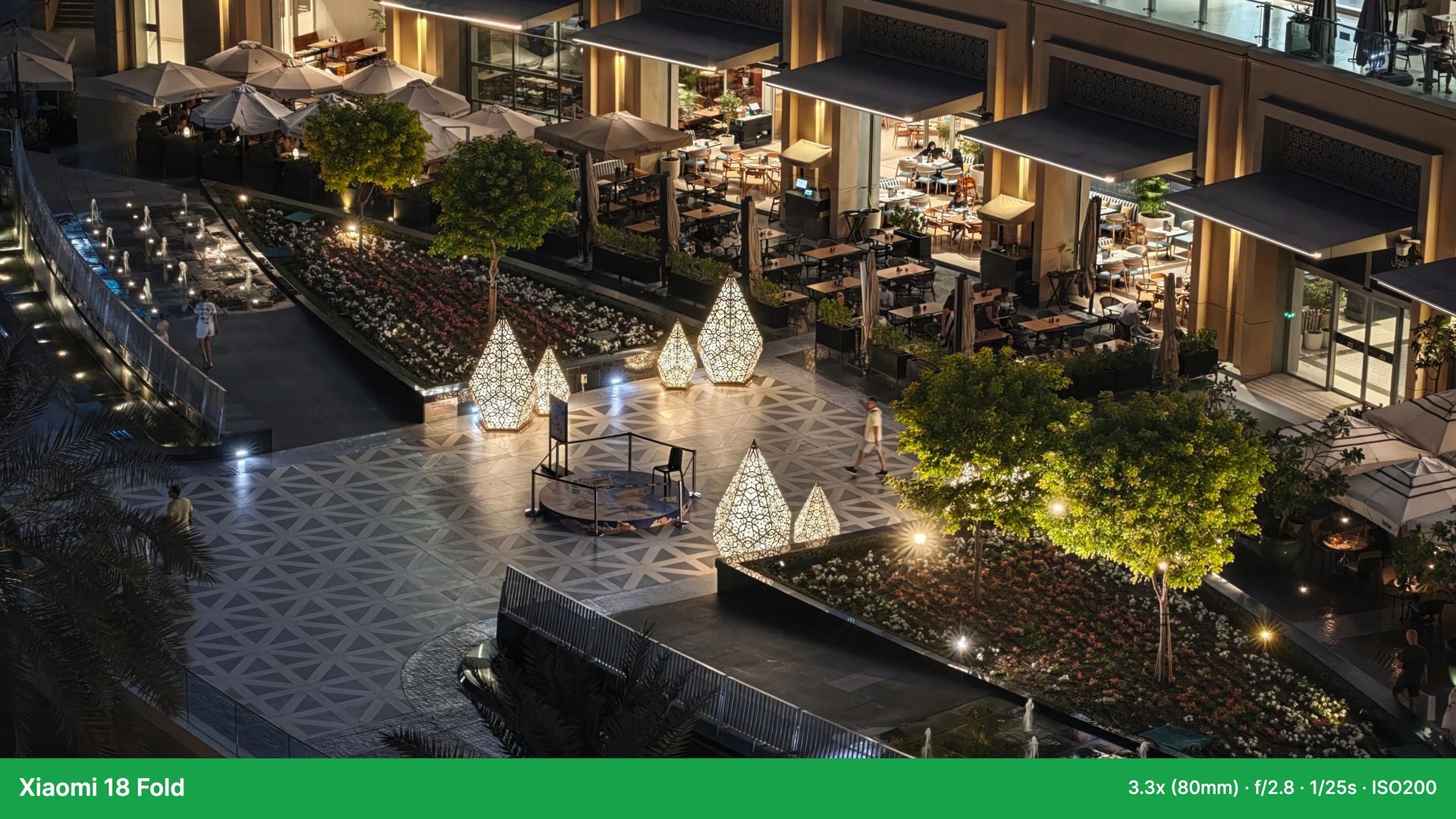
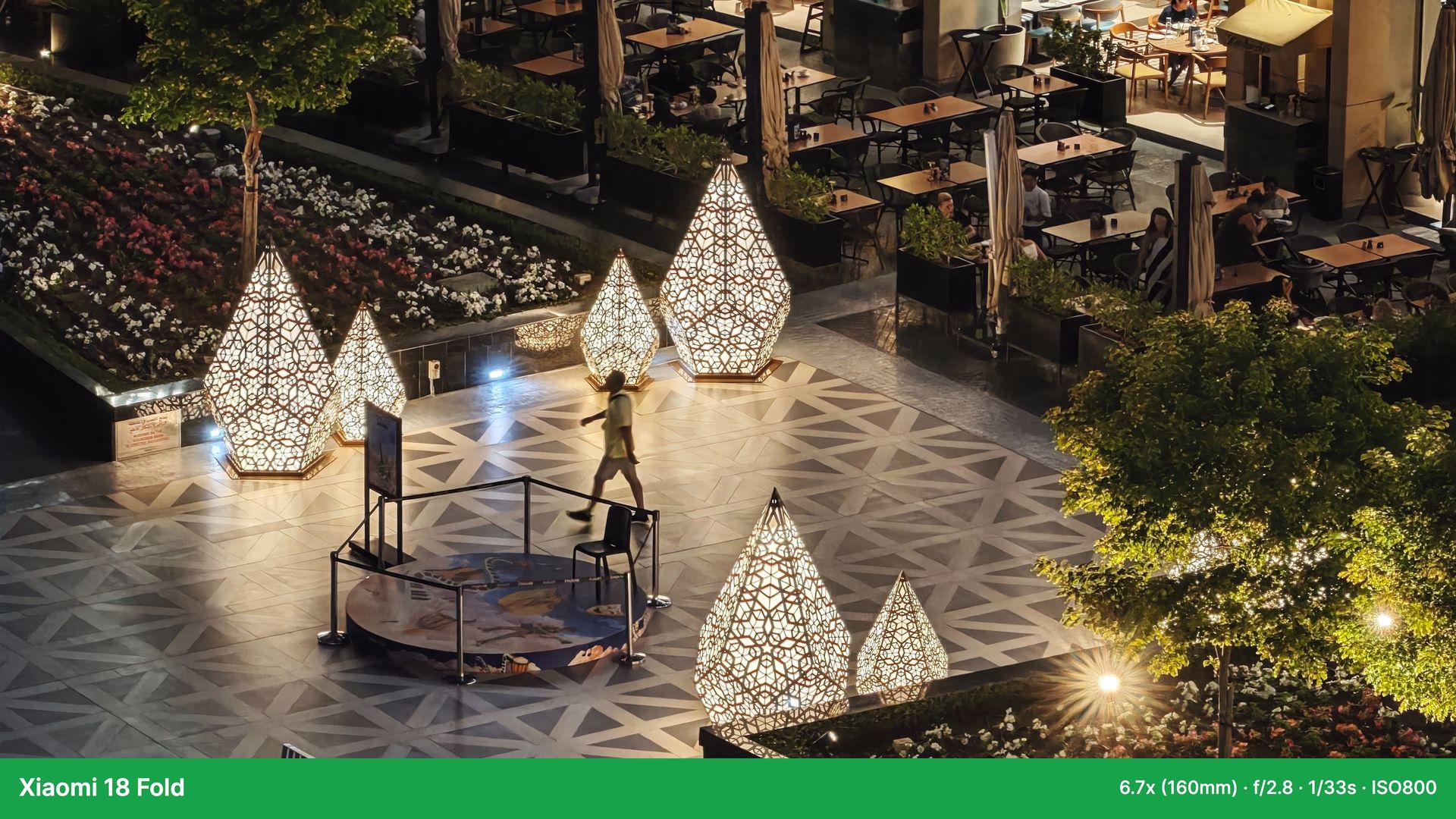
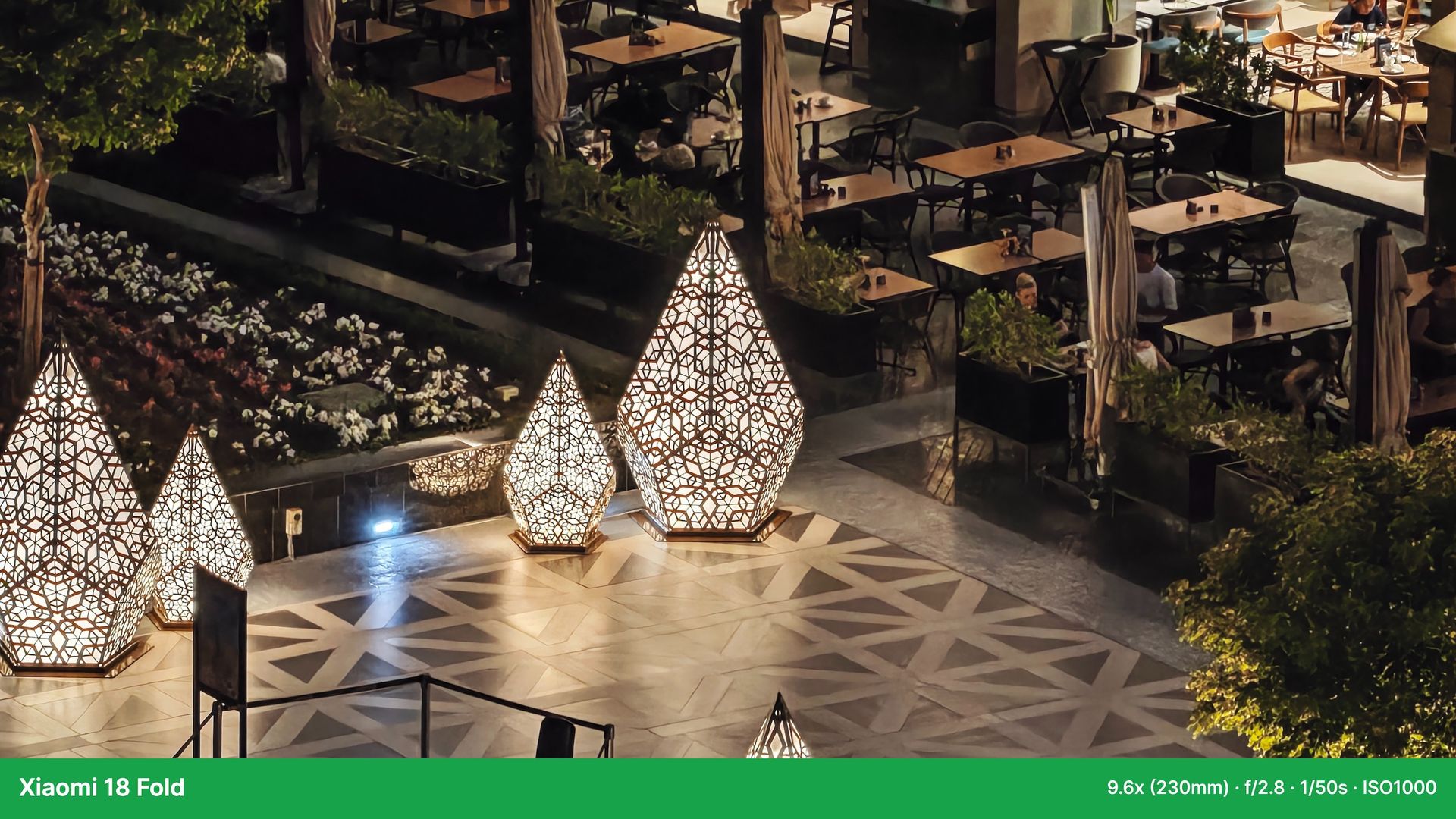
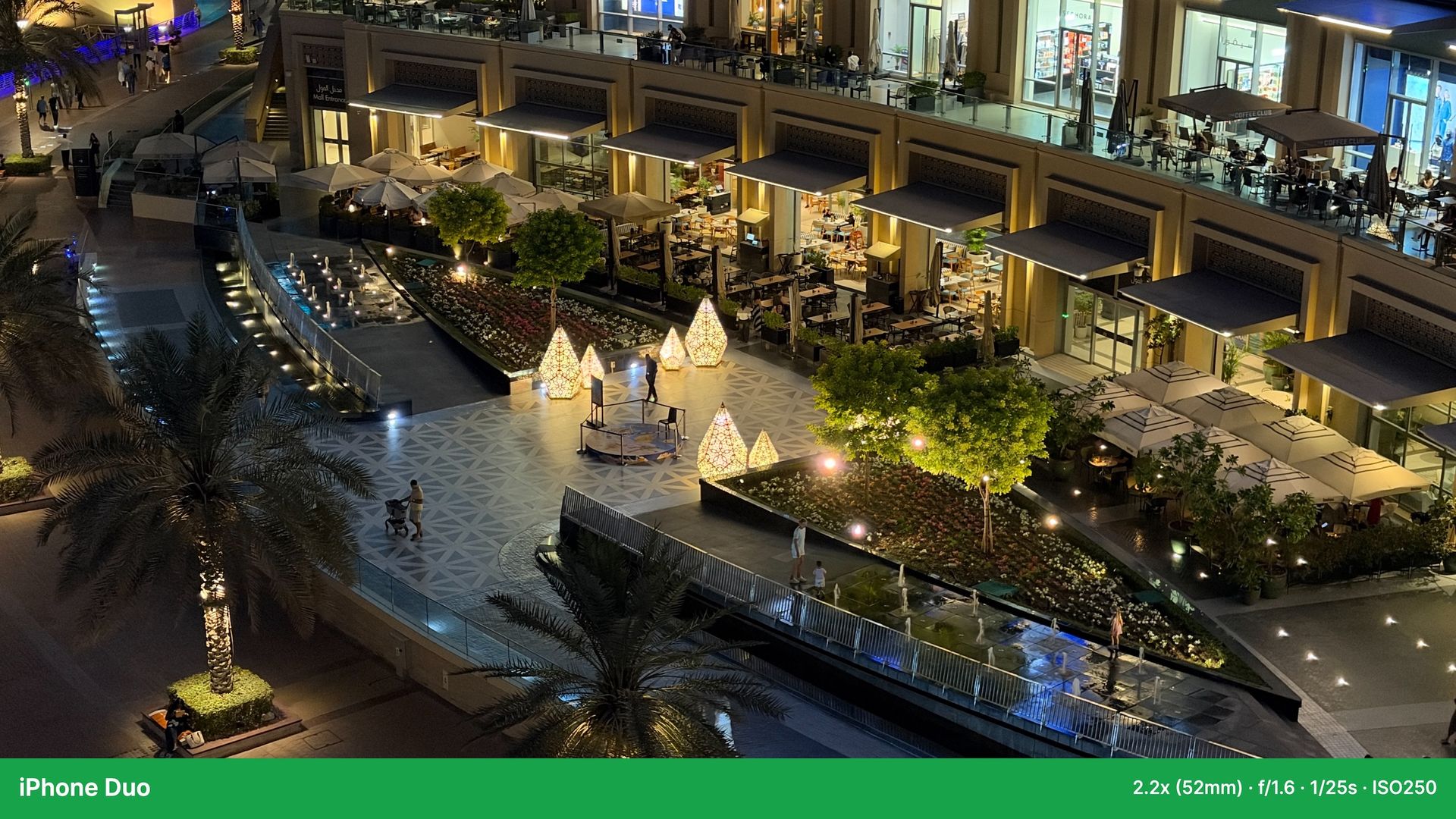
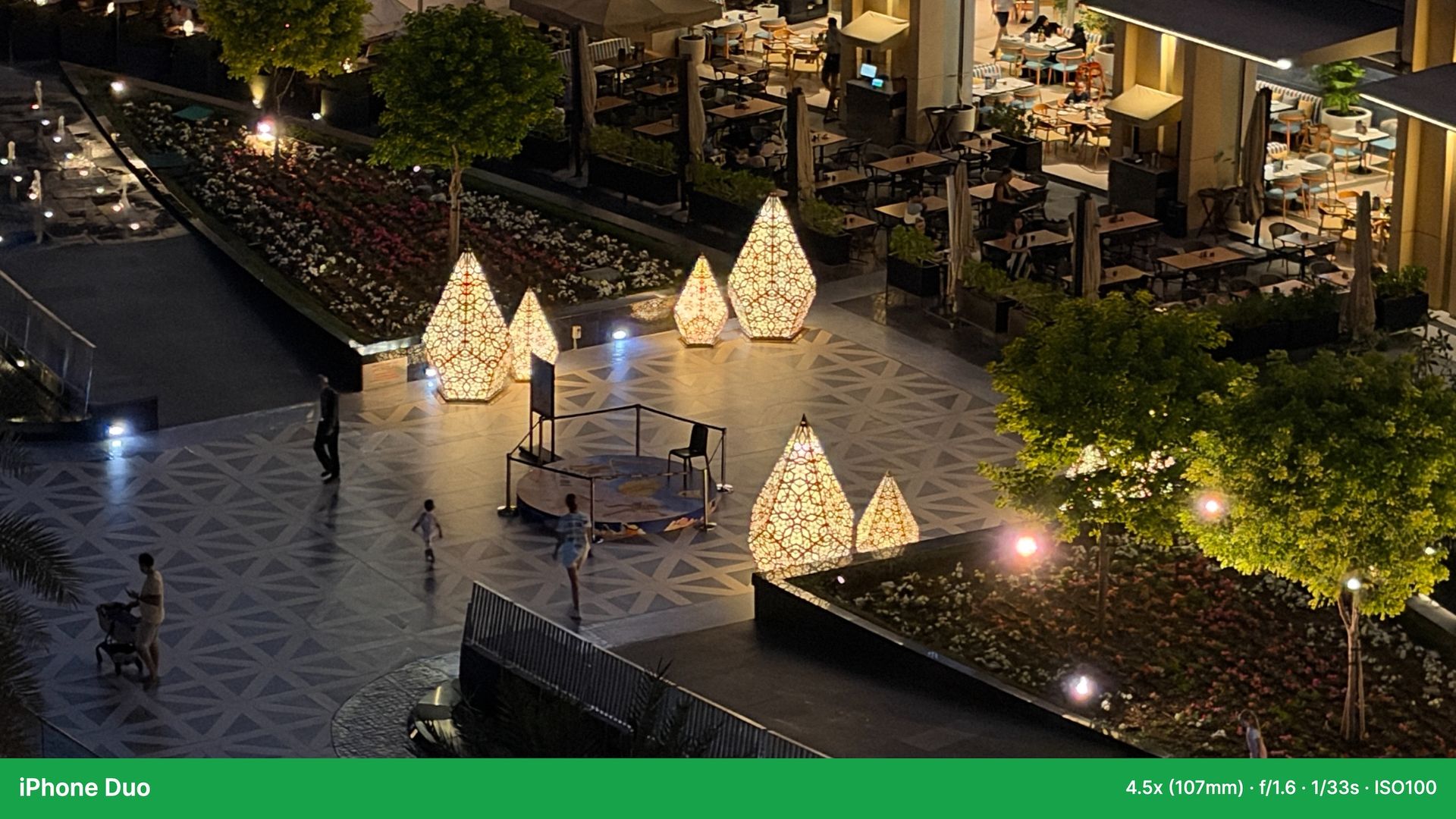
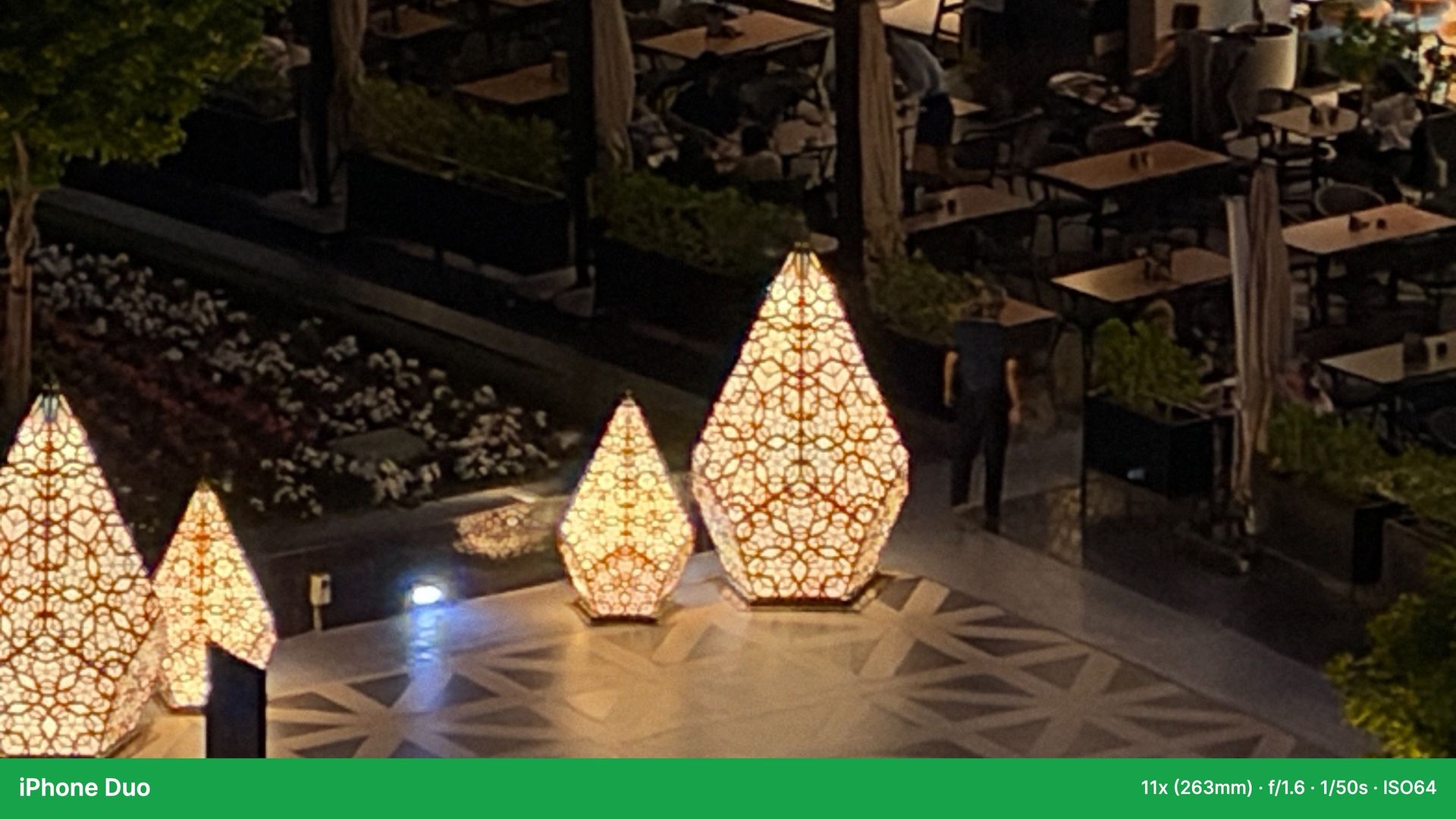
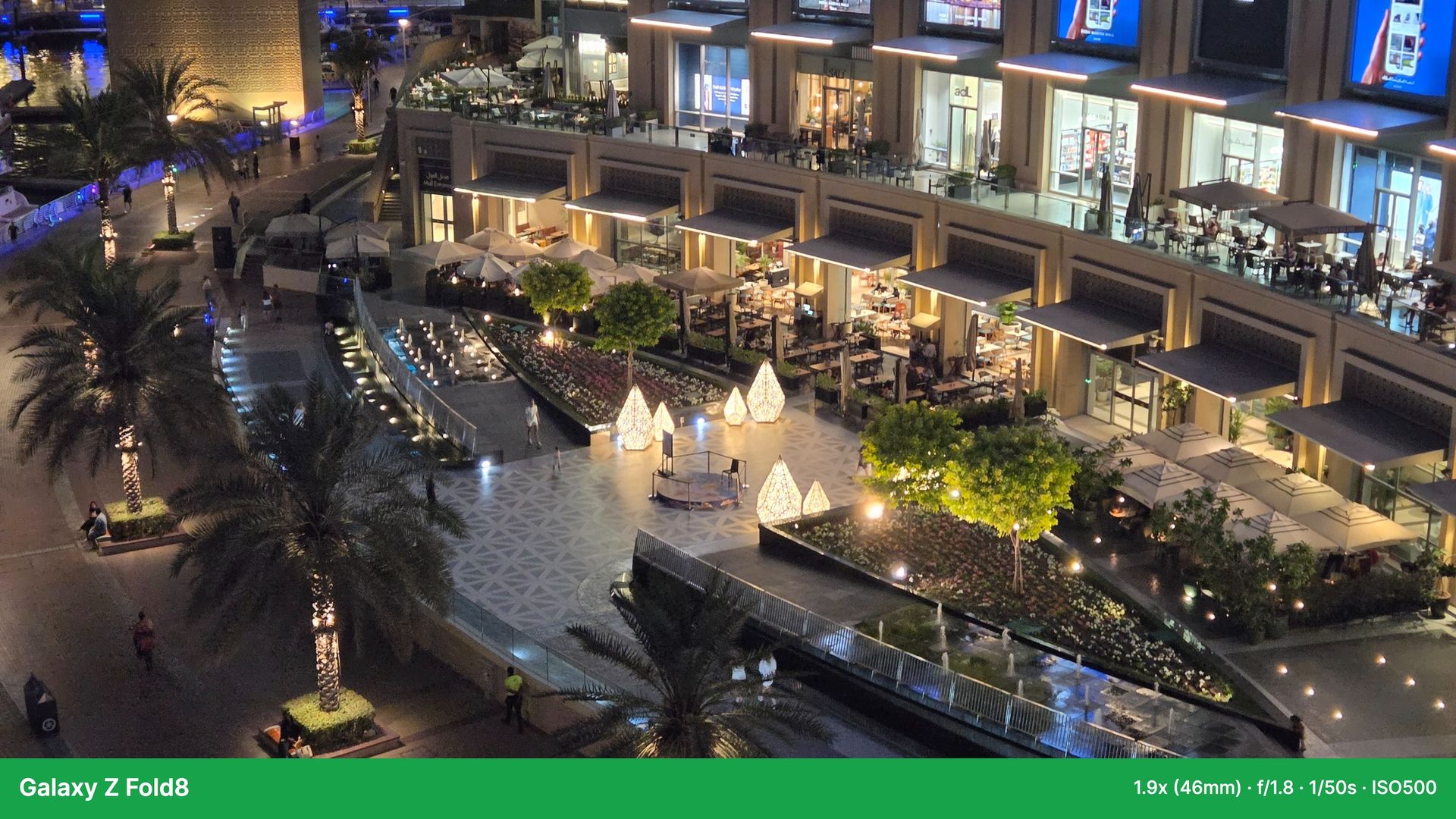
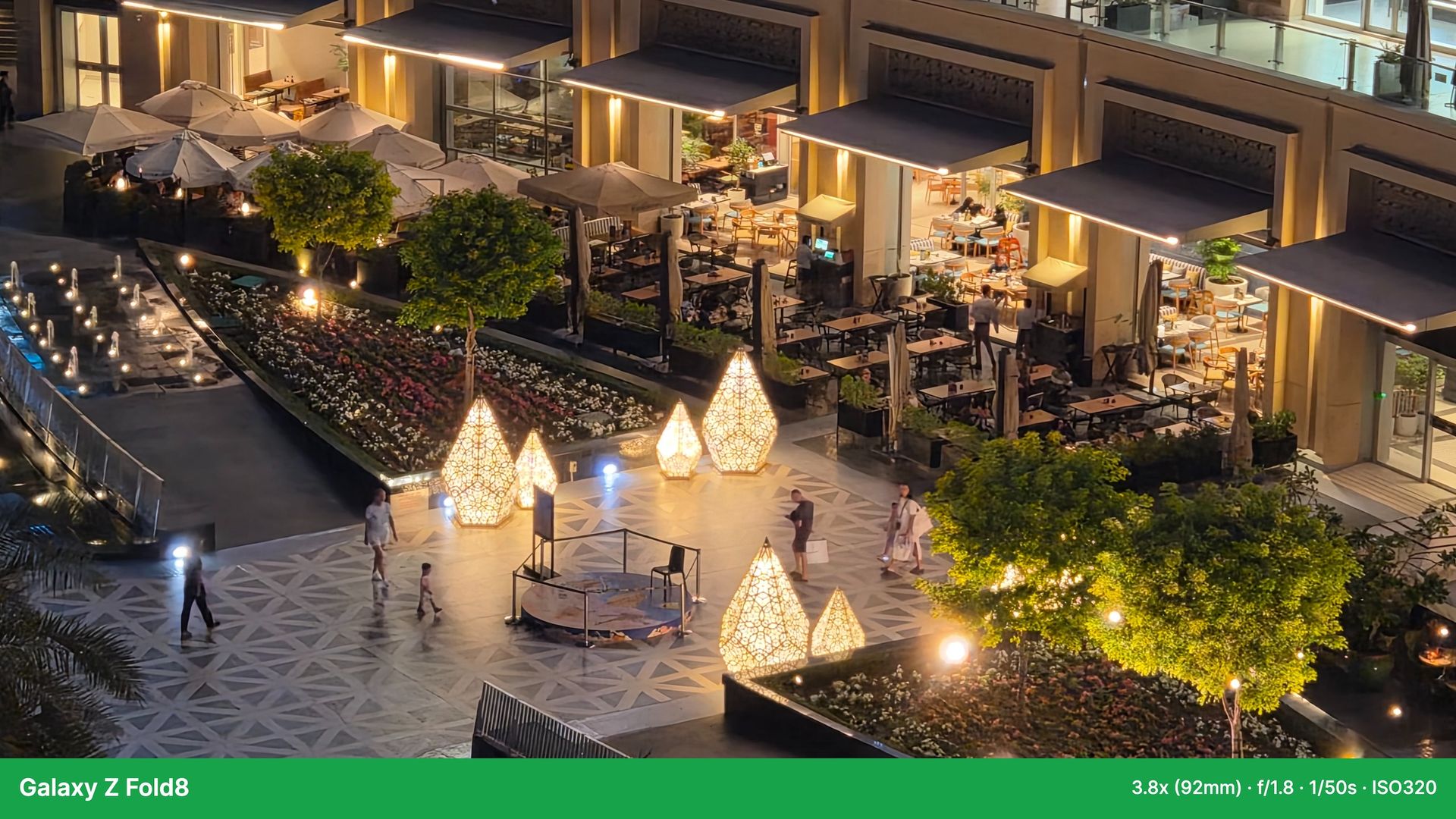
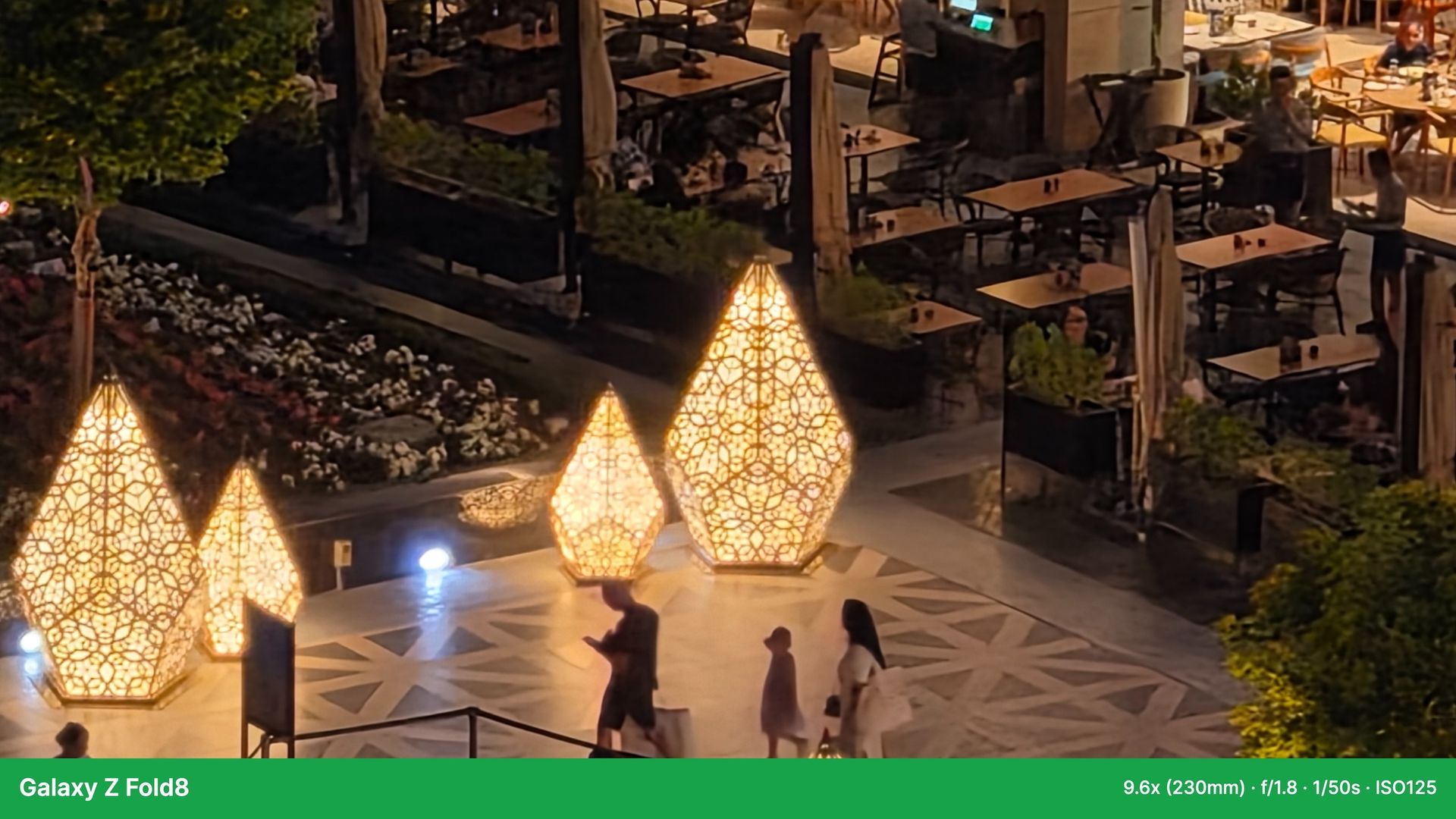
Zooming in at night completely flips the daytime hierarchy between Apple and Samsung.
Looking down at the glowing teardrop lanterns in the plaza, the Galaxy Z Fold 8 clips the lanterns into blown-out white blobs at 1.9x and 3.8x, and when it finally tames the highlights at 9.6x (230mm), heavy noise reduction smears the pedestrians and cafe tables into a soft painting.
By contrast, the iPhone Duo's multi-frame HDR keeps the intricate geometric lattice inside every lantern crisp at 4.5x (107mm) and even 11x (263mm). Still, the Xiaomi 18 Fold's dedicated 3.3x-9.6x periscope wins easily, resolving cleaner filigree, flowerbeds, and paving tiles than either digital crop.
5. Indoor & Extreme Colored NeonChallenging indoor venues - dim lounges, heavy colored LEDs, and high-contrast backlit signage - expose how each brand handles mixed white balance and bright light sources.
 Nirave Gondhia
 Nirave Gondhia
 Nirave Gondhia
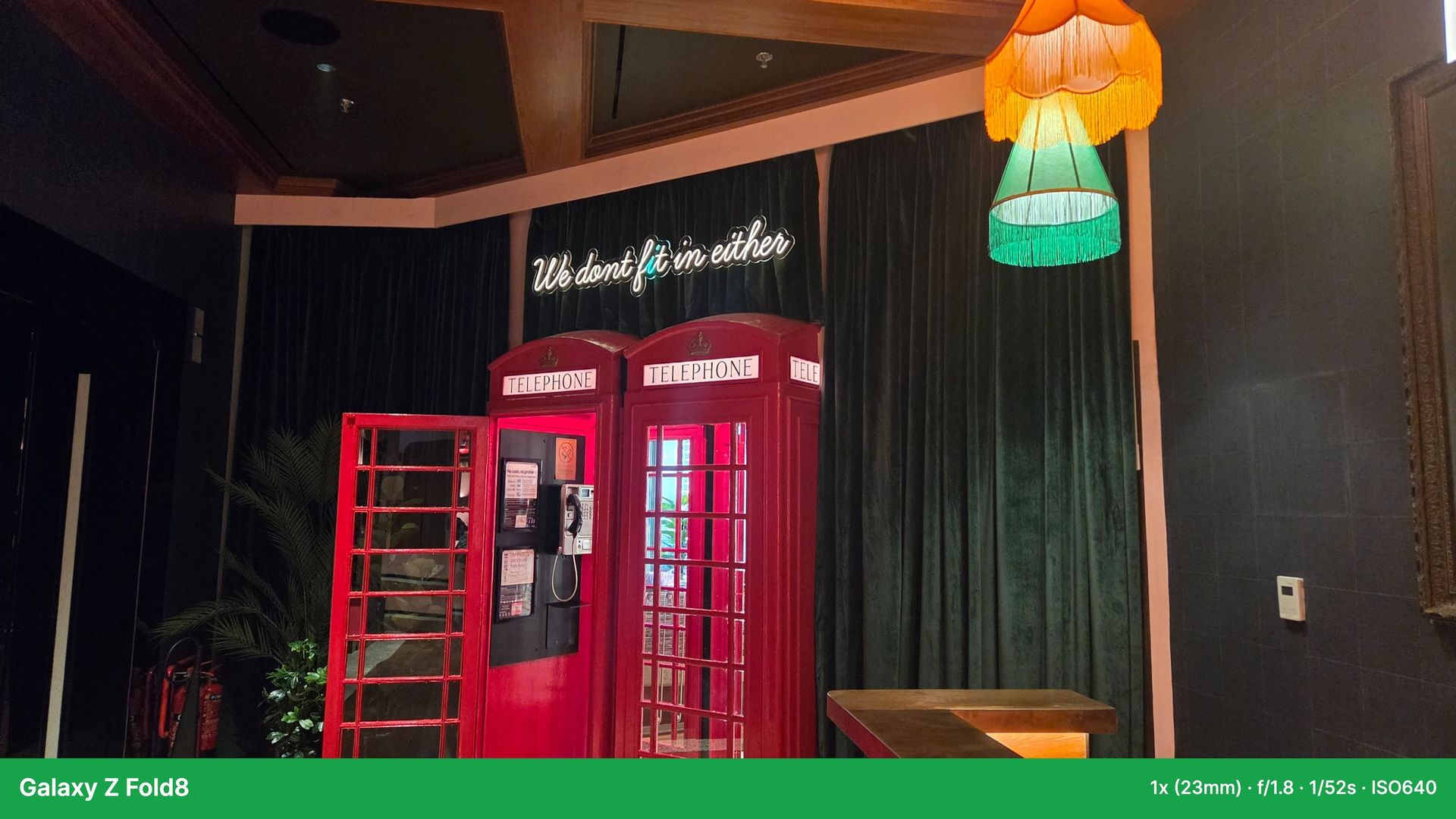
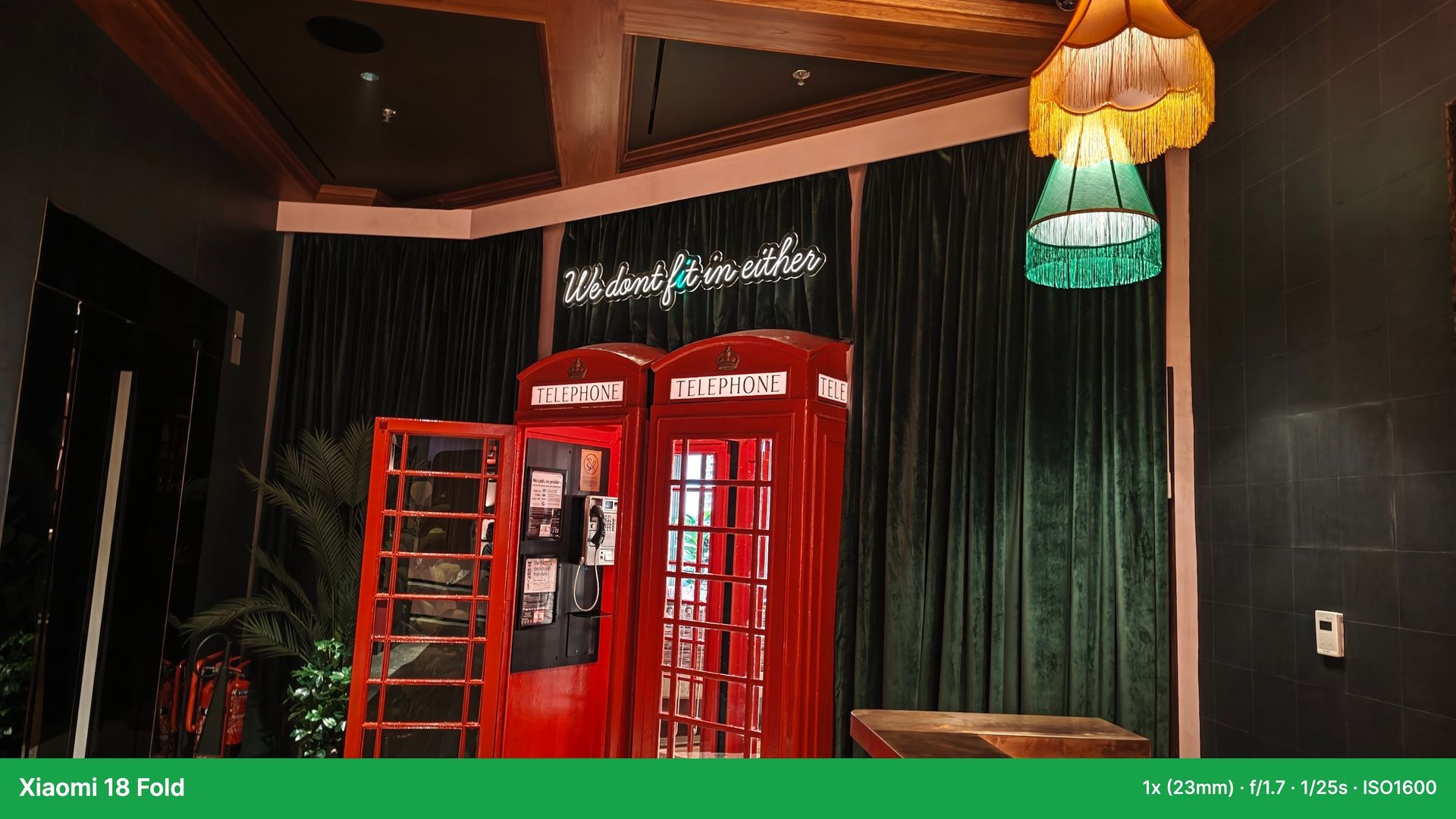
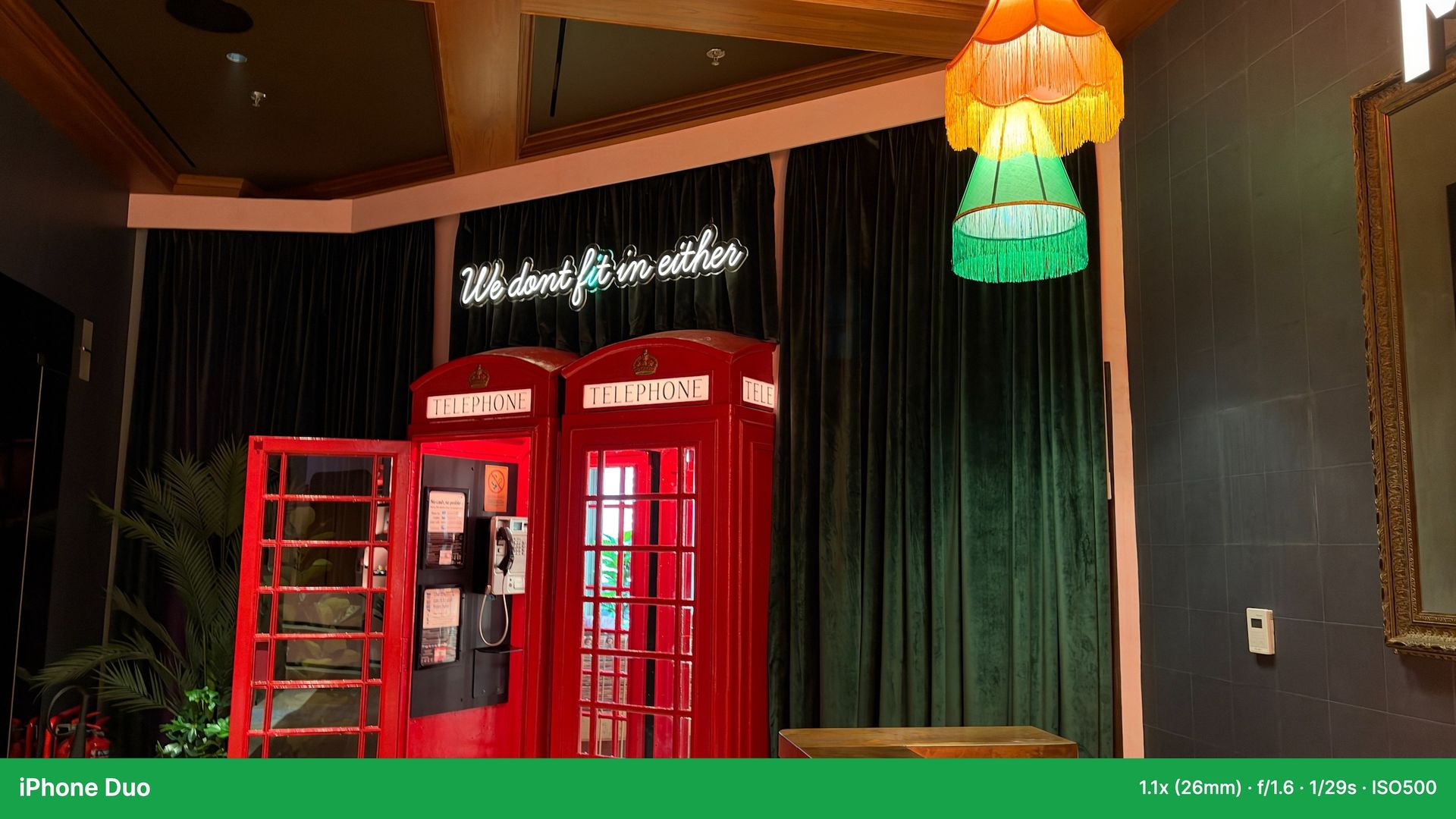
In a dimly lit lounge corner, Apple and Samsung prioritize highlight protection: both keep the white neon script ("We dont fit in either") sharp and legible while preserving rich color in the hanging fringe lampshades. Xiaomi takes the opposite approach, pushing 1/25s and ISO 1600 to illuminate dark velvet curtains and doorways that disappear into shadow on the others, though the neon tubing blooms noticeably more.
 Nirave Gondhia
 Nirave Gondhia
 Nirave Gondhia
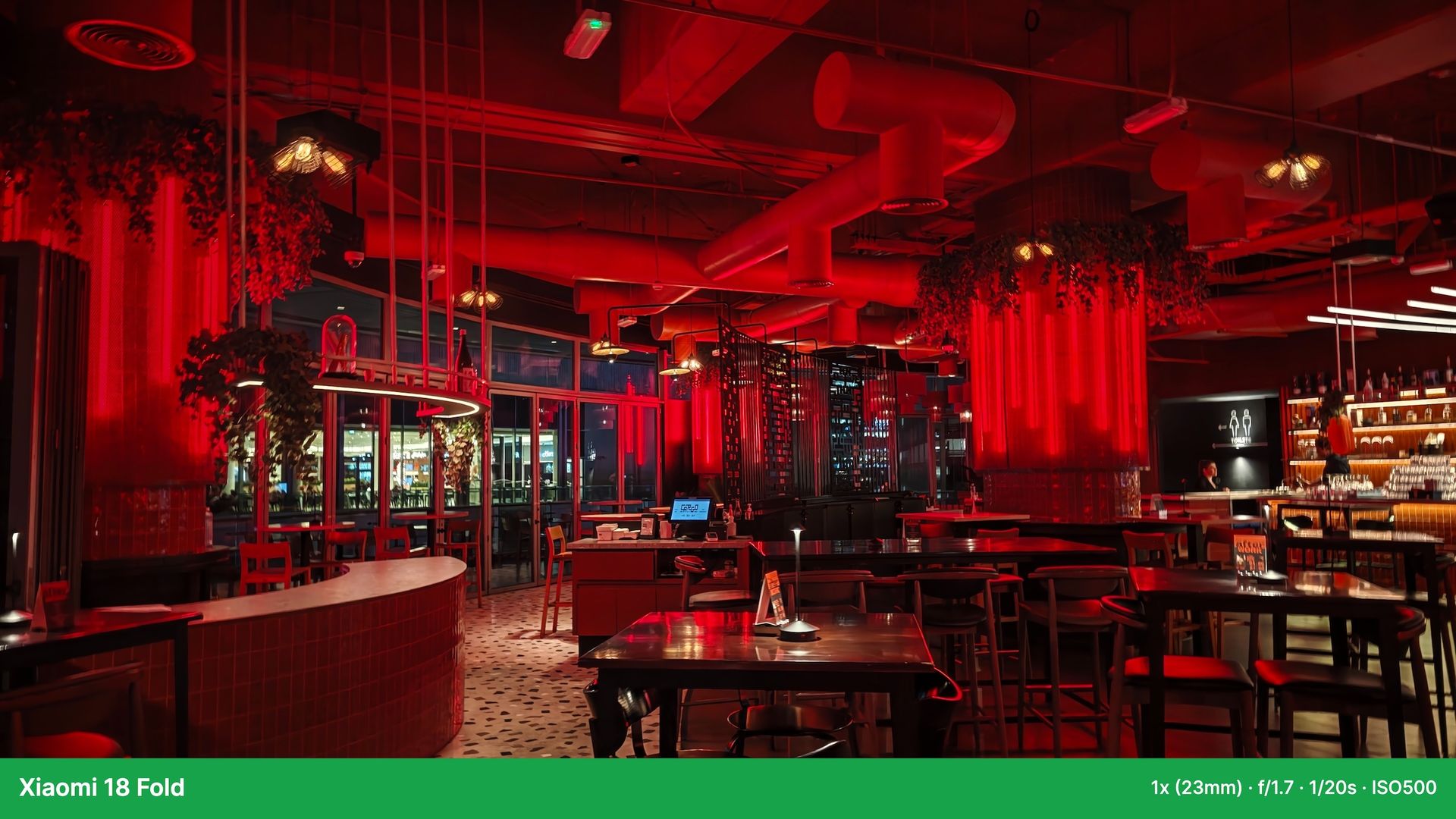
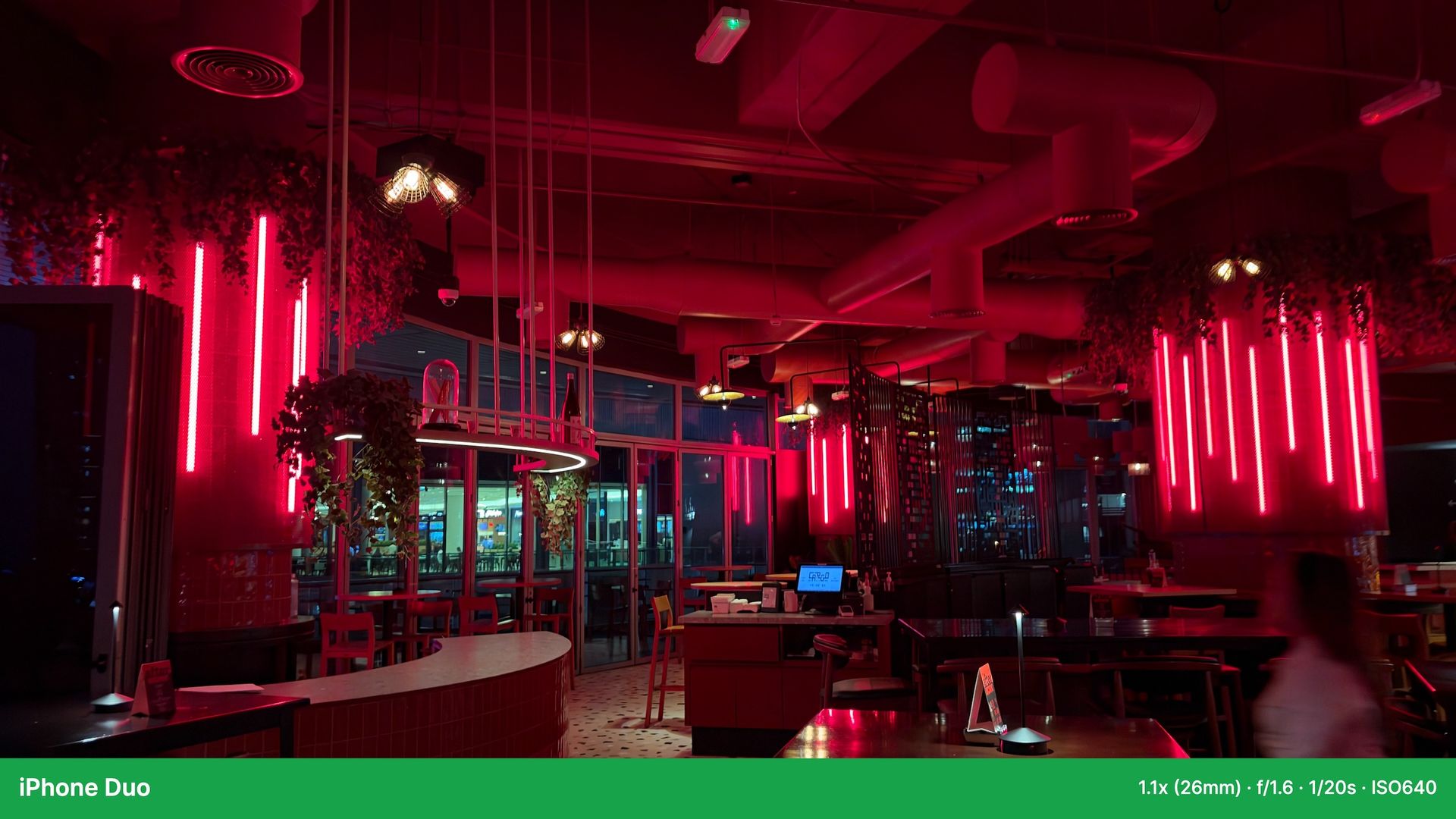
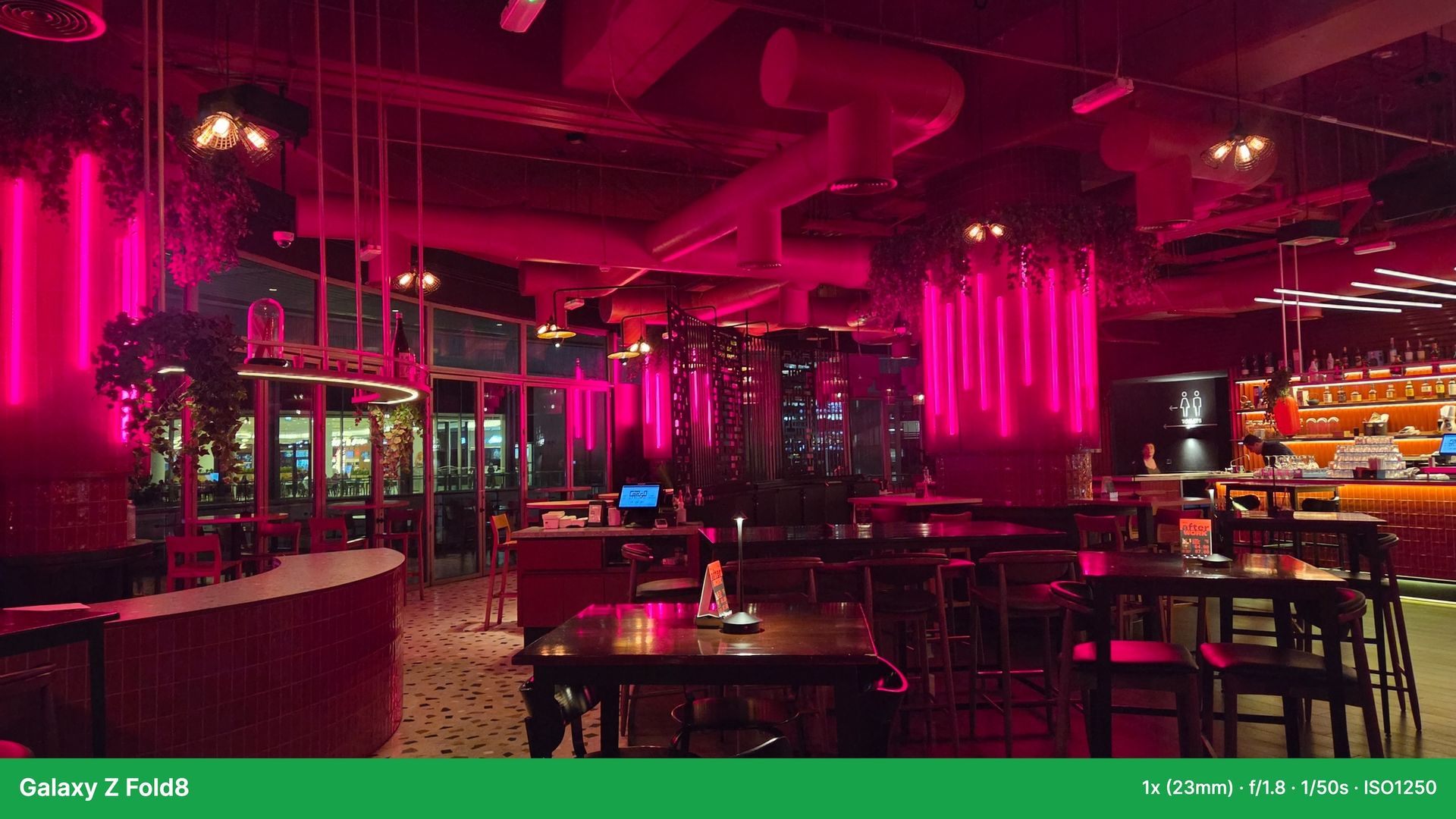
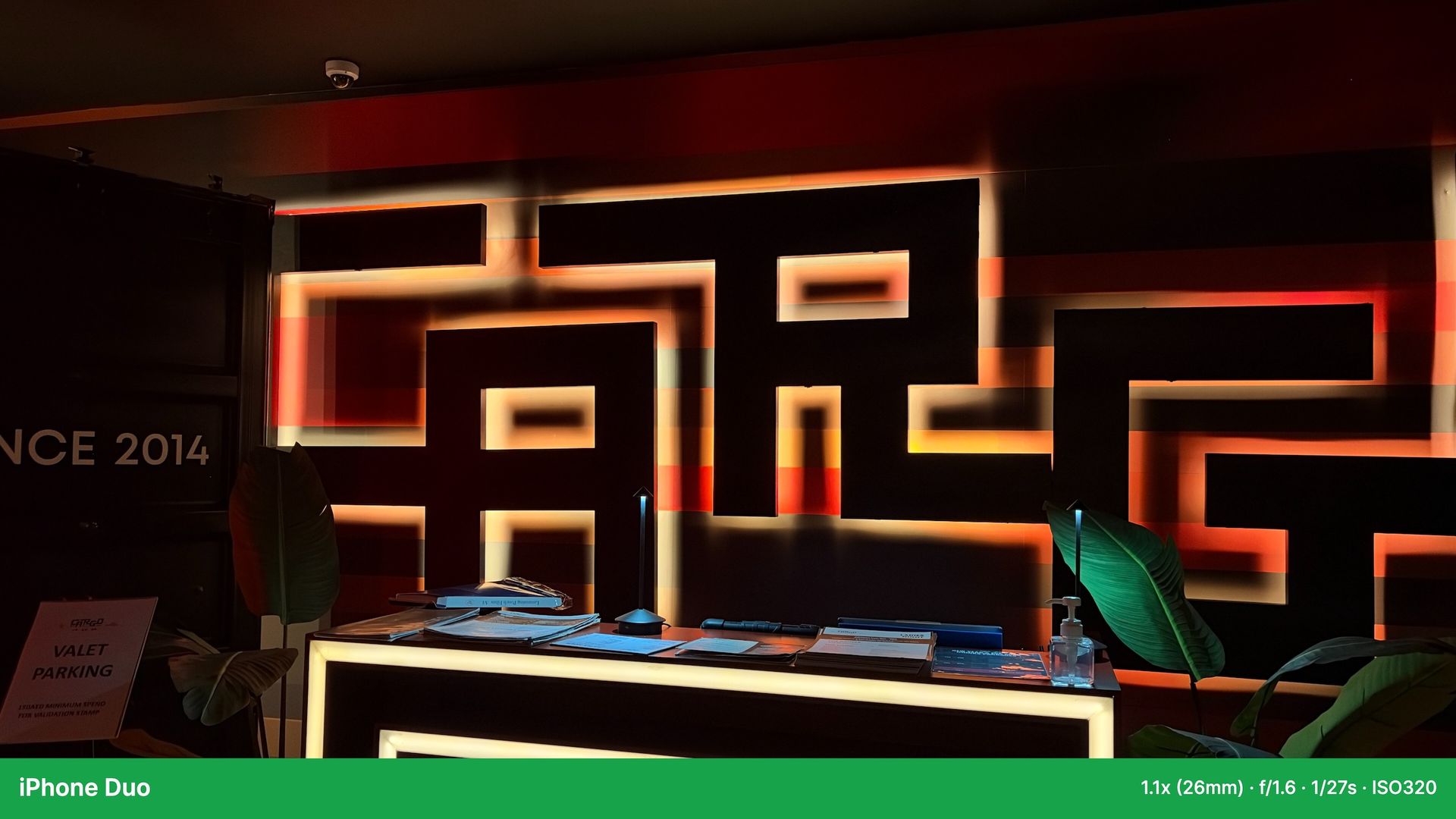
Flood a room in monochromatic red lighting, however, and Xiaomi's color science shines. The Xiaomi 18 Fold (ISO 500) holds true, deep crimson across the ceiling ductwork and light pillars while keeping the floor and booths clean. The iPhone Duo stays close in color accuracy (aside from motion blur on a passing guest at 1/20s), whereas the Galaxy Z Fold 8 (ISO 1250) shifts the red LEDs noticeably toward hot pink and magenta.
 Nirave Gondhia
 Nirave Gondhia
 Nirave Gondhia
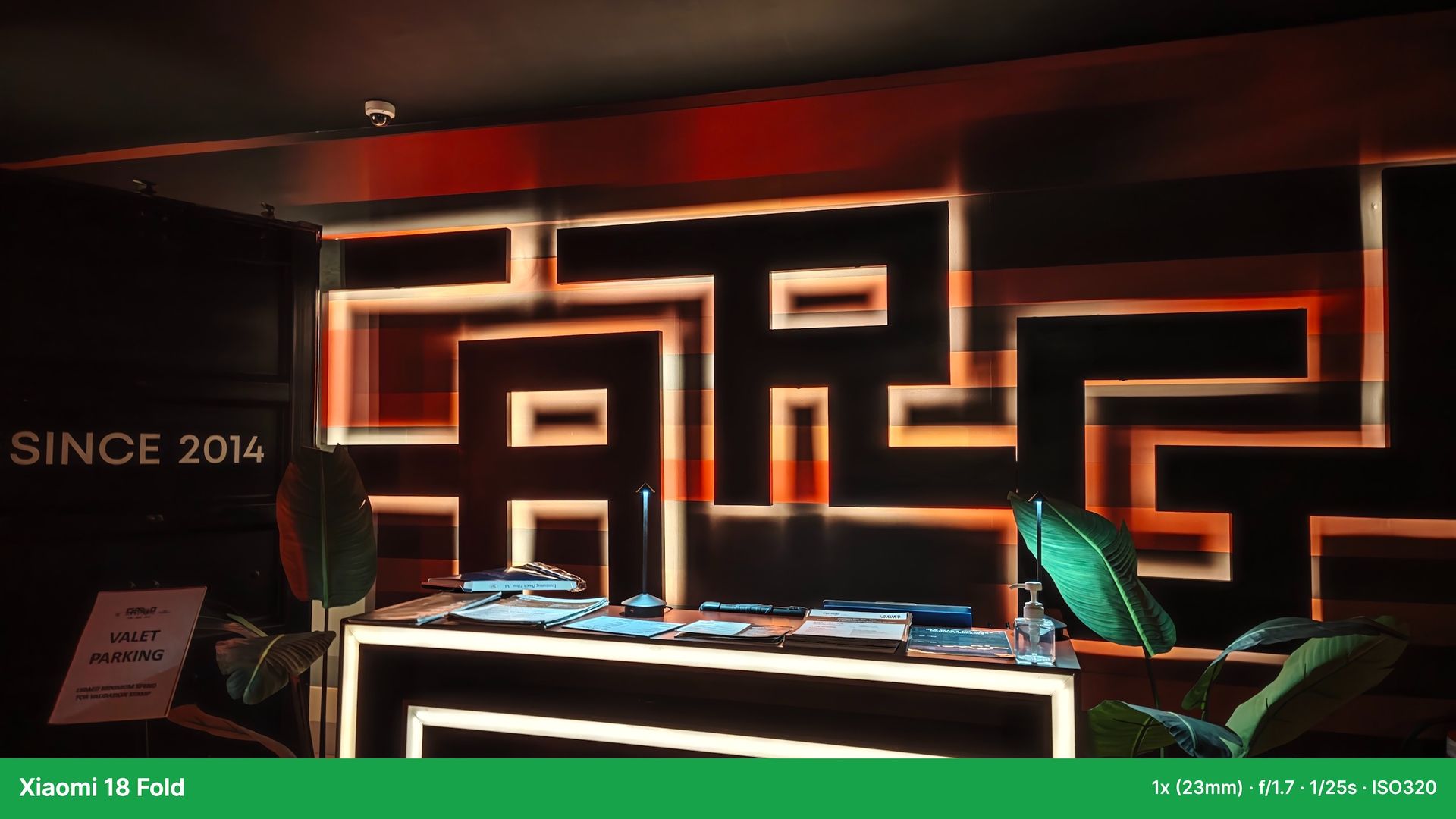
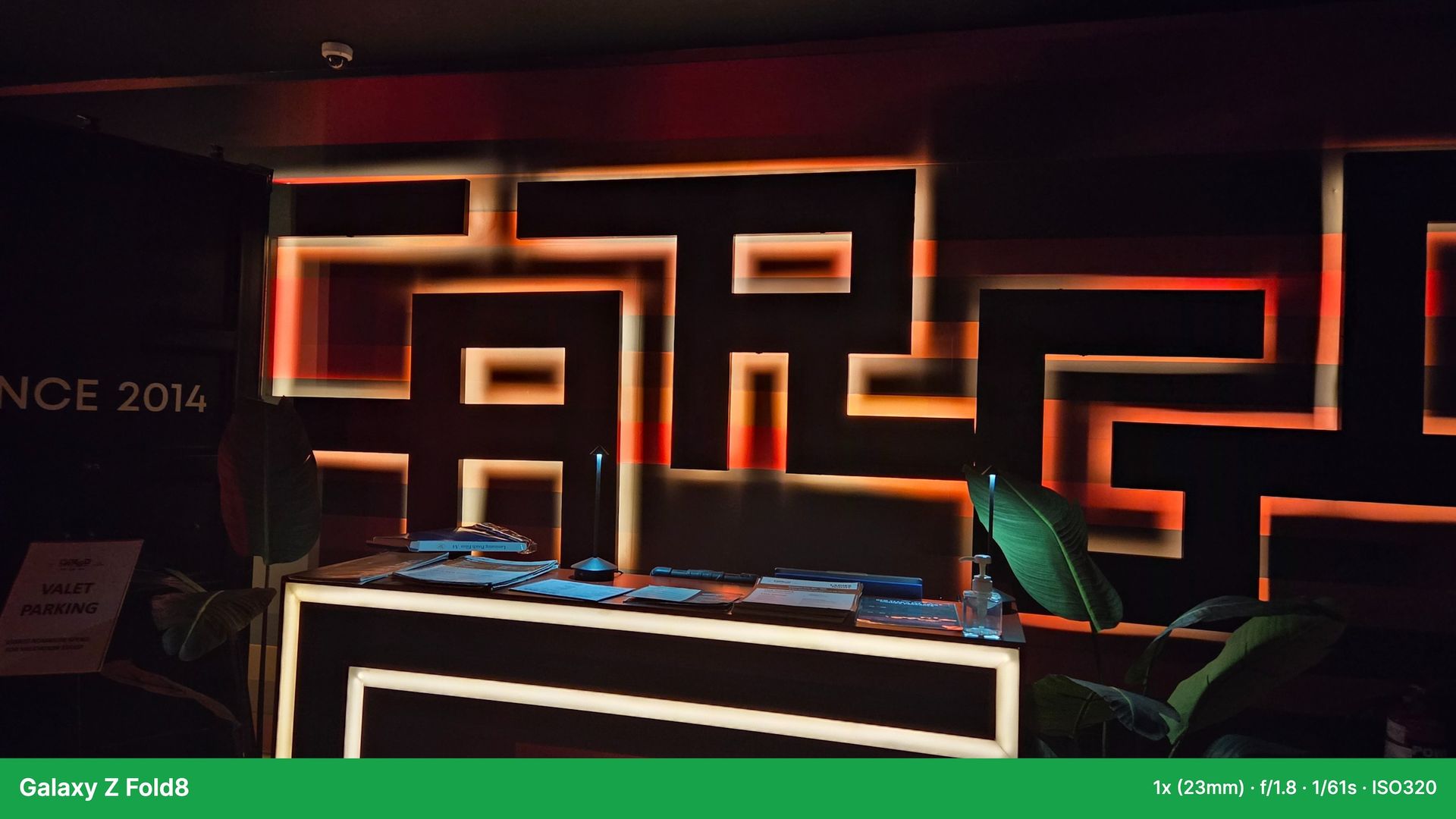
Similarly, facing the heavily backlit CARGO reception wall, Xiaomi wins on both framing and dynamic range - keeping the full "SINCE 2014" wall lettering intact on the left (which Apple's 26mm lens crops off) while controlling the orange-white halo glow around the block letters with the cleanest shadow detail.
6. Portrait Mode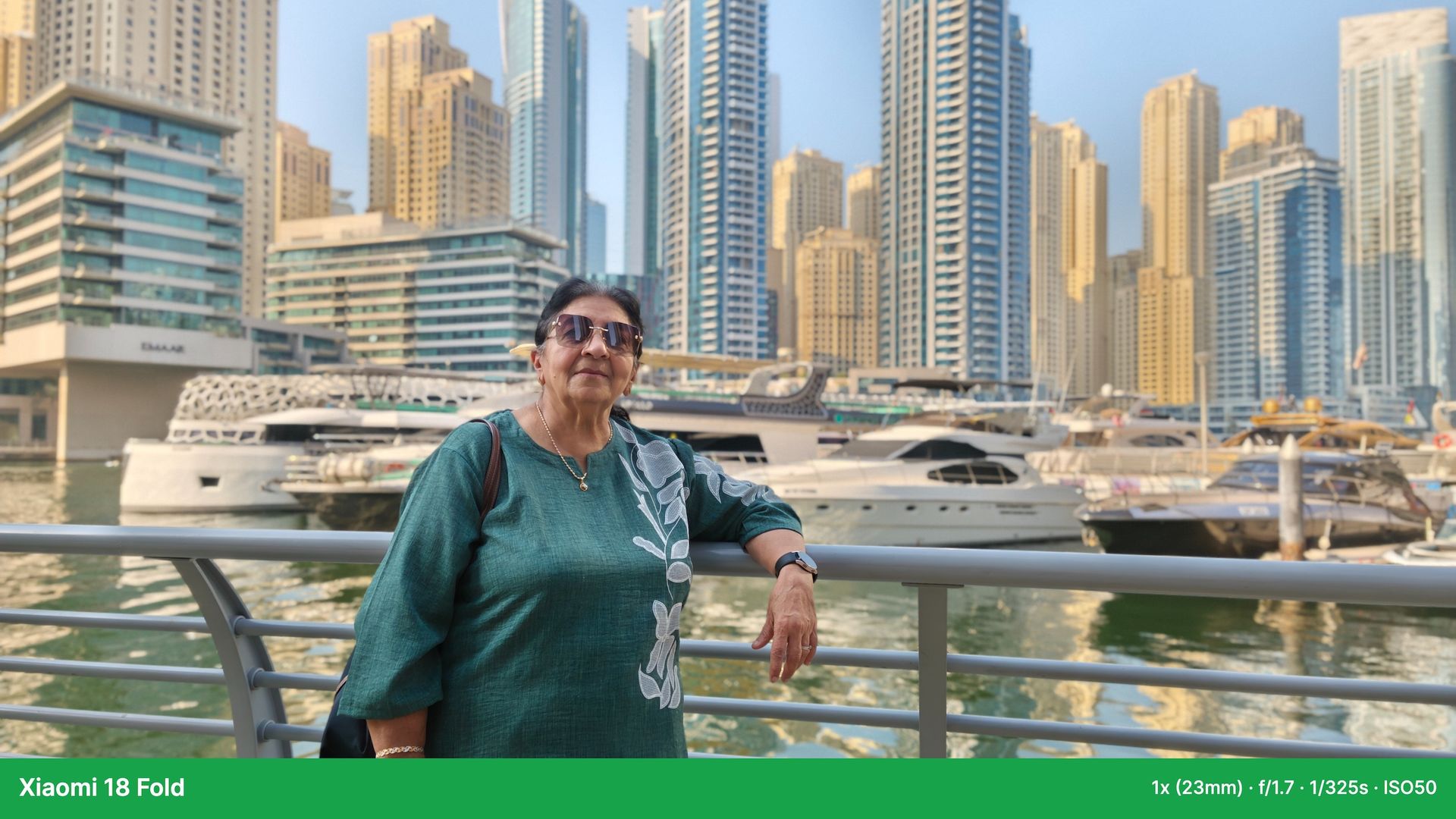 Nirave Gondhia
 Nirave Gondhia
 Nirave Gondhia
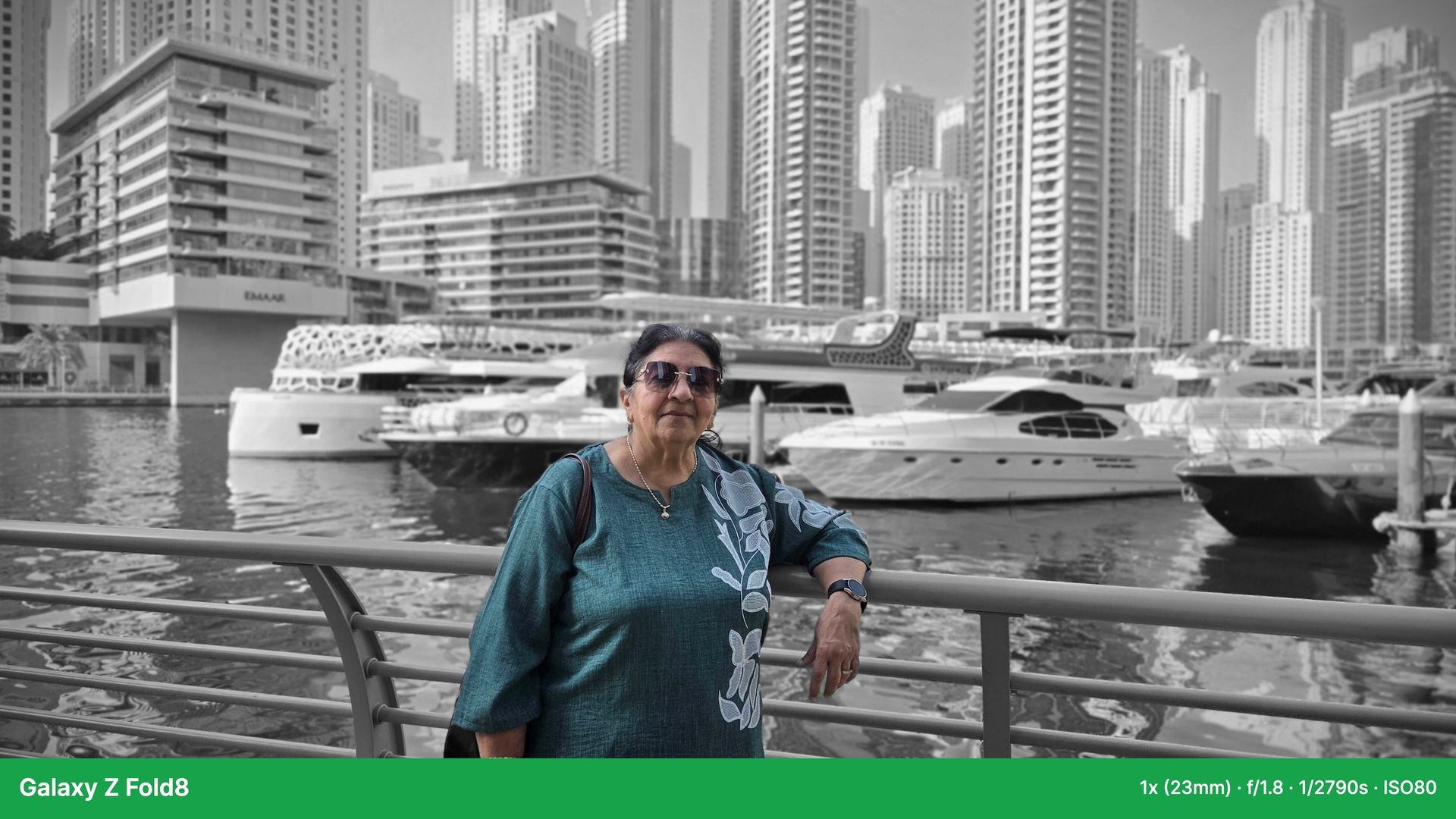 Nirave Gondhia
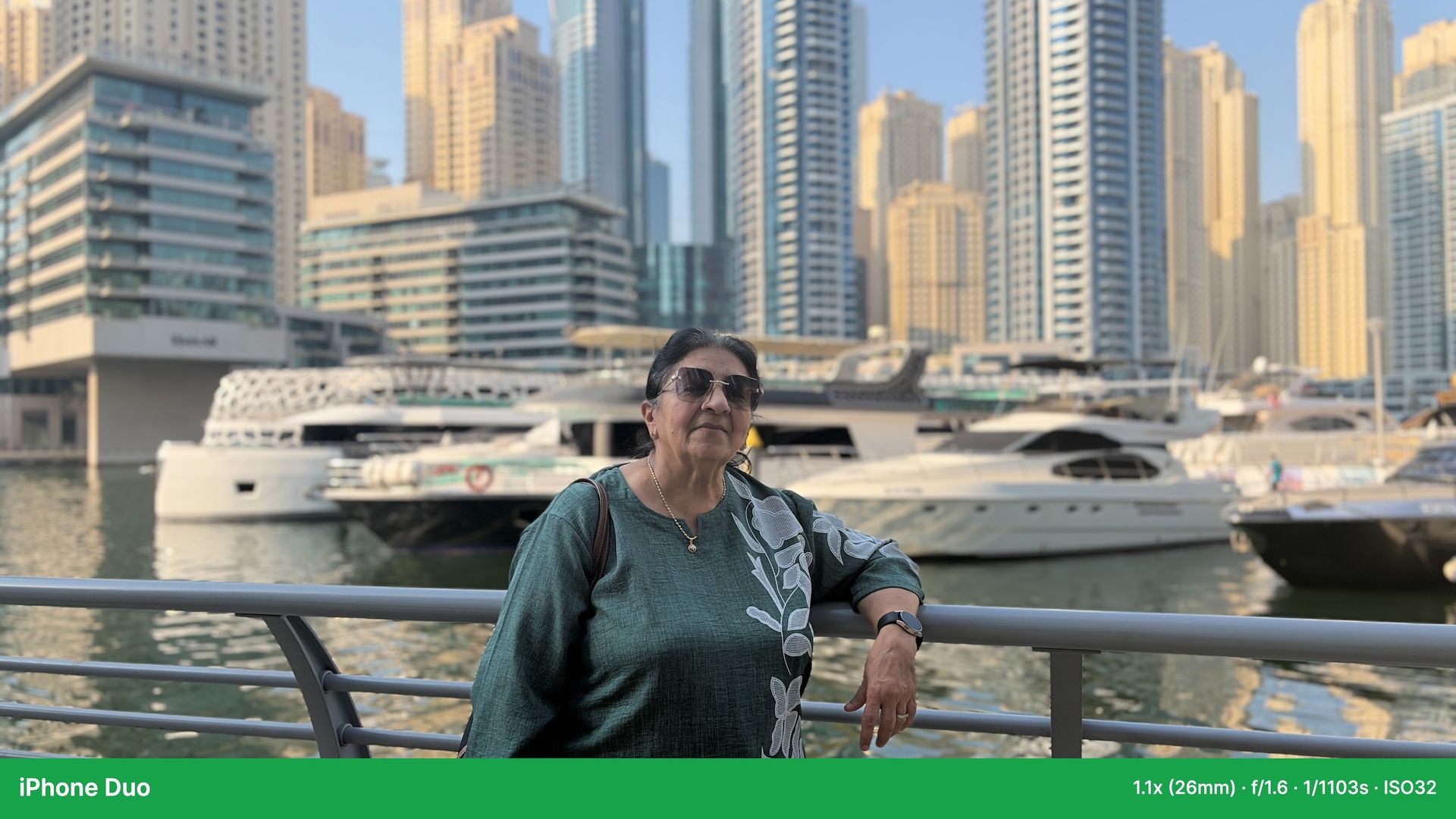
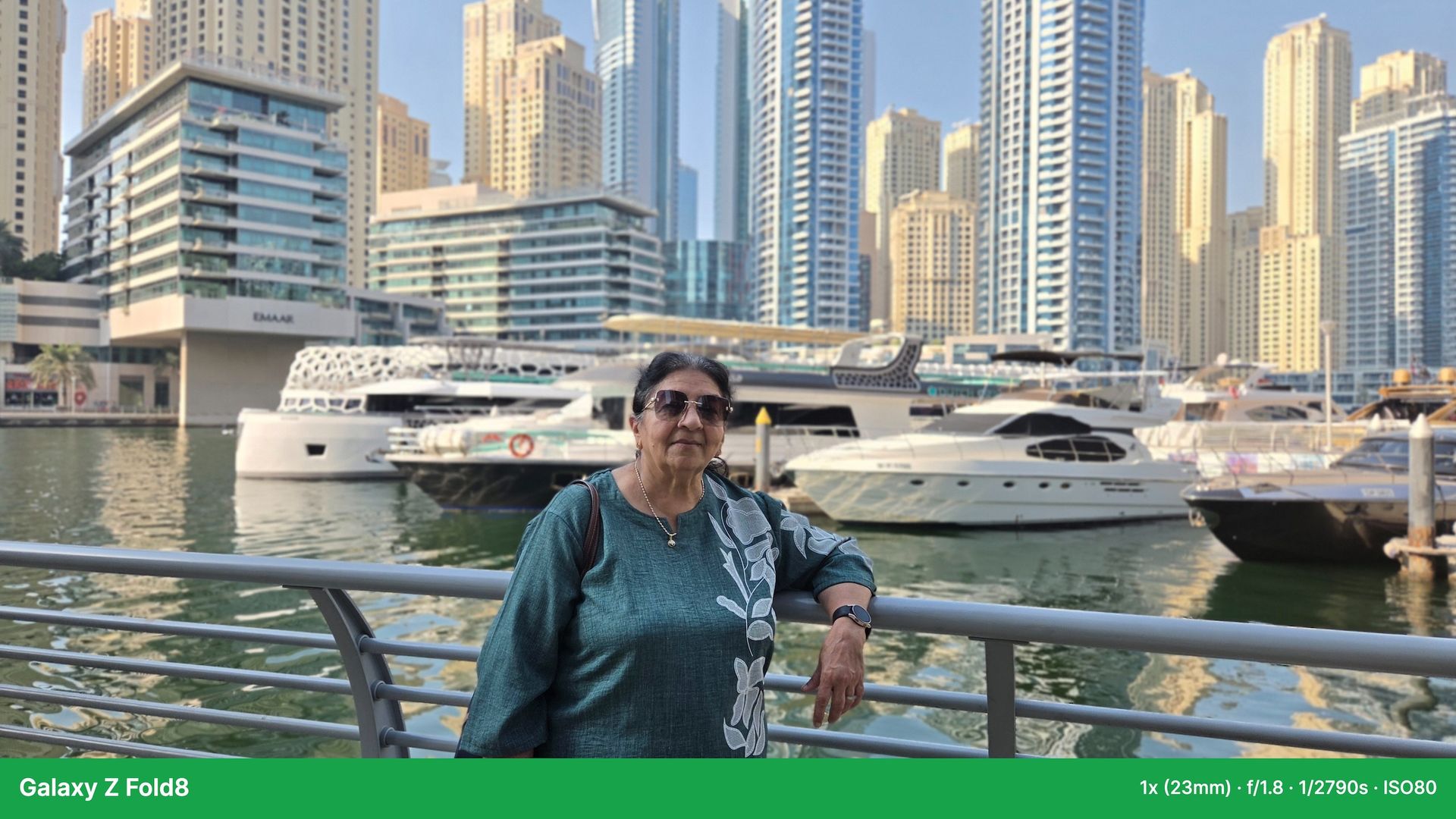
All three phones handle a tricky portrait cutout along the Marina promenade - cleanly separating the triangular gap inside a bent arm resting on the metal railing without accidentally blurring the bar itself.
Xiaomi takes the crown with creamy, optical-looking Leica bokeh and warm, flattering skin tones against the sunlit towers. The iPhone Duo is a close second, lifting facial shadows slightly brighter in a tighter 26mm crop, while the Galaxy Z Fold 8 applies more conservative background blur - offset somewhat if you enjoy Samsung's signature Color Point monochrome-background effect.
Color Point is my favorite portrait mode feature on any device, and it's available on all Samsung phones, making it particularly useful regardless of the Galaxy hardware you buy.
Selfies - and why it's not as straightforward on the iPhone Duo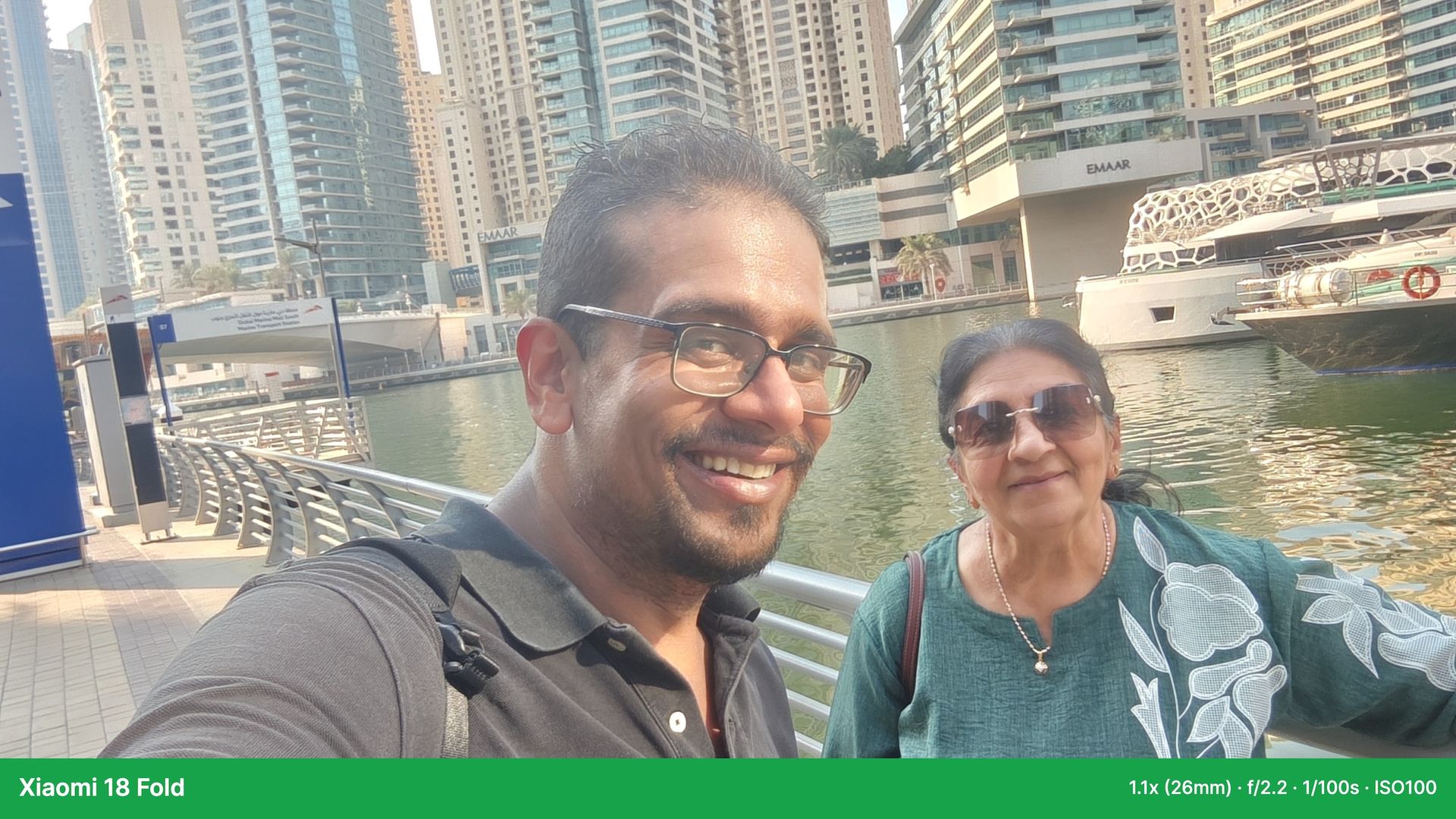 Nirave Gondhia
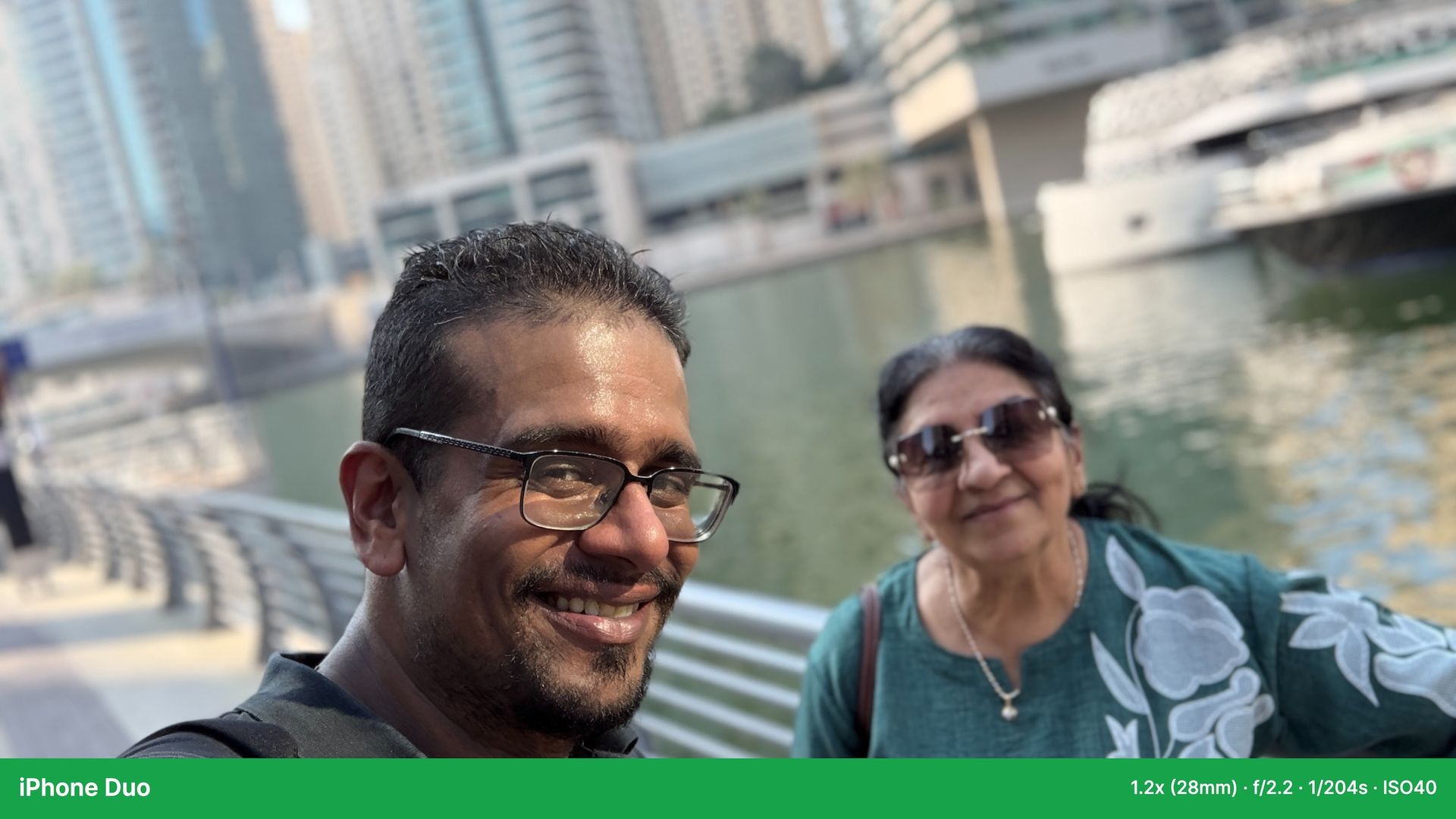 Nirave Gondhia
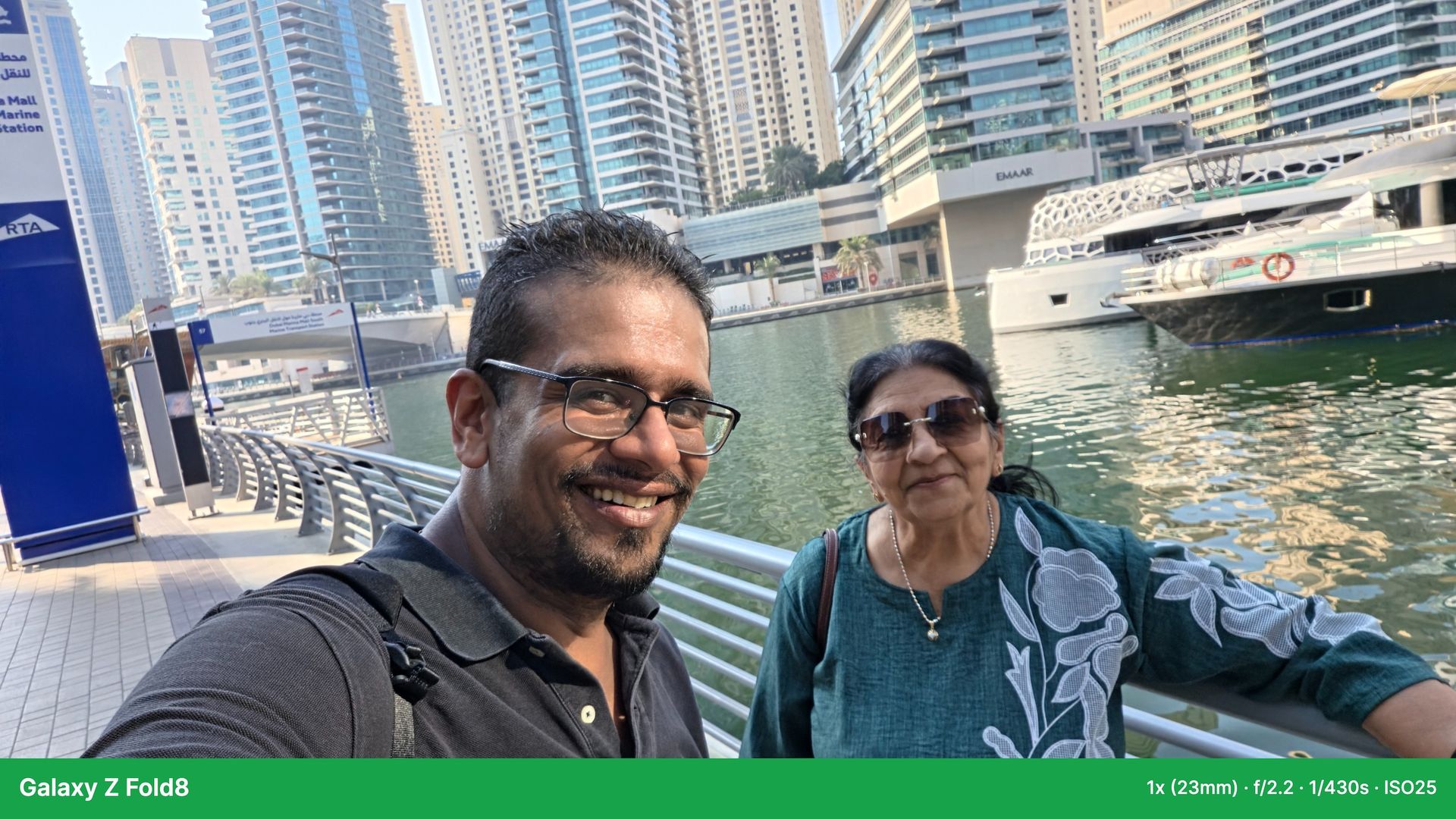 Nirave Gondhia
One of the key benefits companies promote for buying a foldable is its form factor and its ability to use the rear cameras to take selfies. This is also used to argue that foldables don't need the best selfie-camera hardware, or, in the case of the iPhone Duo, can use under-display cameras.
Take this final comparison with a grain of salt, as it wasn't the most scientific test. Still, it highlighted two practical realities of shooting selfies on foldables.
First, on the cover cameras, the Galaxy Z Fold 8 wins two-person selfies effortlessly: its wider 23mm lens fits both people comfortably, handles harsh overhead sunlight without washing out, and keeps both faces sharp.
The Xiaomi 18 Fold keeps both people in focus too, but suffers from heavy backlight flare when the sun sits behind your shoulder. Worst of all, the iPhone Duo crops tight at 28mm and falls straight into Apple's single-subject portrait trap - keeping me sharp while completely blurring out my mom standing just inches behind me.
Second, if you want to bypass those f/2.2 cover sensors and use the much better rear cameras for selfies, Apple makes the experience unnecessarily frustrating. Unlike Samsung and Xiaomi - which put full camera controls right on the cover screen and let you trigger a timer simply by showing your palm - the iPhone Duo gives you no on-screen controls on the outer display and no palm gesture. Trying to awkwardly grip an unfolded foldable one-handed while stretching your fingers to press the Camera Control button or volume keys almost guarantees camera shake.
The winners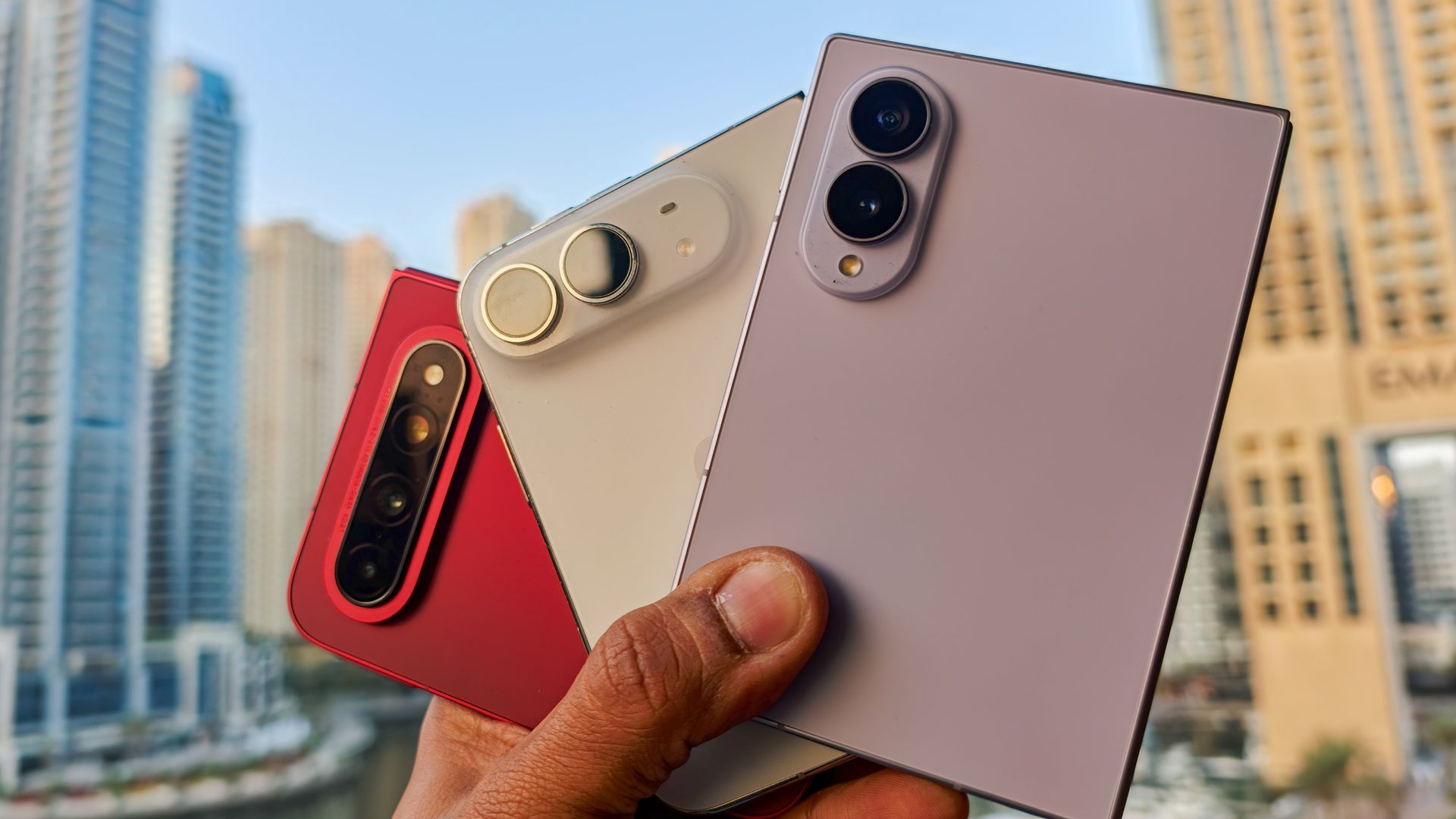
It's unlikely a single phone wins in every part of this comparison, so which phone wins overall? Here's how they ranked overall.
Test | 1st | 2nd | 3rd |
|---|---|---|---|
Daylight & HDR | Xiaomi 18 Fold | iPhone Duo | Galaxy Z Fold 8 |
Ultrawide | iPhone Duo | Galaxy Z Fold 8 | Xiaomi 18 Fold |
Daytime zoom | Xiaomi 18 Fold | iPhone Duo | Galaxy Z Fold 8 |
Night & low-light | Xiaomi 18 Fold | iPhone Duo | Galaxy Z Fold 8 |
Indoor & Neon | Xiaomi 18 Fold | iPhone Duo | Galaxy Z Fold 8 |
Portrait Mode | Xiaomi 18 Fold | iPhone Duo | Galaxy Z Fold 8 |
Selfies & Usability | Galaxy Z Fold 8 | Xiaomi 18 Fold | iPhone Duo |
These results won't come as a huge surprise. While Apple, Samsung, and Xiaomi have all converged on wide, passport-style foldables, their camera hardware choices split them decisively in real-world shooting.
Xiaomi 18 Fold proves that foldables need a telephoto
Nirave Gondhia
By opting for a dedicated telephoto lens and offering considerably better all-around hardware, the Xiaomi 18 Fold proves that a slim passport-style foldable can deliver a pro-like camera.
The iPhone Duo takes a solid second place due to reliable point-and-shoot HDR, strong ultrawide performance, and cleaner night highlight retention than Samsung. As for Samsung, the Galaxy Z Fold 8 wins a couple of categories, but overall, it still has work to do to keep pace with its rivals.