Forget the iPhone Duo and Z Fold 8 – this foldable has it all
Cars. Smart Home. Leica-powered cameras. You may have heard of Xiaomi for many reasons, but unless you're in China, folding phones probably aren't one of them. Yet the company has been releasing foldables since 2021, experimenting with both flip and book-style designs as it dialed in on what customers actually wanted.
Like Samsung and the Galaxy Z Fold 8, that search led to the passport-style Xiaomi 18 Fold, which launched days after Apple announced its own wide foldable. In true Xiaomi fashion, the result is uniquely Xiaomi in both fantastic and not-so-fantastic ways. It feels immediately familiar given its near symmetry with the iPhone Duo, yet it solves some of my biggest complaints with both Apple and Samsung's foldables.
Both rivals set a precedent that passport-style foldables require compromises compared to traditional flagships. While Xiaomi had to make choices too, it made them in all the right places: battery and cameras. Instead of a smaller cell, you get a 6,000mAh beast - the largest in this form factor. Instead of a dual-lens setup without a telephoto, you get a flagship Leica triple camera complete with a 200MP main sensor and a 3.5x optical periscope telephoto.
However, the reverse also holds true. Xiaomi's hardware-first R&D focus - combined with its lack of a global release - means HyperOS 4 lacks the UX refinement and Western polish other brands prioritize. To its credit, Xiaomi made it easy to install Google services and the Play Store, and its take on multitasking is genuinely unique. Still, a couple of daily essentials don't work as intended, and power-user staples like a desktop mode are missing despite support for wired display out.
In a nutshell, the Xiaomi 18 Fold pairs the best hardware in a passport-style foldable with software that falls short in familiar areas.
Call it Xiaomi's Choice: do you want the absolute best hardware, or slightly lesser hardware with a much more refined software experience? Hardware nerd that I am, its appeal is obvious - though the iPhone Duo being as good as it is makes this a much closer fight than I anticipated.
Xiaomi 18 Fold Price, Specs & Availability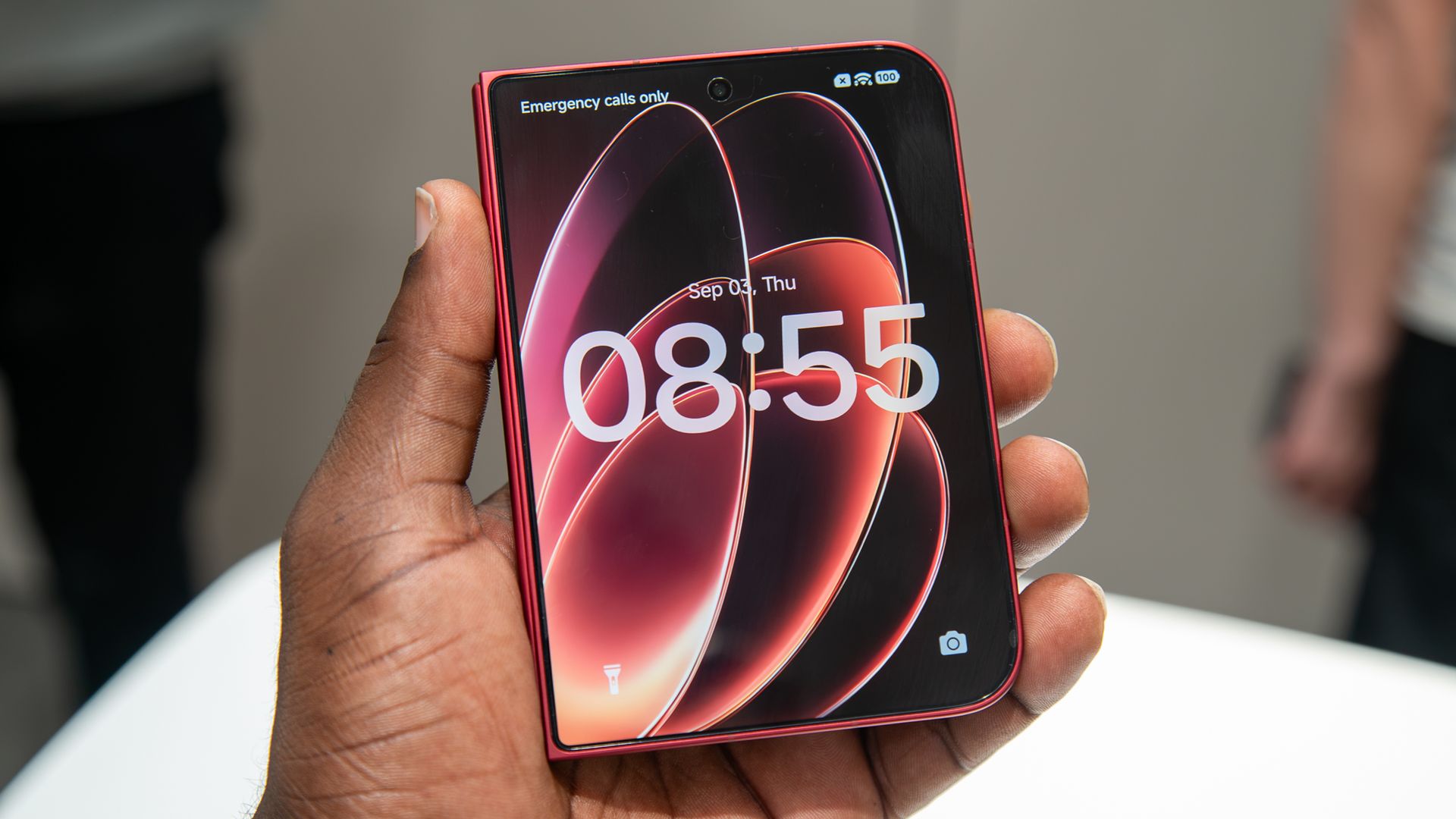
In mainland China, the Xiaomi 18 Fold starts at 10,999 yuan (roughly $1,640) - undercutting both the $1,899 Galaxy Z Fold 8 and the $1,999 iPhone Duo on paper before grey-market import markups eat into the savings.
More frustrating, Xiaomi hosted its global launch event for the Xiaomi 18 Pro and 18 Pro Max earlier this week, conspicuously leaving the 18 Fold behind as a China-only release. This may change in future launches, but sadly, the Xiaomi 18 Fold looks set to remain China-exclusive.
Design, Hinge & Ergonomics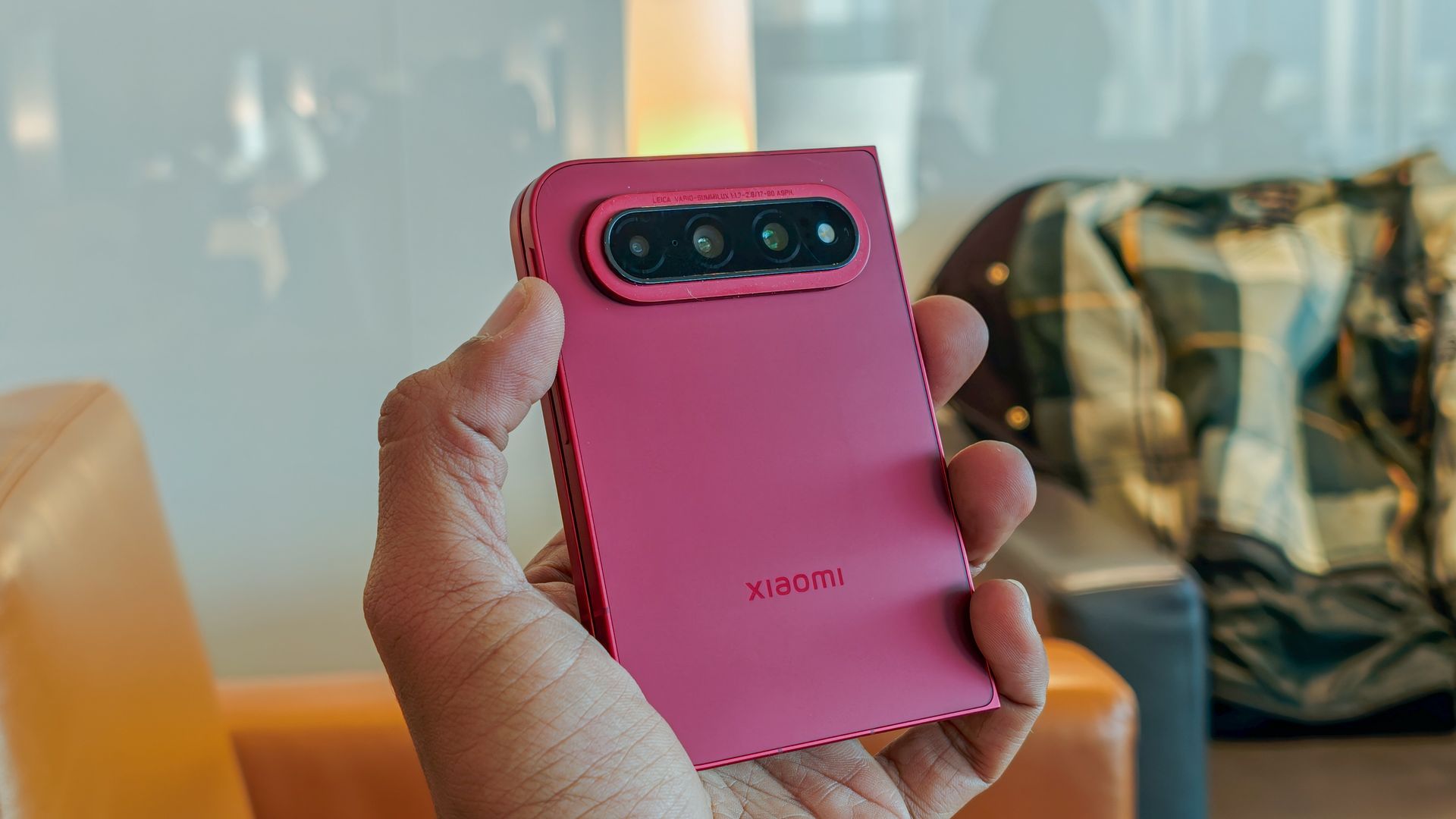
Pick up the Xiaomi 18 Fold, then the iPhone Duo, and the weight difference jumps out immediately. At 219g, Xiaomi's foldable is a full 35g lighter than Apple's first foldable - and only 18g heavier than the Galaxy Z Fold 8, despite cramming in a massive battery and periscope optics. Finished in a stunning matte Nishino Red glass against a dark metal frame, it looks and feels every bit like a premium flagship smartphone.
Looking at raw thickness alone actually sells Xiaomi's engineering short. When you calculate total folded volume, the Xiaomi 18 Fold (105.37 cm^3) takes up roughly 6 percent less physical space than the iPhone Duo (111.95 cm^3) and even edges out the razor-thin, tall-bodied Oppo Find N6 (105.82 cm^3). Only the Galaxy Z Fold 8 (98.43 cm^3) and Honor Magic V6 (102.15 cm^3) feature smaller overall footprints - and neither offers the combination of a 6,000mAh battery and a periscope telephoto inside a pocket-friendly passport-style chassis.
Even the wide horizontal camera bar works in its favor. Rather than getting in the way, as some have complained, that housing doubles as a natural finger rest and grip mount, giving your index finger a solid ledge to anchor against when using the phone unfolded in portrait mode.
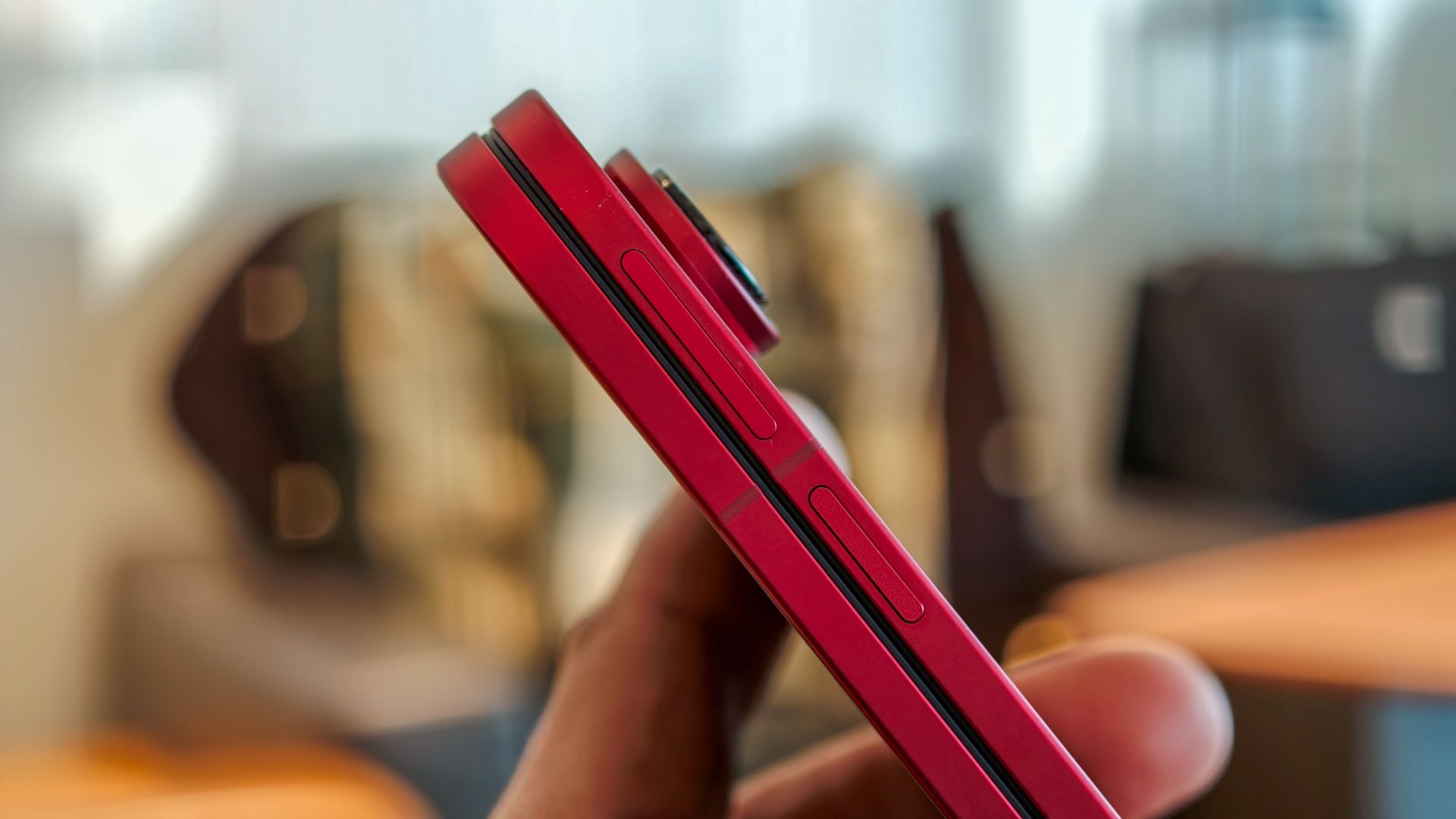
The keel hinge feels sturdy and reassuring, even if it lacks the iPhone Duo's crisp magnetic snap and holds fewer intermediate flex angles. Unlocking is fast and reliable via the side-mounted fingerprint reader, or 2D face unlock - a welcome convenience Apple skipped on the Duo.
There are inevitably trade-offs in a body that's just 5.02mm thin when unfolded. The stereo speakers get plenty loud, but they lack low-end warmth and sound noticeably tinny and treble-heavy compared to Samsung and Apple. Unlike the iPhone Duo, it lacks stylus support, and its IP58 rating means it handles water submersion well but lacks the full dust protection of the iPhone Duo.
Displays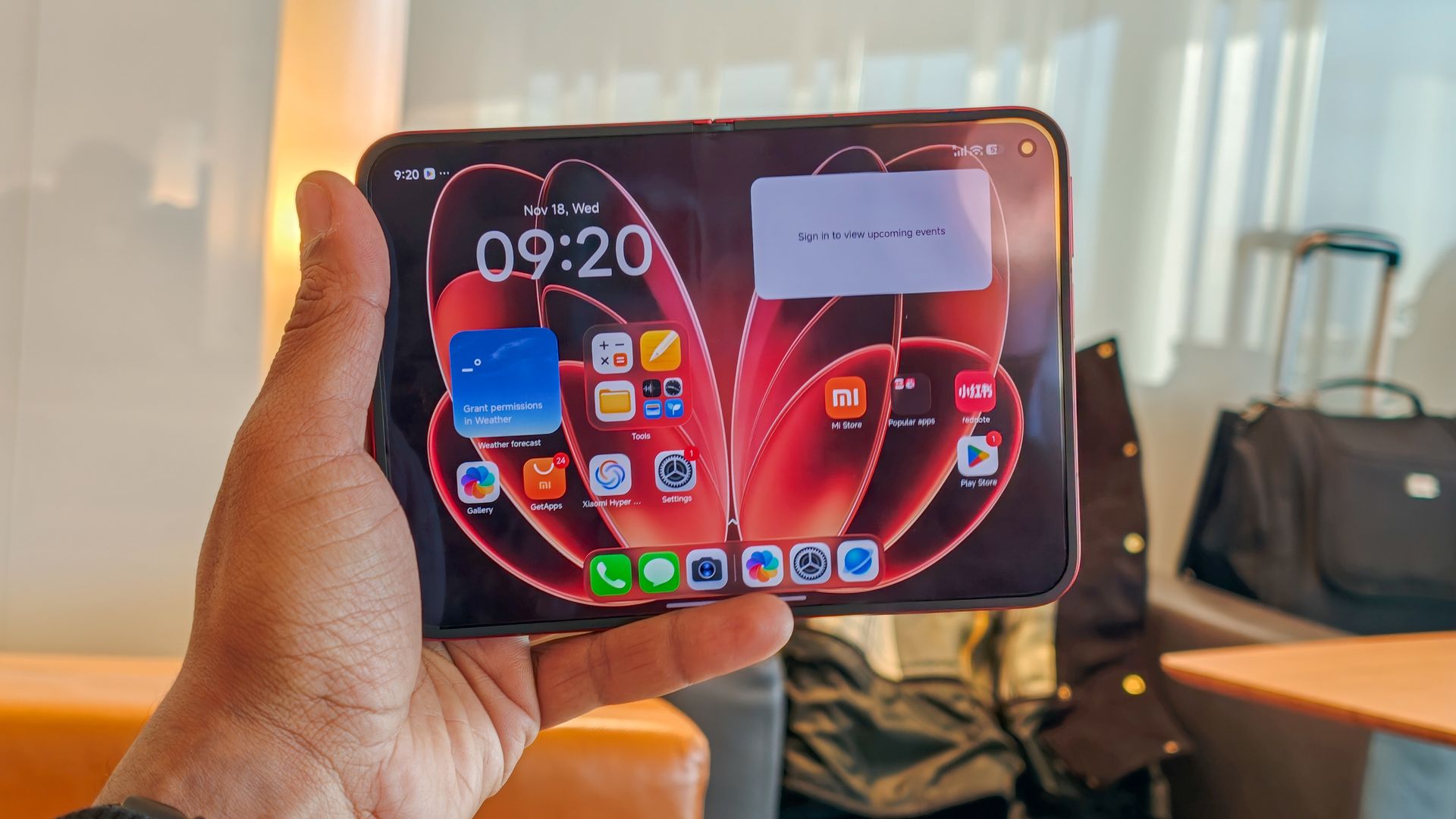
Like the Galaxy Z Fold 8 and iPhone Duo, the wider passport aspect ratio transforms how usable the 18 Fold feels closed. The 5.38-inch cover screen is wide enough for comfortable two-thumb typing without feeling cramped, though it is a touch wide (but manageable) for single-handed use and the heavily rounded outer corners cut slightly more into usable corner real estate than the iPhone Duo's squared-off edges.
Unfold it, and the 7.58-inch inner OLED is a stunner. With HDR brightness pushing well past 3,700 nits, I've had no issues with outdoor visibility in harsh lighting.
Then there's the crease. There's no optical illusion here, as Apple has deployed. Instead, the crease virtually disappears straight-on, but is noticeable at sharper viewing angles - and sensitive eyes may notice low-brightness PWM flicker late at night.
Performance & Battery Life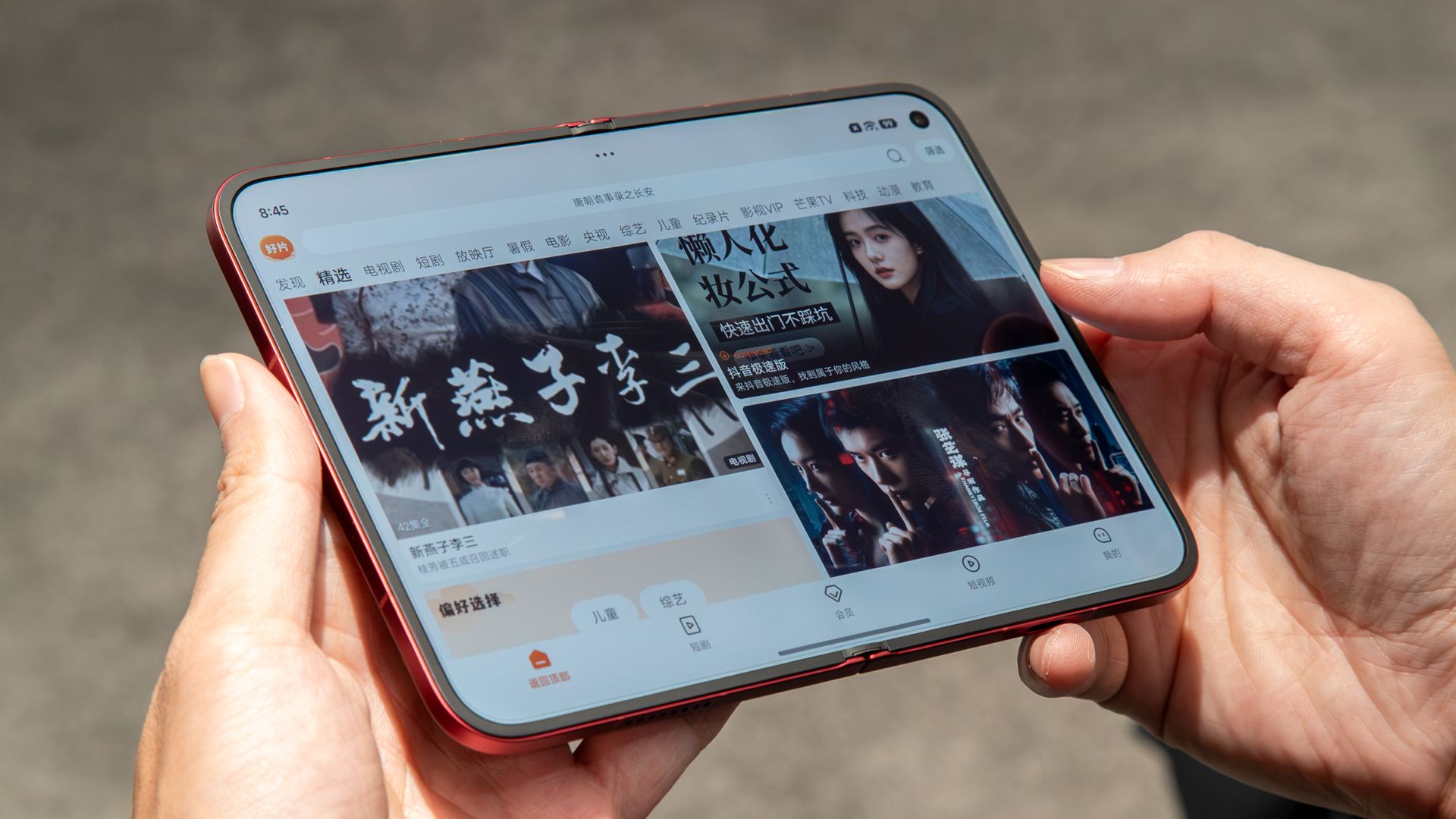
The Xiaomi 18 Fold is more than just Xiaomi's first passport-style foldable; it is also the first phone powered by Xiaomi's new in-house flagship 3nm XRing O3 chip, paired with 16GB of LPDDR6 RAM.
In everyday use, it is blisteringly fast, flying through camera processing and split-screen multitasking without a stutter. Push it hard with sustained 3D gaming or prolonged camera sessions, though, and the thin chassis warms up noticeably along the upper half.
Whatever thermal efficiency trade-offs the XRing O3 makes, the 6,000mAh silicon-carbon battery renders them irrelevant. Endurance is class-leading, easily clearing a day of heavy testing. The smaller display sizes - especially the front display - mean lower power draw, with a key net result: the Xiaomi 18 Fold offers the best battery life of any foldable that I've tested so far.
When you finally need a top-up, 67W wired charging gets you to 50 percent in 19 minutes and a full charge in 50 minutes (with the brick included in the box). A charge rate of 120 mAh/min means you won't be left short, and 50W wireless charging also lets you charge fairly quickly without wires.
Xiaomi 18 Fold Cameras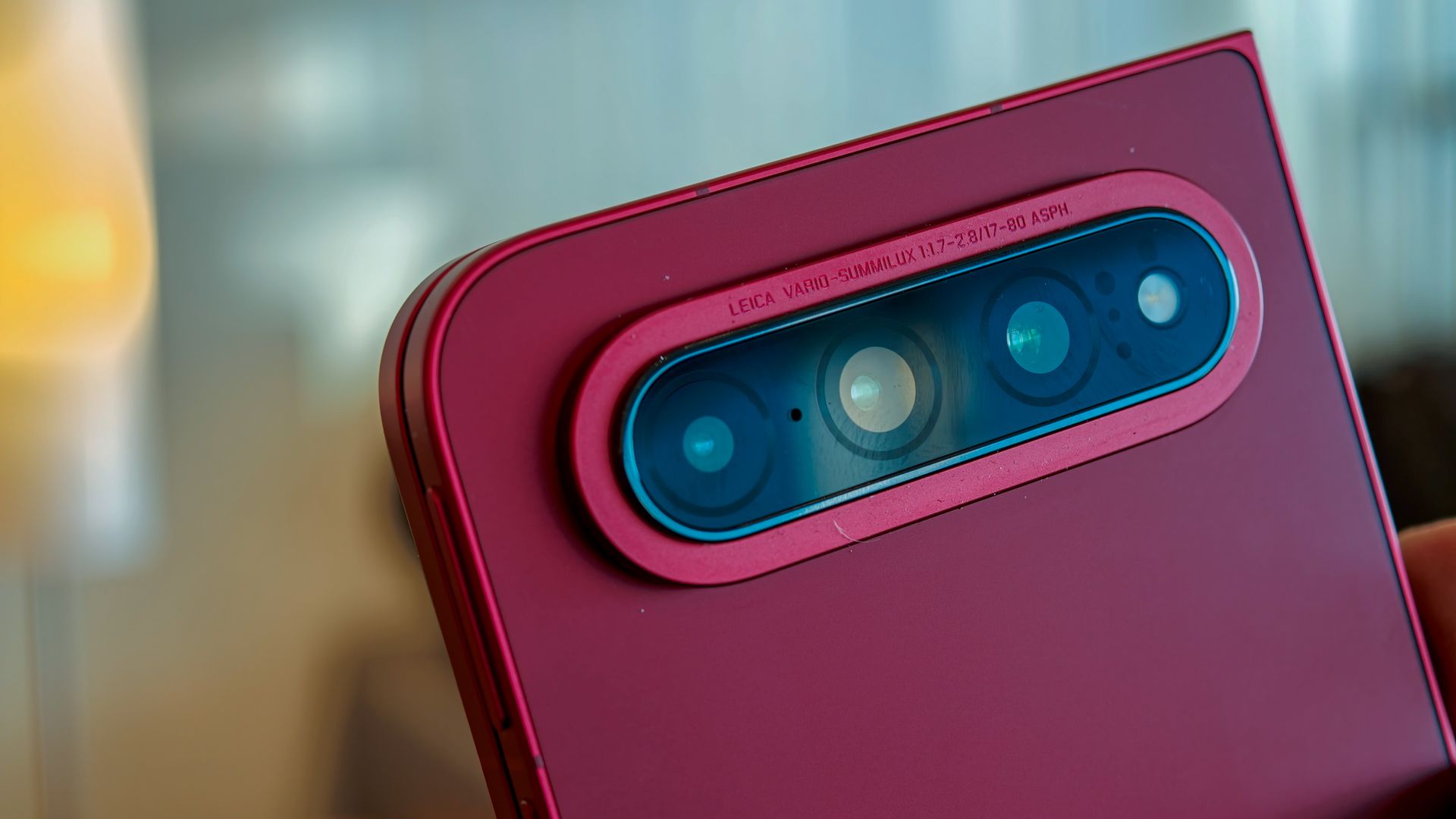
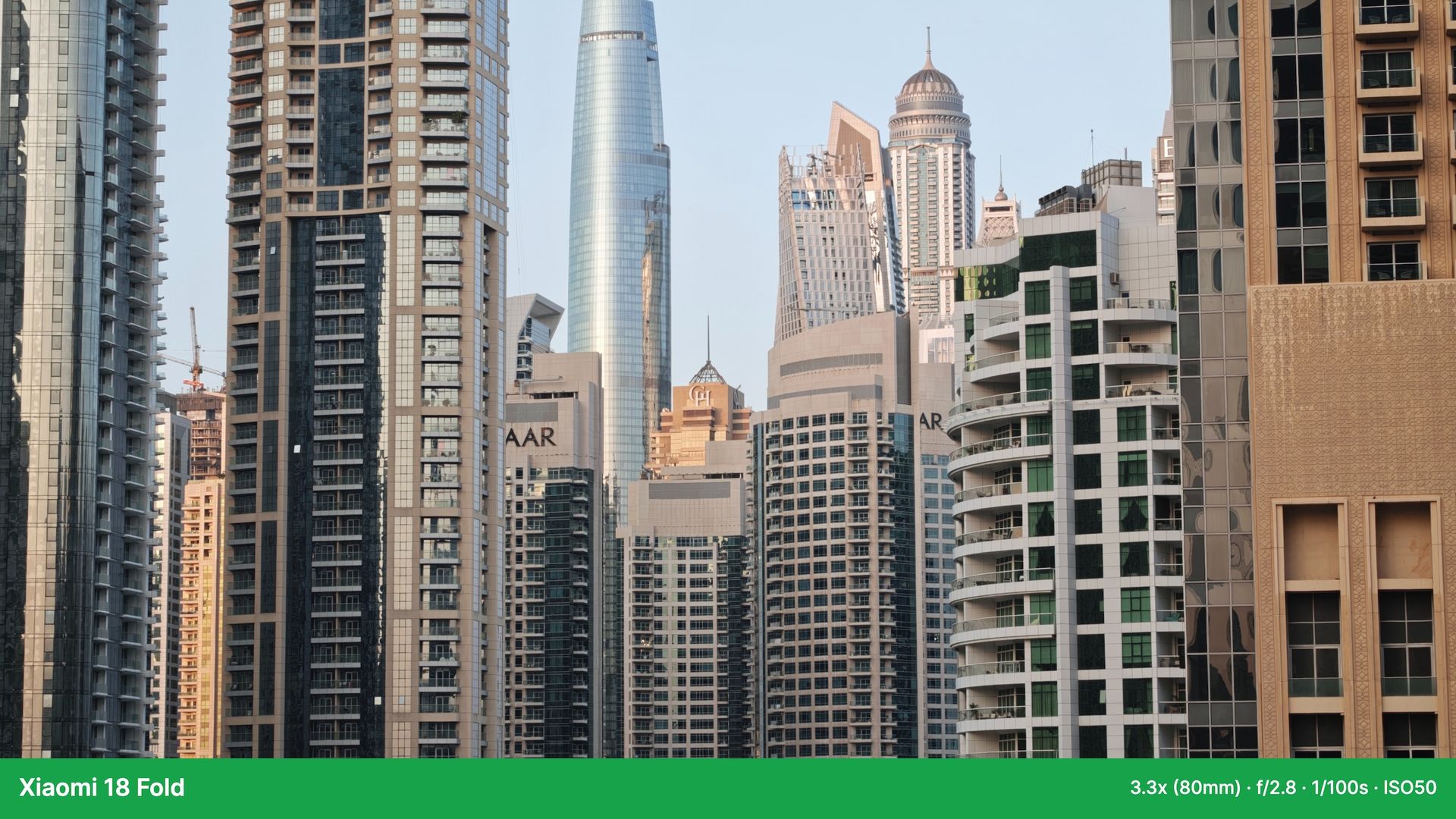
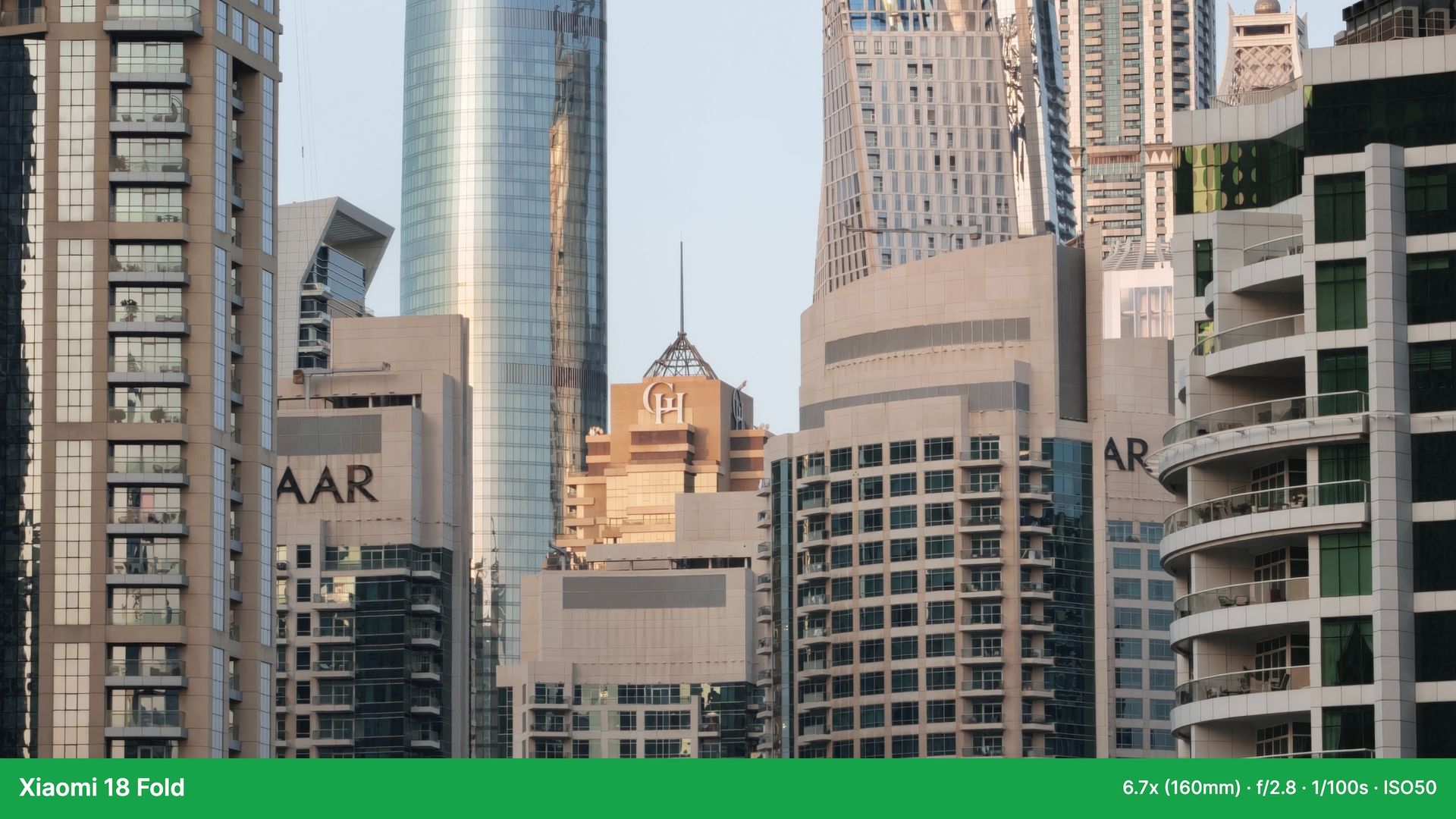
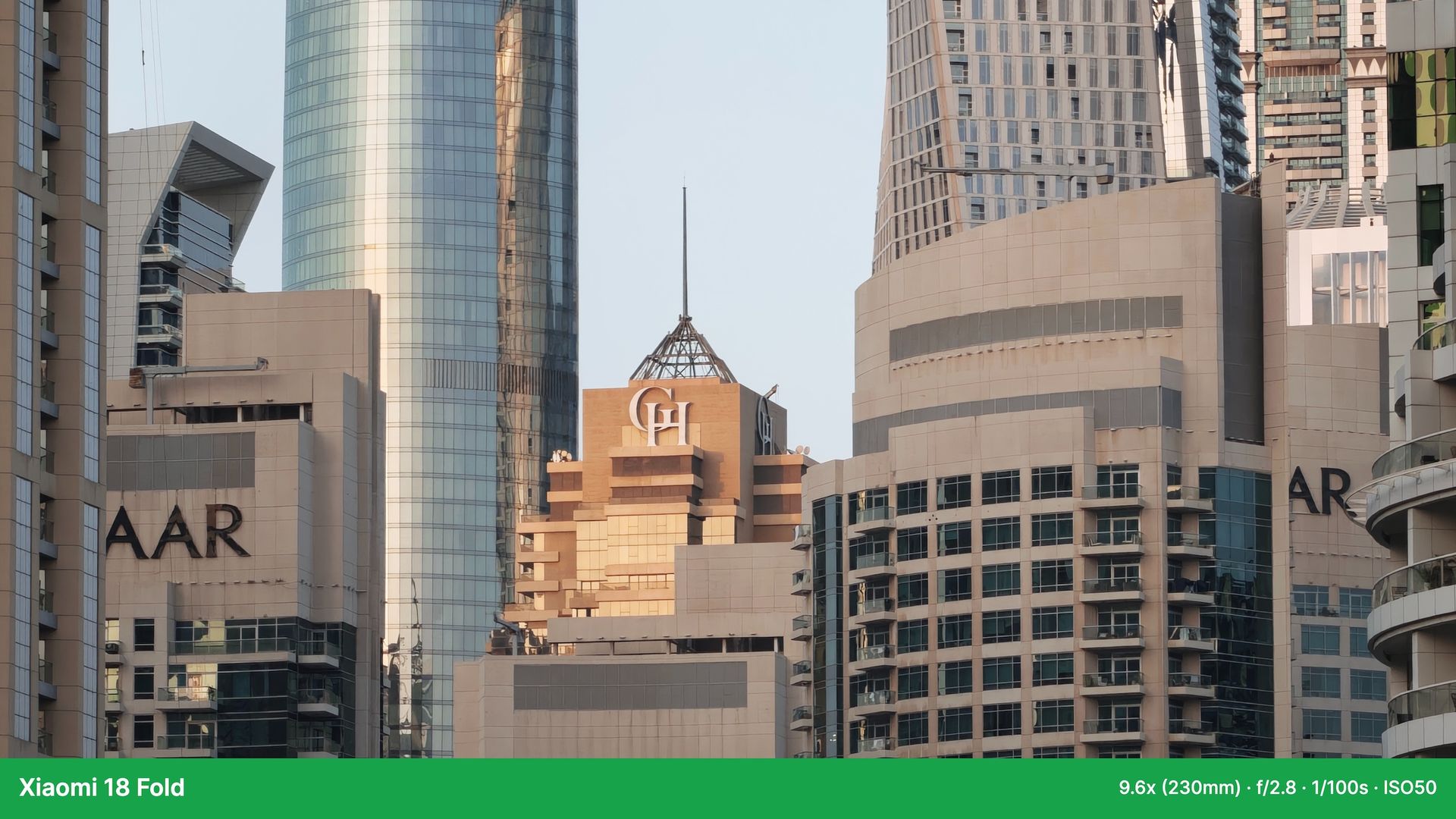
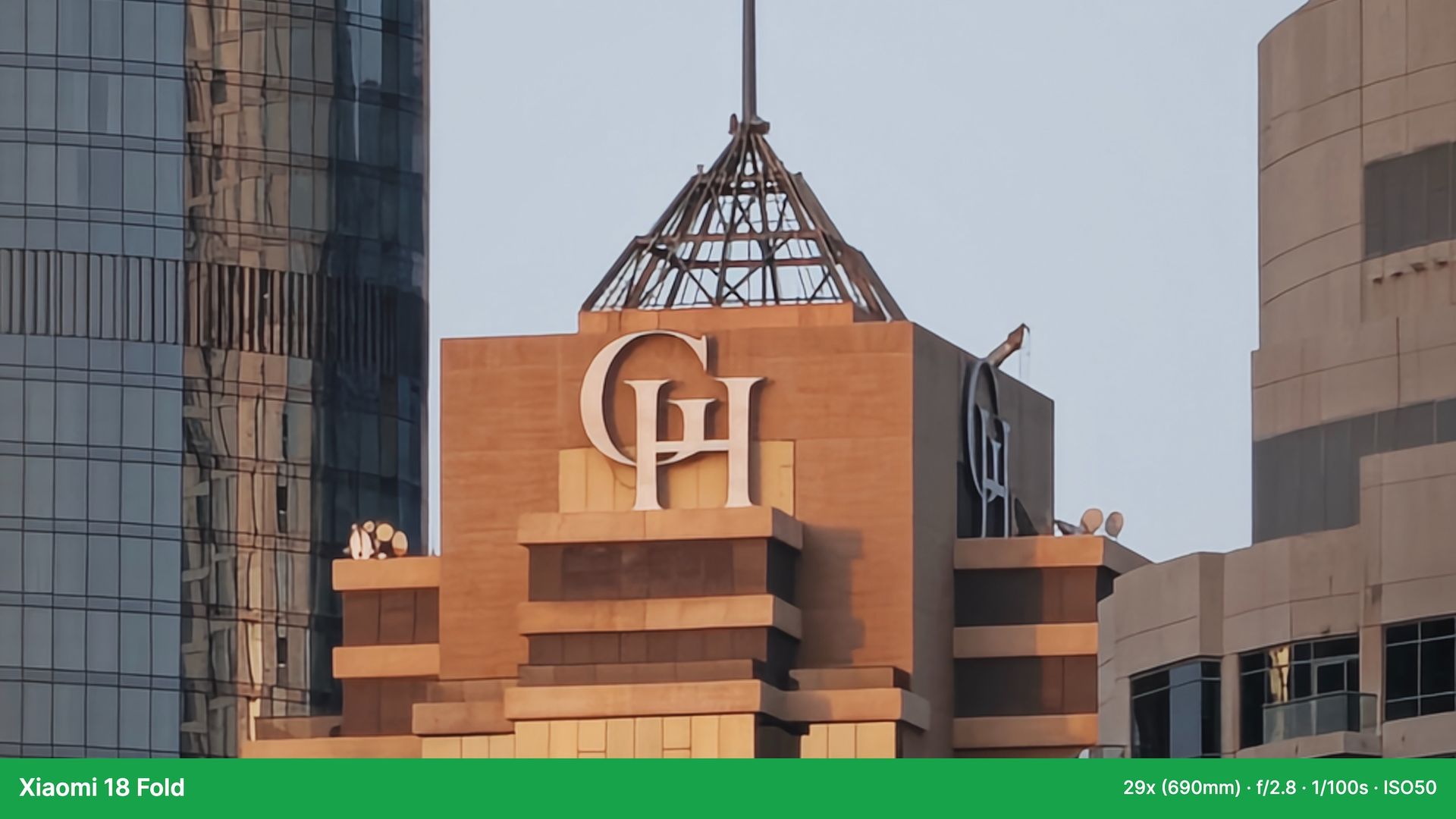
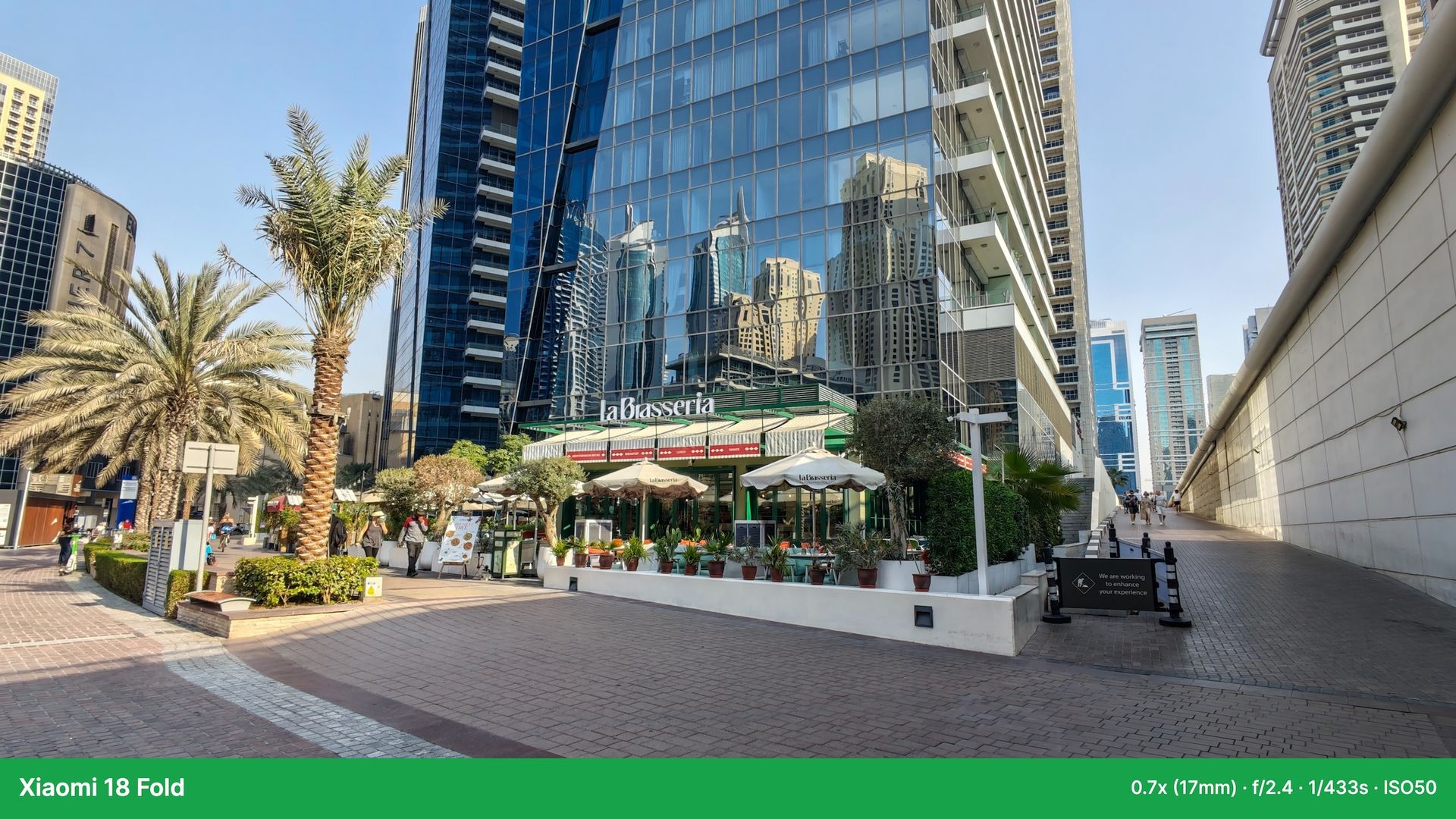
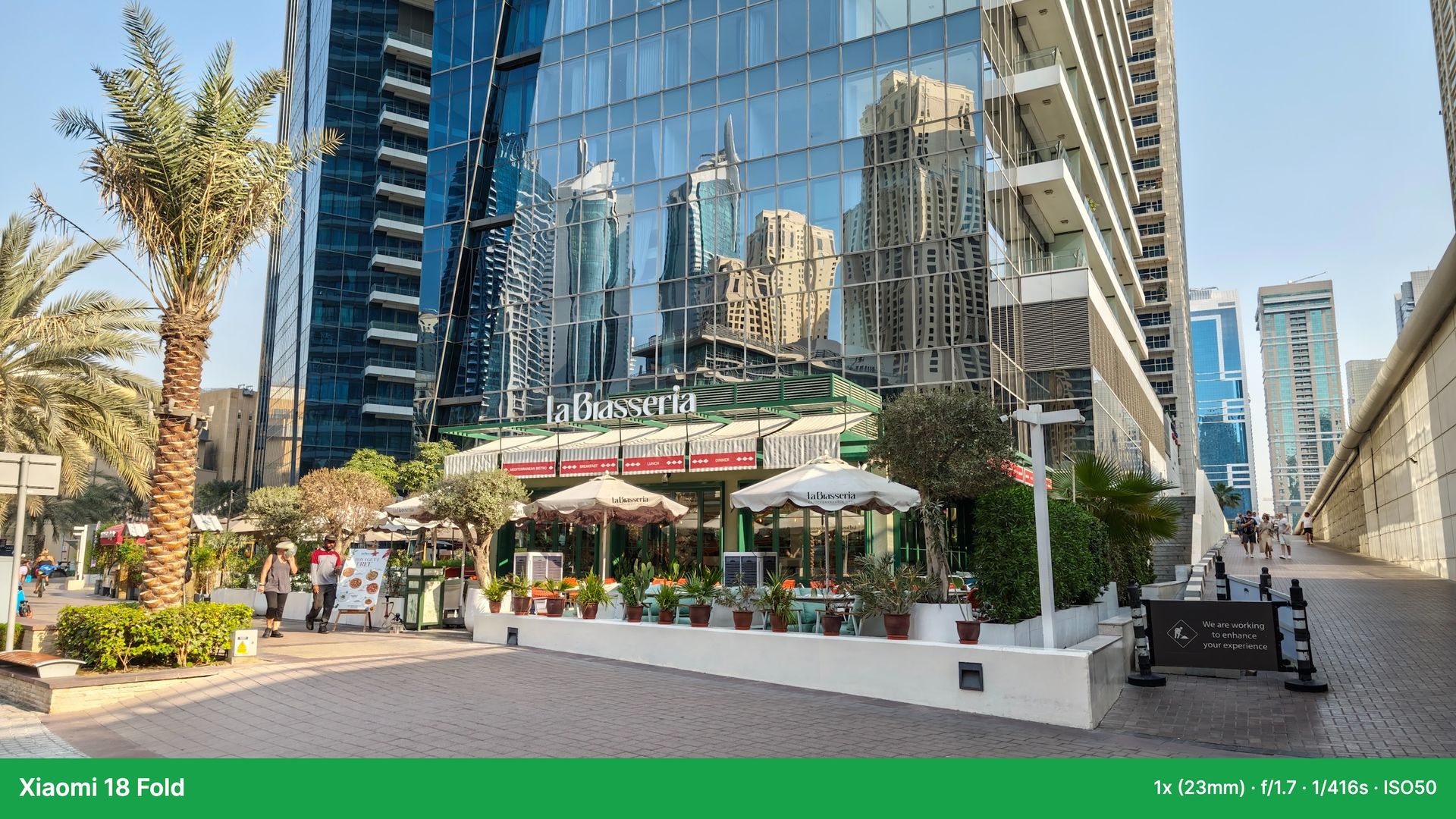
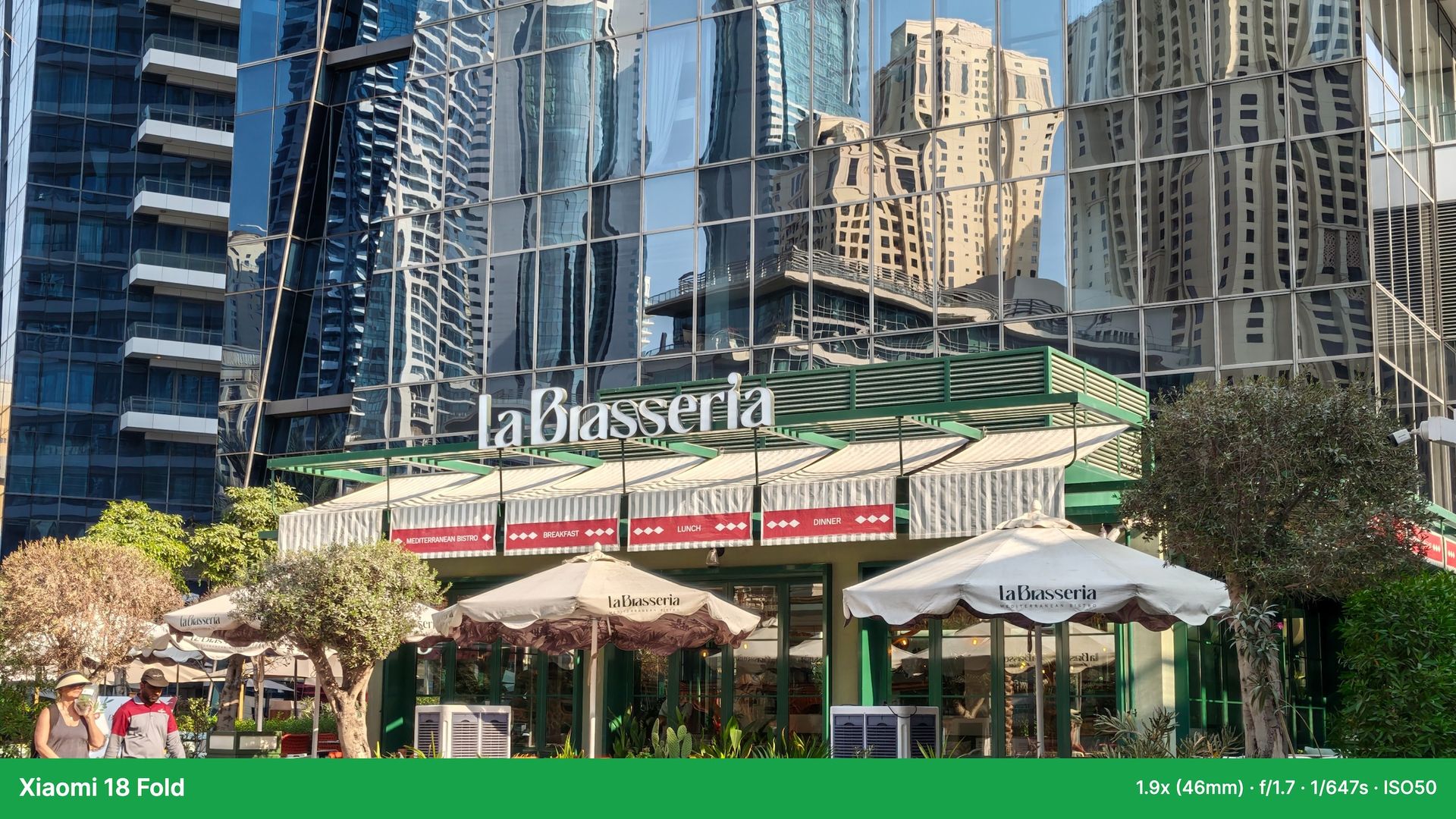
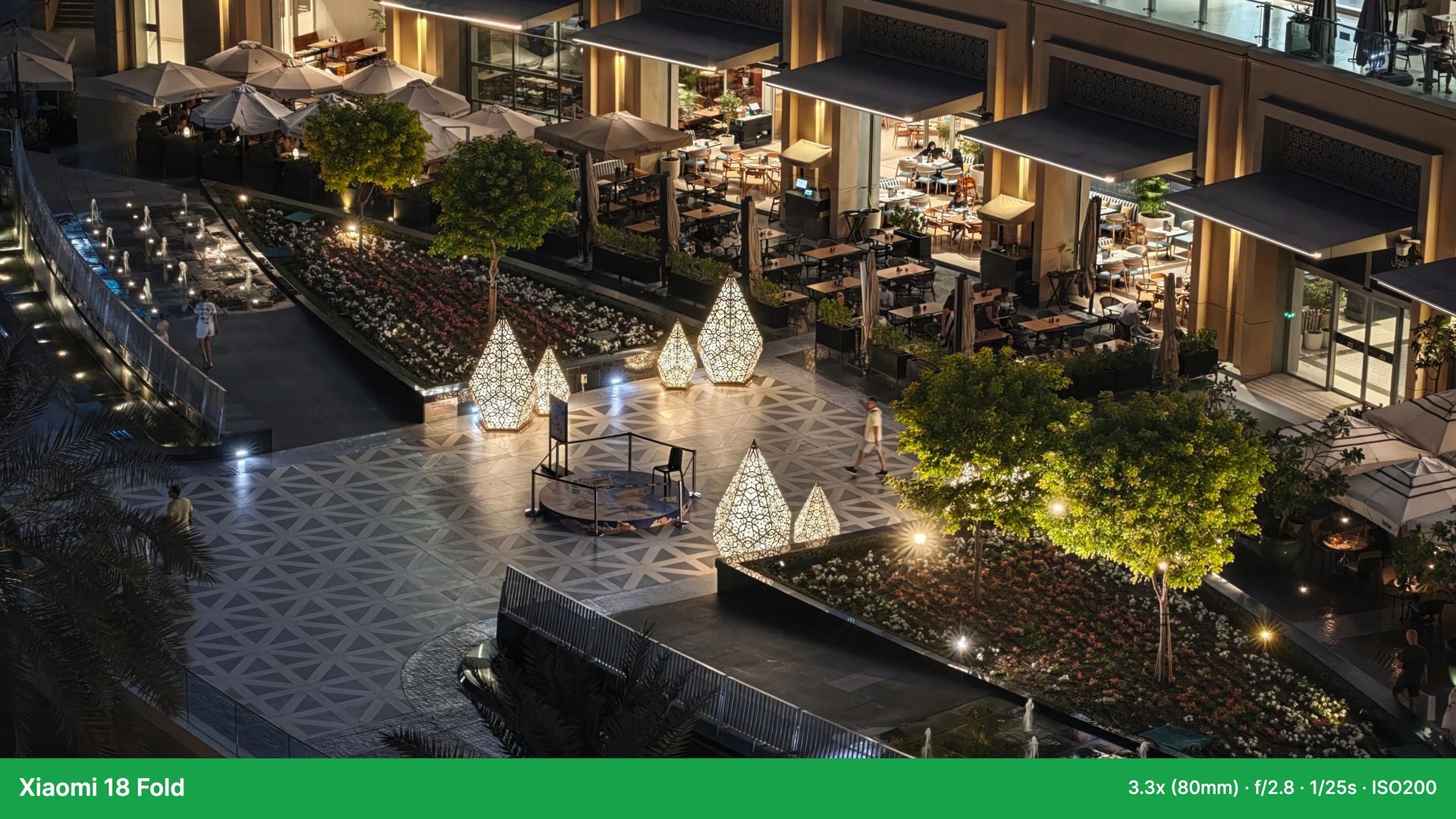
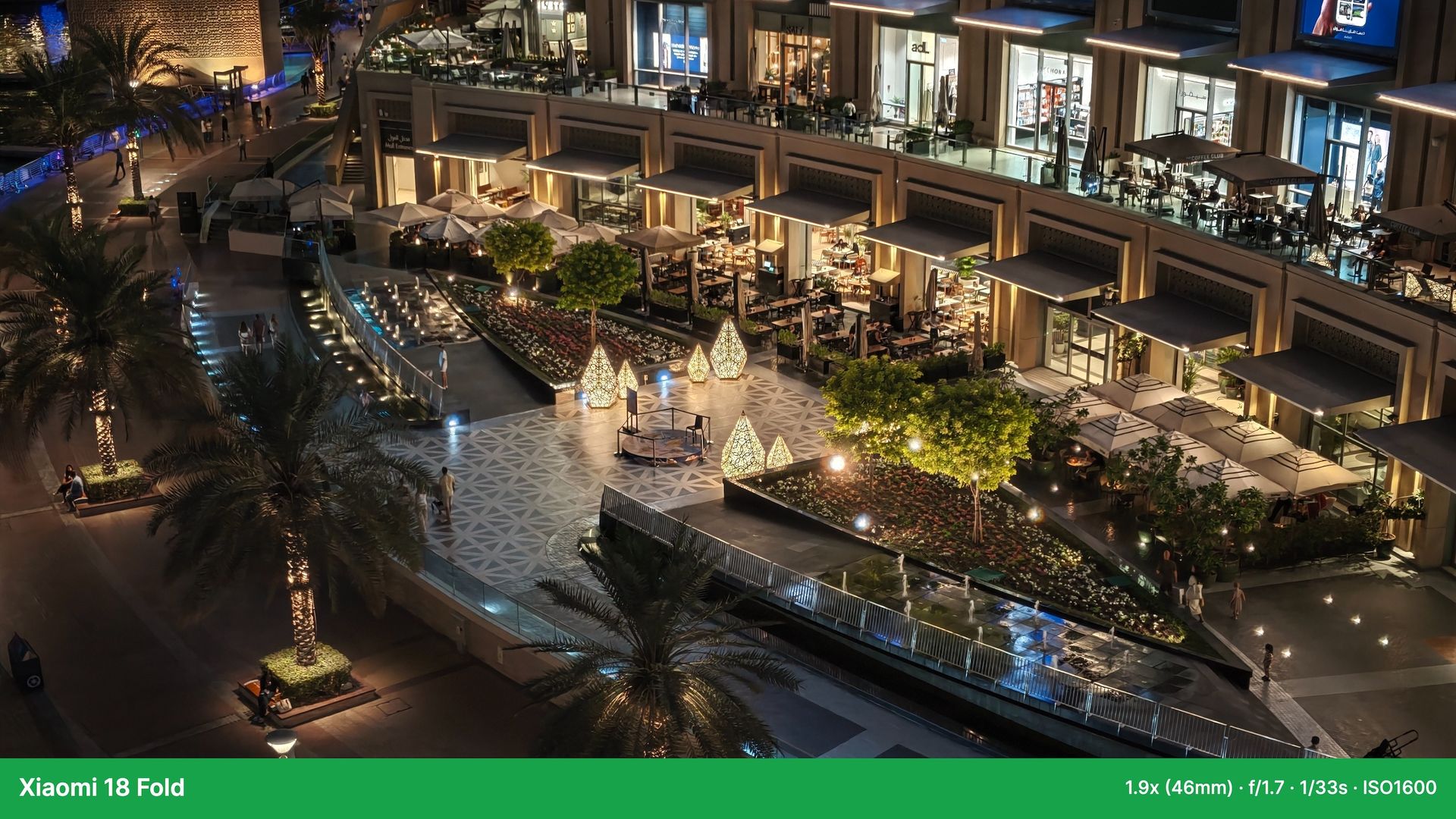
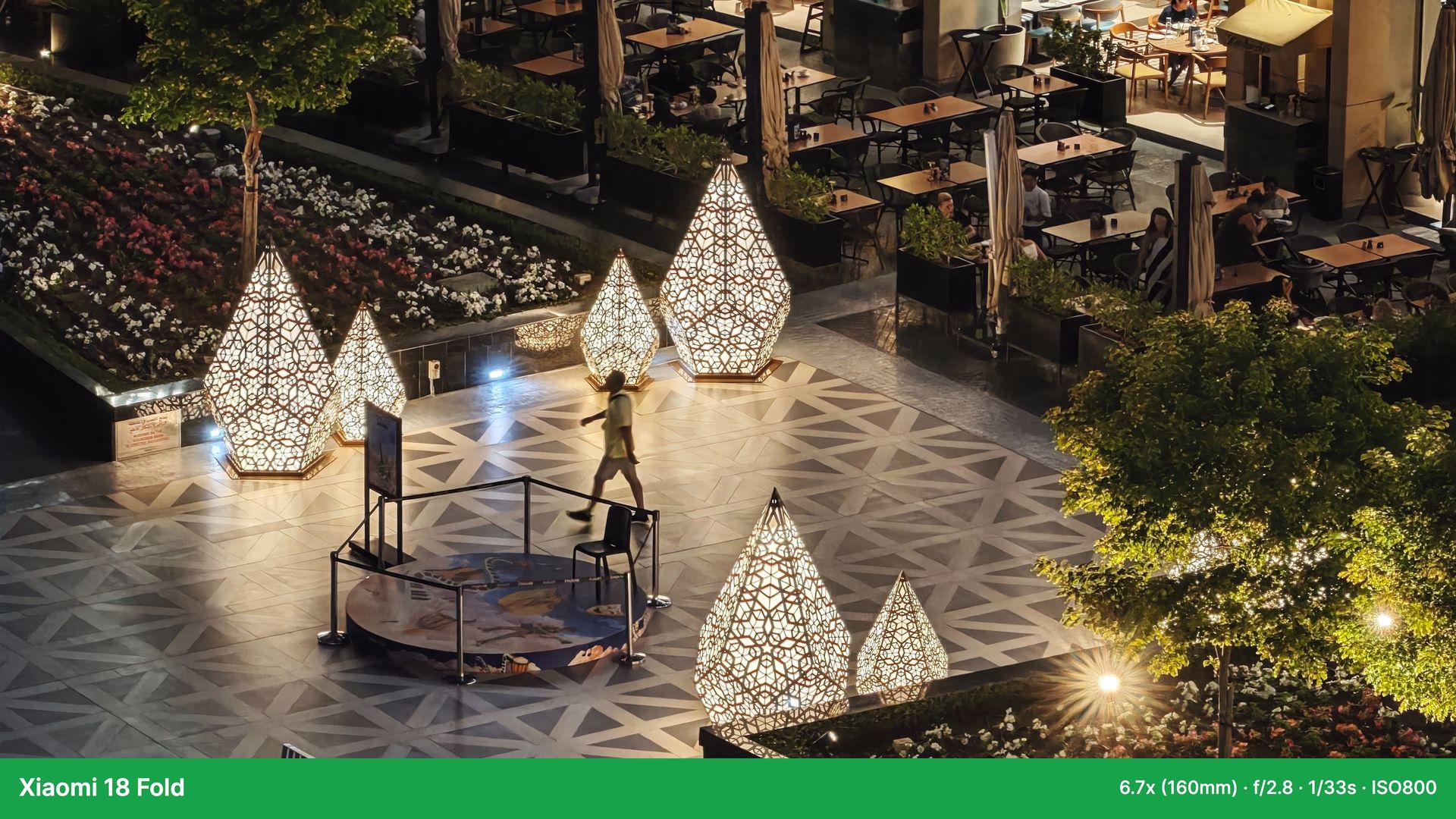
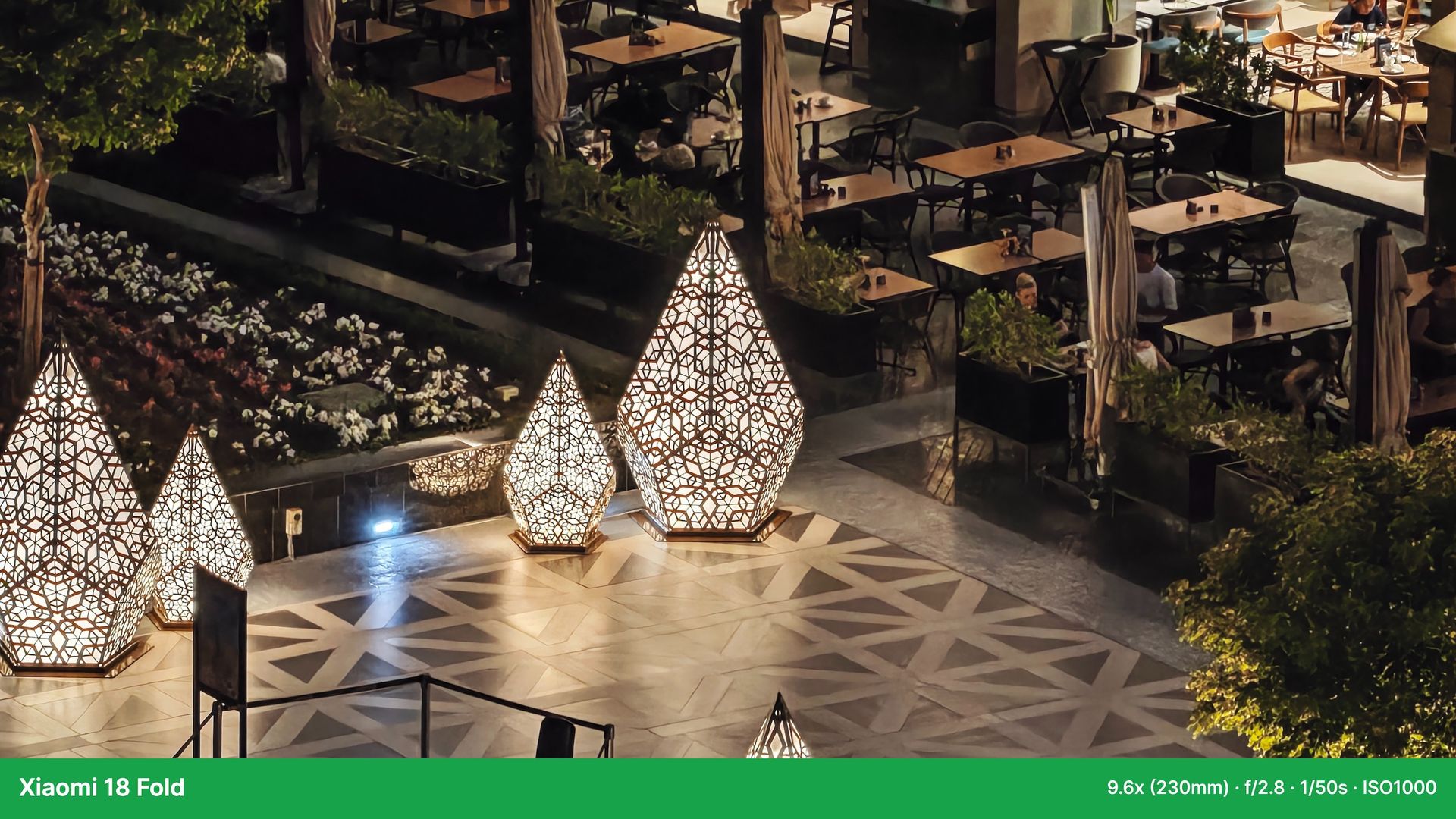
Xiaomi's hardware-first R&D pays off most on the back. While Apple and Samsung both skipped an optical telephoto lens on their passport foldables, Xiaomi squeezed a 200MP main sensor, a 50MP ultrawide, and a dedicated 50MP 3.5x optical periscope telephoto into the 18 Fold.
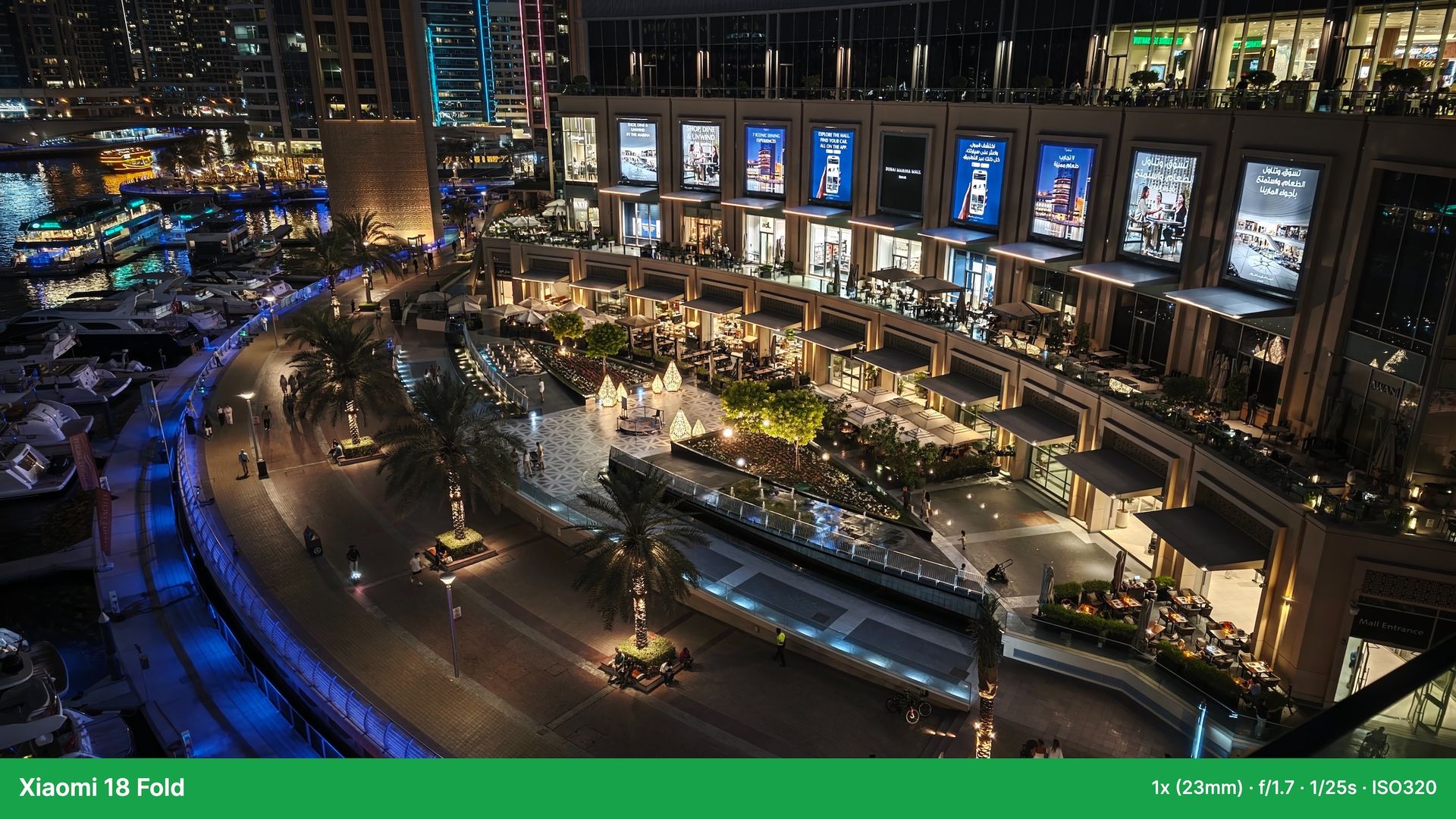
As I saw during my head-to-head Dubai Marina camera shootout against the iPhone Duo and Galaxy Z Fold 8, that periscope lens isn't a minor spec-sheet win - it is a blowout. From 3x all the way past 30x, the 18 Fold resolves real optical detail where Apple and Samsung smear into digital mush, while Leica Vibrant color tuning and disciplined low-light metering make it the most consistent shooter of the three passport-style foldables.
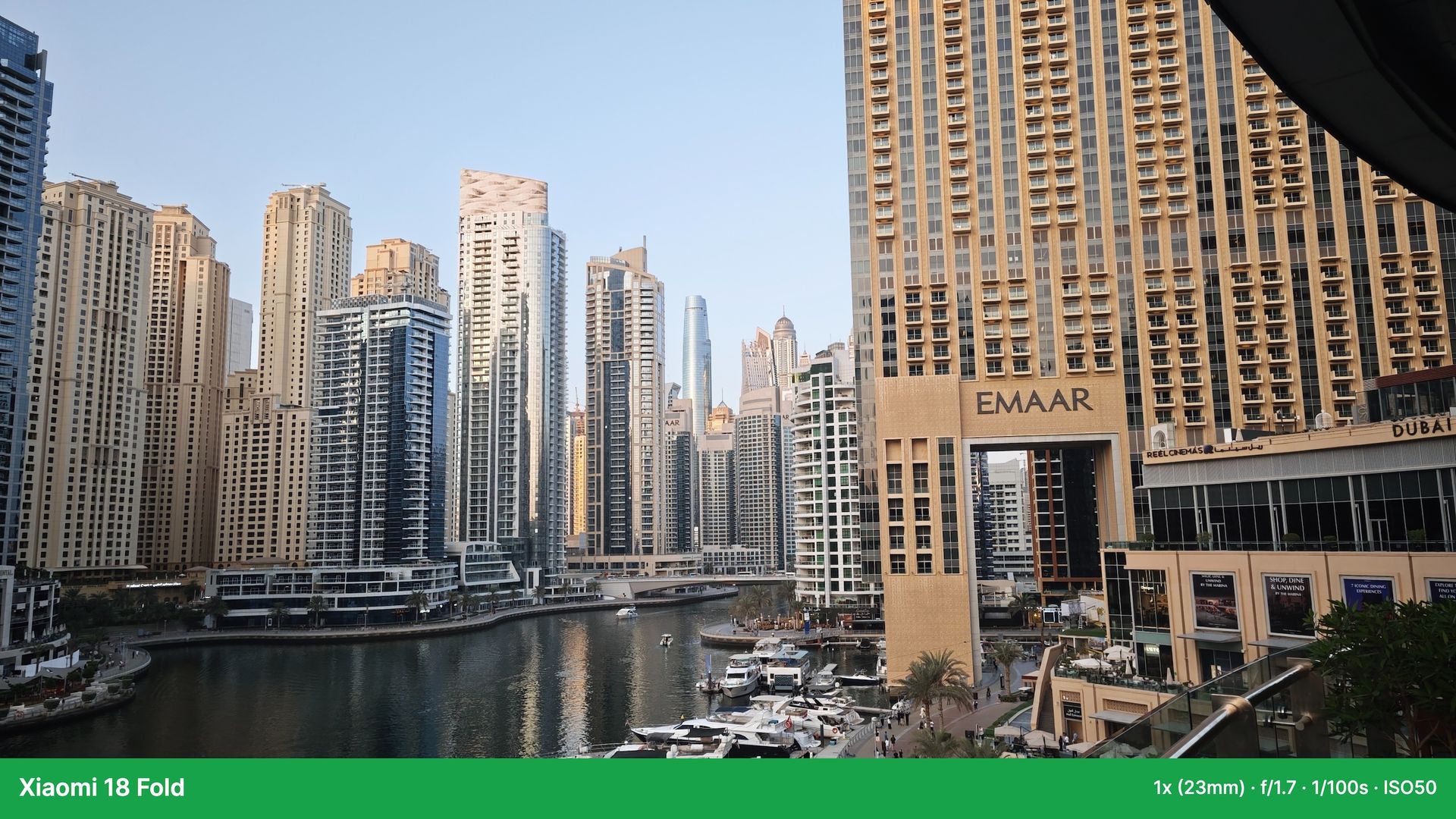 The incredible zoom on the Xiaomi 18 Fold in action!Nirave Gondhia
 Nirave Gondhia
 Nirave Gondhia
 Nirave Gondhia
 Nirave Gondhia
 Nirave Gondhia
 Nirave Gondhia
 Nirave Gondhia
 Nirave Gondhia
 Nirave Gondhia
 Nirave Gondhia
 Nirave Gondhia
 Nirave Gondhia
 Nirave Gondhia
 Nirave Gondhia
 Nirave Gondhia
 Nirave Gondhia
 Nirave Gondhia
 Nirave Gondhia
The only real camera compromises are a narrower 17mm ultrawide that crops tighter than its rivals and a cover selfie lens that flares in harsh backlighting. Otherwise, this is the closest a squat foldable has come to a true flagship camera system. To dive deeper into the camera, head over to our passport-style foldable camera shootout - you can see some of the zoom examples from that comparison above!
Software: Held Back by Borders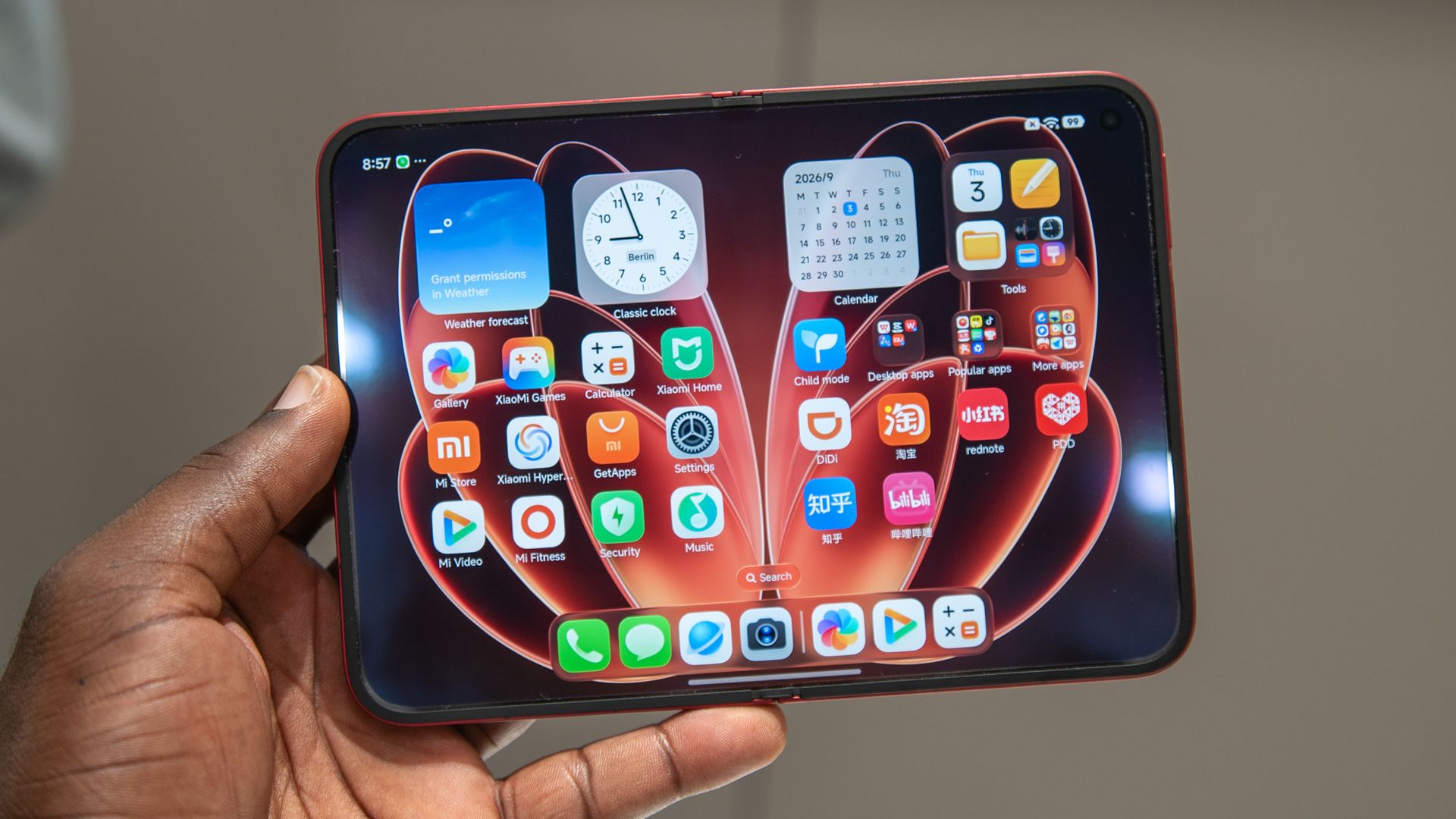
Living with HyperOS 4 (based on Android 17) is a study in contradictions. Strip away the import context, and the software is genuinely lovely to use day to day; animations are fluid, and the UI feels snappy.
Xiaomi's six-app horizontal multitasking strip lets you line up three full-height panes at once while swiping across half a dozen open apps. It's impressive, and on par with the Oppo Find N6 for the best multitasking on a foldable.
HyperOS 4 makes it effortless to install Google services, with all the underlying frameworks included out of the box: I have been running the Play Store and the Gemini app on here without a hitch. However, because this device is built strictly for mainland China, several deeply integrated Android features break down in day-to-day usage. It won't let you swap the default system assistant to launch Gemini, nor change the default browser across the system to Chrome.
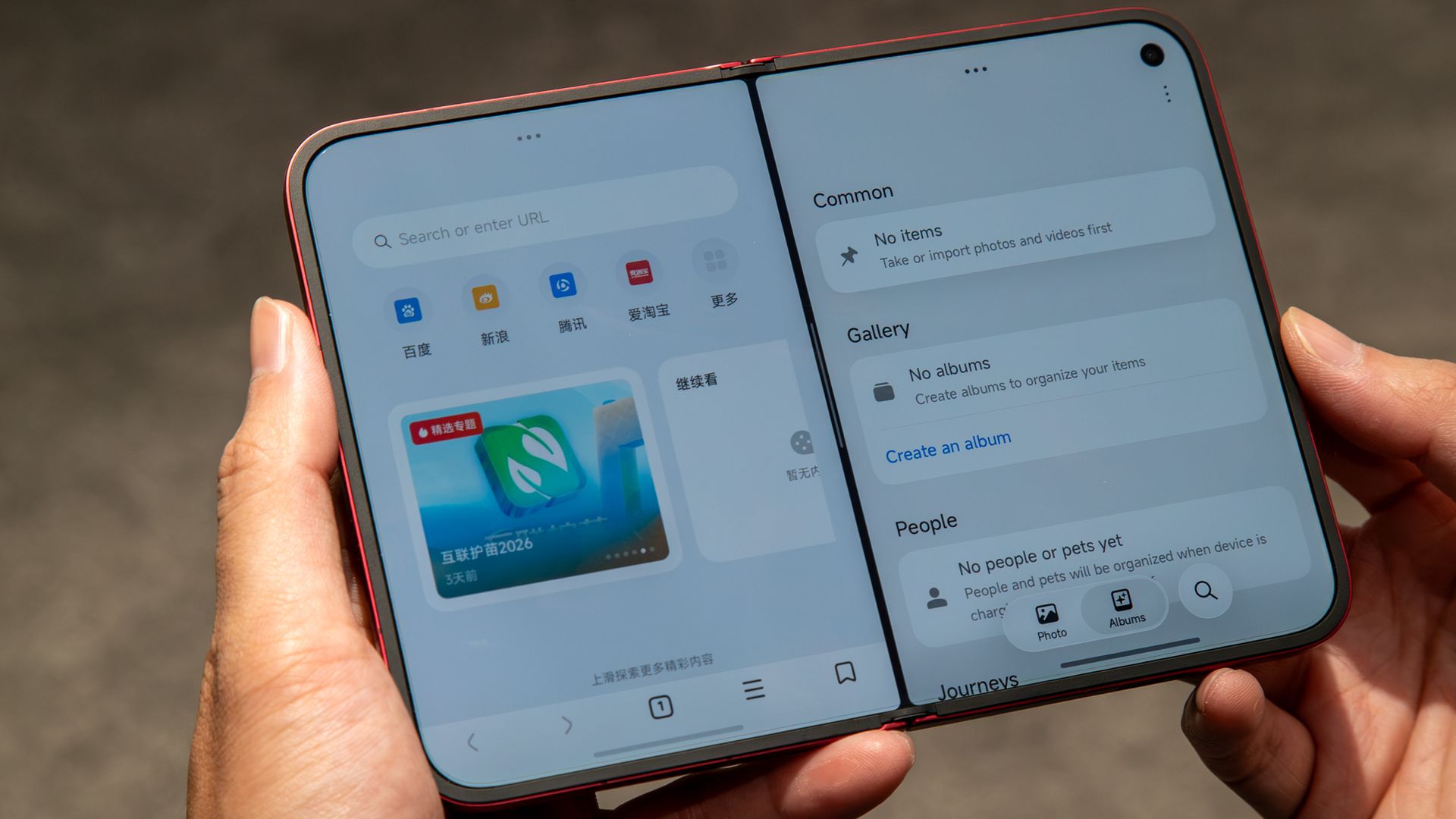
Then there are Google services. Find Hub shows the device, but can never find its location, even after enabling every background permission. The same applies to Google's 2FA - when you sign into your Android phone on an existing device, it'll often prompt you to verify with your existing device. On the Xiaomi 18 Fold, these alerts never appear, even after opening any of Google's apps.
Then there are two issues common to China-only devices for years. Android Auto simply does not work, and like many China-specific phones, there's no support for eSIM. This isn't strictly Xiaomi's fault, as China only approved eSIMs after Apple forced the issue last year with the eSIM-only iPhone Air launch.
Despite supporting wired video out over USB-C, Xiaomi still omits a desktop mode, third-party app scaling occasionally leaves awkward borders on the 4.24:3 screen, and it doesn't support 6 GHz Wi-Fi.
The frustrating part is how easy the fix would be. Xiaomi just needs to follow Oppo's playbook and pair the 18 Fold with the Western HyperOS ROM it already shipped globally on the Xiaomi 18 Pro and 18 Pro Max: doing so would wipe out nearly every one of these headaches overnight.
Should You Buy the Xiaomi 18 Fold?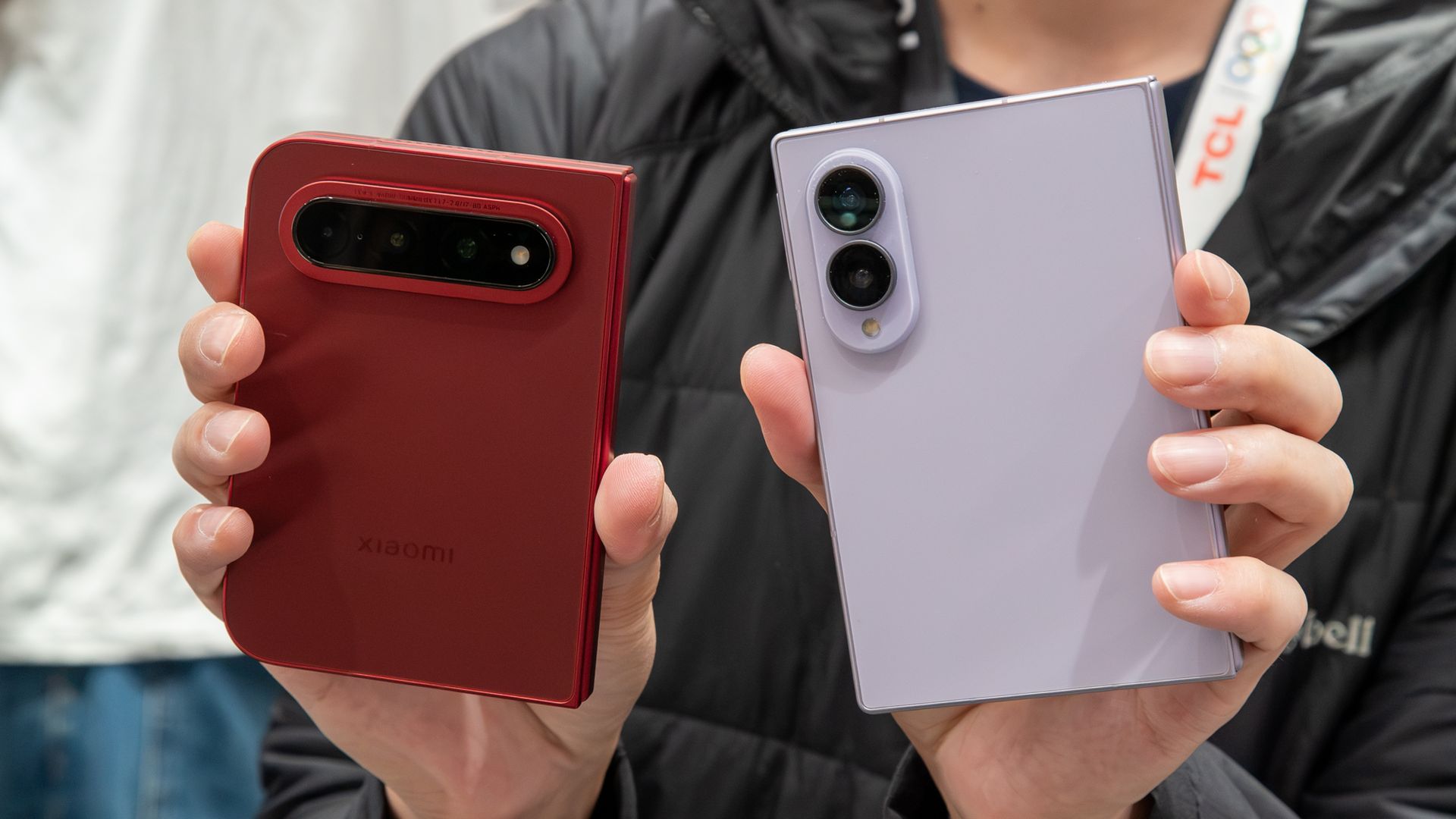
If you want the best hardware in a foldable this size and you can live with the software compromises and compatibility issues, look no further than the Xiaomi 18 Fold. By pairing a pocketable 219g passport body with a 6,000mAh battery and a Leica periscope camera, Xiaomi proved you don't have to sacrifice flagship hardware for a wide foldable.
That brings us right back to Xiaomi's Choice. If you live in China - or you are an enthusiast willing to import a phone and live without Android Auto, eSIMs, and Find Hub tracking - this is the finest piece of foldable hardware you can buy.
For everyone else, the iPhone Duo and Galaxy Z Fold 8 remain the safer, far better-integrated daily drivers - even though the hardware is considerably less impressive - at least until Xiaomi finally gives its best foldable the global ROM it deserves.
Personally, the smaller size, excellent battery life, and that telephoto lens mean the Xiaomi 18 Fold will definitely be in my arsenal during trade shows and other work events, even if I keep using the iPhone Duo as my daily passport-style foldable.