Ukrainian 11th-grader builds AI-powered, GPS-free drone autopilot to beat frontline jamming
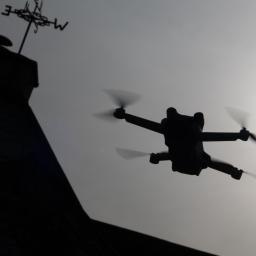
An 11th-grade student has received The Future of Ukraine" from President Volodymyr Zelenskyy for multiple technical achievements. According to Poltava Wave, Yaroslav Sheiko, a student from Poltava, located about 190 miles to the west of Kyiv, built an AI-powered drone autopilot system, allowing uncrewed aerial vehicles (UAVs) to reach their destination without relying on GPS signals, and an optical-electronic stabilization system. This award is just the latest among Sheiko's achievements.
The 11th-grader has already received two presidential scholarships for his academic performance and contributions to science, as well as getting the top award twice in nationwide competitions held by Ukraine's Junior Academy of Sciences. He has also competed internationally, receiving a gold medal in the INOVA 2025 International Inventions Show and a silver medal in the 2025 Hackathon.
Even though Ukraine relies on military assistance from its allies, it's also working on homegrown technologies to improve its drone capabilities. Some of these breakthroughs include equipping its grounded fleet of U.S.-made Puma reconnaissance drones with domestic anti-jamming systems and using a network of flying modems" to increase the range of its attack drones without having to use unreliable Starlink connections.
It was the first to use a heavy-lift UAV to evacuate a wounded soldier from a minefield and conduct a 12-hour, 1,500-mile strategic drone strike on Russian targets. The country is also working on anti-drone systems, like using old Android phones as an acoustic sensor network as an early warning system to spot drones and shooting down Russian jet drones using a cheap, high-powered laser air defense system.
The widespread use of drones in Ukraine also meant that other countries have started developing their own drone and anti-drone technologies and forces. China has revealed a 200-strong AI drone swarm controlled by a single soldier using an intelligent algorithm," while Japan is working on an ultra-cheap cardboard drone swarm that only costs $2,000 per unit. The UK is also deploying the DragonFire anti-drone laser on Royal Navy destroyers by 2027. As for the U.S., it's training military units on both land and sea to 3D-print combat-ready drones, assemble and maintain units in-house, and even adapt them depending on the mission at hand.
Ukraine has not detailed how Sheiko's inventions work, but what's more important is that these innovations are crucial to Ukraine's war effort, especially with the amount of jamming and electronic warfare present on the front lines. More than that, his skill and talent may prove to be a crucial asset for Ukraine and its defense industry, especially as Russia's invasion has already been ongoing for 12 years, with a full-scale conflict going on since 2022.