Decade in review: 10 years of the biggest stories in Android and Google
These are the stories that mattered this decade.
- Top Google stories of the decade
- Google Home & Google Assistant
- Moto X
- Roku
- Chromecast & Google Cast
- HDR+
- Samsung Galaxy S7
- Alexa & Amazon Echo
- HTC One M7
- Robot Vacuums
- Google Cardboard
- Google Wifi
- Apple across the decade
- Rene Ritchie's product of the decade
- The iPad
- iPhone 4s
- Qi charging
- iPhone 5c
- iOS 8
- Apple Watch
- Poki(C)mon Go
- Nintendo Switch
- iPad Pro
- iPhone 11 Pro
Ten years. It's an impossibly long time in the tech space, and it's similarly impossible to highlight all of the major events and stories that shaped the world during the period. So we're not going to do that.
Instead, we're going to highlight a few of what we think are the biggest Google and Android-related stories from each year in this decade, starting with 2010.
We're not pretending this is every story pertaining to Android and Google. Not even close. These were the ones our editors considered the most interesting, the most dynamic, the most controversial. There were the ones we remembered.
2010Nexus One The Google Phone
On January 5, 2010 Google made the Nexus One available. It came with a handful of hardware "firsts" in the Android world, such as a 1GHz Snapdragon chip and a 4-conductor headphone jack that allowed inline media control, but the real story was that it was the Google phone.
Like every Nexus that followed, this was both a blessing and a curse. For users, it meant that Google was free to shape Android however it liked, and offer timely updates. It also meant that sales were abysmal because there was no marketing to speak of.
But still, if you bought into the Nexus program through the Nexus One, you'll have fond memories of a glowing (multi-color even!) trackball and an often buggy experience that was pure Android. It was something you could love and hate at the same time.
Built by HTC, the leader of Android at the time, it still stands out as one of the most industrially beautiful phones ever made - even with the trackball.
Android gains traction DROOOIIIIIDDDD
2010 was also the year Android started its rise to the top of every global market share list. This was a direct result of what Google didn't do when it came to Android - tell manufacturers and carriers what they had to do.
Call it bloatware or even spyware, but the way companies like Samsung and Verizon were able to take what Google had made and shape it into a vehicle for their own services meant that Android was more important than the competition for them.
2010 was the year everyone learned was Android was - through the Droid brand.
Apple would never allow Verizon to pre-install its own messaging app or license a name like the iDroid. Verizon still wanted to sell the iPhone because of how it flew off the shelves, but the ability to turn Android into something of its own meant it was worth putting time and money into marketing.
Once Samsung entered the ring with the original Galaxy S, which was custom-tailored for every carrier in North America and Western Europe, there was no going back. Android would be king of the hill when it came to sales because the companies selling wanted it to be.
The Cr-48 Chrome Notebook program begins The Chromebook is born
Android wasn't the only operating system Google was working on prior to 2010, and in December of 2010, it started giving away Chromium-48 Notebooks to "Test Pilots" in return for regular feedback.
The Cr-48 looked like a normal Windows laptop with a rubberized coating, but a closer look at the keyboard let you know it was something very different. The function keys were gone, replaced by a set of dedicated Chrome shortcut keys and CAPS LOCK was now a search key mapped to - you guessed it - Google.com.
The Cr-48 was never meant for retail sales, thus the name which is an unstable isotope of Chromium, but 60,000 people did end up testing the idea of a Chromebook; a connected appliance that only looked like a laptop.
Oracle vs. Google The Java Wars begin
On August 13, 2010, Oracle sued Google for copyright and patent infringement in the District Court for the Northern District of California. Oracle claimed that Google had knowingly developed Android without a Java license and copied the Java APIs (Application Programming Interfaces). The company claimed that Google violated its copyright on seven prior patents and sought both monetary damages and a cease and desist of google using the materials.
The issue was compounded by the fact that Google had hired developers who originally worked on Java as it was being developed by Sun Microsystems before Oracle purchased it. Oracle insisted that there was no way Google could be unaware that it infringed.
The Google-Oracle lawsuit was the beginning of a decade of legal tumult for the Android maker, though Google never paid anything out.
Google's defense was that using the code and the documentation of the APIs fell under fair-use clauses, where a company must allow anyone to use a thing or product that was essential and allowed the interoperability for which Java was designed.
Initially, both parties were found to be right. The court did find that Google had infringed on 37 separate APIs that fell under the copyrights in question, but also found that Java APIs should have never been able to be copyrighted in the first place. Both parties settled for a zero dollar amount exchange.
Of course, the battle over software APIs and Oracle v Google wasn't over and still isn't today. The case has been to several appeals courts and in 2019 Google successfully petitioned the U.S. Supreme Court to challenge rulings a second time.
This is and was an important case for the entire tech industry, as it will determine whether APIs - the things that allow software to work with itself or other software - are copyrightable. Should the Supreme Court find that APIs do fall under blanket copyright protection, all the software we use today will be subject to similar lawsuits.
Android 2.3 Gingerbread and the Nexus S
Late 2010 brought us the Nexus S and Android 2.3 Gingerbread. The Nexus S was built by Samsung but has a small difference compared to the Galaxy S it was modeled after - "open" hardware. This means that Google was allowed and able to rewrite code that kept it viable for development long after the consumer version had come and gone, which helped make sure Android versions could run well on cheaper and older hardware.
Gingerbread itself looked a little different with its new home screen and a usable Download Manager app, but under the hood, it was a very important upgrade.
Better touch support meant a better typing experience, support for multiple cameras, audio enhancement support allowed for apps like equalizers and bass boosters to function, and NFC inclusion made for an interesting few years where outside hardware could interact with the phone.
Gingerbread offers a pretty poor experience compared to the Android we have today, but in its time it was the first version that could compete functionally with iOS or Windows Mobile. The new changes for developers also meant that the Play Store (then known as the Android Market) would grow and grow.
-Jerry Hildenbrand
2011
- Top Google stories of the decade
- Google Home & Google Assistant
- Moto X
- Roku
- Chromecast & Google Cast
- HDR+
- Samsung Galaxy S7
- Alexa & Amazon Echo
- HTC One M7
- Robot Vacuums
- Google Cardboard
- Google Wifi
- Apple across the decade
- Rene Ritchie's product of the decade
- The iPad
- iPhone 4s
- Qi charging
- iPhone 5c
- iOS 8
- Apple Watch
- Poki(C)mon Go
- Nintendo Switch
- iPad Pro
- iPhone 11 Pro

Google's 2011 was defined by its entry into the tablet space. Seeing Apple's success with the iPad, Google jumped into action to start making Android tablet-friendly - up to this point, Android was distinctly a "phone" operating system, even though some companies had shoehorned it onto small tablets. Google clearly got to work quickly: Android 3.0 Honeycomb was shown off in January, debuting a brand new interface that was made specifically for tablets. Honeycomb was made for big landscape screens, including a new home screen design, fresh navigation bar layout, notification and settings screens, and most importantly, frameworks for app developers to take advantage of the extra space.
Honeycomb was about more than just tablets - it was a complete rethinking of the design of Android.
But Honeycomb was about more than just tablets. It was a complete rethinking of the design language of Android, introducing a new "holographic" redesign. The interface was flat and angular, with an emphasis on blacks, dark greys, transparency and neon-like bright blue highlights. A departure from Android 2.3 Gingerbread, for certain, and one that really grabbed everyone's attention.
Things started off rocky, with Honeycomb launching on the Motorola Xoom in late February. The software was, frankly, unfinished - and we all knew it. Third-party app support was understandably lacking, considering this was Google's first-ever tablet interface, but the operating system itself was generally less stable than Gingerbread and early users dealt with regular app crashes and other problems. It stands to reason, then, that Google quickly followed up the first release with an update to Android 3.1 to address the problems.
Google had a strong set of initial partners, but Android tablets just " never took off.
Google had a strong set of initial partners to launch Android tablets, of course starting with the Motorola Xoom but also the Samsung Galaxy Tab 10.1, LG G-Slate, Toshiba Thrive, Acer Iconia A500 and more. In the same year, we got a second wave, with two Motorola Droid Xyboards, multiple ASUS tablets, the Sony Tablet P and Tablet S, and new sizes of Samsung and Acer's tablets. Looking back now, the tablets seem downright silly in terms of size, but this was a whole new era for Android's expansion to large form factors.
It could easily be argued that Google's first attempt at tablets, and a tablet-focused OS, was a failure - and it was clear even in the first year. Its inability to get Android app developers to support large wide-screen landscape tablets was a constant issue, even with months of development time and a relatively robust market of Android tablets available. Even many of Google's own apps were glacially slow to update with tablet support. That was compounded when Google released its own tablet, the Nexus 7, in 2012 with a 7-inch display and portrait orientation that frankly just worked like a large phone. It wouldn't make another push into large landscape tablets until the Nexus 10 at the end of 2012.
First LTE-powered Android, the HTC Thunderbolt on Verizon
Amid all of this focus on tablets, we hit a major milestone: the first LTE-powered Android, the HTC Thunderbolt on Verizon. The phone itself wasn't particularly exciting, as it was effectively a small refresh of the HTC Evo 4G that launched with support for Sprint's WiMAX network - but the introduction of a proper 4G LTE network to an Android phone was amazing after the debacle that was the Wimax launch.
The first LTE phones were loaded with compromises, but it felt like the future.
We were blown away by LTE speeds on the Verizon network, which are tiny by today's standards: roughly 8 Mbps on the download and upload. But our first taste of LTE showed us the future: phones with big screens and more processing power to take advantage of being able to have media and apps served up in a fraction of the time we were used to. You got a rear camera that could capture 8MP stills and 720P video, a huge (for the time) 4.3-inch display and a super-loud speaker with a kickstand to prop up the phone for viewing.
It also introduced us to the reality of being the first ones to use a next-generation network: the hardware and battery were not ready to handle the extra LTE radio. The Thunderbolt would die in a matter of 4-5 hours of use in an LTE area, and there was quickly a robust market of third-party batteries to give you an extra 200-400mAh so you could try and make it through a day. The first LTE phones were truly compromised, but we didn't care - this was the future, in our hands now.
Google+ becomes the social glue for all of Google
In an attempt to ride the wave of making seemingly everything on the internet a "social" experience, Google launched its social network platform Google+. It was a bit of a combination of ideas from around the social world, with elements of traditional blog platforms, but also new services like Facebook and Twitter, plus location check-ins like Foursquare, and then also integration of text and video chats.
Google tried to do too much at once with Google+, but it helped unify all of its services with one social framework.
Needless to say, Google tried to do a lot at once with Google+. In the first year, Google+ changed a ton - features came and went quickly, and there were radical changes to the website and Android app. Google also quickly pushed Google+ tendrils into seemingly every possible nook of its business, turning G+ into the glue that connected all of its other services. All while it was, ostensibly, a social network for people from around the world to meet and exchange ideas.
Understandably, Google+ was populated early on by a more tech-savvy, and Android-focused, user base. It was an incredible place to keep up with Android news, exchange tips and tricks, and learn all about what people were doing with their phones and tablets. From this perspective, Google+ launched at a perfect time, when Android was at mass adoption levels and filled with interesting products.
Samsung launches the first Galaxy Note
November 2011 brought us the original Samsung Galaxy Note, which we only fully understand the importance of today. Coming just six months after the positively huge HTC Thunderbolt, the Galaxy Note took everyone by surprise with a display that was a full inch larger at 5.3-inches. It was massive, and it was a gamble for Samsung, which following the release of the Galaxy S II hadn't necessarily cemented its spot in the Android world yet.
Samsung completely detached the Note from what we considered a 'normal' smartphone.
Completely detaching from what we considered a "normal" smartphone size opened up tons of possibilities for Samsung. It had better specs than anything else out there, plus a huge battery that offered over a day of use. It also reintroduced the idea of a smartphone with a stylus, which brought many of us back to the good old days of Windows Phone and Palm devices. This was very much the start of the "let's try it all" era for Samsung, and it really went all-out on the first Note.
Samsung really can take credit for launching the big smartphone craze with the original Galaxy Note, even though it may have been a little ahead of its time. Even though people generally considered the Galaxy Note a niche device that was too big for anyone to comfortably use or fit in their pocket, Samsung soldiered on, releasing Notes for years while the rest of the market caught up - and now, phones all follow the big-screen formula.
Android 4.0 Ice Cream Sandwich debuts with the Galaxy Nexus
Android 3.0 Honeycomb may have been mostly a failure in terms of bringing Android tablets to the mass market, but it did bring something useful to the fold: the design underpinnings we saw in Android 4.0 Ice Cream Sandwich. After seeing dozens of tablets launch with Honeycomb software that looked dramatically different from the Gingerbread-based phones on the market, we got our first look at Android 4.0 on the Samsung Galaxy Nexus at a very odd launch event in Japan.
ICS set the groundwork for Android's design all the way to Lollipop.
Matias Duarte, the eccentric designer credited with leading Google into this new futuristic design, showed off this new software that was a massive change from Android 2.3. ICS was a departure from Gingerbread in all the right ways. It was faster, simpler, cleaner and felt decidedly modern. Gone were the skeuomorphic interface elements that mimicked real-world objects, replaced with a flat interface built on thin lines and high-contrast colors.
Like other Nexuses before it, the Galaxy Nexus itself wasn't nearly as important as the software. Samsung had already partnered with Google to make the Nexus S, and the Galaxy Nexus was very clearly built on the Galaxy SII platform. Still, the combination of that sleek and modern Galaxy Nexus hardware along with the total change to the look and feel of Android made for a change that felt like a massive step forward for Android. Jelly Bean, KitKat and even Lollipop could very easily trace their design roots back to the changes introduced in ICS.
-Andrew Martonik
2012
- Top Google stories of the decade
- Google Home & Google Assistant
- Moto X
- Roku
- Chromecast & Google Cast
- HDR+
- Samsung Galaxy S7
- Alexa & Amazon Echo
- HTC One M7
- Robot Vacuums
- Google Cardboard
- Google Wifi
- Apple across the decade
- Rene Ritchie's product of the decade
- The iPad
- iPhone 4s
- Qi charging
- iPhone 5c
- iOS 8
- Apple Watch
- Poki(C)mon Go
- Nintendo Switch
- iPad Pro
- iPhone 11 Pro

Though the announcement itself came in August 2011, it wasn't until February of 2012 that Google's $12.5 billion acquisition of Motorola Mobility was approved by the US Department of Justice and European Commission.
The prospect was pretty simple: despite already working with third-party manufacturers on the Nexus program, Google wanted to be in the phone business. The idea was to operate Motorola as a separate business entirely from Android, trying to compete with Samsung and HTC, which at the time were the two most powerful Android makers in the business.
Google's work with Motorola bore fruit fairly quickly, emerging with the now-classic Moto X and Moto G smartphones in mid-2013. But despite superb feature sets and plenty of advantages over competing products, Motorola phones never sold particularly well, and Google divested itself of the phone maker - well, the hardware business anyway. The patents remained - in 2014, selling to Lenovo for one-sixth of the price it paid two years earlier.
Everybody kept suing each other
Though the first lawsuits were filed in 2011, Apple and Samsung's tete-a-tete really took off the following year, when a verdict was reached, awarding Apple $1.049 billion for infringing five of its design patents. Sales of some then-discontinued Samsung smartphones were blocked due to an injunction, but the fight would continue through appeals. Eventually, the trial was thrown out due to a jury problem and the retrial continued through appeals until 2018, when Apple was ultimately awarded $539, just over half of the original amount.
While 2011 and 2012 were the busiest of the bunch, the decade saw litigation throughout, with Apple and Samsung at the center of much of it. At its core, the litigation was about companies trying to retain value from their patent portfolios, choosing to fight over scraps instead of cooperating.
If 2010 was the start of Google's legal troubles, 2012 was the year of everyone else's, including and especially Samsung.
In 2013, a group of companies under the Rockstar Consortium umbrella, which included Apple and Microsoft, sued Google, Huawei, Samsung, HTC, LG, ZTE and others to attempt to eke value from a set of patents the group had acquired from Nortel in 2011. The lawsuits alleged that Google and its smartphone partners violated a number of patents in the Rockstar portfolio, mostly pertaining to how Android communicates with mobile networks. Google countersued in 2014 and the two sides reached a settlement shortly thereafter.
It almost seems odd to think of companies like Apple, Samsung and Google suing one another over patent violations in late 2019, but that was very much the reality in the early part of the 2010s. And while those days are unlikely ever to return - Apple and Samsung publicly stated they would no longer pursue legal recourse for design patents - they definitely painted an adversarial and uncomfortable light for those first few years of this closing decade.
The Galaxy S3 changed Android phones forever
Just how important was the Galaxy S3 for Samsung, and for the Android world? Well, it changed everything. It was a massive design leap forward for the Korean company, which had been accused of mimicking Apple's hardware and software design until that point. It stretched the phone's screen to a then-massive 4.8 inches, and added a number of features that, a few months later, would become mainstream for the industry.
Chief among them was the introduction of a high-resolution 720p Super AMOLED display, though it was made up of PenTile subpixels that didn't stand up too well under scrutiny. It also had 2GB of RAM, another relatively new spec at the time, along with up to 64GB of storage and, in some models, LTE support - which the 2,100mAh battery handled with aplomb.
You probably still remember the Galaxy S3's whistle notification - and you probably still hate it. That's a legacy.
More important than the hardware, though, was the software. Shipping with Android 4.0.4 Ice Cream Sandwich, the Galaxy S3 introduced the famous - or rather infamous - TouchWIZ skin, which included "nature" sounds like the awful whistle notification and, worse, the 'bloop' water droplet.
The Galaxy S3 heralded the era of overstuffing, where Samsung took as many features as possible and threw them at the user to see what stuck (it would get even worse with the Galaxy S4 in 2013). S Voice, S Beam, Smart Stay, Pop-up Play - I could go on. During this time, Samsung took the "more is better" approach, which contrasted comically with the understated and performant (but considerably less popular) HTC One X and its Sense UI.
Perhaps the most impressive stat of all? The Galaxy S3 was insanely popular, going on to sale over 70 million units and becoming one of the fastest-selling and most popular phones of all time. With a massive worldwide marketing campaign, it would go on to overshadow every Android phone released in 2012 by a wide margin, and would set the stage for Samsung's eventual market dominance later in the decade.
The Nexus 7 may have been the last great Android tablet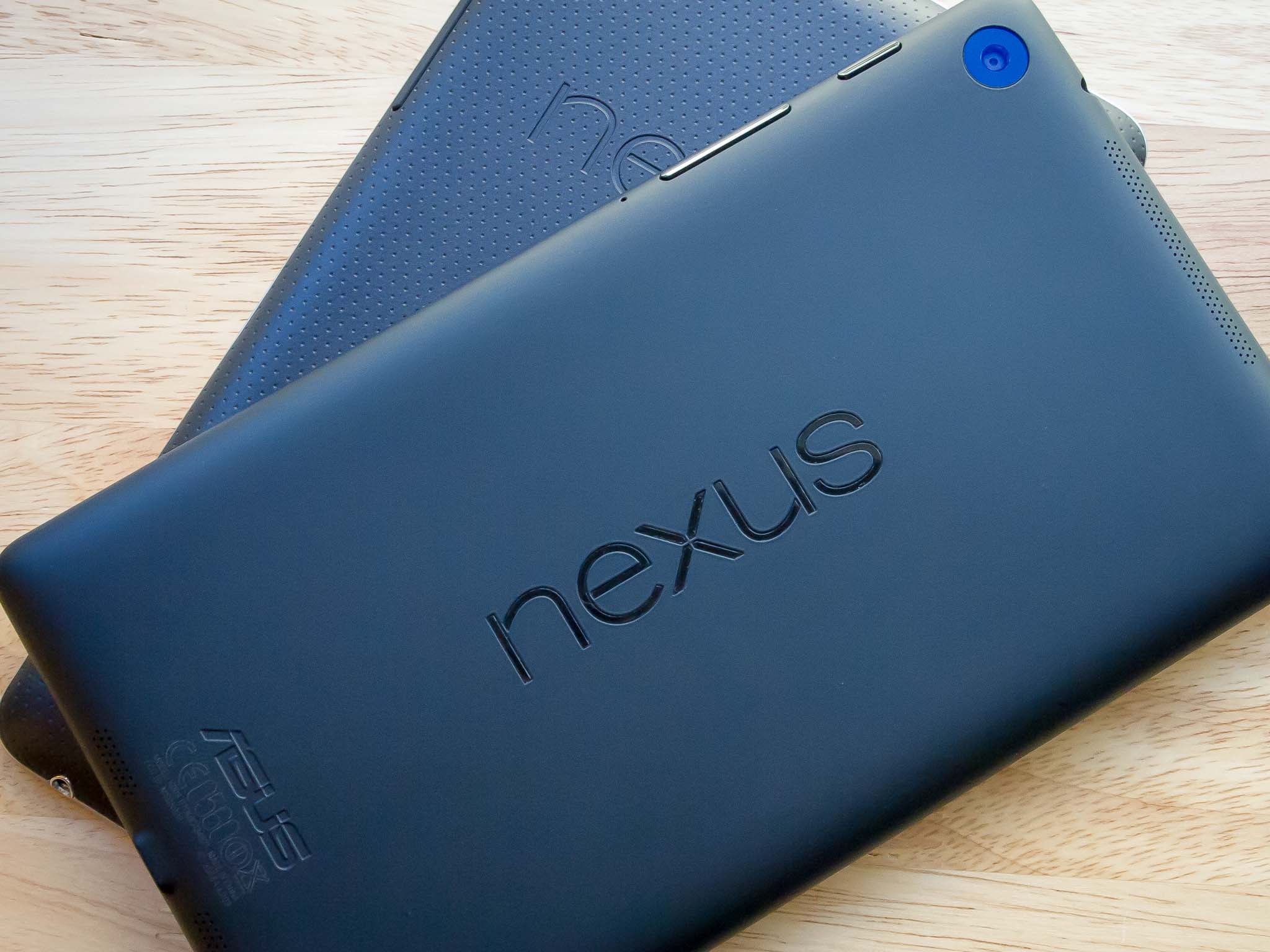
Was the Nexus 7 the last great Android tablet? It seems quaint now, but the ASUS-built Nexus 7, when it debuted in mid-2012, was a very big deal. It was the first popular tablet that ran Android, not Amazon's fork of it, and encouraged developers to build apps for the burgeoning platform, newly united for both phones and tablets on Android 4.1 Jelly Bean.
The Nexus 7 was popular for a number of reasons: it was small, which meant it was portable - much bigger than phones of the time, but still easy to slip in a small bag or purse - and, at $200, relatively cheap. It was also accessible, offering a very familiar and easy-to-use Android experience that didn't feel like too much of a departure from the Nexus phones people were used to at the time. But unlike many of the existing Android tablets released throughout 2011 and 2012, the Nexus 7 didn't feel clunky or encumbered by skins; it just flew through whatever you needed it to.
The tablet also marked a new stage in Google's collaboration with NVIDIA, launching the Nexus 7 with the then-new Tegra 3 chip. NVIDIA's reign on Android phones and tablets would be short-lived - the chips just weren't very efficient, and caused some performance glitches in apps and games - but the partnership would bear fruit a few years later with the Shield TV, which used a next-gen Tegra X1.
The Nexus 7 would also get a second run at life, with a refreshed 2013 model, also built by ASUS. By then, the iPad Mini was available and Apple was running away with the tablet market and mindshare, but for a little while, it was pretty good to own an Android tablet - especially if it was a Nexus 7.
The Nexus 4 divided a nerd nation, but introduced HDR+
I still remember seeing the Nexus 4 for the first time, glinting in the light from its dotted rear glass. It was a beautiful phone, made even more attractive by the fact that it was only $299 when it debuted.
Google's Nexus program would really cohere into something great with the Nexus 5 in 2013, but the Nexus 4 showed glimpses of that greatness. The phone lacked LTE, a spec that many say destined it for the garbage dump of history, but it also saved its battery from the garbage, too, which at the time was an easy trade-off to make.
The Nexus 4 was beautiful, fragile, and the end of an era.
And while its camera wasn't great in most situations, either, it did introduce a feature we're still benefiting from today: HDR+. The Nexus 4's camera sensor was pretty bad, so Google had to figure out a way to eke high-quality photos from mediocre hardware, and the Nexus 4's software processing was determined to be the solution. It didn't always work, and it would be four or so years until a Google-branded phone would claim the camera crown, but we saw the first inklings of that promise with the Nexus 4.
-Daniel Bader
2013
- Top Google stories of the decade
- Google Home & Google Assistant
- Moto X
- Roku
- Chromecast & Google Cast
- HDR+
- Samsung Galaxy S7
- Alexa & Amazon Echo
- HTC One M7
- Robot Vacuums
- Google Cardboard
- Google Wifi
- Apple across the decade
- Rene Ritchie's product of the decade
- The iPad
- iPhone 4s
- Qi charging
- iPhone 5c
- iOS 8
- Apple Watch
- Poki(C)mon Go
- Nintendo Switch
- iPad Pro
- iPhone 11 Pro

While Google Glass technically debuted in 2012 when Sergey Brin skydived into Google I/O while wearing one, 2013 was when Google Glass opened up to developers and the Google Glass Explorers contest let us all dream up our fantastical uses for the future specs that put a tiny HUD display over your right eye.
If Google liked your entry, you could be an elite Explorer and have the honor of paying $1,500 - plus flight and hotel for a trip to New York, Los Angeles, or San Francisco - for a product that had very unique potential, but also a lot of bugs to work out, such as the dreaded foil problem, limited app compatibility, and public concerns over distracted users and privacy.
Google Glass is still kicking around in the Enterprise space, where Google unveiled a Google Glass Enterprise Edition 2 earlier this year. For regular consumers, though Google Glass was pretty much left to die on the vine, with a small but dedicated group holding on as long as they could before having to move on to Focals by North and other smart glasses.
Google acquires Waze on the road to dominating maps
Waze, the crowdsourced maps and navigation app, is without a doubt one of the buyouts Google made in this decade that were complete no-brainers, as Waze's crowdsourced slowdowns and alerts about accidents, speed traps, and other hazards was something that Google Maps had sorely needed for years. Buying Waze was a little like buying YouTube: it gave Google a great app that could enhance its own service and Google gave it the backing and search prowess of the biggest search engine in the world.
It didn't take long to see some of those perks manifest in the Google Maps app - and for Google's own search and StreetView optimizations to migrate to Waze - but even six years later we still don't quite have feature parity between the two. That's perfectly fine because Waze remains Google Maps best alternative, and it continues to thrive along a parallel path from Google Maps.
Google convinces manufacturers to clean up their act with Google Play Edition phones
Announced at Google I/O 2013, the Samsung Galaxy S4 Google Play Edition ditched TouchWiz for a cleaner stock build of Jellybean. This was the first of a small series of phones that showed much promise, but ultimately floundered. Google Play editions of phones like the Galaxy S4 and HTC One gave us a look at how some of the most popular phones on the market would behave with Google building and updating the software instead of the manufacturers themselves. In other words, Google Play Editions gave us top-of-the-line phones with actual consistent updates.
It was a fun experiment, and one I firmly believe was a necessary step on Google's way to the Android One program, which now helps users find phones with consistent software updates without spending flagship-tier money.
Google Play Editions were kept up to date almost as well as the Nexus line, but since they received no real marketing, barely anyone knew they existed since they were sold exclusively on the Google Play Store.
Motorola's first phones under Google, Moto X and Moto G, change the industry (for better or worse)
When you look at phones that really shook things up over the last ten years, you absolutely cannot have that discussion without Motorola's 2013 lineup, specifically the original Moto X. From the customized, Texas-assembled Motomaker system to the first instances of features that are now part of every Android phone, the Moto X was a game-changing phone, and it was actually the phone that made me an Android nerd.
The first true product of Motorola under Google's direction, the Moto X had innovative features both big and small, from Touchless Controls - the always-listening precursor to Google Now and Google Assistant - to Trusted Bluetooth, which eventually morphed into Smart Lock. Despite its mid-range spec sheet, the Moto X proved to be a dependable phone that soared above its relatively modest price tag.
The Moto G that came a few months later might not have been quite as stunning as the Moto X, but for a phone under $200, it was a game-changer in its own right, redefining the budget phone market in ways that are still visible today, especially when it comes to crafting a phone for users in the developing world.
Google steps out of its comfort zone with the $1300 Chromebook Pixel
While early Chromebooks had all been budget machines, the Chromebook Pixel was the first to push the premium envelope and show what Chrome OS could do - and what Google could do - with a premium laptop. Beautifully designed with an anodized aluminum and a big, beautiful 3:2 touchscreen, the Chromebook Pixel was proof that done right, a Chromebook is a laptop to love.
Granted, the Chromebook Pixel started at $1,300 and battery wasn't even half of what we tolerate on a Chromebook today, but it was a big deal at the time and that 3:2 screen was a gem, eventually being used in a number of laptops, tablets, and detachables.
The HTC One gives us big pixels (and an aluminum body)
It may seem trivial and almost cute now to talk about cameras with big pixels and phones with aluminum bodies as if those things are not standard on nearly every phone today, but back in 2013, HTC was a pioneer in both of those fields.
The HTC One, known later as the One M7, was the peak of the Taiwanese company's design and engineering prowess, releasing a phone as beautiful as it was ambitious. Both front and back, there were reasons to be intrigued: the screen was incredible, among the best of its time, and the rear camera traded megapixels for pixel size, giving us a glimpse of the low-light-friendly future that computational photography would allow.
The Nexus 5 brings LTE to the Nexus line for just $350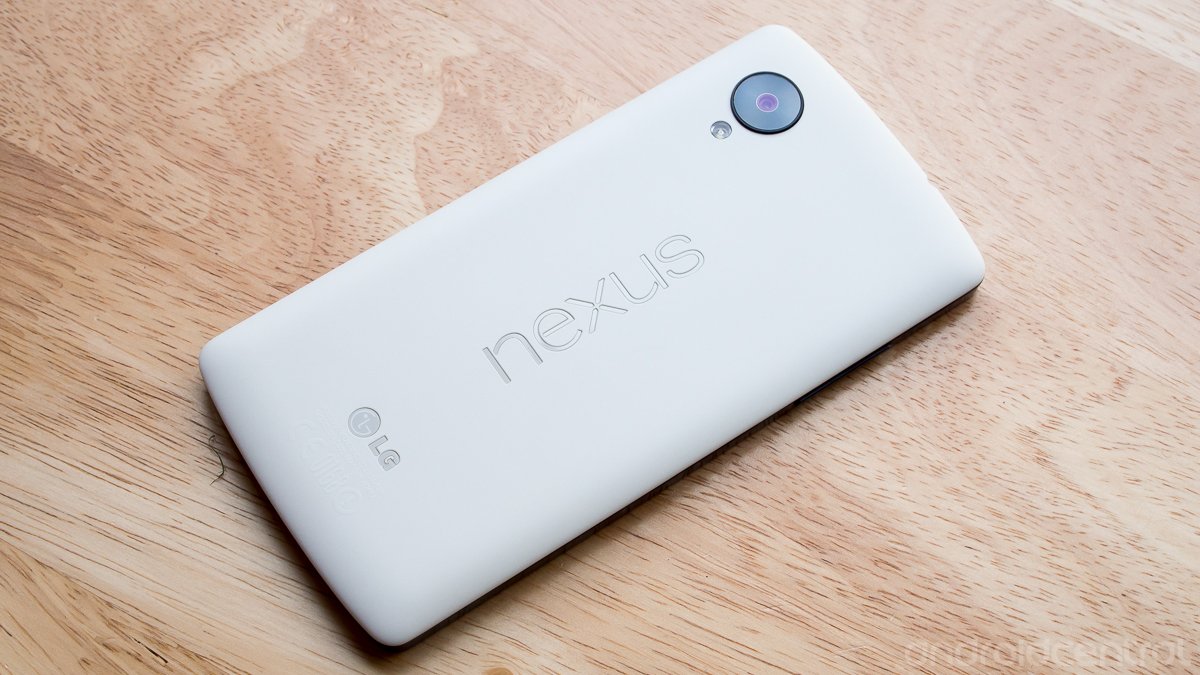
It was hard to beat the beauty of the glass-backed Nexus 4, but the Nexus 5 was more durable, more capable, and didn't have nearly as many compromises for its price tag. This was the first Nexus phone to have LTE, and it had "OK Google" functionality, though not quite on the Moto X's level.
Sure, the battery life was semi-average - proof that Google's battery woes go back much further than the four years we've seen with the Pixel line - and the camera was kind of weird, but this was a solid phone for $350. It was the kind of phone that could work great for regular users as well as enthusiasts obsessed with having the latest features.
The Chromecast brings the beginning of Google's streaming dominance
This was one of the bigger surprises out of Google I/O 2013 and it was a product that evolved and endures to this day: the Google Chromecast. While it only supported seven apps at launch, that number quickly grew, and its ability to turn an old 'dumb' TV into a smart TV without having to worry about keeping another remote around or log into your services on yet another device was refreshing.
The Google Cast protocol that the Chromecast operates on expanded to speakers, audio-video receivers, Android TV consoles and even to a lot of TVs these days since manufacturers can add Chromecast built-in to their devices without jumping through too many hoops, and no matter which Chromecast device you're using, the interface is the same on them all.
While the current Chromecasts look nothing like the oversized thumb drive dongles launched in 2013, the original Chromecast has help up remarkably well. There's still two alive and kicking in my parents' house right now, tough as the day we bought them for $35.
Decade in review: Google Chromecast and Google Cast revolutionized how we stream media
-Ara Wagoner
2014
- Top Google stories of the decade
- Google Home & Google Assistant
- Moto X
- Roku
- Chromecast & Google Cast
- HDR+
- Samsung Galaxy S7
- Alexa & Amazon Echo
- HTC One M7
- Robot Vacuums
- Google Cardboard
- Google Wifi
- Apple across the decade
- Rene Ritchie's product of the decade
- The iPad
- iPhone 4s
- Qi charging
- iPhone 5c
- iOS 8
- Apple Watch
- Poki(C)mon Go
- Nintendo Switch
- iPad Pro
- iPhone 11 Pro

Google made its foray into wearables with Android Wear, a lightweight version of Android designed for low-powered hardware like smartwatches. Google partnered with Samsung, LG, Motorola, and ASUS, and the first wave of smartwatches started rolling out in the latter half of 2014.
The LG G Watch and the Samsung Gear Live were the first Android Wear smartwatches to make their way to customers, but it was the Moto 360 that dominated the headlines. Motorola's smartwatch stood out from the pack because of the round design and the quality of materials - it came with a Horween Leather band - and it also had a better charging mechanism.
Even though the Moto 360 had a flat tire at the bottom of the display for the ambient light sensor, it didn't affect sales. Of course, a huge reason for the success of Android Wear was down to the software: instead of just mirroring notifications from your phone, you could download standalone apps to run on your wrist. The UI itself was designed to be easy to navigate via swipe gestures, and Google surfaced Google Now-style cards for things like alerts, notifications, and more. Sure, Android Wear had its share of issues early on, but it was full of potential.
OnePlus One debuts, math puns ensue
OnePlus burst onto the scene in 2014 with the OnePlus One, and it made every smartphone manufacturer stand up and take notice. OnePlus somehow managed to cram the latest internal hardware into a phone that cost just $299, and in doing so it set the tone for the value segment.
A quick refresh of the hardware: the OnePlus One featured a 5.5-inch 1080p display, Snapdragon 801 chipset, 3GB of RAM, 16/64GB of storage, 13MP camera at the back, 5MP front shooter, and a 3100mAh battery. OnePlus teamed up with Cyangeon to offer a custom version of CyanogenMod 11 out of the box. Initial availability was so limited that OnePlus had an invite system in place: you could only get the device if you had an invite code.
The OnePlus One wasn't a great phone on its own, but its legacy has been felt louder than any other in recent years