NFL Rejects Sorsby Supplemental Draft Bid, Lawsuit Could Follow
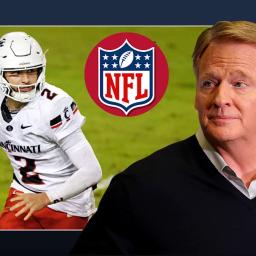
The NFL on Tuesday informed former Texas Tech quarterback Brendan Sorsby-who battled the NCAA in court over eligibility despite betting on his own team and his own teammates-that his petition for a supplemental draft to play in the 2026 NFL season was denied. Absent a successful legal challenge, Sorsby will only be eligible for the NFL through the 2027 NFL Draft.
Through a letter authored by NFL Management Council general counsel Larry Ferazani, the NFL explained that Sorsby failed to provide any supporting information or documentation" to justify the league holding a draft for one player, Sorsby.
More from Sportico.com- Sorsby Agent's Accusations About Cincinnati May Impact NIL Lawsuit
- Brendan Sorsby Gambles on NFL Letting Him Play
- Missouri Set Aside $42.5M for World Cup Fix-Up of Lame Duck Arrowhead
Sorsby, 22, could have made himself eligible for the 2026 draft held in April. He satisfied the NFL's basic eligibility requirement of being more than three years removed from high school graduation. Sorsby instead pursued litigation against the NCAA, which held he was ineligible for integrity-of-the-game violations through gambling.
Eligibility alone doesn't permit entry into the NFL.
As detailed in the CBA, no player can enter the NFL until he has been eligible for selection in an NFL draft. The next annual draft will be held in April 2027. The league has sometimes in the past agreed to hold a supplemental draft for players who become eligible after the April draft. But whether the NFL holds a supplemental draft and who is eligible for it are entirely up to the NFL, a private business.
As a football player, Sorsby would likely attract the interest of NFL teams, with experts regarding him as a second- or third-round pick. But Sorsby comes with a lot of baggage. He bet on his own college football team while at Indiana, and court documents indicate he placed thousands of bets while at his three colleges (Indiana, Cincinnati and Texas Tech). The NCAA has noted that Sorsby used intermediaries to bet in Texas, which is one of 11 states where sports betting is illegal and in fact is a misdemeanor crime.
Ferazani's letter makes clear the NFL has not reached any sort of finding on Sorsby's gambling issues and that he is not being punished in any way. Instead, the letter emphasizes what the league regards as an insufficient application for entry. Ferazani notes that while Sorsby's petition mentions the NCAA declared him ineligible, Sorsby doesn't provide any information or explanation regarding the NCAA's decision and doesn't offer any records from the NCAA's investigation. Ferazani says the league used public sources to see that the NCAA declared him permanently ineligible based on a sustained pattern of improper gambling activity during your collegiate career at three different universities."
Sorsby's lack of accepting responsibility for his actions is also noted. While he has received treatment for gambling addiction and anxiety disorder, the NFL notes he sought to avoid the consequences of that determination through litigation rather than accepting responsibility for your actions, and you pursued entry into the NFL only after abandoning those efforts."
Sorsby's attorney, Jeffrey Kessler, told ESPN on Tuesday that he believes the NFL's decision violates the CBA and that he would pursue the matter immediately" with the NFLPA. The union could file a grievance, though whether the players union will agree with Sorsby's position remains to be seen. The NFLPA negotiated the policy that the league applied. The union would need to believe that the league has applied it unfairly somehow with Sorsby.
Alternatively, the quarterback could sue the NFL. He would likely face long odds.
For starters, while Sorsby sued the NCAA in Lubbock County, Texas, and had his case reviewed by a county judge, following the same path against the NFL would run into some hurdles.
A big one: Sorsby is no longer a Texas Tech player, so any favoritism by a judge to the local university would not be in play.
The NFL would also have compelling arguments to have a lawsuit filed in county court removed to federal court. That's because Sorsby would be challenging the NFL's collective bargaining agreement, and such disputes are normally tried in federal court due to language in the CBA and precedent.
Speaking of precedent, Sorsby would also need to overcome precedent fromMaurice Clarett v. NFL.
I was an attorney for Clarett in the case, which involved an Ohio State star running back who had not yet met the NFL's eligibility requirement of being three years removed from high school seeking to enter the league. We argued, among other points, the rule was not clarified in the CBA. While U.S. District Judge Shira Scheindlin agreed, the U.S. Court of Appeals for the Second Circuit thought otherwise and held for the NFL. Since Clarett, NFL CBAs have made eligibility rules explicitly clear, and those CBAs are bargained with the NFLPA.
Sorsby might contend he should not be subject to a CBA that was negotiated by a union of which he wasn't a member. We tried that argument in Clarett, and it came up short. In fact, the NFLPA filed an amicus brief effectively against Clarett, portraying him as an interloper of sorts.
Sorsby also arguably created the problem that would be at issue in the case. He could have pursued the NFL Draft in April but declined to do so by suing the NCAA in hopes of earning millions of dollars in NIL. He instead waited to pursue entry in a supplemental draft for which the NFL has discretion to hold. Courts generally provide a highly deferential review to private associations in their application of rules, especially those empowered by a CBA.
The NFL would also argue that Sorsby's issues go to integrity of the game, a core principle for any major sports association. The NFL, like other leagues and the NCAA, has punished players for gambling activities. Sorsby's alleged failure to provide the NFL with a record of the allegations against him, the league points out, undermines his application-especially with a limited amount of time, as training camps start in a few weeks.
Sorsby might argue that the NFL, in denying him a supplemental draft, undermines his rights under the Americans with Disabilities Act or a similar state law. While the ADA excludes compulsive gambling as a covered disability, the QB could argue that his mental health issues are covered by the ADA.
Nearly 20 years ago, the Equal Employment Opportunity Commission granted former NBA player Roy Tarpley a right-to-sue letter over his ADA claims against the NBA and the Dallas Mavericks. Under the CBA, the NBA banned Tarpley for violating league alcohol and drug policies, but Tarpley argued the league's refusal to give him another opportunity defied the ADA's protection of alcoholics and drug addicts from discrimination, provided they are not currently abusing substances. The case eventually led to a settlement, but it was noteworthy because Tarpley used the ADA to plead a claim that was seemingly extinguished by the CBA.
Sorsby, however, might not experience as much traction as Tarpley in an ADA argument. For one, Sorsby would first need to file a charge with the EEOC before he could sue, and given that training camps will soon start, the clock is not on his side. Even if that were not an issue, the NFL would probably not be too worried, since courts often find that addictions don't excuse prohibited acts. As a league source toldSportico, Sorsby has admitted to egregious conduct in gambling on his own team and teammates.
Sorsby might also describe the NFL as hypocritical since it didn't punish New England Patriots wide receiver Kayshon Boutte, who was arrested in 2024 in Louisiana for computer fraud and prohibited gaming stemming from Boutte's alleged betting on sports while a 20-year-old playing for LSU (the charges were later dropped). There are some significant differences between Boutte and Sorsby:
Boutte was already in the NFL and wasn't, potentially like Sorsby, trying to litigate his way into the league through a supplemental draft in an effort the league views as causing a distraction.
Boutte wasn't punished by the NCAA, which permanently banned Sorsby.
Boutte's conduct went undetected, while Sorsby has admitted to betting.
For similar reasons, the NFL would argue that New Orleans Saints quarterback Hunter Dekkers is not a persuasive point of comparison. Unlike Sorsby, Dekkers didn't try to enter through the supplemental draft. He went undrafted in the 2025 NFL Draft after a year of junior college football. The NCAA declared him ineligible after he pleaded guilty to underage gambling in 2023, and he sat out a year.
There is also risk for Sorsby in suing. While he unexpectedly scored a win against the NCAA, he might not have the same success in a county court where he's no longer a local college star or in a federal court. The prospect of losing is not the only risk. Sorsby could face discovery requests that potentially show he broke laws. He could also hurt his standing with NFL teams if he sues the NFL.
Sorsby might be better served taking time off and receiving treatment for his problems so that he is in the best situation next April. He could also try to play in the Canadian Football League or at a non-NCAA college.
Best of Sportico.comSign up for Sportico's Newsletter. For the latest news, follow us on Facebook, Twitter, and Instagram.