Windows NT 4.0 brought the Win95 UI to servers 30 years ago today — milestone unifying modern Windows OS hit RTM in the Pentium era
Microsoft released Windows NT 4.0 to manufacturing partners on July 31, 1996. Codename Cairo marked an important milestone in the history of Microsoft's original server OS and would far outlive Microsoft's original plans as enthusiasts and administrators clung to it, as older readers will be aware. Headlining features of NT 4.0, which made it a winner, include the melding of the intuitive new Windows 95 UI into the fully 32-bit enterprise OS. It was also notable for being the last version of NT to support Alpha, MIPS, or PowerPC CPU architectures.
Historical Windows NT timeline:
- Windows NT Server 3.1 - in 1993, the first version of Windows NT also introduced NTFS
- Windows NT Server 3.5 - in 1994, this update provided integrated support for Winsock and TCP/IP
- Windows NT Server 3.51 - client/server support added in 1995
- Windows NT 4.0 - in 1996, NT got the Windows 95 UI and the familiar My Computer, My Documents, and so on
- Windows 2000 Server - the 5th NT release started a new naming scheme, introduced Active Directory, plus NTFS 3.0 with file system encryption
- Followed by the more modern Server releases...
After the initial Windows NT 4.0 release, Microsoft followed up with a version for embedded systems and its Terminal Server edition.
The Windows NT line was critical to Microsoft as it led the charge against dominant Unix server software ecosystems. Its first public release was in 1993, with version 3.1, but NT 4.0 coupled the underlying data server and personal workstation tooling with Win95 UI elements such as the Start Menu, Taskbar, Task Manager, and so on. It would also support new components like the cryptography API, DCOM, TAPI 2.0, and some DirectX (v2) features.
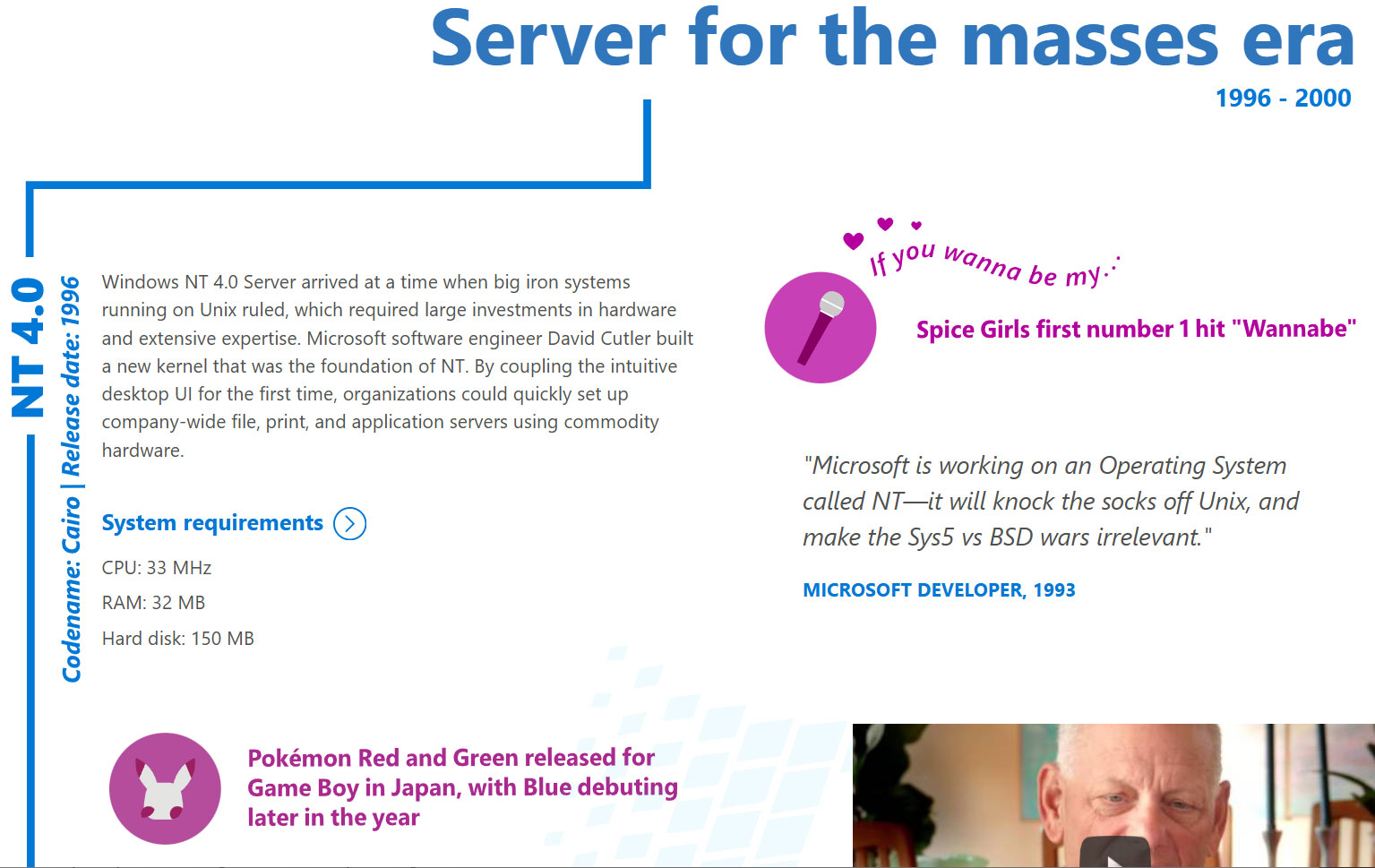
Despite all the new technology under the hood and the frills of the latest UI, Microsoft's Windows NT 4.0 launched with remarkably low minimum requirements. Would-be users were recommended to install it on a PC with a CPU that ran at 33 MHz or better, had 32MB of RAM, SVGA graphics, and a hard disk with 256 MB capacity. This was in the Pentium / Pentium Pro era. NT 4.0 would become the server for the masses," boasted Microsoft on the OS's 20th anniversary.
Another reason that NT 4.0 was so important is that it formed the foundation for the Windows XP release (2001), leaving the DOS-based 95, 98/SE, and Me versions of the consumer OS behind as archaic hybrids. In the half-decade between the release of NT 4.0 and XP, Microsoft had a lot of work to do, such as implementing Plug and Play, building out gaming tech, adding WDM drivers, and so on. Thankfully, PCs also grew in muscle, specs, and multimedia capabilities to make the larger and more demanding XP a big hit.
Windows XP landed with a core marketing line that it was Built on NT technology," which felt uncomfortable to read if you were from the camp that believed NT' was short for New Technology.'
(Image credit: Tom's Hardware)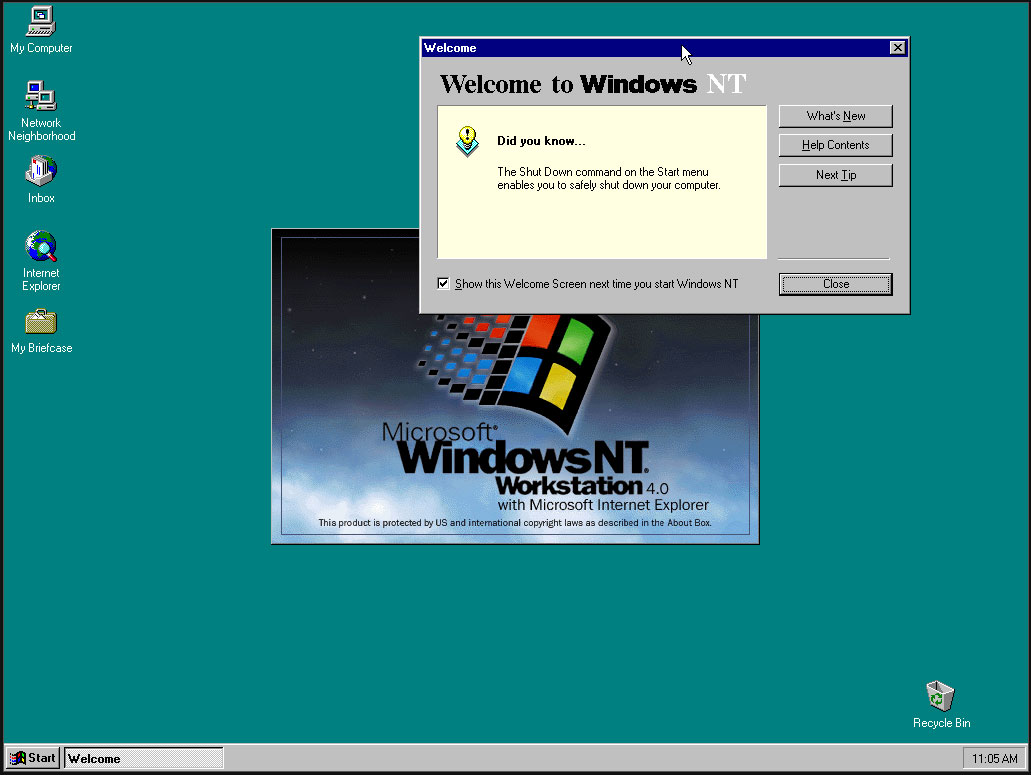
It is pretty easy to find an old Cairo release online for retro machine tinkering. Those interested in a more casual poke around in NT 4.0 out of interest, curiosity, or nostalgia will find there are some online installs you can play with via a web browser.