Ajinomoto reportedly cuts critical chip packaging film supply to China by 30% as domestic substitutes race to qualify — ABF restriction comes following Beijing's rare earth export curbs
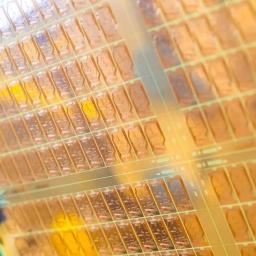
Japanese chemical maker Ajinomoto has reportedly told customers in mainland China that it will cut supply of ABF, the insulating build-up film that's used in nearly every high-end processor package, by 30%, according to a report from the Chinese outlet JW Insights, which cites unnamed supply chain sources.
If true, that would be painful for Chinese customers like Shennan Circuits, Xingsen Technology, and Shenghong Electronics, who rely on Ajinomoto's reported 95% global market share of the film. In contrast, China's self-sufficiency rate is thought to sit below 5%.
JW Insights attributes the cut to Ajinomoto prioritizing Japanese customers and core overseas accounts, which supply the FC-BGA substrates under Nvidia, AMD, and Intel accelerators, over mainland buyers. Whether or not the 30% figure holds up, the squeeze is well documented, and China's response was underway long ago.
A confirmed shortageAjinomoto's ABF production ran at roughly 2 million square meters per month at full utilization in the second quarter. The company has committed 25 billion (around $156 million USD) since 2023 to expand capacity by about 50% by 2030, and land purchased in Kani City, Gifu Prefecture, hosts a third plant not expected to come online until around 2032.
In the fiscal year ended March 31, Ajinomoto reported that ABF sales grew 25% with margins above 50%, and the share of its film going into servers and networking silicon reached 70%, up from 40% in fiscal 2017. According to Goldman Sachs, the gap between ABF substrate supply and demand will widen from around 10% in the second half of 2026 to 21% in 2027 and 42% in 2028.
Ajinomoto notified substrate makers in May of a roughly 30% price hike taking effect this quarter, two months after UK activist fund Palliser Capital disclosed a top-25 shareholding on March 31 and publicly demanded the company raise ABF prices by more than 30%. That hike is confirmed, even if the volume cut isn't. ABF material accounts for about 30% of a substrate's bill of materials, so the increase flows directly into the cost of every FC-BGA package built on it. We've been tracking ABF crunches since the shortage that constrained GPU production in 2021 and 2022, and the current cycle looks to be extending a pattern that's already hit BT resin substrates and T-glass cloth, where single Japanese suppliers also dominate.
China has three films in qualificationHuazheng New Material's CBF, developed with the Shenzhen Institute of Advanced Electronic Materials, is the most mature of China's three named alternatives. The film uses a modified epoxy resin with spherical silica filler, which routes around Ajinomoto's IP rather than copying it. According to reports coming from Chinese media, its mass-production yield sits at above 85%, with reliability testing reportedly having passed inside Huawei Ascend systems and validation underway at Xingsen and Shennan Circuits. Huazheng's first production line of 3 million square meters per year is said to be running at full utilization, and a second line doubling that is slated to come online at the end of 2026.
Lotus Holdings, best known in China as a producer of MSG, acquired 51% of Shenzhen Newface, the developer of NBF, in April for roughly 103 million. Newface is said to have qualified all products below nine build-up layers, with nine- to 11-layer films in development and validation underway at Taiwanese substrate makers. Ajinomoto itself is a food and seasonings company that derived ABF from its amino acid chemistry in the 1990s.
Hongchang Electronics' GBF, co-developed with Taiwan's Jinghua Technology, has been validated at a leading domestic OSAT and is in small-volume trial production, with scale-up targeted for the fourth quarter. All three films face the same challenge of downstream reliability qualification taking one to three years of thermal cycling, damp-heat aging, and electrical testing, often longer than the R&D itself, and the highest layer-count films under flagship AI accelerators remain unmatched domestically. Upstream inputs, including specialty resins and spherical silica filler, are themselves partly import-dependent.
Huawei's Ascend packaging sidesteps ABFHuawei's Ascend 910C reportedly connects two compute dies on separate silicon interposers through an organic substrate, an approach SemiAnalysis has described as trading die-to-die bandwidth for yield and cost against Nvidia's CoWoS.
That architecture makes Huawei less dependent on the high layer-count ABF-based FC-BGA substrates that Nvidia's B200 and GB200, AMD's MI300X, and Intel's accelerators sit on, and Chinese reporting seems to position Ascend as the anchor qualification target for both CBF and GBF. Cambricon, Biren, Moore Threads, and Alibaba's T-Head, which package on conventional FC-BGA, are directly exposed to any mainland ABF supply disruptions.
China banned exports of dual-use items to Japanese military-linked end users back in January through Ministry of Commerce Announcement No. 1, following Prime Minister Sanae Takaichi's November remarks on a Taiwan contingency, with measurable fallout. Chinese exports of restricted rare earths to Japan fell roughly 51% year-over-year in the first half of 2026, Nikkei Asia reported, and Japan imported just 13 tons of dysprosium in the period, down 82% from two years earlier, per TrendForce.
Ajinomoto's move to cut ABF supply to China eight months later has obvious retaliatory optics, despite every account of the alleged cut attributing it to capacity allocation under AI demand. China's rare-earth controls have so far targeted materials where China holds the leverage, and ABF is a market where it holds none.
Meanwhile, BOE signed a three-year glass substrate agreement with Corning in May and designated glass-core packaging a strategic business in July, and Lens Technology announced a through-glass-via collaboration with Intel the same month, extending China's push into glass substrates as the longer-term route around Japanese film.
A glass core swaps out the middle layer of a substrate, but the chip package still needs insulating film built up on either side, so glass doesn't remove the need for ABF or its substitutes. None of China's glass projects has reached mass production either. Until that changes, China's answer to the reported cut depends on whether Shennan, Xingsen, and Shenghong qualify their domestic films.