Nintendo just announced its own first-party Joy-Con controller charging station, which releases on October 17. This is an obvious boon for couch co-op addicts, as you can have two Joy-Cons charging on the dock and another two charging via the console at the same time. Nintendo's charging station also integrates with the company's retro wireless NES gamepads, which are primarily used with Nintendo Switch Online games.The Joy-Con Charging Stand (Two-Way) accessory draws power from the Switch's dock, via the USB-C port, or any other power adapter. The vertical support can also be removed to make it more portable, another bonus for those couch co-op sleepovers. Nintendo hasn't released any pricing information yet to go along with the October release date. It's currently set for a launch in the US, Europe and Japan. October 17 is the same day that Super Mario Party Jamboree launches, so that would make for some good accessory-based synergy.
Google has officially confirmed the existence of the Pixel 9 Pro smartphone ahead of August's Made By Google livestream event. This follows a leak earlier this week in which images and videos of the handset started popping up everywhere.The company confirmed the smartphone via an announcement video, one that could have been waiting for August 13. The video isn't big on details, but there is some footage of the phone in action that confirms one major suspicion about the Pixel 9 Pro. The absolutely gigantic camera bump is real and is ready to make obvious indentations in pockets everywhere.Just look at that glorious thing. The bump looks like a 3D approximation of Bender from Futurama's head. One thing is for sure. If you buy the Pixel 9 Pro later this year, be sure to also buy a newly-designed case. There's no way previous cases will fit around that monstrosity.Beyond the camera bump, Google's video teases heavy integration with the company's Gemini family of AI models. Affiliated marketing copy simply states oh hi, AI" and the video shows a chatbot answering a query. This emphasis on AI should surprise absolutely nobody. It's 2024.You can sign up for information about the phone directly from Google. While we don't have any actual specs, it's likely that ginormous bump exists for a reason (a really good camera system.)There have been other leaks ahead of next month's event, though this is the only one proven to be real. These leaks do indicate, however, that the Pixel Pro 9 will be joined by the garden variety Pixel 9, the Pixel 9 Pro XL and a foldable called the Pixel 9 Pro Fold. As always, we'll be on the scene August 13 to report on whatever Google announces.This article originally appeared on Engadget at https://www.engadget.com/google-just-confirmed-the-pixel-9-pros-outrageous-camera-bump-185301609.html?src=rss
Ubisoft has released its latest earnings report and while there wasn't a ton of major news, there's a disappointing update for those who have been waiting on mobile versions of the Rainbow Six and The Division franchises. The company says that the Rainbow Six Mobile and The Division Resurgence development teams need more time to "deliver on expectations" amid "a demanding yet very large market."As such, both titles are no longer expected to debut in the publisher's current fiscal year, which ends on March 31, 2025. That means yet another delay for Rainbow Six Mobile, which was initially supposed to arrive in 2022. The Division Resurgence had been expected to debut last year.On an earnings call with investors, Ubisoft noted that "it's very difficult to define a set date" when asked why it was delaying the games now, with over eight months of the fiscal year to go. Executives said that Ubisoft wants the two titles to last forever and that the developers are "putting in the necessary work to make sure the games are perfect when they launch."Elsewhere, Ubisoft said its free-to-play competitive shooter XDefiant "is off to an encouraging start," having roped in 10 million players in its first two weeks after debuting in May. Aside from updates for live-service games such as Rainbow Six Siege, The Crew Motorfest and Skull and Bones (all of which the company says are performing well), Ubisoft has a couple of exciting projects lined up for the rest of the year in Star Wars Outlaws and Assassin's Creed Shadows.Meanwhile, on its earnings call, Ubisift was asked about the status of bringing Call of Duty games to cloud gaming services. The publisher holds the cloud gaming rights to Activision Blizzard games. Microsoft sold those rights to help appease competition regulators and get its Activision Blizzard merger over the line.You can expect Call of Duty titles to start hitting Ubisoft+ by the end of this year. That lines up with Microsoft's plan to release Call of Duty: Black Ops 6 via (the now-more-expensive) Game Pass in October and to bring other CoD titles to that service.This article originally appeared on Engadget at https://www.engadget.com/ubisoft-delays-its-rainbow-six-and-division-mobile-games-until-at-least-april-2025-174035060.html?src=rss
Cash App Pay has integrated with Google Play to give consumers another option when buying stuff online. This will be especially useful for Android users, as Google Play is baked right into the OS. Cash App says this partnership will give next gen consumers more choice" and the company specifically called out the gaming space.Cash App users will be able to pull money from a pre-existing balance or via a linked debit card to pay for stuff on Google Play. Cash App currently has four million monthly active users and the company claims to have added one million new users each quarter for the last year. That's a lot of new people flowing into Google's ecosystem.To use Cash App on an Android device, just select the payment method when checking out on Google Play. Obviously, new users should download the app and make an account before all of that.The Cash App integration, however, extends beyond Europe and Google already allows PayPal as an option in most countries. Also, Android developers who distribute apps on the Google Play store Google's parent company Alphabet is considered a gatekeeper under the DMA and one of the mandates of the legislation is that these organizations must allow for alternative payment methods.The Cash App integration, however, extends beyond Europe and Google already allowed PayPal as an option in most countries. Also, Android developers who distribute apps on the Google Play store can already use an array of third-party payment systems in Europe, to comply with the DMA.This article originally appeared on Engadget at https://www.engadget.com/cash-app-pay-integrates-with-google-play-to-offer-next-gen-consumers-more-choice-172310452.html?src=rss
OpenAI on Thursday released a smaller and more affordable version of its flagship large language model that powers ChatGPT. The new model, called GPT-4o mini, will cost developers 60 percent less to build AI-powered apps and services with as compared to GPT-3.5 Turbo, Open's smallest model until today. But the big news here is for consumers. GPT-4o mini will replace GPT-3.5 Turbo for free users of ChatGPT starting today - which means that your baseline ChatGPT experience will improve significantly.OpenAI claimed that GPT-4o mini achieved an 82 percent score on an industry benchmark called the MMLU, which stands for Measuring Massive Multitask Language Understanding, and includes 16,000 multiple-choice questions across 57 academic subjects. That's slightly lower than GPT-4o, which scored 88.7 percent, but higher than GPT-3.5 Turbo, which scored just 70 percent. AI experts have warned against relying on these kinds of benchmarks to measure how smart AI systems are, but so far, they're the only way to measure the performance of large language models.Smaller versions of flagship models give developers more flexibility when it comes to building AI-powered apps. After all, not everyone needs or can afford access to the largest, most powerful models for every use case. In May, Google announced Gemini 1.5 Flash, its own lightweight model that the company said was optimized for speed and efficiency. Other AI companies like Anthropic, too, have smaller versions of their full-scale models.GPT-4o mini can currently take in and generate text and images, but the model will eventually be able to process other types of content like audio and video. And even though GPT-3.5 Turbo is going away from ChatGPT, developers can still access it via OpenAI's API to build apps and services with it for now - until it eventually goes away too.This article originally appeared on Engadget at https://www.engadget.com/new-lightweight-gpt-4o-mini-model-promises-an-improved-chatgpt-experience-170143382.html?src=rss
US college students can shave half off a Max subscription. As long as you can confirm your active student status, you'll get a 50 percent discount on the Max With Ads monthly plan. Usually $10, you'll only pay $5 each month to stream classic and current HBO series (and more). The promotion is through a partnership with UNiDAYS, a (strangely capitalized) service that verifies college and university student status. The company has also partnered with Apple, Microsoft, Samsung, Uber Eats, Nike and more. After successfully verifying your status, the promotion will last for 12 months. But you'll have the chance to re-verify your student status every year as long as you're eligible to keep the discount. Once you're in your last year with no plans to head to another school, you'll graduate to the hard-knock life of $10 ad-supported streaming plans. Max lets you stream classic HBO series like The Sopranos, The Wire, Sex and The City, Game Of Thrones, Six Feet Under and more. You also get current-run content from HBO, Warner Bros., DC, HGTV and Food Network. These include series and films like The Last of Us, Dune: Part Two, House of the Dragon, Barbie and Euphoria. You'll also be able to stream the upcoming The Batman spinoff The Penguin, costarring Colin Farrell with his fat suit and a bunch of prosthetics. Once you're verified through UNiDAYS, you'll receive a promotional code. Just follow the instructions you get with the code to begin your subscription.This article originally appeared on Engadget at https://www.engadget.com/us-college-students-can-take-half-off-a-max-subscription-163906242.html?src=rss
Overwatch 2 fans who are already jonesing for something new after the recent Transformers crossover won't have to wait long. Blizzard has spilled the beans about the next hero that's coming to the game, and you'll be able to try her out as soon as this weekend.Her name is Juno and she's a support. The publisher teased this hero back at BlizzCon 2023 (when she was referred to only as Space Ranger) and in-game over the last few weeks. Now, her spacecraft has landed on this colorful version of near-future Earth - Juno is the game's first playable Martian character.A gameplay trailer gives a sense of Juno's abilities and how they work. Her primary weapon is called the Mediblaster. It appears to work in a similar way to Ana's Biotic Rifle in that it can heal allies and damage enemies, though it's not clear whether there's a different fire mode for each. One of her abilities, the Pulsar Torpedoes, can lock onto multiple targets to dish out healing and damage too.Unlike Ana, though, Juno has traversal abilities. With Glide Boost, she can soar through the air. She can also temporarily provide herself and her teammates with a speed boost - and perhaps the ability to jump higher -thanks to her Hyper Ring.As for Juno's ultimate, that's called Orbital Ray. It's a beam emanating from a satellite that moves across the map that heals allies and boosts damage. The specifics of how exactly all the abilities work haven't been announced, so we'll likely have to hold on until Juno arrives in the game for the full lowdown.Fortunately, that will be a short wait. Juno will be available in all modes except Competitive for a trial weekend that runs from July 19 until July 21. The No Limits mode will be in the Arcade, so chances are likely that we'll see two teams of five Junos fighting each other as players get to grips with the newcomer.On the rare occasions I play anything other than Mystery Heroes, I usually play the support role, so I can't wait to try out Juno. She has a great look and the makings of an excellent kit, as long as it's smartly balanced. Juno will join the lineup permanently when season 12 of Overwatch 2 starts on August 20.Blizzard EntertainmentThis article originally appeared on Engadget at https://www.engadget.com/you-can-try-new-overwatch-2-support-hero-juno-this-weekend-160006353.html?src=rss
Proton Mail has a new AI-powered feature that could help it keep pace with the artificial intelligence tools Google and Microsoft offer for their email services. Proton Scribe is an AI writing assistant that can help you compose and clean up your drafts. Scribe was designed with privacy in mind - the assistant can't train on your inbox data, as Proton Mail has a zero-access approach to encryption. Proton doesn't save or log anything from your email drafts either.According to Proton, a writing assistant was one of the most-requested features in a recent user survey. The company designed it as a secure alternative to other generative AI options. Scribe can be run locally if your system is compatible. Otherwise, you can run it on Proton's no-log servers. The assistant is powered by open-source models and code. As such, Proton says the tool itself is open-source and that independent researchers are free to carry out privacy and security audits.Scribe can be accessed by clicking the pencil icon in the Proton Mail composer. After telling the tool what you want to say in an email, it will create a draft for you. You'll be able to use the Shorten and Proofread options to condense and clean up your draft. There's also the option to make the tone of your email more formal with the click of a button. You can review and tweak your drafts before sending them.Proton says Scribe only fully supports English for now and it's rolling the assistant out to eligible users. Visionary and Lifetime subscribers will have access at no extra cost. Those on a Proton Business plan - Mail Essentials, Mail Professional or Proton Business Suite - can try Proton Scribe for free for 14 days. After that, the tool costs $3 per month per user.This article originally appeared on Engadget at https://www.engadget.com/proton-mail-now-has-a-privacy-focused-ai-writing-assistant-155816223.html?src=rss
Amazon's Prime Day sale is officially over and done with, but a handful of the event's better discounts remain available. If you're in the market for a new TV, here's one standout: Samsung's 55-inch Frame TV is still on sale for $998. While that's not the absolute lowest price we've ever seen, it's roughly $400 off the set's average street price. This Prime Day TV deal also comes bundled with your choice of a colored bezel cover, which you can attach to the edges of the set to make it look more like a piece of art. This Samsung 55-inch The Frame TV model offers a QLED 4K screen with an anti-reflective, matte finish that reduces glare and helps artwork blend in with other framed pictures you may have nearby. (The last thing you want is to spend all this money and have it be immediately apparent that the art is on a screen rather than looking like a permanent fixture.) Its picture quality can't match the best TVs in this price range - there's no local dimming or mini-LED backlight to boost contrast - but it's still decently bright and colorful, and you'd buy it for its design first anyway. You can access over 1,400 new and established works of art with a subscription to Samsung's Art Store, though a few pieces come bundled with the set for free. It also supports a fast 120Hz refresh rate, so it's not bad for gaming. Then there's the bezel, which gives your digital artwork an extra degree of authenticity. This deal is available with a white, "teak" or brown bezel - all of which have a modern design. The bezels are also magnetic, so if you change your mind down the line, you can snap them off. Note that this price applies to the 2022 version of the Frame TV. Samsung has released updated models for 2024 that reportedly offer better brightness but don't appear to be vastly different overall. Those sets are similarly discounted on Amazon right now, but since they cost a couple hundred dollars extra, the older variant should be a better value while it's still in stock. Your Prime Day Shopping Guide: See all of our Prime Day coverage. Shop the best Prime Day deals on Yahoo Life. Follow Engadget for Prime Day tech deals. Hear from Autoblog's experts on the best Amazon Prime Day deals for your car, garage, and home, and find Prime Day sales to shop on AOL, handpicked just for you.This article originally appeared on Engadget at https://www.engadget.com/this-prime-day-tv-deal-still-offers-39-percent-off-the-samsung-frame-tv-090511791.html?src=rss
Amazon Prime Day might be over, but there are some Prime Day deals still available right now. And believe it or not, iPad deals are some of the discounts remaining even hours after the shopping event ended. The standout deal you can get right now is still the same as we saw on Prime Day proper: the 10th-gen iPad is down to $299, which is $50 off and an all-time-low price. This iPad deal is for the bare-bones version of the device with 64GB of internal storage. However, this particular iPad model shines brightest when consuming content and, well, most of that is on the cloud nowadays. Also, this particular model is Wi-Fi only with no cellular service, if that's a dealbreaker for you. Also: the deal extends to all four colorways. Despite being released back in the ancient days of 2022, the 10th-gen iPad is still a capable machine with an A14 Bionic chip, a 10.9-inch Retina display, two 12MP cameras and a robust battery that should last a full day before requiring a trip to the outlet. It won't beat the recently-released iPad Air and Pro models, but it's also a fraction of the price. As a matter of fact, this tablet still has a place on our list of the best iPads. We appreciated the solid battery life, the modern design that recalls its pricer cousins and USB-C charging. At the end of the day, it's an iPad. It's great, despite being significantly underpowered when compared to the Pro and Air. To put it another way, this is the tablet to get if your primary use cases are consuming content, surfing the web, playing games and writing emails. This is not the tablet to get if you want to start editing videos. If that is what you're looking for, you'll have to go all the way up the iPad lineup to the iPad Pro, which you can snag on sale for $919 right now thanks to a discount-plus-coupon combo on the 11-inch model. The M4-powered version sits at the top of our list of the best tablets thanks to its incredible screen, superior performance, thinner and lighter design and compatibility with the Magic Keyboard and Apple Pencil Pro. But the iPad Pro is undeniably expensive even when on sale - unless you're looking for a true laptop replacement, you can likely find everything you need in a more affordable iPad model. The M2-powered iPad Air is the one we at Engadget recommend to most people and it's on sale for $559 still today. Also discounted are the iPad mini, arguably the best iPad for single-handed use, which is down to a record low of $380, and the 9th-gen iPad, which you can pick up for $249. Your Prime Day Shopping Guide: See all of our Prime Day coverage. Shop the best Prime Day deals on Yahoo Life. Follow Engadget for Prime Day tech deals. Hear from Autoblog's experts on the best Amazon Prime Day deals for your car, garage, and home, and find Prime Day sales to shop on AOL, handpicked just for you.This article originally appeared on Engadget at https://www.engadget.com/prime-day-is-over-but-the-ipad-deals-arent--shop-last-minute-and-get-up-to-24-percent-off-070443452.html?src=rss
It was a shame to see 1047 Games putting Splitgate on ice back in 2022. The studio did a great job of freshening up the competitive arena shooter genre by adding portals (think: Quake meets Portal), but it moved on to a new project. We now know that's going to be Splitgate 2, a free-to-play sequel that's coming to PC, PS4, PS5, Xbox One and Xbox Series X/S next year.1047 Games is going bigger in all kinds of ways this time around, including with a much larger development team. A group of 20 first-time game developers created Splitgate, which started as a school project. The team is now more than 150 strong and features devs with experience on the likes of Call of Duty, Overwatch, Halo, Valorant and League of Legends.The sequel is being built from the ground up in Unreal Engine 5. It will have three factions you can pick from based on your preferred play style and tactics. The Aeros are agile, Sabrasks are all about power and Meridians can manipulate time.There will be many areas, weapons and modes to check out, though the bulk of the action will be in four versus four combat. A debut trailer gives some idea of what to expect and more details will be revealed in August. Fans can check out a free comic series and unlock in-game collectibles through the Splitgate 2 companion app for iOS and Android.1047 Games has a tough act to follow since Splitgate was very well received and it proved popular - it had more than 22 million downloads. It's a strong foundation to build on, though, and the Splitgate 2 trailer (despite being a cinematic rather than gameplay-focused one) looks very promising.This article originally appeared on Engadget at https://www.engadget.com/splitgate-2-is-coming-to-pc-and-consoles-in-2025-144400499.html?src=rss
iOS 18 has landed in public beta and Apple is offering up more control, yet again, of the layout of your iPhone. However, Apple Intelligence, the most exciting upgrade, is conspicuously (but unsurprisingly) absent.The update also improves several native apps, such as Photos, Messages (RCS! Gasp!) and Notes, although Apple Intelligence will add even more features and tricks. While we all wait for the ability to generate our own emojis, there is still plenty to explore. It's just a little drier than what Apple teased at WWDC.You can access the iOS preview by enrolling on Apple's website, which will nudge the beta to your iPhone's Software Update section. As always, remember to back up your iPhone first and ensure it's compatible. (iOS 18 works on will work on 2018's iPhone XS and XR and newer phones.)iOS 18 means even more customizationBeyond app folders and widgets, iOS 18 adds further functional and aesthetic customization. Alongside a new Dark look, you can tint all of them in a color of your choosing. Unlike previous dark modes on iOS, this time it also dims' individual app icons to keep it consistent with the darker theme. You can also have iOS choose the color for you, basing its recommendation on your iPhone's wallpaper. If that sounds familiar, it's because it is very similar to Material You, which Google introduced to Android in 2021.You can also increase the size of the app icons ever so slightly, without reducing the number you can pack into a single pane. Doing so does strip away the text labels, so you better be sure you know, without words, which app icon is which. And, in a thrilling move for tens of pedants everywhere, you can move your icons outside a left-aligned, top-to-bottom snap grid. Do you want the Safari icon floating in the bottom right corner, all alone? You can do that now.iOS 18 also brings two new ways to secure your apps. You can assign an app as locked or hidden. Locking an app will require FaceID access, useful perhaps for Photos or a plethora of other apps if you often share your phone with children. Doing sp will also mean information from there won't appear or bubble around other parts of iOS, like searches and notifications. You can also choose to hide the app, which nudges it into a dedicated folder, locked away behind FaceID.Apple has also refreshed its control panel and dropdown menu for settings. Similar to when iOS introduced widgets a few years ago, there is now a dedicated control gallery to add smart home shortcuts, launch timers and more.This had the potential to clutter up the control panel, but Apple has divided this into four different tabs. While you can tap on the little icons to the side to leap to a specific section, you can also access all of them in a single continuous scroll. Your most used features can live at the top, and other sections pull together your smart home controls, entertainment playback and connectivity. Have you lost your hotspot shortcut? It's here. All the controls are also resizeable to prioritize the most crucial ones.Finally, you can now customize the iOS lock screen controls, too. If you never use the flashlight, you can swap it out for something more practical, like a timer, or even act as a shortcut to Shazam in a pinch.Photo by Mat Smith/EngadgetMessagesRCS (Rich Communication Services) has landed on the iPhone, or at least on those running iOS 18. It pulls together advanced text features, like support for richer images, larger file attachments, voice notes, group chat, read receipts and more. But you got all those through iMessage on iOS, making RCS sound a little uneventful.However, if your friends are divided across Android and iOS, you can start using Messages like other third-party messaging apps. Does it have all the features of WhatsApp? No. Does it do everything you can in iMessage? No.But it will help. For example, with RCS, you can send messages over Wi-Fi without a phone signal. I've had issues before when running late for appointments, trapped on the metro with no signal, unable to text to let the other person know. RCS means those messages will send if you latch on to a passing Wi-Fi network.There are more advances beyond RCS. You can also schedule text messages, like you might already do on work chat apps and email. If you're into Apple's recently introduced message tapbacks (emoji reactions), you can now do so with any emoji, including your own Live Stickers based on your photos and images. For even more expression, iOS 18 also adds italics, bold, underline and strikethrough formatting, and a family of cute word animations that feel like WordArt come to life. It's silly, it's frothy, it's pointless. I love it.PhotosPhoto by Mat Smith/EngadgetApple has hidden away some major changes to how it structures its photos app, reflecting the fact that many of us have had iPhones (and photo libraries) for over a decade and a half. And we're not going to look at all of those pictures. We're likely not even going to look at most of them. In iOS 18, Apple has ditched the tabs for Library," For You," Albums" and Search." Instead of your latest photos, screenshots and videos taking up the majority of the screen, you'll see some space carved out for your latest content, curated albums, memories and more.It's a divisive approach, but I think your reaction will depend on how you interact with your photos. I know where my favorite photos are or how to find them, but other people in my life are often pleasantly surprised when services and devices can auto-curate an album of photos from a day out or a vacation. This redesign seems aimed at them.And what about Apple Intelligence? Eventually, it will add some additional tricks, like Cleanup, which can help erase any unwanted objects in your photos. It's a feature that Pixel (and Galaxy) phone users have enjoyed for a while, and still, we await the arrival of Apple Intelligence to be able to test this. For more on what's coming to your gallery in iOS 18, check out my colleague Cherlynn's detailed article on what Apple's done to the Photos app.More iOS 18 highlightsIf you're a daily Notes app user (yes, I'm guilty), there are some nice advances in iOS 18, too. You can now transcribe conversations and meetings directly into the app. At the time of my testing, you'll have to ensure your iPhone is set to US English and US as a region for the transcription icon, shown in the image above, to appear.We also get Math Notes, which can be accessed through the Notes app and from the calculator. Here, you can write out sums and calculations and your iPhone will solve them. It'll even remember figures for future calculations. It feels niche, but there's some definite utility here, perhaps if you're looking to add up a vacation budget or DIY project.Notes' new collapsable subheadings proved more useful for me. I have several lengthy Note files, and now I can organize them better and not have to search for specific words to find what I need.Apple brings a similar approach to its Reader on Safari, which can add a table of contents and even attempt to summarize an article before you even get your teeth into it. Meandering recipe intros: you may have been put on notice. But I say may because as of this writing, I haven't been able to test this on any sites I've visited.There's also a new Passwords app, which, in a lot of ways, is just an easier way to access your iCloud passwords instead of diving into your iPhone's settings. The app divides your passwords into different categories like accounts, codes, Wi-Fi networks and Passkeys, and, wisely, will support the iCloud for Windows app and a Chrome extension. You can also share password collections with visitors, friends or family.Apple continues to tentatively develop its smart home features within iOS 18, too. It's adding express mode to automatically unlock connected doors as you approach - as long as you have your iPhone (or Apple Watch) on you. Meanwhile, Apple has created a guest access tab so you can grant access to parts of your smart home and even schedule the times a garage door, say, stays unlocked, perhaps for a package delivery.Wrap-upPhoto by Mat Smith/EngadgetMy early impressions of iOS 18 are more limited than I wanted them to be. Apple Intelligence and most of its exciting features teased at WWDC, are not part of this public beta. Without those, iOS 18 feels more like iOS 17.5. There are more features, but most of them are incremental.RCS is finally here, adding more functionality to cross-OS text messaging (and possibly worrying the likes of WhatsApp) while elsewhere, Apple focuses on upgrading and enhancing its native apps. The company made some... interesting choices. In iOS 18, even Calculator is getting beefed up, with Math Notes, calculation history, and a new scientific calculator view.The public beta is relatively stable, so it's easy to recommend to those looking for early access to the latest iPhone features. However, without Apple Intelligence, drawing more meaningful conclusions on iOS 18 will have to wait.This article originally appeared on Engadget at https://www.engadget.com/ios-18-preview-waiting-on-apple-intelligence-for-the-true-upgrade-143059859.html?src=rss
Xfinity is giving its customers access to better picture quality, just in time for the Paris Olympics. To start with, its customers will have the ability to enable Dolby Vision HDR and Dolby Atmos via the Xfinity Stream app on compatible streaming devices and TVs for the first time, if they watch USA Network's Paris Olympics coverage. That will give them access to a viewing experience with more detailed pictures and immersive sounds even if they're not streaming through an Xfinity box.The telecommunications division of Comcast is also debuting an enhanced 4K viewing experience for all customers of its X1 platform as a whole. It explains enhanced 4K as 4K video delivered over Comcast's network at the highest bitrate, with Dolby Vision for more realistic pictures and Dolby Atmos for immersive audio. The capability will also premiere for the Paris Olympics and will be available on USA Network's 24/7 coverage. Xfinity also promises ultra-low latency, which means viewers will only be seconds behind what's happening in Paris in real time."By premiering enhanced 4K during Paris 2024, fans of the Olympics will be among the first to experience this new innovation and enjoy all the live action in stunning picture and audio quality, with significantly less delay compared to anything else in the market," Vito Forlenza, Comcast's Vice President for Sports and Entertainment, said. Xfinity put its enhanced 4K feature to the test during the 2024 Super Bowl, though, to make sure it works as promised. It says that going forward, enhanced 4K will be its new quality standard for live sports on X1.The streaming platform will make it easy for customers to access Olympics content, as well. Users will be able to create a custom destination for their favorite sports and access a comprehensive schedule of events, which they can then filter by any of the sports they're interested in. They can quickly access these feature and all the channels and services offering Olympics content by saying "Olympics" into the Xfinity voice remote.This article originally appeared on Engadget at https://www.engadget.com/xfinity-is-showing-the-olympics-with-dolby-vision-and-dolby-atmos-on-its-stream-app-140046946.html?src=rss
Amazon Prime Day is officially over - but there are still a few legacy deals hanging on. We had previously pulled together this list of worthy under-$25 deals, and we've just updated it to reflect these affordable bargains that are still available as of Thursday morning. As a reminder (and for the uninitiated): Engadget treats tech deals with the same care as we would regular" tech news. When we scour the web for deals, we're looking not only for the best prices possible, but also the best products as well. Our goal with our deals coverage, especially surrounding events like Amazon Prime Day, is to surface only the best deals we can find on the gadgets we've tested and rated highly, or that we've used and know to be worth your money. Prime Day deals no longer available These deals were available earlier but have expired. They may or may not return. Your Prime Day Shopping Guide: See all of our Prime Day coverage. Shop the best Prime Day deals on Yahoo Life. Follow Engadget for Prime Day tech deals. Hear from Autoblog's experts on the best Amazon Prime Day deals for your car, garage, and home, and find Prime Day sales to shop on AOL, handpicked just for you.This article originally appeared on Engadget at https://www.engadget.com/amazon-prime-day-tech-deals-under-25-that-are-still-available-today-154512947.html?src=rss
Prime Day might be over, but there are a (somewhat surprising) number of Apple deals still live right now. Apple itself doesn't typically host sales, but we often see deals from Amazon on current-generation Apple devices - most of which will get even better this fall with the software updates Apple announced at WWDC. These still-available Apple discounts have become even more appealing, with many sitting at record-low prices. While you won't see discounts on iPhones or HomePod speakers (Amazon would much prefer that you buy an Echo), you can still pick up most other Apple gear at steep discounts today. Here are the best Prime Day Apple deals you can still get even after the shopping event has ended. Best Prime Day Apple deals still available Your Prime Day Shopping Guide: See all of our Prime Day coverage. Shop the best Prime Day deals on Yahoo Life. Follow Engadget for Prime Day tech deals. Hear from Autoblog's experts on the best Amazon Prime Day deals for your car, garage, and home, and find Prime Day sales to shop on AOL, handpicked just for you. This article originally appeared on Engadget at https://www.engadget.com/amazon-prime-day-apple-deals-on-airpods-macbooks-ipads-and-more-that-are-still-available-today-072858665.html?src=rss
Amazon Prime Day 2024 has come and gone, but thankfully, some sales still linger. One of the best deals to shop right now is an all-time low price on Apple's second-generation AirPods Pro. The earbuds first dropped to $169 from $249 in an early Prime Day deal, and you can still grab them for 32 percent off. Apple released its second-gen AirPods Pro in 2022, but they're still the newest model on the market. At the time, we gave them an 88 in our review thanks to solid noise cancellation and stellar transparency mode - courtesy of their H2 chip. They're also our choice of 2024's best wireless earbuds for an iPhone, with simple touch controls, hands-free Siri and easy switching between Apple devices. Plus, they offer up to six hours of battery life with ANC on and up to 30 hours with the charging case. Externally, the AirPods Pro also have some perks worth mentioning. Each purchase comes with four silicone tips, ranging from extra small to large. The earbuds and the charging case are IP54 dust, sweat and water resistant, so you can use them while exercising outdoors all summer. Your Prime Day Shopping Guide: See all of our Prime Day coverage. Shop the best Prime Day deals on Yahoo Life. Follow Engadget for Prime Day tech deals. Hear from Autoblog's experts on the best Amazon Prime Day deals for your car, garage, and home, and find Prime Day sales to shop on AOL, handpicked just for you.This article originally appeared on Engadget at https://www.engadget.com/prime-day-is-over-but-apples-airpods-pro-are-still-cheaper-than-ever-124025085.html?src=rss
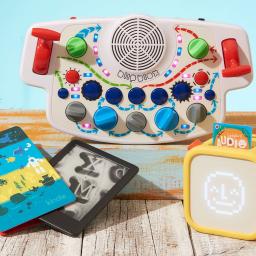
It can be hard to look at your kid's adorable face and not get them every shiny toy they want. But some toys will do better to stimulate their brain than others. If you're looking for a new plaything for your child but want to ensure it helps their critical thinking and problem solving skills as much as it entertains them, allow us to help. The parents (and aunts, and uncles) of Engadget have tested plenty of educational toys with their little ones over the years - below, we've rounded up a few that have had genuine staying power. This article originally appeared on Engadget at https://www.engadget.com/best-educational-toys-for-kids-123055311.html?src=rss
Meta has reportedly decided not to offer its upcoming multimodal AI model and future versions to customers in the European Union, citing a lack of clarity on the European regulators' data protection rules. These newer AI models process not only text but also images and audio, and power AI capabilities across Meta's platforms. Meta's move follows a similar decision by Apple, which recently announced it would not release its Apple Intelligence features in Europe due to regulatory concerns.Meta told Axios it still plans to release Llama 3, the company's text-only model, in the EU. The company's primary concern stems from the challenges of training AI models using data from European customers while complying with the General Data Protection Regulation (GDPR), the EU's data protection law. That said, Meta still plans to launch these new AI models in the UK, which has similar data protection laws to the EU.- Mat SmithThe biggest stories you might have missedThe best SSDs in 2024EA Sports FC 25 brings women's soccer to the career modes for the first timeFallout's Emmy nominations show that successful gaming adaptations are no longer a flukeYou can get these reports delivered daily direct to your inbox. Subscribe right here!Dyson ditches the air purifier in its new headphones55 hours of battery life for $500.DysonIn early 2022, Dyson combined its air filtration expertise with noise-canceling headphones. Aimed at providing less-polluted air, the Zone headphones had an extremely short battery life and a heady $949 price. Now, the company is focusing on audio, with its new OnTrac headphones: noise-canceling headphones with a decidedly Dyson design and a premium $500 price tag. Unsurprisingly, there's a bigger focus on the audio tech - check out our deep-dive.Continue reading.The tinyPod transforms your old Apple Watch into an iPod-like minimalist phoneThe $80 case can control the Digital Crown.tinyPodThe tinyPod is a case for your Apple Watch, which probably doesn't sound too exciting on its own. However, its click wheel, which controls the watch's Digital Crown, makes Apple's wearable look and feel (at least in its marketing) like an iPod, back from the dead.Continue reading.This article originally appeared on Engadget at https://www.engadget.com/the-morning-after-meta-may-hold-back-its-next-gen-ai-models-from-the-eu-111504920.html?src=rss
NASA's Volatiles Investigating Polar Exploration Rover or VIPER was going to look for water ice at the moon's south pole. The agency was hoping that it could help answer important questions, such as where water is on the moon and how much there is for future spacefarers to use. But now NASA has decided to cancel the project and discontinue the rover's development, citing "cost increases, delays to the launch date and the risks of future cost growth."The agency has already spent $450 million developing VIPER, according to The New York Times - it's even done assembling the rover and installing its scientific instruments. That said, it still has to subject the rover to a series of tests to ensure that it can endure a rocket launch and the harsh conditions of outer space. Joel Kearns, NASA's Deputy Associate Administrator for Exploration, told the publication that the cancelation would save the agency at least $84 million, because it would no longer have to pay for those tests and for the rover's operations.Kearns added that the agency was also worried about additional expenses if the rover's launch gets delayed. NASA first announced the VIPER mission back in 2019, with plans to launch it in late 2022. However, due to supply chain issues during the height of the COVID pandemic, among other problems, its launch was pushed back to late 2024. More problems forced NASA to move its launch again to September 2025 at the earliest, so additional delays aren't outside the realm of possibility.NASA has several projects lined up that will help it verify the presence of water ice on the moon. They just won't be focused on that goal and will most likely need more time to achieve what NASA was hoping VIPER would. The agency is planning to disassemble the rover and use its instruments and components for future missions. It will, however, consider proposals from American and international companies that may want to use the rover, as long as it doesn't cost the US government more money.While the project itself has already been canceled, the flight that was supposed to ferry VIPER to the moon will still push through. NASA chose Astrobotic to launch the rover and to develop a lander called Griffin to safely get VIPER to its destination. The mission will fly with a non-functional item simulating the VIPER's mass. As Kearns explains, a successful demonstration of the Griffin lander would still be valuable for future missions, whether or not it's carrying a real rover.This article originally appeared on Engadget at https://www.engadget.com/nasa-scraps-its-viper-project-that-aimed-to-look-for-ice-on-the-moon-110005343.html?src=rss
Today, HMD unveiled its newest own-brand smartphone called Skyline. This phone runs on a mid-range Snapdragon 7s Gen2 CPU, and it offers up to 256GB of storage and 12GB of RAM. It has 15W Qi2 wireless charging and its 4600mAh battery lasts up to 48 hours." The screen is a 6.55-inch full HD+ panel with a 144Hz refresh rate and up to 1,000 nits of brightness. Pick either pink (maybe they had leftovers from the Barbie collab) or black for your phone's color. Skyline phones will be available starting in August and will cost $499.The spotlight feature for Skyline is ease of repairability. This has been a focus for recent projects from HMD, which also makes phones under the Nokia brand. The back cover of this phone model can be removed, allowing for a user or a third-party shop to replace a broken screen, a worn-out battery, or a bent charging port. Replacement parts are available in select markets from iFixit, which said Skyline will have almost the repairability levels of the Fairphone. Right to repair movements gained a lot of traction last year, with even holdout device manufacturers starting to change their tune. It's positive to see HMD not just offering an option to self-repair, but making it easy to do so.HMD (modified)Skyline is also equipped with some notable photo features. The 50 megapixel front camera offers autofocus and eye-tracking. It also has "selfie gesture" hardware that will snap a photo in response to one of four common hand gestures. The rear camera is 108MP, and it has both portrait and night modes to capture the right image for the moment.As more people want the option to unplug from the always-on lifestyle, Skyline will offer a Detox mode. This feature lets users select specific apps and contacts to block during scheduled breaks. It can be useful for people who find themselves spending more time than they want on social media or games, or for those who need to draw strong lines for work-life balance.This article originally appeared on Engadget at https://www.engadget.com/the-hmd-skyline-is-a-mid-range-smartphone-thats-all-about-repairability-070035654.html?src=rss
When Dyson revealed its Zone headphones in early 2022, the company had combined its air filtration expertise with noise-cancelling headphones. COVID-19 was still a big part of our lives back then, but the Zone doesn't protect you against the virus. Instead, it's meant to provide less-polluted air as you move about your day, battling things like urban toxins and seasonal allergens. However, extremely short battery life and a $949 price plagued that first model, so it wasn't really a device accessible to the masses.Now the company is back with its first "audio-only" over-ear headphones, the Dyson OnTrac. There's no Bane-like mask or air filtration system here, just a set of noise-cancelling headphones with a decidedly Dyson design and a $500 premium price tag. Battery life is no longer an issue, and the company is touting both active noise cancellation (ANC) performance and audio quality on the OnTrac. There are also over 2,000 customization combinations for the outer caps and ear cushions, so you can change up the look at you see fit.The design of the OnTrac headphones certainly looks like something that would come from the same company that built the V12 stick vac, the Airstrait hair straightener and the Cool air purifiers. Dyson combined premium materials with ergonomics to create the appropriate seal for audio and ANC while also keeping things comfortable. The company used aluminum, copper, nickel and ceramics for the outer caps on the ear cups and "ultra-soft microfiber" foam cushions on the ear pads. There are also "multi-pivot gimbal arms" to help increase comfort and relieve pressure. Plus, Dyson relocated the battery to the headband for better weight distribution.Inside, the OnTrac features 40mm, 16-ohm neodymium speaker drivers that Dyson says are capable of a frequency response of 6Hz to 21kHz. That covers more of the sonic spectrum than he standard 20Hz to 20kHz range most headphones offer. The company also angled the drivers 13 degrees toward your ears for better acoustic performance. All of that combines to provide "deep sub-bass that you can feel, and clear highs at the upper end of the frequency range." Dyson promises the OnTrac will "reveal hidden detail" as well.Cherlynn Low for EngadgetThe ANC setup on the OnTrac is composed of eight microphones that Dyson says sample external sound 384,000 times a second. Those work with a custom noise-cancelling algorithm and "carefully designed internal geometry" for 40dB of noise blocking, according to the company. Battery life won't be a problem either, so long as Dyson's claims pan out. The company says the OnTrac is capable of up to 55 hours of use with ANC on, thanks to two high-capacity lithium-ion battery cells. A 10-minute charge will give you up to 2.5 hours of use while 30 minutes provides 9.5 hours (with ANC on in both cases). During that listening time, onboard playback and volume controls are handled by a "joystick" on the back edge of the right ear cup. You can double tap on the outside of either ear cup to turn ANC on or off.The OnTrac headphones will be available in aluminum/orange, cooper/blue, black nickel and ceramic red from Dyson for $500. The replacement caps and cushions will be available for $50 for a set of two. Only a few colors will be available from other retailers, so you'll have to buy most of the options directly from Dyson.This article originally appeared on Engadget at https://www.engadget.com/dysons-ontrac-headphones-ditch-the-zones-air-purifier-for-audio-only-use-040044551.html?src=rss
by Valentina Palladino,Amy Skorheim,Jeff Dunn on (#6P9RB)
The Amazon Prime Day sale ends tonight, but don't think that all opportunities to save have come and gone. In typical Amazon fashion, most of the best Prime Day deals on day one of the sale remain the best offers now on day two - if they didn't sell out already, that is.Thankfully, many of the best tech deals we curated yesterday are still around today. If you didn't get the chance to shop yesterday, Engadget has you covered. We've collected the best Prime Day deals you can still get right now before the shopping event is over tonight. We expect a few Prime Day deals to still be available tomorrow - there are always a few stragglers - but most of them will expire at today at midnight.If you're looking for even more Prime Day deals that are still available, check out Engadget's Prime Day hub where you'll find all of the best tech deals you can get for the shopping event this year. In addition to Amazon devices, Prime Day is typically a great time to pick up big-ticket items like tablets, laptops and robot vacuums, and accessories like power banks, streaming devices, Bluetooth speakers and the like.Best Prime Day deals: Engadget top picks
On the second day of Amazon's Prime Day sale, the deals on smaller gadgets and accessories are still going strong. In fact, as I was checking to make sure these deals were still live, I noted about five on the list that dropped a few dollars cheaper than they were yesterday. As a reminder, this list represents the best of the affordable tech gear that we at Engadget have tested, reviewed and know to be worth your time. Everything here is on sale for $49.99 or under to make up the best possible roundup of the Prime Day tech deals you can get for under $50.
Serious concerns have been raised about the effect of social media on teenagers' mental well-being. Meta is letting a group of researchers examine some of Instagram's data to determine if social media is psychologically damaging younger users.The Vergereported that the Center for Open Science (COS) is launching a new joint pilot program with Meta to produce independent studies about how social media affects teenagers' mental health.The Instagram Data Access Pilot for Well-Being Research program will conduct independent academic" research using up to six months of Instagram data to determine the potential positive or negative associations of Instagram use" among teens and young adults. The study will also examine the positive and negative differences of large populations across the world and the causes of statistical relationships between Instagram and social or emotional health," according to the program's website.The data researchers can access may include an Instagram user's followers and the accounts they follow, account settings and the amount of time they spend on the photo sharing service. The researchers will not have access to users' demographic information or the contents of their posts and comments. The data will come from accounts based in 24 countries including the US and UK, according to the request for proposal (RFP).Other scientific studies conducted by researchers from the Massachusetts Institute of Technology (MIT) and New York University and Stanford have found parallel links between social media use and the state of a person's mental health. The link earned greater awareness last year when Arturo Bejar, a former director of engineering for Protect and Care at Facebook, testified before a Senate Judiciary subcommittee that he alerted the company and its CEO Mark Zuckerberg by email of the dangers their product could have on young people.Bejar testified that seven days before the hearing, 13 percent of users on Instagram between the ages of 13-15 receive unwanted sexual advances. He also testified that his own 16-year-old daughter exhibited signs of a momentary decline in mental health when a user commented that she should get back to the kitchen" under one of her posts.A month before the hearing, 41 states filed a lawsuit against Meta for allegedly misleading the public about the potentially addictive nature of its platforms like Facebook and Instagram among teenagers."My experience, after sending that email and seeing what happened afterwards, is that they knew there were things they could do about it, they chose not to do them and we cannot trust them with our children," Bejar said during the hearing. "It's time for Congress to act. The evidence, I believe, is overwhelming."This article originally appeared on Engadget at https://www.engadget.com/meta-gives-researchers-access-to-instagram-data-for-teen-mental-health-study-204322979.html?src=rss
Microsoft has officially released its Designer platform for AI image generation. After a long preview phase, Designer is now available to most people with a Microsoft account. Designer can be used on the web in more than 80 languages, as a mobile app for iOS and Android, and as a Windows app. You can create a brand new visual from the ground up with AI, or use Designer to edit and tweak a picture you've already made. There are plenty of templates available to guide the creation of common image types, like a greeting card, smartphone wallpaper or a profile avatar. More experienced artists can also build everything from scratch, developing their own templates and using their own art.While Designer can be used on its own, Microsoft is promoting its integration with the company's other services. Thanks to the company's Copilot AI chatbot, Designer images can be easily linked up to Microsoft Word and PowerPoint projects. Of course, taking full advantage of that will require a Copilot Pro subscription.If you've used Canva, then Designer will feel very familiar. The service takes a very similar approach to its user experience and now also has some AI options. According to details from when Microsoft first announced the app back in 2022, Designer is integrated with OpenAI's image generator DALL-E. Copilot already has DALL-E 3 integration, as well as ChatGPT 4 Turbo, so it makes sense that Designer will sync up with those existing services.This article originally appeared on Engadget at https://www.engadget.com/microsoft-releases-ios-and-android-apps-for-designer-its-ai-powered-canva-competitor-203028855.html?src=rss
The tinyPod is a case for your Apple Watch, which probably doesn't sound too exciting on its own. However, its unique angle - a click wheel that controls the watch's Digital Crown - makes Apple's wearable look and feel (at least in its marketing) like the company's first breakthrough product of the 21st century: the iPod. Although you can use it as a music player, it also works with everything else in watchOS, transforming Apple's smartwatch into a minimalist, distraction-free phone."The $80 tinyPod works with Apple Watch models in Series 4 through 9, along with the Apple Watch SE. (The 41/40mm and 45/44mm Apple Watches have separate tinyPods.) Meanwhile, another 49mm version for the Apple Watch Ultra - because who wouldn't want to turn their $800 wearable into a minimalist phone? - costs $90. There's also tinyPod lite, a $30 case sans click wheel.That click wheel is its core gimmick, and its creator apparently believes it will be safe from Apple's lawyers. (The fact that it relies on an Apple product probably doesn't hurt.) The case's wheel syncs its movement with the Apple Watch's Digital Crown via carefully mechanized components inside" that make direct rotation contact with your Apple Watch crown." In other words, anywhere on watchOS that lets you scroll with the crown will be scrollable with the tinyPod click wheel. In theory, anyway.Newar / tinyPodThe tinyPod website says it can support multi-day battery life by turning off the watch's wrist detection (which you don't need here). But living up to that may be a tall order, given how short the battery life of cellular Apple Watches tends to be when used without a phone in Bluetooth range. Of course, you could use a GPS-only model (or turn off cellular) and stick to locally stored music, but that would also limit what it can do.tinyPod is the product of Newar, a former Snap designer and one-time jailbreak guru. In May, the creator posted that it began as a side project before being transformed into a real, shipping product for one reason: Whenever I left the house with it, I loved how I felt."Whether the tinyPod lives up to its billing as a minimalist, distraction-free and nostalgia-laden phone" or not, its creator appears to have put significant thought into aesthetics, clarity of purpose and consistency in marketing. Its website demonstrates an eye for detail that relishes in its iPod inspiration, including era-appropriate Apple fonts and a teaser video in a classic 4:3 aspect ratio. (Cue silhouettes dancing to Gorillaz.)The tinyPod is available for pre-order ahead of shipments this summer." You can reserve one today at the product website.This article originally appeared on Engadget at https://www.engadget.com/the-tinypod-transforms-your-old-apple-watch-into-an-ipod-like-minimalist-phone-201713024.html?src=rss
On day two of Amazon's sale, many other retailers have gotten into the deals frenzy with sales of their own. Places like Walmart, Target, B&H Photo, Best Buy and more are hosting some great deals. It's also the first day of PlayStation's Summer Sale, so if you need some more games for your PS4 or 5, this is a good time to snag a few. Brands including Sonos, Lego, and Sony are hosting promotions too. If you've exhausted our main Prime Day coverage and are looking for more - or if you'd simply rather not shop at Amazon - check out the best anti-Prime Day deals we could find below. As with all Engadget tech deals coverage, we almost exclusively highlight discounts on gear we've tested or have otherwise used and know to be worthy of your money. We cross-checked our guides and reviews with the anti-Prime Day deals other retailers have put forth to come up with what you see here. Site-wide anti-Prime Day sales A variety of brands are hosting site-wide sales of their own. Some of the deals are no different than what you'd see on a typical Tuesday, but a few of the discounts seem like they were inspired by Amazon's giant July bonanza. If you're down to browse, you may find a few worthwhile deals on the sale pages from:
No Man's Sky has been sending players on interstellar explorations for more than eight years now, and explorers probably haven't uncovered a tenth of this computer-generated universe. A huge new update called Worlds Part I expands this already sizable game with a ton of new gadgets, story driven missions and new worlds to discover and explore.The Worlds Part I update is available now in No Man's Sky across all consoles as well as PC and Mac. All told, there are over 40 new features, improvements or fixes and additions.The game already has over 18 quintillion planets but there are a few new types added to this mix. One of the new world types now have gravitational distortions" that have altered terrains to create floating islands that can be mined, altered or used as a platform to build a new homebase in the sky. No Man's Sky has also transformed some of its words into sub-zero" landscapes with new flora, mineral formations and terrains. Some worlds have even generated new forms of life such as plant-animal hybrids with features like stamen-like whiskers" and petal-like faces," according to the official website.The Worlds Part I update also comes with a bunch of new graphics improvements and features. Hello Games has given pretty much every part of its worlds a new look from the new volumetric clouds" in the sky to the high definition water" and dynamic water" that's more responsive to wind, depth and weather conditions.Hello GamesSome planets have visually enhanced atmospheres that can produce familiar weather like rain and snow as well as unusual conditions such as falling ash and ember and storm crystals. The update also provides some engine enhancements to improve the game's graphics and performance and render environments faster and clearer. There are even new sky and water colors across the universe's many landscapes and horizons.The new update isn't just a cosmetic fix. There's also some new toys in the game that help you alter planets' terrains or blow giant holes in your enemies' spacecraft. The coolest are the Liquidator combat mechs that look like giant Star Wars imperial walkers (if you cut off its head and attached a pair of arms to either side). You can also mount weapons on the arm such as the new Minotaur Flamethrower that can cause extreme damage at close range."A flamethrower will come in handy when you're engaged in combat in one of the new walker battles" featuring new, deadly Sentinel units to fight or taking on one of the vile insect queens" or a hostile beetle (or gentle but still roastable). Once you've defeated them, you can turn their carcasses into mounted trophies for your living space. There's also new biological based accessories you can build including a Chitin Flight Pack" and an insect based armor set if you want your explorer to look more GWAR-esque.There's even a new menu of strange nutrients" to keep your explorer sated and healthy with ingredients like nourishing slime," syrupy nectar" and juicy grubs." These components can create new dishes to consume like Mucal Doughnuts," Seeping Pies" and Juicy Thoraxes" that make Scottish cuisine sound like items from the French Laundry.Hello GamesNow that you've got new items from your arsenal like bug-based armor and flamethrowers, you can take them out for a test-toast on new story-driven missions like the Vile Brood Nexus Mission" to eradicate an invasive species. Once you get your Liquidator mech, you can go on a Bug Hunt Expedition" to exterminate species of giant, dangerous insects and other biological horrors.Phew, that's one massive update. No Man's Sky is known for its huge updates and patches that throw a ton of new stuff into the game's virtual universe. The Orbital update released in March added new features like a ship editor and a new Guild system. The Echo package generated a new form of mechanical life called the Autophage, multi-tool salvaging and a graphics boost for PlayStationVR 2.This article originally appeared on Engadget at https://www.engadget.com/no-mans-skys-newest-update-is-a-buried-tech-module-full-of-new-goodies-182151743.html?src=rss
You can never have too many charging cables and adapters, and thankfully Amazon Prime Day is typically a great time to stock up on charging gear. Anker accessories are among the plethora of Prime Day deals this year, and the best ones we curated yesterday are still available during day two of the sale. All kinds of accessories from power banks to USB-C adapters to wireless chargers have been discounted, with many down to all-time lows. Anker sales aren't exactly uncommon - we typically see a few standouts once or twice a month - but these Anker Prime Day deals present a good opportunity to save on the gear you use most. In addition to some of the best chargers, a bunch of other Anker gadgets have been discounted as well. Key among them are some of our favorite robot vacuums and portable speakers. We've collected the best Anker Prime Day deals below so you don't have to go searching through them. Let's start with power banks, since a number of our top picks for the best power banks are on sale for Prime Day. The Anker Prime Power Bank 200W has dropped to a great sale price for Prime Day, and this model includes its special charging base (not needed to use the bank, but a nice add-on to have, particularly when you can get it at a discount). It's got a premium design complete with a built-in display that shows how many watts of power are flowing out to each device you're charging, plus the overall charge remaining in the brick itself. The power bank has two USB-C and one USB-A port, and the base includes a few extra connectors as well. Also on sale is our favorite compact battery pack for Android: this 5K power bank has a flip-out USB-C connector that makes it easy to power up Android phones (and the latest iPhones) while on the go. For those who feel more secure with a plugged-in charger rather than a magnetic or wireless one, this power bank is a good option. As for standard chargers, there are plenty of solid gadgets to choose from at compelling sale prices. The Anker 313 wireless charging stand is hard to beat in this Prime Day deal if you're just looking for a basic wireless charger at a low price that can reliably power up your phone, be it an iPhone or Android device. While most will put their phone in portrait mode on this stand, it also supports charging in landscape mode as well, in case you want to watch videos while powering up. You can never have too many good AC chargers, and a few of Anker's higher-wattage models have been discounted. This 67W USB-C charger includes two USB-C and one USB-A port, and the AC prongs fold up when you're not using it. For more simultaneous charging, this 150W USB-C adapter includes three USB-C and one USB-A port and can power most mobile devices at fast speeds, including laptops, tablets and smartphones. iPhone users will want to check out the MagSafe options on sale today, which include our top MagSafe pick in our guide to the best power banks. Anker's 10K MagGo power bank is Qi-certified and a big improvement on previous versions thanks to that new certification. In our testing, it brought an iPhone 15 back from near dead to half full in 45 minutes, and its 10,000mAh capacity allows it to still have enough juice left for a decent charge after that. The small display on one edge shows the percentage charge left in the bank and the amount of time left before the power bank itself is refilled when you're charging it. This model also has a strong MagSafe connection, so you won't have to worry about it falling off if you're a little rough with your iPhone while using it. Plus, it has a handy kickstand that lets you more comfortable do things like FaceTime or watch videos while it's working its magic. Other MagSafe options include a couple of multi-device charging stations: this 3-in-1 station can handle an iPhone, Apple Watch and pair of AirPods simultaneously and the fact that it folds down to about the size of a deck of cards makes it an excellent option for frequent travelers. This cube-shaped model is more stationary, but it handles the same three devices at once and it comes with the necessary 30W AC adapter needed for optimal charging speeds. When it comes to robot vacuums, Anker makes a number of relatively affordable options. But our top ultra-budget pick in our best budget robot vacuum guide is a steal at this Prime Day price. The Eufy BoostIQ RoboVac 11S Max did a good job cleaning all floor types in our testing, and it's slim profile allows it to more easy get underneath furniture like side tables and couches - something most other robovacs can't do. The main thing to know about the 11S Max is that it doesn't have Wi-Fi connectivity like our other top picks for the best robot vacuums do. That's not necessarily a bad thing, especially since the 11S Max comes with a remote that lets you do things like change vacuum modes and set cleaning schedules. Two of our top picks for the best portable Bluetooth speakers have dropped in price for Prime Day as well. The Soundcore Motion 300 offers bright, punchy audio in a compact, IPX7-rated design. In addition to support for hi-res audio using the LDAC codec for Android users, this model also works with Anker's Soundcore companion app for EQ customization. As for the Soundcore Motion+, it has bright, bassy output plus Qualcomm aptX support for hi-res audio. It, too, has IPX7 water resistance, and its design is better suited for those who prefer a bit more heft in their speakers. It has a metal front speaker grille plus a soft-touch, rubberized exterior, and you're getting a 3.5mm aux input for wired connections, too. Your Prime Day Shopping Guide: See all of our Prime Day coverage. Shop the best Prime Day deals on Yahoo Life. Follow Engadget for Prime Day tech deals. Hear from Autoblog's experts on the best Amazon Prime Day deals for your car, garage, and home, and find Prime Day sales to shop on AOL, handpicked just for you.This article originally appeared on Engadget at https://www.engadget.com/anker-chargers-accessories-and-speakers-are-still-on-sale-for-amazon-prime-day-080704584.html?src=rss
AI seems to be seeping into every facet of society these days, but that may not be the case in communities where English isn't the dominant language. Spotify is working to correct that by offering a Spanish-speaking version of its DJ feature.Spotify announced the new Spanish speaking feature for its DJ mode also known as Xavier or X" on Wednesday. The new DJ is named Livi and Spotify has even given its new DJ a backstory describing her as a Senior Music Editor at Spotify based out of Mexico City" and a music expert who has spent her entire career in the music industry.It's basically a cruder version of how Jon Hamm can digitally assign backgrounds and perspectives to cookies" in Black Mirror's Christmas episode. Does this mean X and Livia will start screaming if we play Wizzard's I Wish It Could Be Christmas Everyday" on an endless loop?DJ is an AI generated list of curated songs based on a Spotify user's listening history. The DJ feature also includes an AI voice introducing and commenting on some of the songs it picks just like a radio DJ would except this DJ plays songs you actually want to hear. The music streaming service launched DJ last year using OpenAI. Six months later, Spotify expanded DJ's reach to 50 countries but only in English.Spotify's DJ is also starting to get some competition. YouTube Music just announced its own AI-generated conversational DJ radio generator for select users. If they don't call him YouGene," then they are missing out on pure pun gold.This article originally appeared on Engadget at https://www.engadget.com/spotifys-ai-music-dj-can-now-speak-spanish-180022156.html?src=rss
Prime Video's Fallout has followed The Last of Us in video-game adaptations making smashing freshman debuts at the Emmys. The Academy of Television Arts and Sciences unveiled this year's nominations on Wednesday, and Amazon's adaptation of Bethesda's franchise picked up an impressive 16 nods, including Best Drama, Best Actor - Drama (Walton Goggins) and Best Writing - Drama.Fallout, which Amazon didn't wait long to renew for a second season, follows Lucy (Ella Purnell), a vault dweller who ventures above-ground to try to rescue her father in a post-apocalyptic wasteland. Walton Goggins scored the series' only acting nomination for his scene-stealing performance as The Ghoul. Its writing nod went to Geneva Robertson-Dworet and Graham Wagner for the ironically (yet appropriately) titled premiere episode, The End."Only Murders in the Building, Hulu's popular comedy-mystery series, led all streaming-only series with 21 nominations. They include Best Comedy, two for Best Actor - Comedy (Steve Martin and Martin Short), Best Actress - Comedy (Selena Gomez) and Best Supporting Actress - Comedy (finally, Meryl Streep gets nominated for something!), Best Supporting Actor - Comedy (Paul Rudd), Comedy Guest Actress (Da'Vine Joy Randolph) and Comedy Guest Actor (Matthew Broderick).Imelda Staunton in The CrownNetflixNetflix's The Crown followed close behind for streaming-only series with 18 noms for its final season, which recounted the passing of Princess Diana and the Royal Family's transition into the 21st century. It picked up nods for Best Drama, Best Actress - Drama (Imelda Staunton), Best Actor - Drama (Dominic West), two for Best Supporting Actress - Drama (Elizabeth Debicki and Lesley Manville), Best Supporting Actor - Drama (Jonathan Pryce), Guest Actress - Drama (Claire Foy in a memorable return), Directing - Drama (Stephen Daldry for the episode Sleep, Dearie Sleep") and Writing - Drama (Peter Morgan and Meriel Sheibani-Clare for Ritz").In other streaming nominations, Amazon Prime's Mr. and Mrs. Smith and Apple TV+'s The Morning Show each snagged 16 nods. Netflix's Baby Reindeer, described as based on a true stalking story by series creator and lead actor Richard Gadd, received 11 nominations.Apple TV+Netflix had the most total nominations of any platform, with a staggering 107. Among streaming-only ones, Apple TV+ came in second with 70. (In addition to The Morning Show, Apple's Palm Royale, Lessons in Chemistry and Slow Horses all charted.) Amazon Prime Video landed 37 total noms, Hulu got 26 and Disney+ received 19.Zooming out from streaming-only to the broader field, FX's Shogun led all series with 25 nominations, followed by The Bear with 23 (it was a good day for FX) as it broke the record for most nods for a comedy. HBO's True Detective: Night Country landed 19, a new sketch-comedy show you may have heard of called Saturday Night Live received 17 and HBO's Hacks got 16.This article originally appeared on Engadget at https://www.engadget.com/fallouts-16-emmy-nominations-show-that-successful-gaming-adaptations-are-no-longer-a-fluke-175555108.html?src=rss
by Valentina Palladino,Amy Skorheim,Jeff Dunn on (#6P90Q)
Amazon Prime Day 2024 will be over in a few hours, but there's still time to save on some of our favorite gadgets. As to be expected, the best Prime Day deals from day one of the sale remain the best offers now on day two - if they didn't sell out already, that is.We haven't seen a ton of sold out items this year, which is a pleasant surprise. While we have seen some products go up and down in price, they've leveled out eventually. So even if you picked up some items yesterday, there's still time to grab anything you might have forgotten today. We've collected the best Prime Day deals you can still get right now before the shopping event is over tonight. Stay tuned to this post for updates as we close out Prime Day 2024 at the end of the day today.If you're looking for even more Prime Day deals that are still available, check out Engadget's Prime Day hub where you'll find all of the best tech deals you can get for the shopping event this year. In addition to Amazon devices, Prime Day is typically a great time to pick up big-ticket items like tablets, laptops and robot vacuums, and accessories like power banks, streaming devices, Bluetooth speakers and the like.Best Prime Day deals: Engadget top picks
It's the second and final day of Amazon's latest Prime Day sale, and we're still keeping track of the best TV deals the event has to offer. As expected, there's been a whole lot of junk to sift through, but the highlights include a roughly $250 drop for LG's C3 OLED TV, a $400 discount on the stylish Samsung Frame TV and a few all-time lows on well-reviewed budget sets from TCL and Hisense. If you need a new media streamer, both the Roku Streaming Stick 4K and Amazon Fire TV Stick 4K Max are discounted as well. You can find our full breakdown of the Prime Day TV discounts that are actually deals below, updated for day two of the sale. It's worth remembering that this isn't the best time to buy a new TV: Most manufacturers released their newest models fairly recently, and just about all of those will be cheaper around Black Friday. But if you must upgrade today, there's still some value to be found. We'll update this guide again if we find any more good deals before Prime Day ends tonight; just remember that you'll need to be a Prime member to access most of the discounts. Your Prime Day Shopping Guide: See all of our Prime Day coverage. Shop the best Prime Day deals on Yahoo Life. Follow Engadget for Prime Day tech deals. Hear from Autoblog's experts on the best Amazon Prime Day deals for your car, garage, and home, and find Prime Day sales to shop on AOL, handpicked just for you.This article originally appeared on Engadget at https://www.engadget.com/the-best-amazon-prime-day-tv-deals-still-going-today-save-big-on-sets-from-samsung-lg-tcl-and-more-093547753.html?src=rss
Amazon Prime Day is a good time to look for deals on smart home gadgets. Whether you're just dipping your toe into the space, or you have a thriving smart home ecosystem in place that you want to expand, Prime Day deals usually come in clutch with good discounts. For 2024, we're seeing a bunch of Google Nest devices on sale, some at record-low prices. These gadgets are best for anyone who already lives within the Google ecosystem, especially those who already rely on the Google Assistant to help them get things done. You'll find a few Nest security cameras on sale for Prime Day, as well as thermostats, video doorbells and Wi-Fi systems. If you're looking for even more Prime Day deals, check out Engadget's Prime Day hub where you'll find all of the best tech deals you can get for the shopping event this year. In addition to Amazon devices, Prime Day is typically a great time to pick up big-ticket items like tablets, laptops and robot vacuums, and accessories like power banks, streaming devices, Bluetooth speakers and the like. Your Prime Day Shopping Guide: See all of our Prime Day coverage. Shop the best Prime Day deals on Yahoo Life. Follow Engadget for Prime Day tech deals. Hear from Autoblog's experts on the best Amazon Prime Day deals for your car, garage, and home, and find Prime Day sales to shop on AOL, handpicked just for you.This article originally appeared on Engadget at https://www.engadget.com/prime-day-drops-google-nest-devices-to-record-low-prices-120035954.html?src=rss
Nintendo caused a stir last week when it released an ominous 15-second teaser for an unannounced game. The 15-second clip (bookended by the Switch intro and Nintendo logo, of course) shows a still figure wearing a trench coat and a paper bag with a smiling face drawn on it over their head. Eerie music plays as the camera darts around, flashing on a hand that appears to be missing a finger.It's all very un-Nintendo-like, especially considering that the teaser was for an M-rated game that the company is publishing itself - a rarity for the family-friendly brand. Speculation mounted that the game was being developed by the horror specialists at Bloober Team, but a week later, we now know what the game is. As it happens, it's at least as surprising as any of the other suggestions that have been floating around.The game in question is a new Famicom Detective Club title. It's the first completely new entry in the visual novel series in an astonishing 35 years. The original two games, The Missing Heir and prequel The Girl Who Stands Behind, were only released on the Famicom (oddly enough) in Japan at first before remakes arrived on the Switch in 2021.In Emio - The Smiling Man: Famicom Detective Club, you'll play as an assistant private investigator who is helping police solve a murder. The victim's head was covered with a paper bag with a creepy smiling face on it. Sound familiar? The scene is said to resemble a frequent clue from a series of unsolved murders from 18 years beforehand. It's up to you to figure out if the latest death is the work of the original killer or a copycat and put all the pieces of the puzzle together.Famicom Detective Club creator Yoshio Sakamoto, who is better known for his work on the Metroid series, said in a brief interview that while Nintendo was working on the remakes of the first two entries "I thought that we definitely need to continue this series with a brand-new game." He added that the Smiling Man, an urban legend that the team invented for the game, "is said to offer crying girls a paper bag with a smile drawn on it in exchange for their life." It all sounds very creepy. You'll get to find out for yourself just how much that's the case when Emio - The Smiling Man: Famicom Detective Club hits the Switch on August 29.This article originally appeared on Engadget at https://www.engadget.com/nintendos-recent-creepy-horror-teaser-is-actually-for-a-new-famicom-detective-club-game-165100278.html?src=rss
It's the second and final day of Amazon's Prime Day sale - yes, the name makes no sense - and we're still seeing a wide range of deals on headphones we've tested and recommend. If you've had your eye on new AirPods in particular, good news: Apple's AirPods Pro, AirPods Max and third-gen AirPods are all still available for the lowest prices we've tracked. And though a discount that brought the older second-gen AirPods down to $69 looks to be out of stock at Amazon, it is still available at Walmart and Best Buy. To help you figure out which pair, if any, is right for you, we've broken down each AirPods deal below. It's worth noting that Apple may launch updated AirPods by the end of the year, so if you're in no rush to upgrade, it makes sense to wait. But if you absolutely need new headphones right now, there's still one more day to save a little more than usual. Just remember that you'll need to be a Prime subscriber to access some of the deals. We've been keeping an eye on these discounts over the course of the Prime Day sale, and we'll update this roundup if we see any more price or stock changes. Expired Prime Day AirPods deals Your Prime Day Shopping Guide: See all of our Prime Day coverage. Shop the best Prime Day deals on Yahoo Life. Follow Engadget for Prime Day tech deals. Hear from Autoblog's experts on the best Amazon Prime Day deals for your car, garage, and home, and find Prime Day sales to shop on AOL, handpicked just for you.This article originally appeared on Engadget at https://www.engadget.com/the-best-airpods-deals-you-can-still-grab-before-prime-day-ends-083036650.html?src=rss
Microsoft's Xbox 360 digital storefront will close up shop on July 29, which is creeping up on us. To commemorate the closure, the company is holding a fire sale of sorts, with all kinds of games available for around $1.If you have a working Xbox 360 or if the game supports backwards compatibility, you can pretty much spend $20 and have stuff to play for years. The underrated FPS Black, by the Burnout devs, is just one dollar, and the iconic zombie shooter Dead Island is $0.74. That fantastic Strider reboot? It's $1.50.Of course, not every game is quite that cheap. Devil May Cry 4 will set you back a whopping $2 and Dishonored a full $3. Resident Evil: Revelations is $2, and the same goes for Dead Rising 2. Watch Dogs is $4, if you really wanna get crazy. You can see the full list by clicking the link above.
We're in that brief summer lull between Euro 2024 and European soccer leagues starting back up, so it's time to find out what EA has in store for the next installment of its don't-call-it-FIFA series. There are a ton of changes this year, but arguably the biggest headline is that EA Sports FC 25 will bring women's football into the career modes for the first time in the franchise's history. Five major women's leagues will be available in Manager and Player Career Modes: England's Women's Super League, the NWSL in the US and the top leagues in France, Spain and Germany. The Women's Champions League will be included as well.The features are all the same as in the men's side of the Career Modes to ensure parity. However, the financial model of women's football is different, with lower budgets, shorter contracts and a smaller transfer pool. That's reflected in the game. Managers, meanwhile, might start out in charge of a men's team and be offered a job with a women's side or vice-versa.One other major update for Career Mode is a feature called Live Start Points. It will roll in real-world updates from 11 top leagues and 17 major cup competitions. For instance, Live Start Points will incorporate results from actual games and you can start from any week in a real-life season or after something significant has happened. So, if you want a challenge, you might start a career halfway through the Premier League season and choose a team that's drifting away from the pack in the relegation zone. Player form, injuries, suspensions, goals scored, transfers, managerial changes and even points deductions will all be reflected in Live Start Points.Another notable change for Player Career Mode is that you'll be able to take control of some legendary stars who have long since hung up their boots in real life. The icons who you'll be able to play as in the mode on release day are Andrea Pirlo (my choice has been made for me), Ruud van Nistelrooy, Kelly Smith and Thierry Henry. Those who pre-order the game will be able to choose from Ronaldo (the Brazilian one), Zinedine Zidane and David Beckham.Another big update this year is the introduction of a five-versus-five experience called Rush. While Volta, a fast-paced casual mode from previous years that EA has nixed this time around, was distinct from the rest of the game, Rush is baked into the core FC 25 modes. You'll find it in Ultimate Team, Clubs and Career Mode (where managers can accelerate young players' development by winning Rush games).Rush is built on the same gameplay depth and balance as full 11-a-side matches though it takes place on a smaller pitch. Each team has an AI-controlled goalkeeper but the rest of the human-controlled team plays fluidly with no fixed positions. You can play matches with a bunch of your friends in which each of you takes control of one player.Some of the rules are different too. At kick-off, players will race toward the ball to try and take possession. If a player receives a second yellow yard, they'll be issued a blue card and sent to a sin bin for one minute. Offsides are only applicable in the last third of the pitch instead of from the halfway line.Electronic ArtsMoreover, EA has overhauled the tactics and positioning systems this year with something it calls FC IQ, which builds on the HyperMotion and PlayStyles tech from previous years. You'll have more granular control over how to set up your team, such as how to manage transitions between attack and defense.There are more than 50 new assignable player roles that determine how players act when they're off the ball. There will be three to five roles per position available at launch, with different focuses for each (i.e. attacking, defending, ball-winning or roaming). Player roles are the flip side to Playstyles, which are about on-the-ball movement.The roles are powered by real-world Opta data and a custom AI. EA says this will lead to more authentic off-the-ball movement and tactical intelligence. Different players are better suited to each role depending on their real-world proficiency.You might instruct your attacking midfielder to play as a shadow striker and dash into the box when there's an opening or to stay a bit further back and act more as a playmaker for the forwards. Perhaps you have a fullback who is effective when they float into midfield (such as Liverpool's Trent Alexander-Arnold), so you can tell them to do that. You'll have to weigh the pros and cons of each role and balance out your team appropriately.Team tactics are said to more closely resemble real-world styles so you can more easily replicate how your favorite club plays. You can stick with some presets or customize things completely - FC 25 will offer feedback of what works and what doesn't about a tactic. As such, you can opt for some totally bananas, asymmetric formations. That could be useful if you want to overload players on one flank where the opponent has a relatively weak defender (like cough Kyle Walker cough). You'll be able to share your custom tactics with friends using a unique code that works across platforms.Smart tactics, which allow you to alter your setup in real-time during a game, will now include recommendations based on how a match is going. You might receive a suggestion to switch to a pass-heavy tiki-taka style or to absorb opponents' attacks and focus on counters. An animated chalkboard will give you an idea of how a smart tactic change will alter the team's shape. Player roles are reflected in all of these other updates, while commentary should pick up on tactical changes. Meanwhile, there are fresh on-the-ball playstyles for goalkeepers this year, such as rushing out to take on attackers or throwing the ball long.Electronic ArtsElsewhere on the gameplay front, there are some new weather effects, with wind and rain having an impact on things like crosses and the playing surface. Mascots will be available for some teams and players can even celebrate with them after scoring. There are more skill moves too, including drag turns and back-heel nutmegs. In addition, figures on the sidelines such as managers, fourth officials and substitutes, will be more reactive to in-game events.There's also a dirty new mechanic defenders will have at their disposal. EA is bringing professional fouls to the game this year. You'll be able to deliberately cause a foul to stop an attack by, for instance, dragging an opponent to the ground by their shirt. Be careful though, as this is likely to incur a yellow card, and you'll get a red card for persistent professional fouls.In terms of the visuals, EA is bringing ray-tracing to the FC series for the first time in an enhanced visuals mode. You can opt to favor resolution instead, but both modes will target a framerate of 60 frames per second. You'll also be able to view goals from a first-person perspective in replays, while there's a new user interface that 's designed to be more accessible.One last piece of good news: EA isn't giving up on last-gen consoles just yet, but some features will be exclusive to PS5, Xbox Series X/S and PC. EA Sports FC 25 is also coming to PS4, Xbox One and Nintendo Switch when it arrives on September 27. EA Play subscribers and those who buy the Ultimate Edition will get early access to the game on September 20.This article originally appeared on Engadget at https://www.engadget.com/ea-sports-fc-25-brings-womens-soccer-to-the-career-modes-for-the-first-time-160013124.html?src=rss
Next to Black Friday, Prime Day is a great time to buy hardware from Amazon and Apple. On the latter brand, we're seeing some of the best prices to date for the latest models of iPads, AirPods and AirTags, to name a few. And if you're in the market for a new laptop, it's also a great time to buy a MacBook, with prices starting at a record low $849 for the latest MacBook Air. It's currently Engadget's top pick on our best laptop list. But I'm here to argue that you should spend $1,249 for that MacBook Air instead. Here's why: They get you in the door for that sub-$1,000 price, which is an enticing $250 less than you'd spend at the Apple Store. But Apple is notoriously stingy on memory and storage for its devices: The baseline model only has 8GB of RAM and a 256GB drive. That's fine if you're only using your laptop for the basics - say, social media, streaming video and light document creation. But even with cloud storage, that SSD will fill up very quickly with photos, audio and video if you're doing anything creative. (Yes, you can get external USB drives, but they're slower and ruin the lines of Apple's sleek laptop.) And while Apple does a great job of managing software resources on the Mac, that 8GB of memory feels like a low ceiling. So here's what I did when Amazon ran a version of this same deal a few months ago: I paid to double both specs. For $1,249 (after clipping that same $50 on-screen coupon), you get 16GB of RAM and 512GB of storage. Yes, a terabyte or more would be even better, but you pick your battles. And this configuration still saves you a cool $250 off the Apple Store price for the same configuration, while being a lot more future-proofed. For instance, if you're laptop shopping for a high school or college student, this stepped-up model will survive a 4-year academic stint with more comfort than that $849 version. If that's still too steep, you can split the difference with the 512GB MacBook Air M2. It doesn't have the extra RAM, but the otherwise identical slightly older model still gets you a very capable, modern Apple laptop with decent storage for just $999. But don't wait: these laptop deals end today, and we don't know if we'll be seeing them again before Black Friday. Your Prime Day Shopping Guide: See all of our Prime Day coverage. Shop the best Prime Day deals on Yahoo Life. Follow Engadget for Prime Day tech deals. Hear from Autoblog's experts on the best Amazon Prime Day deals for your car, garage, and home, and find Prime Day sales to shop on AOL, handpicked just for you.This article originally appeared on Engadget at https://www.engadget.com/this-prime-day-macbook-air-deal-is-already-great-but-spending-more-makes-it-an-even-better-value-154304978.html?src=rss
Amazon Prime Day deals continue today during the second day of the sale, and our Engadget readers have not slept on any of the best tech discounts this year. While our staff can usually anticipate which items will be most popular with our readers during sales like this (looking at you, Apple gear), there are always a few things that surprise us. Below, we've gathered all of the gadgets our readers have bought in droves so far for Amazon Prime Day 2024 - there are the usual suspects here, as well as a few unlikely additions. If you're even remotely interested in picking up some of the best tech deals for Prime Day while you still can, this is a good place to start. Unsurprisingly, Engadget readers can spot a good deal on AirPods a mile away. The latest AirPods Pro can still be found at a $169 sale price, which matches the best price we've seen. These remain the best wireless earbuds for iPhone users and anyone who lives within the Apple ecosystem, but in general, they also provide excellent active noise cancellation (ANC), equally good transparency mode and a great sound profile. Their biggest drawbacks are the lack of customization when compared to other buds on a similar caliber, and they have just a decent five- to six-hour battery life on a single charge. Speaking of the latter, this model on sale comes with the USB-C charging case that's also MagSafe compatible, so you can power them up using wireless charging pads and stands. This vacuum-mop hybrid Roomba was new as of April 2024 and it's now discounted to $190 for Prime Day. iRobot claims the Roomba Combo Essential outperforms the Roomba 600 Series and has 20 times more suction power, and for this model in particular, it has a longer battery life as well - up to 120 minutes of run time per cleaning job. As with all of iRobot's cleaning machines, the Combo Essential works with the company's mobile app to let you set cleaning schedules and check on the machine's status as it's puttering around your home. It'll automatically return to its base when it needs a recharge as well, but note that it doesn't come with a self-emptying base like some more expensive models do. The Apple AirTag is our pick for a Bluetooth tracker for iPhone users - you can grab one for $24 for Prime Day, or a four-pack for between $75 and $89 (annoyingly, the price has not been consistent over the past 48 hours). These small disks tap into Apple's vast Find My network to track down missing items, calling on nearby iPhones to anonymously ping and triangulate the position. That makes them a great option to keep track of luggage on your next trip, or even just your everyday backpack or handbag. Just know that, if you want to attach one to your keys, you'll have to buy an AirTag case or holder to do so. In a somewhat surprisingly move, there are a handful of good Lego Prime Day deals to check out this year. Our readers have been partial to this Star Wars Luke Skywalker's X-Wing Fighter, which is down to $35 from its list price of $50. This Lego kit, which is recommended for builders aged nine and above, has 474 pieces so it should keep you and/or (pun not intended) your kids busy for a while. The X-Wing has a retractable landing gear and a pair of spring-loaded shooters. You can convert the wings to attack position with the press of a button. The kit also comes with Luke Skywalker, Princess Leia and General Dodonna minifigures that you can place in the cockpit, while R2-D2 has his very own spot on board. Anker's MagGo Power Bank was one of the earliest Qi2-certified devices on the market, and now it's on sale for only $63. It has a 10,000mAh capacity, and its 15W capacities provide fast wireless charging. It's on our list of the best power banks thanks in part to the fact that it brought an iPhone 15 from near-dead to half-charged in just 45 minutes - a feat some of our other top contenders have taken twice as long to do. If you're looking for a portable yet versatile power source for your iPhone, this is a great option. This Anker GaNPrime 150W USB-C charger is nearly half off for Prime Day and down to $60. Engadget readers likely have a ton of tech they need to keep charged all the time, and this brick lets them do that pretty easily, regardless of what devices they happen to be. It has three USB-C ports and one USB-A connector, and its max 150W of power output means it can refuel larger items like laptops as well as smaller things like wireless earbuds with no problem. Plus, the ability to plug in four devices simultaneous for a power-up can be a game-changer when you're traveling or working on-location. The Fire TV Stick 4K Max is Amazon's most capable portable streaming device and you can grab one for only $35 for Prime Day. Just plug it into your TV's HDMI port (or any TV while on vacation), and you'll instantly have access to all of your favorite streaming apps, like Netflix, Hulu and Amazon's own Prime Video. This model supports fast Wi-Fi 6E connectivity, and in addition to its 4K resolution, it offers Dolby Vision, HDR10+ and HLG to make your shows and films look their best. It's just one of many Fire TV devices on sale for Prime Day, with the most affordable being the Fire TV Stick Lite for $15. Your Prime Day Shopping Guide: See all of our Prime Day coverage. Shop the best Prime Day deals on Yahoo Life. Follow Engadget for Prime Day tech deals. Hear from Autoblog's experts on the best Amazon Prime Day deals for your car, garage, and home, and find Prime Day sales to shop on AOL, handpicked just for you.This article originally appeared on Engadget at https://www.engadget.com/amazon-prime-day-is-still-going-strong-and-this-is-what-our-tech-obsessed-readers-have-bought-so-far-153459702.html?src=rss
On day two of Amazon's Prime Day sale, we're still seeing deals on some great Lego sets. True, Legos may be slightly outside our tech purview, but an unofficial poll tells us that most people who are into gadgets also tend to love building with Bricks. A few noteworthy sets are going for up to 30 percent off for Prime Day and we rounded up a few of our favorites here. And there are plenty more Lego Prime Day deals to check out before the shopping event is over. This Star Wars Luke Skywalker's X-Wing Fighter is down to $35 from its list price of $50. It's recommended for builders aged nine and above and has 474 pieces so it should keep you and/or (pun not intended) your kids busy for a while. The X-Wing has a retractable landing gear and a pair of spring-loaded shooters. You can convert the wings to attack position with the press of a button. The kit comes with Luke Skywalker, Princess Leia and General Dodonna minifigures that you can place in the cockpit, while R2-D2 has his very own spot on board. Marvel fans may be interested in picking up an Iron Man Nano Gauntlet that's kitted out with the Infinity Stones. This set usually costs $69, but it's on sale for $49. This 765-piece kit is geared toward adult builders. It comes with a stand and descriptive tablet, so the idea is to keep this on display, perhaps in your office, living room or den. The gauntlet also has jointed fingers, so you can position them as you like (perhaps with the middle one raised in the direction of a completed Thanos build). Lego's relatively new botanical sets are super popular as of late, and we're seeing some discounts on a few of those sets. The Icons Wildflower Bouquet set is 20 percent off for Prime Day and down to a record low of $48, while the adorable Icons Tiny Plants Building set is 21 percent off and down to $40. Finally, for car lovers out there, you can snag this Lego Technic Porsche 911 RSR race car set for $126, down from its usual $180 price. Your Prime Day Shopping Guide: See all of our Prime Day coverage. Shop the best Prime Day deals on Yahoo Life. Follow Engadget for Prime Day tech deals. Hear from Autoblog's experts on the best Amazon Prime Day deals for your car, garage, and home, and find Prime Day sales to shop on AOL, handpicked just for you.This article originally appeared on Engadget at https://www.engadget.com/some-of-our-favorite-lego-sets-are-at-all-time-low-prices-for-prime-day-2024-111510687.html?src=rss
We're into the second and final day of Amazon's (paradoxically named) Prime Day sale, and we're still seeing a few standout deals on laptops we recommend. While Amazon isn't the absolute best place to buy a new laptop - you can typically spec out your device more precisely if you buy directly from a manufacturer - the sale does include lower-than-usual prices on the latest MacBook Air, Alienware's beastly m18 R2 gaming laptop and our favorite budget Chromebook. Here are the best Prime Day laptop deals we could find. Just remember that, as with most Prime Day deals, you need to be a Prime member to access many of the discounts. The sale ends today, and we're updating this roundup as we find more deals of note. If you're hunting for discounts on other gadgets, be sure to check out our general roundup of the best Prime Day tech deals as well. Expired Prime Day laptop deals Your Prime Day Shopping Guide: See all of our Prime Day coverage. Shop the best Prime Day deals on Yahoo Life. Follow Engadget for Prime Day tech deals. Hear from Autoblog's experts on the best Amazon Prime Day deals for your car, garage, and home, and find Prime Day sales to shop on AOL, handpicked just for you.This article originally appeared on Engadget at https://www.engadget.com/the-best-laptop-deals-available-today-for-amazon-prime-day-2024-114453759.html?src=rss
Amazon Prime Day has been dropping hot deals all week and things don't seem to be slowing down. One of today's best deals is for a four-pack of Samsung Galaxy SmartTag2 trackers, which are down to $65. That's a record-low price and a discount of $35. You get two black trackers and two white trackers, so they can sub in during a game of backgammon. We tested and reviewed this product so we know these tags are the real deal. Samsung's tracking tags are extremely reliable and easy to use, and both are reasons why they made our list of the best Bluetooth trackers. This is obviously the best choice for those already tied into the Galaxy ecosystem, but they only work with Samsung devices. This could be a dealbreaker for some. We loved the large finding network and the attractive design. These things are downright cute. The design also features a large hole near the top which makes it easy to attach keys, cables, luggage or even bicycle components. The affiliated app features an intuitive interface that makes it easy to track down lost objects. I already mentioned the biggest downside. This product only works with Samsung phones and tablets. This is in reference to the app and finder network. You can pop the tags on anything and let them do their thing. Each tag does include an NFC code that pulls up contact info and a custom message, if someone with an iPhone happens to find one laying about. Your Prime Day Shopping Guide: See all of our Prime Day coverage. Shop the best Prime Day deals on Yahoo Life. Follow Engadget for Prime Day tech deals. Hear from Autoblog's experts on the best Amazon Prime Day deals for your car, garage, and home, and find Prime Day sales to shop on AOL, handpicked just for you.This article originally appeared on Engadget at https://www.engadget.com/this-amazon-prime-day-deal-on-a-four-pack-of-samsung-galaxy-smarttag2-trackers-has-the-best-price-weve-seen-142513645.html?src=rss
It would be a mistake to miss out on all of the SSD and storage deals brought on by Amazon Prime Day. These gadgets typically fall to some of the best prices of the year during Prime Day, and this year is no different. Some of our top picks for the best SSDs are on sale now, as well as portable drives, microSD cards and more. Now's the time to stock up, regardless of if you need a high-capacity SSD for your PS5 or a new portable SSD to offload photos and files from your daily driver. We collected the best Prime Day SSD deals here so you don't have to go searching for them. And remember, Prime Day ends tonight If you're looking for even more Prime Day deals, check out Engadget's Prime Day hub where you'll find all of the best tech deals you can get for the shopping event this year. In addition to Amazon devices, Prime Day is typically a great time to pick up big-ticket items like tablets, laptops and robot vacuums, and accessories like power banks, streaming devices, Bluetooth speakers and the like. Your Prime Day Shopping Guide: See all of our Prime Day coverage. Shop the best Prime Day deals on Yahoo Life. Follow Engadget for Prime Day tech deals. Hear from Autoblog's experts on the best Amazon Prime Day deals for your car, garage, and home, and find Prime Day sales to shop on AOL, handpicked just for you.This article originally appeared on Engadget at https://www.engadget.com/these-are-the-best-ssd-deals-from-samsung-crucial-and-others-that-are-still-on-sale-for-amazon-prime-day-093050481.html?src=rss
Many modern kitchens are a lovely blend of old-school tools and tech-infused gadgets, and we at Engadget have tried the gamut. We've tested air fryers, reviewed ice cream makers, learned exactly what sous vide is good for and raved about a peppermill. Many of the gadgets and kitchen doodads we recommend are seeing discounts for Amazon Prime Day 2024, and we've rounded up the best of them here. If you've been waiting for a good deal on a new piece of kitchen tech, now's the time to shop before the sale is over.
As far as the EU is concerned, TikTok requires strong, ongoing regulations. The EU's General Court dismissed an action brought by TikTok's parent company, ByteDance, which argued that the platform shouldn't be considered a "gatekeeper" under the Digital Markets Act (DMA). The designation came in September 2023, and ByteDance filed to undo it just two months later.ByteDance had painted TikTok has an up and comer EU market, citing pushback through the development of Reels and Shorts - the General Court disagrees: "Although in 2018 TikTok was indeed a challenger seeking to contest the position of established operators such as Meta and Alphabet, it had rapidly consolidated its position, and even strengthened that position over the following years, despite the launch of competing services such as Reels and Shorts, to the point of reaching, in a short time, half the size, in terms of number of users within the European Union, of Facebook and of Instagram."ByteDance had argued that TikTok was not dominant in the EU market, citing Instagram's Reels and YouTube's Shorts as meaningful competition. The General Court disagreed, writing that "although in 2018 TikTok was indeed a challenger seeking to contest the position of established operators such as Meta and Alphabet, it had rapidly consolidated its position ... to the point of reaching, in a short time, half the size ... of Facebook and of Instagram."The General Court added that TikTok meets the qualifications set out to be a gatekeeper: a 75 million ($82 million) global market value, over 45 million monthly active end users and over 10,000 yearly active business users across the EU over the last three years.The DMA went into effect in March and prohibits gatekeepers - including Alphabet, Meta, Amazon and more - from favoring their own platforms or forcing users to stay inside their company's ecosystem. ByteDance has just over two months to launch an appeal with the Court of Justice, the EU's highest court.This article originally appeared on Engadget at https://www.engadget.com/tiktok-will-still-be-a-gatekeeper-under-the-digital-markets-act-eu-rules-131534890.html?src=rss
At about 1,230 feet across, the Apophis asteroid is slightly smaller than the Empire State Building. On April 13, 2029, that skyscraper-sized space rock will approach Earth, and the European Space Agency plans (ESA) to shadow it. The ESA has announced the Rapid Apophis Mission for Space Safety (Ramses), a planetary defense mission. The plan is to have a spacecraft reach Apophis in early 2029 and follow it during the flyby - though this would require quick action for an April 2028 launch.Scientists discovered Apophis in 2004, and it wasn't until 2021 that NASA confirmed it shouldn't smash into Earth for at least 100 years, despite the upcoming close encounter. Instead, it will come within 20,000 miles of Earth - less than one-tenth the Moon's proximity. According to the ESA, objects of this size only get as close as Apophis will about every 5,000 to 10,000 years, providing a rare opportunity to study an asteroid and how to avoid one colliding with Earth without needing to travel deep into space."Ramses will demonstrate that humankind can deploy a reconnaissance mission to rendezvous with an incoming asteroid in just a few years. This type of mission is a cornerstone of humankind's response to a hazardous asteroid," Richard Moissl, head of ESA's Planetary Defence Office, said in a statement. "A reconnaissance mission would be launched first to analyse the incoming asteroid's orbit and structure. The results would be used to determine how best to redirect the asteroid or to rule out non-impacts before an expensive deflector mission is developed." The ESA will decide whether to proceed with the mission in late 2025, but preparatory work will begin imminently.NASA, in turn, will follow the aftermath of Apophis' flyby. The space agency is using the spacecraft from last year's Osiris-Rex mission, which collected samples from the Bennu asteroid, for a new mission, Osiris-Apex. The spacecraft should reach Apophis about one month after the asteroid reaches its closest distance to Earth. The Osiris-Apex mission is meant to study any physical changes that Apophis undergoes due to Earth's gravitational pull, such as quakes or landslides. The hope is to get a look at what exists beneath its surface. Individuals in parts of Europe, Africa and Asia should also be able to see Apophis with the naked eye.This article originally appeared on Engadget at https://www.engadget.com/the-european-space-agency-will-follow-a-skyscraper-sized-asteroid-as-it-flies-past-earth-130030777.html?src=rss
DJI has introduced a new video transmission device that will allow creators to control cameras and gimbals and view video from up to 1.8 miles away. Called DJI SDR Transmission (SDR stands for "software defined radio"), it's designed for use in "complex environments" and is targeting small- to medium-sized film crews.The system consists of transmitter and receiver (each weighing 5.1 ounces), sold separately or in a combo. You can also purchase a phone or tablet holder kit, along with an RX to phone connection cable.On monitors (which can be dedicated Atomos-type systems, iPhones or tablets), filmmakers will see a 1080p/60fps live feed with a 20Mbps bitrate and latency as low as 35 milliseconds. Video can be transmitted up to three kilometers (1.8 miles) and remain stable in obstacle-laden environments thanks to "superior penetration capabilities," DJI said.DJIDJI SDR Transmission can output three SDR signals and two Wi-Fi signals at once. In broadcast mode, it can connect to unlimited receivers for multiple users. Users can connect to monitors via SDI/HDMI and smartphones/tablets via USB-C or Wi-Fi. "The Wi-Fi option allows for a cost-effective, dual-channel monitoring experience without another receiver," according to DJI.Along with monitoring, the system allows for remote control of cameras and gimbals. That enables features like virtual joystick and gimbal recentering, along with DJI's Force Mobile function that lets you control a gimbal by tiling and rotating your smartphone. It supports PTP (USB-C) camera control for supported devices, along with CEC for Sony Cameras that gives you all the camera's controls on a remote screen.DJIThe new product is not unlike DJI's Transmission system, which transmits 1080 60p video over 20km (12.4 miles) but costs $2,500. It appears to be part of DJI's effort to diversify away from drones in the face of a possible US ban. DJI is likely to get even more deeply into the camera market if that happens, given the success of the DJI Osmo Pocket 3 and other products.The DJI SDR Transmission system is now available in the US, Europe and elsewhere priced at $549 for the combo, or $309 for the transmitter or receiver sold separately. The phone and tablet holders are $49 each, while the RX to phone connection cable is $10.This article originally appeared on Engadget at https://www.engadget.com/djis-latest-gadget-lets-you-control-cameras-and-view-video-remotely-130049291.html?src=rss
It's summer sale time for the PlayStation Network, and this year's discounted offerings include some of the biggest games released these past few years. You can grab Elden Ring for the PS4 and the PS5 for 30 percent less than its usual price at $42. The critically acclaimed title, developed by FromSoftware with world building by George R.R. Martin, was one of Engadget's favorite games for 2022. It's also notoriously difficult and will definitely challenge you and test your patience. Armored Core VI, another FromSoftware creation, is listed for $42, down from $60. Its deluxe edition that comes with a digital artbook and a copy of its soundtrack only costs $7 more.Call of Duty: Modern Warfare III Cross-Gen is also half-off right now at $35, though for around $4 more, you can get the bundle with some extra items. Hogwarts Legacy for the PS5 is down 60 percent, so you can get it for $28 instead of $70. Meanwhile, Star Wars Jedi: Survivor, the sequel to Fallen Order that was released last year, is only $31.49. That's 55 percent lower than its retail price of $70. There's a bunch of discounted Resident Evil titles included in the sale list, as well, including RE Village for the PS4 and PS5, which you can get for only $16 instead of $40.And if you're curious about the new versions of Final Fantasy VII and haven't tried either of the games that are already out, you can get the FFVII Remake and Rebirth Twin Pack for $75 instead of $100. For $90, you can buy the digital deluxe version of the bundle that usually sells for $120 to get access to both games for the PS5, a digital artbook, a digital soundtrack and some special items. The PlayStation Summer Sale will run for almost a month, ending on August 14, though some games will be removed from the promotion earlier than that.This article originally appeared on Engadget at https://www.engadget.com/playstation-summer-sale-slashes-prices-on-elden-ring-cod-modern-warfare-3-ffvii-remake-bundle-and-more-123035675.html?src=rss
Libraries are fine places to study in college (I quickly learned the difference between the beautiful one that was good for napping and the more austere building that was conducive to getting things done). But if you'd rather work from the comfort of your own home - be that an apartment, dorm room or your parents' basement - outfitting your space appropriately can make you more comfortable and focused. This is the gear that's worked for us over the years, with options to improve ergonomics, brighten up your desk and do justice to your focus music. We kept a college goer's budget in mind, so upgrading your space won't drain your bank account. This article originally appeared on Engadget at https://www.engadget.com/best-study-from-home-essentials-120030014-145630062.html?src=rss
 Engadget - Technology News & Expert Reviews