 |
by Malak Saleh on (#6HTF6)
NASA's X-59 Quesst supersonic commercial jet, which is being developed by Lockheed Martin, will have its flight test livestreamed as a demonstration of how quiet it can be in the air. The $247.5 million Quesst, whose name is short for Quiet SuperSonic Tech, will be shown on the livestream dramatically emerging from Lockheed Martin's Skunk Works facility in Palmdale, California. NASA has been on a mission since 2018 to prove that its X-59 can fly over cities without producing noise pollution, or sonic booms. This test flight marks an important milestone in the six-year-old project.The first flight will be streamed on January 12 at 4pm ET on YouTube, as well as the NASA app and the NASA+ streaming service.The space agency said it will survey people about the noises they hear from the jet during the first flight. It did not specify how it would find these people, or many people it would poll. The data collected will be sent to regulators and used to help propose new rules that limit the use of supersonic jets. The US federal government has blocked all civilian supersonic jets from flying over land for over five decades.When NASA first announced its quiet supersonic technology project in 2018, administrator Jim Bridenstine said, This aircraft has the potential to transform aviation in the United States." While the jet was supposed to first take flight in 2021, the debut today still marks a major milestone in the QueSST mission. By 2027, NASA expects to have more definitive results about how effective the new aircraft technology is at reducing flight noise.If new laws are eventually passed that permit supersonic jet aircrafts to fly in close proximity to land, high-speed commercial flights could become a reality. Once NASA and Lockheed Martin finalize development of the aircraft, the agency said it will conduct safety evaluations for about nine months. After enough evidence is shared to prove that the Quesst aircraft can be flown safely, NASA plans to expand its flight tests to cities across the US and collect more information about the noise it produces through additional surveys.This article originally appeared on Engadget at https://www.engadget.com/nasas-new-x-59-plane-could-hit-supersonic-speeds-with-minimal-sonic-boom-210037676.html?src=rss
|
 Engadget - Technology News & Expert Reviews
| Link | https://www.engadget.com/ |
| Feed | https://www.engadget.com/rss.xml |
| Updated | 2026-09-20 11:49 |
 |
by Malak Saleh on (#6HTF7)
The Environmental Protection Agency has scrapped a plan to phase out mammal testing for studying chemical toxicity, Science reports. In 2019, the regulatory agency vowed to completely phase out animal testing for toxicology studies by 2035 in favor of non-animal test subjects" programmed into computer models.The call to challenge the status quo was controversial from the start - it not only was going to impact thousands of studies and experiments, but many scientists argued that computer models were nowhere near ready to replace animals as test subjects. In a letter written by a group of public health officials, the experts urged the EPA's head Michael Regan to reconsider the ban because computational models, in their opinion, were not yet developed to the point" where they could be relied on for risk assessments.In order for the new ban to have taken effect, the EPA said there needed to be scientific confidence" that non-animal models could soundly replace critters like mice and rabbits in labs. Despite the 2035 deadline being put on ice, however, an EPA spokesperson told Science that it would still explore alternatives to animal testing.The ambitious plan is not entirely a lost cause, though. While the EPA hasn't made any official statements about how it plans to work toward its original goal, now without a deadline, some studies have shown promise that computational models might effectively reflect the toxicology of certain chemicals during testing. In some instances, these studies suggest, they can even outperform lab rats.3D developments like technical organoids are also popping up on the research front by way of stem cells that allow duped livers to be tested and evaluated during research as a human liver would. Labs are currently working on ways to more effectively develop realistic organs using 3D printers. But it might be a while before 3D printing can consistently be used to assist biologists and pharmacologists for research and drug testing.This article originally appeared on Engadget at https://www.engadget.com/epa-scraps-plan-that-would-have-had-it-ban-mammal-testing-in-favor-of-computer-models-204540435.html?src=rss
|
 |
by Karissa Bell on (#6HTCN)
Another lawmaker is pushing the Securities and Exchange Commission for more information about its security practices following the hack of its verified account on X. In a new letter to the agency's Inspector general, Senator Ron Wyden, called for an investigation into the SEC's apparent failure to follow cybersecurity best practices."The letter, which was first reported by Axios, comes days after the SEC's official X account was taken over in order to post a tweet claiming that spot bitcoin ETFs had been approved by the regulator. The rogue post temporarily juiced the price of bitcoin and forced SEC chair Gary Gensler to chime in from his X account that the approval had not, in fact, happened. (The SEC did approve 11 spot bitcoin ETFs a day later, with Gensler saying in a statement that bitcoin is primarily a speculative, volatile asset that's also used for illicit activity.")The incident has raised a number of questions about the SEC's security practices after officials at X said the financial regulator had not been using multi-factor authentication to secure its account. In the letter, Wyden, who chairs the Senate's finance committee, said it would be "inexcusable" for the agency to not use additional layers of security to lock down its social media accounts.Given the obvious potential for market manipulation, if X's statement is correct, the SEC's social media accounts should have been secured using industry best practices," Wyden wrote. Not only should the agency have enabled MFA, but it should have secured its accounts with phishing-resistant hardware tokens, commonly known as security keys, which are the gold standard for account cybersecurity. The SEC's failure to follow cybersecurity best practices is inexcusable, particularly given the agency's new requirements for cybersecurity disclosure"Wyden isn't the only lawmaker who has pushed the SEC for more details about the hack. Senators J. D. Vance and Thom Tillis sent a letter of their own, addressed to Gensler, immediately following the incident. They asked for a briefing about the agency's security policies and investigation into the hack by January 23.The SEC didn't immediately respond to a request for comment. The agency said in an earlier statement that it was working with the FBI and the Inspector General to investigate the matter.This article originally appeared on Engadget at https://www.engadget.com/senators-want-to-know-why-the-secs-x-account-wasnt-secured-with-mfa-203614701.html?src=rss
|
 |
by Kris Holt on (#6HTCP)
New year, new... desktop setup? If you're looking for ways to spruce up your desk space without breaking the bank, it's worth taking a peek at a Logitech sale on Amazon that includes discounts on mice, webcams and other accessories. Most of us could do with a webcam upgrade (I know I could given the low-res one built into my laptop), and Logitech's Bio 300 may fit the bill. It's a Full HD 1080p webcam that's on sale for $44.85. That's a 25 percent discount, or just over $15 off the usual price of $60.The Bio 300 has a privacy shutter, 70-degree field of view, auto-light correction function, LED activity light, built-in mono noise reducing microphone and USB-C connector. You'll be able to use the Logi Tune app to adjust color and image quality. Those concerned with sustainability may be pleased to learn it's made with 48 percent post-consumer recycled plastic too. The slightly speckled plastics help give the webcam a fresh look.One other product that caught our eye in the sale is the Pebble 2 M350s mouse. That's on sale for $25, which marks a record low. The wireless mouse usually costs $30. The Pebble 2 is available in black, white or a fetching rose to match the aforementioned webcam. It too is built with at least 58 percent certified post-consumer recycled plastic.This low-profile mouse has quiet clicking sounds and is highly portable, making it a good fit for those who move around with their laptops. It supports Bluetooth 5.1 and the Logitech Bolt receiver, and it's able to pair with up to three devices (you can switch between them using a button on the base). The middle button is customizable and supports shortcuts. Logitech says the Pebble 2 M350s will run for up to two years before you have to change the battery.Follow @EngadgetDeals on Twitter and subscribe to the Engadget Deals newsletter for the latest tech deals and buying advice.This article originally appeared on Engadget at https://www.engadget.com/logitech-mice-webcams-and-accessories-are-up-to-25-percent-off-at-amazon-201429217.html?src=rss
|
 |
by Cherlynn Low on (#6HTCQ)
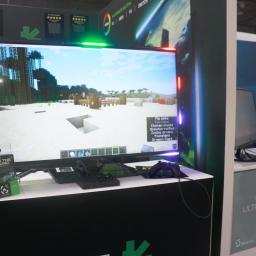
Audio cues can sometimes be crucial for success in games. Developers frequently design the sound environment for their experiences to be not only rich and immersive, but to also contain hints about approaching enemies or danger. Players who are hard of hearing can miss out on this, and it's not fair for them to be disadvantaged due to a disability. A product called Audio Radar launched at CES 2024 and it can help turn sound signals into visual cues, so that gamers with hearing loss can "see the sound," according to the company AirDrop Gaming LLC.The setup is fairly simple. A box plugs into a gaming console to interpret audio output and converts that data into lights. A series of RGB light bars surround the screen, and display different colors depending on the type of sound coming from the respective direction they represent. Put simply, it means that if you're walking around a Minecraft world, like I did at the company's booth on the show floor, you'll see lights of different colors appear on the different bars.Red lights mean sounds from enemies are in the area adjacent to the corresponding light, while green is for neutral sounds. An onscreen legend also explains what the sounds mean, though that might just be for the modded Minecraft scenario on display at CES.Photo by Cherlynn Low / EngadgetI walked around the scene briefly, and could see green lights hovering above a pen of farm animals, while purple lights fluttered in tandem with a dragon flying overhead. I did find it a little confusing, but that is probably due more to the fact that I know very little about Minecraft, and as someone with hearing I might not appreciate the added information as much as someone without.With an SDK that the company launched at the show, developers will be able to customize the lights and visual feedback to elements in their game so that they have control over what their hard-of-hearing gamers see. In the meantime, Audio Radar is using its own software to detect stereo or surround sound signals to convert to feedback in lights and colors.Though the product may seem in its early stages, various major gaming companies have appeared to indicate interest in Audio Radar. AirDrop Gaming's CEO Tim Murphy told me that Logitech is "providing support as we further develop our product and design our go-to-market strategy." Also, Microsoft CEO Satya Nadella was spotted at the booth on opening day.Audio Radar is beginning to ship on a wider level this year, and the company continues to develop products for gamers who are deaf and hard of hearing, among other things. The system works with Xbox, PlayStation and PC.We're reporting live from CES 2024 in Las Vegas from January 6-12. Keep up with all the latest news from the show here.This article originally appeared on Engadget at https://www.engadget.com/audio-radar-helps-gamers-with-hearing-loss-see-sound-effects-instead-195001226.html?src=rss
|
 |
by Lawrence Bonk on (#6HTCR)
Want some bad news as a lead up to the weekend? NASA just released its annual global temperature report and, lo and behold, 2023 was the hottest year on record since measurements began back in 1880. Global temperatures last year were approximately 2.1 degrees Fahrenheit (1.2 degrees Celsius) above the average for NASA's baseline period of 1951 to 1980.Compared to the 1880s, the planet was 2.5 degrees warmer in 2023. If you do the math, you'll find that the vast majority of that increase occurred after NASA's baseline period. In other words, the past several decades have been the worst of the worst. July of 2023 was the hottest month ever measured, which is a record nobody wanted or asked for but, well, here we are.NASA and NOAA's global temperature report confirms what billions of people around the world experienced last year; we are facing a climate crisis," said NASA Administrator Bill Nelson. From extreme heat, to wildfires, to rising sea levels, we can see our Earth is changing."NASA's not burying its head in the sand and pretending this is a natural phenomenon. We did this, with Gavin Schmidt, director at the Goddard Institute for Space Studies (GISS), saying the temperature shift was primarily caused by our fossil fuel emissions."2023 was not an outlier. The past ten consecutive years have been the warmest on record. To that end, the U.S. National Oceanic and Atmospheric Administration (NOAA) recently reported that 2024 has a one-in-three chance of being even hotter. Yay.It's also worth noting that 2023 featured some cooling events that actually worked to lower temperatures a bit, including volcanic aerosols in the atmosphere due to the January 2022 eruption of the Hunga Tonga-Hunga Ha'apai underwater volcano. However, these events couldn't keep up with constant greenhouse gas emissions and the heating effects of this year's El Nino weather event.We will continue to break records as long as greenhouse gas emissions keep going up," Schmidt said. And, unfortunately, we just set a new record for greenhouse gas emissions again this past year."The Biden-Harris administration has done a few things to try to slow down our transformation into a Mad Max dystopia. The White House recently launched the U.S. Greenhouse Gas Center to make critical climate data readily available and last year's Inflation Reduction Act set aside $369 billion for climate and clean energy programs. President Biden has also pledged to bring emission levels to at least 50 percent below what we experienced in 2005 by 2025. These are good incremental moves, of that there's no doubt, but we seem to have sped past f*ck around" and are careening wildly into find out." What was that curse again? Oh yeah. May you live in interesting times.This article originally appeared on Engadget at https://www.engadget.com/nasa-confirms-2023-was-the-hottest-year-on-record-193626460.html?src=rss
|
 |
by Richard Lai on (#6HT9P)
One of the missing pieces of puzzle for VR is scent, but at CES 2024 in Las Vegas, Japanese startup Aromajoin showed off a wearable that may be up to the task. Simply dubbed Aroma Shooter Wearable, this neckband houses six replaceable scent cartridges, and it's controlled by a mobile device or PC over Bluetooth, Wi-Fi or USB. The product is still in its early days, and the Kyoto-based company is targeting developers and business clients, who can pick from a library of "hundreds" of scents - or even custom scents from, say, fragrance brands - to suit their needs.In Aromajoin's demo, a video player app was programmed to cycle through those six scents - lavender, blueberry, shampoo, caramel, smoke and fresh cut grass - to match the six scenes in the short clip. Even though I was watching what was otherwise a regular video on an iPad, the scent definitely boosted the immersion, and I can imagine this making an even bigger impact when paired with VR.Photo by Richard Lai / EngadgetFor the purpose of CES, Aromajoin only had one demo on hand, but the app did show how one could program any video clip to trigger certain cartridges - yes, you can have multiple scents at any instance - at certain times. You can also adjust the intensity of each scent, which came in handy as I found the grass smell to be a bit too strong at first. As for the neckband itself, it weighs around 300 grams, but I didn't feel much burden thanks to its ergonomic shape around my collarbone area.Aromajoin plans to launch its Aroma Shooter Wearable via crowdfunding this May, with shipment expected by the end of this year. Target price for the device is around $350, with each scent cartridge likely to cost around $30. Each cartridge should last for around 3,000 shots or up to three months, though this depends on the intensity and the nature of each mixture.Photo by Richard Lai / EngadgetAromajoin also applied the same video demo to a larger setup dubbed Aroma Speaker 60, which is aimed at retailers, cinemas and VR arcades. As the model name implies, this pair of tower can be equipped with up to 60 scents, with each of the 10 magazines housing six scents, thus supporting a wider range of scenes or use cases. The Aroma Speaker 60 will also be launched via crowdfunding, but expect it to cost a lot more than its neckband counterpart.We're reporting live from CES 2024 in Las Vegas from January 6-12. Keep up with all the latest news from the show here.This article originally appeared on Engadget at https://www.engadget.com/the-aroma-shooter-wearable-blasts-scents-while-you-watch-videos-180006793.html?src=rss
|
 |
by Will Shanklin on (#6HT9Q)
The US government has reportedly approved AI-based memory loss prediction software for the first time. Darmiyan, a San Francisco-based brain imaging analytics company, says the FDA has granted De Novo approval for its product BrainSee. The software platform assigns an objective score that predicts the likelihood of progression from aMCI to Alzheimer's dementia within 5 years," according to the medical company. Fierce Biotech first reported the announcement.Darmiyan says BrainSee can predict memory loss progression using clinical brain MRIs and cognitive tests, which are already standard for patients worried about early signs of decline. After the program analyzes the imaging and cognitive assessments, it assigns a predictive score indicating the patient's odds of memory deterioration within the following five years. At least in theory, that would lead to early treatment for some and peace of mind for others.This shifts the patient experience from prolonged anxiety to proactive management, which is crucial in an era of emerging Alzheimer's treatments where accurate prognosis can help determine suitable treatment candidates," Darmiyan wrote in a press release announcing the FDA approval. The economic impact of BrainSee will be significant for all stakeholders in healthcare, promising to reduce the billions of dollars annually spent on Alzheimer's care, through more effective management and treatment."The FDA's De Novo" designation means the product has no clear market predecessors but has proven its effectiveness and safety in clinical trials. BrainSee first received FDA breakthrough" designation in 2021, an earlier stage of the approval path for a first-of-its-kind treatment.Darmiyan says BrainSee is fully automated and provides results on the same day the scans and cognitive test scores are entered. The company views the tech as shifting the treatment of mild / early cognitive decline from biomarker-based methods to non-invasive and actionable forecasts of future improvement or progression."This article originally appeared on Engadget at https://www.engadget.com/the-fda-has-reportedly-approved-an-ai-product-that-predicts-cognitive-decline-184534034.html?src=rss
|
 |
by Lawrence Bonk on (#6HT9R)
Bandai Namco's Sand Land finally has a release date of April 26. This is a video game adaptation of a classic manga by artist Akira Toriyama. That's the same Akira Toriyama who created Dragon Ball, and also created the character designs for Chrono Trigger and many entries in the Dragon Quest series.Sand Land is a manga dating back to the mystical year of 2000 and it follows the adventures of the literal Devil's son, Beelzebub, as he explores a desert world accompanied by a human sheriff and a demon thief. Interestingly, the game seems like a beat-for-beat recreation of the anime, only in the form of a fast-paced action RPG.There's also a heavy emphasis on vehicle customization in the game, as the desert is vast and requires diverse transportation methods. This allows you to fuse different weaponry and components to improve performance or offer unique tactical advantages. However, your first vehicle will be a bare-bones golf cart, another nod to the source material.Sand Land releases for PlayStation 5, PlayStation 4, Xbox Series X|S and PC, with pre-orders available now. There's a number of different versions available for collectors. The Standard Edition includes just the base game, while the Deluxe Edition comes with various digital add-ons, along with decals. The Collector's Edition comes with everything listed above, plus postcards and Steelbook packaging.This article originally appeared on Engadget at https://www.engadget.com/sand-land-a-game-adaptation-of-akira-toriyamas-manga-drops-on-april-26-184008528.html?src=rss
|
 |
by Richard Lai on (#6HT9S)
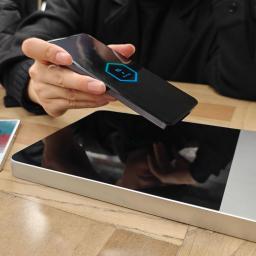
It's been a while since we saw over-the-air wireless charging demos from the likes of Oppo and Xiaomi, so CES 2024 caught us by surprise when we came across a new one from another Chinese mobile brand, Infinix. This "AirCharge" tech uses low-frequency magnetic resonance to deliver up to 25W of power wirelessly, and this works across a distance of up to 20cm (7.87 inches) - doubling that of Oppo's previous demo - and at angles of up to 60 degrees.Infinix believes that this use case is ideal for users who want to keep their phones charged while gaming or watching videos, without having a cable getting in the way of either hand. With this improved charging distance, you can also install the AirCharge pad to underneath a table, and then you'll have yourself a stealthy charging area. Before that, though, Infinix will need to figure out a way to avoid accidentally heating up metallic objects nearby. There are foreign object detection methods for existing "2D" wireless charging solutions, but it's more complex when the charging space goes from "2D" to "3D."Another safety measure to keep in mind is for the case of a sudden drop in distance between the phone and the charging pad - it's not good to abruptly crank up the voltage on a device like that. As such, Infinix has already implemented (and patented) an over-voltage protection circuit on both ends of the chain. The company doesn't have a time frame for launching AirCharge on a mass production device just yet, but it hopes to eventually use this tech to push for an industrial standard on over-the-air wireless charging.Photo by Richard Lai / EngadgetInfinix also showed off its "E-Color Shift Technology," which uses E Ink's Prism 3 to let you change the color patterns on the back of your phone. This feature supports eight basic colors, which are then expanded by multiple levels of shades, and this can be implemented onto a pattern with over 100 customizable areas. As is the case with conventional E Ink displays, once this Prism 3 panel has been refreshed, the new color pattern remains without consuming power.Once the company figures out how to tackle the challenges related to thermal performance and thickness, it hopes to bring this funky feature to consumer devices within a year or two. By which point, you'll be able to customize the color pattern through an app - which we didn't get to see, as our demo used dummy phones instead. Even Lenovo is considering this display tech for decorating its laptop lids.Last but not least, Infinix teased its "Extreme-Temp Battery" tech for users who have to brave the cold. While conventional lithium ion batteries will have their capacities drastically reduced or even get damaged in low temperatures, Infinix's solid state battery will continue to operate even at a temperature as low as -40C or -40F. Similarly, when measured at -20C or -4F, Infinix's solution will apparently have a 50- to 300-percent boost in endurance time compared to others. We may see this battery tech on an Infinix phone as soon as the second half of 2025.We're reporting live from CES 2024 in Las Vegas from January 6-12. Keep up with all the latest news from the show here.This article originally appeared on Engadget at https://www.engadget.com/infinix-brought-wireless-charging-tech-to-ces-that-can-juice-up-your-devices-from-eight-inches-away-183059546.html?src=rss
|
 |
by Mat Smith on (#6HT9T)
It's the end of our CES coverage, wrapping up the week with more deep dives from the tech show and introducing our Best of CES 2024 winners.This year, rather than award specific category prizes, possibly in categories lacking competition (or anything good enough), we've announced a group of winners across multiple categories. We still attempted to see as many products and devices as possible, whether it was laptops, mobile devices and smart home gear or cars and accessibility innovations.You should check out the full slate of winners, but our Best of Show went to GE Profile's Smart Indoor Smoker. I know: CES is more typically a TV show or car show, but sometimes it's niche products that win us over.GE ProfileThe Smart Indoor Smoker is a countertop device that makes proper barbecue in your kitchen without filling your home with smoke. It moves air around the food to impart maximum smokiness, without letting airflow out. When your brisket, chicken or whatever is done, a filtration and catalyst system draws the smoke down, eventually expelling it as warm air. It's not small, but it's stylish and simple to use, with a low barrier to entry for anyone tempted to try smoking their own food. The device could also impart an impressive level of smokiness in only a few hours.Make sure you check out all the winners right here. Expect a few more stories from the team today and over the weekend, but for me, it's time to leave Las Vegas. Until next year!- Mat SmithYou can get these reports delivered daily direct to your inbox. Subscribe right here!The biggest stories you might have missedCES 2024: The Pebble Flow is an all-electric trailer for the EV ageApple Vision Pro pre-orders require a FaceID scan with an iPhone or iPadFormula E 2024 previewThe year of the passkey is still far awayEngadget Podcast: AI steals the show at CES 2024The weirdest tech and gadgets at CES 2024They can't all be winners.EngadgetA little secret: I love the strange gadgets, services and concepts we unearth at CES, more so than all the premium TVs, car tech and beefed-up laptops. There are thousands of exhibitors peddling their wares, trying to find a market for things no one has dreamed up before. Here are a few favorites from CES 2024. Weird doesn't mean bad. It just means weird.Continue reading.Touring LG's high-tech camping trailer at CES 2024LG's greatest hits, vacuum packed into a trailer.EngadgetThe LG Bon Voyage concept trailer packs so many of LG's CES greatest hits, retooled and restyled for near-future camping that's both incredibly comfortable and... unlikely. LG Labs' inexplicable capsule coffee machine, the Duobo, which looks like a moon lander, nestles inside the trailer, alongside a microwave. The fridge, however, you get into from the outside. A pull-out table, on the other side of the door, has a built-in inductive burner. There's a giant OLED screen above another pull-out surface, and at the rear of the trailer, there's a portable karaoke set, with two wireless mics and a speaker. Oh, and cocktail accouterments on either side. Do I have to repeat myself? Glamping.Continue reading.It's a great time to buy a solar generatorCES 2024 showed how the tech is finally getting there.This year's CES has shown that the solar power industry has moved beyond its old limitations. Cost for solar panels and batteries has fallen dramatically in the last few years, making it an easier sell.The new EcoFlow Delta Pro Ultra, the company's flagship whole-home backup, can pump out 7,200W. The company claims the unit is strong enough to power a three-ton central air unit, one of the most demanding appliances in the home. Plus, because it's modular, you can add up to three units to the same home for a cumulative output of 21.6kW - and, with enough batteries, a total storage capacity of 90kWh.Solix, Anker's big battery division, showed off its new F3800 portable power station, which can pump out a peak of 6,000W - enough to juice an EV.Continue reading.This article originally appeared on Engadget at https://www.engadget.com/the-morning-after-introducing-the-best-of-ces-2024-182306415.html?src=rss
|
 |
by Kris Holt on (#6HT9V)
It's once again that time of year when a bunch of dedicated gamers gather in a conference room to play through their favorite titles as quickly as possible in the name of charity. This year's Awesome Games Done Quick (AGDQ) speedrunning marathon starts on Sunday, January 14. The week-long event is slated to last until the early hours of January 21. You can watch it live below and catch up on any runs you missed over on the Games Done Quick (GDQ) YouTube channel.The event will kick off with a sprint through Tunic(maybe don't tune in for that one if you haven't yet played and don't want to be spoiled on the secrets). It will close out with a speedrun of Final Fantasy V Pixel Remaster. In between, you'll get to see runners push classics like Donkey Kong Country, Batman: Arkham City and Hadesto their limits. Several big games from last year will be making their first appearance at AGDQ, including Super Mario Bros. Wonder, Cocoon, Pikmin 4, Armored Core VI: Fires of Rubicon, Viewfinder and Baldur's Gate 3.I'm particularly looking forward to a glitch showcase of Super Mario Maker 2 and finding out the latest The Legend of Zelda: Tears of the Kingdomstrats (people are beating that mammoth game in under an hour!). There's one run in particular that looks to be unmissable: a dog-assisted sprint through Gyromite, in which a Shina Ibu named Peanut Butter will help his owner beat the NES game.AGDQ is once again raising funds for Prevent Cancer Foundation. Over $2.6 million was raised for the cause at last year's AGDQ, and organizers will surely be hoping to best that total in 2024. You can donate through the GDQ website.This article originally appeared on Engadget at https://www.engadget.com/how-to-watch-the-awesome-games-done-quick-2024-speedrun-marathon-181538649.html?src=rss
|
 |
by Devindra Hardawar on (#6HT9W)
Call it love at first sight. Every year, I come across a handful of products that elicit instant joy, a sense of elation that's so strong I forget about the many ways the tech industry is actively making our world worse. As we wrap up CES 2024 in Las Vegas, I can't stop thinking about the new ASUS ROG Zephyrus G14, the latest edition of one of our favorite gaming laptops.As we covered in our initial hands-on, the Zephyrus G14 features the spec bumps you'd expect: new Ryzen 8000 CPUs and the return of NVIDIA's RTX 4070. But really, it's the all aluminum case and minimalist aesthetic that I've fallen for. When I touched it for the first time, it felt like I was holding a piece of high-grade scientific equipment. The case feels almost too good for a gaming laptop.Couple that with the cleanest layout ever on an ASUS machine, and you have an evolutionary design leap for the company. (It's particularly shocking seeing it next to the new ASUS ZenBook 14 OLED, which looks practically ancient in comparison.) We've called Razer's Blade laptops the gaming equivalent of Apple's MacBook Pro for years - but now the torch may have been passed to ASUS. The Zephyrus G14 more closely resembles the boxier refreshed aesthetic from Apple's Pro machines. (If you're looking for an even bigger screen, there's also a new G16 with the same design and it can hold more powerful hardware, like NVIDIA's RTX 4090.)The G14 is more than just a design showpiece, it's also a far better gaming laptop than before. Its new keyboard, which sports 12 percent larger key caps, makes hours-long Halo Infinite matches feel far more comfortable since there's more room for my fingers to spread out. Just about everything shines on its new 3K 120Hz OLED screen, which makes colors pop perfectly. And I was even able to hear a decent amount of positional audio from its revamped speakers (20 percent larger than before) when I was too lazy to grab a pair of headphones.Devindra Hardawar/EngadgetWhile I can't divulge any benchmarks from our RTX 4070-equipped preview unit, I can say that Halo Infinite, Cyberpunk 2077, Elden Ring and the new uber-stylish Metroidvania Cookie Cutter all played like a dream at the G14's native resolution with maxed out graphics quality. Cookie Cutter, with its fluid and expressive art style, was practically made to be shown off on OLED screens. And in Cyberpunk, the G14's HDR capability made the neon lights in Night City almost searingly bright.The Zephyrus G14 also excelled at game streaming, something I like to test to stress a laptop's networking capabilities. I was able to hop into Forza Horizon 5 in around 30 seconds while I was sitting 20 feet and a floor away from my router. And once I hit the road, I was able to zoom through a few races without any noticeable video artifacts, tearing or slowdown. Anyone walking by might think I was playing the game locally.Devindra Hardawar/EngadgetBeyond gaming, the G14 just kept surprising and delighting me. Its larger keyboard feels great for typing, with more depth and responsiveness than before. Its touchpad is one of the smoothest I've used on a Windows laptop. And I can't help but love that it has all the ports I want: HDMI, mini-SD and both USB-C and Type A on both sides of the case. I was less enamored with ASUS' new power connector - it's a bit stiff, and a slight tug could easily send the G14 flying. It would have been nice to see a pure USB-C charging solution, but the company told our senior reporter Sam Rutherford that the cost and efficiency of using that port for high-powered charging still isn't good enough for wide deployment.I'm looking forward to spending more time with the ROG Zephyrus G14 during our review. But until then, we'll always have CES 2024.We're reporting live from CES 2024 in Las Vegas from January 6-12. Keep up with all the latest news from the show here.This article originally appeared on Engadget at https://www.engadget.com/asus-rog-zephyrus-g14-preview-180025962.html?src=rss
|
by Lawrence Bonk on (#6HT9X)
CES 2024 in Las Vegas had all kinds of tech, from attention-grabbing AI gadgets to, uh, whatever this is. There were also a whole bunch of laptops. Like, an endless array of laptops. So many laptops, in fact, that we had a real tough time deciding between them to choose our best of CES award winners. These weren't just any laptops with minor spec bumps. The theme of the year was, of course, AI, with many computers adopting dedicated AI chips. OLED displays with speedy refresh rates were also all over the show floor and, of course, there were several unique designs that just about defy description. We've gone through them all and come up with a list of the best laptops at CES.ASUS Zenbook DuoSam Rutherford/EngadgetThe dream of a dual-screen laptop isn't dead! The ASUS Zenbook Duo is a technical marvel, with a dual-screen display and a detachable Bluetooth keyboard. In other words, you can use it in a traditional clamshell mode, with a keyboard in front of one of the displays, or you can balance the screens on top of one another. This is great for those who want the convenience of a laptop, but with added screen real estate.The aesthetics are on point and the Duo includes high-end hardware like Intel's Core Ultra chips and gorgeous OLED screens. The price is also fairly reasonable, given the tech, as this laptop starts at $1,500.ASUS ROG Zephyrus G14 and G16Sam Rutherford/EngadgetASUS strikes again. The ROG Zephyrus G14 and G16 line has gotten a full redesign, with an attractive aluminum chassis and plenty of power underneath the hood. These laptops can run just about any AAA game on the market, thanks to its AMD Ryzen 8000 series processors and the optional NVIDIA RTX 4070 GPU at the high end.We called it a grown up" and sophisticated" gaming laptop because, well, that's what it is. It's incredibly sleek and would feel at home in an office and in a basement-turned-gaming-paradise. It's also lighter than previous generations, making it more portable. Each model ships with a simple LED slash across the front that can be programmed to glow in gray or white, instead of the typical Skittles rainbow of colors found with most gaming laptops. There's no pricing on these yet.HP Omen Transcend 14Sam Rutherford/EngadgetThere's a new record-breaker in town. The HP Open Transcend 14 is the lightest 14-inch gaming laptop in the world, weighing just 3.5 pounds. Even cooler? HP seems to have hit this milestone without cutting too many corners. Despite being closer in size and weight to an ultraportable than an average gaming laptop, you still get support for the 14th-gen Intel Core Ultra 7 or Ultra 9 processor, up to 32GB of DDR5 RAM, 2TB of storage and an RTX 4070 GPU. This thing won't struggle to play modern games.Despite the teeny-tiny dimensions, you still get two USB-A and two USB-C ports (one of which supports Thunderbolt 4) plus a full-size HDMI 2.1 jack on the back. You'll also have the option to upgrade to Wi-Fi 7 card with Bluetooth 5.4. This laptop starts at $1,600 and goes on sale later this year.Dell's new XPS lineDevindra Hardawar/EngadgetDell has upgraded its entire XPS line, with form factors that resemble last year's XPS 13 Plus. The redesign covers the new XPS 13, 14 and 16, and there's no longer a Plus line. Each of these laptops boasts a glass wrist wrest that hides an invisible haptic touchpad. There's also touch-sensitive function buttons above the keyboard and large key caps for comfortable typing.The XPS line includes Intel's Core Ultra chips, which feature NPUs for AI tasks. The ports are on point, with the XPS 14 and 16 boasting a headphone jack, three Thunderbolt 4 USB-C slots and a microSD card reader. The minimalist design here is gorgeous and these laptops nearly made our best of CES list, but not quite. Once these are out in the wild, however, they could wind up on our list of the best laptops in 2024, just like the XPS 13 Plus.Lenovo ThinkBook Plus Gen 5Sam Rutherford/EngadgetWe promised unique and funky designs, and here's one. The Lenovo ThinkBook Plus Gen 5 is a Frankenstein's monster of sorts, with a design that's basically two gadgets smashed together. This is anything but your typical 2-in-1 device. At first glance, the ThinkBook Plus looks like an ordinary clamshell, but the display lifts right off and becomes a 14-inch tablet.Not that big of a deal right? Here's where things get interesting. Once removed, both components remain fully functional. So you can use the tablet as a standalone Android device, a wireless monitor for the laptop base or a Wacom-like inking display via Lenovo's Freestyle app. Meanwhile, you can also use the deck as a mini desktop by plugging in an external screen. Now that's some modular thinking. This thing starts at $2,000, however, which is fairly steep.Everything elseThere were many laptops that just missed this list, but still deserve mention.
 |
by Malak Saleh on (#6HT6S)
Apple sent an email to customers today notifying them that when they pre-order the Vision Pro starting on January 19, they will need to scan their face with an iPhone or iPad using Face ID to make sure they get a precise band fit on the headset. Deliveries will begin when it launches on February 2. US shoppers will be able to purchase the headset on apple.com, in the Apple Store app and in retail Apple Stores.Apple said the latest version of the Apple Store app will be needed for shoppers to conduct a face scan. Additionally, for people that wear glasses, there will be an option to add optical inserts into the headset so that they can be worn without eyewear. To get the inserts for an additional fee, provided by its partner Zeiss, Apple says shoppers will need to share an updated official prescription document when pre-ordering the headset.For those on the fence about purchasing the Vision Pro, which starts around $3,499, Apple said the headset will be available in store for demos on the launch date. The Vision Pro, which was first announced at Apple's WWDC 2023 keynote, received praise for its crisp 3D visuals during a hands-on preview. The headset will provide more than just a VR screen and speaker system for watching films and playing games - it will eventually act as a tool that will connect friends in Horizon Worlds.The option to freely roam around a virtual world with an integrated gaming program made by Meta will push the bounds for what constitutes modern social networking and online gaming. Apple's push for the Vision Pro to be branded and function as a spatial computer will also create endless possibilities for developers to create compelling apps.This article originally appeared on Engadget at https://www.engadget.com/apple-vision-pro-pre-orders-require-a-faceid-scan-with-an-iphone-or-ipad-171544636.html?src=rss
|
 |
by Cherlynn Low on (#6HT6T)
So much of what we see at CES tends to be focused on technological innovation for the sake of innovation, or obvious attempts to tap into whatever trend is gripping the internet's attention that year. In the last few shows, though, there has been a heartening increase in attention to assistive products that are designed to help improve the lives of people with disabilities and other different needs. At CES 2024, I was glad to see more development in the accessibility category, with many offerings appearing to be more thoughtfully designed in addition to being clever. It's so easy to get distracted by the shiny, eye-catching, glamorous and weird tech at CES, but I wanted to take the time to give due attention to some of my favorite accessibility products here in Las Vegas.GyroGloveBefore I even packed my bags, numerous coworkers had sent me the link to GyroGlove's website after it had been recognized as an honoree for several CES Innovation awards. The device is a hand-stabilizing glove that uses gyroscopic force to help those with hand tremors minimize the shakes. Because the demo unit at the show floor was too large for me, and, more importantly, I don't have hand tremors, I couldn't accurately assess the glove's effectiveness.But I spoke with a person with Parkinson's Disease at the booth, who had been wearing one for a few days. She said the GyroGlove helped her perform tasks like buttoning up a shirt more easily, and that she intended to buy one for herself. At $5,899, the device is quite expensive, which is the sad state of assistive products these days. But GyroGlove's makers said they're in talks with some insurance providers in the US, which could lead to it being covered for those in America who could benefit from it. That's one of the biggest reasons that led us to name GyroGlove one of our winners for CES 2024.Photo by Cherlynn Low / EngadgetMouthPadI did not think I'd be looking deep into a person's mouth and up their nose at CES 2024, but here we are. Sometimes you have to do strange things to check out unconventional gadgets. The MouthPad is as unusual as it gets. It's a tongue-operated controller for phones, tablets and laptops, and basically anything that will accept a Bluetooth mouse input. The components include a touchpad mounted onto the palette of what's essentially a retainer, as well as a battery and Bluetooth radio.As odd as the concept sounds, it actually could be a boon for people who aren't able to use their limbs, since your tongue, as a muscle, can offer more precise movement and control than, say, your eyes. If you're feeling apprehensive about sticking a device inside your mouth, it might be helpful to know that the battery is from the same company that's made them for medical-grade implants, while the rest of the dental tray is made from a resin that's commonly used in aligners and bite guards. The product is currently available as an early access package that includes setup and calibration assistance, with a new version (with longer battery life) slated for launch later this year.OrCam HearAssistive tech company OrCam won our Best of CES award for accessibility in 2022, so I was eager to check out what it had in store this year. I wasn't disappointed. The company had a few updated products to show off, but the most intriguing was a new offering for people with hearing loss. The OrCam Hear system is a three-part package consisting of a pair of earbuds, a dongle for your phone and an app. Together, the different parts work to filter out background noise while identifying and isolating specific speakers in a multi-party conversation.At a demo during a noisy event at CES 2024, I watched and listened as the voices of selected people around me became clear or muffled as company reps dragged their icons in or out of my field of hearing. I was especially impressed when the system was able to identify my editor next to me and let me choose to focus on or filter out his voice.Audio RadarIf you're a gamer, you'll know how important audio cues can sometimes be for a successful run. Developers frequently design the sound environment for their games to be not only rich and immersive, but to also contain hints about approaching enemies or danger. Players who are hard of hearing can miss out on this, and it's not fair for them to be disadvantaged due to a disability.A product called Audio Radar can help turn sound signals into visual cues, so that gamers with hearing loss can "see the sound," according to the company. The setup is fairly simple. A box plugs into a gaming console to interpret the audio output and convert it into lights. A series of RGB light bars surround the screen, and display different colors depending on the type of sound coming from the respective direction they represent.CES 2024 saw not just Audio Radar's official launch, but was also where the company introduced its SDK for game developers to create custom visual cues for players who are hard of hearing. The company's founder and CEO Tim Murphy told Engadget that it's partnering with Logitech, with the gaming accessory maker "providing support as we further develop our product and design our go-to-market strategy."Photo by Cherlynn Low / EngadgetTranscribe GlassGoogle Glass was resurrected at CES 2024. Sort of. A new product called Transcribe Glass is a small heads up display you can attach to any frames, and the result looks a lot like the long-dead Google device. It connects to your phone and uses that device's onboard processing to transcribe what it hears, then projects the text onto the tiny transparent display hovering above the eye. You'll be able to resize the font, adjust the scrolling speed and choose your language model of choice, since TranscribeGlass uses third-party APIs for translation. Yes, it converts foreign languages into one you understand, too.The company is targeting year's end for launch, and hoping to offer the device at $199 to start. When I tried it on at the show floor, I was surprised by how light and adjustable the hardware was. I had to squint slightly to see the captions, and was encountering some Bluetooth lag, but otherwise the transcriptions took place fairly quickly and appeared to be accurate. The TranscribeGlass should last about eight hours on a charge, which seems reasonable given all that it's doing.Samsung's subtitle accessibility featuresThough we didn't catch a demo of this in person, Samsung did briefly mention a "sign language feature in Samsung Neo QLED" that "can be easily controlled with gestures for the hearing impaired, and an Audio Subtitle feature [that] turns text subtitles into spoken words in real-time for those with low vision." We weren't able to find this at the show, but the concept is certainly meaningful. Plus, the fact that Samsung TVs have mainstream appeal means these features could be more widely available that most of the niche products we've covered in this roundup.We're reporting live from CES 2024 in Las Vegas from January 6-12. Keep up with all the latest news from the show here.This article originally appeared on Engadget at https://www.engadget.com/our-favorite-accessibility-products-at-ces-2024-170009710.html?src=rss
|
 |
by Amy Skorheim on (#6HT6V)
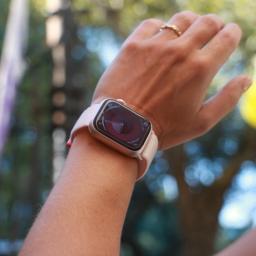
The big news in tech right now is CES in Las Vegas and our team has been on the ground all week checking out the new products. A surprising amount of what we saw is already available for purchase, but very few of those things are discounted. As for what is on sale, this turned out to be a decent week for deals on current model devices, with some hitting all-time lows. The Google Pixel 8 smartphones are back to Black Friday lows, as is one of our favorite fitness trackers. A set of Tile trackers is cheaper than ever and the Apple Watch Series 9 has returned to $329. Here are the best tech deals from this week that you can still get today.Follow @EngadgetDeals on Twitter and subscribe to the Engadget Deals newsletter for the latest tech deals and buying advice.This article originally appeared on Engadget at https://www.engadget.com/the-apple-watch-series-9-is-back-to-329-plus-the-rest-of-the-weeks-best-tech-deals-164857041.html?src=rss
|
 |
by Billy Steele on (#6HT6W)
The tenth season of the FIA-sanctioned all-electric Formula E racing series goes green this weekend with the opening round in Mexico City on January 13. This will be the second year of the series using the ultra-efficient Gen3 car, and aside from a number of teams swapping out one or both drivers, there aren't any huge changes from last year. However, Formula E's new TV deal should make races easier, and less frustrating, to watch in the US.Formula E, now streaming on Roku and Paramount+After being broadcast in the US on CBS Sports, Formula E announced a new TV deal last June to expand availability of live events to Roku and Paramount+. 11 races will be streamed live exclusively on The Roku Channel for free. There will also be race previews, replays and Formula E's version of Drive To Survive(Unplugged) available to stream on Roku. There's a new post-race highlights show too, called Recharge, to catch you up on any of the action you might've missed. All of the Formula E content on The Roku channel will be available for free. The other E-Prix will air on CBS and stream live on Paramount+, except for any events that happen overnight in the US. Those will broadcast on Formula E's former home, CBS Sports Network.Even though The Roku Channel is an ad-supported network, Roku Media's head of sports Joe Franzetta said there won't be any ads interrupting the races. Instead, the company is working with Formula E to show those during pre- and post-race programs. Since this is the first season of the partnership, he didn't rule out changes in the future."For our first season with Formula E, we will run the races themselves as an ad-free experience," he explained. "We will continue to explore ad formats, such as picture-in-picture advertising as our partnership progresses."Handout via Getty ImagesRaces shown on CBS and Paramount+ may still cut to commercial during live action, according to Formula E's chief media officer Aarti Dabas. This was a huge headache for viewers in the US last season as major race action took place at multiple E-Prix while the broadcast was away on a commercial. During the Portland race, the network went to ads during the last four laps. In Rome, viewers missed a massive wreck. Dabas says Formula E is aware this can be frustrating and it constantly trying to improve the experience, including expanded use of picture-in-picture or "double box" so that live action is still viewable."We can understand it can frustrating for fans when they miss key action," Dabas said. "We learn with each broadcast and ensure steps are taken to provide a better viewing experience to fans."Formula E will make archived races available to stream for free seven days after the E-Prix. Those will only be available on the series' website via the library of past races it launched last November. Currently, there are no plans to make that available to stream on other platforms, but doing so on the Formula E website only requires you to sign up for a free account.Attack Charge pit stops still aren't ready for racesThe Race reported earlier this month that Attack Charge stops aren't expected to be used at the first race in Mexico City. This is yet another delay in bringing pit stops back to the all-electric series. Early on, drivers would have to change cars in order to make it through a race. The technology eventually progressed to the point where the combination of initial charge and re-gen during races gives teams enough power to make it until the end. As it stands, drivers only pit in the event of damage or a problem, which almost certainly dooms them to finishing at the back of the pack.Formula E was supposed to trial Attack Charge stops at select races last season, but the infrastructure wasn't ready in time. According to The Race, there are still issues with having enough equipment for every team, a problem that limited use of the setups at preseason testing in Spain last November. The earliest the pitstops could debut is at the E-Prix in Diriyah at the end of the month. There are concerns about how the 30-35-second stops will affect the quality of the racing, since the street circuit nature of Formula E usually means tightly packed cars.This article originally appeared on Engadget at https://www.engadget.com/formula-e-2024-preview-everything-you-need-to-know-about-season-10-163019008.html?src=rss
|
 |
by Kris Holt on (#6HT6X)
Following last week's terrifying incident in which a Boeing 737 Max 9 lost a cabin panel mid-flight, the Federal Aviation Administration says it will have more oversight of the company's production and manufacturing. The FAA is also carrying out an investigation into Boeing following the incident, which led to the agency grounding around 171 of the company's 737 Max 9 planes.The FAA says it will audit the 737 Max 9 production line and its suppliers to make sure Boeing is complying with quality protocols. It notes that the results will determine whether further audits are needed. In addition, the FAA will more carefully monitor in-service events concerning the 737 Max 9. It will also conduct an assessment of safety risks related to delegated authority and quality oversight. In the latter case, the agency will look into whether it makes more sense to have independent third parties oversee Boeing's quality control and inspections."It is time to re-examine the delegation of authority and assess any associated safety risks," FAA Administrator Mike Whitaker said in a statement. "The grounding of the 737-9 and the multiple production-related issues identified in recent years require us to look at every option to reduce risk." As for when the 737 Max 9 might return to service, the FAA says that timeline will be determined by "the safety of the flying public, not speed."There were no major injuries reported as a result of last Friday's incident on an Alaska Airlines plane. Boeing's 737 Max line was previously grounded for nearly two years after two crashes in 2018 and 2019 that killed 346 people.This article originally appeared on Engadget at https://www.engadget.com/the-faa-says-its-keeping-a-closer-eye-on-boeing-as-it-investigates-cabin-panel-blowout-161810725.html?src=rss
|
 |
by Richard Lai on (#6HT6Y)
Nowadays, there are already plenty of choices when it comes to pet trackers, and some can even monitor heart rate, but apparently none could detect atrial fibrillation (AFib) until now. At CES 2024 in Las Vegas, GPS tracker specialist Invoxia unveiled the Minitailz, the world's first pet tracker that can keep an eye out for early heart disease symptoms on your cats or dogs. Together with other vital stats and activity log, the companion app then uses conversational generative AI to generate easy-to-read reports on your pets.According to the French company, Minitailz is able to track respiratory and heart vitals with an accuracy of 97 to 99 percent, thanks to its advanced biometric sensors combined with AI. Using deep learning algorithms, the set of data is then used to spot digital biomarkers that indicate stress, aging and pathologies. The device can also differentiate the types of movements, such as walks, runs and zoomies, as well as alerting you when your pets wander beyond your preset geofences.Photo by Richard Lai / EngadgetThe Minitailz module houses a built-in SIM card for LTE-M connectivity, which enables real-time tracking in conjunction with GPS. This can be attached to any pet collar, which is an advantage over many competing devices that are stuck inside a physical neckband, according to Invoxia.The Minitailz is already available for dogs via Invoxia's website for $99, followed by a cat version due in March for the same price. You'll also need to buy a subscription starting from $8.30 per month.We're reporting live from CES 2024 in Las Vegas from January 6-12. Keep up with all the latest news from the show here.This article originally appeared on Engadget at https://www.engadget.com/this-dog-tracker-from-invoxia-can-also-detect-your-pets-abnormal-heart-rhythms-160021010.html?src=rss
|
 |
by Katie Malone on (#6HT6Z)
In 2023, passkeys popped up all over the place. Big tech companies embraced them, which trickled down to smaller firms, until passkeys became a ubiquitous part of any security conversation. To give passkeys the credit they deserve, top security experts agree that the new way of logging in comes with greater security. Like every other security advancement from SMS-based multifactor authentication to hardware authentication keys, however, adoption lags because people still hesitate to make the leap.Passkeys let you log in without a password. Instead, it creates a digital authentication credential, or a "key," between your device and where you want to login to verify your identity. In practice, this usually looks like a fingerprint or face scan to prove that its really you, and the rest happens on the cryptographic backend. Support for the new way of logging in skyrocketed in 2023, going from a handful of sites with no users to hundreds of sites with billions of accounts" that could potentially log in using passkeys, according to Andrew Shikiar, executive director of the FIDO Alliance, one of the organizations driving passkey adoption.To understand the scope of end user passkey adoption, I asked around a bit. Companies that touted passkey compliance, like password manager Bitwarden, declined to share specific figures about adoption. Competitor Dashlane's chief product officer Donald Hasson shared that the company is seeing about 20,000 passkey-based sign-ins per month, with growth doubling quarter over quarter." It's impressive, but worth noting that it still appears to be a small fraction of actual Dashlane users.Travel company Kayak told Engadget that it switched completely over to passkeys at the end of last year, which is certainly one way to push people on board. Users can either use single-sign on, passkeys or an email to log on. There are still some legacy password users, but they're being fazed out by being pushed to switch to the other options when they attempt to log on, said Matthias Keller, chief scientist and senior vice president of technology at KAYAK. Sign in with Google and sign in with Apple are very popular because they're probably still the easiest experience if you're already logged into these systems," Keller said. For new account creation, we see, I would say, around two-thirds of users taking the passkey option." Still, he declined to share specific login figures. We reached out to Adobe, Apple, GitHub, LinkedIn, Nintendo, PayPal, Roblox, Robinhood, TikTok, and Uber about passkey implementation, but none have responded by time of publication.Shikiar sees the switch to passkeys playing out like biometrics (e.g. fingerprint and face ID). Switching to passkeys aligns more with the seamless single action you get from just looking at your phone to unlock it, not the clunky steps of MFA that involve another device or extra time to access an account, Shikiar said. The problem, in short, is that we're stuck in our ways. We love our passwords, no matter how many times we're told that they're fallible. The username and password combination has been our comfort zone for logging in since the dawn of computer accounts, and users will drag their heels to avoid any change. We saw this with the slow adoption of multifactor authentication that still falls behind today.Users are slow to adopt passkeys, and companies are still catching up, too. It is getting easier for smaller companies to adopt passkeys because they no longer need to build out support in-house. For example, password manager 1Password launched Passage last year as a way for businesses to support passkey authentication without having to DIY the infrastructure. But while passkeys have caught on in principle, a year of transformative passkey adoption is still far away.Security analyst and consultant Cole Grolmus detailed why consumers have been slow to adopt passkeys in October. He set out to change as many logins as possible from passwords to passkeys and, despite being all in on passkeys in principle, ran into roadblock after roadblock. Out of the 374 apps Grolmus uses, only 17 supported passkeys, which led him to conclude we'll be stuck with passwords for the foreseeable future. The hype is very well merited," Grolmus told Engadget. At the same time, I think you just have to be realistic about the amount of time that it takes for any technological change, particularly ones involving consumer adoption, to play out."Still, passkeys could mark a shift in personal security if we give it time to play out. New ways of doing things often struggle to replace the entrenched patterns we've gotten used to, even if the new paradigm is superior on paper. At least passkeys smooth out the login experience, as opposed to adding another security hurdle like we saw with MFA. Once people see that passkeys can be a wonderful experience," they'll make the switch, said Grolmus.If you have the chance to switch to passkeys, it's worth a shot. If you use PayPal, Shopify, Uber, Roblox or other big name companies (the list goes way on), you can get it set up today, but keep in mind, most services probably don't have the option, and might not for a while.This article originally appeared on Engadget at https://www.engadget.com/the-year-of-the-passkey-is-still-far-away-153022511.html?src=rss
|
 |
by Daniel Cooper on (#6HT3D)
The technology industry loves to breathlessly sell you its latest and greatest and best-est new idea. Pitches have to be fast and aggressive because if you took more than a second to think about what they were selling, you might not reach for your wallet. As flashy as the products at CES 2024 in Las Vegas can be, they often have one fatal weakness. Which is to not have any sort of answer to the most important question of them all: y tho?"One: LG's wireless transparent OLED TVPhoto by Billy Steele/EngadgetLG came to CES showing off a 77-inch wireless 4K OLED TV that is transparent for some reason. You can play footage of a singer, or an aquarium, or other screensaver-y type things as a talking piece in your home. But it turns out, being transparent isn't great for actually watching TV, so it ships with a roll-out black background to make your transparent TV no longer transparent. I can imagine this used as an advertising screen or as an installation in a museum or corporate office. But why would you spend so much money on a TV where its key feature is an impediment to its proper function?Two: Kohler PureWash E930 Bidet SeatKohlerIt's important that devices are designed with accessibility as a primary concern, rather than tacked on at the end. Nobody would hate on a voice-activated toilet that could help folks with access needs get through their day. But Kohler's bidet seat is deeply integrated with Alexa or Google Home. Why on earth would you spend more than two grand to give Amazon or Google detailed insights into your bathroom habits?Three: Lockly Visage facial-scanning smart lockLocklyLockly's Visage smart lock uses facial recognition to allow access to your home, opening the door if it spots you approaching. Setting aside the hideous privacy and security implications of smart locks, a thing you should never connect to the internet, this is a mad idea. Why would you leave something as important as access to your home at the whims of a sensor or some unproven gadget?Four: Urtopia's ChatGPT-enabled e-bikeUrtopiaThe Urtopia Fusion is an e-bike equipped with a 540Wh battery promising 75 miles of range, a beefy mid-drive motor and air suspension forks. It is also, for some godforsaken reason, equipped with ChatGPT which, the company says will enable you to talk" to your bike. Its custom assistant will, when asked, help you explore new routes," get real-time information" and even engage in entertaining conversations." Why on earth would you want to have a conversation with your bicycle when you should be focusing on literally anything else.Five: Hyundai S-A2 air taxi conceptHyundaiHyundai showed off a new VTOL air taxi concept that, it's hoped, would take people on short hops of up to 40 miles. It can reach a top speed of 120 miles per hour and will probably never ever come to the real world. After all, why would you go to the trouble of reengineering the whole world to accommodate this disaster waiting to happen?We're reporting live from CES 2024 in Las Vegas from January 6-12. Keep up with all the latest news from the show here.This article originally appeared on Engadget at https://www.engadget.com/five-ces-products-that-make-you-ask-but-why-150010098.html?src=rss
|
 |
by Kris Holt on (#6HT3E)
Nissan has unveiled its latest Nismo electric vehicle. The Ariya Nismo is based on the Ariya e-4orce and it's scheduled to be available in two trims. The B6 has a 66kWh battery, while the B9 has a 91kWh version. With Nismo being Nissan's performance division, it's no real surprise that the EV will offer a little more power than other Ariyas. The B6 model will have 362 hp and 413 lb-ft while the B9 is set to have 429 hp and 443 lb-ft, though Road and Track points out that these figures might change before the electric SUV hits the road.The Nismo team is said to have tuned the acceleration and added an exclusive driving mode that aims to maximize response. Nissan claims that the tuning, combined with the four-wheel-control tech of e-4orce and tires mounted on rigid 20-inch aluminum wheels, will help deliver "superior stability and turn-in ability as well as better line-tracing and enhanced cornering ability at high speeds."Nismo also added an optional Formula E-esque sound to the Ariya Nismo for additional "excitement," Nissan said. The automaker added that the cabin has a premium feel with specially designed Nismo seats and trim.This isn't quite the first Nissan EV that the Nismo team has worked on. It debuted the Leaf Nismo RC concept at the 2011 New York Auto Show. A second-gen model went into production in Japan in 2018. Nissan has yet to announce pricing and a release window for Nismo's new flagship EV.This article originally appeared on Engadget at https://www.engadget.com/nissan-unveils-its-latest-nismo-enhanced-ev-145655707.html?src=rss
|
by Devindra Hardawar on (#6HT3F)
The latest ZenBook 14 OLED from ASUS has most of the hardware we'd want in a modern ultraportable: Intel's new Core Ultra chips, a gorgeous OLED screen and a decent number of ports. But after testing ASUS's laptops for years, and seeing how much progress it's made with the Zephyrus G gaming line, it's surprising that the company's premium Zenbook hasn't evolved much lately.While it's a solid step into the "AI PC" era, thanks to its NPU for accelerating AI tasks, the new ZenBook 14 is also a reminder that ASUS is lagging behind Apple and Microsoft when it comes to premium design. It doesn't feel nearly as sturdy or sleek as the redesigned MacBook Air, and it lacks the refinement of the Surface Laptop. The ZenBook 14 OLED looks fine - it's as if you asked an AI to generate an image of a generic ultraportable.On the plus side, ASUS is delivering far more bang for the computing buck than Apple and most other competitors. You can snag the ZenBook 14 OLED with a Core Ultra 7 155H chip, 32GB of RAM and 1TB SSD for $1,300 at Best Buy. An M2 MacBook Air for the same price comes with 16GB of RAM and a 256GB SSD (and it can only be upgraded to a maximum of 24GB of RAM). ASUS also includes a decent selection of ports, including a USB-A connection, two USB-C Thunderbolt ports, an HDMI socket and a microSD card slot. You'd have to step up to the pricier 14-inch MacBook Pro to get some of those ports on a Mac.While ASUS is touting the Core Ultra's AI capabilities as the big upgrade this year, I'm still far more compelled by the Zenbook 14's glorious 14-inch 3K OLED screen. It's wonderfully bright and colorful when it needs to be, and it can hit those inky dark blacks that we love from OLED displays. This year the Zenbook's OLED screen can also reach a 120Hz refresh rate for smoother scrolling, which is practically a requirement for premium laptops these days.Images and video practically leap off of the ZenBook 14's OLED screen, which makes it ideal for binging Netflix or catching up on your YouTube queue. And thanks to the laptop's incredibly thin bezels, it's almost as if the display is floating in the air - so much so, I stopped noticing how dull the rest of the ZenBook's design feels. I also wish there was a bit more spring and depth to its keyboard, and that its trackpad didn't feel so stiff.But back to Intel's Core Ultra chip. Our review unit, which was equipped with a Core Ultra 7 155H, 32GB of RAM and Intel Arc graphics, delivered some healthy gains over ultraportables running Intel's 13th-gen chips. It scored 1,000 points higher in PCMark 10 compared to the ZenBook S 13 running a Core i7-1355U, and its Arc graphics were almost twice as fast as the S 13's Intel Xe graphics in the 3DMark Wildlife Extreme benchmark.
 |
by Kris Holt on (#6HT3G)
It's almost time for the first Samsung Unpacked event of the year. We're almost guaranteed to get the first official details about the Galaxy S24 smartphones, which are almost certainly going to have on-device generative AI features. You'll be able to watch Samsung Unpacked at 1PM ET on January 17 on the company's website or YouTube channel.What to expect at Samsung UnpackedSamsung hasn't exactly been subtle about what's on deck for Unpacked. The company has been teasing something called Galaxy AI for mobile devices across several promo videos:Yeah, it's pretty safe to say AI will be a focal point of the showcase. In November, Samsung revealed its Gauss generative AI models. These can handle tasks such as translation, coding assistance and turning text into images. The S24 lineup is also expected to run on Qualcomm's Snapdragon 8 Gen 3 chipset, which can handle many generative AI requests on-device. As such, at least some GAI features won't need to go through the cloud, meaning that they should be processed more quickly.As for the new smartphones, there likely won't be many changes on the hardware front beyond spec bumps. That said, the S24 Ultra is slated to have a fully flat display along with a titanium casing, according to a leaked spec sheet. Just in case there was any doubt about fresh Galaxy phones being in the offing, Samsung already has a pre-order page up for "the newest phone from Galaxy."It's less certain whether we'll see any hardware other than smartphones at the event, though some rumors have indicated the presence of a Galaxy Fit 3 fitness tracker and/or Galaxy Book Pro laptops. This being Samsung, there's always at least a small chance of seeing new tablets, smartwatches and earbuds too.This article originally appeared on Engadget at https://www.engadget.com/how-to-watch-the-new-galaxy-smartphones-get-revealed-at-samsung-unpacked-on-january-17-140011766.html?src=rss
|
 |
by Devindra Hardawar on (#6HT0J)
Just as we expected, AI was the running theme throughout CES 2024. In this episode, Devindra and Producer Ben Ellman chat with co-host Cherlynn Low, who's on the ground in Las Vegas with the Engadget team. We dive into AI coming to almost every product category, new standalone AI hardware, and a surprising amount of shush" tech. In geekier news, we dive into Micron's new RAM format for laptops, which has the potential to reshape the notebook industry, and discuss why we all may want a rolling house robot like Samsung's Ballie. And on a sad note, we chat about the wave of tech layoffs from Google, Amazon and others.Listen below or subscribe on your podcast app of choice. If you've got suggestions or topics you'd like covered on the show, be sure to email us or drop a note in the comments! And be sure to check out our other podcast, Engadget News!Topics
|
 |
by Sarah Fielding on (#6HT0K)
For better or worse, it isn't January if it's not a month focused on fitness and staying active. Fortunately, tracking your progress is a bit more accessible right now, thanks to an 18 percent discount on the 41mm Apple Watch Series 9. The sale on our favorite Apple Watch of 2024 brings it from $399 to $329 - an all-time low price other than the fluke instance when just two colors dropped to $310 in December. The Apple Watch Series 9 is available for $329 in the small to medium and medium to large models in five of the nine colorways.The Apple Watch Series 9 is one of the gems in its lineup and an excellent option for anyone looking to spend decent money on a solid smartwatch. It garnered a 92 in our review by impressing us with new features like Raise To Speak and Double Tap. Raise to Speak allows you to elevate your wrist in order to activate Siri (though it didn't work every time). These Siri requests are now processed right on the watch instead of going through another device, like your iPhone. This update means you can still use Siri when offline or away from your phone.Double Tap is a bit more interactive feature. The update lets you tap your index finger and thumb together (the ones on the same side as the watch) twice to complete specific actions. You can use it to answer or end calls or reply with dictation, among other commands.As for the health and fitness aspect, the Apple Watch Series 9 monitors your heart rate and will send a notification if it notices any irregularities. It also tracks your sleep stages and overall well-being through features like temperature sensing. Plus, it's water-resistant, so you don't have to worry if it gets all sweaty.Follow @EngadgetDeals on Twitter and subscribe to the Engadget Deals newsletter for the latest tech deals and buying advice.This article originally appeared on Engadget at https://www.engadget.com/the-apple-watch-series-9-falls-back-to-329-130525182.html?src=rss
|
 |
by Mariella Moon on (#6HSWN)
There may be a lot more real-money gaming (RMG) apps available in the Google Play Store before the year ends - at least in certain locations. Google initially started allowing apps that deal with real money in its store back in 2021, but only if they fall under a game type that's regulated by the government. Now, the company has announced that it's tweaking its rules to allow more "game types and operators not covered by an existing licensing framework." That will open the Play Store to games that aren't that popular or aren't played widely enough for local governments to create laws around them.Google says it conducted several pilot programs in different parts of the world since 2021 to determine how to support more real-money game operators and game types. In India, for instance, its pilot tests included apps offering Rummy card games and Daily Fantasy Sports. The company will enforce its new policy in India, Mexico and Brazil starting on June 30. After that, operators part of its pilot programs can release their current applications - and other types of real-money gaming apps - like any other developer, so long as they're in compliance with local laws.The company said it has plans to expand the availability of RMG apps in other regions in the future, but it clarified that its age requirements to be able to access those games will remain in place. Also, developers will still be required to geo-fence their products, so that they'll only be available where they're legal. It has also revealed that it's "evolving its service fee model" for real-money gaming apps to "help sustain the Android and Play ecosystems." As 9to5Google notes, RMG apps can't use Google Play billing, but that's likely set to change if the company intends to take a cut of developers' earnings.This article originally appeared on Engadget at https://www.engadget.com/google-changes-its-play-store-policy-to-allow-more-real-money-games-100511069.html?src=rss
|
 |
by Steve Dent on (#6HSWP)
Following a cryptic tease during CES 2024, Ayaneo has revealed its Next Lite gaming handheld and it's a confusing product, to say the least. It's designed to compete with Steam Deck, but it doesn't run Valve's official SteamOS - rather, it uses a forked version called HoloISO. It will be priced at a decent $299 and while the controls and screen look good, it packs a less-than-potent processor.The Next Lite is equipped with a seven-inch 800p screen, 16GB of RAM and and a 47Wh battery, close to the battery size in the $549 Steam Deck OLED. However, it runs either a Ryzen 7 4500U or 4800U processor with Vega 8 graphics, rather than the Ryzen 7 5825U found on the Ayaneo Next. The former chips are several years old now, so the Next Lite is likely to lag well behind the original Steam Deck, currently priced at $349.It also uses Hall effect joysticks to eliminate drift and has a copper heat pipe cooling system. It's equipped with three USB-C 3.2 Gen 2 ports on the top and bottom, along with a slot for full-length M.2 2280 NVMe SSDs. If you'd rather run Windows like most other handhelds, it supports that option and Ayaneo will offer required drivers on its official website.AyaneoThe earlier press release was puzzling because Ayaneo talked about a "subscription," but it turns out that it was just about subscribing to get more information. The company also initially said it would ship with SteamOS, which got everyone excited, but it turns out that it won't officially support Valve's operating system. Since then, the initial post has been modified to say that it'll use HoloISO, a third-party, community-developed SteamOS fork - not something created by Ayaneo.So what does that mean in terms of Steam Deck gaming? Ayaneo said that HoloISO "attempts to bring the Steam Deck's SteamOS Holo redistribution into a generic, installable format, and provide a close-to-official SteamOS experience." In other words, there may not be a guarantee that games will work, given the lack of official support from Valve.As mentioned, the Ayaneo Next Lite will cost $299 and come in "vibrant colors" including seafoam green. It's set to start shipping ahead of Chinese New Year on February 10, 2024.We're reporting live from CES 2024 in Las Vegas from January 6-12. Keep up with all the latest news from the show here.This article originally appeared on Engadget at https://www.engadget.com/ayaneos-299-next-lite-is-a-steam-deck-rival-that-runs-an-unofficial-copy-of-steamos-093107900.html?src=rss
|
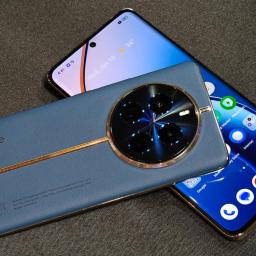 |
by Richard Lai on (#6HSKM)
Realme, a sister brand of Oppo and OnePlus, made its CES debut this year in Las Vegas by unveiling a new mid-range phone with a photography twist. The Realme 12 Pro+, due to launch later this month, is apparently the first in its price segment to not only offer a 3x periscope zoom camera with optical stabilization, but also one with a relatively larger sensor to improve low-light performance. The candybar is the work of Swiss luxury watch designer Ollivier Saveo, complete with a golden fluted bezel surrounding a stunning polished sunburst dial, garnished with a 3D jubilee bracelet over vegan leather - in blue or white.The periscope zoom camera here is powered by a 64-megapixel OmniVision OV64B, which comes in at 1/2 inches large. Realme says compared to the 3x zoom camera on the iPhone 15 Pro (12 megapixels) and the Samsung Galaxy S23 Ultra (10 megapixels), the Realme 12 Pro+'s sensor is at least over 2.6 times as large, thus enabling over 1.8 times the amount of light it takes in. In other words, telephoto cameras don't get much love on mainstream flagship phones. The comparison photos we saw at the launch event were very convincing, with Realme's preserving an impressive amount of detail even at full crop, but we'll obviously wait for our own hands-on later.With such improvement, this mid-range phone can stick to its periscope camera even in darker environments, while other phones with conventional 3x telephoto cameras (read: smaller sensors) would automatically switch to its main camera and rely on digital zoom instead. But of course, there's still a limit as to how dark this camera can handle; you'll want a flagship-level 3x periscope zoom camera with an even bigger sensor for something more impressive, namely the 1/1.56-inch sensor on the likes of Realme's GT5 Pro, Oppo's Find X7 Ultra and apparently the OnePlus 12 as well.The Realme 12 Pro+ also packs a decent 50-megapixel main camera, which features a 1/1.56-inch Sony IMX890 sensor (as seen on the OnePlus 11), f/1.8 aperture and optical stabilization. This phone also packs a 0.6x ultra-wide camera, though Realme stopped short at sharing further information. Likewise, the Chinese brand wouldn't share which Qualcomm mid-range processor is powering this device, but it's custom made to enable Realme's "MasterShot Algorithm" computational photography capabilities here. This is what enables RAW processing which, until now, is largely exclusive to flagship smartphones, meaning even mid-range devices will be able to leverage more editing options in the near future.Photo by Richard Lai / EngadgetThe rest of the Realme 12 Pro+ - including the remaining specs and pricing - is still under wraps. Even though the brand isn't present in most locations of our readership, Realme's aggressive growth in recent years should be influential enough to set a benchmark for mid-range phones of 2024. Perhaps this will also put pressure on the likes of Apple and Samsung to vastly improve essential features on their own flagships.We're reporting live from CES 2024 in Las Vegas from January 6-12. Keep up with all the latest news from the show here.This article originally appeared on Engadget at https://www.engadget.com/the-realme-12-pro-is-the-first-mid-range-device-with-a-3x-periscope-zoom-camera-233636358.html?src=rss
|
 |
by Nathan Ingraham on (#6HSKN)
We always find some strange gadgets at CES. There's no way around it, with thousands of exhibitors peddling their wares, trying to find a market for things no one has dreamed up before. From startups to giants like Samsung, there are plenty of things that make us pause, chuckle, and shake our heads. Here's a few favorites from CES 2024. Keep in mind, weird doesn't necessarily mean bad. It just means weird.Sightful's Spacetop AR LaptopPhotos by Sam Rutherford/EngadgetIf you squint, you can see how a laptop paired to AR glasses could provide a much more expansive and immersive experience than a standard 14-inch laptop screen. Unfortunately, the narrow field of view, spongy keyboard and high price make this a bit of a non-starter.Samsung BallieEngadgetYes, Ballie is definitely cute. We got a kick of out seeing it roll around its demo area at Samsung's CES booth. But it's still pretty weird to have a tiny robot follow you around so it can project a workout video on the ceiling while you work your abs.Shift Robotics MoonwalkersPhoto by Daniel Cooper / EngadgetThe Moonwalkers have a highbrow premise: by propelling the human wearing them a little bit further than they'd normally go when they take a step, this could add up to much more efficient walking over the course of a day, week or lifetime. The new "X" model is lighter and has fewer wheels, making it theoretically easier to produce. But the original Moonwalker cost about $1,400, a wild amount of money. You're probably just better off walking a little quicker.Volkswagen's ChatGPT-generated dinosaur storyPhoto by Nathan Ingraham / EngadgetWhile we can see the potential use cases for having a more intelligent voice assistant in your car, one powered by ChatGPT, having the car tell us a story about dinosaurs was a pretty weird way to go about demonstrating it.ZooGears TheButter - a "piano" for dogsPhoto by Daniel Cooper / EngadgetWe've all seen videos of dogs "playing" an instrument, but this might be the first one purpose-built for a pet. "Teach" your dog to "play" this "piano" and you'll surely get hours of entertainment. The $299 device even comes with an automated feeder to encourage your dog to keep going.One by One - downtempo music for dogsOne By OneTurns out downtempo music music soothes pets and cartoons studying endlessly alike. We love the research showing this, but that still doesn't explain why this is better than just letting your dog listen to your Spotify account.Flappie AI cat doorPhoto by Nathan Ingraham / EngadgetC'mon, just look how cute this is! Let the poor guy in, your cruel and arbitrary cat door.Adam-X CPR dummyPhoto by Daniel Cooper / EngadgetLet's be clear: "weird" does not necessarily mean "bad" or "useless." Adam-X certainly does look useful for medical training. But, well, it's also just a bit off-putting.We're reporting live from CES 2024 in Las Vegas from January 6-12. Keep up with all the latest news from the show here.This article originally appeared on Engadget at https://www.engadget.com/the-weirdest-tech-and-gadgets-we-saw-at-ces-2024-233003886.html?src=rss
|
 |
by Mat Smith on (#6HSKP)
LG's Labs department often takes technology and existing products and spins them into lifestyle-heavy ideas and notions. LG Labs was responsible for the Dukebox, a vacuum tube-driven speaker with a transparent OLED screen, an LG Gram with two displays, and several other projects. But the LG Bon Voyage concept trailer is a little more involved, packing so many of LG's CES greatest hits," retooled and restyled for near-future camping that's both incredibly comfortable and... unlikely.The trailer measures two meters by 3.8 meters, measuring up to a height of 2.2 meters. LG's explanation suggests you'd be able to pick and choose which appliances and features are included.I am aware this OLED TV fireplace is ridiculous.Photo by Mat Smith/EngadgetThis is an upgraded concept trailer from LG, this time it's taken feedback from customers (though it's never gone on sale, so it must mean prospective customers). The redesign is aimed at better use of space, and practically every corner has LG tech crammed into it.A touchscreen panel on the trailer door runs webOS, offering an interface to the trailer alongside pertinent information like weather, charge capacity and more. A spokesperson said the concept trailer here at CES 2024 housed a 10kWh battery.Photo by Mat Smith/EngadgetLG Labs' inexplicable capsule coffee machine, the Duobo, which looks like a moon lander, is nestled away inside the trailer, alongside a microwave. The fridge, however, is accessed on the outside. A pull-out table, on the other side of the door includes a built-in inductive burner. This trailer may possibly have more cooking options than your home. Somewhere inside, although I wasn't able to see it, was a water purifier and a row of detachable light bars can be set up outside the trailer when you actually want to spend time in the great outdoors.And a blast from CES past, LG included its Styler device - a clothes refresher that jostles and steams clothing, into the trailer too, because you can't be glamping without glamor. There's also a shower and toilet, but neither feature any connected technology, as far as I could tell.LG is considering including solar to power all that technology, but there's a giant charging port on the rear. It's going to need a lot of power. Beyond lifestyle devices, the left side of the Bon Voyage features a giant OLED screen above another pull-out surface. Oh, and at the rear of the trailer, there's a portable karaoke set, with two wireless mics and speaker. Oh and cocktail accouterments on either side. Do I have to repeat myself? Glamping.Photo by Mat Smith/EngadgetLG plans to continue developing the Bon Voyage. And if Sony can make a car, why can't LG launch a trailer?We're reporting live from CES 2024 in Las Vegas from January 6-12. Keep up with all the latest news from the show here.This article originally appeared on Engadget at https://www.engadget.com/touring-lgs-high-tech-camping-trailer-at-ces-2024-231558038.html?src=rss
|
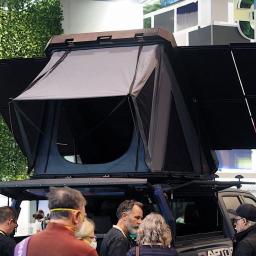 |
by Daniel Cooper on (#6HSKQ)
Friends, I'm not what you would call an experienced overlandist, which is a word I have now learned exists to mean when you go camping in a truck. Part of the process of overlandering is that you actually sleep in a collapsible tent on the roof of the truck you're driving. Now, I'll be honest and say sleeping on the roof of a truck, even if there are elastic straps stopping you from falling off, is not what I'd call a fun weekend adventure. But it's the market that Jackery is catering toward with its new concept solar roof tent, which it showed off here at CES 2024 in Las Vegas and will launch as a real product by the end of 2024.The Jackery Solar Generator for Rooftop Tent is equipped with 1,000W solar panels (with a 25 percent efficiency rate). Unlike the flimsy panels you can currently buy, these are rigid slide-out units that should offer a sturdier canopy under which to sleep. Once you've parked up and opened the tent, the panels are wired up to an Explorer 1,000 Plus generator. That'll hold 1,264Wh of power and can output at rates up to 2,000W, enough to power a 900W cooker for an hour. Plus, you can daisy-chain other batteries alongside to increase the storage further for longer trips away from an outlet and/or civilization.Photo by Daniel Cooper / EngadgetThere's no concrete details - yet - about how much this will cost when it reaches retail, or how much will change from this initial demonstration. But if you're a big fan of perching atop a tiny truck roof and trying to sleep, untroubled by the terrifying prospect of rolling over and plummeting several feet to the ground, then this might be the product for you.We're reporting live from CES 2024 in Las Vegas from January 6-12. Keep up with all the latest news from the show here.This article originally appeared on Engadget at https://www.engadget.com/jackerys-rooftop-solar-tent-makes-overlanding-more-environmentally-friendly-230029346.html?src=rss
|
 |
by Billy Steele on (#6HSKR)
One of the key advantages of Bluetooth LE Audio is Auracast: a way to broadcast content to connected devices in public settings. It will also allow you to easily connect multiple wireless speakers to each other with diving into an app. Perhaps most importantly, the barrier to entry is going to be very low since a dedicated Auracast app will be built into mobile platforms like iOS and Android. What's more, you'll select available channels like you would a Bluetooth device or a Wi-Fi network. It's simple, and it's presented in a way that people who've used a smartphone are familiar with. Auracast has been mentioned constantly by companies announcing their new audio gear at CES 2024, so here's what you need to know about it.What is Auracast?Simply put, Auracast is broadcast audio over Bluetooth. An Auracast transmitter, which in public settings can be a pro-grade add-on to a TV or a box that looks like a Wi-Fi router mounted on the wall. You can also create your own channels from a phone or laptop to share music of the sound from a TV show. This means that you'll be able to have the audio from muted airport TVs beamed to your headphones or earbuds when traveling. Auracast will also allow you to keep tabs on flight and gate information without interrupting your layover entertainment.During its CES demo, Bluetooth SIG, the organization that defines Bluetooth standards, allowed show-goers to experience the aforementioned airport TV scenario. It was easy to switch between two sports broadcasts in a faux bar, simply by tapping one or the other in the Auracast menu. Another tap let us hear a private stream from a laptop, which was password protected so only the proper invitees can access it. There's also a use case where live audio from a lecture or performance can be broadcast via Auracast directly to earbuds, hearing aids or other Bluetooth listening devices. Impressively, there's no lag across any of the options as the visuals matched up perfectly each time.Bluetooth LE Audio Auracast TV transmitterPhoto by Billy Steele/Engadget"The analogy I would use is very similar to setting up a personal hotspot," Chuck Saban, senior director for market development at the Bluetooth, explained about those private Auracasts. "You would set up a personal audio hotspot, it's going to be encrypted, and then anybody who is around me who has that passcode can listen."Auracast will also help you link multiple Bluetooth speakers together at the press of a button. Until now, most companies had you select the devices in an app. But companies like JBL are putting dedicated Auracast buttons on some of their new devices. On the company's PartyBox line, for example, you'll press the button on the main speaker you connected to your phone and then all you have to do is press the button on successive units to link them. What's more, you can chain together an infinite number of speakers in this scenario.What devices is Auracast available on?Photo by Billy Steele/EngadgetAuracast is a feature of Bluetooth LE Audio that arrived with Bluetooth 5.2. So technically, any earbuds, headphones, hearing aids, speakers and other devices that have that version of the wireless standard will be able to tune into Auracast. However, Bluetooth 5.3 offers a more robust implementation of the broadcast audio tool."What you get with 5.3 is the ISOC channels capability in the core that allows multiple independent channel capabilities," Saban said. "You effectively can parse out the left and right [channels] from the source itself." He further explained that the processing of all of that has been moved to the phone from the earbuds or headphones themselves, which extends battery life, performance and efficiency for Bluetooth devices.When will Auracast be available?Plenty of Bluetooth devices support Bluetooth 5.2 or 5.3 and LE Audio. Since Auracast is part of Bluetooth, there's no extra tech needed to include it, the products just need to support the recent versions of the wireless standard. From there, it's up to the individual companies to flip the switch on LE Audio and Auracast. Over the course of 2023 and here at CES, tons of audio brands have said they are planning to add support for the feature via over-the-air updates later in 2024.We're reporting live from CES 2024 in Las Vegas from January 6-12. Keep up with all the latest news from the show here.This article originally appeared on Engadget at https://www.engadget.com/bluetooth-auracast-is-everywhere-at-ces-2024-so-what-is-it-224509414.html?src=rss
|
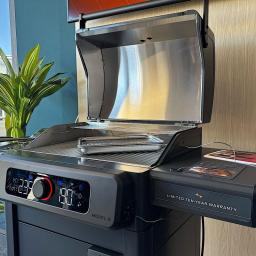 |
by Billy Steele on (#6HSKS)
Gas, charcoal and pellet grills are great for taking your cooking outdoors, but a lot of people live in apartments and other spots where open flames aren't permitted. At CES 2024, Current Backyard debuted two all-electric grills that can be used in those places since the heating element for both isn't much different than an oven or stove. And because grilling has entered the modern age, both of these are Bluetooth and Wi-Fi connected, so you can monitor progress and adjust temperatures from your favorite comfy chair.Current is a startup backed by W. C. Bradley Co., the parent company of established grilling brands like Char-Broil, Oklahoma Joe's and Pit Boss. As such, the electric grilling entity has the support of an organization with decades of backyard expertise. The first two grills from Current, both called Model G, have similar designs which can be customized with extra storage, either at the time of purchase or at any time afterwards. Even though they look nearly identical except for the front-mounted display, they're designed for two different types of cooking."There have been electric grills for a long time [and] they don't have the performance," Current Backyard CEO Tom Penner explained. "This is an infrared cooking system that uses both technology to control the electricity and to adjust the system to understand the cooking environment."The Model G Dual-Zone Electric Grill has a cooking surface that's divided in half, allowing you to set two different temperatures if needed. Current says this is the only full-sized 110-volt electric grill on the market that can hit a max temp of 700 degrees Fahrenheit. Due to the grate design, the company is promising fewer flare-ups than gas grills, which is also partially because there's no open flame. It also explained that you shouldn't need to dump the grease tray too often as much of that burns off during cooking, thanks to the infrared burners. And when there is too much buildup, a SmartClean mode can be activated either on the grill or inside the company's app.To cater to the flat-top trend, the Model G Electric Griddle can hit 600 degrees. In fact, Current says it heats faster and hotter than any other electric griddle in this category. The Model G is larger than the competition, too. An Auto-Seasoning feature helps you keep the cooking area ready for foods and the grill's cooking system keeps temperatures consistent."It's a smart grill that we have dialed in the software and the algorithms to run the griddle separately, to keep that even temperature across the surface," Penner said. "And regardless of if you open or shut your lid, it's adjusting all the time."Similar to most connected grills these days, both of the Model G units work with Current's mobile app. Here, there are guided recipes to assist novices or to serve as inspiration for experienced outdoor cooks. The app will also display time, ambient temp and food temperatures, with the latter coming from two wired probes that ship with the grills. SmartClean and Auto-Seasoning modes can be triggered from the software and you can shut the grills down without having to venture outside. For safety reasons though, you still have to start both Model G options by setting the temp and pressing a button.Both the Model G Dual-Zone Electric Grill and Model G Electric Griddle are available for preorder now and will begin shipping on February 5. The grill starts at $899 and the griddle at $799, with those prices including the standard cart. You can upgrade to a storage cabinet for $100 more. The company says both models will be available in major retailers as well, so you'll likely be able to see one in person before committing.We're reporting live from CES 2024 in Las Vegas from January 6-12. Keep up with all the latest news from the show here.This article originally appeared on Engadget at https://www.engadget.com/current-backyards-electric-smart-grills-bring-outdoor-cooking-to-more-places-215539452.html?src=rss
|
 |
by Engadget on (#6HSGM)
Hello and happy new year! Once again, team Engadget has set up shop in Las Vegas for CES, living out of suitcases so that we can scour the massive show floor and occasionally injure ourselves in the process. For CES 2024, we expected to see AI everywhere, and we were not disappointed.We saw more than a few laptops with AI-powered chips inside, not to mention multiple references to Microsoft's Copilot assistant. Volkswagen built ChatGPT into its in-car system, while BMW teamed up with Amazon to improve its own in-car assistant. Qualcomm announced an AI Snapdragon chip. Walmart came to CES for the first time to announce its building generative AI into its online shopping experience. Even SAG-AFTRA struck a deal for AI and voice acting at CES (not that the actors themselves consider it a good deal).Meanwhile, The Rabbit R1, a device co-designed by Teenage Engineering, was the surprise hit at this year's show - so hot we haven't been able to see it in person ourselves as of this writing. And then there were the oddballs: a grill that uses AI to help cook a steak in 90 seconds, and a cat door that automatically locks when it knows your pet is about to drag in a mouse.Then there were not one, but two transparent TVs: one from Samsung and one from LG. Remember when rollable TVs were the thing? Oh, and GE kindly fed us beef tenderloin cooked with an indoor smoker. It was delicious.Notably, too, there was a lot less pee on the show floor this year. (But we did find some.)Today is our team's last day on the ground, which means it's also time for us to announce our annual Best of CES award winners. You may notice an obvious difference this year, which is that we've gotten rid of categories. From our point of view, we still attempted to see as broad a range of products as possible: laptops, mobile devices, gaming gear, smart home stuff, cars and items meant for people with disabilities. When it came to choosing winners, though, we saved time not having to debate amongst ourselves whether something was a laptop or a gaming device, a wearable or an accessibility device. A good product is just a good product.Without further ado, we present our winners for CES 2024. But don't mistake this for the last of our coverage: We have other stories, recaps and roundups in the pipeline for you to read over the coming days. Keep following along. - Dana Wollman, Editor-in-ChiefASUS ROG Zephyrus G14EngadgetNot only is the ASUS ROG Zephyrus G14 powerful enough to run the latest blockbuster video games, but it's also incredibly sleek. The ROG Zephyrus G14 has an aluminum chassis with clean lines, crisp edges and a thinner, lighter design than previous models. A simple LED slash runs across the lid and can be programmed to glow in gray or white, rather than the garish rainbow favored by other gaming laptops. The ROG Zephyrus G14 looks sophisticated, and it can also run any title on the market, thanks to its AMD Ryzen 8000 series processors and optional NVIDIA RTX 4070 GPU at the high end. Top-of-the-line specs and a minimalist design make the latest ASUS line stand out in a sea of other game-focused devices at CES. This is what gaming laptops look like when they're all grown up. - Jessica Conditt, senior reporterSamsung Music FrameSamsungSamsung's line of Frame TVs, first introduced back in 2017, do a great job of disguising a large-screen TV as a piece of art. The Samsung Music Frame does the same thing, but for wireless speakers. Instead of a screen, there's a place to display art or album covers that you swap pretty easily.This wouldn't be noteworthy if the Music Frame didn't sound good - but in our demo, it did. The Music Frame includes two woofers, two tweeters and two mid-range drivers and supports Dolby Atmos. It's also quite the flexible speaker, working on its own, in a stereo pair or connected to a TV as part of a bigger home theater setup. It's even wall-mountable. We have no price or release date, but given Samsung's success with the Frame TVs, we imagine they won't wait long to get the Music Frame on the market. - Nathan Ingraham, deputy editorLG Signature OLED TLGOLED TVs are great. An OLED TV you can see through - well, that's just wild. The LG Signature OLED T isn't the first transparent display we've seen at CES, but it is the first that will actually be sold to consumers (unlike Samsung's similar transparent MicroLED concept).This is a 77-inch set with an retractable contrast screen. Keep the filter up, and it looks like one of LGs standard, excellent OLED sets. Bring it down, and the image almost looks like it's floating in mid-air. Like Samsung's Frame TVs, the Signature OLED T is designed for ambience - when you're not watching a show or movie, it can display little animations (a digital fish tank, for instance). To help it feel less obtrusive, the TV also uses LG's wireless Zero Connect tech, which relegates most of the set's I/O (and thus cables) to a separate box that can be tucked away elsewhere.The TV does lack the microlens array tech found in LG's absolute best OLED TVs and LG isn't sure if it will come with the furniture you see in the image above. The company says it will ship sometime in 2024, though there's no firm release date yet. But whenever it does arrive, it will almost certainly be prohibitively expensive for most people. - Jeff Dunn, senior commerce writerTCL NXTPAPER 14 ProTCLWith its third-generation NXTPAPER display, TCL's latest 14-inch tablet combines the best things about LCD displays and e-readers. You get a sharp 2.8K-resolution panel with bright colors plus a special nano-coating that not only reduces glare, but also cuts down excess blue light while providing a lovely matte texture. And for those who prefer a more traditional newspaper-like reading experience, there's a monochrome mode that makes the NXTPAPER 14 Pro look like it has an e-ink screen. So while its specs aren't all that impressive (MediaTek Dimensity 8020, 12GB of RAM and 256GB of storage), TCL's new tablet is one of those rare gadgets that appeals to both hardcore tech nerds and traditionalists that still remember a time before everything went digital. - Sam Rutherford, senior reporterASUS ZenBook DuoEngadgetASUS has been chasing the dream of dual-screen notebooks for a while, but this year's ZenBook Duo appears to be its best attempt yet. It consists of two separate components: a dual-screen display unit and a detachable Bluetooth keyboard. You can use the ZenBook Duo in a typical clamshell mode, with the keyboard in front of one of its displays. But when you have more room, you can open up the display to have two screens sitting on top of each other (balanced on a built-in kickstand).The ZenBook Duo also feels incredibly polished, and it has high-end hardware like Intel's Core Ultra chips and gorgeous OLED screens. It also starts at a reasonable $1,500, making it a dual-screen laptop for the masses. - Devindra Hardawar, senior reporterWithings BeamOWithingsThere's never a shortage of health and fitness tech at CES. This year Withings stood out with its $250 BeamO multiscope." It combines a body temperature sensor, an electrocardiogram, an oximeter and a digital stethoscope into one surprisingly light consumer device that promises to make it easier to collect basic health metrics at home. The company's Health Mate app collects all of that data, which can then be sent to doctors with a few taps. Withings is also seeking FDA approvals for the BeamO to be able to detect atrial fibrillation.BeamO impressed us not only with its versatility and fairly affordable price, but also for the potential impact it could have on telemedicine. Providing your doctor with key metrics ahead of a call or visit could make it easier for them to give you sound medical advice. And those with chronic conditions could use BeamO to keep track of health data over the long term. - Valentina Palladino, senior commerce editorEcoFlow Delta UltraEcoFlowA whole-home battery and inverter system is far from the funkiest bit of hardware we saw at CES, but it's likely one of the more useful. The EcoFlow DELTA Pro Ultra can take in and store power from your rooftop solar panels then use the stored energy to power your home. The DELTA Pro Ultra can even suck up juice from the grid when it's cheaper, and feed it back when energy prices surge.A base configuration goes for $5,800 and includes one 6kWh battery and inverter, but you can stack up to five batteries per inverter and chain up to three inverter-and-battery stacks, amounting to a 90kWh capacity. That's a beastly amount of power that could keep a McMansion humming at full tilt for a few days - or run essential appliances in a more moderately sized home for a month or longer.The DELTA Pro Ultra can also hook into an existing transfer switch if you have one, but for deeper integration with your home's power system, the subpanel-like Smart Home Panel 2 gives you features like app control, weather and power grid monitoring, and instant switchover to backup when the power goes out. As more solar panels are installed on rooftops, a sleek and powerful all-in-one battery solution like this can give people more control over how their power is used. If you're intrigued, you don't have to wait - it's one of many CES 2024 gadgets already on the market. - Amy Skorheim, commerce writerGE Profile Smart Indoor SmokerGEWhen it comes to smoking meat at home, your options are usually limited to outdoor grills that burn charcoal, pellets or wood. If you live at a place where your landlord doesn't allow open flames, like apartments, then you're pretty much out of luck. The GE Profile Smoker ditches the flames for electric heating elements and brings low-and-slow smoking indoors.The GE Profile Smart Indoor Smoker is no gimmick either. It's capable of infusing significant smoke flavor via wood pellets as we experienced first hand this week. There won't be any smoke wafting around your kitchen as the unit captures all of that with its filtration system. If you need to cook while you're away, a unique feature does that and then holds your food at a safe temperature until you're ready to serve. Toss in Wi-Fi for remote cooking and monitoring, cooking profiles and guidance, plus the Clear Smoke tool for when you need to open the door, and the GE Profile Smart Indoor Smoker has a lot to offer a range of skill levels. - Billy Steele, senior reporterSennheiser Momentum True Wireless 4SennheiserSennheiser's Momentum True Wireless series has consistently earned the accolade of the best-sounding earbuds in our best of list for a while now. However, the company never really had the complete package to knock Sony's 1000X series off the top spot. At CES this year, Sennheiser debuted the fourth-gen version of its flagship earbuds, which bring a host of upgrades. They still sound excellent, ANC and transparency mode are also improved.The Momentum True Wireless 4 did a great job blocking out the noisy Las Vegas suite, allowing us to focus on the selection of jazz we used to demo the earbuds. Transparency mode also sounded more natural, which will be a big help for calls and tuning into your surroundings. What's more, Sennheiser figured out a way for active noise cancellation to not drain the battery nearly as much as it typically does; the ANC here only cuts listening time by half an hour. - B.S.Gyrogear GyroGloveEngadgetThe number of accessibility and aging-related products that were good enough for us to consider for awards at CES 2024 was encouragingly high. We saw a tongue-operated touchpad, a hearing aid-like system that can isolate individual speakers in a noisy crowd and an audio display for gamers with hearing loss. But GyroGlove stood out for a few reasons.The device uses a sophisticated gyroscope to help those with hand tremors (say, Parkinson's patients) stabilize their movement, but one of the deciding factors in picking it as a winner is the fact that it's actually available. The company said it's already in talks with the chief medical officers of several insurance providers in the US, and has registered the GyroGlove as a medical device with the FDA and Australia's Therapeutic Goods Administration. It's certified by various international standards organizations, to boot. - Cherlynn Low, deputy editorKia Platform Beyond Vehicles (PBV)KIAKia's PBV, or Platform Beyond Vehicles, concept is the rare car concept (or concepts, plural) that seems like it might actually be a real thing in the relatively near future. The PV5 is likely to be the first to make the leap. It's a small modular van that can be equipped with a taller roof for extra headroom, or turned into a pickup by swapping out the back two-thirds. It can also be turned into a taxi with extra seating for passengers.One of the more interesting things is how the members of the PBV family, including the larger PV7 and the smaller PV1 are expected to work together. For instance, Kia imagines a rail system that can connect a PV7 directly to a PV1, transferring cargo to the smaller vehicle for last mile deliveries.Most importantly, PBV isn't some fantastical dream vehicle that will never be heard from again: Kia is already building a dedicated factory in Korea that's expected to be ready to pump out 150,000 vehicles in 2025. - Terrence O'Brien, managing editorSamsung BallieSamsungCES was a little light on notable robots this year, but Samsung revived one we loved when we first saw it way back in 2020. Ballie is an adorable, bowling ball-sized robot that rolls around your home, following you around like a robotic pet that's eager to please. Ballie is a lot bigger than it was when we saw it in 2020, and it now has a built-in 1080p projector so it can both show you things and speak to you when you ask it for help. Think of it like a Nest Hub on wheels.We only got to see Ballie in a tightly-plotted demo at Samsung's booth, but it was simply delightful to watch Ballie roll around projecting workout routines, calendar updates and recipe videos on the walls. As with most smart home gadgets, there's a little bit of "solution searching for a problem" here. But it feels like Samsung nailed the form factor judging by how smoothly Ballie navigated its way around the demo area. And while many companies show off products like this that have no chance of actually reaching people in the real world, Samsung says Ballie will go on sale this year. - N.I.Micron LPCAMM2 laptop RAM modulesMicronIf you've ever been annoyed that you couldn't upgrade your RAM in an ultraportable laptop, Micron has a potential solution: LPCAMM2 memory. It's a new form factor that's 64 percent smaller than standard SODIMM RAM sticks, and it's also potentially far faster and more efficient. Best of all is that it's a self-contained unit that can easily be removed and upgraded down the line.LPCAMM2 RAM won't get as much hype as AI PCs, but it's something that could transform what's possible with future laptop designs. And if it means laptop makers stop soldering RAM directly onto motherboards, we'll call it a win. - D.H.Best in show: GE Profile Smart Indoor SmokerGECES 2024 is often described as a TV show or car show, but sometimes it's more niche products that capture our imagination. GE Profile's Smart Indoor Smoker is a countertop device that makes proper barbecue in your kitchen without filling your home with smoke. It's designed to move air around the food to impart maximum smokiness inside, without letting airflow out. When your brisket, chicken or whatever is done, a filtration and catalyst system draws the smoke down, eventually expelling it as warm air.Typically smoking food requires constant adjustments and vigilance, but the Smart Indoor Smoker has six preset cooking modes, while you're able to adjust the degree of smokiness between five different levels. The wood pellets' only function is to add flavor and not fuel the actual cooking process, so only a handful are needed per smoke session.GE included a smart probe with the Smart Indoor Smoker too, so you can monitor the cooking process from a companion app and its Smoke and Hold feature can cook and smoke foods and keep them at food-safe temperatures for up to 24 hours. It's not small (it's around the size of a mini fridge), but it's stylish and simple to use, with a low barrier to entry for anyone tempted to try smoking their own foods. The device was also able to impart an impressive level of smokiness in only a few hours - we can't wait to see what low-and-slow smoking could do. - Mat Smith, UK bureau chiefWe're reporting live from CES 2024 in Las Vegas from January 6-12. Keep up with all the latest news from the show here.This article originally appeared on Engadget at https://www.engadget.com/the-best-of-ces-2024-220054009.html?src=rss
|
 |
by Will Shanklin on (#6HSGN)
If you thought Big Tech's dreadful year of layoffs would be confined to 2023, you're (sadly) mistaken. Audible laid off around five percent of its employees on Thursday, which Variety reports is just over 100 staffers." The cuts in the audiobook division are part of parent company Amazon's most recent round of layoffs, also affecting Prime Video, MGM, and Twitch.We did not take this route without considerable thought," Audible CEO Bob Carrigan reportedly said in an audio memo delivered to staff. But getting leaner and more efficient is the way we will need to operate now - and in the foreseeable future - in order to continue delivering best-in-class audio storytelling to our customers around the world."For those keeping score, leaner and more efficient" echoes the language in numerous recent Big Tech layoff announcements. Variations of In these uncertain times..." have also been popular.Carrigan ironically began by talking about Audible's strong performance last year. I want to acknowledge the strong year we had in 2023, in which we delivered amazing listening experiences for our customers thanks to outstanding collaboration with creators and partners," he reportedly said. Our business is in good shape, and that is because of the hard work of each and every one of you."The CEO extolled how much the company values its workers. A big part of what makes working at Audible so special is our many talented and dedicated employees who bring their passion to work each and every day. It's also what makes it even harder to say goodbye to people we care about," he said. I recognize the impact this will have on those transitioning out of Audible as well as all of you who remain. Thanks to all who are leaving us for their valuable contributions."This article originally appeared on Engadget at https://www.engadget.com/audible-reportedly-lays-off-over-100-employees-220011915.html?src=rss
|
 |
by Richard Lai on (#6HSGP)
Years ago, some genius decided to build Las Vegas in the middle of a desert, so for me, any sight of unique humidifying tech at CES is a much welcomed sight. It just so happened that a Korean company showcased a device dubbed Moss Air which, as the name implies, uses real moss to purify air. It's also built with a humidifying feature that can shoot outwards or rehydrate the plant internally. In short, you're getting an air-purifying humidifier that doubles as a mesmerizing miniature foggy terrarium on your desktop.According to Mosslab, the startup behind this device, not only does the moss convert carbon dioxide back into oxygen, but it's also effective at removing fine dust from the air. Better yet, the plant can apparently break harmful VOCs (volatile organic compounds) down into sugars as food. Strictly speaking, though, it's actually the bacteria in the moss that's responsible for this process, according to a research conducted by the University of Toronto.Photo by Richard Lai / EngadgetThe Moss Air consists of an LED-lit compartment under a removable transparent cover, which lets you easily install or replace the moss panel. At the top, you can block the exhaust port with the included magnetic ball to toggle terrarium mode, in which it fogs up the moss over 60-second periods every three hours. If you need to humidify your surroundings, simply slide the ball across to let it mist outwards.With its 1,600mAh battery, the Moss Air can run for up to about eight hours on a single charge, or until it runs out of water in its 400ml tank - you can pull it out from the bottom to refill, or to replace the paper filter (three included). Of course, you can also use this device while its plugged in (via USB-C), but having a built-in battery means you get to carry your pet moss around.Moss Air will be launching on Amazon by the end of January 2024, and you'll get to pick between black and white. This product is asking for $99 which seems a little steep for what it does, but at least there was a demand for it when it was priced at $79 on Kickstarter and Indiegogo earlier.This article originally appeared on Engadget at https://www.engadget.com/this-moss-terrarium-doubles-as-an-air-purifier-and-humidifier-214557108.html?src=rss
|
 |
by Kris Holt on (#6HSGQ)
The US attorney's office in Massachusetts says eBay will pay a $3 million penalty to resolve criminal charges following a harassment campaign conducted by several former executives. Several ex-employees targeted a couple who wrote a newsletter that was critical of the company.The Justice Department charged eBay with two counts of stalking through interstate travel, two counts of stalking through electronic communications services, one count of witness tampering and one count of obstruction of justice. The $3 million fine was the statutory maximum for the felonies. As part of a deferred prosecution agreement with authorities, eBay also needs to improve its compliance program and retain an independent corporate compliance monitor for three years.The US attorney's office says eBay "admitted to a detailed recitation of all the relevant facts about its conduct." In August 2019, the company's former senior director of safety and security Jim Baugh and six others carried out a harassment campaign against Ina and David Steiner of Massachusetts. The couple wrote about litigation involving eBay and higher-ups at the company were said to have been frustrated about the negative coverage.Baugh and his co-conspirators harassed the couple by, among other things, sending them a fetal pig, a funeral wreath and live spiders and cockroaches. According to prosecutors, three of the former eBay employees traveled to the Steiners' home in the aim of planting a GPS tracking device on their car. The campaign also involved sending harassing messages via Twitter (now X).Baugh and several others were convicted and sent to prison. One other has admitted to their part in the campaign but has yet to be sentenced.In a victim impact statement published on their website, the Steiners wrote that "eBay's actions against us had a damaging and permanent impact on us - emotionally, psychologically, physically, reputationally, and financially - and we strongly pushed federal prosecutors for further indictments to deter corporate executives and board members from creating a culture where stalking and harassment is tolerated or encouraged."The pair and Steiner Associates, the publisher of their EcommerceBytes newsletter, have filed a civil lawsuit against eBay and the former employees. A trial has been scheduled for March next year.This article originally appeared on Engadget at https://www.engadget.com/ebay-will-pay-3-million-to-resolve-criminal-charges-in-a-bizarre-cyberstalking-case-213050834.html?src=rss
|
 |
by Malak Saleh on (#6HSGR)
Leaders at Discord have decided to cut its staff by 17 percent, according to an internal memo first reported on by the Verge.Concerns over how the chat app has yet to become profitable have played a role in the decision. CEO Jason Citron said that staff across departments will be impacted once the layoffs begin.According to the memo, Citron believes the company hired too many people since 2020. This, he wrote, led the workforce to take on projects that made Discord less efficient." He added that the company needs to sharpen its focus, however, he did not give any insight about any particular strategies moving forward except that the cuts put us in the best position to continue building a strong and profitable business."Discord will continue to provide short term pay and benefits to the 170 staffers it is letting go. This also isn't the first time the company has resorted to staff cuts. The company recently laid off four percent of its staff at the end of last year and before that, it made an undisclosed number of staffing cuts 2019.The company has notably endured some internal struggles lately. Discord refused to have its CEO testify about its children protection policies when called upon by the US Senate Judiciary Committee. That came after a damning NBC News report on the issue, which claimed that children on the platform were being groomed and extorted. It also faced backlash for a small data breach that exposed the personal information of some users last year.Discord is far from alone among tech companies which have recently initiated layoffs. Just one month into the new year, Duolingo and Unity announced they would be trimming staff. In big tech, Meta, Amazon and Google also have also announced plans to lay off hundreds of workers.This article originally appeared on Engadget at https://www.engadget.com/discord-lays-off-170-workers-in-latest-round-of-cuts-211541127.html?src=rss
|
 |
by Will Shanklin on (#6HSGS)
Google has officially voiced support for Right to Repair (R2R) legislation. Specifically, the company supports Oregon's SB 542, championed by State Senator Janeen Sollman (D). Although Google's motives could be less about newfound altruism and more about shaping regulatory action that seems increasingly inevitable, a win's a win," as they say in sports.The company expressed its new R2R stance in a blog post and white paper published Thursday. Today, we're excited to reaffirm our support for the Right to Repair movement by releasing our first white paper on repair while endorsing proposed Oregon Right to Repair legislation that offers a compelling model for other states to follow," the company wrote.Google lobbied against Right to Repair legislation as recently as March 2021 when it opposed the HB21-1199 R2R bill in Colorado. It's also on record opposing AB1163 in California. The company's stance had already shifted before today, in line with the direction of regulatory winds. (It partnered with iFixit for self-repairs starting in 2022.) But Google suggesting its announcement today is merely reaffirming" a value it's always stood behind (while ignoring documented evidence to the contrary) appears disingenuous.Google's suggestions for regulatorsGoogle's language in the white paper reveals a legislation-shaping tactic. An entire section titled Policy Perspective" breaks down the language and boundaries the company believes R2R regulations should contain.Within this policy section of the paper is a passage about design flexibility," urging lawmakers not to hamstring device makers by implementing strict design codes. Well-intentioned regulations that set specific design requirements and standards in an effort to improve repairability may have unintended consequences that inhibit innovation and inadvertently lead to bad outcomes, such as more e-waste," Google wrote in its white paper. Design-related policies for repair should focus on defining repairability outcomes rather than setting strict design standards."Another item in the policy section, reasonable implementation period," calls for regulations that won't disrupt existing manufacturing schedules. Consumer electronics operate with lengthy product development timelines, often spanning years," Google wrote. New regulatory measures should phase in on a sensible timeline that ensures manufacturers can meet new requirements without undue burden. Regulations should not apply to products that are already designed and launched as such measures are problematic and may have negative unintended consequences, such as creating more e-waste."Neither of those requests seems egregiously unreasonable -and the points about e-waste could be taken at face value - but, coincidentally or not, they do also align with Google's business interests.An Apple dig and... Project Ara?Google squeezed in a dig at Apple, too. Policies should constrain OEMs from imposing unfair anti-repair practices," the paper reads. For example, parts-pairing, the practice of using software barriers to obstruct consumers and independent repair shops from replacing components, or other restrictive impediments to repair should be discouraged."Of course, Apple is notorious for parts-pairing, the practice of digitally linking part serial numbers to the device serial, locking out third-party repair services (and leaving the people who paid them with obnoxious incompatibility warnings).Project Ara, which made it to the Google graveyard before hitting store shelves, was shouted out in the white paper.GoogleGoogle's paper highlights examples from its history of supporting R2R and similar initiatives, even calling out the (cancelled) Project Ara modular phone from a decade ago as an example of projects that push the boundaries and better understand our users' needs for repair." (If it had only made it to consumers.)The paper also touts Google's buildouts of its repair capabilities, seven years of software support for Pixels and seven years of support for hardware parts. All of this can be seen as a resounding victory for the R2R movement, even if corporations' motives continue to be less noble than they like to let on.This article originally appeared on Engadget at https://www.engadget.com/google-claims-to-reaffirm-right-to-repair-support-three-years-after-lobbying-against-it-205828956.html?src=rss
|
 |
by Richard Lai on (#6HSGT)
Even though Apple didn't have an official presence at CES 2024 in Las Vegas, the trade show still had a whole area dominated by mixed reality tech. One of the most popular booths there was none other than Xreal (formerly Nreal), which decided to ride on the Apple Vision Pro hype train and unveil its latest AR glasses, the Xreal Air 2 Ultra, in Las Vegas. The Chinese firm claims that its latest headset makes "an affordable alternative to" the likes of the $3,499 Vision Pro, though it's currently priced at $699 - a tad more than the $499 Meta Quest 3 - as Xreal attempts to lure developers into its ecosystem.Unlike the rest of the Xreal Air 2 series, the Air 2 Ultra finally brings back 6DoF (six-degree-of-freedom) tracking - a first since the Nreal Light. In other words, you can physically walk around a virtual space, rather than being stuck in one spot. The 6DoF tracking is mainly handled by the two front-facing 3D environment sensors which, according to Xreal founder and CEO Chi Xu, are an advancement over prior models, and are less physically obtrusive compared to the ones on the Ray-Ban Meta smart glasses. As with the Light, the Air 2 Ultra also supports hand tracking for interacting with virtual objects directly.There's also a slight upgrade in the display department, featuring a wider 52-degree field of view - up from 46 degrees on the Air 2 and Air 2 Pro. It should otherwise be the same Sony micro OLED panels with a crisp 1080p resolution for each eye, along with a refresh rate of up to 120Hz and a brightness of up to 500 nits. Likewise, the Air 2 Ultra inherited the electrochromic dimming feature from the Pro, which offers two shade levels to minimize distraction from the outside world.Given the extra hardware for 6DoF and hand tracking, it's no surprise that the Air 2 Ultra weighs slightly more than the Air 2 Pro - 80 grams versus 75 grams, but it still looks like a pair of regular sunglasses, and I definitely wouldn't mind wearing them in public. Xreal did its best to minimize the weight gain using a titanium frame, and obviously, these glasses still require an external power source - a smartphone or a PC - via USB-C. I had a total hands-on time of around 20 minutes, and at no point did I feel any discomfort, though there's no telling if that would be the case if I kept on going for the rest of the day.Photo by Joel Chokkattu / EngadgetGiven the lack of third-party apps at the moment (I do miss the Angry Birds demo on the Nreal Light), Xreal could only offer a concept demo to show off the Air 2 Ultra's 6DoF experience. This mainly involved a massive virtual desktop showing multimedia players, or a social media window showing the latest messages from my made-up friends, or a personal 3D cinema with a library of three movies. To the left, there was a vertical slider for changing colors on a smart light bar in the real world. I was also given three AR hexagonal discs: one for toggling between work profile and casual profile, one for switching between the casual modes (contacts, social and movie) and one for displaying a virtual pet.The overall room tracking worked smoothly, even as I walked up to the large 3D avatars on my right, but things got a little trickier when it came to hand interaction. The hand tracking alone seemed fine (at least according to the skeletons rendered over my hands), but I struggled to pinch the light bar's color slider - it ended up at the wrong hue on several occasions. The interaction with the AR cardboard discs was also laggy at times, though I did enjoy being able to bring my virtual pet on one of the discs up close - I couldn't pick a favorite between the dung beetle and the fiddler crab.Photo by Joel Chokkattu / EngadgetIn response to the technical issues I ran into, Xreal's Xu pointed out that his team had been experiencing the same since the show floor opened. Our demo unit also crashed once, but it was fine after a reboot on the smartphone - an Oppo Find X5, which got worryingly warm right before it gave up. This goes to show that the Air 2 Ultra performance is only as good as the computational device it's attached to.Speaking of which, Xreal says these glasses are also compatible with the Samsung Galaxy S22 and S23, along with Apple's iPhone 15 and any Windows or Mac machine that can run the company's Nebula environment. Xreal is also developing a dedicated companion device to go with the Air 2 Ultra, though there's no word on specs nor time frame.Photo by Richard Lai / EngadgetConsidering the show floor hiccups, it's only fair to revisit the Xreal Air 2 Ultra in a less chaotic environment later - especially when more developers are on board after it starts shipping in March. Still, we wouldn't go as far as agreeing with Xreal's implication that its AR glasses can totally replace Apple's Vision Pro, as only the latter - and any VR headset, for that matter - is able to offer a completely immersive experience. It'll ultimately boil down to the range of apps on each platform, but if you're looking for something that you wouldn't mind wearing for prolonged periods, then the Air 2 Ultra would most likely be the better choice.This article originally appeared on Engadget at https://www.engadget.com/xreal-air-2-ultra-hands-on-next-gen-ar-glasses-in-need-of-killer-apps-203943588.html?src=rss
|
 |
by Lawrence Bonk on (#6HSDV)
Ubisoft's Prince of Persia: The Lost Crown launches next week, but players are likely to encounter an amusing bug as they make their way through the game, as reported by IGN. One of the game's NPCs is voiced by a text-to-speech program, complete with the slightly robotic tones we've come to associate with these services.It's not quite Siri or Alexa, but it's close and certainly doesn't fit the game's Persian-inspired setting. The NPC-in-question is a tree spirit named Kalux and seems to be voiced by a TTS program that's available online for free and typically used by streamers.This isn't an AI is coming for your jobs" type thing, but rather a mistake on Ubisoft's part, as each and every other NPC is attached to a voice actor. IGN notes that Kalux doesn't have a voice actor in the credits. Additionally, Kalux only has a few lines, so it likely won't be a tough fix to assign an actor to deliver that dialogue. Ubisoft has readied a day-one patch, but it won't handle the Kalux issue. Look for another patch in late January or early February that replaces the bot with a human.Ubisoft confirmed the error and said that the English version of these eight lines of text for this character were not properly implemented," going on to note that the game has more than 12,000 lines of dialogue across multiple languages. Game developers often use TTS services and AI voices to create placeholder dialogue, which is eventually replaced by human actors. The company just forgot to handle this one character.Prince of Persia: The Lost Crown releases on January 15 for just about every platform out there, including the Nintendo Switch and PC. It's the first franchise installment since 2010's Prince of Persia: The Forgotten Sands. This is a Metroidvania-style platformer that brings the series back to its 2D roots. Reviews are mostly positive, with many praising it for offering a true AAA Metroidvania experience in the spirit of Nintendo's recent-ish Metroid Dread.However, just because this particular instance was a mistake, doesn't mean that AI-enhanced TTS services aren't going to radically change the industry. CD Projekt Red recently used AI to include a deceased actor's voice in Cyberpunk 2077: Phantom Liberty and SAG-AFTRA recently struck a deal with an AI voice acting platform to make it easier for actors to license their voice as a digital replica for use in games.This article originally appeared on Engadget at https://www.engadget.com/ubisoft-accidentally-used-text-to-speech-to-voice-a-character-in-the-new-prince-of-persia-game-193448687.html?src=rss
|
 |
by Katie Malone on (#6HSDW)
Credential stuffing, or using compromised login information to take over accounts, has been around as long as we've used passwords to secure our accounts. But, perhaps in part because it's gotten easier for hackers to perform this type of attack, credential stuffing made headlines in recent months.Look at the 23andMe breach affecting nearly 7 million users. While not every account was compromised via credential stuffing, it was how the hackers initially got in, and then they used a social feature called DNA Relatives to keep going. Hackers gained access to sensitive information like full names and locations, specifically targeting groups like Ashkenazi people, offering the data for sale in bulk online.Hacking conjures an image of sophisticated, high tech break-ins, but what makes credential stuffing so lucrative is that it's surprisingly pretty unsophisticated," Rob Shavell, CEO of online personal information removal service DeleteMe, told Engadget. Hackers will use educated guesses to figure out your password, or just buy old passwords from leaks online to see if they work for different accounts. Tactics used by hackers include using personal information found online to guess passwords or asking a generative AI program to come up with usable variations on a password to get into an account.Companies frequently fail to protect your data, sticking you with the burden of preventing credential stuffing accounts to the best of your ability. In fact, credential stuffing has become so prevalent, that you've likely already fallen victim. Nearly a quarter of all login attempts last year met the criteria for credential stuffing, according to security company Okta's 2023 State of Secure Identity Report that surveyed more than 800 IT and security decision-makers across fields. Verizon's 2023 analysis of data breaches found that about half of breaches involved stolen credentials. Checking an email address on sites like Have I Been Pwned can show you which passwords may have been compromised, meaning if you've reused it on another account, it could be a matter of time until hackers try to use it to get in.Credential stuffing works because we tend to stick to certain patterns when creating passwords, like using your mother's maiden name or a childhood address, with small variations to make them easier to remember. Because we're lazy, and because we have 50 passwords now, it is the default to just pick one password and use it many places," chief information security officer at cloud company Akamai Steve Winterfeld said. The problem is you then are not taking appropriate risk measures."That level of risk varies widely. The one-off account you used to try out World of Warcraft years ago and doesn't have any personal or financial information attached to it probably doesn't concern you. But hackers are betting you've reused an email, username and password for a more lucrative account, like your bank or social media, and they will use credential stuffing to get in. I have one username and password that I use for things that I'm okay if they're compromised ... that would not financially or brand impact me," Winterfeld said.Minimizing the risks you're taking online by using strong passwords will make it a lot more manageable to start protecting yourself against credential stuffing. Changing passwords frequently, or making the switch to passkeys, can also help. There are other ways you can protect yourself, too, as companies have made it clear that they'll do anything in their power to shirk responsibility for protecting your information.First, understand that once a credential is leaked, it can be used to gain access to other accounts, Frank Teruel, CFO at bot prevention firm Arkose Labs, said. So, change passwords for any accounts where you may have repeated it, especially high-profile targets linked to financial or other sensitive institutions. This is where a password manager comes in handy, because some will even flag if a password has been found in a breach and suggest that you change it to a stronger option.Taking some time to purge accounts you no longer use will greatly reduce the number of password leaks to worry about, too, Teruel said. In the meantime, make it a habit not to reuse passwords or small variations on them, and to change passwords frequently to limit risk.This article originally appeared on Engadget at https://www.engadget.com/what-is-credential-stuffing-and-how-do-you-keep-your-accounts-safe-from-it-190044846.html?src=rss
|
 |
by Cherlynn Low on (#6HSDX)
You can one day use your tongue as a mouse for your laptop, tablet or phone, thanks to a new product that made its first public appearance at CES 2024 in Las Vegas. The MouthPad (an obvious spin on the word "mousepad") is what its makers call a tongue-operated touchpad that "sits at the roof of your mouth" and can be connected to your devices just like a standard Bluetooth mouse. I got to see the MouthPad here in Las Vegas, where it's making its first public appearance since its announcement last year, though, to be clear, I did not put it in my mouth to try out for myself. Instead, I watched as the company's co-founder Tomas Vega used the device to navigate an iPhone and open the camera as we took a selfie together.The MouthPad is basically like a retainer with a touchpad, battery and Bluetooth radio built in. It's made of a resin that the company says is the same "dental-grade material that is commonly used in dental aligners, bite guards and other oral appliances." The device's battery was made by a company called Varta, which MouthPad's makers also said has "a long track record of producing safe, medical implant-grade batteries." All this is to say that while it can feel strange to put a battery-powered electrical device in your mouth, at least it might be reassuring to know that this uses technology that has existed in the oral health industry for a long time.I watched Vega place the 7.5-gram mouthpiece right on his palette, where it sat surrounded by his upper teeth. He closed his mouth and the iPhone he held up showed a cursor moving around as he opened apps and menus. I asked him to open up the camera and he obliged, and we took a selfie. This was evidently not a pre-recorded demo paired with good acting.Photo by Cherlynn Low / EngadgetNow, because I didn't try it myself, I can't tell you if it's comfortable or easy to use. But the specs sheet states that the MouthPad is about 0.7mm (0.027 inches) thick, apart from where there are capsules, while the touchpad itself on the roof of the mouth is 5mm (0.19 inches) thick. From what I saw, it didn't look much bulkier than my own retainers, and when Vegas smiled after putting the MouthPad on, I could only really see one small black piece on top of one of his teeth.You'll have to take out the MouthPad when you're eating, but you can speak while it's in your mouth. You might have a slight lisp the way you would with regular retainers, but I could understand Vega perfectly. The company said that the device currently lasts about five hours on a charge, though the team is working on improving that to eight hours by March. Recharging the device takes about an hour and a half, though Vega and his team said that, of the 30ish people that currently have a MouthPad, most users tend to charge theirs when they're eating and rarely seem to run out of juice.The company explained that the MouthPad uses Apple's Assistive Touch feature to navigate iOS, but it can be recognized by other devices as a Bluetooth mouse. It's already on sale for those who sign up for early access, but general availability is coming later this year. Each MouthPad is individually 3D-printed, based on dental impressions sent in by customers as part of the ordering process. Early access users will also receive assistance from the company during setup and calibration, as well as throughout their use of the device.Photo by Cherlynn Low / EngadgetTongue-operated controllers are not new, but MouthPad is one of the more elegant and sophisticated options to date. It also works with a wide variety of devices and seems far enough along in the production process to be ready for sale. Whether the human tongue is a suitable organ for computer interactions, however, is something we can only determine after longterm use in the real world.We're reporting live from CES 2024 in Las Vegas from January 6-12. Keep up with all the latest news from the show here.This article originally appeared on Engadget at https://www.engadget.com/the-mouthpad-turns-your-tongue-into-a-mouse-for-your-phone-184541021.html?src=rss
|
 |
by Sam Rutherford on (#6HSAH)
No offense to the mechanical keyboard community, but I just don't love traditional setups with tall keys. But when it comes to high-quality low-profile alternatives, pickings are slim. The best known options are Logitech's MX Mechanical line, along with more recent entries from the likes of Keychron, Nuphy and Lofree. But none of them quite hit the spot. But at CES 2024 in Las Vegas, I may have found what I've been searching for in Monokei's Systems.Featuring a 75 percent layout and available in either Cupertino Silver or Stockholm Night, the Systems has a gorgeous minimalist design that would look equally good mated to a Mac or connected to a beefy gaming rig. And thanks to support for both Bluetooth 5.1 and a dedicated 2.4Ghz wireless dongle, pairing it to whatever OS you prefer should be a breeze (Systems is compatible with macOS, iOS, Windows and Android). The keyboard feels heavier than it looks too; the top plate is heavy aluminum and inside is a760mAh battery.Its Magnet Mount system lets you change out the top or bottom cases for decorative faceplates without needing to pull out tools. Though I'd be hesitant to mess up the Systems's serene facade, no matter how cute those Spy X Family accents are.But it wasn't until I actually got to type on it that I became sold. That's because, on top of Monokei's new Series 2 keycaps that have Cherry MX-compatible stems and comfy gentle scallop, the Kailh Choc V2 switches used in the Systems feel like a dream. You can choose between tactile or the silent linear ones that I tried, which had some of the smoothest key travel I've felt on a pre-built low-profile keyboard, plus the 43gf actuation weight is nearly ideal (for me at least). Of course, if you prefer a different kind of switch, the PCB is hot swappable so you can swap in something else. But the good vibes don't stop there: Thanks to Monokei's sock gasket system, the whole board strikes a good balance between firmness and bounce.It's almost like someone went and made my ideal keyboard without telling me, so when I stumbled upon it at CES in the depths of Hall G at the Venetian, it felt like finding buried treasure. Well except for the two features I think Monokei missed, because sadly Systems doesn't have backlighting and there aren't any adjustable feet for changing its pitch.Now, I must admit it's still early in my journey to find the ultimate low-profile keyboard. I've only tested about half a dozen in the last year or so, but Systems has immediately jumped to the front of the pack. It's just a simple, chiclet-style keyboard done really well. And with a price of $189, Monokei's latest creation is actually kind of affordable, at least as far the high-end mechanical keyboards go.The Monokei Systems will be available as part of a group buy with an estimated delivery date in late Q2 2024.We're reporting live from CES 2024 in Las Vegas from January 6-12. Keep up with all the latest news from the show here.This article originally appeared on Engadget at https://www.engadget.com/the-monokei-systems-might-be-the-luxurious-low-profile-keyboard-ive-been-searching-for-ces-2024-183009793.html?src=rss
|
 |
by Will Shanklin on (#6HSAJ)
Valve may have had a change of heart about fan-made tribute projects borrowing" its intellectual property. GamesRadar+ reported on the Steam maker's DMCA takedown notice sent to the creators of Team Fortress: Source 2, a passion project porting TF2 to the more modern Source 2 game engine. In addition, the Steam maker squashed a Portal demake for the Nintendo 64, hinting at a possible shift toward a more protective corporate strategy from the typically lenient Valve.The TF2 assets have been ported to Source 2 without permission and are being redistributed by Amper Software in a game mode for Facepunch's S@box," the legally stern DMCA notice to Amper reads. Facepunch has not licensed any Valve assets for S@box. The unauthorized porting and redistributing of Valve's assets without a license violates Valve's IP."Amper unsurprisingly says that's the end of the line for Team Fortress: Source 2, but the labor of love may have already been hanging on by a thread. The development team wrote on X (Twitter) that the project was already in trouble due to recent code changes to S&box (pronounced sandbox"), the Source 2-based development framework on which the passion project was built.
|
 |
by Mat Smith on (#6HSAK)
Since Sony Honda Mobility revealed its EV collaboration at last year's CES, not much has changed externally. The Afeela EV does now have a LIDAR notch above the windshield, and there's been some design refinements and tweaks, but for CES 2024, the company was trying to express exactly how all of Sony's entertainment and sensor expertise would combine with Honda's automotive know-how, and why we should care about its high-tech EV.The Afeela will create its own noise cancellation bubble, apparently tailoring the cabin for entertainment" using Sony's Spatial Audio technology. According to SHM's renderings, there appear to be roughly 30 speakers. These were put to use in one of the most surreal experiences I've had at CES: playing Horizon Forbidden West inside a car.No, there isn't a PS5 baked into this concept EV, but a demonstration involving PlayStation's long-running Remote Play feature. Sure, the Bluetooth connection to the controller was temperamental (CES is just hundreds of Bluetooth and Wi-Fi signals clashing), but conceptually, it works. I also got to test-drive" the Afeela through a simulator in a realistic computer-generated city, courtesy of Epic Games' Unreal Engine 5, with even the digital wing mirrors reflecting what they would see in real life. The simulator's dash display then offered an AR overlay, showing vehicles, objects and pedestrians, flagging nearby hazards in red.I'm sure many wonder if SHM's EV will ever exist as a consumer vehicle, but at CES, it's found the perfect audience for its gadget-packed car.- Mat SmithYou can get these reports delivered daily direct to your inbox. Subscribe right here!The biggest stories you might have missedGyroGove is a hand-stabilizing glove for people with tremorsThe best budget gaming laptopsWalmart makes a rare CES appearance to promote AI-powered shoppingHertz is selling 20,000 EVs and replacing them with gas-powered vehiclesTeach' your dog to play' this piano'CES is all about pet tech.EngadgetAt CES, a startup showed off TheButter, a four-key instrument with light-up pads your dog can play." Your pet has to follow along the sequence of lights, each one triggering another few notes of whatever song you've equipped it with. Once done, you should reward their effort with a treat or some other form of encouragement - no, it's not automated. TheButter is now available to buy in the US for $99, and you'll also get the companion app to set your dog's training routine.Continue reading.What to expect from Samsung Unpacked 2024, including the Galaxy S24CES may soon be over, but...EngadgetSamsung is running its first event of the year a little earlier than usual. It will start on January 17 at 1PM ET. We're expecting the company to unveil its Galaxy S24 smartphone family and possibly a few more gadgets. Fortunately, thanks to leaks, we have a good idea of what to expect from the company's latest smartphones.Continue reading.Next-gen MEMS ultrasonic solid-state earbud drivers will deliver the bassWe've heard the difference at CES 2024.While MEMS drivers may be the next big thing in true wireless earbuds, the first models with the solid-state components still require a hybrid setup. These products pair a MEMS speaker with a dynamic driver. The current-gen driver from xMEMS, a California-based company that develops audio components, is called Cowell, and it's already available in earbuds from the likes of Creative. Its new driver will arrive in products in 2025. We've tested them out, and you can really hear the difference.Continue reading.25 gadgets from CES 2024 that you can buy right nowAvailable, now.In a rare twist for anyone that's followed product announcements at tech shows, a lot of the tech at CES 2024 is actually available to buy already. While it may not be a Sony Honda EV or a transparent TV, some of the latest monitors, headphones and more are already up for grabs.Continue reading.This article originally appeared on Engadget at https://www.engadget.com/the-morning-after-i-drove-in-sony-hondas-ev-simulator-181231086.html?src=rss
|
 |
by Daniel Cooper on (#6HSAM)
I've been interested in solar generators for a long while, but very few of them ever felt worthy of specific comment. Many of them historically boasted of running laptops, TVs or coolers, but their constrained outputs made them incapable of powering kettles, washing machines or air conditioners. CES 2024 has shown that the industry has moved beyond those limitations, with newer units capable of fulfilling the promise inherent in their names.Take the new EcoFlow Delta Pro Ultra, the company's flagship whole-home backup, which can pump out 7,200W. The company claims the unit is strong enough to power a three ton central air unit, one of the most demanding appliances in the home. Plus, because it's a modular design, you can add up to three of these units to the same home for a cumulative output of 21.6kW - and, with enough batteries, a total storage capacity of 90kWh.Solix, Anker's big battery division, was here at CES showing off its new F3800 portable power station. The company moved into the home battery market in the summer of 2023 but even something designed to be wheeled around is shorn of the older limitations. The F3800 can pump out a peak of 6,000W - a figure you can double if you buy two - enough to add juice to an EV in a pinch. And, best of all, it's currently available to buy for $3,499 which, depending on how much solar you pair it with, should mean payback considerations are less than five years.Jackery, which has been a name in this market for a long while, will sell you its 2000 Plus, complete with two 200W solar panels, for just $3,300. That small unit, if you use the right accessory, can be wired into your home's breaker box and similarly has a surge peak of 6,000W. It's not quite as muscular as some of its competitors, but the low cost means that it's hard to argue against if you're looking to dip a toe into this world.Cost for solar panels and batteries have fallen dramatically in the last few years, with Our World in Data reporting that the cost of a panel has dropped from $2.32 per watt in 2010 to just $0.26 per watt in 2022. BloombergNEF reported that lithium ion battery prices have fallen from $780 per kWh in 2013 down to $139 per kWh in 2023. And it's this that has enabled this surge in home battery uptake.Emma Ross, who heads up communications for Jackery, says that customers are drawn to these falling prices. She added that, second to cost, the plug-and-play element of the gear is key, offering the perfect combination of convenience and environmental friendliness." The low cost and ease of installation means these systems require less investment than other, larger solar options," making it a less intimidating" way for wary neophytes to get involved.Nick Bowers, head of business development at EcoFlow in the US, says that consumers are frustrated with the domestic energy market. He claims rate increases, natural disasters, power outages and climate change have all driven people toward buying solar gear. The pain points pushing people toward renewables," he said, will only grow more acute," with users looking to be less reliant on the grid."And the solar industry writ large is gearing up to address a surge in demand expected to come as these prices fall. Eric Villines, head of global communications at Anker, says that the only roadblock right now is the fact most homeowners aren't investing in storage alongside their solar gear. In 2022, only ten percent of installed home solar systems in the US included energy storage," he told Engadget, preventing homeowners from securing protection against blackouts." To address this, the company surveyed users and found most were either put off by the high price, or didn't even know that it was a viable option for them.Which is why the knock-down prices on hardware the likes of which we've seen at CES 2024 is hopefully going to address some of those issues. After all, whereas some of this gear would have cost tens of thousands of dollars a few years ago, they're now less than half that price. Perhaps these units will serve as a gateway drug to investments into more expansive whole home batteries further down the line. And that's a good first step towards our bigger, and hopefully brighter solar future.We're reporting live from CES 2024 in Las Vegas from January 6-12. Keep up with all the latest news from the show here.This article originally appeared on Engadget at https://www.engadget.com/its-a-great-time-to-buy-a-solar-generator-175705763.html?src=rss
|
 |
by Daniel Cooper on (#6HSAN)
Swarovski has turned up at CES 2024 in Las Vegas with its first ever pair of smart binoculars that will identify the bird you're looking at. All you have to do is point the gear at a bird and make sure the view is in focus, and then press down an action button. Within a few seconds, the system will overlay a bird's name over your view, using data pulled from the Merlin Bird ID database. That has over 9,000 species tagged, and will even let you know the degree of certainty it has if the bird in question is in an unexpected location. And if this was the only feature these binoculars had, it'd be enough to justify the purchase, but that's only the beginning of what these things can do.Between the eyepieces, there's a function wheel similar to one you would find on a camera that lets you cycle between various features. That includes a Wildlife ID version which hooks into its built-in Mammal, Dragonfly and Butterfly ID databases. Plus, there's a camera which lets you send pictures and video to a paired smartphone, which would similarly be plenty to justify the expense. But the system is also designed to be expandable, with the focus wheel including space for any future custom databases you might need. For instance, one idea could be to build a database for stars, or airplane types for aviation fans to spot the make and model of what's flying overhead.Then there's the discovery sharing feature, which enables you to share something you've found with whoever you're outdoors with. All you need to do is tag whatever you've found, and then hand the AX Visio over to them, where a series of flashing arrows will guide them to where you were looking. Even in the busy halls of CES, one of the company's representatives was able to pinpoint a far-off fire exit sign before handing me the binoculars and asking me to find it. All you need to do is follow the arrows straight to what you're meant to be looking at with a system that's as elegant as it is useful. There's even a built-in compass that'll let you identify which direction you're gazing toward to help you navigate.You might notice from the pictures that there are three lenses, with the central one holding the 13-megapixel sensor shooting HD-quality (1,920 x 1,080) pictures and video. There's 8GB storage, which should hold up to an hour of video or 1,700 photos before needing to be cleared off. Beyond the smarts, the binoculars magnify up to 10x with 88 percent light transmission, thanks to the company's high-end lenses. Swarovski says its glassware offers almost flat, distortion-free images with plenty of contrast and color fidelity.Now, here's the thing, my father-in-law is a serious ornithologist who is respected, at least among his peer group. His ability to spot the genus and species of a bird in flight is extraordinary and I'm often left bewildered at the depth of his knowledge. I don't think I'd have the ability, patience or time to even get within a hundred miles of his capability. But, with a device like this, it might mean that I can at least vaguely keep up with him when we're out on the trails.The AX Visio is, however, not messing around with price, and Swarovski is charging 4,600 (around $5,000) for you to get this into your hands. While bird fans often have to be patient, this should start arriving at people's homes at some point in February.We're reporting live from CES 2024 in Las Vegas from January 6-12. Keep up with all the latest news from the show here.This article originally appeared on Engadget at https://www.engadget.com/swarovskis-smart-binoculars-identify-the-birds-youre-looking-at-173151637.html?src=rss
|