 |
by RC Spencer on (#1EN3Y)
Originally published in the Manchester Guardian on 27 May 1916Surrey
|
| Link | http://feeds.theguardian.com/ |
| Feed | http://feeds.theguardian.com/theguardian/environment/rss |
| Updated | 2026-08-16 02:00 |
 |
by Stephen Moss on (#1EN05)
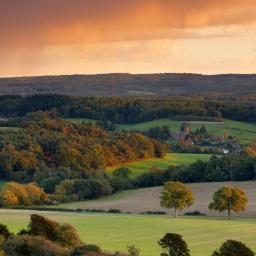
After a slow spring, Stephen Moss’s favourite summer visitors have all returned to Somerset – cuckoo, swift, hobby and a surprise redstartSometimes birds appear when you least expect them. One evening towards the end of April I was driving my son to football training when the first swifts of the year zoomed past – low as fighter jets, heading due north.On the way back, I thought I’d stop to see if there were any more. No swifts, but a real surprise, heralded by a flash of orange, as a small brown bird flew into a hawthorn. A lift of the binoculars confirmed my hunch – a female redstart, flicking her russet tail before plunging deep into the foliage, never to be seen again. Continue reading...
|
 |
by Rob Davies on (#1EMKD)
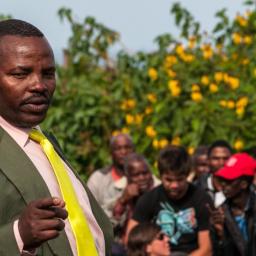
Graham Edwards defends environmental credentials of titanium-mining projectA wealthy British investor has been dragged into a deadly dispute over a South African mine, after a community leader was killed amid allegations that excavating the site would damage the environment.Threatening comments by Mark Caruso, the chief executive of the firm at the heart of the dispute, have also served to heighten tensions, say locals. Continue reading...
|
 |
by Alex Honnold on (#1EKZA)
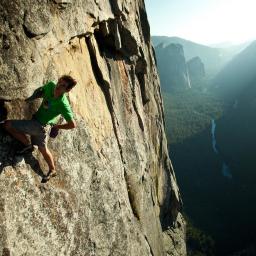
Rock climber Alex Honnold argues we must do more to defend US national parks from a slew of imminent environmental threatsJust over eight years ago, I completed a free solo ascent – unroped – of the one of the most beautiful and challenging climbs in the world: a 350 metre crack called Moonlight Buttress in southwestern Utah’s Zion national park. At the time, Alpinist magazine called it “one of the most impressive free solos ever achieved.â€While I find it hard to articulate exactly why I’m drawn to this type of exposed, unroped climbing, the setting certainly plays a big role. Zion is aptly named: it’s a promised land of striking multicolored sandstone cliffs soaring from a green valley below. Though I’m intensely focused when I climb, the gift of doing it in such breathtaking places is not lost on me. Continue reading...
|
 |
by John Vidal on (#1EKGJ)
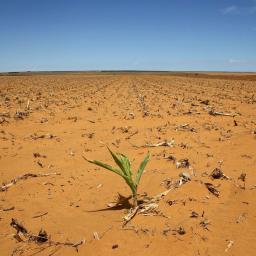
From Angola to Zimbabwe, food prices are soaring and malnutrition is on the rise as the latest El Niño weather event takes a brutal tollDrought is affecting 1.4 million people across seven of Angola’s 18 provinces. Food prices have rocketed and acute malnutrition rates have doubled, with more than 95,000 children affected. Food insecurity is expected to worsen from July to the end of the year. Continue reading...
|
 |
by John Vidal in Lilongwe, Malawi on (#1EK72)
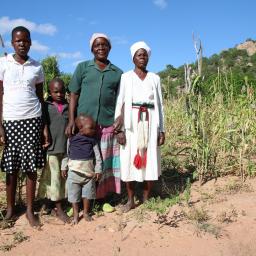
A second year without rain threatens to bring catastrophe for some of the poorest people in the world. Donor countries, in the grip of wars and refugee crises, have been slow to pledge funds. But by the time they do, it could be too lateHarvest should be the time for celebrations, weddings and full bellies in southern Malawi. But Christopher Witimani, Lilian Matafle and their seven children and four grandchildren had nothing to celebrate last week as they picked their meagre maize crop.Related: 'It's a disaster': children bear brunt of southern Africa's devastating drought | Lucy Lamble Continue reading...
|
 |
by Lucy Siegle on (#1EK44)
Take a leaf from the designs of Buckminster Fuller and redefine the space you live in with a freedomeMost of us are trapped in rectangular living, trying to retrofit eco-efficiency, but we could be enjoying life in a geodesic freedome. For starters, freedomes are inherently efficient: they need no intermediate columns or supporting walls. After all, a geodesic line is the shortest line between two points on the surface of a spheroid, and the sphere is nature’s most efficient shape.Buckminster “Bucky†Fuller, who created the Montreal Biosphère in 1967, was the foremost pioneer of geodesic domes, the master of tensegrity – tensile integrity – and the reason why geodesic structures are forever associated with eco living. Continue reading...
|
 |
by Will Hutton on (#1EJKY)
Boulder, Colorado, has been voted the US’s happiest city, thanks to its urban planning, high level of healthcare and burgeoning service jobsThe future is here and it works. Importantly, it is not a conservative future. Boulder, Colorado, is not as famous as San Francisco or even Palo Alto – but this city of some 100,000, where the high plains end and the Rocky Mountains begin, is the leading American urban area of the 21st century. It is a bewildering alchemy of 1960s hippy culture, frontier technologies, thoughtful urban planning and burgeoning service jobs ranging from diet counselling to advanced road bike maintenance. Boulder has become the exemplar of how rich and satisfying urban life can be. It is also a Democrat stronghold.It has been voted the US’s brainiest city, its happiest city, the country’s foodiest place and the number one city for health. It is a standing reproach to Donald Trump, and indeed Britain’s rightwing Brexiteers who ape his thinking. The place is booming around values and principles to which they are hostile – but attracting families, entrepreneurs and innovators from all round the US because it is such a delightful place in which to live and work. Continue reading...
|
 |
by Observer editorial on (#1EJK2)
Europe can no longer turn its back on the benefits of genetically modified cropsFor a generation, a campaign by the green movement against the growing of genetically modified crops has held sway across Europe. These foodstuffs are a threat to health, the environment and the small independent farmer, NGOs have argued. As result, virtually no GM crops have been grown on Europe’s farms for the past 25 years. Yet hard evidence to support what is, in all but name, a ban on these vilified forms of plant life is thin on the ground. In fact, most scientific reports have indicated that they are generally safe, both to humans and the environment.This point was endorsed last week when a 20-strong committee of experts from the US National Academies of Science announced the results of its trawl of three decades of scientific studies for “persuasive evidence of adverse health effects directly attributable to consumption of foods derived from genetically engineered cropsâ€. It found none. Instead the group uncovered evidence that GM crops have the potential to bestow considerable health benefits. An example is provided by golden rice, a genetically modified rice that contains beta carotene, a source of vitamin A. Its use could save the lives of hundreds of thousands of children who suffer from vitamin A deficiency in the third world, say scientists. Continue reading...
|
 |
by Reuters in Dhaka on (#1EJCV)
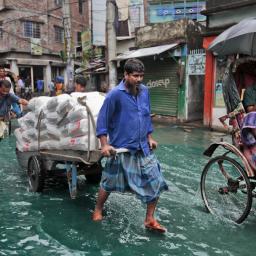
Up to 500,000 people transferred to shelters as cyclone causes landslides, house collapses and embankments to break in ChittagongA cyclone battered coastal Bangladesh on Saturday, killing at least 21 people and injuring many more.It has now weakened into a depression that, according to the weather office, could still bring brief periods of violent wind or rain. Continue reading...
|
 |
by Jamie Grierson on (#1EHHX)
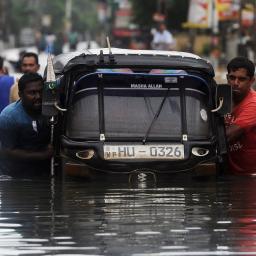
Torrential rains continue to deluge island nation, with hundreds of thousands in temporary sheltersLandslides and heavy flooding have killed at least 73 people in Sri Lanka, with scores more missing and hundreds of thousands forced to flee their homes.Torrential rains have deluged the island nation since last weekend, triggering huge landslides that have buried victims in up to 15 metres (50 feet) of mud. Continue reading...
|
 |
by Rupert Neate in New York on (#1EGYB)
Hugh Grant (no, not that one) is CEO of the agrochemical firm that’s been called ‘the most evil company in the world’ and faces a challenging futureMeet Hugh Grant. No, not the famously charming Four Weddings and a Funeral actor, but the far more controversial self-described “Scottish optimist†who is chairman and chief executive of US agrochemical company Monsanto, AKA “the most evil company in the worldâ€.It’s a big weekend for Grant and Monsanto, a company that has been fighting against adverse publicity since its production of deadly herbicide Agent Orange in the 1960s and, more recently, its role at the forefront of genetically engineered crops. Now it is battling an unsolicited multibillion-dollar takeover from the German chemicals company Bayer that would create the dominant force in the world’s food supply. Continue reading...
|
 |
by Guardian Staff on (#1EGV8)
From 3-15 May, thousands of young people around the world took part in civil disobedience on six continents, calling for oil, coal and gas to be kept in the ground. Anna Pérez Català from Climate Tracker shares some of her favourite pictures from the Break Free protests. Continue reading...
|
 |
by Clive James on (#1EGQG)
…In the US, it’s a reason to hand names to the FBILast week there were several sunny days in succession, arousing hopes that a teasingly hesitant spring might finally be arriving. A few birds showed up. One neat little bird that perched for a full minute in my maple tree was identified by a bird-wise friend as a coal tit. Provocatively, I suggested that, in view of the current hostility to anyone still evincing tolerance of fossil fuels, it might be better to call it a renewables tit. The bird flew off and my expert friend went home, leaving me trembling at the daring of my own heresy.One of my most easily angered critics has been posting tweets, railing against my “climate blindnessâ€. Already hard to please by my work in general, he says that the occasional remarks in which I flaunt my “science denial†have tested his patience “to the limitâ€. I am left to guess what he might do if his patience is tested beyond the limit. If he shows up at my door in a tank, I could try engaging him in a discussion of the renewables tit I just saw in my garden. Or I could try calling the police. Continue reading...
|
 |
by John Vidal on (#1EGMQ)
As Harmony of the Seas sets sail from Southampton docks on Sunday she will leave behind a trail of pollution – a toxic problem that is growing as the cruise industry and its ships get ever biggerWhen the gargantuan Harmony of the Seas slips out of Southampton docks on Sunday afternoon on its first commercial voyage, the 16-deck-high floating city will switch off its auxiliary engines, fire up its three giant diesels and head to the open sea.But while the 6,780 passengers and 2,100 crew on the largest cruise ship in the world wave goodbye to England, many people left behind in Southampton say they will be glad to see it go. They complain that air pollution from such nautical behemoths is getting worse every year as cruising becomes the fastest growing sector of the mass tourism industry and as ships get bigger and bigger. Continue reading...
|
 |
by Hannah Gould on (#1EGMS)
Two architects are building a house with bricks made from old construction waste produced by Dutch startup StoneCyclingRotterdam, the Dutch city home to more than 600,000 people and hundreds of high-rise buildings, can feel pretty dense. But hop on a bike and cycle around the city centre and you can still discover empty plots of land.
|
 |
by Graham Long on (#1EGC2)
Furzey Gardens, New Forest For this rare beetle to breed successfully, it needs thatch – preferably old – and herb-rich meadows within short flying distanceFor an insect only 8mm in length, the scarlet malachite beetle is picky about where it will live. Location is everything. Though it has been seen in a few other places, it has only two strongholds, one in Essex and another in the New Forest, both very vulnerable.That’s why I’m visiting Furzey Gardens near Minstead in Hampshire, where in the past it has been found in some numbers. It’s sunny, warm enough for folk to be having tea on the lawn. The buildings close by are thatched. The gardens range down the valley into an area of moist grassland, before crossing paddocks grazed by alpacas, donkeys and sheep, to more fields across the stream. Continue reading...
|
 |
by Nazia Parveen North of England correspondent, and on (#1EFHH)
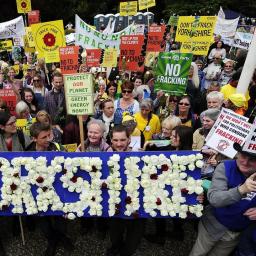
County hall meeting hears objections to project by Third Energy to frack for shale gas near village of Kirby MispertonDozens of people living near a proposed fracking site in North Yorkshire have lined up to tell councillors they do not want to be the first community in the UK to allow the controversial gas extraction technique.
|
 |
by Letters on (#1EEWJ)
I note your recent correspondence on church roofs and solar panels (Letters, 19 May). Gloucester cathedral has recently been awarded a substantial grant for Project Pilgrim phase one: the heart of Gloucester from the Heritage Lottery Fund. Project Pilgrim is a £6m restoration and improvement project to help the cathedral to fulfil its role as a dynamic place of spiritual, community and heritage activity.A key part of the proposals fully supports the Church of England’s Shrinking the Footprint campaign as we will install approximately 200 solar panels on the cathedral’s nave roof. Continue reading...
|
 |
by Environment editor on (#1EED6)
The week’s top environment news stories and green events. If you are not already receiving this roundup, sign up here to get the briefing delivered to your inbox Continue reading...
|
 |
by Suzanne Goldenberg on (#1EEB3)
ExxonMobil and others pursued research into technologies, yet blocked government efforts to fight climate change for more than 50 years, findings showThe forerunners of ExxonMobil patented technologies for electric cars and low emissions vehicles as early as 1963 – even as the oil industry lobby tried to squash government funding for such research, according to a trove of newly discovered records.Patent records reveal oil companies actively pursued research into technologies to cut carbon dioxide emissions that cause climate change from the 1960s – including early versions of the batteries now deployed to power electric cars such as the Tesla. Continue reading...
|
 |
by Joshua Reichert on (#1EE7R)
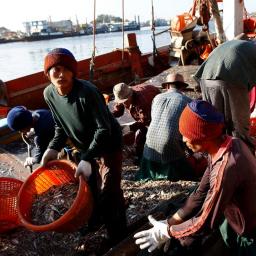
Illegal fishing robs the world’s oceans of 26m tons of seafood annually. Now, a new international treaty aims to make it tougher for thievesIn the time it takes you to read this sentence, nearly 10,000 lbs of fish will be stolen from the world’s oceans. Illegal fishing, which accounts for up to 26m tons of seafood annually, robs legitimate fishers and governments of revenue, undermines the accuracy of fisheries’ stock assessments and threatens the stability of coastal communities that rely on the legal trade.Related: Off the hook: can a new study in the Pacific reel in unsustainable fishing? Continue reading...
|
 |
by Bill McKibben on (#1EDYJ)
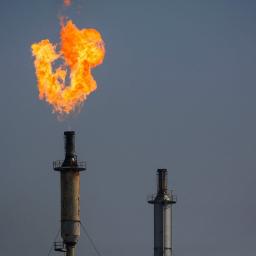
Every year at the shareholders’ annual meeting, there is an attempt to push the company on reducing emissions. It’s time to stop trying and divest insteadIn 1990, a small group of investors offered a resolution at Exxon’s annual shareholder’s meeting asking that it “develop a company-wide plan to reduce carbon dioxide emissions.†The company opposed the motion, which won 6% of the vote, on the grounds that “the facts today and the projection of future effects are very unclear.â€
|
 |
by Eric Hilaire on (#1EDWR)
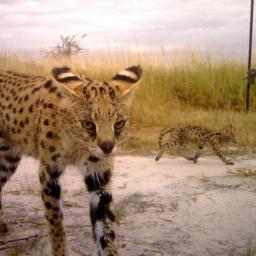
A fleeing giraffe, a sleeping racoon and a close encounter with a great white shark are among this week’s pick of images from the natural world Continue reading...
|
 |
by Terry Macalister Energy editor on (#1EDYM)
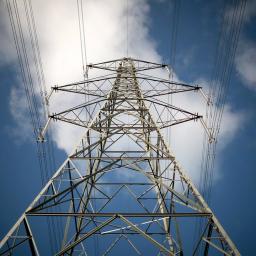
Japanese company and US construction group Bechtel offer rival proposal to French firm EDF’s plans for Hinkley Point C reactorHitachi has unveiled a construction consortium to build a £10bn nuclear power station in Wales “on time and on budgetâ€, as a rival to the French-backed plans for Hinkley Point C.
|
 |
by Dan Kitwood/Getty Images on (#1EDWT)
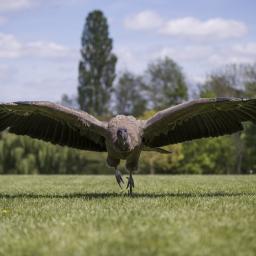
At the International Centre for Birds of Prey in Gloucestershire, about 75 species are cared for, including hawks, eagles and falcons. As well as treating injured wild birds, the centre focuses on breeding and conservation Continue reading...
|
 |
by Oliver Milman on (#1EDFF)
They’ve been called ‘the beast of destruction’ and ‘the abortion issue of wildlife’, but efforts to save the wolf’s population – and perception – are worth celebratingSome species are eliminated through sheer human carelessness, as we clumsily attempt to mould the world in our image. America’s gray wolf, on the other hand, was almost gleefully wiped out, exterminated with a visceral mixture of disgust and fear.Related: Wolf population reaches new high at Yellowstone park Continue reading...
|
 |
by Press Association on (#1EDB2)
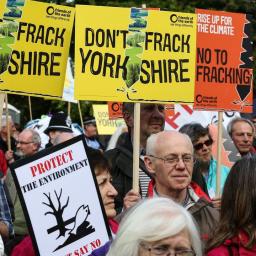
Ryedale residents tell councillors they do not want to be the first place in the UK to allow frackingPeople living close to a proposed fracking operation in North Yorkshire have told councillors they do not want to be the first community in the UK to allow the controversial gas extraction technique.
|
 |
by Arthur Neslen on (#1ED6Y)
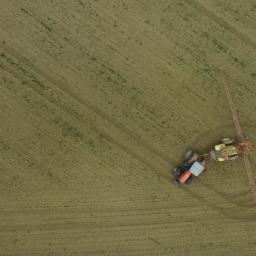
Leading Monsanto, Dow and Syngenta products could be withdrawn from shops by July after committee fails to agree on whether glyphosate poses a health risk to humansBestselling weedkillers by Monsanto, Dow and Syngenta could be removed from shops across Europe by July, after an EU committee failed for a second time to agree on a new license for its core ingredient, glyphosate.The issue has divided EU nations, academics and the World Health Organisation (WHO) itself. One WHO agency found it to be “probably carcinogenic to humans†while another ruled that glyphosate was unlikely to pose any health risk to humans, in an assessment shaded by conflict of interests allegations earlier this week. Continue reading...
|
 |
by Colin Poole in Rakhine on (#1ECT4)
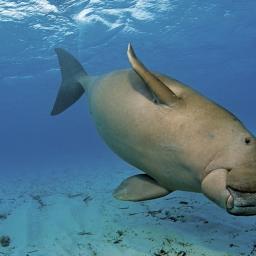
Aung San Suu Kyi’s new government must safeguard the ocean from illegal fishing that has depleted stocks by 70-90% and is killing endangered sea turtles and dugongsAs Aung San Suu Kyi’s National League for Democracy (NLD) engaged in a historic transfer of power in the Myanmar capital of Naypyidaw in March, my Burmese colleagues and I stood on a deserted beach 170 miles to the southwest, near Gwa on the Rakhine coast. We were speaking to local fishermen about their livelihoods and hearing about the unfortunate death of a young dugong – southeast Asia’s cousin of the manatee.
|
 |
by Agence France-Presse on (#1ECPX)
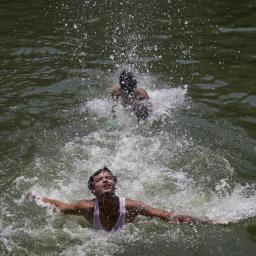
The previous record of 50.6C stood since 1956 but wilted in the latest summer heatwave to hit the countryA city in northern India has shattered the national heat record, registering a searing 51C – the highest since records began – amid a nationwide heatwave.
|
 |
by Clarissa Sebag-Montefiore on (#1ECP0)
The team behind the next generation of sustainable buildings, including Sydney’s Barangaroo, aim to promote wellness along with preventing environmental harmHidden beneath Federation Square, the heart of civic Melbourne, is a complex labyrinth of concrete cells.This labyrinth – the world’s largest de-coupled airside thermal storage system –acts like a rechargeable battery. On summer evenings it stores cool night air to use during warm days and, in winter, daytime heat to use at night.The apparatus was inspired by Roman bath and cave systems used more than 2,000 years ago that fed naturally cooled air to ancient villas in northern Italy. Continue reading...
|
 |
by Victoria Wells on (#1ECN3)
Must of us ignore our environmental responsibilities at work, largely because of a lack of control, responsibility or financial interest“I know I should be bothered but I just can’t beâ€, said a colleague recently as they threw some paper towards the bin, “it’s weird really because at home we’re fastidious about recycling and all that … but at work I just don’t bother.†In one sentence highlighting how hard it can be to encourage employees to be as environmentally friendly in the workplace as they are in their own homes.As an academic interested in employee environmental behaviour I often find myself encouraging colleagues to be more environmentally friendly. However, research confirms that employees act worse at work because they don’t have a financial interest (most don’t even know the energy spend of their organisation), equipment is often shared so there can be a lack of responsibility and employees can’t control many of the elements that could make a difference to energy and resources use, such as heating or lighting. Continue reading...
|
 |
by Ed Douglas on (#1ECM2)
Kinder Scout, Derbyshire Something metallic, coppery bronze, slinks off, a mercurial blur that is a common lizardIn bright sunshine I find myself on Kinder Scout, toiling up the slope towards the broken tower of Upper Tor, craning my neck at a clever, sinuous, rock climb that takes the leaning crest of its most prominent buttress.This Peak District route was first done in 1936, the creation of Arthur Birtwistle, a stalwart member of that hardy Manchester institution the Rucksack Club whose members have generally spent so long exploring the gritstone edges fringing the city that the grit has entered their souls. Continue reading...
|
 |
by Graham Readfearn on (#1ECHH)
Levels of CO2 are pushing beyond 400 parts per million in the atmosphere. The last time they were there, 15 million years ago, the world was very differentRound numbers can trigger all sorts of weird and sometimes irrational responses.For example, in about 19 years time when I turn 40 there’ll be some sort of celebration at which I’m told I have reached a milestone. The number can also trigger denial in those afflicted (I honestly wouldn’t know*). Continue reading...
|
 |
by Elle Hunt on (#1EC8R)
Radish tops can be used in soups and pretty much any sad vegetable or fruit can be rescued by pureeing – submit your tips for ‘zero waste’ cookingIn the never-ending string of “days attached to apparent causesâ€, Friday is Food Revolution Day, pioneered by the high-profile happy chappy Jamie Oliver, friend to all but sugar.Youth Food Movement Australia, which organises volunteer-run food projects across the country, says the amount of food thrown out by one household annually equates to one in five bags and costs $1,000 a year.
|
 |
by Associated Press in Seattle on (#1EC7C)
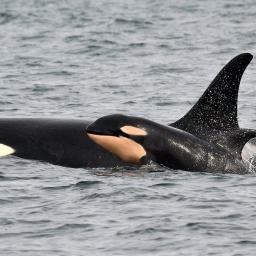
Regulator admits risks but recommends Trudeau government approve project to ramp up shipping of tar sands crude via Salish Sea tribal fishing groundsCanada’s energy regulators have recommended the approval of the Trans Mountain oil sands pipeline, which has drawn environmental and tribal protests over the dramatic increase it would mean to the number of oil tankers moving through the waters between the US and Canada.The National Energy Board recommended the federal government conditionally approve Kinder Morgan Canada’s plan to nearly triple pipeline capacity from 300,000 to 890,000 barrels of crude oil a day. The $5.4bn Trans Mountain project would carry oil from Alberta ’s oil sands to near Vancouver, British Columbia, to be loaded on to tankers for export to Asian and US markets. It would mean a sevenfold increase to shipping through the Salish Sea. Continue reading...
|
 |
by Terry Macalister Energy editor on (#1EBZZ)
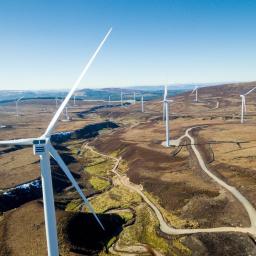
Energy subsidies designed to keep lights on and support low-carbon electricity will have risen 124% by 2020-21, review findsHouseholds will be paying £100 more for their annual bills within five years to fund four government policies designed to keep the lights on and support low-carbon electricity, according to a review.Independent consultancy Cornwall Energy said energy subsidies will have risen by 124% by 2020-21 due to the cost of the capacity market, renewable obligations, contracts for difference and feed-in tariff schemes. Continue reading...
|
 |
by Letters on (#1EB2G)
Baby death statistics | House prices surge | Spending a penny | How to greet a hareDividing a small rate of deaths in the worst area by the even smaller rate in the best areas makes the worst look twice as bad (UK baby deaths ‘still influenced by where you live’, 17 May). But 99.21% of babies survive in the worst areas and 99.59% in the best areas. (Infant mortality is expressed as per 1,000 births precisely because it is so low, so a difference of less than 10 per thousand equates to less than a 1% difference.) If employment rates or exam results were this close, governments would call it a great success.
|
 |
by Fiona Harvey Environment correspondent on (#1EAQV)
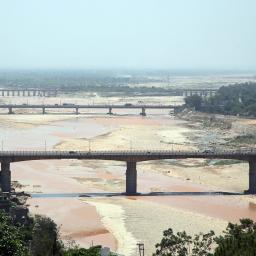
Radical action is needed to combat increasing rate of environmental damage to water sources, land, biodiversity and marine life, report showsDegradation of the world’s natural resources by humans is rapidly outpacing the planet’s ability to absorb the damage, meaning the rate of deterioration is increasing globally, the most comprehensive environmental study ever undertaken by the UN has found.The study, which involved 1,203 scientists, hundreds of scientific institutions and more than 160 governments brought together by the UN Environment Programme (UNEP), concludes that without radical action the level of prosperity that millions of people in the developed world count on will be impossible to maintain or extend to poorer countries. Continue reading...
|
 |
by Ben Child on (#1EAQ4)
Australian conservationists warn that Pixar sequel could increase pressure on marine populations, after the first film led to surge in popularity of pet clownfishAustralian conservationists have warned that the release of new Pixar film Finding Dory could increase pressure on wild populations of exotic fish on the Great Barrier Reef and elsewhere.Researchers from the University of Queensland and Flinders University teamed up a decade ago for the Saving Nemo Conservation Fund, named after the Disney-owned studio’s 2003 animated smash Finding Nemo, in which a clownfish searches the oceans for his missing son. Continue reading...
|
 |
by Madeleine Somerville on (#1EAKT)
Researchers have found people will act in a more environmentally helpful way when they consider what kind of legacy they hope to leave behindIn the face of an overwhelming amount of data suggesting that climate change poses an immediate and catastrophic threat to our very existence, we remain largely inert. The stakes truly could not get any higher, yet many of us steadfastedly refuse to change our behaviour.What’s it going to take? Continue reading...
|
 |
by Damian Carrington on (#1EA1D)
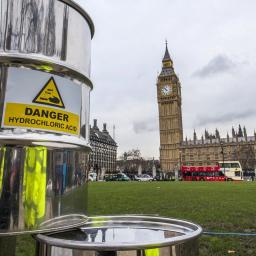
Head of Cuadrilla’s warning to UK energy minister over ‘unnecessary delays’ comes ahead of Yorkshire shale gas planning decisionThe backers of fracking in the UK do not have “limitless patience†for planning delays, according to a leading industry boss.Francis Egan, chief executive of Cuadrilla, warned that despite the government’s promise to fast track fracking, the planning process remains a slow lane. The comments come just ahead of a planning decision in Yorkshire on Third Energy’s application for shale gas exploration. Continue reading...
|
 |
by Olga Oksman on (#1E9Y4)
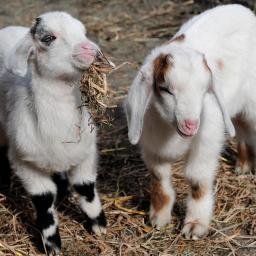
Goats, which naturally like weeds such as poison ivy and can eat up to 25 pounds a day, are cleaning up Prospect Park with no negative environmental impactOverexcited children and reporters mill around the fence enclosing part of the Prospect Park woodlands. “Daddy, daddy, look!†one eager little boy yells. Everyone is craning their necks, raising their cameras to get a shot. The latest celebrities to grace Brooklyn are a group of eight weed-eating goats, and they are taking up residency through the end of the summer.Later this week, Prospect Park has arranged a wine and cheese reception so the public can formally meet the goats, which range from Nubian to Angora and Pygmy breeds. Tickets have already sold out. While the press photographers jockey for space with toddlers, the goats seem unfazed by the attention, posing for photos or placidly dozing off in sunny spots on the hill. Continue reading...
|
 |
by Ian Colbeck for The Conversation on (#1E9NK)
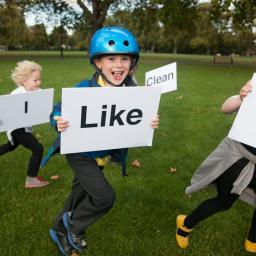
About 3,000 British schools are in areas where air quality is poor, with those in poorer communities suffering more
|
 |
by Guardian Staff on (#1E9J7)
Despite our professed concern for bees, a YouGov poll for Friends of the Earth found that most of us can’t recognise a honey bee. Take the green group’s quiz to see how much you know• The Great British Bee Count take place from 19 May-30 JuneHow many different species of bees are in the UK?13100250-plusWhich of these foods is not pollinated by bees?StrawberriesRiceApplesAlmondsBees pollinate what percentage of the world's main crops?25%33%75%90%How many of the UK’s bee species make honey?13100250+When bees visit plants what are they after?WaterScentMating ritualPollenWhich of these items of clothing depends on pollination by bees?Silk tie and scarfCotton jeans and socksWoolly jumperPolyester walking gearWhat is the main cause of bee decline?PesticidesHabitat lossDiseaseClimate changeHow can I most help bees?Grow different plants for bees to visit all year roundDeck your patio areaMow the lawnUse a pesticide to get rid of aphidsWhich one of the following do you think is the honey bee?Tawny Mining BeeHoney BeeBumblebeeHoverfly5 and above.Not bad.8 and above.Buzzing brilliant!0 and above.Oh dear. Continue reading...
|
 |
by Sarah Myhre on (#1E97B)
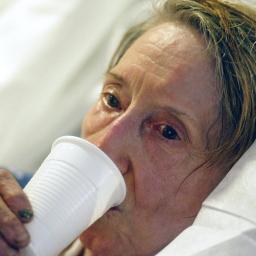
Climate scientists are feeling the need to engage in social leadership before it’s too late
|
 |
by Adam Vaughan on (#1E97D)
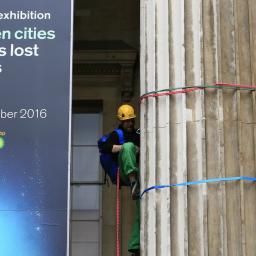
Museum temporarily closes as activists hang huge banners renaming the new BP-sponsored Sunken Cities Egypt exhibition as ‘Sinking Cities’Greenpeace activists have climbed the British Museum and have hung banners off its columns in protest at BP’s sponsorship of its new ancient Egypt exhibition.The museum was temporarily closed for around four hours on Thursday during the protest because of “visitor safety reasons.†Continue reading...
|
 |
by Fiona Harvey Environment correspondent on (#1E91X)
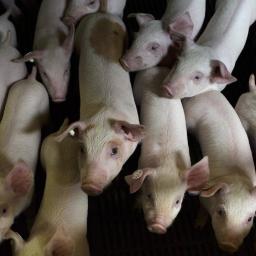
Taskforce will work with farming leaders and government to replace and reduce antibiotic use for livestockA new taskforce to reduce the use of antibiotics in farming in the UK is being set up in response to government concerns on the growing resistance of diseases to antibiotic medicines.The alliance for the Responsible Use of Medicines in Agriculture (RUMA) said it would work with organisations including farming leaders, food companies and government to find ways to replace antibiotic use where possible, and reduce it where not. Continue reading...
|
 |
by Drew Reed in Buenos Aires on (#1E8Q7)
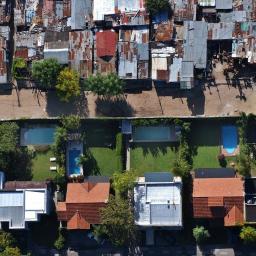
The richest and poorest residents of Argentina’s capital are separated by the walls of gated communities. When heavy rains in 2013 left those outside the barriers vulnerable to severe flooding, their only hope was to tear them down
|