 |
by Michael Slezak on (#19FT7)
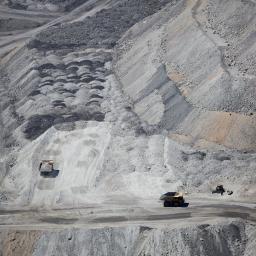
Exclusive: ReachTEL poll shows 56.5% of people in state think coalmining has a negative effect, up 9.5 percentage points since 2013A shift in opinion in New South Wales has left the majority of residents believing coal does more harm than good, and continuing to think the state government isn’t doing enough to protect farms and water from mining and fracking.
|
| Link | http://feeds.theguardian.com/ |
| Feed | http://feeds.theguardian.com/theguardian/environment/rss |
| Updated | 2026-08-17 05:30 |
 |
by Fiona Harvey on (#19FS0)
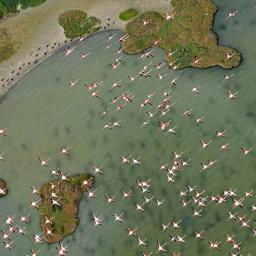
Charity concludes that at least 114 of 229 world heritage sites of outstanding importance for species and habitats are at risk from mining and other activitiesClose to half of the sites around the world designated for special protection as areas of outstanding importance for nature are now being threatened by industrial development, a new survey has shown.
|
by Giles Parkinson on (#19FR5)
A pilot biodiesel plant in Queensland’s Gladstone could lead to the production of enough fuel by 2020 to power the entire army, navy and air forceIn just four years from now, a significant portion of Australia’s military hardware – its ships, jets, tanks and other vehicles – could run on fuels recycled from old tyres, human waste, noxious weeds and sugar cane residue.That’s the vision of Tim Rose, the managing director of Australian refining company Southern Oil, which last week announced the first stage of a $650m investment to produce enough diesel from “advanced biofuels†to power Australia’s entire defence force. Continue reading...
 |
by Agence France-Presse in Dublin on (#19FF9)
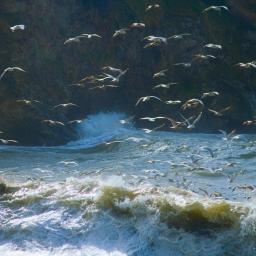
Scientist at environmental agency blame droppings by the birds for poor water qualityA surge in seagull droppings is fouling up the water at a popular Dublin beach, according to Ireland’s Environmental Protection Agency.
|
 |
by Fiona Harvey on (#19EMH)
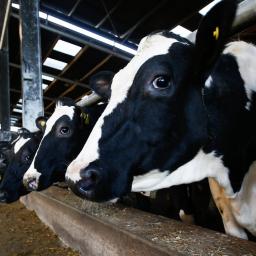
Research for NFU suggests the sector would have a mixed future outside the EU, with some farmers doing better than othersFarmers will lose out by as much as €34,000 (£27,400) a year if the UK votes to leave the EU, unless new national taxpayer subsidies are put in place to bolster farm incomes, a new study has found.The agricultural sector will face a mixed picture, according to the report, which projects its post-Brexit future. Some farmers, such as those specialising in cereals and dairy, are likely to see steep falls in the price of their goods but businesses less dependent on the EU, including poultry and pig farmers, could benefit. Continue reading...
|
 |
by Zofia Niemtus on (#19EFW)
Schools are discovering that getting students to grow their own greens has benefits beyond healthy eating and unusual learning opportunitiesHow can we get children to eat more vegetables? There’s no shortage of advice on the matter, varying from “serve them with unpopular foods†to “act more like French people†or “just give upâ€. But schools are discovering that getting students to grow their own greens can make a big difference. This hands-on method is so powerful, in fact, that it can even detoxify the dinner table nemesis of generations: the brussel sprout.
|
 |
by Rebecca Smithers on (#19E96)
Tesco and Sainsbury’s are battling to become the first supermarket to sell British asparagus this yearUK supermarkets are battling to be the first to sell British-grown asparagus this year, a full two weeks before the start of the traditional but notoriously short season.
|
 |
by Kylie Noble on (#19E86)
Report reveals dramatic decline in numbers of Grauer’s gorilla in in war-torn eastern Democratic Republic of CongoNumbers of the world’s largest great ape have dropped dramatically from a population of 17,000 in 1995 to 3,800 today, according to new research.
|
 |
by Ashifa Kassam in Toronto on (#19DRA)
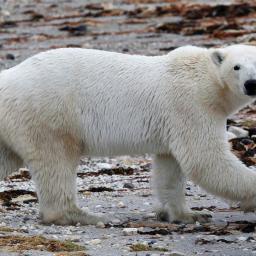
Between 1984 and 2009 the weight of female bears in Ontario fell by over 10% while climate change meant they had 30 fewer days a year to hunt seal on iceThree decades of melting sea ice has led to significant weight loss among the world’s southernmost population of polar bears, new data from Canadian researchers suggests.
|
 |
by Karl Mathiesen on (#19DN7)
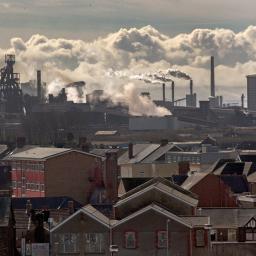
Analysis of the figures show Port Talbot may actually have been profiting from efforts to reduce carbon emissionsThere was a slew of comment over the weekend regarding the role that Britain’s carbon reduction efforts played in Tata Steel’s decision to sell off its UK operations.A Daily Mail editorial called “the crippling green taxes imposed by Ed Miliband’s Climate Change Act in 2008†a “monstrous handicap†that had driven the steelworks and its 5,000 workers over the precipice. Continue reading...
|
 |
by Madeleine Somerville on (#19DMH)
It’s not easy living green without going completely off the grid, but that doesn’t mean we shouldn’t do what we can – and accept that sometimes we’ll failI consider myself an environmentalist, yet last weekend I spent five hours in a car dealership going through the rigamarole of getting a new car – arguably one of the most polluting devices in modern-day life. I advocate buying second-hand, but I leased new. I encourage walking and biking and public transportation, and I do take advantage of these options on a regular basis, yet there I was, taking the keys and driving away with a shiny new ride and a sinking sense of discomfort.Likewise, I recently met an environmental lawyer (and a car-less one too, I might add). He came to his profession amid a deep and decades-long affinity for the lakes and rivers which make Canada beautiful, and a strong desire to protect them. Yet the same work, in which he makes great strides to protect these natural landscapes, also prevents him from enjoying them. He works 50 to 70 hours a week in a downtown office, spending hours staring at a pixelated computer screen rather than the starry sky. When he tells me about it, he sounds vaguely helpless. He’s torn between the change he wants to create, and his ability to see the natural world for more than the odd weekend between cases. Continue reading...
|
by Guardian Staff on (#19DN9)
The actress-turned-lifestyle-guru is no stranger to bizarre beauty regimes – and her latest, which involves being stung by bees, is no exceptionName: Bees.Age: Their earliest known ancestor was fossilised in the Cretaceous period. Continue reading...
 |
by Lynn Hilton on (#19D81)
Tens of thousands were evacuated from the neighbouring city of Pripyat following the Chernobyl nuclear disaster in 1986. Lynn Hilton visits the deserted city – and finds homes, schools and a fairground left to decay Continue reading...
|
by Tom Levitt on (#19D92)
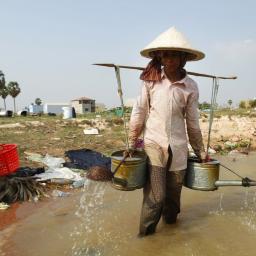
While promising to reduce use of human antibiotics, Donnie Smith says there is no evidence that intensive farming is to blame for spread of resistant bacteriaThe meat industry has reason to be worried. The last line of antibiotic defence against some serious infections is under threat - and blame is being directed at the livestock sector, accused of overuse or misuse of drugs. In the US, more antibiotics are sold for food producing animals than for people.As one of the world’s biggest and most profitable meat brands US-based Tyson Foods has promised to end the use of human antibiotics. But how committed is it to cleaning up its act? Does it believe there is a problem, or is it all about good PR? Continue reading...
 |
by Associated Press on (#19D0Z)
Study indicates ‘very high adverse effects’ on the environment and economy if 11 proposed dams are built on the lower mainstream Mekong riverVietnam has predicted “very high adverse effects†on the Mekong river environment and economy if 11 proposed dams are built on its lower mainstream.
|
 |
by Guardian Staff on (#19CJQ)
Nick Brandt built lifesized panels depicting Africa’s great creatures and placed them in scenes where they used to roam. The resulting photographs serve as a potent reminder of what poaching and climate change put at stake Continue reading...
|
by Adam Vaughan on (#19CF8)
Solar and wind would generate the equivalent power to Hinkley over the plant’s planned lifetime for £40bn less, says analysis comparing future costsScrapping plans for new nuclear reactors at Hinkley Point in Somerset and building huge amounts of renewable power instead would save the UK tens of billions of pounds, according to an analysis that compares likely future costs.
 |
by Rebecca Smithers Consumer affairs correspondent on (#19CF9)
NFU publishes guide to sources two weeks after accusing Tesco of misleading consumers with brand namesThe National Farmers’ Union (NFU) is launching its first shoppers’ sourcing guide to help consumers compare rival supermarkets’ policies when they want to buy British food.
|
by Guardian Staff on (#19CDX)
The Environmental Photographer of the Year competition presents the best of environmentally and socially conscious photography from all over the world. Ahead of the 18 April deadline for submission, we take a look at previous years’ winners Continue reading...
 |
by Mark Cocker on (#19CCY)
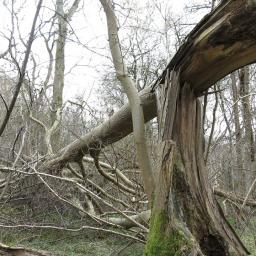
Wayland Wood, Norfolk One of the things I love about ash is its reluctance to give up lifeThe proximity of a busy road to such a glorious fragment of Domesday England is one of my only regrets about Wayland. I also wish this t1000-year-old wood were five times bigger. There is at least consolation in its ownership by the Norfolk Wildlife Trust and in its regime of wonderfully restrained untidiness. At times it feels as if there’s as much dead wood on the ground as there is canopy overhead.The bluebell carpet is all succulent green and there are exquisite clusters of pale lemon laagered in the crinkle-leaved primrose patches. Yet this is still a wood locked in winter. The most magnificent and deadest-looking of all Wayland’s trees are the ash. The trunks are bone coloured and bone smooth and, while the hazels’ wands have bark that is smoother, they are festooned in swinging catkins and emblematic of a different season. Continue reading...
|
 |
by Paul Karp on (#19CBX)
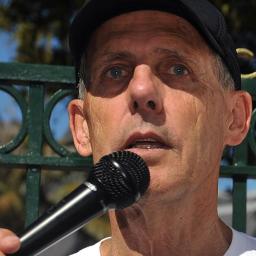
‘I wish him well,’ former party leader says of Geoff Holloway’s plan to form breakaway groupThe former Greens leader Bob Brown has shrugged off the impact of a split in the Tasmanian Greens that will lead to a breakaway faction contesting the state election.“I hope they win every dark green vote in Tasmania – they’ll go straight across to the Greens in preferences,†he said. Continue reading...
|
 |
by Michael Slezak on (#19BKH)
Study finds protecting a single type of herbivorous fish could be crucial to the recovery of reefs from damage related to climate changeLimiting the take of just one type of fish could protect coral reefs around the world from the most serious immediate impacts of climate change, researchers have found.Studying Caribbean coral reefs, Peter Mumby and colleagues from the University of Queensland found that enforcing a rule limiting the fishing of a single type of herbivorous fish – parrotfish – would allow coral reefs there to continue to grow, despite bleaching and other impacts associated with climate change. Continue reading...
|
 |
by Michael Slezak on (#19BFB)
Exclusive: The revenue the federal government would lose if it stopped all new or expanded thermal coal and gas projects has dropped by 80% in 2.5 yearsAs the fossil fuel industry appears increasingly shaky, the cost to the federal budget of stopping all new coal and gas projects in Australia has plummeted – costing less than 20% of what it was estimated to just 2.5 years ago, according to official parliamentary costings seen by Guardian Australia.The Greens have a policy of approving no new thermal coal or unconventional gas projects in Australia. That includes new mines, as well as expansions to existing mines. Continue reading...
|
 |
by Jana Kasperkevic in New York and agencies on (#19B7P)
The settlement, first announced in July, will cover environmental damage and other claims by the five Gulf states and local governments, paid out over 16 yearsA federal judge in New Orleans has granted final approval to an estimated $20bn settlement, resolving years of litigation over the 2010 BP oil spill in the Gulf of Mexico.US district judge Carl Barbier’s final order on the settlement was released on Monday. Continue reading...
|
 |
by Letters on (#19AZM)
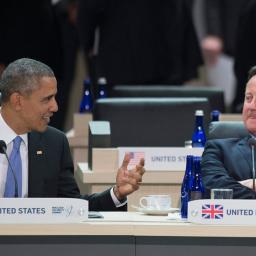
You report David Cameron as asserting at the global nuclear security summit in Washington that, along with the US, “Britain is very much giving the lead on nuclear security on nuclear sites, transport and materials†(World leaders meet to plan for ‘all too real’ nuclear doomsday scenario, 2 April).Unfortunately, the truth is the opposite; Mr Cameron and his ministers are deluding themselves if they believe this. Continue reading...
|
 |
by Arati Kumar Rao on (#19AYW)
Last month, a coal ship capsized in southern Bangladesh – the third environmental catastrophe in the fragile mangrove ecosystem in three years. Commercial shipping has brought devastation to a culture dependent on fish for survival Continue reading...
|
 |
by Suzanne Goldenberg on (#19ATV)
Obama administration report details the diversity of risks and claims global warming is a far more challenging danger than polio virus in some casesClimate change poses a serious danger to public health – worse than polio in some respects – and will strike especially hard at pregnant women, children, low-income people and communities of color, an authoritative US government report warned on Monday.
|
 |
by Arthur Neslen on (#19ANV)
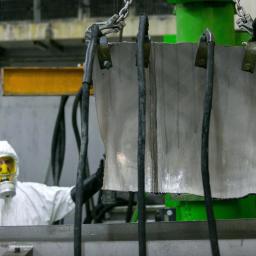
Disposal and decommissioning of plants in EU’s 16 nuclear nations outstrips available funds by €120bn, European commission study revealsEurope is facing a €253bn bill for nuclear waste management and plant decommissioning which outstrips available funds by €120bn, according to a major stock-take of the industry by the European commission.The sum breaks down into €123bn for the decommissioning of old reactors and €130bn for the management of spent fuel, radioactive waste and deep geological disposal processes. Continue reading...
|
 |
by John Vidal on (#19AJH)
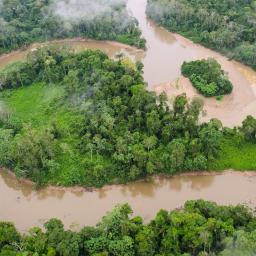
First of 200 wells drilled close to controversial block of forest known to have two of the last tribes living in isolationEcuador has started drilling for oil on the edge of a controversial block of pristine rainforest inhabited by two of the last tribes in the world living in voluntary isolation.
|
 |
by Fiona Harvey and Kylie Noble on (#19AC2)
Carbon disposal technologies are needed because incremental emissions cuts are not enough to fight climate change, says Oxford University climate scientistCombating climate change successfully will require massive investments in technologies to capture and store carbon dioxide, new research has found.
|
 |
by Megan Darby for Climate Home, part of the Guardian on (#199QV)
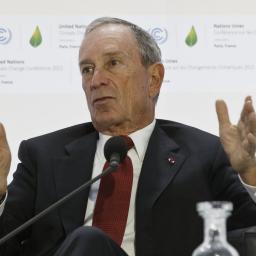
Lead analyst recommends companies to disclose their climate risk exposure to avoid legal issues faced by Peabody and Exxon, Climate Home reportsClimate risk information should form part of companies’ routine financial filings, a taskforce led by Michael Bloomberg is recommending.As companies like Peabody Energy and Exxon Mobil face legal probes over allegedly lying about their exposure, it reinforces moves for greater transparency. Continue reading...
|
by Karl Mathiesen on (#199HM)
Father of leading leave campaigner, Boris Johnson, warns absence of EU laws will embolden traditional Tory approach and weaken environmental standardsA move out of the EU would leave Britain’s environment open to the legislative whims of a Conservative government that has shown little inclination for good stewardship, according to a leading ‘green’ Tory.If Britons vote to leave in the June referendum, many British environmental laws currently transposed from EU regulations would be open to the discretion of the UK parliament. Stanley Johnson, who held a European seat for the Tories during the 1980s, said the current government’s form was a poor recommendation for the repatriation of these powers. Continue reading...
 |
by Press Association on (#199FP)
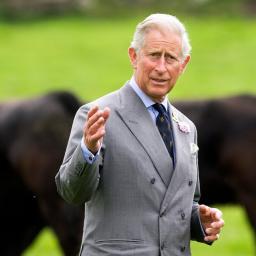
Duchy of Cornwall overturns ruling in favour of activist who claims controversial farm is damaging natural habitatPrince Charles’s private estate has won an appeal against a ruling that could have opened up its dealings to increased public scrutiny.Representatives for the Duchy of Cornwall successfully challenged a decision that it is a “public authority†and must disclose environmental data about a controversial oyster farm it owns. Continue reading...
|
 |
by Agence France-Presse in Peshawar on (#199ER)
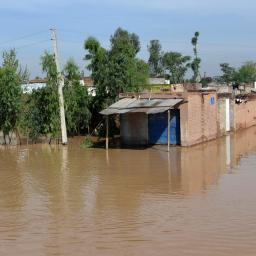
Officials in Khyber Pakhtunkhwa province say they are consulting the military about a rescue operationRescuers are attempting to reach thousands of people stranded by floods and landslides in Pakistan’s north-west and parts of Kashmir after the death toll rose to 55.Disaster management officials in Khyber Pakhtunkhwa province, where 47 people have died since the downpour began on Saturday night, said they were consulting the military about a rescue operation there amid fears the death toll could still climb. “We are trying to arrange a helicopter to reach the people stuck under debris of their houses,†Latifur Rehman, a spokesman for the provincial disaster management authority, told AFP. Continue reading...
|
 |
by Sam Thielman in New York on (#199DG)
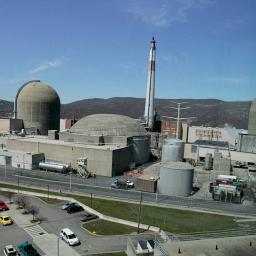
Leak in pipeline being built by energy giant Spectra could lead to shutdown – or worse – at the New York state power station, experts sayAcross a narrow swath cut by bulldozers and chainsaws through the woods of Westchester County, New York, triangular yellow flags are clotheslined between pairs of trees. The flags trace the eventual path of the gas pipeline that the energy giant Spectra is building through the area, escorted at times by police and harried by local residents worried by its proximity to a decaying nuclear power plant.If that pipeline leaks or breaks, say experts, its contents could detonate and destroy the switchyard that sits 400ft from the gas line. Entergy, which runs the Indian Point power station, said the plant could be quickly shut down in such an event. Nuclear engineer Paul Blanch is not so sure. Blanch, who has previously consulted for Entergy and now assists an organization calling for the pipeline to be stopped, said that assertion is a best-case scenario. In the worst case, he said, the reactors could melt down. And he believes Entergy and Spectra have not fully considered that worst-case scenario. Continue reading...
|
 |
by Courtney M Williams on (#199D6)
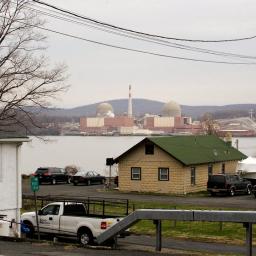
The Spectra Energy pipeline expansion has been given the go-ahead, but inadequate safeguards make me scared for my children’s healthThe Keystone XL pipeline was vetoed by President Obama last year as being antithetical to the nation’s climate goals. Yet fights against pipelines continue to rage across the country – including 400 feet from my home in New York state, where a proposed pipeline next to the troubled Indian Point nuclear plant has spurred fears of a Fukushima-like scenario, with New York City lying squarely in an evacuation zone.
|
 |
by Guardian readers and Tom Stevens on (#199CQ)
We asked you to share your most striking images of the weather in March from around the world. Here are some of our favourites for each day of the month
|
 |
by John Vidal on (#199AQ)
Thin film of red dust enveloping parts of country for two weeks in 2014 came mostly from farms in mainland Europe and local emissions, study saysBritain’s most serious air pollution event in the past 10 years was only partly caused by “natural†dust blowing in from the Sahara desert and mostly came from farmers fertilising their fields and industrial emissions from mainland Europe, a scientific paper has concluded.
|
 |
by Australian Associated Press on (#19992)
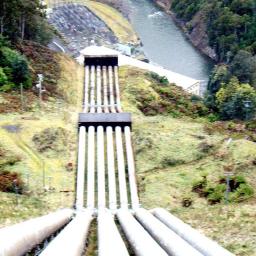
Tasmanian government ships in diesel generators as record low rainfall combined with a broken Basslink cable cause energy shortages across stateCalls for electricity rationing are being renewed in Tasmania as hydro dam levels fall further and with repairs to the broken Bass Strait cable still some time away.In the seven days to Monday dams across the state’s hydro scheme lost 0.3% capacity and stand at 13.6%, with further drops forecast. Continue reading...
|
by Dana Nuccitelli on (#1998B)
Old, white, conservative males support Trump and oppose free market climate solutions for similar reasons
 |
by Ben Child on (#1990W)
Environment and forestry minister Siti Nurbaya denies reports authorities will deny Oscar winner entry if he keeps making pro-environment statementsAn Indonesian minister has denied reports the country could move to blacklist Leonardo DiCaprio after the Oscar-winning actor criticised the environmental impact of palm-oil cultivation on a recent visit to the Sumatran rainforests.On Saturday the Associated Press reported comments from Heru Santoso, spokesman for the directorate general for immigration at Indonesia’s law and human rights ministry, who said DiCaprio’s recent visit to the Leuser Ecosystem in northern Sumatra had been used to discredit both the palm-oil industry and the nation’s government.
|
by Emily Mann on (#198RY)
By the mid-1800s, the River Thames had been used as a dumping ground for human excrement for centuries. At last, fear of its ‘evil odour’ led to one of the greatest advancements in urban planning: Joseph Bazalgette’s sewage system
 |
by Carey Davies on (#198H9)
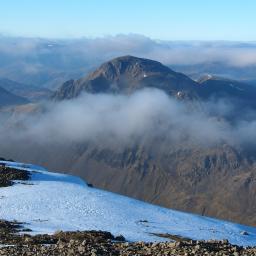
The Southern Fells, Lake District Looking at the clear tops above, I feel like a kid waiting to get at his presentsI am just about to duck instinctively when whatever is heading straight at our heads banks sharply and misses us by metres, its yellow-rimmed eyes fixed upon us as it flies. Its chest is the colour of snow and stone and unmistakable.There almost seems to be a moment of mutual surprise between us and the peregrine. After shooting over a rocky brow, it drifts easily through the wide expanse of Langdale, like an arrow that has achieved sentience after release and gone its own leisurely way. Continue reading...
|
 |
by Joshua Robertson on (#198BG)
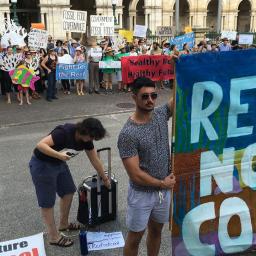
Demonstrators outside Queensland’s Parliament House chant ‘reef not coal’ after Adani clears regulatory hurdleThe Queensland government’s approval of leases for Adani’s Carmichael mine, Australia’s largest proposed coal project, was “economic stupidity and environmental insanityâ€, a protest rally heard on Monday.The Queensland Greens Senate candidate and former Australian Democrats leader Andrew Bartlett told the demonstration outside Queensland’s parliament house the approval could jeopardise the Greens preferences that had helped bring the Palaszczuk government to power. Continue reading...
|
 |
by Helena Swanwick on (#197SP)
Originally published in the Manchester Guardian on 3 April 1916Kew Gardens
|
 |
by Kate Ravilious on (#197NK)
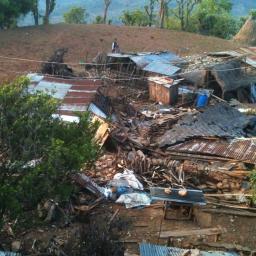
On 25 April it will be the first anniversary of Nepal’s Gorkha earthquake – the country’s worst natural disaster since the 1934 Nepal-Bihar earthquake. The magnitude 7.8 quake killed over 9,000 people and injured over 23,000. With prior warning many of those lives could have been saved. Most seismologists believe that predicting earthquakes is impossible. However, Friedemann Freund, a researcher at NASA believes he has found a subtle signal emitted in the hours before the tremors start.A mineral physicist by background, Freund’s idea originated from attempts to produce electricity by putting rocks under stress. In 2006 he showed that a block of granite under pressure could produce an electrical current, due to mineral defects unsettling electrons. By 2009 he showed that this process caused air molecules to ionise above the surface of the rock. At that point he wondered if the build-up of stress prior to an earthquake would ionise the air molecules above the fault. Ian Main, an earthquake scientist at the University of Edinburgh, is skeptical of the hypothesis. “The problem is how these processes scale to the much larger spatial and temporal scales in a much more complex material involved in earthquakes,†he says. Continue reading...
|
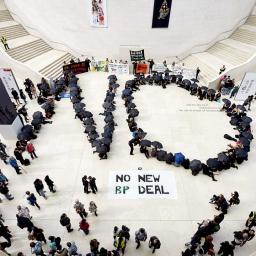 |
by Mark Brown Arts correspondent on (#196X5)
Artists, scientists and politicians sign letter to Guardian calling on museum to end ‘out of touch’ partnership with oil firm
|
 |
by Letters on (#196X7)
Letter from Margaret Atwood, Mark Ruffalo, Mark Rylance, Tom Kibble, Naomi Klein, Emma Thompson, Vivienne Westwood and othersWe congratulate Dr Hartwig Fischer on his new role as director of the British Museum (Profile, 1 April), and would like to take this early opportunity to raise an ethical issue of great concern to us all. As the impacts of climate change are being felt more forcefully around the world, it is vital that prominent public institutions like the British Museum play their part in minimising the environmental impacts of their activities.BP’s sponsorship contract with the museum is coming to an end this year. While governments in Paris committed to transition away from fossil fuels, BP remains a barrier to progress. It is working to extract new sources of carbon-intensive oil from the tar sands, the Arctic and under the oceans, when we need to keep at least two thirds of known fossil fuels in the ground. BP’s business plan is incompatible with a stable climate, and the company is using its influence to lobby against effective climate policies. Continue reading...
|
 |
by Patrick Barkham on (#196T7)
If the EU can’t save BiaÅ‚owieża from the loggers, its protections are meaninglessBiaÅ‚owieża is “the misty, brooding forest that loomed behind your eyelids when, as a child, someone read you the Grimm brothers’ fairytalesâ€, in the words of American ecologist Alan Weisman. This unique place of towering hornbeam and fungi the size of dinner plates is Europe: 1,500 sq km of woodland on the border of Poland and Belarus is the last lowland remnant of what covered our continent after the ice age. It is home to 20,000 species, including 12 carnivores such as lynx and wolves, 120 species of breeding bird such as the three-toed woodpecker and rare insects and invertebrates that were lost to the rest of Europe a century or more ago.The forest boasts Europe’s tallest trees and largest mammal, the bison. It is a national treasure for Poland and an international treasure for us all. BiaÅ‚owieża is our past and our future, a natural laboratory for the study of species and climate, providing globally useful insights into how we’ve changed our environment and how it is changing afresh. Only a small portion (16%) is a national park and parts are protected by the EU and as a Unesco world heritage site. Continue reading...
|
 |
by Terry Macalister, Energy editor on (#196FP)
Critics question why so many companies have been set up at Mayfair base of China’s state-owned nuclear power firmBeijing’s growing confidence in its plans to help build new reactors at Hinkley in Somerset and Bradwell in Essex has been underlined by the recent incorporation of seven new Chinese nuclear-related firms in London.It appears, however, that an agreement between China and its partner EDF of France to develop the first new reactors in Britain for 20 years has still not been signed. Continue reading...
|