|
by Reuters on (#17CKT)
Doubling the share of clean energy in the global energy mix would create more jobs, save millions of lives and limit global warming, say researchersDoubling the share of renewables in the global energy mix to 36% by 2030 could save the world economy up to $4.2tn a year, research by the International Renewable Energy Agency (Irena) showed on Wednesday.Renewable sources, such as wind and solar, accounted for around 18% of global energy consumption in 2014. Under existing national policies, the share of renewables is forecast to reach 21% by 2030. Continue reading...
|
| Link | http://feeds.theguardian.com/ |
| Feed | http://feeds.theguardian.com/theguardian/environment/rss |
| Updated | 2026-06-13 21:45 |
|
by Libby Brooks Scotland correspondent on (#17CEW)
So says the Scottish government, but for many in the land reform movement a new act represents unfinished businessWith plaudits like “radicalâ€, “transformativeâ€, and “new dawn for land reform†being thrown about by the Scottish government, the land reform (Scotland) bill had its final passage through Holyrood late on Wednesday evening.
|
|
by Jeremy Hance on (#17CDR)
No longer happy working in media and advertising, Mea Trenor gave it all up to go back to school for zoology. Now she’s racing to save an endangered frog from extinction – if only she can find it first.
|
|
by Simon Goodley and Katie Allen on (#17C9X)
Chancellor earmarks funds from small rise in insurance premium tax to help regions ravaged by floods over the winterThe UK regions hit by the winter floods are set to benefit from an extra £700m to boost flood defences, after the chancellor announced another rise in insurance premium tax and earmarked the cash raised to flood-damaged towns.George Osborne said he would hike the standard rate of IPT by half a percentage point to 10%, and use the proceeds to top up a fund designed to prevent repeats of the carnage that afflicted communities in the north of England and Scotland over the winter. It is the second time in recent months the chancellor has increased IPT. In November it was hiked from 6% to 9.5%. Continue reading...
|
by Andrew Gilligan on (#17C54)
London’s Swiss Cottage to West End superhighway is the latest scheme to face opposition. For improvements such as this to succeed, continued public support is vital otherwise a naysaying minority will be the only voice heardWhat is it about cycling that destroys some people’s sense of proportion? As London fractionally reduces space for cars, and fractionally increases space for cyclists and pedestrians, some influential figures have quite seriously compared it to world war two.
|
by Phil Gates on (#17BZ5)
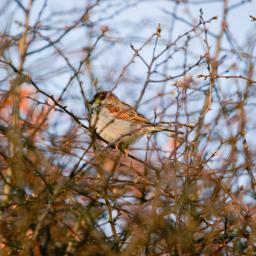
Crook, County Durham Each frozen dawn shortens the fuse that releases the explosion of growth when spring arrivesIt was a dawn that almost made me wish that winter might last a little longer. The sun was rising over frosted grass into a cloudless sky. A crystalline morning beckoned, payback for those mildest-on-record months with their grey skies and rain that lasted from daybreak until dusk.I shielded my eyes against shafts of sunlight that speared through the hawthorns and highlighted the fresh green growth of goosegrass. A hedge sparrow, singing from its perch on top of the hedge, was surrounded in a halo of light. Continue reading...
|
|
by Michael Slezak on (#17BN1)
Decision to broaden scope of offsets opposed by staff at the Office of Environment and HeritagePlanting trees on old mine sites can count as an “offsetâ€, allowing miners to destroy native ecosystems elsewhere, despite documents showing government staff recommended against the move.The revelations appear in documents obtained under freedom of information laws by the NSW Nature Conservation Council and revealed by Fairfax Media. Continue reading...
|
|
by Associated Press in Mexico City on (#17BBV)
Free public transport offered as city remains shrouded in muddy brown smog and officials consider suspending industrial activityAuthorities have banned more than 1 million cars from the roads and offered free subway and bus rides to coax people from their vehicles as Mexico City’s first air pollution alert in 11 years stretched into a third day.Officials advised people on Wednesday to limit outdoor activity owing to high ozone levels that were nearly double acceptable limits in the sprawling capital, which lies in a high-altitude valley ringed by smog-trapping volcanic mountains. Continue reading...
|
|
by Ralph Jennings on (#17B3N)
Taipei’s YouBike program nearly collapsed four years ago. It now thrives after a much-needed upgrade made the bikes better and cheaper to rentTAIPEI, Taiwan – Taipei’s rental bikes are hard to miss. The Taiwanese capital has 7,264 of them, and their distinctive orange frames, yellow fenders and smiley face logo are nearly as common in some parts of town as the city’s ubiquitous motor scooters. Last year, the city’s bike rental program logged more than 20m trips, a stunning figure that becomes slightly less surprising when one considers that the bikes rent for as little as $0.15 per half hour from 222 self-service, card-activated storage lots.Related: Return of the Bicycle Kingdom? How pavement cycling is transforming Taipei Continue reading...
|
|
by Nina Lakhani in Mexico City on (#17ARW)
The murder of another member of Berta Cáceres’ activist organisation Copinh comes amid growing fears for the safety of her colleagues and family membersAnother indigenous activist has been murdered in Honduras amid an escalating wave of repression against the relatives and colleagues of renowned campaigner Berta Cáceres, who was murdered less than two weeks ago.Nelson GarcÃa, 38, an active member of the Civic Council of Popular and Indigenous Organisations of Honduras (Copinh) was killed on Tuesday after a violent eviction carried out by Honduran security forces in a nearby Lenca indigenous community. Continue reading...
|
|
by Terry Macalister Energy editor on (#17ASC)
George Osborne introduces budget measures to help North Sea industry which is forecast to make losses until at least 2021The North Sea oil industry, once a huge moneyspinner for the Treasury, is set to become a £1bn burden for the taxpayer next year as the plunging crude price hits revenues.
|
|
by Michael Slezak on (#17APH)
Policies on renewables and the Great Barrier Reef will also influence the way people vote, according to Lonergan pollAlmost half of Australian voters say policies on climate change, renewable energy and the Great Barrier Reef will influence the way they vote at the next federal election, according to new polling shared exclusively with Guardian Australia.The nationwide poll of 1,048 people over the weekend found 47% of people agreed or strongly agreed that “climate change and renewable energy will influence the way I vote at this year’s federal electionâ€. Continue reading...
|
by Joshua Robertson on (#17APG)
Wangan and Jagalingou people vow to ‘take the fight up a notch’ after mine’s endorsement by Queensland parliamentIndigenous opponents of Adani’s Carmichael mine have vowed to ramp up their legal fight against the project despite fresh progress by the miner and its endorsement by the Queensland parliament.Representatives of the Wangan and Jagalingou people, the traditional owners of the site of Australia’s largest proposed coalmine, are considering a series of high court and federal court actions to broaden their unfolding battle against the Indian miner. Continue reading...
by Damian Carrington on (#17AJR)
‘We’re not afraid to put the next generation first,’ said George Osborne. But his lack of action in the face of global warming indicates the opposite“Doing the right thing for the next generation is what the government and this budget is about,†chancellor George Osborne told parliament on Wednesday. “I am not prepared to look back at my time here in this parliament, doing this job and say to my children’s generation: I’m sorry. We knew there was a problem … but we ducked the difficult decisions and we did nothing.â€
|
by Lucy Lamble in Harare, and Emma Graham-Harrison on (#17AGY)
Unusually strong El Niño, coupled with record-high temperatures, has had a catastrophic effect on crops and rainfall across southern and eastern AfricaMore than 36 million people face hunger across southern and eastern Africa, the United Nations has warned, as swaths of the continent grapple with the worst drought in decades at a time of record high temperatures.The immediate cause of the drought which has crippled countries from Ethiopia to Zimbabwe is one of the strongest El Niño events ever recorded. It has turned normal weather patterns upside down around the globe, climate scientists say. Continue reading...
|
|
by John Vidal on (#17A5H)
Falling coal use in China and the US and a shift towards renewable energy globally saw energy emissions level for the second year running, says IEAFalling coal use in China and the US and a worldwide shift towards renewable energy have kept greenhouse gas emissions level for a second year running, one of the world’s leading energy analysts has said.Preliminary data for 2015 from the International Energy Agency (IEA) showed that carbon dioxide emissions from the energy sector have levelled off at 32.1bn tonnes even as the global economy grew over 3% . Continue reading...
|
|
by Guardian Staff on (#179SQ)
Readers answer other readers’ questions on subjects ranging from trivial flights of fancy to profound scientific conceptsFrom where on Earth, assuming optimium atmospheric conditions, is it possible to see furthest?
|
|
by Guardian Staff on (#179SS)
Labour leader Jeremy Corbyn presses David Cameron on air pollution during prime minister’s questions in the House of Commons on Wednesday. Cameron responds by saying the government has a good record on green energy and is on track to get 30% of renewables by 2020
|
|
by Joanna Walters on (#179KW)
Company says there’s ‘substantial doubt’ it will go on after delaying $70m payment amid slowing global economy and tougher environmental standardsThe world’s largest private coal mining company is teetering on the edge of bankruptcy, driven to the brink of collapse by plummeting energy prices around the world, cheaper and less polluting rivals such as natural gas, and widespread economic uncertainty.US mining giant Peabody Energy announced in New York on Wednesday that it is facing the prospect of filing for bankruptcy protection, a legal strategy to shield it from its creditors while it restructures, after failing to make a routine interest payment on its debts. Continue reading...
|
|
by Patrick Barkham on (#179HJ)
Conservationists urge EU to take action against Malta for continuing the spring hunt despite the birds recently being added to ‘red list’ of species at risk of being wiped outHunters in Malta will be permitted to shoot 5,000 turtle doves this spring despite the International Union for Conservation of Nature (IUCN) recently adding the migratory bird to the “red list†of species at risk of being wiped out.The Maltese government, the only EU member to allow recreational spring hunting, said it was taking “special measures†to minimise the impact of its shoot on the bird’s plummeting population, cutting the shooters’ allowance from 11,000 birds. Continue reading...
|
|
by Susanna Rustin on (#179GA)
UK coffee drinkers use around 3bn disposable cups per year – but only one in 1,000 is currently recycled. It’s time to tackle this tide of needless wasteLess than 1% of takeaway coffee cups get recycled – or “dramatically less than 1%†in the striking phrase of Peter Goodwin, co-founder of the UK’s only paper-coffee-cup recycling business. It takes a specialist company, because the plastic used to laminate the cups has to be removed before the paper is pulped. A bit like the fruit juice cartons that, as any eager recycler will know, are not to be confused with cardboard and are processed alongside paper cups in Stainland, West Yorkshire, at the UK’s only carton recycling plant.Related: Caffeine hit: what happens to Britain's 3bn empty coffee cups? Continue reading...
|
|
by Rowena Mason on (#1798Z)
Labour leader attacks PM’s record on green issues, saying poor air quality is killing hundreds of thousands at cost of £20bnJeremy Corbyn has said hundreds of thousands of people are dying as a result of poor air quality in the UK, as he attacked David Cameron’s record on the environment.The Labour leader accused the prime minister of failing to tackle pollution in an unexpected set of questions on green issues, from dirty air to carbon emissions. Continue reading...
|
|
by Alex Pashley for ClimateHome, part of the Guardian on (#17988)
Early figures from International Energy Agency show emissions from energy sector stayed flat in 2015 on renewables surge, reports ClimateHome
|
|
by Andrew Sparrow on (#17991)
PM and Labour leader clash over air pollution (and Corbyn has a new suit)Jeremy Corbyn used all six questions to press the prime minister on air pollution, citing the fact that 500,000 people die as a result of the failure to meet targets. Corbyn said David Cameron once boasted about leading the greenest government ever: “No husky was safe from his cuddles. Why is the government failing people who work in the green energy industry?†Continue reading...
|
|
by Liz Ford in New York on (#1797Q)
The daughter of Berta Cáceres, the Honduran human rights defender who was murdered this month, has spoken out about the country’s volatility and called on Europe and the US to stop investing in the controversial Agua Zarca dam
|
|
by Press Association on (#1796M)
Rather than make the winter migration to Africa the birds are finding a constant source of food at Europe’s landfill sites, research showsWhite storks are giving up on their winter migration from Europe to Africa in favour of staying near rubbish tips all year round, where they are provided with a steady source of waste food and can boost their breeding chances, research shows.Some birds have even been tracked making round trips of up to 60 miles to get their junk food fix, a study led by scientists at the University of East Anglia (UEA) has found. Continue reading...
|
|
by Suzanne Goldenberg on (#1793S)
Arpa-E project deploys drones and robots to breed fast-growing, drought-resistant and greener biofuel from sorghum which could replace corn ethanolA US government agency is trying to build a better biofuel, using a higher energy-producing plant with a lower environmental impact than corn ethanol or other known biofuels.Sorghum, a food and forage crop widely grown in Africa and Central America which has tens of thousands of varieties, has emerged as one of the most exciting prospects. Continue reading...
|
|
by Adam Vaughan on (#17913)
Mayors from Paris, Madrid and Athens say loophole in NOx emissions tests puts citizens’ health at riskThe mayors of 20 European cities including Paris, Madrid and Athens have attacked the European Union for allowing a loophole in diesel cars’ pollution limits, just months after the VW emissions scandal.
|
by Guardian Staff on (#178VD)
A new book, Changing Circumstances: Looking at the Future of the Planet, features artworks and essays from 34 leading artists on humanity’s effect on the environment, from climate change to waste. The book launch marks the Fotofest biennial in Houston, US, that runs from 12 March to 24 April Continue reading...
by Guardian Staff on (#178KR)
In an interview with ITV News on Wednesday, Prince William says commercial hunting could have a positive impact on efforts to save endangered species. Asked how he squared the practice with his passion for conservation, the Duke of Cambridge replies that it was justified so long the money went towards the protection of other animals Continue reading...
by Michael Slezak on (#178BR)
Mary Robinson says Australia must abandon fossil fuel-driven growth and contribute to poor countries’ developmentAustralia has not been a good neighbour to the Pacific islands vulnerable to climate change and needs to get out of fossil fuel-based growth faster, says Mary Robinson, the former Irish president turned climate change campaigner.Speaking to Guardian Australia, she also urged rich countries to contribute to sustainable development in poor countries and to do so in their own self-interest. Continue reading...
by Joshua Robertson on (#178A9)
Queensland magistrate ruling comes in court order for Linc Energy to face trial over alleged leaks of toxic gas into air and soil at its Chinchilla coal gasification plant
|
by Virginia Spiers on (#1785V)
Bodinnick to Polruan, Cornwall The Hall Walk was first recorded in 1585 as an ornamental promenade that zig-zagged downhill towards the riverOff the steep street from the ferry, Hall Walk lives up to Richard Carew’s description in 1602 as a place of “diversified pleasingsâ€. Sheltered from the blustering wind, the path of silvery slate is traced with tree shadows; warm sunshine entices a bumble bee to dandelions, intensifies the faint perfume of primrose, the brassiness of open celandines and the blue of the Fowey estuary below.This walk was first recorded in 1585 as an ornamental promenade that zigzagged downhill towards the river. It was also a placement for ordnance and, in 1644 during the civil war, Charles I just escaped being shot here while he was staying with the Mohuns of Hall Manor. Continue reading...
|
by Michael Slezak on (#17849)
Species has increased in number but only to 12% of its original population and faces further threat from climate changeA population of southern right whales that was hunted to the brink of extinction by the start of the 20th century has only recovered to 12% of its original population size and will take at least six decades to recover fully, new research suggests. By that time, the population is likely to be be impacted by climate change.In the 19th century, armed with just hand-held harpoons and sailing ships, hunters killed almost every New Zealand southern right whale, leaving just 15 to 20 mature females and about 100 whales in total. Continue reading...
|
by Guardian Staff on (#1783V)
Drone footage released by Sea Shepherd Global shows authorities in Indonesia sinking the ‘Viking’, the last of the ‘Bandit 6’ poaching vessels. The Viking is notorious for illegally fishing Patagonian toothfish in the Southern Ocean. It was caught by the Indonesian government on 26 February, according to Sea Shepherd, before being sunk off Pangandaran, West Java Continue reading...
|
by Staff and agencies on (#177S3)
Visitor numbers up 24% as secluded getaway reveals evidence of ‘extreme lack of toilets and rubbish bins’Tasmania’s Bruny Island is proving so popular with tourists there’s nowhere for all the rubbish and “human pooâ€, state parliament has been told.Related: Three days in Bruny Island, Tasmania – travel guide Continue reading...
|
by Guardian Staff on (#177DV)
Thousands of monarch butterflies migrate to Mexico for the winter each year, to find refuge from the cold weather in the country’s pine forests. But last week a rare snowstorm interrupted their sleep as freezing winds blew the butterflies out of their safe colonies, grouped together in the trees, and deposited many of them across the forest floor where they are at risk of freezing to death while still in hibernation. The species itself is not at risk but, as this film project by Univision Planeta shows, there is still no accurate number for how many of the butterflies have died Continue reading...
|
|
by Oliver Milman on (#176V5)
Susan Hedman was accused of doing nothing to protect Flint’s children – but in a congressional hearing she said state officials failed to act on agency’s concernsThe Environmental Protection Agency manager who resigned over the Flint poisoned water scandal has blamed state officials for the disaster during an acrimonious congressional inquiry.Susan Hedman, who was the regional EPA head for Flint, told the hearing she resigned due to “false allegations†in the media that she had failed to react to the crisis and sidelined Miguel del Toral, an EPA official who wrote a memo warning of the dangerous situation in Flint. Continue reading...
|
|
by Paula Cocozza on (#176RH)
Britons drink more than 8m takeaway coffees every day – then throw away the cups. Why are so few recycled?The paper coffee cup is one of modern life’s consumer conundrums. It is ubiquitous, yet coveted, pricey yet just about affordable. It confers status in a world where you need to be busy to be important, while telling everyone you had time to wait in line while the beans were ground and the milk was steamed. And now there is one more contradiction to add to the list, because the paper coffee cup, it turns out, is recyclable - yet woefully, overwhelmingly, unrecycled.A conservative estimate puts the number of paper cups handed out by coffee shops in the UK at 3bn, more than 8m a day. Yet, supposedly, fewer than one in 400 is being recycled. Continue reading...
|
|
by Editorial on (#176RC)
Amid the pressing demands of immediate political crises it is easy to forget the long-term changes in the climate. But no country, least of all the UK, can afford to“Normally I don’t comment on individual months,†tweeted Gavin Schmidt of Nasa on Sunday. “Too much weather, not enough climate. But last month was special.†And so it was: February’s global surface temperature was 1.35C warmer than the average temperature for the month between 1951-1980, a bigger margin than ever seen before.In the pressing confusion of world affairs, civil war, refugees, terrorism and even the workings of democracy, it can be hard to keep a focus on even greater long-term threats. Yet the consequences of climate change – sometimes drought, sometimes extreme weather events – already contribute to political instability, to pushing hard lives over the border into intolerable, fuelling the great flows of humanity across continents. Continue reading...
|
|
by Letters on (#176RK)
In December, David Cameron joined 195 other leaders to promise ambitious action on climate change. Achieving the Paris goals requires leaving most of the world’s fossil fuel reserves in the ground. A first step must be to stop subsidising fossil fuel production. Wednesday’s budget is an acid test of the government’s Paris commitment. In last year’s budget, the chancellor gave £1.3bn in new tax breaks and direct funding to the oil industry. The UK Treasury receives a smaller share of oil revenues than most other comparable countries. Meanwhile, the government has exempted a whole new fossil-fuel industry – fracking – from half of its tax, despite huge local opposition wherever it is proposed.The government has slashed support for wind and solar energy, costing thousands of jobs. Yet its free-market rationale does not apply when it comes to the oil and gas industry, which has received continued government support even in times of super-normal profits. The chancellor has to change course. He should scrap subsidies that keep the British economy hooked on fossil fuels, and instead set out a strategy to help communities currently dependent on fossil fuel jobs to diversify and to rebuild around world-leading clean technology.
|
|
by Heather Hansman on (#176QQ)
Climate change has brought a myriad of issues to the far north, but rising sea levels are now threatening existing home owners and contributing to housing shortagesIn the spring, after the permafrost thaws and the ground settles, Wilson Andrew Sr takes a wrench to the metal pilings that hold up the foundation of his house in Atmautluak, Alaska, and makes it level again. He cranks the screws until the foundation flattens out, level with the ground. At least for now.
|
|
by Suzanne Goldenberg, US environment correspondent on (#1746K)
Environmental groups call president’s reversal an outsize victory after backlash from communities that fear Gulf of Mexico rig disaster could happen againThe Obama administration abandoned its plan for oil and gas drilling in Atlantic waters on Tuesday, after strong opposition from the Pentagon and coastal communities.The announcement from Sally Jewell, the interior secretary, to bar drilling across the length of the mid-Atlantic seaboard reverses Obama’s decision just a year ago to open up the east coast to oil and gas exploration, and consolidates his record for environmental protection. Continue reading...
|
by Will Dean on (#176G4)
Breadcrumbs are officially bad for the nation’s waterfowl, so, armed with kale, seeds and grapes, we find out what’s good for the goose (as well as the duck and the coot)It’s not just a canard. The Canal and River Trust’s campaign to stop people feeding ducks bread is working – with the organisation reporting a reduction of about 80,000 loaves being chucked in the water in the past 12 months. This is good because bread leads to overpopulation, spreads disease if it’s left uneaten, attract rats and lets the birds binge eat and get ill instead of eating healthy things such as worms.Organisations such as the Canal and River Trust offer suggestions as to what we should feed waterfowl instead of a stale slice of Warburtons Toastie. So we decided to put on a tasting menu. Armed with a shopping list of recommended foods, including sweetcorn, grapes and seeds, I got what I could and headed to the canal next to Guardian HQ to see what the local community of mallards, coots and canada geese would make of a smorgasbord worthy of, er, Nigella Lawswan. Here’s the birds’ verdict … Continue reading...
|
by Suzanne Goldenberg in Fort Yukon, Alaska on (#176FH)
Fort Yukon has recorded Alaska’s coldest ever temperatures but this winter temperatures have been much warmer than usual, leading to dangerously thin iceThis year’s record-breaking temperatures have robbed the Arctic of its winter, sending snowmobilers plunging through thin ice into freezing rivers and forcing deliveries of snow to the starting line of Alaska’s legendary Iditarod dogsledding race.Last month’s high temperatures – up to 16C (29F) above normal in some parts of the Arctic – flummoxed scientists, and are redefining life in the Arctic, especially for the indigenous people who live close to the land. Continue reading...
|
|
by Martin Lukacs on (#17605)
Until it divests from fossil fuels, McGill is betting its prestige on preparing youth for the world while betting its dollars on making it uninhabitableStudents have tried petitions, research briefs, faculty letters, camping for a week on campus. But for a university that considers itself the Harvard of the north, McGill’s administrators have shown little readiness to listen to reason. Or to heed the weather: February was the hottest month in a century by a “stunning†margin, according to Nasa.
|
|
by James Bryce in Seville on (#175WF)
M&S and Unilever among companies demanding urgent action over unsustainable water usage destroying ecosystem in Doñana regionA consortium of high-profile supermarkets and food companies is demanding urgent action to stop unsustainable water usage among Spanish strawberry growers.
|
|
by Severin Carrell Scotland editor on (#175XK)
UK Committee on Climate Change says Holyrood should aim to reduce greenhouse gases by 61% over next 14 yearsScottish ministers should aim to cut the country’s greenhouse gas emissions by a challenging but achievable 61% by 2030, an influential advisory committee has recommended.The UK Committee on Climate Change (UKCCC) said that cutting emissions that deeply would mirror the Scottish parliament’s existing goal of reducing emissions by 42% by 2020: both targets would outstrip the UK government’s current pledges. Continue reading...
|
|
by John Vidal on (#175TZ)
Prince William-led initiative to be signed by 40 organisations, including port operators and transport groups to curb $19bn illegal poaching tradeThe world’s largest shipping and airline companies, port operators and transport groups will commit on Tuesday to trying to shut down the main international wildlife trafficking routes.
|
|
by Robbie Blackhall-Miles on (#175MD)
Everything from carnivorous pitcher plants to acid-loving blueberries can be grown without peat. No more excuses: it’s time gardeners kicked the peat habitI used to be a staunch believer that some plants couldn’t be grown without peat.I couldn’t see how I could grow Proteas, Banksias and the like unless I used it. Its fibrous, moisture retentive and long lasting nature created just the right environment for their specialised root systems. I grow a lot of peat-loving plants such as Shortias and Vacciniums too. There certainly seemed no way these would grow without the substrate to which they are so inextricably linked in the wild. Continue reading...
|