 |
by Thomas Macaulay on (#76338)
This is today's edition of The Download, our weekday newsletter that provides a daily dose of what's going on in the world of technology. How courts are coping with a flood of AI-generated lawsuits Most days in her chambers, Judge Maritza Braswell, a federal magistrate judge in Colorado, sifts through stacks of documents written by...
|
| Link | https://www.technologyreview.com/ |
| Feed | https://www.technologyreview.com/stories.rss |
| Updated | 2026-10-22 16:03 |
|
by Michelle Kim on (#76313)
Most days in her chambers, Judge Maritza Braswell, a federal magistrate judge in Colorado, sifts through stacks of documents written by people without a lawyer. Many of them can't afford to hire a lawyer, and others have cases too weak or too small to interest one. She reads each one carefully, mindful of how daunting...
|
 |
by Casey Crownhart on (#762HT)
Would you take a payment to ramp down your electricity use? Would it change anything if you were doing so to help power a local data center? Google just signed a new deal to help pay for a virtual power plant (VPP) in the largest power grid in the US. The agreement is with Voltus,...
|
 |
by Thomas Macaulay on (#7629Y)
This is today's edition of The Download, our weekday newsletter that provides a daily dose of what's going on in the world of technology. 5 key points in Trump's new AI order Less than two weeks after scrapping an executive order on AI, President Donald Trump signed a new one on Tuesday. Promising to promote...
|
 |
by Thomas Macaulay on (#761EY)
This is today's edition of The Download, our weekday newsletter that provides a daily dose of what's going on in the world of technology. How small businesses can leverage AI From accounting to design to market research and product development, there's a staggering breadth of skills needed to run a business. Large companies can hire...
|
 |
by MIT Technology Review Insights on (#761EZ)
The global health care sector is under increasing strain. Decades of chronic underinvestment and constraints in recruitment have coincided with a surge in demand for services for aging populations. Gaps in provision are already taking a toll, with fragmented access to care and high rates of stress and burnout among staff. And it's getting worse....
|
|
by Peter Hall on (#761CW)
This article is from Making AI Work, MIT Technology Review's limited-run newsletter examining how to apply LLMs across industries. To receive it in your inbox,sign up here. From accounting to design to market research and product development, there's a staggering breadth of skills needed to run a business. A large company can hire experts to...
|
 |
by Thomas Macaulay on (#760QN)
This is today's edition of The Download, our weekday newsletter that provides a daily dose of what's going on in the world of technology. China has approved the world's first invasive brain-computer chip-here's what's next Sitting in the courtyard of his house in China's Henan province last October, Dong Hui decided to try holding a...
|
|
by You Xiaoying on (#760N1)
One day last October, sitting in the courtyard of his house in China's Henan province, Dong Hui decided to see if he could hold a pen to write. Dong, 39, had sustained spinal cord injuries in a car accident six years earlier that left him paralyzed from the neck down. Slowly but determinedly, he wrote...
|
 |
by Thomas Macaulay on (#75YXD)
This is today's edition of The Download, our weekday newsletter that provides a daily dose of what's going on in the world of technology. How a new extraction process could unlock the world's lithium A new method for extracting lithium could cut costs and emissions from one of the world's most important materials for EVs...
|
 |
by Jessica Hamzelou on (#75YXE)
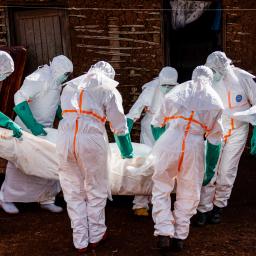
The alert was raised on May 5. Four health-care workers in the Ituri Province of the Democratic Republic of the Congo had died from an unknown illness within four days. Rapid response teams were sent to investigate, and tests at a research center in Kinshasa revealed the culprit: the Bundibugyo virus, one of the viruses...
|
 |
by Séamus Finn, Susan Francois on (#75YV0)
Pope Leo XIV's new encyclical on artificial intelligence includes a statement that warrants serious attention from technologists and policymakers: Technology is never neutral." Magnifica Humanitas (Magnificent Humanity") is a clarion call to all people to act with courage and solidarity as we enter an age already being transformed by artificial intelligence, the greatest change in...
|
|
by Casey Crownhart on (#75YAM)
Researchers say they've found a new way to extract lithium, a crucial metal used in the lithium-ion batteries that power electric vehicles and energy storage arrays. This new technique could be more environmentally friendly and cheaper than existing ones. The research was published today in Science, and a startup called Rock Zero is working to...
|
 |
by Thomas Macaulay on (#75Y23)
This is today's edition of The Download, our weekday newsletter that provides a daily dose of what's going on in the world of technology. Climate tech companies are going public. What's next? Solar and battery company Solv Energy went public in February, hitting a $6 billion valuation. X-energy, which builds small modular nuclear reactors, followed...
|
|
by Casey Crownhart on (#75XZK)
This year, there's been a wave of notable energy companies going public via IPO in the US. The solar and battery company Solv Energy went public in February, to the tune of $6 billion. X-energy, which is building small modular nuclear reactors, did the same in April, and its stocks surged on its first day...
|
 |
by Caiwei Chen on (#75XZM)
It is one thing to say AI will change the world. It is another to expect the class of 2026 to applaud it. In fact, when former Google CEO Eric Schmidt told University of Arizona graduates that their task is to help shape AI, he was met with a resounding chorus of boos. I can...
|
 |
by Thomas Macaulay on (#75X68)
This is today's edition of The Download, our weekday newsletter that provides a daily dose of what's going on in the world of technology. Stay on top of what's going on in AI this summer Here at MIT Technology Review, we understand exactly how relentless the pace of news from the world of artificial intelligence...
|
 |
by MIT Technology Review Insights on (#75WH2)
Amid rapidly growing adoption of enterprise-level AI agents, there's a disconnect emerging between ambition and execution. Although 85% of organizations say they want to be agentic within the next three years, 76% say their current operations and infrastructure can't support that change. They cite a lack of readiness across people, processes, and workflows. The sticky...
|
 |
by Thomas Macaulay on (#75WDY)
This is today's edition of The Download, our weekday newsletter that provides a daily dose of what's going on in the world of technology. A reality check on the AI jobs hysteria Despite the growing hysteria over AI's threat to white-collar jobs, there's still scant evidence that the technology has had a large-scale impact on...
|
|
by David Rotman on (#75W9X)
Haven't you heard? White-collar jobs are going away, decimated by AI. Waves of layoffs in the tech sector (most recently at Coinbase and Meta and Cisco) are said to presage what will soon come for all of us knowledge workers. But before you quit your job as a software developer or financial analyst-or tech journalist-and...
|
 |
by Georgios Petropoulos on (#75W9W)
Artificial intelligence has not so far produced a clean story of mass unemployment. Aggregate employment in developed countries remains broadly stable, and recent assessments have found limited evidence that AI has shifted the headline numbers. But a troubling change may be hiding beneath the surface: the quiet weakening of the first rung of the career...
|
 |
by Thomas Macaulay on (#75T56)
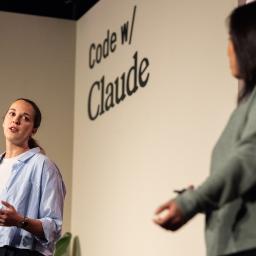
This is today's edition of The Download, our weekday newsletter that provides a daily dose of what's going on in the world of technology. Anthropic's Code with Claude showed off coding's future-whether you like it or not At Anthropic's developer event in London this week, Code with Claude, attendees were asked if they'd shipped code...
|
 |
by Grace Huckins on (#75T2M)
During Tuesday's Google I/O keynote, Demis Hassabis, the CEO of Google DeepMind, proclaimed that we are currently standing in the foothills of the singularity." It was a striking statement-the singularity is the theoretical future moment when AI rapidly exceeds human intelligence and dramatically transforms the world. But what struck me as I listened in the...
|
 |
by Jessica Hamzelou on (#75T0H)
This Sunday, a group of 42 athletes will gather in Las Vegas to compete in a somewhat unusual sporting competition. Participants in the inaugural Enhanced Games are being encouraged to take performance-enhancing drugs. Thegoal is to push the boundaries of human performance." The games' organizers have said that competitors will only be taking substances that...
|
 |
by MIT Technology Review on (#75SPZ)
Listen to the session or watch below AI companies want to build systems that understand the external world and overcome the limitations of LLMs. Recent developments have brought world models to the forefront of the AI discussion. Watch a conversation with editor in chief Mat Honan, senior AI editor Will Douglas Heaven, and AI reporter...
|
 |
by Hannah Elsakr on (#75SMY)
Storytelling is core to humanity's DNA, stemming from our impulse to express ideals, warnings, hopes, and experiences. Technology has always been woven through the medium and the distribution: from early humans' innovation of natural pigments and charcoals for cave paintings to literal representation by the camera. The landscape of storytelling continues to shift under our...
|
|
by Will Douglas Heaven on (#75SEF)
The vibes were strong at Code with Claude, Anthropic's two-day event for software developers in London that kicked off on May 19, the same day as Google's I/O in Palo Alto. (A coincidence, not a flex, Anthropic staffers assured me.) Who here has shipped a pull request in the last week that was completely written...
|
 |
by Thomas Macaulay on (#75S99)
This is today's edition of The Download, our weekday newsletter that provides a daily dose of what's going on in the world of technology. Tech researchers are suing the Trump administration over the future of online safety For months, the Trump administration has been going after researchers who study and try to counter hate speech,...
|
 |
by Casey Crownhart on (#75S6M)
We're over a year into the second Trump administration here in the US, and support for climate causes is weak. But climate tech companies are finding ways to survive and even thrive in this new environment, including by focusing on potential benefits outside decarbonization. Suddenly, it feels like every climate tech company has a story...
|
|
by Eileen Guo on (#75S41)
Since its earliest days back in office, the Trump administration has been going after researchers who study and try to counter hate speech, harassment, propaganda, and disinformation online. Now, some of those researchers are fighting back. Last week their lawsuit-which could have global repercussions for online safety and free speech-made its first appearance in court....
|
 |
by Casey Crownhart on (#75RFH)
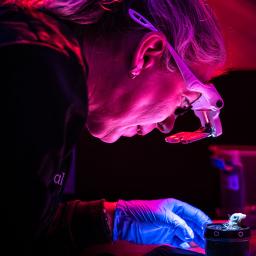
The startup Boston Metal has raised a $75 million funding round to produce critical metals, MIT Technology Review can exclusively report. The company has been known largely for its efforts to clean up steel production, an industry that's responsible for about 8% of global greenhouse emissions today. With the additional money, the new focus could...
|
 |
by Thomas Macaulay on (#75RCS)
This is today's edition of The Download, our weekday newsletter that provides a daily dose of what's going on in the world of technology. Colossal Biosciences is growing chickens in a 3D-printed artificial eggshell The baby chicks were shifting and starting to pip-or trying to hatch. But not from an egg. Instead, these chickens were...
|
 |
by MIT Technology Review on (#75QYA)
Listen to the session or watch below Elon Musk lost his suit against OpenAI, in which he alleged CEO Sam Altman and President Greg Brockman had deceived him over the company's non-profit status. Watch as AI reporter and attorney Michelle Kim, who covered the trial for MIT Technology Review, joins in conversation with editor in...
|
 |
by Mounir Hahad on (#75QHF)
Throughout 2025, HPE observed significant changes in how cybercriminals operate. Analyzing real-world threats, our HPE Threat Labs highlighted an industrialization of the cyber criminals' methods in its new In the Wild Report, enabling greater scale, speed and structure in their campaigns. They typically use automation and AI to exploit longstanding vulnerabilities, and many have adopted...
|
 |
by Thomas Macaulay on (#75QHG)
This is today's edition of The Download, our weekday newsletter that provides a daily dose of what's going on in the world of technology. Here's why Elon Musk lost his suit against OpenAI Elon Musk has lost his lawsuit against OpenAI, which centered on whether the company breached its founding contract as a nonprofit. A...
|
|
by Antonio Regalado on (#75QHH)
The baby chicks were shifting and starting to pip-or trying to hatch. But not from an egg. Instead, these chickens were growing inside transparent 3D-printed plastic cups at the Dallas headquarters of Colossal Biosciences. The biotech company today claimed it has developed a fully artificial egg" as part of its effort to resurrect extinct avian...
|
|
by Michelle Kim on (#75Q6V)
On Monday, the jury in Musk v. Altman dealt Elon Musk a major blow-reaching a unanimous advisory verdict that he had sued OpenAI too late and, as a result, his claims are barred by the applicable statutes of limitations. US District Judge Yvonne Gonzalez Rogers immediately accepted it. Musk announced on X that he will...
|
 |
by Grace Huckins on (#75PYT)
This story originally appeared in The Algorithm, our weekly newsletter on AI. To get stories like this in your inbox first,sign up here. When Google opens its doors tomorrow for its annual developer conference, I/O, it will do so as a clear third place in the foundation model race. A year ago, at Google I/O...
|
by MIT Technology Review Editors on (#75PYV)
 |
by James O'Donnell on (#75PW6)
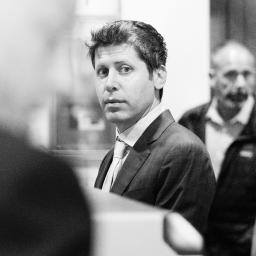
The defense-tech company Anduril has shared new details about the augmented-reality headset for the military it's prototyping with Meta, including a vision for ordering drone strikes via eye-tracking and voice commands. Quay Barnett, who leads the efforts as a vice president at Anduril following a career in the Army's Special Operations Command, says his fundamental...
|
 |
by Thomas Macaulay on (#75PPX)
This is today's edition of The Download, our weekday newsletter that provides a daily dose of what's going on in the world of technology. Musk v. Altman week 3: Musk and Altman traded blows over each other's credibility. Now the jury will pick a side. In the final week of the Musk v. Altman trial,...
|
|
by Michelle Kim on (#75NDA)
Update: On Monday May 18, the jury sided with OpenAI, delivering an advisory verdict finding that Musk's claims are barred by the statute of limitations. US District Judge Yvonne Gonzalez Rogers accepted the verdict. In the final week of the Musk v. Altman trial, lawyers traded blows over Elon Musk's and OpenAI CEO Sam Altman's...
|
 |
by Thomas Macaulay on (#75MYY)
This is today's edition of The Download, our weekday newsletter that provides a daily dose of what's going on in the world of technology. How Chinese short dramas became AI content machines China's short drama industry is fueled by bite-sized, melodramatic, and smutty shows built for smartphone scrolling. Now, many are being made entirely with...
|
 |
by Jessica Hamzelou on (#75MTJ)
Every year the World Health Organization publishes a global health statistics report. It features the numbers behind world health trends and, importantly, assesses whether we're on track to reach ambitious goals set in 2015. It's a bit like a health grade. The 2026 report was published on Wednesday. And the results aren't looking brilliant. While...
|
|
by Caiwei Chen on (#75MTH)
In a dimly lit bedroom, a frightened young woman is thrown onto a bed by a tall, muscular man. He grabs her hand, and flame-like vines crawl across her body, fusing with her flesh. She levitates, then drops. A dragon-shaped tattoo appears across her chest. Two months," the man says. Give me an heir, or...
|
 |
by MIT Technology Review Insights on (#75M36)
Financial services companies have unique needs when it comes to business AI. They operate in one of the most highly regulated sectors while responding to external events that are updated by the second. As a result, the success of agentic AI in financial services depends less on the sophistication of the system and more on...
|
 |
by MIT Technology Review Insights on (#75M35)
When generative AI first moved from research labs into real-world business applications, enterprises made a tacit bargain: Capability now, control later." Feed your proprietary data into third-party AI models, and you will get powerful results. But your data passes through systems you do not own, under governance you do not set. The protections you rely...
|
 |
by Thomas Macaulay on (#75M37)
This is today's edition of The Download, our weekday newsletter that provides a daily dose of what's going on in the world of technology. The shock of seeing your body used in deepfake porn When Jennifer got a research job in 2023, she ran her new professional headshot through a facial recognition program. She wanted...
|
 |
by Casey Crownhart on (#75M0R)
The Tesla Semi has officially arrived. The company recently released a photo of the first vehicle rolling off its new full-scale production line. This moment has been nearly a decade in the making: The company first announced the truck in late 2017. And now we've got final battery specs, official prices, and big news about...
|
 |
by Jessica Klein on (#75KZ0)
When Jennifer got a job doing research for a nonprofit in 2023, she ran her new professional headshot through a facial recognition program. She wanted to see if the tech would pull up the porn videos she'd made more than 10 years before, when she was in her early 20s. It did in fact return...
|