on (#KZ8N)
What's going on in China? Is the second largest economy in the world about to come crashing down?
 NPR: Planet Money
| Link | https://www.npr.org/templates/story/story.php?storyId=93559255 |
| Feed | http://www.npr.org/rss/rss.php?id=93559255 |
| Copyright | Copyright 2024 NPR - For Personal Use Only |
| Updated | 2026-09-09 06:34 |
 |
on (#KGZN)
When Roddey Player's business started heading south, he did everything he could to avoid the big failure: bankruptcy. But what's painful for Roddey might just be the secret weapon of the U.S. economy.
|
 |
on (#K8AF)
We travel to Warm Springs to find out if the rumors are true: Did FDR really buy moonshine during Prohibition? Did he violate the Constitution he had sworn to protect?
|
 |
on (#JSHK)
Patty McCord helped create a workplace at Netflix that runs more like a professional sports team than a family. If you're not up to scratch, you're off the team. Is this the future of work?
|
 |
on (#JJ8X)
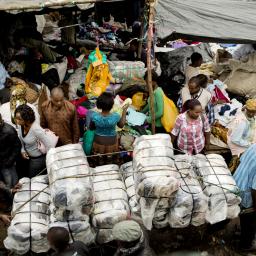
When used American clothes are donated to charity, they begin a second life of sorting, refitting, and lots of travel. We trace used American T-shirts to a used-clothing market in Nairobi, Kenya.
|
 |
by Quoctrung Bui on (#J3D1)
Audiences love to mock campy, low-budget horror movies, but by one very important metric, they are the smartest movies around.
|
 |
on (#HWFT)
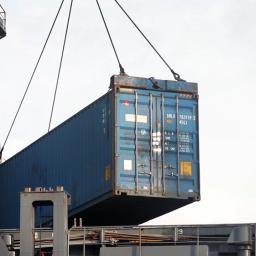
Our women's Planet Money T-shirt got to you thanks to an overlooked innovation that's essential to the modern global economy. The innovation: a big, metal box.
|
 |
by Quoctrung Bui on (#HD0Z)
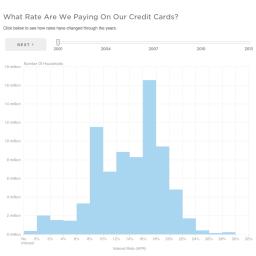
Credit cards have changed a lot — and so have the interest rates we pay. Here's how.
|
 |
on (#H7DE)
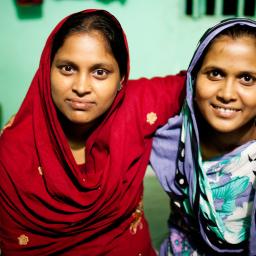
Like lots of other clothes, the men's Planet Money T-shirt was made in Bangladesh. On today's show, we travel to Bangladesh and visit two sisters who made our shirt.
|
 |
by Quoctrung Bui on (#GS4C)
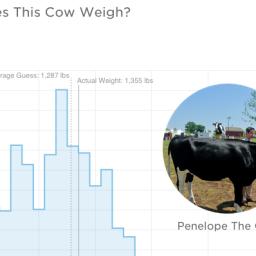
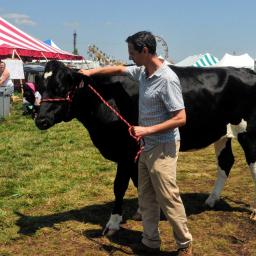
A few weeks ago, we asked the Internet a simple question: how much does this cow weigh?
|
 |
on (#GS4E)
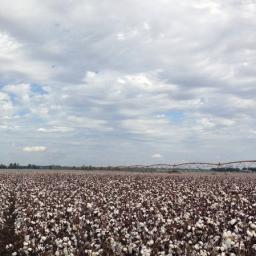
We wanted to understand an eerie phenomenon that drives everything from the stock market to the price of orange juice. So we asked you to guess the weight of a cow.
|
 |
on (#GJ6M)
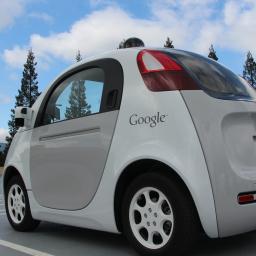
We made a T-shirt, and followed it every step of the way. First step: a high-tech cotton farm.
|
 |
on (#FVNS)
The big question surrounding automation isn't just about economics or technology. It's also about psychology. How do designers make us comfortable with something that can be really scary?
|
 |
on (#FC53)
The world economy is more productive than ever before. A lot of people could work fewer hours and still meet their basic needs. But we don't. Why?
|
 |
on (#F5DK)
On today's show: the screwed-up economics of drought, and why the rational thing to do in California right now is use more water.
|
 |
on (#EP8D)
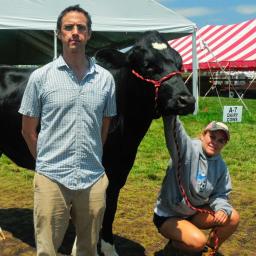
On a visit to Greece, we talk to a guy who found an ingenious place to hoard his cash, a government-protected milk peddler, and a would-be olive oil tycoon.
|
|
on (#EQGB)
On a visit to Greece, we talk to a guy who found an ingenious place to hoard his cash, a government-protected milk peddler, and a would-be olive oil tycoon.
|
 |
by Jacob Goldstein on (#EN97)
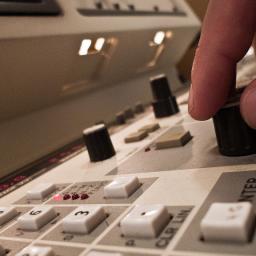
Guess the weight of the cow. Somebody's going home with a plastic cow trophy.
|
 |
on (#EEXB)
Today on the show: We're going small. We ask some of the smartest people we know what little thing they would change to improve the world.
|
 |
by Darian Woods on (#EDP5)
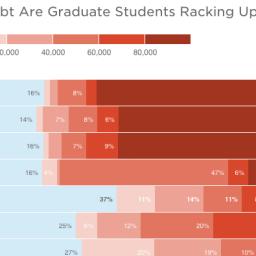
Future doctors and lawyers borrow a lot. Future professors, not so much.
|
 |
on (#DYY3)
The story of the secret battle to create the song of the summer — the music industry's holy grail.
|
 |
on (#D6BP)
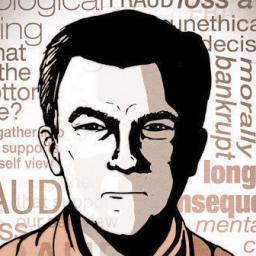
We sit down with a psychologist and a mortgage broker who committed large-scale fraud to try to figure out why respectable people commit fraud.
|
 |
on (#CJEH)
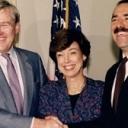
Trade deals like the Trans-Pacific Partnership are often negotiated in secret. On today's show, negotiators tell us what happened when they were locked in a hotel for days and told to hash out a deal.
|
 |
on (#CBDG)
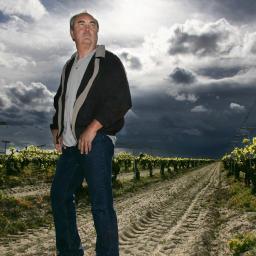
A farmer wanted to sell all his raisins, but the federal government said no. So he took it to the Supreme Court.
|
 |
by Quoctrung Bui on (#C33H)
How couples share the burden of work — over time, and across incomes.
|
 |
on (#BVJ6)
We ask three economists: Is there some falling anvil that's about to crush the economy?
|
 |
on (#BMG3)
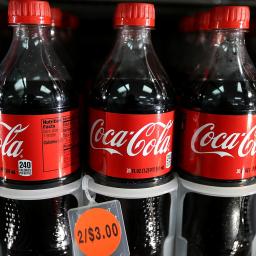
The price tag is a fairly recent invention. And it's already on its way out.
|
 |
on (#B4KD)
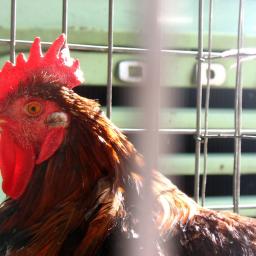
How the American auto industry is built on a trade dispute over frozen chicken parts.
|
 |
by Steve Henn on (#AY8G)
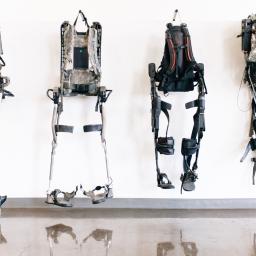
Robots are really bad at many simple human tasks. One possible workaround: Combine the person with the machine.
|
 |
on (#AXVM)
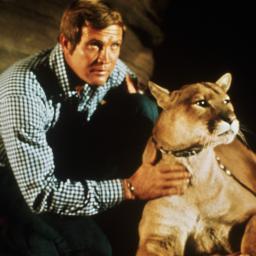
Stories about a $50,000 loophole, what neighborhoods mean for kids, and what the Six Million Dollar Man would cost today.
|
 |
on (#APEH)
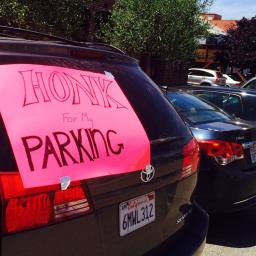
The story of a 24-year-old kid and the idea he thought would reduce congestion, cut greenhouse gasses and make urban life easier for everyone. Instead, it brought him nothing but trouble.
|
 |
on (#APEK)
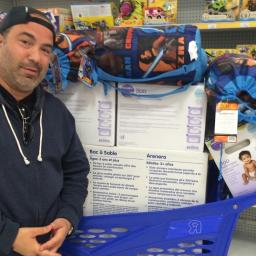
Sam Cohen has made a big business out of buying stuff at big retail stores, then turning around and selling it on Amazon. In an era when stores are profit-maximizing machines, how is that possible?
|
 |
on (#A7FP)
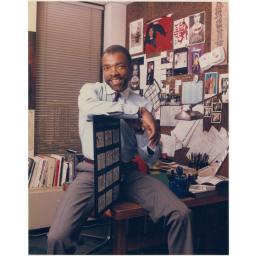
In the early 1960s, Tom Burrell became the first black man in Chicago advertising. Today on the show, the story of how he changed the way people think about ads and how advertising thinks about us.
|
 |
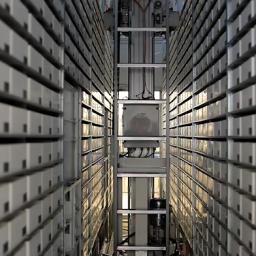
on (#A7FR)
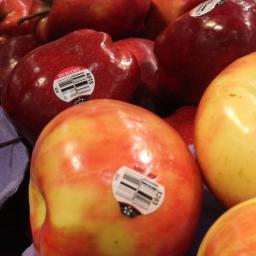
Today on the show, how we got from mealy, nasty apples to apples that taste delicious. The story starts with a breeder who discovered a miracle apple. But discovering that apple wasn't enough.
|
 |
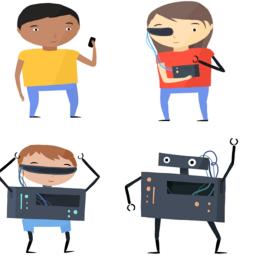
by Quoctrung Bui on (#A7FT)
Robots don't always replace workers. Sometimes, workers use robots as tools.
|
 |
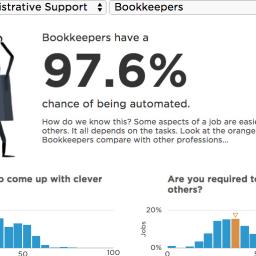
on (#A7FW)
Machines have been taking jobs forever. In the past, when jobs disappeared, new ones were created. But is this time different?
|
 |
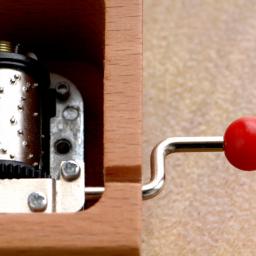
by Quoctrung Bui on (#A7FY)
Will your job be around in the future? We take a peek at the research.
|
 |
on (#A7G0)
What if robots did all the work? In today's show, we imagine a world without jobs.
|
 |
by Stacey Vanek Smith on (#A7G2)
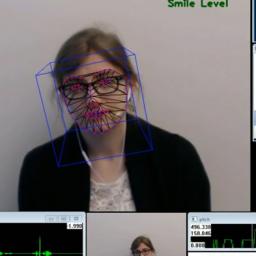
The computer doesn't pay attention to what you say. What matters is how you say it.
|
 |
by Stacey Vanek Smith on (#A7G3)
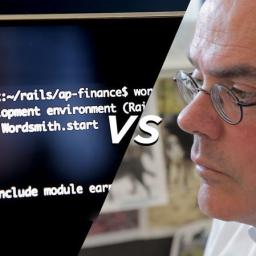
Machines are taking on jobs that once seemed robot-proof. But can a machine replace radio reporters? We pit a human against a machine to find out.
|
 |
on (#8S9D)
If you aren't already worried about being replaced by a robot, maybe you should be. Today on the show, three races pit humans against machines.
|
 |
 |
by Jacob Goldstein on (#8S9H)
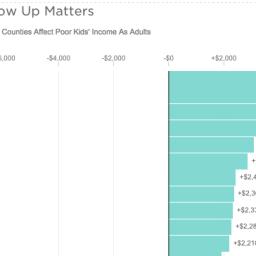
Poor kids who moved to neighborhoods with less poverty did much better than those who didn't move.
|
 |
on (#8S9K)
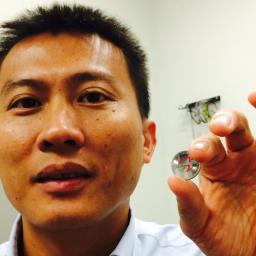
While most technology is getting smaller and cheaper, batteries still suck. Today on the show, we learn exactly why, and meet some of the people trying to make batteries better.
|
 |
on (#8S9N)
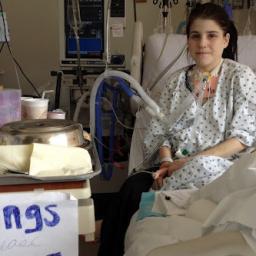
You're not allowed to buy and sell organs. So doctors created a different system. Today on the show: how do you decide who gets lungs?
|