 |
on (#274AW)
It's time for an annual Planet Money tradition--we revisit some of our favorite stories from the past year, and see what's changed since we turned off our mics.
|
 NPR: Planet Money
| Link | https://www.npr.org/templates/story/story.php?storyId=93559255 |
| Feed | http://www.npr.org/rss/rss.php?id=93559255 |
| Copyright | Copyright 2024 NPR - For Personal Use Only |
| Updated | 2026-09-09 04:49 |
 |
on (#26R8D)
The man who ran the last bank bailout has a plan to prevent the next one.
|
 |
on (#26CG3)
There's an idea that dates back at least to biblical times. That there should be a moment when debts are forgiven. Its called a jubilee. One country tried it.
|
 |
on (#264RK)
Today on the show, two unions separated by 200 years, an ocean and an exit clause. The United States has no exit clause. It led to civil war. Europe, on the other hand, has Article 50.
|
 |
on (#25JD4)
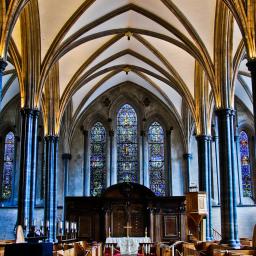
On today's show, how a band of medieval warrior monks sworn to poverty got into the banking business and changed the way we think about money forever.
|
 |
on (#259FC)
A special holiday episode about the epic, decades-long feud between the two companies that make just about every handbell in the world.
|
 |
on (#24Q29)
The story of a court case. On one side, the best lawyers money can buy. On the other, a night school lawyer who had never argued a case before. The outcome could affect everyone on the Internet.
|
 |
on (#24EHT)
All types of companies are struggling with burnout. Many try to fix it. Most of them fail. One exception: A 26-year-old call center manager, with stress balls and costumes in her arsenal.
|
 |
on (#23TT9)
We track down a fake-news creator in the suburbs, uncover his empire of fake-news sites, and get him to tell us his secrets.
|
 |
on (#23HMC)
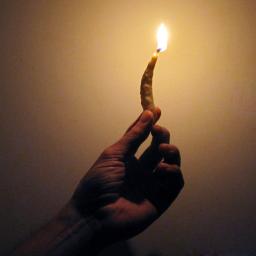
In this show: How we got from candles made out of cow fat to as much light as we want. The history of light is the history of economic growth — of things getting faster, cheaper, and more efficient.
|
 |
on (#22Z7S)
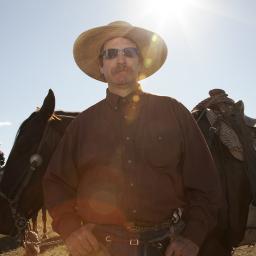
Russia's latest ambition: To build a steak empire. On today's show, a fourth-generation American cowboy teaches Russian ranchers how to make American-style steaks. Some things get lost in translation.
|
 |
on (#22QBY)
We go on a madcap dash through discounts, bargains and tough tradeoffs. Like the headline says: We bring you stories of 17 deals in just 17 minutes (not counting the intro, the ad, or the credits).
|
 |
on (#225EP)
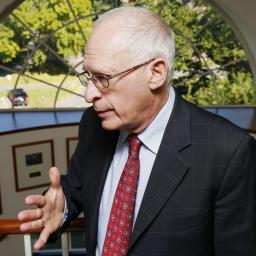
What happens when a creativity guru meets the winner of this year's Nobel Memorial Prize in economics? You get life lessons in making art, and negotiating contracts.
|
 |
on (#21WTH)
The story of a guy who tried to make something of himself by getting into a rough business. And the story of a time when the world went wild for debt.
|
 |
on (#21A16)
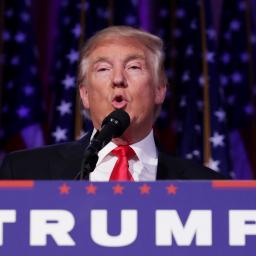
Candidates promise all kinds of things. But once they get into office, it's not always possible to carry through on them. We ask, can Trump do the things he's pledged to do?
|
 |
on (#211R3)
Donald Trump is our president elect. We look at three economic indicators to see what they can tell us about a Trump presidency.
|
 |
on (#20EQW)
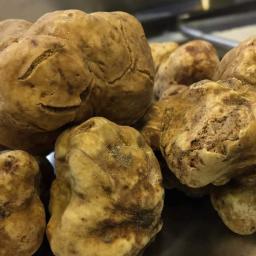
Truffles are a lumpy, smelly fungus. They're also one of the most coveted foods in the world. Why are they so expensive? And why are people willing to pay so much for them?
|
 |
on (#206P2)
On today's show, Planet Money's economist-approved fake candidate makes his first ads. Then we nervously watch to see what a focus group thinks of them.
|
 |
on (#1ZP71)
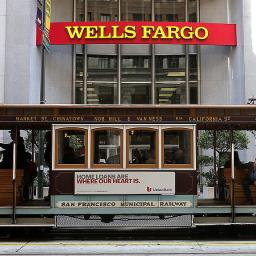
Banks like Wells Fargo have a weapon that can destroy an employee's career: A form. A long, boring form most people don't even know exists.
|
 |
on (#1ZEAY)
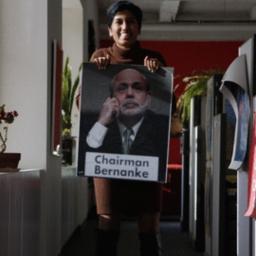
Behold the Planet Money economic platform, crafted by brilliant economists of all stripes, and pure poison to any politician who embraces it.
|
 |
on (#1Y04H)
You won't have to get coffee. But you might have to ride a hoverboard. The deadline has been extended--apply by November 6!
|
 |
on (#1YXAW)
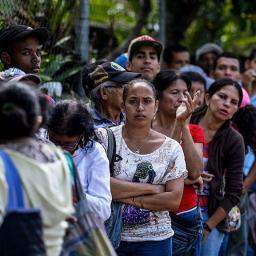
Venezuela has just about every economic advantage a country could ask for: fertile land, good climate, educated population, and oil, lots and lots of oil. So how did it go so wrong?
|
 |
on (#1YP1P)
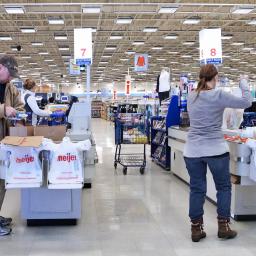
A doctor treating psychiatric patients in an emergency room created the first self-checkout machine in his spare time. Now he can't stand self checkout. So we take him shopping.
|
 |
on (#1Y4SF)
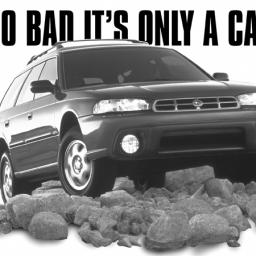
Subaru's sales had been slumping for years. So the car company took a big risk and targeted a group of consumers that just about everyone else was ignoring.
|
 |
on (#1XWT5)
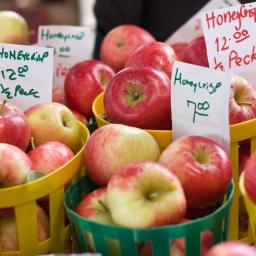
How we got from mealy, nasty apples to apples that taste delicious. The story starts with a breeder who discovered a miracle apple. But discovering that apple wasn't enough.
|
 |
on (#1XCCX)
We take you inside the headquarters of Wells Fargo bank. It's a place where a bunch of young, stressed-out workers were rewarded for doing some very bad things.
|
 |
on (#1X42G)
On today's episode, we'll take you to a place where dying has become acceptable dinner conversation. A place that also happens to have the lowest healthcare spending of any region in the country.
|
 |
on (#1WKFT)
New show! You asked us questions about the economy and oddities in your world. We answer.
|
 |
on (#1W808)
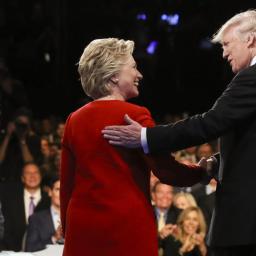
We made an audio glossary for the confusing economic jargon that came up during the first presidential debate.
|
 |
on (#1VTFJ)
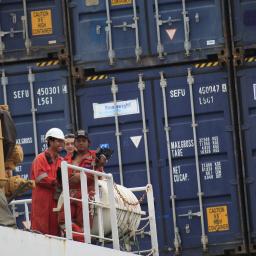
On today's show: The fight over free trade. Come for the man who dreamed of world peace through trade. Stay for Robert Smith in the mean streets of Seattle.
|
 |
on (#1VJA0)
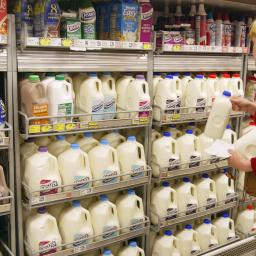
We test two competing theories, from a food writer and an economist. Are customers being forced to walk through the store or is it just practical to keep the milk at the back?
|
 |
on (#1V0KR)
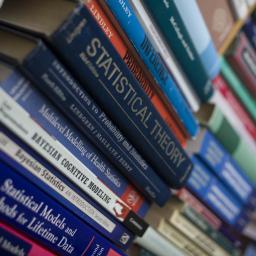
Prices of new textbooks have been going up like crazy — faster than food, cars, even healthcare. On today's show: Why textbooks have gotten so expensive.
|
 |
on (#1TRSJ)
The internet was supposed to get rid of middlemen--but instead they are taking over the global economy.
|
 |
on (#1T7FV)
If you're a zoo or aquarium and you want a new animal, you don't use money to get it. You have to find another way. In this episode, we investigate: How many mackerel is a flock of puffins worth?
|
 |
on (#1T0PE)
There is a mystery in many poor countries. Why don't farmers specialize and grow more food? Two economists with very different theories go head to head to find out.
|
 |
on (#1SJZQ)
For decades, most websites ended in either .com, .net, or .org. But a few years ago, everything changed.
|
|
on (#1SG7C)
For decades, most websites ended in either .com, .net, or .org. But a few years ago, everything changed.
|
 |
on (#1S94G)
One telenovela actress-turned-executive decided to create a new kind of drama. Her work changed the landscape of Spanish language TV--and of all TV.
|
 |
on (#1RS4V)
Why is it so hard to knock down 17 vacant houses in a shrinking city?
|
 |
on (#1RQZC)
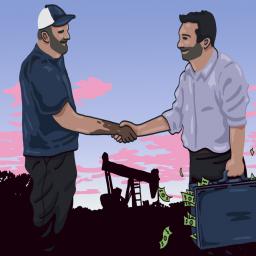
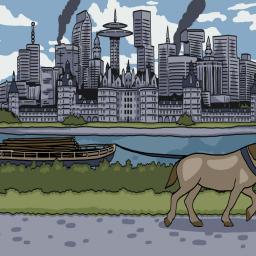
We bought 100 barrels of oil from a Kansas preacher. We followed it out of the ground, through a refinery, and into someone's gas tank.
|
 |
on (#1RHKY)
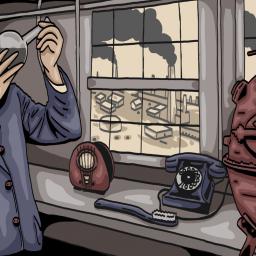
Last of five episodes. We follow the Planet Money oil to a gas station. And we ask: What would our world look like if there were no fossil fuels?
|
 |
on (#1R1Q2)
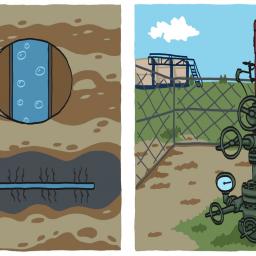
Fourth of five episodes. Oil is in our sneakers, our clothes, and the computer or phone you're using right now. On today's show: The story of the man who made it happen.
|
 |
on (#1QTYV)
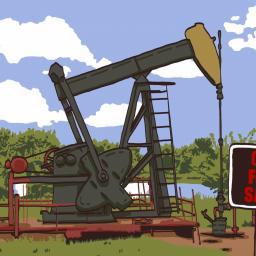
Third of five episodes. The Planet Money oil faces a test, we sell it, and we meet the man who set off the fracking boom in America.
|
 |
on (#1QBAG)
Second of five episodes. Oil is priced down to the penny, and the price changes every day. Who sets that price?
|
 |
on (#1Q3H6)
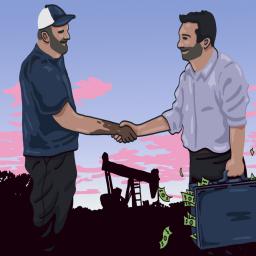
We're getting into the oil business. We go to Kansas, and negotiate with a preacher to buy 100 barrels of crude.
|
 |
on (#1PMR0)
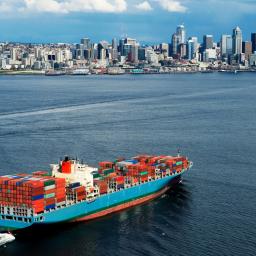
There's an obscure law that governs just about anything that travels by ship in the U.S. — bananas, hairdryers, gasoline, even people. Economists do not like it. But it just won't go away.
|
 |
on (#1PE6A)
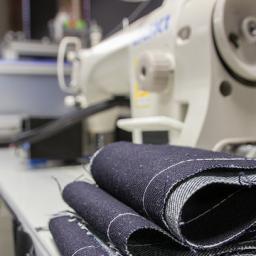
Building a robot that can sew even simple clothes is surprisingly hard. A retired professor in Atlanta thinks he's solved the problem. It could bring clothing manufacturing back to America.
|
 |
on (#1NXPN)
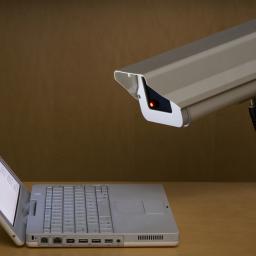
The computer or phone that you use knows a lot about you. It knows your secrets — and it might be giving them away.
|
 |
on (#1NP3R)
Crafting a TV game show is a balancing act. Producers have to carefully calibrate the rules, the drama and the prizes just right. Sometimes they get it way wrong.
|
 |
on (#1N68Q)
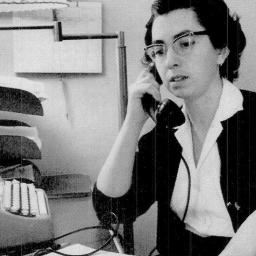
A lot of computing pioneers were women. For decades, the number of women in computer science was growing. But in 1984, something changed.
|