Intel still beats Ryzen at games, but how much does it matter?
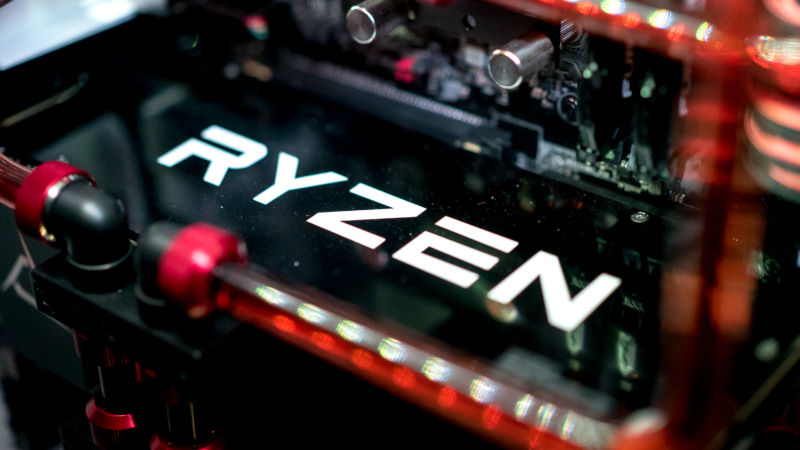
Enlarge / What's all this gaming blather about Ryzen? Let us explain. (credit: Mark Walton)
The response to AMD's Ryzen processors with their new Zen core has been more than a little uneven. Eight cores and 16 threads for under $500 means that they're unambiguously strong across a wide range of workloads; compute-bound tasks like compiling software and compressing video cry out for cores, and AMD's pricing makes Ryzen very compelling indeed.
But gaming performance has caused more dissatisfaction. AMD promised a substantial improvement in instructions per cycle (IPC), and the general expectation was that Ryzen would be within striking distance of Intel's Broadwell core. Although Broadwell is now several years old-it first hit the market way back in September 2014-the comparison was relevant. Intel's high-core-count processors-both the High End Desktop parts, with six, eight, or 10 cores, and the various Xeon processors for multisocket servers-are all still using Broadwell cores.
Realistically, nobody should have expected Ryzen to be king of the hill when it comes to gaming. We know that Broadwell isn't, after all; Intel's Skylake and Kaby Lake parts both beat Broadwell in a wide range of games. This is the case even though Skylake and Kaby Lake are limited to four cores and eight threads; for many or most games, high IPC and high clock speeds are the key to top performance, and that's precisely what Kaby Lake delivers.
Read 56 remaining paragraphs | Comments