Ravens ignore a treat in favor of a useful tool for the future
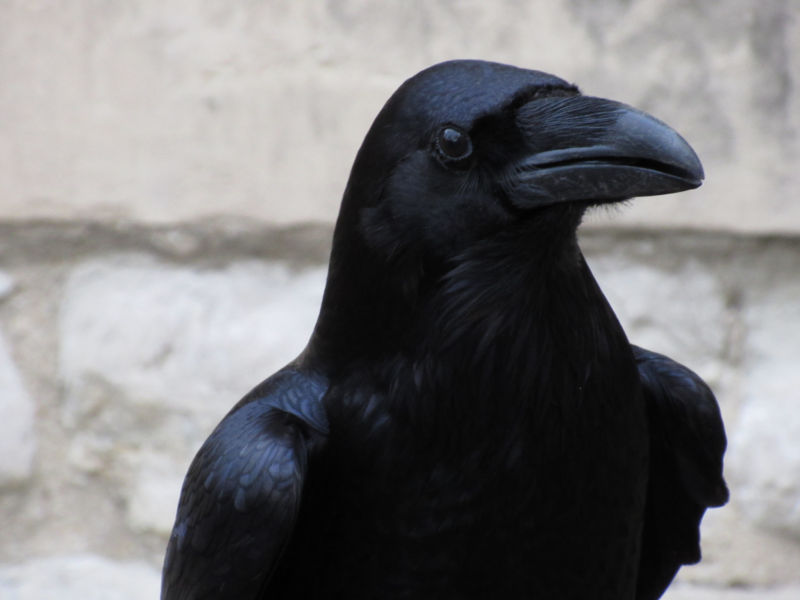
Enlarge (credit: flickr user: NH53)
If humans, chimps, gorillas, and orangutans can all do something, but monkeys can't, that tells a certain evolutionary story: it suggests that the ability emerged sometime after the apes split off from the monkeys on our evolutionary tree. But if a bird comes along with that ability, it throws the whole story off course. Corvids-a family of birds that includes ravens, jays, and crows-seem to delight in doing just that.
Humans pretty obviously plan for the future, from packing a brown bag lunch to saving for retirement. Other apes also seem to be able to plan for the short-term future, at least up to one night. Monkeys don't. But a paper in Science this week reports a small group of corvids succeeding at future-planning tasks. That points to a complex evolutionary story.
Two cognitive scientists at Lund University in Sweden, Can Kabadayi and Mathias Osvath, conducted a series of experiments with five captive, hand-raised ravens. Obviously, that's not a lot of ravens, and hand-raised ravens do not behave like wild ravens. But when it comes to figuring out the outer bounds of cognitive abilities for a species, those aren't the most important problems to worry about. Testing more ravens, and wild ravens, comes later.
Read 11 remaining paragraphs | Comments