War for the Planet of the Apes is a genuinely satisfying morality tale
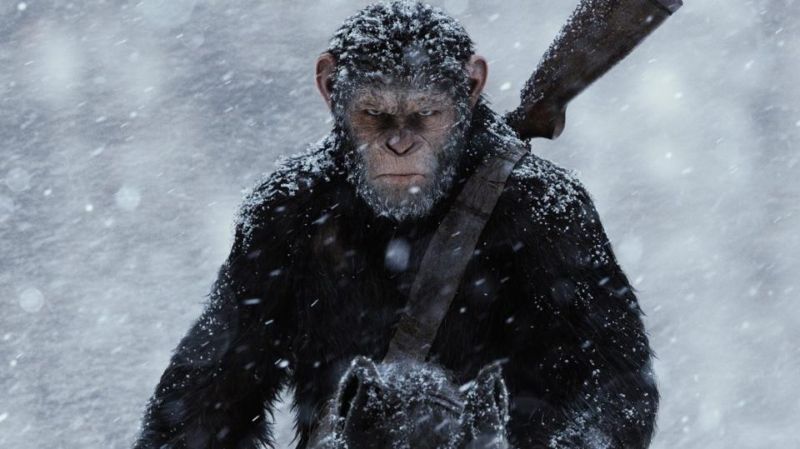
Enlarge / Caesar is on a revenge mission to destroy the Colonel. Will his animal instincts make him no better than those damn, dirty humans? (credit: 20th Century Fox)
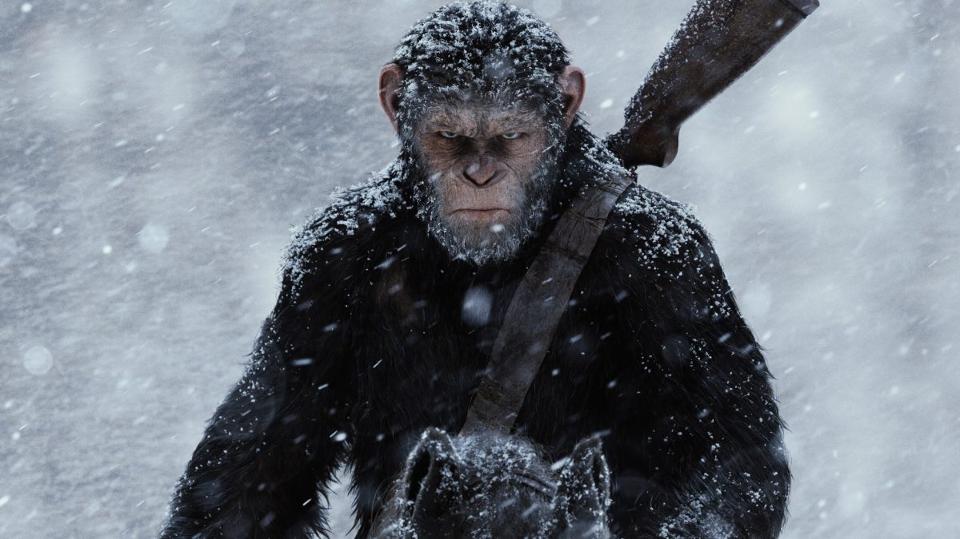
War for the Planet of the Apes is definitely the most fable-like movie in the rebooted Apes trilogy, with its starkly defined war of good apes against evil humans. But it's also the most character-driven story too. With War, it becomes clear that this trilogy has actually been the biography of one person, Caesar, who grew from humble origins as a lab animal to become one of Earth's greatest heroes.
There is something cheesy yet stirringly genuine about the way War lionizes its main character, making him both noble and relatable. Partly this comes down to Andy Serkis, the world's first truly brilliant mocap actor, who fills Caesar's face with thoughtful, grim determination. But it's also about a simple design choice, which was to make the uplifted apes' eyes transform into human eyes. When the camera looks at Caesar, we can't help but see the face of a person, despite the fur and thick brow ridges.
A fascinating character studyThis is particularly important in War, where the humans and apes finally switch roles. One of the signature details in the original series is that many humans in the far future have lost the ability to speak. Flung nearly 2,000 years into the future, astronaut Charlton Heston finds wild humans living like apes once did. In War, we see how this situation came about.
Read 11 remaining paragraphs | Comments