Distributed energy sources can reduce cost of electricity up to 50%, study says
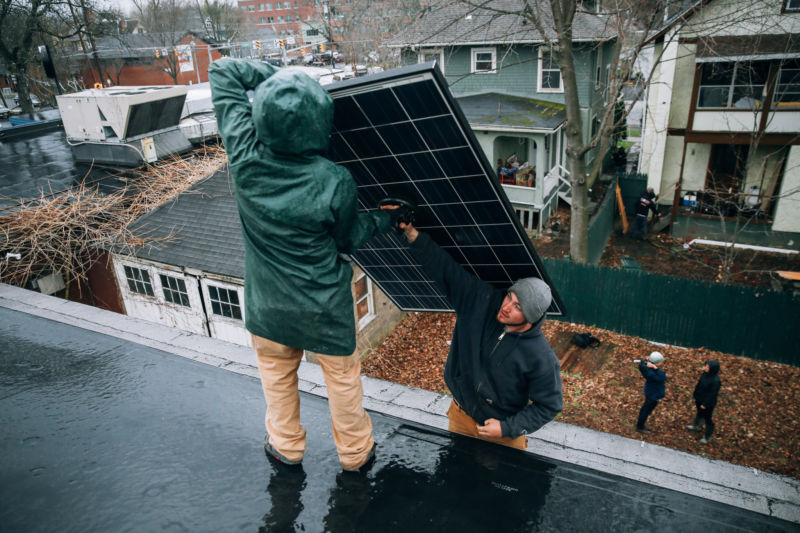
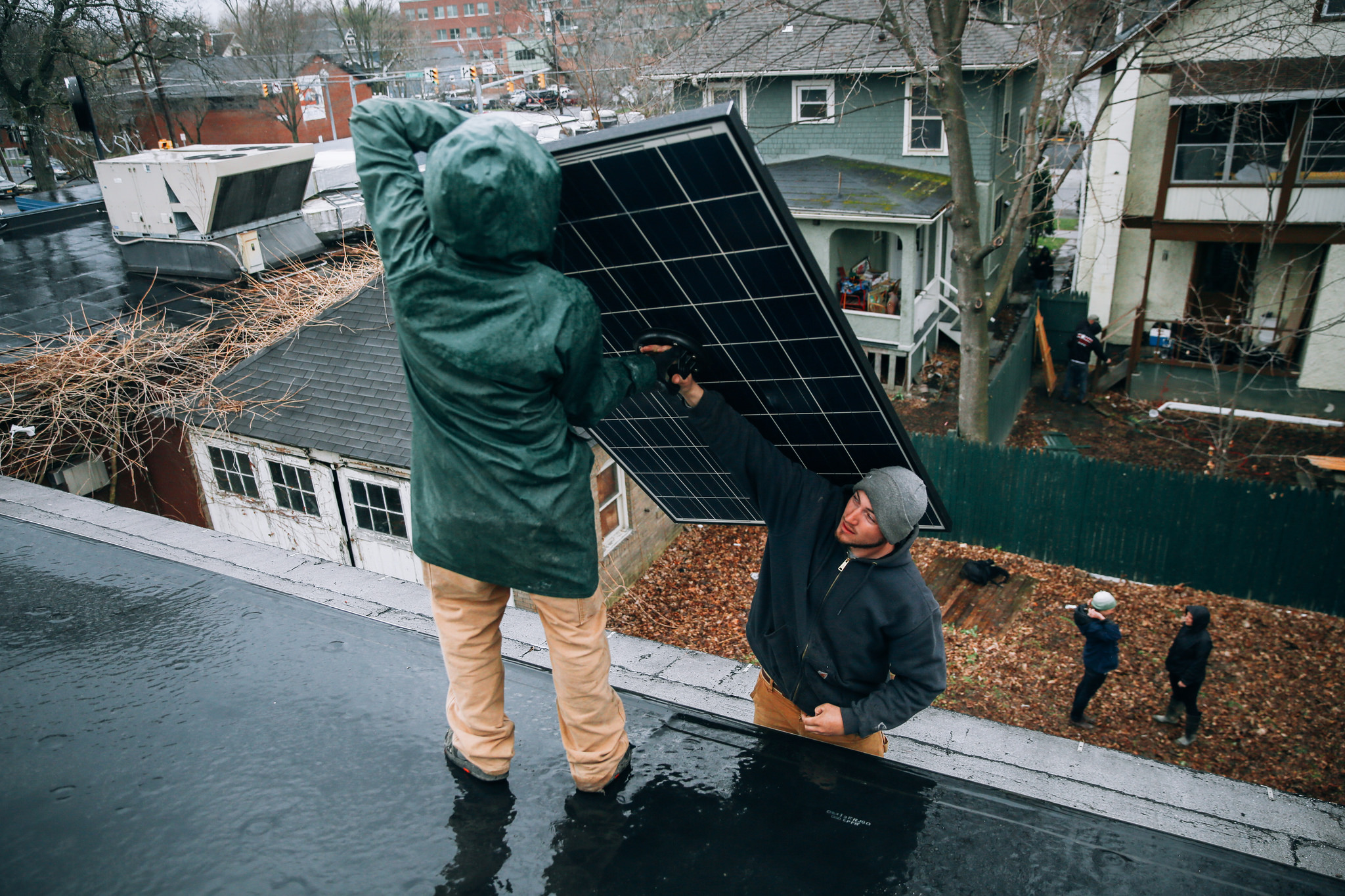
Enlarge (credit: 100% Campaign)
Dramatic changes are coming to the old power grid. As infrastructure ages and policy dictates a move away from fossil fuels, utilities and governments are looking at Distributed Energy Resources (DERs) as potential alternatives to continually building out a centralized grid.
DERs include all kinds of hardware that the utility may not necessarily own directly-solar panels, natural gas-fired microturbines, stationary batteries, and alternative cooling. Demand-response schemes, where a grid operator shifts electricity consumer use (usually through incentives) away from high-demand times, are also considered DERs.
Planning for DERs makes grid management trickier than it was when a company simply built a huge new plant and connected a power line to it. Without a lot of data, it's hard to know what kinds of energy resources will have the most impact economically and environmentally and what will be most cost-effective for utilities. But a trio of researchers from Stanford University is attempting to make this planning easier for utilities and policy makers to solve. The researchers published a paper in Nature Energy this week describing a program they built to model DER deployment in a way that will result in the lowest cost to grid operators.
Read 5 remaining paragraphs | Comments